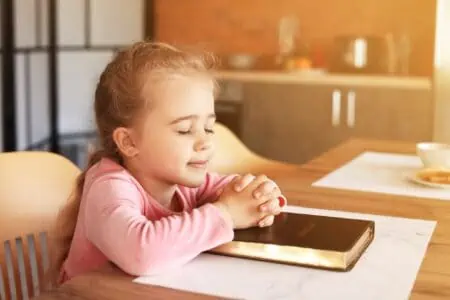
When introduced to the best saint baby names, you’ll discover a long, famous history of moving stories and unforgettable world figures. Saint names for babies can keep religious and spiritual traditions alive. Where do you start with a timeline as long as this one?
You don’t have to dig for the perfect name because you’ll find it all in this fantastic list of memorable saint baby names.
100 Beautiful Saint Names for Babies
Unearth all things virtuous with this unique guide to saint baby names ahead.
Abraham
Abraham is taken from the Hebrew Avram, meaning “high father.” It’s based on “av hamon goyim,” meaning “father of multitudes.” Abraham was a 4th-century Mesopotamian hermit who was the patron saint of families.
- Origin: Hebrew
- Meaning: Father of many
- Pronunciation: EY-brah-Haem
- Variations: Aberham, Abrahame, Abrahim
- Namesakes: Abraham Lincoln, the 16th president of the U.S. from 1861 until his assassination in 1865, known for abolishing slavery. Avraham Shlonsky, an Israeli poet, known for Hebrew children’s classics.
- Popularity: Abraham ranked 688th worldwide, is most prevalent in Mexico, and 3rd in Eritrea.
Adam
Adam comes from the Hebrew ”adamah,” originally meaning “son of the red earth.” St. Adam of Krakow is the patron saint of gardeners, so Adam might be the earthiest of saint baby names for boys.
- Origin: Hebrew
- Meaning: Earth
- Pronunciation: AE-Dahm
- Variations: Adem, Adamh, Addam
- Namesakes: Adam Clayton, an English-Irish musician and bassist of the rock band U2. William West Anderson (known as Adam West), an American actor known for portraying Batman in the 1960s ABC series.
- Popularity: Adam ranked 198th worldwide, is most popular in Poland, and 13th in Sudan.
Adelaide
Adelaide comes from the Germanic Adalheidis, made up of “adal,” meaning “noble” and “heid,” meaning “kind.” St. Adelaide was the patron saint of brides, making her one of the most thoughtful middle names for little girls on their confirmation.
- Origin: Germanic
- Meaning: Noble
- Pronunciation: AED-eh-Laed
- Variations: Adalaide, Adelade
- Namesakes: Adelaide Bennett, an American poet known for descriptions of Native American life. Adelaide Kane, an Australian actress, known for the soap opera Neighbors.
- Popularity: Adelaide is uncommon worldwide and used most in Angola, where it’s ranked 115th.
Adrian
Adrian comes from the Latin Hadrianus, based on the River Adria. Its roots include “adur,” meaning “sea.” St. Adrian of Nicomedia was the patron saint of peacekeeping missions and can ensure your little peacemaker has the best name.
- Origin: Latin
- Meaning: Dark one
- Pronunciation: EY-driy-Ahn
- Variations: Adrean, Adreeyan, Adreyan, Adrianne
- Namesakes: Adrian Hasler, the Prime Minister of Liechtenstein from 2013 to 2021. Adrian Warburton, a Royal Air Force pilot, and flying ace during World War II.
- Popularity: Adrian ranked 482nd worldwide and is most prevalent in Poland where it ranked 9th.
Agnes
Agnes is derived from the Greek Hagnḗ, meaning “holy.” It can also mean “chaste.” St. Agnes is the patron saint of engaged couples, which helps her represent love in its many forms.
- Origin: Greek
- Meaning: Pure
- Pronunciation: AEG-Nahs
- Variations: Agness, Agneis
- Namesakes: Agnes Janich, a Polish visual artist with work appearing at the 9th Sharjah Biennial in the United Arab Emirates. Agnes Sampson, a Scottish healer and alleged witch of the North Berwick witch trials during the 16th-century.
- Popularity: Agnes ranked 332nd worldwide and is most popular in Uganda, where it ranked 25th.
Albert
Albert comes from the Germanic Adelbert, made up of “adal,” meaning “noble” and “beraht,” meaning “bright.” St. Albert of Cologne was known as Albertus Magus and is the patron saint of scientists for the serious little guy you’re expecting.
- Origin: Germanic
- Meaning: Bright famous
- Pronunciation: AEL-Bahrt
- Variations: Adelbert, Alburt
- Namesakes: Albert Gore Jr., the 45th vice president of the U.S. from 1993 to 2001. Albert Bogen, a Hungarian fencer who competed at the 1928 Summer Olympics.
- Popularity: Albert ranked 226th worldwide and is most popular in DR Congo, where it’s ranked 9th.
Alexander
Alexander is the Latin version of the Greek Alexandros, made up of “alexo,” meaning “defend” and “aner,” meaning “man.” St. Alexander of Bergamo was once a Roman soldier. The patron of bachelors, Alexander, can bless your little boy too.
- Origin: Latin, Greek
- Meaning: Defender of men
- Pronunciation: AeL-ahg-ZAEN-Dahr
- Variations: Aleksander, Alexsander, Alexandar
- Namesakes: Alexander Haig Jr., the U.S. Secretary of State under President Ronald Reagan. Alexander Armstrong, an English comedian, and host of the BBC One game show Pointless.
- Popularity: Alexander ranked 102nd worldwide, is most popular in Russia, and ranked 9th in Kazakhstan.
Ambrose
Ambrose is an English variation of the Latin Ambrosius, meaning “divine.” St. Ambrose was famous for the baptism of St. Augustine of Hippo. He is the patron saint of beekeepers, which explains why there’s a buzz around this unique Christian name.
- Origin: Latin, Greek
- Meaning: Immortal
- Pronunciation: AEM-Browz
- Variations: Ambros
- Namesakes: Ambrose Small, a Canadian theater magnate who owned Ontario theaters like the Grand Opera House in Toronto. Ambrose Bierce, an American short story writer whose story An Occurrence at Owl Creek Bridge appeared as a Twilight Zone episode.
- Popularity: Ambrose is uncommon worldwide and used most in Uganda, ranked 155th.
Anastasia
Anastasia is the female version of Anastasius, taken from the Greek “anastasis,” meaning “resurrection.” St. Anastasia is the patron saint of weavers, partly why Anastasia is much-used among Christian saint names for girls.
- Origin: Greek
- Meaning: She who will rise again
- Pronunciation: Ae-nah-STAES-Yah
- Variations: Anastacia, Anastazya, Anastaysia
- Namesakes: Anastasia Melnichenko, the Ukrainian founder of the #IAmNotAfraidToSayIt social media campaign, a precursor to the MeToo movement. Anastasia Motaung, a member of the National Assembly of South Africa since 2019.
- Popularity: Anastasia ranked 723rd worldwide, is most popular in Russia, and ranked 16th in Greece.
Angelo
Angelo comes from the Latin Angelus, based on the Greek Angelos, meaning “messenger of God.” St. Angelo (Angelus) of Jerusalem is the patron saint of converts and can convince you to name your little boy Angelo in his honor.
- Origin: Latin
- Meaning: Angel, messenger
- Pronunciation: Aen-jheh-LOW
- Variations: Anjelo, Angele
- Namesakes: Angelo Bonomelli, an Italian-Costa Rican surfer and part of the Volcom Europe surf team. Angelo Bruno (born Angelo Annaloro), a Sicilian-American mob boss of the Philadelphia crime family for two decades.
- Popularity: Angelo ranked 769th worldwide and is most popular in Poland where it ranks 19th.
Anne
Anne came from the Hebrew Hannah, based on “chaanach,” meaning “gracious.” Anne was the Medieval name given to the Virgin Mary’s mother. St. Anne represents women in labor and can deliver more than a namesake to you and yours.
- Origin: Hebrew
- Meaning: Grace
- Pronunciation: AEN
- Variations: Ann
- Namesakes: Anne Diamond, a British journalist and host of Good Morning Britain for TV-am. Anne Meara, an American comedian and part of the 1960s comedy team Stiller and Meara.
- Popularity: Anne ranked 216th worldwide, is most popular in France and ranked #1 in Norway.
Anselm
Anselm is composed of the Germanic elements “ans,” meaning “God” and “helma,” meaning “helmet.” St. Anselm was the father of scholasticism, which brings Anselm into the realm of all things brainy for your little boy.
- Origin: Germanic
- Meaning: With divine protection
- Pronunciation: AEN-Sehlm
- Variations: Anslem, Ansel
- Namesakes: Anselm McLaurin, the 34th Governor of Mississippi, served from 1896 to 1900. Anselm Kiefer, a German painter whose work used themes like German history and the Holocaust.
- Popularity: Anselm is rare worldwide, used most in Nigeria, and ranked 904th in Namibia.
Anthony
Anthony comes from the Roman name Antonius, meaning “praiseworthy.” St. Anthony of Padua is the patron saint of lost items and can help your little guy stay grounded.
- Origin: Latin
- Meaning: Priceless one
- Pronunciation: AEN-Thahn-Iy
- Variations: Anthoney, Anthone, Anthoni, Antony
- Namesakes: Anthony Hopkins, a Welsh actor best known for his role as Hannibal Lector in The Silence of the Lambs. Antony Matheus dos Santos, a Brazilian footballer for the Brazil national team.
- Popularity: Anthony ranked 177th worldwide, is most popular in the U.S., and ranked 21st in England.
Athanasius
Athanasius is an ancient Greek name rarely used today. It appears as Thanasis or Thanos in the modern world, but that doesn’t mean this name for many early Alexandrian saints can’t make a comeback for your young man.
- Origin: Greek
- Meaning: Immortal
- Pronunciation: Ah-tha-NAH-see-Uhs
- Variations: Athnasious, Athanasios
- Namesakes: Athanasios Mantzouranis, a Greek track cyclist who competed at the 2008 Summer Olympics. Athanasios Eftaxias, the Prime Minister of Greece from July to August 1926.
- Popularity: Athanasius is very rare worldwide, used most in Nigeria, and ranked 2,375th in Cameroon.
Augustine
Augustine comes from the Latin “augere,” meaning “to increase.” Augustus means “venerable,” and was a title Roman emperors used. St. Augustine of Hippo is the patron saint of brewers, printers, and theologians alike.
- Origin: Latin
- Meaning: Great, venerable
- Pronunciation: Aw-guws-TIYN
- Variations: Agustine, Augusteen, Augusteyn, Augustin
- Namesakes: Augustine Chacon (known as El Peludo), a Mexican outlaw in the Arizona Territory during the late 1800s. Augustine Kelly, an Irish cricketer, who played for the Ireland cricket team between 1920 and 1930.
- Popularity: Augustine ranked 1,693rd worldwide, is most popular in Nigeria, and ranked 48th in Sierra Leone.
Benedict
Benedict is based on the Latin “bene,” meaning “’good’ and “dicte,” meaning “speak.” St. Benedict of Nursia is the founder of Western monasticism and is the patron saint of Europe or wherever your baby boy resides.
- Origin: Latin
- Meaning: Blessed
- Pronunciation: BEHN-eh-Dihkt
- Variations: Benedikt, Bennedict
- Namesakes: Benedict Cumberbatch, an English actor named one of the 100 most influential people in the world by Time Magazine. Benedict McCarthy, the South Africa national football team’s all-time top scorer with 31 goals.
- Popularity: Benedict is uncommon worldwide, most used in Nigeria, and ranked 264th in Liberia.
Brendan
Brendan uses the Welsh “breenhín,” meaning “a prince,” and originated from the Latin Brendanus. It belonged to 17 saints, though most famously associated with all things nautical to prepare your little boy for sailing the seas.
- Origin: Irish, Latin
- Meaning: Prince
- Pronunciation: BREHN-Dahn
- Variations: Brenndan, Brenden, Brendon
- Namesakes: Brendan Gleeson, an Irish actor known for the Harry Potter films (2005–2010). Brendan Walsh, an American chef and winner of the “Who’s Who of Cooking in America” James Beard Foundation Award.
- Popularity: Brendan is uncommon worldwide, mostly used in the U.S., and ranked 24th in Ireland.
Brice
Brice originated as the Latin Bricius and means “swift.” Saint names for boys like Brice are rarely used today but mostly appear in Africa, France, and the U.S. St. Brice is the patron saint of tummy aches, so he may be needed for your little one.
- Origin: Gaelic
- Meaning: Quick, speedy
- Pronunciation: BREYSS
- Variations: Bryce
- Namesakes: Brice Tirabassi, a French rally driver who won the Junior World Rally Championship in 2003. Brice Lalonde, a French politician named Minister of the Environment in 1988.
- Popularity: Brice is uncommon worldwide and used most in the Central African Republic, where it’s ranked 16th.
Bridget
Bridget is an Anglo spelling of the Gaelic Brigid, meaning “exalted” or “noble one.” St. Brigid was the patron saint of poets, plus everything from nuns to chicken farmers, so she’s got your little girl covered.
- Origin: Celtic
- Meaning: Strength, virtue
- Pronunciation: BRIH-Jhaht
- Variations: Bridgitte, Briggitte, Brighid, Brigid, Brigit
- Namesakes: Bridget Everett, an American comedian known for the semi-autobiographical 2022 HBO series Somebody Somewhere. Bridget Hustwaite, an Australian radio presenter for the Good Nights program.
- Popularity: Bridget ranked 177th worldwide, is most popular in the U.S., and ranked 35th in Ireland.
Catherine
Catherine is an Anglo variation of the Greek “katharos,” meaning “clear.” It belonged to multiple saints and members of royalty. Most famous was St. Catherine of Alexandria, the patron saint of young girls like your little sweet little lady.
- Origin: Latin
- Meaning: Pure
- Pronunciation: KAETH-ah-Rihn
- Variations: Catharine, Catharin
- Namesakes: Catherine Ashton, the British High Representative of the Union for Foreign Affairs and Security Policy from 2009 to 2014. Catherine Zeta-Jones, a Welsh actress, appointed Commander of the Order of the British Empire (CBE).
- Popularity: Catherine ranked 172nd worldwide, is most popular in France, and ranked 10th in Zambia.
Cecilia
Cecilia comes from the male Cecil, based on the Latin “caecus,” meaning “blind.” St. Cecilia is the patron saint of musicians and can string together a lovely tune for the baby girl you’re soon to meet.
- Origin: Latin
- Meaning: Blind
- Pronunciation: Sah-SIYL-Yah
- Variations: Cacelia, Cecilea, Cecelia
- Namesakes: Cecilia Mangini, the first female documentary filmmaker in Italy. María Cecilia Montes, the wife of the former President of Chile Sebastián Piñera.
- Popularity: Cecilia ranked 386th worldwide, is most popular in Mexico and ranked 45th in Chile.
Chiara
Chiara is an Italian form of Clara, from the Latin “clarus,” meaning “illustrious one.” St. Chiara was a follower of St. Francis of Assisi and is associated with youth, which makes her a perfect choice for religious saint names for babies.
- Origin: Italian, Latin
- Meaning: Light, clear
- Pronunciation: Kiy-AAR-ah
- Variations: Chiarah, Chiarra, Chiarrah
- Namesakes: Chiara Simionato, an Italian long-track speed skater who competed at the 2010 Winter Olympics. Chiara Appendino, an Italian politician and mayor of Turin from 2016 to 2021.
- Popularity: Chiara is uncommon worldwide and used most in Italy, ranked 86th.
Christopher
Christopher comes from the Greek Christophoros, made up of “Christós,” meaning “Christ” and “phérein,” meaning “to bear.” St. Christopher is the patron saint of travelers and can watch over your little guy whenever he’s on the move.
- Origin: Greek
- Meaning: Christ-bearer
- Pronunciation: KRIHS-taa-Fer
- Variations: Cristopher, Chrystopher, Christapher
- Namesakes: Christopher Awdry, an English author contributing to The Railway Series books featuring Thomas the Tank Engine. Christopher Bengtsson, a Swedish ice hockey player for IF Björklöven of the HockeyAllsvenskan.
- Popularity: Christopher ranked 163rd worldwide, is most popular in the U.S., and ranked 15th in England.
Clement
Clement is derived from the Latin Clemens, meaning “gentle.” St. Clement (a former pope) was associated with metalworkers. St. Clement’s festival is celebrated between Halloween and Christmas, just in time for little boys to enjoy.
- Origin: Latin
- Meaning: Mercy
- Pronunciation: KLEHM-ehnt
- Variations: Clemens, Clements
- Namesakes: Clement Higgins, a British Member of Parliament between 1892 and 1895. Clement Ivanov (known as Puppey), an Estonian Dota 2 player for Team Secret.
- Popularity: Clement ranked 1,485th worldwide, is most popular in DR Congo, and 59th in Rwanda.
Constantine
Constantine comes from the Latin “Constantinus,” also from the Greek Kōnstantînos, meaning “faithful.” St. Constantine the Great was a Roman emperor and the first convert to Christianity, making Constantine even more enjoyable.
- Origin: Latin, Greek
- Meaning: Steadfast
- Pronunciation: KAAN-stahn-Tiyn
- Variations: Constantin
- Namesakes: Constantine Paparrigopoulos, a Greek historian and founder of modern Greek historiography. Constantine Lascaris, a Greek scholar, involved in the revival of Greek learning in Italy during the Renaissance.
- Popularity: Constantine is uncommon worldwide, used most in DR Congo, and ranked 445th in Jamaica.
Damian
Damian comes from the Greek Damianos, based on “damazo,” meaning both “to subdue” and “to overcome.” St. Damian is paired with St. Cosmos as the patron saint of physicians and twins but can work as one name for one cool little boy.
- Origin: Greek
- Meaning: To tame
- Pronunciation: DEY-miy-Ahn
- Variations: Damien, Dameon
- Namesakes: Damian Smith, the artistic director of The National Theater Ballet school in Melbourne. Damian Martin, an Australian basketball player with the Perth Wildcats of the National Basketball League.
- Popularity: Damian ranked 2,845th worldwide and is most popular in Poland, where it’s ranked 61st.
Daniel
Daniel consists of the Hebrew roots “din,” meaning “to judge,” and “el,” meaning “God.” Two different figures in the Bible are called Daniel. St. Daniel represents the great works done in God’s name, like the miracle of your baby boy.
- Origin: Hebrew
- Meaning: God is my judge
- Pronunciation: DAEN-Yahl
- Variations: Daniyel, Danial, Danniel
- Namesakes: Daniel Craig, an English actor best known for the James Bond film series. Daniel Adair, a Canadian drummer and member of the band Nickelback.
- Popularity: Daniel ranked 24th worldwide, is most popular in the U.S. and ranked 4th in Ghana.
David
David evolved from the Hebrew name Dawid, based on “dod,” meaning “beloved.” King David was a key figure in the Old Testament of the Bible, while St. David remains the patron saint of Wales.
- Origin: Hebrew
- Meaning: Beloved
- Pronunciation: DEY-Vihd
- Variations: Davyd, Daevid, Davidd
- Namesakes: David Tennant, a Scottish actor and the 10th incarnation of the Doctor in the BBC series Doctor Who (2005–2010). David Attenborough, an English broadcaster known for the natural history series, the Life Collection.
- Popularity: David ranked 13th worldwide, is most popular in the U.S. and ranked 1st in England.
Declan
St. Declán of Ard Mór was one of the earliest missionaries to bring Christianity to Ireland. He is the patron saint of Munster in Ireland. He’s associated with alleviating back pain, which shouldn’t be a problem for your young Declan.
- Origin: Irish
- Meaning: Man of prayer
- Pronunciation: DEH-Klaen
- Variations: Daclan, Declyn, Deklan
- Namesakes: Declan Costello, the Irish President of the High Court from 1995 to 1998. Declan Edwards, an Irish footballer for Galway United.
- Popularity: Declan is uncommon worldwide and used most in Ireland, ranked 53rd.
Delphina
Delphina refers to an ancient Greek city where a famous oracle existed. Delphina is also based on St. Dymphna, the patron saint of nervous disorders, but as a name can help you keep your nerves when expecting a baby girl.
- Origin: Latin, Greek
- Meaning: Woman from Delphi
- Pronunciation: Dehl-FIY-nah
- Variations: Delfina, Delphia, Delphine
- Namesakes: Delfina Potocka, a Polish countess and student of pianist Frédéric Chopin. Delfina Guzmán Correa, a Chilean actress known for the 1968 Raúl Ruiz film Three Sad Tigers.
- Popularity: Delphina is rare worldwide, used most in Tanzania, and ranked 921st in Congo.
Dominic
Dominic is derived from the Latin Dominicus,” meaning “belonging to God” or “of the Master.” St. Dominic is represented by a star and associated with having great mercy, which is the most lordly attribute of all.
- Origin: Latin
- Meaning: Lordly
- Pronunciation: DAAM-ahn-Ayk
- Variations: Dominick, Dominik
- Namesakes: Dominic West, an English actor known for the TV series The Wire (2002–2008).
- Popularity: Dominic ranked 2,237th worldwide, is most popular in Kenya, and ranked 112th in Sierra Leone.
Edmund
Edmond is made up of the Old English “ēad,” meaning “prosperity,” and “mund,” meaning “protector.” In addition to naming two English kings, St. Edmund the Martyr is the patron saint of kings, so he’s royal-ready for all little boys.
- Origin: English
- Meaning: Fortunate protector
- Pronunciation: EHD-Mahnd
- Variations: Edmand, Eadmund, Edmond
- Namesakes: Edmund Spenser, an English poet known for The Faerie Queene. Edmund Garrett, an American illustrator famous for images of the legends of King Arthur.
- Popularity: Edmund ranked in the top 5,000 names worldwide, is most popular in the U.S., and ranked 160th in Ghana.
Elizabeth
Elizabeth comes from the Hebrew Elisheva, meaning “my God is abundance.” It’s one of the most famous names for British royals, yet St. Elizabeth of Hungary is the patron saint of everything from bakers to young brides.
- Origin: Hebrew
- Meaning: God is my oath
- Pronunciation: Ih-LIHZ-ah-Bahth
- Variations: Elisabethe, Elizabith, Elizebeth
- Namesakes: Elizabeth Olsen, an American actress who debuted in the film Martha Marcy May Marlene. Elizabeth Haigh, a Singaporean-born chef who appeared on MasterChef in 2011.
- Popularity: Elizabeth ranked 56th worldwide, is most popular in the U.S., and ranked 3rd in Tanzania and South Africa.
Emilia
Emilia is based on the Latin Aemilia, from the family name Aemilius. The root “aemulus” means to “excel” or “emulate.” St. Emilia of Caesarea is the patron saint of mothers, so she’s sure to be on your side.
- Origin: Latin
- Meaning: Rival
- Pronunciation: Eh-MIYL-yaa
- Variations: Emelia, Emilea, Emilya, Emmilia
- Namesakes: Emilia Broomé, the first woman in the Swedish legislative assembly in 1914. Emilia Tsoulfa, a Greek sailor and bronze medalist in 1998 European championships.
- Popularity: Emilia ranked 1,137th worldwide, is most popular in Mexico, and ranked 85th in Angola.
Faustina
Faustina is a female version of the Latin Faustus, meaning “fortunate.” It can also mean “auspicious.” St. Faustina was a Polish nun known as the “secretary of mercy,” which joins this obscure name with solid Catholic devotion.
- Origin: Latin
- Meaning: Good luck
- Pronunciation: Fow-ZTIYN-ah
- Variations: Fausta, Faustine, Faustyna
- Namesakes: Faustina Acheampong, the First Lady of the Republic of Ghana from 1972 to 1978. Faustina Agolley, an Australian TV host of the music program Video Hits.
- Popularity: Faustina is uncommon worldwide and used most in Ghana, ranked 73rd.
Felicity
Felicity comes from the Latin “felicitas,” meaning “good fortune.” Felicitas was based on the ancient Roman goddess Fortuna. St. Felicity of Rome is the patron saint of healing, which offers a beautiful life experience for little girls.
- Origin: Latin
- Meaning: Luck
- Pronunciation: Feh-LIHS-ih-Tiy
- Variations: Felicitee, Feliciti
- Namesakes: Felicity Hyde, the British founding director of the Women’s Royal Air Force. Felicity Cockram, the general manager of the Australian Film Institute from 2002 to 2005.
- Popularity: Felicity is uncommon worldwide, used mostly in South Africa, and ranked 340th in Australia.
Felix
Felix was originally a Roman surname but was used by the Roman Sulla, believing himself to be blessed by the gods with good luck. St. Felix is associated with spiders, but your little guy likely won’t be predisposed to the furry creatures.
- Origin: Latin
- Meaning: Happy, fortunate
- Pronunciation: FIY-Lihks
- Variations: Felyx, Feliks
- Namesakes: Felix Unger, an Austrian doctor who performed the first artificial heart transplantation in Europe in 1986. Felix Diogg, a Swiss painter and, most important, Classicism portraitist.
- Popularity: Felix ranked 238th worldwide, is most popular in Nigeria and ranked 28th in Peru.
Francis
Francis also means “Frenchman” and is one of the most popular Saint baby names, most noted by the current Pope Francis. St. Francis of Assisi is well-known as the patron saint of animals, making this a lovable choice for your little one.
- Origin: Latin
- Meaning: Free man
- Pronunciation: FRAEN-Sihs
- Variations: Frances, Fransis
- Namesakes: Francis Bowling, a justice of the Mississippi Supreme Court from 1977 to 1984. Francis Elliott, a British journalist and editor at The Times from 2013 to 2021.
- Popularity: Francis ranked 139th worldwide, and is most popular in France, where it’s ranked 7th.
George
George is the English spelling of the Greek Georgios, based on “georgos,” meaning “earthworker.” It’s made up of “ge,” meaning “earth” and “ergon,” meaning “work.” St. George makes sense as the patron saint of farmers and shepherds alike.
- Origin: Greek
- Meaning: Farmer
- Pronunciation: JHOWRJH
- Variations: Georgiy, Georgie
- Namesakes: George Bush, the 41st president of the U.S. from 1989 to 1993. Prince George of Cambridge, third in the line of succession to the British throne.
- Popularity: George ranked 98th worldwide, is most popular in the U.S. and ranked 12th in Ghana.
Gertrude
Gertrude is made up of the Germanic “ger,” meaning “spear” and “thrud,” meaning “strength.” St. Gertrude the Great was a 13th-century nun and mystic writer associated with cats, making this feline-happy name a cute one for girls.
- Origin: Germanic
- Meaning: Spear of strength
- Pronunciation: GAHR-Truwd
- Variations: Gertraude, Gertruyd, Gertruyde
- Namesakes: Gertrude Abercrombie, an American painter called “the queen of the bohemian artists.” Gertrude Crampton, an American children’s book writer known for Tootle (1945).
- Popularity: Gertrude ranked 3,633rd worldwide, is most popular in the U.S., and ranked 32nd in Austria.
Gregory
Gregory comes from the Greek Grēgórios, meaning “alert.” Two fathers of the Christian Orthodox church were named Gregory, while St. Gregory the Great was a medieval writer. He’s the patron saint of musicians for the young music maker you love.
- Origin: Greek
- Meaning: Vigilant, a watchman
- Pronunciation: GREHG-eh-Riy
- Variations: Gregary, Greggory, Gregori
- Namesakes: Gregory Mertens, a Belgian football player for Lokeren. Gregory Rusland, a member of the National Assembly of Suriname since 2015.
- Popularity: Gregory ranked 992nd worldwide, is most popular in the U.S. and ranked 64th in Haiti.
Helena
Helena comes from the Greek “hēlios,” meaning “brightness of the sun.” It can also mean “torch.” St. Helena is the patron saint of discoveries, which makes it extra-special for the little girl you know.
- Origin: Greek
- Meaning: Light, bright
- Pronunciation: Heh-LEH-Naa
- Variations: Helene, Helen
- Namesakes: Helena Molony, an Irish activist who fought in the 1916 Easter Rising. Helena Laine, a Finnish javelin thrower who competed at the 1984 Summer Olympics.
- Popularity: Helena ranked 608th worldwide, is most popular in Brazil and ranked 7th in Slovakia.
Henry
Henry derives from the German name Heinrich, made up of “heim,” meaning “home” and “ric,” meaning “power.” It was brought to England in 1066 by the Normans. The Finnish St. Henry is associated with outcasts, but your Henry can definitely belong.
- Origin: Germanic
- Meaning: Home rule
- Pronunciation: HHEHN-Riy
- Variations: Henri, Henrey
- Namesakes: Henry Cavill, a British actor known for playing the DC Comics character Superman. Henry Mancini (born Enrico Mancini), one of the greatest American music composers in the history of film.
- Popularity: Henry ranked 296th worldwide, is most popular in the U.S. and ranked 53rd in Ghana.
Ignatius
Ignatius comes from the Roman family name Egnatius. St Ignatius of Antioch was a 2nd-century martyr. There’s another St. Ignatius of Loyola, founder of the Jesuits in the 15th-century, so Ignatius is saint-approved for little boys.
- Origin: Latin, Greek
- Meaning: Fiery
- Pronunciation: Ihg-NEY-Shahs
- Variations: Ignatios, Ignatious
- Namesakes: Ignatius Bonomi, an English architect associated with Durham in north-east England. Ignatius Chombo, the Finance Minister of Zimbabwe in 2017.
- Popularity: Ignatius is uncommon worldwide, used most in Nigeria, and ranked 473rd in Cameroon.
Isabel
Isabel is a Spanish version of Elisabeth, taken from the Hebrew Elisheva, meaning “God is my oath.” St. Isabel has been honored by the Franciscan order as the patron saint of the sick, which makes Isabel a great choice to watch over your little girl.
- Origin: Spanish, Hebrew
- Meaning: Pledged to God
- Pronunciation: IHZ-ah-Behl
- Variations: Isabella, Isabelle, Isabele
- Namesakes: Isabel Ruth, a Portuguese actress known for the film River of Gold. Isabel Lorenzo, a Spanish politician, serving in the Senate of Spain between 2003 and 2007.
- Popularity: Isabel ranked 230th worldwide and is most popular in Angola, where it’s ranked 4th.
Isaiah
Isaiah is the Latin spelling of the Hebrew Yesha’yah, made up of “yesha,” meaning “salvation,” and “yah,” meaning “God.” St. Isaiah the Prophet is celebrated by the Eastern Orthodox church, bringing an ancient weight to saint names for boys.
- Origin: Latin, Hebrew
- Meaning: Yahweh is salvation
- Pronunciation: Ay-ZAY-ah
- Variations: Isaya, Isaia, Issaiah
- Namesakes: Isaiah Ford, an American football player for the Miami Dolphins. Isaiah Mustafa, an American actor known for Old Spice TV commercials.
- Popularity: Isaiah is uncommon worldwide, used most in Nigeria, and ranked 292nd in Kenya.
Jacinta
Jacinta comes from the Greek spelling for the Hyacinth flower, “huákinthos.” St. Jacinta is the patron saint of the ill and is known for her great love of God, which makes Jacinta a unique, beautiful way to name your baby girl.
- Origin: Greek
- Meaning: Beautiful
- Pronunciation: Jah-SIYN-Taa
- Namesakes: Jacinta Allan, an Australian politician serving as Deputy Premier of Victoria since June 2022. Jacinta Monroe, an American basketball player in the Women’s National Basketball Association.
- Popularity: Jacinta ranked 3,759th worldwide and is most popular in Kenya, where it’s ranked 231st.
James
James comes from the Latin Jacomus, meaning “may God protect.” It’s also from the Hebrew Jacob, meaning “replacer.” St. James the Apostle is the patron saint of Spain, making him one of the few saints having reign over an entire country.
- Origin: Latin
- Meaning: Supplanter
- Pronunciation: JHEYMZ
- Variations: Jaimes, Jaymes
- Namesakes: James Dean, an American actor best known for the film Rebel Without a Cause (1955). James Polk, the 11th president of the U.S. from 1845 to 1849.
- Popularity: James ranked 27th worldwide, is most popular in the U.S., and ranked 2nd in Scotland.
Jerome
In old Greek, Jerome refers to “one who bears a holy name.” It’s made up of “hieros,” meaning “holy” and “onoma,” meaning “name.” St. Jerome is known for his Latin translation of the Bible and is appropriately the patron saint of librarians.
- Origin: Greek
- Meaning: Sacred name
- Pronunciation: Jheh-ROHM
- Variations: Jerrome, Jerom
- Namesakes: Jerome Kuehl, an American TV producer known for the series The World at War. Jerome “Jerry” Garcia, an American musician and lead singer of the rock band Grateful Dead.
- Popularity: Jerome ranked 1,496th worldwide, is most popular in the U.S., and ranked 70th in Burundi.
Joan
Joan is a French version of John, from the Hebrew Yochanan, meaning “God is gracious.” It’s also connected to the French Johanne. The very famous St. Joan of Arc is the patron saint of France and one of the most known saint names for girls.
- Origin: French, Hebrew
- Meaning: God is gracious
- Pronunciation: JHOWN
- Variations: Joane
- Namesakes: Joan Crawford (born Lucille Fay LeSueur), an American actress who featured in her daughter’s biography Mommie Dearest. Joan Shakespeare, the British sister of William Shakespeare.
- Popularity: Joan ranked 421st worldwide, is most popular in the U.S. and ranked 46th in England and Ireland.
Jolenta
Jolenta is made up of the Greek roots “ion,” meaning “purple” and “ánthos,” meaning “blossom.” St. Jolenta was a Hungarian princess associated with healing, making it a powerful option when naming your little girl.
- Origin: Greek
- Meaning: Violet flower
- Pronunciation: Yow-LENT-aa
- Variations: Jolanta
- Namesakes: Jolenta Greenberg, an American comedian, and a Moth StorySLAM winner.
- Popularity: In 2014, 183 people were named Jolenta worldwide, mainly in the Netherlands, where it’s ranked in the top 10,000 names.
Joseph
Joseph originated as the Hebrew Yosef, meaning “He shall add.” In the Bible, Joseph is the husband of the Virgin Mary. He became St. Joseph, the patron saint of many things, including fathers and expectant mothers.
- Origin: Hebrew
- Meaning: Jehovah shall add
- Pronunciation: JHOW-Sahf
- Variations: Josephe, Joeseph
- Namesakes: Joseph Smith, the American founder of Mormonism and the Latter Day Saint movement. Joseph Safra, a Swiss-based Lebanese Brazilian billionaire businessman and head of the Safra Group.
- Popularity: Joseph ranked 29th worldwide, is most popular in the U.S. and ranked 2nd in Uganda and Kenya.
Josephine
Josephine comes from the Hebrew Yehôsêph, meaning “Yehowah has added.” St. Josephine Bakhita is the patron saint of human trafficking and is an inspiration to strong little girls everywhere.
- Origin: Hebrew
- Meaning: God shall grow
- Pronunciation: JHOW-Sah-Fiyn
- Variations: Josephina, Josefine
- Namesakes: Josephine Lucchese, an American operatic soprano best known for The Barber of Seville. Josephine Skriver-Karlsen, a Danish model for Victoria’s Secret.
- Popularity: Josephine ranked 350th worldwide, is most popular in the Philippines, and ranked 21st in DR Congo.
Jude
Jude is the female version of the Hebrew Judas, the name of the infamous character in the Bible originally appearing as Judah. St. Jude is the patron saint of hopeless causes, as honored by the Armenian Apostolic Church.
- Origin: Hebrew
- Meaning: Praised
- Pronunciation: JHUWD
- Variations: Judah
- Namesakes: Jude Law, an English actor named a knight of the Order of Arts and Letters by the French government. Jude Acers, a chess master, and chess author/writer.
- Popularity: Jude ranked 3,367th worldwide, is most popular in Nigeria, and ranked 58th in Haiti.
Lawrence
Lawrence is an Anglo version of the Latin Laurentius, meaning “man from Laurentum,” an Italian town known for its laurel trees. Lawrence will be ready to protect your little boy since he’s the patron saint of schoolchildren.
- Origin: English, Latin
- Meaning: Crowned with laurel
- Pronunciation: LAOR-ehnts
- Variations: Laurance, Laurence, Lawrance
- Namesakes: Lawrence Page, the American co-founder of Google. Lawrence Ng Kai-wah, a Hong Kong actor, known for the series Healing Hands.
- Popularity: Lawrence ranked 806th worldwide, is most popular in the U.S., and ranked 70th in Uganda.
Louis
Louis also means “loot bringer” in French and is the French form of “Ludwig.” St. Louis was the only French king to be declared a saint and is often called the saint of builders, both old and young.
- Origin: French
- Meaning: Famed warrior
- Pronunciation: LUW-ihs
- Variations: Lewis, Louie
- Namesakes: Louis Koyagialo, the Congolese Prime Minister from March 6th to April 18th 2012. Louis Daguerre, a French photographer who invented daguerreotype photography.
- Popularity: Louis ranked 469th worldwide, is most popular in the U.S. and ranked 3rd in Haiti.
Lucy
Lucy is the English female form of the Latin Lucia, from Lucius, meaning “born at dawn” or “daylight.” The Sicilian St. Lucy is the patron saint of the blind but can shine a light on your little girl’s life too.
- Origin: Latin
- Meaning: Light
- Pronunciation: LUW-Siy
- Variations: Luci, Lucie
- Namesakes: Lucy Alexander, an English TV presenter appearing on the BBC One show Homes Under the Hammer. Lucy Hayes, the wife of President Rutherford B. Hayes and the first lady of the U.S. from 1877 to 1881.
- Popularity: Lucy ranked 623rd worldwide and is most popular in Kenya, where it’s ranked 27th.
Luke
Luke is the English version of the Latin Lucas and the Greek Loukas, meaning “from Lucania,” a region in southern Italy. St. Luke the Evangelist wrote one of the four gospels and is the patron saint of bachelors like your young man.
- Origin: Latin, Greek
- Meaning: Light-giving
- Pronunciation: LUWK
- Namesakes: Luke Curtin, an American ice hockey player for the Colorado Avalanche. Luke Hines, a British auto racing driver who competed in the 2018 Super 1 National Kart Championships.
- Popularity: Luke ranked 2,987th worldwide, is most popular in the U.S., and ranked 59th in Australia.
Malachy
In the Bible, Malachi described the coming of a messiah. It’s an English version of Melaghlin, one of St. Patrick’s companions. St. Malachy is the patron saint of Ireland and is symbolized by a book, so your little guy can get reading.
- Origin: Gaelic
- Meaning: Messenger of God
- Pronunciation: MAA-Laa-KIY
- Variations: Malachi, Malakhi
- Namesakes: Malachy McCourt, the American-Irish 2006 Green Party candidate for governor in New York State.
- Popularity: Malachy is rare worldwide, used most in Nigeria, and ranked 203rd in Northern Ireland.
Margaret
Margaret comes from the Latin Margarita and the Greek “margarítēs,” meaning “pearl.” St. Margaret of Cortona is the patron saint of midwives, so her name can only help with your little girl after she arrives.
- Origin: French, Greek
- Meaning: Pearl
- Pronunciation: MAAR-gaa-Reht
- Variations: Margarett, Margarit, Margeret
- Namesakes: Margaret Lockwood, an English actress nominated for a BAFTA Award for Best British Actress. Margaret Atwood, a Canadian poet, and winner of two Booker Prizes.
- Popularity: Margaret ranked 214th worldwide, is most popular in the U.S. and ranked 4th in Scotland.
Maria
Maria also means “of the sea” and “rebellious.” It’s thought to come from the Roman Marius and be a version of the Hebrew Mary. St. Mary is also the Virgin Mary and is the patron saint of all human beings, so she’s got your little one sorted.
- Origin: Latin, Hebrew
- Meaning: Bitter, beloved
- Pronunciation: MAER-iy
- Variations: Marie, Mare
- Namesakes: Mary Ajami, a Syrian writer who launched the first women’s periodical in North Africa. Mary Harris, a New Zealand cricketer who competed at the 1982 World Cup.
- Popularity: Maria is the most popular name worldwide, used mostly in Brazil, and ranked #1 in much of Latin America.
Mark
Mark comes from the Latin Marcus, referring to the Roman god Mars. Mark was one of the writers of the four gospels in the Bible and represented everything from secretaries and pharmacists to lawyers and painters.
- Origin: Latin
- Meaning: War-like
- Variations: Marc
- Namesakes: Mark Solonin, a Russian author of books on the Second World War. Mark Cuban, an American billionaire entrepreneur and TV personality worth $4.7 billion.
- Popularity: Mark ranked 76th worldwide, is most popular in the U.S., and ranked 7th in Australia.
Martha
Martha comes from the Greek or Aramaic Marta, meaning “the mistress.” St. Martha is the patron saint of servants and cooks, the most domestic among saint names for babies.
- Origin: Greek, Hebrew
- Meaning: Lady
- Variations: Marhta, Marta
- Namesakes: Martha Stewart, an American businesswoman and founder of Martha Stewart Living Omnimedia. Martha Graham, an American modern dancer, and choreographer who created the Graham technique.
- Popularity: Martha ranked 84th worldwide, is most popular in Mexico, and ranked 7th in South Sudan.
Matthew
Matthew came from the Hebrew Mattityahu, meaning “gift of Yahweh.” Matthew was an apostle who wrote one of the four gospels in the Bible. He’s the patron saint of tax collectors and accountants, so it can help keep your boy’s books in order.
- Origin: Hebrew
- Meaning: Gift of God
- Pronunciation: MAETH-Yuw
- Variations: Matthiew, Mattieu, Mathew
- Namesakes: Matthew Muhammad (born Maxwell Loach), an American boxer and the WBC Light Heavyweight Champion of the World for two-and-a-half years. Matthew Vasgersian, an American sportscaster and announcer for the Los Angeles Angels.
- Popularity: Matthew ranked 417th worldwide, is most popular in the U.S. and ranked 29th in Australia.
Maximilian
Maximilian comes from the Latin Maximilianus, a derivative of Maximus, meaning “the greatest.” St. Maximillian represents those who are down and out, which brings even more empathy to this most caring of saint baby names.
- Origin: Latin
- Meaning: Greatest
- Pronunciation: Maek-Sih-MIHL-yahn
- Variations: Maximillian, Maximiliaan
- Namesakes: Maximilian Levy, a German track cyclist and bronze medalist at the 2008 Olympic Games. Maximilian Schell, an Austrian-Swiss actor who won the Academy Award for Best Actor in 1961.
- Popularity: Maximilian is uncommon worldwide, used mostly in Germany, and ranked 211st in Austria.
Michael
Michael also means “gift from God” and is the archangel best known for defeating Satan. He is the patron saint of police officers and military personnel, with a strong sense of what’s right to impart to your little boy.
- Origin: Hebrew
- Meaning: Who is like God
- Pronunciation: MY-Kahl
- Variations: Maikal, Micheal, Mykal
- Namesakes: Michael Eisner, an American businessman and CEO of The Walt Disney Company from 1984 to 2005. Michael Moore, an American documentary filmmaker, dealing with topics of globalization and capitalism.
- Popularity: Michael ranked 18th worldwide, and is most popular in the U.S., where it’s ranked 2nd.
Nicholas
Nicholas is derived from the Greek “nike” meaning “victory” and “laos,” meaning “people.” St. Nicholas, a 4th-century bishop, is the patron saint of children, whom you might know better as Santa Claus.
- Origin: Greek
- Meaning: Victory of the people
- Pronunciation: NIHK-ah-Lahs
- Variations: Nikolas, Nichalas, Niccolas
- Namesakes: Nicholas Cannon, an American TV host of The Nick Cannon Show. Nicholas Bett, a Kenyan track and field athlete and bronze medallist at the African Championships in Athletics.
- Popularity: Nicholas ranked 882nd worldwide, is most popular in the U.S. and ranked 77th in England.
Patrick
Patrick is an Anglo spelling of the Latin Patricius, meaning “patrician.” St. Patrick is famous for bringing Christianity to Ireland and is the patron saint of Ireland (and snakes), which is why his name’s so popular today.
- Origin: Irish, Latin
- Meaning: Nobleman
- Pronunciation: PAET-Rihk
- Variations: Padraigh, Padric, Patric
- Namesakes: Patrick Dempsey, an American actor most known for the series Grey’s Anatomy. Patrick Pearse, an Irish writer and one of the leaders of the Easter Rising in 1916.
- Popularity: Patrick ranked 80th worldwide, is most popular in the U.S. and ranked 4th in Ireland.
Paul
Paul comes from the Roman family name Paulus, from “paullus,” meaning “small.” St. Paul the Apostle was one of four apostles responsible for the four gospels of the New Testament. He’s the patron saint of writers and is ready to tell a story.
- Origin: Latin
- Meaning: Humble
- Pronunciation: PAOL
- Variations: Paull, Paulie
- Namesakes: Paul Costello, an American triple Olympic Gold Medal winner in rowing. Paul Krugman, an American economist and the 2008 winner of the Nobel Memorial Prize in Economic Sciences winner.
- Popularity: Paul ranked 45th worldwide, is most popular in the U.S. and ranked 4th in England.
Perpetua
Perpetua originated from the Latin “perpetuus,” meaning “continuous” or “everlasting.” St. Perpetua was a North African woman who is now the patron saint of mothers, which makes it a wonderful choice to give your baby girl.
- Origin: Latin
- Meaning: Perpetual
- Pronunciation: Pehr-PEY-tuw-Ah
- Namesakes: Perpetua Nkwocha, a Nigerian female footballer and former captain of the Nigeria women’s national football team. Perpetua (Pip) Pope, a Scottish landscape painter, associated with the Edinburgh School of Art.
- Popularity: Perpetua is uncommon worldwide, used most in Nigeria, and ranked 664th in Zimbabwe.
Peter
Peter comes from the Greek Petros, based on “petra,” meaning “stone.” It was originally the Aramaic “kefa,” with the same meaning. St. Peter the Apostle is the patron saint of shipbuilders and fishermen, so your little guy can sail the seven seas.
- Origin: Greek
- Meaning: Rock
- Pronunciation: PIY-Tahr
- Variations: Peater, Peder, Pete
- Namesakes: Peter Falk, an American actor known for playing Lieutenant Columbo in the TV series Columbo. Peter Gabriel, an English musician and original lead singer of the band Genesis.
- Popularity: Peter ranked 39th worldwide and is most popular in Germany, where it’s ranked #1.
Phillip
Phillip originated as the Greek Philippos, from “philein,” meaning “to love,” and “hippos,” meaning “horse.” Phillip also names one of the apostles of the New Testament. St. Phillip (spelled Philip) is the patron saint of all things horse-related.
- Origin: Greek
- Meaning: Lover of horses
- Pronunciation: FIY-Lihp
- Variations: Philip, Philip, Philipp
- Namesakes: Phillip Lindsay, an American football player for the Indianapolis Colts of the National Football League. Phillip Dodd, an American architect and a contributing editor at Venü magazine.
- Popularity: Phillip ranked 1,524th worldwide, is most popular in the U.S., and ranked 80th in Zimbabwe.
Philomena
Philomena also means “friend of strength,” based on “philos,” meaning “friend” and “menos,” meaning “courage” or “loved one.” St. Philomena is the patron saint of children, babies, and youth, making it proper for the baby girl you’re expecting.
- Origin: Greek
- Meaning: Powerful love
- Pronunciation: Fihl-ah-MIYN-ah
- Variations: Philomeena, Philomina
- Namesakes: Philomena McDonagh, an English actress known for the ITV soap opera Emmerdale. Philomena Begley, a Northern Irish country music singer, known as “The Queen of Country.”
- Popularity: Philomena is uncommon worldwide, used most in Nigeria, and ranked 130th in Ireland.
Phoebe
Phoebe came out of the male Phoebus, another name for Apollo meaning “bright” and “shining.” Phoebe is the only female called a deacon in the Bible. St. Phoebe is known as a patron of many, so a perfect fit for the little girl you love.
- Origin: Greek
- Meaning: Pure, radiant
- Pronunciation: FIY-Biy
- Variations: Phebe, Phoebe, Phoebe
- Namesakes: Phoebe Wahl, an American children’s book writer known for Sonya’s Chickens, which won the Ezra Jack Keats Book Award. Phoebe Di Tommaso, an Australian figure skater and winner of the senior national title in 2010 to 2011.
- Popularity: Phoebe is uncommon worldwide, used most in Kenya, and ranked 445th in Uganda.
Pius
Pius comes from the Latin personal name Pius, meaning “devout.” It also named 12 different popes in history. Pope Pius X is the patron saint of first communicants and pilgrims, so he’s a saintly professional in the ways of the faithful.
- Origin: Latin
- Meaning: Pious, devout
- Pronunciation: PIE-ahs
- Variations: Pio
- Namesakes: Pius Bazighe, a Nigerian javelin thrower who competed at the 1996 Summer Olympics. Pius Ncube, the Roman Catholic Archbishop of Bulawayo, Zimbabwe.
- Popularity: Pius ranked 3,971st worldwide, is most popular in Nigeria and ranked 185th in Papua New Guinea.
Raphael
Raphael is composed of the Hebrew “rāp̄ā,” meaning “he healed” and “ēl,” meaning “God.” Raphael names one of three archangels in the Bible. St. Raphael is the patron saint of travelers, physicians, and happy meetings with those we love.
- Origin: Hebrew
- Meaning: God has healed
- Pronunciation: RAEF-iy-Ehl
- Variations: Rapheal, Raphael, Rafael
- Namesakes: Raphael Davis, an American mixed martial artist for M-1 Global. Raphael Lemkin, a Polish Holocaust survivor, known for initiating the Genocide Convention.
- Popularity: Raphael ranked 1,324th worldwide, is most popular in DR Congo, and ranked 51st in Cameroon.
Regina
Regina was used as the title for queens since medieval times. She was a 2nd-century martyr in modern-day France. She beautifully represents the fight against all the hopelessness people endure and how to overcome anything.
- Origin: Latin
- Meaning: Queen
- Pronunciation: Rah-GIYN-ah
- Variations: Ragina, Regena
- Namesakes: Regina (born Irena Jalšovec), a Slovenian singer who participated in the 1996 Eurovision Song Contest. Regina King, an American actress with the most Primetime Emmy wins for an African-American performer.
- Popularity: Regina ranked 308th worldwide, is most popular in Brazil and ranked 73rd in Tanzania.
Rita
Rita is a nickname for the Greek Margarita or Margaret, meaning “pearl.” St. Rita is the patron saint of impossible causes, which makes her a thoughtful option when choosing the most unique saint names for girls.
- Origin: Greek
- Meaning: Pearl
- Pronunciation: RIY-Tah
- Variations: Reeta
- Namesakes: Rita Rudner, an American comedian known for her many appearances on The Tonight Show with Johnny Carson. Rita Sebastian, the first Sri Lankan woman to be appointed newspaper editor.
- Popularity: Rita ranked 77th worldwide, is most popular in India and ranked 36th in Nepal.
Rosalia
The Rosalia was a Latin festival of roses celebrated throughout the ancient Roman empire. The Sicilian St. Rosalia is the patron saint of Palermo, so she’ll have even more to watch over wherever your young girl resides.
- Origin: Latin
- Meaning: Rose
- Pronunciation: Row-saa-LIY-aa
- Variations: Rosalla, Roselea, Roselia
- Namesakes: Rosalía Goyenechea, a Spanish businesswoman who co-founded the Zara retail chain. Rosalía Serrano, an Ecuadorian politician and the first female head of state in 1997.
- Popularity: Rosalia ranked 2,240th worldwide, is most popular in Mexico, and ranked 194th in Italy.
Rose
Rose is a quintessential English name derived from the Latin “rosa,” referring to the Rose flower. St. Rose was the first person born in the Americas to be made a saint. She is the patron saint of gardeners to help your little girl’s garden flourish.
- Origin: English, Latin
- Meaning: Rose (flower)
- Pronunciation: ROWZ
- Variations: Rosie, Rosa, Rosy
- Namesakes: Rose Fitzgerald Kennedy, the American matriarch of the Kennedy family. Rose Combe (born Marie-Rosalie Bugne), a French writer and best example of Proletarian literature.
- Popularity: Rose ranked 181st worldwide and is most popular in Uganda, where it’s ranked 5th.
Rupert
Rupert consists of the Germanic “hrothi,” meaning “glory” and “berht,” meaning “bright.” It’s also a form of Robert. St. Rupert is the patron saint of Salzburg and many of the Bavarian peoples, but he’s capable of watching over your little boy too.
- Origin: German
- Meaning: Bright fame
- Pronunciation: RUW-Pahrt
- Variations: Ruppert
- Namesakes: Rupert Hallowes, a British recipient of the Victoria Cross during World War I. Rupert Richardson, an African-American civil rights activist and president of the NAACP from 1992 to 1995.
- Popularity: Rupert is uncommon worldwide, used mostly in Germany, and ranked 77th in Jamaica.
Sabina
Sabina refers to the Sabines, a tribe from central Italy when Rome was established as a city. St. Sabina is a mysterious Christian martyr in early Rome, while her name is just as mysterious for modern girls to enjoy.
- Origin: Latin
- Meaning: Woman of the Sabine people
- Pronunciation: Saa-BIY-naa
- Variations: Sabinah, Sabeena, Sabena
- Namesakes: Sabina Cojocar, a Romanian gymnast and gold medalist at the 2001 Summer Olympics. Sabina gizi Khasayeva, the youngest MP elected at the 2020 Azerbaijani parliamentary election.
- Popularity: Sabrina ranked 629th worldwide and is most popular in Bangladesh, ranked 23rd.
Samson
Samson comes from the Hebrew “šemeš,” meaning “sun.” Samson was an Old Testament figure known for his strength. There are two St. Samsons, one from Constantinople, known as “Samson the Hospitable.”
- Origin: Hebrew
- Meaning: Like the sun
- Pronunciation: SAEM-Sahn
- Variations: Sampson
- Namesakes: Samson Lee, a Welsh rugby player for the Scarlets. Samson Rausuk, a Lithuanian-British librarian known as the “poet laureate” of the London Jewish community.
- Popularity: Samson ranked 1,173rd worldwide, is most popular in Nigeria, and ranked 51st in Eritrea.
Samuel
Samuel comes from the Hebrew Shemu’el, meaning “name of God.” Samuel found new popularity during the Protestant Reformation. St. Samuel the Confessor was also a Coptic Orthodox saint known as the last judge of Israel.
- Origin: Hebrew
- Meaning: God has heard
- Pronunciation: SAEM-Yahl
- Variations: Samual
- Namesakes: Samuel Beckett, an Irish playwright, and member of the French Resistance group Gloria SMH. Samuel van der Putte, a Dutch explorer, known for his journeys to Tibet.
- Popularity: Samuel ranked 69th worldwide, is most popular in Nigeria, and ranked 2nd in Ghana.
Sebastian
Sebastian comes from the Greek Sebastos, used with the title Augustus when naming Roman emperors. St. Sebastian was a 3rd-century patron saint of archers, which makes it a grand target for your young man.
- Origin: Greek
- Meaning: Venerable
- Pronunciation: Sah-BAES-chahn
- Variations: Sebastion, Sebastyn, Sabastian
- Namesakes: Sebastian Faulks, a British novelist known for historical novels like Charlotte Gray. Sebastian Roché, a French-Scottish actor known for The Man in the High Castle.
- Popularity: Sebastian ranked 889th worldwide, is most popular in Poland and ranked 37th in Guatemala.
Seraphina
Seraphina is based on the Jewish seraphim, the highest-ranking angels of God with six wings. St. Seraphina was known for influencing the first official hospital in Italy, which makes her all about healing for the baby girl you’re expecting.
- Origin: Hebrew
- Meaning: Ardent, fiery
- Pronunciation: Sey-rah-FIY-Naa
- Variations: Serafina, Seraphine
- Namesakes: Seraphina Affleck, the daughter of actor Ben Affleck and pop star Jennifer Lopez.
- Popularity: In 2014, less than 3,000 people were named Seraphina worldwide, mostly in Tanzania.
Silas
Silas comes from the Latin silva,” meaning “woods.” It’s also a shorter version of Sylvanus. St. Silas is one of 70 Apostles who spread the word of Christ, yet his name is one of the most unusual saint names for boys.
- Origin: Hebrew, Latin
- Meaning: Of the forest, wood
- Pronunciation: SIGH-Lahs
- Variations: Silus, Sylas, Sylus
- Namesakes: Silas Porter, an associate justice of the Kansas Supreme Court from 1905 to 1923. Silas De Souza, a Brazilian footballer who plays for São Bernardo.
- Popularity: Silas is ranked among the top 5,000 names worldwide, is most popular in Brazil, and 182nd in Rwanda.
Simeon
Simeon also means “listening” and “little hyena” in Hebrew. It arose out of Simon and Shimon. St. Simeon was a 6th-century monk known as a maverick saint, making him a fun person to admire in your little boy’s name.
- Origin: Hebrew
- Meaning: Obedient
- Pronunciation: SIHM-iy-Ahn
- Variations: Symeon
- Namesakes: Simeon Tienpont, a Dutch sailor competing in the Volvo Ocean Races and America’s Cup. Simeon Jocelyn, an American pastor with a major role in the Amistad affair.
- Popularity: Simeon ranked 4,068th worldwide, is most popular in Nigeria and ranked 87th in Bulgaria.
Stephen
Stephen comes from the Greek Stéphanos, meaning everything from “reward” to “fame.” St. Stephen is the patron saint of bricklayers and stonemasons, making his name a more masculine choice among saint names for babies.
- Origin: Greek
- Meaning: Wreath, crown
- Pronunciation: STIYV-ahn
- Variations: Stephan, Steven
- Namesakes: Stephen Dixon, a Canadian hockey player for Glasgow Clan of the EIHL. Stephen Peters, a Canadian politician in the Manitoba legislature from 1958 to 1966.
- Popularity: Stephen ranked 142nd worldwide, is most popular in the U.S. and ranked 12th in England.
Sylvester
Sylvester comes from the Latin “silvestris,” meaning “wild,” taken from “silva,” meaning “woodland.” St. Sylvester the First was a pope associated with papal vestments, so his name might be the best-dressed saint around.
- Origin: Latin
- Meaning: Wooded
- Pronunciation: Sihl-VAHS-ter
- Variations: Silvester
- Namesakes: Sylvester McCoy, a Scottish actor best known for playing the seventh version of the Doctor in the TV series Doctor Who from 1987 to 1989. Sylvester Terkay, an American wrestler and Ultimate Pro Wrestling’s first Heavyweight Champion.
- Popularity: Sylvester ranked 4,289th worldwide, is most popular in Nigeria and ranked 79th in Sierra Leone.
Theresa
Theresa also means “late summer” in Greek, referring to the harvest time. St. Theresa (spelled Teresa) of Avila was the first woman named a doctor of the Catholic Church, so she’s equipped to represent smart little girls like yours.
- Origin: Greek
- Meaning: To harvest
- Pronunciation: Tah-REY-zah
- Variations: Teresa,Terressa
- Namesakes: Theresa Villiers, a British Member of the European Parliament from 1999 to 2005. Theresa Lucas, a Spanish sailor and gold medalist in the 1992 and 1996 Summer Olympics.
- Popularity: Theresa ranked 883rd worldwide, is most popular in the U.S. and ranked 36th in Liberia.
Theodore
Theodore came from the Greek Theodoros, made up of “theos,” meaning “God” and “doron,” meaning “gift.” St. Theodore is the patron saint of soldiers and storms, meaning he’s prepared for anything your young man serves up.
- Origin: Greek
- Meaning: Gift of God
- Pronunciation: THIY-ow-Daoer
- Variations: Teodor, Teodore
- Namesakes: Theodore Roosevelt, the 26th president of the U.S. from 1901 to 1909. Theodore Romzha, the bishop of the Ruthenian Catholic Eparchy from 1944 to 1947.
- Popularity: Theodore ranked 3,893rd worldwide, is most popular in the U.S., and ranked 240th in Rwanda.
Thomas
Thomas is derived from the Hebrew “ta’om,” meaning “twin.” It’s related to the Aramaic Taoma. St. Thomas was one of the 12 apostles of Jesus. He is the patron saint of judges and architects, which your little boy can build upon in his own life.
- Origin: Hebrew
- Meaning: Twins
- Pronunciation: TAAM-ahs
- Variations: Tomas, Tommie, Tommy
- Namesakes: Thomas Gottschalk, a German entertainer known for hosting the TV show Wetten, dass..? Thomas Cooray, a Sri Lankan cardinal and the Archbishop of Colombo from 1947 to 1976.
- Popularity: Thomas ranked 53rd worldwide, is most popular in the U.S. and ranked 4th in Germany.
Titus
Titus originated from the Latin “titulus,” and was used for Roman emperors after the 1st-century CE. St. Titus is the patron saint of the U.S. Army Chaplain Corps, but he can name your young soldier wherever he is.
- Origin: Latin
- Meaning: Title of honor
- Pronunciation: TIE-Tahs
- Variations: Titas, Titos, Tytus
- Namesakes: Titus Kaphar, an African-American painter with work in the Museum of Modern Art. Titus Davis, an American football player for the San Diego Chargers.
- Popularity: Titus ranked 4,580th worldwide, is most popular in Kenya and ranked 55th in Namibia.
Veronica
Veronica is derived from the Latin “vera icon,” meaning “true icon,” from the Greek “eikōn,” meaning “true image.” St. Veronica began as the patron saint of linen-makers but is now associated with photographers in the modern world.
- Origin: Latin, Greek
- Meaning: She who brings victory
- Pronunciation: Vah-RAAN-ih-Kah
- Variations: Veronika, Varonica
- Namesakes: Veronica Carlson (born Veronica Glazier), a British actress known for Hammer horror films. Veronica Pyke, an Australian cricketer for Tasmanian Roar.
- Popularity: Veronica ranked 211th worldwide, is most popular in Mexico, and ranked 25th in Tanzania.
Victoria
Victoria is the name of the ancient Roman goddess of victory, taken from the Greek Nike. St. Victoria is an early Christian martyr and the patron saint of Ancoli, Italy, but can bring victory to young girls everywhere.
- Origin: Latin
- Meaning: VIctory
- Pronunciation: Vihk-TOWR-iy-Ah
- Variations: Viktoria, Victoriah, Vyctoria
- Namesakes: Victoria Tolbert, the First Lady of Liberia from 1971 to 1980. Victoria Brittain, a British journalist at The Guardian.
- Popularity: Victoria ranked 206th worldwide, is most popular in Nigeria, and ranked 8th in Sierra Leone.
Vincent
Vincent comes from the Roman family name Vincentius, from the Latin “vincere,” meaning “to conquer.” St. Vincent is the patron saint of winemaking in France, which is fine for a boy once he grows up to be a thoughtful man.
- Origin: Latin
- Meaning: Winner
- Pronunciation: VIHN-Sahnt
- Variations: Vincint, Vinsent, Vynsent
- Namesakes: Vincent McMahon, an American wrestling promoter and CEO of World Wrestling Entertainment, Inc. Vincent Gallo, an American actor and director, best known for his independent film Buffalo ’66.
- Popularity: Vincent ranked 472nd worldwide, is most popular in France and ranked 15th in Rwanda.
Xavier
Xavier means “new house” in Basque. It really started as a name with St. Francis Xavier, a Spanish Jesuit known for his devotion. He is the patron saint of missionaries and is one of those saint baby names to inspire much in your little one.
- Origin: Spanish, Arabic
- Meaning: Bright
- Pronunciation: Ehg-ZEY-viy-Ahr
- Variations: Xavior, Xaviar, Xayver
- Namesakes: Xavier Cugat, a Spanish bandleader of the orchestra at the Waldorf–Astoria. Xavier Zamora, the current prime minister of Andorra.
- Popularity: Xavier ranked 2,467th worldwide, is most popular in France, and ranked 102nd in Mozambique.
Zachary
Zachary is a diminutive of the Hebrew Zachariah, which uses “yah,” meaning “the name of God.” St. Zachary is the patron saint of the city of Vienne in modern-day France, which makes him a well-traveled name to give to your little guy.
- Origin: Hebrew
- Meaning: God remembers
- Pronunciation: ZAEK-eh-Riy
- Variations: Zacary, Zachery, Zachory, Zackary
- Namesakes: Zachary Clay, a Canadian gymnast and bronze medalist at the 2014 Commonwealth Games. Zachary Wohlman (known as Kid Yamaka), an American boxer and the 2010 winner of the Los Angeles Golden Gloves Tournament.
- Popularity: Zachary is uncommon worldwide and used mostly in the U.S., where it’s ranked 551st.
Zélie
Zélie also means “solemn” in French. It’s based on Azalea, a flower in the Rhododendron family. St. Zélie was a French nun who later became a lace maker, so her name is properly refined for special young girls today.
- Origin: French
- Meaning: Noble
- Pronunciation: Zey-LIY
- Variations: Zelia
- Namesakes: Zélie de Lussan, a French-American opera singer known for playing the title role in Bizet’s Carmen. Zelie Rixhon, a French actress, known for the film All the Gods in the Sky (2018).
- Popularity: In 2014, 984 people were named Zélie worldwide, mostly in DR Congo, while it’s ranked 2,742nd in Albania.
Saint Baby Names FAQs

Who Was the First Saint in the Bible?
St. Stephen was the first official biblical saint. His name means “wealth” and “crown.” St. Stephen was part of the earliest church in Jerusalem and was the first martyr of Christianity. Today, his name lives on and is very popular globally.

Who Is the First Female Saint?
The first woman to be officially canonized by the Roman Catholic church was St. Wilborada in 1047. She was a Swedish Benedictine nun who was martyred in 926 CE and is the patron saint of libraries and librarians.

Can I Name My Child Saint?
There is no law saying you cannot name a newborn baby Saint. Saint is an uncommon name worldwide but is ranked in the top 10,000 names, so it’s not as rare as you might think. It’s mostly used in India but is top-ranked at 77th in Haiti.

Is It Against the Law to Name Your Child Jesus?
It isn’t illegal to name your child Jesus in the U.S., but it’s against the law to name a child Jesus Christ. It’s against the law to name your child Jesus in Australia, along with God. Jesus is the 106th most popular name worldwide and is mostly used in Mexico, where it’s ranked 6th.