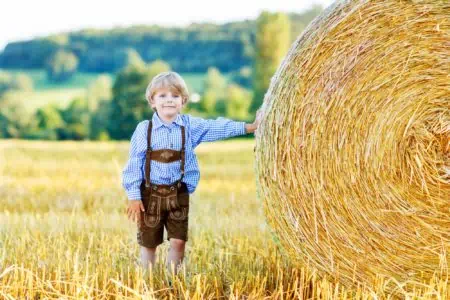
If you’re searching for unique, interesting names for your new son, you’ll find a massive choice of German male names below. Although you may think the German language only has harsh pronunciations, there are some superb German names for boys with strong and inspiring meanings.
With some exotic pronunciations and interesting meanings, how can you choose only one name? But we’re here to help!
Whether you have a German connection, have explored the country, or simply enjoy German folktales and myths, we’ve compiled 105 strong German boy names for you to enjoy.
105 Popular German Names for Boys
You’ll appreciate these classic German boy names if you need inspiration for your new son’s name.
Adam
Adam is a spiritual name as the first man, which provides an excellent name choice if you want to connect your son to your religious beliefs. Adam is a consistently popular name in many countries, including Germany. So, if you’re looking for a familiar name that still has a German connection, Adam is a good choice.
- Origin: Hebrew
- Meaning: Son of the red earth
- Pronunciation: Ah-dam
- Namesakes: Adam Sandler, an American actor and funny man who has been in over 60 movies since the early 1990s.
- Popularity: Although Adam peaked in popularity in 1984, it consistently ranks in the top 100 in the U.S.
Adelbert
While Adelbert may have a traditional sound, it has a very inspiring meaning. If you want to encourage the traits of honesty, courage, and generosity, or you want your son to be a light in the lives of others, Adelbert is a nice option. You can use the nickname Bert and pay tribute to a relative if you don’t want to use the more traditional Albert.
- Origin: German
- Meaning: Noble & bright
- Pronunciation: A-del-bert
- Namesakes: Adelbert von Chamisso, a German poet, best known as the creator of Peter Schlemihl, a story in which a man barters away his shadow.
- Popularity: Adelbert has rarely been used in the U.S since the 1930s.
Alaric
Alaric is an unusual name in the U.S, but may be poised for a revival due to the character Alaric Saltzman in the T.V. shows The Vampire Diaries and its spin-off Legacies. Naming your son Alaric could inspire him to be a decisive and strong leader.
- Origin: German
- Meaning: All-powerful ruler
- Pronunciation: Al-ah-rik
- Namesakes: Alaric Jackson, an American football player who plays for the LA Rams in the NFL.
Albrecht
Albrecht is a German form of Albert and a related name of Adelbert. Albrecht is a great choice if you want a more unusual name to pay tribute to a relative called Albert. You could inspire him to grow into a noble man, well regarded for his strong character.
- Origin: German
- Meaning: Noble
- Pronunciation: AL-brekht
- Variations: Albert
- Namesakes: Albrecht Durer, a German painter and printmaker. He was a theorist of the German Renaissance, best known for his high-quality woodcut prints.
Alvin
Many may associate this name with the cartoon chipmunk, Alvin. Alvin is a wonderful choice if you want to inspire your son to value friendship and be a good friend to those around him.
- Origin: German
- Meaning: Friend
- Namesakes: Alvin Toffler, an American writer, businessman, and futurist, best known for his discussions on the digital revolution and communication revolution.
- Popularity: Alvin peaked in popularity in the 1930s in the U.S but has consistently ranked in the top 1,000.
Andreas
Andreas is a German form of Andrew, a traditional name with spiritual connections. St Andrew was not only one of Jesus’ disciples but is the patron Saint of Scotland, singers, maidens, fishermen, and women wanting to be mothers. If you want a name that will connect your son to your religious beliefs, Andreas is an excellent alternative to the more traditional Andrew.
- Origin: German
- Meaning: Man
- Pronunciation: An-dray-as
- Namesakes: Andreas Christensen, a Danish soccer player, who plays for the Denmark national team and the UK club Chelsea.
- Popularity: While relatively unknown in the U.S before 1962, Andreas consistently ranks in the top 1,000.
Anton
Anton is the German form of Anthony, offering strong spiritual links through Saint Anthony, the patron saint of lost things. Naming your son Anton could also allow you to express what a priceless gift he is in your life.
- Origin: German
- Meaning: Priceless
- Namesakes: Anton Yelchin, an American actor, best known for his role in the reboot of Star Trek movies before his accidental death.
- Popularity: Anton is quite rare, with only 0.01% of boys born in the last decade in the U.S named Anton.
Armin
Armin is a lovely name if you want to inspire your son to look out for others. By naming your son Armin, you could encourage him to protect and care for those around him.
- Origin: German
- Meaning: Guardian
- Pronunciation: Ahr-min
- Namesakes: Armin Shimmerman, an American actor, best known for the television shows Buffy the Vampire Slayer and Star Trek: Deep Space Nine.
- Popularity: Armin is rarely seen in the U.S.
Arndt
Arndt is used as a surname and first name, as the German form of Arnold. If you are looking for a unique form of Arnold or want to inspire your son to be independent, strong-willed, and competitive, Arndt is an excellent name choice.
- Origin: German
- Meaning: Eagle
- Pronunciation: Ar-nt
- Variations: Arno
- Namesakes: Arndt Pekurinen, a Finnish conscientious objector and pacifist who was imprisoned between 1929 and 1931 for refusing mandatory conscription.
Artur
Artur is the German form of Arthur, both derived from the Greek or Roman Artus. Artur is one of the most badass German boy names, as it could inspire your son to be as powerful and fierce as a bear. Bears are also family-focused, protective and caring, which are admirable traits to encourage in your son.
- Origin: German
- Meaning: Bear-like
- Pronunciation: Ar-tuhr
August
August could be an excellent way to express how “magnificent” you feel about your new baby boy and inspire him to grow into a man others will admire. August can also be a good name choice for summer babies or for those born this time of year, no matter what season.
- Origin: German
- Meaning: Magnificent
- Pronunciation: Ow-guwst
- Popularity: While consistently ranked in the top 1,000 in the U.S, August has had an upward popularity trend, reaching 121 in 2021.
Axel
Axel is derived from Absalom, the son of King David in the Bible. Axel is also featured as Eddie Murphy’s character in the Beverly Hills Cop movies, Axel Foley and Axel Heck, the oldest son on The Middle in Jules Verne’s Journey to the Center of the Earth. Whether you’re a fan of these works of fiction or want to inspire your son to seek a peaceful resolution to any situation, Axel is a cool name.
- Origin: German
- Meaning: Father of peace
- Pronunciation: A-ksəl
- Namesakes: Axel Rose, an American singer and frontman of the heavy metal band Guns N’ Roses.
- Popularity: Axel ranked #76 in the U.S in 2021.
Bastian
Bastian is the lead character in the German children’s fantasy book and movie The Neverending Story. Bastian is also a short form of Sebastian, which is far less common here in the U.S., but is more popular in many European countries, including Germany.
- Origin: German
- Meaning: Man of Sebastia
- Pronunciation: Bas-tyan
- Variations: Sebastian
- Namesakes: Bastian Schweinsteiger, a German professional soccer player, who was part of the 2016 FA winning team and is now a German broadcaster.
- Popularity: While Sebastian ranked in the top 20 in the last 4 years in the U.S., Bastian remains relatively rare.
Benedict
Benedict is a unique option to the overused Benjamin or Ben. Benedict belonged to a Saint who created the Benedictine Order. Naming your son Benedict could be an excellent way to connect your son with your religious beliefs. Benedict can express how blessed you feel at becoming his parents and your wish that he lives a blessed life.
- Origin: German
- Meaning: Blessed
- Pronunciation: Behn-e-dikt
- Namesakes: Benedict Cumberbatch, an English actor, best known for his role as Doctor Strange in the MCU and TVs Sherlock.
- Popularity: Benedict consistently ranked in the U.S. top 1,000 until 1968 and has been slowly rising over the last 50 years, ranking in the top 1,000 in 2018 and 2021.
Berengar
Berengar is a unique name in the U.S, but it has been popular in Germany and other European countries throughout history. If you’re interested in powerful German boy names and want to encourage him to be a warrior for a good cause, Berengar is quite a keeper.
- Origin: German
- Meaning: Bear & spear
- Pronunciation: Ber-en-ghar
- Namesakes: Berengar I and Berengar II, 9th Century Italian kings.
Bernhard
Bernhard is the German form of Bernard. The modern world can be challenging, but you can inspire your son on the right path with the name Bernhard. You could enable your son to cope with the obstacles he may face during his lifetime. Bears are also very protective, using their considerable strength to protect their cubs, which could inspire your son to become a strong and caring man.
- Origin: German
- Meaning: Strong as a bear
- Pronunciation: Bern-hartd
- Namesakes: Bernhard Raimann, an Austrian football player for the Indianapolis Colts in the NFL.
- Popularity: Bernhard is quite rare and has not ranked in the top 1,000 in the U.S since 1917.
Bertram
Bertram may seem a little old-fashioned but is due for a popularity revival. Ravens are among the most intelligent, playful, and witty bird species. So, if you want to encourage these traits in your son, Bertram could be a great name choice. Of course, you can use the cute nickname Bertie as a pet name.
- Origin: German
- Meaning: Bright raven
- Pronunciation: Behr-tram
- Popularity: Bertram has been rare since the 1970s in the U.S.
Bjorn
While primarily recognized as a Scandinavian name, Bjorn is also a German male name. Bjorn is another “bear” related name, which could encourage your son to be strong, caring, and protective.
- Origin: German
- Meaning: Bear
- Pronunciation: Bee-yorn
- Namesakes: Bjorn Borg, a Swedish tennis player, ranked Sweden’s #1 in 1979 and who held 11 Grand Slam titles.
- Popularity: Bjorn has ranked in the top 1,000 in the U.S since 2017.
Botho
Naming your son Botho could express how he’s a messenger from God, connecting your son to your religious beliefs. A “messenger” could also be someone who carries important communications, which may encourage your son to be an excellent negotiator.
- Origin: German
- Meaning: Messenger
- Namesakes: Botho Strauss, a German playwright best known for Der Junge Mann or The Young Man.
- Popularity: Botho is rarely used outside Germany and some African countries.
Bruno
Bruno is a classic favorite among German names for boys. In 1084, Saint Bruno of Cologne founded the Carthusian order of monks, so naming your son Bruno could connect your son to your religious beliefs. Bruno has also appeared in fiction, including Lewis Carroll’s Sylvie and Bruno and Iris Murdoch’s Bruno’s Dream.
- Origin: German
- Meaning: Armor
- Pronunciation: Broo-no
- Namesakes: Bruno Mars, an American singer, best known for his song Grenade.
- Popularity: Bruno has ranked in the top 1,000 in the U.S for over 20 years.
Christian
Christian has great secular appeal if you want to connect your son to your religious beliefs. While Christian is used as a girl and boy name in the U.S, it hasn’t been a female name in Germany since the Middle Ages.
- Origin: German
- Meaning: Follower of Christ
- Pronunciation: Kris-tyan
- Variations: Kristian
- Namesakes: Christian Bale, an English actor and Oscar winner, best known for playing Batman in the Christopher Nolan trilogy and American Psycho.
- Popularity: Christian first peaked in 1996, reaching #24 in the U.S., eventually hitting its all-time high of #21 in 2006.
Christoph
Christoph is a German form of Christopher with similar meaning. Christoph is perfect if you’re looking for a name to connect your son to your religious beliefs but want something a little more unique. The pronunciation is still familiar for English speakers, and you can still use the nicknames, Chris and Chrissy.
- Origin: German
- Meaning: Holds Christ in his heart
- Pronunciation: Kris-tof
- Variations: Christof
- Namesakes: Christoph Waltz, an Austrian-German actor, best known for the Bond movies Specter and No Time to Die, Django Unchained, and Inglourious Basterds.
- Popularity: Christoph ranked in the top 20 in Germany between 1980 and 1986.
Claus
When hearing Claus, your favorite Santa Claus is likely the first figure that comes to mind. Claus could inspire your son to be a great leader or strive for his team to succeed. Claus is an excellent alternative to the more common Nicolas, but you do lose the possibility of using Nick or Nicky as pet names.
- Origin: German
- Meaning: Leads people to victory
- Pronunciation: Klows
- Variations: Klaus
- Popularity: Claus is rare outside of Germany and France.
Conrad
Conrad is a strong, masculine name that’s been consistently popular for over a century. Conrad has also belonged to a Saint. Naming your son Conrad could inspire him to be a good advisor who’s brave enough to speak his opinions, even if they are unpopular.
- Origin: German
- Meaning: Brave counsel
- Pronunciation: Con-rhad
- Namesakes: Conrad Khan, an English actor, best known for his role in the Peaky Blinders TV show.
- Popularity: Conrad has consistently ranked in the top 1,000 in the U.S since 1880.
Curt
Curt is a German boy’s name and short form of Curtis. By naming your son Curt, you could inspire him to be compassionate, self-confident, and objective, which are common traits of courteous people.
- Origin: German
- Meaning: Courteous
- Pronunciation: Kurt
- Variations: Kurt
- Namesakes: Curt Smith, an English singer-songwriter and member of the band Tears for Fears. Kurt Russell, an American actor with a career spanning over 50 years.
- Popularity: Curt has been rarely used since the late 1980s in the U.S.
Daniel
Daniel is a prominent biblical figure and prophet, known as an interpreter of dreams in the Old Testament. While there are other forms, Daniel remains a classic in many countries worldwide. If you want to encourage him not to bow to the judgment of others, Daniel is a classic choice.
- Origin: German
- Meaning: God is my judge
- Pronunciation: Dan-ee-ell
- Namesakes: Daniel Craig, an English actor best known as James Bond. Daniel Radcliffe, an English actor, best recognized as Harry Potter.
- Popularity: Daniel consistently ranks in the top 20 in the U.S.
Dennis
Dennis can be traced back to Dionysius, the Greek god of debauchery and wine. It then arrived in Germany, France, and England through the Normans. St Denis is the patron saint of France. Dennis is a good choice if you are a fan of Greek legends but want a name with German connections.
- Origin: German
- Meaning: God of Nysa
- Pronunciation: Deh-nis
- Variations: Denis
- Namesakes: Dennis Quaid, an American actor with over 100 acting credits in his career spanning over 45 years.
- Popularity: Dennis peaked in popularity in 1946 in the U.S but consistently ranks in the top 1,000.
Dieterich
Dieterich is a form of Theodoric, also related to Theodore and Theo. Dieterich is also the German form of Derek. This makes Dieterich a great alternative if you want a unique or modern-sounding form of Theodore or Derek.
- Origin: German
- Meaning: Ruler of the People
- Pronunciation: Dee-ter-ick
- Variations: Diederich, Dieter
- Namesakes: Dieterich Buxtehude, a German composer and organist from the Baroque period, widely regarded as an influence on Johann Sebastian Bach.
Dirk
Dirk is a short and sweet name with a powerful meaning- a great way to inspire your son to be a leader. Dirk is also related to Derek. So, if you want to name your son after a family member but find Derek a little old-fashioned, Dirk is an excellent alternative.
- Origin: German
- Meaning: The people’s ruler
- Namesakes: Dirk Bogarde, an English actor best known for the classic movie, A Bridge Too Far.
Egon
For many, the only exposure we have to Egon is through the nerdy genius and founding member of the Ghostbusters movies. By naming your son Egon, you could inspire him to be a strong warrior, whether fighting for justice or standing behind a worthy cause.
- Origin: German
- Meaning: Strong with a sword
- Pronunciation: E-gawn
- Namesakes: Egon Schiele, an Austrian painter, best known for his expressionist and nude self-portraits.
- Popularity: Egon is rarely used outside Germany and France.
Eike
Eike is a cute, short form for names beginning with Eg, Ecke, or Agi, but has become a name in its own right. Eike is a catchy name that’s ideal for any little warrior.
- Origin: German
- Meaning: Sword
- Pronunciation: IE-ke
Elias
Elias is another version of Elijah, a key biblical figure known as a miracle worker and great prophet. Elias is a lovely name if you want to surround him with love and grace.
- Origin: German
- Meaning: God is Jehovah
- Pronunciation: i-lie-as
- Variations: Elia, Elijah
- Namesakes: Elias Pettersson, a Swedish ice hockey player, who plays in the NHL for the Vancouver Canucks.
- Popularity: Elias broke into the top 50 in the U.S. in 2021.
Elmar
Elmar is a short form of Edelmar, which is an ancient Germanic name. Elmar is cute and easy for English speakers to pronounce. Naming your son Elmar could inspire him to strive for acclaim and take a stand in his battles.
- Origin: German
- Meaning: Famous blade
- Popularity: Elmar is mostly heard in Germany and Iceland and little elsewhere.
Emil
Emil is a particularly popular name in northern Germany but is also related to Emilio and Emile. Emil is an excellent name choice if you want to inspire your son to continually strive for excellence.
- Origin: German
- Meaning: To excel
- Pronunciation: Em-eel
- Variations: Emile
- Namesakes: Emil Nolde, a German-Danish painter and one of the first Expressionists.
- Popularity: Emil has not ranked in the top 1,000 in the U.S since the mid-1980s.
Emmerich
Emmerich may be most familiar as a surname through film director Roland Emmerich, while it’s also known as a first name in Germany. Emmerich is related to the German name Henry. If you want your son to have a regal name with a more exotic sound, Emmerich could provide the perfect option.
- Origin: German
- Meaning: Ruler of the home
- Pronunciation: Em-er-ick
Ernst
Ernst is the German form of Earnest and is perfect if you want to encourage your son to be a serious man. While Earnest is considered old-fashioned, it’s also a little more unusual. If you want to pay tribute to a relative but want an alternative to Earnest, Ernst could provide the solution.
- Origin: German
- Meaning: Serious
- Pronunciation: Earn-st
- Namesakes: Ernst Junger, a German author and highly decorated soldier known for Storm of Steel, his World War I memoir.
- Popularity: Ernst has rarely been used in the U.S. since the 1920s.
Ewald
Ewald is a unique name with a straightforward pronunciation for English speakers. If you have a connection to the law or aspirations for your son to be a lawyer or police officer, Ewald could be a nice name.
- Origin: German
- Meaning: Powerful in the law
- Pronunciation: Ee-wald
- Namesakes: Ewald Lienen, a German soccer manager, former player, and technical director at St Pauli in Hamburg.
- Popularity: Ewald has been rarely used in the U.S. since the 1920s.
Felix
If you feel fortunate with your new baby or your ultimate wish for him is to be happy, Felix is a superb name choice. Felix can be traced back to its Latin origins and has belonged to saints and popes, including a Roman governor of Judea in the New Testament.
- Origin: German
- Meaning: Happy, fortunate
- Pronunciation: Fee-lix
- Namesakes: Felix Baumgartner, an Austrian daredevil, BASE jumper, and skydiver, known for his Red Bull Stratos project stunt, jumping from a helium balloon in the stratosphere and landing in New Mexico.
- Popularity: Felix ranked #193 in the U.S. in 2021.
Ferdinand
Ferdinand is derived from the old Spanish name Ferdinando and has the Germanic components of “journey” and “brave.” While Ferdinand is considered a Spanish name, it was brought to the Iberian Peninsula by the Visigoths. If you want to inspire your son to have the confidence to be bold in all his adventures, Ferdinand is quite a keeper.
- Origin: German
- Meaning: Bold voyager
- Pronunciation: Fehr-dee-nand
- Namesakes: Ferdinand Magellan, a Portuguese explorer, credited with the first expedition to circumnavigate the globe.
- Popularity: Ferdinand has rarely been used in the U.S. since the 1970s.
Florian
Flower-based names are unusual when looking for boy names, but Florian does carry a boyish appeal. Florian is the patron saint of firefighters and those in danger from water. If you’re a Harry Potter fan, you could take inspiration for your son’s name from Florian Fortescue, the Diagon Alley ice cream shop owner.
- Origin: German
- Meaning: Flowering
- Pronunciation: Flor-ee-ahn
- Namesakes: Florian Wirtz, a German professional soccer player who plays for the national team.
- Popularity: Florian has rarely been used in the U.S. since the 1940s.
Frank
Frank is a Germanic name used to refer to members of the Germanic tribe, the Franks. These were settlers in the 3rd-century and 4th-century in regions that are now modern-day France, the Netherlands, and Belgium. Frank could be perfect if you have a connection to these areas or want to inspire your son to have a free spririt.
- Origin: German
- Meaning: Free-man
- Variations: Franz
- Namesakes: Frank Sinatra, an American singer, affectionately known as old blue eyes. Frank Lampard, a former British soccer player and team manager.
- Popularity: Although Frank has been steadily declining in popularity over the last 100 years, it remains in the top 500 in the U.S.
Friedrich
Friedrich is the German form of Frederick, which has become less common over recent decades. If you want to pay tribute to a Frederick, but prefer a unique alternative, Friedrich could be a good option. Friedrich could also encourage your son to be a leader who seeks a peaceful resolution to any conflict.
- Origin: German
- Meaning: Peaceful ruler
- Pronunciation: Free-drikh
- Variations: Fritz
- Namesakes: Friedrich Nietzsche, a German philosopher credited for exerting a profound influence on modern intellectualism.
- Popularity: Friedrich is rare outside of Germany and France.
Georg
Georg is the German form of George. George has a long history in English-speaking countries, such as George Washington, the 1st President of the U.S, Prince George of Cambridge, and Saint George, the patron saint of England. George is also scattered through American and English literature. Whether you have a favorite historical figure or character called George or want to inspire your son to be in touch with the land, Georg is a unique alternative to the conventional George.
- Origin: German
- Meaning: Farmer
- Pronunciation: GEH-awrk
- Popularity: Georg is rarely used outside Germany and Austria, but has declined in popularity since the 1990s.
Gerhard
Gerhard is the German form of Gerald, meaning you can still use Gerry as a nickname. Naming your son Gerhard could inspire him to be a great and powerful leader.
- Origin: German
- Meaning: Ruler with the spear
- Pronunciation: gair-hard
- Popularity: Gerhard has rarely been seen in the U.S. since the 1930s.
Gilbert
Gilbert has had a consistent appeal from Gilbert in the Anne of Green Gables books and movies to Johnny Depp’s character in What’s Eating Gilbert Grape. Whether you want to take inspiration from your favorite fictional character or encourage him to be a man of his word, Gilbert could be the perfect name. You can also use the nicknames Gil or Bert as pet names.
- Origin: German
- Meaning: Shining pledge
- Pronunciation: Gil-behrt
- Namesakes: Gilbert Burns, a Brazilian MMA fighter and grappler, who is a three-time World Champion.
- Popularity: Gilbert peaked in the U.S. in 1930 but remains in the top 1,000.
Gunter
For many English speakers, the most familiar bearer is the central park barista Gunther, who had a major crush on Rachel Green in the famous NBC sitcom Friends. Unlike this shy Gunther, you could inspire your son to be bold and brave in all his battles and challenges.
- Origin: German
- Meaning: Bold warrior
- Pronunciation: Gun-ther
- Variations: Gunther
- Namesakes: Gunter Grass, a German poet, novelist, playwright, sculptor, and illustrator who won the 1999 Nobel Prize in Literature.
- Popularity: Gunter is rarely seen outside Germany, where it has fallen out of favor since the 1950s.
Gustav
The Goths were a Germanic nomadic people in the 3rd and 4th-century who fought against Roman rule and helped bring about the Roman Empire’s downfall. Whether you want to inspire your son to be a fierce warrior or stand firm against a regime, Gustav could be a winner.
- Origin: German
- Meaning: Staff of the Goths
- Pronunciation: Gus-taf
- Popularity: Gustav has been rarely seen in the U.S. since the 1930s.
Hans
Hans is the short form of Johannes, but has been used as a first name for decades. Most recently, Hans belonged to the prince in the animated film Frozen. If you want to connect your son to your religious beliefs or want him to feel surrounded by God’s grace, Hans is a lovely name.
- Origin: German
- Meaning: God is gracious
- Pronunciation: Han-z
- Namesakes: Hans Zimmer, a German film score composer, known for the soundtracks on Gladiator and Interstellar.
- Popularity: Hans consistently ranked in the top 1,000 in the U.S. before the 2000s.
Harald
Harald is the German form of Harold, making it a unique option for a somewhat old-fashioned name. Of course, you can still use the nicknames Hal or Harry. Naming your son Harald could inspire him to be a great leader, developing self-assurance and confidence when facing life’s challenges.
- Origin: German
- Meaning: Army ruler
- Pronunciation: Ha-ralt
- Popularity: Harald is prevalent in Germany, Austria, France, and Norway.
Heinrich
Heinrich is a traditional option among German boy names, which has become very rare. Heinrich has never emigrated into the American name pool, likely due to prominent Heinrichs in World War I and II. Heinrich is a mighty name with the cute nickname Harro.
- Origin: German
- Meaning: Estate ruler
- Pronunciation: Hine-rick
- Variations: Heinz
- Namesakes: Heinrich Hertz, a German Physicist, best known for proving the existence of electromagnetic waves.
- Popularity: Heinrich ranked in the top 20 in Germany until the 1920s, when its popularity waned.
Helmut
Helmut is a traditional German male name and very rare in the U.S. If you want to inspire your son to be courageous and protective, Helmut is a lovely option.
- Origin: German
- Meaning: Brave protector
- Pronunciation: Hel-mutt
- Namesakes: Helmut Marko, an Austrian pro racing driver and head of the Red Bull driver development program.
- Popularity: Helmut is rarely seen outside of Germany.
Henry
Henry is derived from the old Germanic Heimrich. Henry has been a popular name with royal families in Germany and England. Henry is the formal name of Prince Harry of Britain. If you want your son to rule his roost, naming him Henry could set him off to a good start.
- Origin: German
- Meaning: Home ruler
- Pronunciation: Hen-ree
- Variations: Henri
- Namesakes: Henry Cavill, a British actor known for playing Superman and Geralt in the Witcher television series.
- Popularity: Henry has declined in popularity since the 1880s in the U.S. but is now on an upward trend.
Herbert
Herbert is derived from old Germanic, and when the Normans introduced Herbert to England, it replaced the old English Herebeorht. While at one time Herbert may have been considered old-fashioned, names that can have cute nicknames like Herbert to Bertie are getting a boost in popularity. So, whether you want your son to have a cute name with an impressive formal name or want to inspire his leadership qualities, consider Herbert.
- Origin: German
- Meaning: Bright army
- Pronunciation: Her-bert
- Namesakes: Herbert Hoover, 31st President of the United States.
- Popularity: Herbert peaked in popularity in 1930 in the U.S., but has been on the decline since.
Hermann
Hermann is a German form of Herman, the more common form in the U.S. Both Hermann and Herman are due for a revival since they have not been in regular use for over a century. Hermann is the perfect name for your little soldier and could equip him to deal with any future battles.
- Origin: German
- Meaning: Warrior
- Pronunciation: Her-man
- Namesakes: Hermann Hesse, a German-Swiss novelist, and poet best known for Steppenwolf.
- Popularity: Hermann has rarely been used in the U.S. since 1880.
Horst
Horst may have also derived from the Germanic element “hros” or “hors” meaning “horse.” If you want to inspire your little boy to be a nature-lover, Horst is worth a try.
- Origin: German
- Meaning: Wood thicket
- Pronunciation: HAWRST
- Namesakes: Horst Kohler, a German politician who was President of Germany between 2004 and 2010.
- Popularity: Horst peaked in popularity in the 1930s in Germany.
Hubert
Hubert comes from the Germanic elements “hug,” meaning “heart, mind,” and “beraht,” meaning “bright.” It could be a lovely name to inspire your son to be compassionate and loving. You can also use the cute nickname Hubie or Bertie.
- Origin: German
- Meaning: Bright heart
- Pronunciation: Hoo-behrt
Jakob
Jakob is the German form of the more familiar Jacob. Jacob has ancient roots in the Latin Iacobus and Hebrew Ya’aqov. Jacob was an Old Testament patriarch and the youngest son of Isaac and Rebecca. The 12 tribes of Israel all evolved from Jacob’s lineage. As with Jacob, you can still use the nickname Jake, but your son can benefit from a unique spelling.
- Origin: German
- Meaning: Supplanter
- Pronunciation: Jay-kob
Jan
Jan is the German form of John, but it carries the same religious significance. John is a significant spiritual figure as one of Jesus’ disciples and John the Baptist. Whether you want to connect your son to your religious beliefs or use a unique form of John, consider Jan.
- Origin: German
- Meaning: God is gracious
- Pronunciation: Yan
Jasper
Jasper can be traced back to the Latin Gaspar. It’s also featured in the Bible as a gemstone brought to the infant Christ. Jasper has been increasingly popular over the last two decades. While Jasper features in classic literature through the works of Thomas Hardy, it’s also the name of the Civil war era vampire in the Twilight saga books and movies.
- Origin: German
- Meaning: Bringer of treasure
- Pronunciation: YAHS-per
- Namesakes: Jasper Conrad, a British designer best known for his home collections.
- Popularity: After plateauing between 1920 and 1990 in the U.S., Jasper is becoming increasingly popular.
Jonas
Jonas is the German version of Jonah, an Old Testament figure known for being swallowed by a whale. It also features as a surname, best known for the Jonas brothers. Naming your sweet boy Jonas could inspire him to be a symbol of peace.
- Origin: German
- Meaning: Dove
- Pronunciation: Jo-nass
- Popularity: Jonas consistently ranks in the top 1,000 in the U.S.
Jörg
Jorg is another German form of George. If you like the name George, but want a unique spelling, while retaining the same pronunciation, Jorg is an excellent option.
- Origin: German
- Meaning: Farmer
- Pronunciation: YUURK
- Variations: Jurgen
- Popularity: Jorg ranked in the top 20 between 1958 and 1971 in the U.S.
Josef
Josef is the German form of Joseph, derived from the Hebrew name Yosef, meaning “he will add.” If you love the idea of Joseph but prefer a unique alternative, Josef could be a fantastic alternative.
- Origin: German
- Meaning: Jehovah increases
- Pronunciation: YO-zehf
- Popularity: Between 1964 and 2006, Josef ranked in the top 1,000 in the U.S.
Karl
Karl is a classic name and German form of Charles. While Charles may be a little old-fashioned, Karl is short and cool for boys but can also be a strong name as he grows into a man. Karl could be a solid pick if you want to name your son after a Charles or inspire him to treasure freedom.
- Origin: German
- Meaning: Free man
- Pronunciation: Ka-hrl
- Namesakes: Karl Lagerfeld, a German fashion designer best known for being the driving force of the Chanel revival.
- Popularity: Karl consistently ranks in the top 1,000 in the U.S.
Kaspar
Kaspar is the German form of Caspar and is related to Jasper. Naming your son Kaspar is a fantastic way to express how he’s a precious treasure in your life. Kaspar is also unique, so while it does have a familiar pronunciation for English speakers, your son should be the only Kaspar in his class.
- Origin: German
- Meaning: Keeper of treasure
- Pronunciation: Kass-pahr
Kay
Although in English, Kay is a derivative of Katherine and therefore a girl’s name, in German, Kay has a different meaning. Kay is a German form of Caius and is a wonderful way to become parents to a lovely little boy. It also belonged to Agent Kay in the Men in Black movies!
- Origin: German
- Meaning: Rejoicing
- Pronunciation: Kay
Leon
Leon is derived from the Greek “leon” meaning “lion,” and is closely related to Leonard and Leonardo. Leon is a perfect name if you want to inspire your son to be brave, courageous, and protective. Leon is a little more uncommon than Leo, probably due to the Hollywood actor Leonardo DiCaprio.
- Origin: German
- Meaning: Lion
- Pronunciation: Lee-on
- Namesakes: Leon Rippy, an American actor with a career spanning almost four decades, best known for his role in Deadwood and The Patriot.
- Popularity: Leon waned in popularity after 1940 in the U.S., but since 2010 has had an upsurge in popularity.
Leopold
Leopold is a formal Germanic name beginning with the letter L, but you can still use the nickname Leo if you want a pet name. By naming your son Leopold, you could inspire him to be courageous, regardless of his life challenges.
- Origin: German
- Meaning: Brave people
- Pronunciation: Leo-pold
- Namesakes: King Leopold of Belgium who ruled between 1865 and 1909.
- Popularity: Leopold has been rarely seen worldwide since the 1920s.
Louis
Louis is derived from Ludwig and has been a popular name among royalty in France, Germany, and Hungary. Prince William of Britain named his oldest son Louis. Louis is a beautiful option among German boy names, especially if you want to inspire your son to be a warrior of esteem in whatever cause he supports.
- Origin: German
- Meaning: Renowned warrior
- Pronunciation: Loo-ee
- Variations: Luis
- Namesakes: Louis Theroux, a British-American journalist, documentary filmmaker, and broadcaster, best known for his documentaries on Scientology, dementia, and alcoholism.
- Popularity: Louis peaked in popularity in the U.S. in 1914.
Luca
Luca is the German form of Luke, with the same meaning. Luca is a great choice if you want to express how your new son is a light in your life or encourage him to be a light for others in their darkest times. Luca is a little more unique than the more familiar Luke or Lucas.
- Origin: German
- Meaning: Light
- Pronunciation: Loo-kah
- Variations: Luka, Lukas
- Popularity: Luca ranked #42 in the U.S. in 2021.
Manfred
Manfred is derived from the German Frederick. You can still use the same short form of Fred or Manny with Manfred. Manfred is a classic German name, providing a great alternative to the more conventional Frederick. By naming your son Manfred, you could inspire him to be a man of peace.
- Origin: German
- Meaning: Man of peace
- Pronunciation: Man-fred
- Namesakes: Manfred Mann, a British keyboard player and namesake of his 1960s rock band, Manfred Mann.
- Popularity: Manfred is rarely seen outside of Germany and France.
Marcel
Marcel is the perfect name for your little warrior, offering some pop culture references as well. Ross’ pet monkey in the sitcom Friends carried the moniker Marcel and belonged to a key character in the Vampire Diaries spin-off television show The Originals.
- Origin: German
- Meaning: Little warrior
- Pronunciation: Mar-sell
- Namesakes: Marcel Proust, a French novelist considered one of the 20th-century’s most influential authors.
- Popularity: Marcel has consistently ranked in the top 1.000 in the U.S. over the last century.
Markus
Markus is the German form of Mark. Markus is a superb name if you want to inspire your son to be a fearless warrior. Saint Mark wrote the Gospel according to Mark and was instrumental in early Christianity. Naming your son Markus could be an excellent way to connect him to your religious beliefs.
- Origin: German
- Meaning: Warlike
- Pronunciation: Marr-kus
- Variations: Marcus
- Namesakes: Markus Schulz, a German DJ based in Miami, Florida, best known for his radio show, Global DJ Broadcast.
- Popularity: Markus has ranked in the top 1,000 in the U.S. since the 1960s.
Martin
Martin is a powerful name, consistently popular in the U.S. and other countries worldwide. Martin is derived from the Roman Martis, taken from Mars, the Roman god of war. Martin is also the patron saint of France.
- Origin: German
- Meaning: War-like
- Namesakes: Martin Sheen, an American actor with a career spanning 65 years, best known for Apocalypse Now and as the President in The West Wing television show.
- Popularity: Martin has consistently ranked in the top 300 in the U.S. for over a century.
Matteo
Matteo is the German form of Matthew used in other European countries, including Italy. Matthew is one of Jesus’ disciples in the Bible and the patron saint of accountants. Whether you want to connect your son to your religious beliefs or express how he’s your gift from God, Matteo is an excellent alternative to the more common Matthew. Of course, you can still use the cute nicknames, Matt or Matty.
- Origin: German
- Meaning: Gift of God
- Pronunciation: Matt-ah-oh
- Variations: Mateo, Matthias
Maximillian
Maximillian is derived from the Roman name Maximus, which also belonged to a 3rd-century martyr and saint. While Maximillian may be a little long, several nickname possibilities exist, including Max and Maxie. Maximilian is superb if you want to express that your new son is the “greatest” boy on the block!
- Origin: German
- Meaning: Greatest
- Pronunciation: Max-ee-mill-ee-ahn
- Popularity: Maximilian hit the top 1,000 in the U.S. in 1993, reaching its highest score in 1999.
Michael
Michael is derived from Mikha-el, the Hebrew for “who is like God,” belonging to the archangel Michael in the Bible. Michael and Gabriel are the only two archangels recognized by Muslims, Jews, and Christians. Michael is a popular name in pop culture but is also the perfect name to connect your son to your religious beliefs.
- Origin: German
- Meaning: Who is like God
- Pronunciation: Mike-all
- Namesakes: Michael Sheen, a Welsh actor best known for the Underworld movie series.
- Popularity: Michael ranked #17 in the U.S. in 2021.
Milan
Milan is a wonderful name to inspire your son to be considerate, thoughtful, and humble, all traits of being gracious. Milan is an interesting name that’s also a place in Italy. This makes Milan a cool and modern name for any boy or girl.
- Origin: German
- Meaning: Gracious
- Pronunciation: Mill-ahn
Niklas
Niklas is the German form of Nicolas and has a similar meaning. Niklas is a solid option if you like the name Nicolas but want a unique form. By naming your son Niklas, you could inspire him to be a competitive leader who always strives for success. As with the more conventional Nicolas, you can still use Nick as a pet name.
- Origin: German
- Meaning: One who leads to victory
- Pronunciation: Nick-lass
- Variations: Niclas
Nils
Nils is a German form of Nick, making it an excellent alternative to this common name. Nils could be a great way to inspire him to strive for victory, particularly when he’s working with others.
- Origin: German
- Meaning: Victory of the people
- Namesakes: Nils Petersen, a German soccer player, and the first German football player to score five goals with the national team in a single game.
- Popularity: Nils is rarely seen in the U.S.
Norman
Norman derives from the old Germanic “northman” which referred to Vikings. Vikings settled on the coast of France, in the region known as Normandy. So, the term “Northmen” was first used as a nickname for the Scandinavian settlers. Norman could be a subtle tribute if you have a connection to Germany and Scandinavian countries or you’re a fan of Viking myths.
- Origin: German
- Meaning: Northman
- Pronunciation: Norr-man
- Namesakes: Norman Reedus, an American actor best known for the television show The Walking Dead and The Boondock Saints movies.
- Popularity: Norman peaked in popularity in the U.S. in 1931.
Oliver
Oliver is derived from the ancient Germanic Alfinhar, which translates as “elf army.” Oliver declined in popularity since 1880, but from the year 2000 has seen a surge in popularity. This could be due to Olivers in pop culture, including Oliver Queen, the superhero’s alter ego, the Green Arrow, or Oliver Wood, Harry Potter’s Quidditch teammate.
- Origin: German
- Meaning: Olive tree
- Pronunciation: Oh-live-err
- Namesakes: Oliver Reed, a British actor with a career spanning over 45 years, best known for movies Gladiator and Castaway.
- Popularity: Oliver ranked 3rd in the U.S. in 2019, 2020, and 2021.
Oskar
Oskar is thought to derive from the Old English Osgar and is popular in Gaelic legends. Oscar was a mighty warrior and grandson of Finn MacCumhail. While Oscar has recently seen a slight increase in popularity, Oskar could provide a unique alternative.
- Origin: German
- Meaning: Deer friend
- Variations: Oscar
- Popularity: Oskar has been declining in popularity since 1890 in the U.S.
Otto
Like many traditional German male names, Otto fell out of favor due to the two World Wars and has recently increased in popularity. Whether you want to encourage your son to work towards financial freedom or you’re looking for a classic name that now has kitsch appeal, Otto is a great option.
- Origin: German
- Meaning: Wealthy
- Popularity: After decreasing in popularity in the 1920s, Otto has re-entered the top 1,000 over the last decade.
Patrick
While considered an Irish name, Patrick has roots in Latin and was in regular use in many European countries, including Germany. Saint Patrick is the patron saint of Ireland under the name Padraig.
- Origin: Latin
- Meaning: Noble
- Pronunciation: PA-trik
- Namesakes: Patrick Swayze, an American actor best known for the movies Dirty Dancing and Ghost.
- Popularity: Patrick has consistently ranked in the top 1,000 in the U.S. since the 1800s.
Paul
Paul is derived from the Latin “Paulus,” which means “humble.” In the Bible, Paul converted to Christianity after Jesus appeared to him after the resurrection. Paul has also been the moniker of several early saints and six popes. Paul has been heavily used in Germany and has ranked in the top 10 for almost 20 years.
- Origin: Latin
- Meaning: Humble
- Pronunciation: POWL
- Namesakes: Paul Thomas Anderson, an American filmmaker, best known for Magnolia and There Will Be Blood.
- Popularity: Paul peaked in popularity in the U.S. in the 1960s.
Peter
Peter is derived from the Greek “petros” for “stone.” Saint Peter was one of Jesus’ disciples, considered to be the first pope. Peter is also a popular name in literature, including J.M Barrie’s Peter Pan and Peter Rabbit from the Beatrix Potter children’s books.
- Origin: German
- Meaning: Stone
- Pronunciation: PEH-tu
- Namesakes: Peter Dinklage, an American actor best known for playing Tyrion Lannister in the television series Game of Thrones.
- Popularity: Peter has ranked in the top 1,000 in the U.S. for over a century.
Philipp
Philipp is the German form of Philip and is the perfect name for nature lovers. Philipp is an excellent option if you have a connection to horses and want to share this with your son.
- Origin: German
- Meaning: Lover of horses
- Pronunciation: FEE-lip
Rainer
Rainer is the German form of Rayner that could inspire your son to be a strong and wise leader. Rainer is a fairly unique name outside of Germany and France, which means it could be an untapped gem for your son.
- Origin: German
- Meaning: Wise army
- Pronunciation: Rain-err
- Namesakes: Rainer Maria Rilke, an Austrian novelist, and poet, considered one of the most intense German-language poets.
- Popularity: Rainer has rarely been used outside of Germany, where it ranked in the top 20 between 1940 and 1960.
Randall
Randall is derived from the English surname Randal. While it’s relatively unknown, Randall has gained some prominence through the television adaptation of the Stephen King book, The Stand. Randall Flagg is the main antagonist in the story.
- Origin: German
- Meaning: Shield wolf
- Pronunciation: Ran-dahl
- Namesakes: Randall Park, an American actor best known for the movie Always Be My Maybe.
- Popularity: Randall peaked in popularity in 1960 in the U.S.
Reinhardt
Reinhardt is the German variant of Reynard, derived from the old Germanic Raginhard. Reinhardt is a great choice if you’re looking for one of the more old-fashioned German boy names.
- Origin: German
- Meaning: Wise army
- Pronunciation: Rein-hart
Roderick
Roderick is derived from the old Germanic “hrod” and “ric,” which combine to create the meaning “famous ruler.” Roderick was in popular use among the Visigoths and Germanic settlements in England before the Middle Ages. It also offers some cute nicknames: Roddy or Rod.
- Origin: German
- Meaning: Famous ruler
- Pronunciation: Rod-er-rik
- Namesakes: Roderick McDowall, an American actor known as Roddy McDowall, best known for the Planet of the Apes movies.
- Popularity: Roderick peaked in popularity in the U.S. in the 1960s and 1970s.
Rolf
Rolf is the short form of Rudolph that became a name in its own right. While Rolf has been rarely used outside of Germany and Norway, Rolf has declined in popularity for years. Many people may associate the name with shamed entertainer Rolf Harris.
- Origin: German
- Meaning: Famous wolf
- Pronunciation: Rawlf
- Popularity: Rolf ranked in the top 1,000 in the U.S. between 1930 and the mid-1960s.
Stefan
Stefan is the German form of Stephen also used in other European countries. Saint Stephen is the patron saint of bricklayers and stonemasons. He was also the first Christian martyr and a deacon in the early church. If you want to connect your son to your religious beliefs, but would like a less common form of Stephen or Steven, consider Stefan.
- Origin: German
- Meaning: Garland crown
- Pronunciation: Stef-ahn
- Variations: Stephan
- Popularity: While consistently ranked in the top 1,000, Stefan peaked in popularity in 1991.
Theo
Theo is a short form of Theodore, now considered a name in its own right. Theo is short and cool and is a wonderful way to connect your son to your spiritual beliefs or showcase that he’s your gift from God.
- Origin: German
- Meaning: Gift of God
- Pronunciation: TEH-o
- Namesakes: Theo James, a British actor best known for the Divergent movie series.
- Popularity: Theo has had an upsurge in popularity in the U.S. since 2010.
Thomas
Thomas has religious significance as one of Jesus’ disciples and has remained a classic name choice in many countries, including Germany. In its short form, Tom belongs to many celebrities, including Tom Cruise, Tom Hanks, and Tom Hardy. Thomas is also a lovely name choice if you’re expecting twins and want a name that reflects your son’s twin status.
- Origin: Greek
- Meaning: Twin
- Pronunciation: TO-mas
- Namesakes: Thomas Jefferson, 3rd President of the United States.
- Popularity: While consistently ranked in the top 1,000 in the U.S, Thomas peaked in popularity in 1951.
Tilman
Tilman is a German form of Theo with similar meaning. If you like the name Theo but find it’s a little common in your social circles, Tilman could provide an excellent alternative. You can also use the cute Till as a nickname.
- Origin: German
- Meaning: People’s ruler
- Pronunciation: Til-mahn
Tim
Tim is a short form of Timothy or Dietmar in Germany, originally from the Greek name Timotheos. It consists of the Greek elements “timao,” meaning “to honor,” and “theos,” for God.
- Origin: German
- Meaning: Honoring God
- Pronunciation: Timm
- Namesakes: Tim Burton, an American filmmaker, best known for Edward Scissorhands and The Nightmare Before Christmas.
- Popularity: Tim peaked in popularity in 1960 in the U.S.
Tobias
Tobias is derived from Tobiah, which is the hero’s name in the Book of Tobit in the Old Testament. Whether you want to connect your son to your religious beliefs or surround him with God’s love and grace, Tobias is a sweet name choice. Of course, you can also use the nickname Toby as a pet name.
- Origin: German
- Meaning: God is good
- Pronunciation: Tob-i-as
- Namesakes: Tobias Menzies, a British actor best known for the television shows Outlander and The Crown.
- Popularity: Tobias has ranked in the top 300 in the U.S. since 2016.
Torsten
Torsten can be traced back to Old Norse legends, which translates as “Thor’s stone.” If you’re a fan of Norse legends or the current MCU superhero movies, Torsten could be a great name choice.
- Origin: German
- Meaning: Thor’s stone
- Namesakes: Torsten Frings, a German soccer player who played for numerous German teams and Toronto FC before going into management.
- Popularity: Torsten ranked in the top 20 between 1960 and 1980 in the U.S.
Uwe
Uwe has a long origin history, derived from Ove, considered a modern form of Aghi, an Old Danish name. If you’re looking for a powerful name that could be the perfect choice for your little warrior, Uwe could be just what you’re seeking.
- Origin: German
- Meaning: Sword
- Pronunciation: oo-veh
Walter
Walter is a Germanic name brought to England by the Normans. Walter replaced the Old English name Wealdhere. While Walter was considered old-fashioned, with the character Walter White in Breaking Bad, Walter may be due for a revival.
- Origin: German
- Meaning: Army ruler
- Pronunciation: Wal-tehr
- Popularity: Walter has been declining in popularity since the early 1900s in the U.S.
Werner
Werner is an Old Germanic name that is unique outside the U.S. If you want to inspire your son to be a protective and strong man, Werner could be a good choice.
- Origin: German
- Meaning: Protecting army
- Pronunciation: Vehr-ner
- Namesakes: Werner Heisenberg, a German physicist best known for his theory of quantum mechanics.
- Popularity: Werner has been rarely seen since the 1940s in the U.S.
Wilhelm
Wilhelm is the German form of William. William has had a revival in popularity in recent years, possibly due to Prince William, Duke of Cambridge and second in line to the British throne. Wilhelm could provide the solution if you like William but want a unique form.
- Origin: German
- Meaning: Resolute protector
- Pronunciation: vil-helm
- Popularity: Wilhelm is rarely seen outside Germany.
Wolfgang
Wolfgang is an ancient German boy’s name that is due for a revival. Wolfgang could be a lovely name choice if you want to inspire your son to value family and friends yet not be afraid to leave familiar terrain. You can even use the super cute Wolfie as a pet name.
- Origin: German
- Meaning: Traveling wolf
- Pronunciation: Wolf-gang
- Namesakes: Wolfgang Amadeus Mozart, an Austrian composer whose music is still enjoyed today.
- Popularity: Wolfgang is rarely seen outside Germany, which peaked in popularity in the 1950s.
Yannick
Yannick is a rare name that’s a wonderful way to connect your son to God’s grace. Naming your son Yannick could be a way to celebrate becoming his parents. You can also use the sweet Yanni as a pet name.
- Origin: German
- Meaning: God is gracious
- Pronunciation: Yan-nick
- Variations: Jannick
- Namesakes: Yannick Noah, a French tennis player who won the French Open in 1983.