Seven colors, fifty sheets, and one very busy box of crayons.
Rainbow coloring pages are the easiest way to hand a kid every color in the box at once. This free printable set runs to 50 sheets, from wide chunky bands a toddler can fill with a fat crayon to a detailed mandala and dense doodled scenes that will keep an older child busy for an hour.
Scroll the list, print the ones you like, and check the age guide below if you are not sure which sheet suits your child. Every page prints on standard letter paper.
The activity ideas further down turn a finished sheet into a suncatcher, a puzzle, or a set of stick puppets, so the coloring does not have to be the end of it.
Unicorn Under the Rainbow
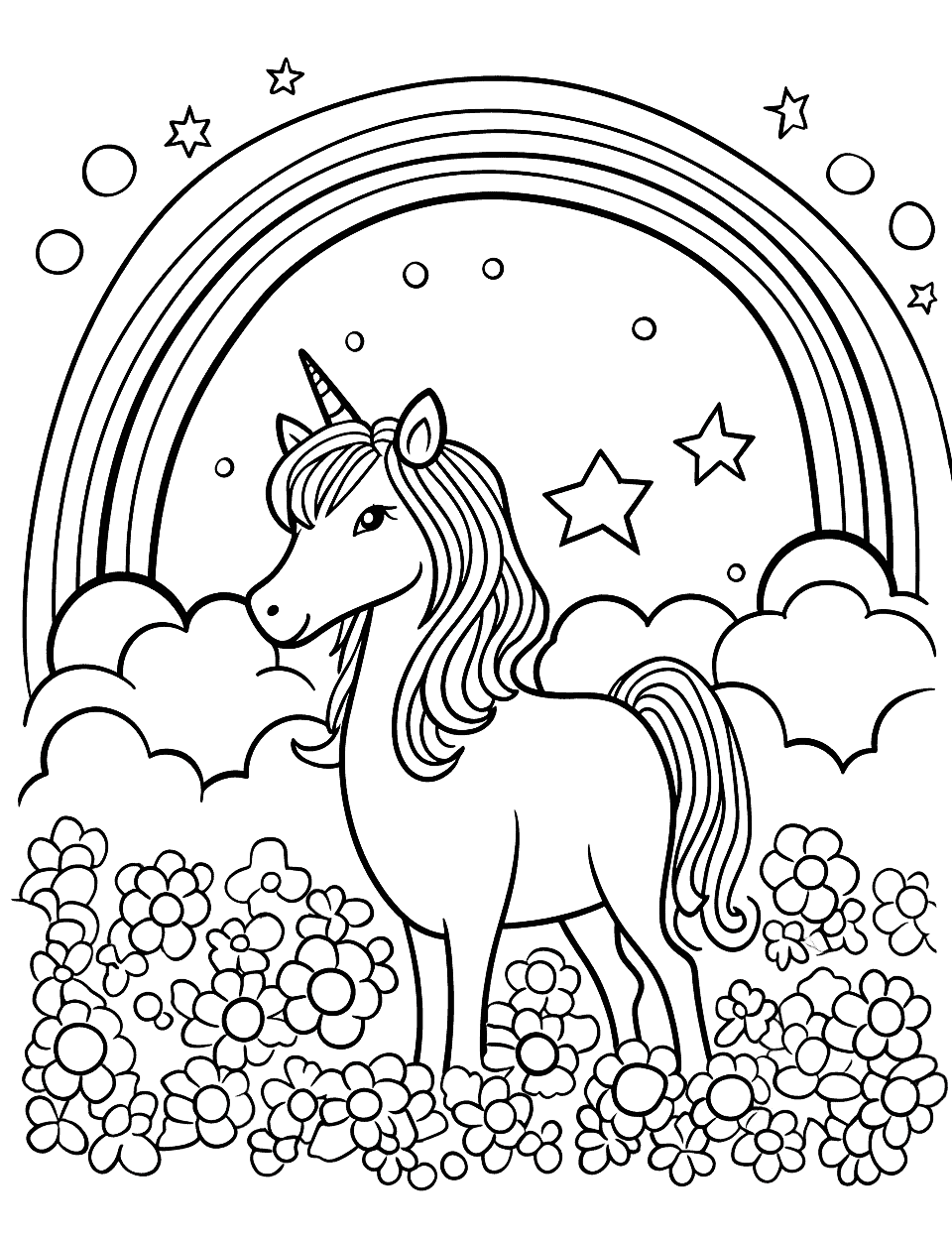
A unicorn with a flowing mane stands in a meadow of small round flowers, with a wide double arch and a scatter of stars behind it. Pastel pencils suit the mane and tail, and the arch above can stay in classic order or go completely invented. The flower bed is built from dozens of little petals, so it works best for a child who already has some patience with small spaces. Younger colorers can fill the arch and the clouds and leave the meadow loose.
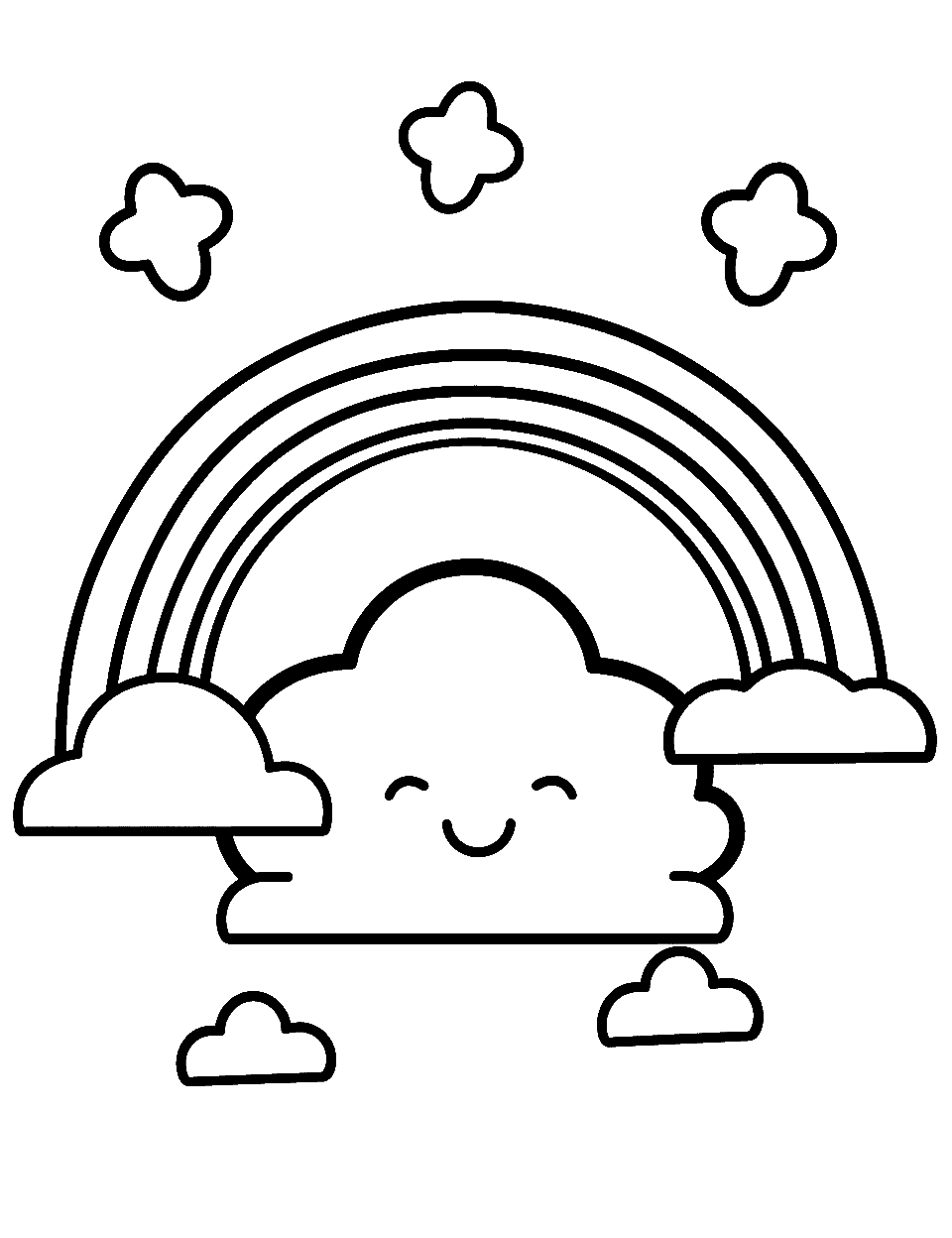
One big smiling cloud sits in the middle of the arch, with two plain clouds propping up the ends and three puffy flower shapes floating above. Soft crayon shades work better here than markers, which keeps the smile from vanishing under heavy ink. The bands are wide and forgiving, so preschool kids can practice their grip without much frustration. Anyone who likes Kawaii style faces will want this one on the fridge.
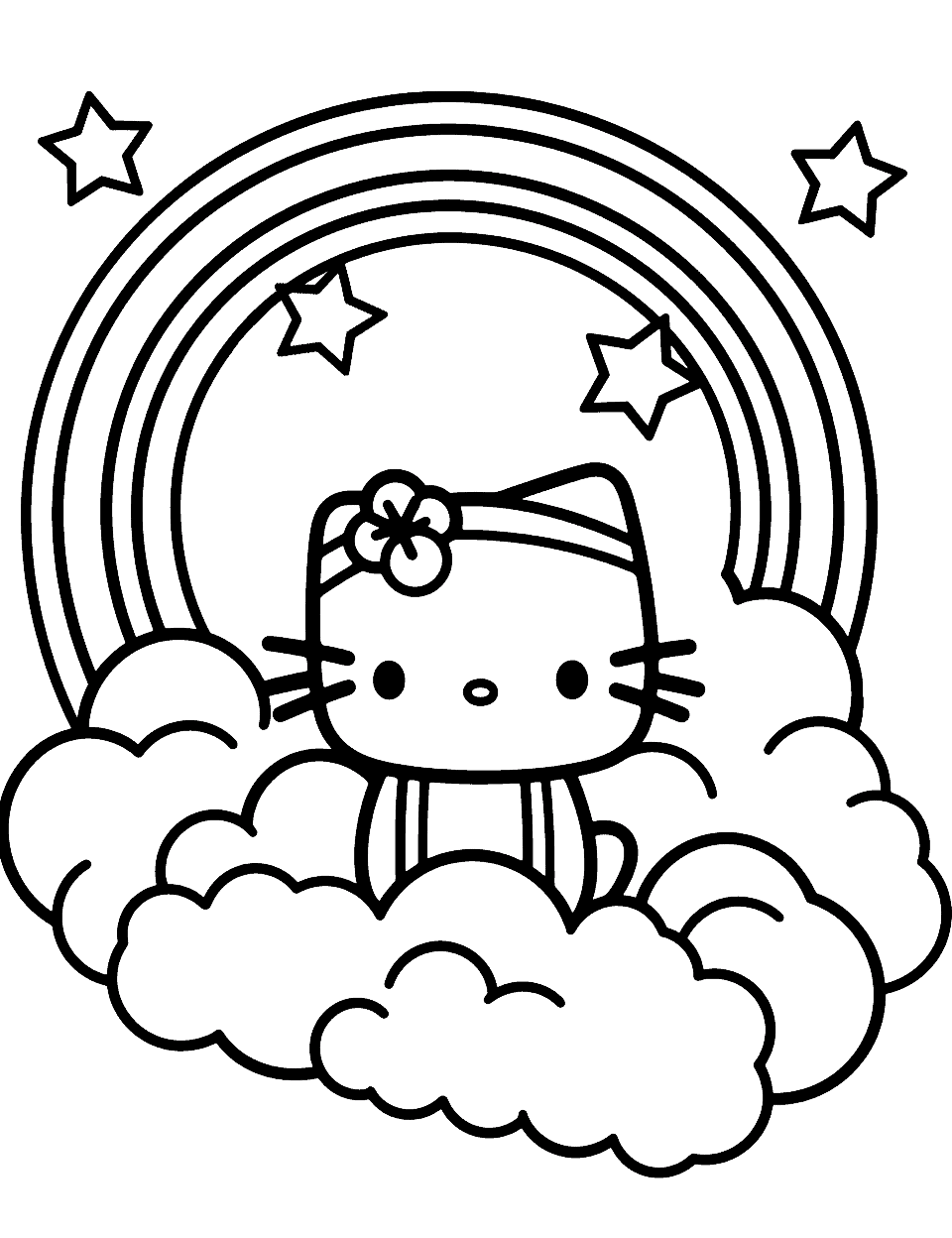
Hello Kitty sits on a fluffy cloud, and a spectrum of colors stretches across the background behind her. Keep the cloud pale so the bands behind it stay the loudest part of the page. It prints fine on plain copy paper for a quick rainy-afternoon activity.
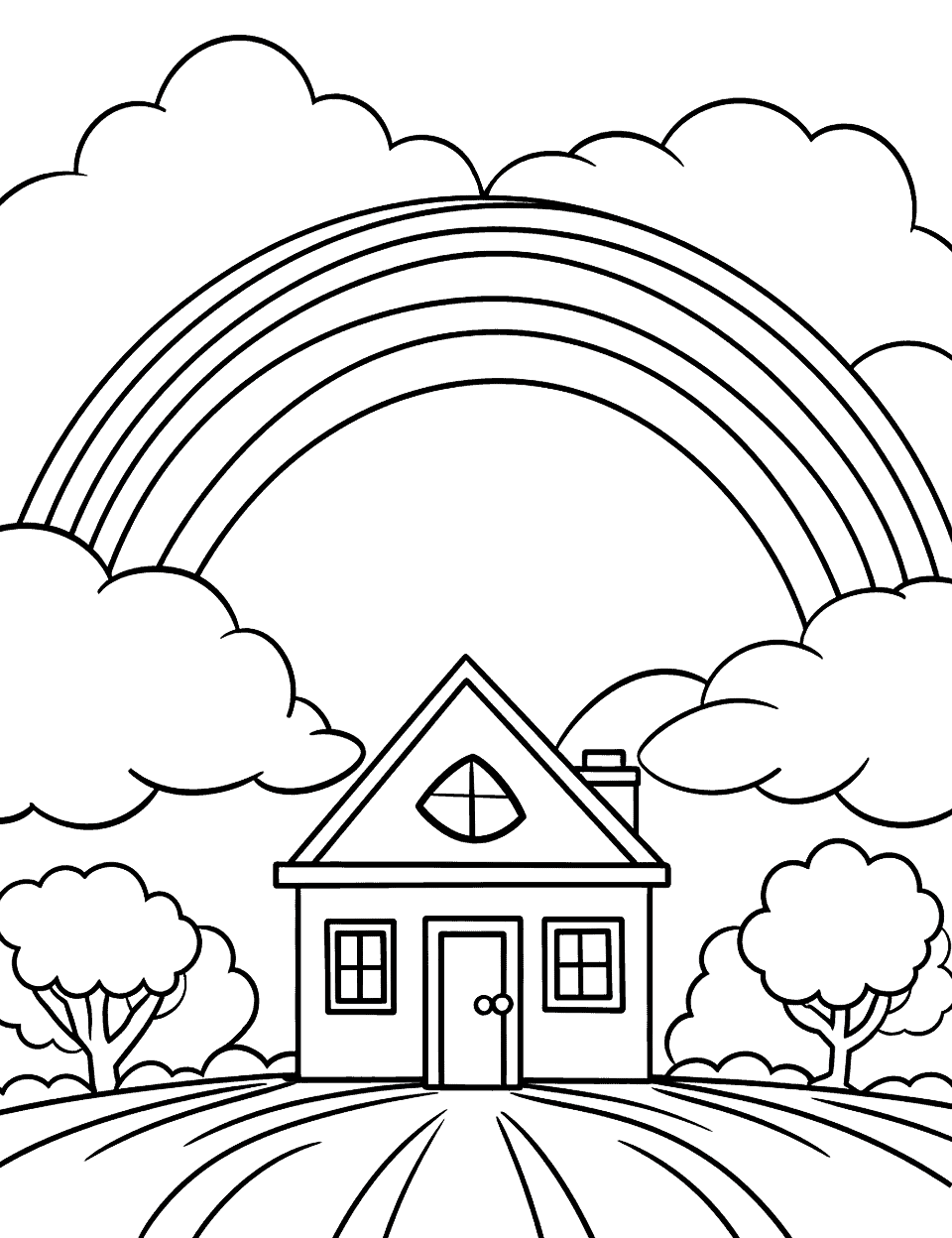
A small house with a peaked roof, a round attic window and a brick chimney sits between two round trees, with a striped field running to the bottom edge and a broad arch overhead. The lines are thick and the areas are large, which is why it also suits a kindergarten group activity where each child takes one band. Warm colors on the roof and cool ones in the sky keep the two halves separate. The field lines sit close together, so a pencil holds them better than a fat crayon.
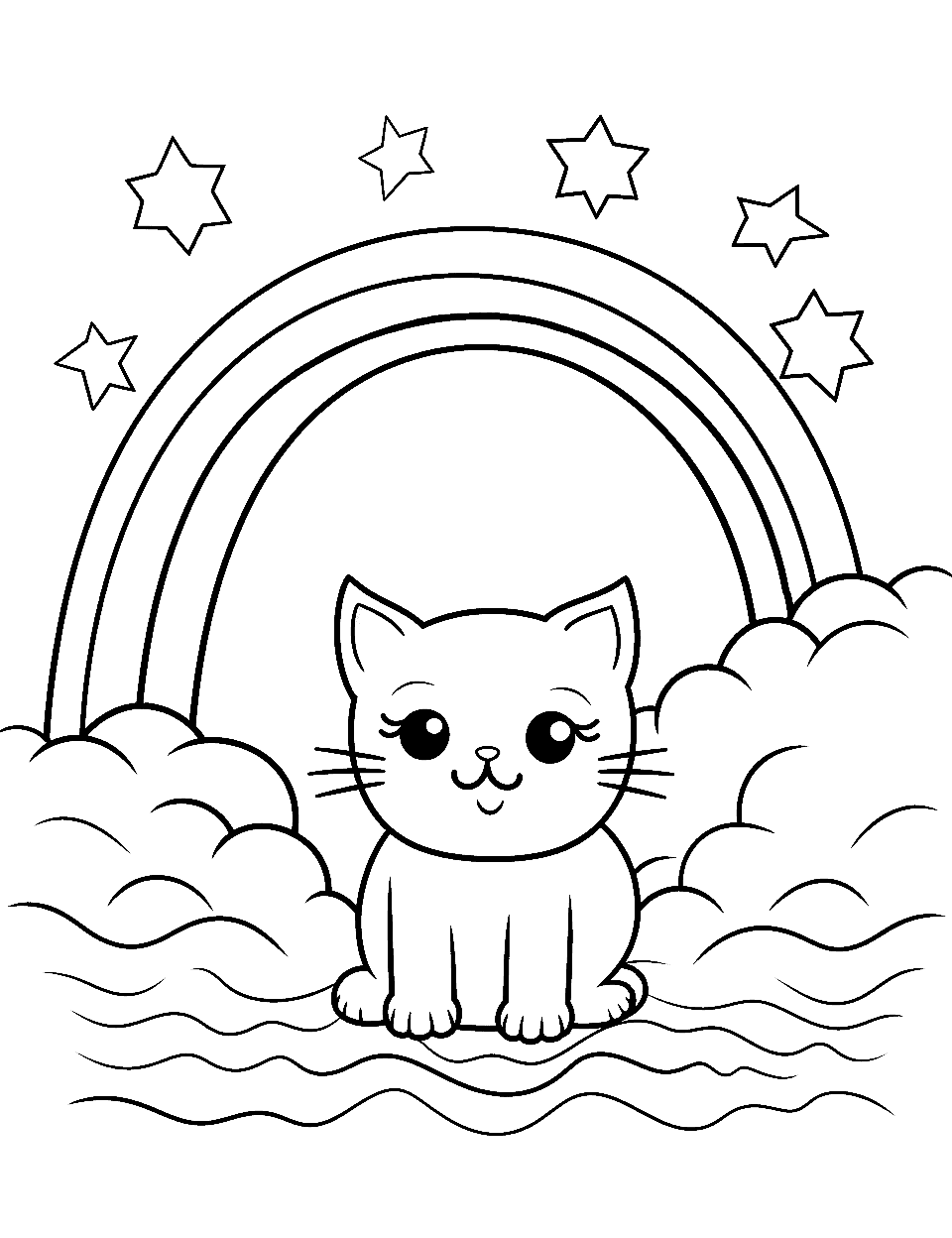
A round faced kitten sits square in the middle of the page, framed by an arch, two banks of cloud and six pointed stars. Bright markers bring the scene to life, though heavier paper stops the ink bleeding through. The wavy ground under the cat is a good spot for a second shade of the same color. Kids past the scribble stage usually finish this one in a single sitting.
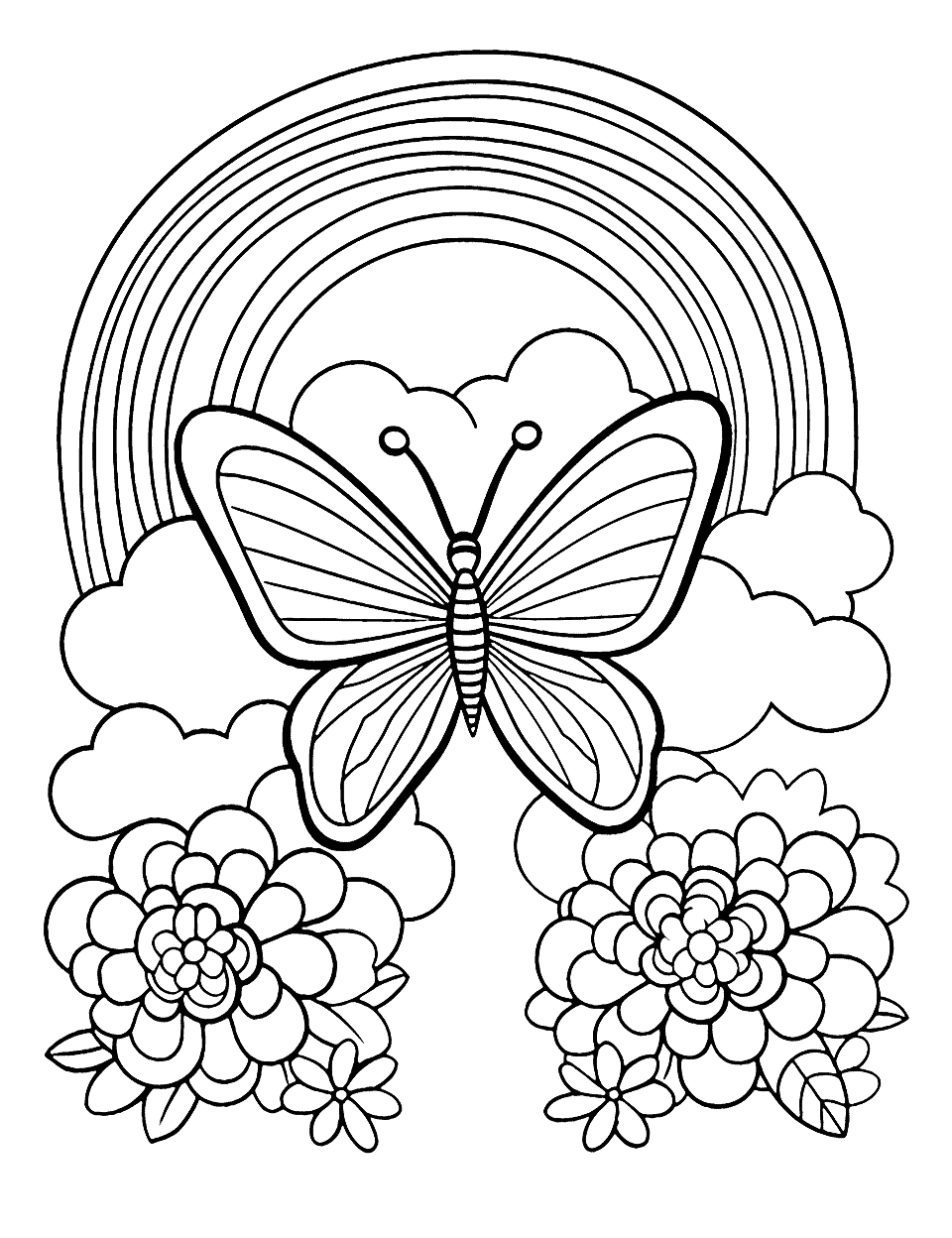
A butterfly with patterned wings flies over a garden. Matching the wing colors to the flowers below gives younger kids a simple rule to follow, which takes the pressure off choosing. Colored pencils give steadier control here than chunky crayons.
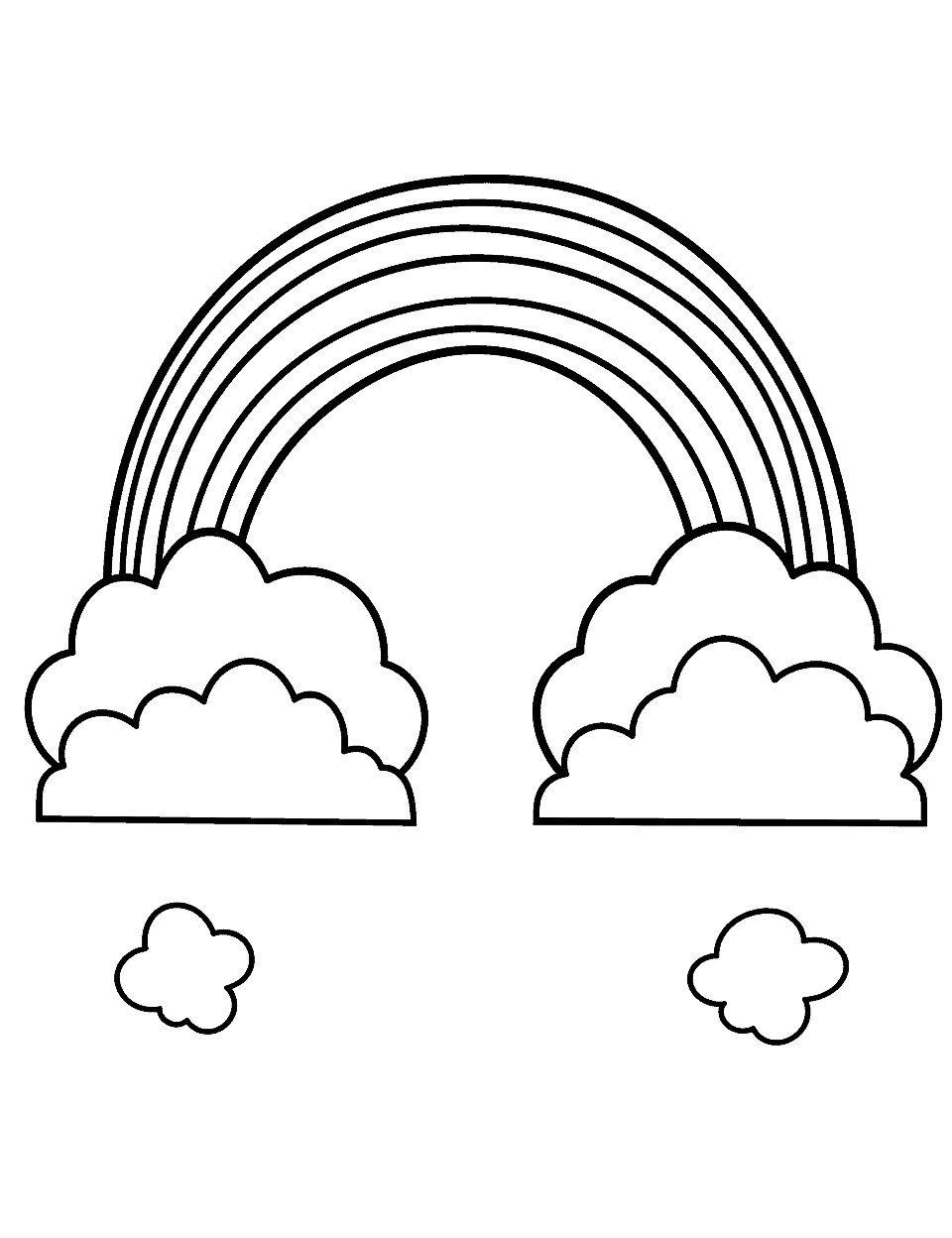
Six bands spring from two big cloud banks here, with two small clouds drifting below and nothing else on the page. Filled in with saturated color it makes a bold poster for a bedroom door or a locker. It is also the easiest sheet here for a color-order lesson, since red belongs on the outer edge and violet on the inner one. Leaving the clouds white gives the bands all the attention.
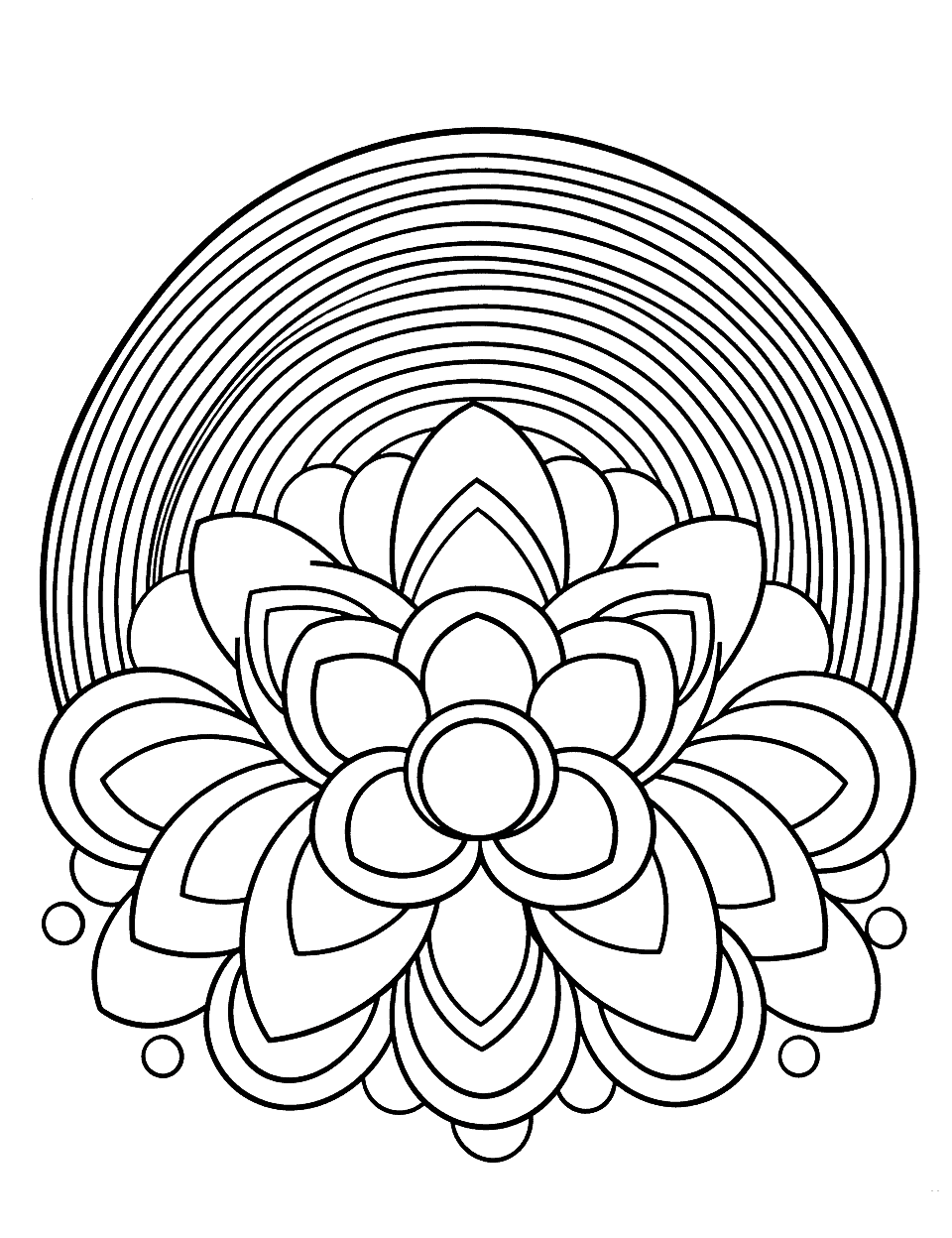
Older kids will enjoy this detailed mandala, which weaves arched patterns into a repeating design. Working from the center outward keeps the pattern balanced. Fine-tip pens hold the small sections better than crayons do, and the page doubles as quiet time for an adult.
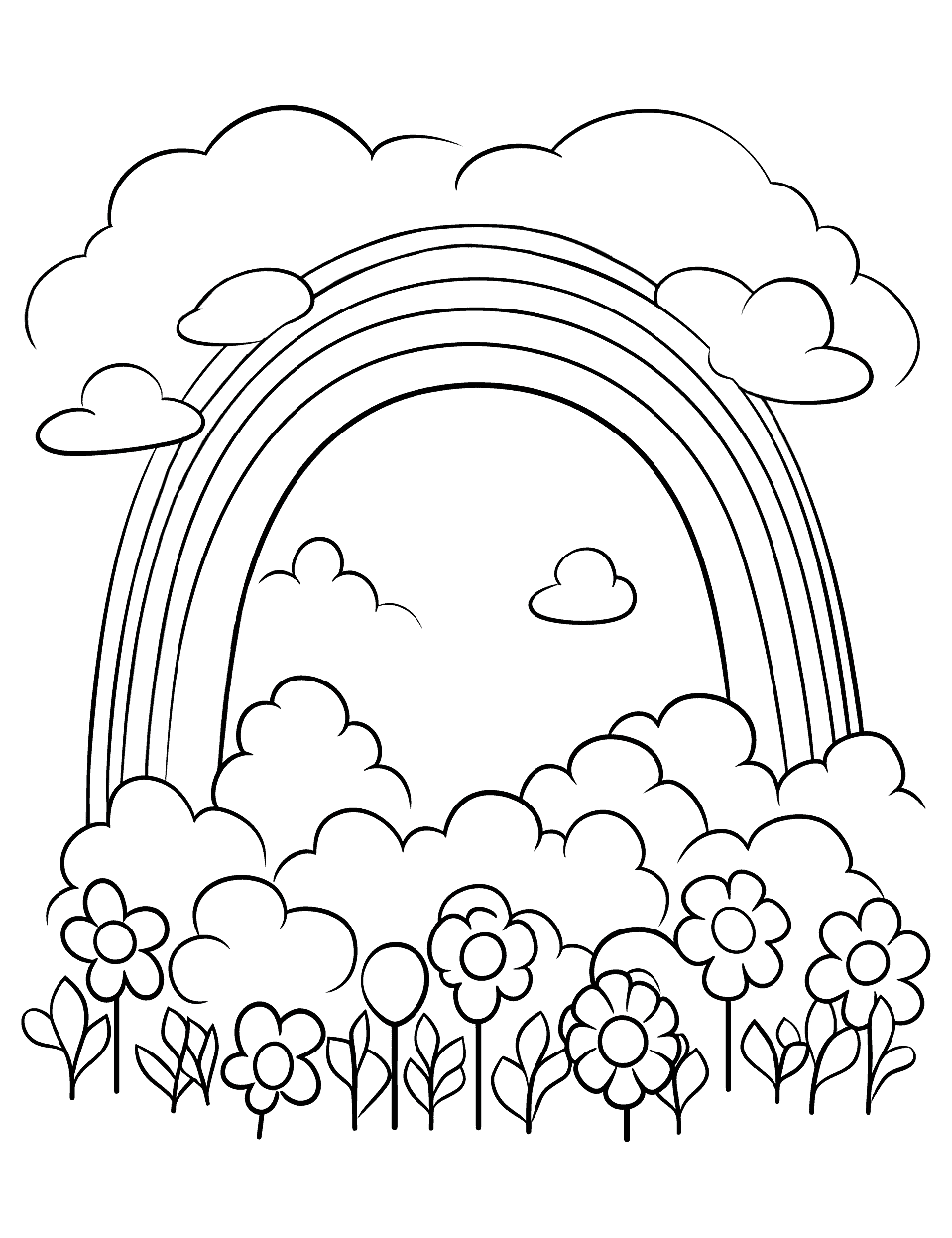
Spring has arrived in this field of blooming flowers, with a large arc framing the scene. Vary the blooms instead of coloring them all one shade so the field reads as a meadow. Good for a spring or Earth Day table activity.
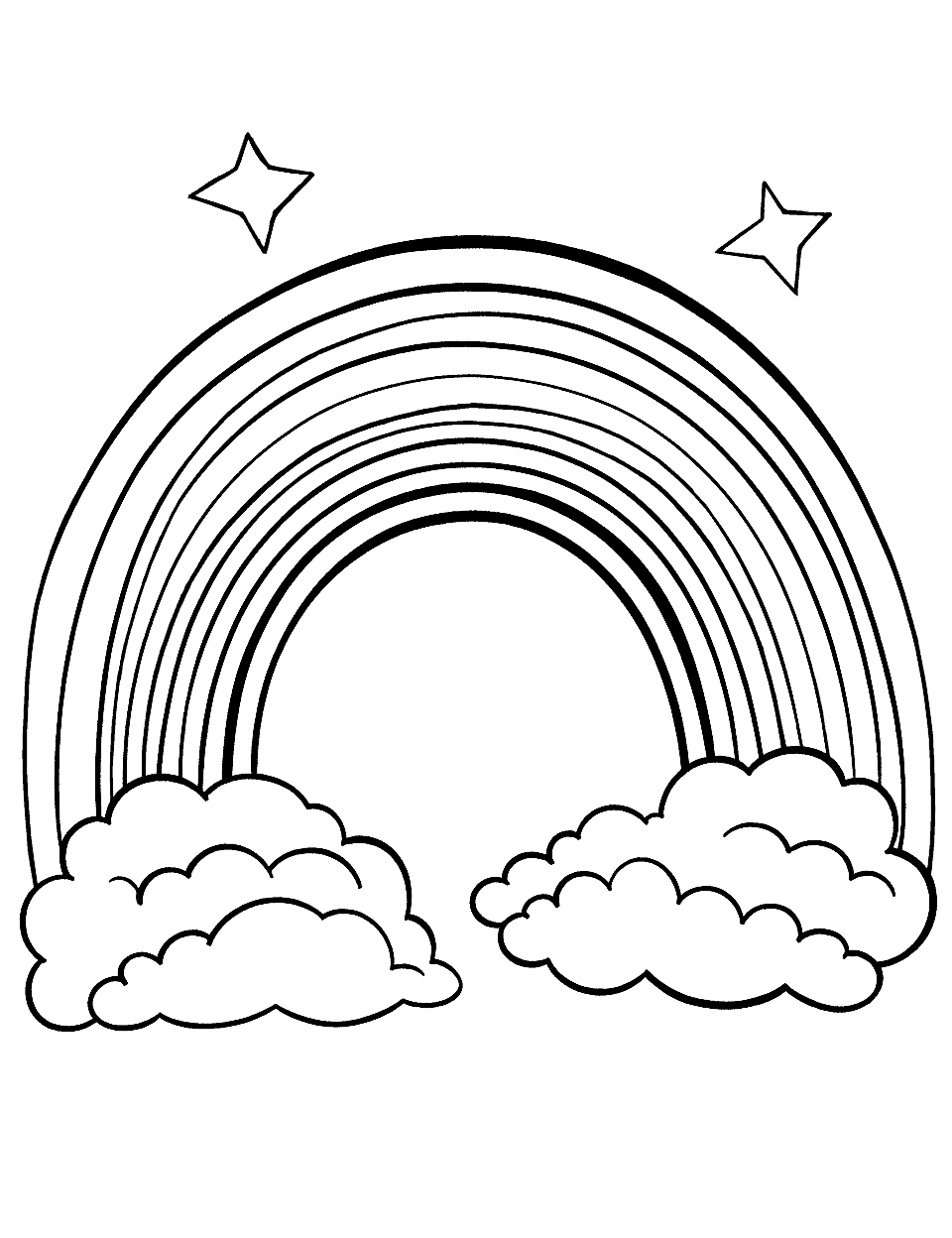
Thick outer lines wrap around a stack of thin bands, with two clouds at the base and two four point sparkles in the sky. It pairs well with a quick talk about how sunlight splits into separate colors inside a raindrop. Blending two shades where the narrow bands meet looks closer to a real bow than hard stripes. The sparkles are small, so save a sharp pencil or a gel pen for those.
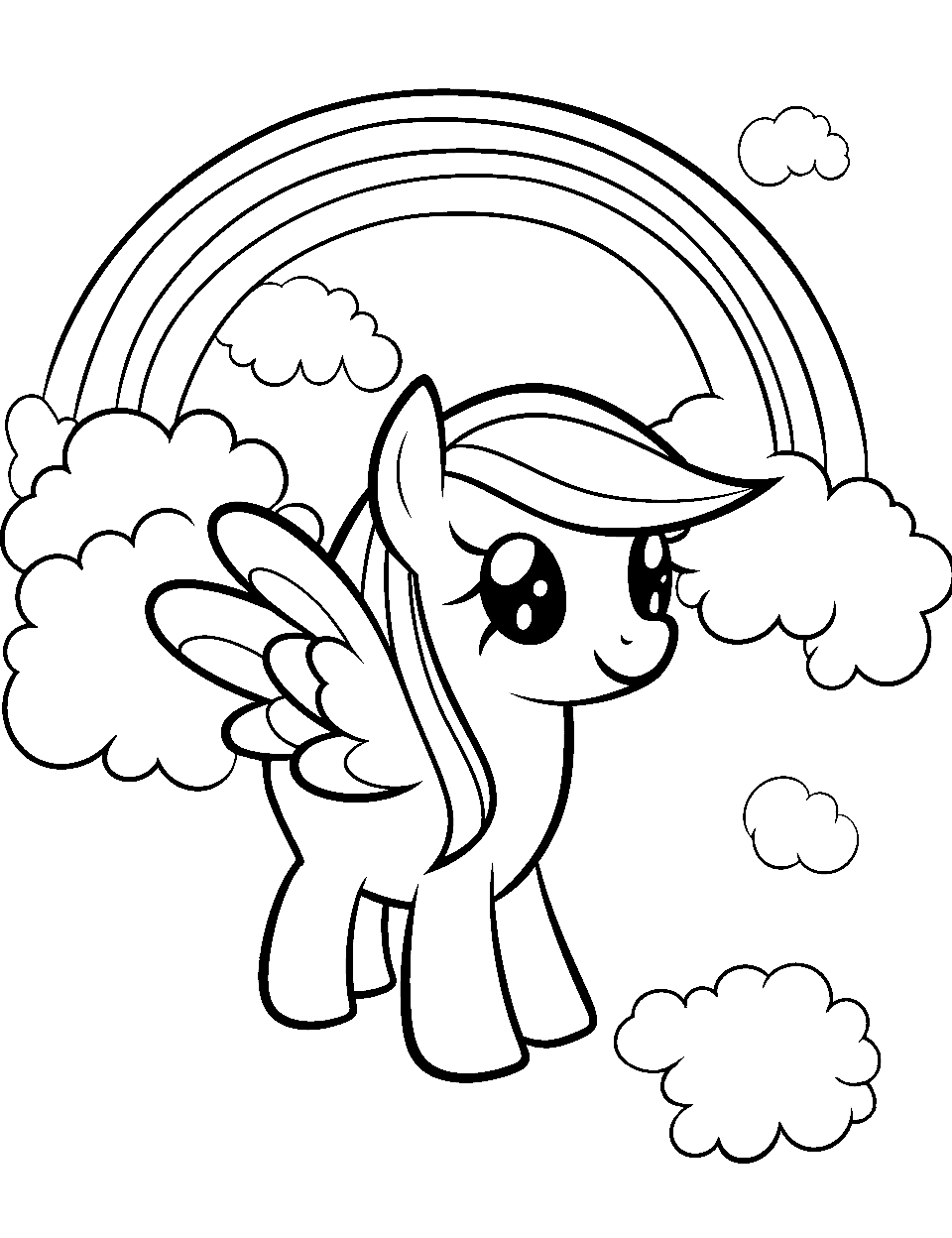
Rainbow Dash stands among the clouds with her wings out and her mane swept forward, an arch curving behind her. This My Little Pony character comes with a fixed palette, so the sheet is a fair test of whether your child wants to copy the show or invent something new. Print two copies and let them try it both ways. The mane and tail are drawn in long strips, which makes them the natural place for the full color run.
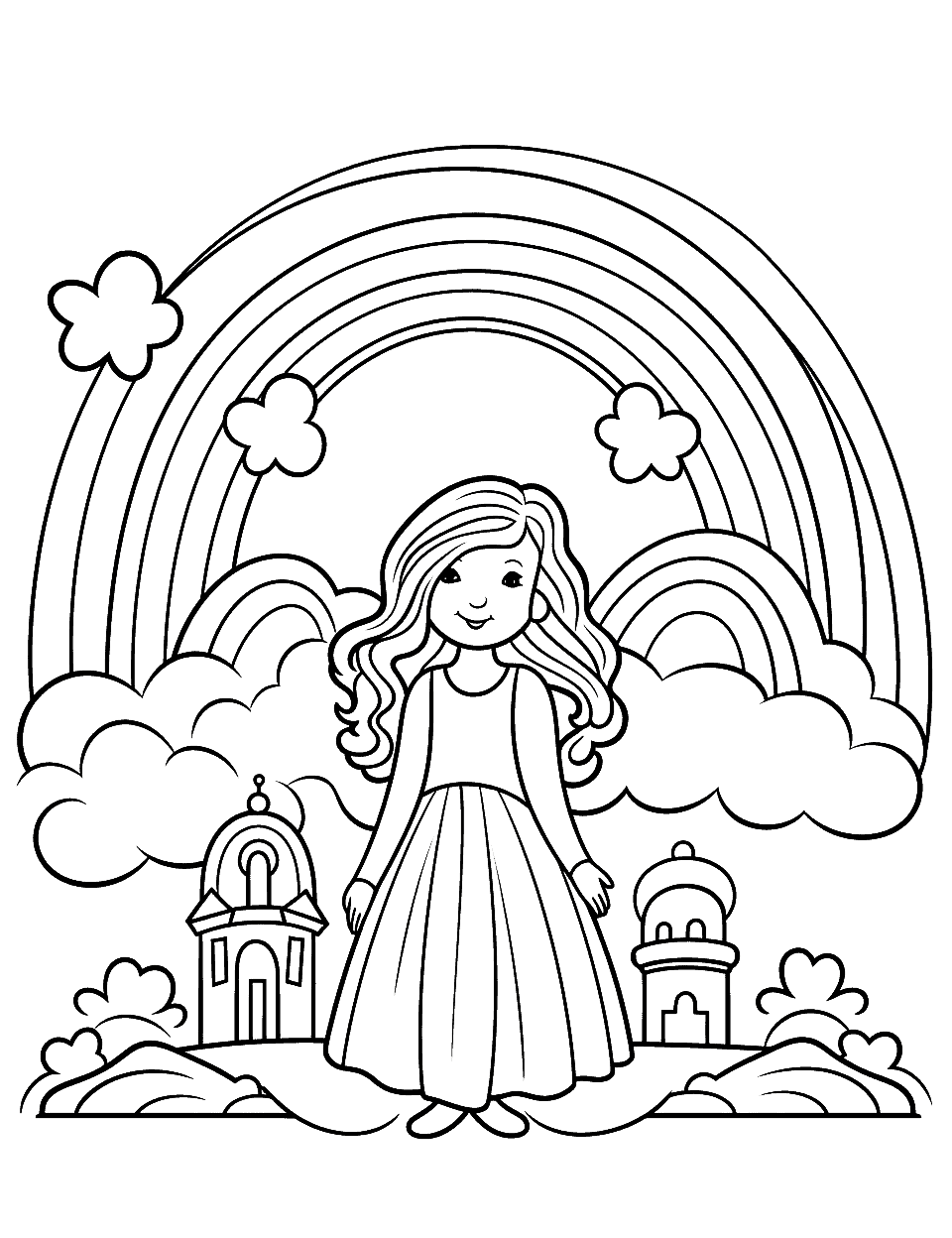
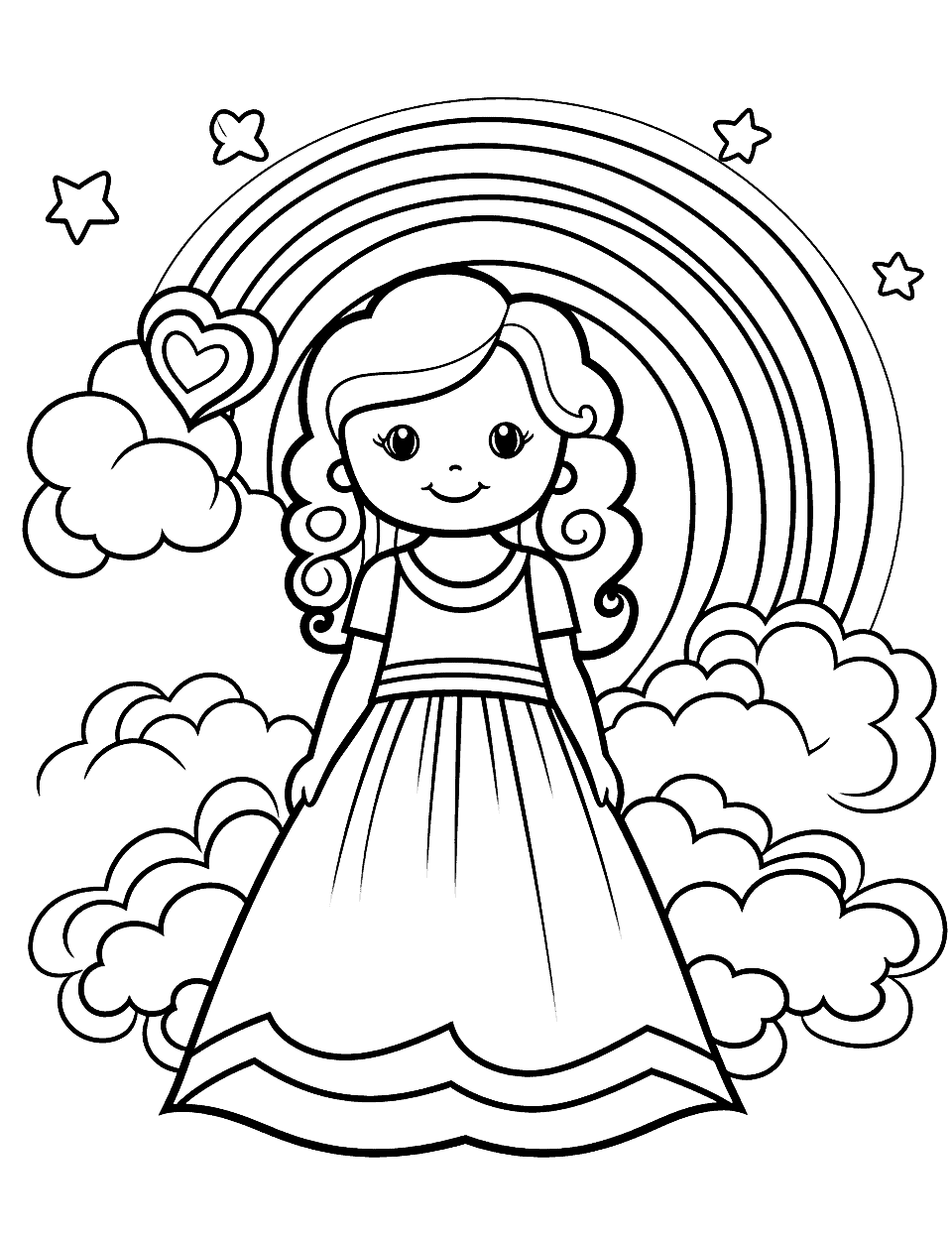
Here a girl in a long dress stands on a grassy hill between two small castle towers, under a big arch with a second smaller one tucked behind the clouds. Grey pencil on the tower stone keeps the sky colors dominant. Her hair is drawn in long wavy strands that take a second shade nicely. There is plenty of open sky to fill, which suits kids who like big areas and few fiddly corners.
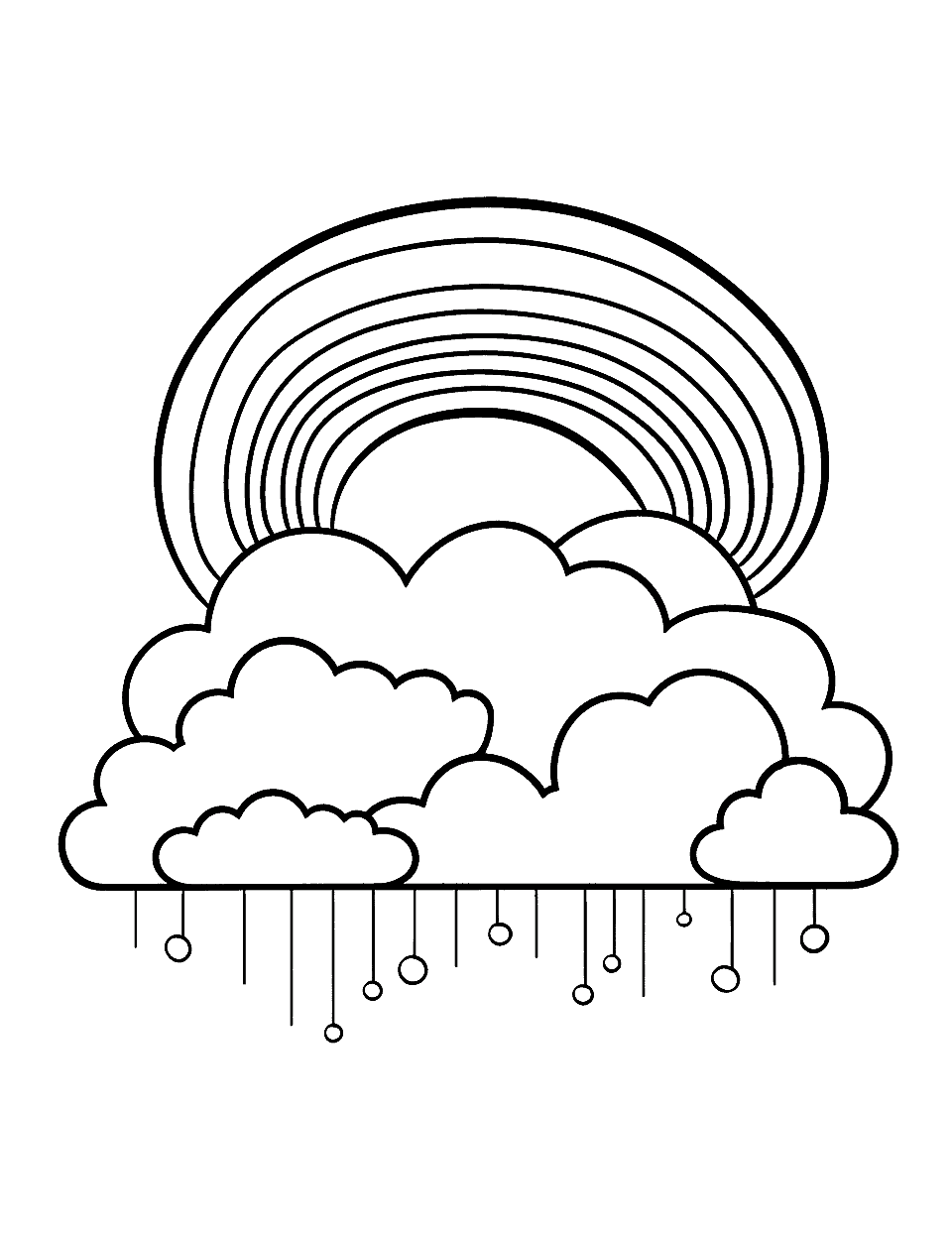
Rain is actually falling in this one, in thin lines with round drops below a deep bank of clouds, while a banded arch rises behind them. That makes it an easy way to talk about weather, since a rainbow needs rain and sunshine at the same moment. Leave the clouds white or barely grey and let the bands carry the page. Pale blue on the drops is plenty, because anything darker fights with the arch.
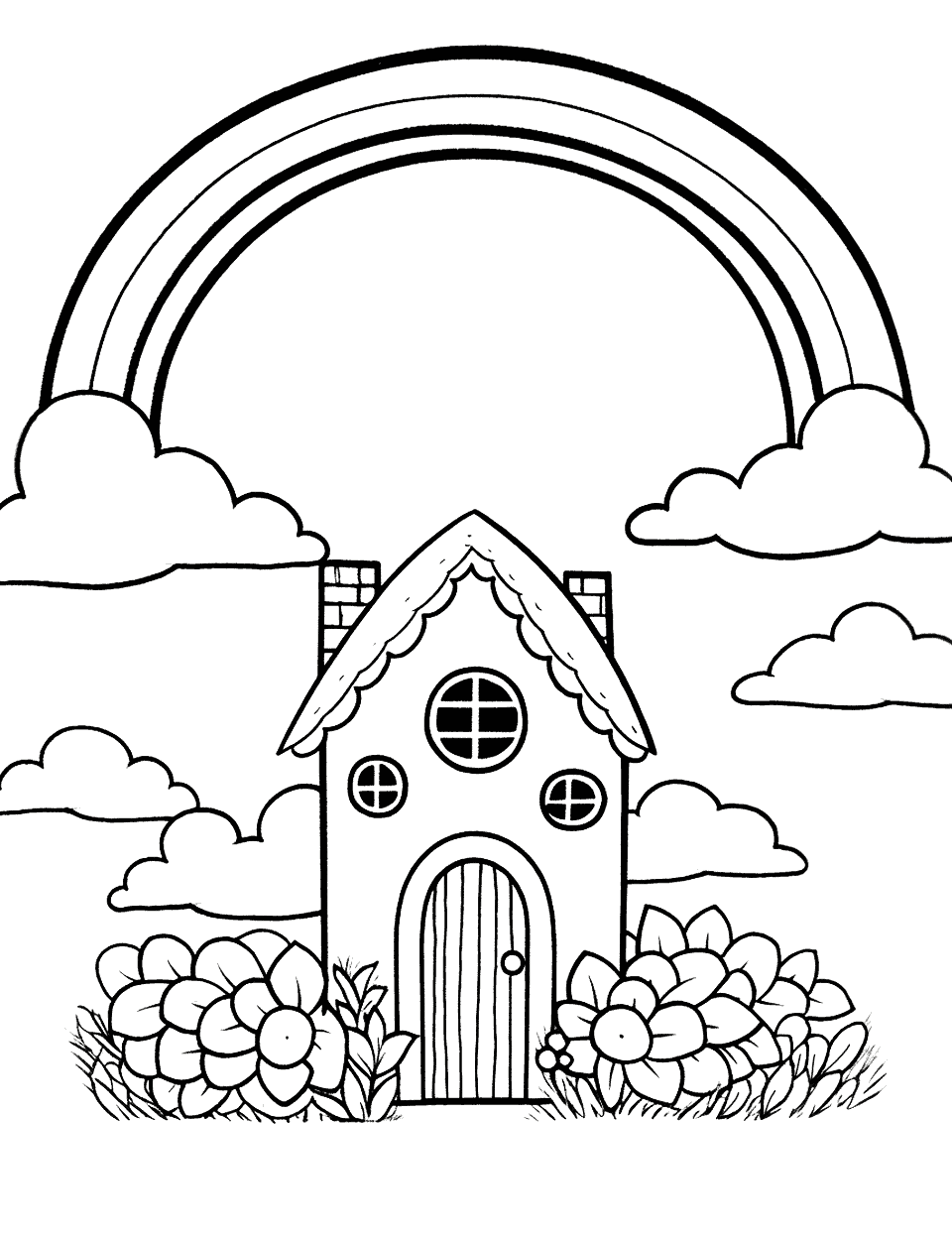
A cute little house sits beneath a bright sky. Warm tones on the home and cool bright hues above give the page an obvious split. Kids often color this one as their own house, so hand over the crayons and let them pick the roof.
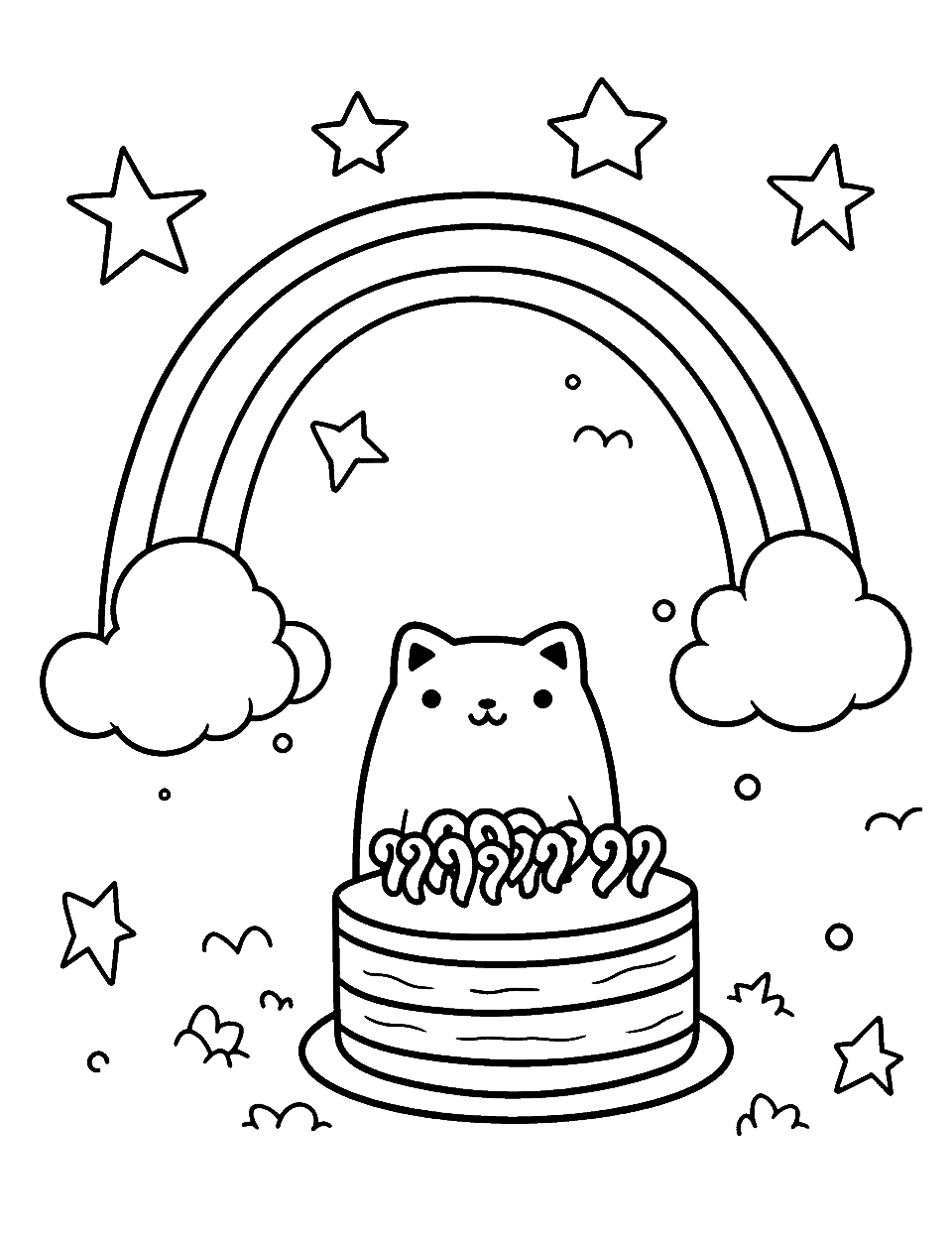
Everyone’s favorite Pusheen style cat peeks over a round layer cake topped with squiggles of frosting, with an arch, two clouds and a scatter of stars around them. The cake is the natural place to use every color in the box, one shade per layer. Save this one for a birthday, where it works as a placemat once you slip it into a plastic sleeve. The little doodle marks in the background are quick to fill and keep a fast worker busy at the end.
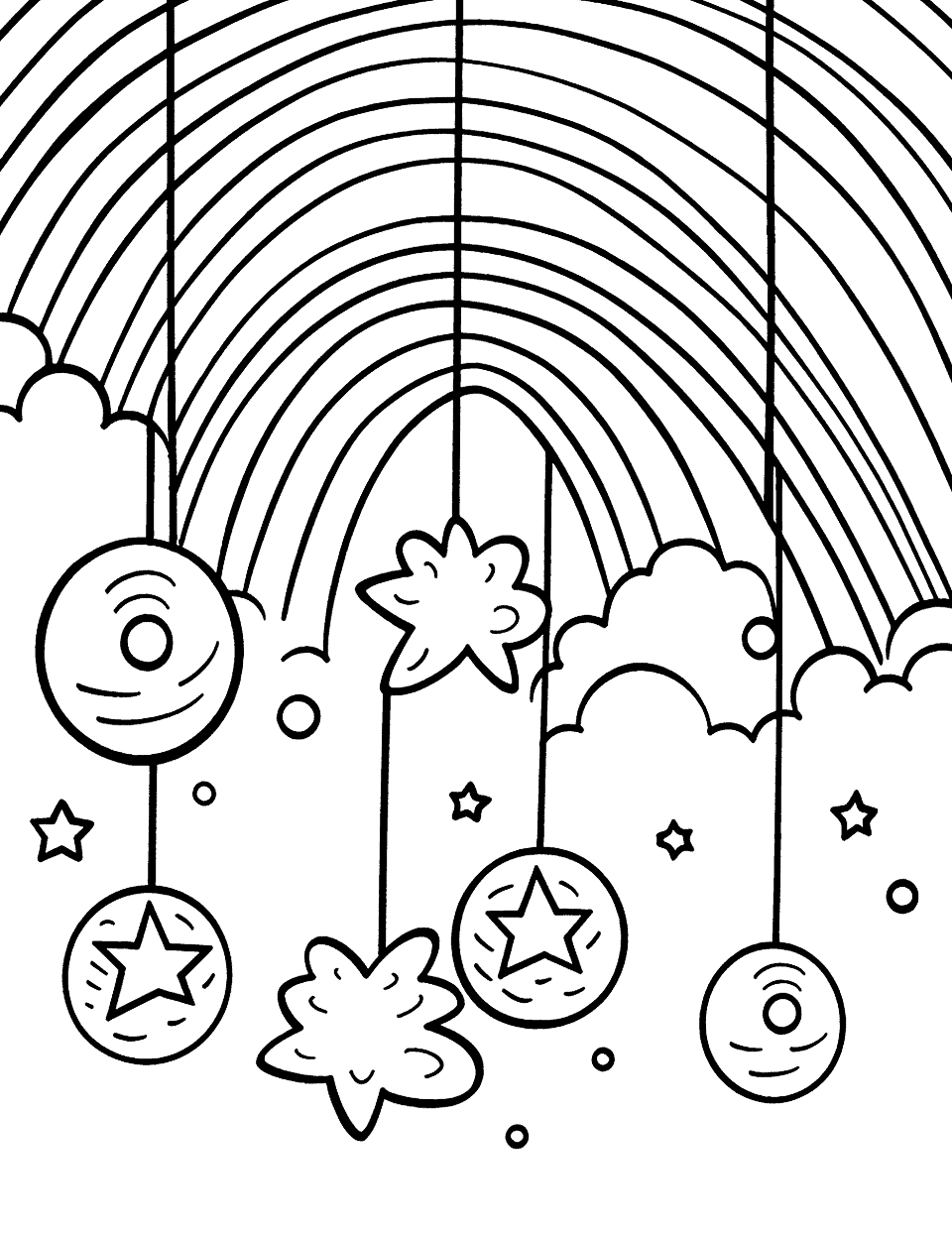
Mix holidays with colors on this page. The Christmas ornaments look great in red, green, gold, and blue. Metallic gel pens give the ornaments some shine, and the finished sheet trims down into a gift tag.
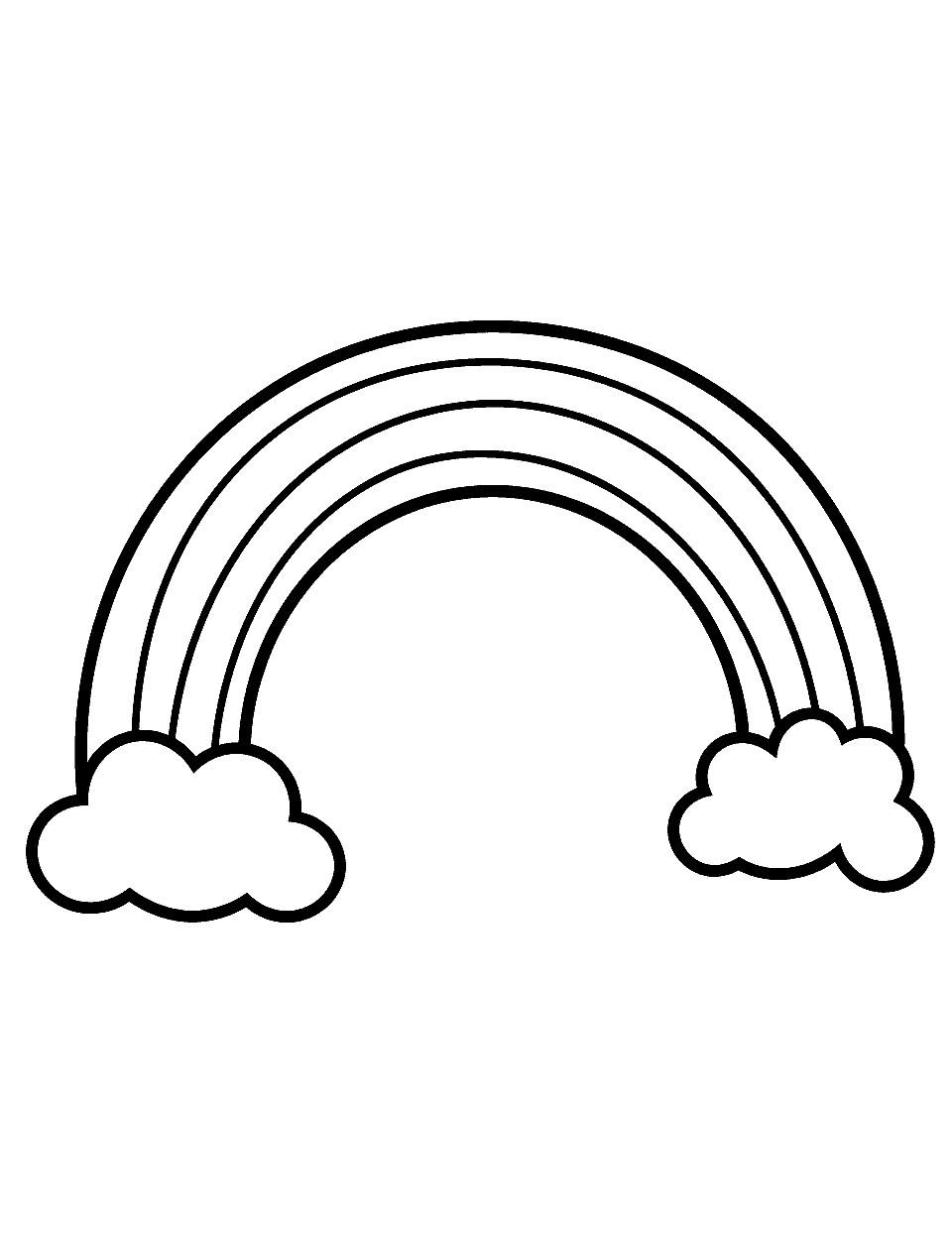
Broad strokes make this easy for toddler hands to color. The bands are wide enough that staying inside the lines is a realistic goal rather than a battle. Chunky crayons or washable dot markers are the right tools.
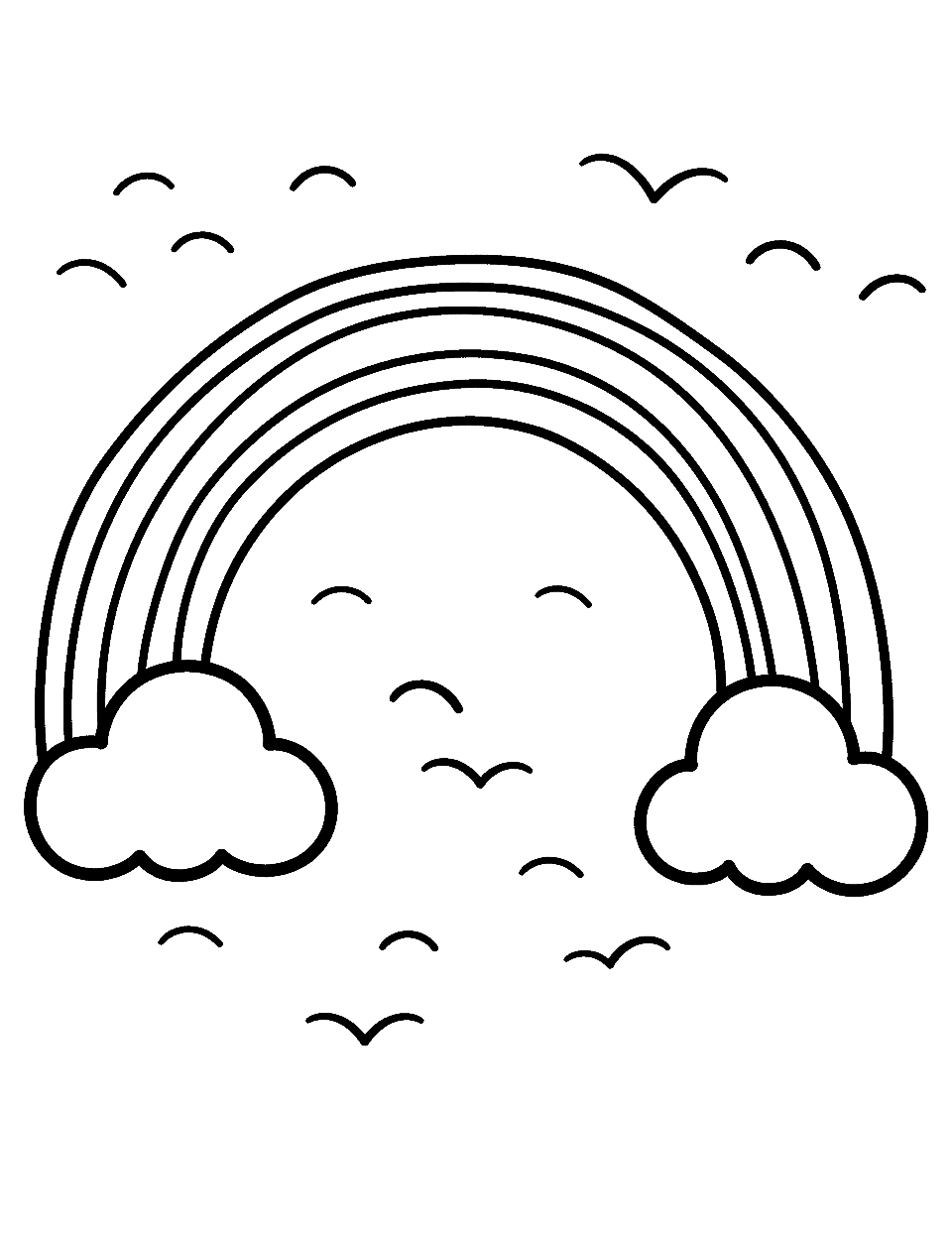
Small V shaped birds fill the sky around this five band arch, which rests on two rounded clouds. It is a sensible target for a three year old who has just started copying shapes, since there are only a few large areas to fill. The birds are single strokes, so a fine marker or a pencil handles them better than a crayon. Tape it to the fridge when it is done, because the plain shape reads clearly from across the room.
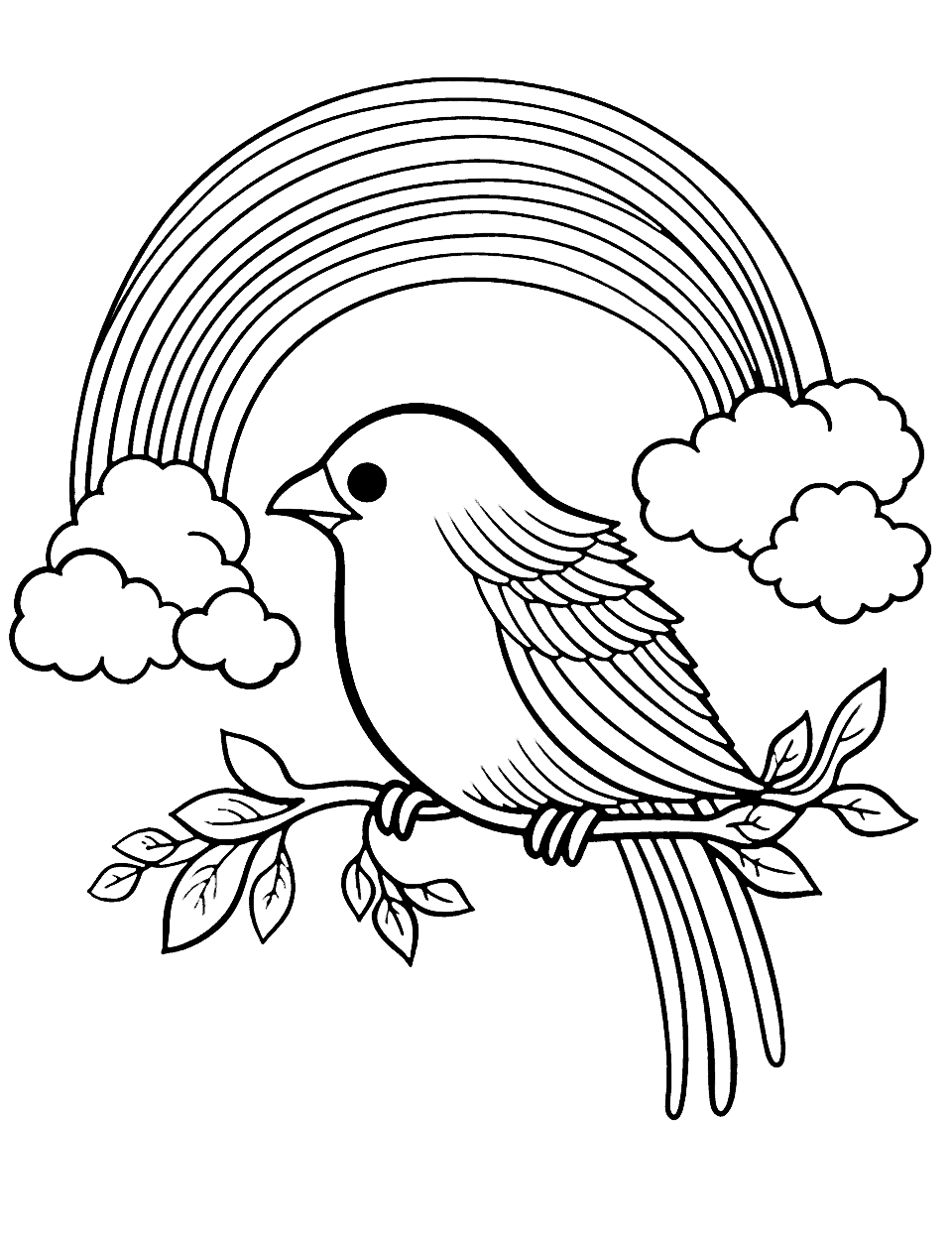
A bird with rainbow-colored feathers perches on a branch. Each feather can take a different shade, which makes it a good page for using up the odd pencils nobody picks. Work from the tail toward the head to avoid smudging.
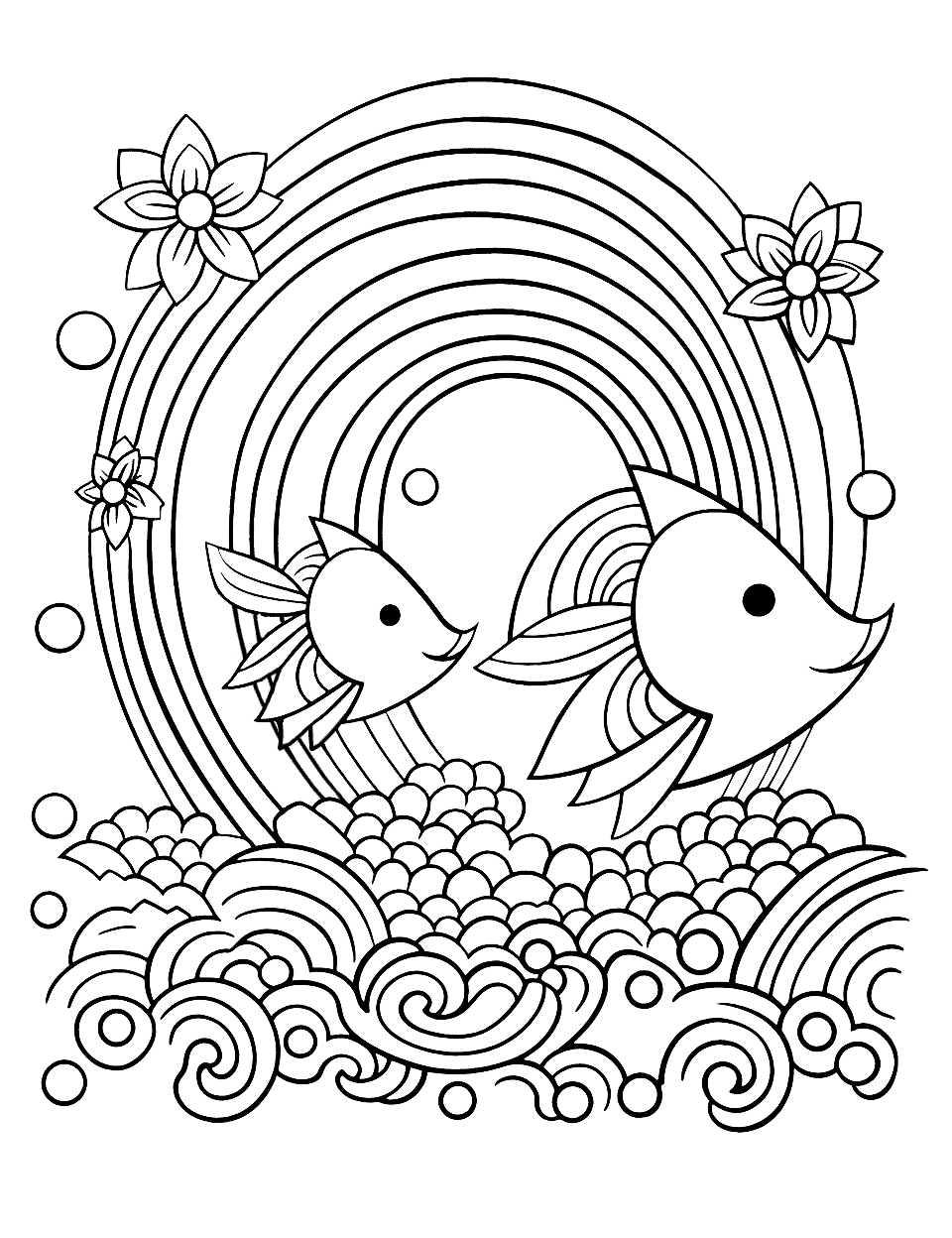
Two round eyed fish swim toward each other in front of a big set of nested arcs, with flowers tucked onto the arc, bubbles floating around and swirling waves along the bottom. Their fins are drawn in narrow strips that suit a repeating color sequence, which is quiet practice for younger kids. The wave pattern below is the busiest part, so leave it until the hand is warmed up. A pale blue pencil over the open background finishes it off.
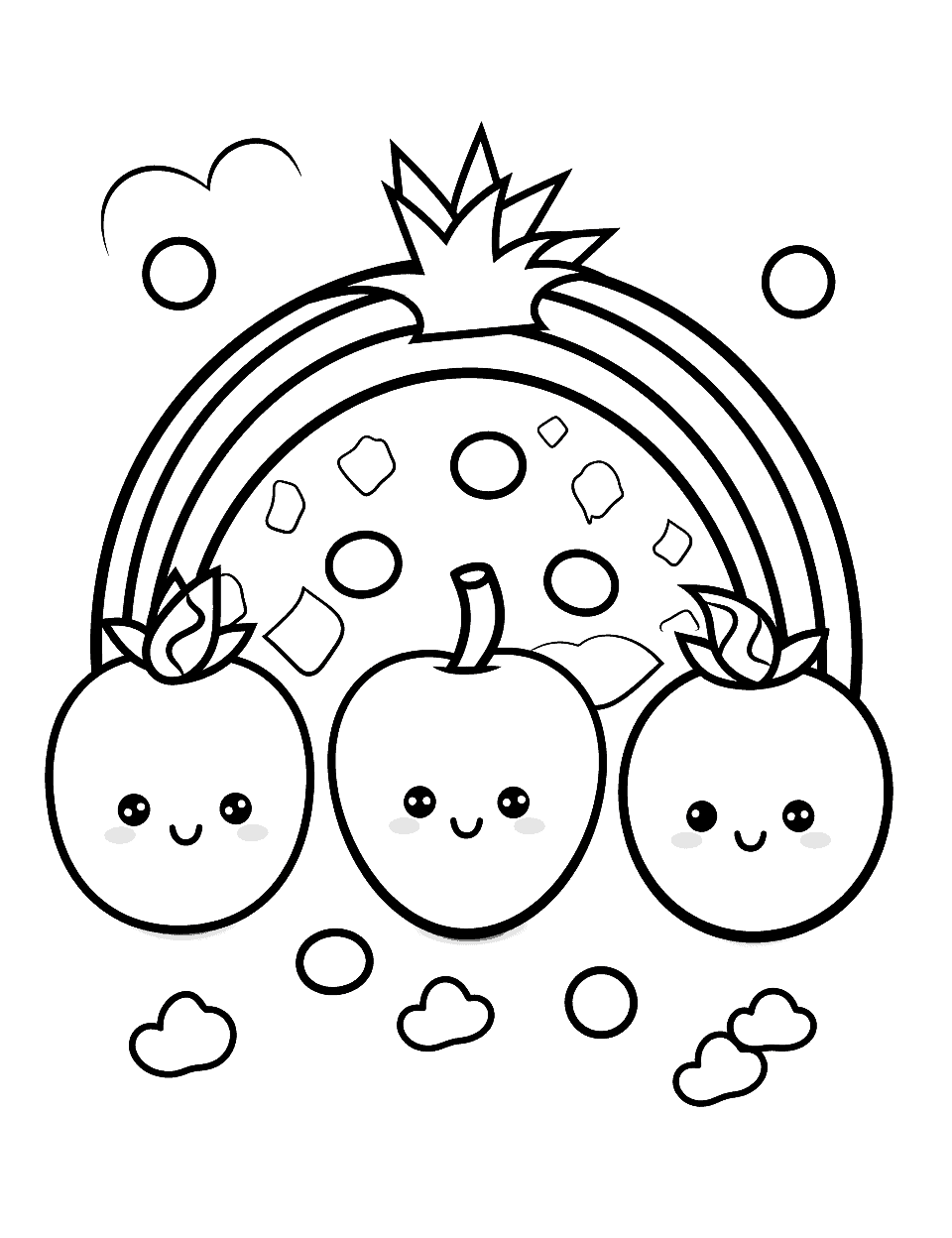
Three round fruits with blushing kawaii faces line up under an arch that carries a leafy crown on top and a dotted center like a melon slice. The faces are the only fine detail, so the rest is broad and quick. Reds and oranges on the fruit with cooler bands above keep the two parts apart. Use it as a snack-time conversation starter about eating different colors.
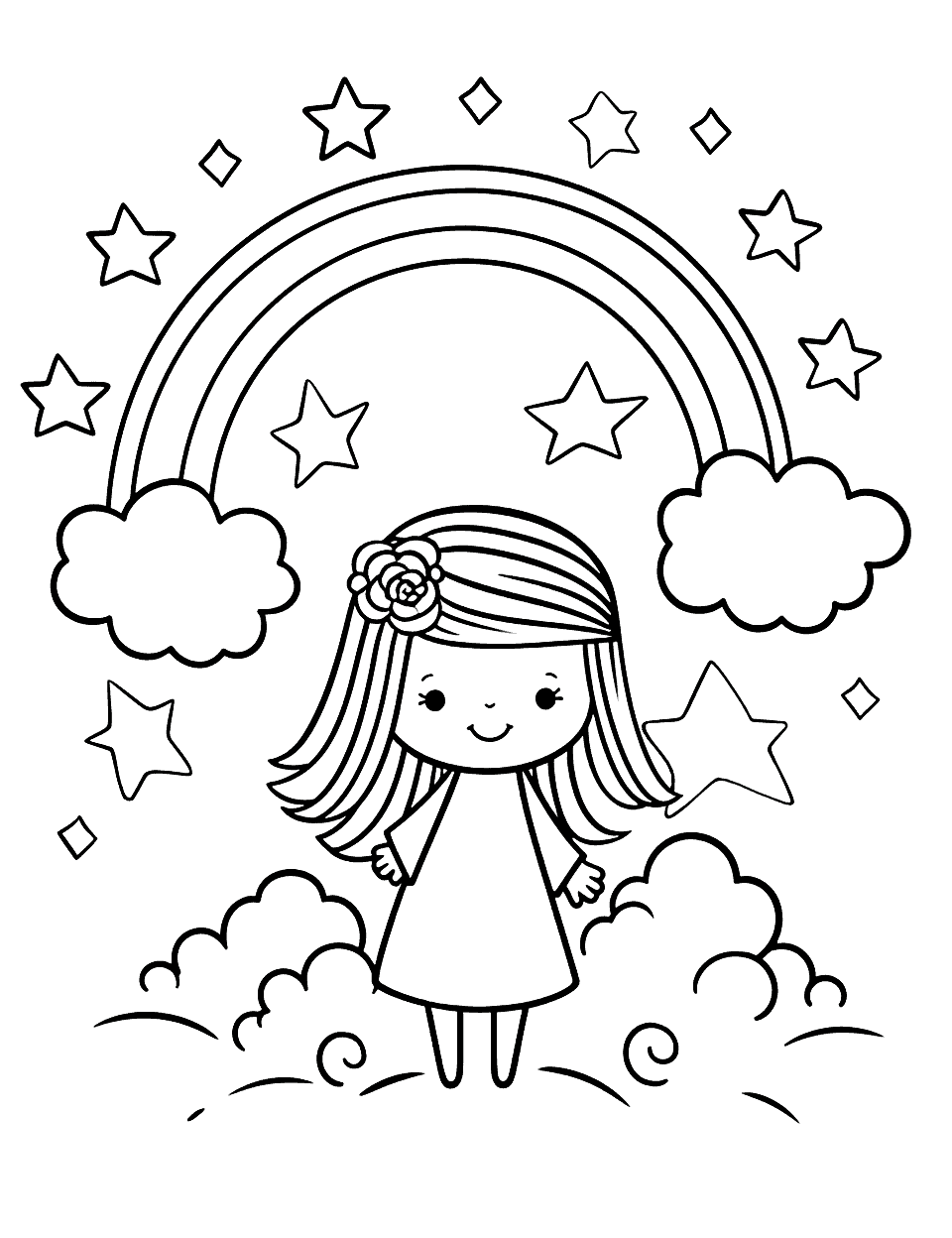
A smiling girl with long straight hair and a flower clip stands on a bank of clouds, surrounded by stars and small diamonds, with a three band arch behind her. Glitter pens on the stars are worth the mess. Keep her dress soft so the arch stays the brightest thing on the sheet. There are a dozen small stars to fill, which makes this a longer sit than it first looks.
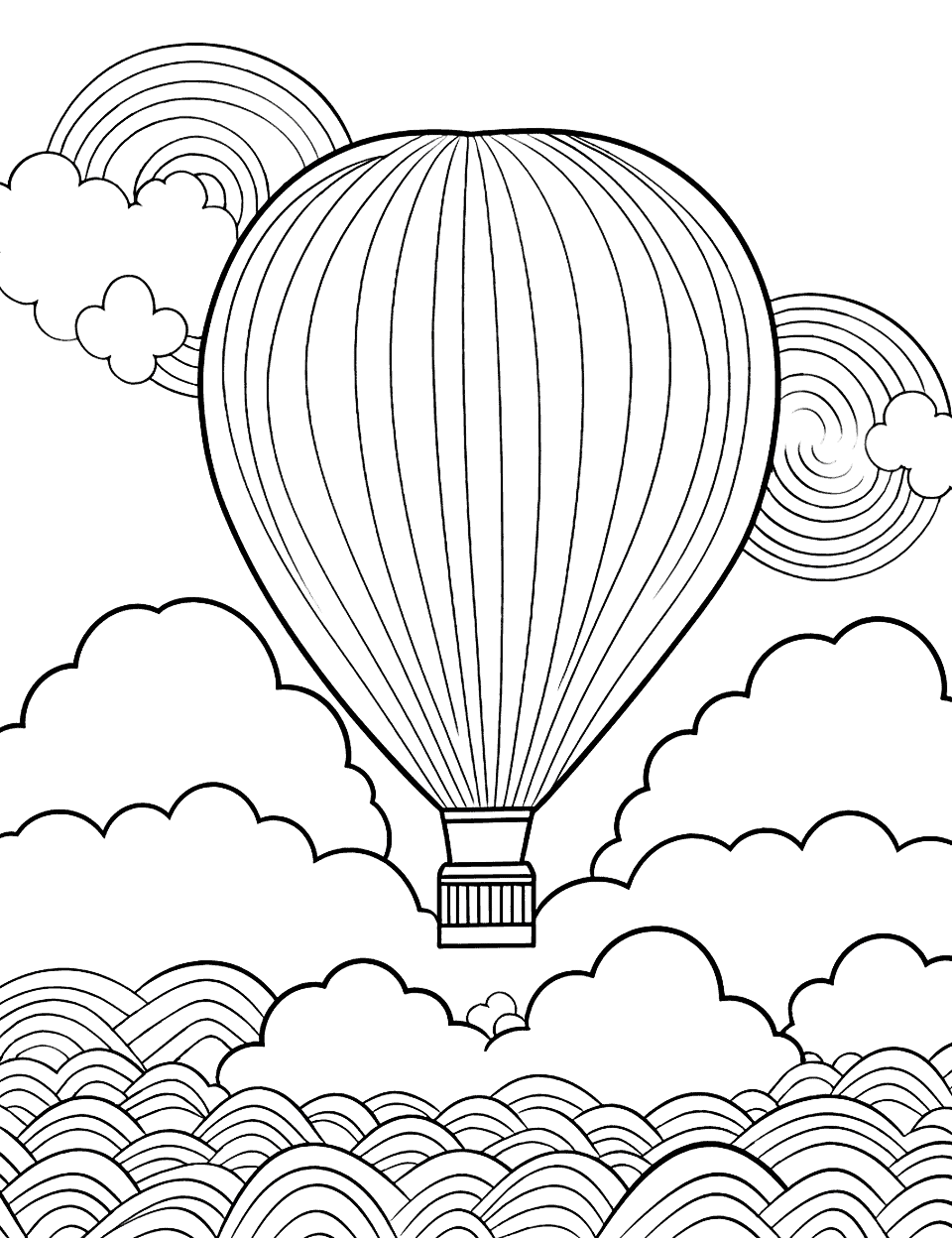
A detailed hot air balloon floats through the clouds. The panels are made for alternating colors, so it is a tidy page for a child who likes a rule to follow. Older kids can shade one side of each panel darker to make the balloon look round.
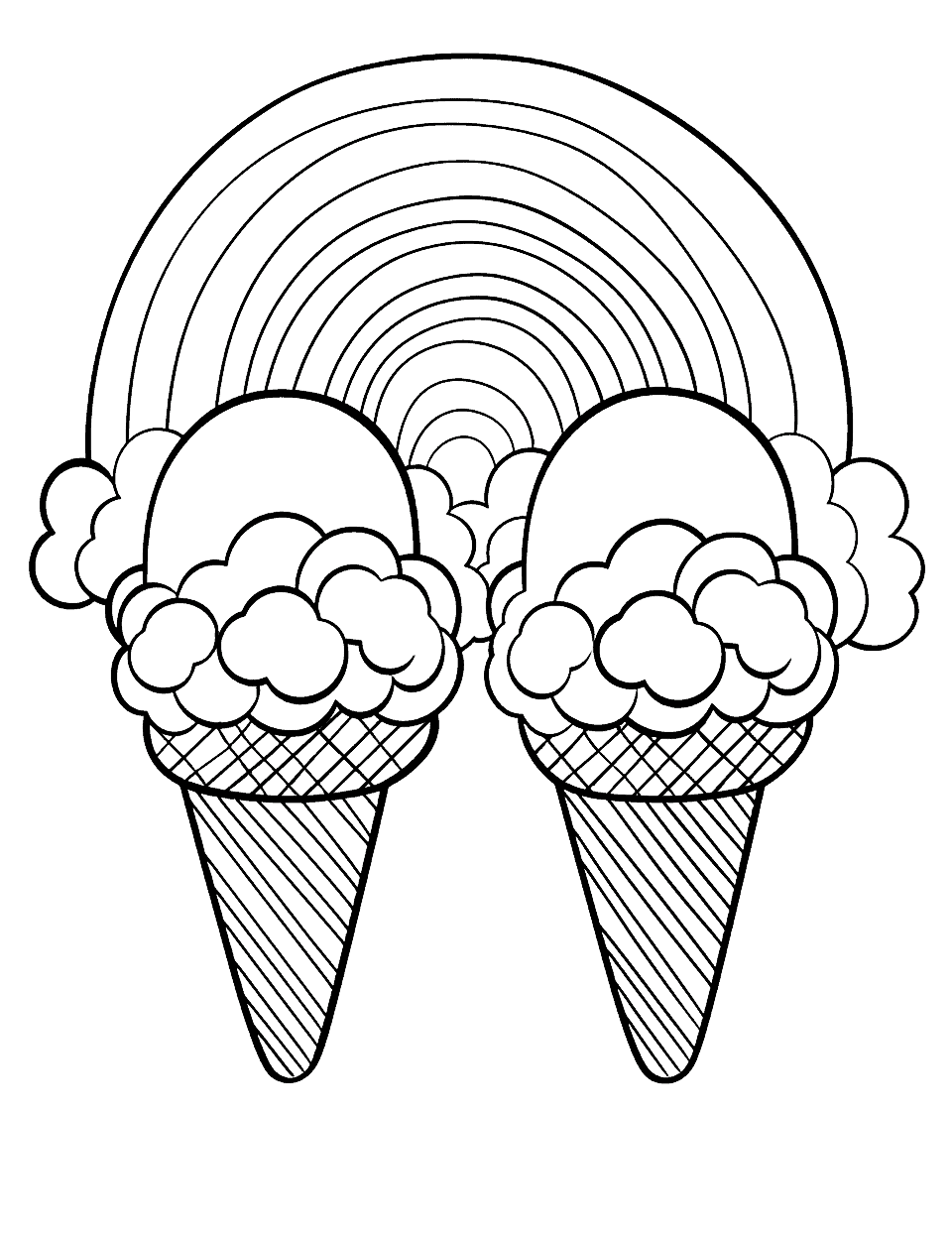
Treat yourself to these ice cream cones. Stack the scoops in every color, or give each one a real flavor and see if anyone can guess them. A summer-party favorite that prints fine on standard paper.
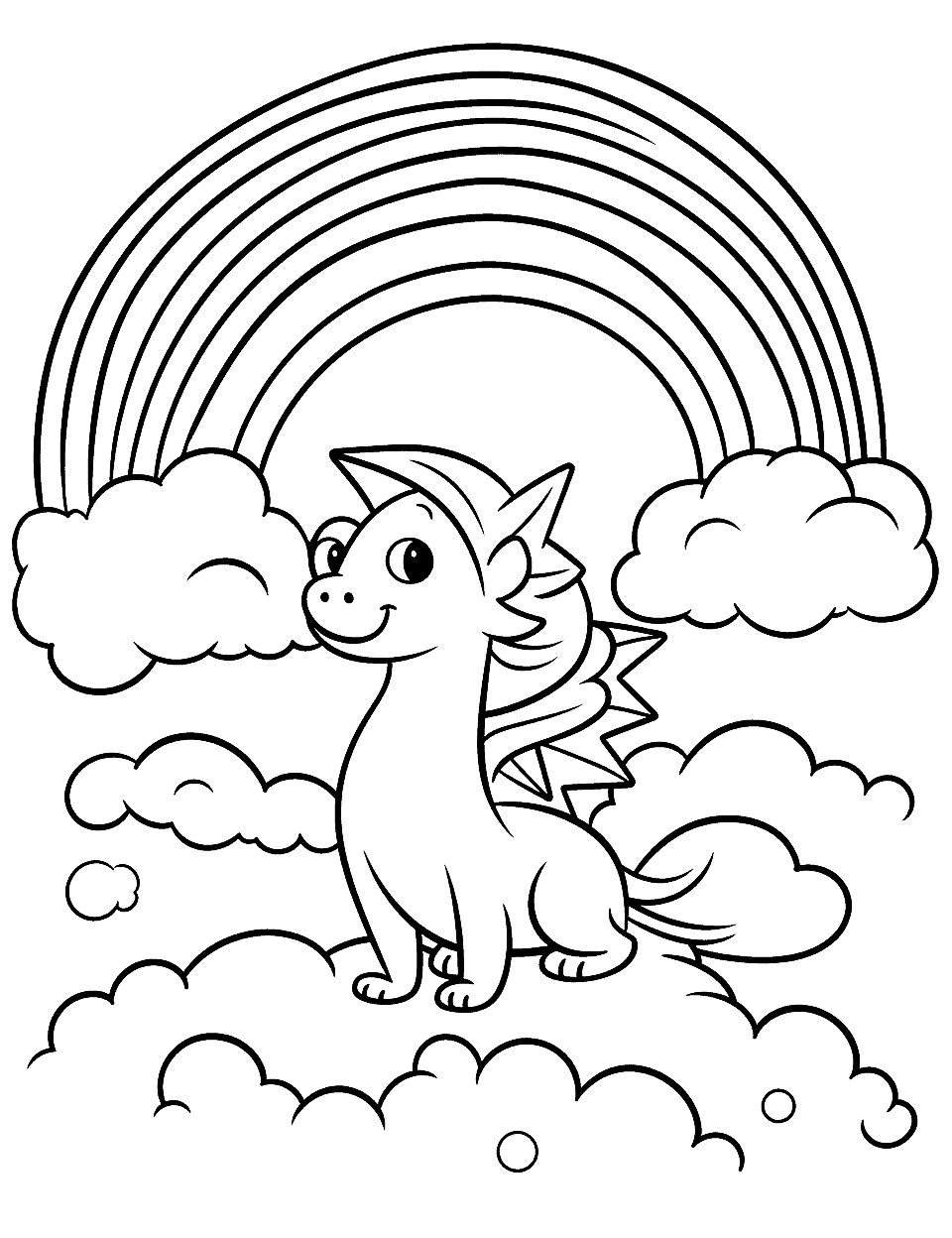
This little dragon sits on a cloud with a spiky ridge down its back and a tufted tail, grinning up at a wide banded arch. Green and purple scales look good against a warm sky. The ridge and the tail take fine detail, so a pencil beats a marker there. Everything else is open space that a younger sibling can help with.
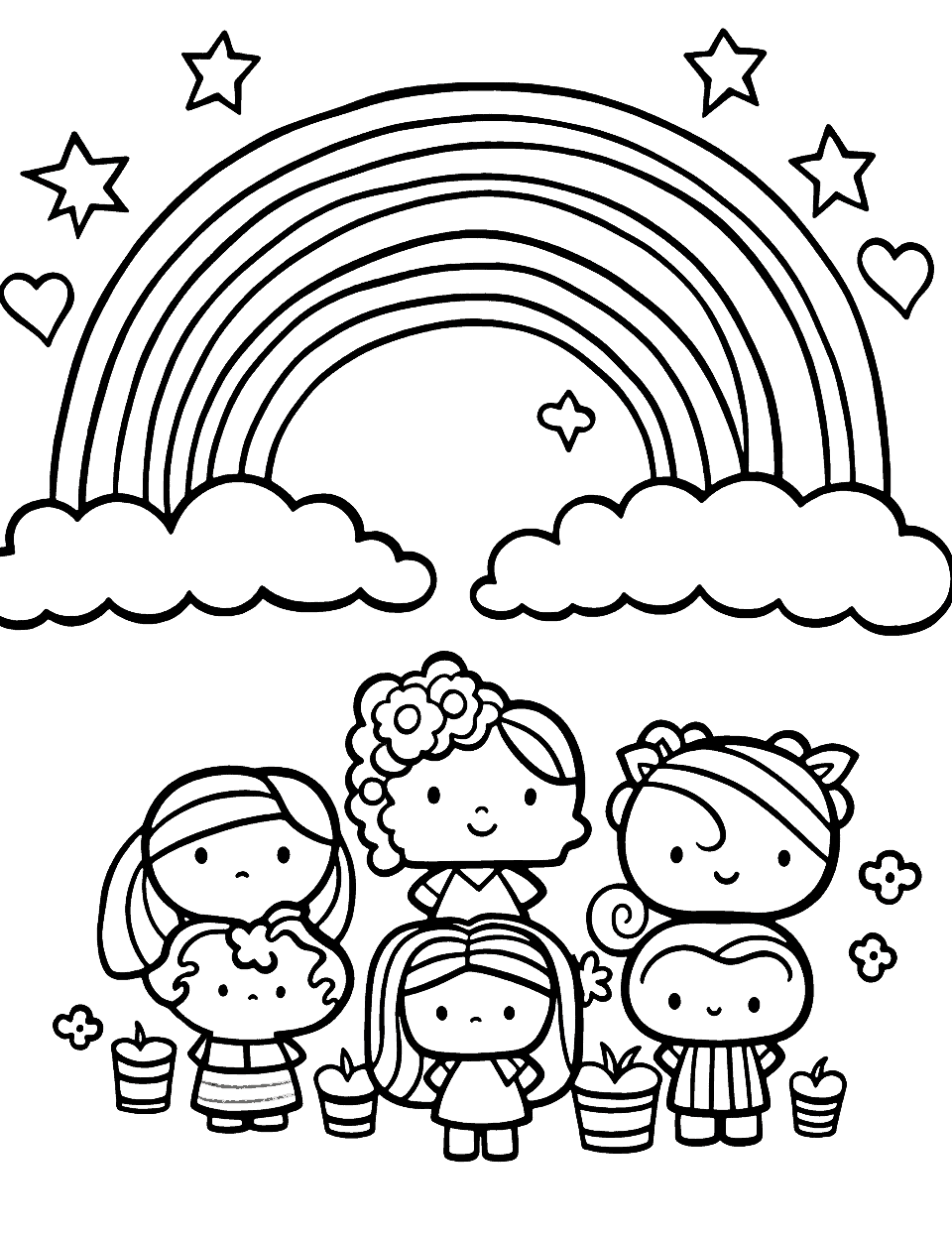
Five round faced friends stand shoulder to shoulder under an arch, with small potted plants at their feet and hearts and stars floating around them. With several characters on one page, it is a good sheet for two kids to share, each taking a side. Markers make the party colors pop, but slip a spare sheet underneath first. Giving each friend a different outfit color stops the group turning into one block.
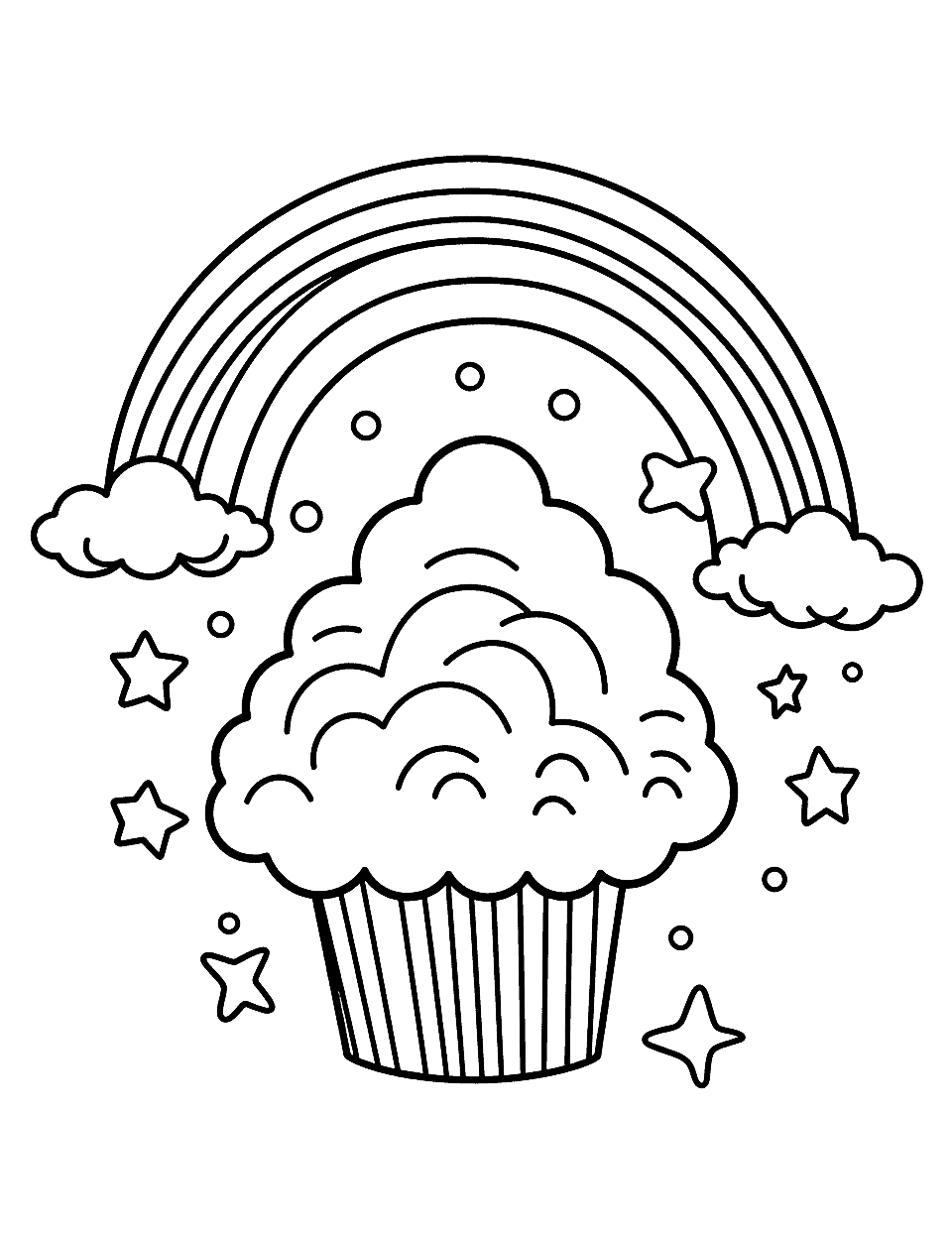
A mouth-watering cupcake features swirled frosting. Color the swirl in bands so it reads as rainbow frosting instead of one muddy blend. Cut the finished cupcake out and glue it to card for a quick birthday invitation.
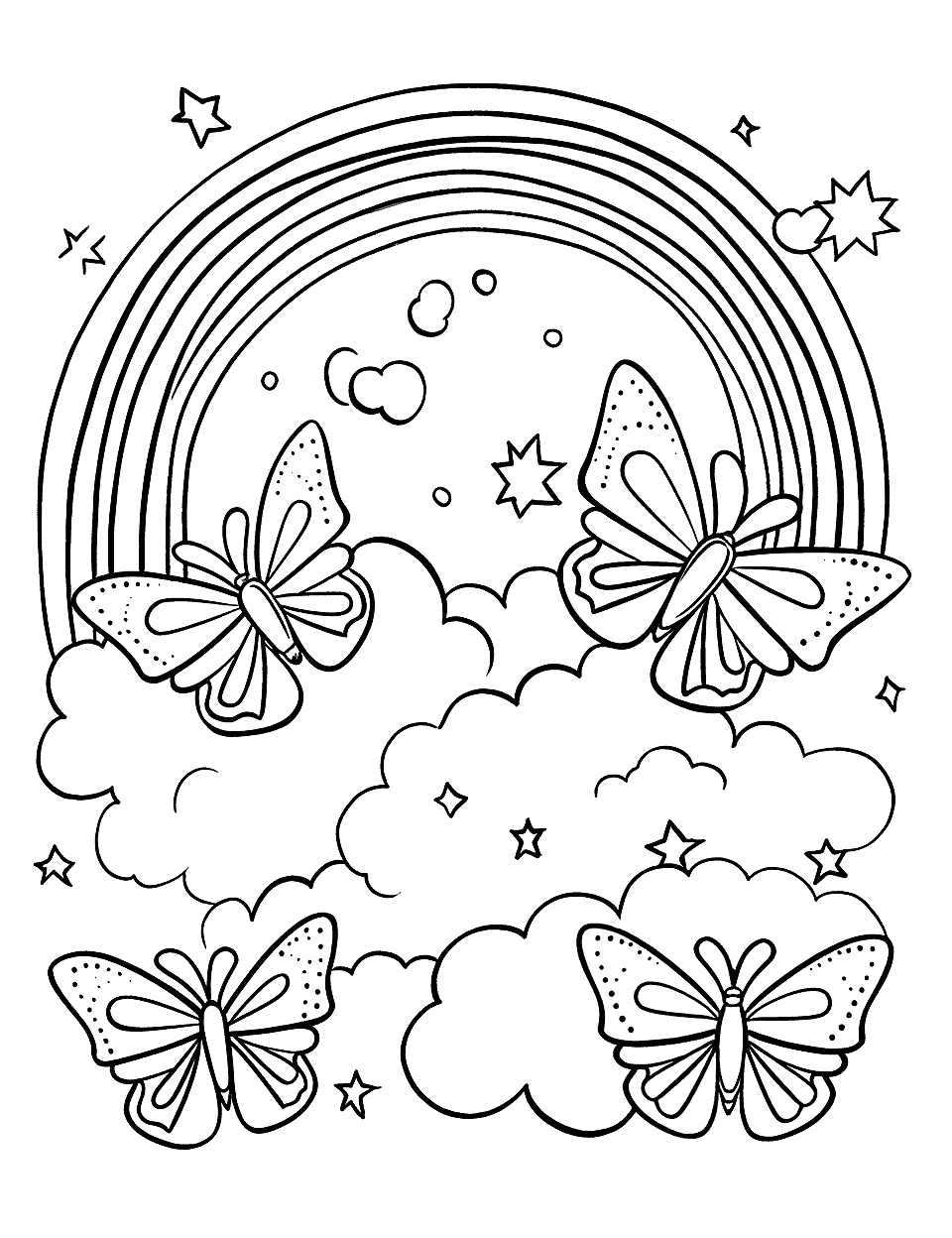
Several butterflies flutter around the sky. The detail keeps kids busy for a long stretch, which makes it a decent car-trip or waiting-room page. Give each butterfly its own color scheme rather than repeating one.
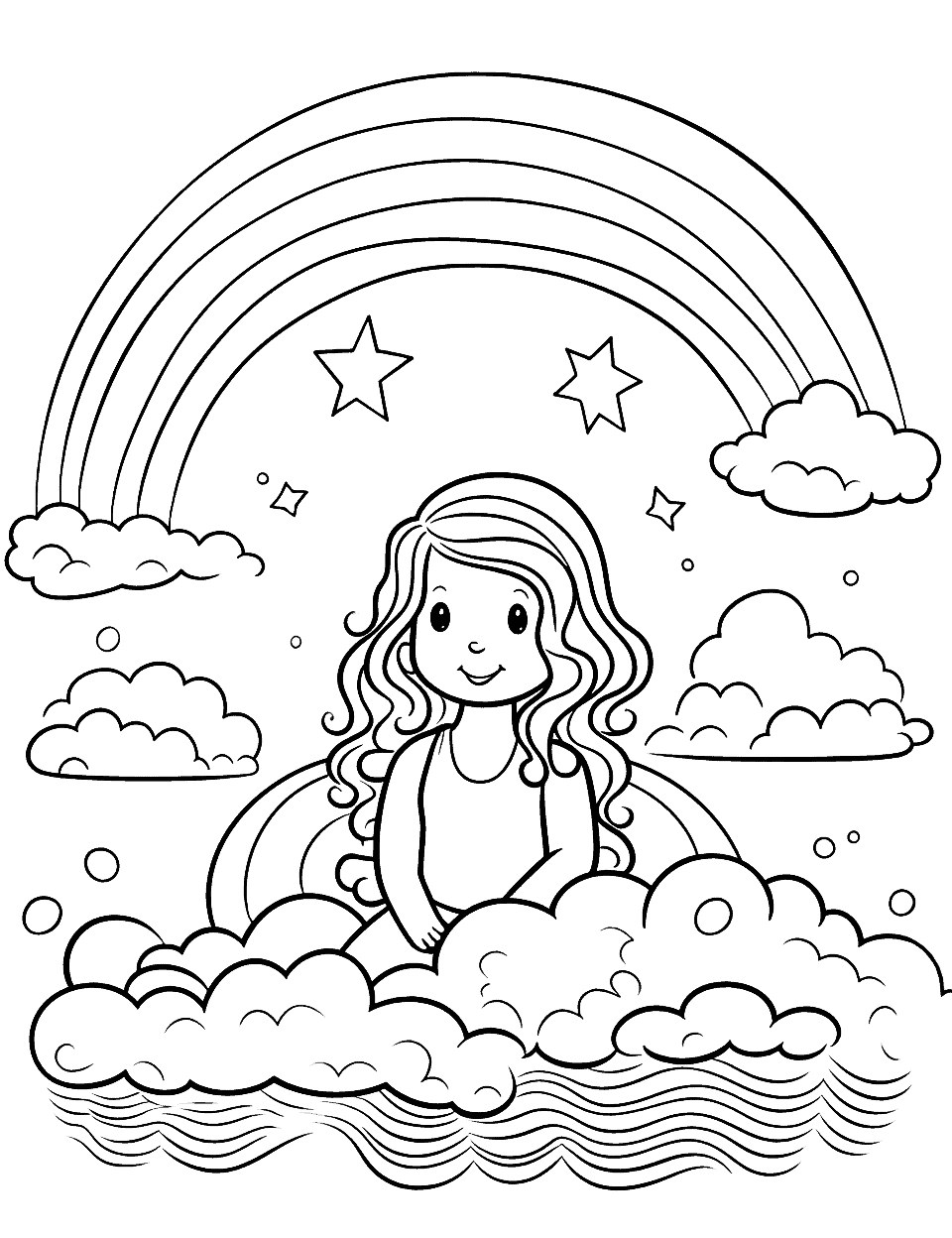
A girl with long wavy hair rests on a thick bank of cloud, with rippled water running along the bottom of the page and a banded arch above her. Teal and purple in the water set it apart from the bands overhead. Watercolor pencils suit the ripples if you have a set. Her hair falls in flowing strands, so two close shades give it depth without much effort.
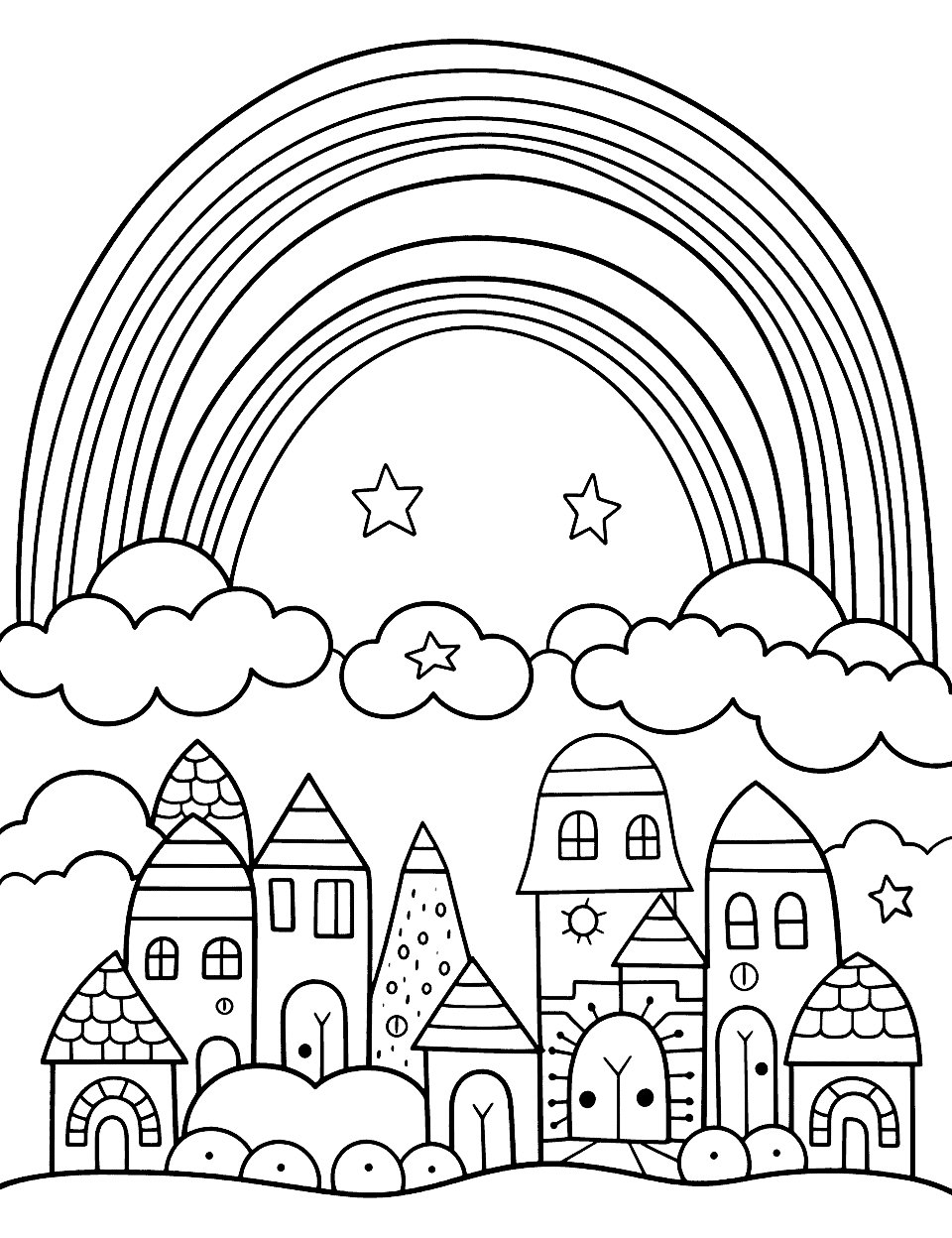
A row of tall narrow houses with pointed and domed roofs fills the bottom of this cute town, under a bank of clouds and a wide arch. Every roof carries its own pattern of scales, stripes or dots, so pencils hold up better than markers here. Give each building a different roof shade or the street turns into one block of color. Two small stars sit inside the arch and are worth a metallic pen.
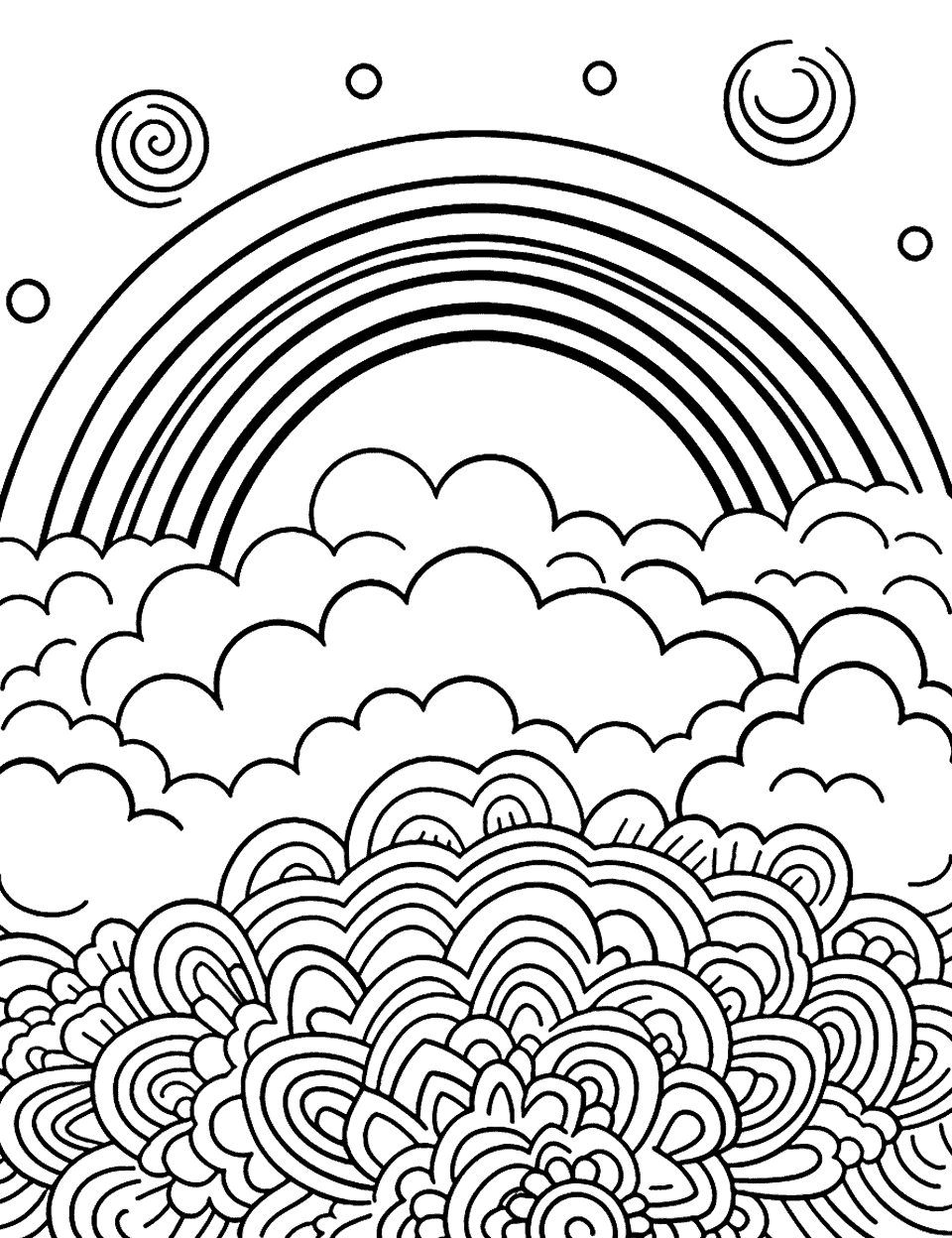
Layers of doodled swirls and scallops fill the bottom half of this page, with a heavy cloud bank above them and a banded arch across the top. It is a real challenge for older kids who like precision, and a slip shows, so pencils beat markers. Coloring the repeated curls in alternating shades keeps the pattern readable. Small spirals and circles float in the sky and make a good warm up before the dense part.
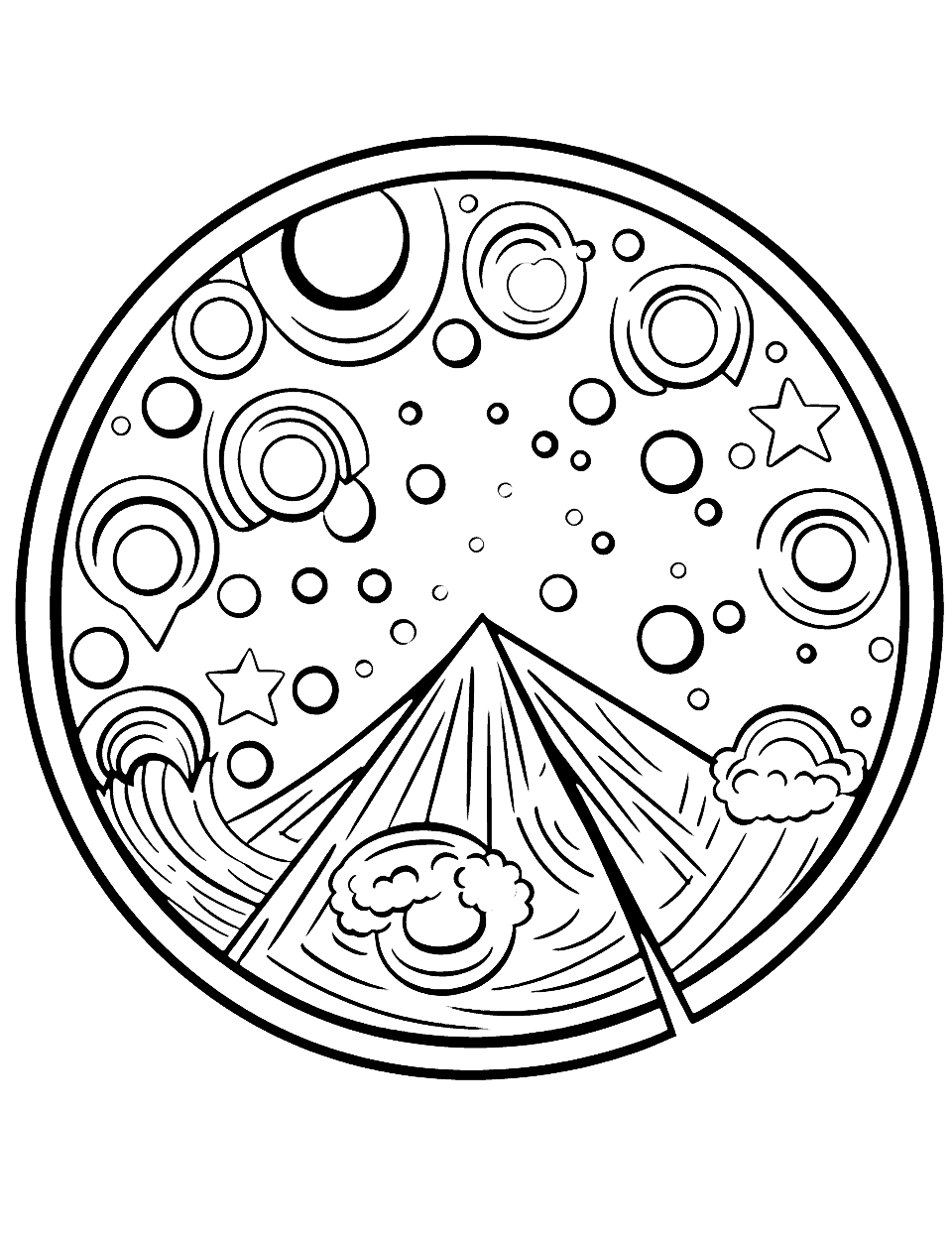
A round pizza sits inside a thick crust ring, with one slice cut free and the toppings drawn as circles, rings and little stars. Sorting those circles by color turns the whole pie into a spectrum. The crust takes a warm brown and gives the bright toppings something to sit against. Fun to do right before you actually make pizza for dinner.
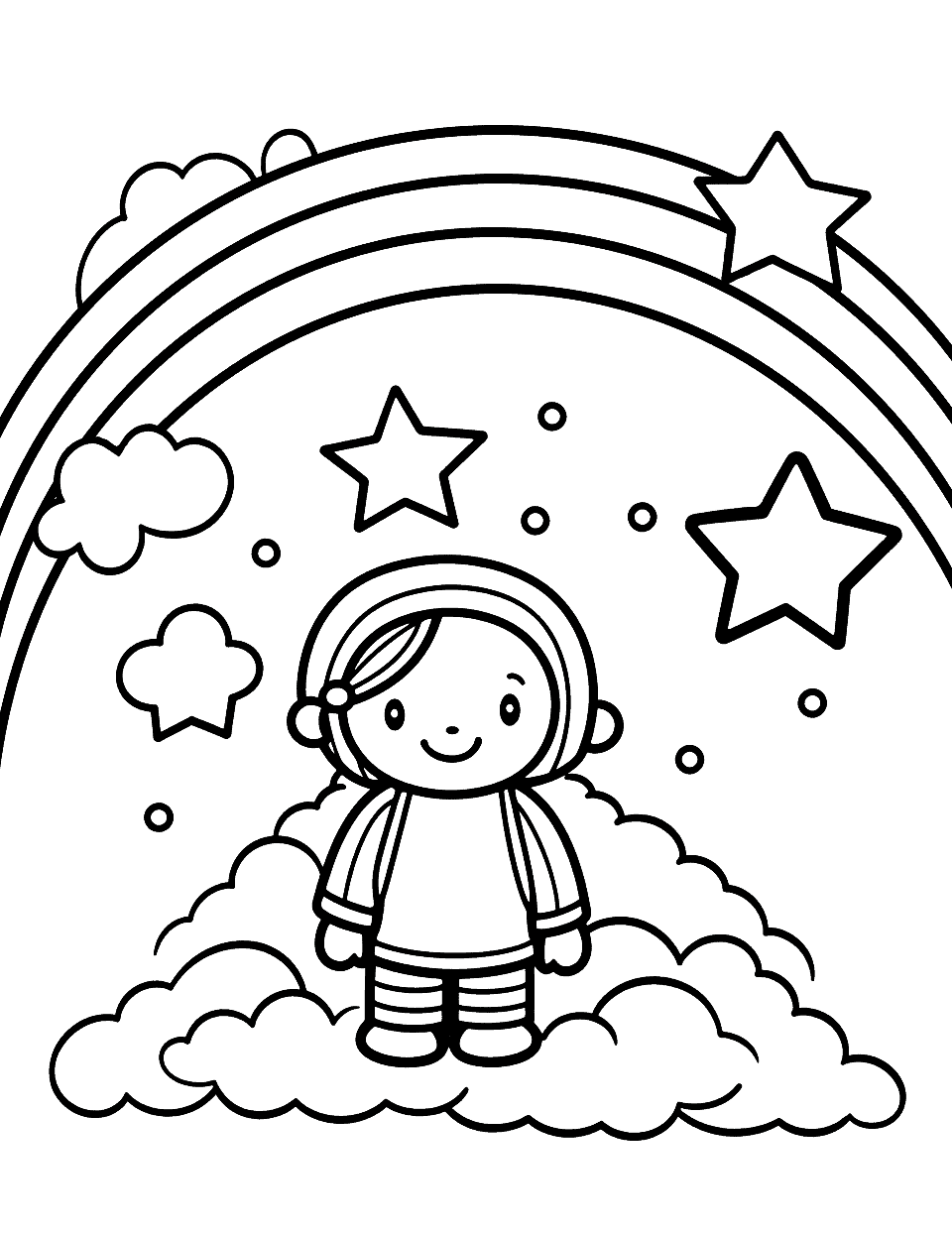
An astronaut in a round helmet stands on a cloud, ringed by stars and small dots, with a wide arch curving overhead. Keep the suit pale so the stars and the bands stay loud. The dots are tiny, so a fine tip pen is easier than a crayon for those. It pairs well with a book about space at bedtime.
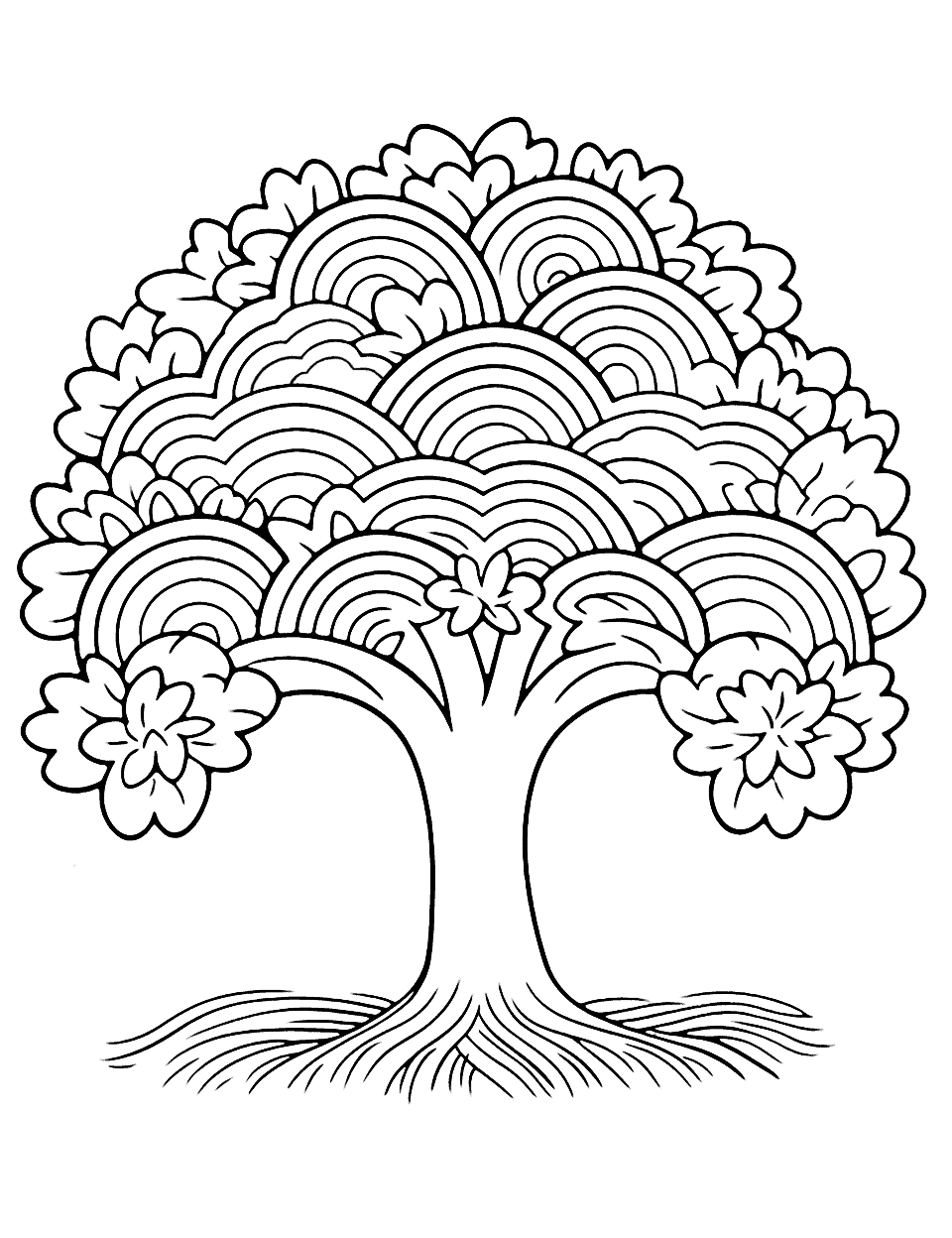
This coloring page features a tree with unusual foliage. Each section of leaves can take a different shade, which makes a neat fall versus spring comparison if you print two copies. Brown trunk, everything else up for grabs.
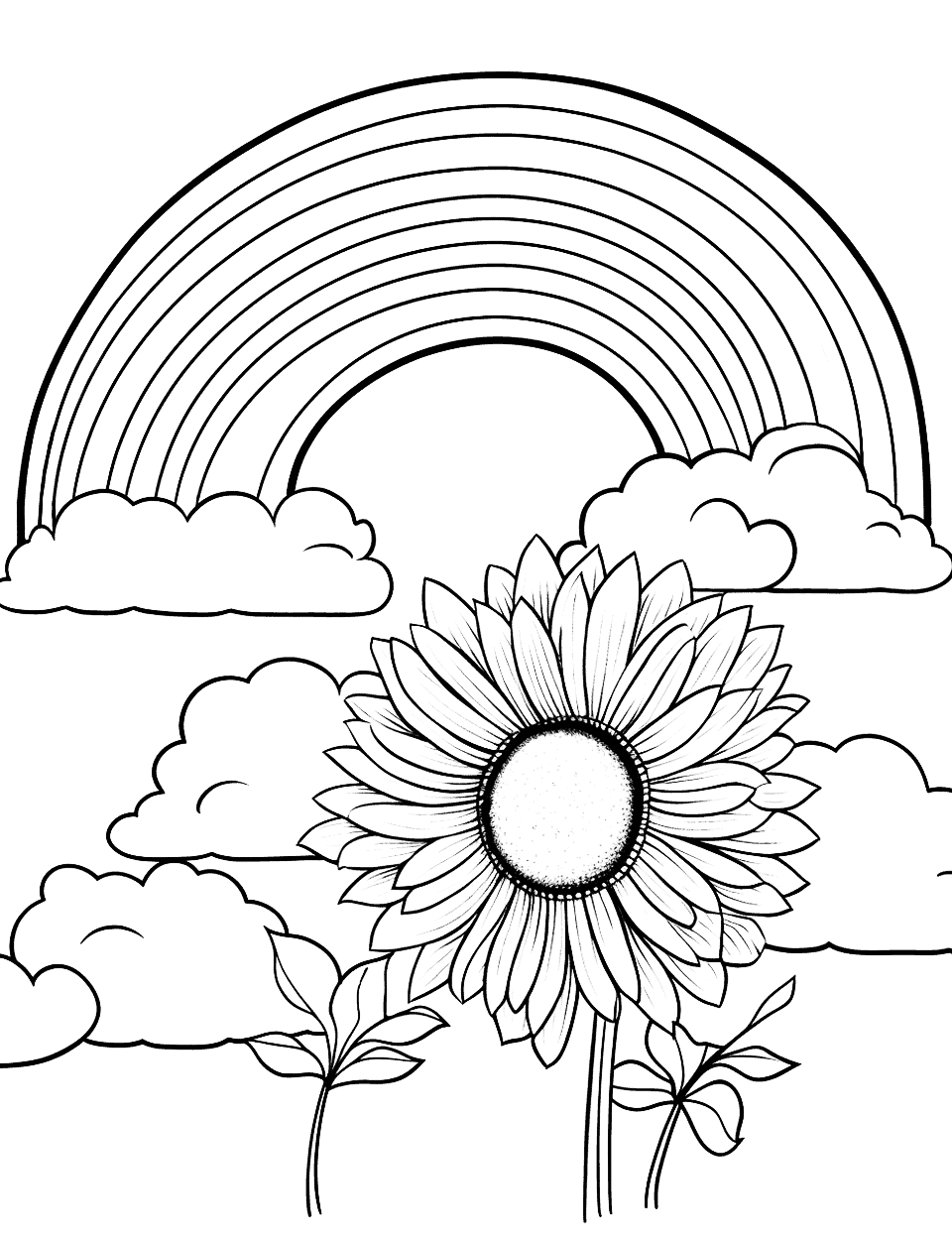
One large sunflower fills the middle of the page, its dotted center ringed by long pointed petals, with clouds behind it and a wide double arch above. Yellow and orange petals keep the bloom warm against the cooler bands. The center is stippled with tiny dots that reward a brown pencil and a light hand. A good page for late summer or a garden lesson.
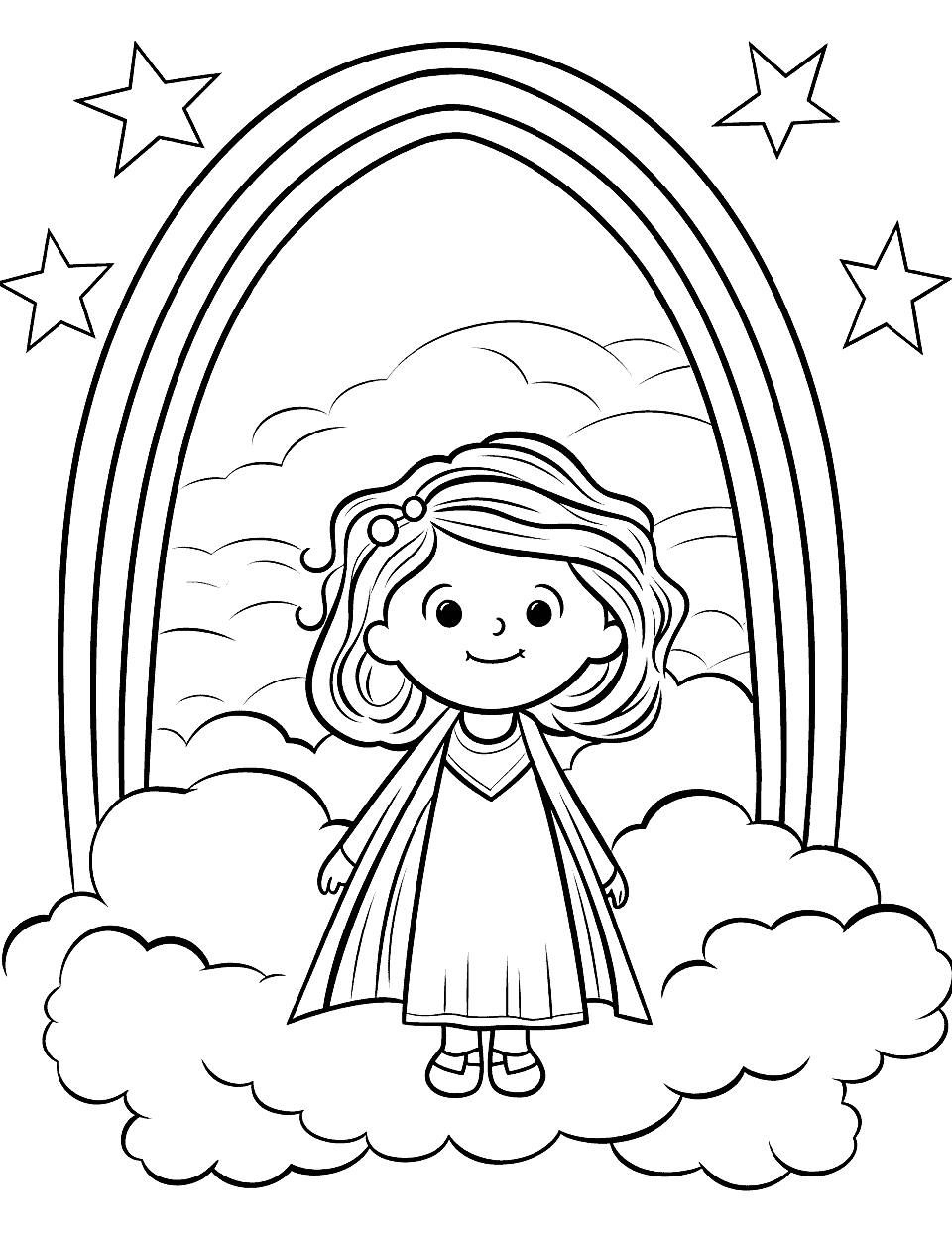
A girl in a cape stands on a cloud with an arch rising behind her and four stars in the corners. Let your child invent a color code and explain what each stripe of the cape does. The cape and the skirt are large open areas, which is forgiving for smaller hands. Save the stars for a gold or silver pen at the end.
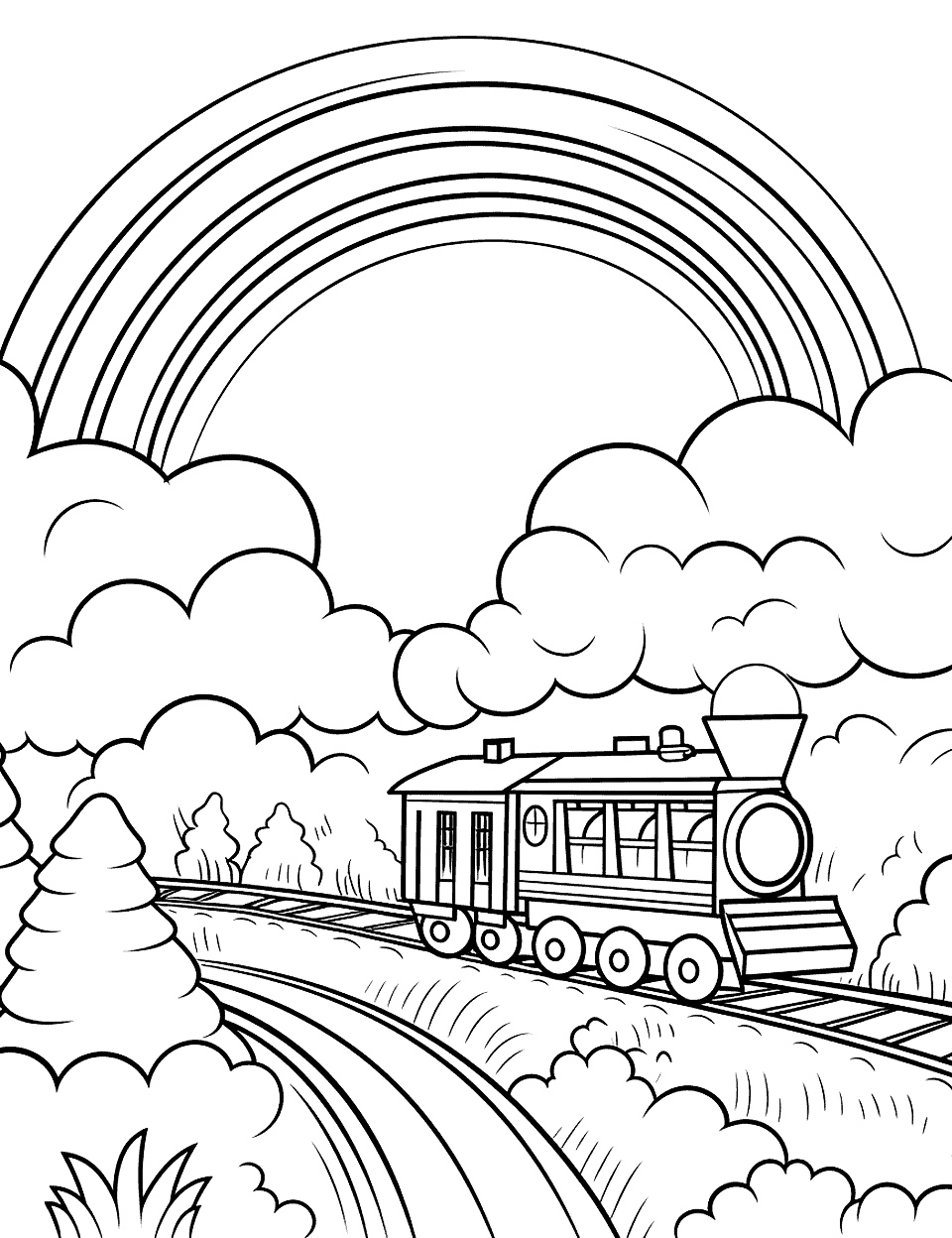
An old style locomotive rolls along a curving track with pine trees and bushes on either side and a broad arch in the sky. Its wheels, windows and funnel are small and separate, so a pencil handles them better than a chunky crayon. One color per section of the engine turns the sheet into a counting game. Younger kids can name each color out loud as they go.
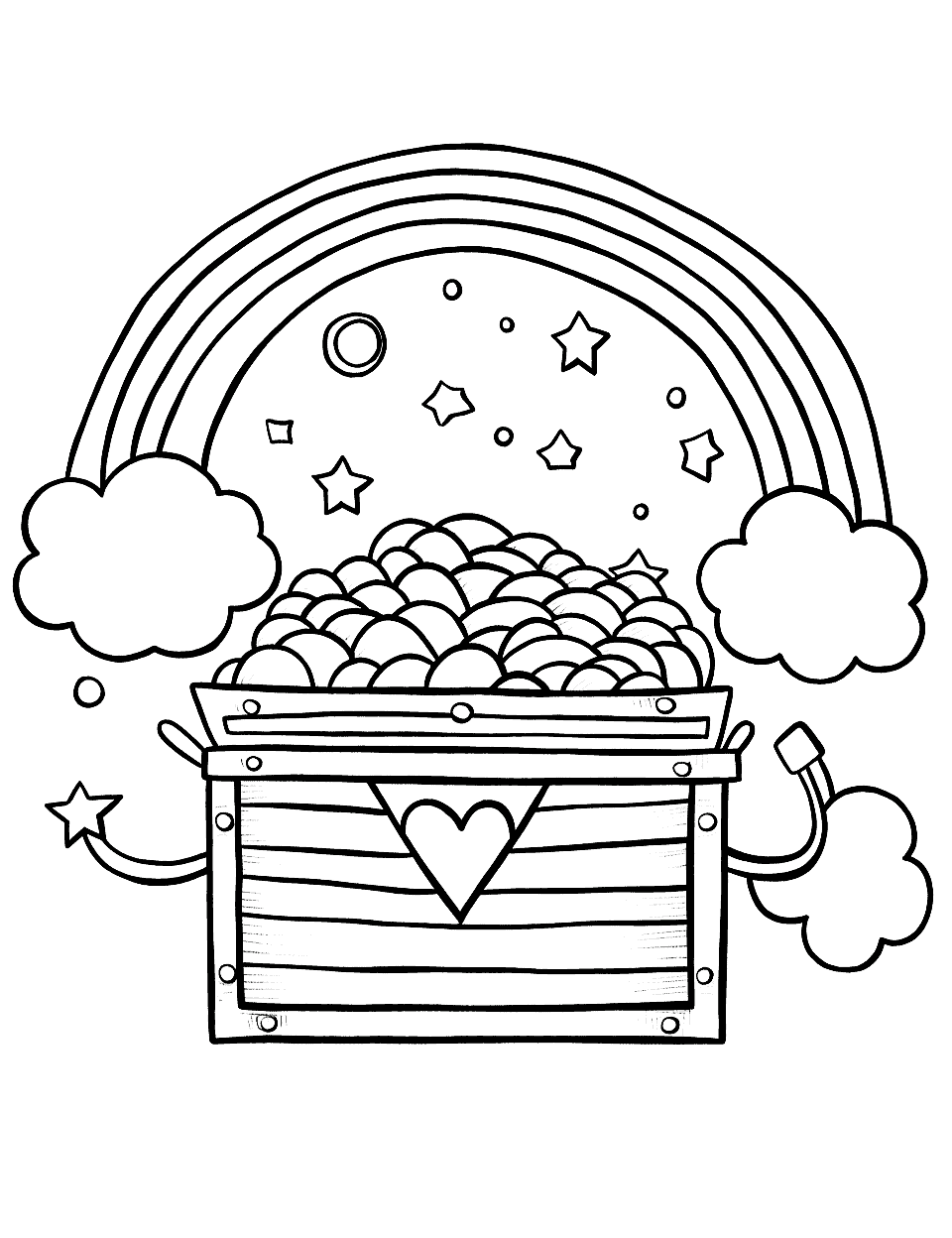
Open this treasure chest to find a fortune inside. The gems are ready for ruby red, emerald green, and sapphire blue. Pressing harder in the middle of each gem and lighter at the edges gives a quick shine effect that older kids pick up fast.
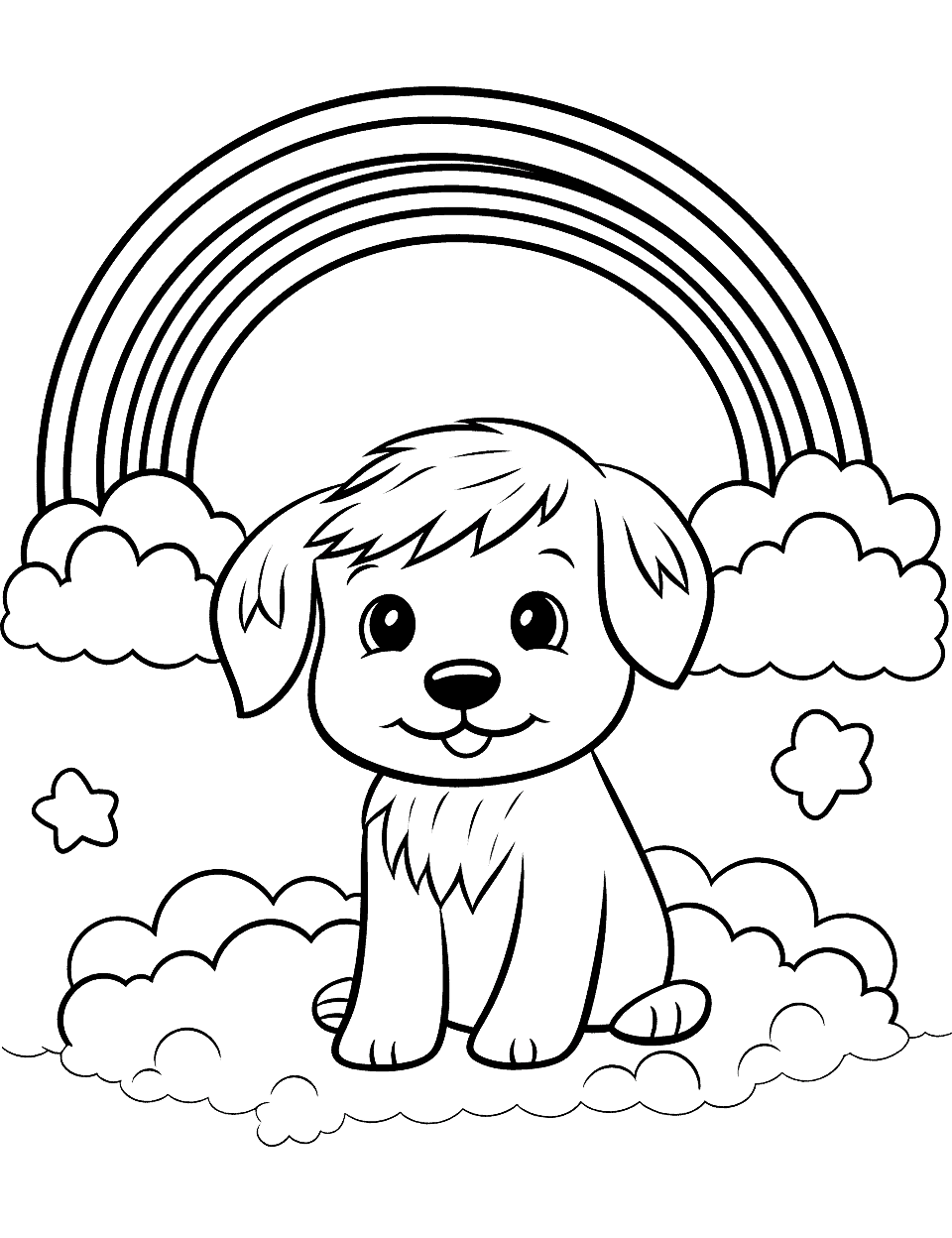
A fluffy puppy sits on a cloud with its tongue out, an arch behind it and two small stars nearby. Copying your own dog’s coat makes it personal, and it is a cheerful sheet for any pet lover. The fur is drawn in short strokes, so a little shading around the chest gives it depth. The rest is simple outlines that suit a wide age range.
This princess wears a layered gown built for every color of the spectrum. Working top to bottom in color order keeps the layers from blurring together. Gel pens on the trim finish it off if you have them.
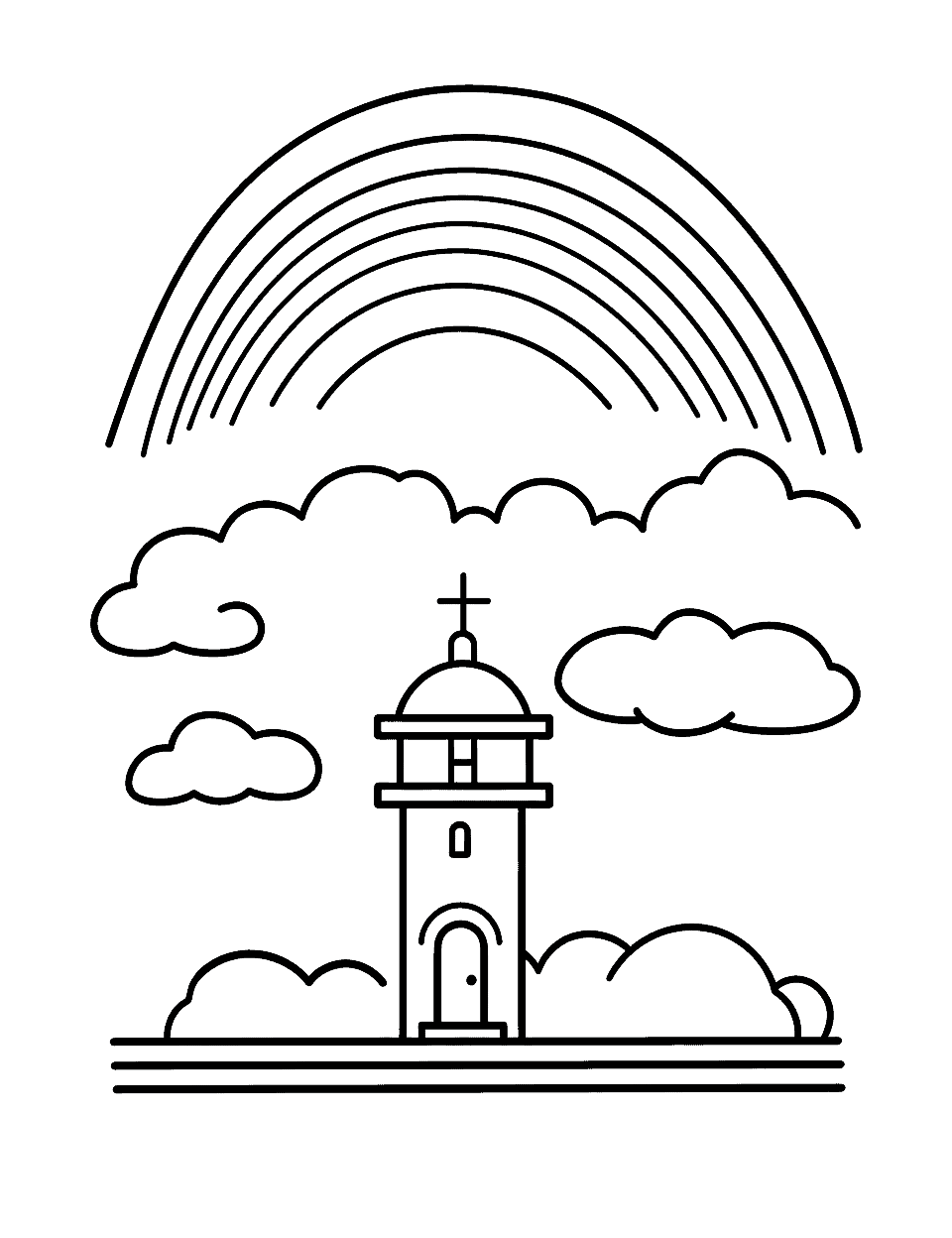
A slim tower with a domed top, a small cross, an arched door and a single window stands among low clouds, with a fine lined arch drawn high above it. That arch is made of thin strokes rather than fat bands, so colored pencils are the right tool. Leave the tower pale and let the sky carry the color. It suits a quiet ten minutes rather than a long session, since most of the page is open.
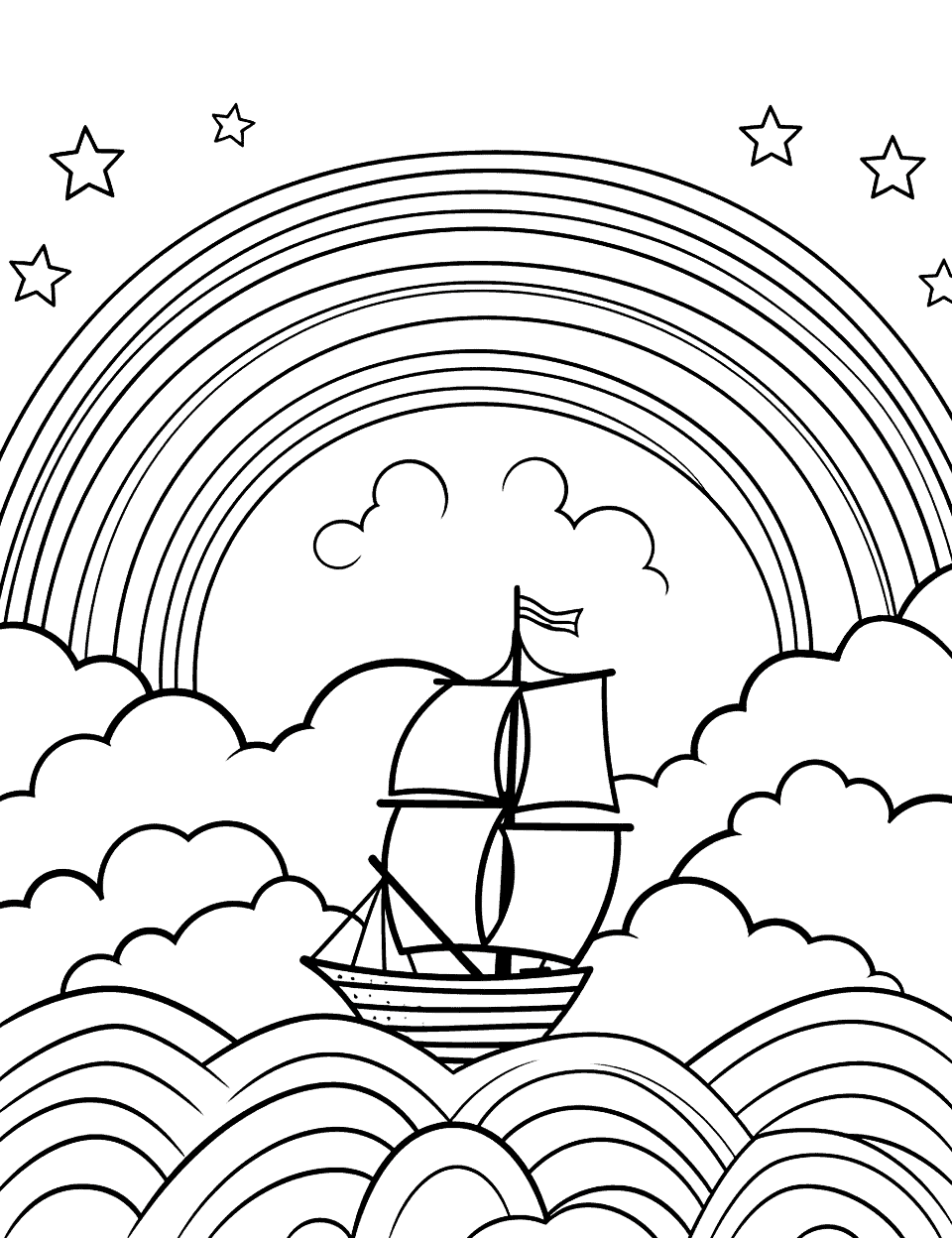
A tall ship with square sails and a small flag rides a sea of curved wave lines, under a wide arch and a handful of stars. Deep blues in the water make the pale sails stand out. The waves repeat in rows, which is calming to fill once a child finds a rhythm. Where the ship is headed makes a ready made story prompt while you color.
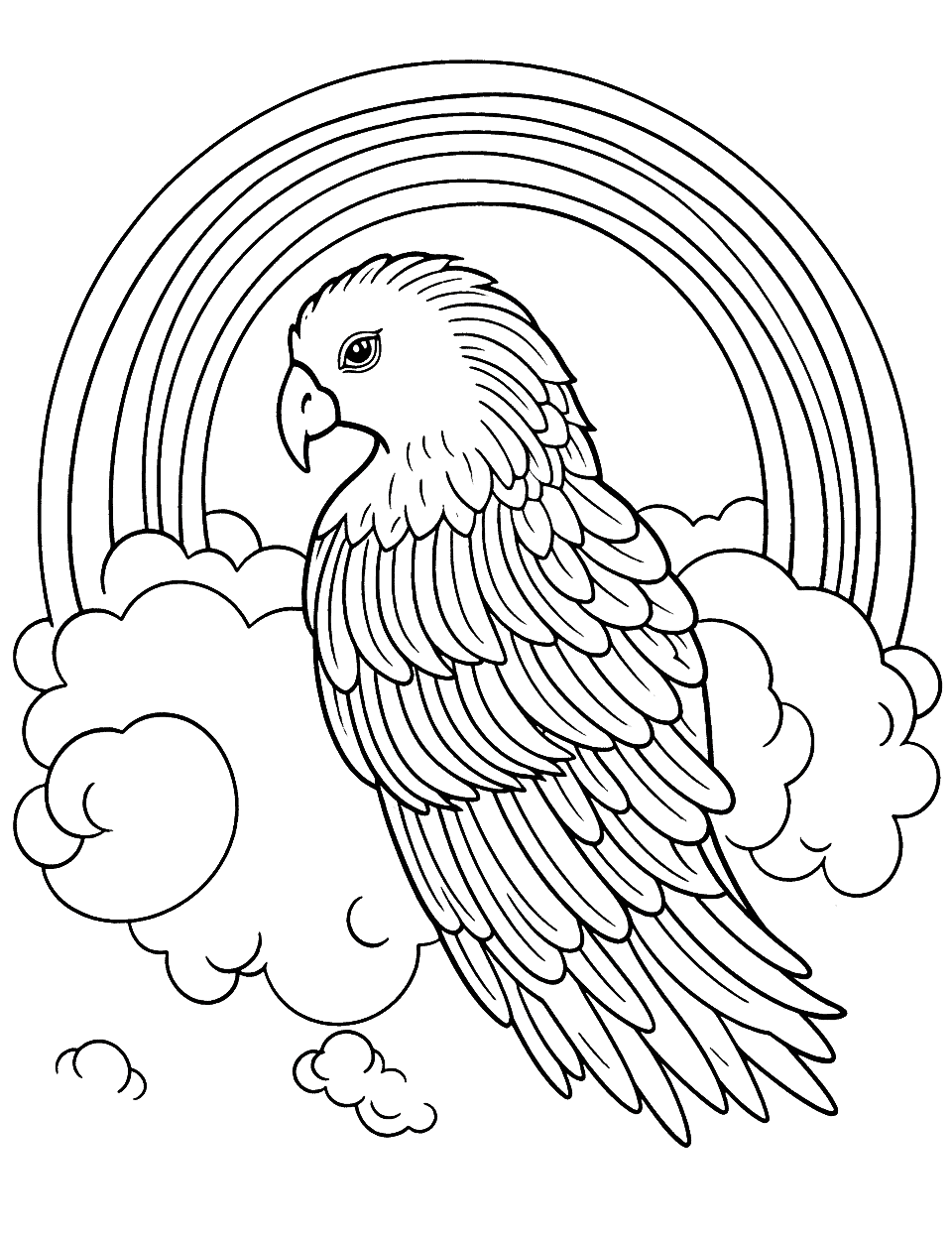
Feather by feather, this parrot is drawn in overlapping rows from its crest down to the long tail, perched against clouds and a banded arch. The brightest markers in the box belong here. It suits steady hands rather than toddlers just starting out, since each feather is its own small shape. Running one color family down the wing and another down the tail keeps it from turning muddy.
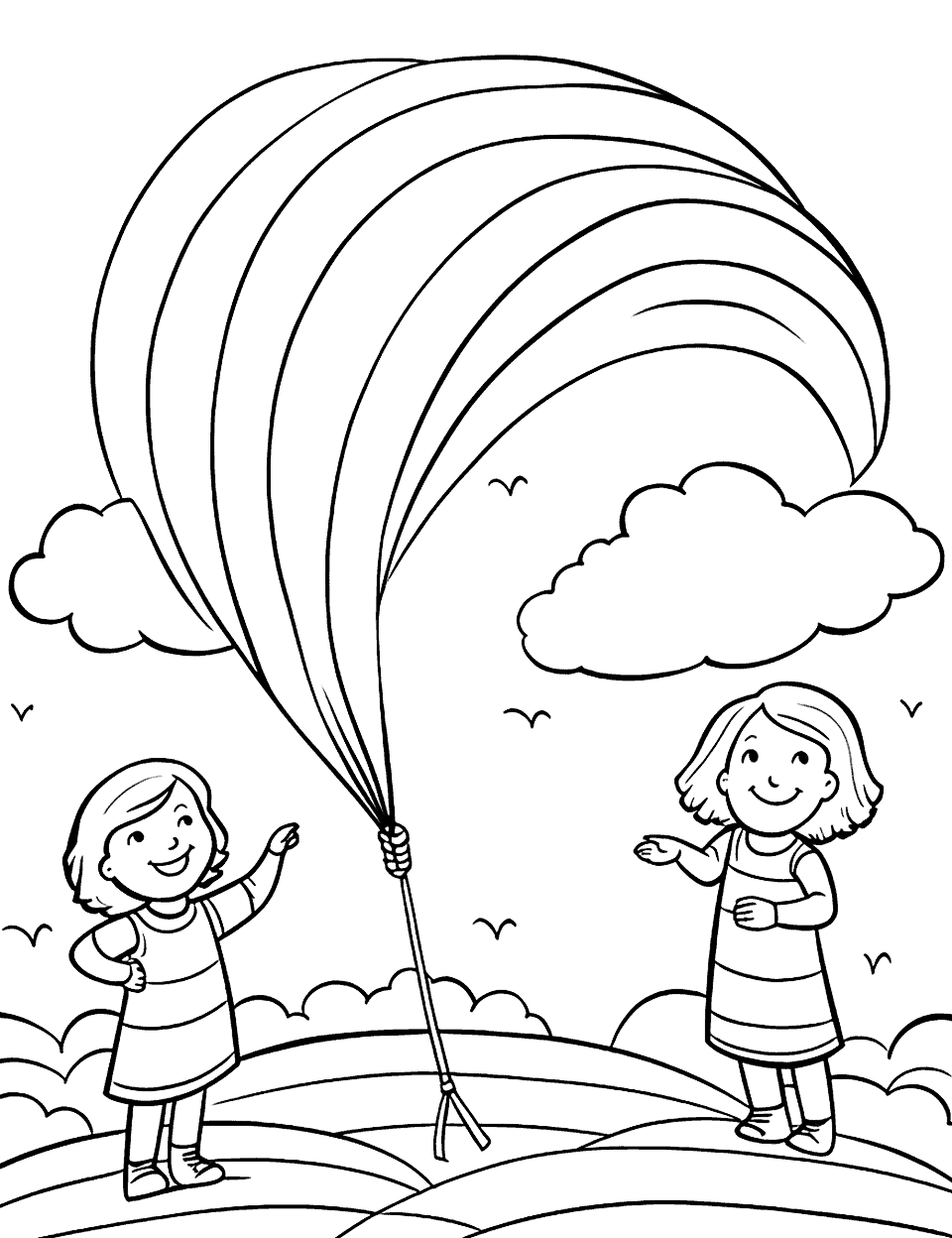
Two smiling girls stand on rainbow striped ground, one holding the string of a big banded kite while birds dot the sky around them. The kite is divided into wide sections, which makes it friendly for a beginner who still wants a scene to look at. Matching the girls’ striped dresses to the kite ties the page together. Print it the night before a windy day trip to the park.
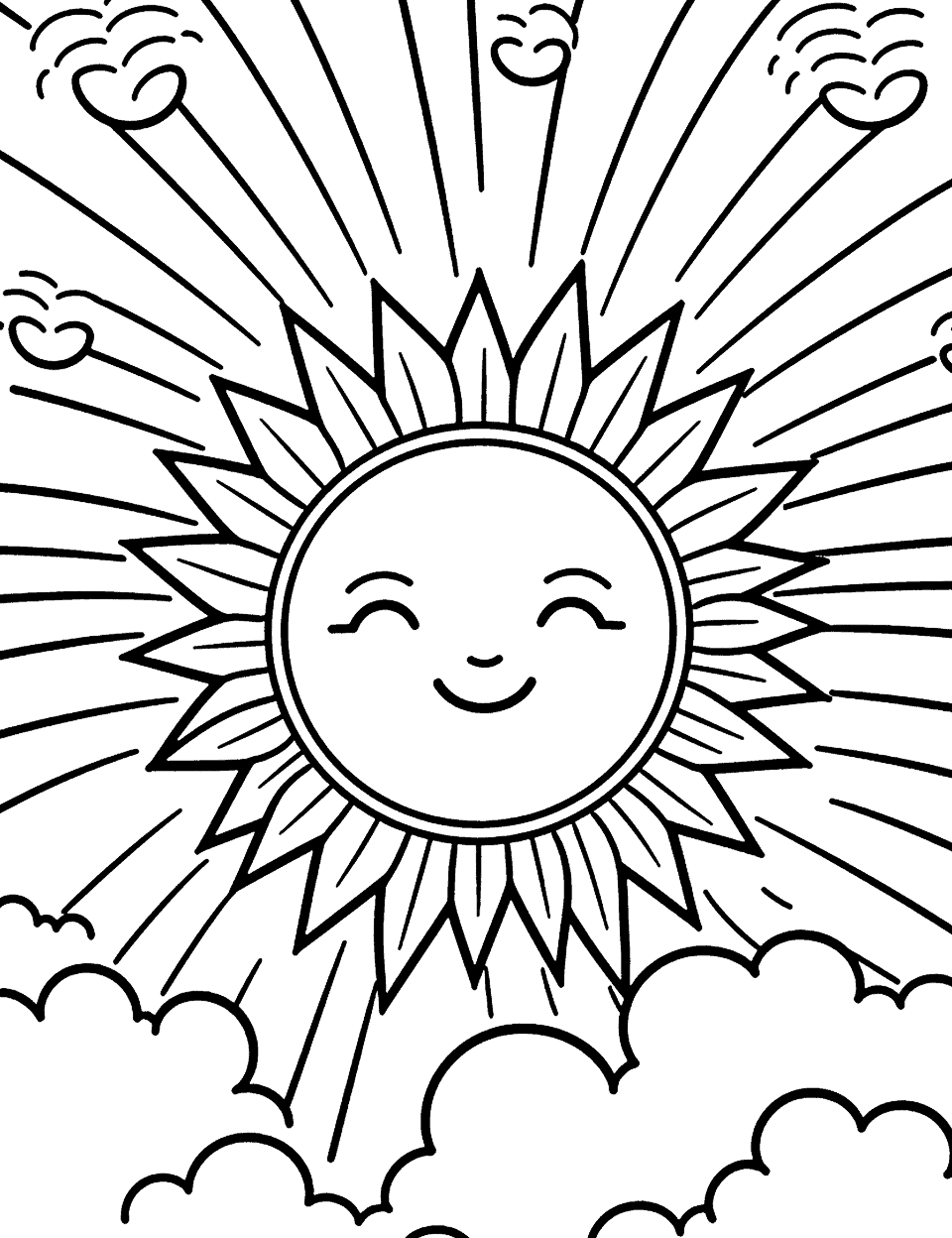
A smiling sun fills this page, with a ring of pointed petal rays around its face, long straight rays shooting to the edges and a bank of cloud along the bottom. A warm palette running from yellow at the center to orange at the tips suits the shape. The repeating ring of rays works much like a mandala pattern, so working around the circle keeps it even. Fine tip pens keep the long rays clean.
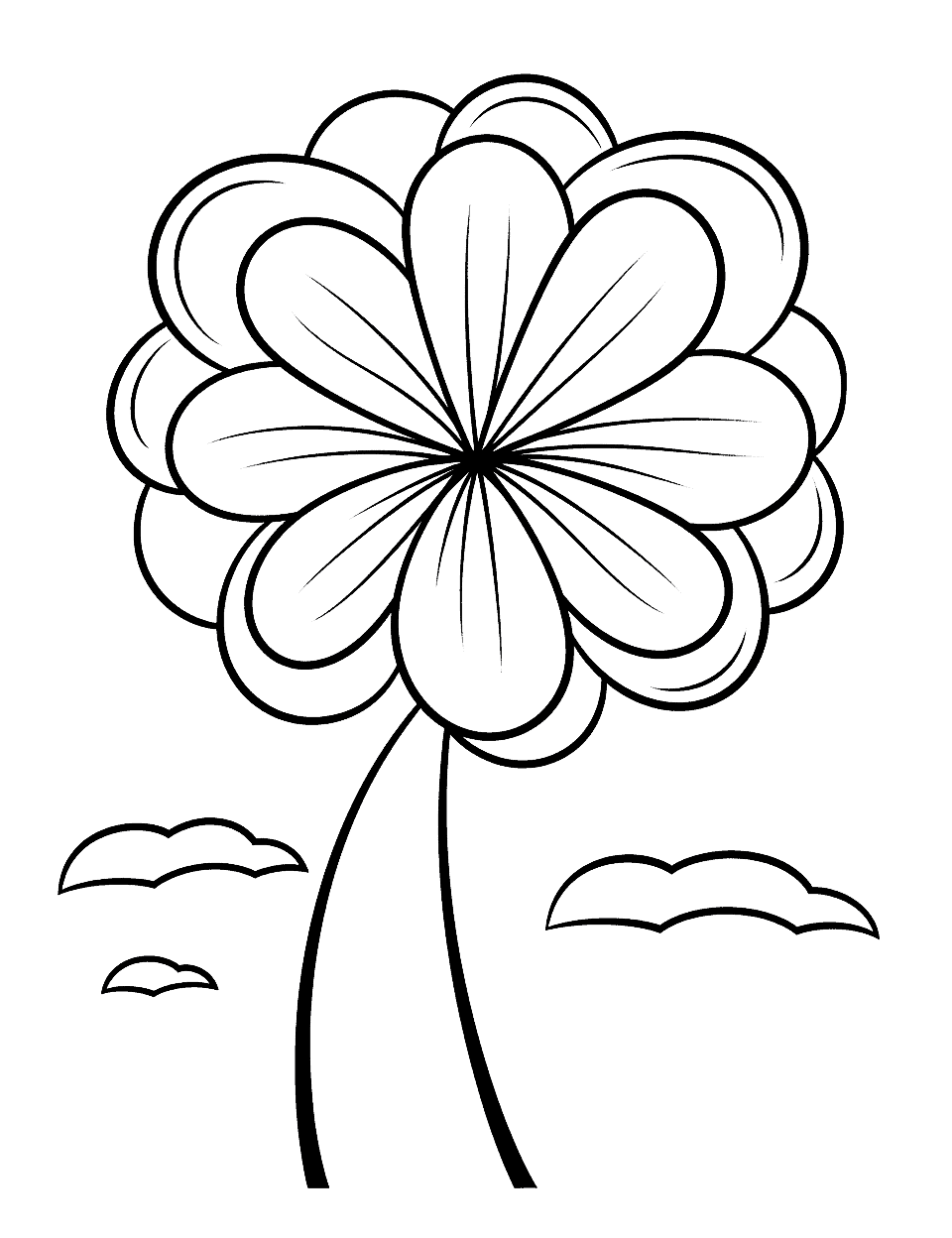
Here is a simple, easy-to-color flower. The large petals allow broad strokes and blending practice, which is where crayons do their best work. A good first try at fading one color into the next.
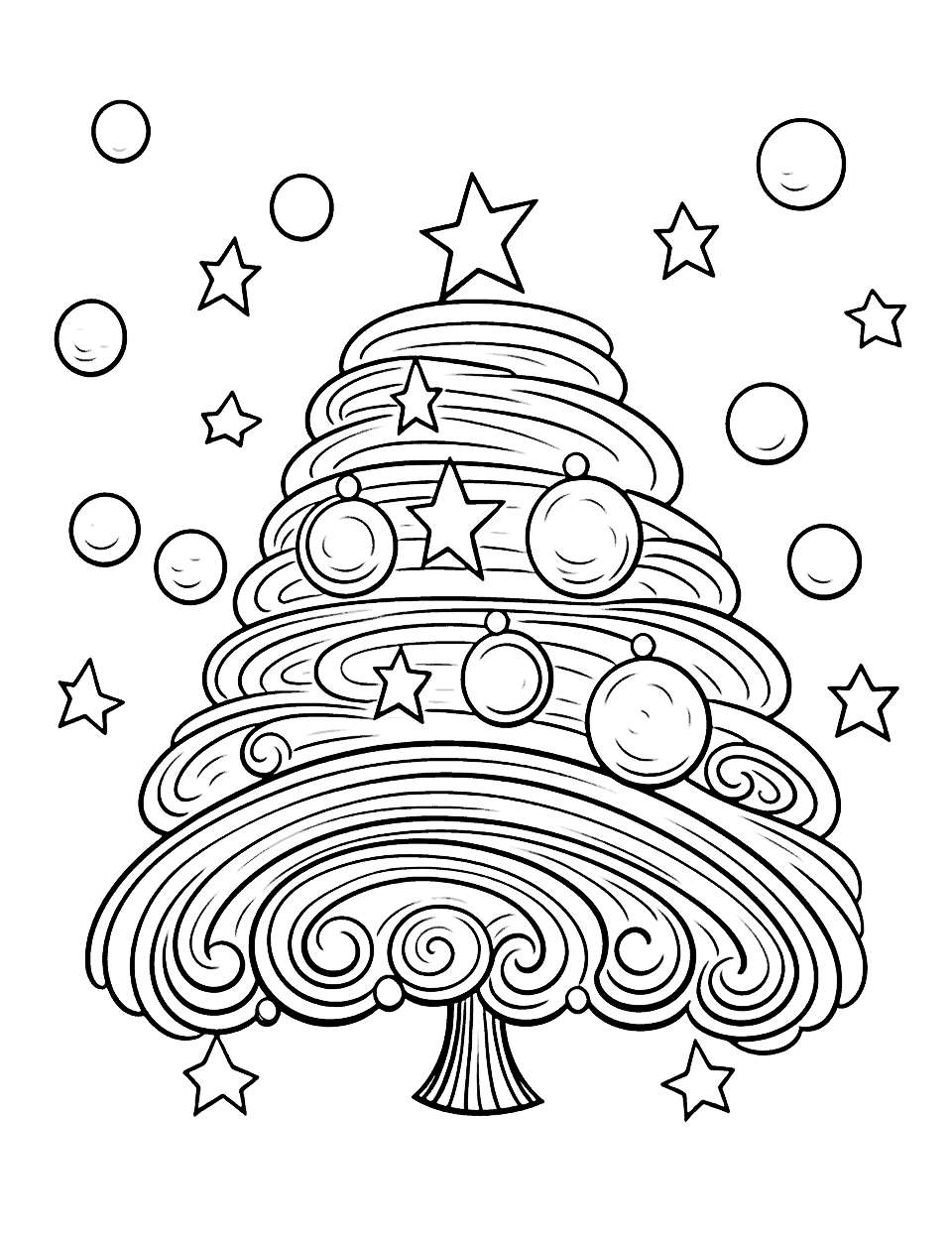
Decorate this Christmas tree with a twist. Color the tinsel and bulbs as a gradient instead of the usual red and green. Trim the finished tree out and it works as a homemade tag for a present.
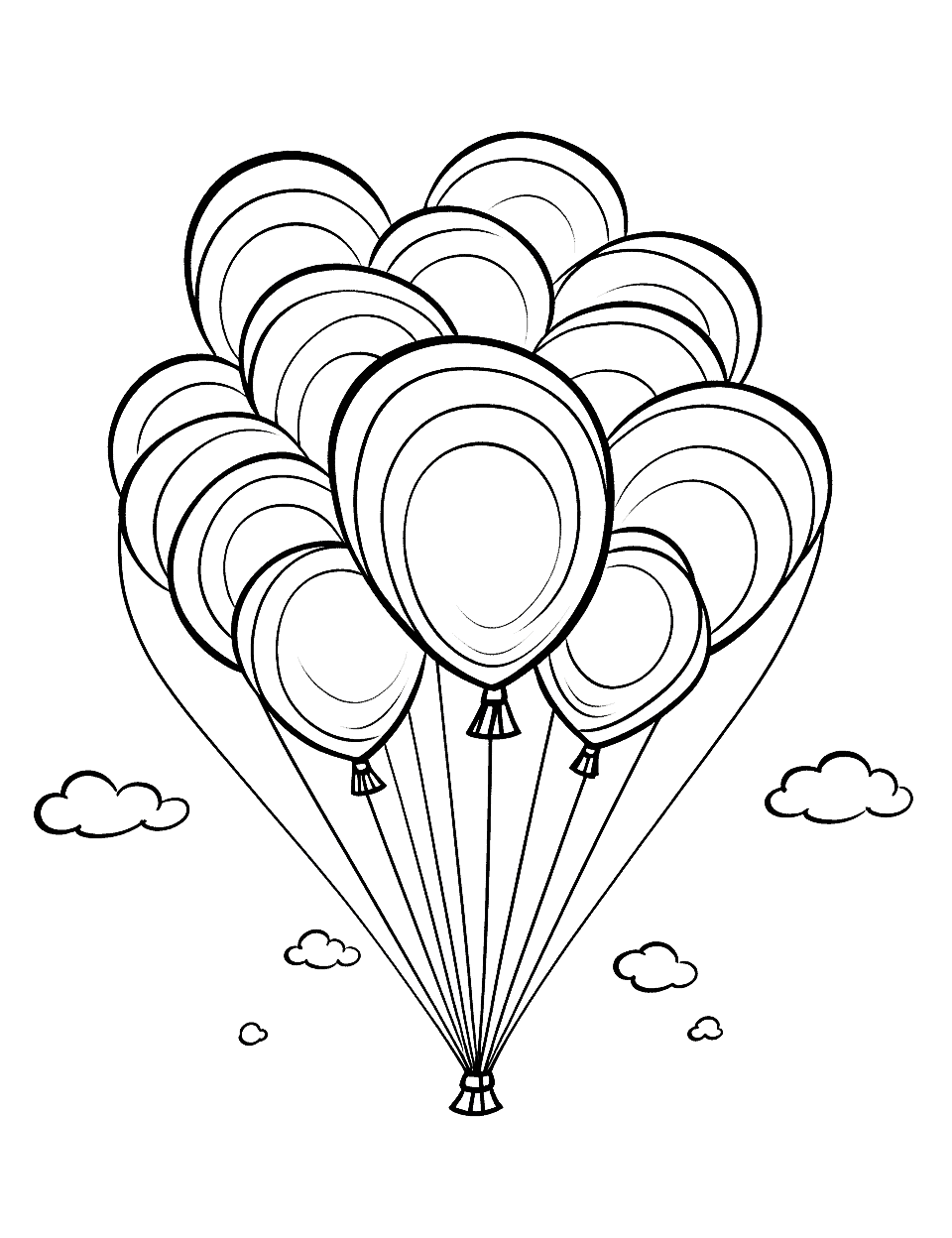
A dozen balloons bunch together into a rounded bouquet, their strings gathered in one knot at the bottom, with small clouds drifting either side. Each balloon holds rings of ovals inside it, so it doubles as quiet practice with shapes. The simple outlines keep a child on track without much guesswork. Good for kids who want to finish something quickly and see a result.
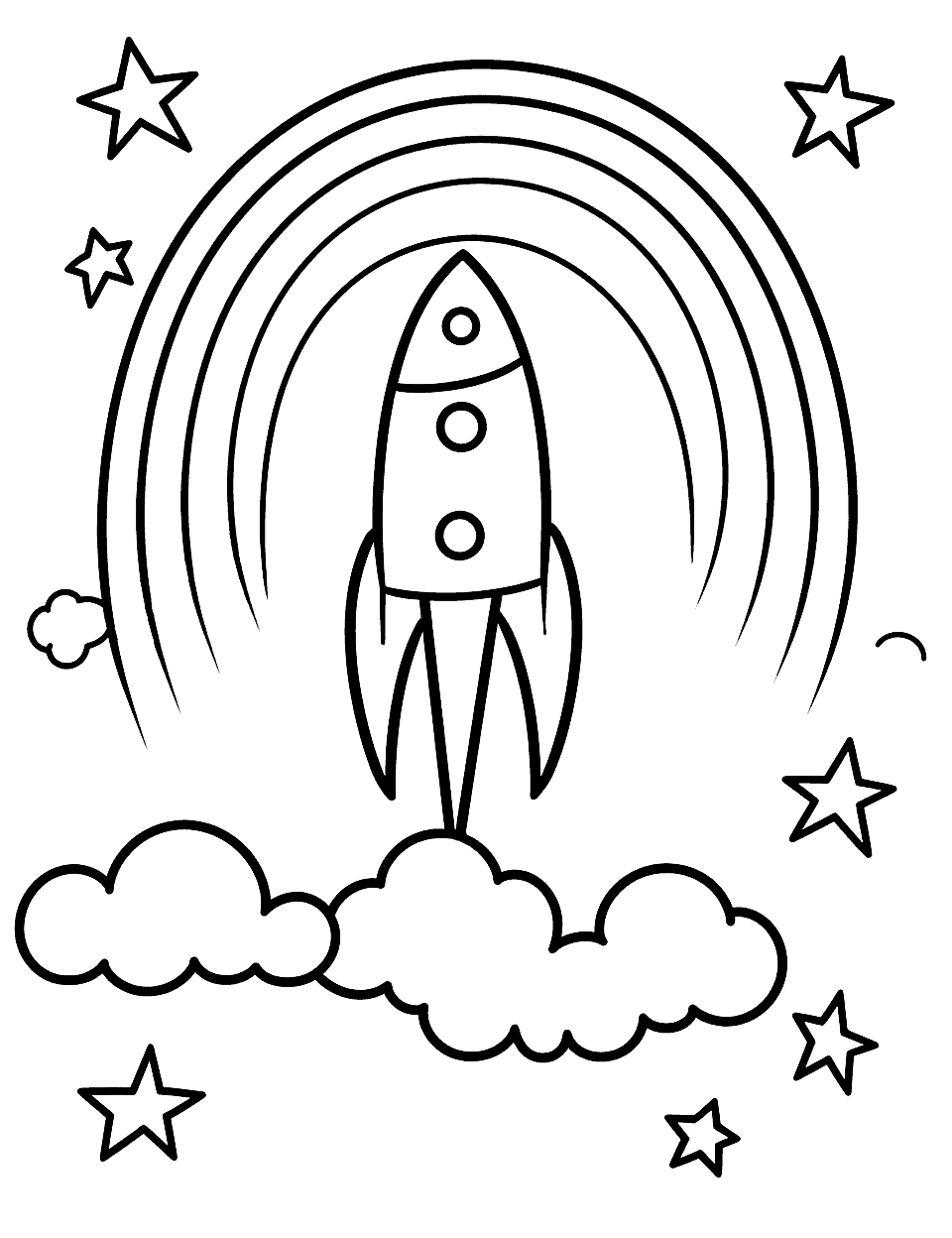
A rocket with three round windows and three fins lifts off a cloud, with a broad arch curving behind it and stars scattered across the sky. Sharp lines on the rocket body and a softer touch on the cloud give the page some motion. The arch behind the rocket is the natural place for the full color run. It pairs nicely with the astronaut sheet higher up the list.
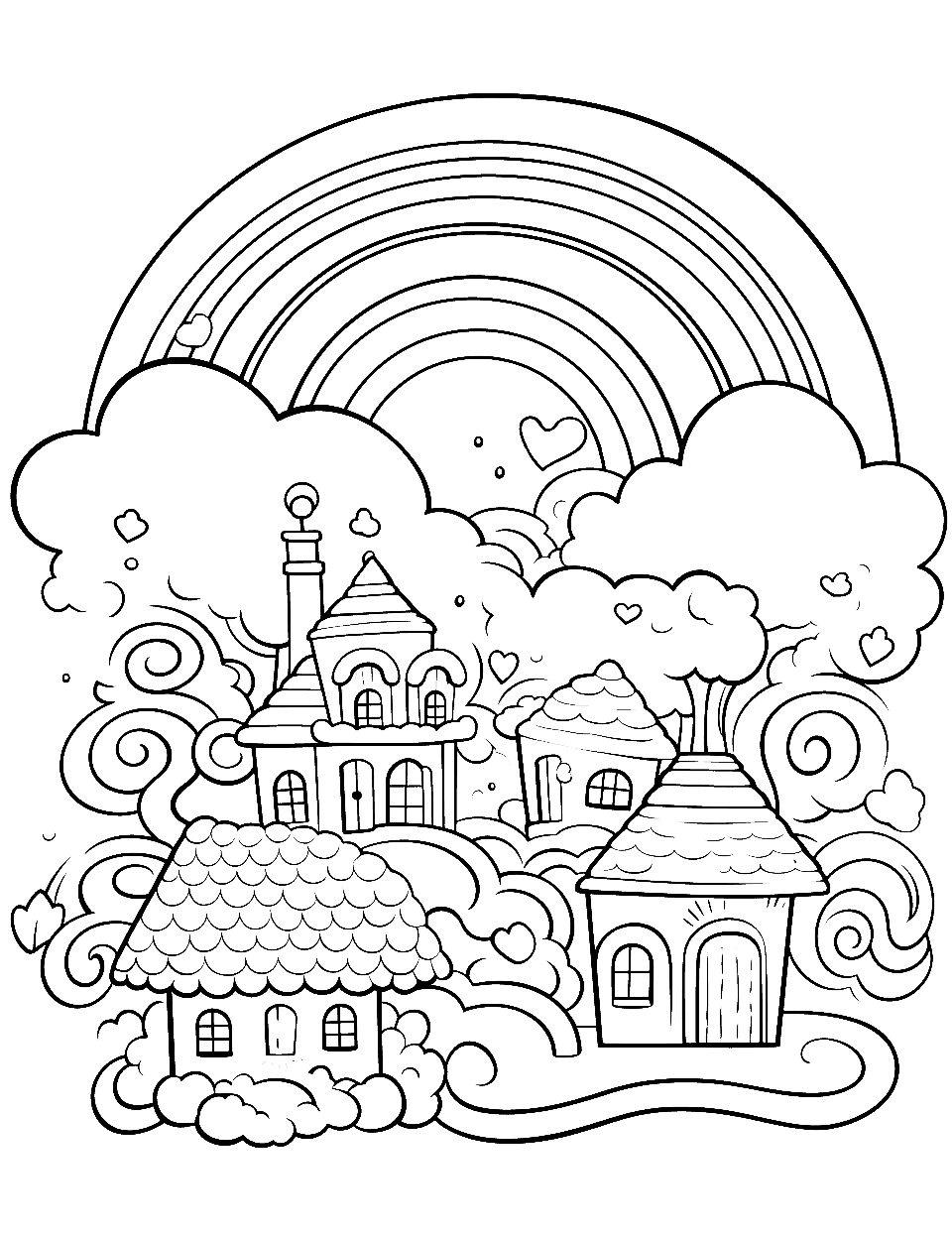
Three cottages with scalloped, shingled roofs sit among curling swirls and puffy clouds, with hearts drifting in the sky and a wide arch behind everything. The roofs read like piped frosting, so candy shades of pink, mint green and lemon yellow fit them well. There is a lot going on here, so it holds a child’s attention longer than most sheets in the set. Work the swirls with a pencil and save markers for the big cloud shapes.
By using our free coloring pages, you acknowledge and agree to our full disclaimer. All materials are for personal, non-commercial use only and all rights belong to their respective license holders.
How Do Rainbows Get Their Colors?
A rainbow gets its colors because sunlight bends as it enters a raindrop, reflects off the back of the drop, and bends again on the way out, which spreads white light into separate bands. Red rides the outer edge of the arc and violet the inner edge, because each wavelength bends by a slightly different amount inside the drop (1).
That light leaves the drop at about 42 degrees from the point directly opposite the sun, which is why no rainbow appears when the sun sits higher than 42 degrees above the horizon (2). The fainter second bow you sometimes see above the first comes from light that reflects twice inside the drop and exits near 50 degrees, with its colors running in reverse order, according to the National Weather Service.
Two things worth doing with a finished sheet: check whether your child put red on the outside, and if they colored a double rainbow, flip the color order on the upper arc.
Which Rainbow Coloring Page Fits Your Child’s Age?
Match the sheet to your child’s grip rather than to a birthday: wide bands for the youngest hands, busy scenes once they can hold a line, and the one mandala plus the densest patterned sheets for school-age kids and adults.
By 3 years, most children can copy a circle after watching an adult draw one, per CDC developmental milestone guidance, so a page like Simple Rainbow or Rainbow for Toddlers is a fair target at that stage. By 4 years, most hold a crayon between fingers and thumb instead of in a fist (3), which is roughly when narrower work like Butterfly Rainbow or Rainbow Fish stops being frustrating.
School-age kids usually want a scene rather than a shape, so Space Rainbow, Rainbow Hot Air Balloon, and Sailing Ship Under the Rainbow land well. Rainbow Mandala, Rainbow Over Swirling Clouds, and Rainbow Parrot are the slowest sheets in the set and the ones adults tend to pick up.
Activities to Do With Rainbow Coloring Pages
Coloring is just the start. A finished page can become a suncatcher, a puzzle, or a puppet, and most of these ideas need nothing you do not already own. Here are six that work.
Make a Window Suncatcher
Color the page with markers, since crayon wax blocks the light. Rub a small amount of vegetable oil over the back with a cotton ball to make the paper translucent, let it dry flat on a paper towel, then cut it out and tape it to a sunny window. An east-facing window gives the best glow in the morning.
Rainbow Scavenger Hunt
Use a colored page as the checklist for a house-wide hunt. Ask your child to find one object for every color on their sheet (a red apple, a blue sock, a yellow toy), then stack the finds into a 3D rainbow of their own. Set a five minute timer if you need the game to end on schedule.
Custom Greeting Cards
Print your favorite design at 50% scale, or choose “2 pages per sheet” in your printer settings. Fold a piece of cardstock in half, glue the colored image to the front, and leave the inside blank for a message. These make cheerful birthday cards or get well notes for family and friends.
DIY Jigsaw Puzzle
Color the page on heavy cardstock, or glue the finished sheet to a flattened cereal box. Cut the picture into random shapes, mix the pieces up, and challenge your child to rebuild it. Six or eight big pieces is plenty for a preschooler, while older kids can handle twenty or more.
Storytelling Puppets
Choose the pages with characters, like the unicorn, the princess, or the dragon. Cut each figure out after coloring and tape a popsicle stick to the back. You end up with a cast ready for a puppet show behind the sofa, and kids usually supply the plot themselves.
Sorting Game for Toddlers
Lay a colored rainbow page flat on the table and set out a bowl of colorful cereal, candy, or buttons. Ask your toddler to place each piece on the matching stripe. It is a tasty way to practice color names, and it uses whatever is already in the cupboard.
FAQs
What Is the Correct Order of Rainbow Colors?
A rainbow runs red, orange, yellow, green, blue, indigo, then violet, reading from the outer edge of the arc inward, and the acronym ROYGBIV keeps the order straight. Red lands on the outside because longer wavelengths leave a raindrop at a wider angle than shorter ones do. Coloring one sheet in that exact order is the quickest way to make the sequence stick.
How Do I Print These Coloring Pages?
Click the image or the download button under the design you want, then print the file that opens with the print icon, Ctrl+P on Windows, or Command+P on a Mac. Choose portrait orientation and Fit to Page so the arc does not get clipped at the edges. Draft or economy mode saves ink and still gives clean outlines to color inside.
What Paper Is Best for Coloring?
Standard printer paper is fine for crayons and colored pencils. Switch to cardstock or another heavy paper for markers and watercolors, which otherwise bleed through and mark the table underneath. Cardstock is also the right choice for any page you plan to cut out for a card, a puzzle, or a stick puppet, since thin paper curls once it is glued.
Are These Coloring Pages Free?
Yes, every page here is free for personal, classroom, and other non-commercial use. Print as many copies as you need for your family or your students, with no sign-up and no watermark. The only limits are the usual ones: please do not resell the sheets or repost the files elsewhere as your own.
How Do Rainbows Form?
Rainbows form when sunlight passes through falling rain and each drop bends and reflects the light back toward you, separating it into bands of color. You have to stand with the sun behind you and the rain in front of you, so a shower that clears in the late afternoon is the classic setup. If the sun is high overhead, the bow sits below the horizon and you will not see it at all.