Which gets colored first, the smiling cherries or the banana pirate ship?
These fruit coloring pages run to 40 free printable sheets, from chunky toddler outlines to a detailed still life and a jungle scene. Smiling cherries, a banana pirate ship, a split pomegranate, and a starfruit in space are all in the set.
Coloring a strawberry is also a low-pressure way to talk about eating one. In 2021, 32.1% of US children aged 1 to 5 did not eat a fruit every day in the preceding week (1).
Pick your favorites, print them on whatever paper is in the tray, and get the crayons out.
Summer Fruit Fest
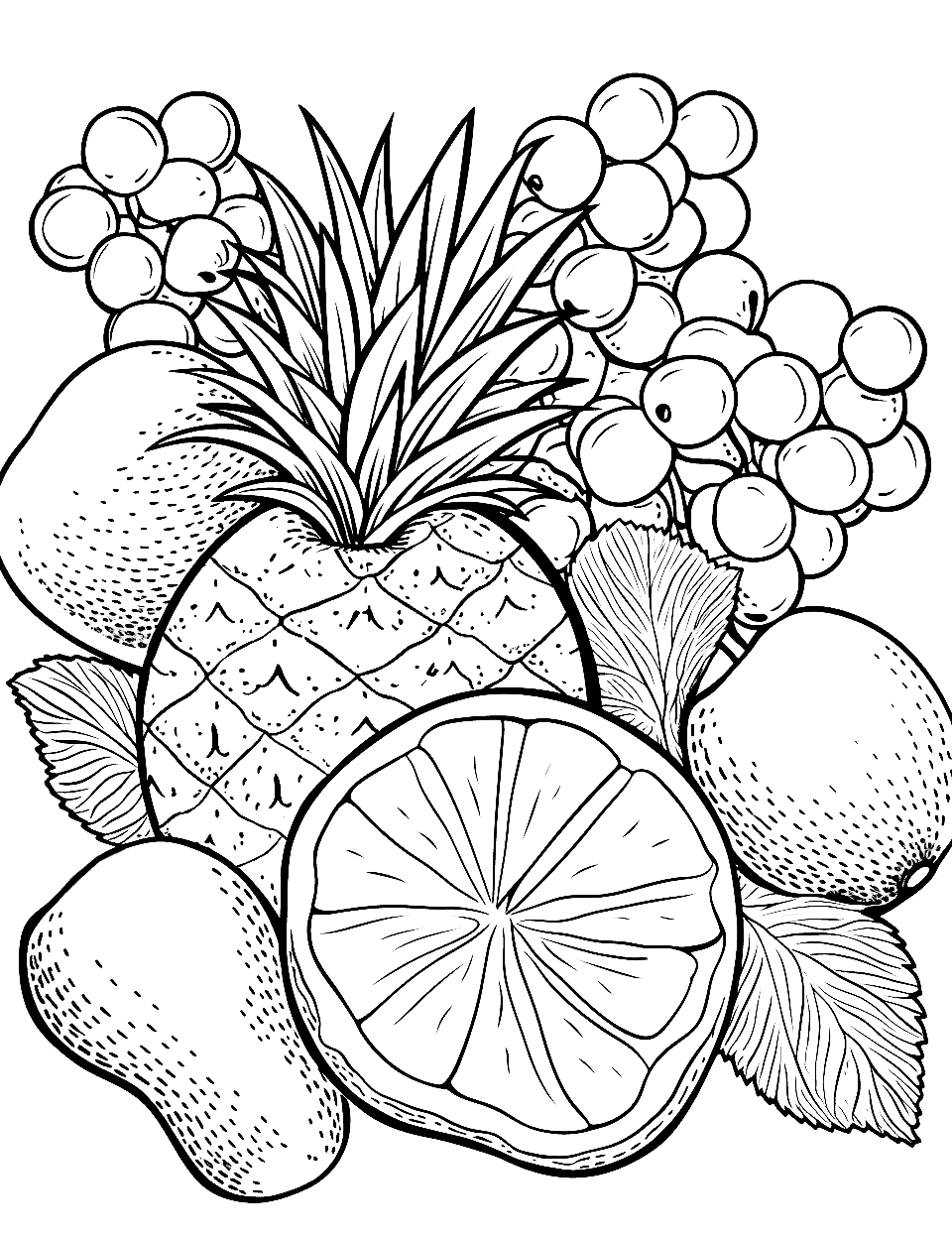
A pineapple sits in the middle of this pile, with grape bunches above it and a cut citrus round below. Mangoes and leaves fill in the corners, so almost none of the page is left white. Warm oranges suit the citrus while the grapes can go green or deep purple. The lines sit close together in places, so colored pencils give more control than fat markers. Print it alongside a summer sheet for a warm-weather pair.
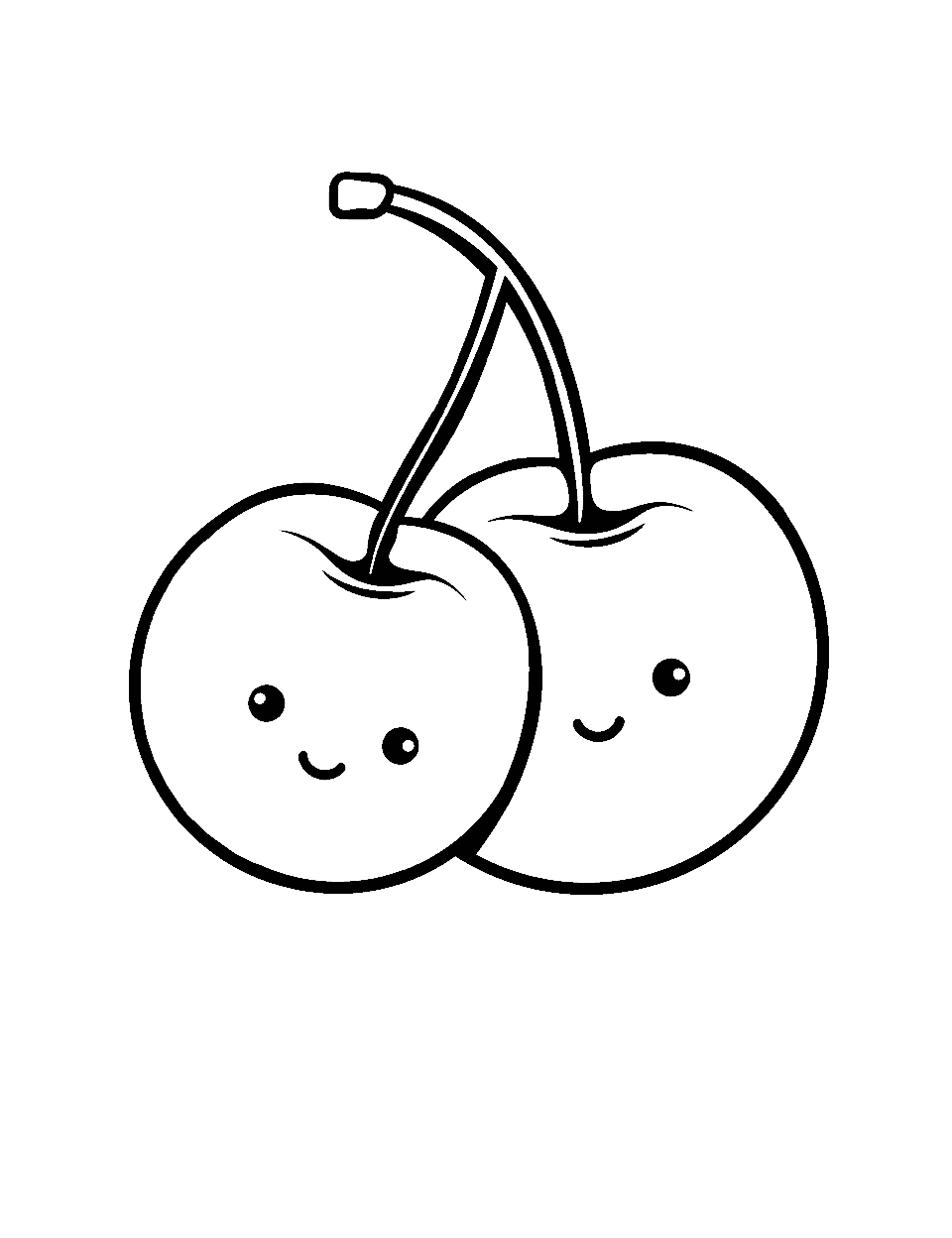
Two cherries share one curved stem, and each has dot eyes and a small smile. The outlines are thick and the shapes are large, which makes this one of the easiest sheets here. Red is the obvious choice, though a yellow and pink pair looks like rainier cherries. Crayons will not slip outside these lines.
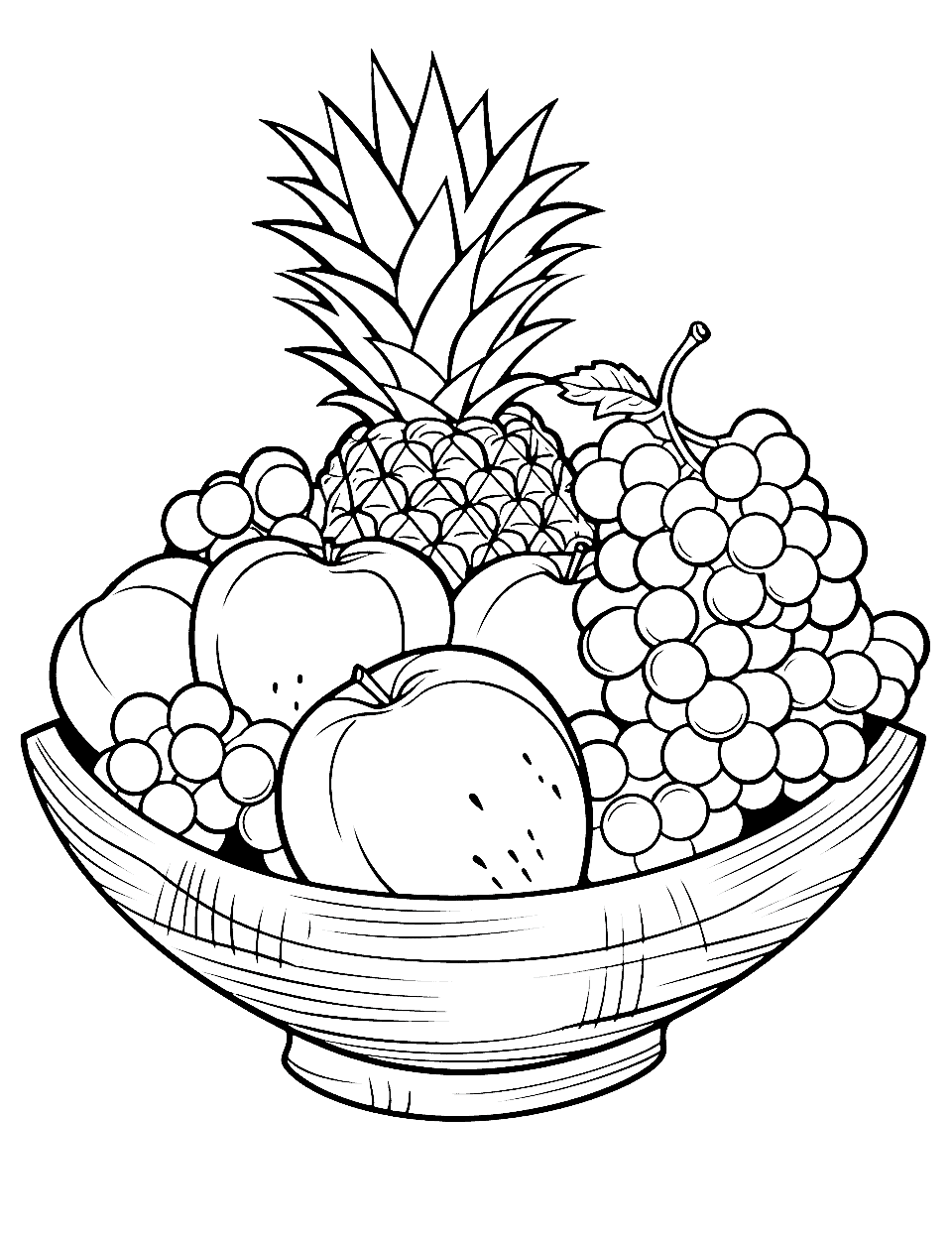
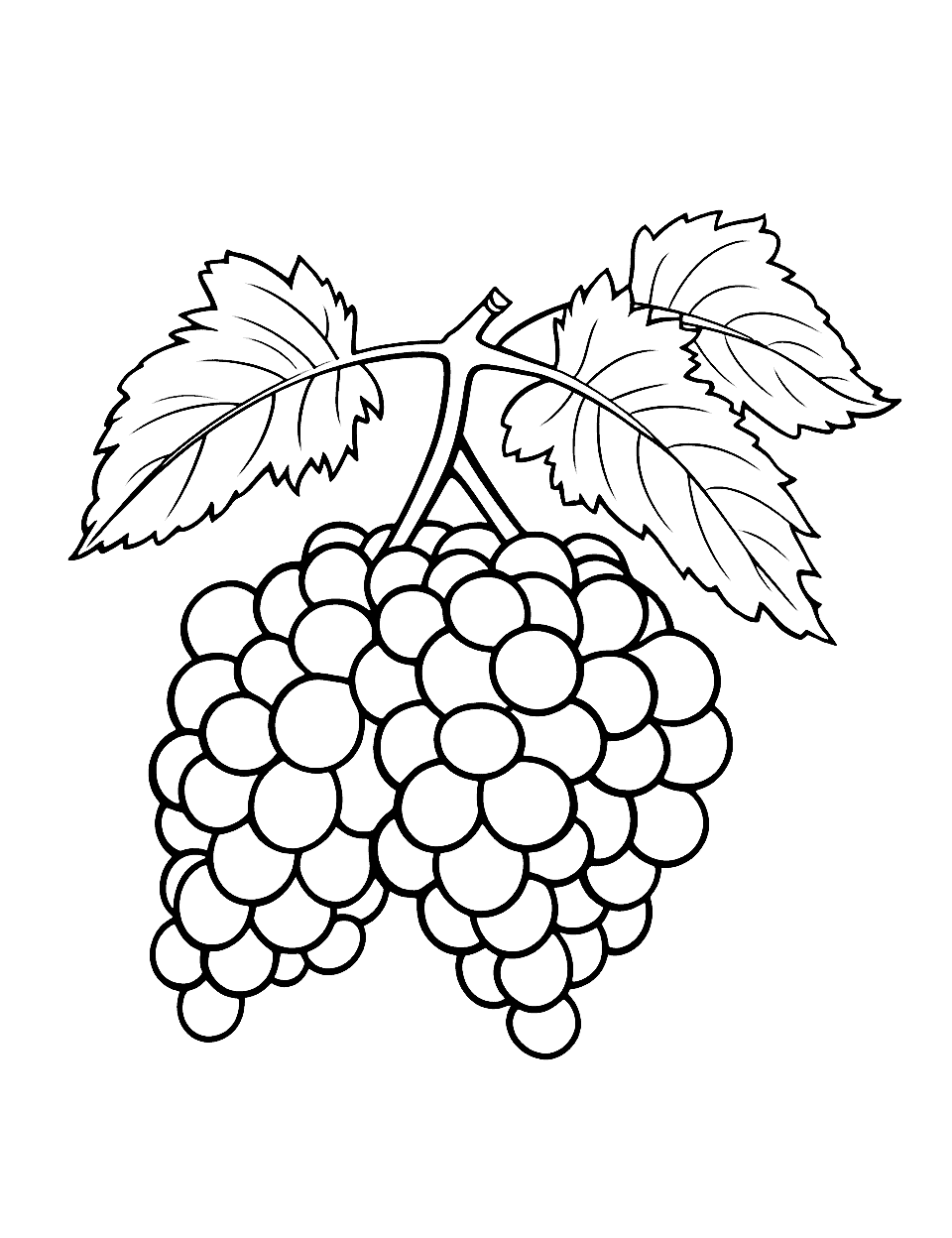
Dozens of round grapes stack into one heavy bunch, topped by broad, jagged-edged leaves. Purple, green, and red are all true to life, and shading a few grapes darker than the rest gives the bunch some depth. Every grape is its own small circle, so it doubles as practice for staying inside a shape. Colored pencils reach the tight gaps between berries better than markers do.
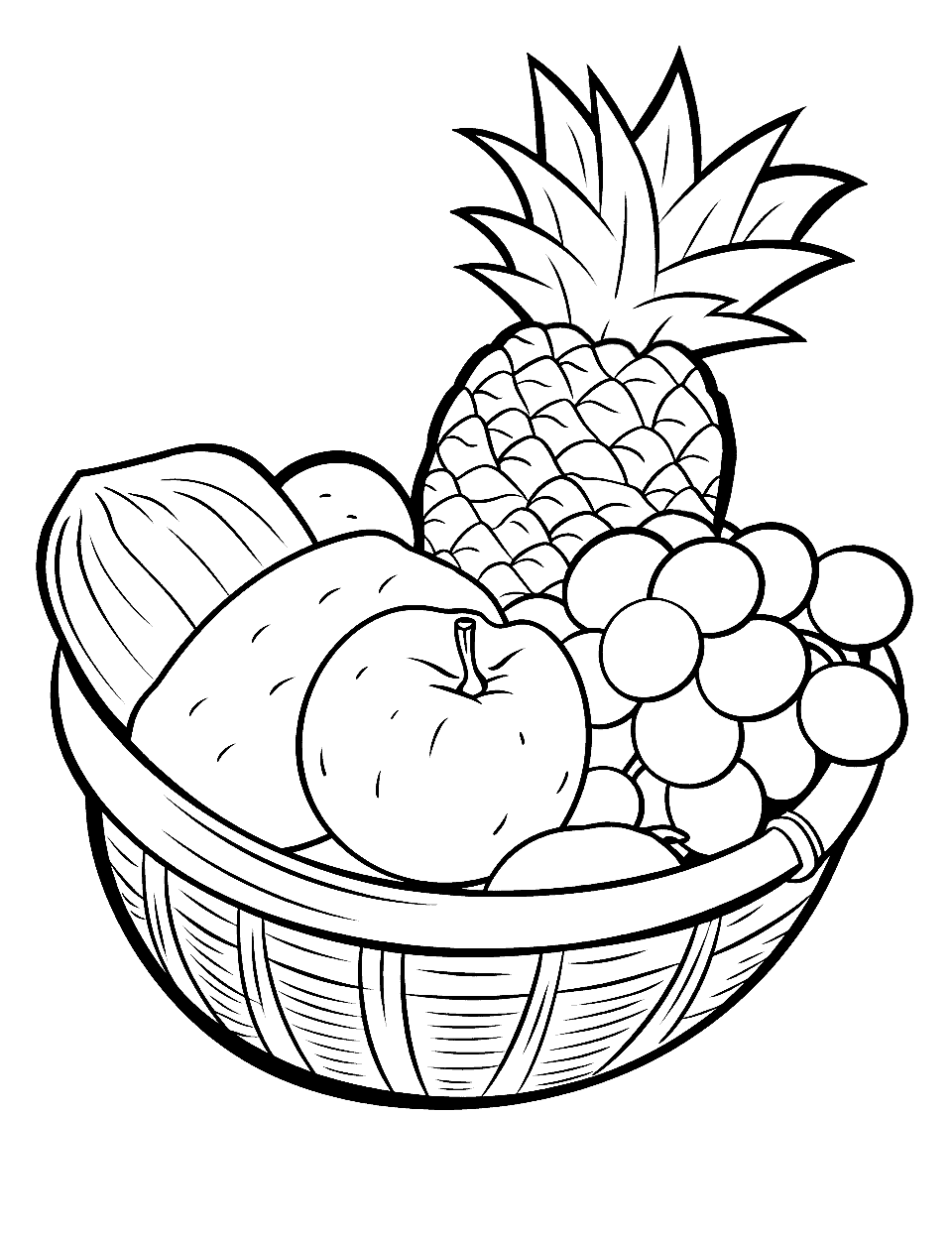
A woven basket holds a pineapple, an apple, a grape bunch, and a couple of larger fruits tucked behind them. Lines are thick and the shapes are simple, which suits toddlers still learning to color inside an edge. Name each fruit out loud as your child picks a color for it. The basket weave is a good spot to try brown strokes running two directions.
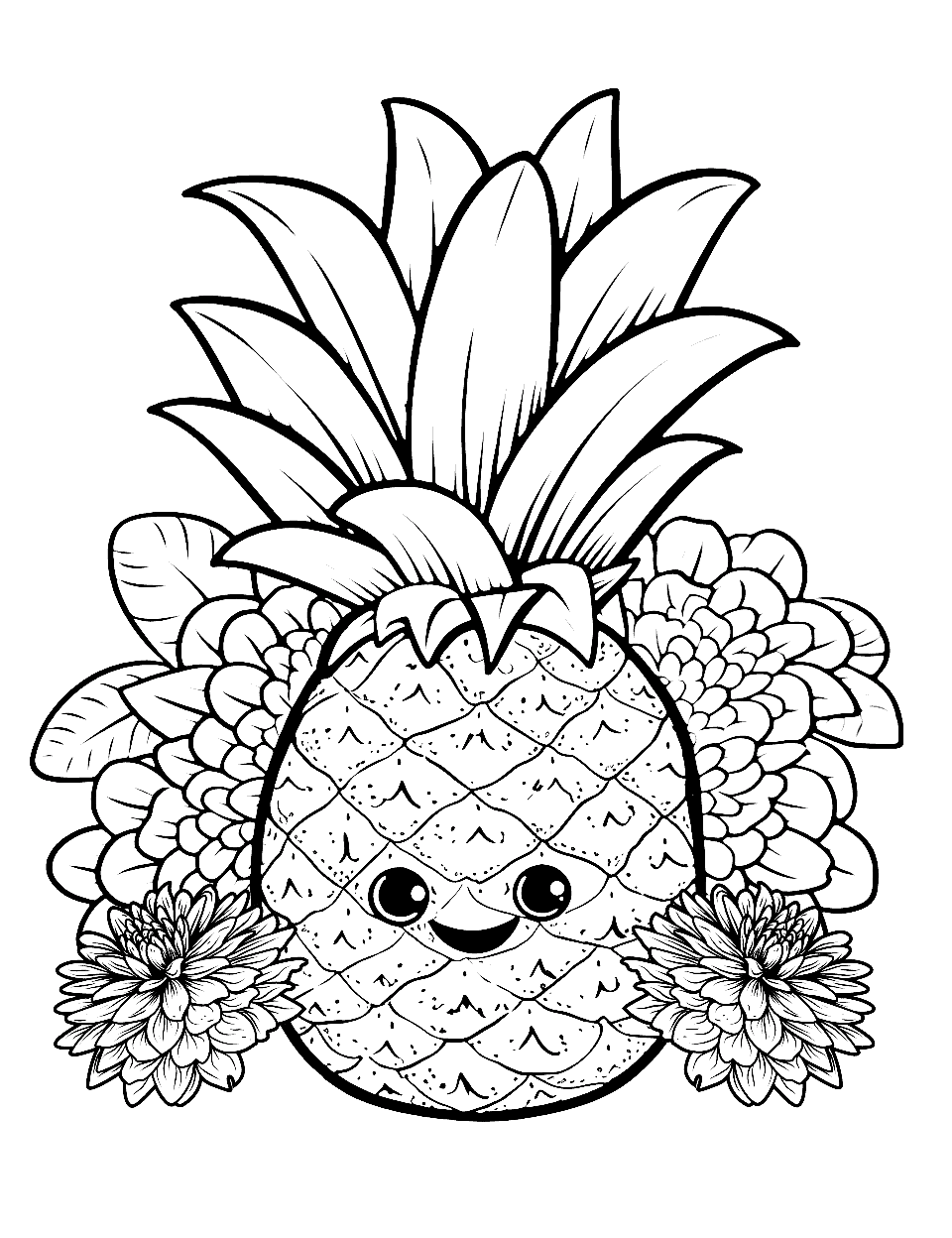
This pineapple has big round eyes and a wide smile, with layered flowers packed in behind it. The diamond pattern across its body rewards two shades of yellow, one for the diamonds and one for the gaps. Petals are small and there are a lot of them, so an older child will stay busy for a while. Use cardstock if markers are coming out.
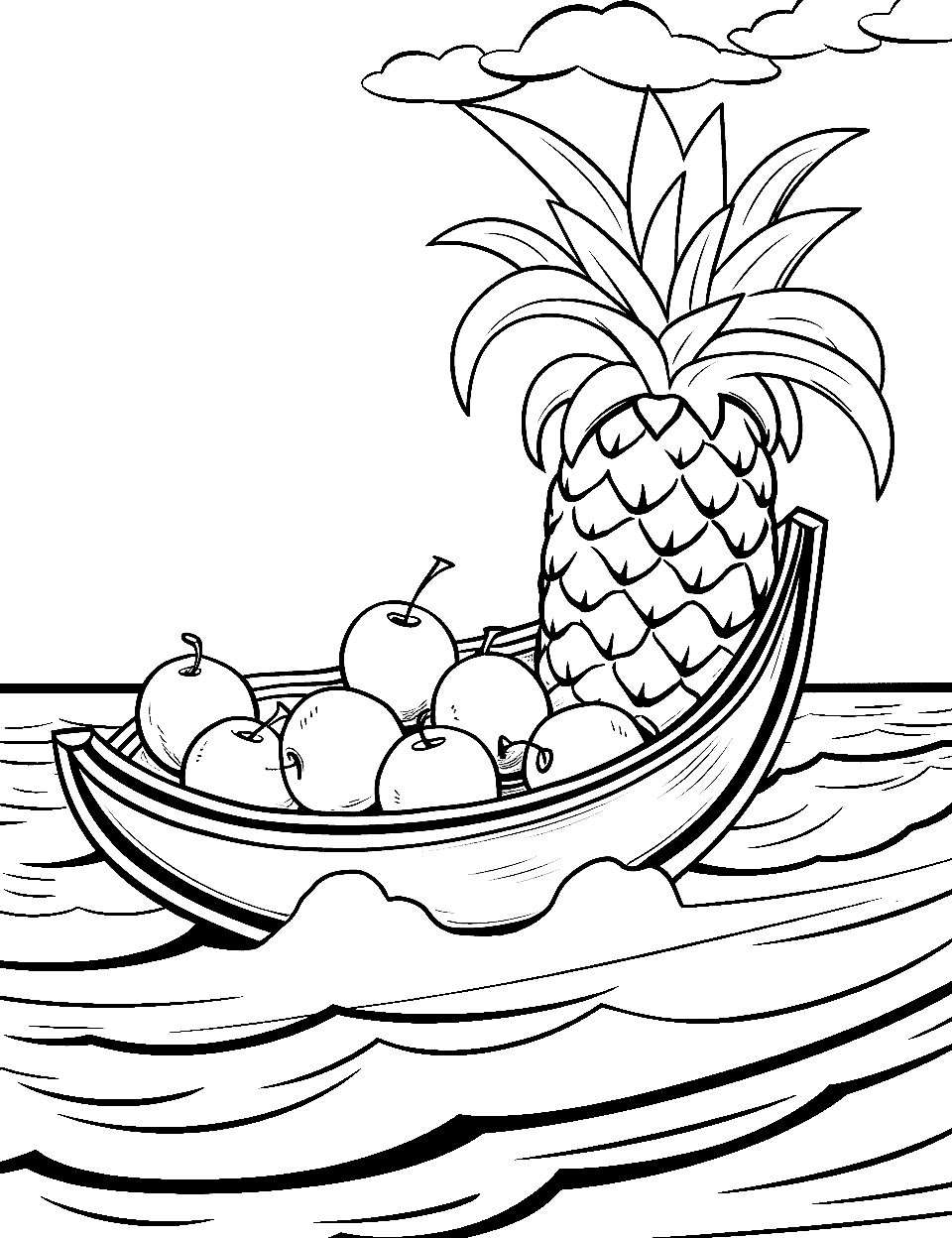
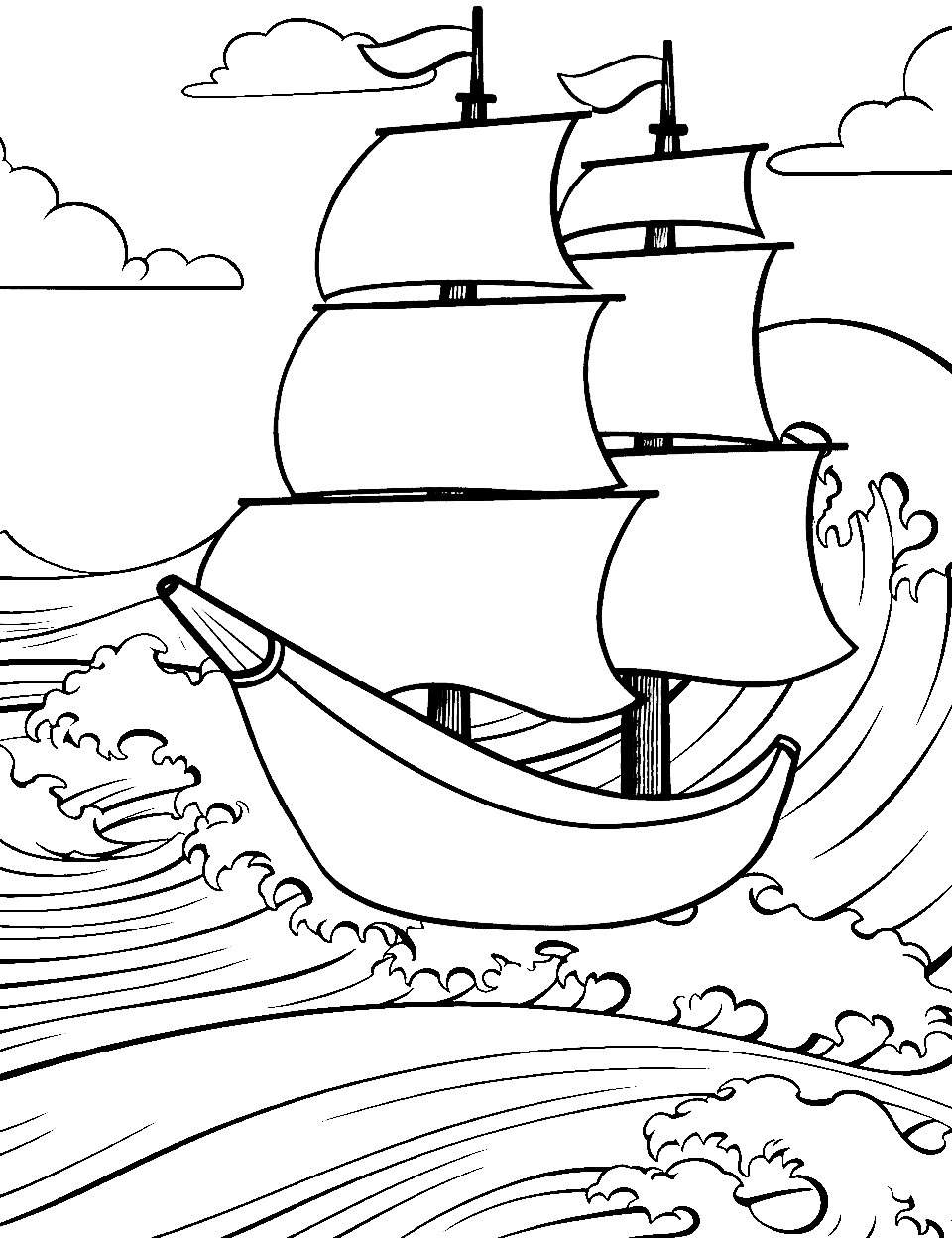
A curved boat rides the waves with a leafy pineapple standing at the back and round fruits filling the hull. The sea takes up the whole lower half of the page, which leaves plenty of room for blue and white water lines. Clouds sit along the top edge for anyone who wants a soft gray sky. Older kids can give each wave a slightly different shade.
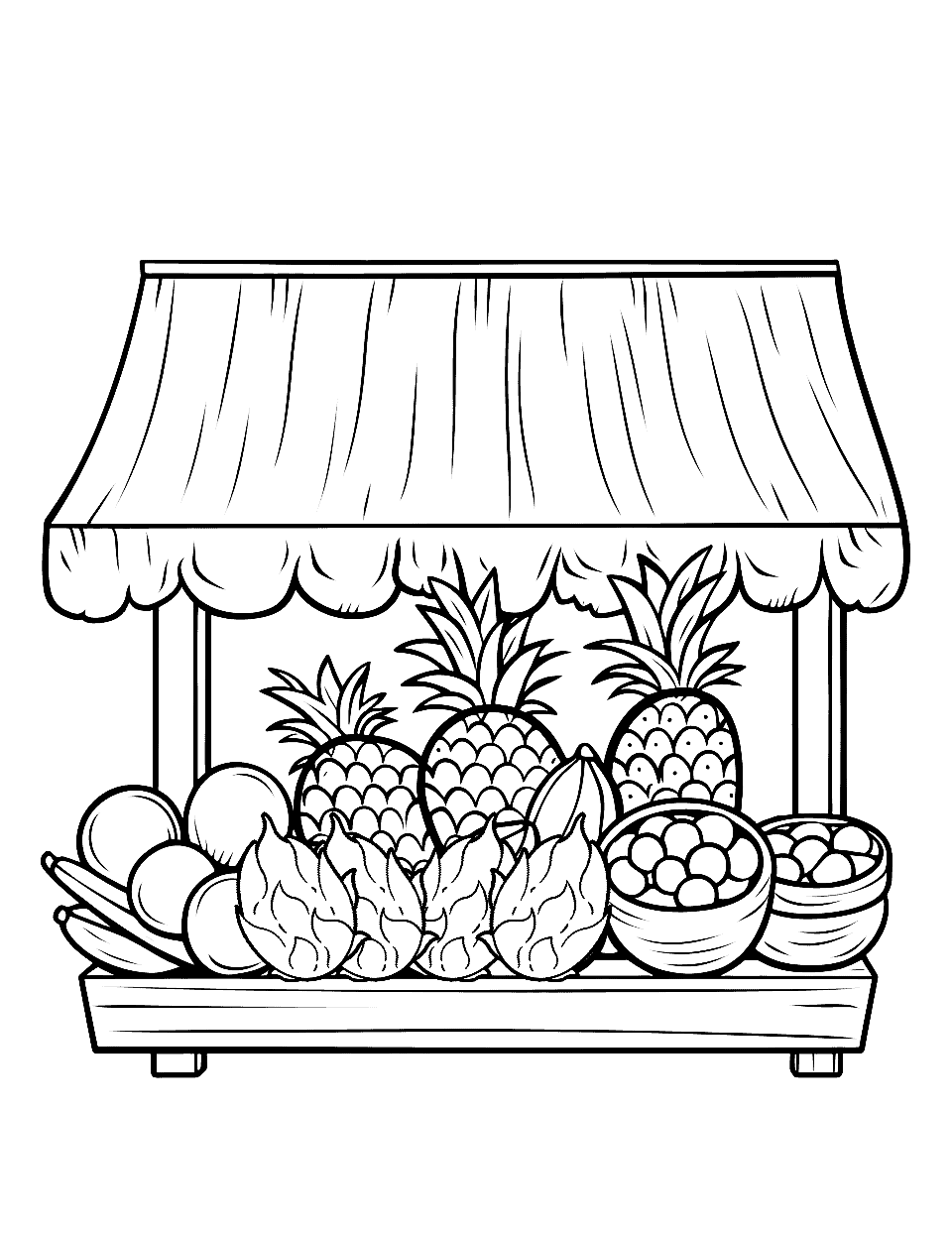
One market stall stands under a fringed awning, stacked with three pineapples, spiky dragon fruits, bananas, and two bowls of small round fruit. The awning is one large area, so it is the easiest place to start. Give each fruit type its own color and the counter ends up looking like a real produce display. There is a lot packed onto that counter, so it suits school-age kids more than toddlers.
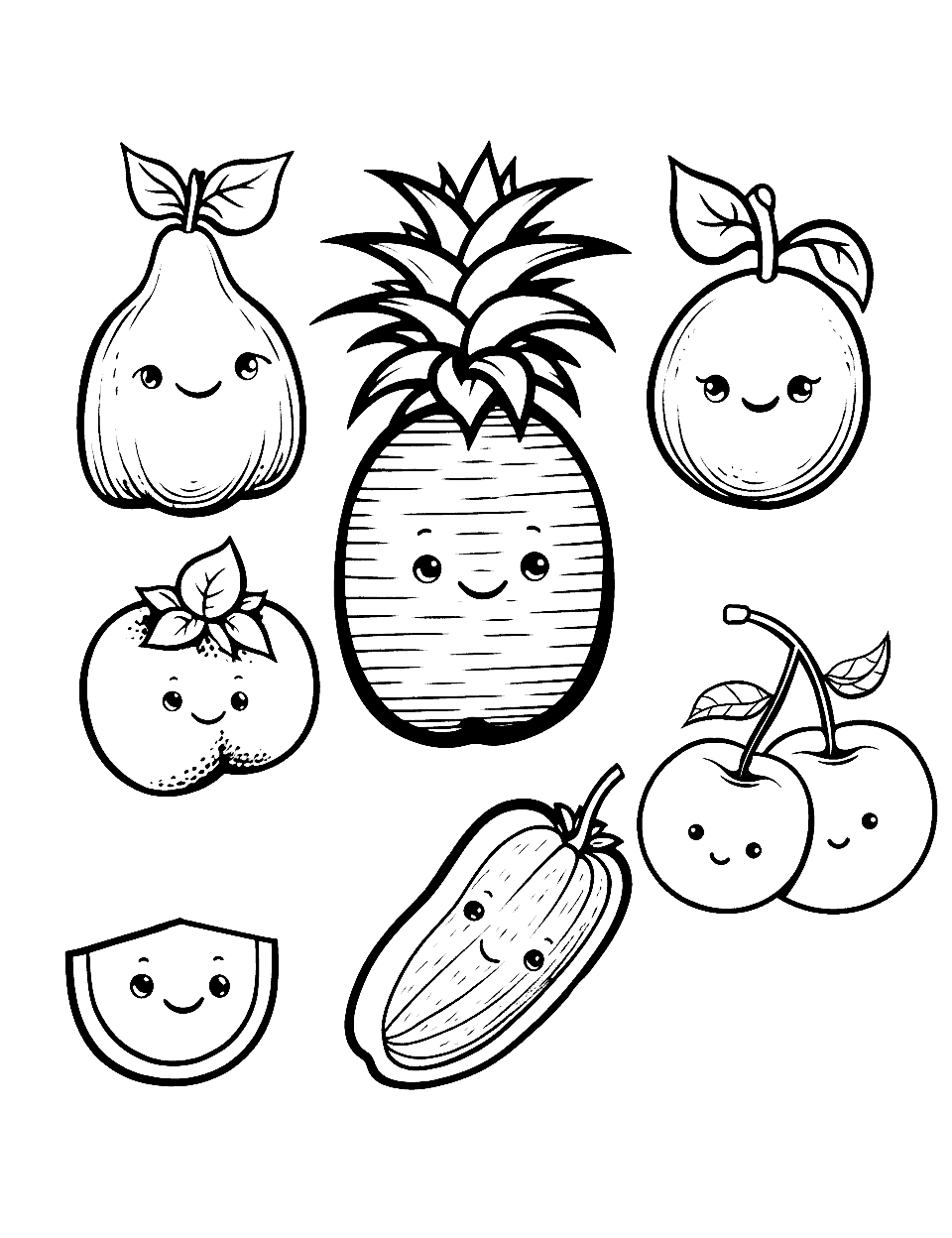
Every fruit on this page is drawn on its own with a face: a pear, a pineapple, a cherry pair, a watermelon wedge, and a few round fruits. They all smile, so nobody has to guess the mood. White space between them means a child can finish one, wander off, and come back later. Cut the finished fruits out and they work as flashcards or fridge magnets.
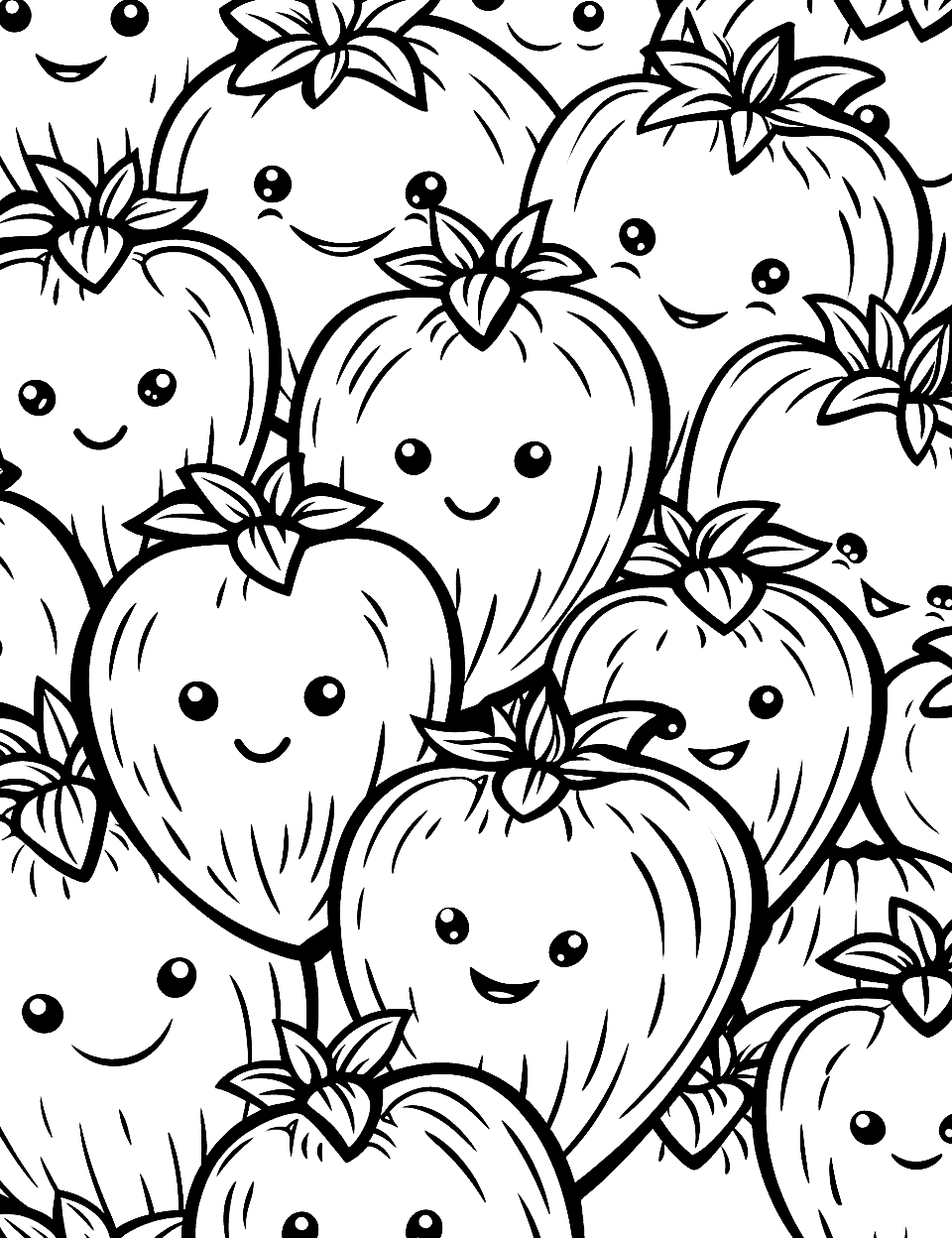
Strawberries fill this sheet edge to edge, each with a leafy cap and a small smiling face. There is no background at all, so every bit of color goes on the berries themselves. Alternating red, pink, and orange berries beats coloring the whole page one shade. The drawing runs right off the paper, which makes it a good full-page marker session on thick stock.
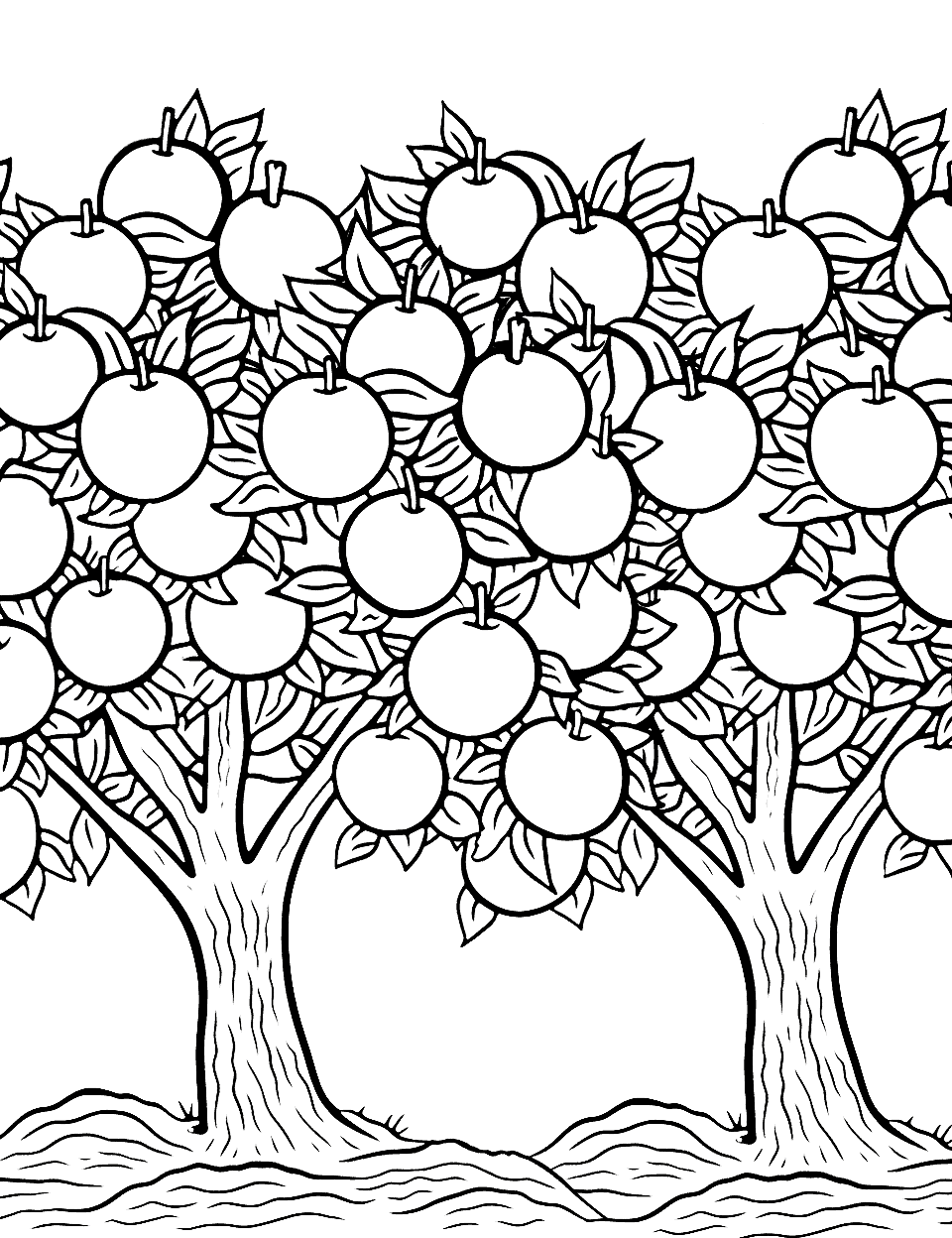
The apple trees here are loaded with round fruit, and the branches fill almost the whole page. Trunks carry bark lines running top to bottom, which take brown pencil nicely. Red, yellow, and green apples on the same tree keep it from going flat. Count the apples on one tree with your child before either of you picks up a crayon.
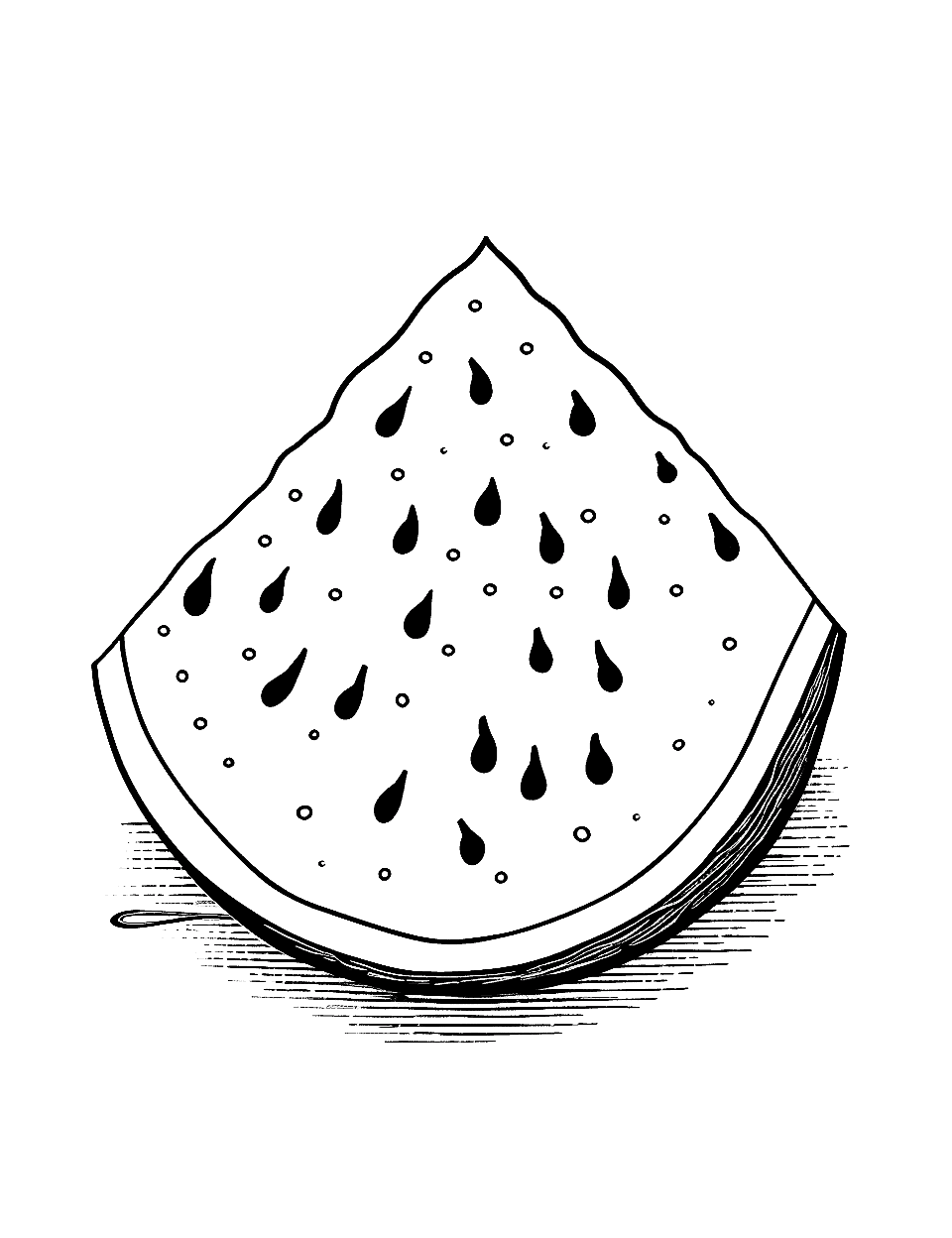
One big watermelon wedge takes the middle of the page, with teardrop seeds already filled in solid black. Pink flesh, a pale band, and a green rind is the classic combination. The shadow underneath is drawn as fine hatching, so leave it white or shade it gray. One large shape and few details make this a quick win for a younger child.
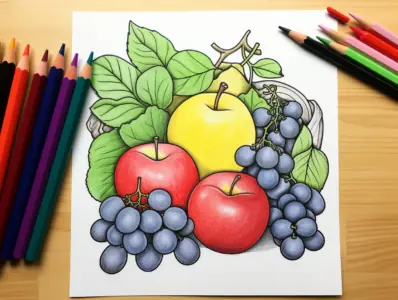
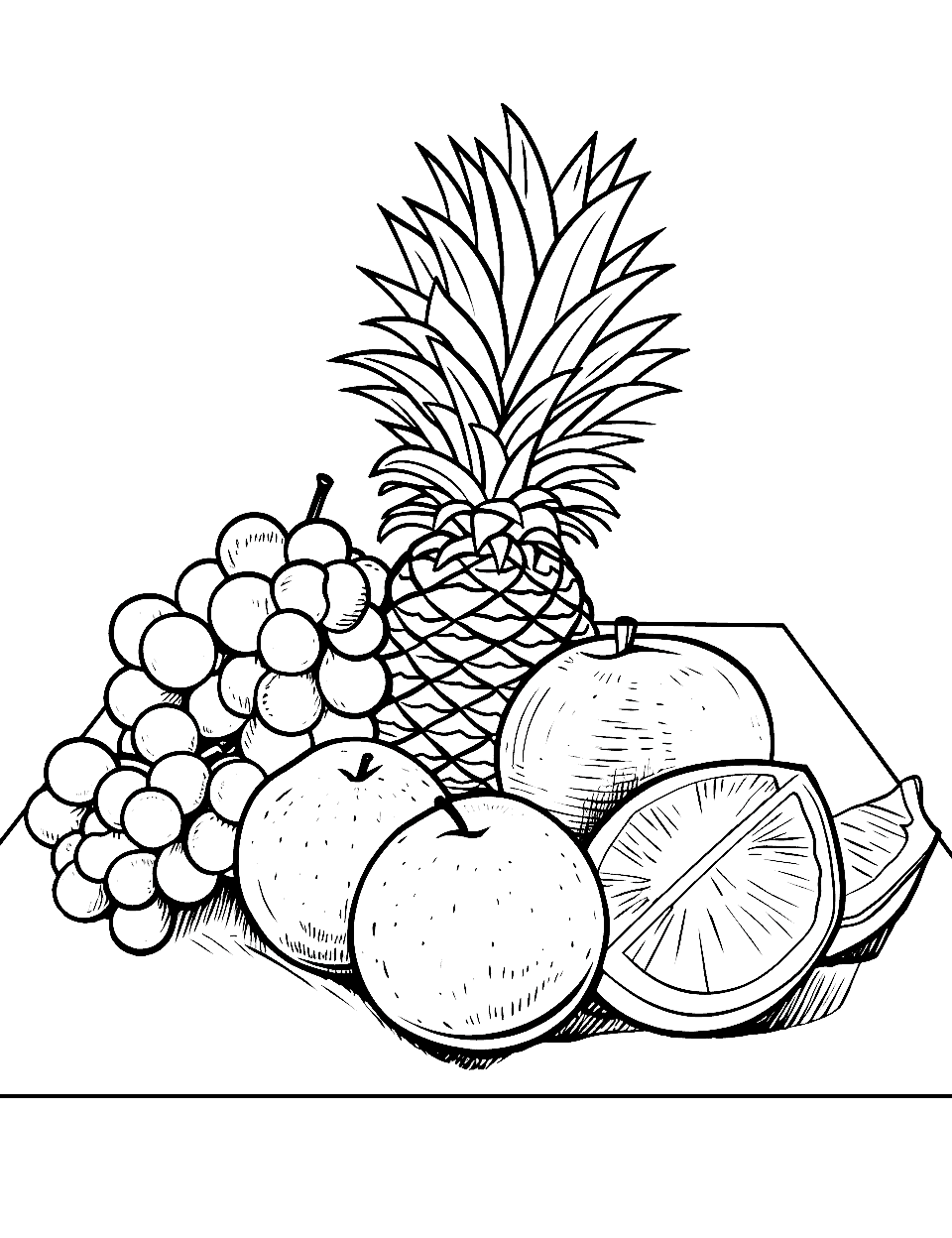
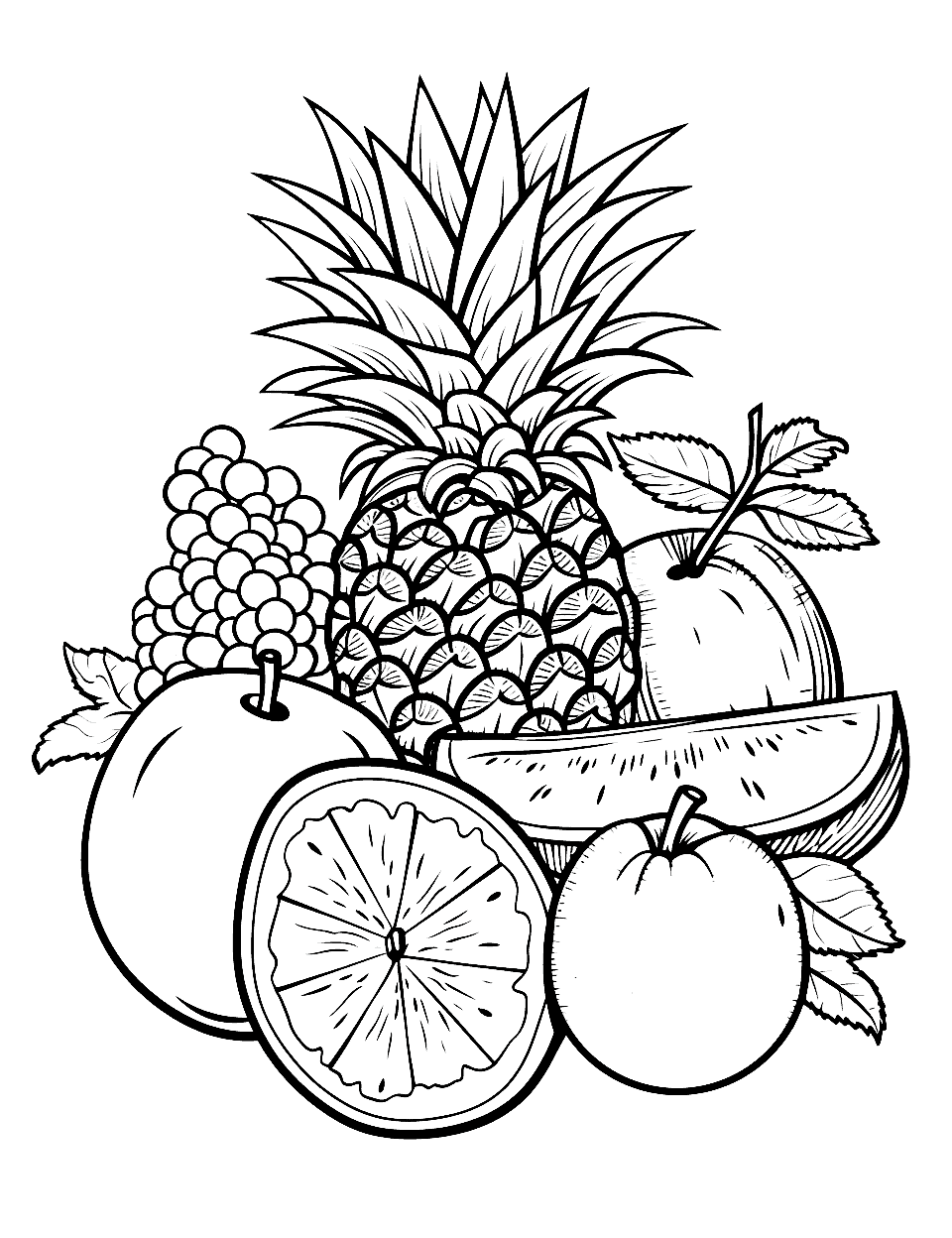
Grapes, a pineapple, apples, and a cut citrus half sit together on a table, with a straight line across the bottom for the table edge. The style is realistic rather than cartoon, with fine shading strokes inside each fruit. Colored pencils suit it far better than markers for that reason. This is one of the sheets aimed at older kids and adults.
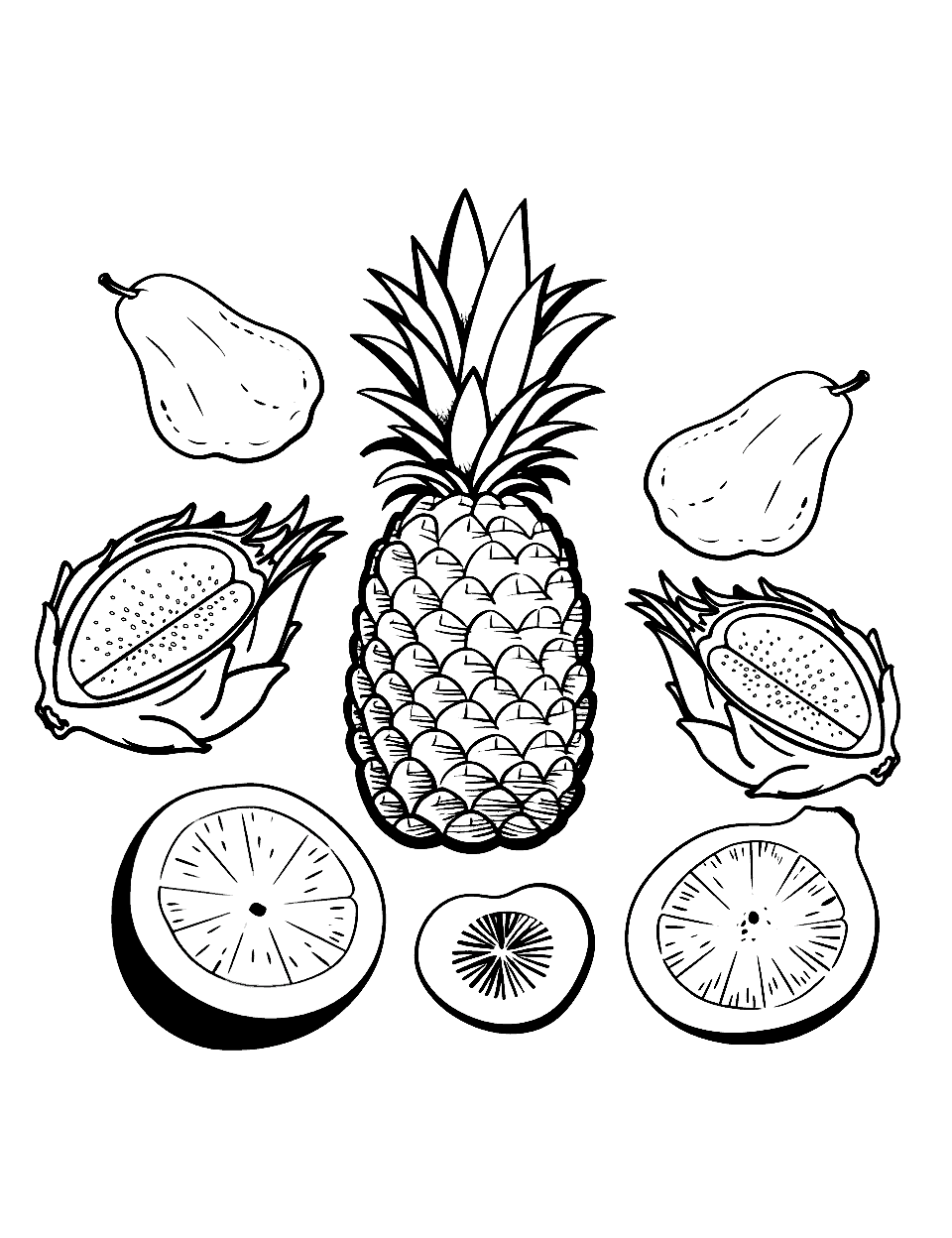
Each fruit here is laid out on its own: pears, two dragon fruit halves speckled with seeds, a pineapple in the middle, and cut citrus along the bottom. Nothing overlaps, so a child can color one fruit per sitting. The dragon fruit halves are the fun part, since the spiky skin and speckled flesh look nothing like the rest. Print two copies and the pairs become a matching game.
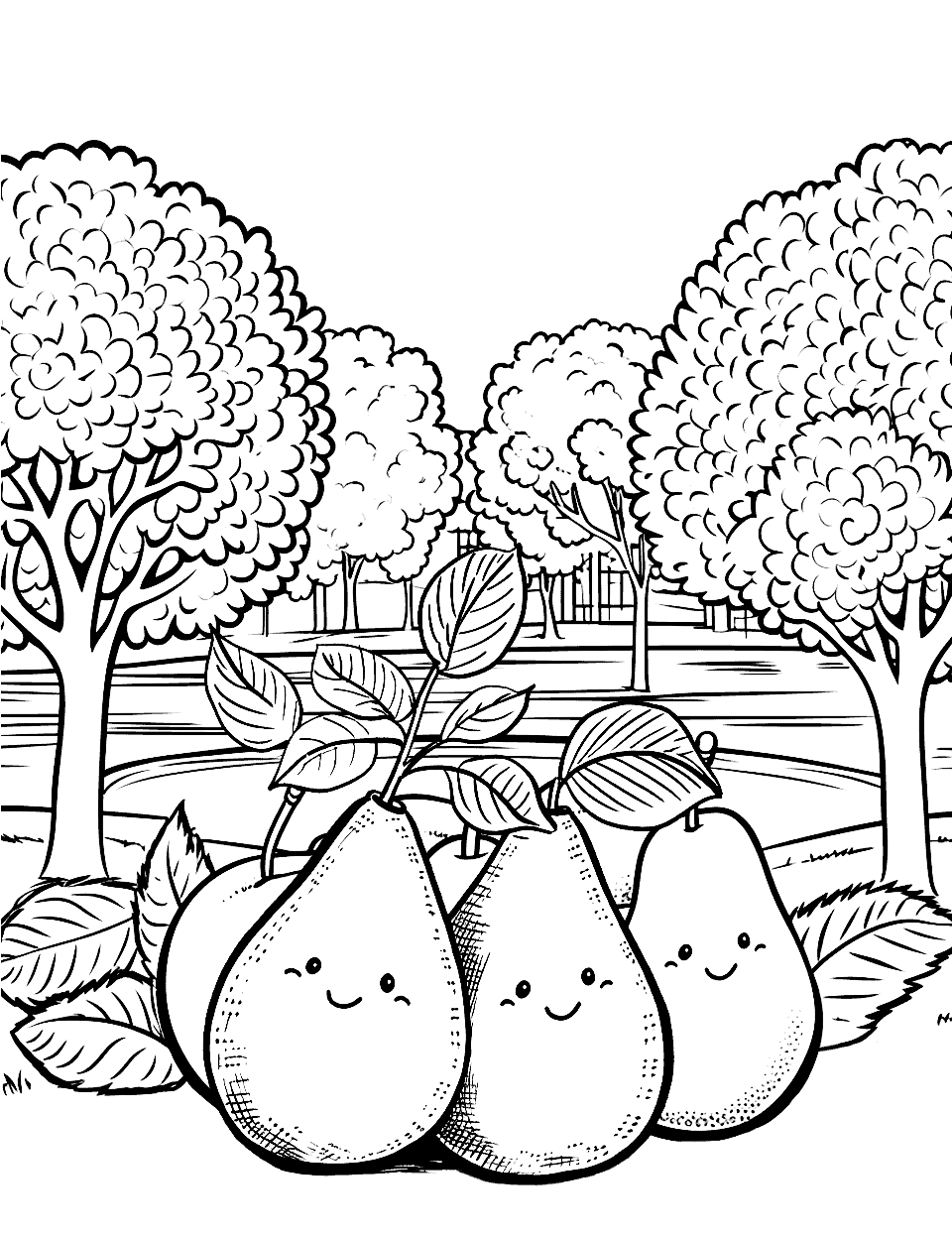
Three pears sit in the grass with small smiling faces while a park of round-topped trees fills the background. Those trees are drawn with bumpy outlines that look great with two greens layered over each other. Leaves around the pears give a second texture to work on. Save the background for last so the pears stay the focus.
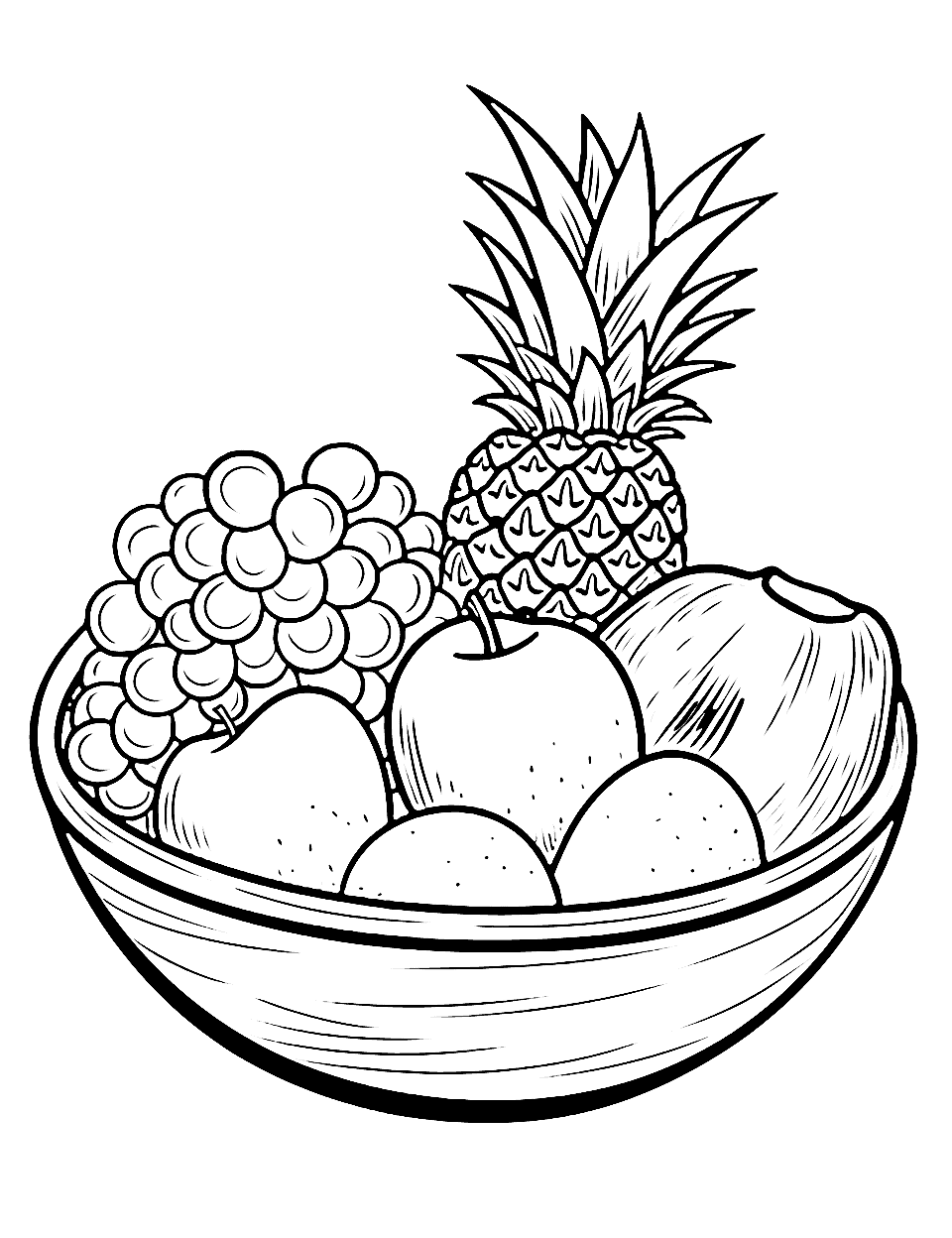
A wide bowl holds a grape bunch, apples, a pineapple, and one large round fruit with rough, sketchy shading on its skin. The bowl is drawn with long curved lines, so it can be wood brown or any bright color you like. Ask your child to color the fruits they have actually tasted first. Shapes are large and clean, which makes it an easy one for markers.
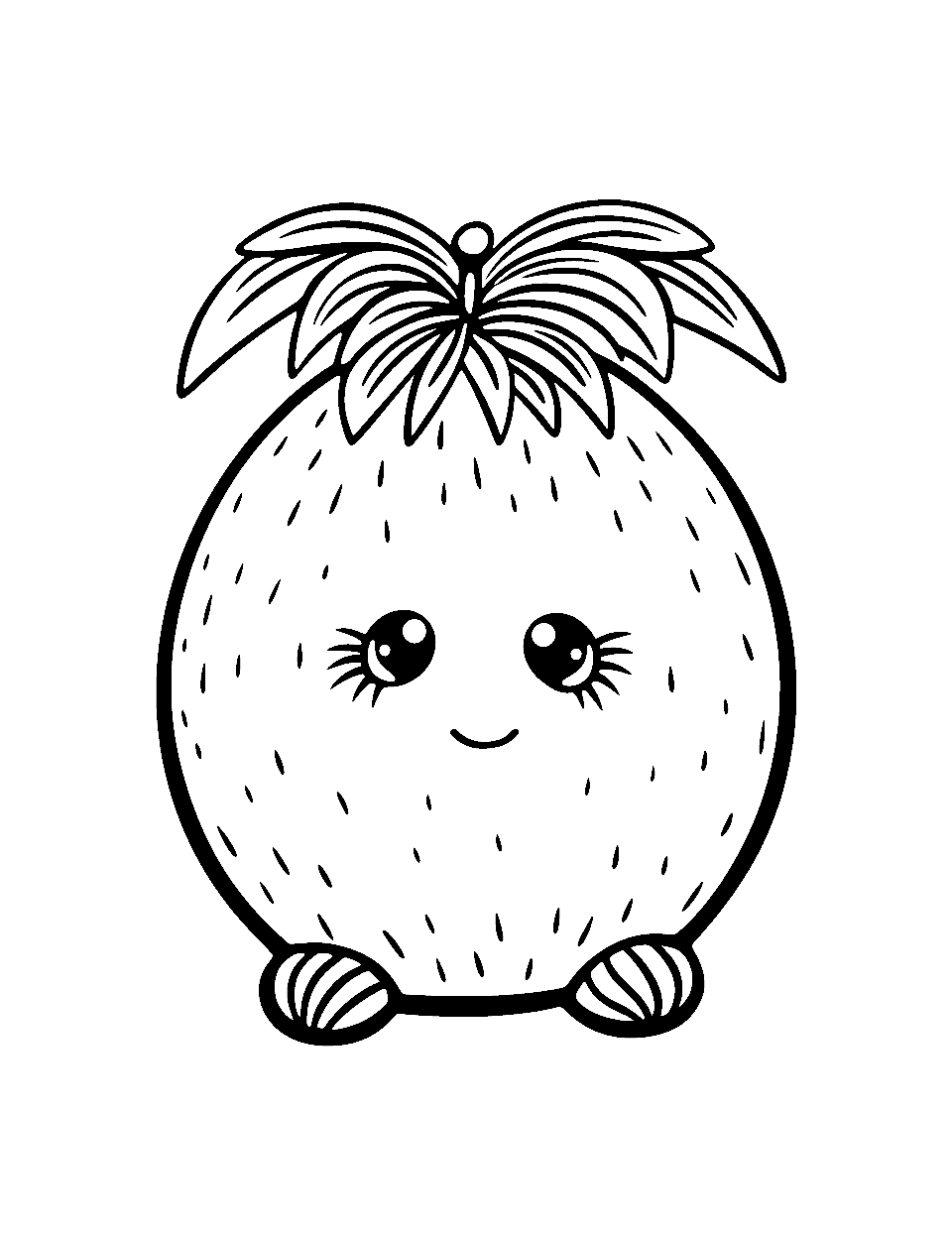
A round kiwi with long lashes and a small smile stands on two tiny striped feet, a leafy sprout on its head. Short dashes cover the body to suggest fuzz, so a light brown scribble under a darker outline works well. The cute style and the big open shape suit preschoolers. Green for the sprout is the only obvious rule.
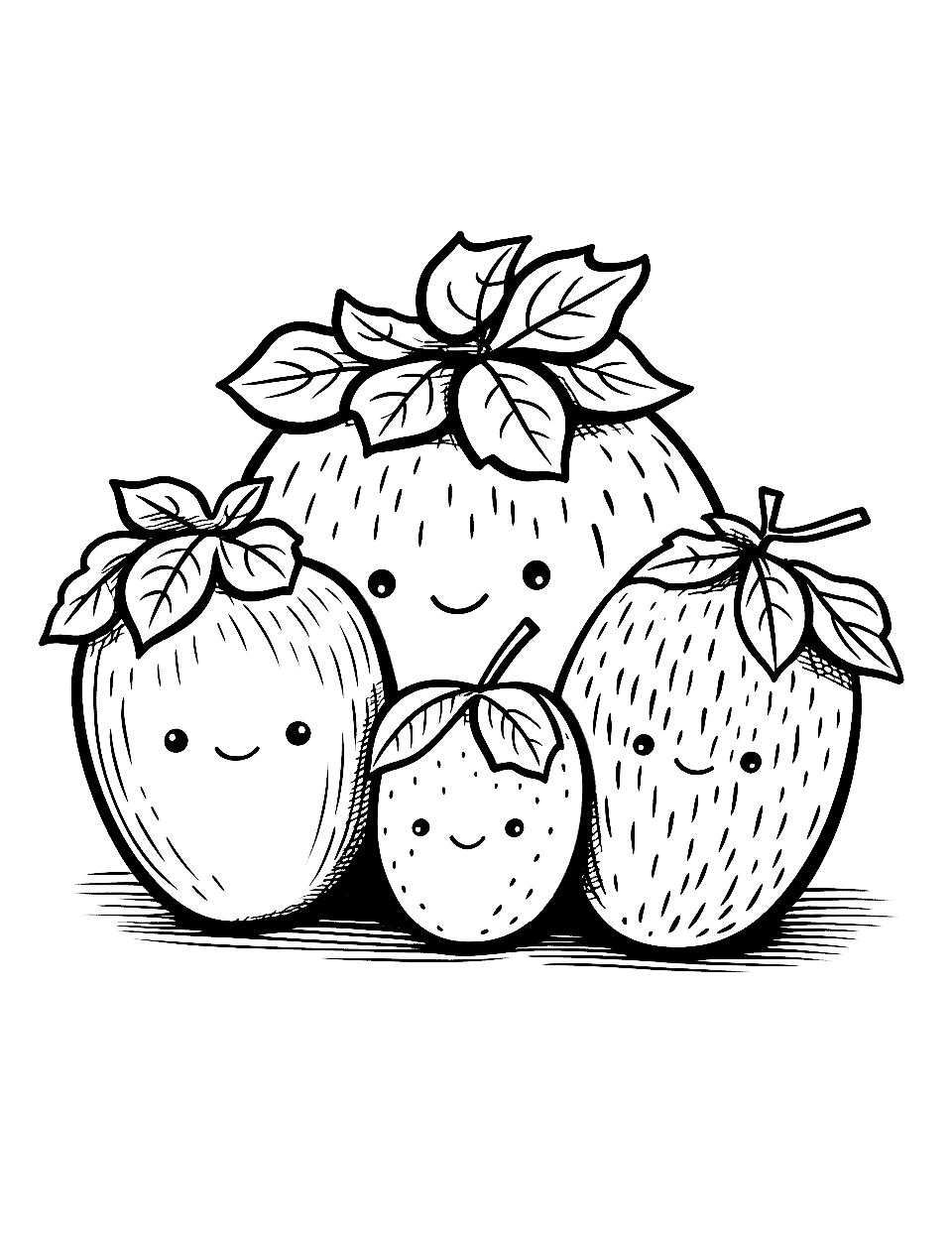
Four berries huddle together, each with leaves on top and a face in the middle. They come in different sizes, so a child can color them as a family: big one, little one, and the two in between. Stippled dots on the skins take a lighter shade than the outlines. Blue, red, and purple side by side keep the group easy to tell apart.
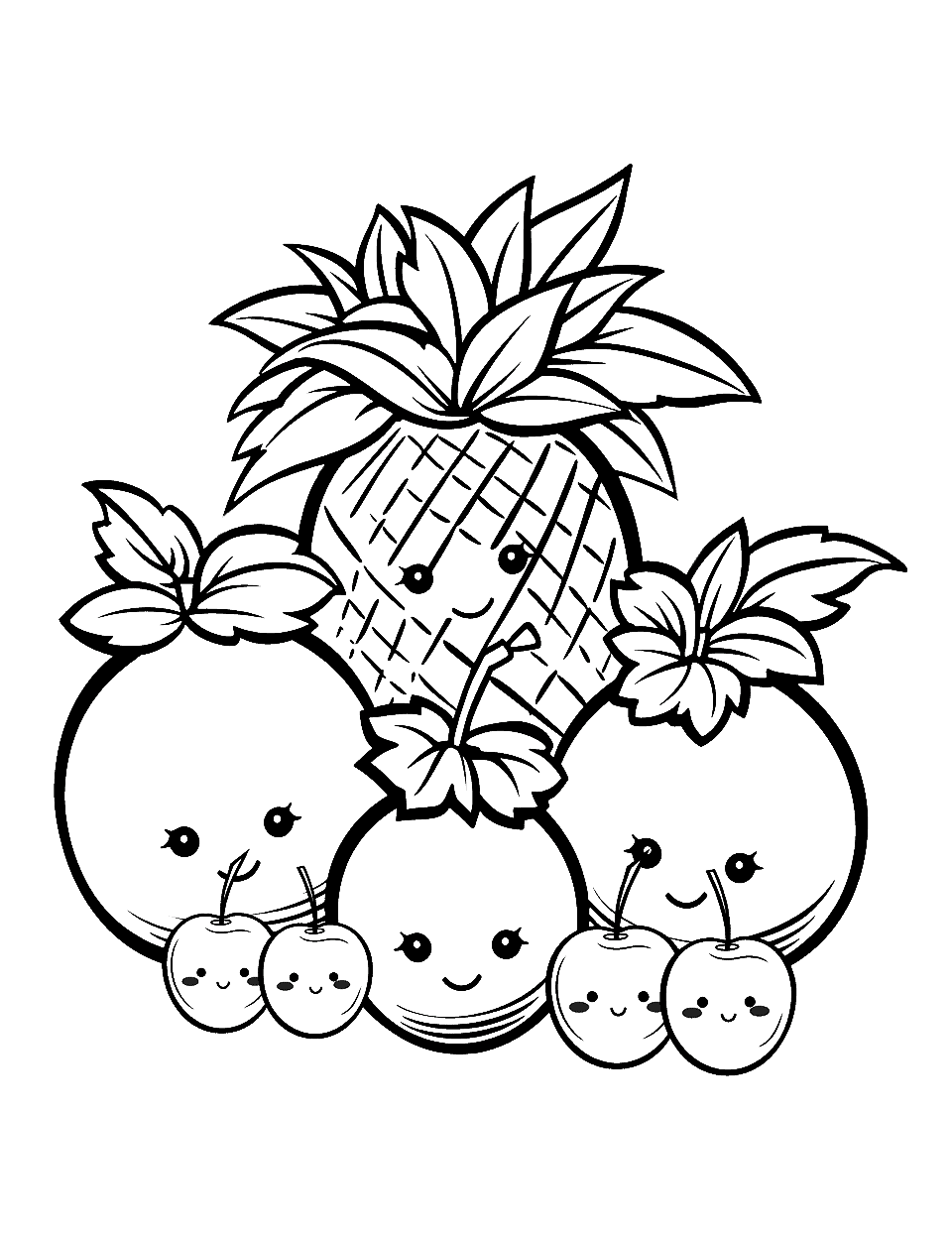
A pineapple peeks over three round fruits, and four little cherries line up along the bottom, all of them smiling. Big eyes and simple mouths are the whole point of the kawaii style. Pastel pencils suit these characters better than bold markers. The small cherries are the fiddly bit, so start with the large shapes.
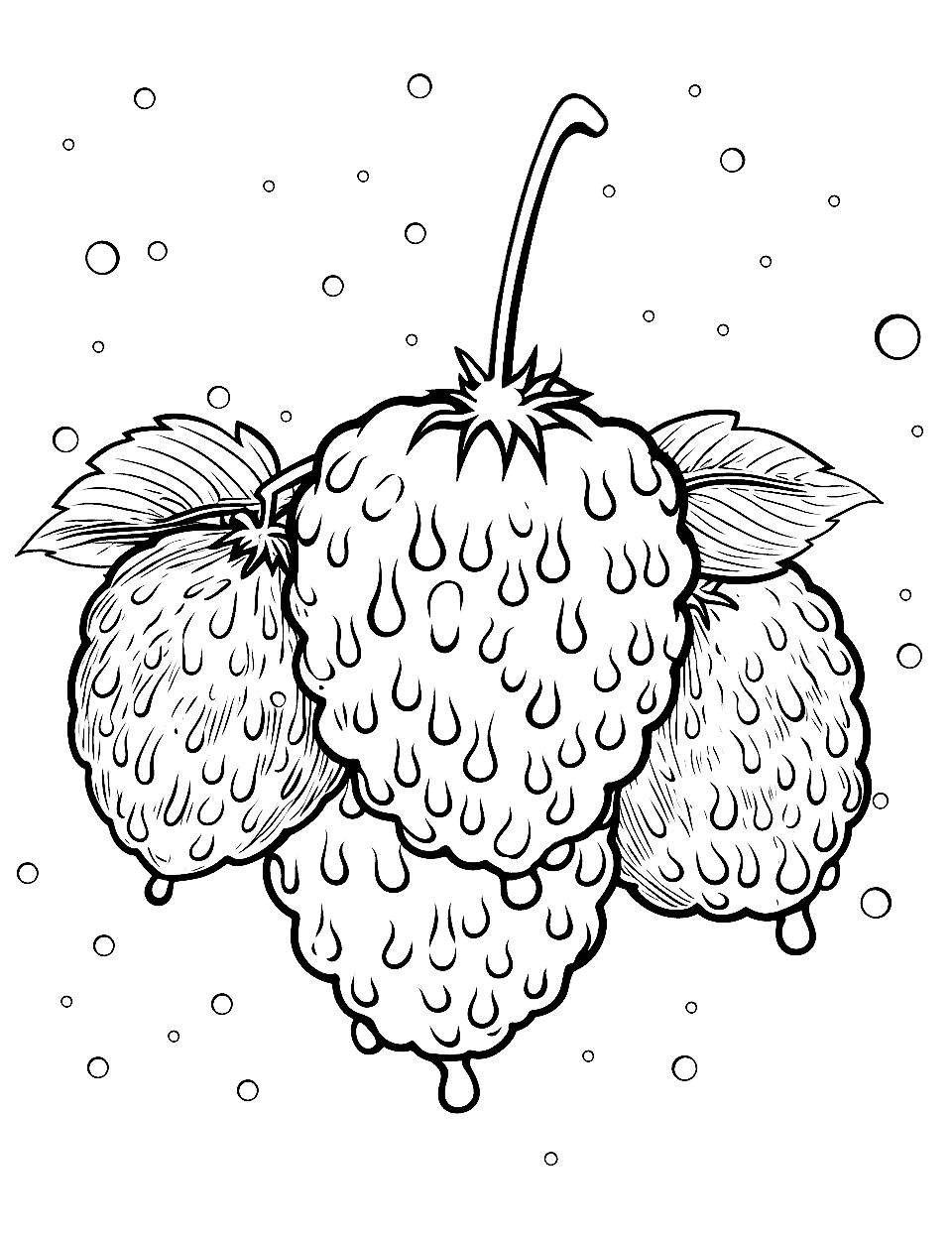
Four bumpy berries cluster together, each built from tiny rounded segments, with a drip hanging off the bottom of several. Circles float across the background like bubbles and can stay white or take a pale blue. Every segment is its own shape, so this one takes patience. Deep pink and dark purple make the drips look juicy.
This heap holds a pineapple, a grape bunch, a watermelon wedge, and a citrus half cut to show its segments. Thin lines run out from the center of that citrus half and look best in two tones of orange. The fruits overlap, so decide which one sits in front before you start. It prints well at full size for a group activity.
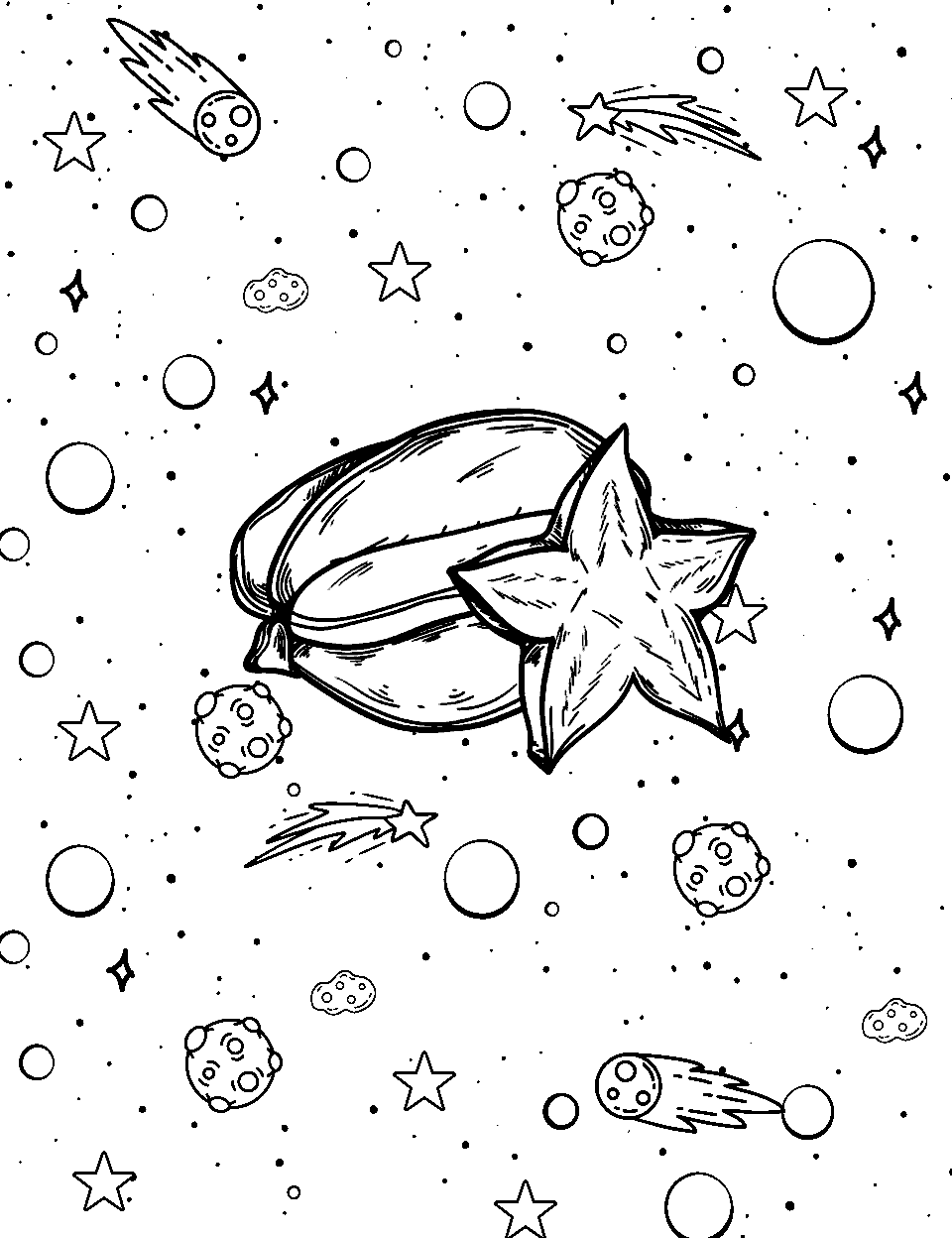
A starfruit floats in space beside its own star-shaped slice, surrounded by planets, comets, and cratered rocks. The background is packed with small dots and stars, so a dark blue wash over the top makes the fruit stand out. Yellow-green keeps the starfruit recognizable. It pairs naturally with any outer space sheet you already have.
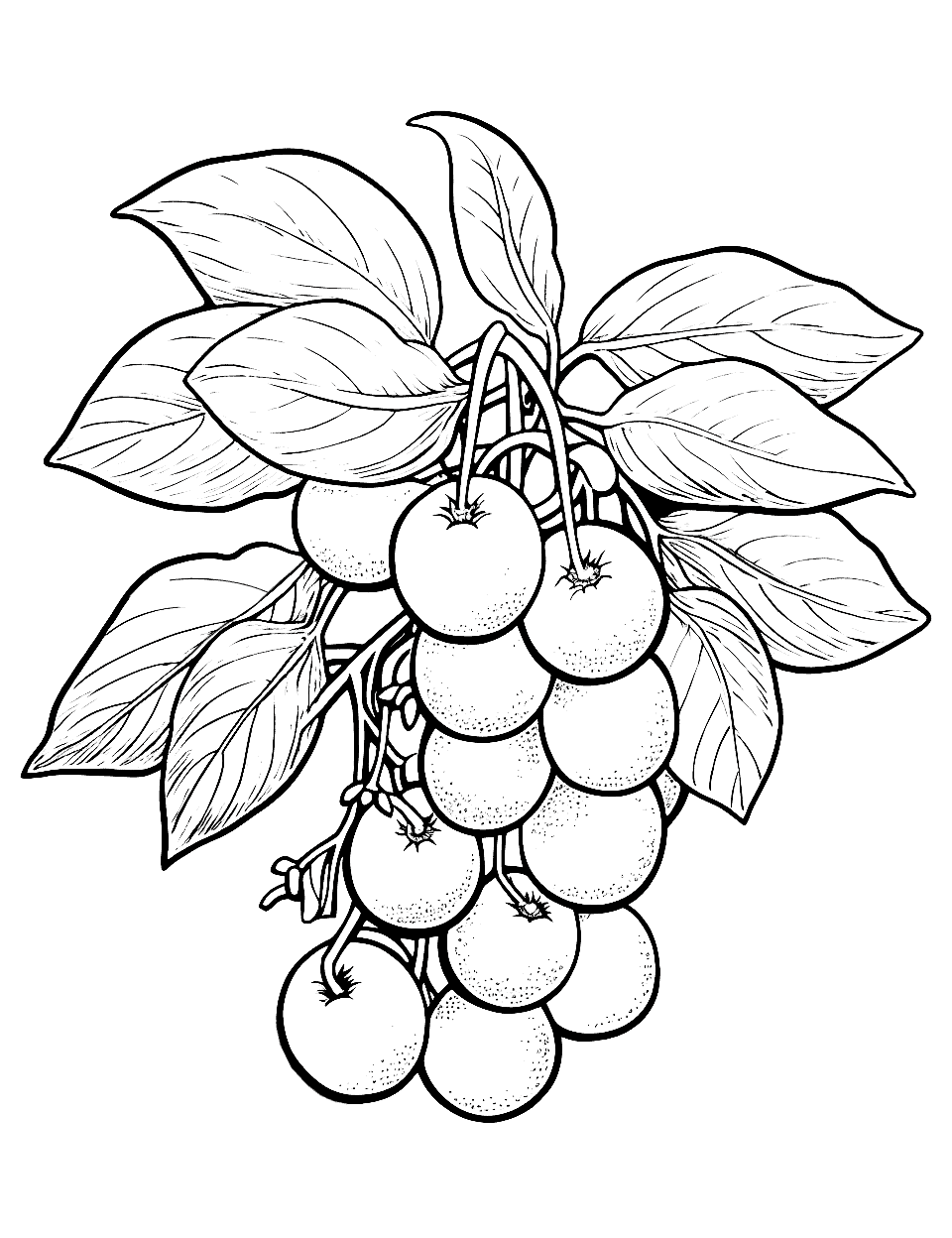
Round berries hang in a cluster below wide, veined leaves, and several show the little star-shaped crown blueberries have. Layering blue over pale purple gives them a truer blueberry color than blue alone. The leaves are large and open, which makes them the quick part of the page. Good for anyone who prefers plants to cartoon faces.
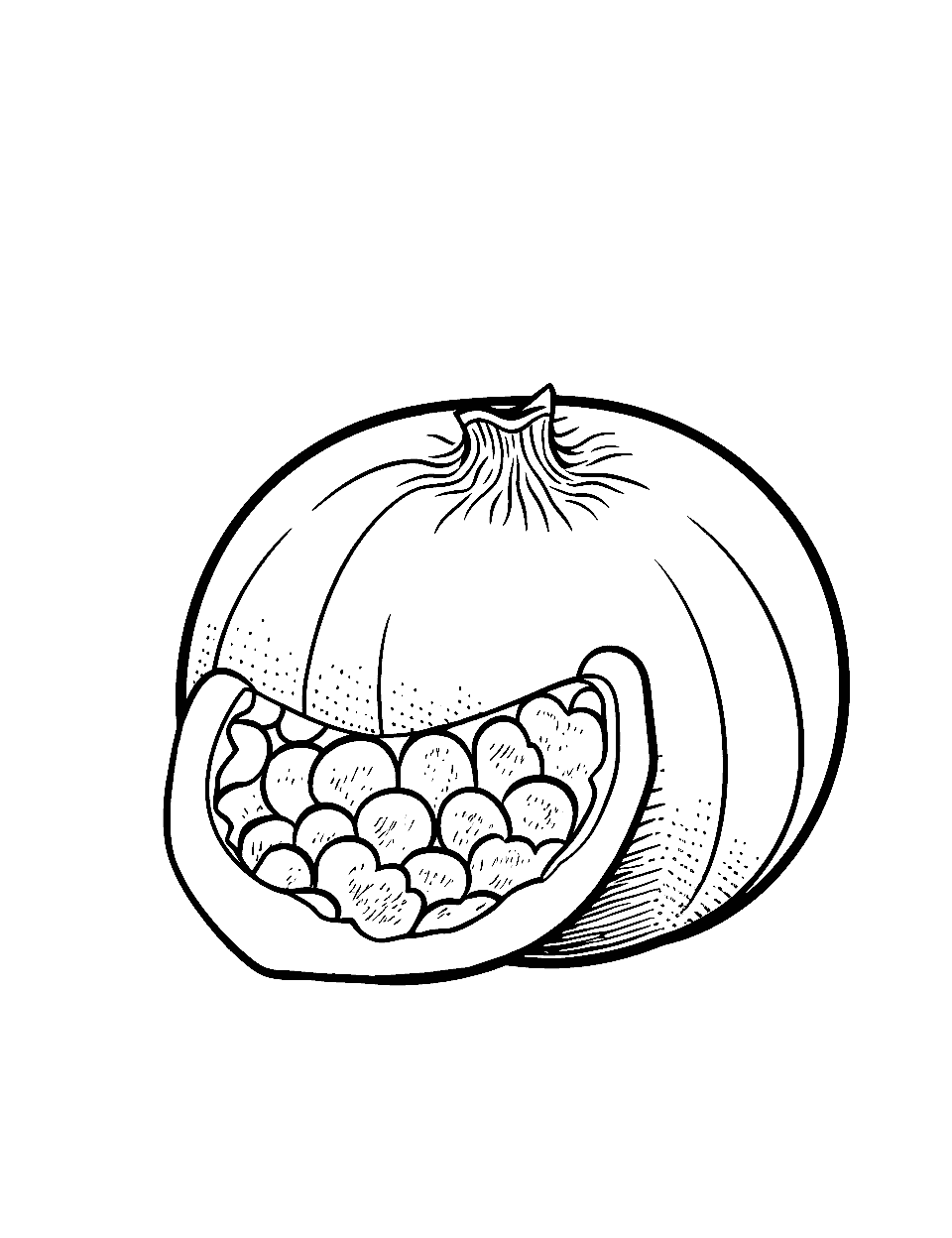
A whole pomegranate sits with one wedge cut away so the seeds inside are visible. Each seed is its own rounded shape, and that is where the detail work lives. Deep red seeds against a pinker skin shows off the cut. Stippled dots on the outside can stay light or be shaded for a rounder look.
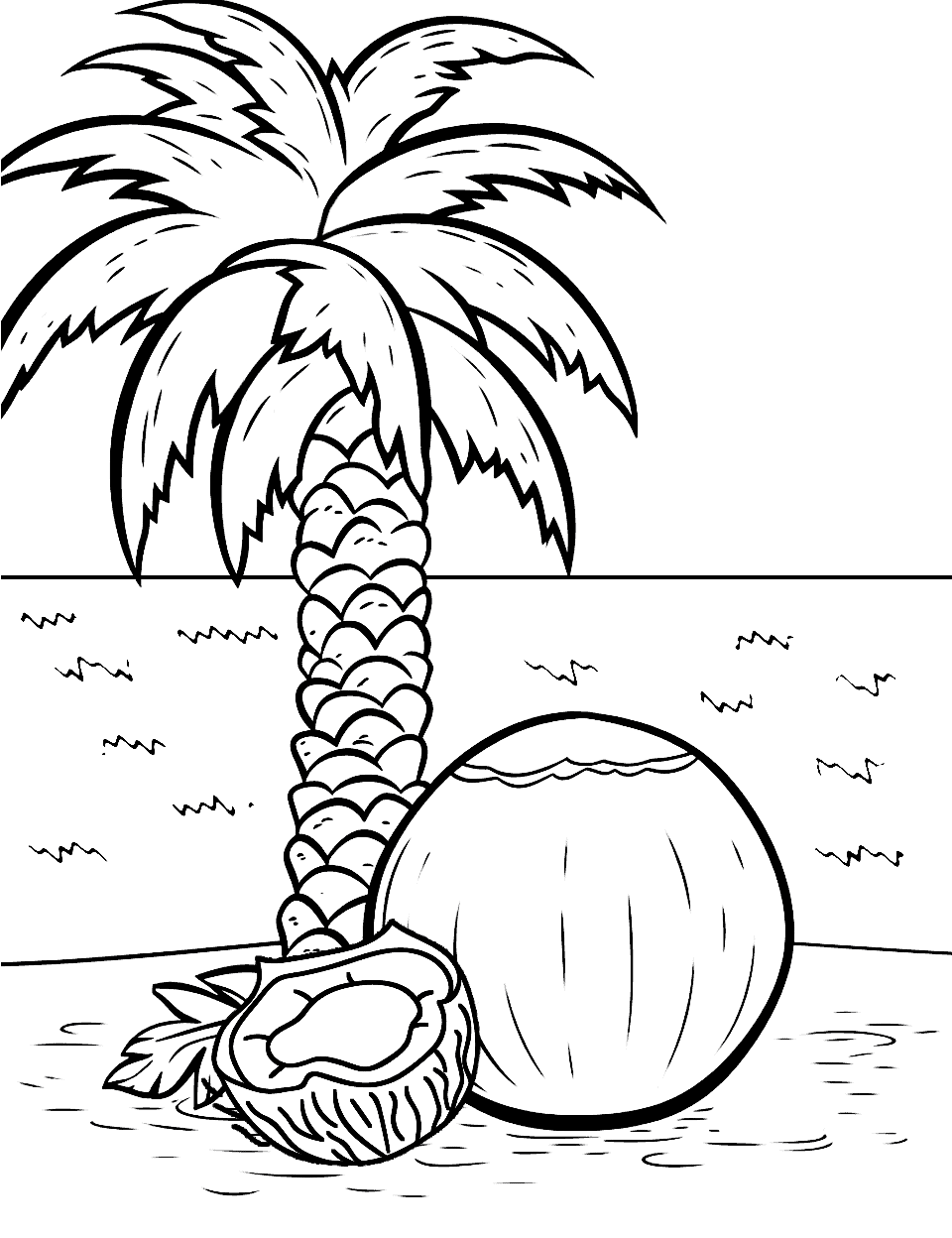
A palm tree leans over a whole coconut and a cracked one, with the sea line running straight across behind them. Small squiggles in the sand break up the empty space and take a light tan. The husk on the split coconut is drawn with fibrous strokes, so brown pencil layered twice looks right. Anyone building a beach collection can print this alongside it.
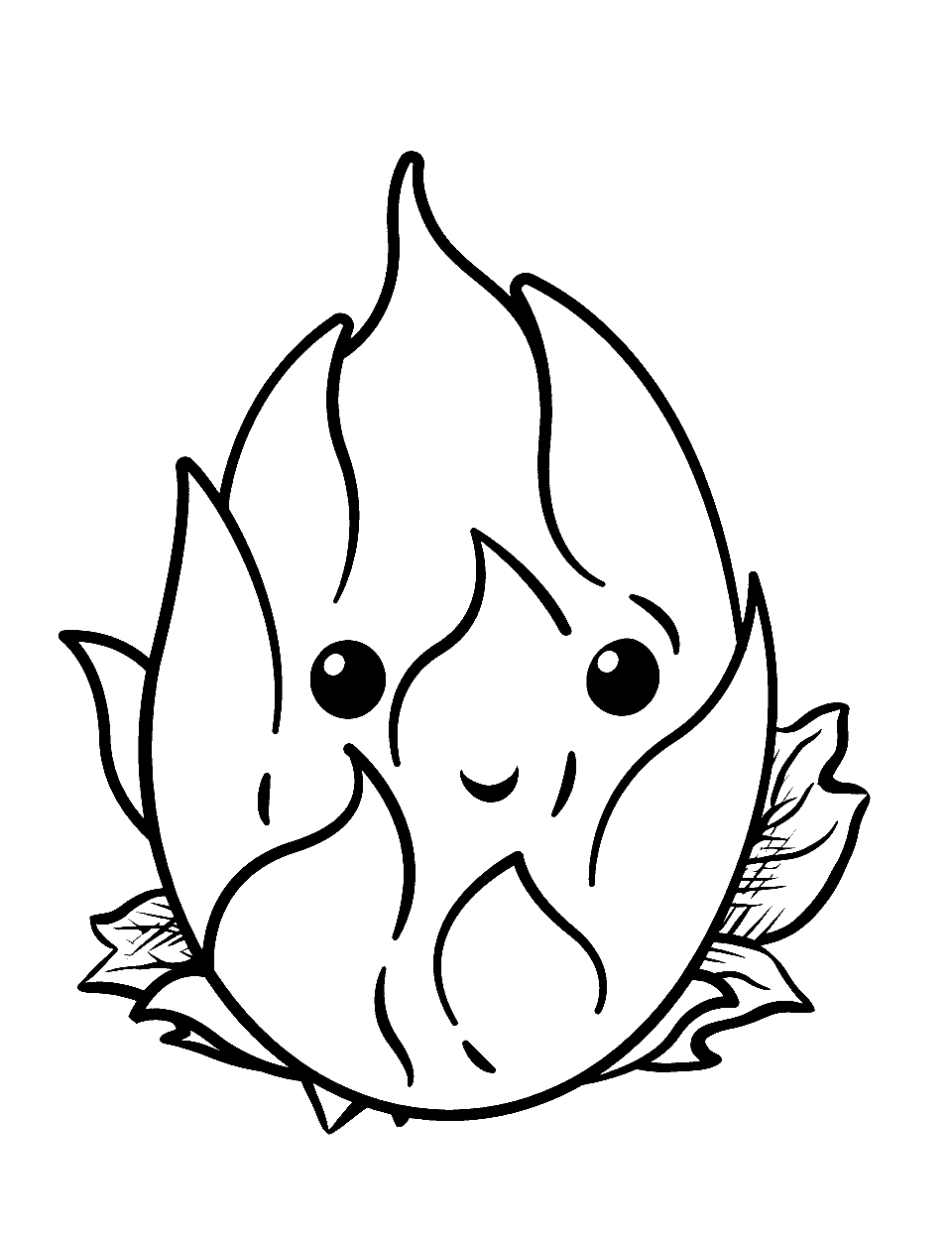
The dragon fruit here is built from flame-shaped scales with two big eyes and a small smile in the middle. Bright pink skin with green tips matches the real thing. There are only a handful of large shapes, so it colors up fast. It makes a good first page for a child who loses interest in busy sheets.
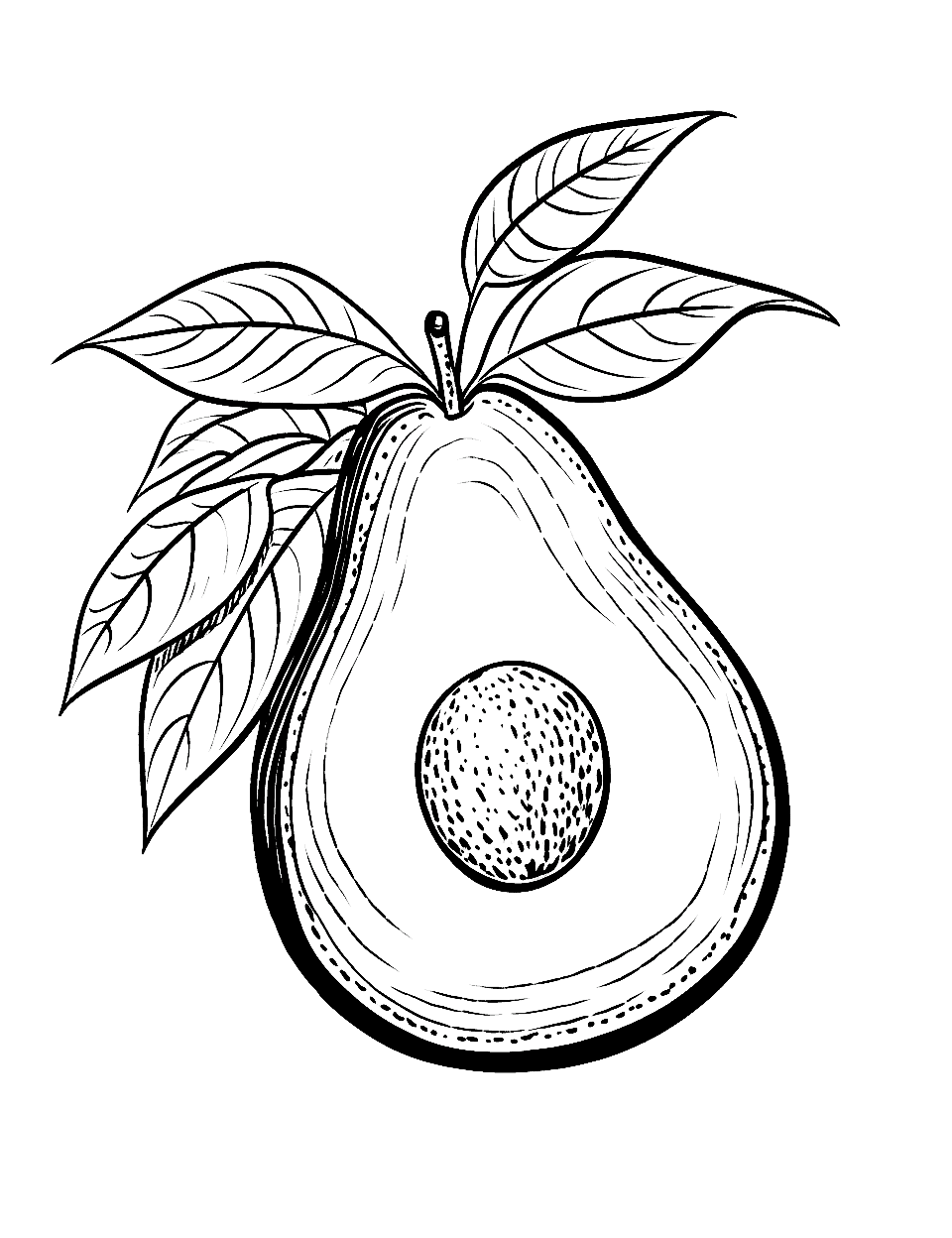
An avocado half shows off its big speckled pit, framed by long leaves on a short stem. Two greens, a pale one for the flesh and a darker one for the skin, do most of the work. The pit is stippled all over, so light pencil pressure beats a marker there. The leaves fan out to one side and balance the page.
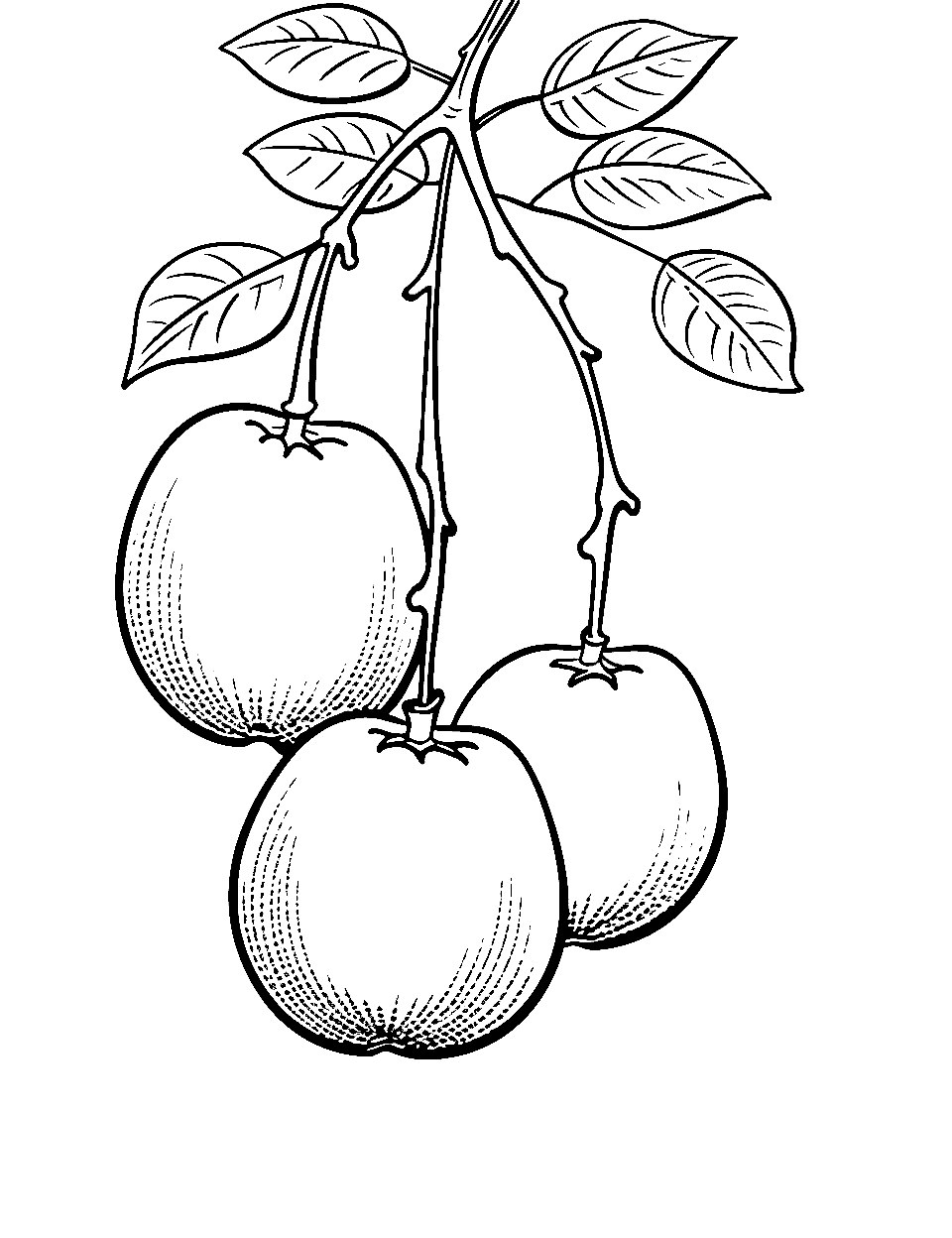
Three oval fruits hang from one branch, each on a short stem under veined leaves. Shading dots along the underside of each fruit show where the light falls, which is a good excuse to press harder at the base. Deep purple skins with green leaves keeps it simple. Older kids can try blending two colors on a single fruit.
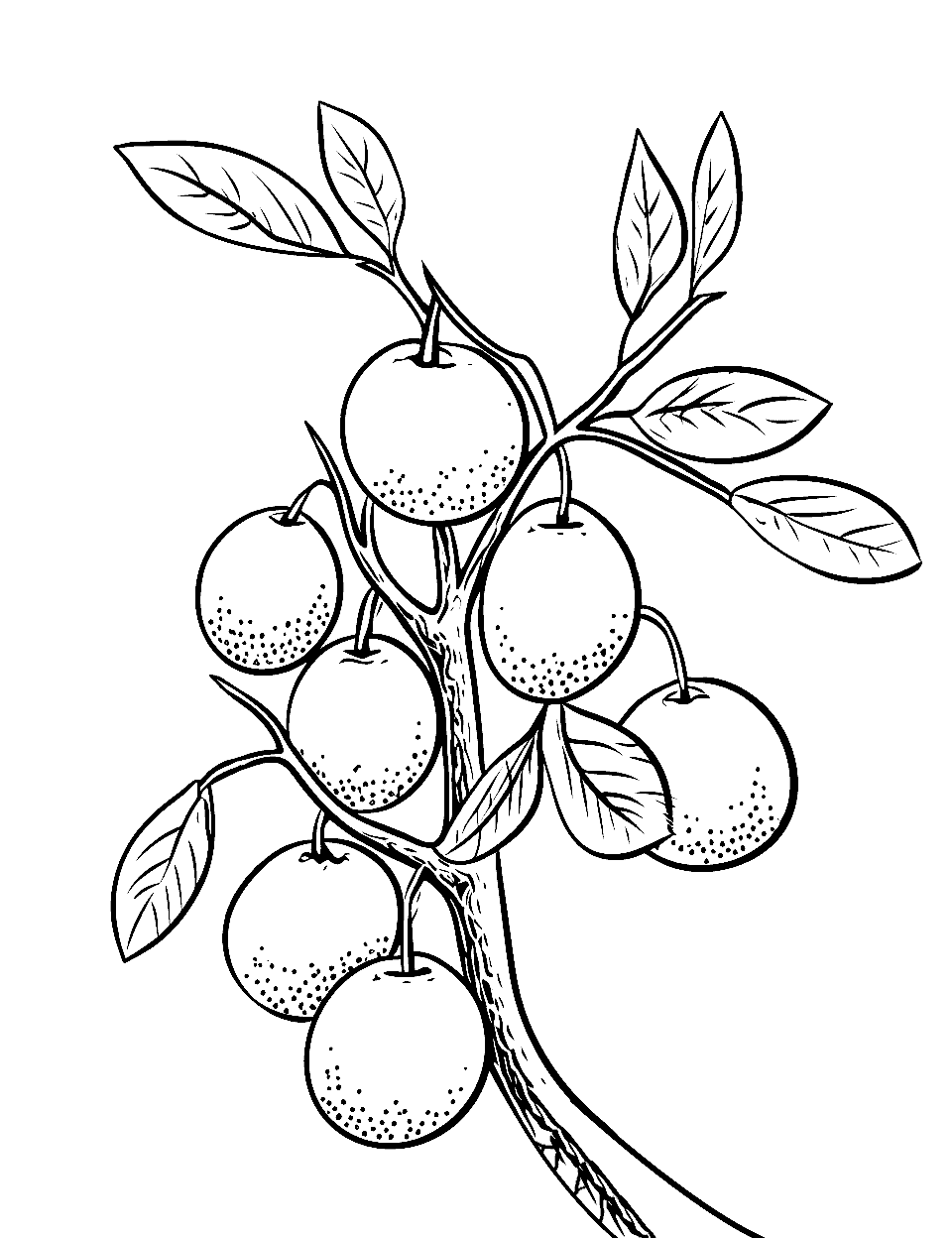
Round citrus fruits crowd along one branch, each with stippled skin and a short stem. Green for limes is the obvious route, but the same page works as oranges or lemons. Leaves point out in every direction and give you room to vary the greens. The fruits overlap, so outline first and fill after.
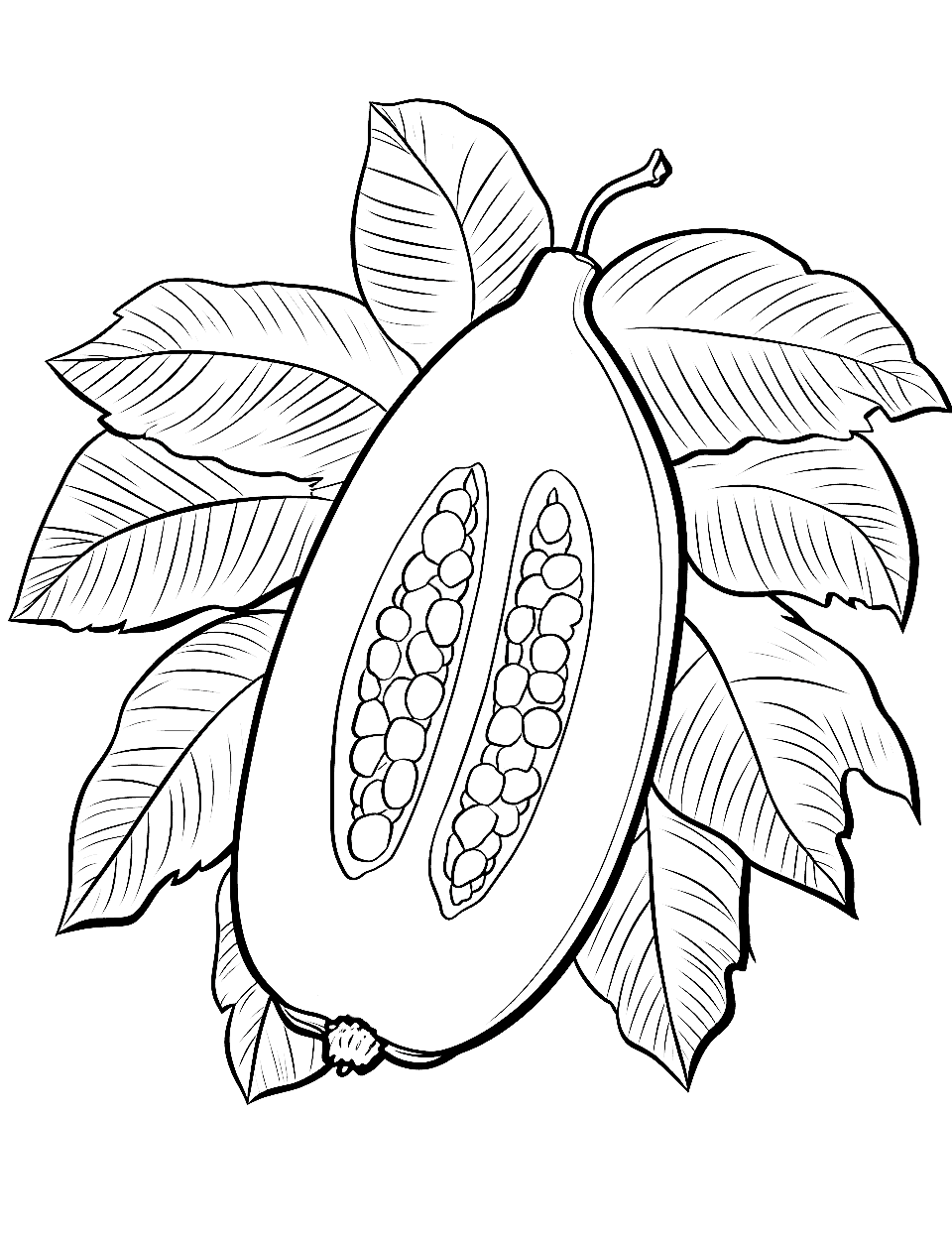
A papaya sliced the long way shows two rows of round seeds down its middle. Orange flesh, dark seeds, and green leaves behind it is the true-to-life combination. Big leaves take up most of the page and go quickly. The seed rows are small, so save them for last.
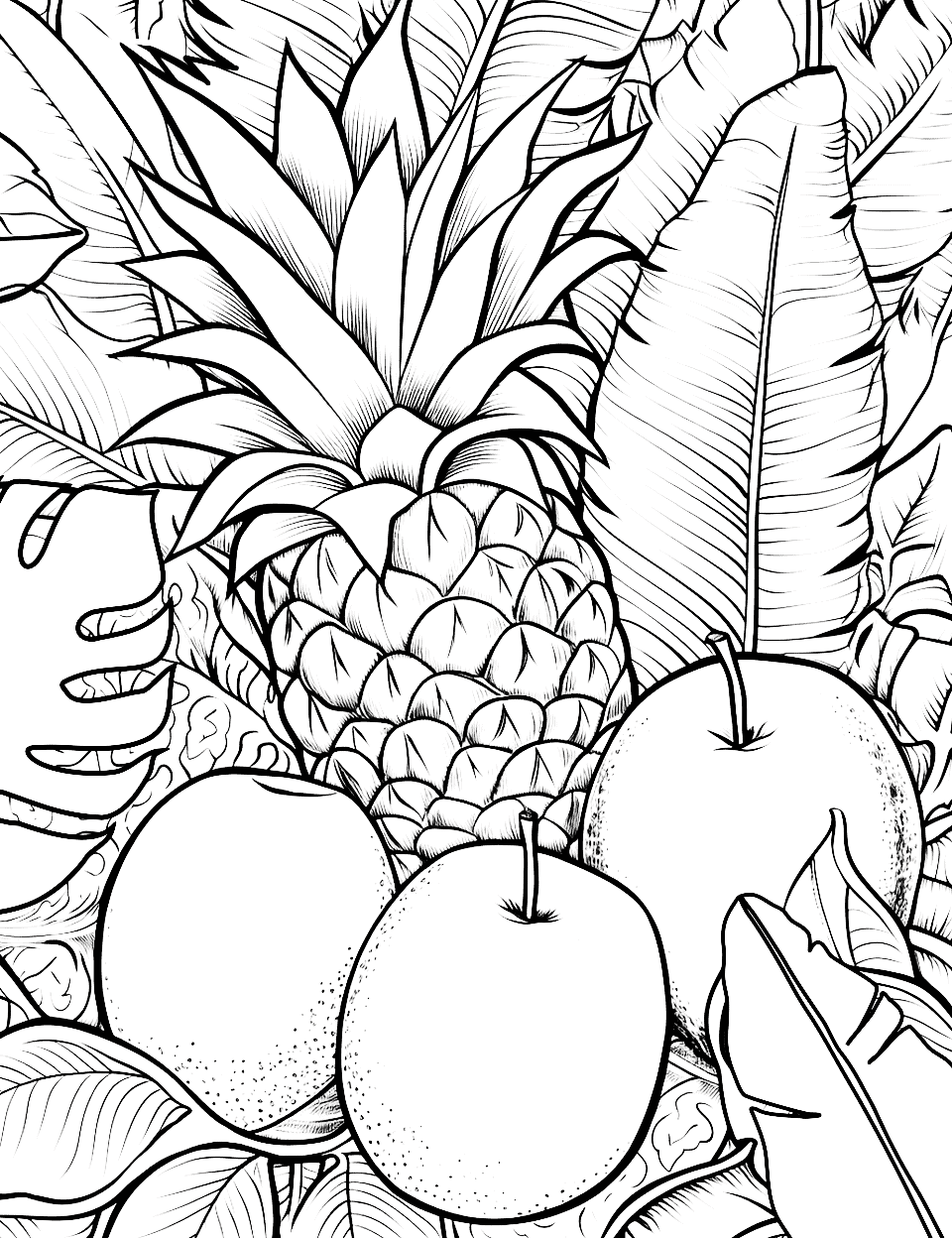
A pineapple stands among heavy jungle leaves with round fruits filling the front row. Leaf shapes vary from split fans to long blades, so it is worth pulling out several greens. The drawing runs to the edge of the page with no white border. This is one of the busiest sheets in the set.
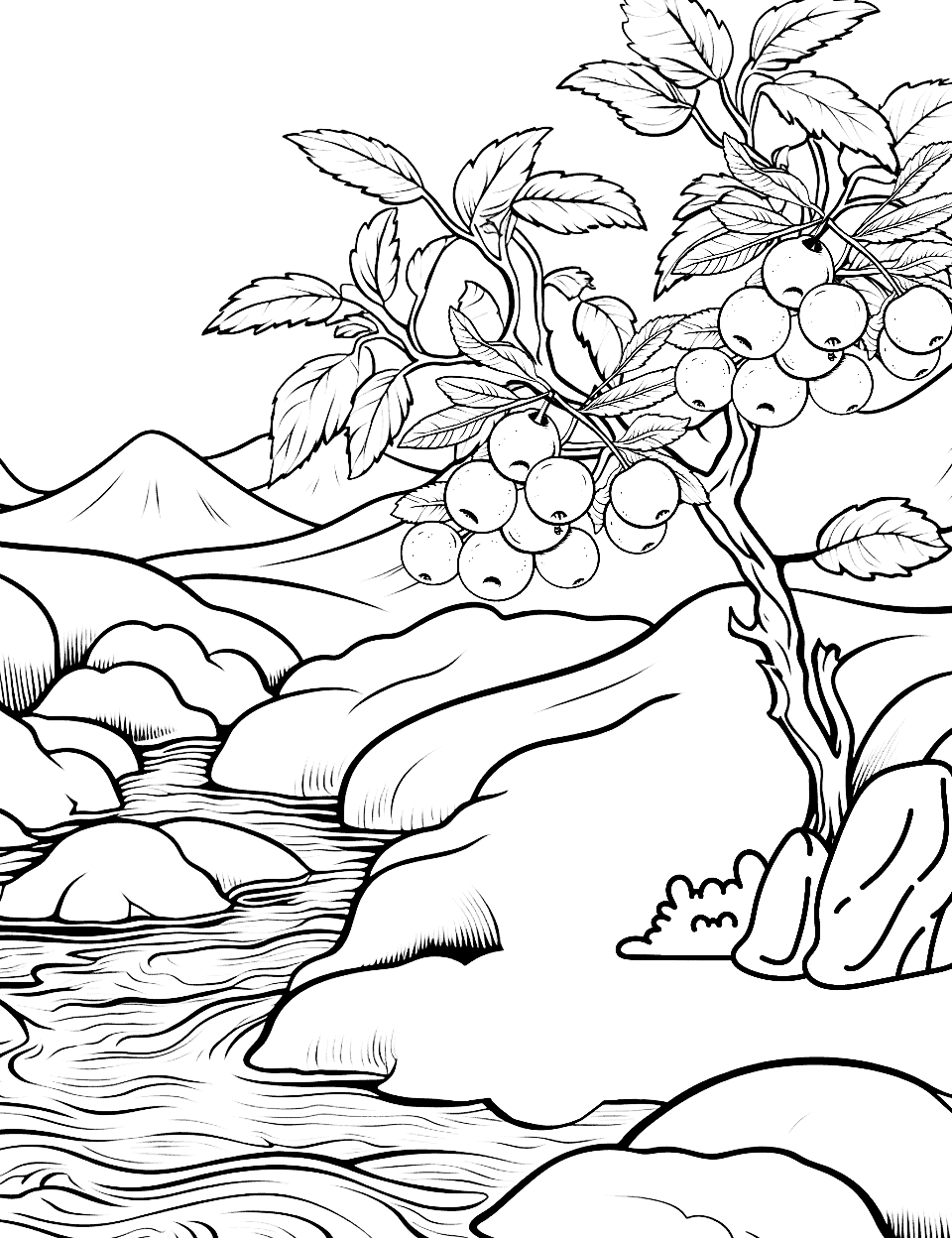
Berries hang in clusters from a branch above a rocky stream, with rounded hills off in the distance. Water lines run across the bottom left and take a pale blue nicely. The boulders are large smooth shapes, a rest between all the small berries. One for someone who likes scenery as much as fruit.
A footed bowl is piled high with grape bunches, apples, and a pineapple poking out of the top. The bowl carries long grain lines, so brown strokes following its curve look right. Fruit spills toward the front and gives you a clear place to start. Try one warm color family for the fruit and a cool one for the bowl.
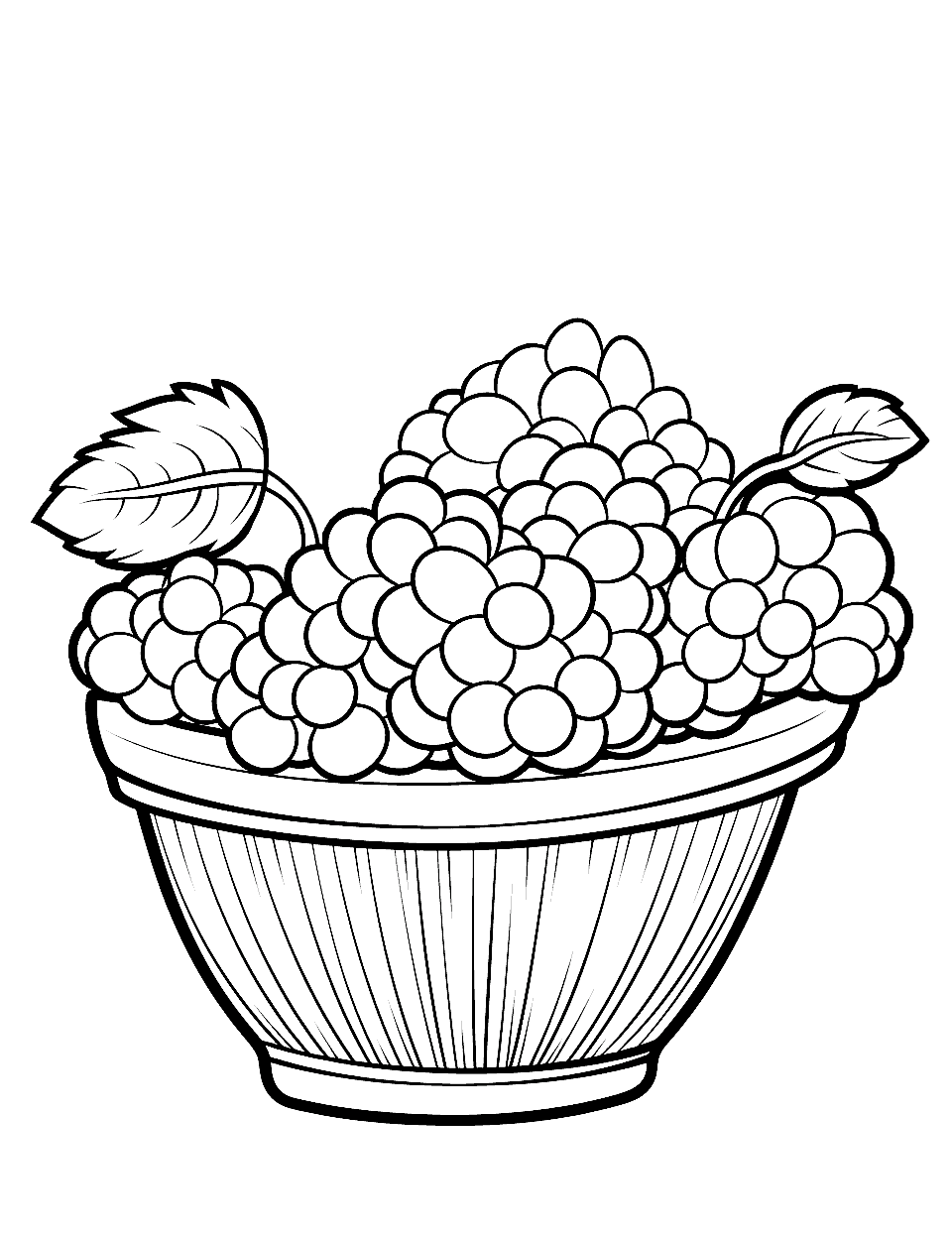
Clusters of small round berries mound over the rim of a ribbed bowl, with a leaf sticking out on each side. Every berry is a small circle, so the page is repetitive in the calming way. Mixed red, blue, and purple clusters look better than one shade throughout. The ribbed bowl underneath fills in fast once the berries are done.
The hull of this ship is a banana, curved ends and all, carrying tall square sails and a flag at each masthead. Waves curl up on both sides and take as much of the page as the ship does. A yellow hull, white sails, and blue water is the obvious plan, though a storm-gray sky works too. All that open sail area makes it forgiving for younger colorists.
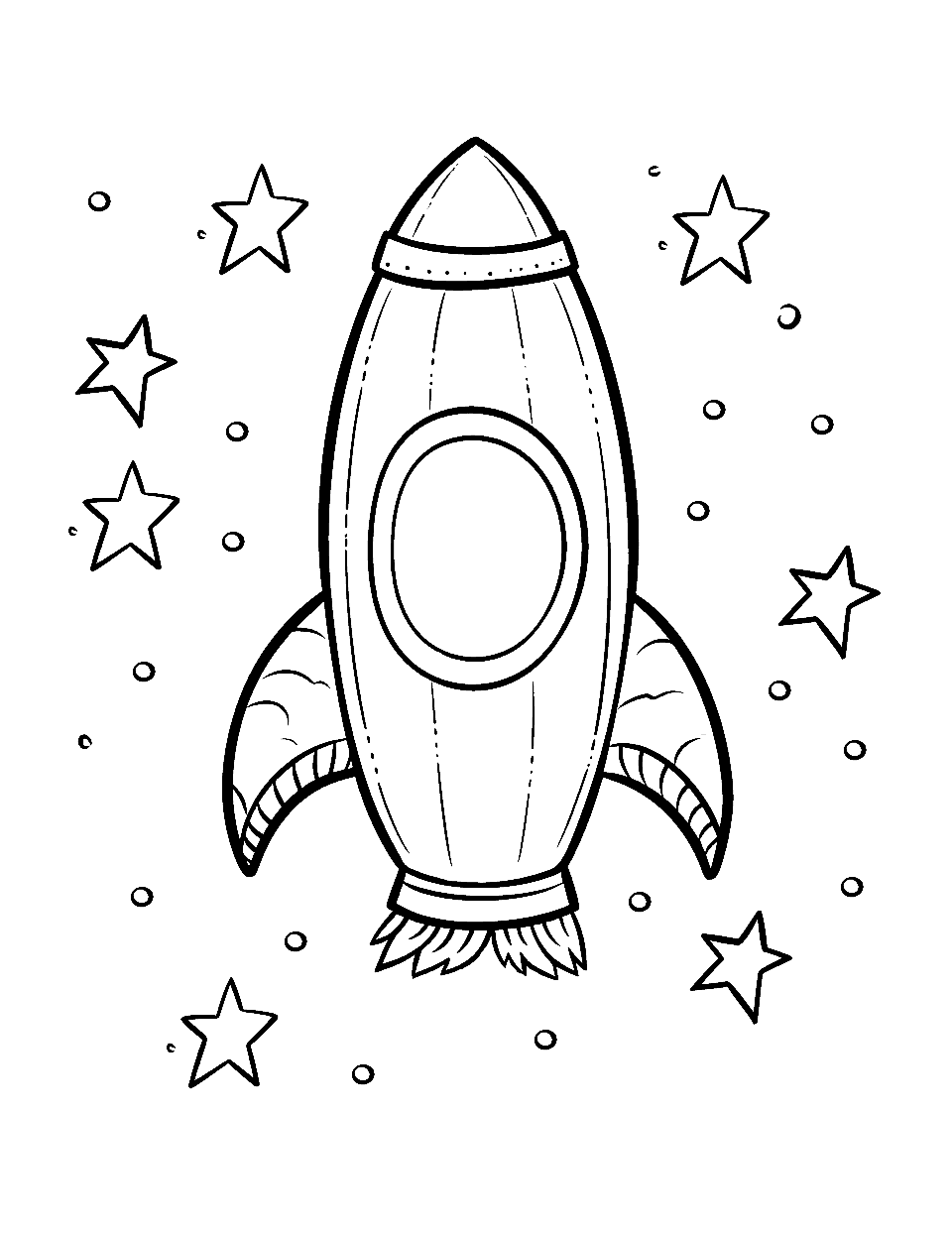
This one steps away from fruit: a simple rocket with a round window, two fins, and flames at the base. Stars and dots fill the space around it and can stay white for a cleaner look. The shapes are large and the lines thick, so it is among the easiest pages here. Print it with the starfruit sheet for a space pair.
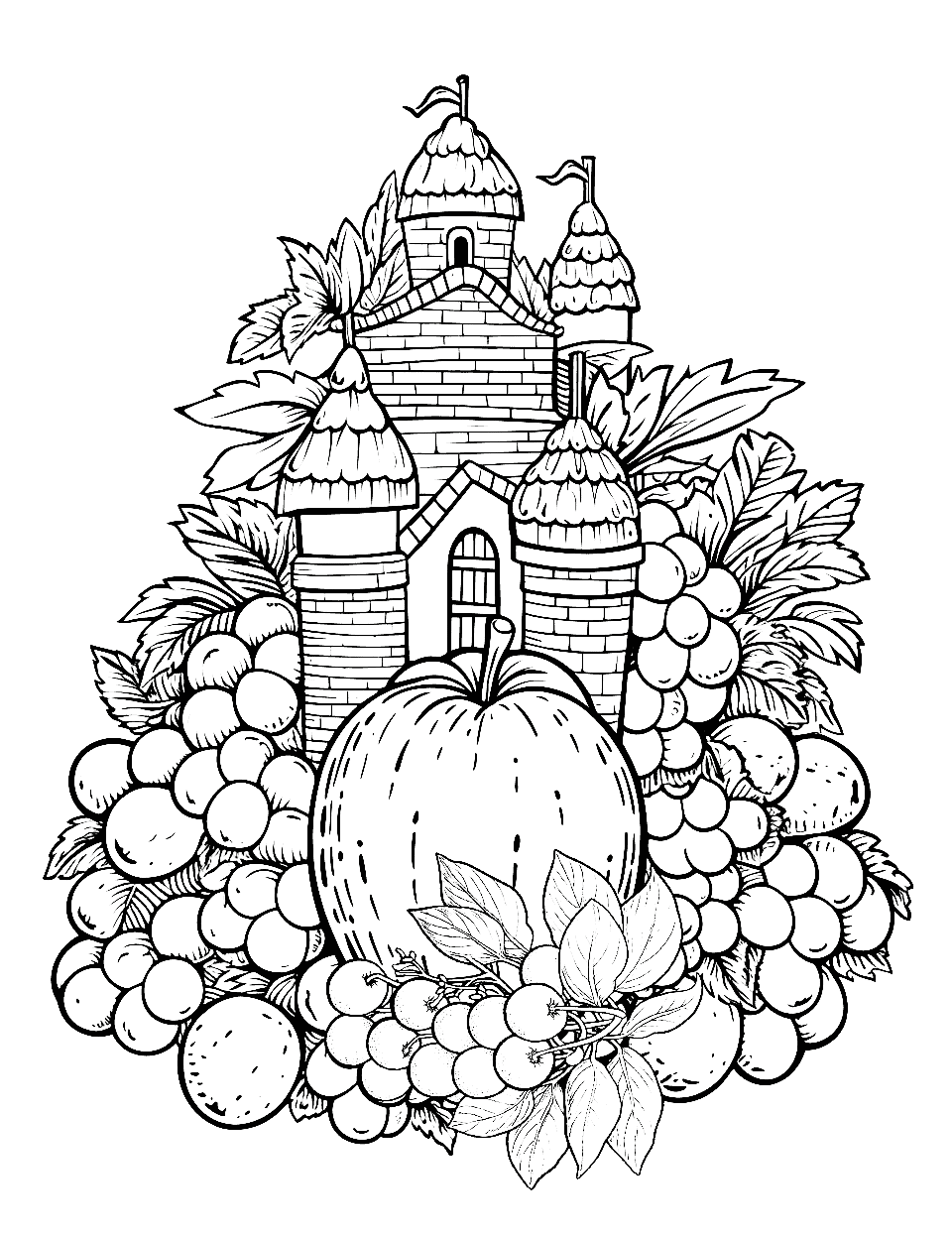
A castle with pointed roofs and flags rises out of a pile of grapes, round fruits, and leaves, with one large stemmed fruit sitting in front of the gate. Brick lines are drawn into the towers, so gray or sandy tan will do there. The fruit heaps are where the color can go wild. Plenty of small detail sits low on the page, so pencils beat markers.
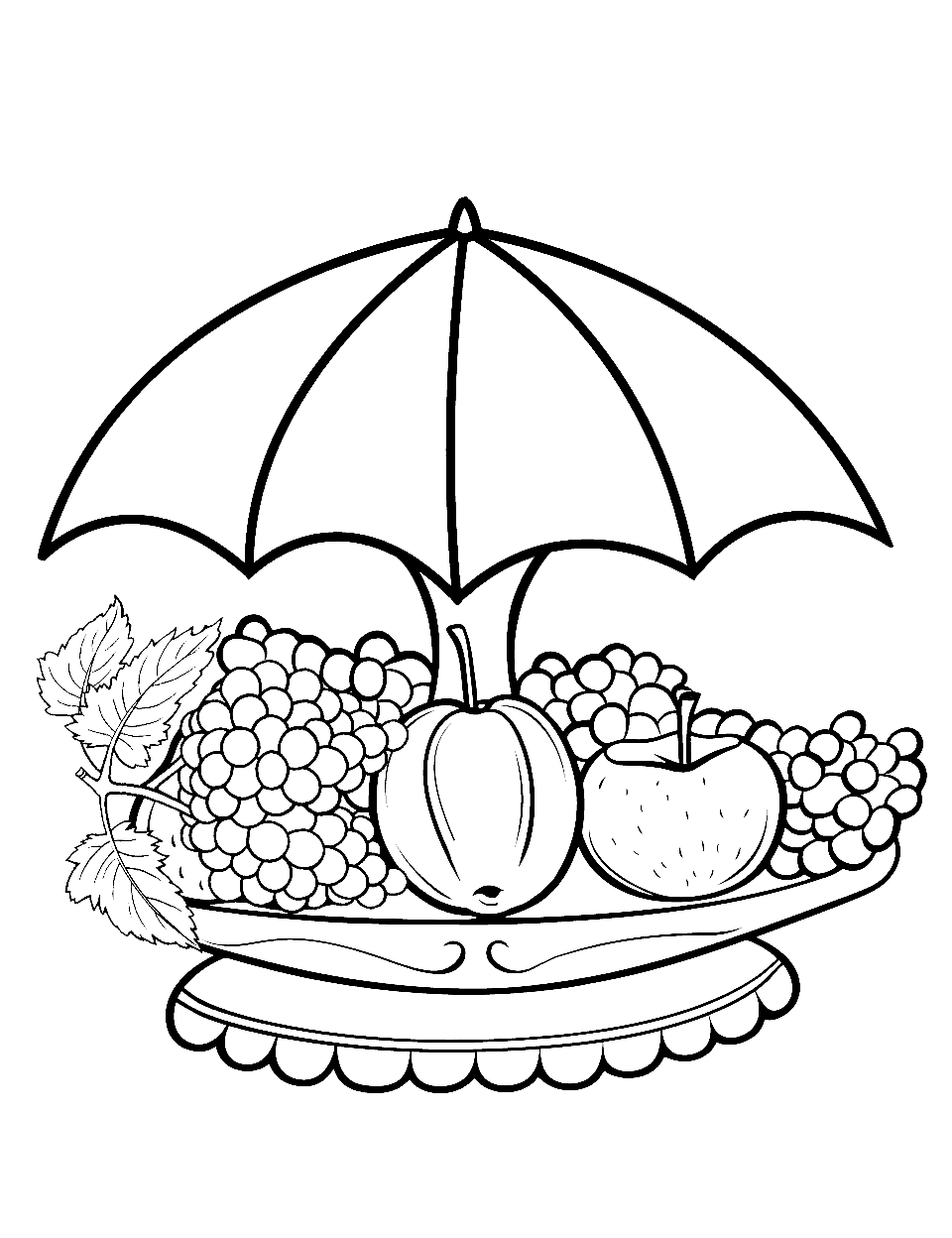
A footed dish of grapes, an apple, and a stone fruit with a crease down the middle sits under a wide open umbrella. The umbrella panels are big and empty, a rare chance to lay one bold color across a large area. Scalloped edging under the dish gives you a small repeating pattern to fill. Alternating panel colors turns the umbrella into a beach parasol.
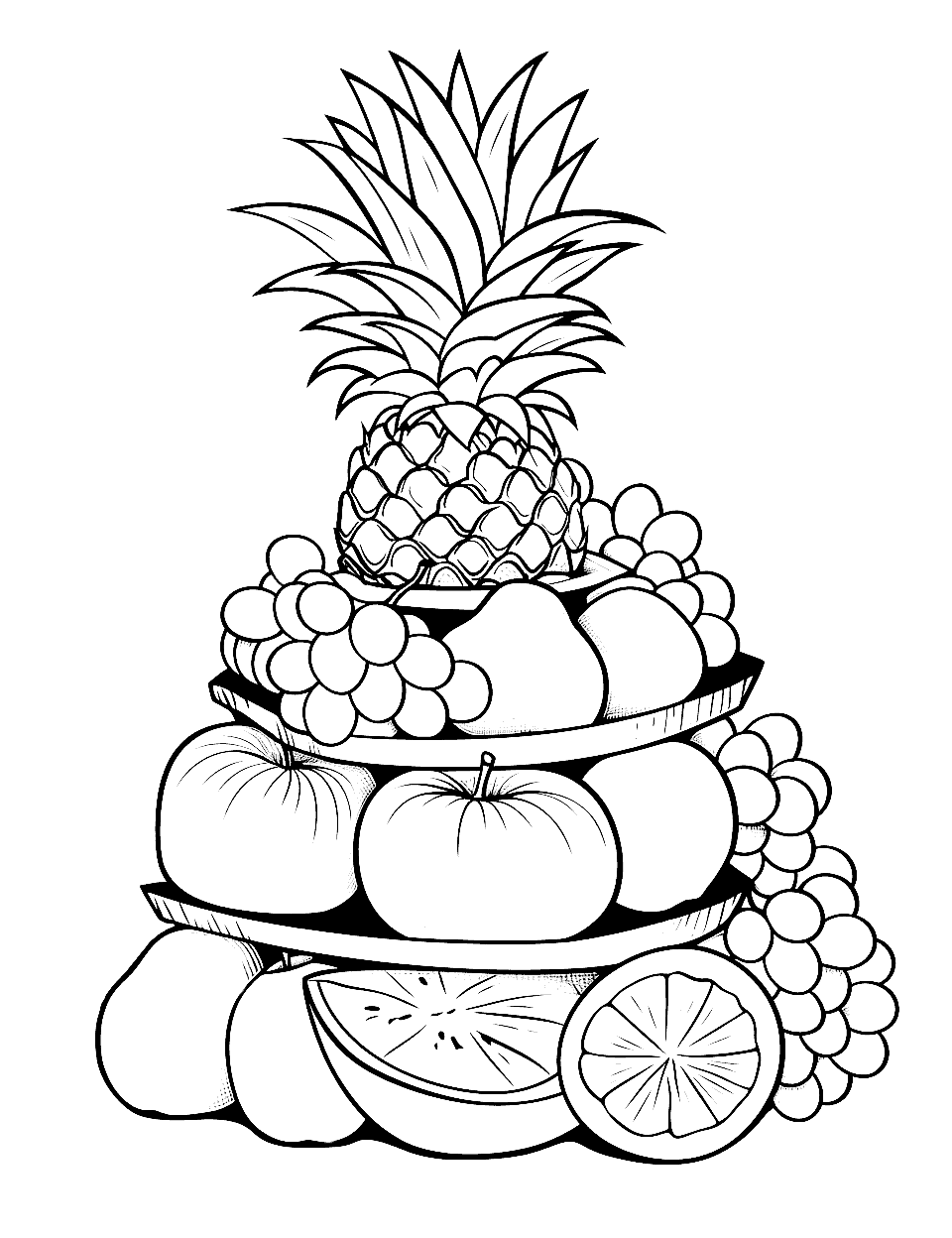
Fruit is stacked on a tiered stand: a pineapple on top, grapes and pears in the middle, apples below, and cut citrus at the base. Each tier is its own band, so every level can take a different color scheme. The citrus at the bottom has fine lines running out from the center. A good page for anyone who likes working top to bottom.
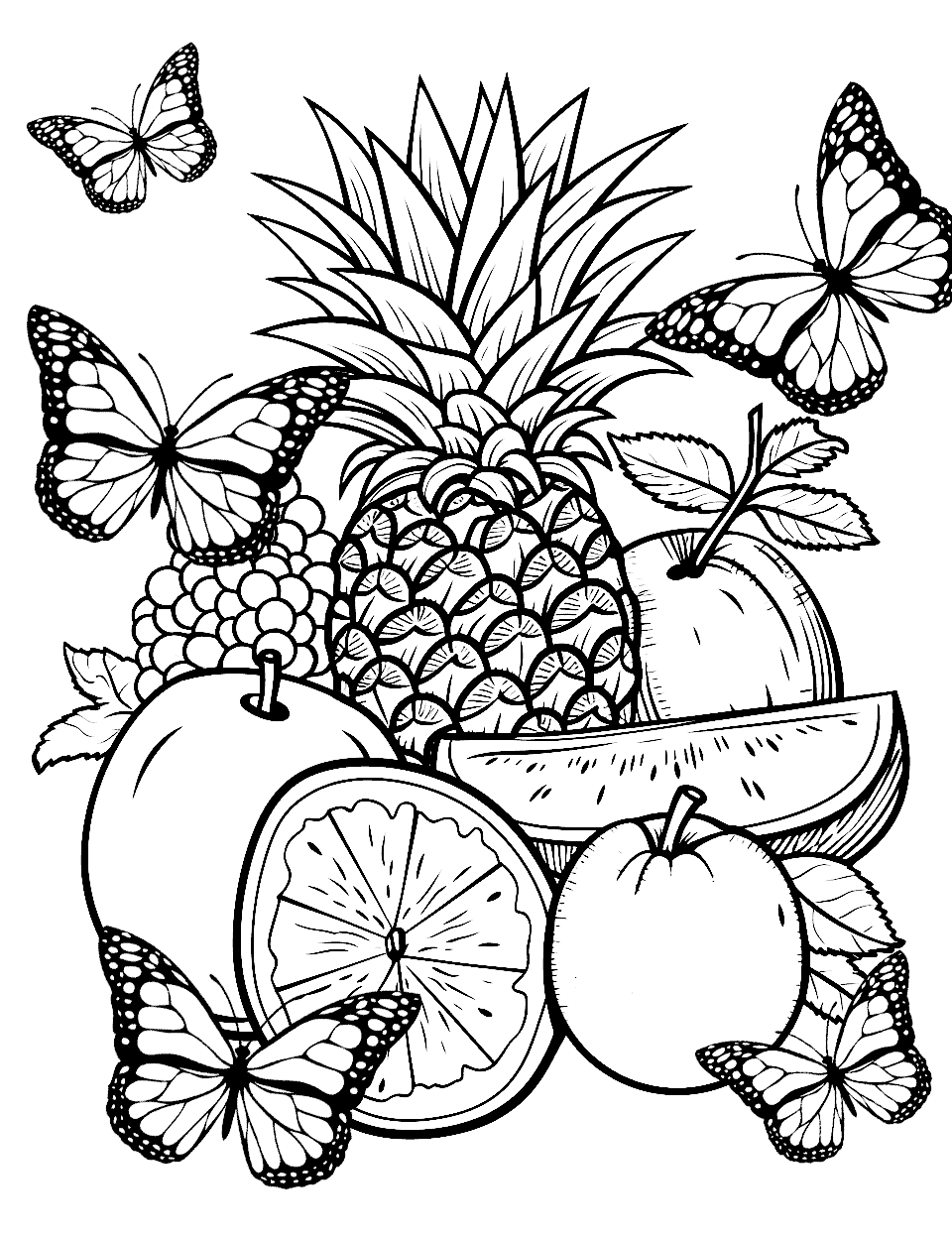
Butterflies with patterned wings hover around a pile of fruit that includes a pineapple, a watermelon wedge, and a cut citrus half. The wing spots are small and repeated, which is the fiddly part of the sheet. Orange and black wings against bright fruit make the whole page busy in a good way. Adults tend to like this one more than toddlers do.
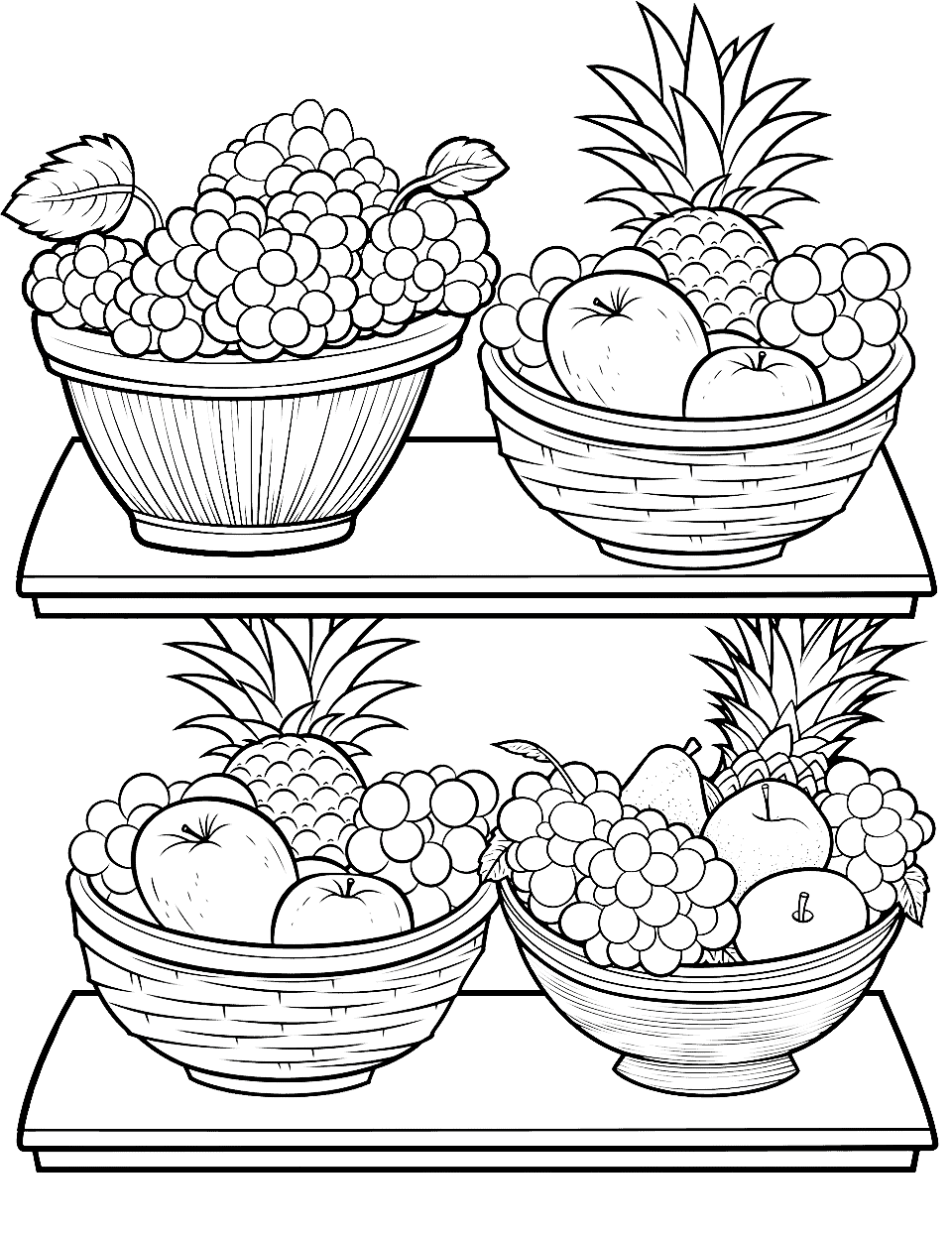
Two shelves hold four bowls of fruit: one heaped with berries, the others carrying pineapples, apples, pears, and grape bunches. The bowls repeat, so it is easy to give each one a different color and compare them. Shelf boards are plain rectangles and go quickly. Cut the finished bowls apart and they make a shop display for pretend play.
By using our free coloring pages, you acknowledge and agree to our full disclaimer. All materials are for personal, non-commercial use only and all rights belong to their respective license holders.
What Age Are These Fruit Coloring Pages Best For?
Most sheets here suit children from about age 3 up, with a handful that work earlier and several aimed at adults. The CDC lists copying a circle after being shown how as a milestone for age 3 (2), and holding a crayon between the fingers and thumb rather than in a fist as a milestone for age 4 (3); a milestone means 75% or more of children that age can do it.
Cherry Twins, Cute Kiwi, Watermelon Wonders, and Toddler’s Fruit Basket are the ones to print before that grip settles. They are built from a few large shapes with thick outlines, so a fist grip and a fat crayon still get a decent result.
Fruit Still Life, Fruit Jungle, and Fruit Butterfly Garden sit at the other end. Thin lines, overlapping shapes, and repeated small details make them slow work, which is exactly what an older child or an adult with a set of colored pencils wants.
Can Coloring Fruit Help a Picky Eater Try New Foods?
Coloring a fruit will not make a child eat it, but repeated friendly contact with the food is the part that does the work. Katherine Dahlsgaard, clinical director of the Picky Eaters Clinic at Children’s Hospital of Philadelphia, says: “It takes eight to 15 times to introduce a new food before your child will accept it” (4). Most parents stop after three to five tries.
A coloring page will not count as one of those exposures, but it can make the next one easier. Your child handles a dragon fruit or a papaya on paper, hears its name, and decides what color it should be, before it ever lands on a plate. The same National Survey of Children’s Health data behind that 32.1% figure put the vegetable number at 49.1%, so this is a common gap rather than a personal failing.
Pair a sheet with a taste of the real fruit on the same day, so the coloring warms your child up before the real bite. Keep the tone curious, not persuasive.
Activities to Do With Fruit Coloring Pages
A finished sheet does not have to go straight onto the fridge. These five ideas put the pages back to work once the coloring is done.
Create a Paper Fruit Salad
Color a range of fruits using bold markers. Have your child practice scissor skills by cutting each one out carefully. Toss the paper cutouts into a clean bowl and let them serve a pretend fruit salad to family members or stuffed animals.
Play the Fruit Memory Game
Print two copies of the same sheet, such as Fruit Faces or Kawaii Fruits. Color the matching pairs identically, then cut them into square cards. Flip them face down and take turns hunting for pairs.
Design Healthy Eating Placemats
Choose a page built around one big shape, such as Fruit Bowl Fiesta or Watermelon Wonders. After your child finishes coloring, glue the sheet onto a piece of construction paper to create a border. Laminate it, or cover it with clear contact paper, and you have a wipe-clean placemat that starts a food conversation at every meal.
Set Up a Pretend Grocery Store
Color and cut out several fruit items, then glue them onto cardboard so they hold up. Build a small shop with empty boxes as shelves, and print Fruit Market Day or Fruit Stall Shelves as the backdrop. Your child can use the paper fruit to practice counting, sorting by color, and handing over pretend money.
Make Fruity Greeting Cards
Use the Cherry Twins or Berry Best Friends pages to make cards for friends. Color the images, cut them out, and paste them onto folded cardstock. Write a pun like “I love you berry much” or “You are the apple of my eye” on the inside.
FAQs
What Supplies Work Best for These Pages?
Crayons and colored pencils handle every sheet here on plain printer paper, and pencils are the better pick for the detailed pages like Fruit Still Life and Fruit Jungle. Markers and watercolors bleed through standard copy paper, so print those on cardstock or slide a spare sheet underneath. Gel pens suit the small seeds on the pomegranate and papaya pages.
Are These Coloring Pages Free to Use?
Yes, every sheet in this collection is free for personal use at home or in a classroom. Print as many copies as you need, including duplicates for a memory game or a group activity. They are not for resale or redistribution.
Can Coloring Help My Child Learn About Nutrition?
It can, as long as the talking happens alongside the coloring. Name each fruit while your child works on it, say whether it tastes sweet, sour, or crunchy, and mention whether it grows on a tree, a vine, or a bush. Then hand your child the real thing at the store and let them put it in the cart. The page does the introducing; the kitchen does the rest.
How Do I Print These Images?
Save or right-click the sheet you want, then print it at US Letter or A4. Choose the fit-to-page option so nothing gets clipped at the edges, and drop the quality to draft if you only need clean outlines.
Which Sheets Work Best for Toddlers?
Cherry Twins, Cute Kiwi, Watermelon Wonders, and Toddler’s Fruit Basket are the simplest, each built from a few big shapes with thick outlines. Leave Fruit Still Life, Fruit Jungle, and Fruit Butterfly Garden until fine motor control is steadier. If a page still looks too busy, let your toddler color one fruit on it and treat the rest as background.
Is There an Easy Way to Cut Out the Shapes?
Draw a thick border about half an inch outside the fruit and let your child cut along that instead of the detailed outline. The wider margin is far less frustrating for small hands and safety scissors. On the busy pages, cut out one fruit at a time rather than trying to free the whole scene.