Crayons ready? These pages suit hands that still scribble more than color.
These free toddler coloring pages are drawn for hands that are still working out what a crayon does. Every sheet uses thick outlines and big open shapes, so a scribble that wanders still ends up looking like something.
There are 30 sheets to print here, covering animals, holidays, vehicles and ordinary moments like a first step or a picnic on a blanket.
Under the sheets you will find age guidance, printing tips and six ways to keep a page useful after the coloring is finished.
Winter Snowman
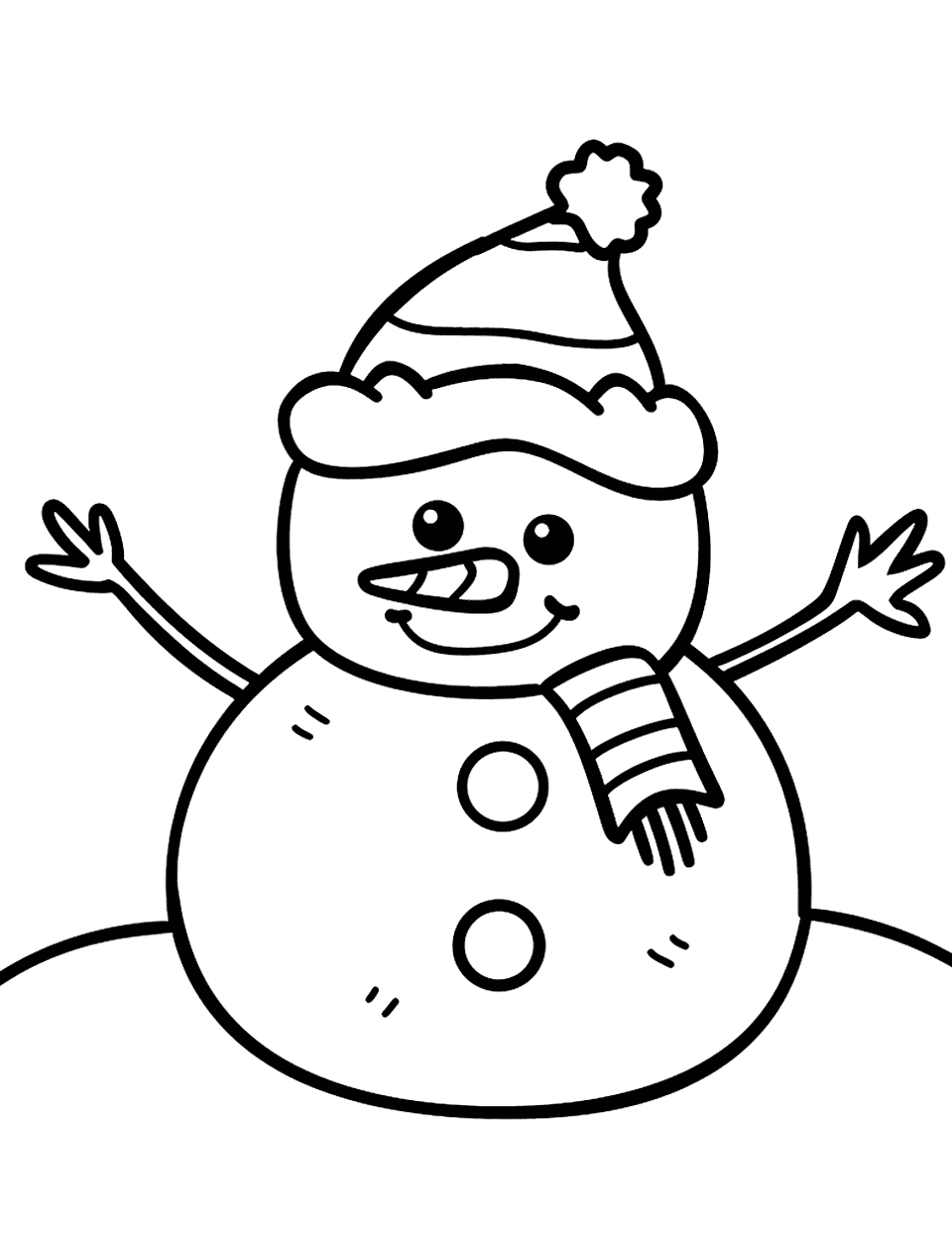
This simple-looking snowman throws his stick arms wide, with a carrot nose, a striped scarf and a bobble hat pulled down over his head. The body is two big rounded shapes, so a toddler can fill most of the page with one long scribble. Let them try alternating colors on the hat and scarf stripes for a bit of pattern practice. It is an easy first sheet for a snowy afternoon indoors.
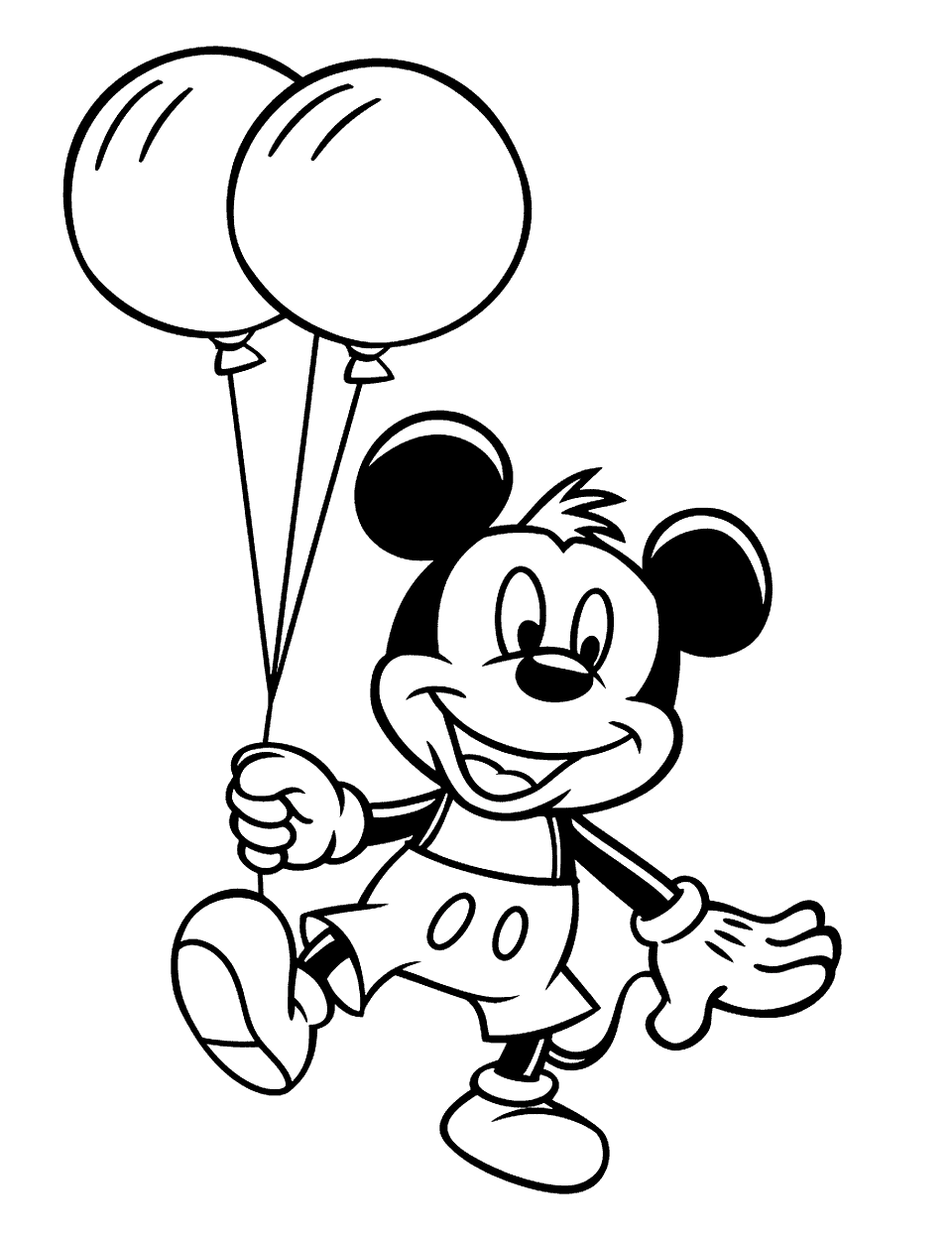
Mickey Mouse strides along with a pair of round balloons bobbing above him and one hand waving hello. Those balloons are big and completely empty, which makes them the easiest place to start before the smaller details. Give each one a different color so your toddler can name them as they go. His ears and shoes are already printed solid black, so there is less area to cover than it first looks.
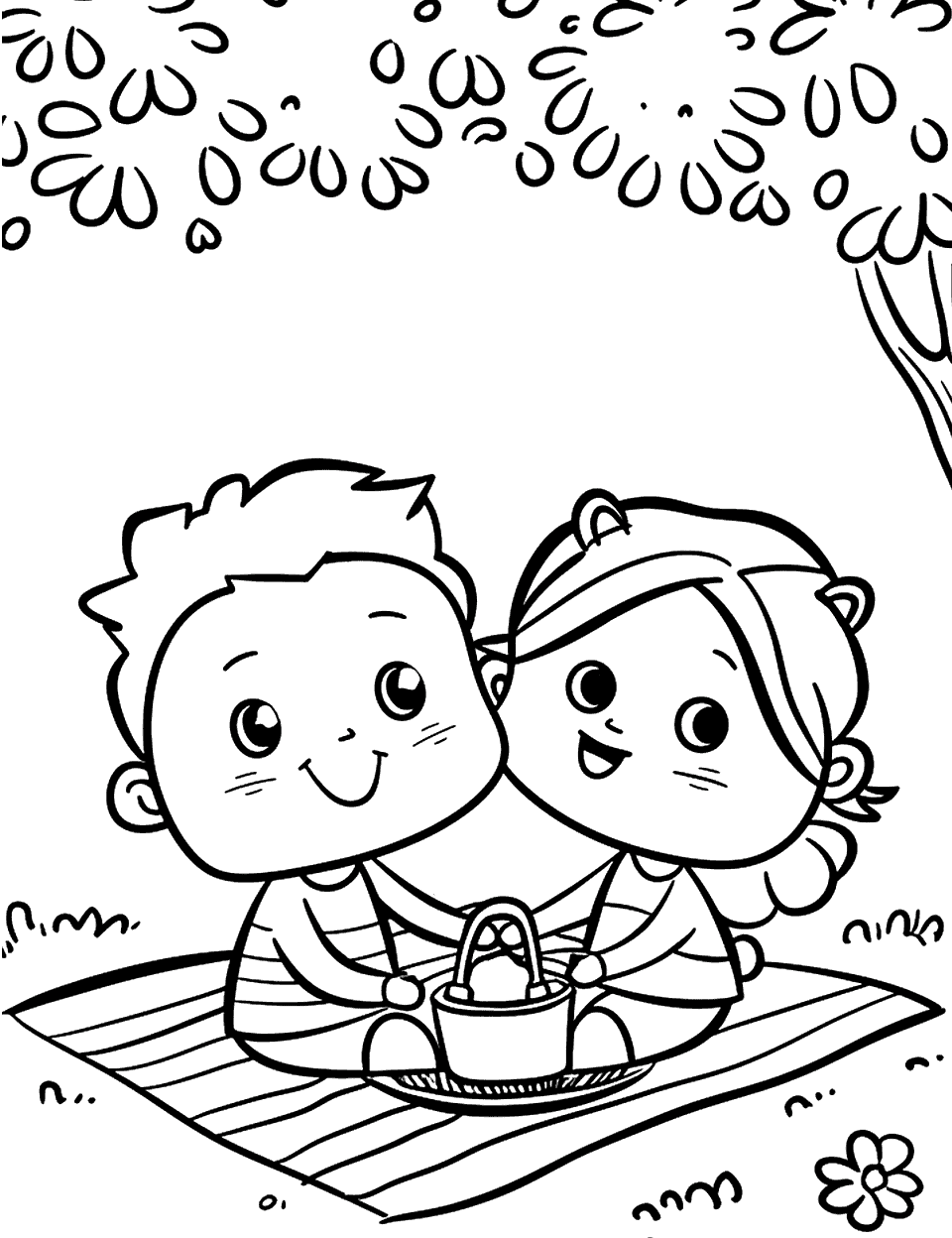
Two children sit shoulder to shoulder on a striped blanket with a picnic basket set between them. Blossoms spill across the top of the page, so there is plenty of room for pinks and yellows up high. The blanket stripes are wide enough to color one band at a time, which slows a fast scribbler down in a good way. Ask what snack they would pack, then let them draw it in the empty corner.
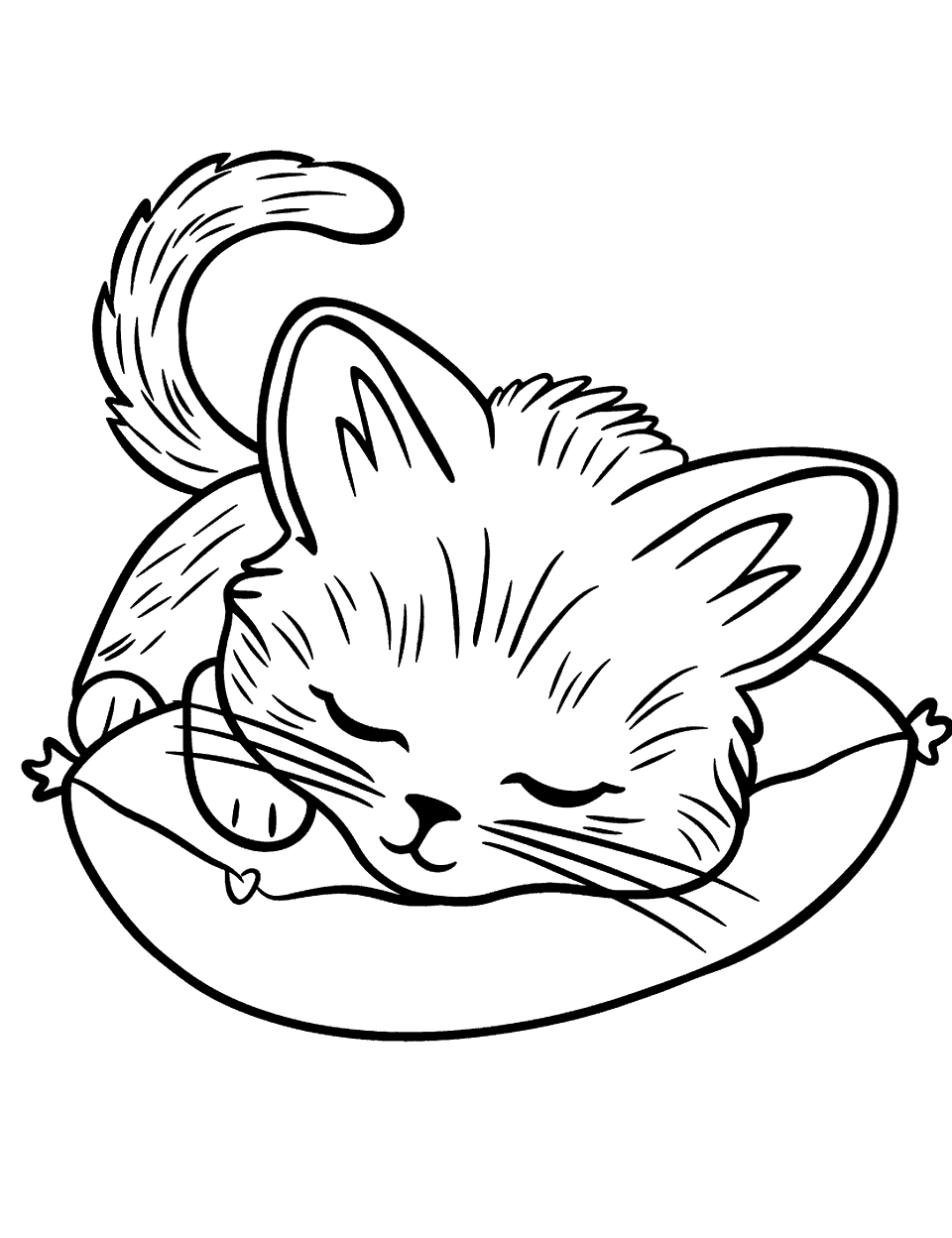
Shh. This cute kitten is fast asleep on a soft cushion with its fluffy tail curled up behind it. The fur is drawn with hundreds of short strokes, so it suits a toddler who likes to scribble rather than fill neatly. Soft greys and creams look right on the cat, and the cushion underneath can be as bright as they like. Save this one for wind-down time before a nap.
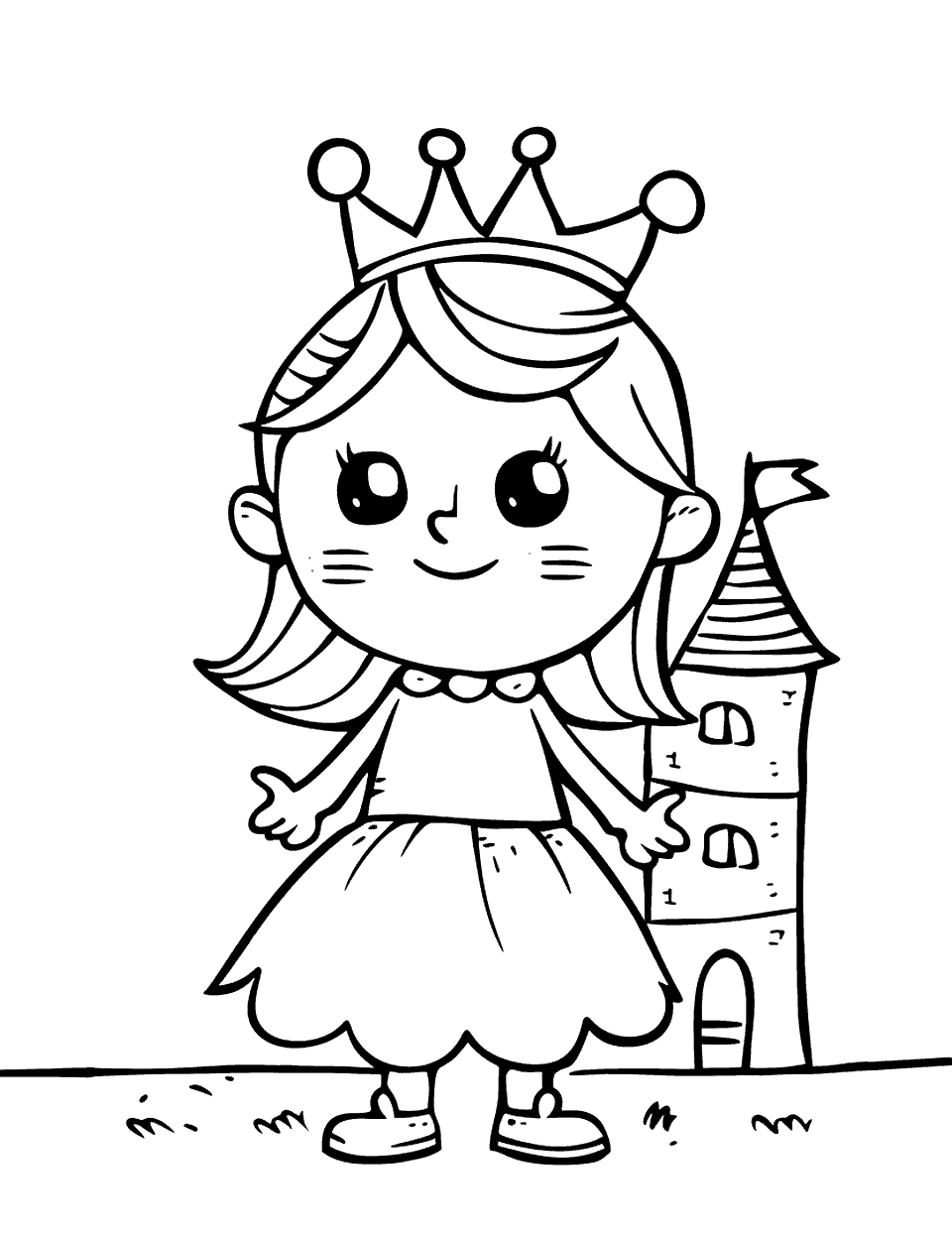
Here is a royal scene for your little one. A smiling princess in a pointed crown stands beside her simple castle, which is really one tall tower with a flag on top. Her skirt is a single wide shape, ideal for a toddler who colors in big sweeps. The crown and the flag are small enough to be worth saving until the end.
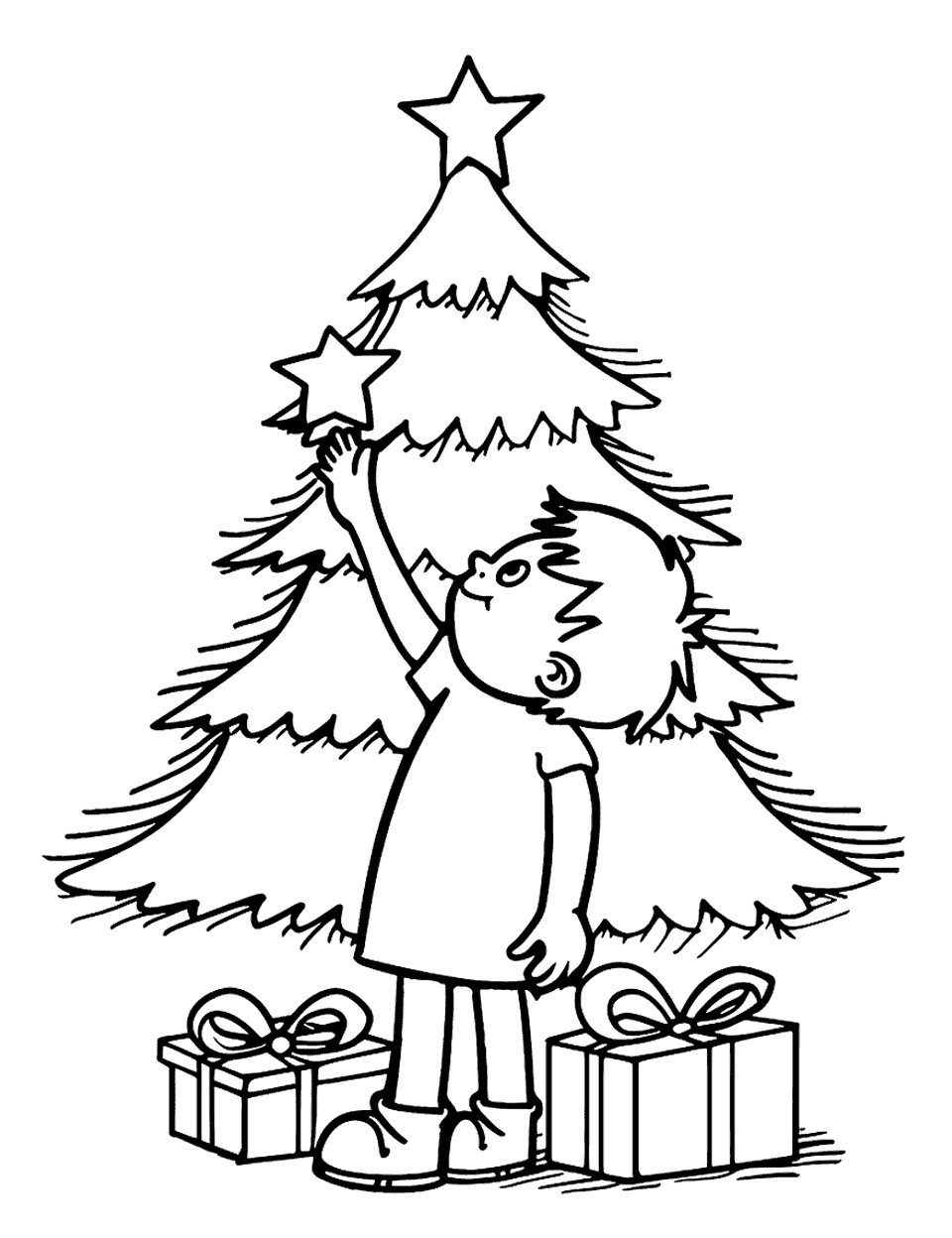
A child stretches up to add a star to a Christmas tree while two wrapped gifts wait at the bottom. The branches are drawn with feathery lines, so a loose green scribble works better here than careful filling. Let your toddler choose a ribbon color for each gift. Keep this one in the December pile for a quiet afternoon.
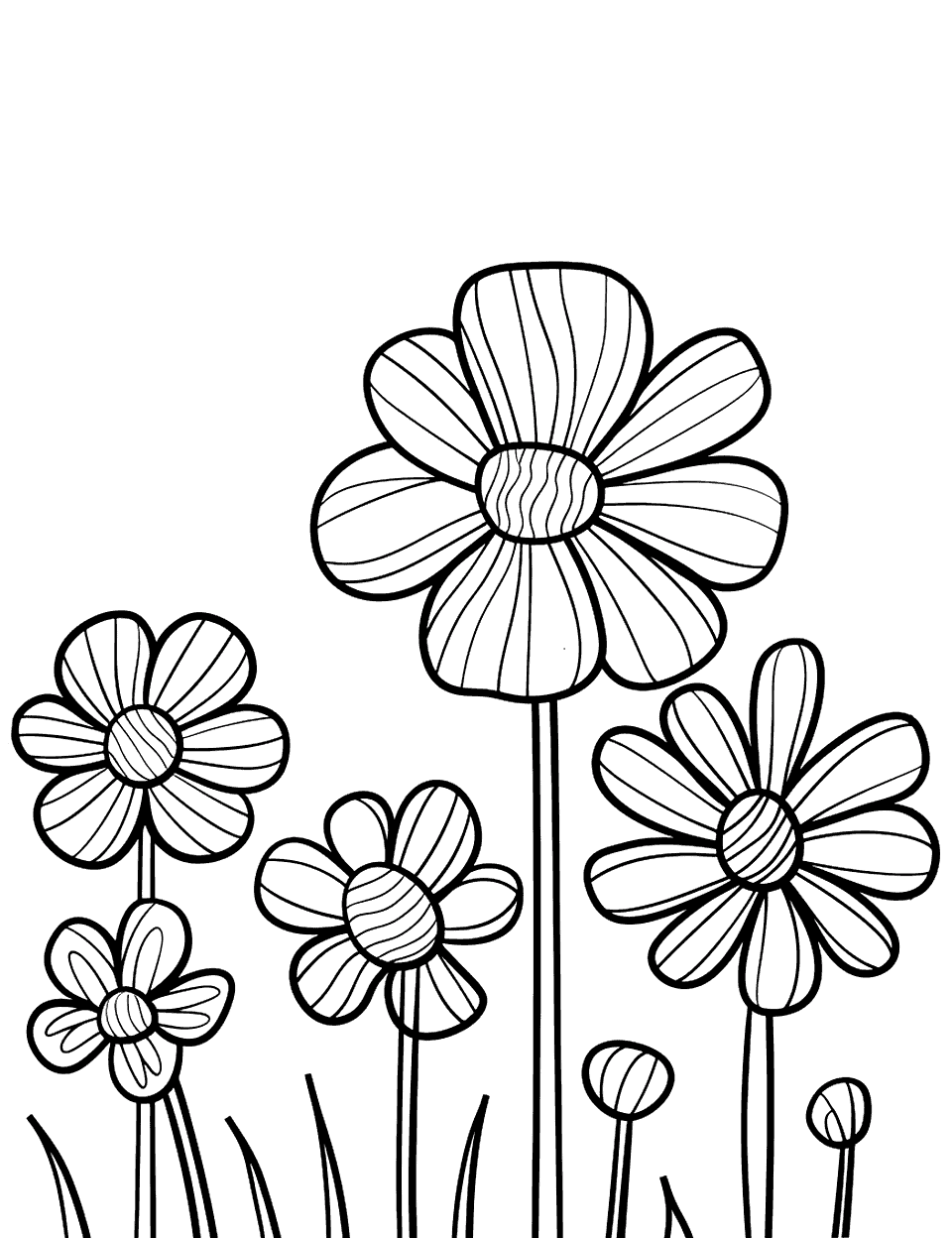
One big bloom towers over a handful of smaller simple flowers, with a few buds still closed on their stems. Every petal is outlined thickly, so a wandering crayon still lands roughly where it should. Try one color per flower to turn the sheet into a quiet matching game. It makes a nice spring page for the fridge door.
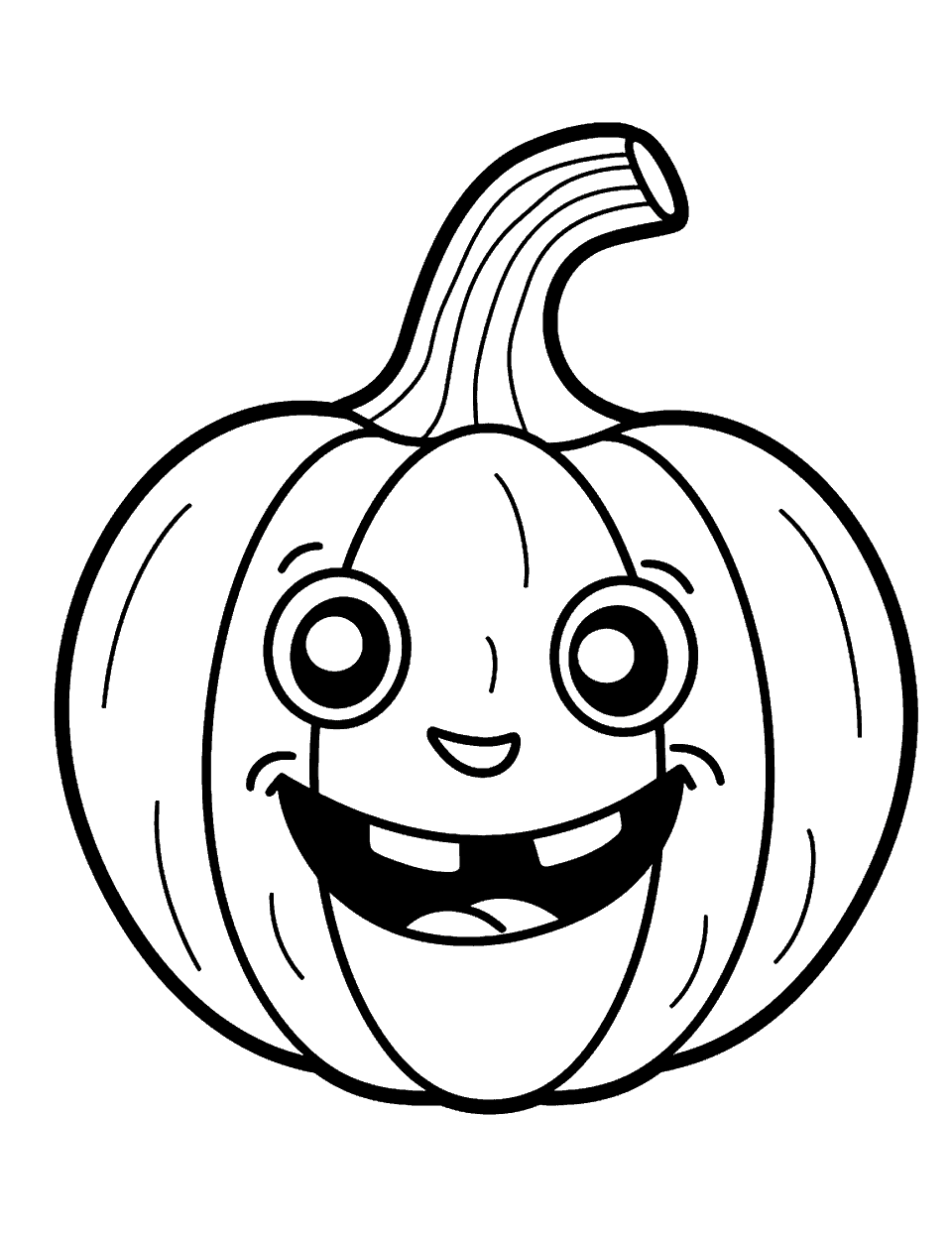
This pumpkin is grinning rather than scary, with big round eyes, two square teeth and a curved stem on top. The ribs of the pumpkin split the body into tall sections, which gives a toddler natural lines to color between. Orange is the obvious pick, but a purple or blue pumpkin is more fun at this age. Print a few for a Halloween table activity.
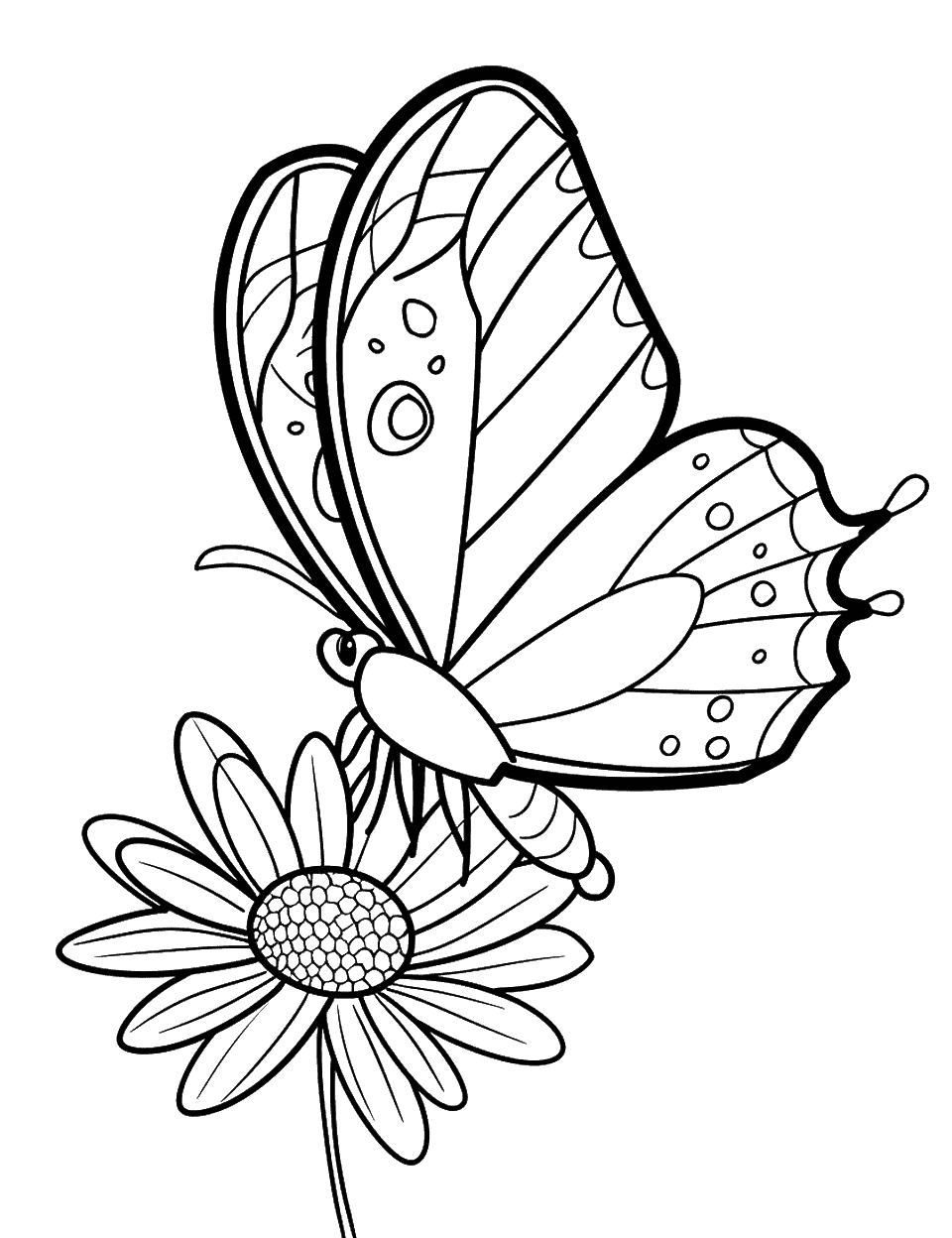
A large butterfly has settled on an open daisy, wings raised and covered in spots and fine stripes. This is one of the busier sheets in the set, so it suits an older toddler, or a grown up coloring alongside a younger one. Point out the spots and let them repeat a single color across the wing. The daisy petals underneath are wide and much more forgiving.
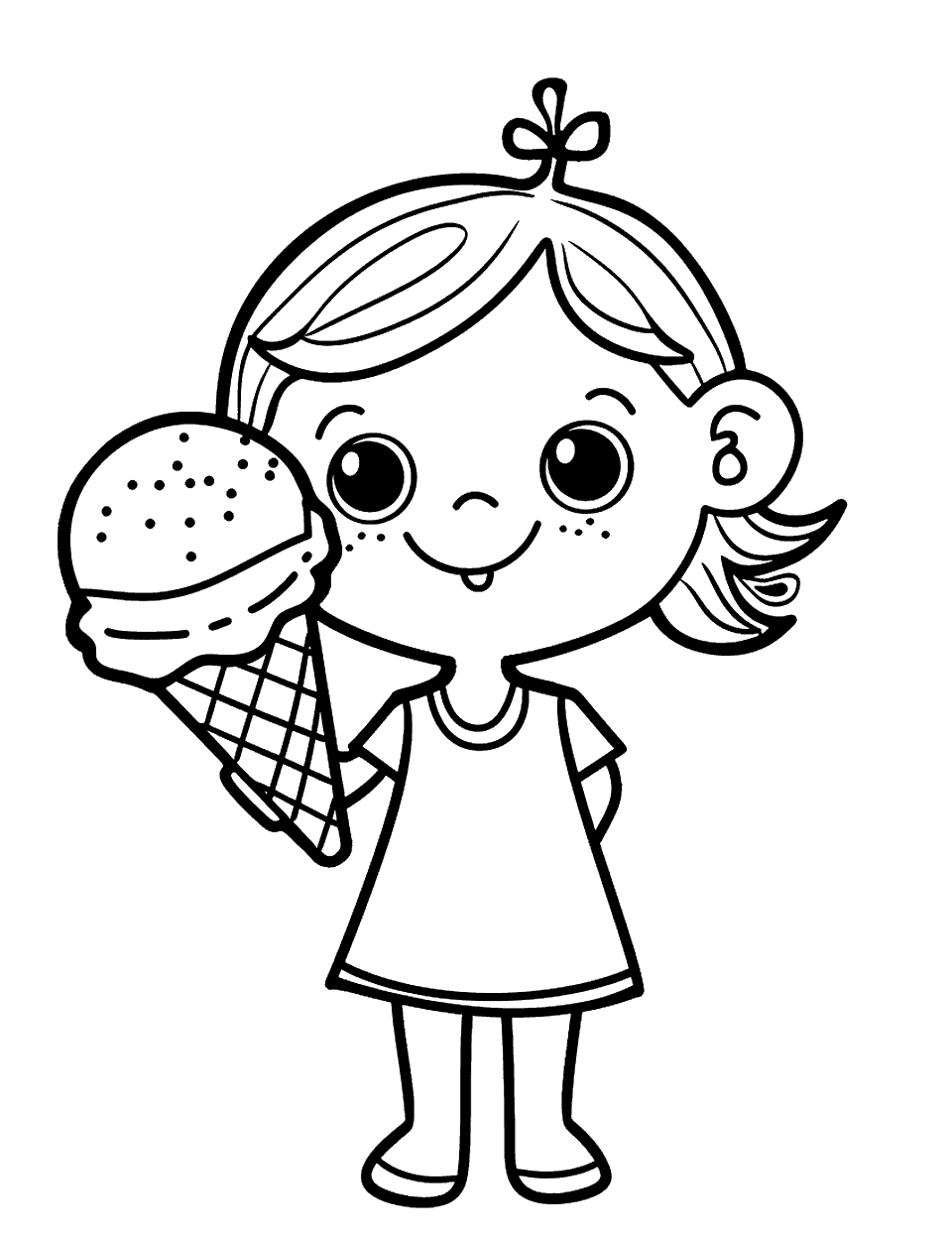
Nothing beats a cold treat. A girl with a small bow in her hair holds up a single scoop ice cream cone with a criss-cross waffle pattern. That pattern is the fiddliest part of the page, so let them scribble over it and move on. Her dress is one wide shape and takes seconds to fill. Ask what flavor the scoop is before they choose a crayon.
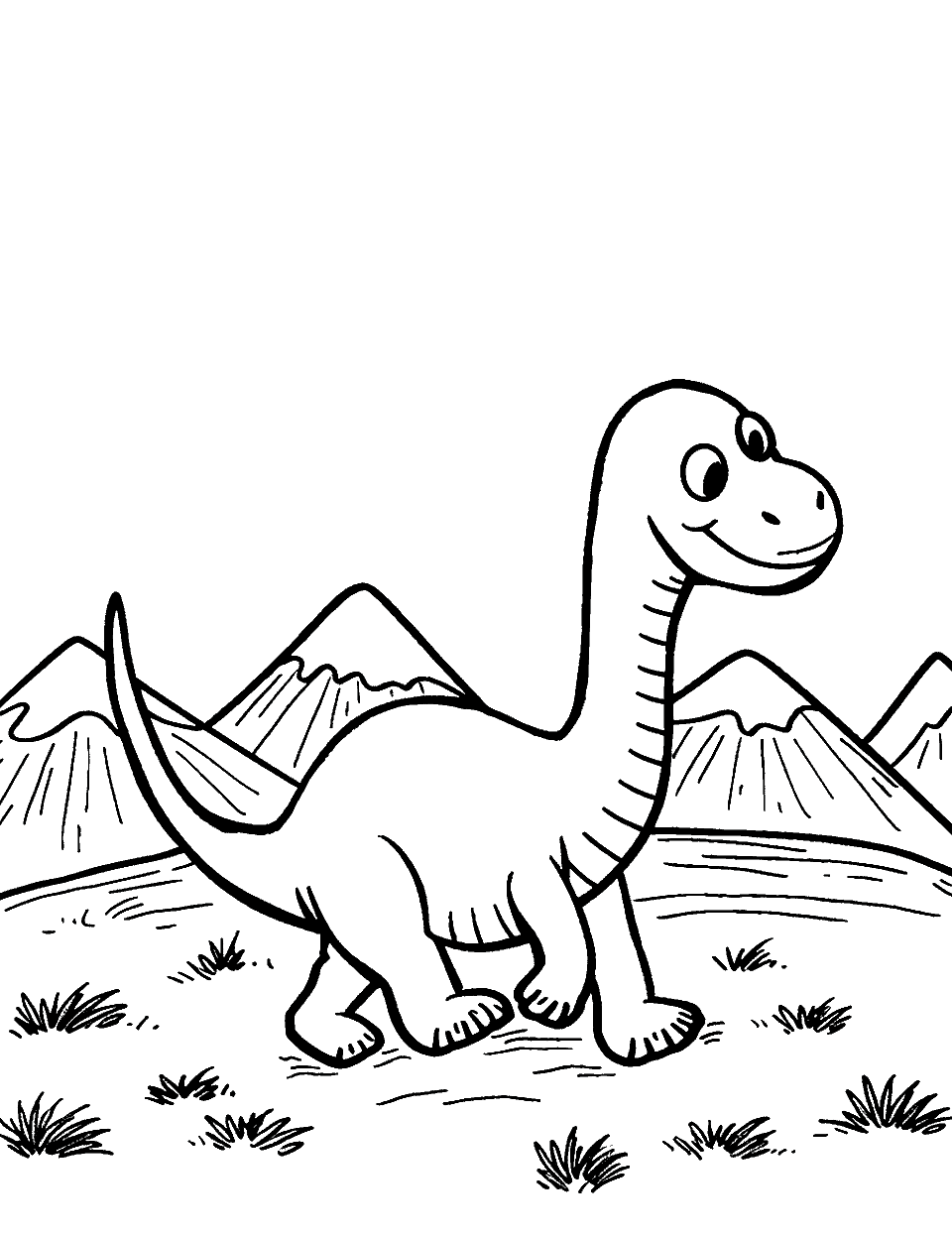
A friendly dinosaur with a long neck and a long tail walks along in front of a mountain range. Its body is one big open shape, which is exactly what small hands need. The grass tufts scattered along the bottom are good practice for short, controlled marks. Green is the expected answer, so ask for a purple or spotted dinosaur instead.
A baby toddles forward in a loose shirt, a diaper and a pair of little shoes, arms out for balance. Nothing has been drawn in the background, so the page stays calm and uncluttered. Older siblings often like coloring this one for a new baby in the house. Two or three colors are all it really needs.
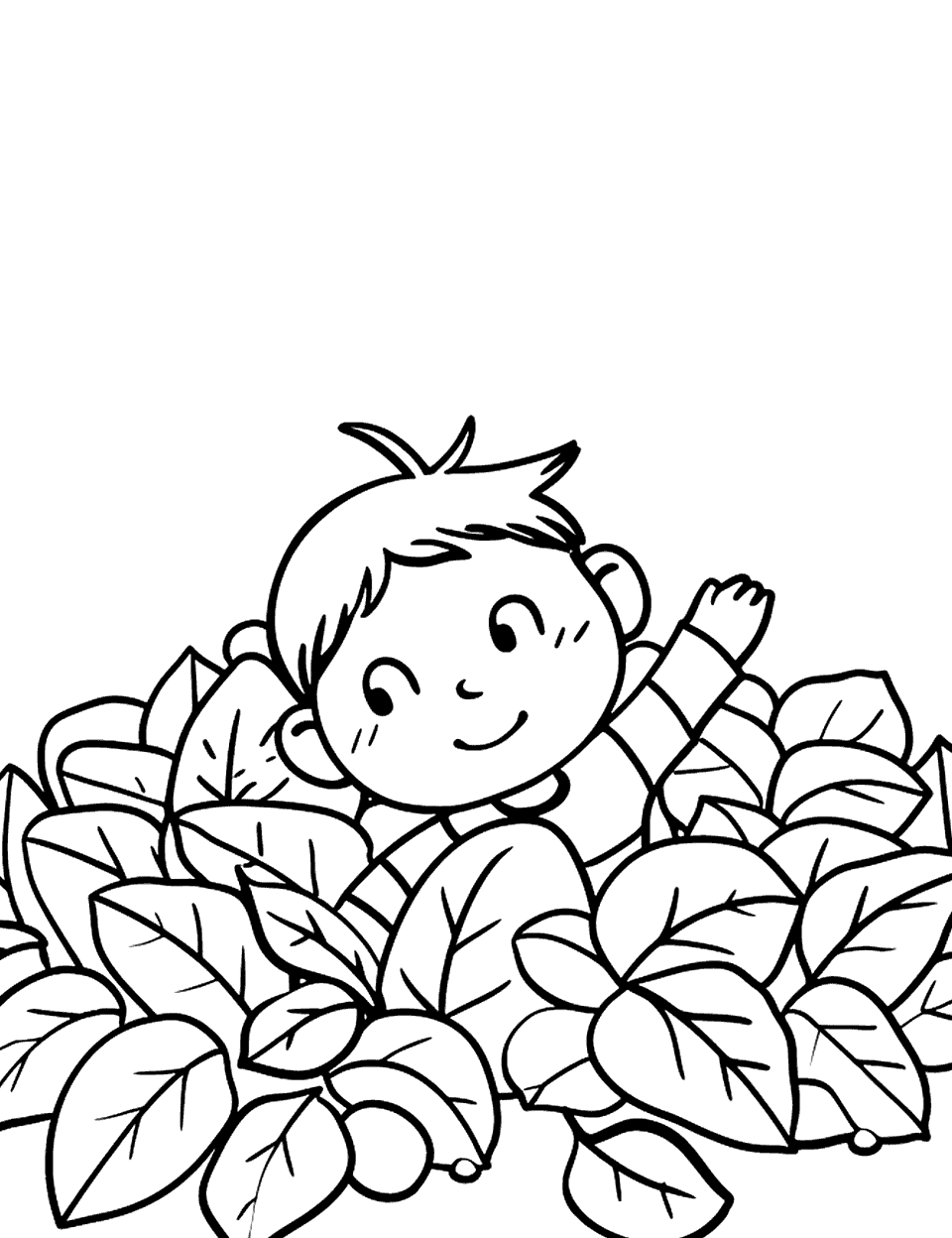
A grinning child is buried up to the shoulders in a pile of fallen leaves, one arm waving above the heap. The leaves are large and clearly outlined, so each one can take its own red, orange or yellow. Bring this sheet out after an afternoon of raking in the yard. Count a few leaves together while they work.
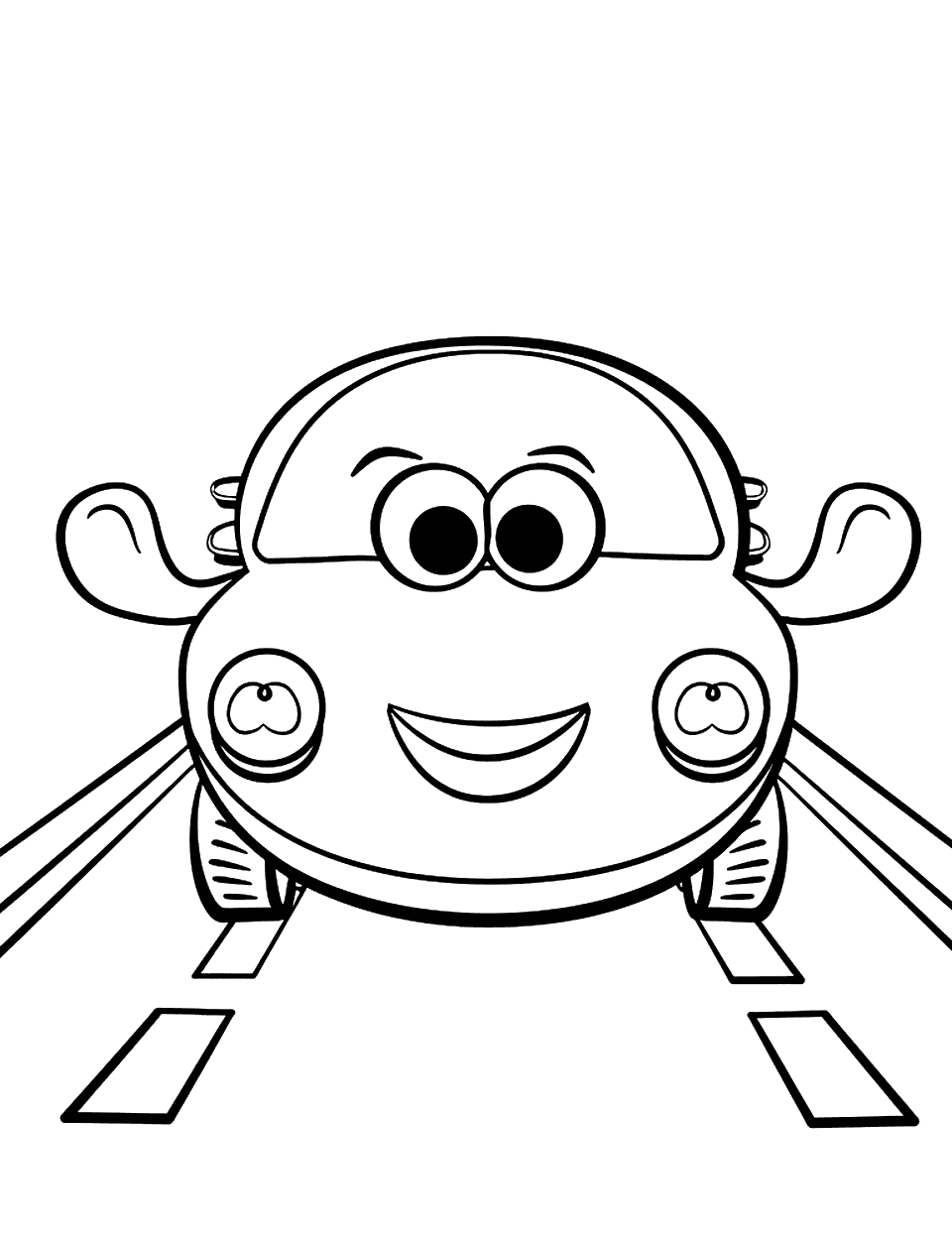
Zoom zoom. A cartoonish car with big eyes and a wide grin comes straight down the road toward you. The dashed road markings underneath are plain rectangles, perfect for a toddler who wants to repeat one color over and over. The windshield is a large empty shape they can fill however they like. Make engine noises while they color and the page lasts twice as long.
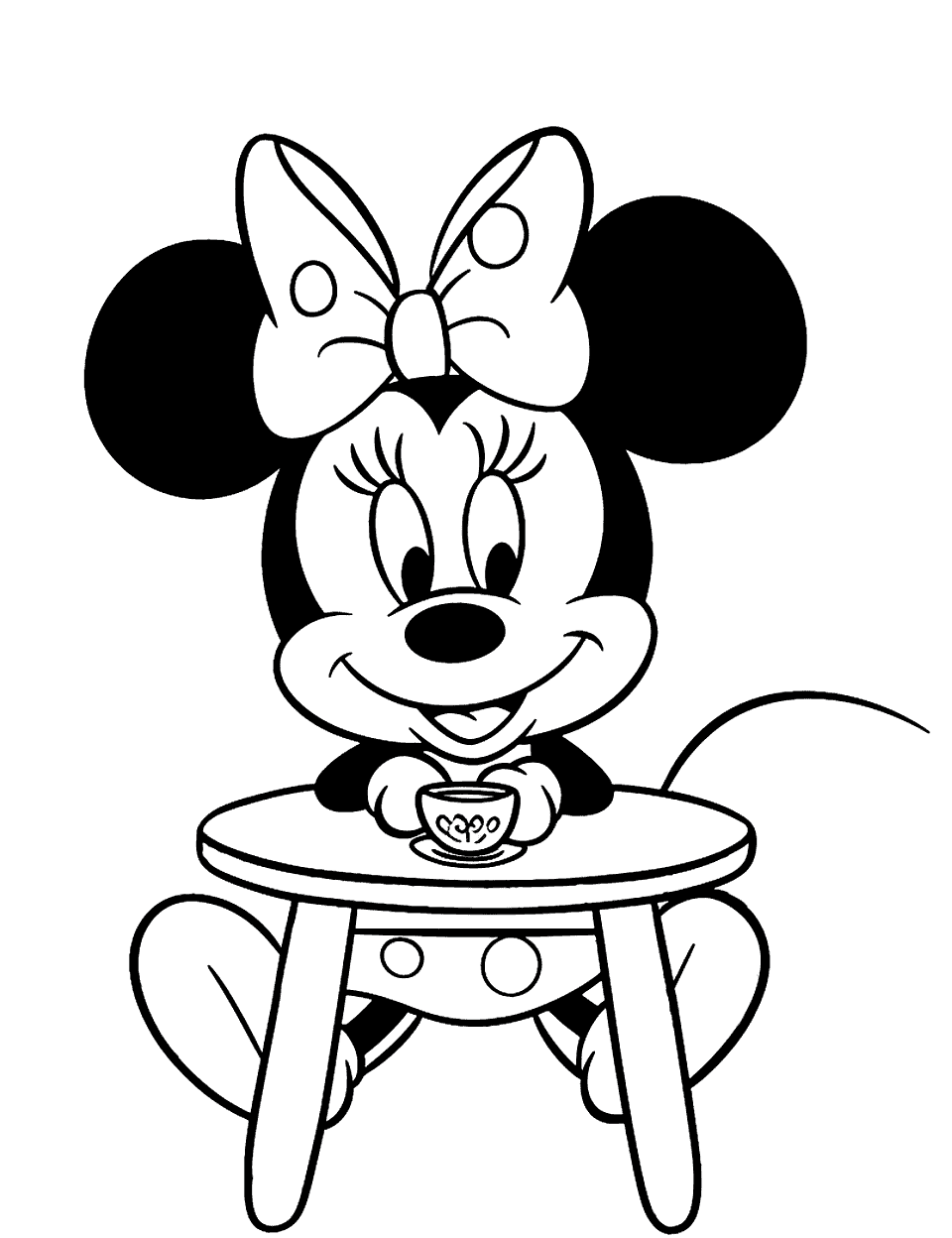
It is time for tea. Minnie Mouse sits at a small round table with a teacup in front of her and her bow standing tall on her head. Her ears are printed solid black, so the bow and the cup are where the color goes. The tabletop is a wide oval that fills fast. Pair it with a real snack and a plastic cup for a proper tea party.
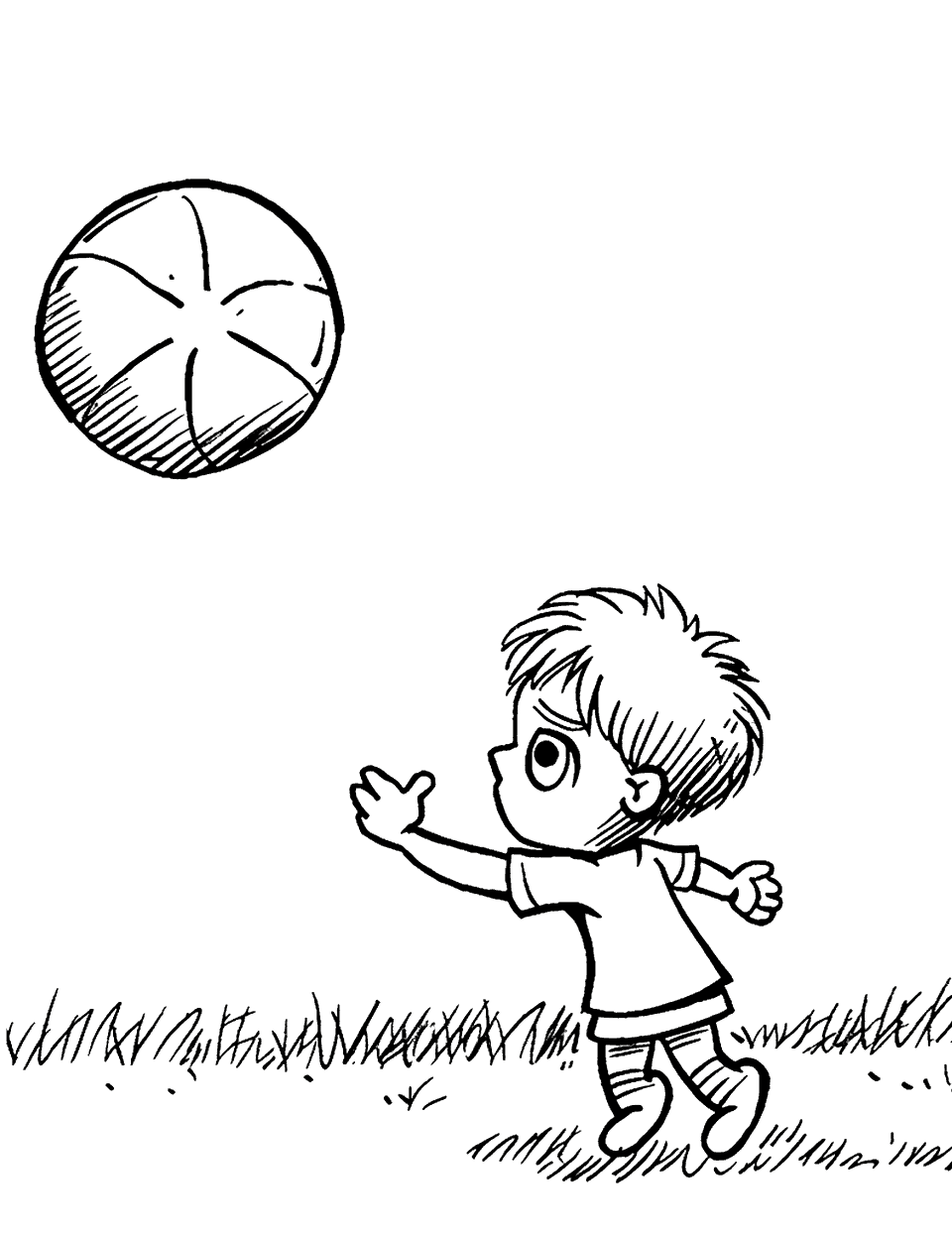
Run and play. A toddler reaches up for a ball that is still hanging in the air above the grass. The ball is divided into panels, which makes it an easy first go at using more than one color inside a single object. The grass is drawn as loose strokes, so scribbling straight over it looks exactly right. Print two and race to the finish.
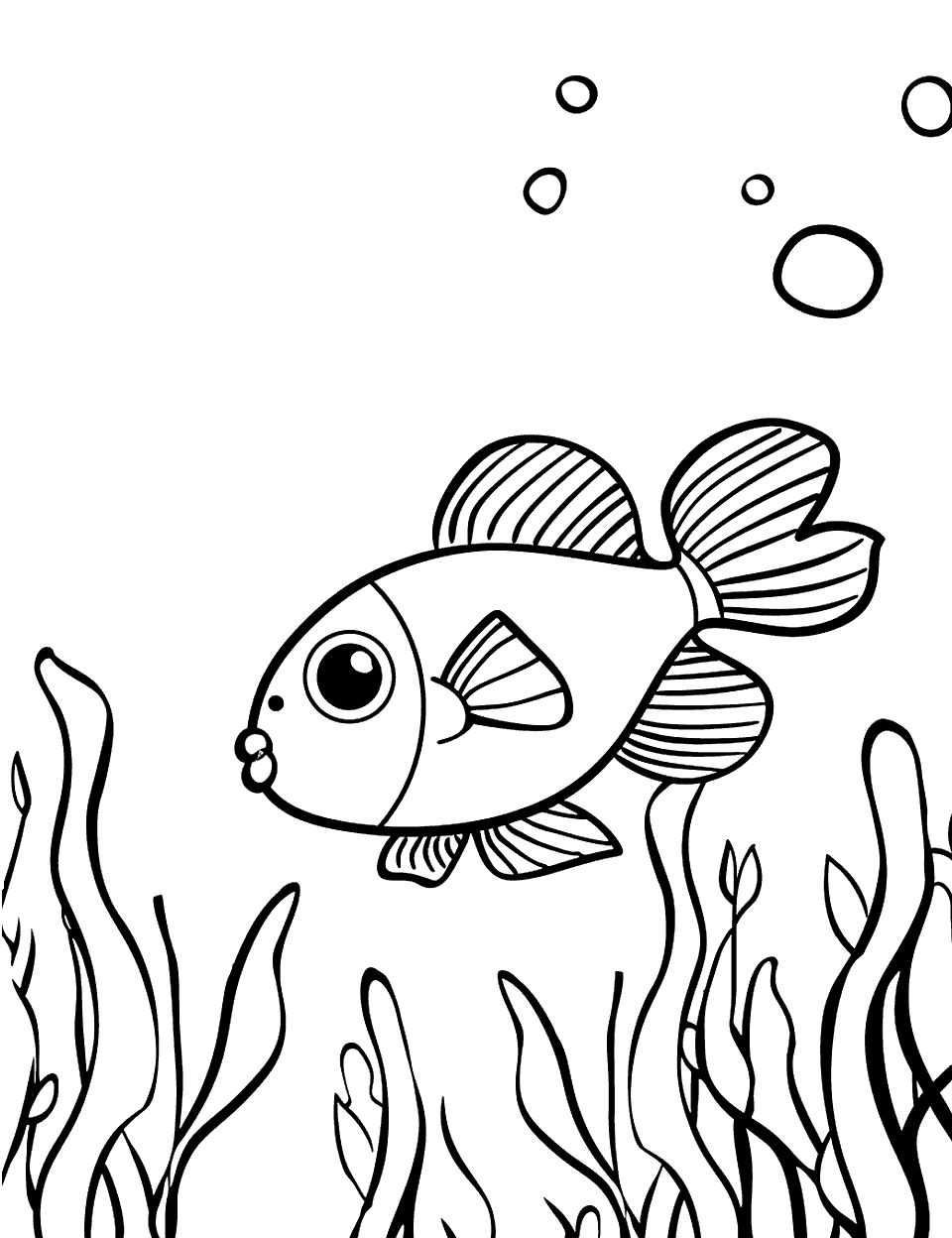
Down at the bottom of the sea, a single fish glides over tall seaweed while bubbles float up toward the surface. The fish is large and simple, and the seaweed gives a toddler long wavy lines to follow. Blues and greens are the obvious choice, though a rainbow fish is far more fun. Talk about what else might live down there while they color.
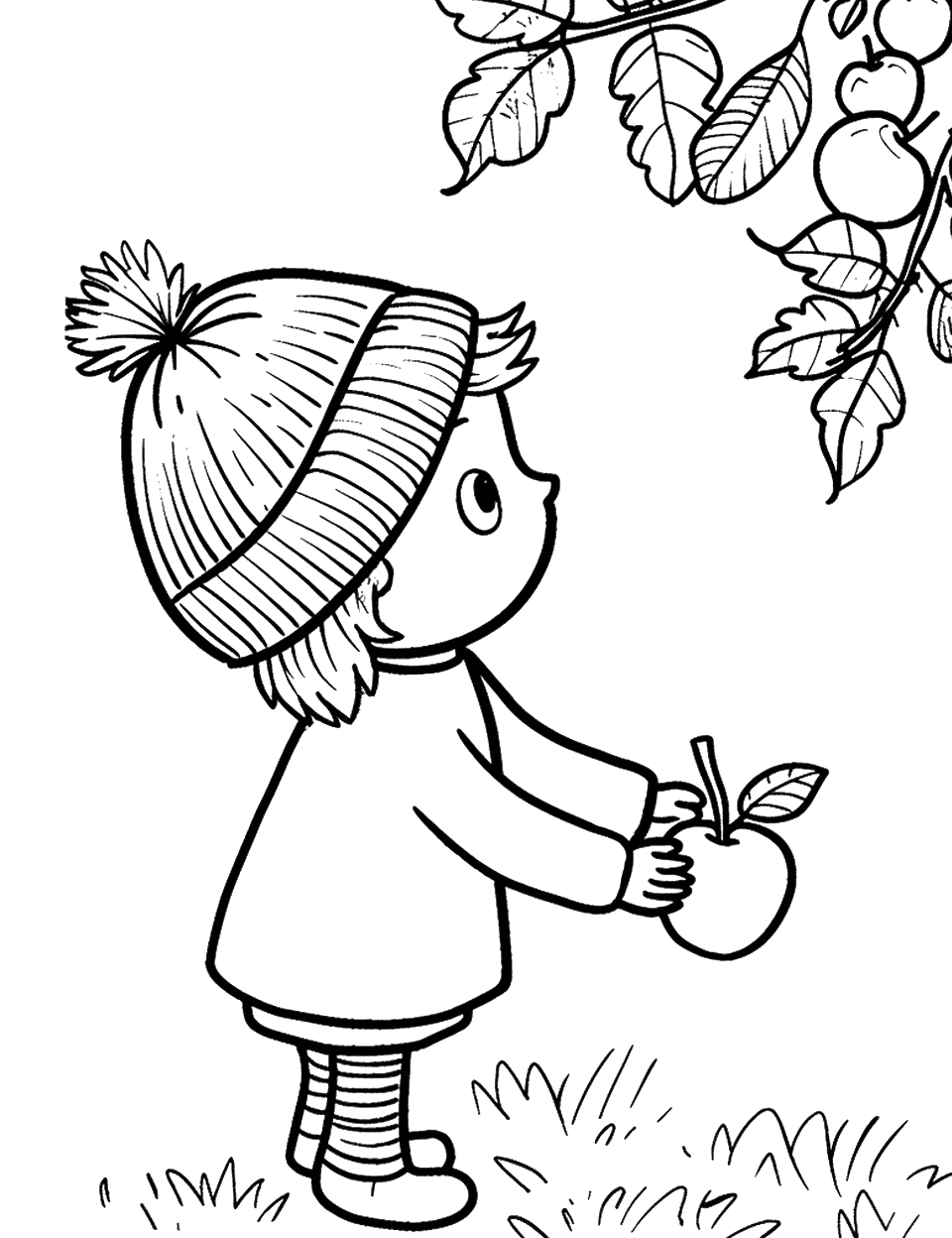
A child picking apples stands in a bobble hat and coat, holding one apple carefully in both hands. A loaded branch hangs down from the top corner of the page with more fruit still on it. The hat and coat are big shapes that fill quickly, while the apples on the branch are small enough to be good crayon aiming practice. Red, green or yellow all work, and mixing all three works best.
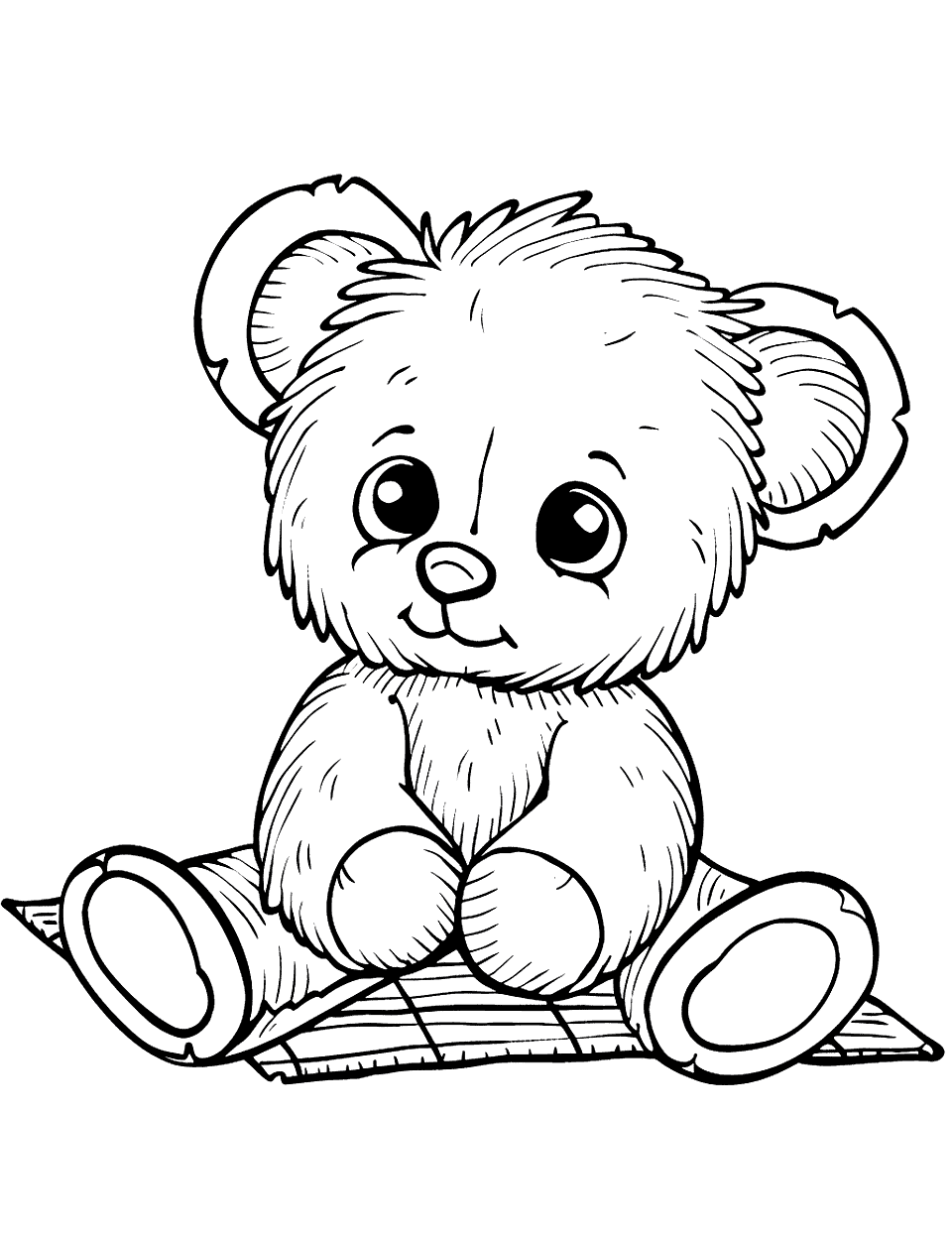
A cute teddy bear sits on a blanket with its paws out in front and its fur drawn in soft, feathery strokes. There is no background at all, so the bear is the whole job. Browns and tans are traditional, but a pink or blue bear is a perfectly fair choice. Ask your toddler to color it to match a bear they already own.
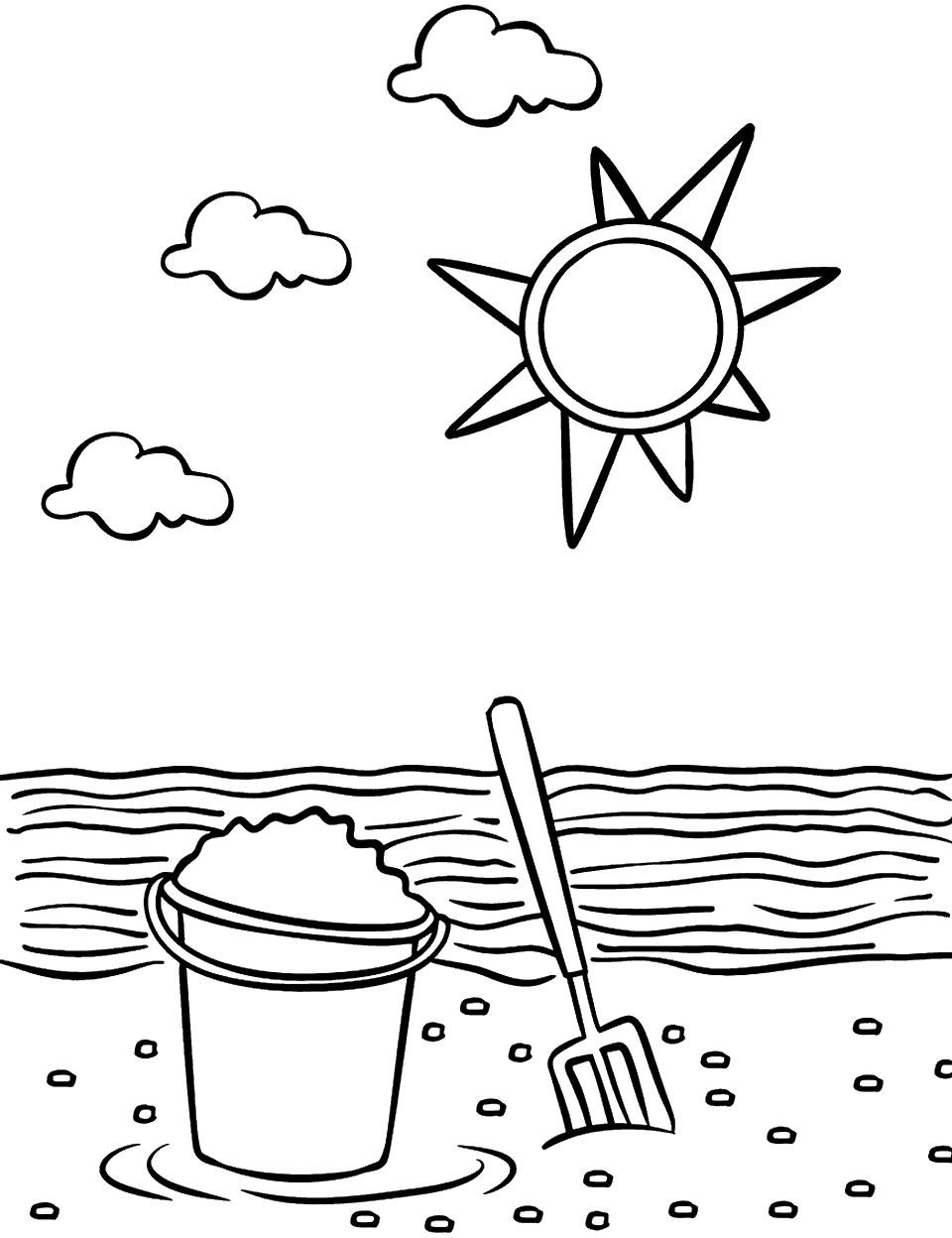
Let’s build a sandcastle. This simple scene of a beach has a full bucket, a spade standing in the sand and a bright sun over the water. The sun and the clouds sit high and empty, so start at the top and work down. The little pebbles dotted across the sand turn into a spotting game once the big areas are done. Save it for a rainy day when the real beach is off.
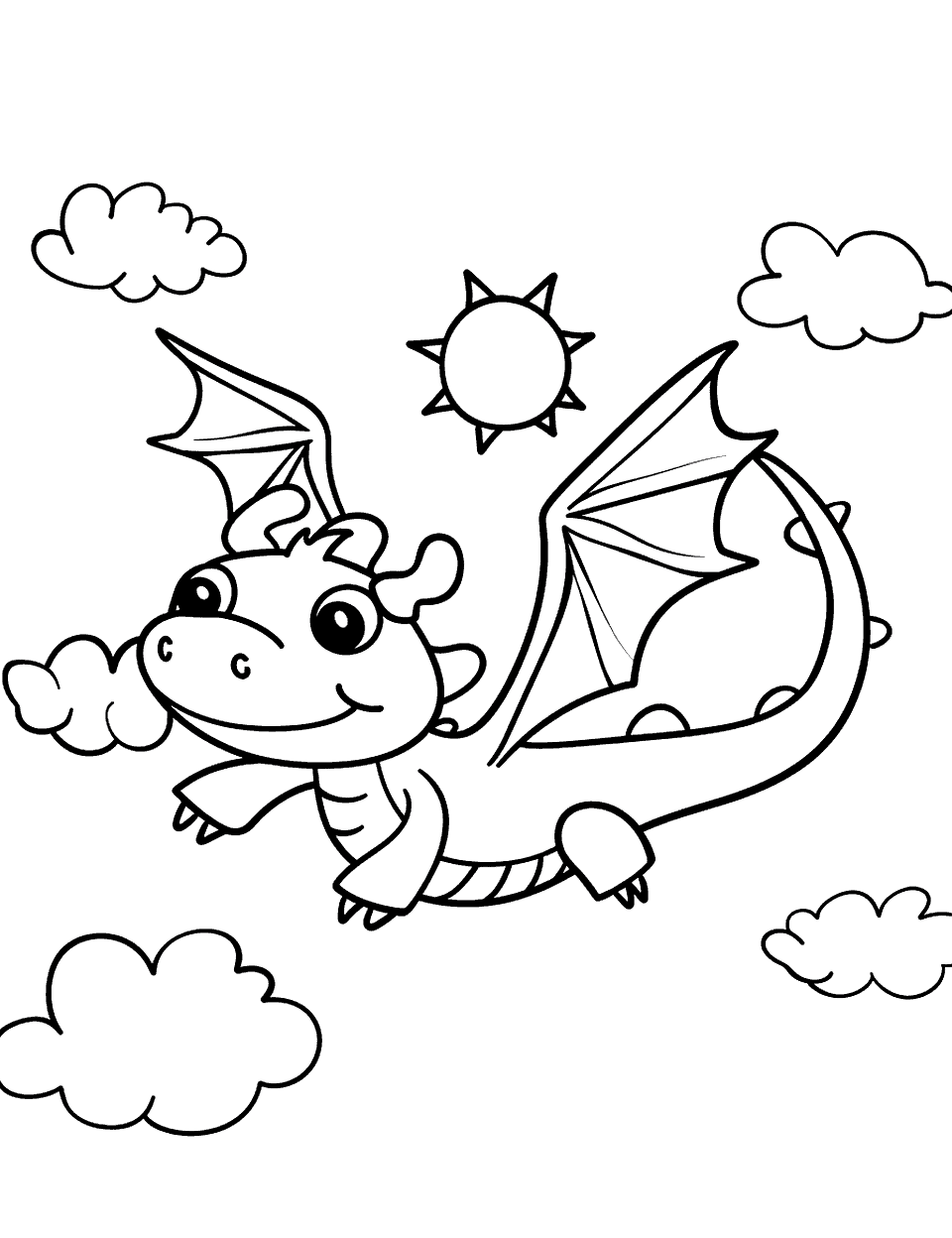
Fly high in the sky. A cartoon dragon soars past the clouds with the sun sitting between its wings. Those wings are the most detailed part of the drawing, with thin lines running through them, so a light scribble looks better there than heavy pressure. The body and tail are smooth and open and take bold color well. Ask your toddler what the dragon is called.
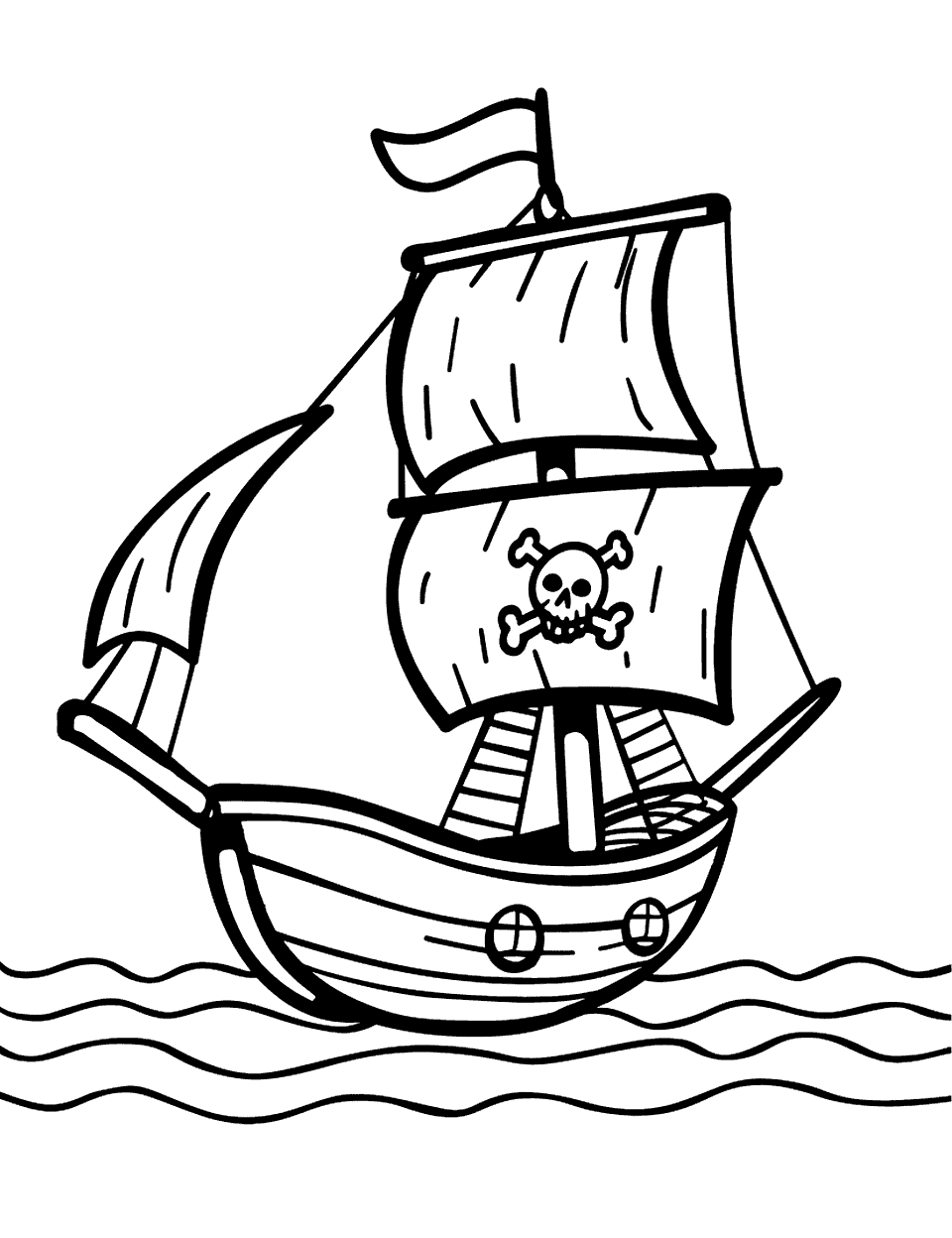
Ahoy there, matey. A pirate ship rides the waves with a skull and crossbones printed on the main sail and a pirate flag flying from the top of the mast. The water runs in long wavy bands across the bottom, easy to follow with a blue crayon. The sails are big and open, so most of the page fills fast. Add a story about where the ship is heading and the coloring lasts longer.
Three, two, one, blast off. A rocket climbs upward with flames trailing underneath and stars scattered around it. The round window is already filled in dark, so nobody has to color inside it. The little stars need a steadier hand, which makes them a good last step once the rocket is done. Red and orange flames finish the page off.
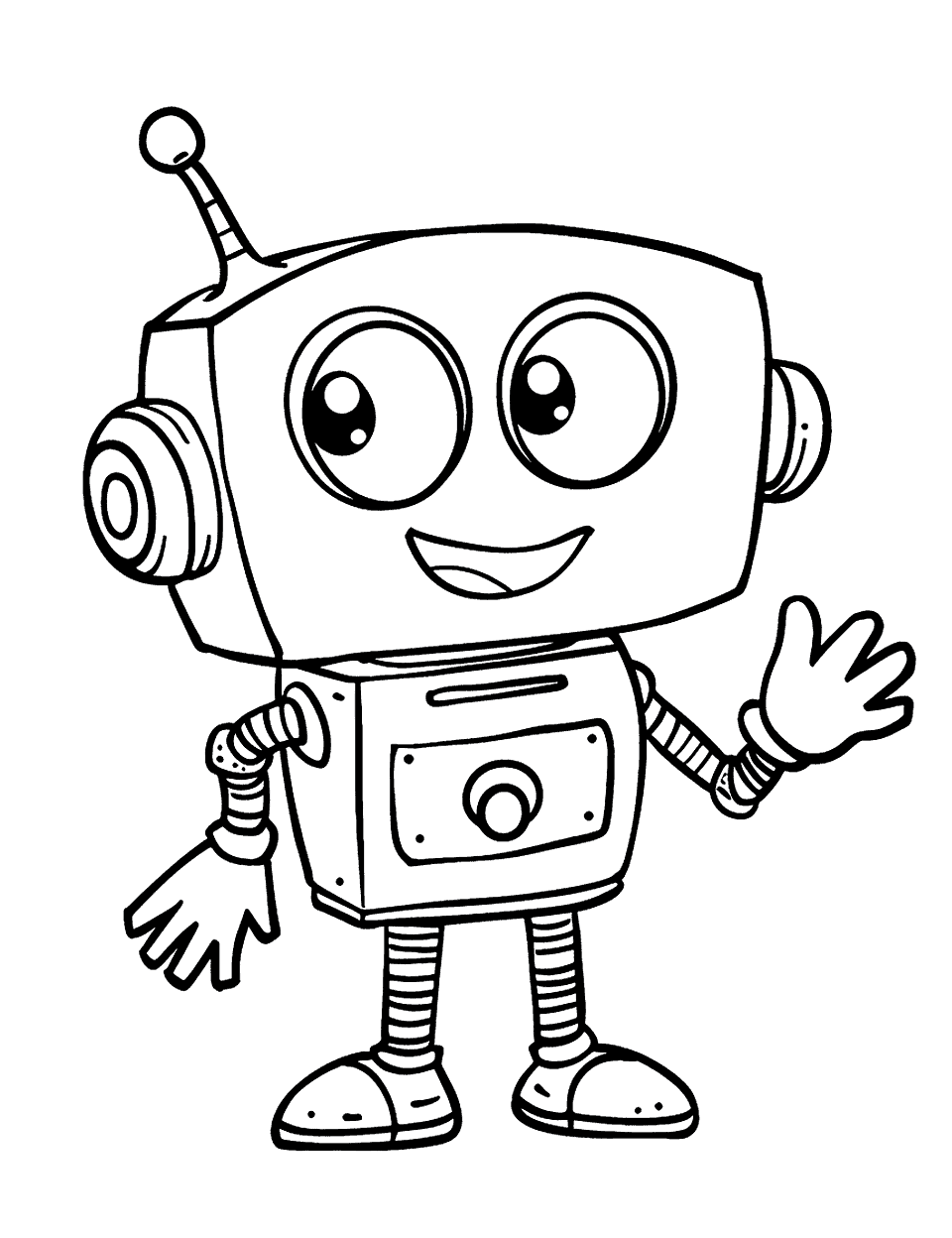
Beep boop. A cartoonish robot waves hello, with an antenna on its head and a panel on its chest. The body is built from squares and rectangles, so the sheet doubles as a shape naming game. Metallic greys are one option, though bright colors suit a toddler much better. Its eyes are large and the pupils are already dark, so the face needs almost no work.
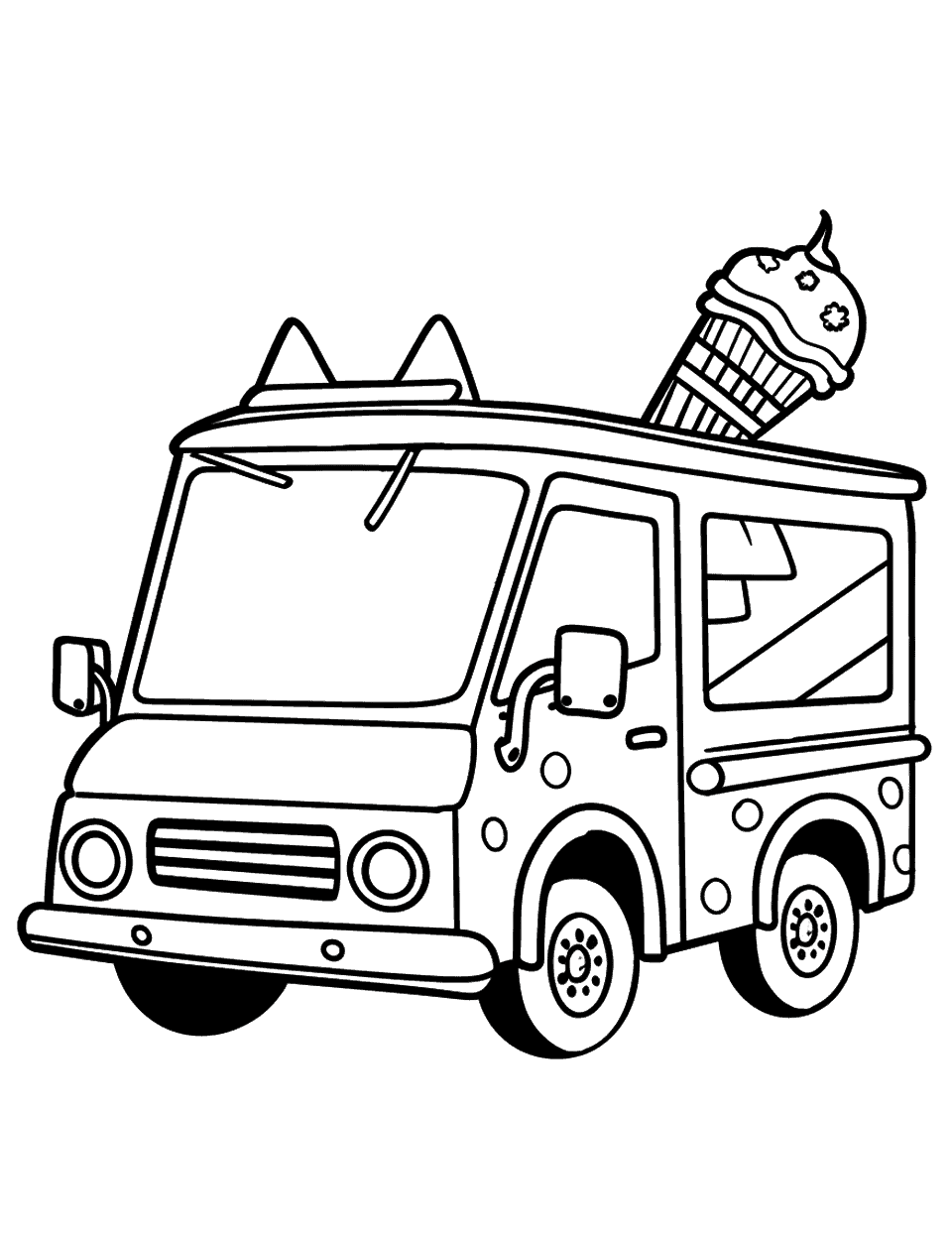
Listen for the music. An ice cream truck sits on an otherwise blank page with a giant cone standing on its roof. There is no street or scenery here, so every crayon goes on the van itself. The windows, mirrors and wheels give it a few smaller parts to finish with. Let your toddler pick the flavor for the cone up top.
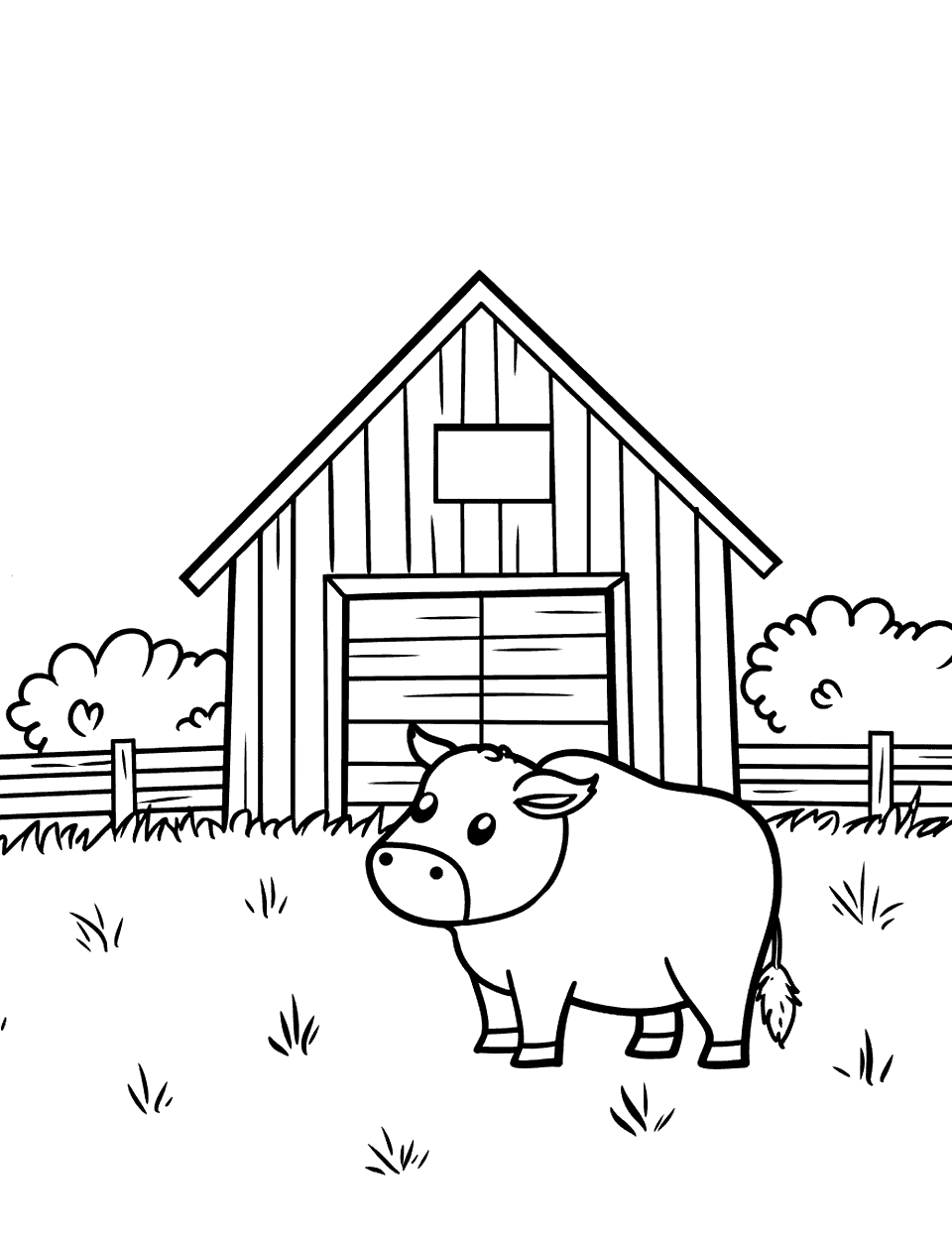
Visit the barnyard. A wooden barn stands behind a fence with a single cow out front in the grass. The barn boards run in straight lines, which makes it a tidy place to practice coloring in one direction. Bushes and grass tufts fill the rest of the page for a child who wants more to do. The cow’s markings can be any color they fancy.
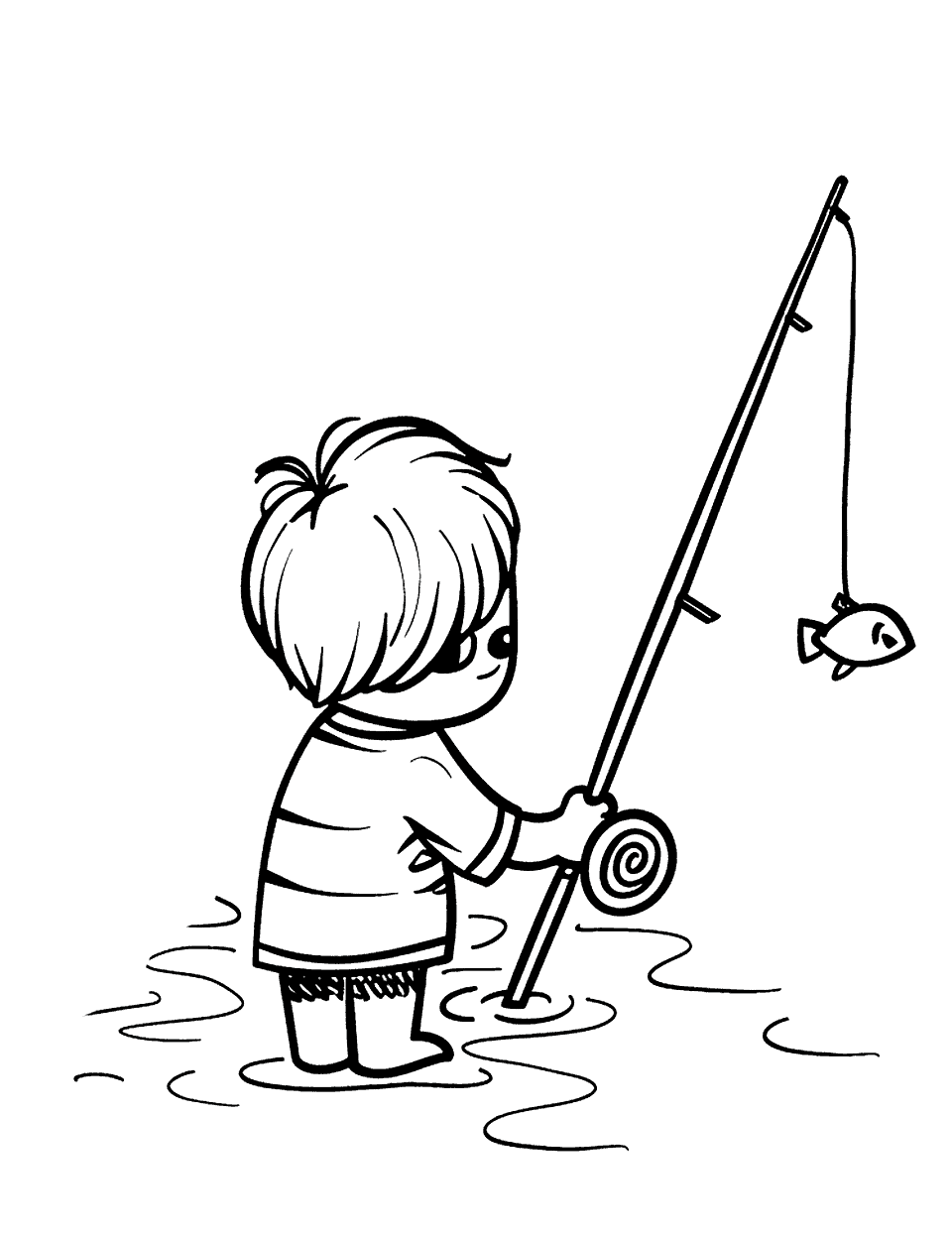
Patience pays off. A child stands in shallow water and lifts a rod with a small fish dangling from the line. The ripples spreading around their legs are simple curved lines that are satisfying to trace. Most of the page is open space, so this one finishes quickly for a short attention span. Ask what the fish is called before it goes back in.
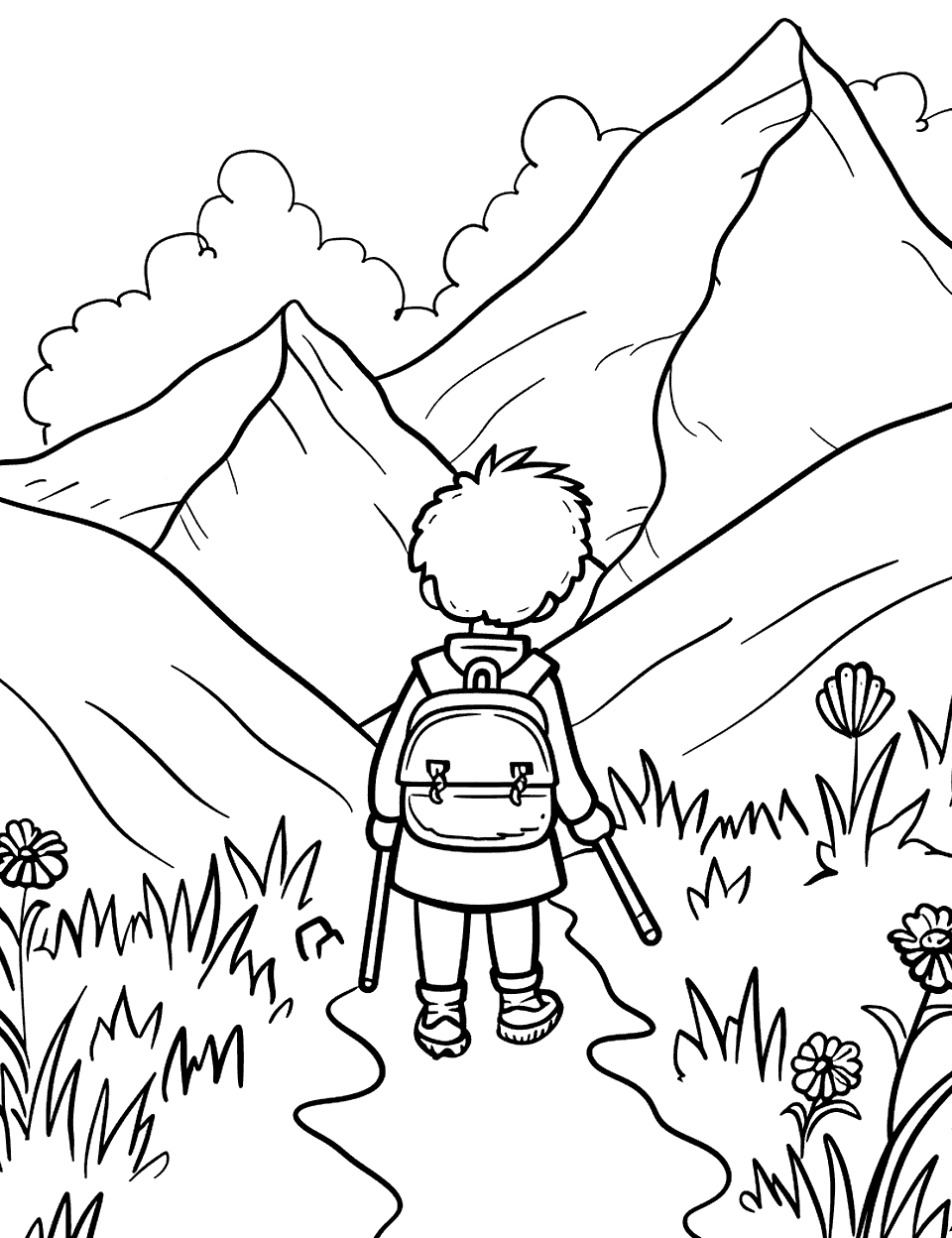
Let’s go on a hike. A child with a backpack stands at the start of a winding path, looking up at the mountains ahead. Wildflowers and long grass line both sides of the trail, giving a toddler lots of small spots to dot with color. The mountains are large and empty and take a light wash of any shade. Talk about what they would pack for a real walk while they color.
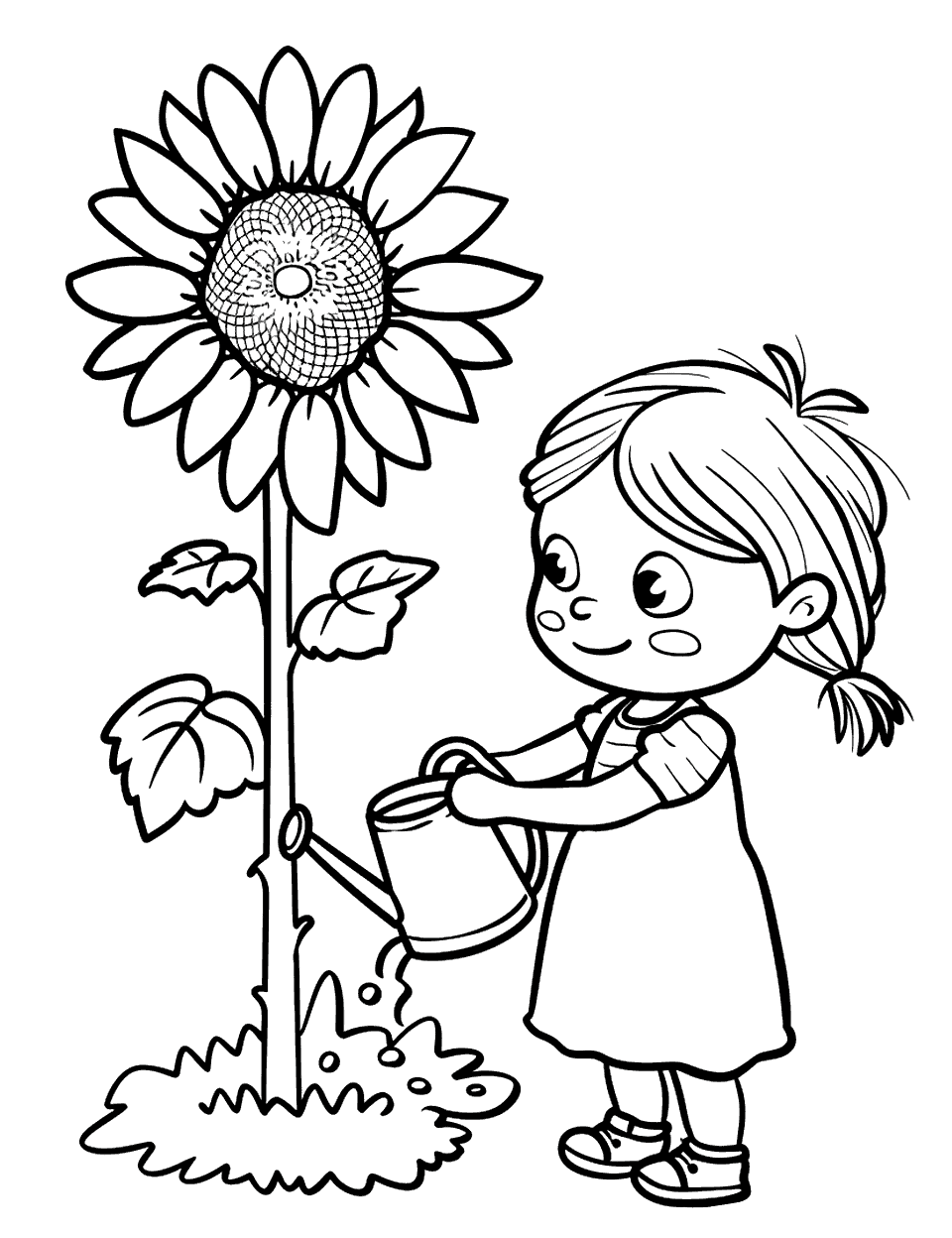
Help the plants grow. A girl tips a watering can over a tall large sunflower, with the water drawn splashing at the base of the stem. The flower head has a textured center that looks better scribbled than carefully filled. Her dress and the big leaves are the wide open areas to start with. Follow it up by watering a real plant together.
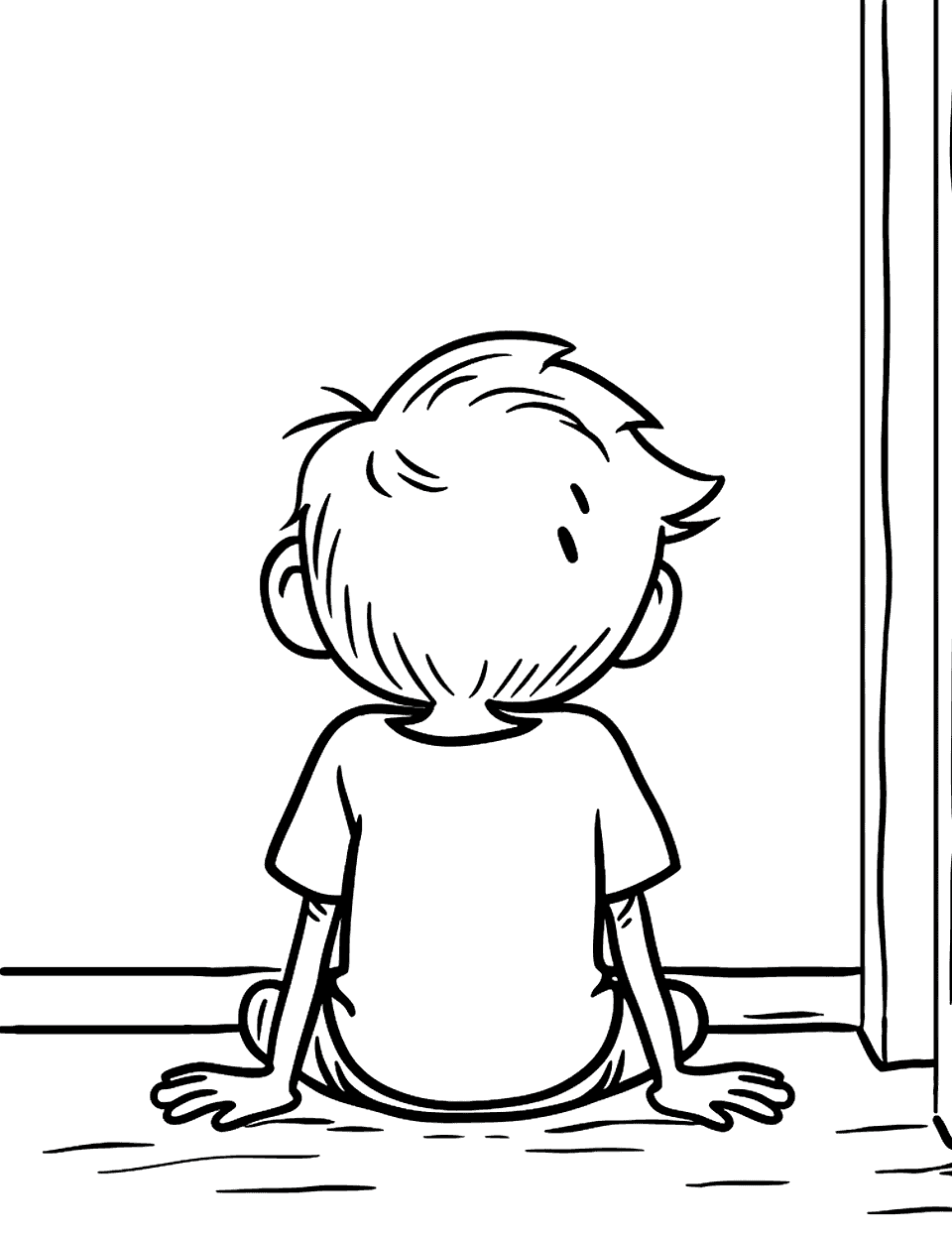
Quiet time counts too. A young boy sits on the floorboards with his back to us and his hands resting beside him. It is the calmest sheet in the set, with almost nothing drawn in the background. Two or three colors will finish it, which suits the end of a long day. Let your toddler decide what he is looking at and draw it in the empty space.
By using our free coloring pages, you acknowledge and agree to our full disclaimer. All materials are for personal, non-commercial use only and all rights belong to their respective license holders.
What Age Are Toddler Coloring Pages Good For?
Thick outline sheets like these suit children from around a year and a half up to preschool age. Children typically scribble by 15 to 18 months and can copy a circle by around 24 months (1), so a page of big shapes gives them something to aim at without demanding accuracy they do not have yet.
By age three, drawing a circle and starting on children’s blunt-tip scissors are both typical (2), which is when the cutting activity below becomes worth trying. Cutting a straight line usually arrives closer to four.
Coloring is also screen free, which matters more than it used to. Standard guidance is no screen time at all under age two and a limit of 1 to 2 hours a day after that (3). A folder of printed toddler coloring pages is one of the easiest ways to fill part of that gap without a fight.
How Do You Get the Best Print at Home?
Print on the heaviest paper your printer will take, because thin copy paper buckles the moment a toddler leans on a crayon. Set the print dialog to fit to page so the thick outlines stay thick and the edges are not clipped. Grayscale or black and white saves ink and changes nothing about the finished sheet.
Print two copies of any favorite. Toddlers regularly want to color the same picture again the next day, and a spare saves an argument.
If markers are the medium of choice, slide a second sheet underneath to catch the bleed. And if your child still puts crayons in their mouth, check the packaging for a nontoxic label before handing the box over.
Activities to Do With Toddler Coloring Pages
Coloring is just the beginning. A finished sheet can be cut, glued, folded or hung, and each of those turns the same page into a different skill. Here are six ideas that need almost nothing you do not already have.
Create a Textured Collage
Swap the crayons for a glue stick and a pile of materials. Scrunched-up tissue paper, cotton balls for clouds and snow, dried pasta and torn magazine scraps all fill the bold shapes on these sheets. Pressing and placing small pieces works the same pinch grip that a pencil later needs, and the finished page has something to touch.
Practice Safety Scissor Skills
Once the coloring is done, hand over blunt-tip scissors and let them cut the main image out. The thick outlines on these pages act as a guide line, which is far easier than cutting blank paper. Stay right next to them, and expect ragged edges at first: cutting a straight line is a skill that lands closer to age four.
Play a Color Sorting Game
Limit the palette and the page turns into a game. Ask for warm colors only, or give one instruction at a time, such as coloring every round shape blue. Toddlers get color naming practice and a chance to follow a simple direction, and you get a few extra minutes of focus out of the same sheet.
Make DIY Stick Puppets
Cut out the animal or character, tape a popsicle stick to the back, and the drawing stands up. The snowman, the robot and the teddy bear all work well for this. Two puppets are better than one, because that is when the talking starts and a coloring page turns into a story.
Design Personal Greeting Cards
Fold a finished page in half, or cut the image out and paste it onto folded construction paper. Let your toddler add a scribble signature or a sticker inside. Grandparents keep these, and a child who has posted one card usually asks to make the next one.
Create a Bedroom Gallery Wall
Give the artwork a permanent spot on a wall, a door or the fridge, hung with painter’s tape or magnets. Rotate the display every week so there is a reason to make something new. Being asked which picture should go up next is what keeps a toddler coming back to the crayons.
FAQs
At What Age Can Toddlers Start Coloring?
Most toddlers can start coloring somewhere between 15 and 18 months, which is when scribbling typically shows up, according to MedlinePlus. At that stage the marks are about the arm movement, not the picture. Around 24 months many children manage to copy a circle, and by three they are drawing shapes you can recognize. Staying inside the lines comes much later, so there is no reason to wait for it.
What Are the Benefits of Coloring for Toddlers?
Coloring builds the hand strength and grip control that writing later depends on. It also works on hand-eye coordination, color naming, and staying with one task for a few minutes at a time. Because it is screen free, it is an easy swap when you are trying to keep daily screen time down. The quiet it buys is a benefit for the adult in the room too.
How Do I Teach My Toddler to Color Inside the Lines?
You do not need to teach it yet, and pushing it usually backfires. For a toddler the point is exploring the crayon and enjoying the motion. If they want the neat look, trace the outline with a thick marker first so the edge is easier to see, or pick a sheet with fewer and larger shapes. Praise the effort rather than the result and the interest lasts far longer.
What Are the Best Coloring Supplies for Toddlers?
Jumbo or triangular crayons are the best starting point, because they fit a whole fist and will not roll off the table. Egg shaped palm grasp crayons suit younger toddlers who cannot pinch yet. Washable markers make cleanup easier but bleed through thin paper, so back the sheet with card. Check the packaging for a nontoxic label if your child still mouths things.
How Can I Encourage My Toddler if They Lose Interest Quickly?
Keep the session short and end it before they do, because a few focused minutes beat a forced half hour. Sit down and color your own page beside them rather than supervising from across the table. Turn it into a hunt by asking them to find and color one particular thing on the sheet. Switching the medium, from crayons to finger paint or chalk, often restarts the interest on its own.
Is Coloring Good for Handwriting Skills?
Yes. Holding and pressing a crayon strengthens the small muscles in the hand, fingers and wrist that a pencil grip depends on. Those same muscles do the work when your child moves on to blunt-tip scissors, which is why cutting out a finished page is a useful next step. None of it looks like handwriting practice to a toddler, and that is rather the point.