Pick an animal, grab the crayons, and open the zoo.
Ready for a zoo day without the parking lot? These 25 zoo coloring pages bring the tiger, the flamingo and the gorilla to your kitchen table, and nobody has to queue at the gift shop on the way out.
The set runs from chunky cartoon outlines a three-year-old can manage all the way to a snake drawn scale by scale that will happily eat an adult’s evening. Two of the pages are full scenes rather than single animals: a zebra beside a safari jeep, and a boy feeding leaves to a giraffe.
Print your favorites, pour out the crayons, and pick an animal.
Tiger Resting Under a Tree
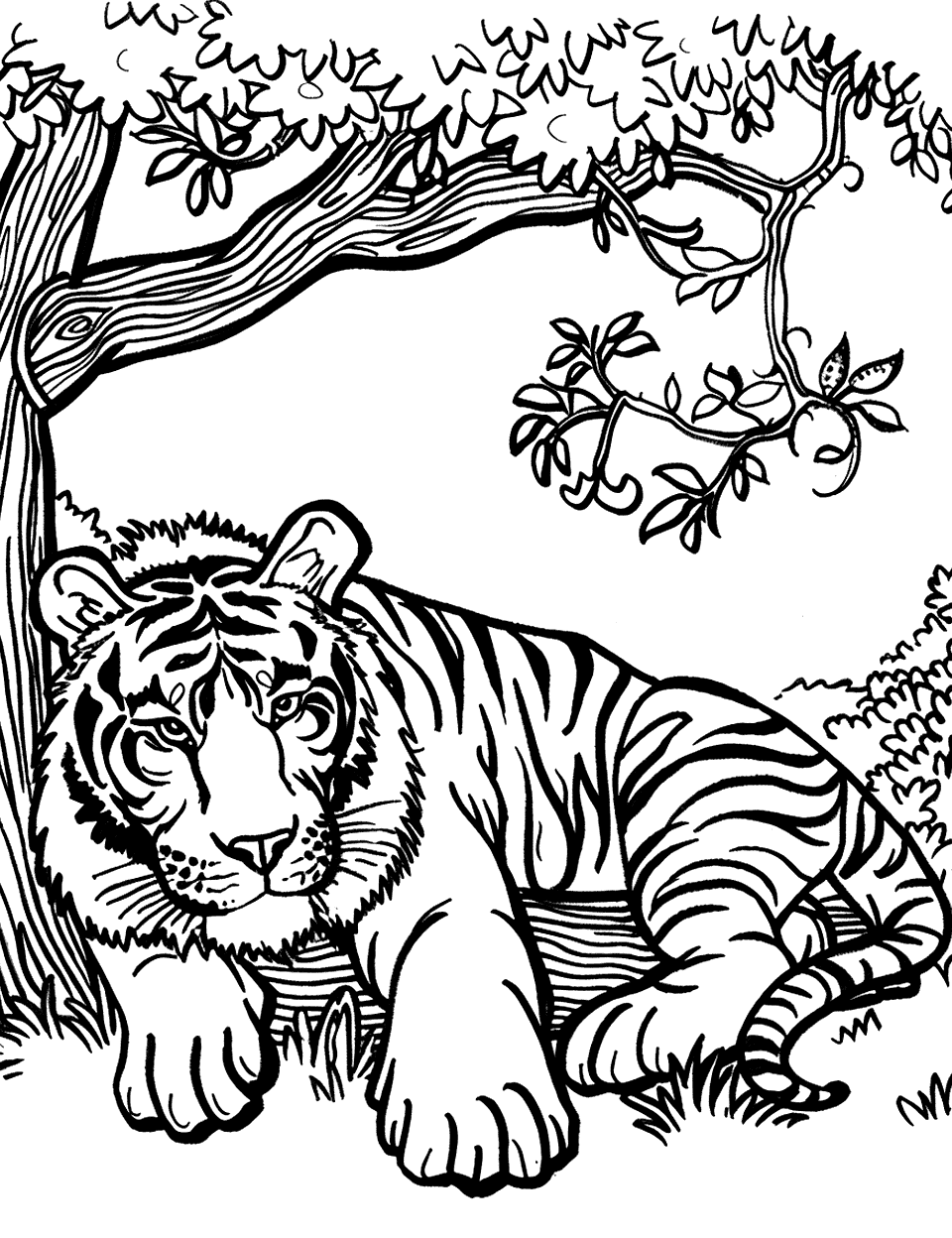
A big striped tiger lies stretched out in the grass while a leafy branch arches overhead. The stripes run all the way down to the tip of the tail, so there is plenty of room to practice steady, careful strokes. Orange and black is the obvious choice, though a white tiger in grey and pale blue looks just as good. The leaves and the hanging vine give a younger colorist an easy area to fill in first.
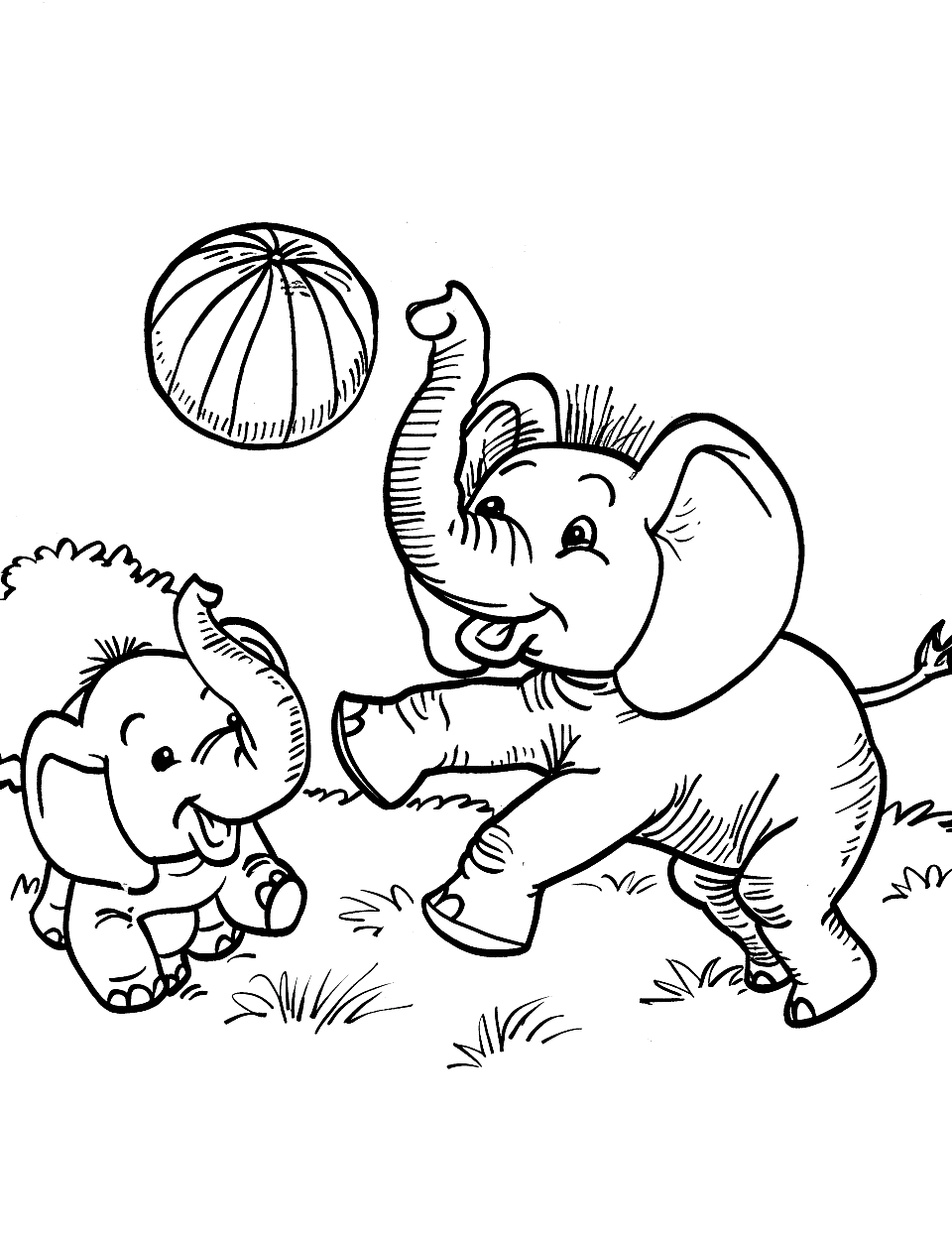
Two cartoon elephants are mid-game here, the bigger one with its trunk raised toward a striped ball above it. The smaller baby elephant trots in from the left with its own trunk curled up. Grey is the safe pick for both, but the ball’s panels are a free-for-all. Thick, rounded outlines make this one easy for a preschooler to manage.
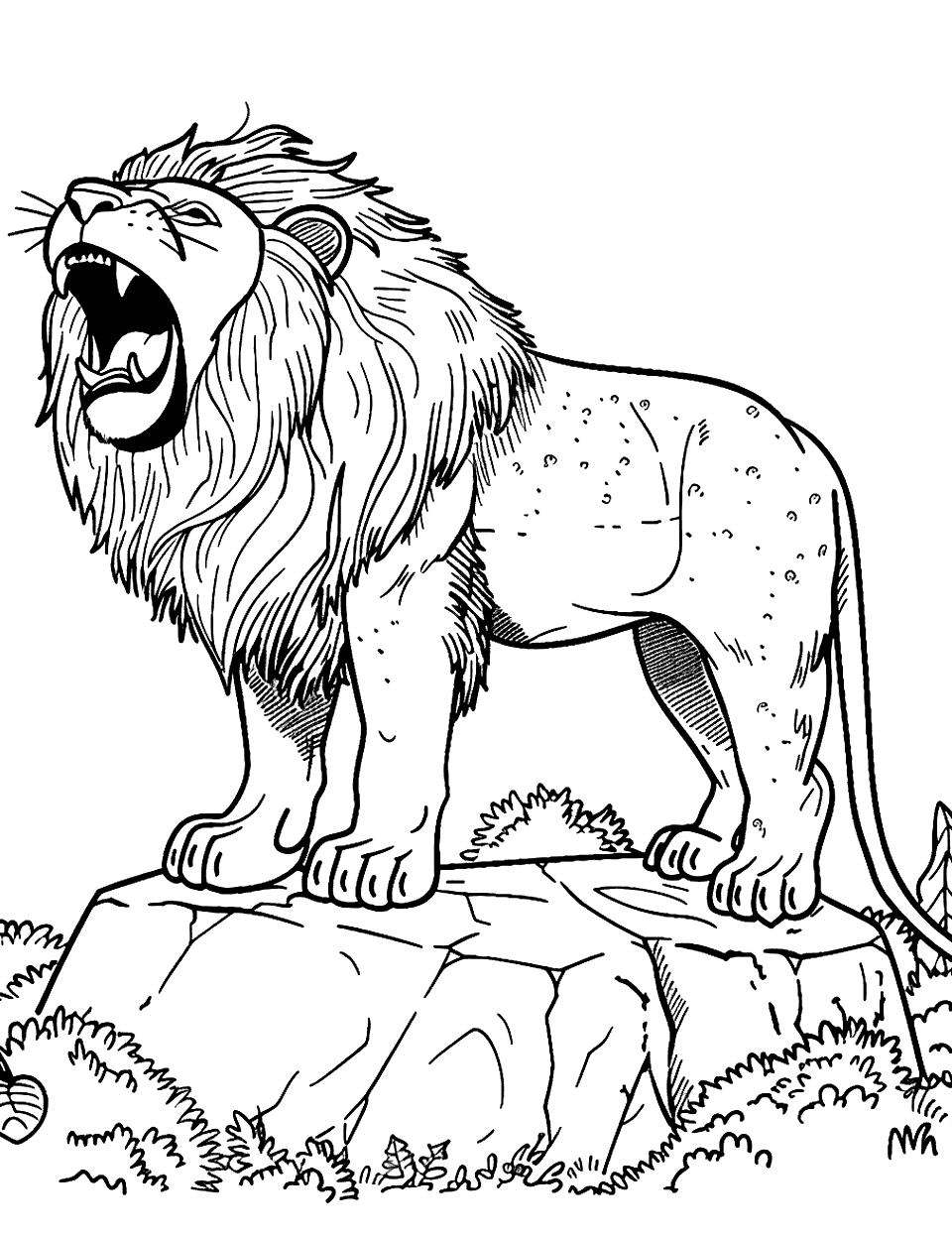
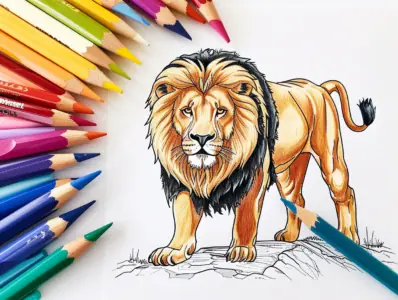
Head back and mouth wide open, this lion roars from the top of a flat rock. The mane is drawn in long, flowing strands that reward a bit of patience, so hand this one to an older child. Golden yellow and warm brown suit the body, with a darker gold worked into the mane for depth. Tufts of grass and a leafy sprig sit around the base of the rock.
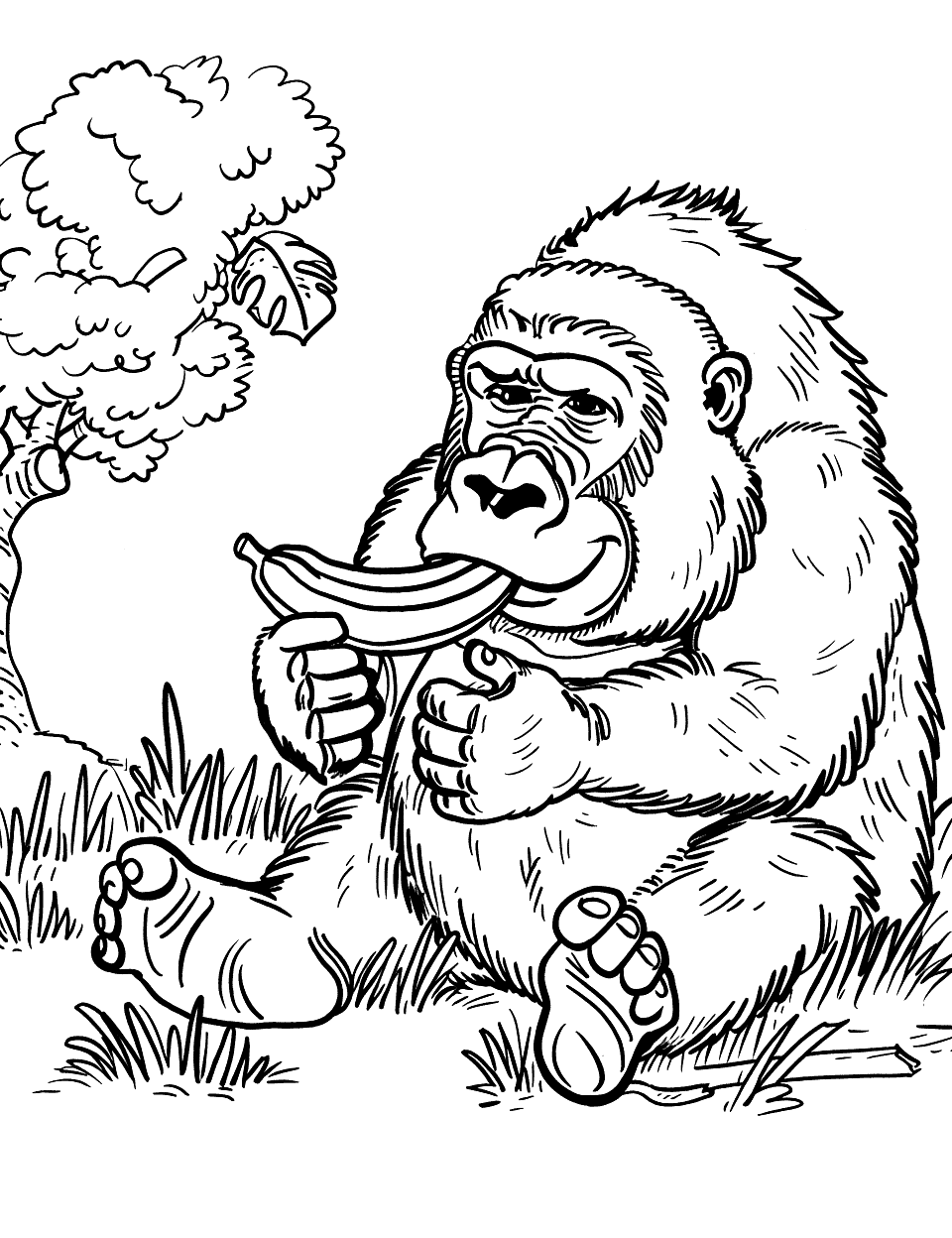
Snack time. A gorilla sits back in the grass with a peeled banana halfway to its mouth, and its bare feet are turned toward the reader. The fur is drawn in short, feathery strokes across the shoulders and arms, which makes shading with two greys look great. A leafy tree fills the top left corner. Yellow for the banana is the one easy decision on this page.
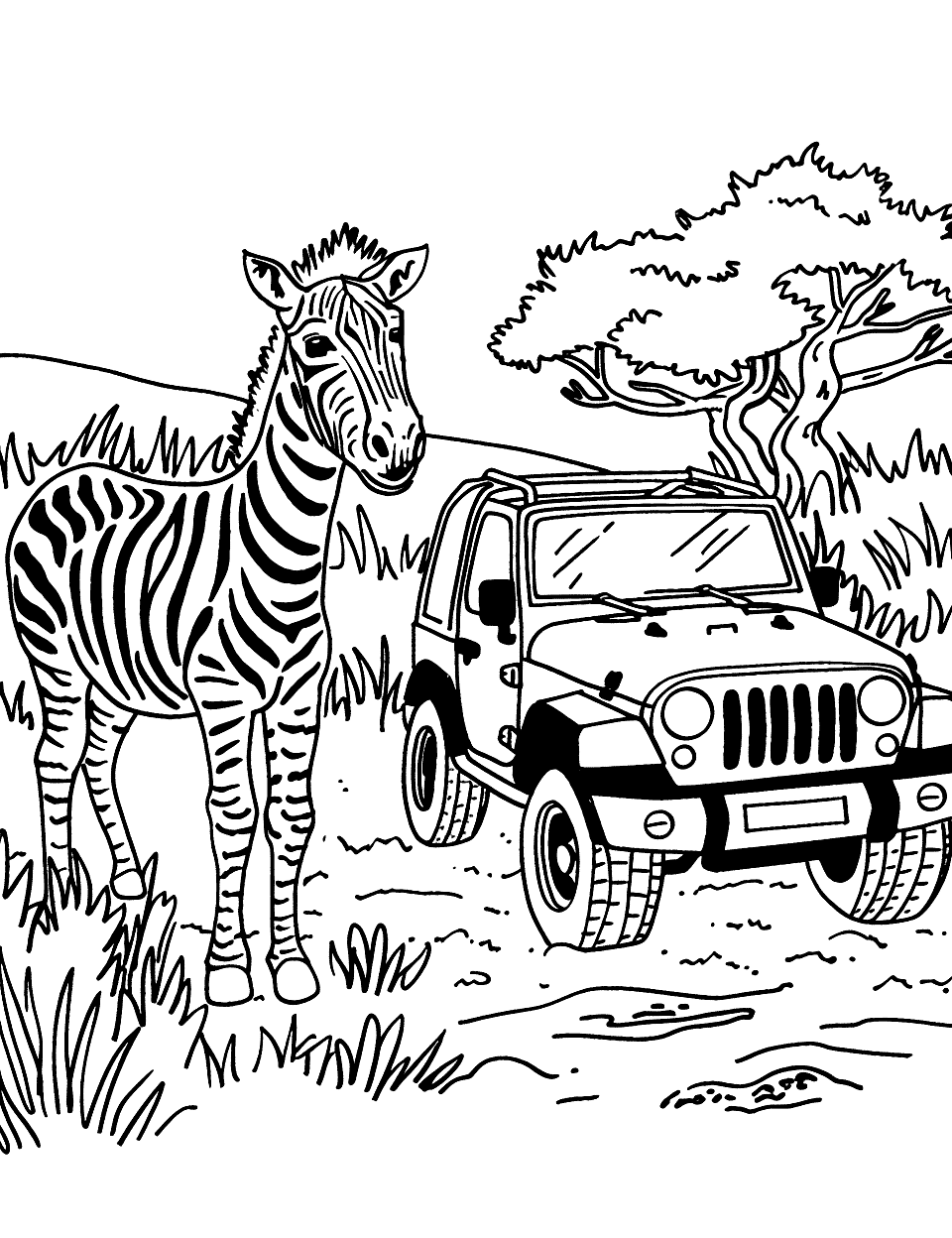
A zebra stands calmly in the tall grass beside an open-top safari jeep. The stripes are the main event and worth doing slowly, since they change direction over the shoulder and again down each leg. Leaving the windshield white keeps it reading as glass. A flat-topped acacia tree sits on the horizon behind the hood.
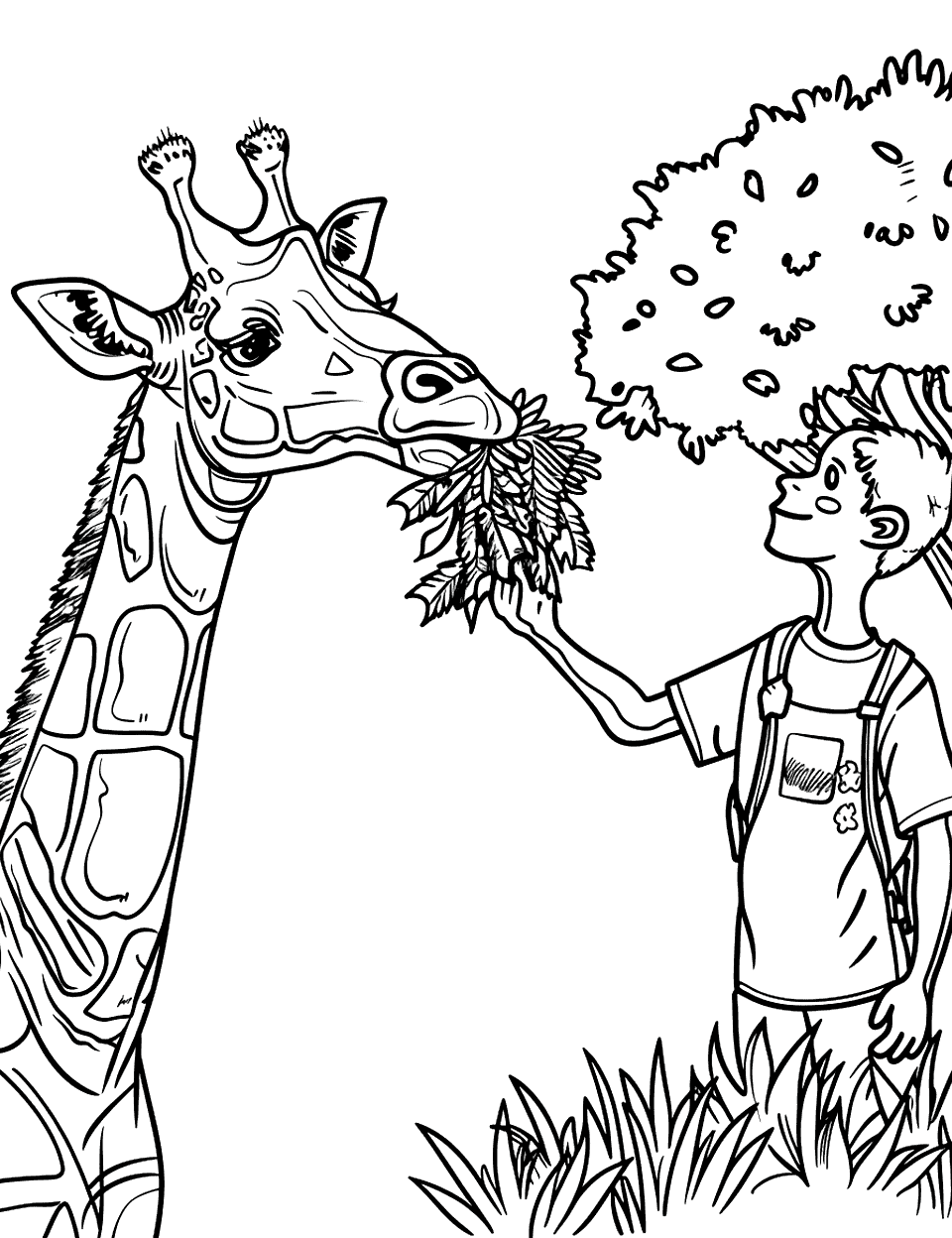
A boy in a backpack holds up a bunch of leaves and the giraffe leans down to take them straight from his hand. The giraffe’s patchwork coat covers most of the left side of the page, and every patch can be a slightly different brown. A round tree sits behind the boy’s shoulder with grass along the bottom. It is a good sheet to color while talking about how zoo animals get fed.
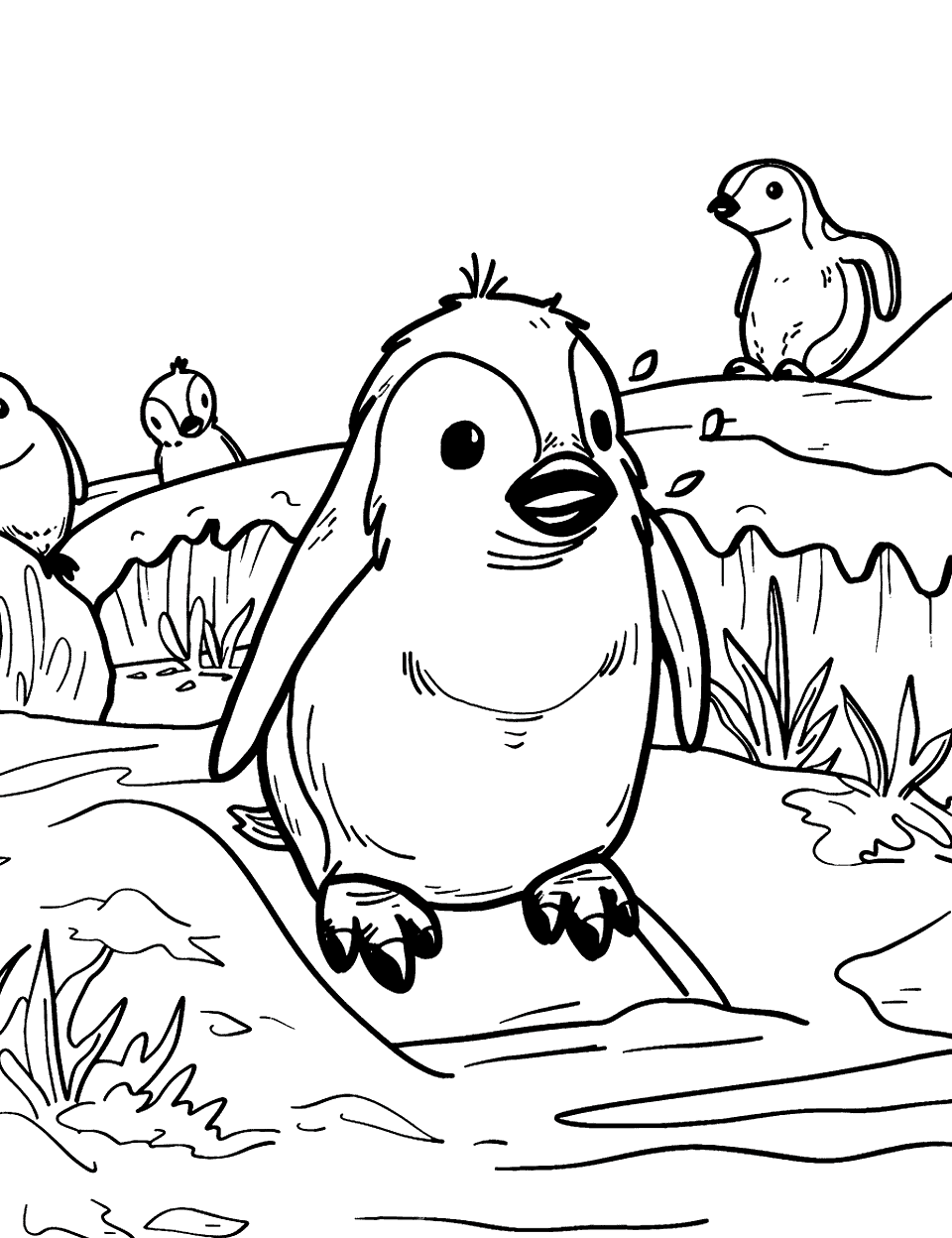
A round, cheerful penguin stands front and center with its flippers out to the sides. A few more penguins are dotted along the snowbanks behind it. Black and white is the classic look, so save the color for an orange beak and feet and a pale blue wash across the ice. Little kids can handle the big body shape without much help.
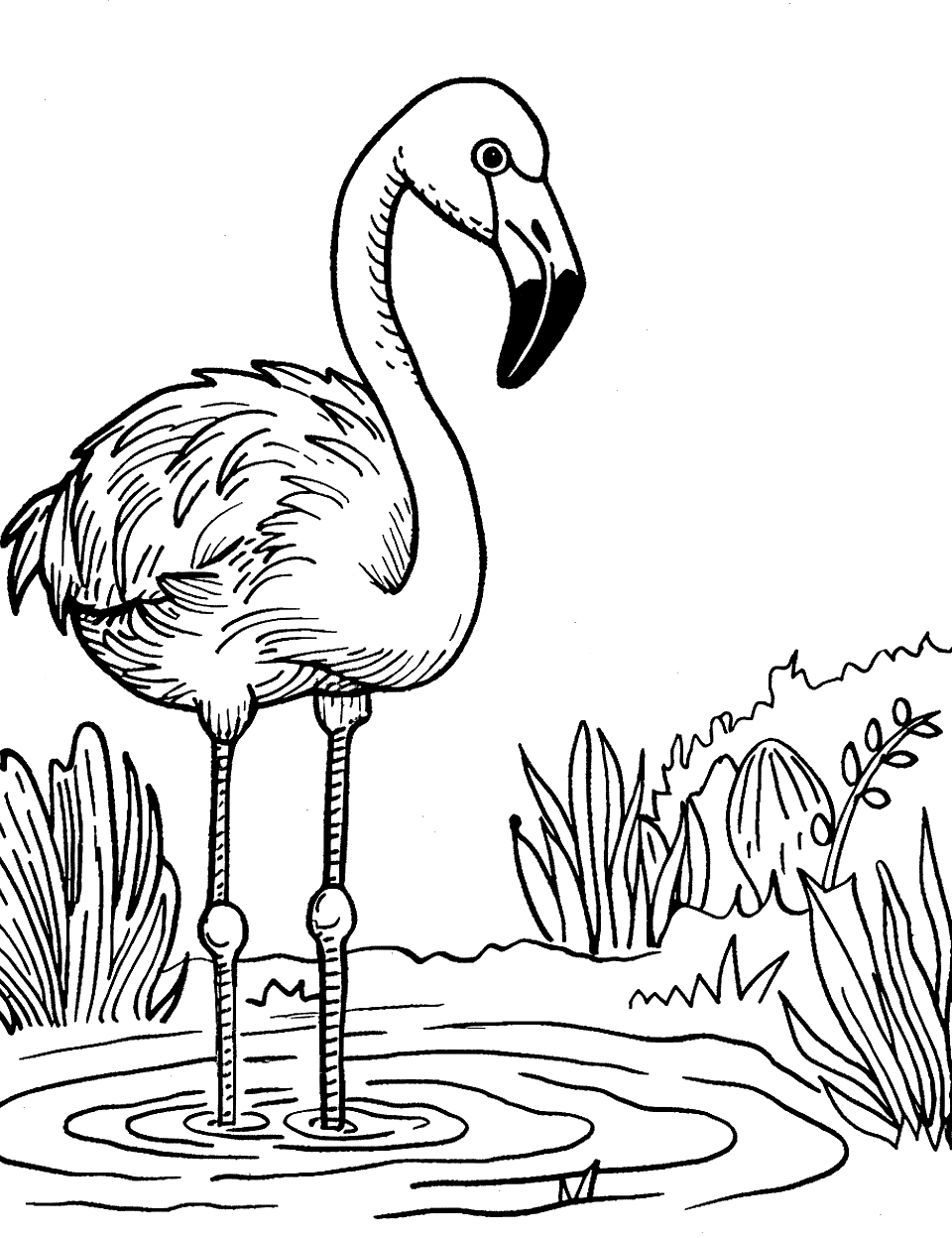
One flamingo stands in shallow water and the ripples spread out in neat rings around its legs. The body feathers are drawn in soft, curved lines that take pink beautifully, from a pale blush at the belly to a deeper shade across the back. Reeds and broad leaves fill the right side of the page. The tip of the beak is already inked solid, which hands you a contrast point for free.
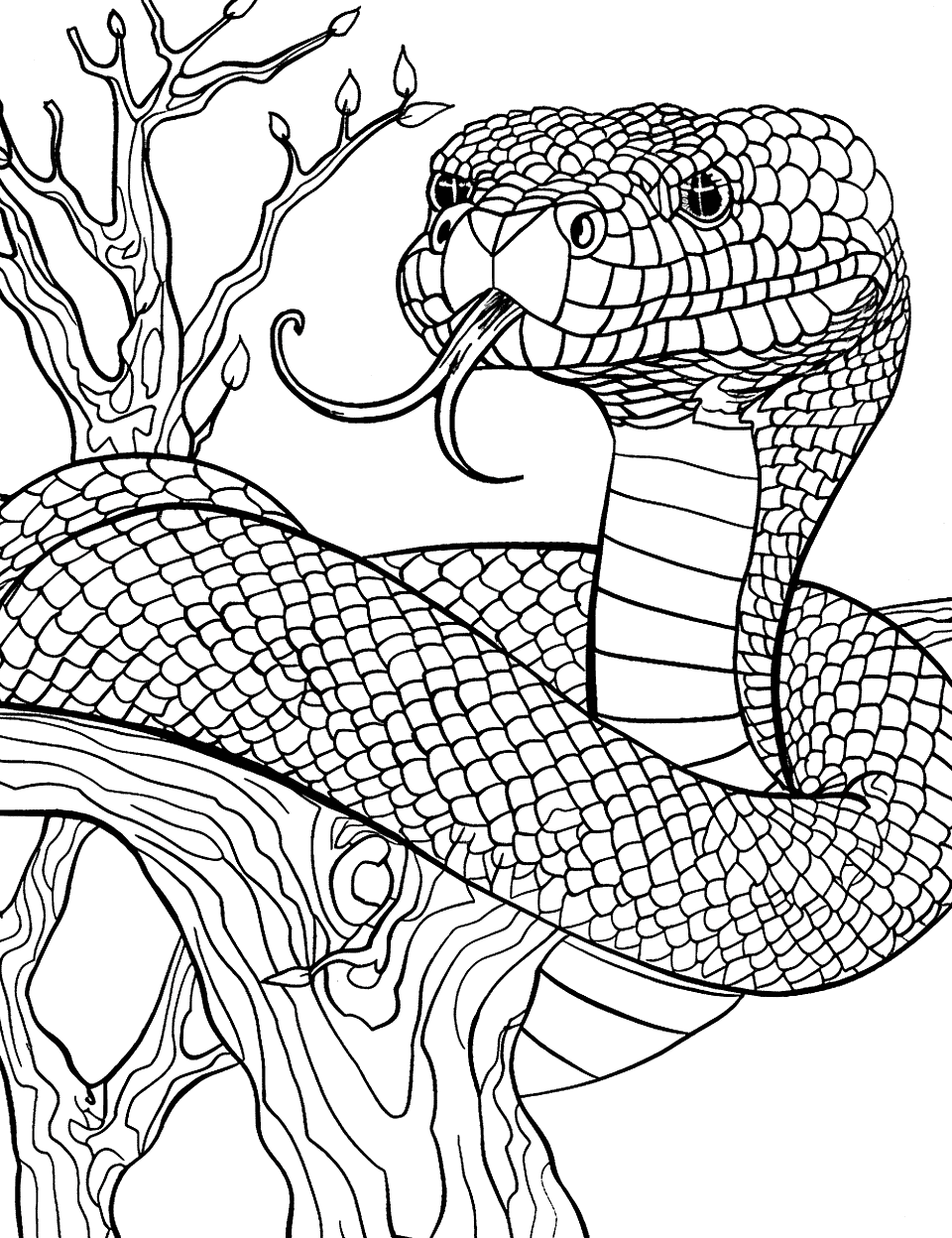
Every scale on this snake is drawn in, which makes it one of the most detailed sheets here. The body loops over a bare branch and the forked tongue flicks out toward a twig on the left. Adults and older kids can go scale by scale with fine-tip pens; anyone younger will be happier blocking in one color and moving on. Green and yellow is the expected pick, though a banded red and black pattern is more fun.
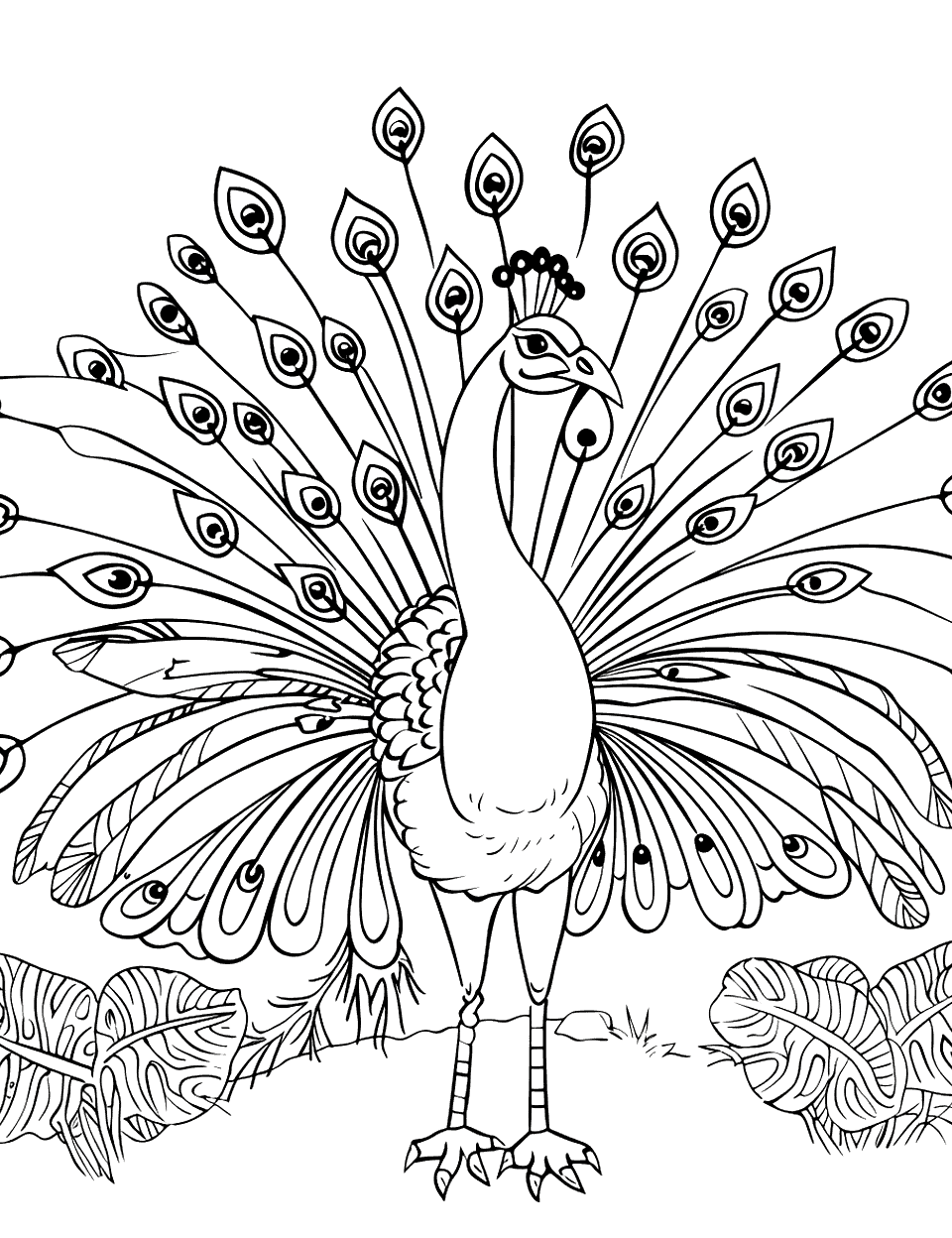
The peacock faces straight ahead with its tail fanned across the whole page, and each feather ends in an eye-shaped marking. Teal, blue and gold on those eyes will make the fan carry from across the room. A small crest of round-tipped feathers sits on top of its head. Big leaves fill the bottom corners if anyone wants somewhere easy to warm up first.
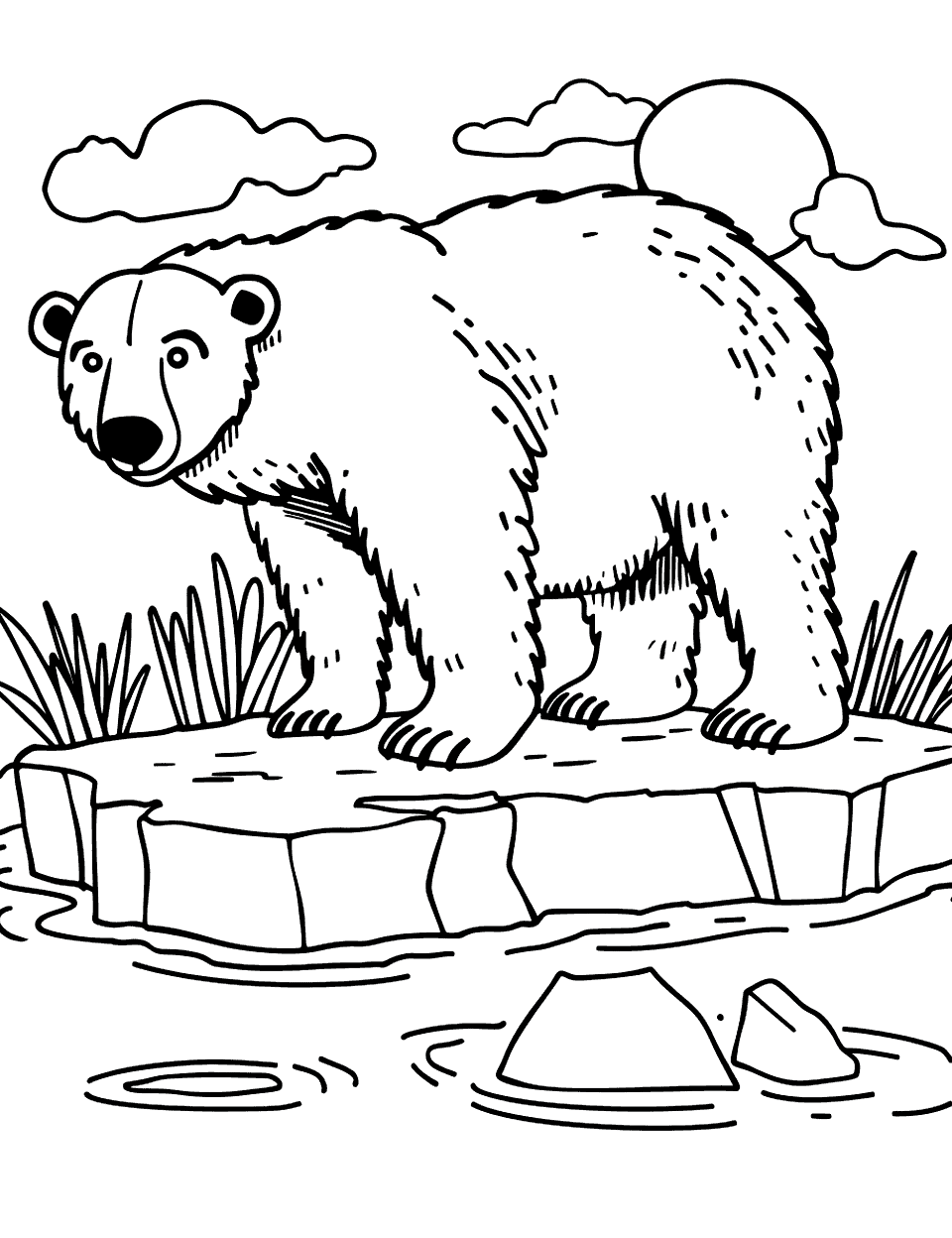
Thick, simple outlines make this polar bear one of the easiest pages here. The bear stands on a slab of ice above the water, with the sun and a few clouds behind it and small chunks of ice floating below. Since the bear stays white, put the color into the sky and the water and leave the fur with a light grey shadow at most. The ripples give small hands a repeated shape to work through.
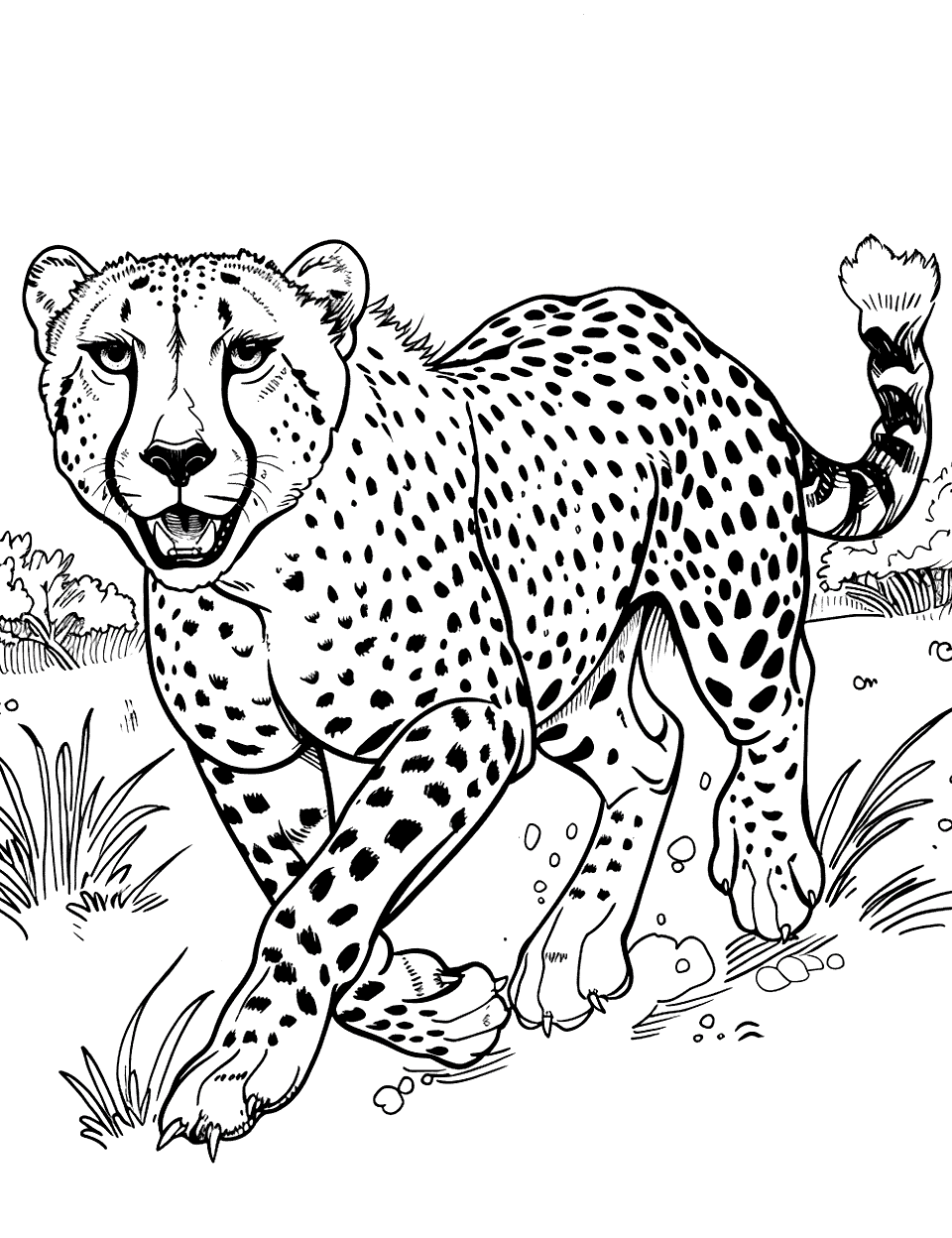
Caught mid-stride, this cheetah runs straight at you with its front legs stretched forward. Most of the spots are solid shapes rather than outlines, so a black marker fills them fast. Tan or light gold keeps the coat true to life. The tail curls up behind with darker rings toward the tip.
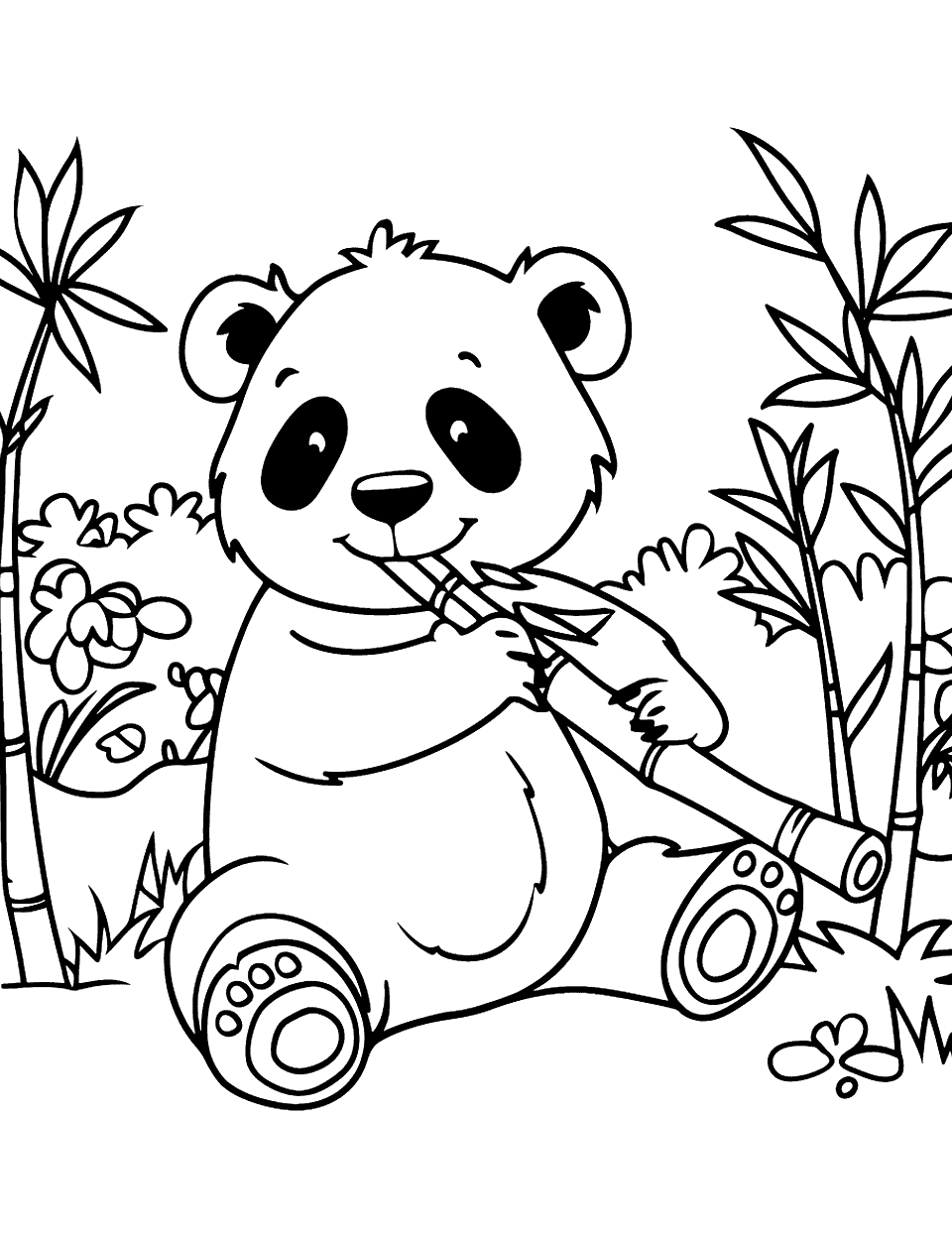
A round cartoon panda sits between two bamboo stalks, holding a cut piece up to its mouth. The face is simple and the paw pads are drawn as big circles, which is a gift for toddlers still learning to stay inside a line. Black ears, eye patches and legs, white belly, green bamboo, done. Small flowers tucked in on the left give one extra spot of color.
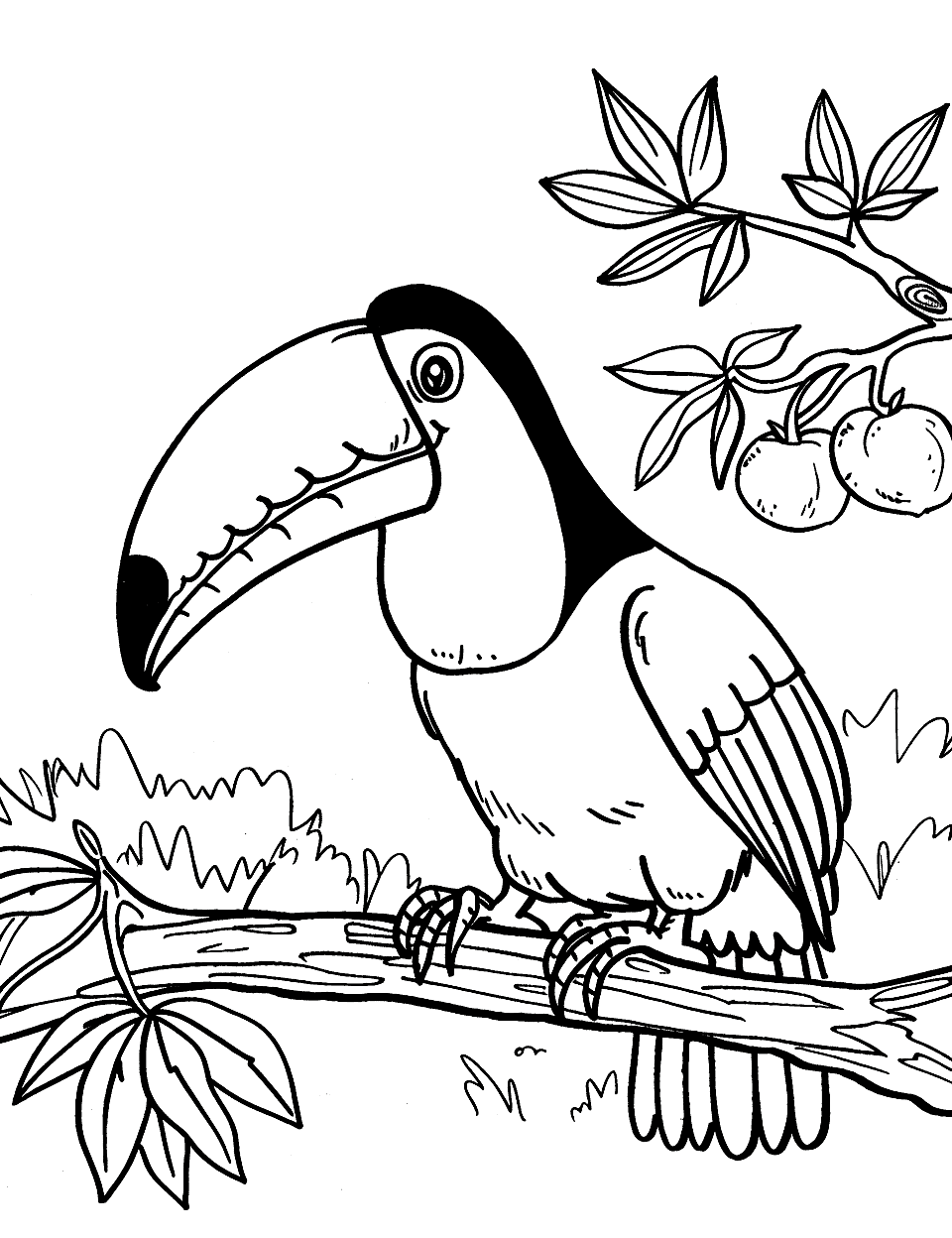
This toucan grips a thick branch with both feet, and its oversized beak takes up a third of the page. The beak is the place to go wild, since real toucans wear orange, yellow, green and red on the same bill. A leafy branch with a couple of round fruits hangs above it. The wing feathers are already sectioned off, so an older child can add fine lines inside them.
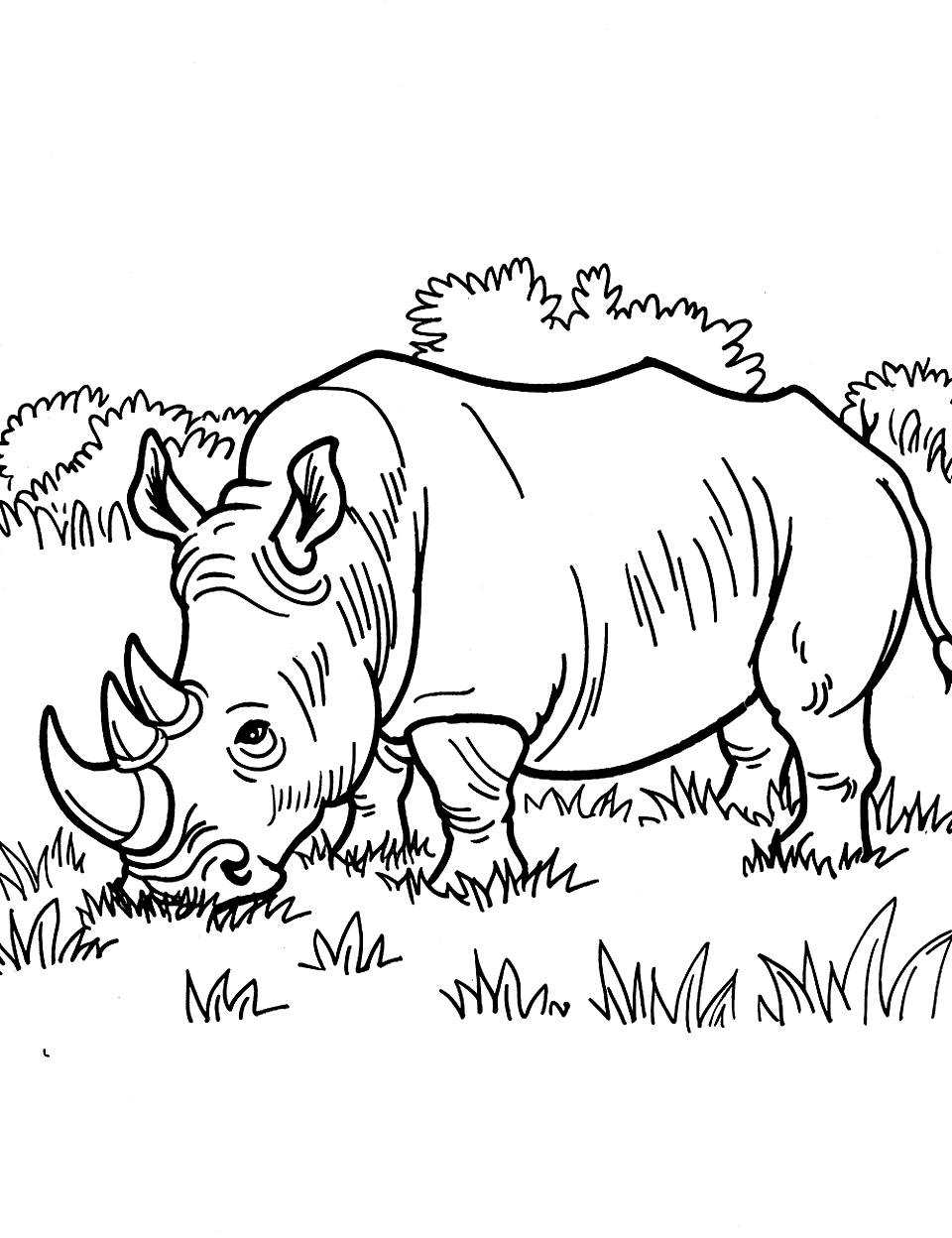
Head down in the grass, this rhino grazes with both horns pointing forward. The body carries only a few crease lines, so it colors quickly in grey, and those folds are a good excuse to try a darker shade over the top. Round bushes sit behind it and thick grass runs along the bottom edge. It suits a child who wants a big animal without a lot of fussy detail.
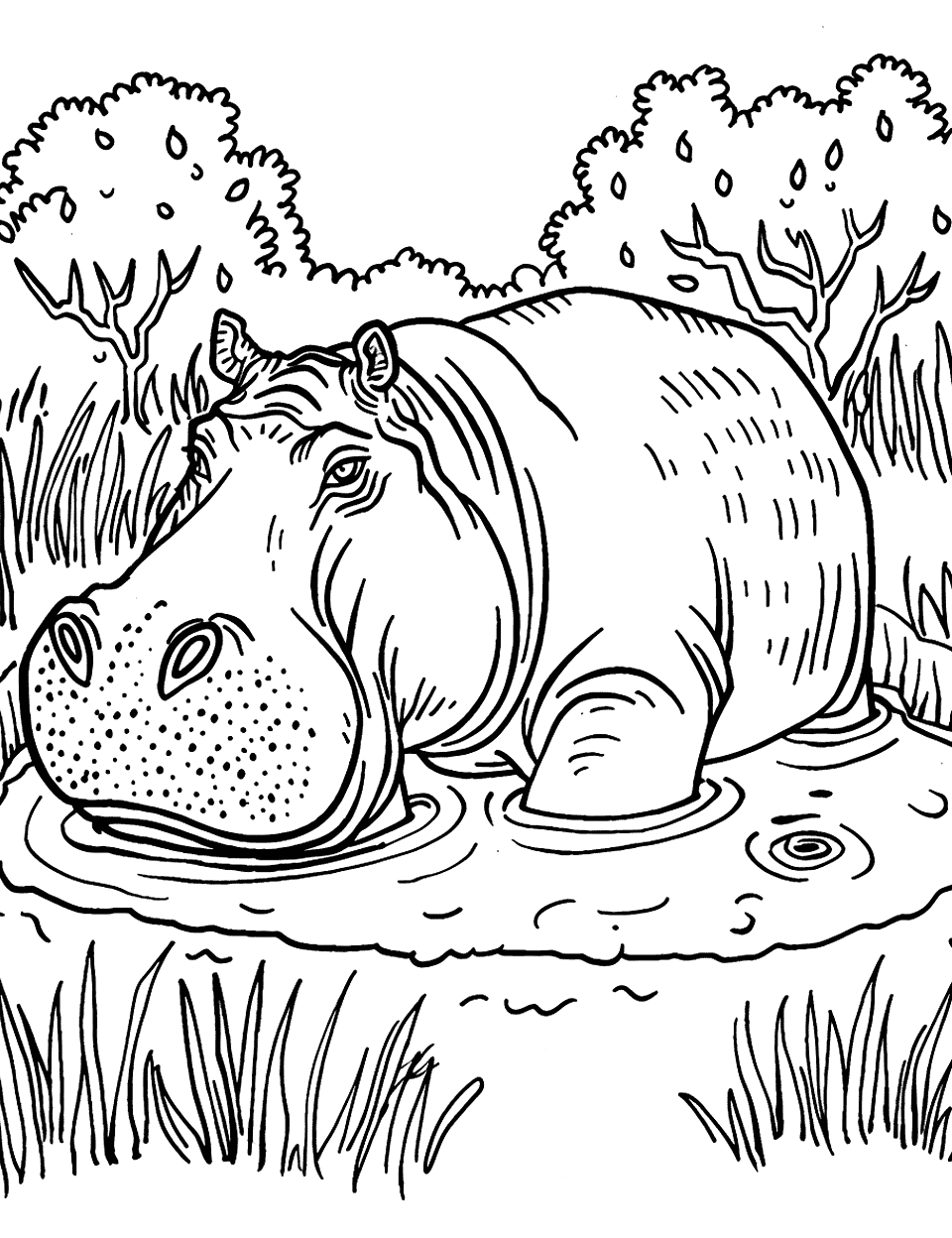
A hippo settles into a shallow pool with its huge muzzle resting near the surface. That muzzle is covered in tiny dots that would take forever to fill in one by one, so most kids will wash over it with grey or a muddy brown instead. Trees and tall grass frame the pool behind, and rings ripple out beside its back. Blue water or brown water both make sense, and choosing is half the fun.
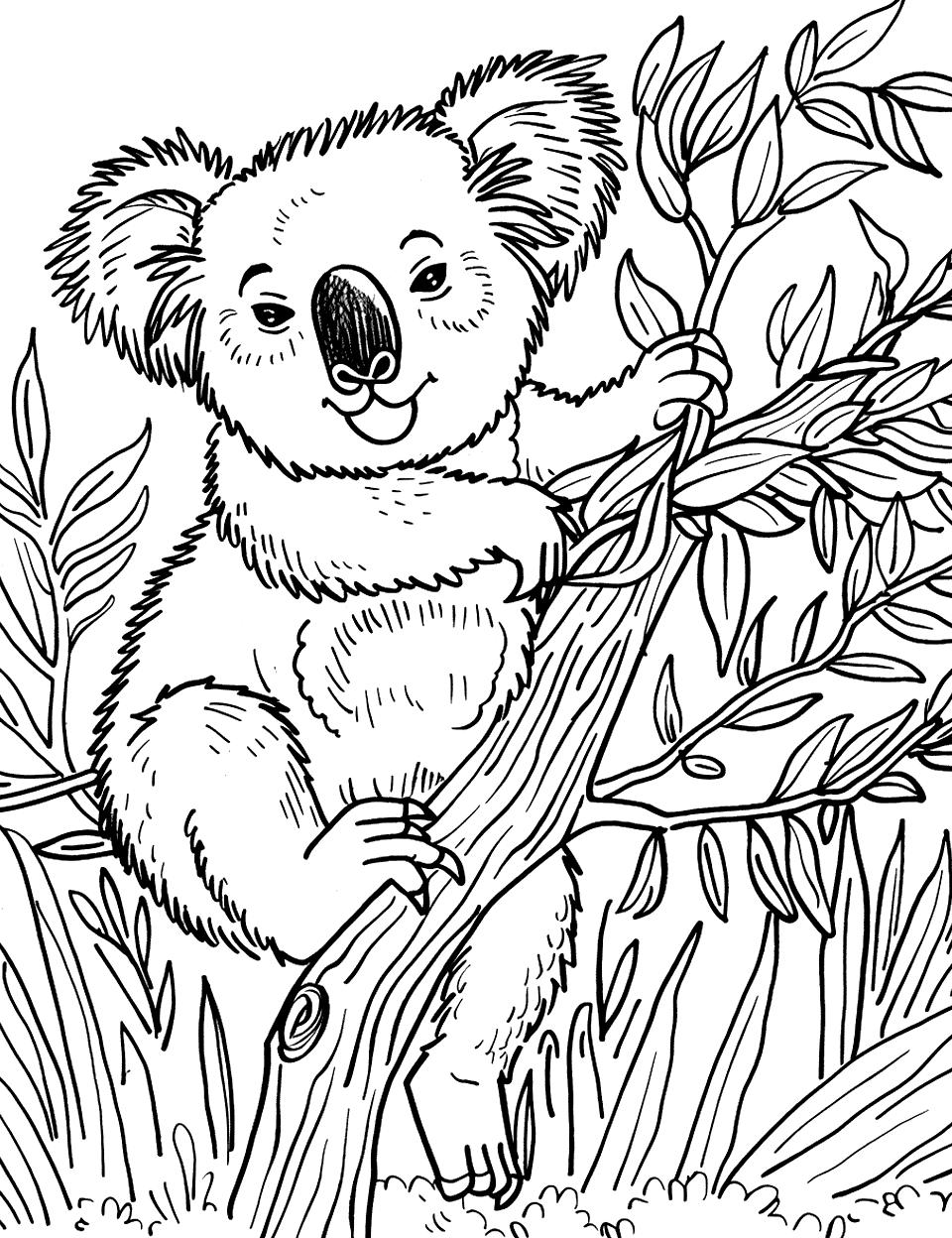
A koala grips a tree trunk with one paw up among the leaves, looking straight out at you. Its ears are drawn as big fluffy circles with fur strokes running all the way around, fiddly enough to suit a school-age child. Grey for the koala, green for the long narrow leaves, warm brown for the bark. The claws on the lower paw are clearly drawn if anyone wants to color those separately.
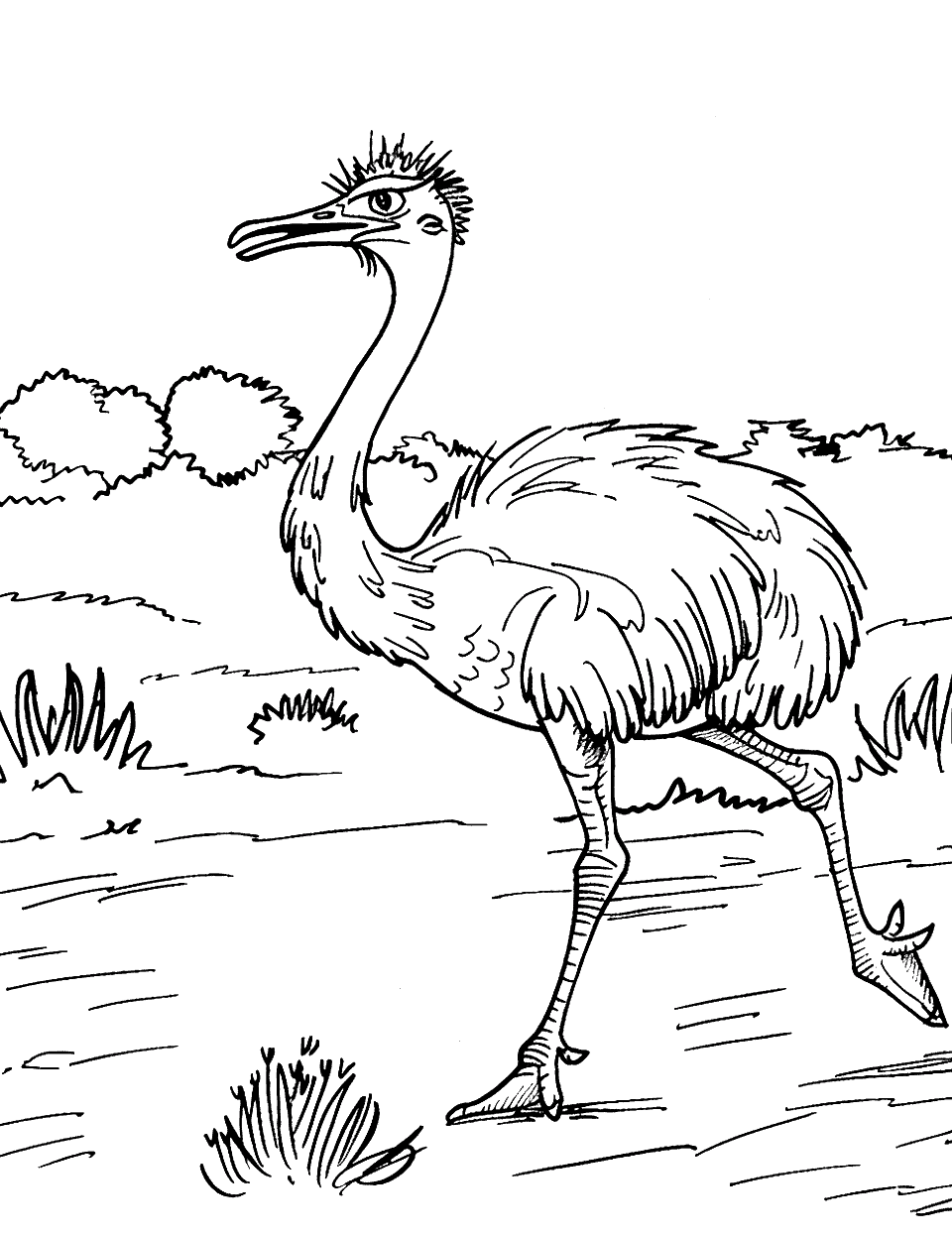
This ostrich crosses an open plain with one leg stretched forward and the other pushing off behind. The body feathers are drawn as loose, layered strokes, so a scribbly coloring style actually suits it. Keep the neck and legs pale pink or grey and save the black and white for the feathers. Round bushes sit on the horizon with a tuft of grass in the bottom corner.
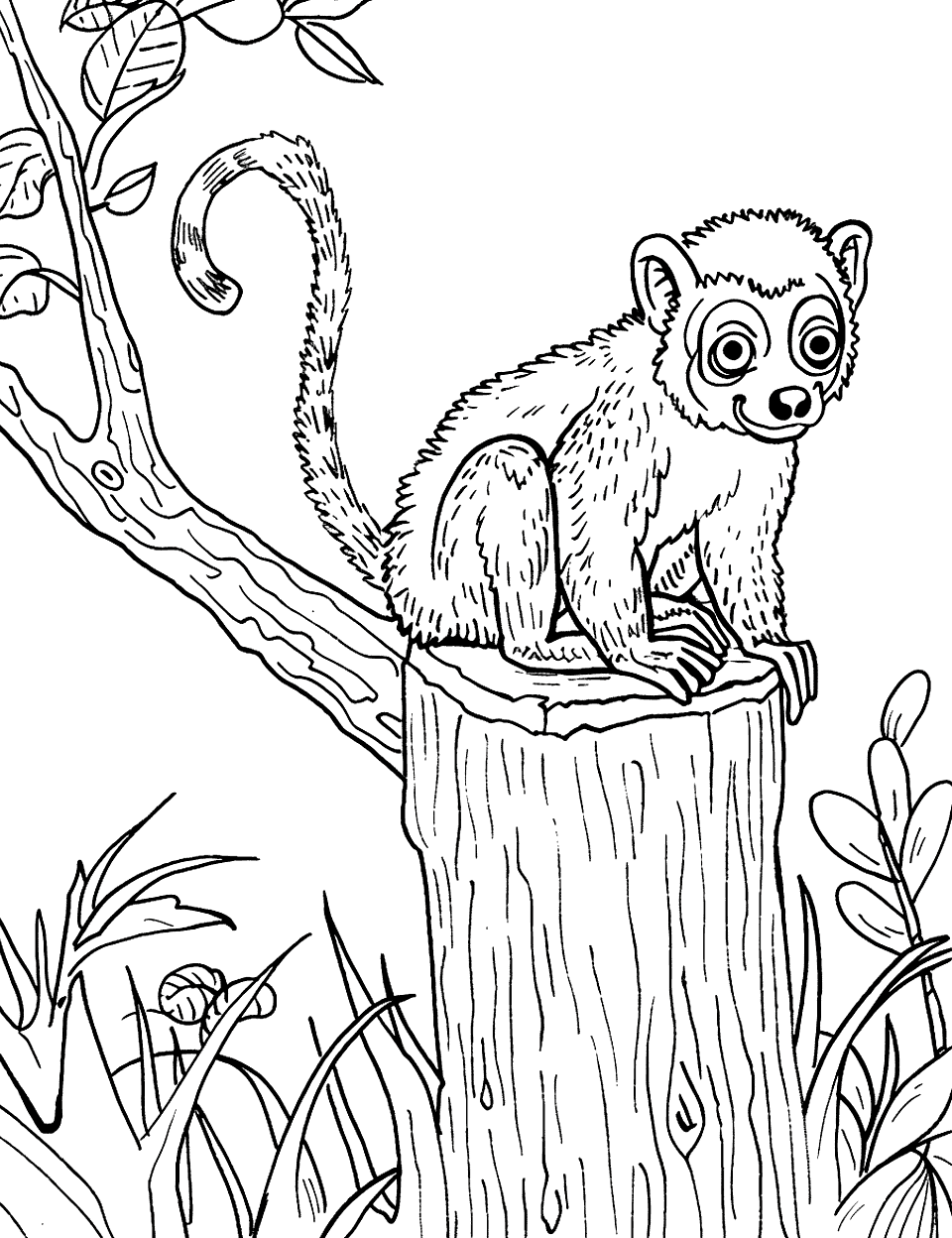
A wide-eyed lemur crouches on top of a cut tree stump with its long tail curled up behind it. The tail is the fun part, since ring-tailed lemurs wear black and white bands and it can be striped like a candy cane. Grass, leaves and a bare branch fill the space around the stump. The fur is drawn in short strokes throughout, which gives an older child something to shade.
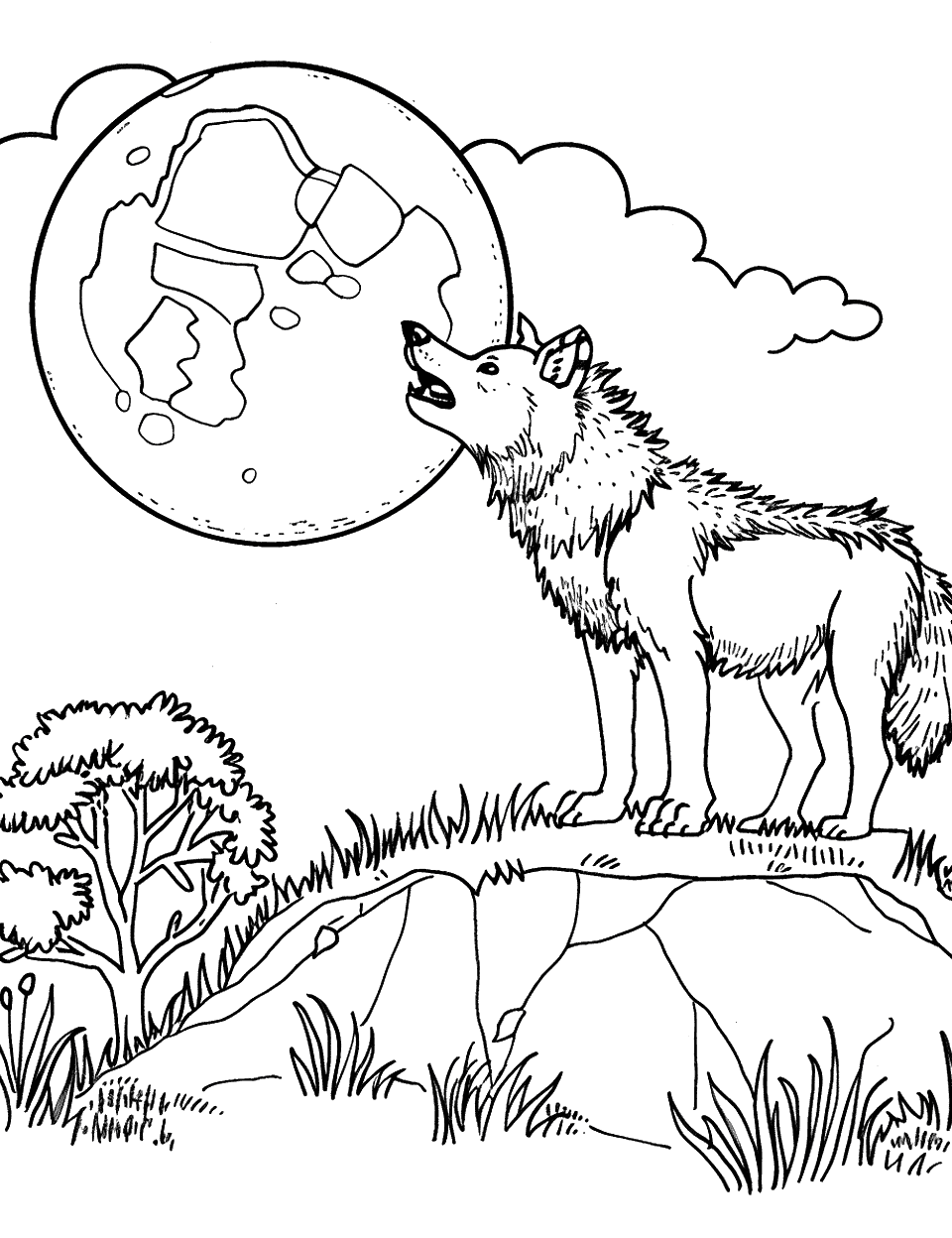
The wolf stands on a rocky ridge with its nose up and its mouth open, and a full moon fills the sky behind it. The moon’s craters are already outlined, so grey and pale yellow can go straight in. A dark blue or purple night sky will make the whole page glow around the wolf’s outline. A small tree and clumps of grass sit lower down on the left.
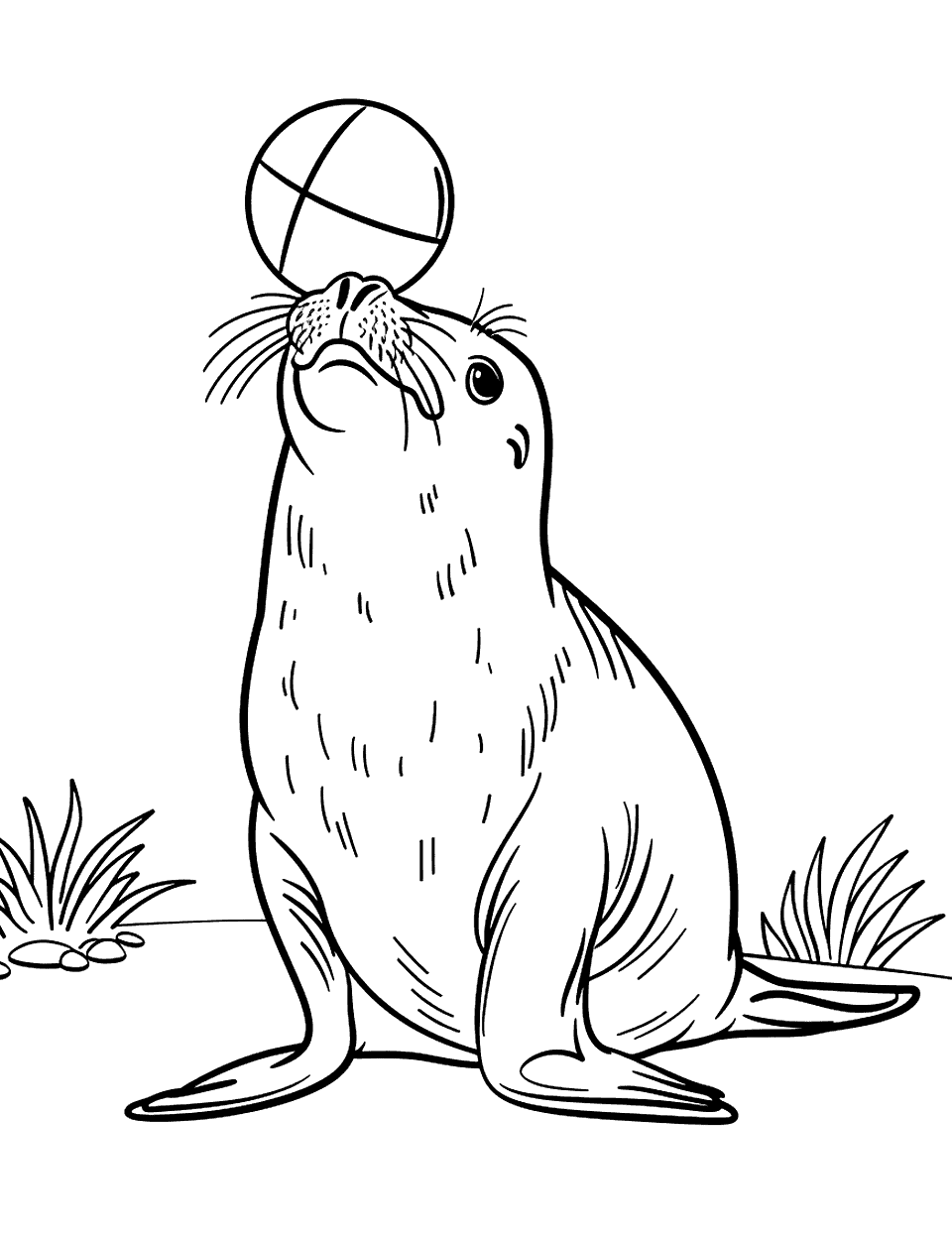
Showtime. The seal sits up straight with a striped ball balanced on the end of its nose and its whiskers fanning out on both sides. Its flippers are spread flat on the ground, which keeps the shape simple and forgiving. Grey or brown for the seal and a bright, contrasting color for each panel of the ball. A few pebbles and tufts of grass sit on either side.
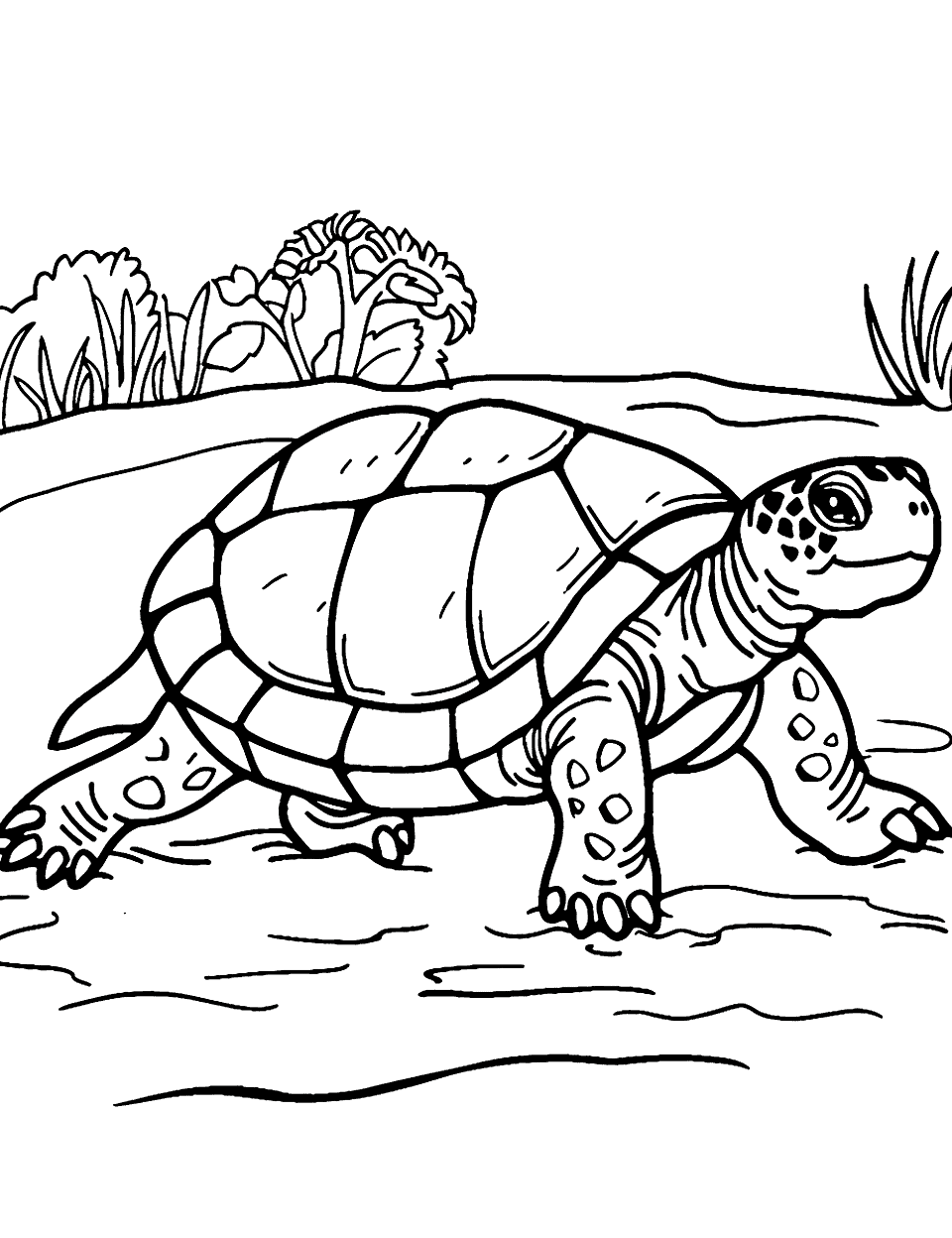
A turtle plods across the sand with its head stretched out and a high domed shell on its back. That shell is split into large plates, which makes it perfect for a patchwork of greens and browns, or a rainbow if your child would rather. Speckled markings run along the legs and up the side of the face. Low plants sit on the bank behind it.
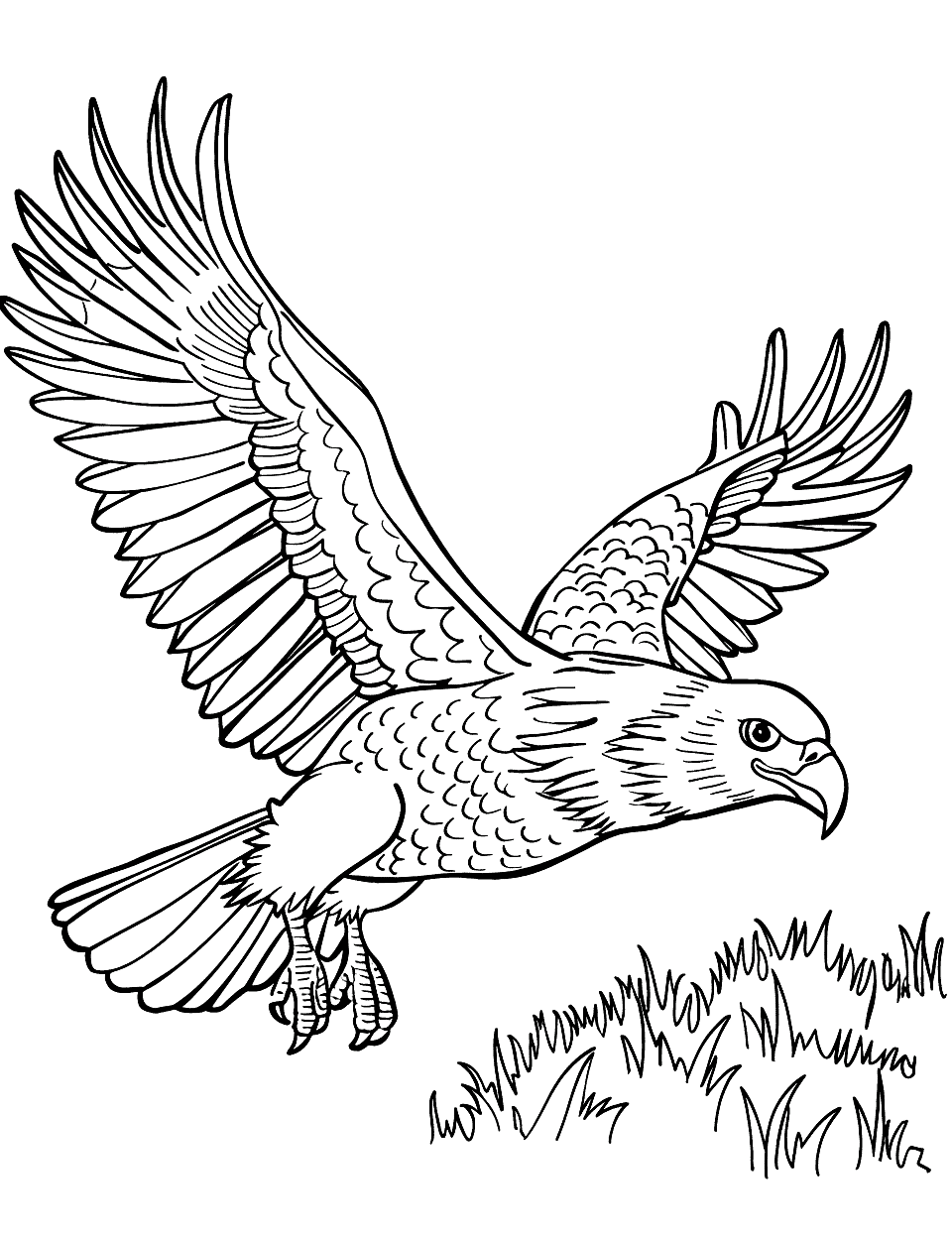
Wings up and talons out, this bald eagle is drawn mid-flight against an empty sky. The feathers are laid out in clear rows, so it works well for anyone practicing light-to-dark shading in brown. Head and tail stay white while the beak and feet go yellow, which sorts the whole color scheme in one go. A patch of grass in the bottom corner is the only other thing on the page.
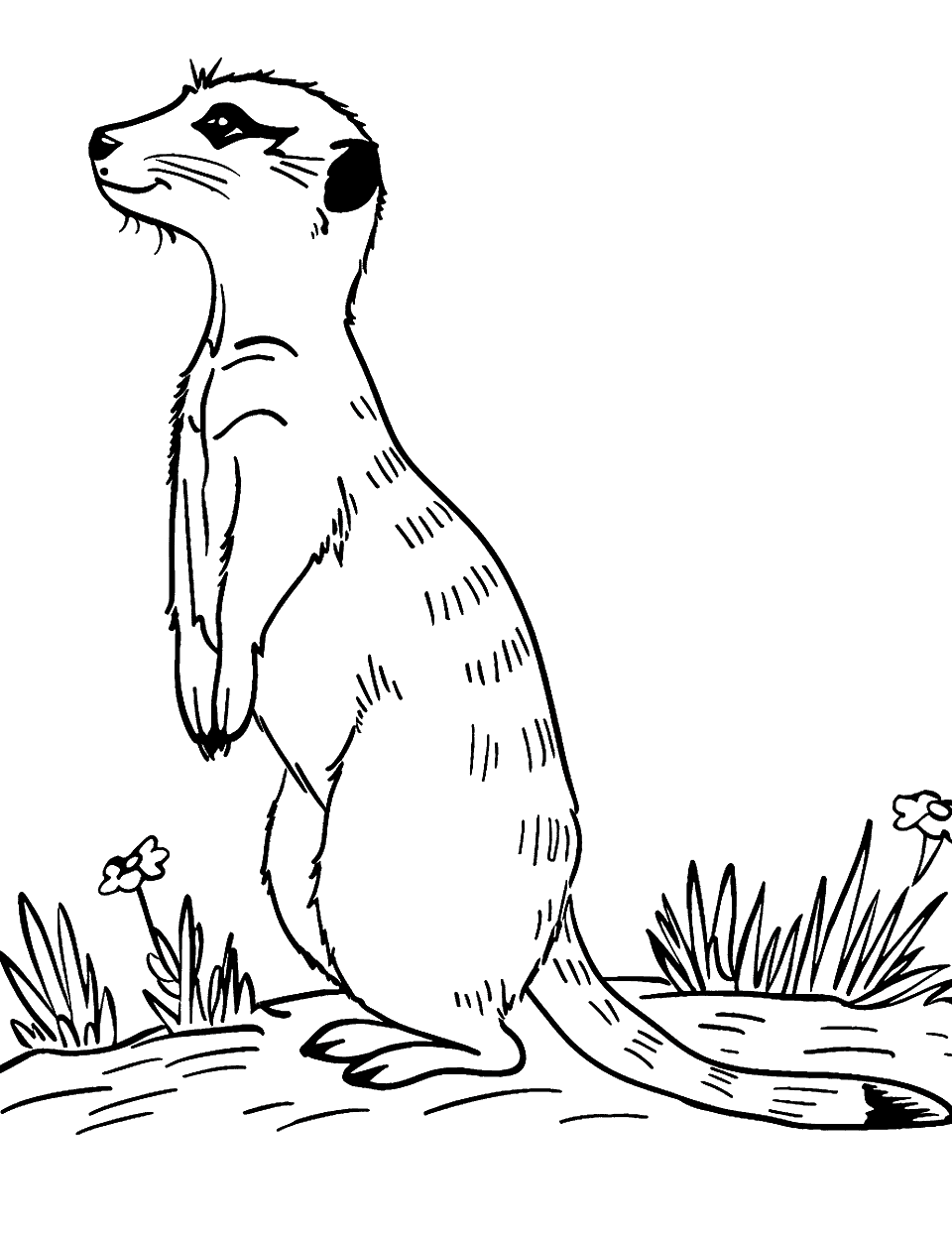
A meerkat stands up on its back legs with its tail stretched out flat behind it, scanning for trouble. The dark patch around its eye is already inked in, which gives the page a finished look fast. Sandy brown with a slightly darker back is the natural choice. Small flowers grow in the grass on both sides of it.
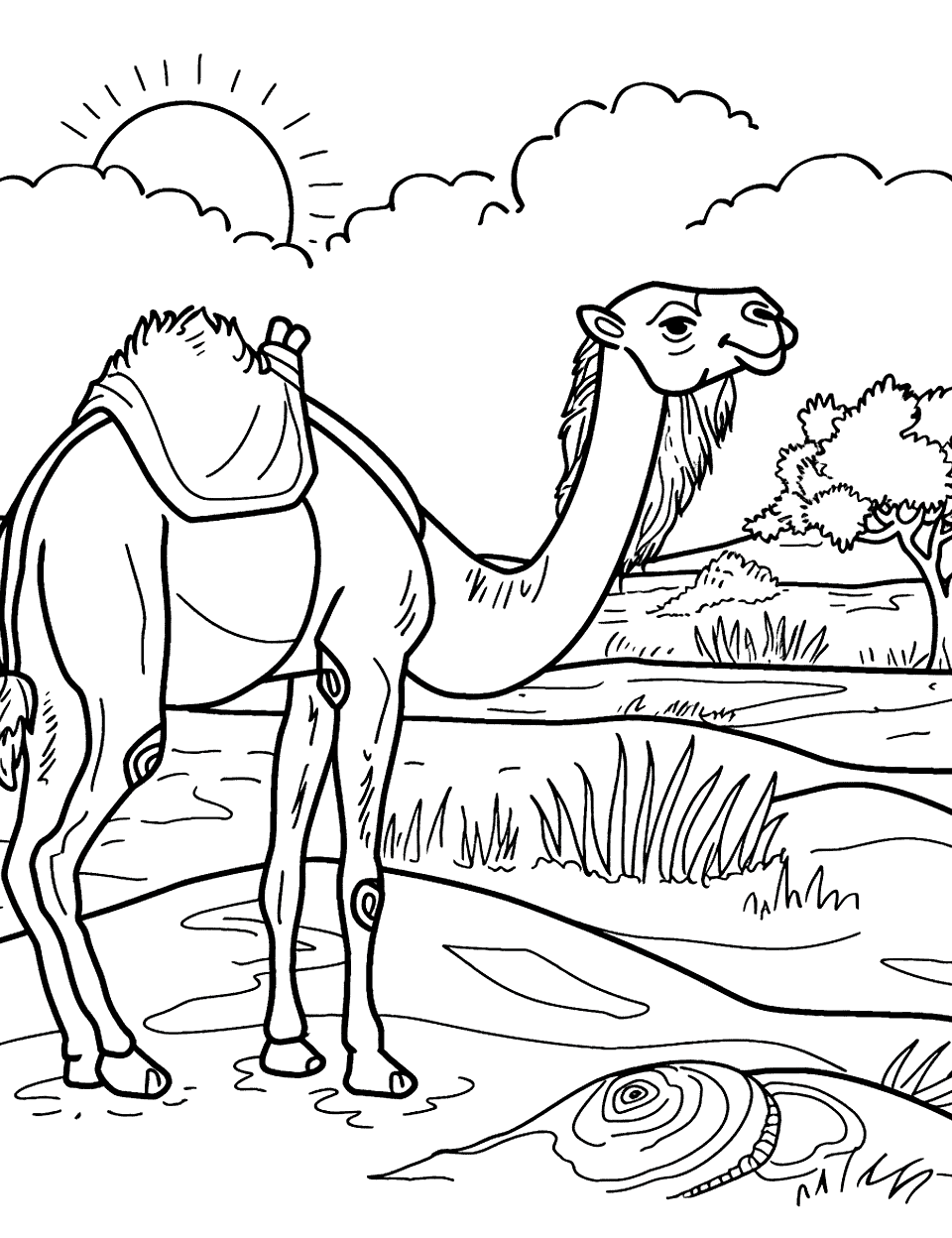
A one-humped camel stands in the desert wearing a saddle blanket strapped over its hump. The sun sits low behind the clouds on the left and a small tree breaks up the horizon on the right. That blanket is the one place to use a bright color, since the camel and the sand both want warm tan. Long, soft dune lines cross the lower half of the page and fill in quickly.
By using our free coloring pages, you acknowledge and agree to our full disclaimer. All materials are for personal, non-commercial use only and all rights belong to their respective license holders.
Which Zoo Coloring Pages Work Best for Each Age?
Match the sheet to the hand holding the crayon: chunky outlines for toddlers, fine detail for older kids and adults. The panda, the polar bear and the penguin are drawn with thick lines and large open areas, so a three-year-old can fill them without much frustration. The elephants, the rhino, the seal and the meerkat sit in the middle, with a few interior lines but nothing fussy. Save the snake, the peacock and the tiger for school-age children and grown-ups, since those pages are built from hundreds of small shapes and reward a fine-tip pen.
If a page looks too hard, print it larger. Setting your printer to fill the page, or scaling the sheet up onto legal paper, turns a detailed drawing into a manageable one without changing the artwork.
How Fast Are the Fastest Animals in This Zoo Pack?
The cheetah and the ostrich are the two fastest animals in this set, and both are worth mentioning while your child colors them. A cheetah’s top speed averages 60 to 70 miles per hour, it can only hold that pace for about 300 yards, and it gets from a standstill to 45 miles per hour in roughly 2.5 seconds (1). Its spots are not decoration either; they cover nearly the whole body.
The ostrich is not far behind on two legs. It sprints at 43 miles per hour and covers more than 10 feet in a single stride, and an adult stands up to 9 feet tall and weighs 250 to 300 pounds (2). Marking that height up a hallway wall with masking tape is a good way to end the page.
Activities to Do with Zoo Coloring Pages
The fun does not have to stop once the last crayon goes down. These sheets work as the starting point for craft, play and a bit of quiet learning. Here are five hands-on ideas worth trying.
Create a Zoo Passport
Turn your living room into a world tour. Staple a few small pieces of paper together to make a passport. Every time your child finishes an animal, they cut it out, paste it into the booklet, and earn a stamp, which can be a sticker or a checkmark. Writing the animal’s home continent next to each one turns the game into geography without anyone noticing.
Design a Shoebox Habitat
Turn a flat drawing into something three-dimensional. Have your child color a favorite animal, cut it out, and glue it upright inside a decorated shoebox. Cotton balls become snow for the polar bear, torn green paper becomes grass for the rhino, and a handful of real sand suits the camel. Cutting a window in one end and shining a phone torch through it gives the diorama a sunrise.
Host a Puppet Show
Bring the animals to life with a simple puppet show. Color them on cardstock, or glue a finished page to a cereal box so it holds its shape, then cut them out and tape a popsicle stick to the back of each. The lion, the zebra and the penguin make a good opening cast. Draping a sheet over two chairs gives you a stage in about a minute.
Go on a Scavenger Hunt
Hide the uncolored pages around the house or the yard. Give your kids a list of animals to rescue and bring back to base, and make the list a set of clues rather than names for older children. Once every animal is found, the reward is a coloring session with a snack.
Make Texture Art
Move beyond crayons and markers. Glue and craft supplies let you build texture on top of the line art: orange yarn for the lion’s mane, cotton balls for the polar bear, sequins for the eyes on the peacock’s fan, and a scrap of felt for the camel’s blanket. Working on cardstock keeps the page from buckling under wet glue.
FAQs
What Supplies Work Best for These Pages?
Crayons and colored pencils are the best all-round pick for these sheets on standard printer paper. Colored pencils give more control on the detailed pages like the snake and the peacock, where the shapes are small. If your child prefers markers or watercolor, print on cardstock or heavy paper so the color does not bleed through. A fine-tip black pen is handy for the scale and feather detail.
How Can I Print These Coloring Pages?
Click the image you want, then print it straight from the file that opens. Choose portrait orientation and set your printer to fit the image to the page so nothing is cut off at the edges. Draft or grayscale quality is fine and saves ink, since these are line drawings. Run one test page before printing a batch for a classroom.
Are These Coloring Pages Free to Use?
Yes, every page here is free for personal and classroom use. Print as many copies as your family, playgroup or class needs, at home or at school. What is not allowed is reselling the sheets or passing the artwork off as your own.
What Age Group Are These Pages For?
These sheets span roughly age three to adult. Toddlers and preschoolers do well with the panda, the polar bear and the penguin, which have thick outlines and big open spaces. School-age children can handle the zebra’s stripes and the cheetah’s spots. The snake and the peacock carry enough fine detail to keep an adult busy for an evening.
Which Animals Are in This Set?
The set covers a tiger, elephants, a lion, a gorilla, a zebra, a giraffe, a penguin, a flamingo, a snake, a peacock, a polar bear, a cheetah, a panda, a toucan, a rhino, a hippo, a koala, an ostrich, a lemur, a wolf, a seal, a turtle, a bald eagle, a meerkat and a camel. Two of those are full scenes, one with a safari jeep and one with a boy feeding the giraffe. There is no monkey sheet here, though the gorilla and the lemur cover the primate house.
Can I Use These for a Birthday Party?
Yes, and a zoo or safari party is the obvious fit. Print a stack of mixed animals, set out cups of crayons, and let guests pick their own. Finished pages double as take-home favors, and you can tape them up as decorations while the party runs. Stick to the simpler sheets, since party attention spans are short.
How Do Coloring Pages Help Child Development?
Coloring builds fine motor control, hand-eye coordination and the ability to stay with one task. Gripping a crayon and steering it inside a line uses the same small hand muscles a child later needs for handwriting. Animal sheets add a second layer, since you can talk about where each animal lives and what it eats while the coloring happens. It is also one of the few quiet activities most children will choose on their own.