These free Independence Day coloring pages run from chunky outlines a preschooler can finish in one sitting to feather-by-feather eagles that will keep an older kid busy through the whole cookout. Every sheet is described below, so you can see what is on it before you print it.
Inside you will find the Statue of Liberty, a backyard barbecue, a fireworks stand, a parade float and a blank scroll your kids can fill in themselves. Plain copy paper is fine for crayons and pencils, and cardstock is worth it if markers are coming out.
Eagle Flying With American Flag
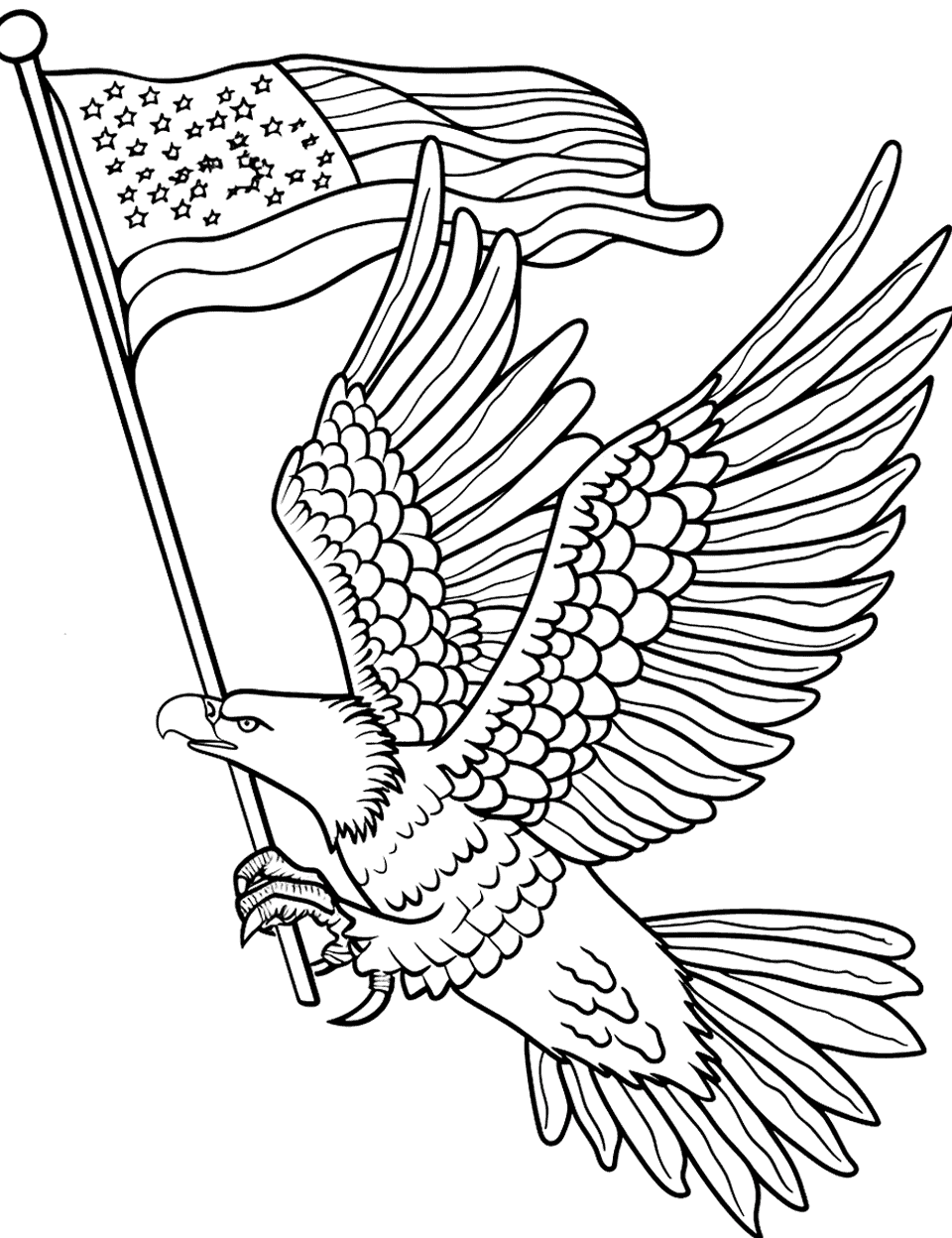
A bald eagle flies with its wings thrown wide, talons locked around the pole of a waving flag. Every feather is outlined on its own, so the wings reward a sharpened pencil and a steady hand. Brown body, white head and a yellow beak keep the bird true to life, and the flag hands you the red and white stripes for free. This is one of the more demanding sheets here, so give an older child room to take it slowly.
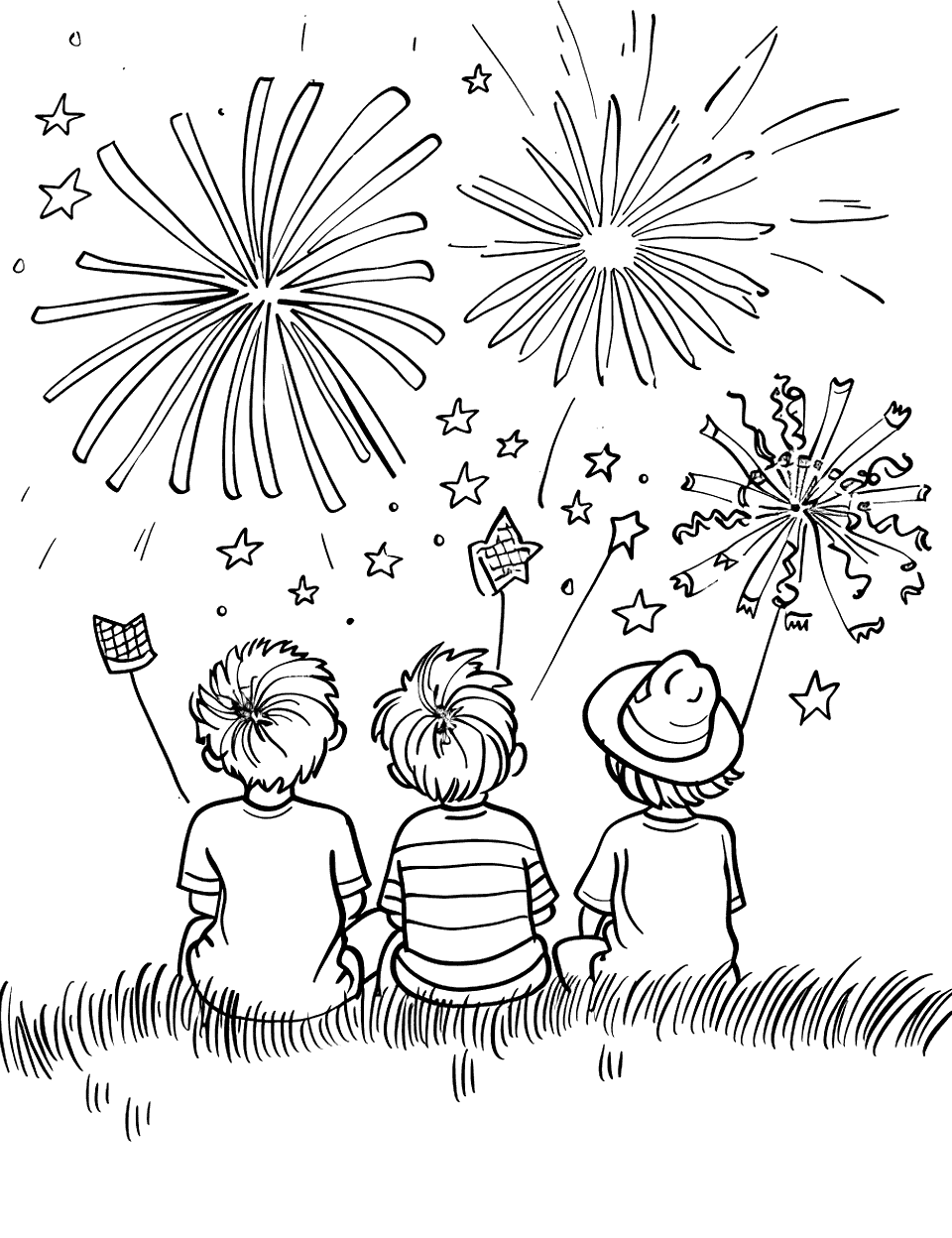
Backs to you in tall grass, three kids sit shoulder to shoulder, watching fireworks open above them. The striped shirt in the middle and the wide-brim hat on the right are two easy places to drop in red and blue. Everything above their heads is open line work, so it takes marker or watercolor without any fiddly detail.
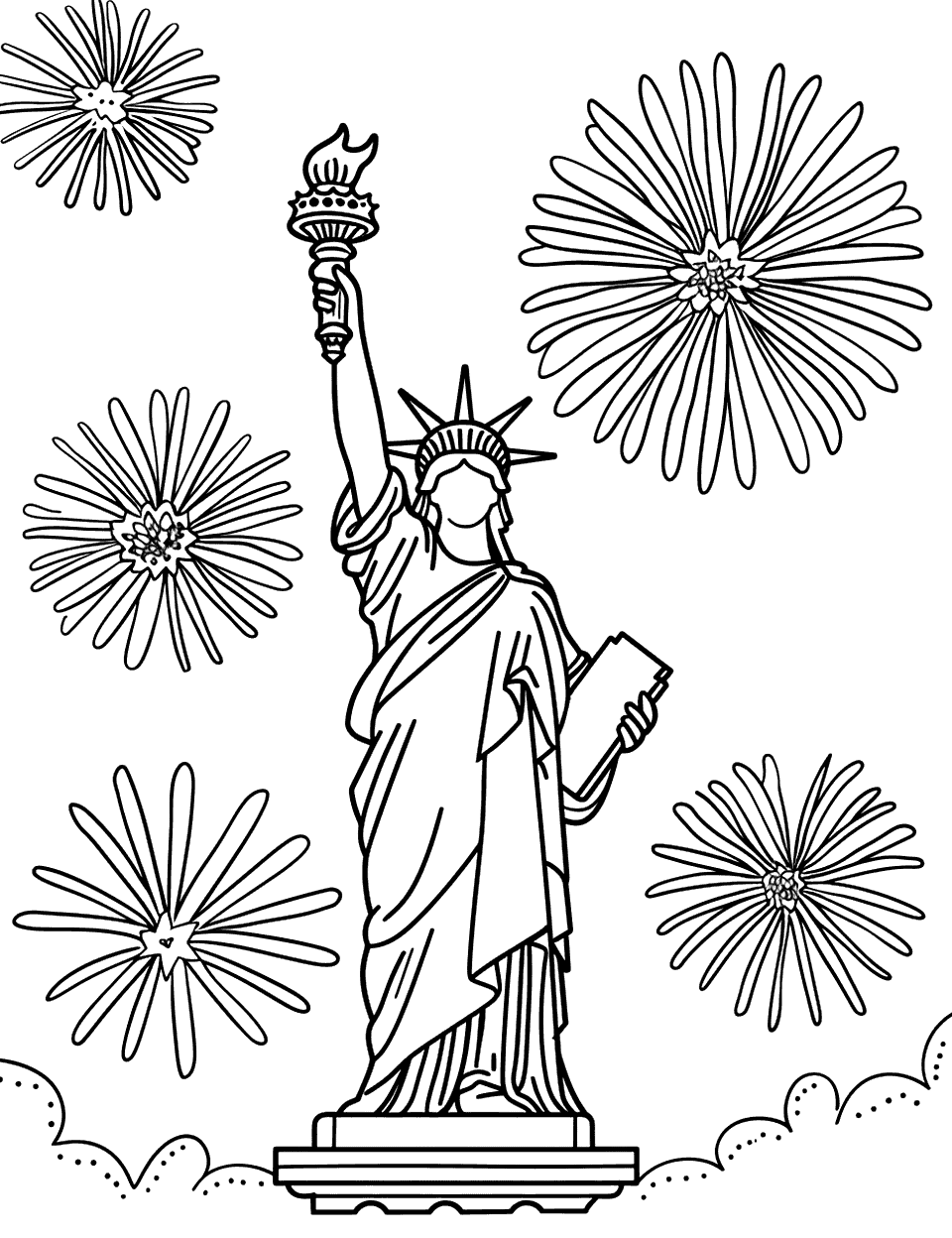
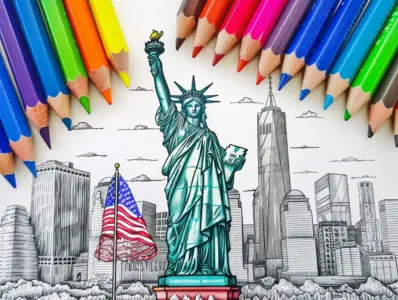
Lady Liberty holds her torch overhead with the tablet tucked against her other arm, and firework bursts fill the sky on both sides of her. Her robe is a stack of long folds, which makes it a good spot to practice layering one green over another. Each burst is drawn as open petals, so they can take a different color without turning muddy. The spiked crown is the quickest win on the page for a child who wants to start somewhere small.
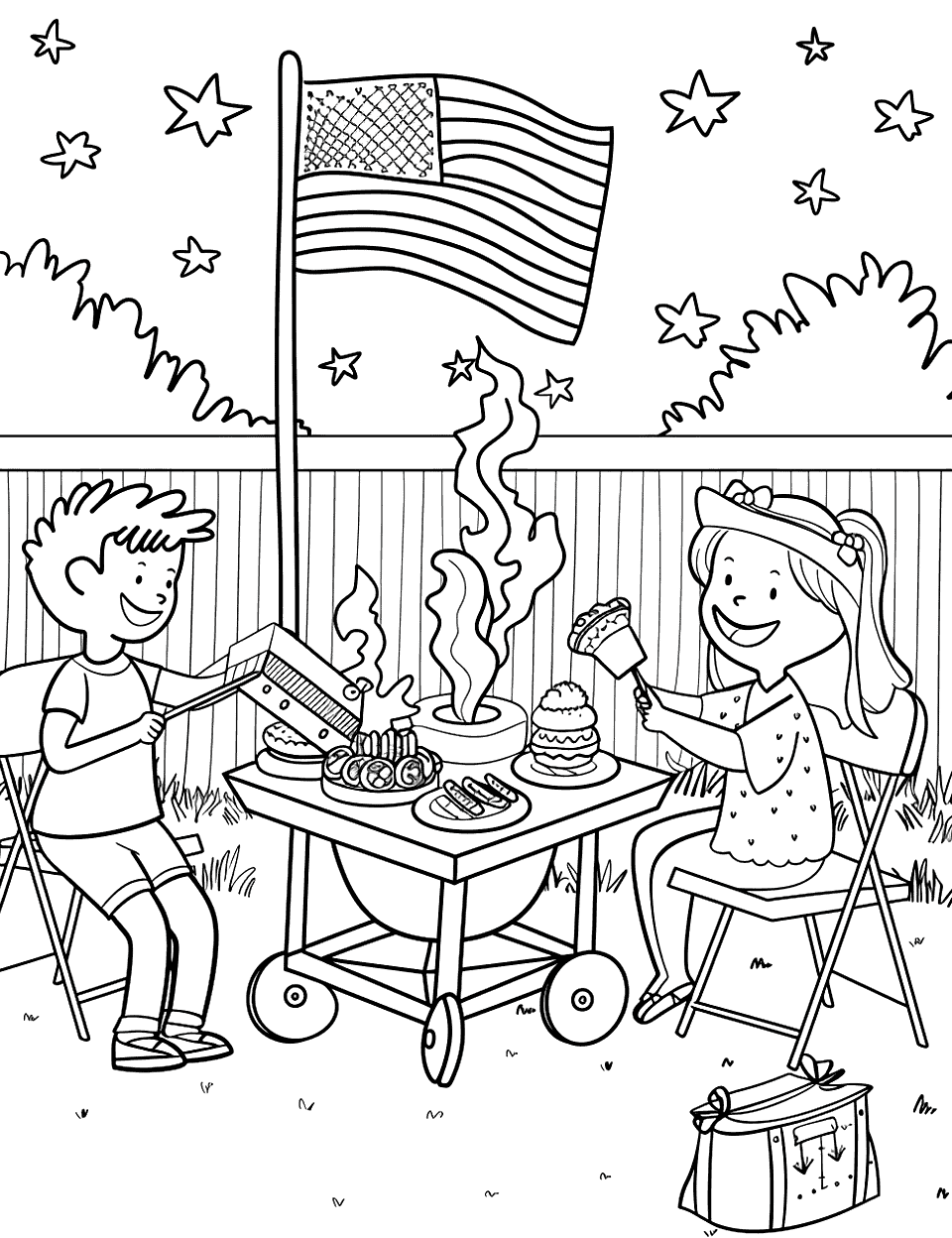
A boy leans in with a grill tool while a girl across the table lifts a treat on a fork, and an American flag flies on a pole between them. The table is crowded with buns, hot dogs and a stack of plates, and smoke curls up off the grill. A cooler sits in the grass in the bottom corner, waiting for a red or a blue. Stars float above the fence line, which gives younger kids a warm-up before the food.
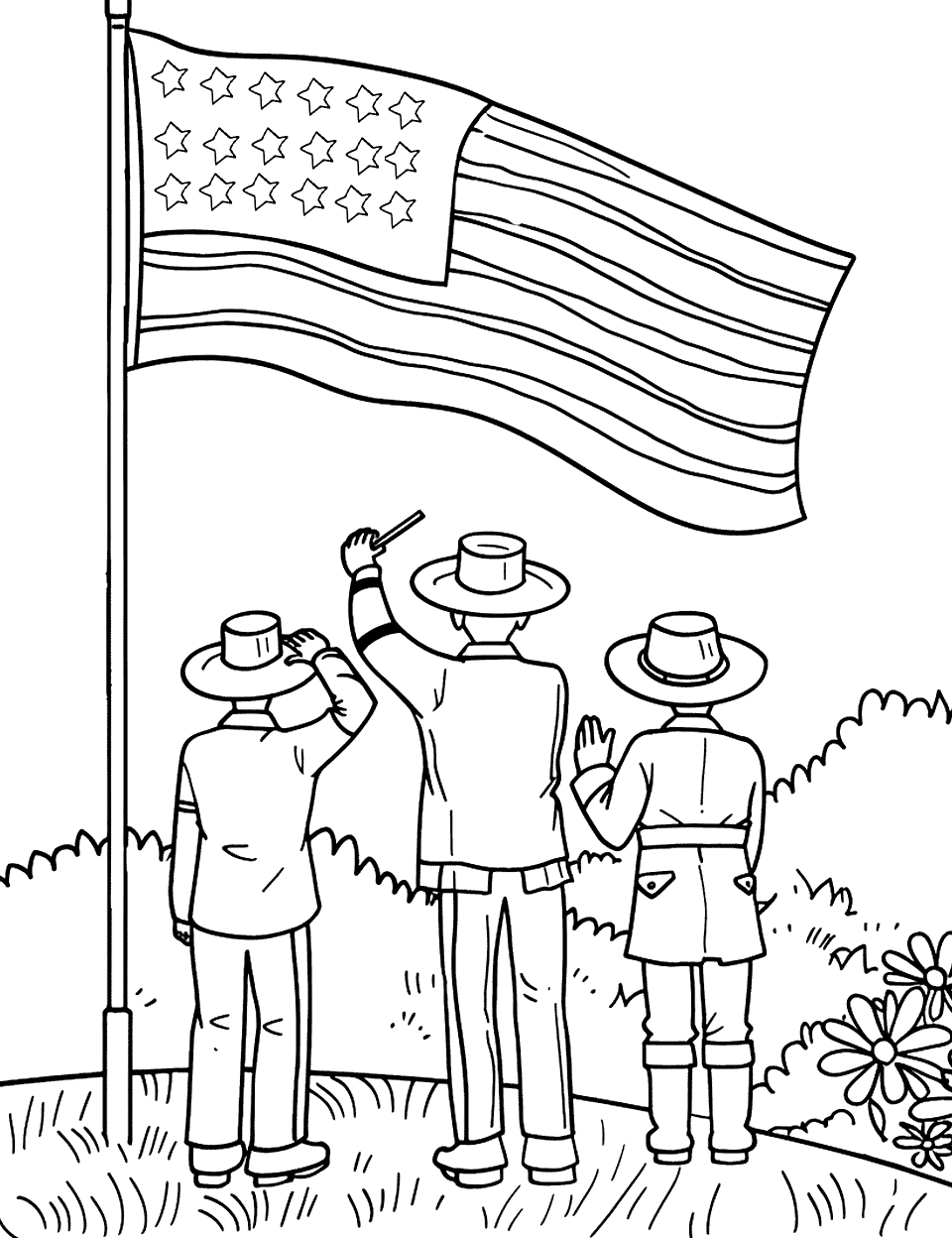
Under a large flag on a pole, three figures in uniform and wide-brim hats stand with their backs to you. One raises a hand to the brim in a salute while the others lift their arms toward the flag. Flowers and low bushes fill the ground behind them, so there is somewhere to put a color that is not red, white or blue. The flag takes up the whole top third of the page, which means big, forgiving stripes.
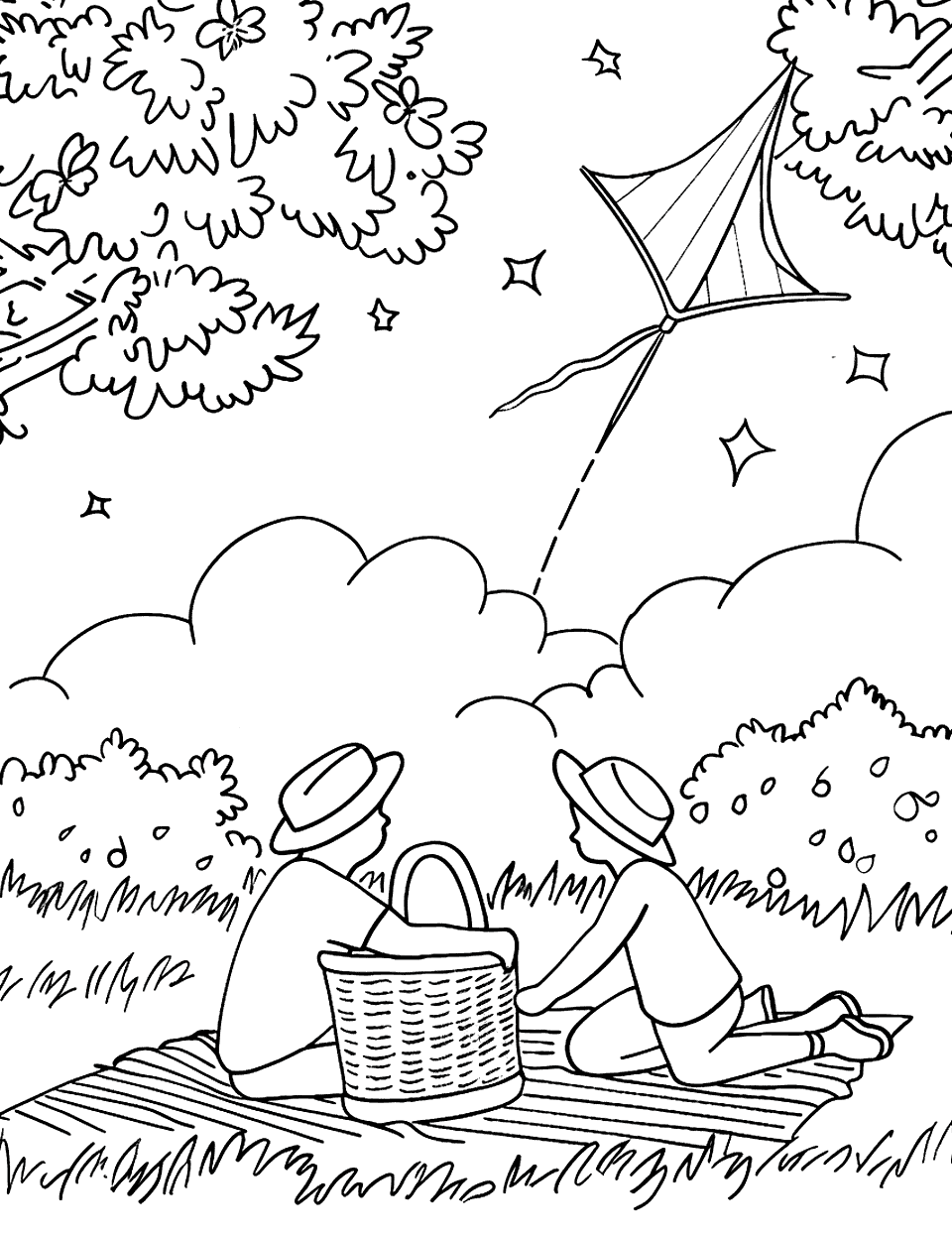
A striped blanket holds two picnickers in sun hats, a wicker basket set between them, while a kite climbs into the clouds above. The blanket stripes are already drawn in, so it is an easy place to alternate red and blue. Branches frame the top corner and the grass is loose and scribbly, which keeps the page forgiving for younger hands. Give the kite a bright tail and the whole picture lifts.
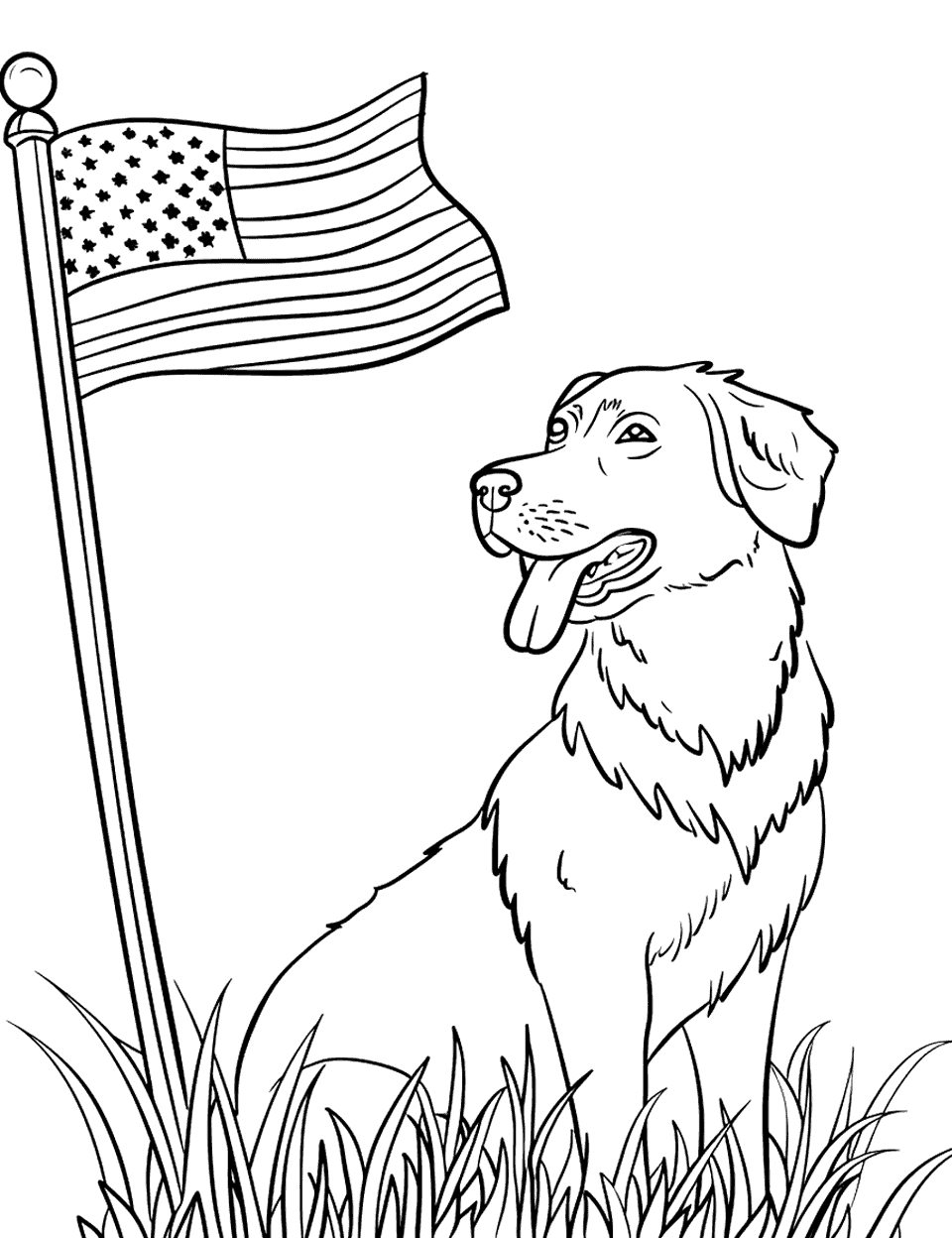
A friendly dog sits in tall grass with its tongue out, looking up at a flag on a tall pole beside it. The fur is drawn in long strokes, so pencils layered light to dark make the coat look soft instead of flat. Golden or reddish brown suits it, and the grass at the bottom will swallow any stray color. Wide open space around the flag makes this a calm sheet for a small child.
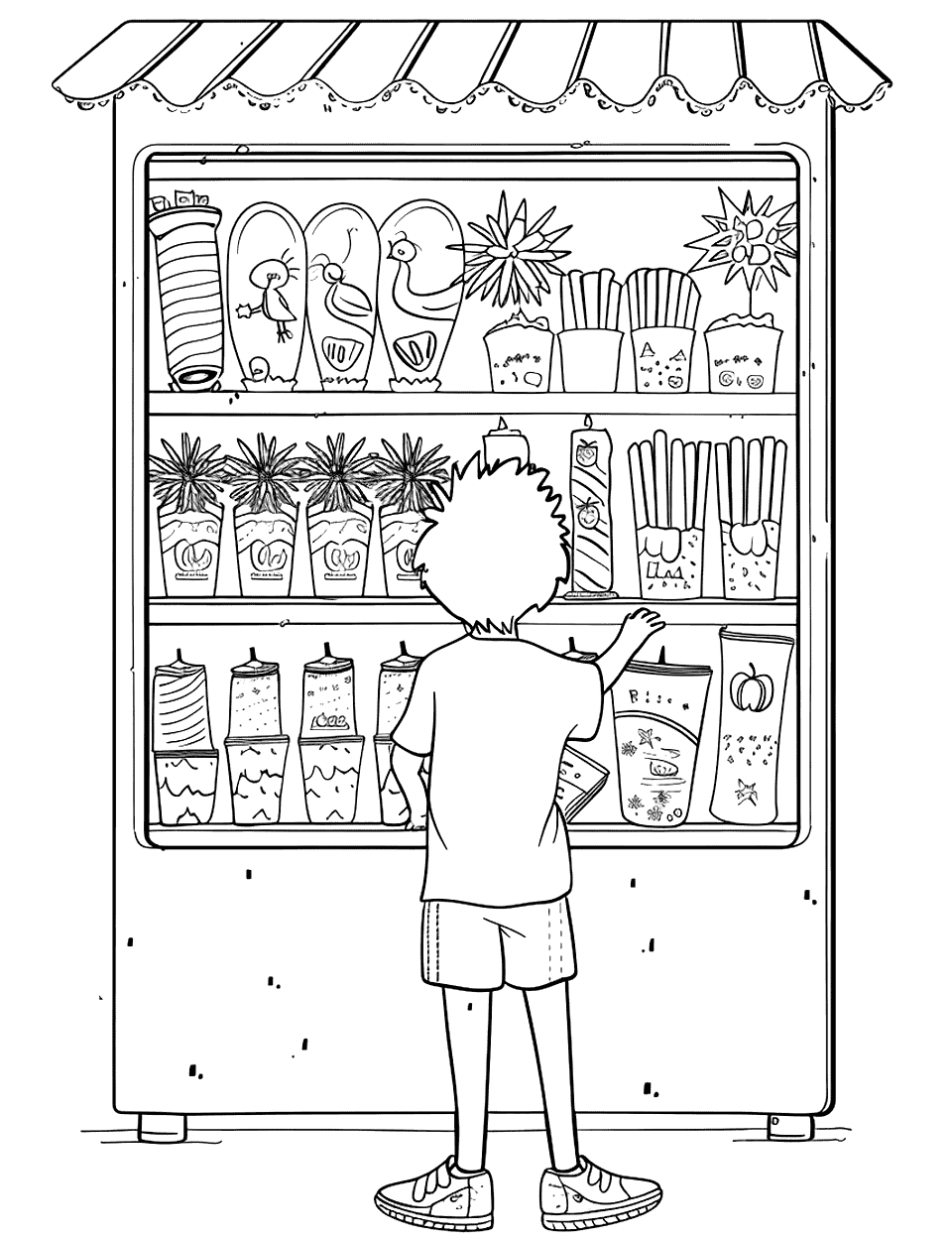
A boy stands with his back to you at a fireworks stand, one hand reaching toward the top shelf. The case is packed with rockets, fountains and tubes, each with its own label and pattern, so this sheet holds a lot of small color decisions. The scalloped awning across the top is the obvious place for red and white stripes. Save it for a kid who enjoys filling in dozens of little shapes.
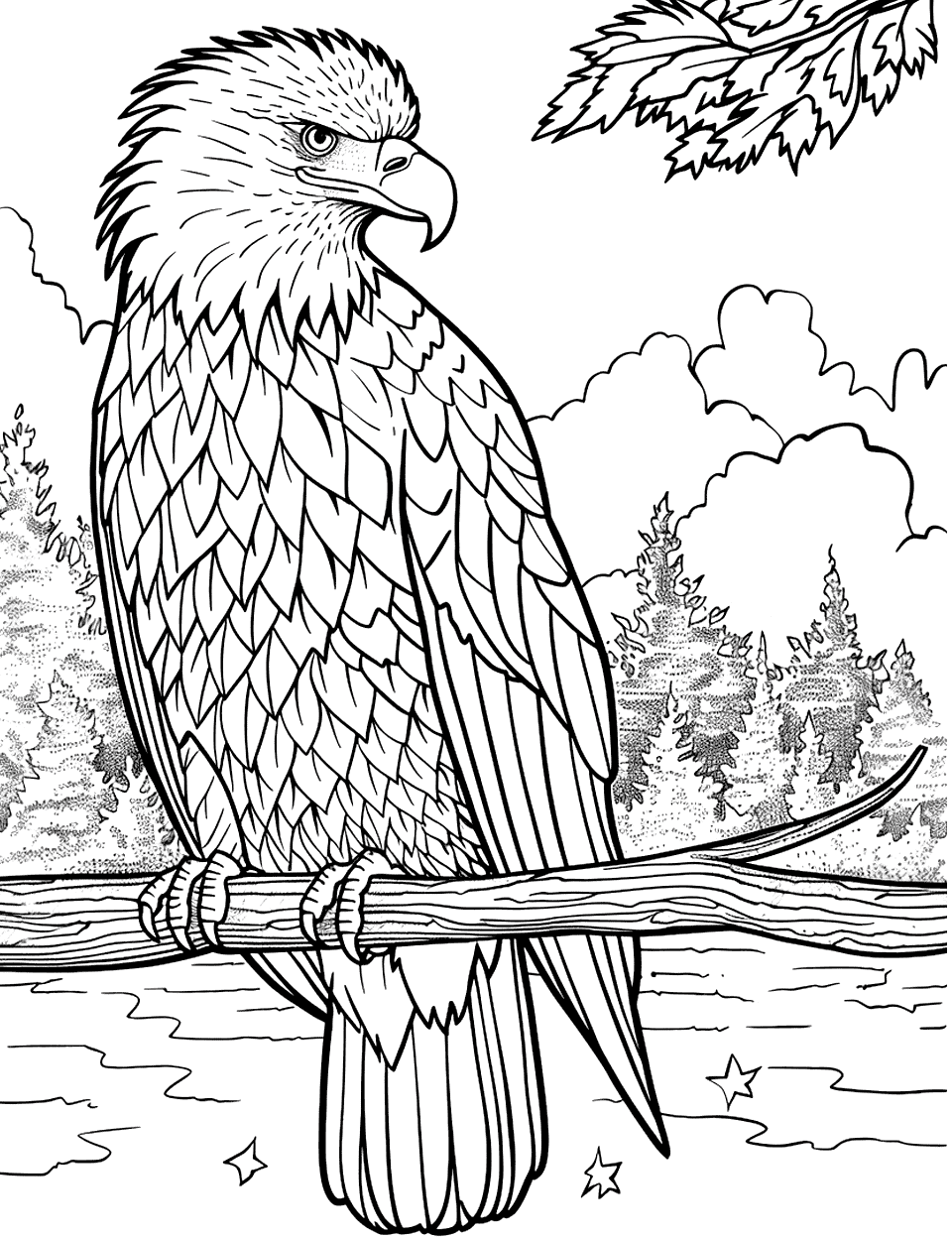
A bald eagle grips a bare tree branch above a lake, with pine trees and stacked clouds behind it. The chest and wing feathers are drawn one scale at a time, which puts this among the most detailed sheets in the set. Fine-tip pens or sharp pencils are the right tools, and a pale blue behind the trees keeps the bird standing out. Adults who color to unwind will get the most out of this one.
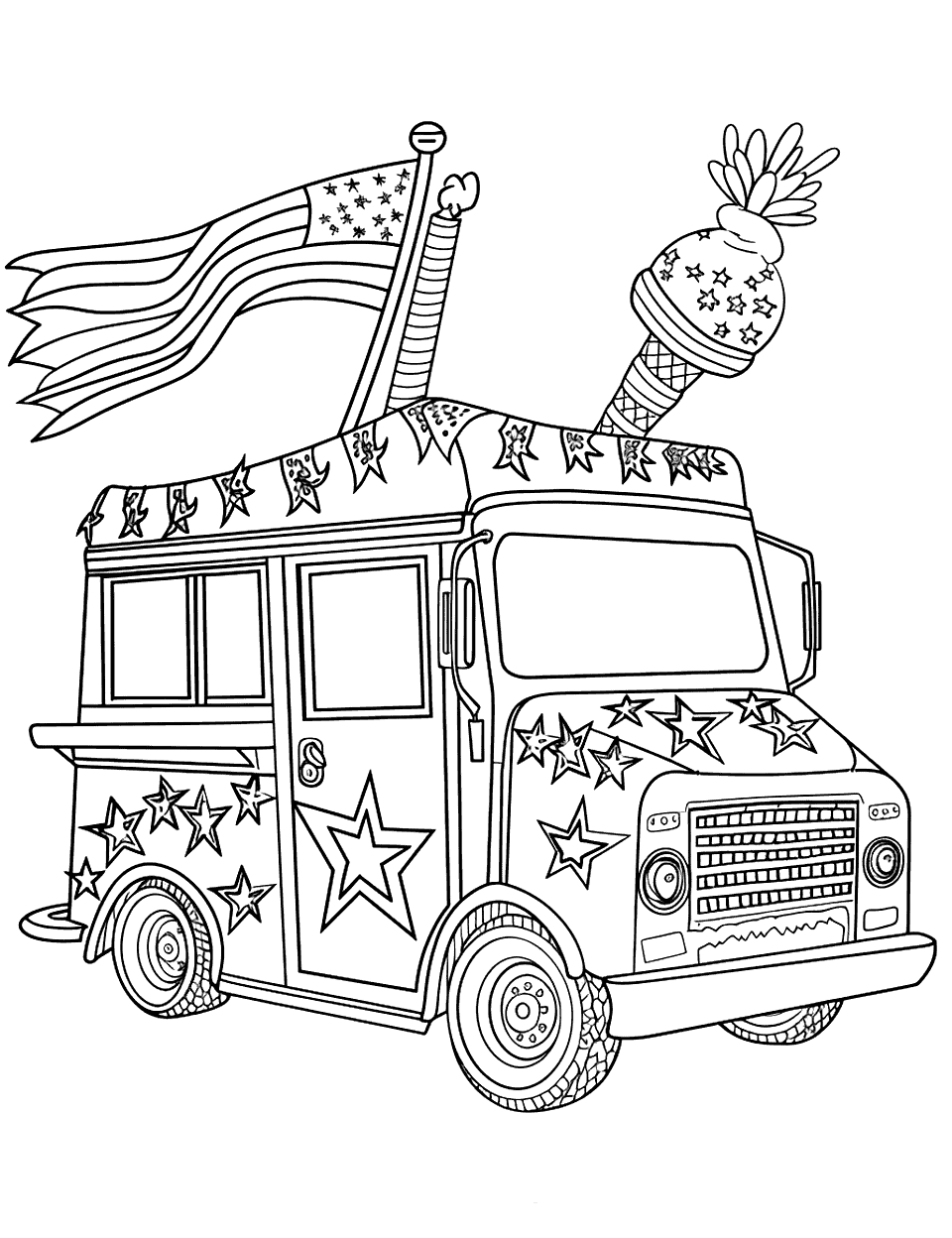
An ice cream truck sits with a giant cone mounted on its roof and a flag flying off the front. Stars run across the door, the side panel and the hood, and a row of little pennants is strung along the roof line. The scoop on top is covered in stars too, so it can be the brightest thing on the page. Big open panels make this an easy one for younger kids who want fast, satisfying color.
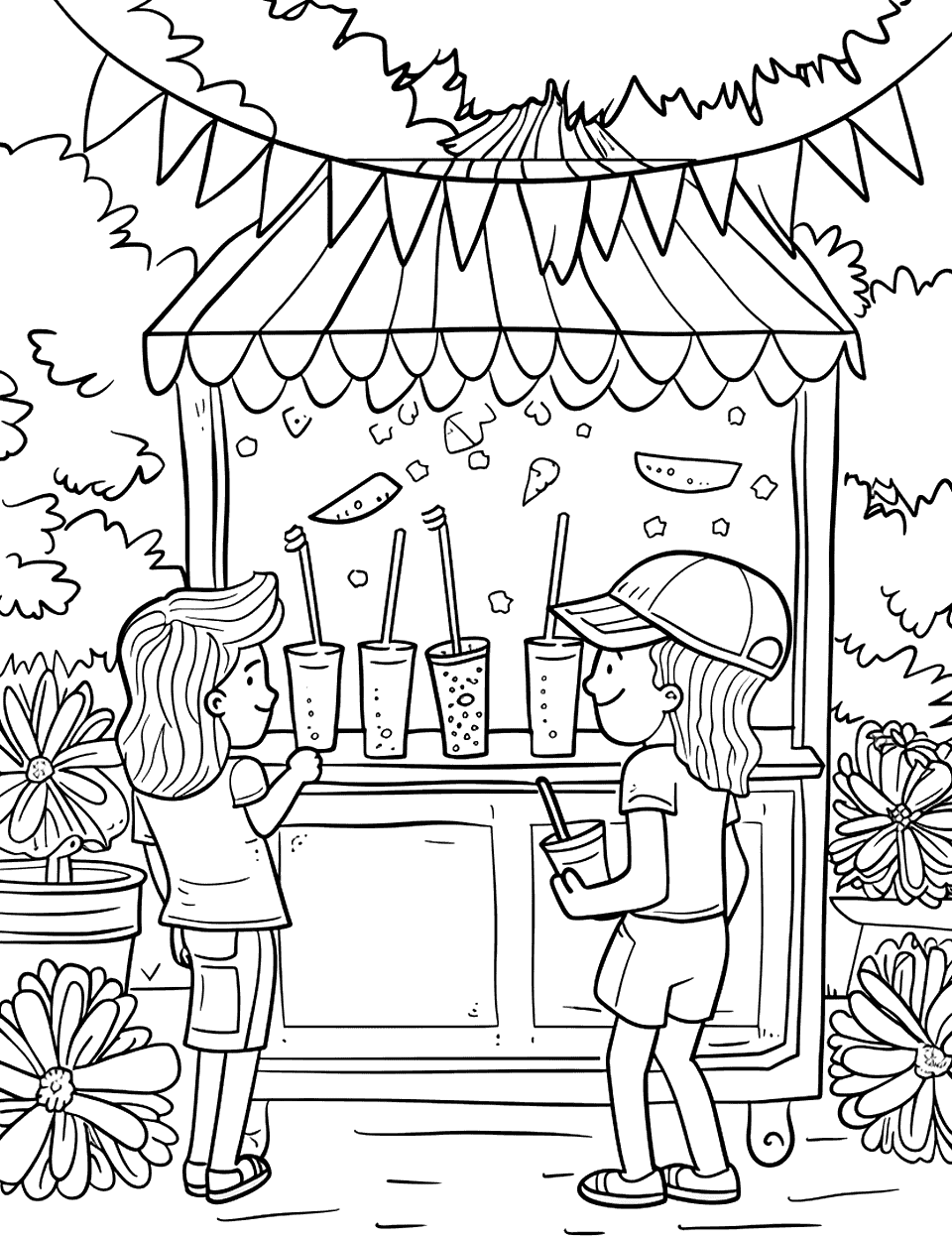
Under a striped canopy, two kids meet at a drink stand, tall cups and straws lined up along the counter. Bunting hangs above them, big flowers crowd both edges, and slices of watermelon float in the air over the stand. The cap on the right is a good place for your first red, and each cup can take a different color. It is a busy page that still leaves plenty of white space, which suits a school-age colorer.
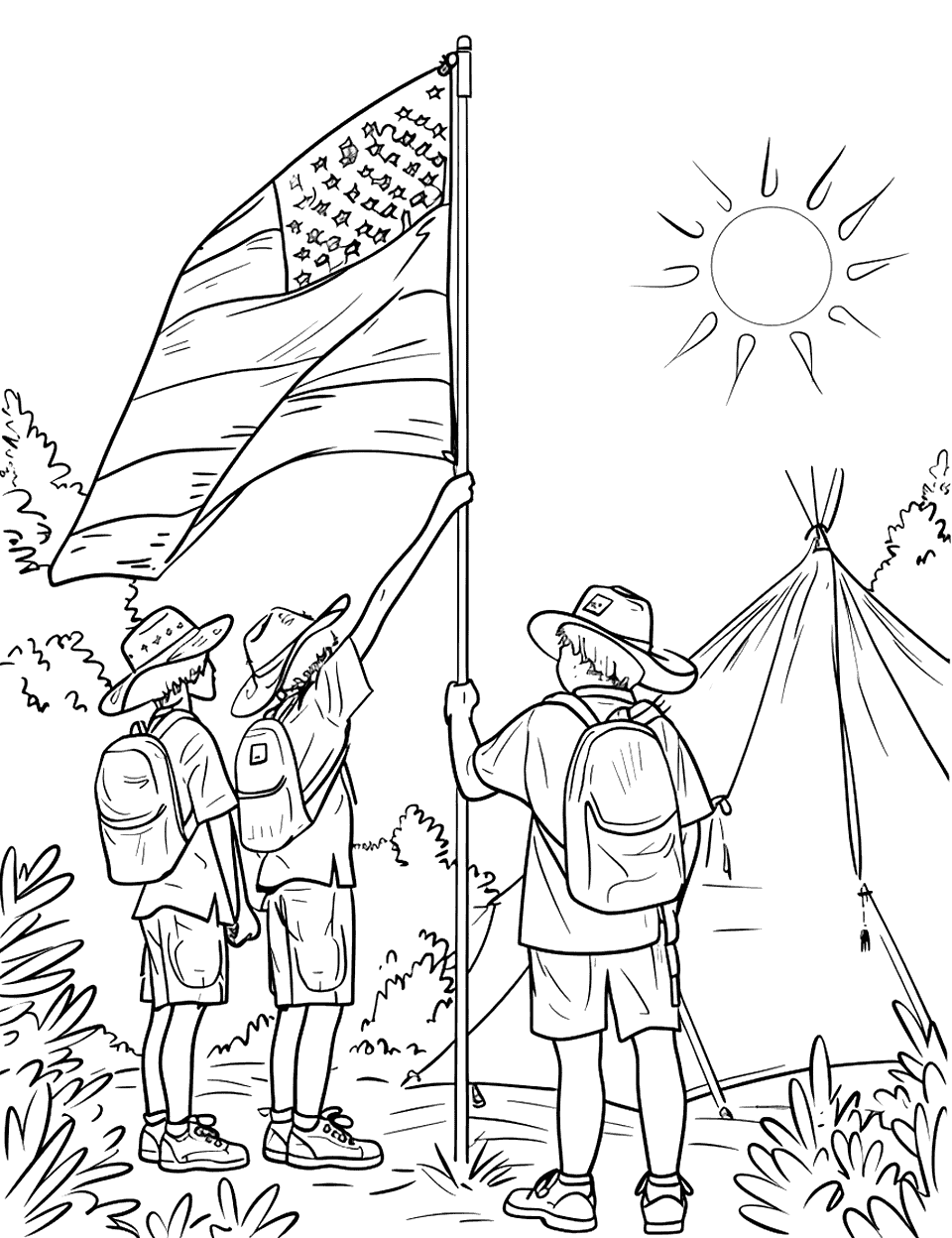
Wide-brim hats and backpacks mark the three campers raising the flag on a pole, with the sun high on the right and a tent pitched behind them. Their uniforms match, so one color can carry all three and let the flag do the talking. The sun’s rays and the tent are simple shapes to warm up on before starting the stripes. It suits kids who like outdoor scenes with a lot going on around the edges.
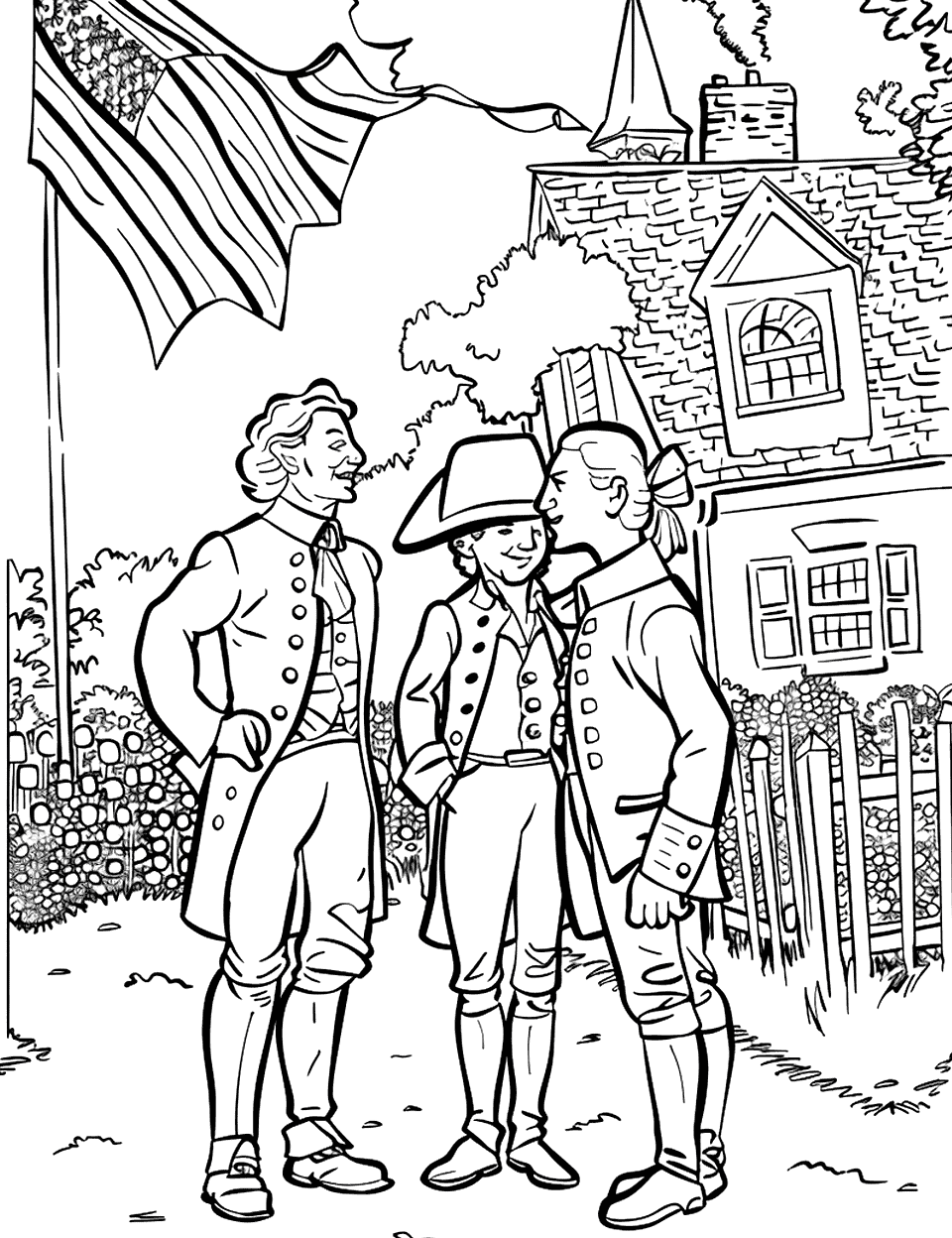
Outside a brick house, three figures in long colonial coats stand talking, one of them wearing a tricorn hat. A flag hangs from a tall pole at the left edge and a picket fence runs along the garden behind them. The brick wall and the fence are built from small repeated shapes, so this page takes patience and pays it back. Muted browns and deep blues on the coats keep the period feel.
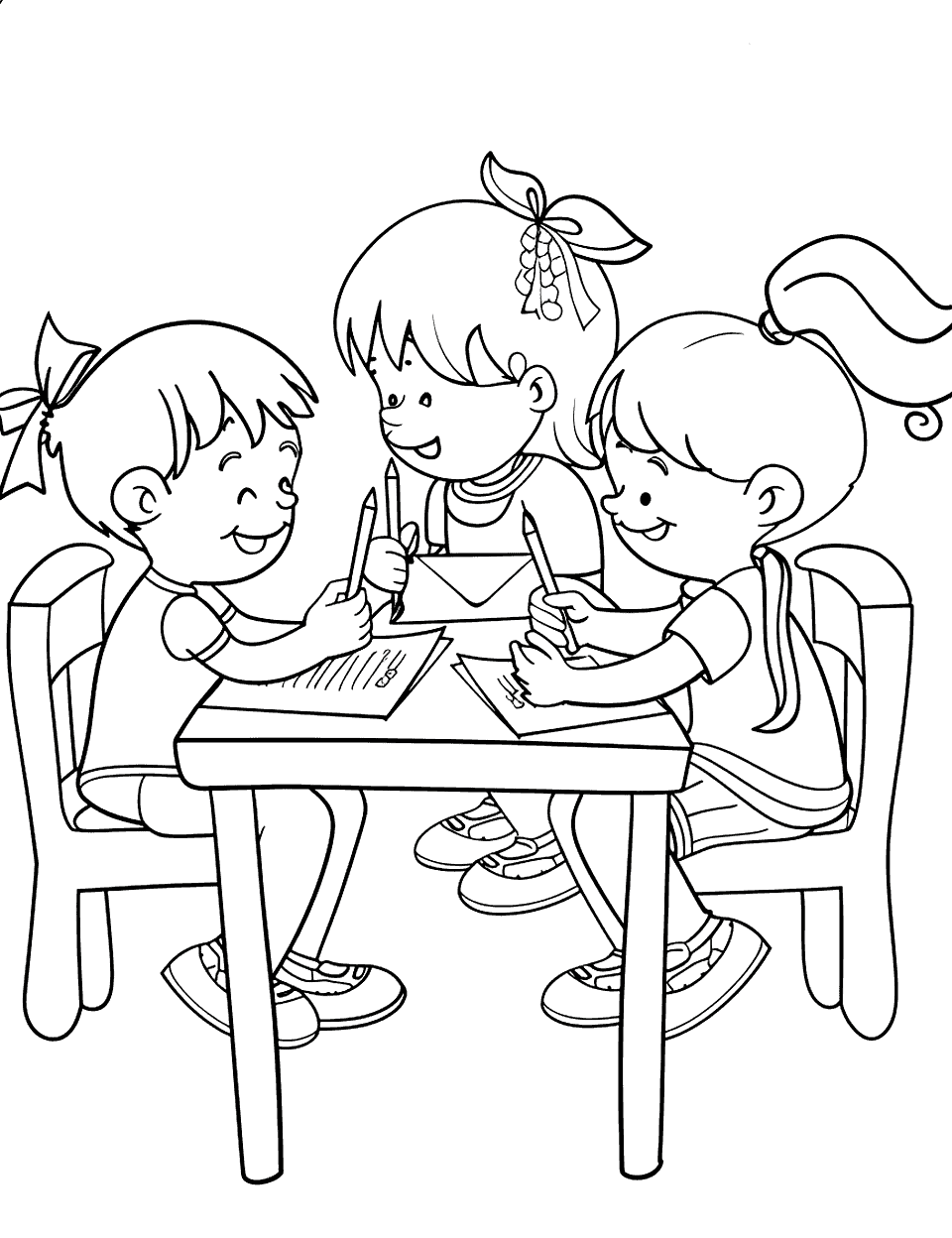
Pencils in hand, three children lean over a small table, writing on sheets of paper with an envelope propped between them. The lines are thick and simple, which makes it one of the friendliest sheets here for preschoolers. Shirts, chairs and hair ribbons carry the color, since the table and floor are left plain. Pair it with a real note to a neighbor or a service member and the coloring turns into a whole afternoon.
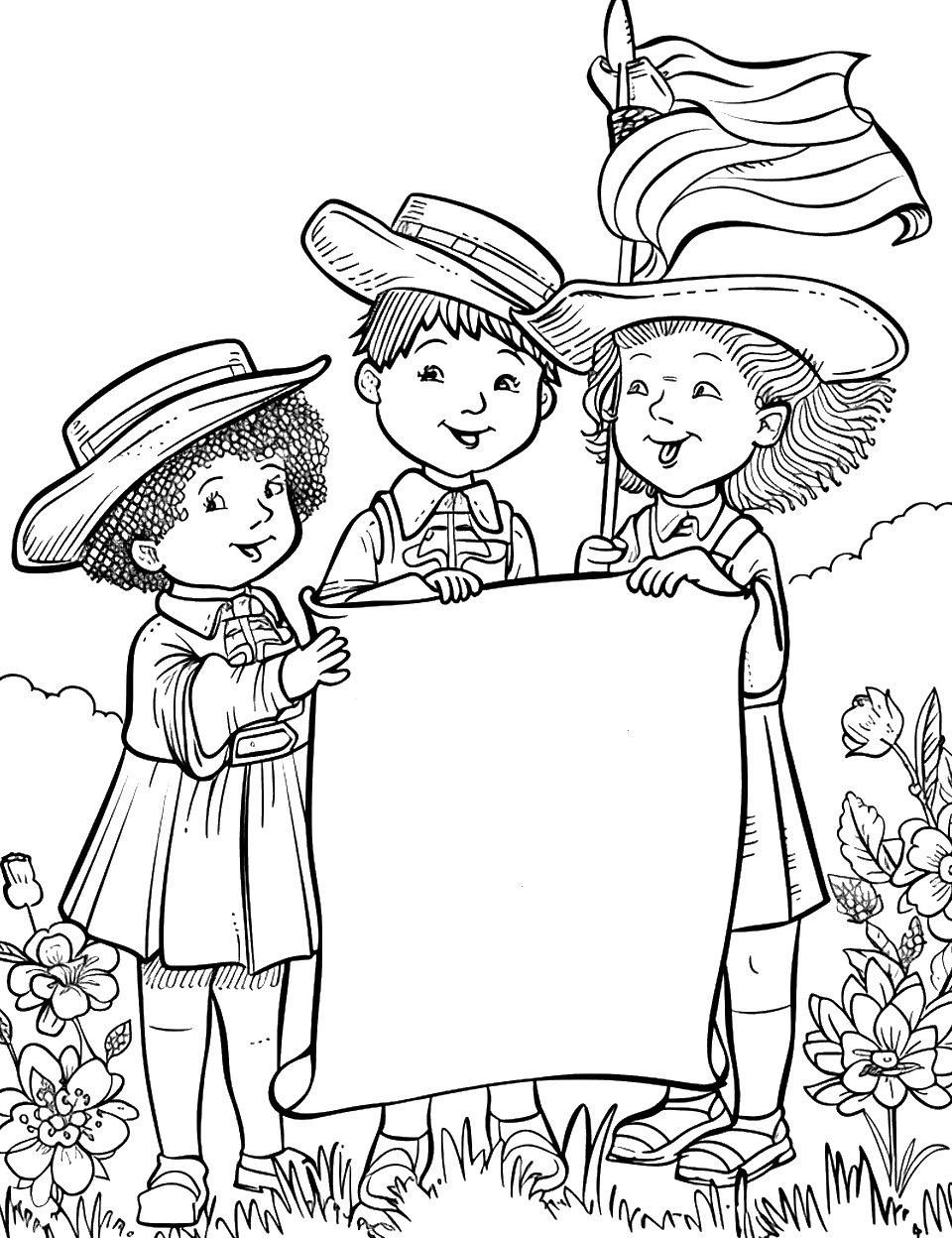
Colonial coats and hats on all three, the kids hold up a wide, completely blank scroll, with a flag waving behind them and flowers along both edges. The empty middle is the point: your child can write a declaration, a summer wish list or a message to a neighbor before any coloring starts. Their hats and coats leave room for a colonial palette of tan, navy and deep red. This is the sheet to reach for if you want one that ends with something written on it.
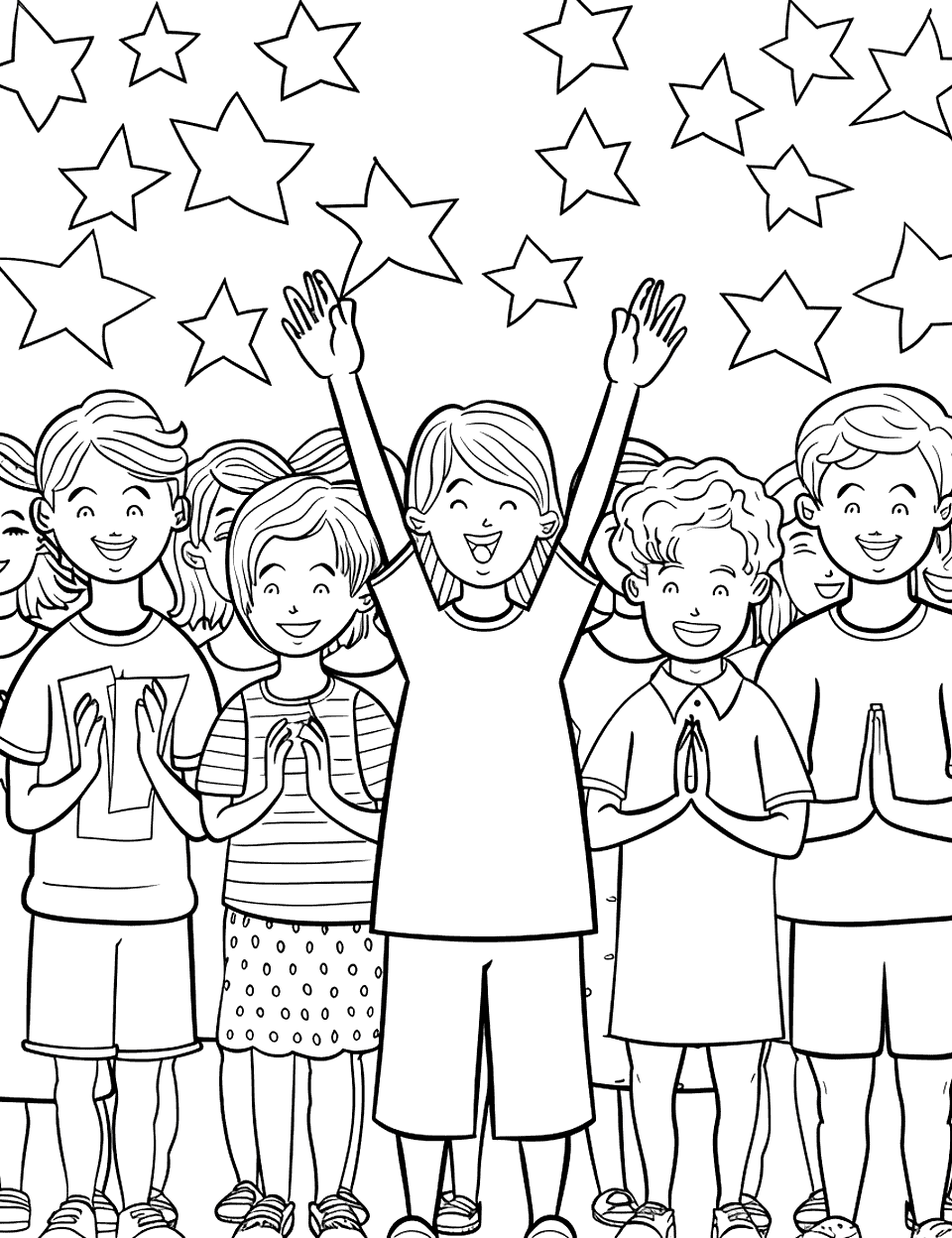
A crowd of grinning kids fills the bottom of the page, one of them throwing both arms up while the rest clap along. Big open stars float behind them and are the fastest part to finish. Every shirt is different, so this is the page for using up the odd colors nobody else picks. Faces and hands need small strokes, which suits a steadier hand.
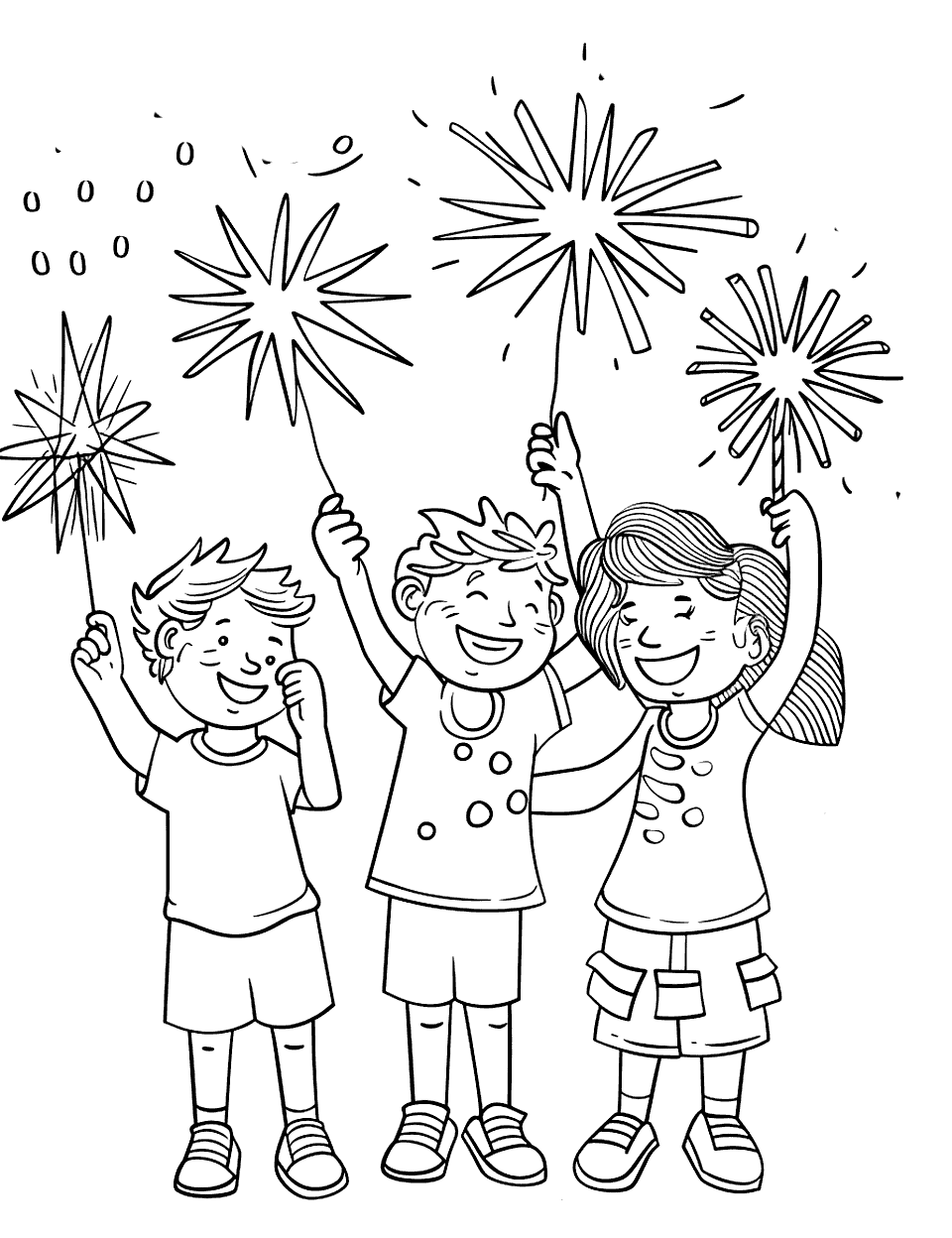
Sparklers held overhead, the three kids each throw off a burst of long spikes. Those bursts are open line work, so they take glitter pens and metallic markers well. The kids themselves are simply drawn, which keeps the page quick for younger colorers. Real sparklers burn at about 2,000 degrees Fahrenheit (1), so this is a natural page to color while you go over the safety rules for tonight.
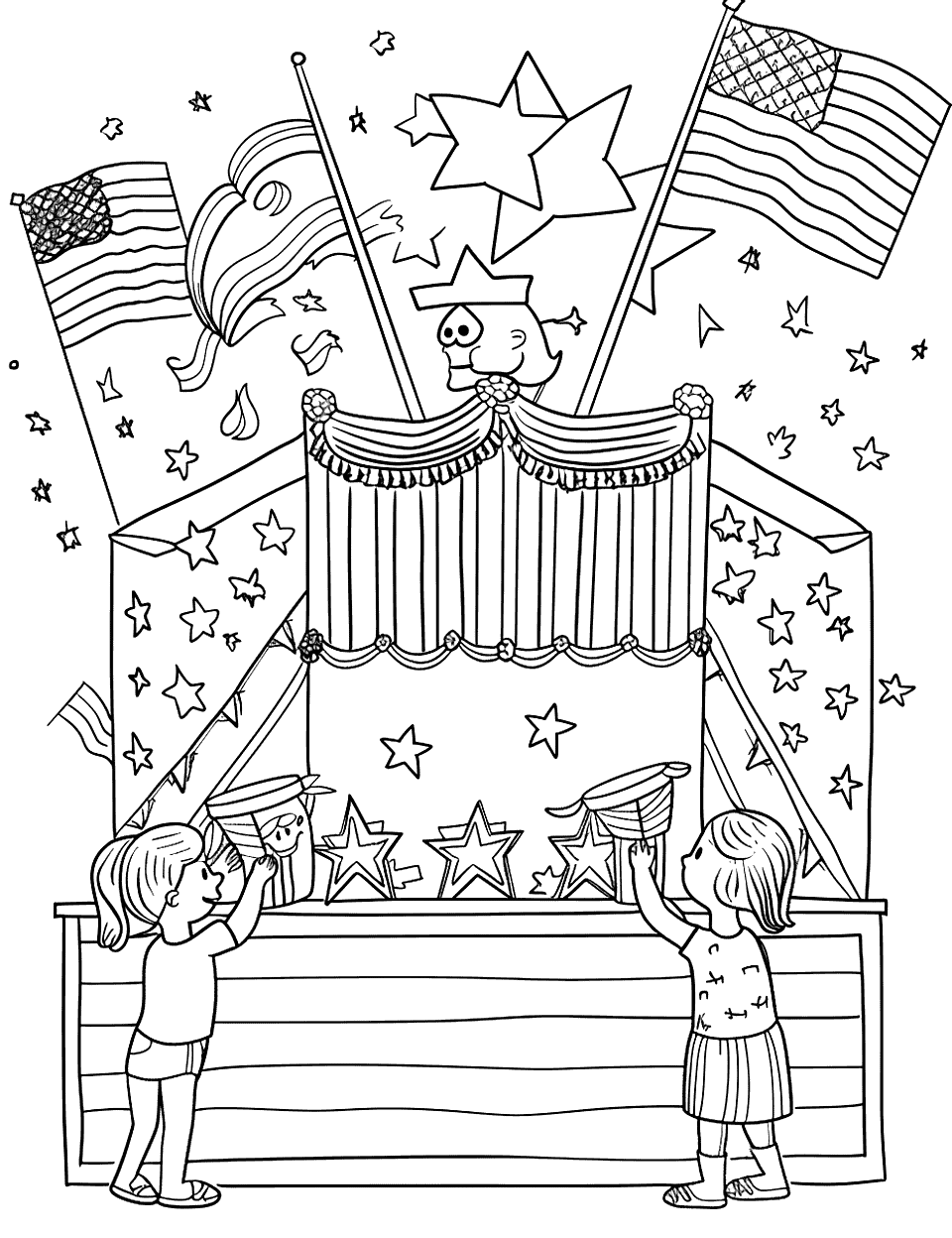
At either end of a striped float, two kids reach up to set hats along the front rail. Curtains with tassels hang across the middle and stars scatter over the panels and the sky above. Flags fly from both top corners and a grinning face in a tall hat pops up over the curtain. There is a lot happening here, so hand it to a child who likes a long project.
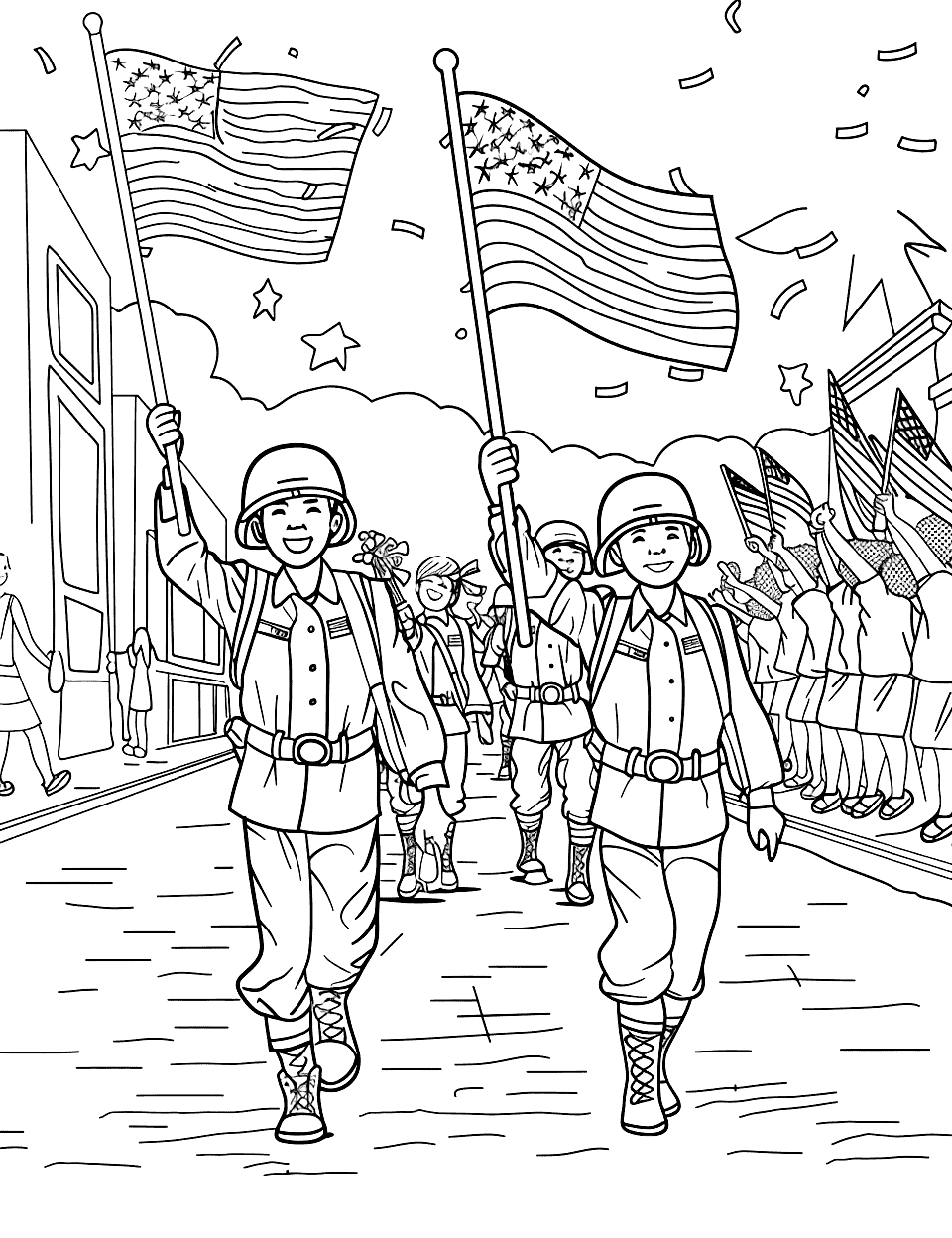
Down a city street, two soldiers in helmets lead the parade, each carrying a flag on a long pole. More marchers follow behind them while a crowd along the right edge waves smaller flags. Confetti drifts through the sky, and leaving a few scraps white gives the page some contrast. Several flags in one picture means a lot of stripes, so it suits a child with patience for repeating patterns.
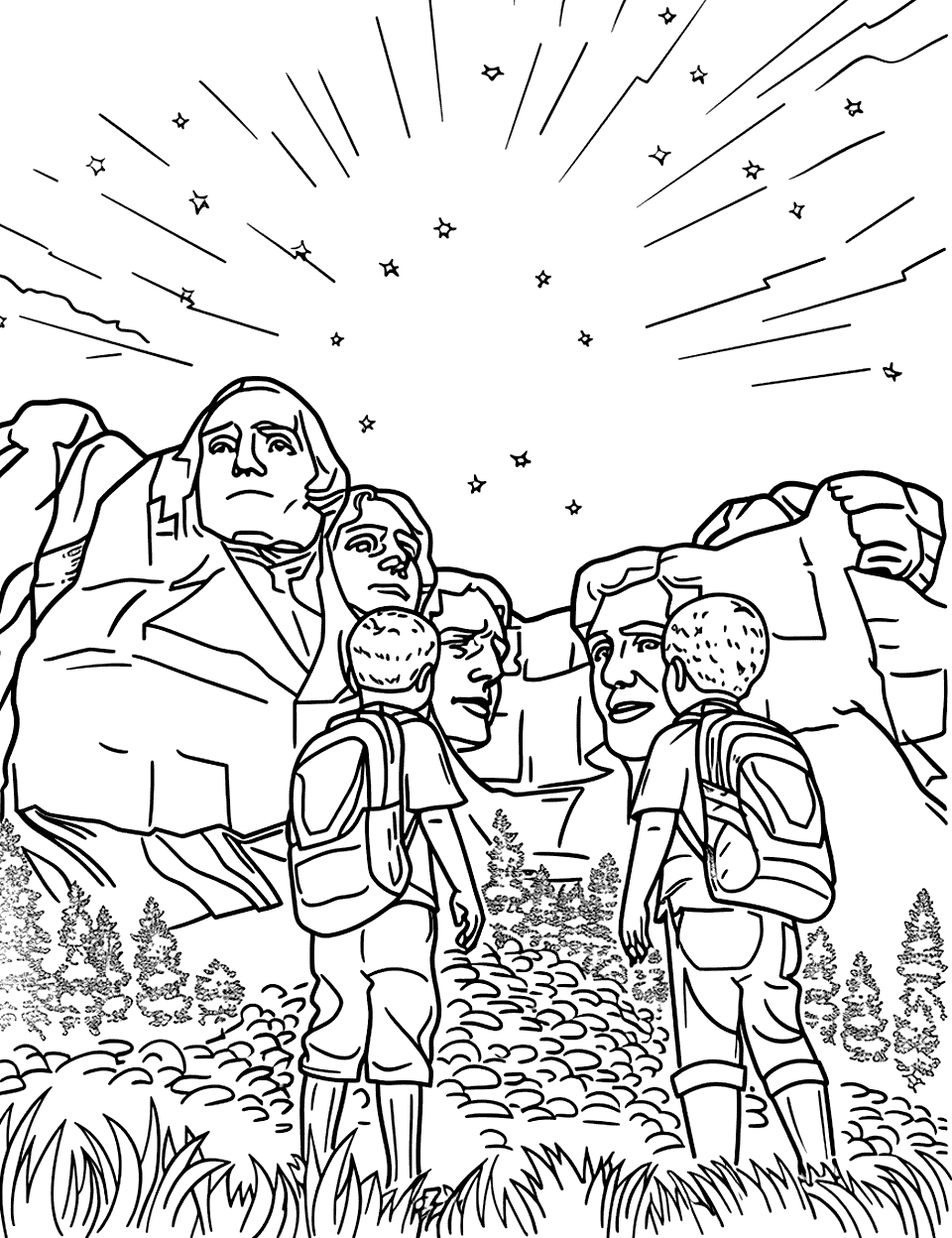
In the grass, two kids with backpacks stand looking up at the carved faces of Mount Rushmore. Sun rays and small stars fill the sky above the rock, which makes the top half quick to fill in. Grays and browns on the stone let the pine trees along the bottom stand out. Each of those heads is about 60 feet tall in real life (2), which is worth saying out loud while your child colors them.
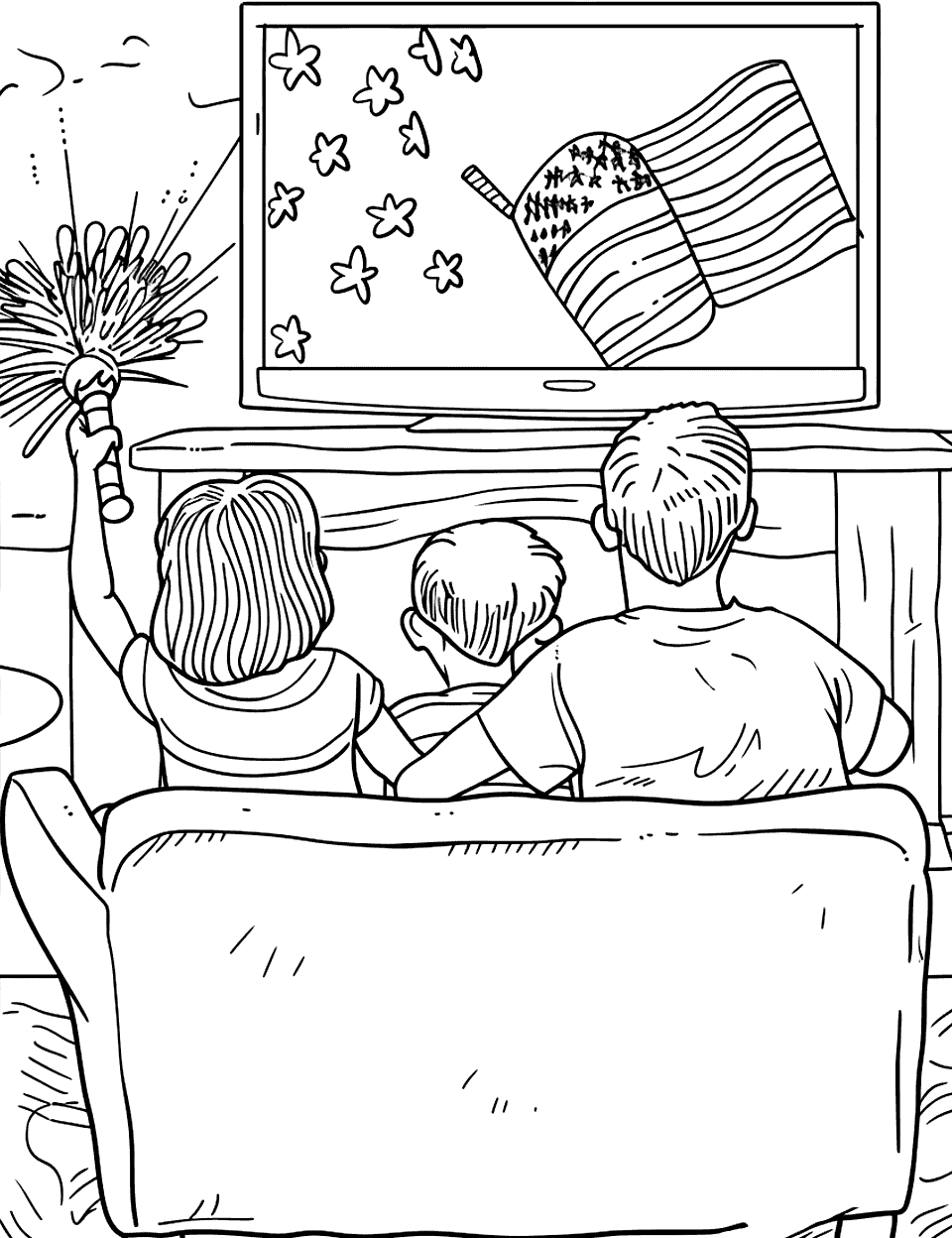
Seen from behind on a big couch, three viewers sit shoulder to shoulder while a flag and a scatter of stars fill the television screen in front of them. The one on the left holds up a firework that sprays sparks off the edge of the page. The couch takes up the bottom third and is left plain, so it is a fast, calming stretch to color. Start with the screen while hands are still steady.
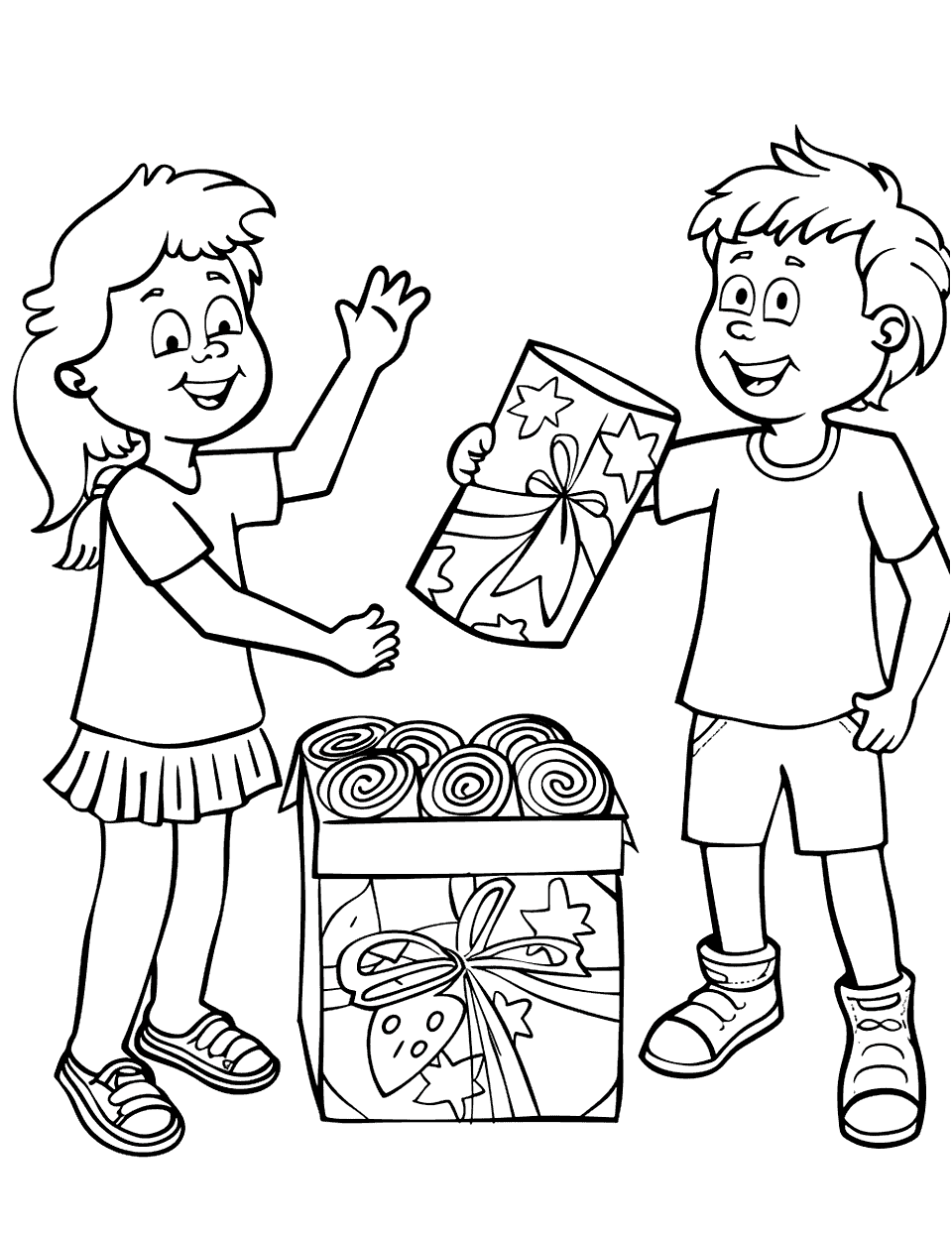
A star-covered package passes between two kids, over an open box packed with rolled bundles. The wrapping paper and the box are covered in stars, bows and ribbon, so most of the color goes into the patterns. Leave the clothes plain and let the gifts carry the page. Thick outlines and lots of white space make this an easy one for small children.
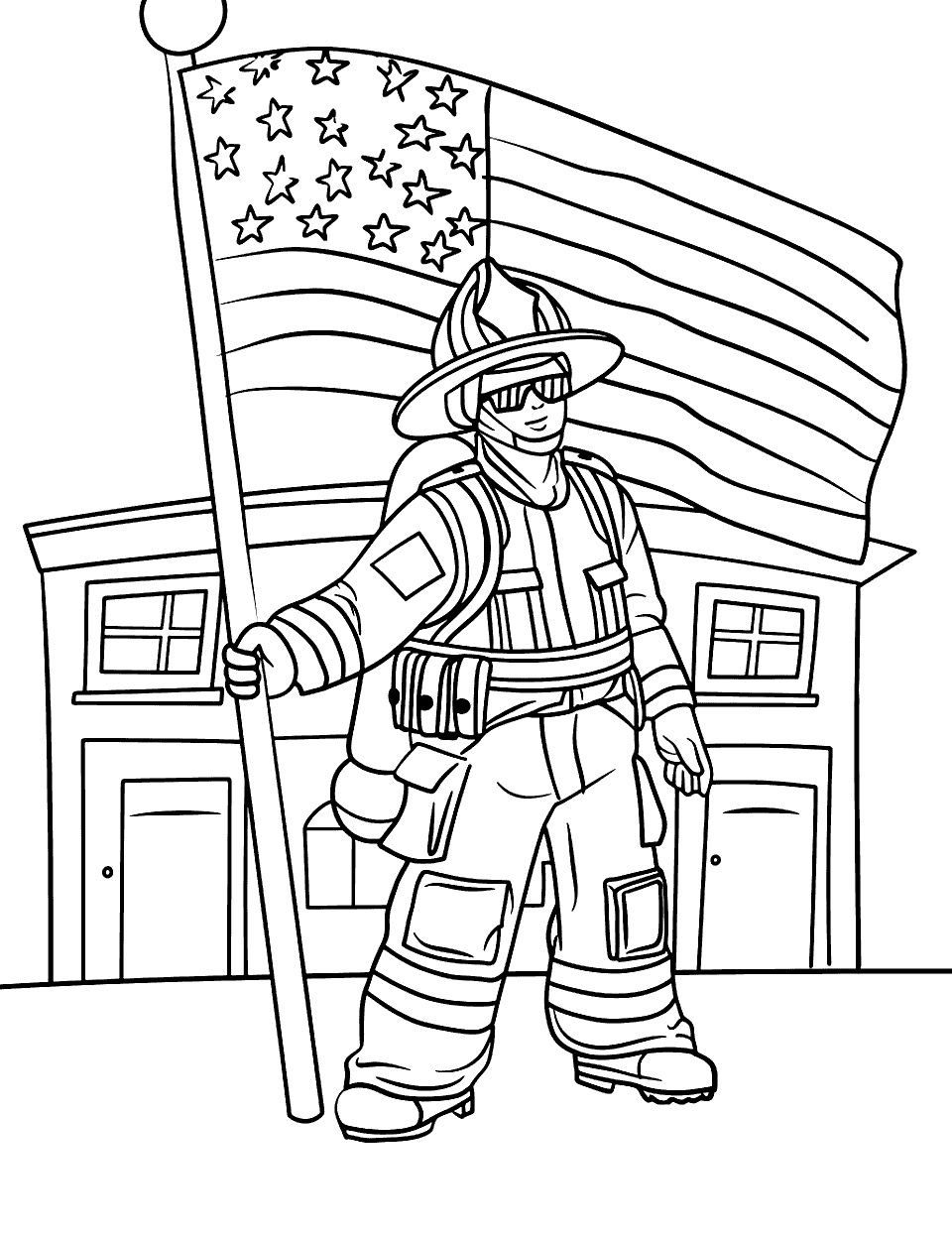
A firefighter in full turnout gear stands in front of the station holding a flag on a tall pole. Reflective stripes run across the jacket, gloves and trousers, which gives you a ready-made pattern to pick out in yellow. The helmet and goggles are worth going slowly on, since they carry the whole face. The flag behind fills the top of the page, so those stripes are big and forgiving.
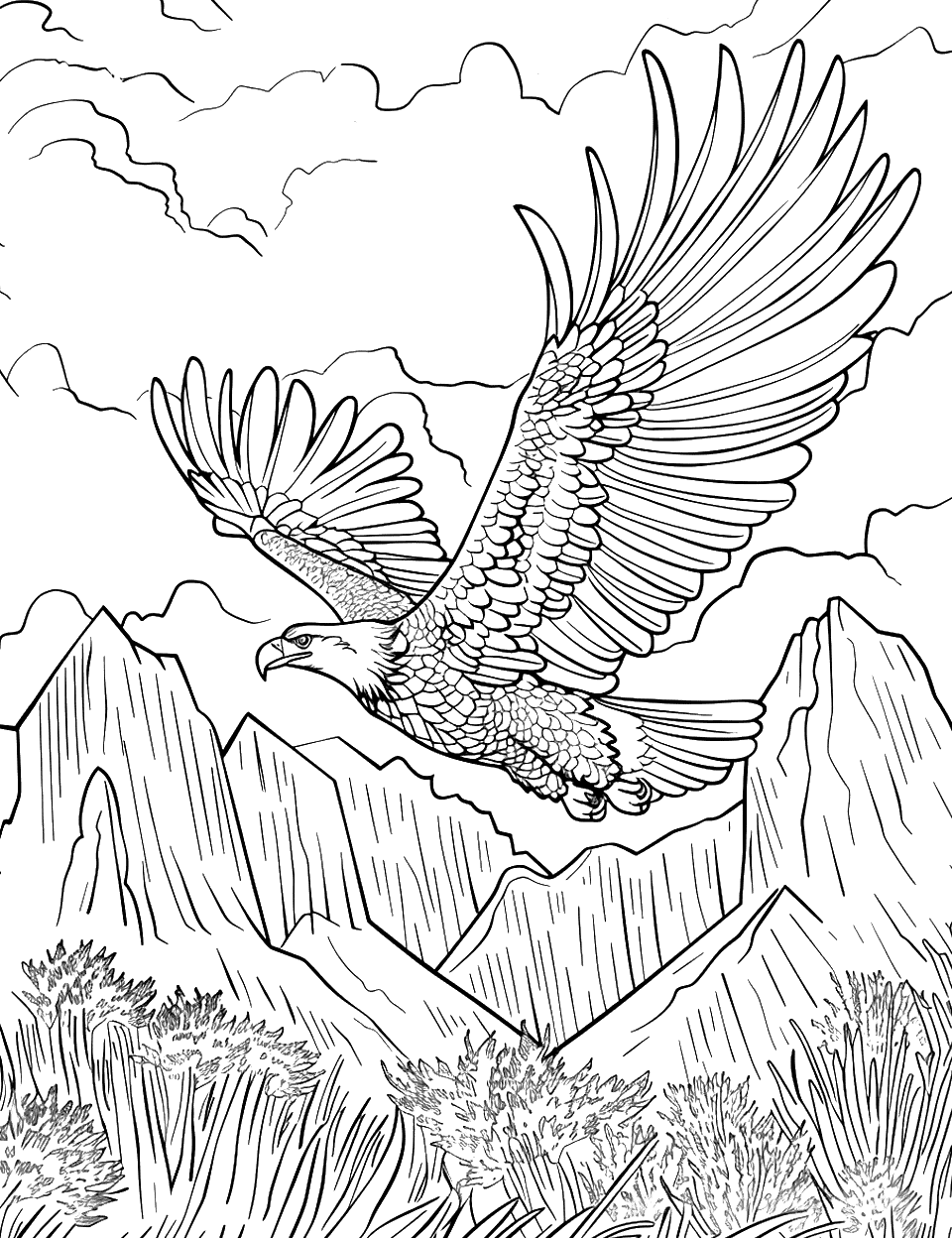
An eagle glides across the page with both wings spread, mountains rising below and clouds stacked behind. The wing feathers are drawn one by one and the rock faces are shaded with long lines, which makes this a slow, satisfying sheet. Keep the mountains cool and gray and let the bird stay warm brown and white. Bushes along the bottom edge give you a last strip of green.
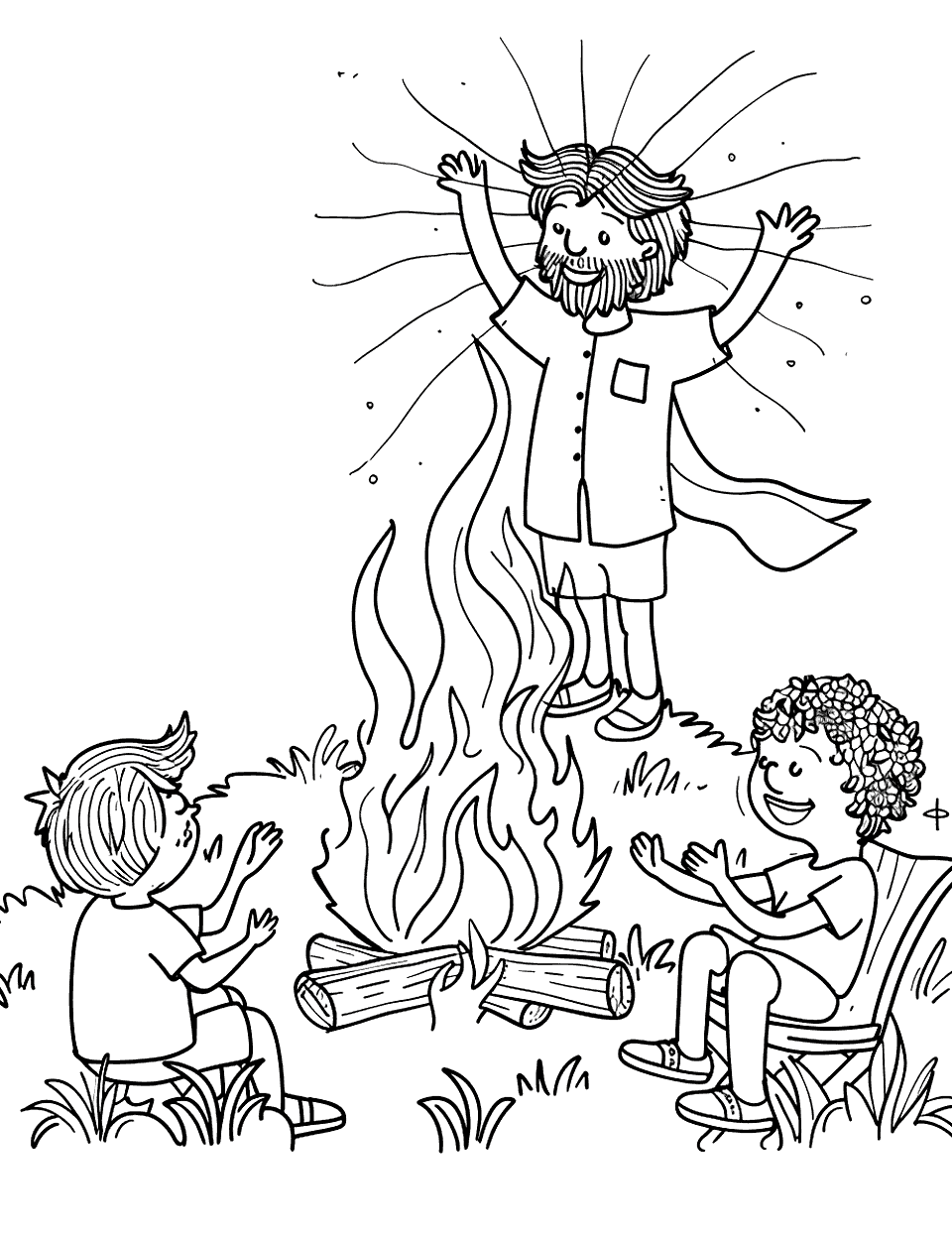
A bearded storyteller stands behind a campfire with both arms raised mid-tale and a cape flaring out behind him. Two kids listen from either side of the fire with their hands stretched toward the flames. The fire is the obvious spot for orange and yellow, and the logs underneath take a quick brown. It is a simple scene with a lot of open space, so a younger child can finish it in one sitting.
By using our free coloring pages, you acknowledge and agree to our full disclaimer. All materials are for personal, non-commercial use only and all rights belong to their respective license holders.
Which Independence Day Coloring Pages Suit Your Child’s Age?
Match the sheet to the hand holding the crayon: thick, open outlines for preschoolers, busy scenes for school-age kids, and the feather-by-feather eagles for older kids and adults.
For toddlers and preschoolers, start with the patriotic dog, the ice cream truck, the letter-writing table and the wrapped gift. All four use heavy outlines with big empty areas, so a chunky crayon fills them fast and nothing looks ruined if a line gets crossed.
School-age kids usually want more to do. The fireworks stand, the cold drink stand, the parade float and the cheering crowd are packed with small shapes, labels and patterns, and each one can hold a different color without the page falling apart.
Older kids and adults should go straight to the perched eagle by the lake and the soaring eagle over the mountains, both drawn feather by feather, or the carved stone faces on Mount Rushmore. The eagles in particular need sharp pencils or fine-tip pens rather than crayons.
What Do the Symbols on These Coloring Pages Mean?
The flag, the eagle, the torch and the carved faces on these sheets all point back to the same summer in 1776, and naming them turns a coloring session into a short history lesson.
The Continental Congress adopted the Declaration of Independence on July 4, 1776, which is the date we still celebrate. The engrossed parchment was not signed that day: delegates began signing it on August 2, and 56 of them signed in the end (3). That makes the blank scroll sheet a good moment to ask your child what they would put their name to.
The fireworks, parades and bonfires on these pages were predicted almost immediately. Writing to his wife Abigail on July 3, 1776, John Adams said the day “ought to be solemnized with Pomp and Parade, with Shews, Games, Sports, Guns, Bells, Bonfires and Illuminations from one End of this Continent to the other from this Time forward forever more” (4).
The Statue of Liberty sheet is worth a word too. The National Park Service measures her at 305 feet 1 inch from the ground to the tip of the torch, which is a useful thing to mention while your child colors in that one small flame.
Activities to Do With Independence Day Coloring Pages
The fun does not have to stop when the coloring does. These pages turn into decorations, gifts and teaching tools with very little extra effort. Here are six ways to use the finished art.
Create Custom Placemats
If you are hosting a cookout, let the kids design the table setting. Have them color their favorite scenes, then laminate the sheets into reusable, spill-proof placemats. It keeps them busy while you grill and every seat gets a decoration the kids made themselves.
Make a Patriotic Banner
Print several pages featuring flags, stars and eagles. Once they are colored, cut out the shapes or trim the sheets into triangles. Punch holes in the top corners and string them together with twine or red ribbon. Hang the bunting across the porch or the living room doorway.
Write Your Own Declaration
The blank scroll sheet was made for this. Before anyone picks up a crayon, have your child write a house declaration on the empty parchment: later bedtimes in July, no chores on Sunday, ice cream after the parade. Then everyone signs at the bottom, which is exactly what the delegates did in August 1776.
Send Thank-You Cards
Use the flag salute and the marching parade pages to talk about gratitude. After coloring, have your child write a short message in the white space along the border. Local veterans’ organizations and nursing homes will usually take a stack of them, and a hand-colored card lands better than a printed one.
Design Parade Wands
If you are heading to a local parade, bring your own flair. Color a flag or firework image, cut it out and tape it to a wooden dowel or a sturdy straw. Add red, white and blue streamers to the handle and your kids have wands to wave as the floats go by.
Glow in the Dark Fireworks Art
For the firework sheets, try neon markers or glow-in-the-dark paint. Once the sun goes down and you are waiting for the real show, the pictures light up the room. It is an easy way to fill the restless hour before dark.
FAQs
Why Do We Celebrate Independence Day on July 4th?
July 4th marks the day in 1776 when the Continental Congress adopted the Declaration of Independence. The document announced that the thirteen colonies were no longer under British rule. Most of the delegates actually signed the parchment in August, but the date on the document is the one that stuck.
What Are the Best Art Supplies for These Pages?
Colored pencils and fine-tip pens work best on the detailed sheets, including the perched eagle, the soaring eagle and the colonial scene, because they hold a line inside tight feather and brick shapes. Crayons and washable markers are the better choice for broad sheets like the flag salute, the patriotic dog and the ice cream truck. Glitter pens are worth having on hand for the sparkler and firework bursts.
Are These Coloring Pages Suitable for Toddlers?
Yes, several sheets are drawn with thick outlines and large open areas that suit toddlers, including the ice cream truck, the dog with the flag, the wrapped gift and the picnic scene. Those pages have few small shapes, so a chunky crayon covers them quickly. Leave the historical scenes and the feathered eagles for older children.
Can I Use These Pages for a Classroom Lesson?
Yes, and a few of them were made for it. The blank scroll page lets each student write and sign their own declaration, and the Mount Rushmore page pairs with a lesson on the four presidents carved there. The colonial scene and the parade sheets give visual learners something to look at while you talk through the founding.
What Paper Should I Print These Coloring Pages On?
Plain copy paper handles crayons and colored pencils without any trouble. Switch to cardstock if your child is using markers, paint or glitter glue, since heavy ink bleeds through thin paper and onto the table. Cardstock also holds up if you plan to laminate the sheet or hang it outside.
How Can I Display the Finished Art?
Tape them to your front windows so the color shows from the street, which beats the refrigerator door. You can also punch holes along one edge and bind a stack into a keepsake book to pull out next summer. A cheap dollar-store frame turns the best one into a wall piece for the week.