Which planet gets the wild colors at your table tonight?
Fifty free outer space coloring pages sit below, from chunky rockets a toddler can finish in five minutes to canyon scenes that keep an older child busy all afternoon.
Every sheet is described from the drawing itself, so you can pick before you print: which pages have thick forgiving lines, which reward colored pencils, and which eat a lot of ink.
Right click any image, save it, and print it at full page size. Below the gallery you will find the space facts behind the drawings, an age guide, activity ideas, and answers to the printing questions parents ask most.
Earth from Afar
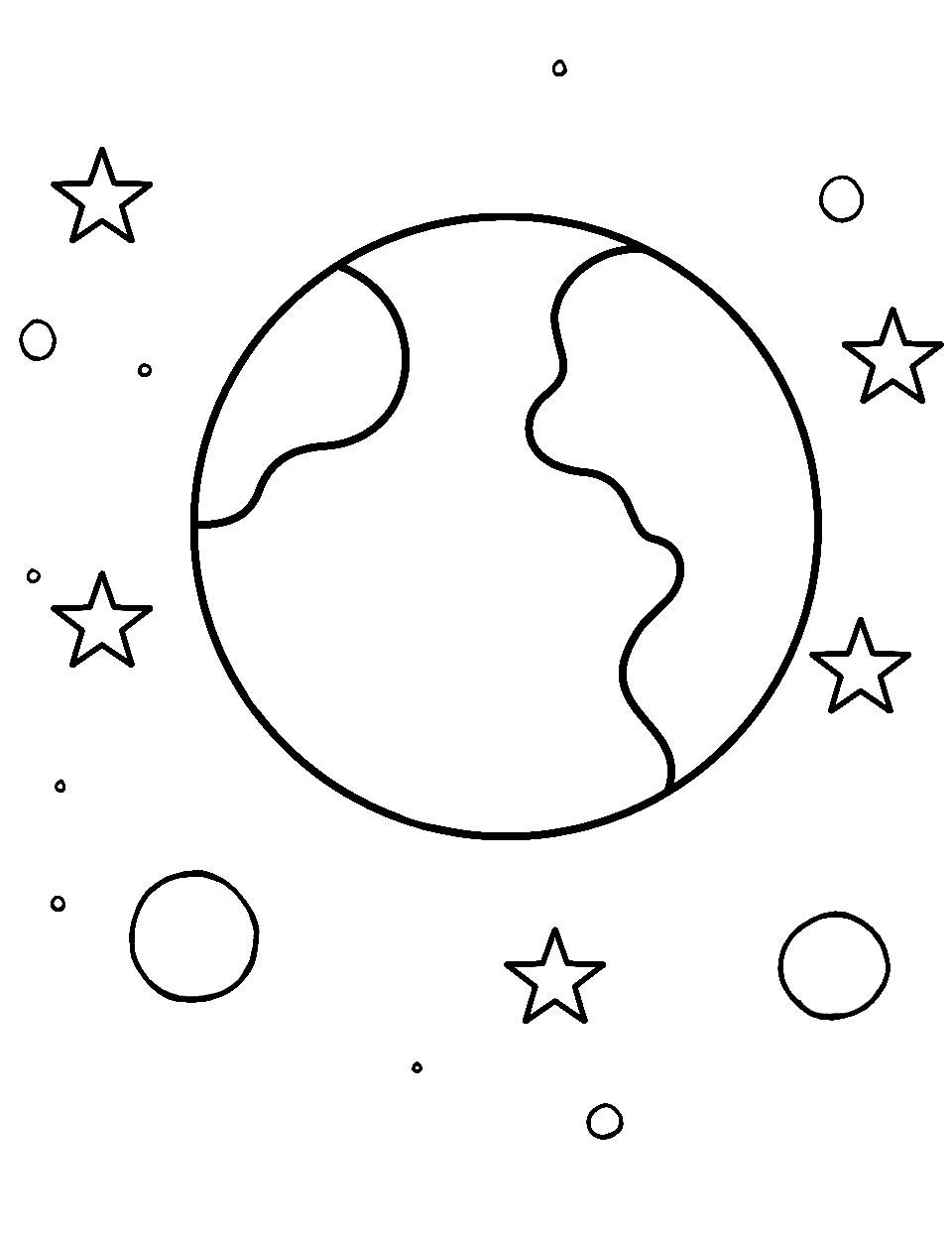
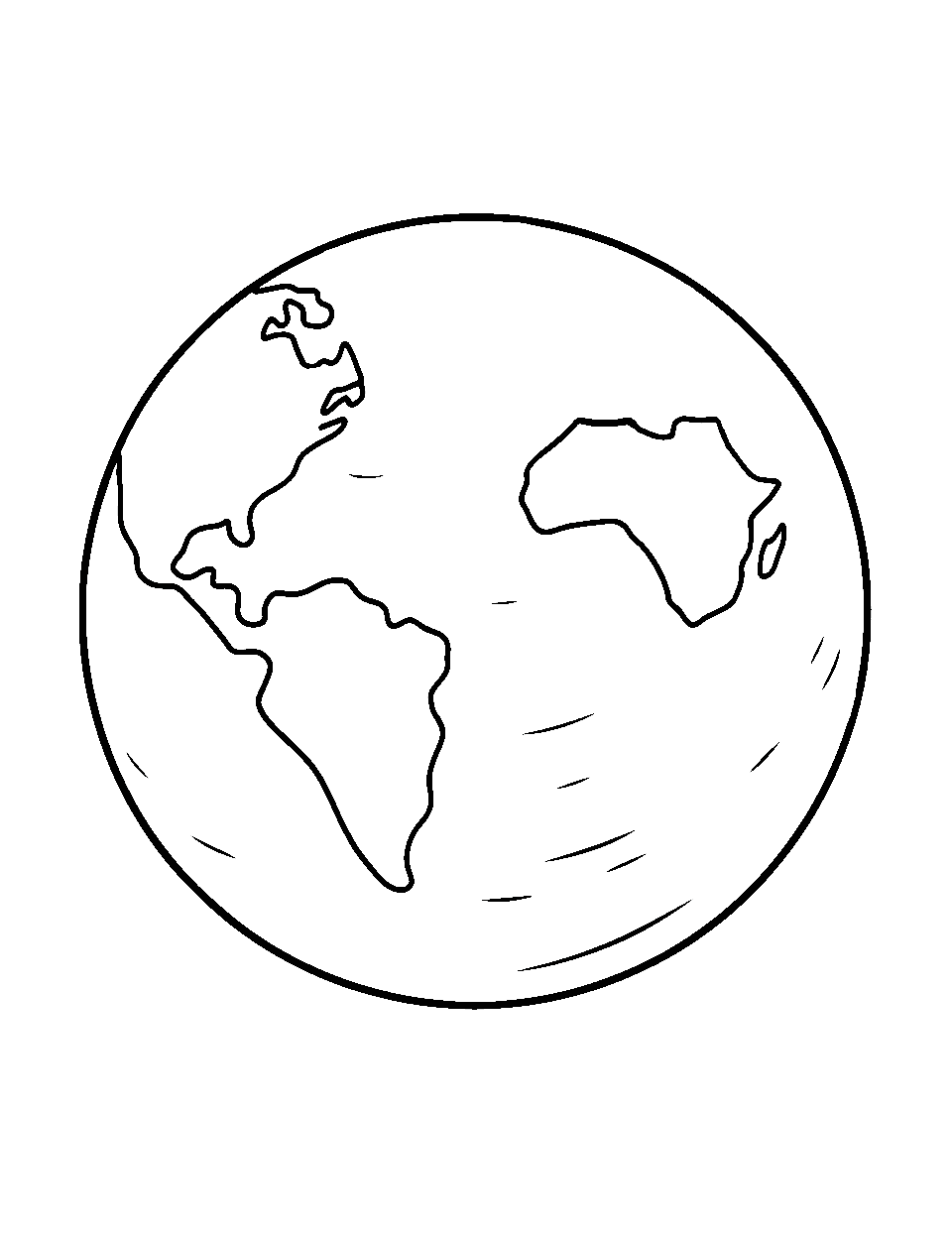
Earth takes up the middle of this page, its continents drawn as soft curving outlines with stars and small circles scattered around it. The shapes inside the globe are large and open, so blue seas and green land go down fast even with fat crayons. Print this view of Earth first if your child is still getting used to staying inside the lines.
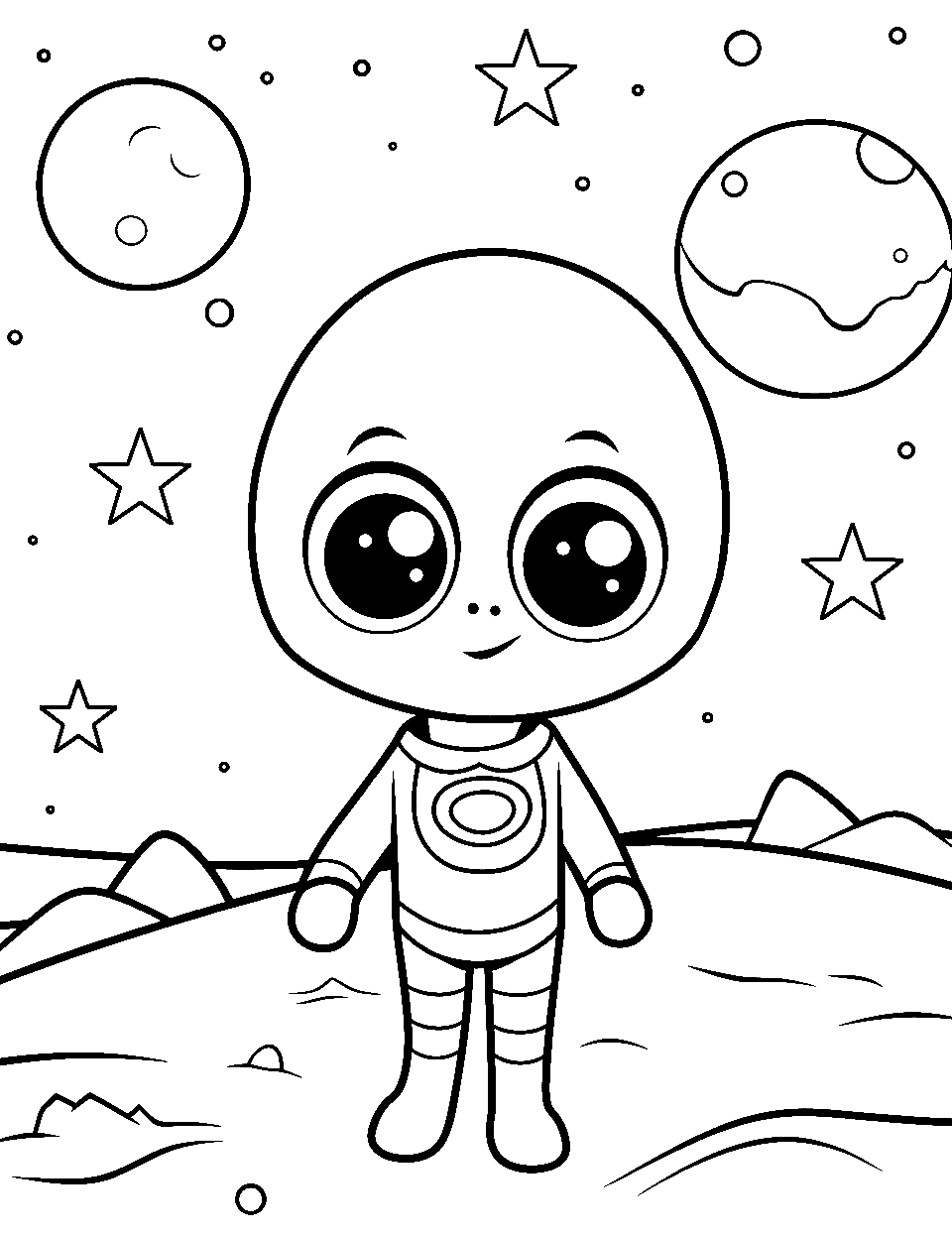
Say hello to a round-headed alien with enormous eyes, standing on bumpy ground with two planets hanging in the sky above. The suit has a target-shaped badge on the chest and striped sleeves and legs, which gives a child several small areas to fill with different colors. Green is the obvious choice for the alien, though a purple or orange one is just as fair. This kawaii-style sheet suits kids who like faces more than machines.
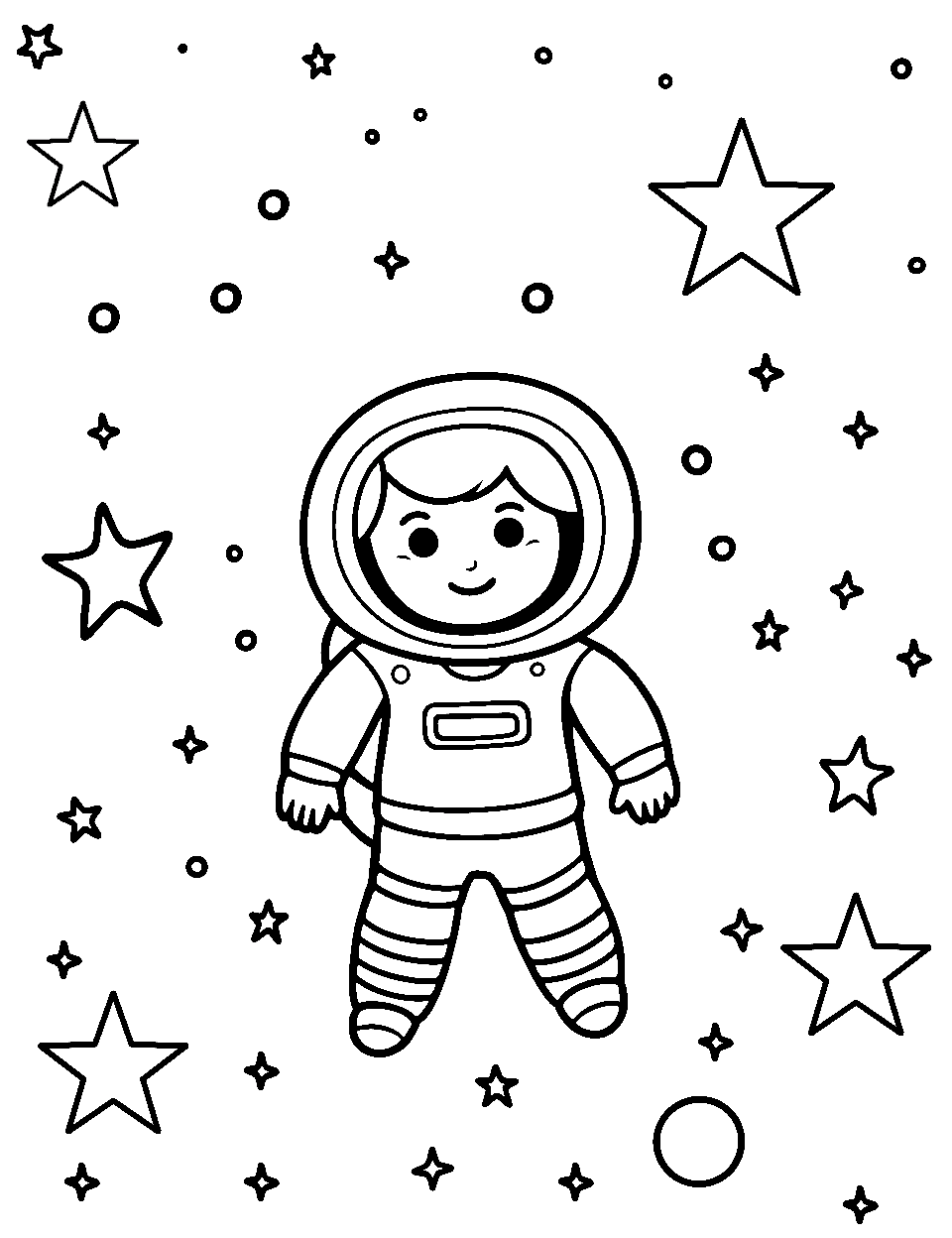
A smiling child astronaut floats in the center of a sky packed with stars of every size, from tiny four-point sparkles to fat five-point outlines. The suit is drawn in wide segments with ribbed arms and legs and a control panel on the chest. Because the stars are simple shapes, they make good filler for a child who wants to keep going after the main figure is done. Yellow stars over a dark blue sky give the strongest finish.
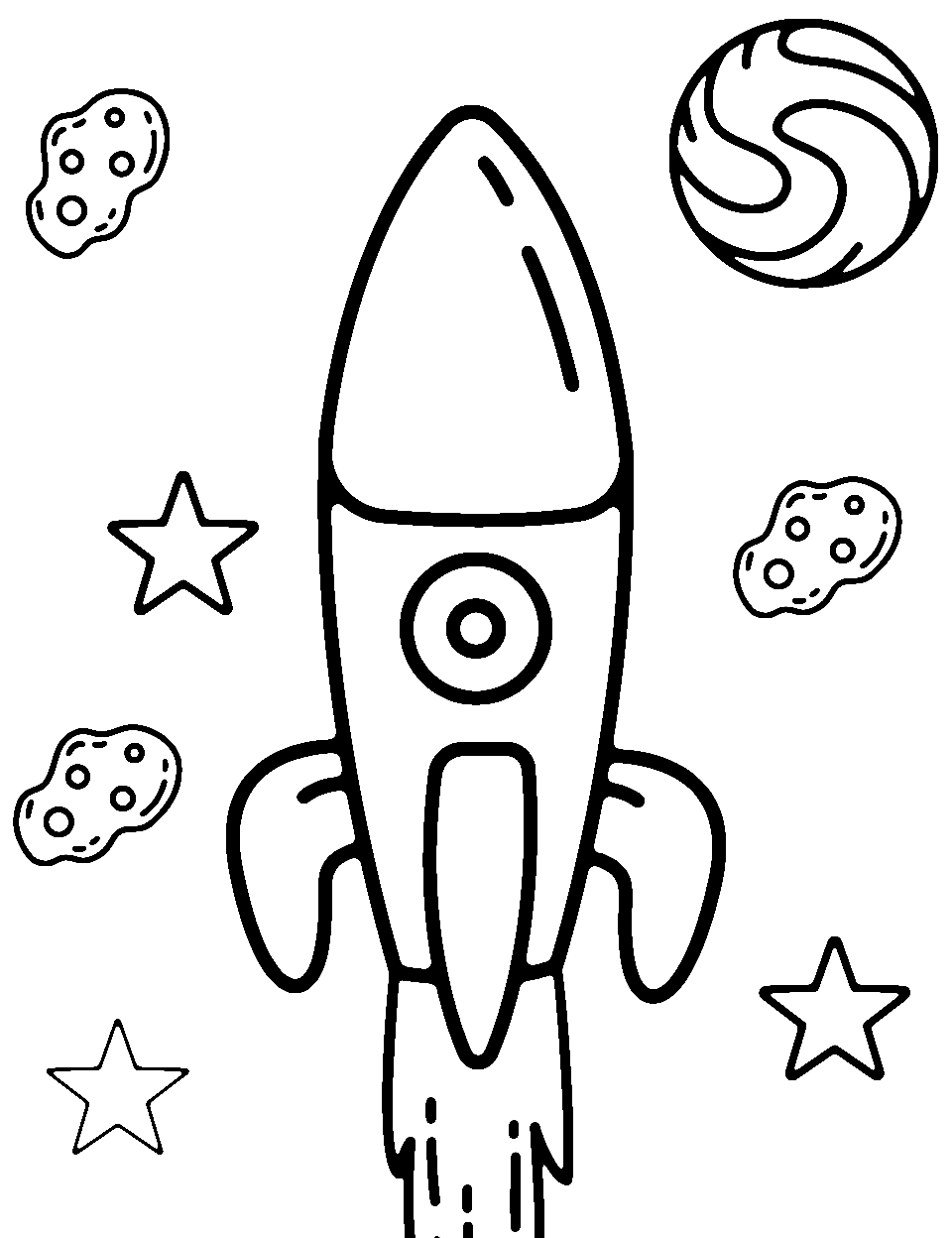
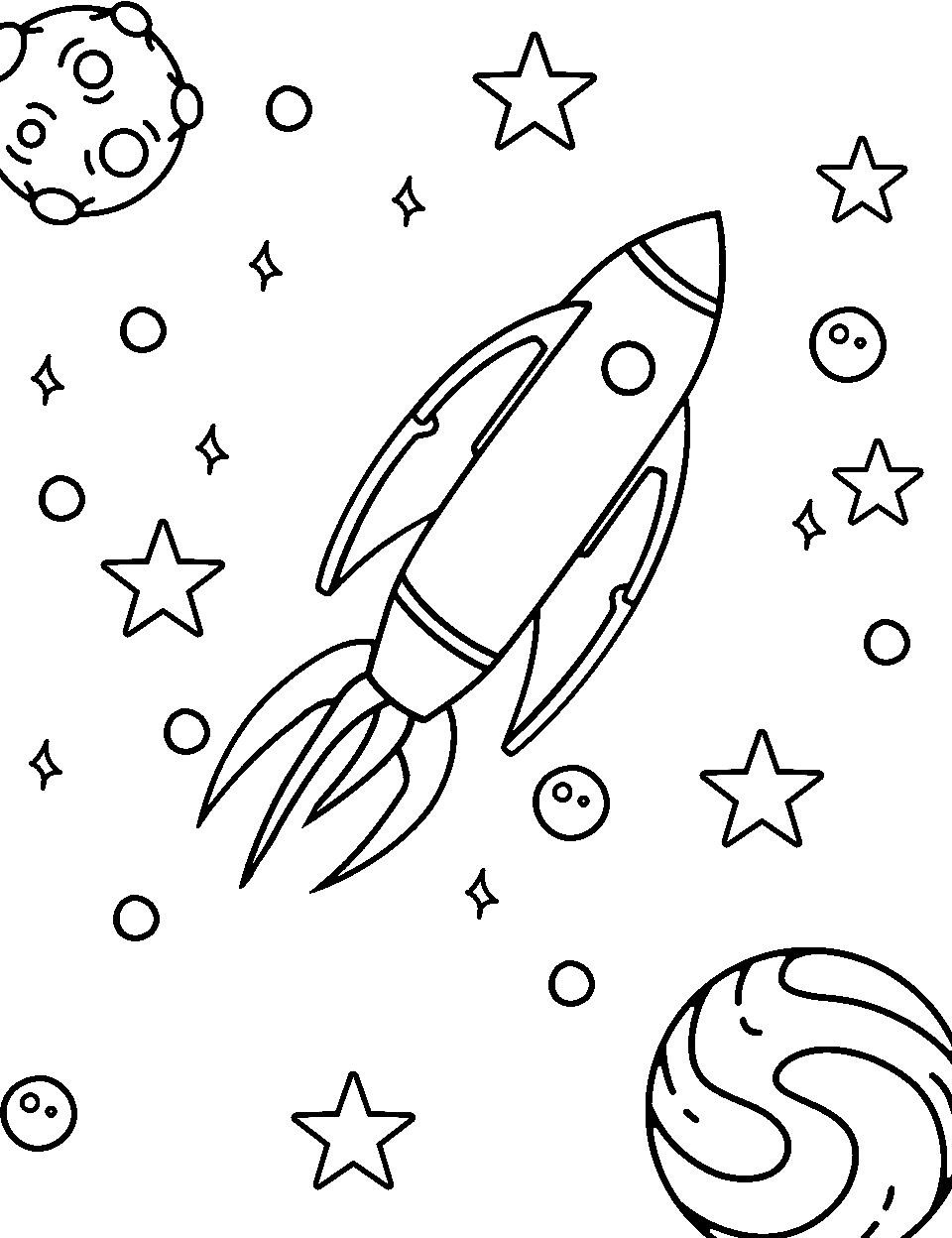
Thick, confident lines shape this rocket, from the round porthole in the middle to the wide fins at the base and the flame underneath. Three cratered rocks, a swirled planet and a few chunky stars fill the rest of the page without crowding it. There is almost no fine detail here, so it holds up to heavy crayon pressure and even to paint.
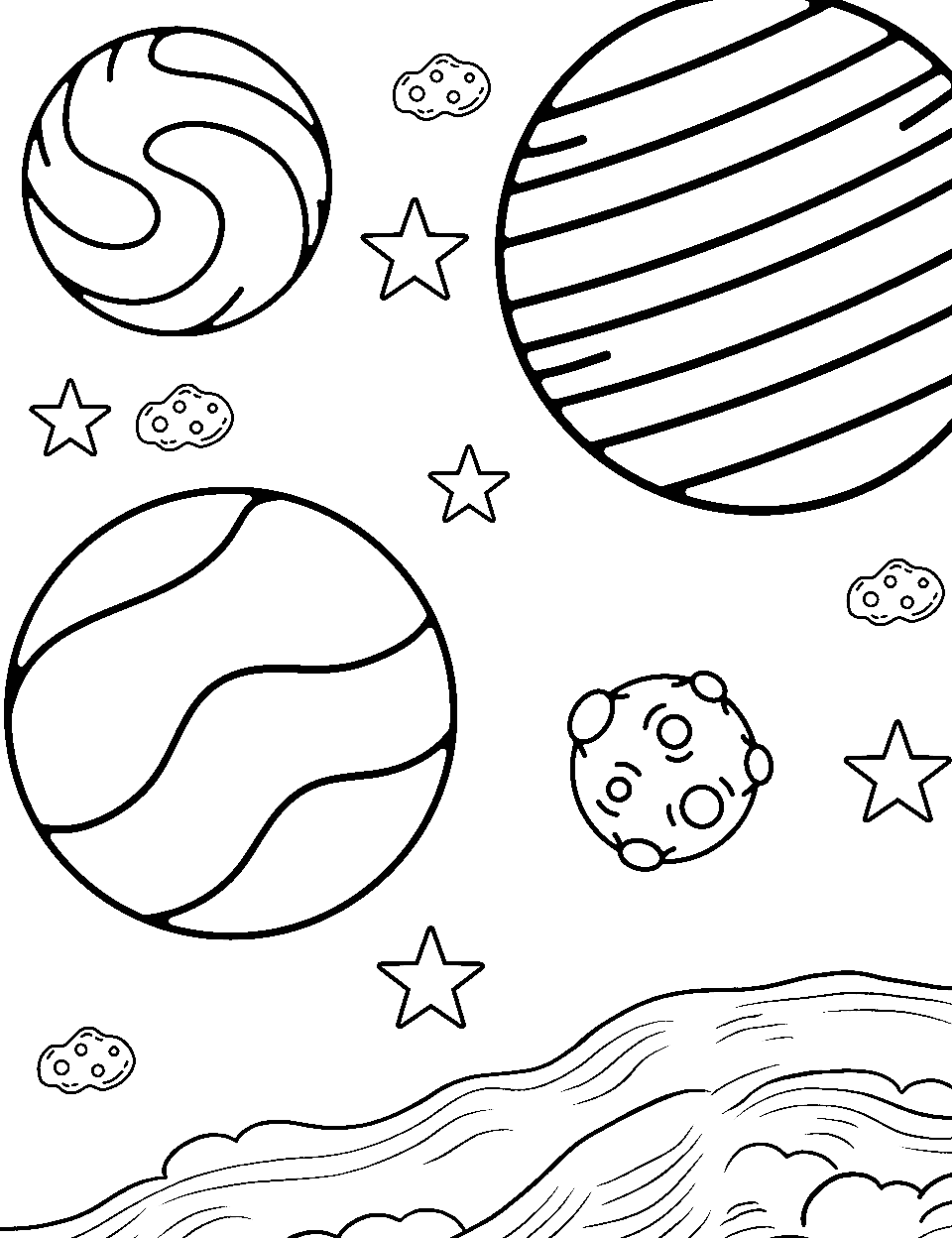
Four planets share this page, each with its own pattern: one with a swirl, one covered in fine stripes, one with wide wavy bands and one dotted with craters. Soft wavy lines run along the bottom edge, and small rocks and stars fill the gaps between the worlds. Giving each planet a different color scheme turns the sheet into a quick lesson in how varied planets can look. The striped one takes patience, so it suits an older sibling.
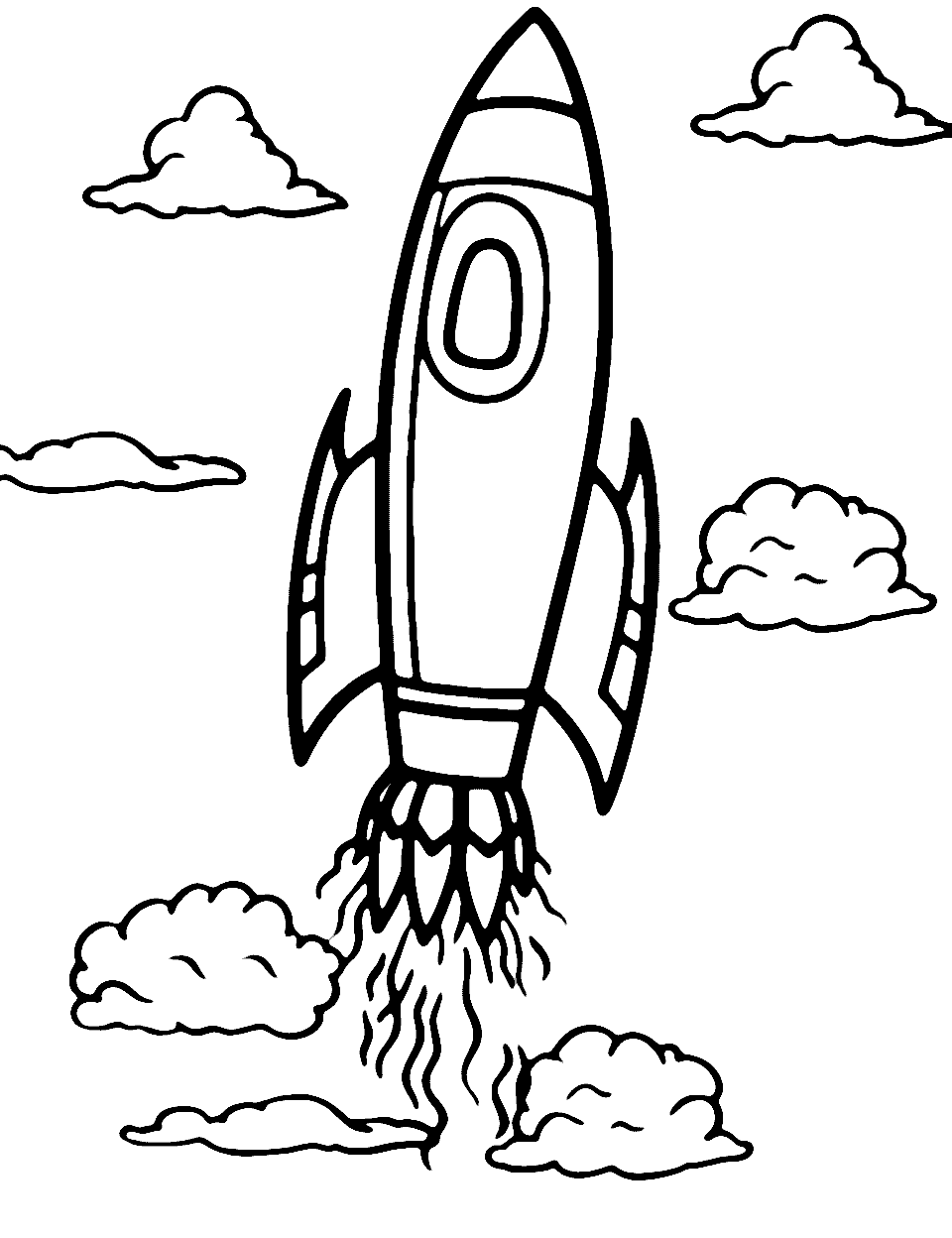
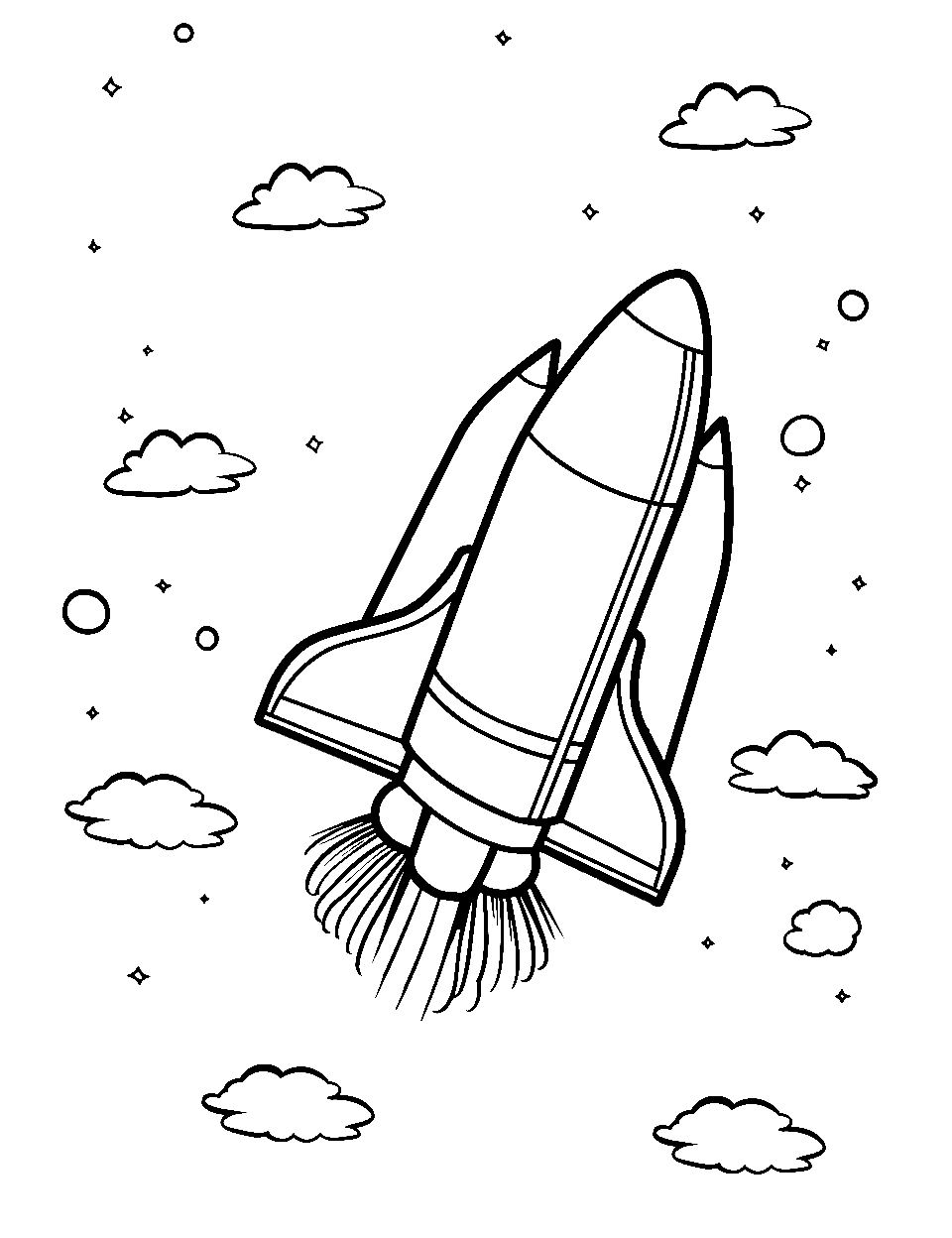
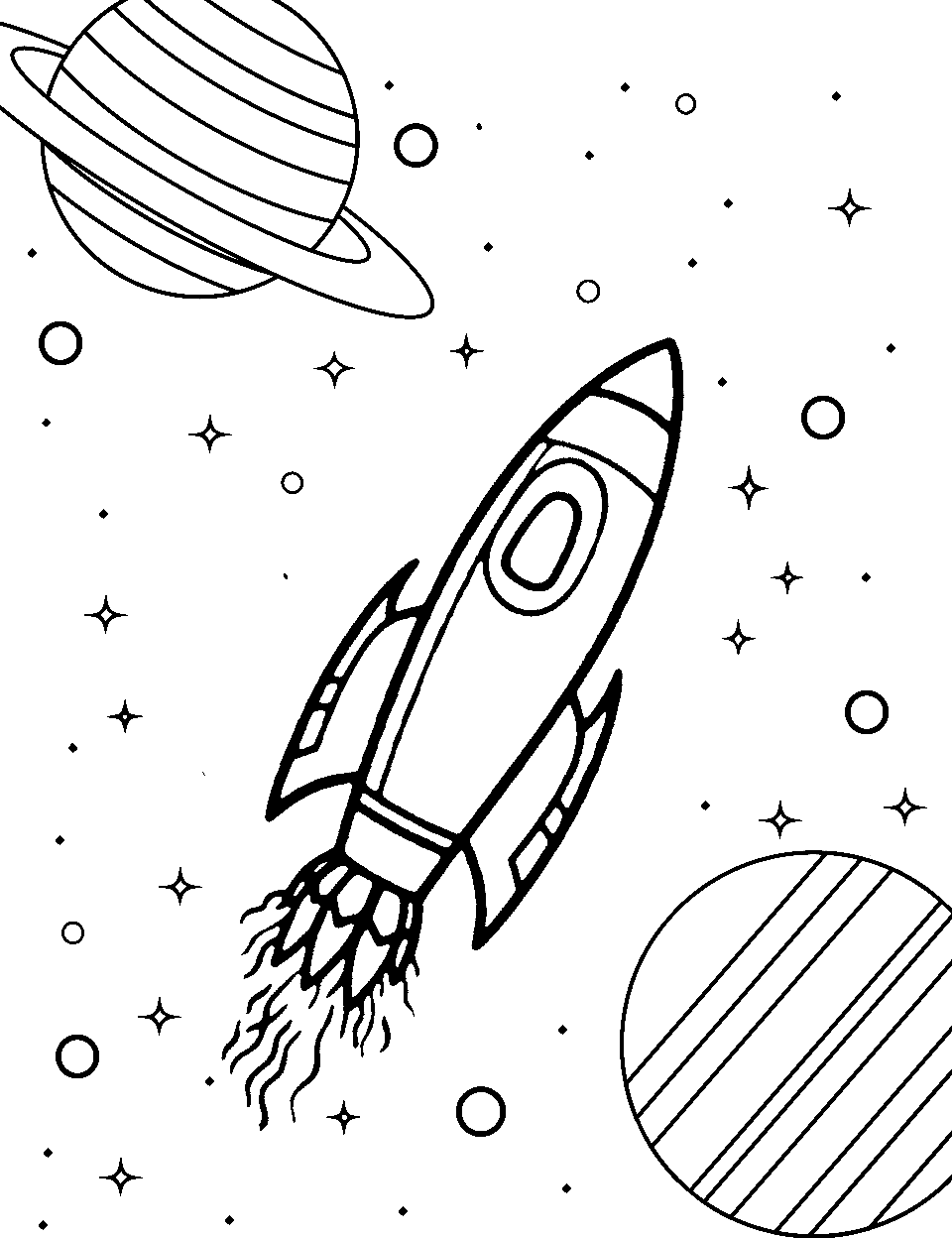
Flames and puffy clouds surround this rocket as it climbs, and the body is broken into clean panels with a large oval window. The cloud shapes are big and rounded, easy to fill with grays or leave white for contrast. Orange and yellow in the flame give the page its heat. Print it on thicker paper if your child wants markers on those wide open areas.
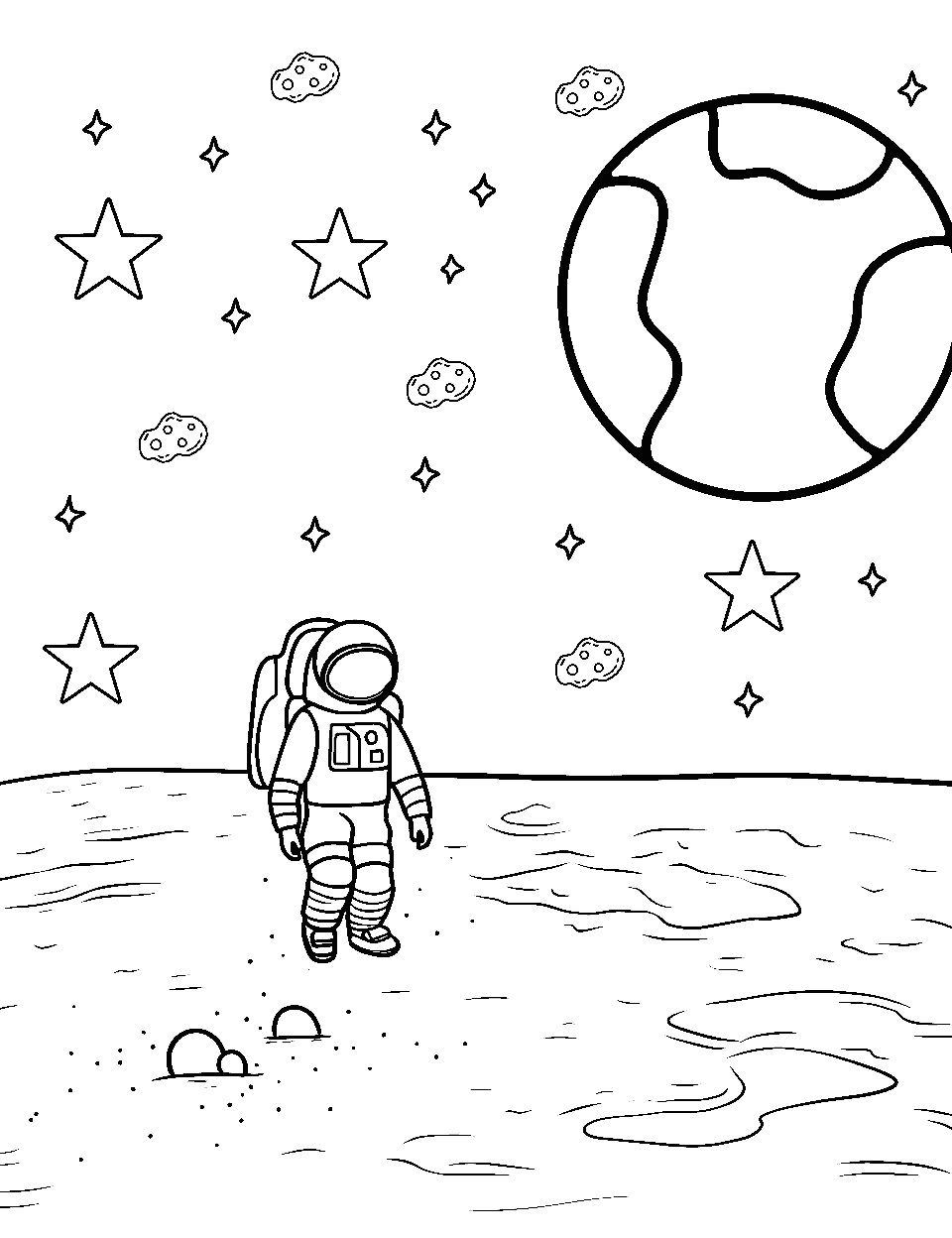
An astronaut with a backpack stands alone on a cratered surface while Earth hangs in the upper corner of the sky. Small rocks, stars and dents in the ground fill out the scene, and the lines are thin, so colored pencils behave better here than markers. Gray dust, a white suit and a blue and green Earth keep it close to a real mission photo. Pair it with a bedtime story about the Apollo landings.
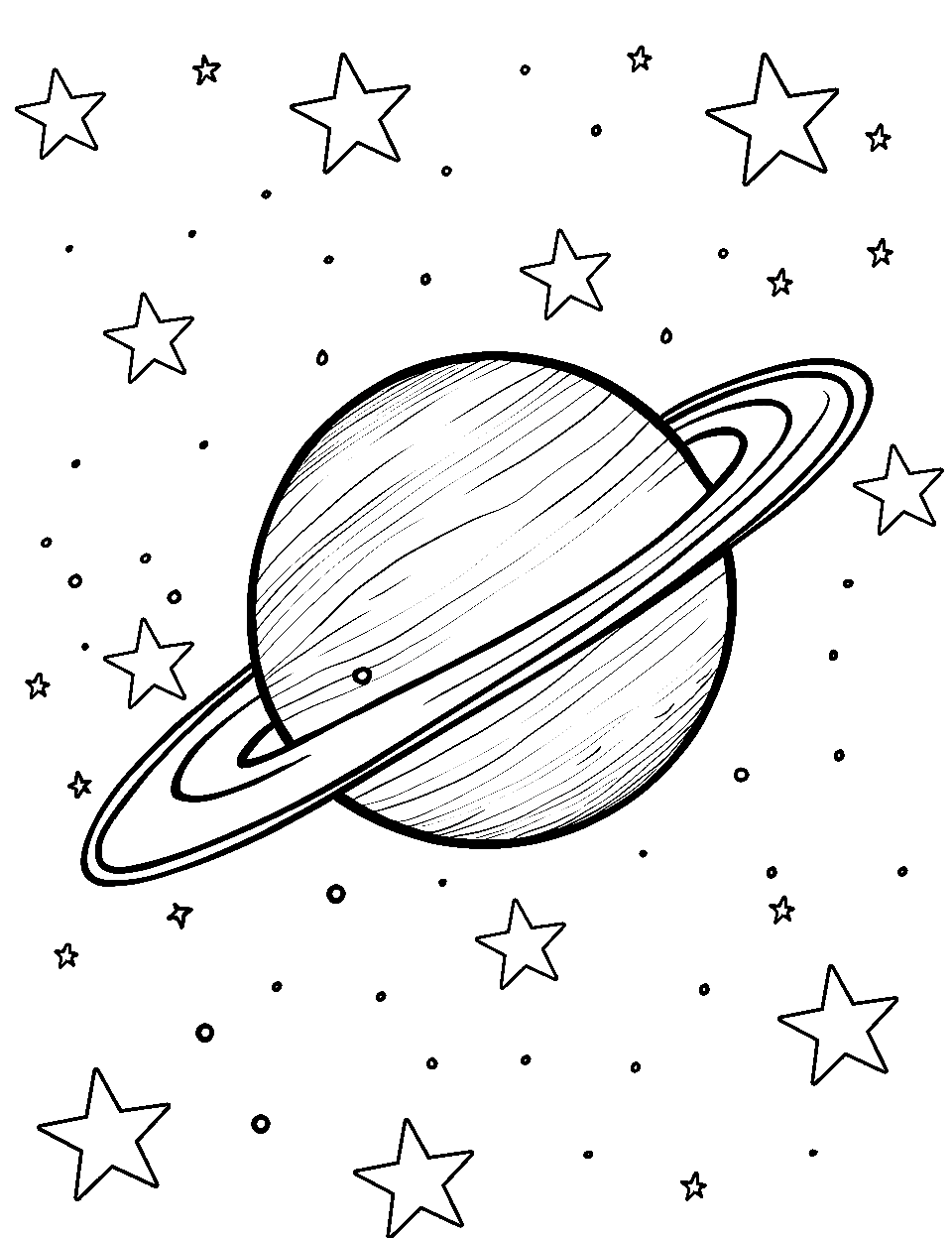
Saturn dominates this sheet, its surface filled with fine hatch lines and its rings sweeping wide past the edges of the planet. Stars and dots crowd the background, so the page rewards a child who likes slow, careful work. Yellows and golds on the planet with paler rings keep the ring gaps visible. Fine-tip pencils beat markers here because the hatching is closely spaced.
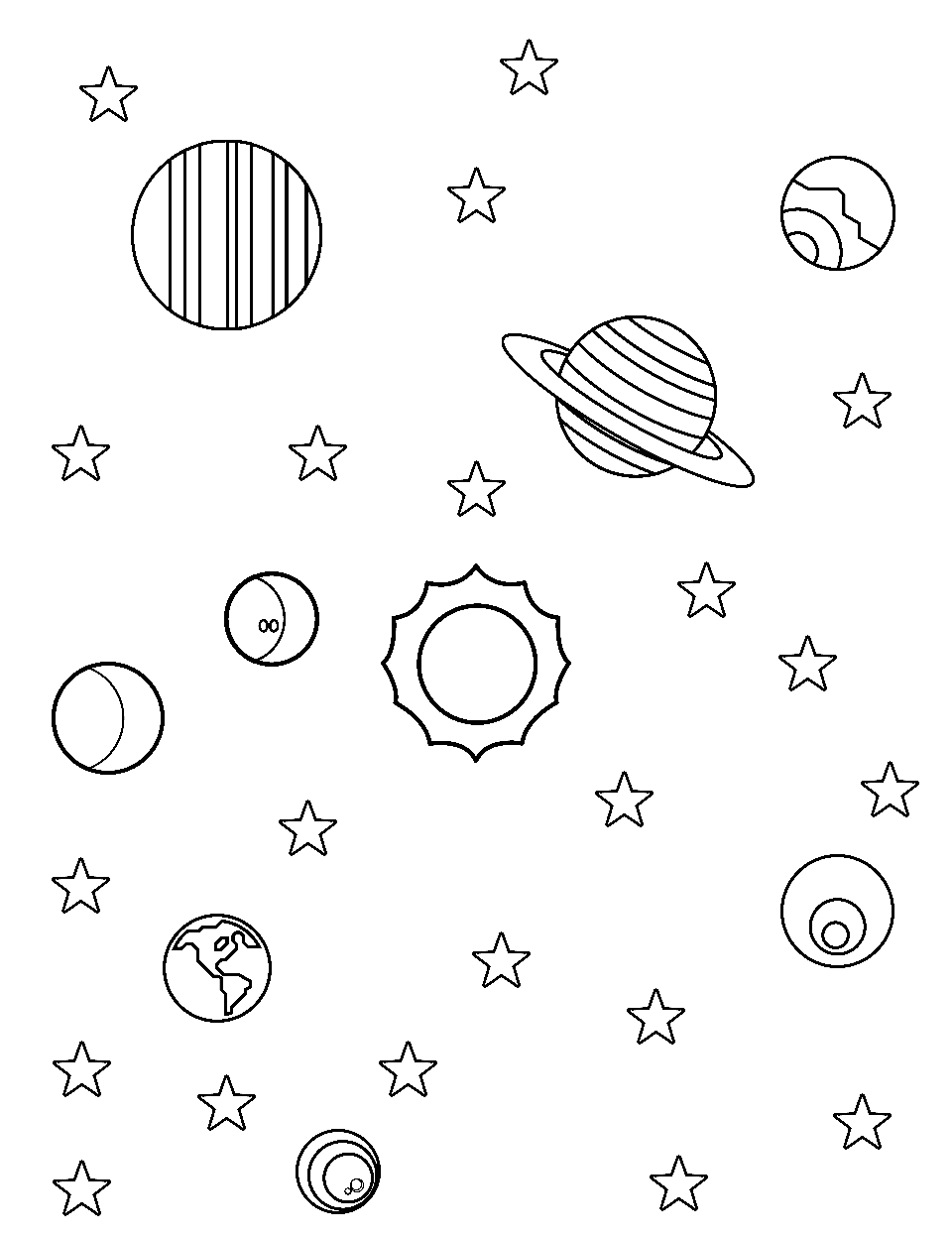
Planets are scattered rather than lined up here: a spiky sun near the middle, a ringed planet, a striped one, a small Earth and several plain circles and crescents, all set among stars. Nothing overlaps, so a child can work through the page one world at a time. This drawing of the solar system is a quick session rather than an afternoon project.
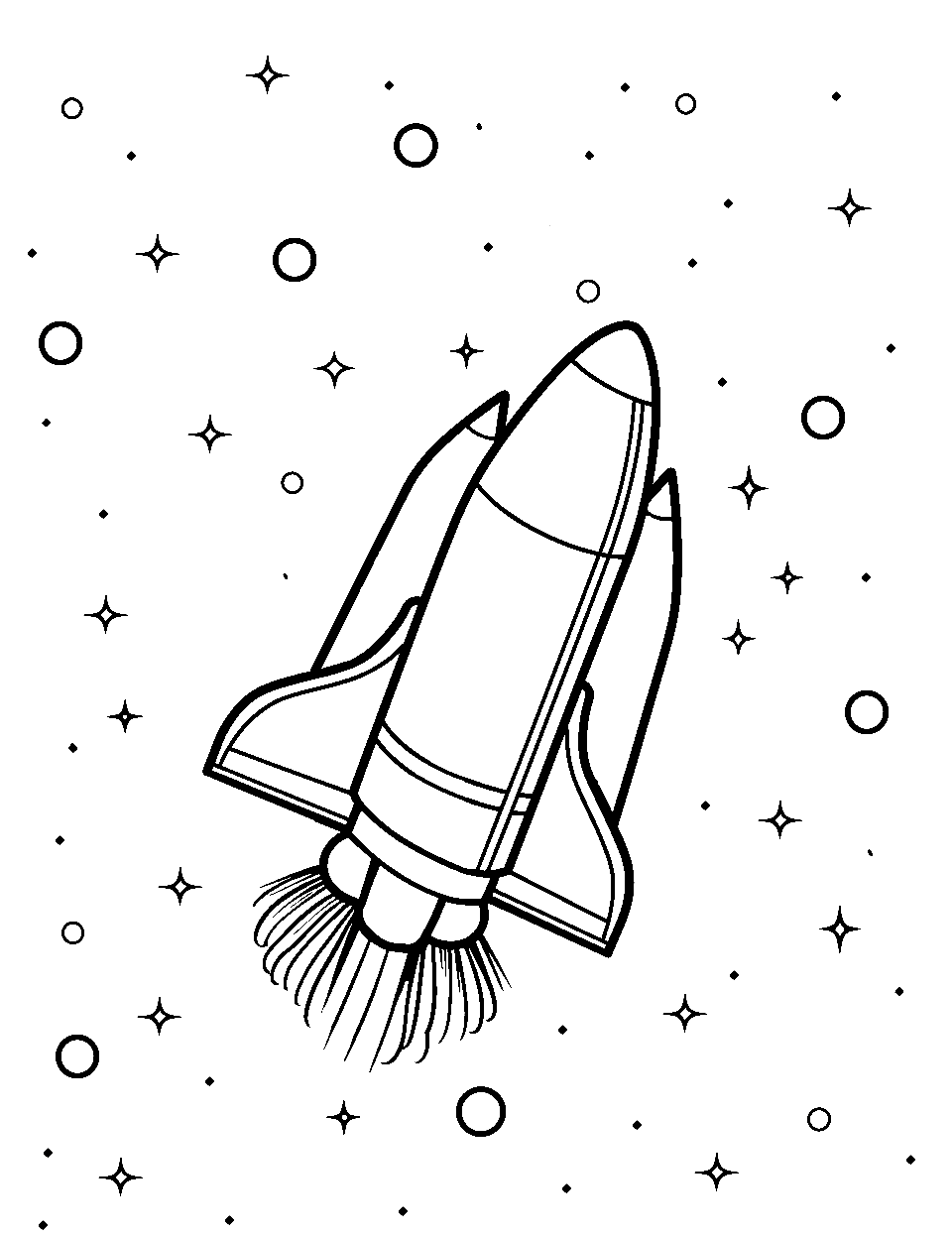
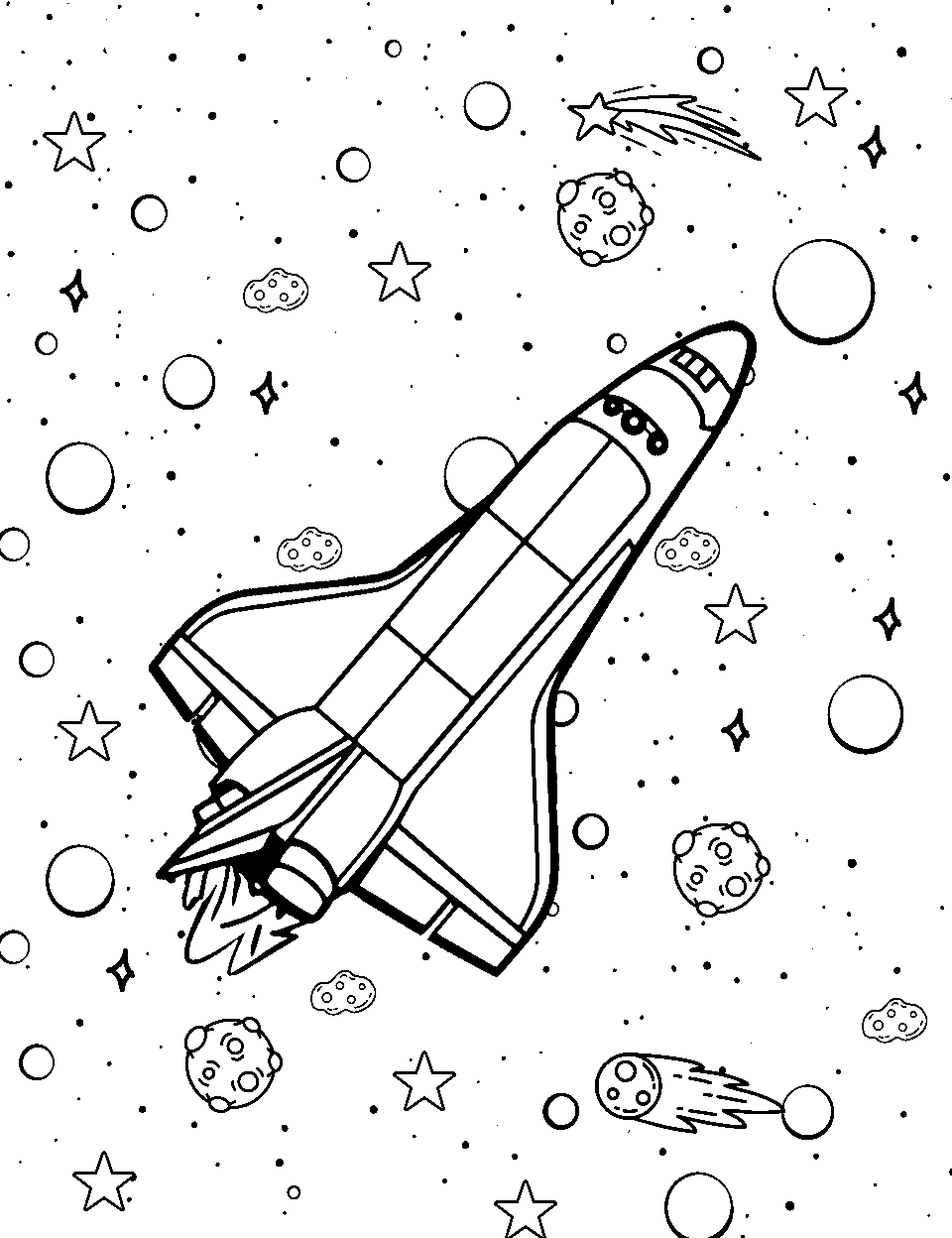
The shuttle here rides a tall booster with a plume streaming out behind it, drawn at an angle so it looks like it is still gaining height. Small clouds and dots surround it, handy for a child who finishes the main subject and wants more to do. White and gray on the shuttle with a red plume matches a real launch.
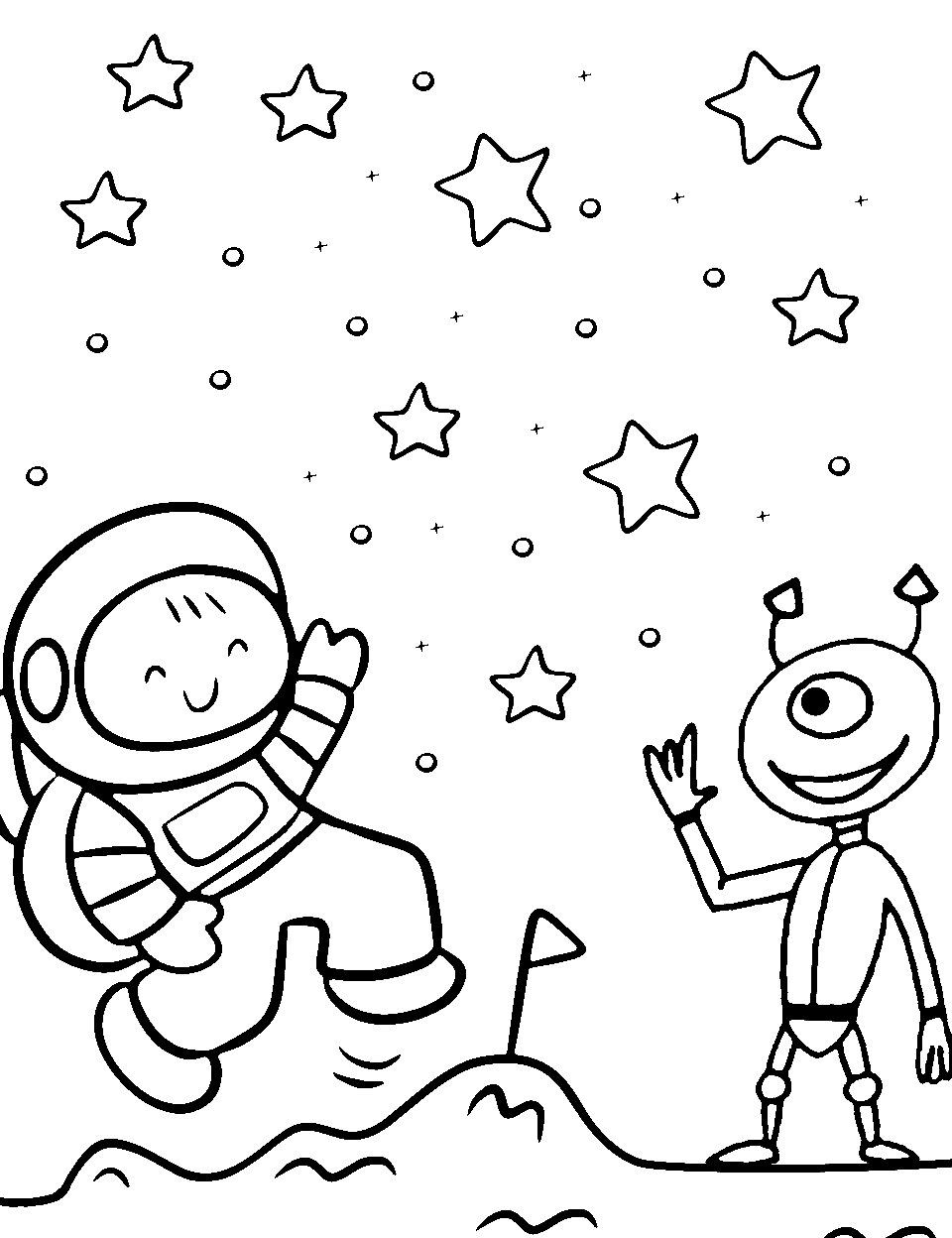
A grinning astronaut and a one-eyed alien with two antennae both raise a hand in greeting, standing on lumpy ground with a small flag planted between them. Chunky outlined stars fill the sky above, and every shape is large and well separated. Kids usually want the alien in a wild color and the astronaut in white, which makes a good contrast. Hand this one over when you want a story out of your child, not just a colored page.
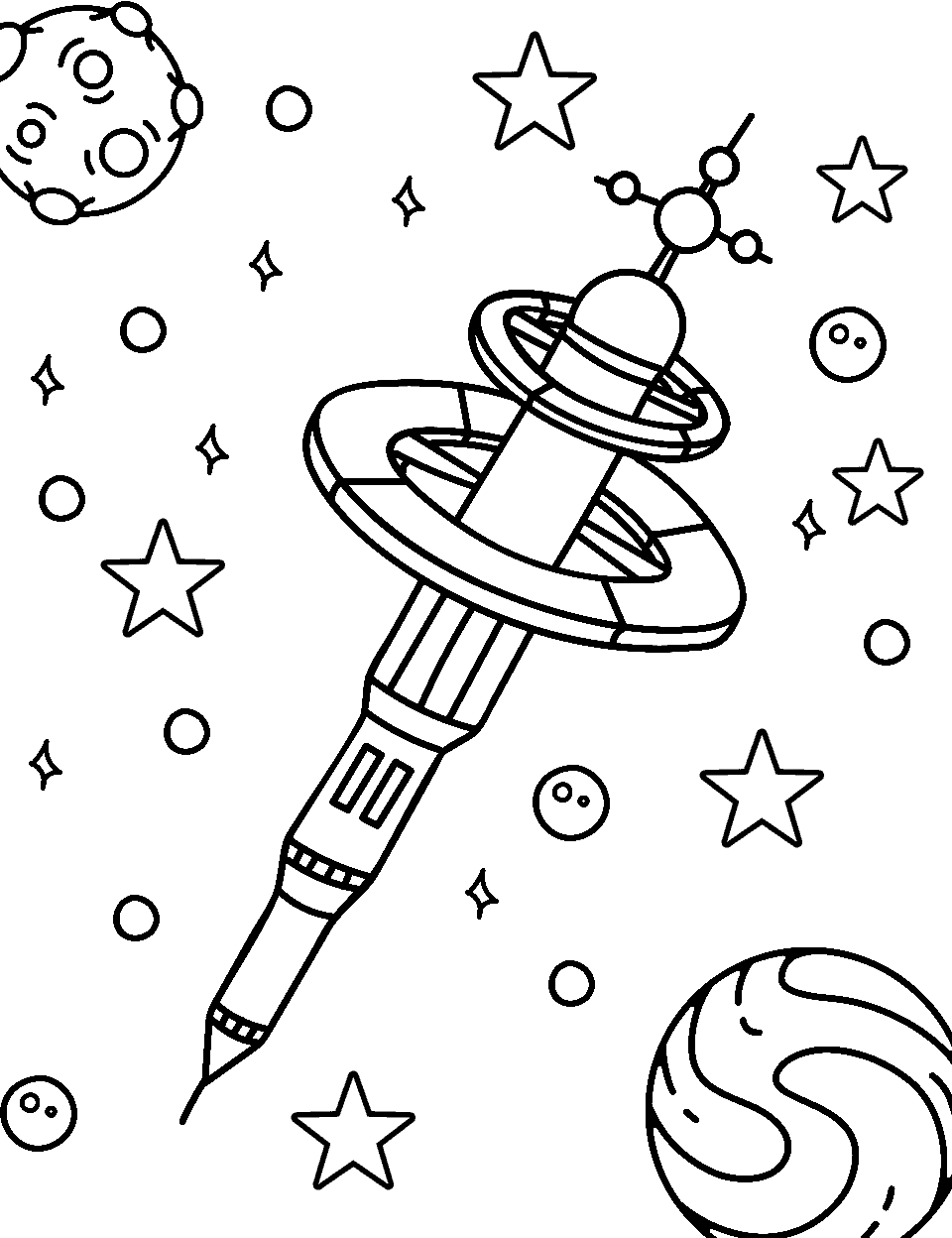
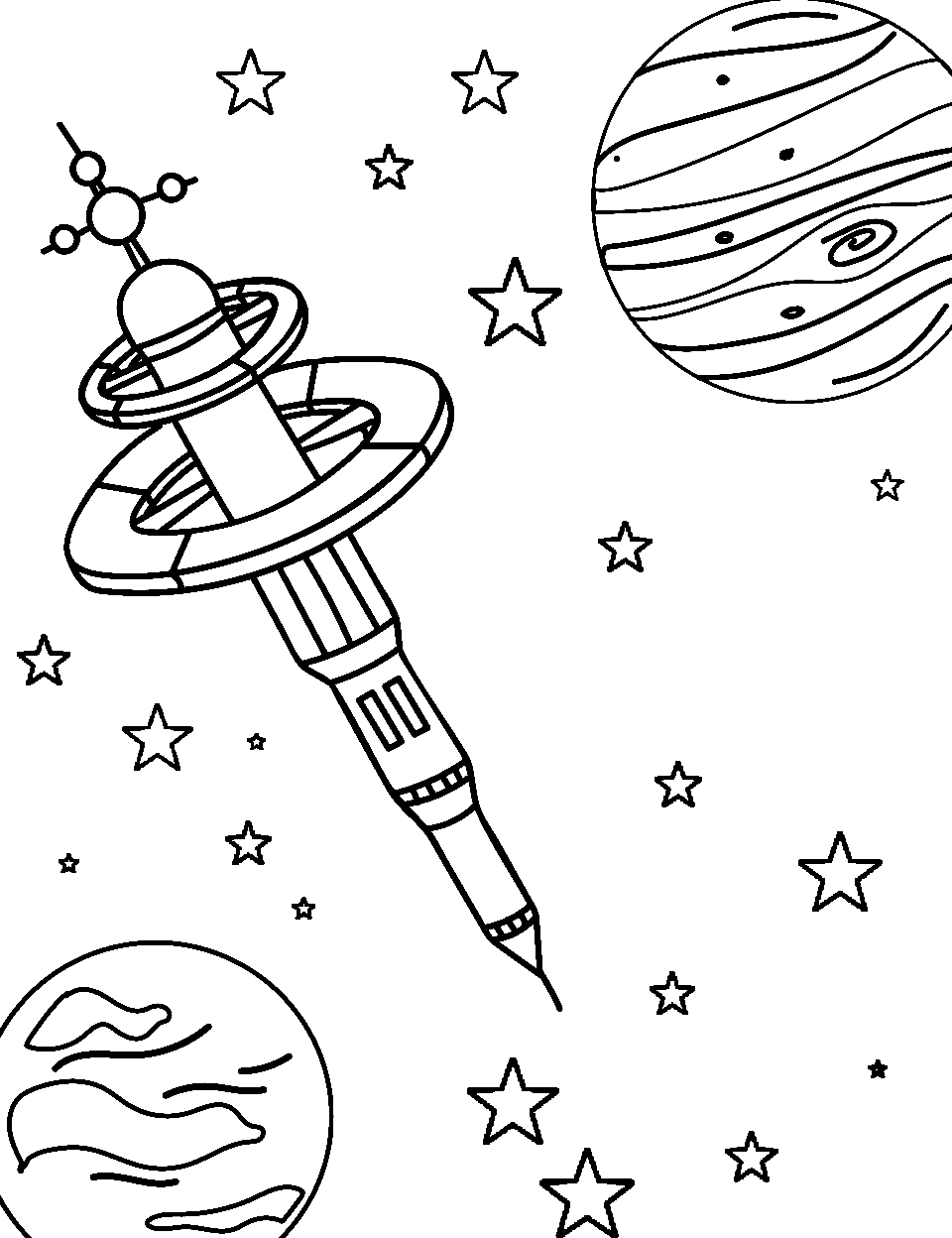
Two rings circle the body of this space station, with antenna arms branching off the top and a striped panel running down the side. A cratered moon sits in the upper corner and a swirled planet in the lower one, surrounded by stars and circles. Metallic grays and silvers suit the station, and coloring the two rings differently helps them read as separate.
One large globe fills the whole page, with the continents outlined and only a few soft shading lines across the oceans. Nothing else competes for attention, which is exactly right for a toddler or for a first try with markers. Blue and green is the classic pairing, but this sheet also works as a base for a collage of glued-on paper scraps.
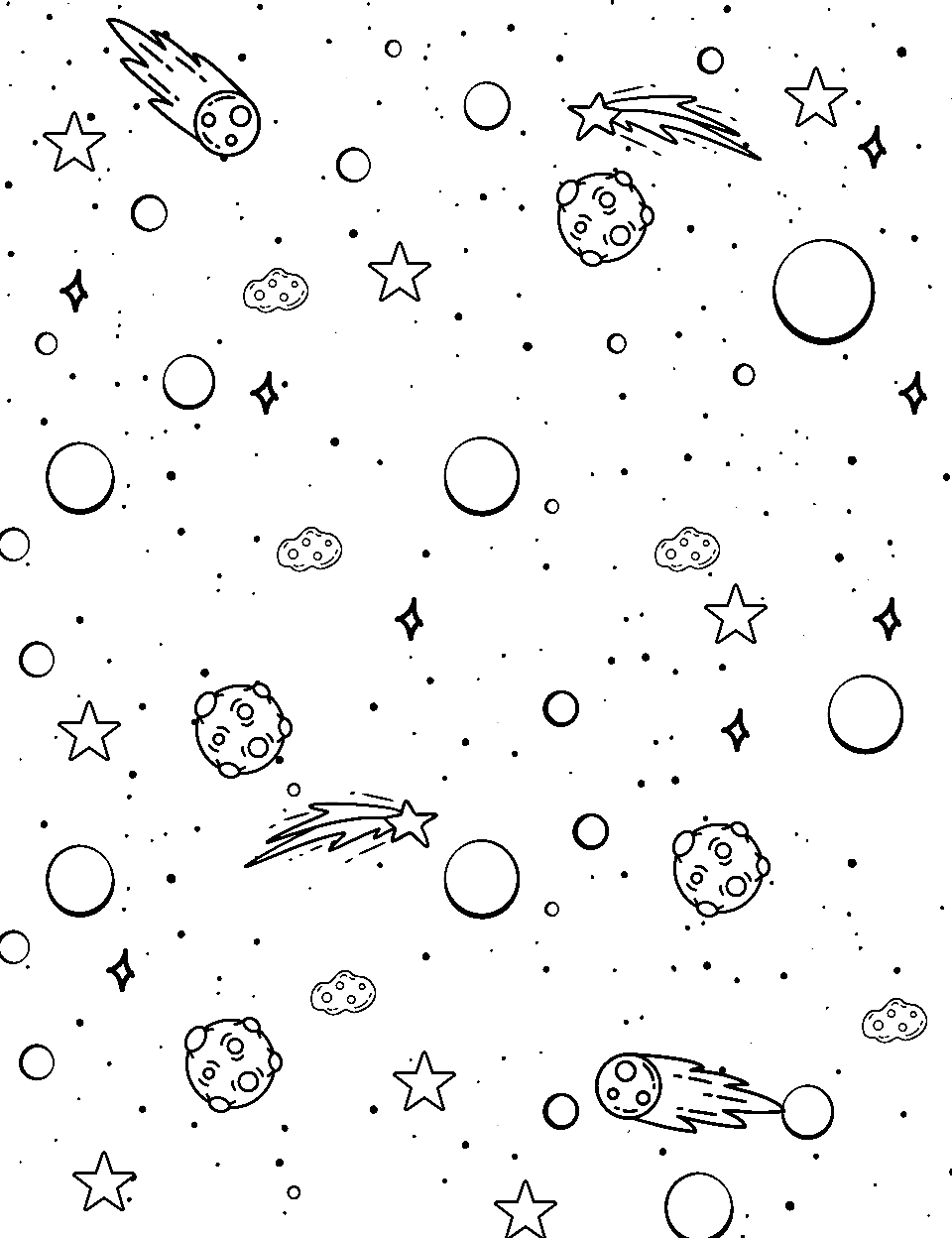
Shooting stars streak across a background crammed with dots, circles, small cratered moons and outlined stars. There is no single main subject, so children can start anywhere and stop whenever they like. The sheer number of tiny shapes makes it a long, calming project and one of the more detailed pages in the set. Colored pencils are the right tool for the small dots.
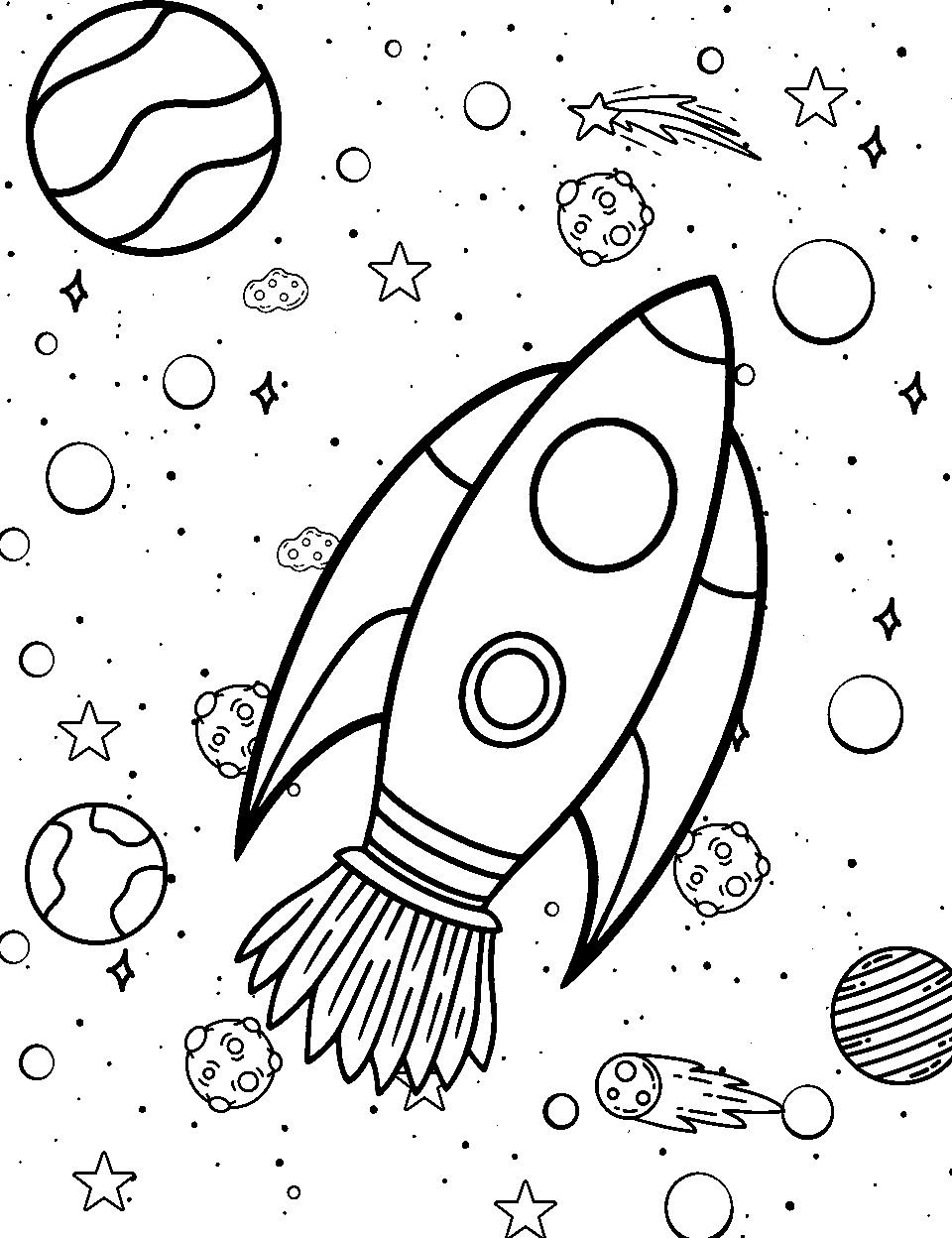
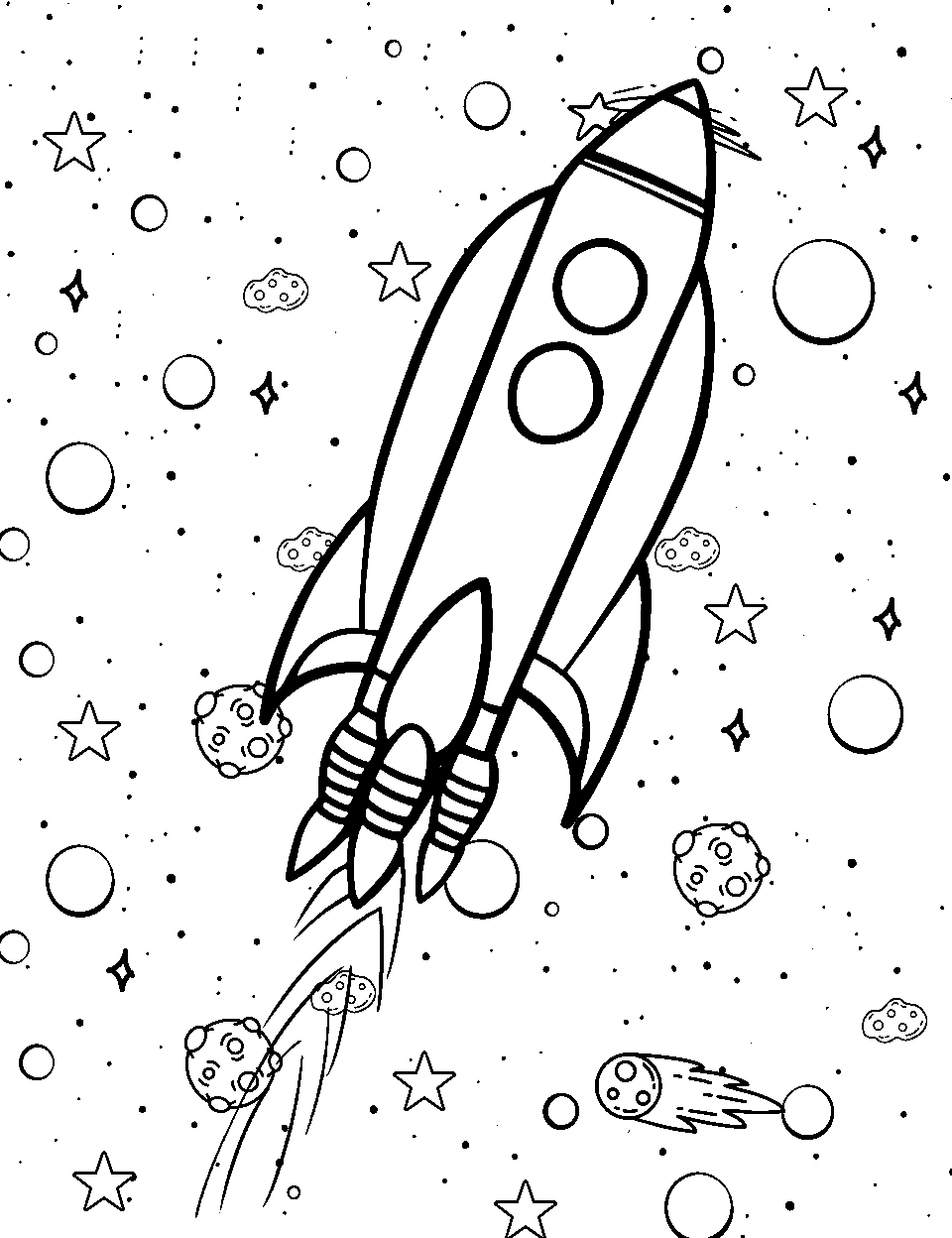
A rocket cuts across the center of this page with a striped flame behind it, passing a banded planet, a small Earth, a couple of cratered moons and a comet. The background is dotted corner to corner, so there is plenty left to color once the ship is done. Bright colors on the rocket and cooler tones on the planets keep the two apart.
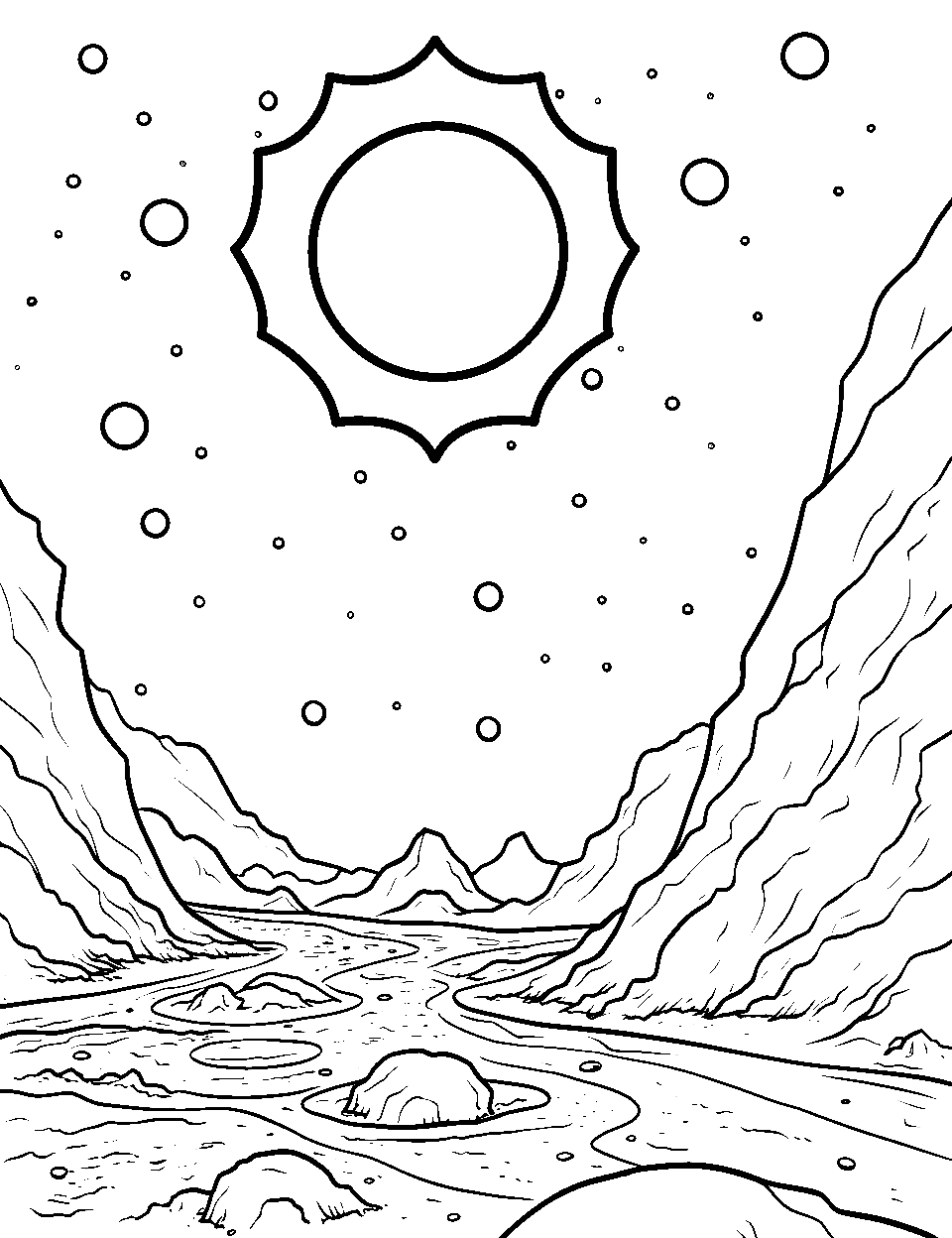
A spiky sun hangs above a deep canyon whose walls are drawn with long fine lines and whose floor is broken by rocks and winding channels. This is one of the most detailed pages here, and it looks best with pencils shaded from dark walls down to a pale floor. Warm oranges in the sky and those intense sun rays make the scene feel hot. Older kids and adults tend to enjoy this one most.
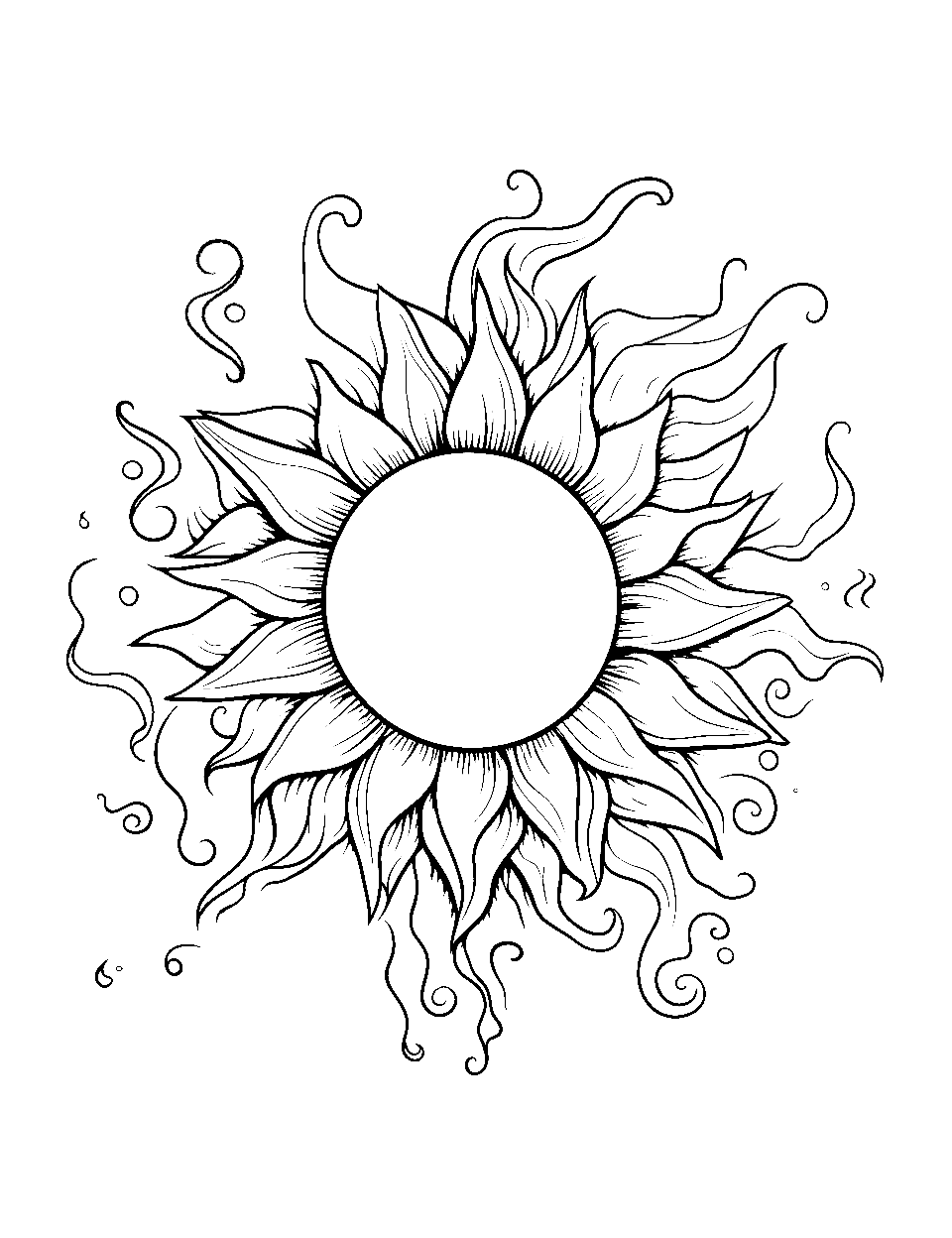
Layered flame petals ring the sun here, with loose curls of fire drifting off into the space around it. The center is left plain, so a child can go bright yellow there and work outward through orange and red. Every petal is a separate shape, which makes this a patient piece of work rather than a quick one. Fine-tip markers hold the edges better than crayons.
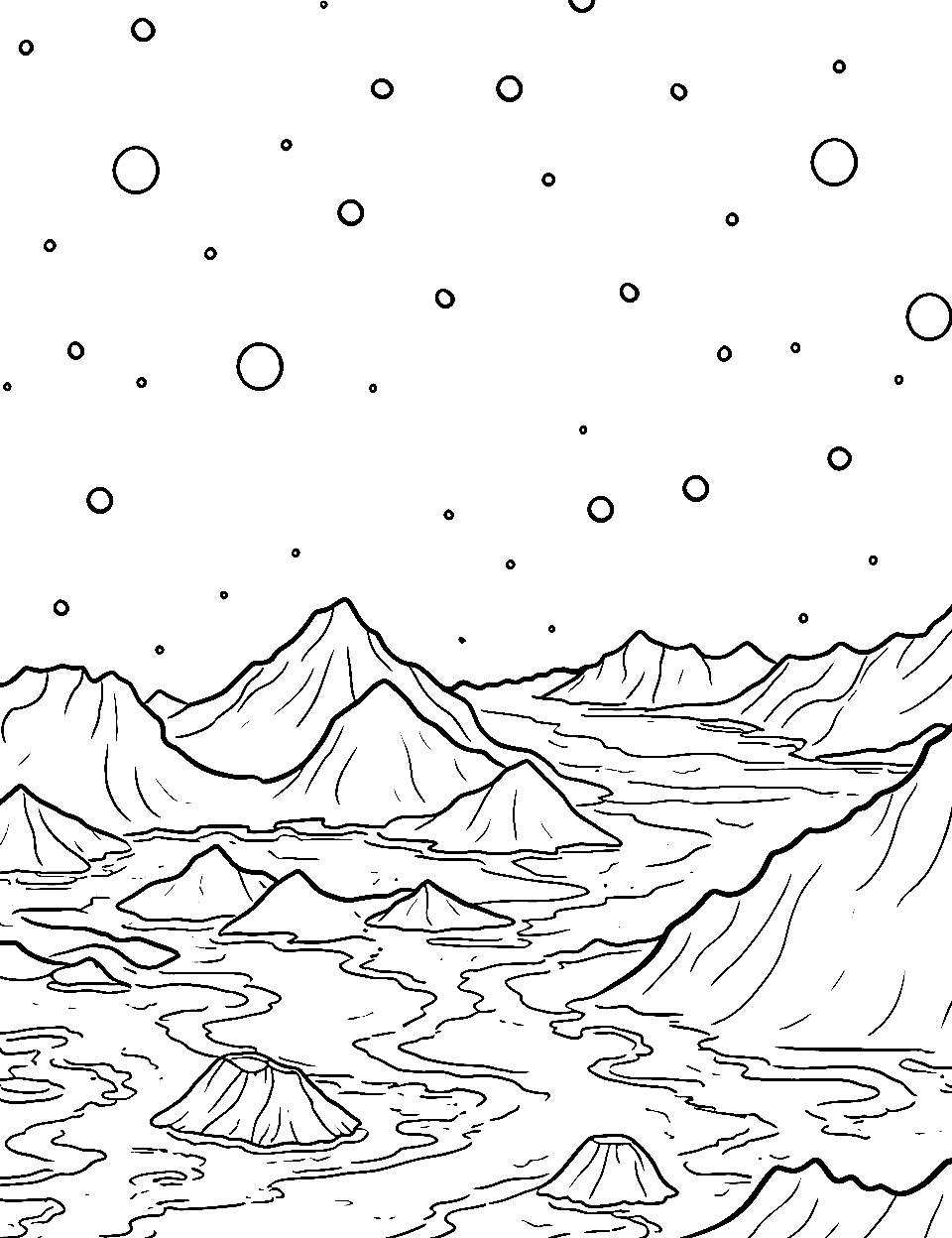
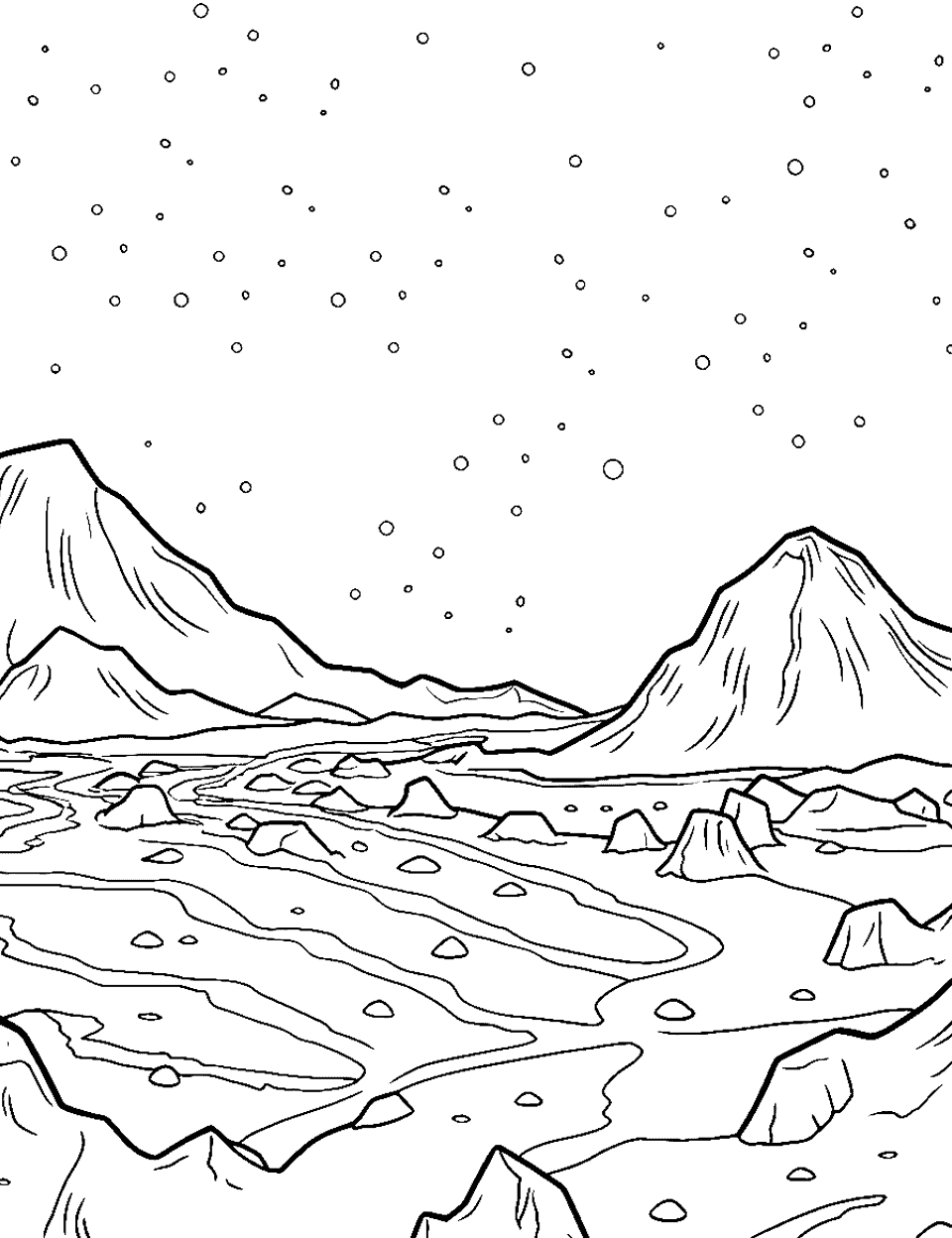
Jagged peaks rise from a plain cut through with winding channels, all under a sky of scattered dots. The line work is thin and repetitive, so this one suits a child who likes shading more than filling. Rust, brick and orange are the honest color choices: Mars looks red because iron minerals in its dirt oxidize, per NASA. Leave the sky pale so the ridges stand out.
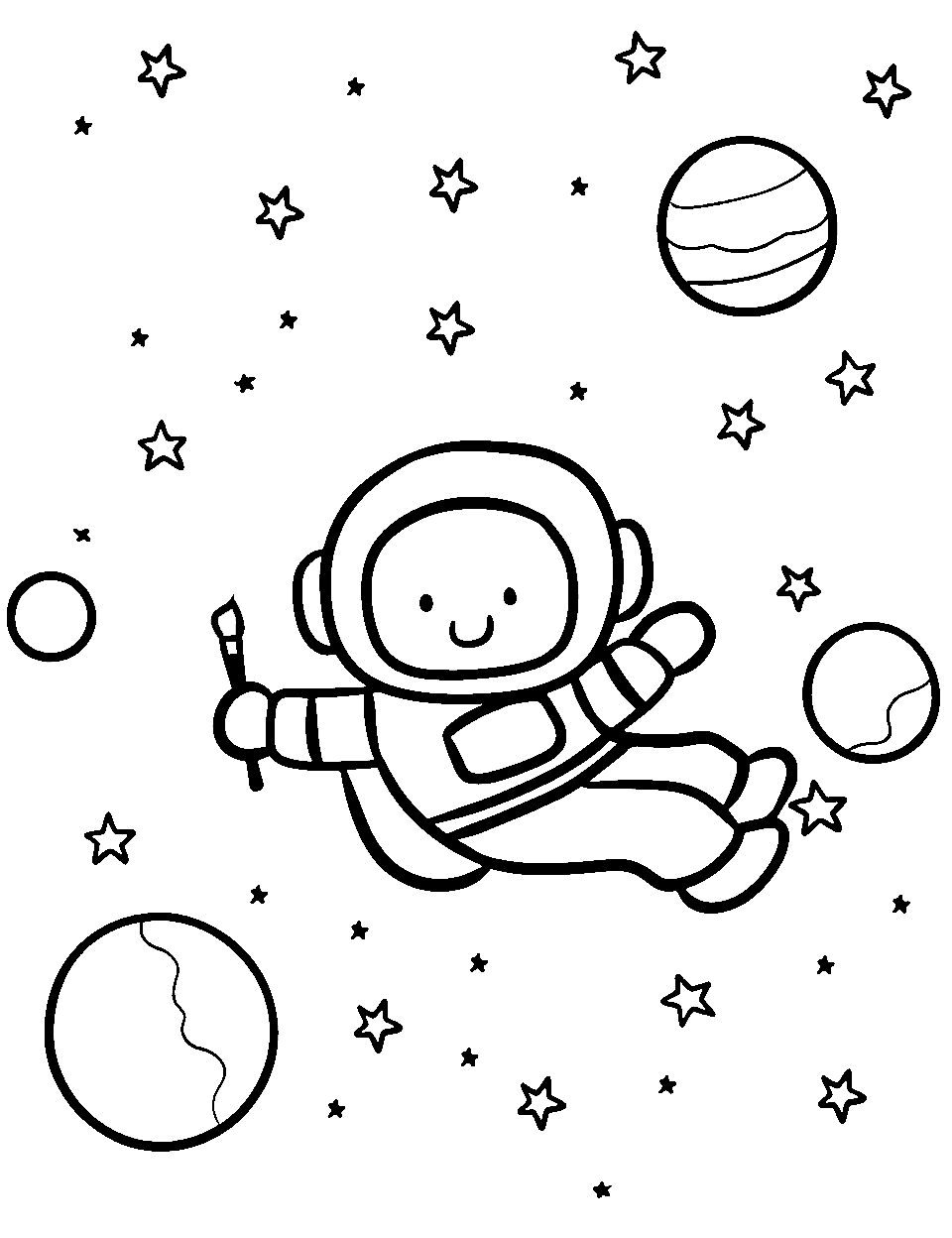
An astronaut drifts across this page holding a small brush, surrounded by chunky stars and four planets, one of them softly banded. The suit is drawn in simple blocks with a rectangular chest panel, so it colors quickly. Give the brush a bright handle and it becomes the focus of the page. Kids who like drawing often add their own painted streak behind the figure.
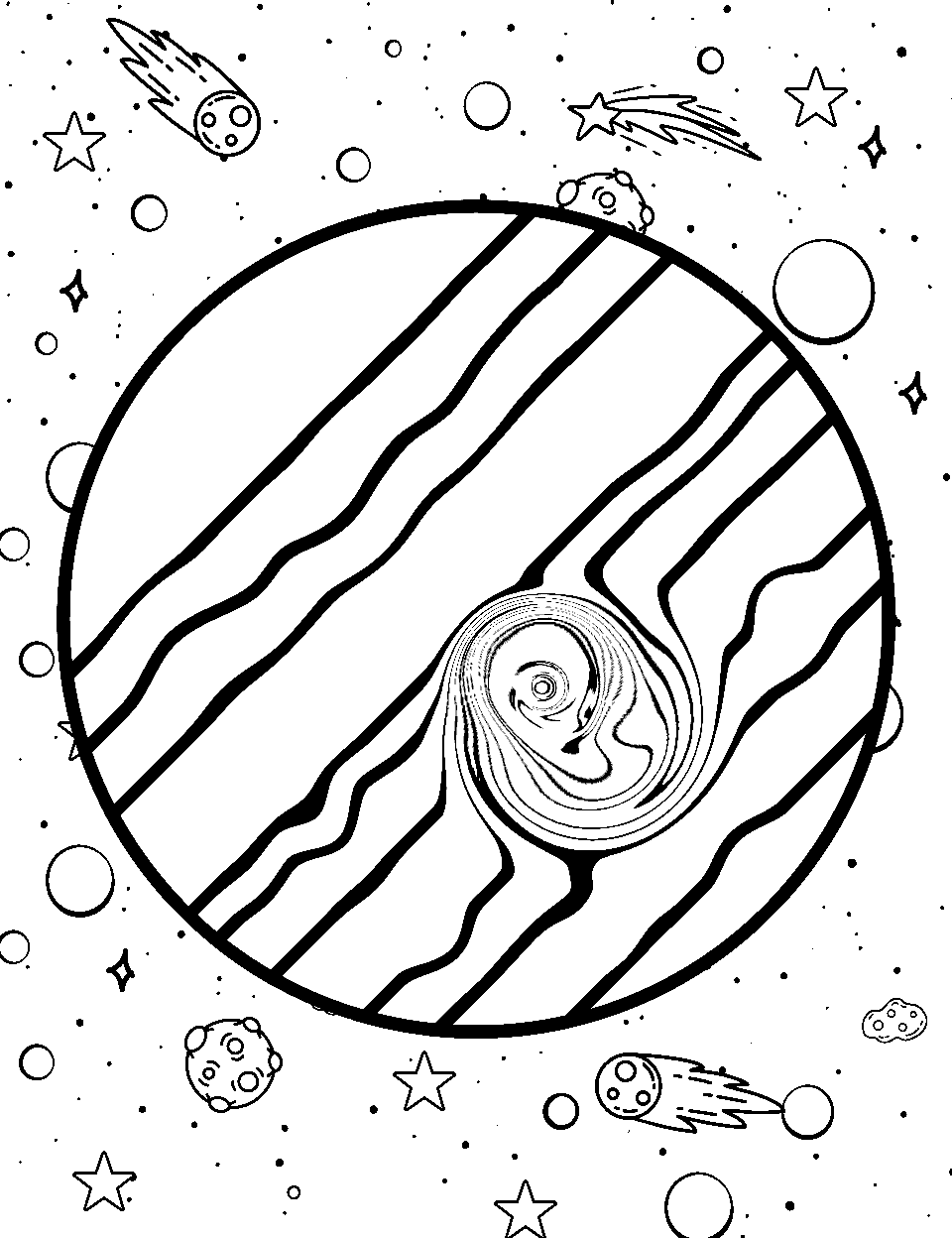
Wide wavy bands wrap this planet, and a tight spiral storm sits just below its middle, which is the Great Red Spot. Comets, cratered moons and stars fill the space around it. Creams, browns and a deep red for the storm come closest to the real thing. The bands are broad, so this page takes markers better than most of the detailed sheets.
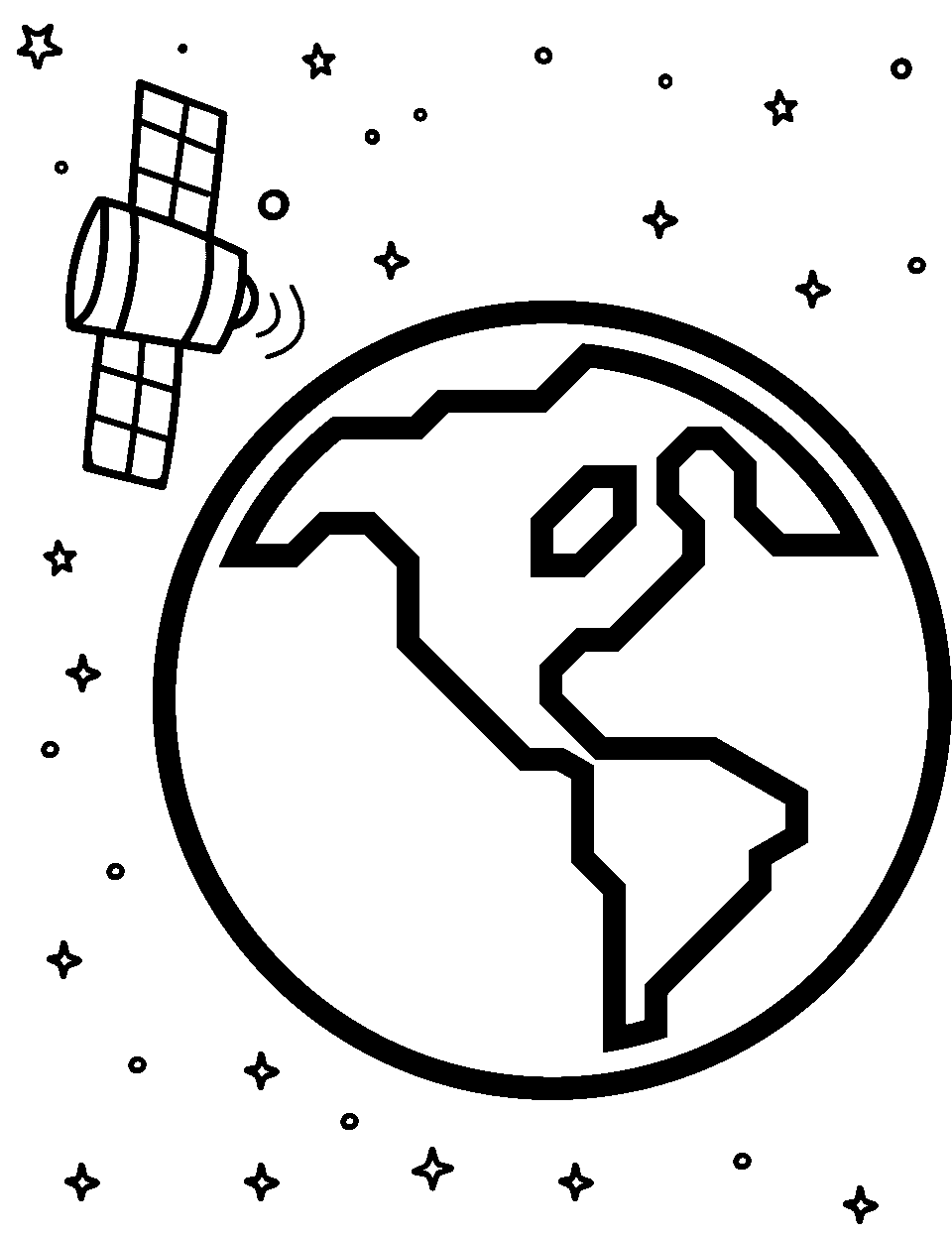
Very thick outlines shape both the Earth and the satellite here, with curved signal lines drawn between them and small stars filling the rest. The heavy lines mean a stray crayon barely shows, which makes it forgiving for preschoolers. Grid squares on the solar panels give an older child something finer to work on if they want it.
Two mountains sit at the back of this page above a plain of rocks and thin curving contour lines, with a dotted sky above. Pale blues, grays and lilacs suit an icy world better than bright colors. The International Astronomical Union reclassified Pluto as a dwarf planet in 2006, a fair fact to share while your child works through the ridges. The detail is fine, so pencils again.
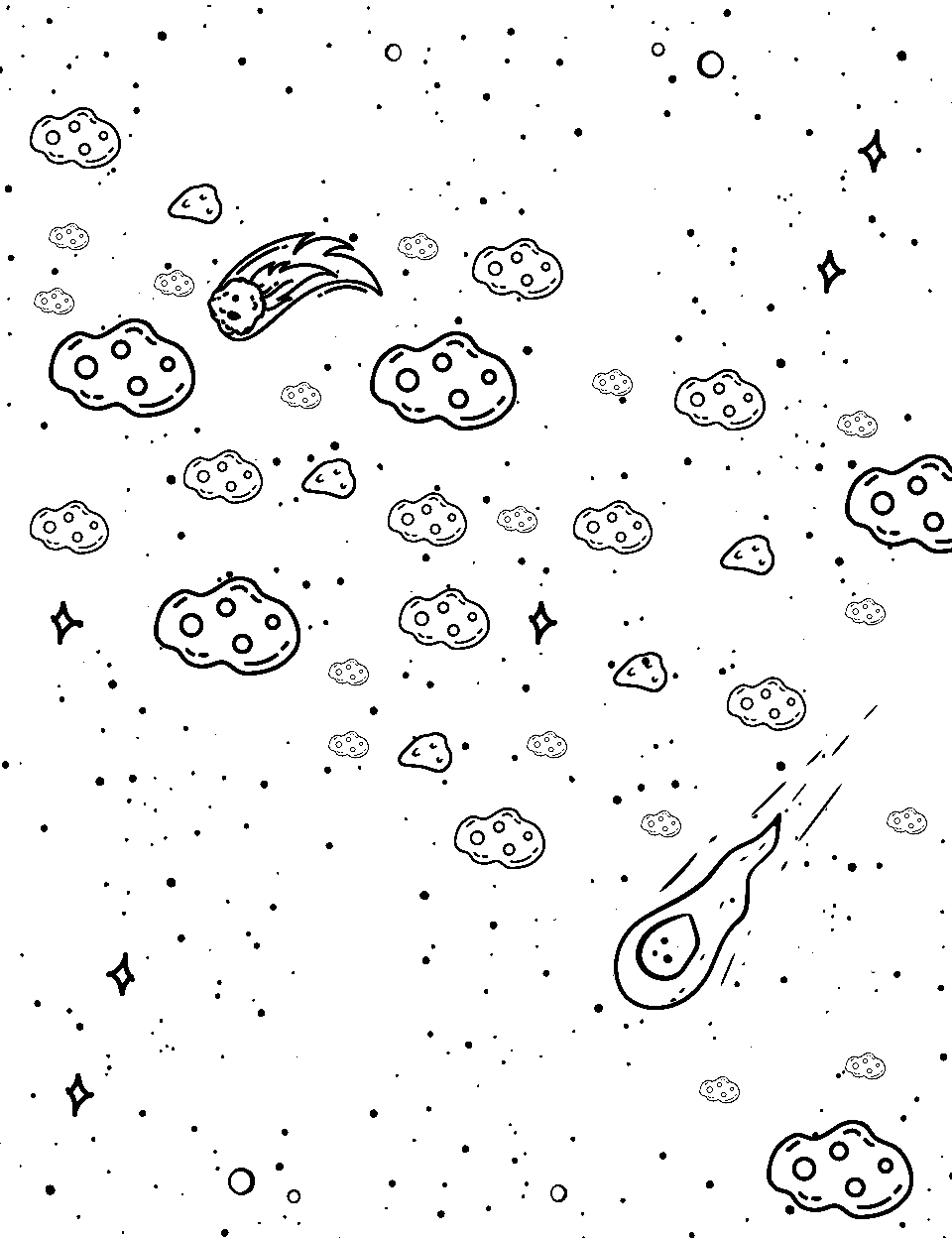
Cratered rocks of every size drift across this page, joined by two comets with long tails and a dense field of dots. There is no right order to work in, so it suits a child who dislikes rules. Varying the grays and browns from rock to rock stops them blurring together.
The rocket here flies at a diagonal with its fins spread wide, passing a heavily cratered moon in one corner and a swirled planet in the other. Chunky stars and small circles fill the middle ground. Bold outlines and few small details make this an easy win for a five year old. Metallic pencils, if you have them, look good on the rocket body.
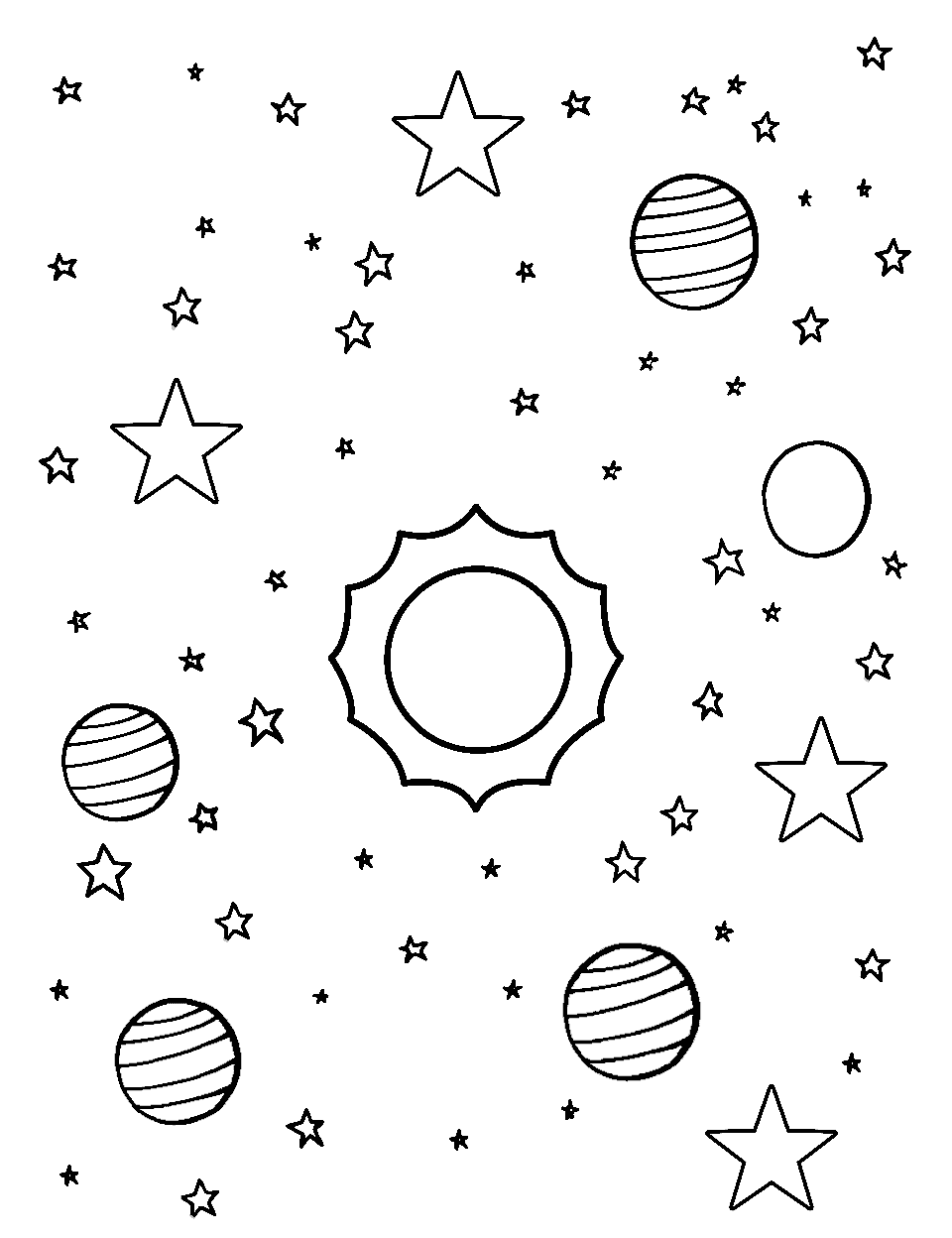
Stars of many sizes share this page with a spiky sun and three banded planets, so it doubles as a sorting exercise: big stars, small stars, planets. Coloring each kind of object the same color helps a child see the groups. There is plenty of white space, which makes it a relaxed page and a fun way to talk about space science while you color together.
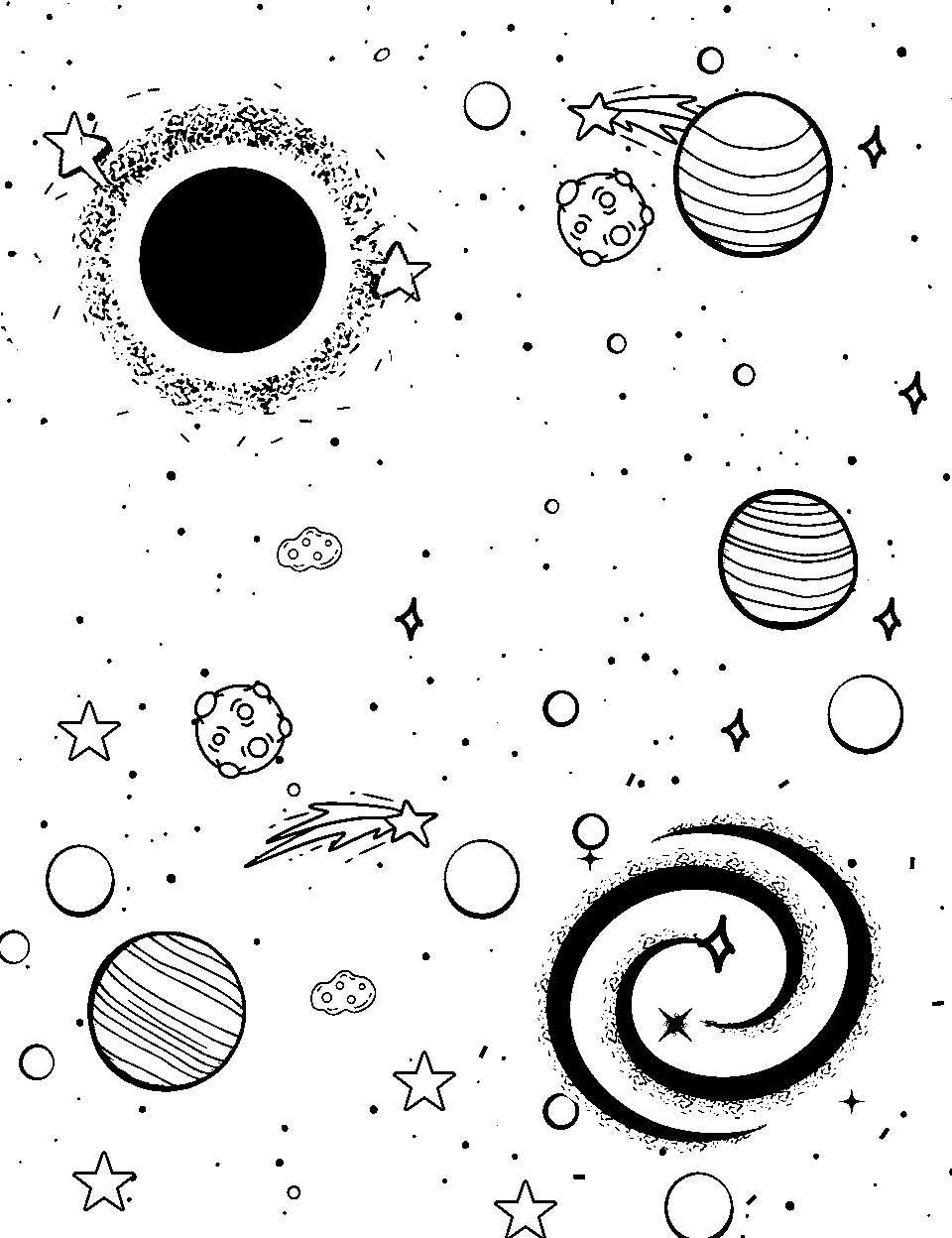
A black hole sits in the top corner, printed solid and ringed with speckles, and a dark spiral galaxy anchors the lower half. Banded planets, cratered moons, a comet and scattered stars fill the space between them. Because the two big shapes are already dark, color around them and let the black do the work. This one uses a lot of ink, so print it when you mean to.
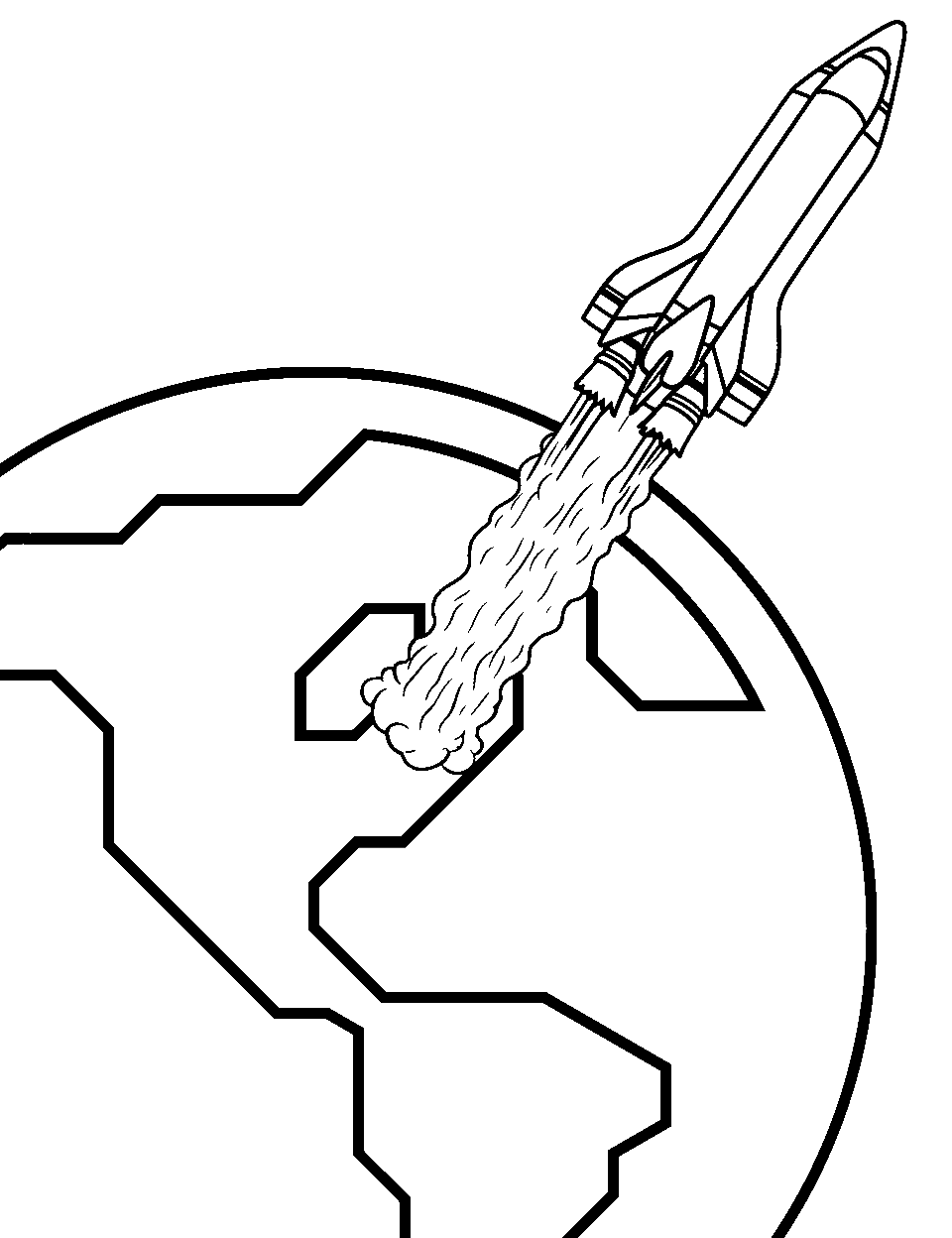
A shuttle climbs away from a boldly outlined Earth, its plume drawn as a long tapered column behind it. The continents are blocked out in thick lines, giving a young child a few big areas to fill while an older one works on the shuttle’s panels. Blue and green below, white and gray above, and a warm plume in between.
A cratered comet head trails a long curving tail across this page, with small moons, stars and a fine field of dots behind it. The tail is split into ribbons, so it takes color well in graded shades from white through yellow to orange. Kids who prefer one big subject over many small ones tend to pick this sheet.
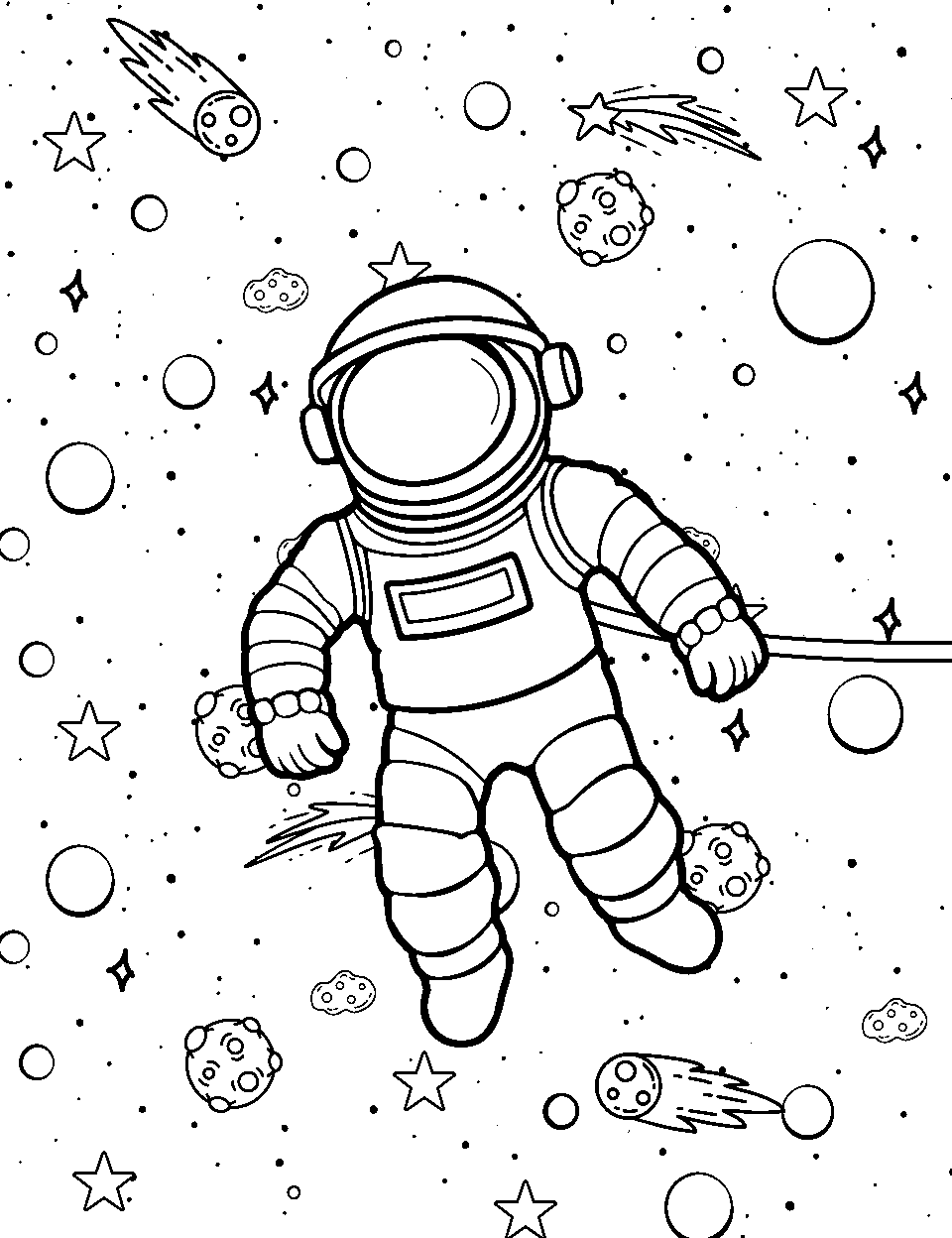
This astronaut floats in the middle of the page in a detailed suit, with ribbed joints, gloves and a rounded visor drawn in careful segments. Comets, cratered moons and scattered stars surround the figure. A tether connects the astronaut to the unseen station, a nod to how real spacewalks stay anchored. Keep the suit white and put the color into the background.
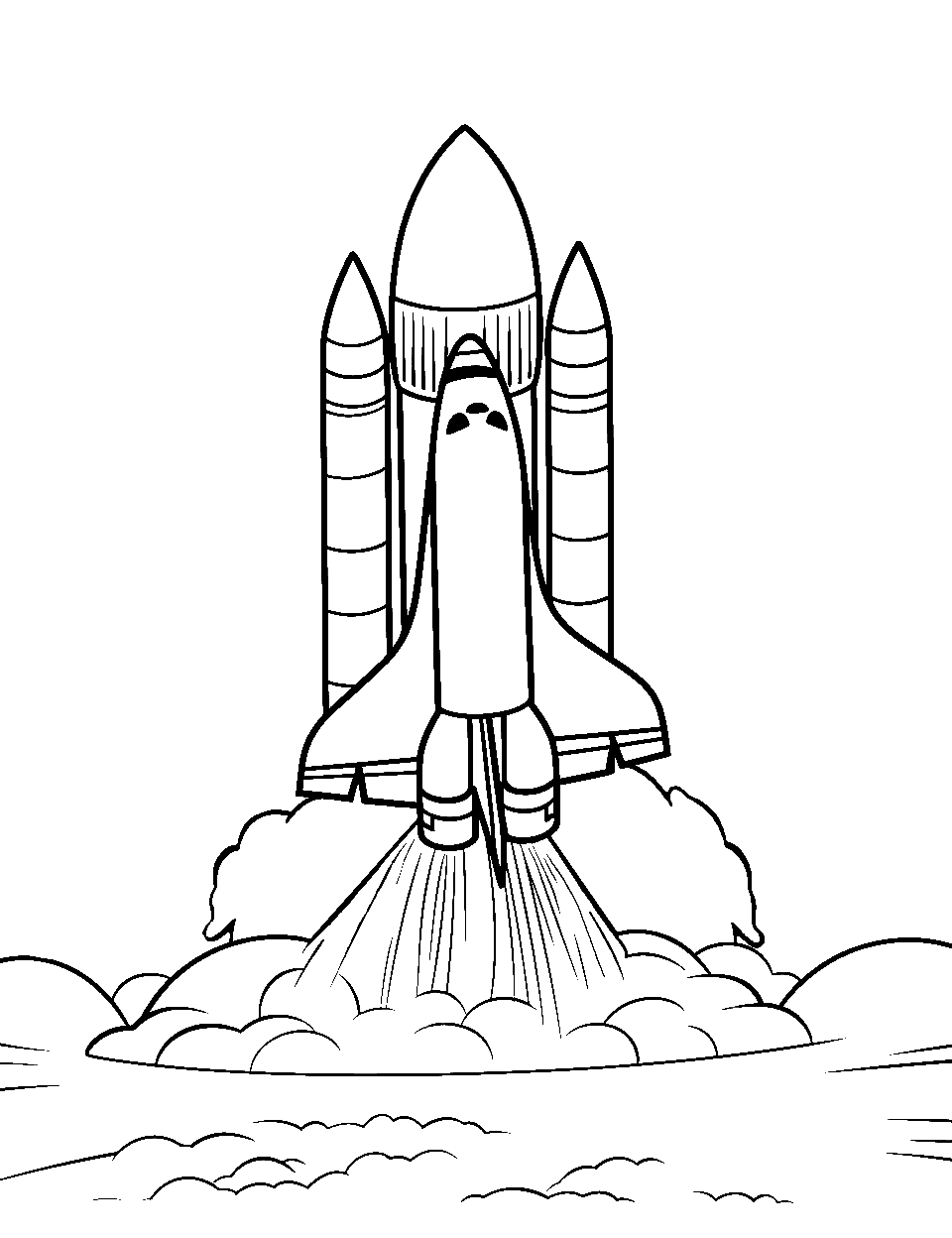
Here the shuttle sits on its stack with two boosters, lifting off in a rolling cloud of smoke. The parts are drawn as clean cylinders and rectangles, easy for a child to keep separate. Orange for the fuel tank and white for the boosters matches the real thing. The smoke cloud is a big area, so leave it white or use the palest gray you own.
Spiral arms sweep out from the center of this galaxy, edged with speckles and dotted with sparkle stars. It is one of the few pages where blending pays off: purple into blue into pink reads as a real galaxy. Younger children can color the arms in separate stripes instead, which looks good too.
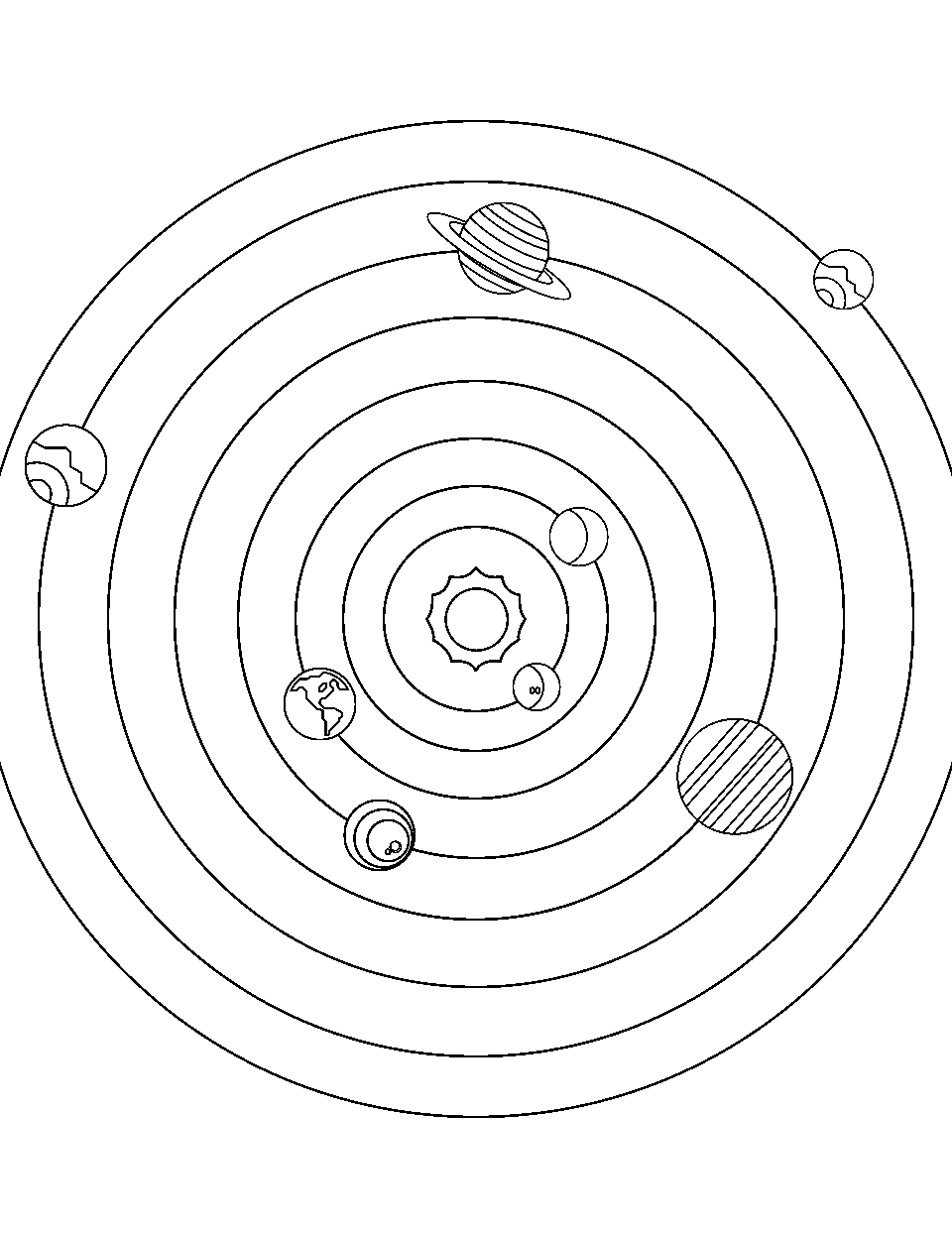
Concentric orbit rings circle a small sun at the center of this page, with planets sitting out on the rings, including a ringed one near the top. It is drawn as a map rather than a scene, which makes it handy for talking about how each planet travels its own path around the sun. The rings are thin, so a sharp pencil is easier than a crayon. Coloring each orbit a different shade helps a child count them.
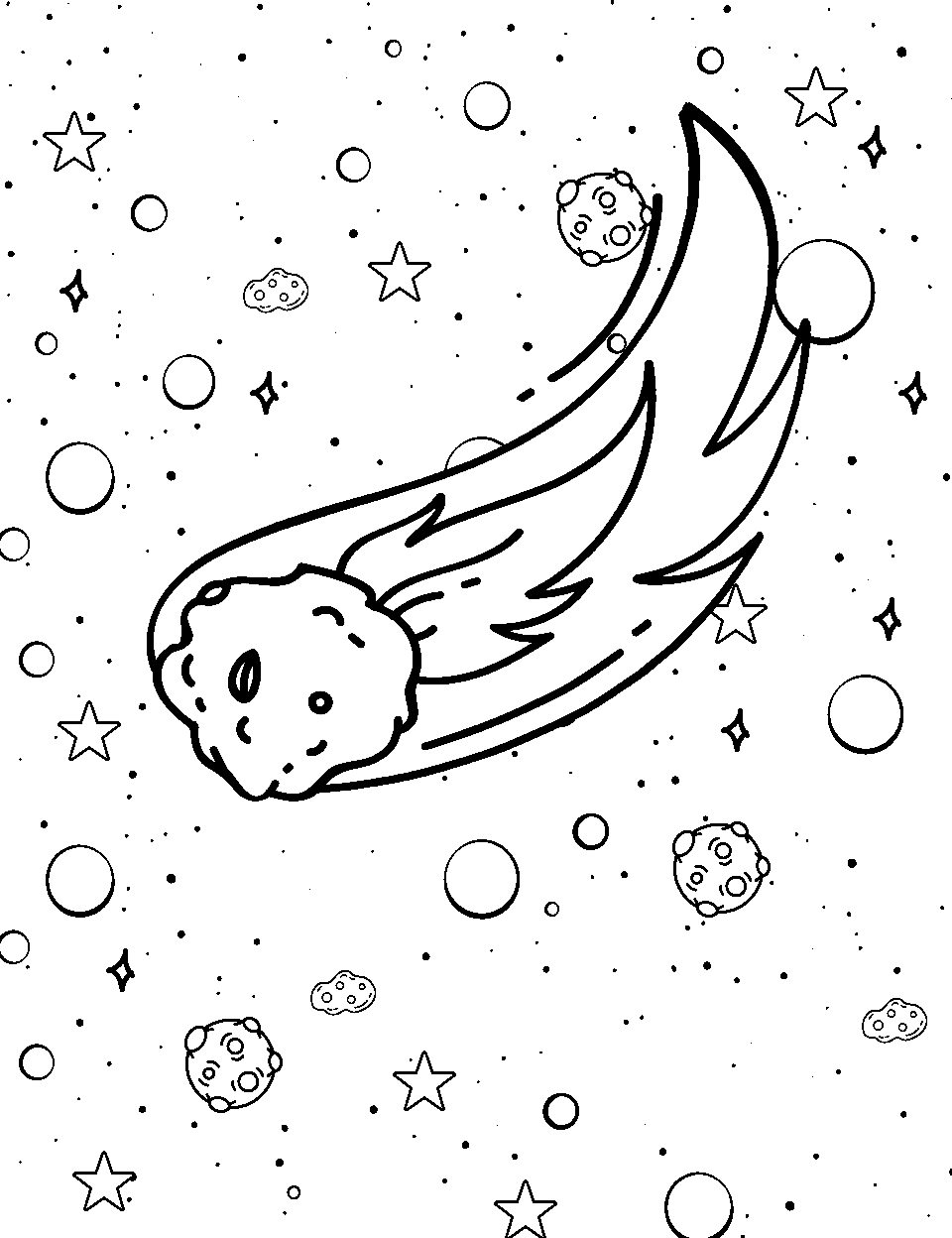
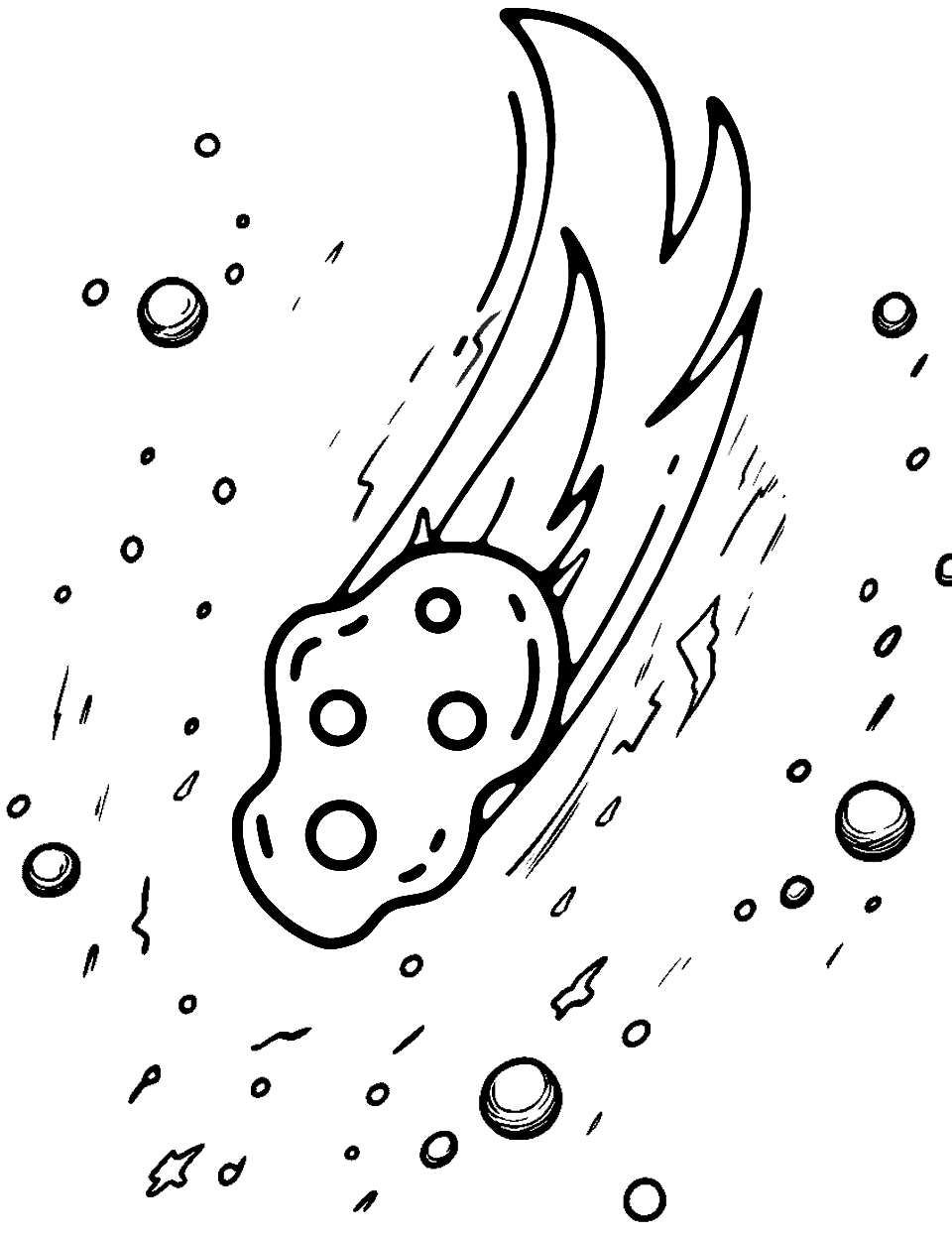
Flames streak back from a large cratered asteroid as it tears along, with small rocks and dashes scattered around it. A sliver of planet shows in the corner as the asteroid enters Earth’s atmosphere, flames building as it falls. Reds and oranges in the flame against a gray rock give the most drama. The craters are big enough to color one by one, which little kids enjoy.
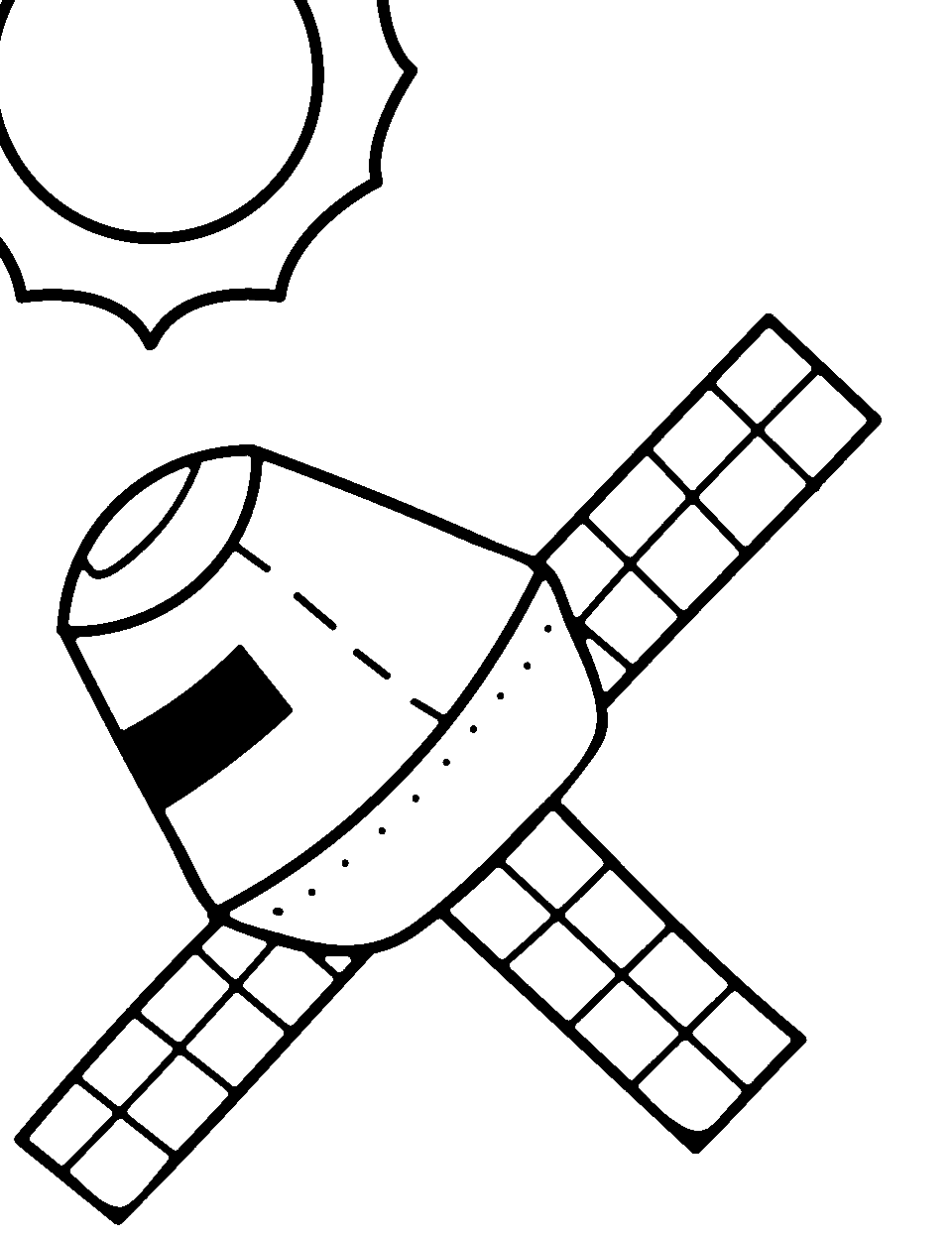
Two large grid panels stretch out from this satellite’s body, with part of a spiky sun showing in the top corner. The grid squares are the fun part, and alternating shades across them makes the panels look like they are catching light. One patch on the body is printed solid black, so plan around it. Silver and deep blue is the natural pairing.
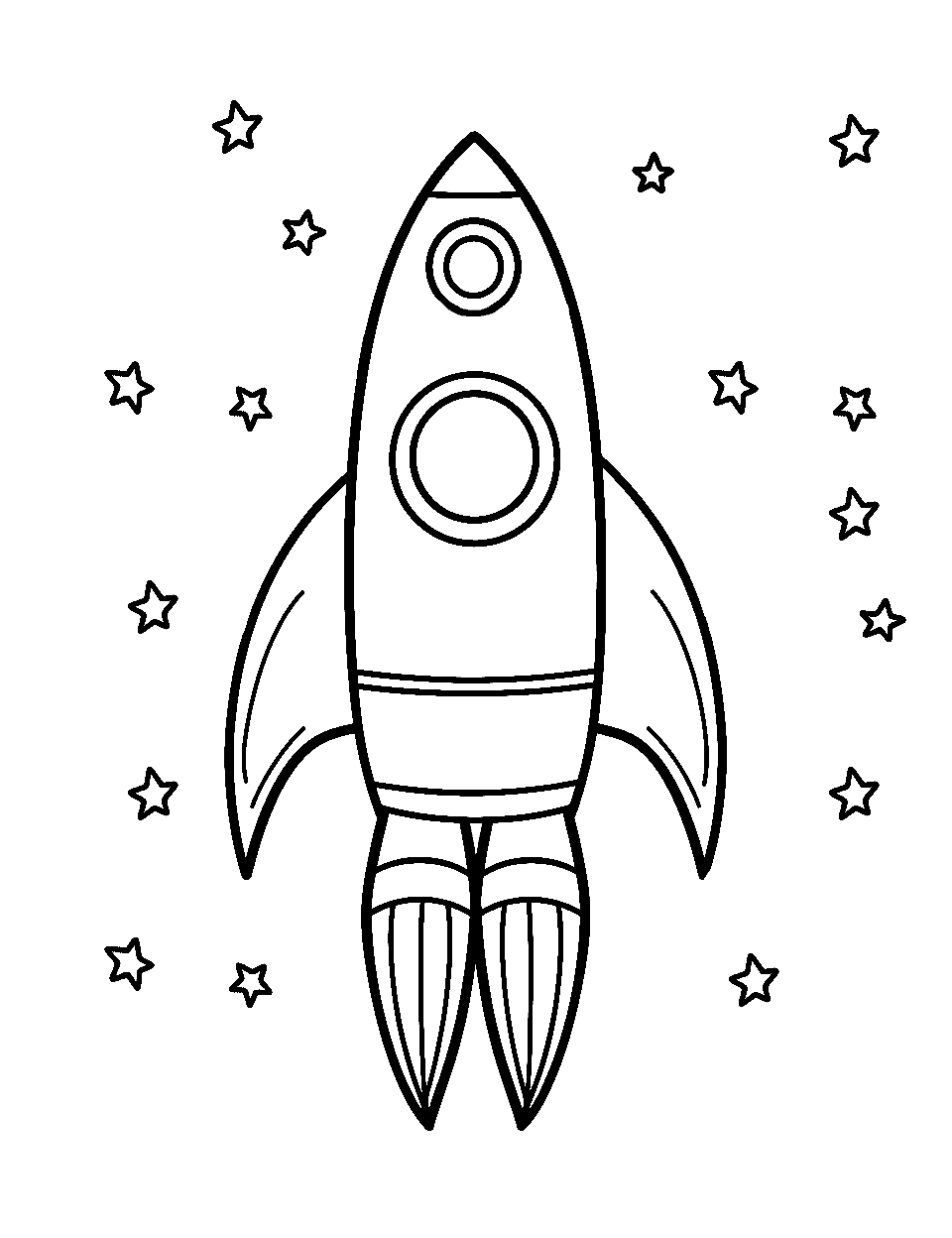
Simple shapes build this rocket: a cone nose, two round windows, curved fins and a pair of engine cones underneath. Outlined stars fill the space around it with nothing else competing for attention. It is one of the friendliest pages here for a preschooler, and it makes a good template to cut out and glue onto card.
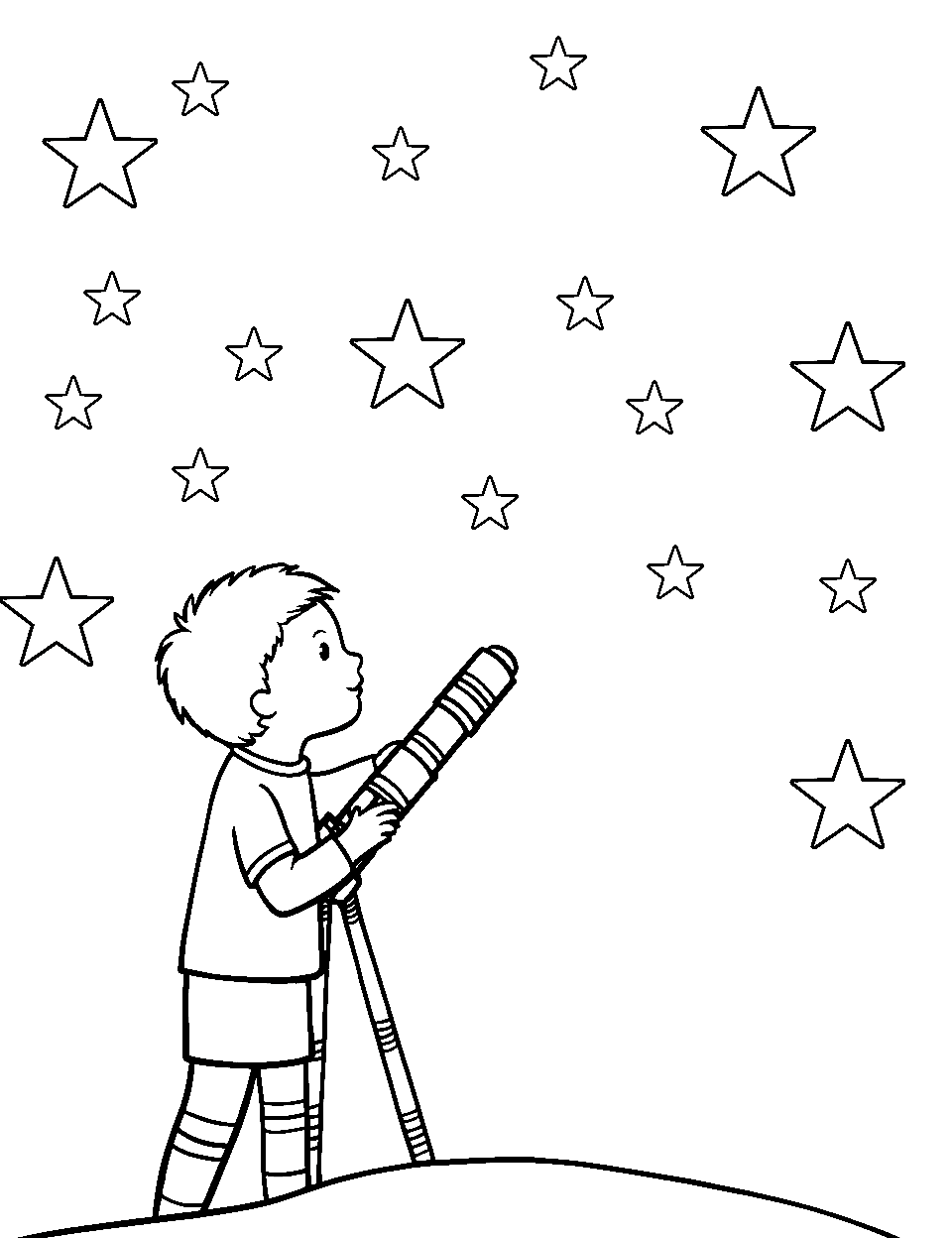
A child leans into a telescope set on a tripod, looking up at a sky of big outlined stars. The figure is drawn simply, with hair and clothes in large blocks, so it colors quickly. The stars are the easy part, and a child can fill them all one color or make every one different. Print it before a night of actual stargazing and the page becomes a warm-up.
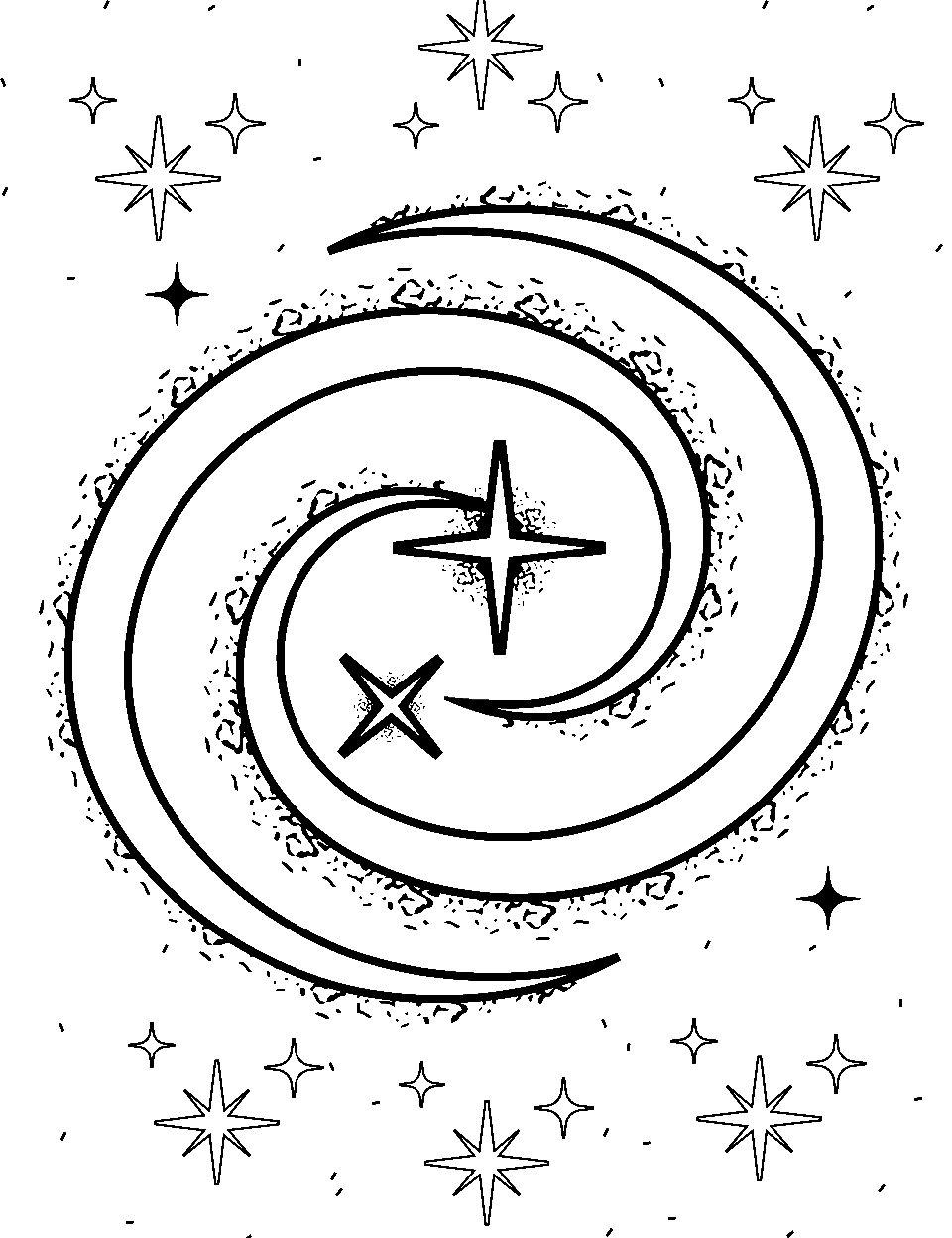
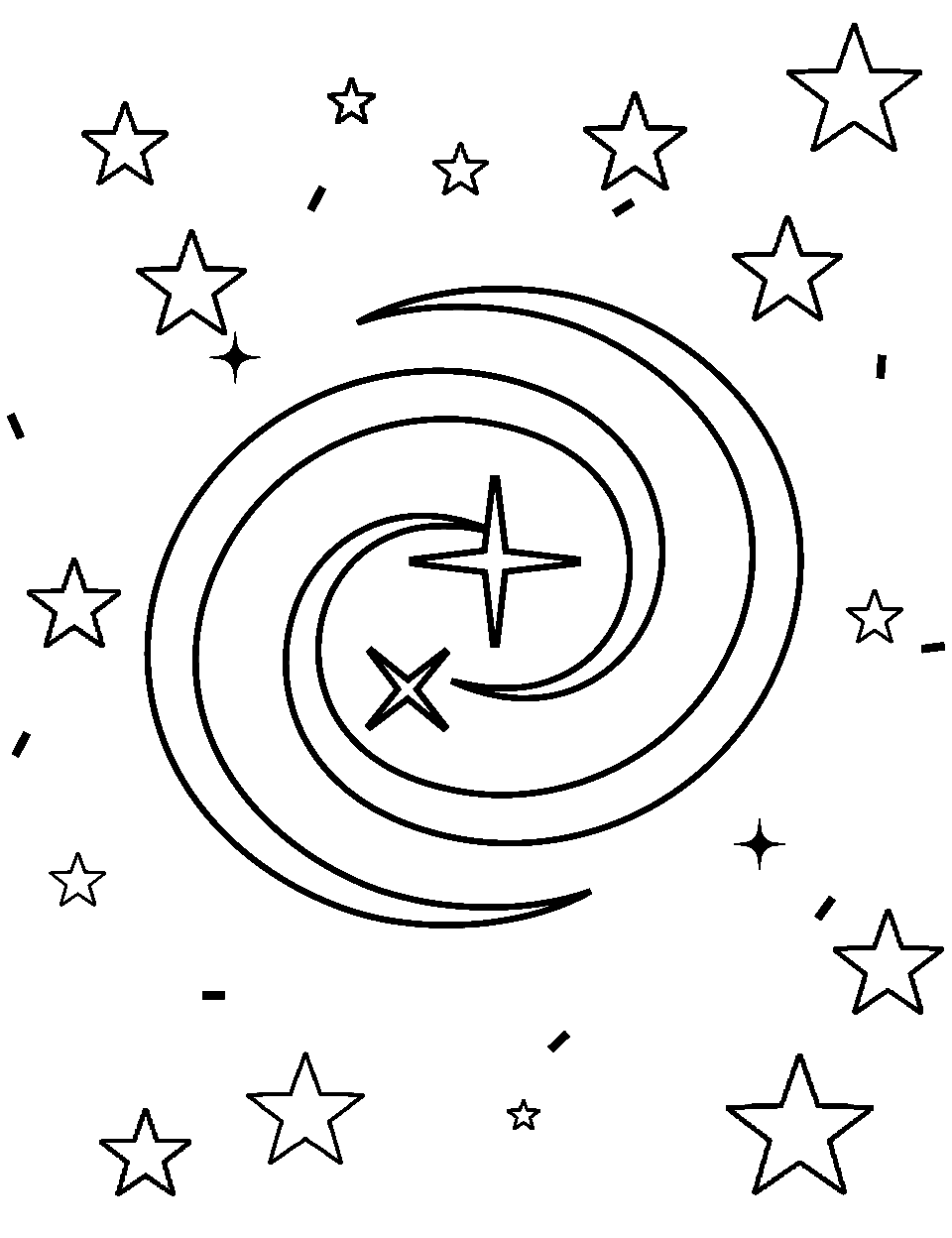
Bold thick lines shape this spiral galaxy, with two four-point sparkles at its center and chunky stars filling the surrounding sky. There is no fine detail at all, which is why it is suitable for kindergarteners who love space. Let them swirl two or three colors along the arms rather than sticking to one.
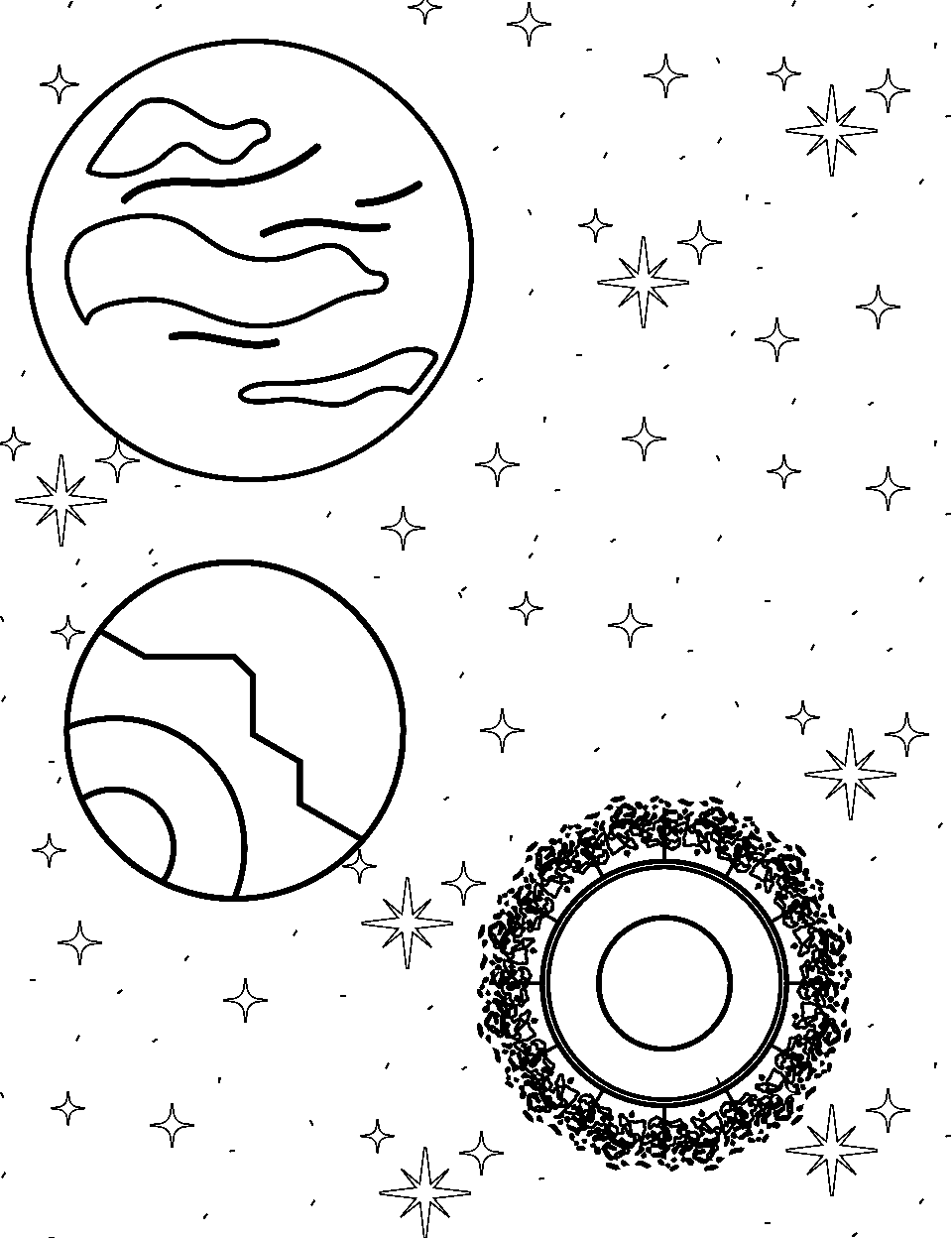
Two banded planets and one ringed planet share this page, the ringed one wrapped in a thick band of speckled dust. Four-point sparkle stars fill the background instead of the usual five-point outlines. The speckled ring is the tricky part, and leaving it uncolored actually looks better than filling it. Give each planet its own palette so they do not blur together.
A shuttle glides across this page with a fanned plume behind it, set against a background of circles, dots and small sparkles. The ship is drawn in long clean panels, quick to color, while the background can take as long as a child wants. It is a good middle ground: not too plain, not too fussy.
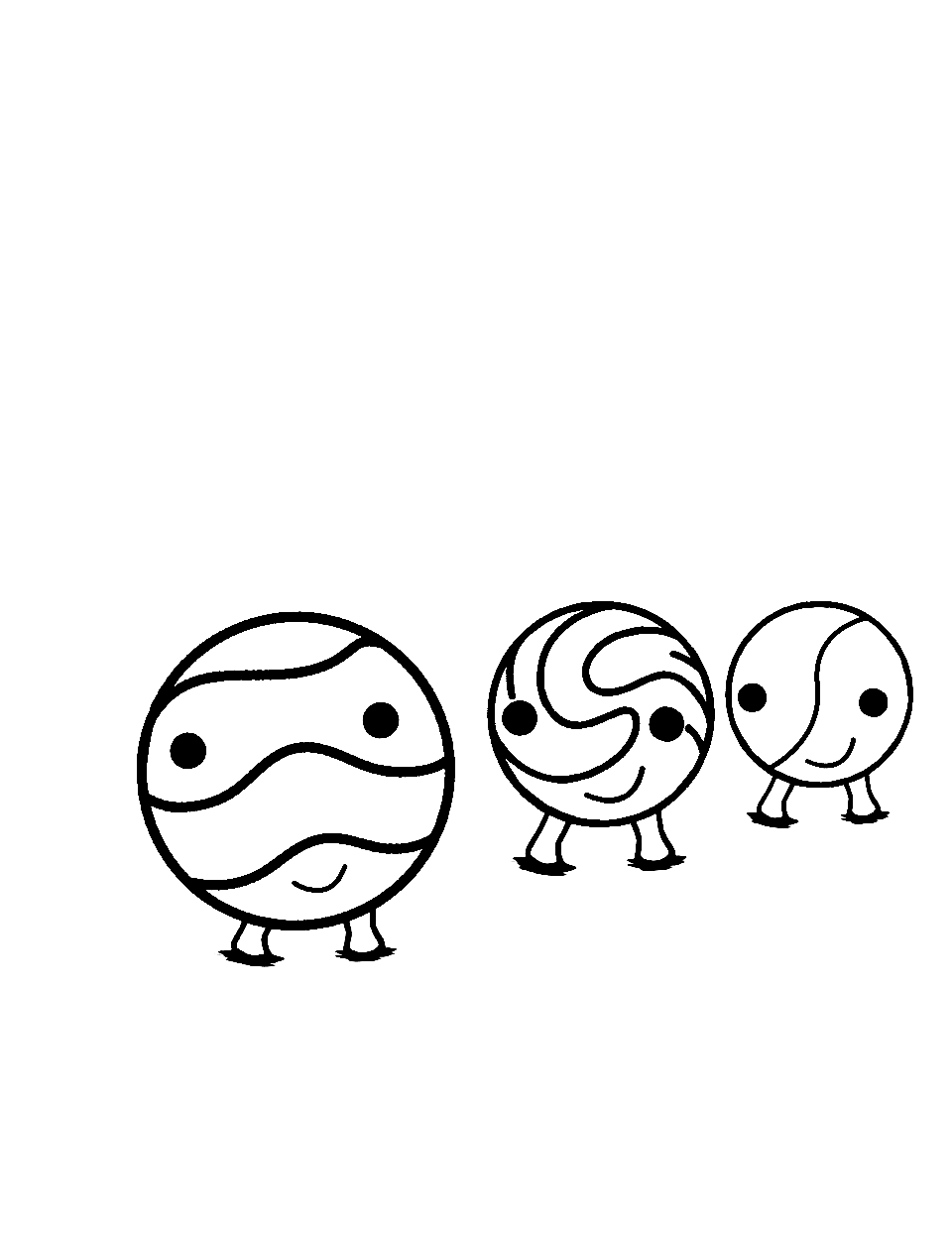
Three round planets with faces and little feet walk in a line across the middle of this page, one with wavy bands, one with a swirl and one with a crescent shadow. Everything else is white space, so there is no crowding and no pressure. Preschoolers love giving each planet its own color, and the faces make them easy to talk about. Print two copies if a toddler and an older sibling are working side by side.
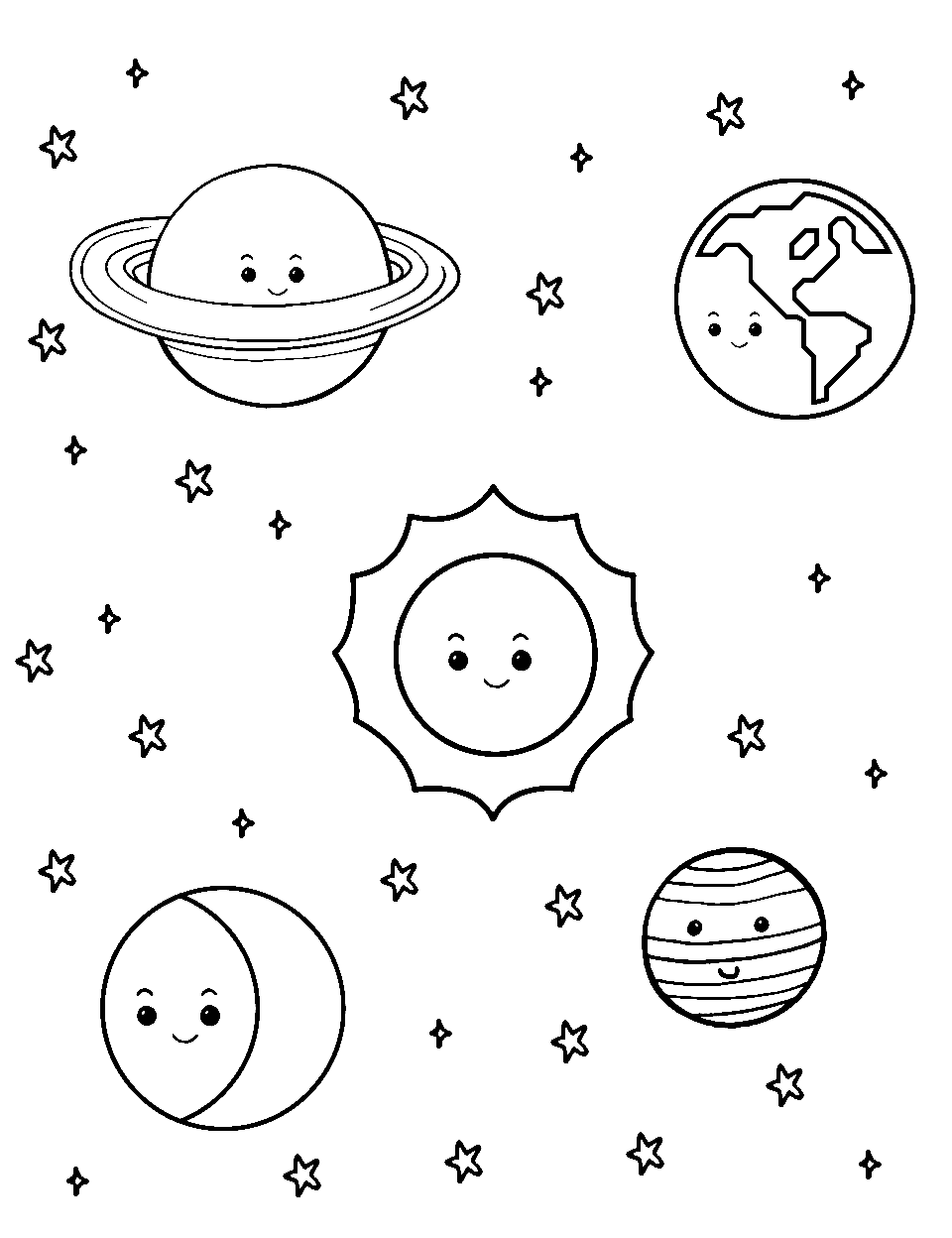
Five smiling characters float across this page: a ringed Saturn, Earth, the sun, a crescent moon and a banded planet, with stars filling the gaps. They are not arranged in order of distance from the sun, so treat it as a friendly cast rather than a diagram. The shapes are round and generous, which suits chunky crayons and small hands.
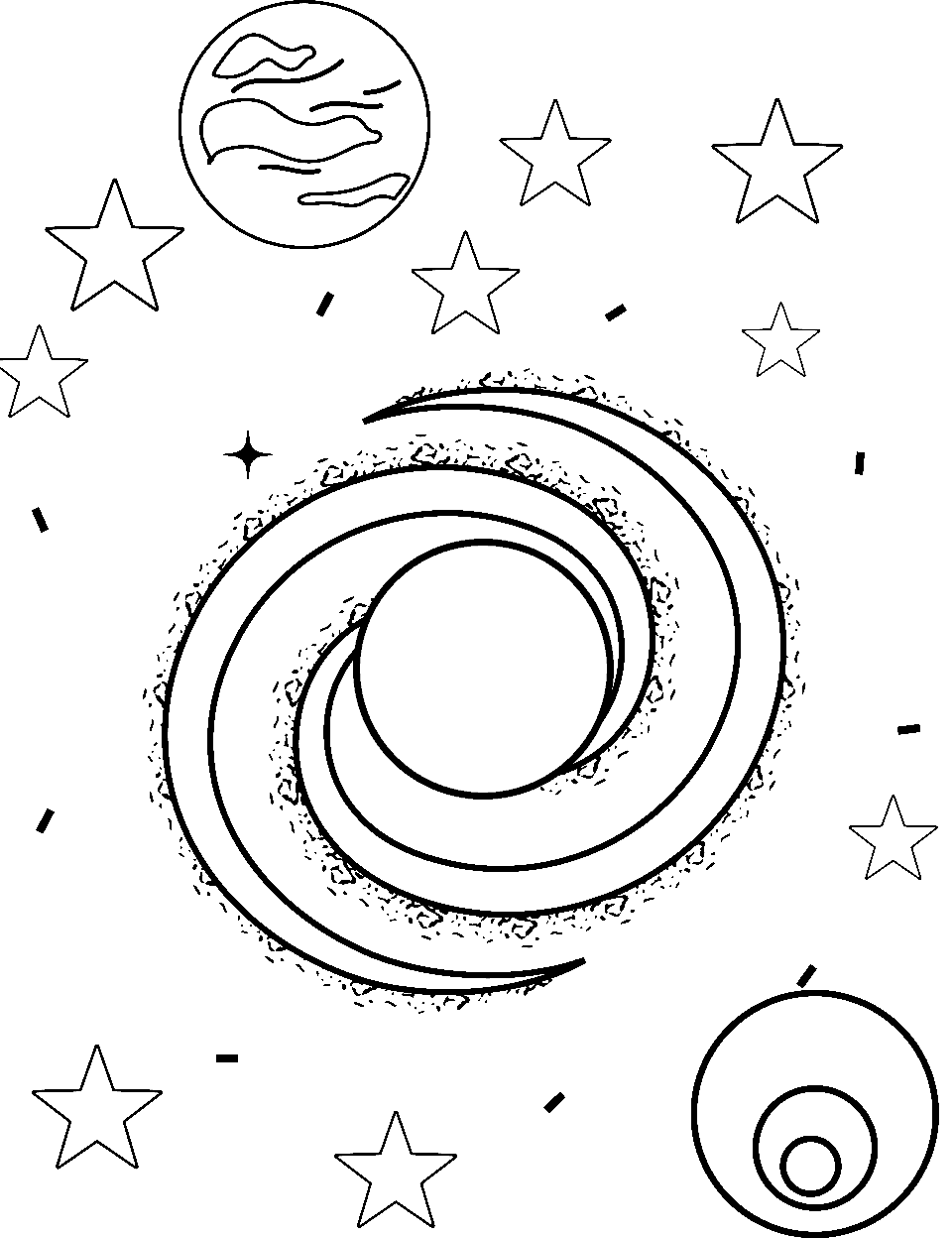
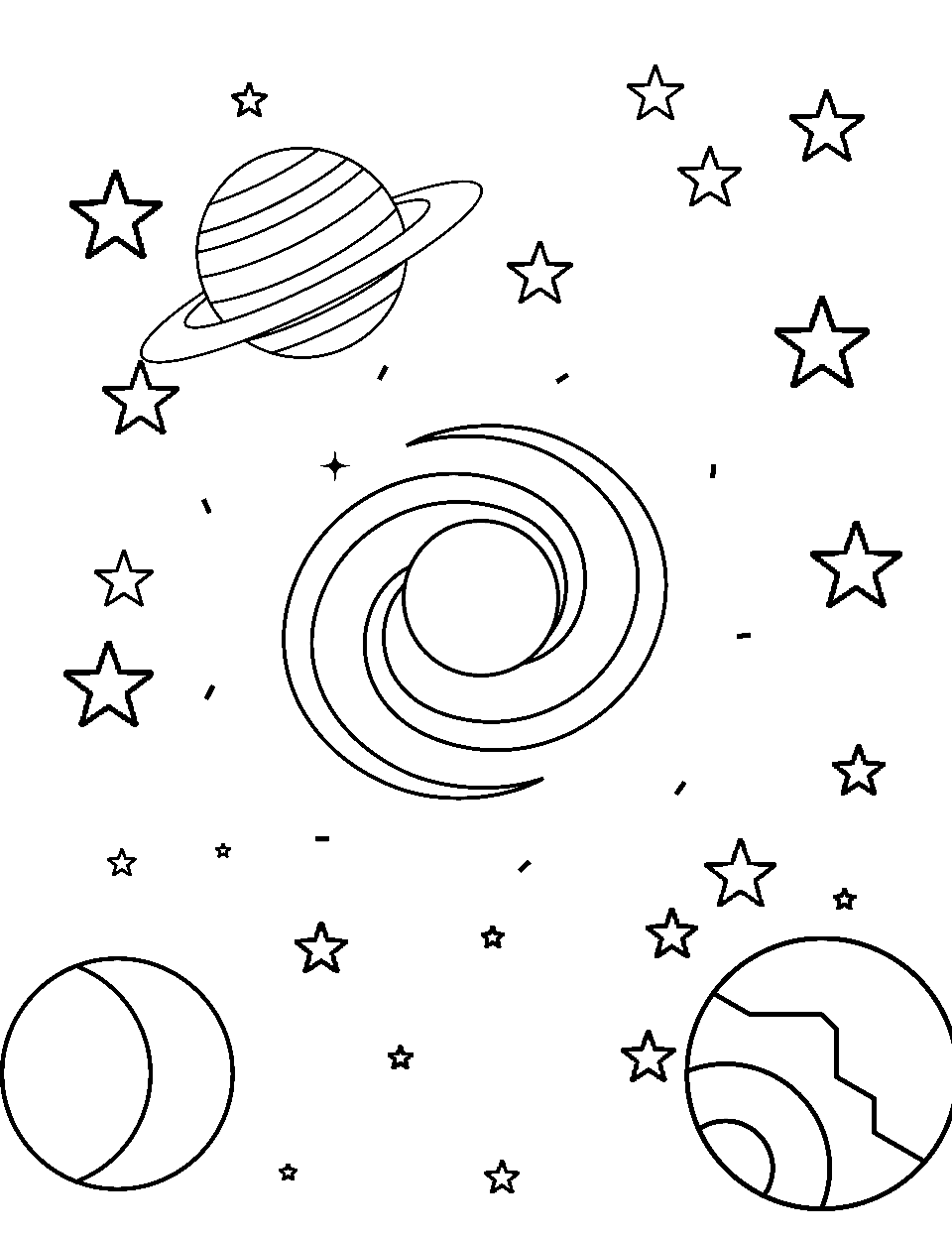
A banded planet sits above a speckled spiral galaxy here, with heavy outlined stars filling the rest of the page and a smaller planet in the bottom corner. One large detailed shape plus several simple ones lets two children of different ages share the same sheet. Deep blues and purples in the galaxy make the white stars stand out.
This rocket climbs the page with two round windows on its side and a long flame behind it, surrounded by cratered rocks, comets and a dense field of dots. The background is busy, so the page lasts a while. Keeping the rocket bright and the background gray stops it getting lost.
Two wide rings wrap the body of this station, with antenna arms at the top and a pointed tip at the bottom, and two banded planets share the page with chunky stars. It is the more detailed of the two station sheets here, with panels and grooves running along the body. Grays and blues suit the metal, and a warm color on the planets keeps them separate.
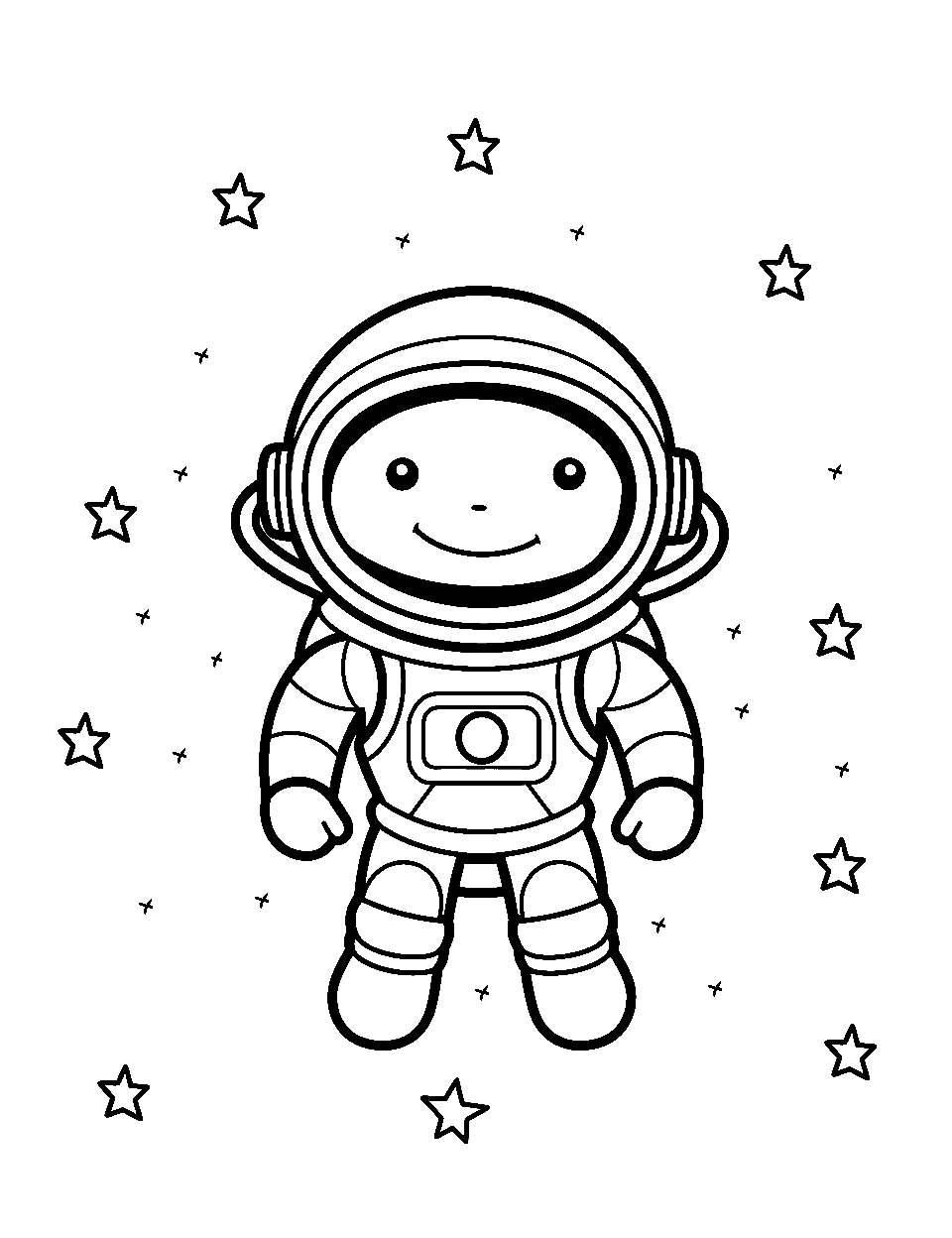
A cheerful astronaut stands front and center in a suit drawn in a few big pieces, with a wide visor and a square panel on the chest. Big outlined stars fill the space around, and nothing is small or fiddly. This is often the first sheet a three or four year old finishes without help.
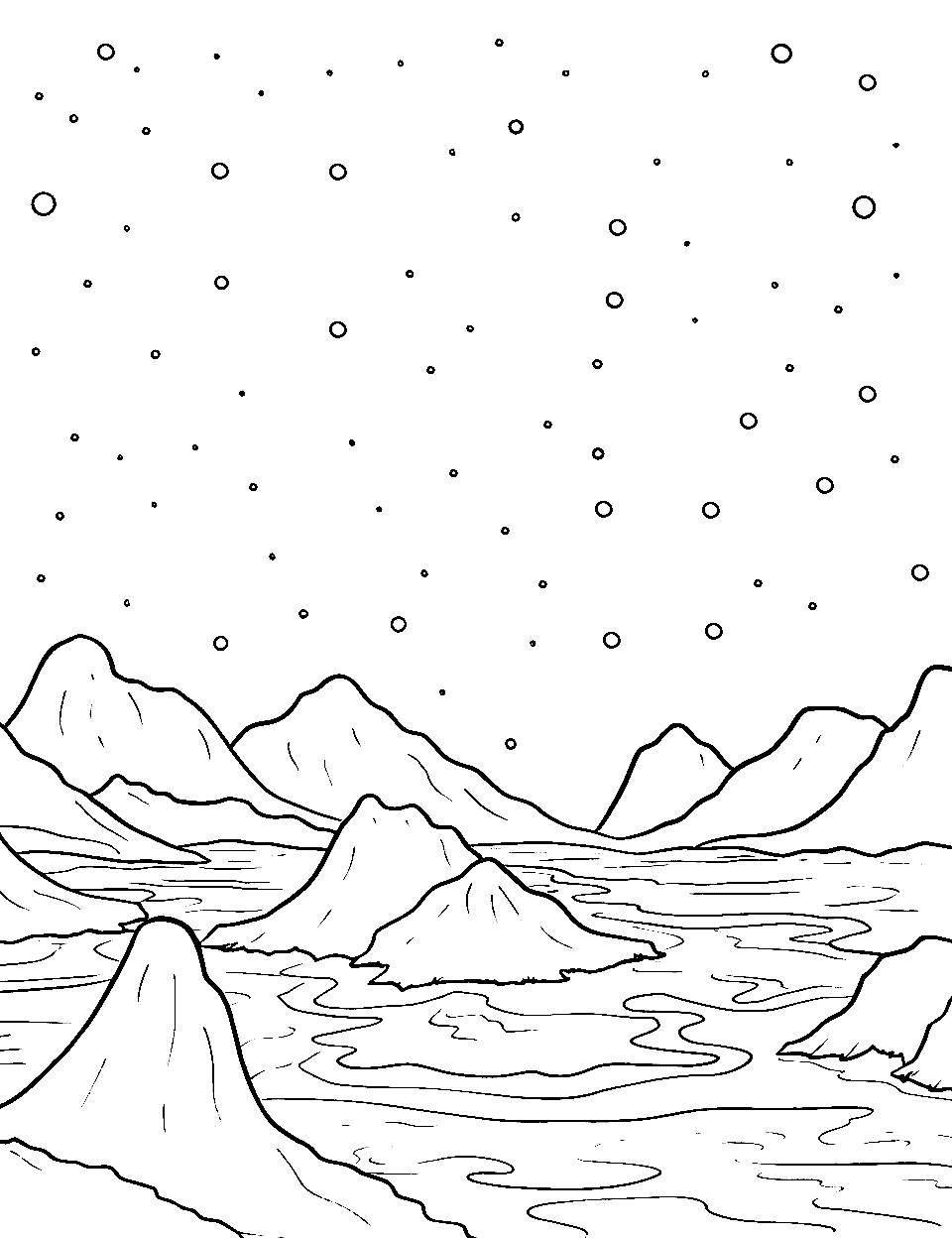
Three peaks and a wide plain of thin contour lines fill this page under a lightly dotted sky. It is quiet and repetitive in a good way, the sort of page an older child or an adult can shade for half an hour. Layering two or three reds and browns gives the rock some depth. Keep the sky nearly white so the ridge lines stay visible.
A rocket with a flame trail crosses this page between a ringed planet in the top corner and a large striped planet in the bottom one. Sparkles and small circles fill the middle, and the balance of big shapes and small ones works for a child who is building confidence. Try one warm color family on the ship and cool ones on the planets.
Saturn, a spiral galaxy, two round planets and a scatter of chunky stars share this page, all drawn with clear simple outlines. Nothing here needs a fine tip, so crayons and markers both work. It covers most of the space icons in one sheet, which makes it a good pick for a classroom set.
The shuttle here glides nose up across a page filled with dots, cratered moons and a couple of comets. The ship is drawn in long panels with a row of small windows near the nose. Coloring the background dark first and the shuttle afterward gives the strongest contrast, though it takes patience and a steady hand.
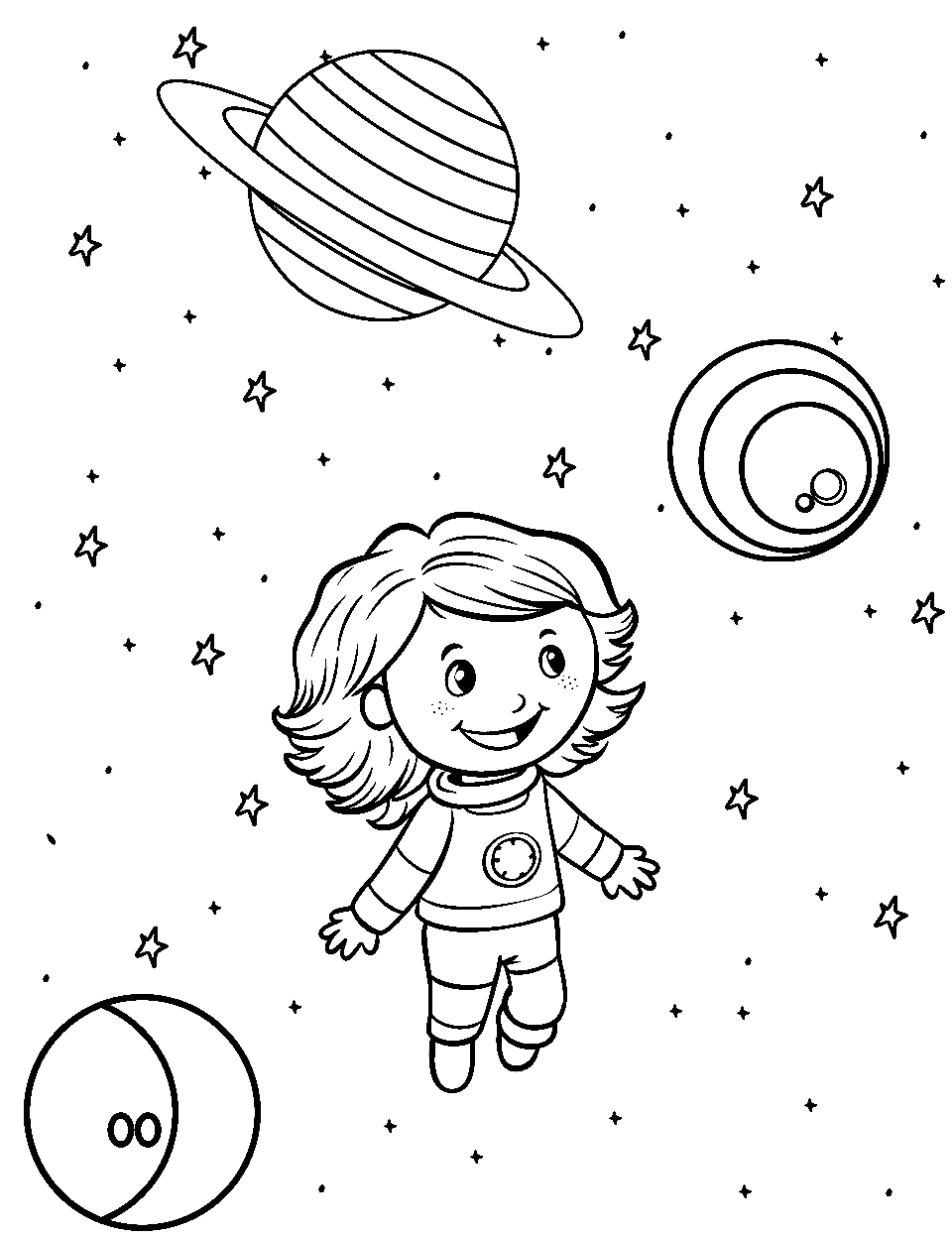
A smiling girl floats among the stars in a soft suit with no helmet, which is what makes this page read as a daydream rather than a mission. Saturn hangs above her and two moons sit nearby. Her hair and the trim on the suit give a child a few small areas to work on after the big shapes are done. Print it for a bedroom wall, where it holds up well in pastels.
By using our free coloring pages, you acknowledge and agree to our full disclaimer. All materials are for personal, non-commercial use only and all rights belong to their respective license holders.
What Space Facts Can Kids Learn While Coloring?
Kids can learn that Jupiter’s Great Red Spot is a real storm twice as wide as Earth, watched for over 300 years (1). It is the spiral storm shown on the Jupiter sheet above. Many of the sheets have a real counterpart, and each fact turns a coloring session into a science lesson without anyone noticing. Saturn’s rings reach up to 175,000 miles from the planet, yet the main rings are typically only about 30 feet thick, which is why they always draw as a flat disc, and Saturn also has more confirmed moons than any other planet, with 274 confirmed as of 2025 (2).
Mars turns up on two pages here, and rust is the honest color: iron minerals in the Martian dirt oxidize, and the volcano Olympus Mons rises more than 25 miles from base to summit (3). The two space station sheets have a real counterpart circling about 250 miles up at 17,500 miles per hour, continuously crewed for more than 25 years (4).
Two more worth knowing while the crayons are out. The solar system has eight planets, and Pluto has counted as a dwarf planet since 2006, so a lineup of eight is complete, not missing one. NASA also publishes its own free coloring pages of the sun, the planets and several spacecraft, which pair well with the sheets here.
Which Sheets Work Best for Each Age?
Toddlers get the thick-lined sheets, grade-schoolers get full scenes, and older kids get the fine-line pages, so match the sheet to the hand holding the crayon and skip most of the frustration. Toddlers and preschoolers do best on pages like Easy-to-Color Earth, Toddler’s First Spaceship, Pre-K Planet Parade, Easy-to-Color Rocket, Easy-to-Color Astronaut, Smiling Solar System Friends and Satellite Signal, whose heavy outlines all forgive a stray crayon.
Kindergarten and early grade school kids can handle a whole scene. Friendly Alien Encounter, Walking on the Moon, Rocket’s Grand Launch, Kindergarten Galaxy Gaze and Cosmic Dream each have a clear subject with a manageable amount of background.
Save the fine-line pages for older kids, teenagers and adults. Saturn’s Splendid Rings, Sun’s Fiery Fury, Sun Over a Rocky Canyon, Mars’s Red Mystique, Pluto’s Icy Terrain and Comets in a Crowded Sky use closely spaced lines that reward colored pencils and punish a thick marker. Universe’s Infinite Wonders belongs in the same band for a different reason: its solid, ink-heavy shapes take a steady hand and a full ink cartridge, not fine lines.
Activities to Do With Outer Space Coloring Pages
The fun does not have to stop once the coloring is done. These pages work as craft material, science props and wall art, and most of the ideas below need nothing you do not already have in a kitchen drawer.
Create a Bedroom Planetarium
Turn your child’s ceiling into a night sky. Cut out the colored planets and stars, then fix them up with painter’s tape or sticky tack so nothing pulls the paint off later. Arranging them outward from the sun turns the ceiling into a rough map, and the Solar System Orbit Map sheet makes a good reference to arrange them by.
Glow-in-the-Dark Galaxy
Make the artwork work at night. Outline the stars and planets with glow-in-the-dark puffy paint or markers, then let the page dry flat so it does not curl. Hold it up to a lamp for a minute and switch the lights off. The bold pages, like Kindergarten Galaxy Gaze, glow best because the shapes are big enough to read across a dark room.
Space Fact Scavenger Hunt
Turn coloring into a game. Write one space fact on the back of each page before you hide them around the house, using the facts above so the answers hold up: Saturn has more confirmed moons than any other planet, Mars looks red because its dirt is rusting, the Great Red Spot is wider than our whole planet. Whoever finds a page reads its fact aloud, then gets to color it.
Design a Comic Book
Use the action sheets to tell a story. Friendly Alien Encounter, Rocket’s Grand Launch and Spacewalking Astronaut fall naturally into a beginning, middle and end. Color several, staple them along one edge, and let your child add speech bubbles in the white space around the figures.
DIY Space Helmet
A large paper grocery bag or a cardboard box becomes a helmet with a face hole cut out and coloring page cut-outs glued all over it. Planets, rockets and comets from the busier sheets work best because there are so many of them on one page. Give the glue a full hour to dry before anyone puts it on, or the pieces peel at the first turn of the head.
Intergalactic Greeting Cards
Print the sheets at half or quarter size, color them, then glue them to folded cardstock. The single-subject pages, like Easy-to-Color Rocket or Comet’s Tail Trail, shrink better than the crowded ones, whose small details disappear at that scale. They make good birthday cards for a science-mad friend, or thank you notes after a space-themed party.
FAQs
What Paper Is Best for Coloring Pages?
Standard 20 lb printer paper handles crayons and colored pencils fine, and cardstock is the better choice for markers or paint. Thicker stock stops ink bleeding through onto the table and keeps the page from warping when it gets wet. If you only have printer paper and your child wants markers, slide a spare sheet underneath as a blotter.
Are These Coloring Pages Scientifically Accurate?
Some are drawn from real objects and some are pure imagination, and the descriptions above tell you which is which. The Jupiter, Saturn, Mars and solar system sheets follow real features, like the Great Red Spot and Saturn’s ring system. The smiling planets, the one-eyed alien and the daydreaming girl in Cosmic Dream are there for fun, so nobody should study for a test from them.
How Can I Flatten Curled Pages?
Press the finished page flat under a stack of heavy books for a day or two. Make sure paint or marker is bone dry first, or the color will transfer to whatever is sitting on top. A sheet of baking paper above and below the artwork protects the books and keeps the colors from smudging.
Can I Resize These Images for Printing?
Yes, use the scale setting in your printer dialog before you print. Choose “Fit to page” for a full-size sheet, or enter a percentage like 50 percent to get two smaller versions for cards and craft cut-outs. Shrinking a detailed page below about half size makes the fine lines hard to color, so stick to the bolder sheets when you go small.
What Are the Benefits of Coloring for Kids?
Coloring builds fine motor control, hand-eye coordination and the kind of sustained focus that carries over into handwriting. Space sheets add a second layer, because the subjects give you something real to talk about while your child works. Choosing colors for a planet or a suit is also a low-stakes decision, which is useful practice for a child who finds choices hard.
Which Sheet Uses the Least Ink?
Easy-to-Color Earth uses the least, since it is one large globe with a handful of lines and no background. The rocket and astronaut pages are next, followed by the smiling planet sheets. Avoid Universe’s Infinite Wonders and the black hole and galaxy pages when the cartridge is low, because their solid dark areas print heavy by design.
How Do I Pick Sheets for a Mixed-Age Group?
Print a small stack from each difficulty band above so every child gets something they can actually finish. A four year old needs Easy-to-Color Rocket or Pre-K Planet Parade, while a ten year old will be bored by anything without fine detail and should start with Saturn’s Splendid Rings or Sun’s Fiery Fury. Pairing a bold sheet with a more detailed one on the same subject, such as Easy-to-Color Earth for the little one and Shuttle Leaving Earth for an older sibling, keeps them working on the same theme at their own level.