Some of these beasts are cuddly. A few are honestly creepy.
Monster coloring pages are the rare printable that works for a toddler and a ten-year-old at the same table. This set runs from chunky one-eyed blobs to a kraken, a chimera and a scaled snake that will hold an older child for an hour.
Every sheet below prints on standard letter paper and costs nothing. Reach for crayons on the simple ones and colored pencils on the detailed ones.
Under the sheets you will find ideas for what to do with a finished page, plus what researchers have actually measured about coloring and stress.
A Monster Reading a Book
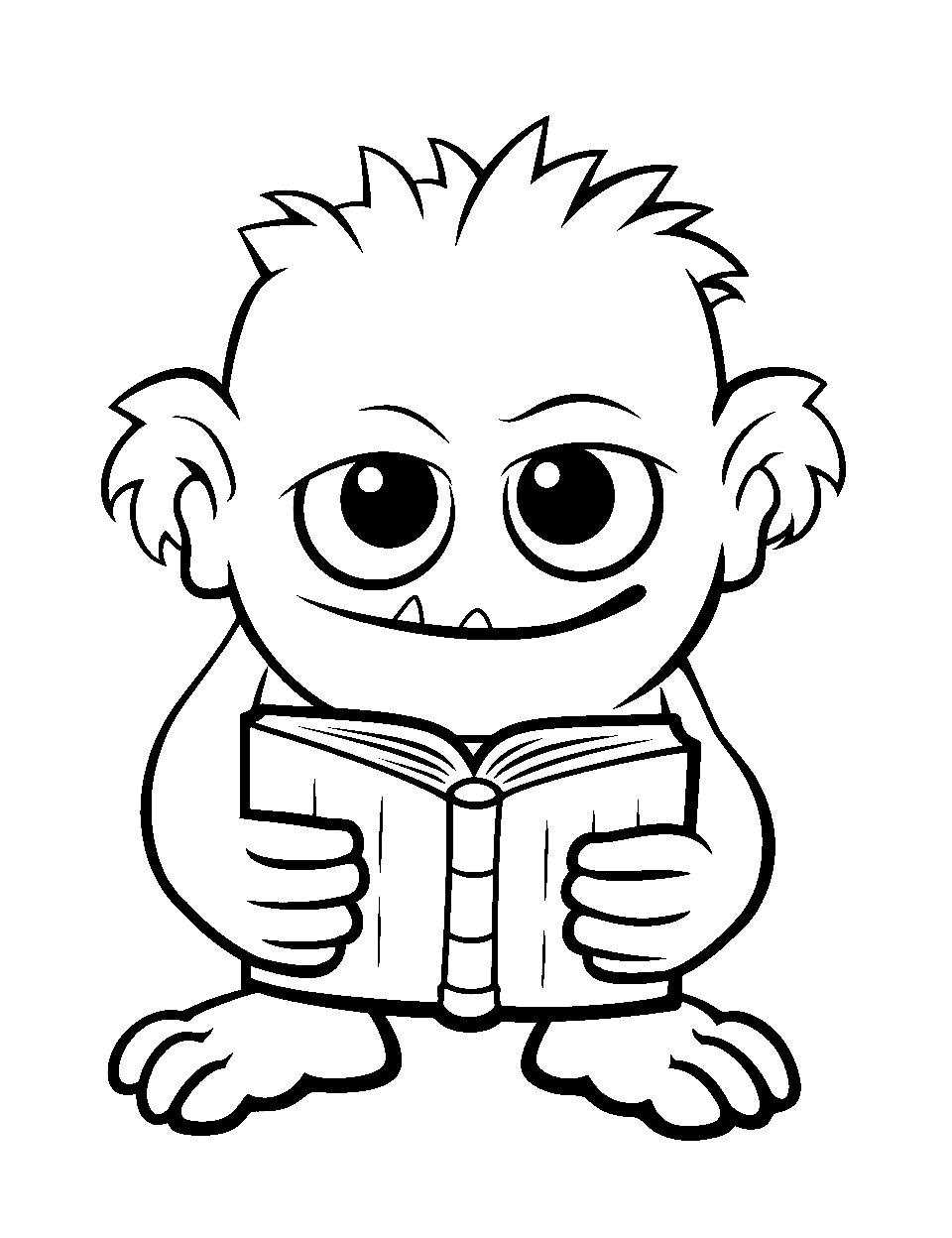
This shaggy little monster stands holding an open book in both paws, with two small fangs poking over its lower lip and tufted ears sticking out at the sides.
The outlines are thick and the shapes are wide, so crayons and chunky markers work fine here. Leave the book pages white and let your child pick something loud for the fur. It is a good opener for a reading corner or a library display.
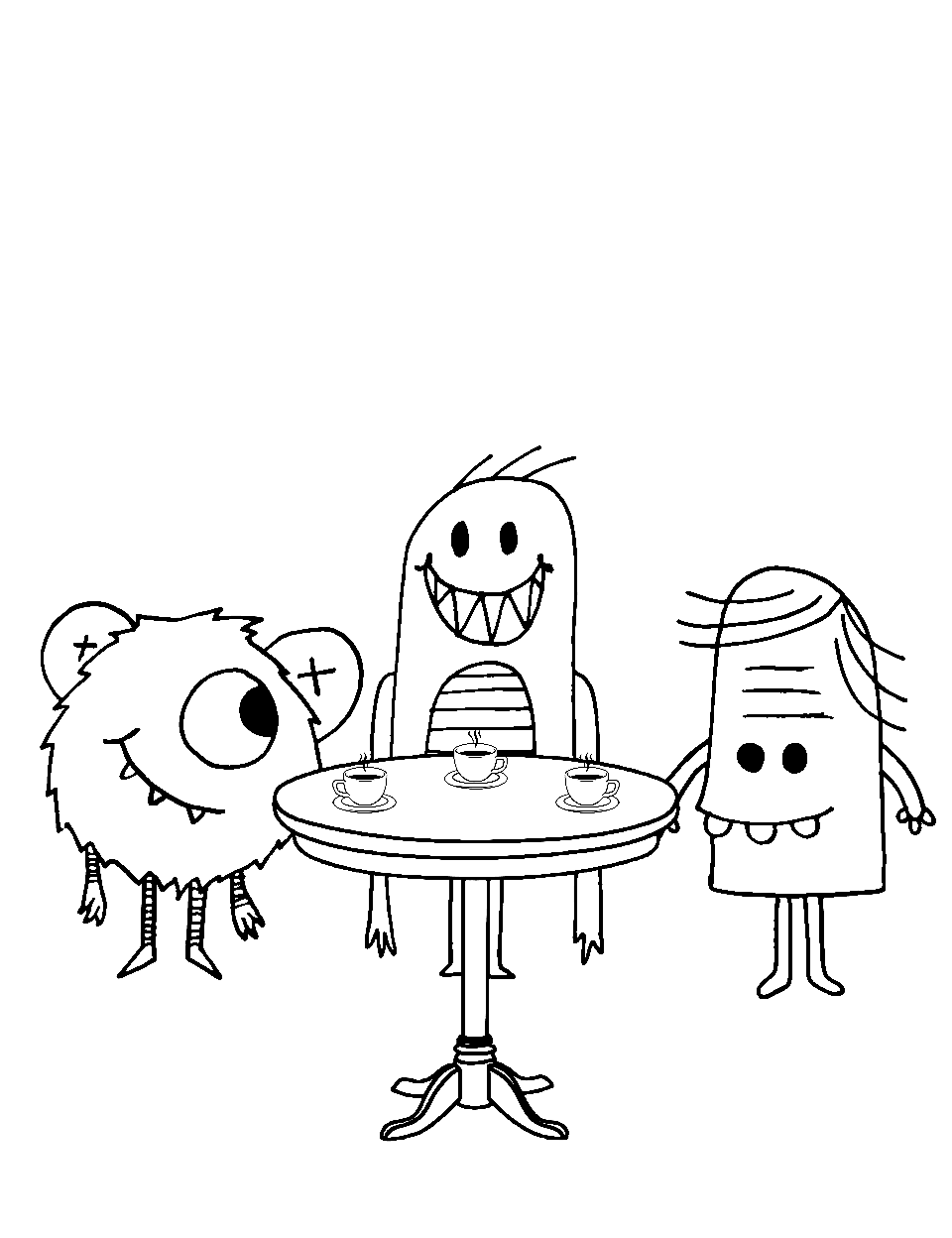
Three very different monsters gather around a round pedestal table set with steaming cups on saucers.
One is a ball of fur with a single big eye and striped legs, one is tall and grinning behind a chair, and the third looks like a walking rectangle with a long fringe. Give each monster its own color family so the group still reads as three separate characters. The tabletop is mostly empty if anyone wants to add cakes.
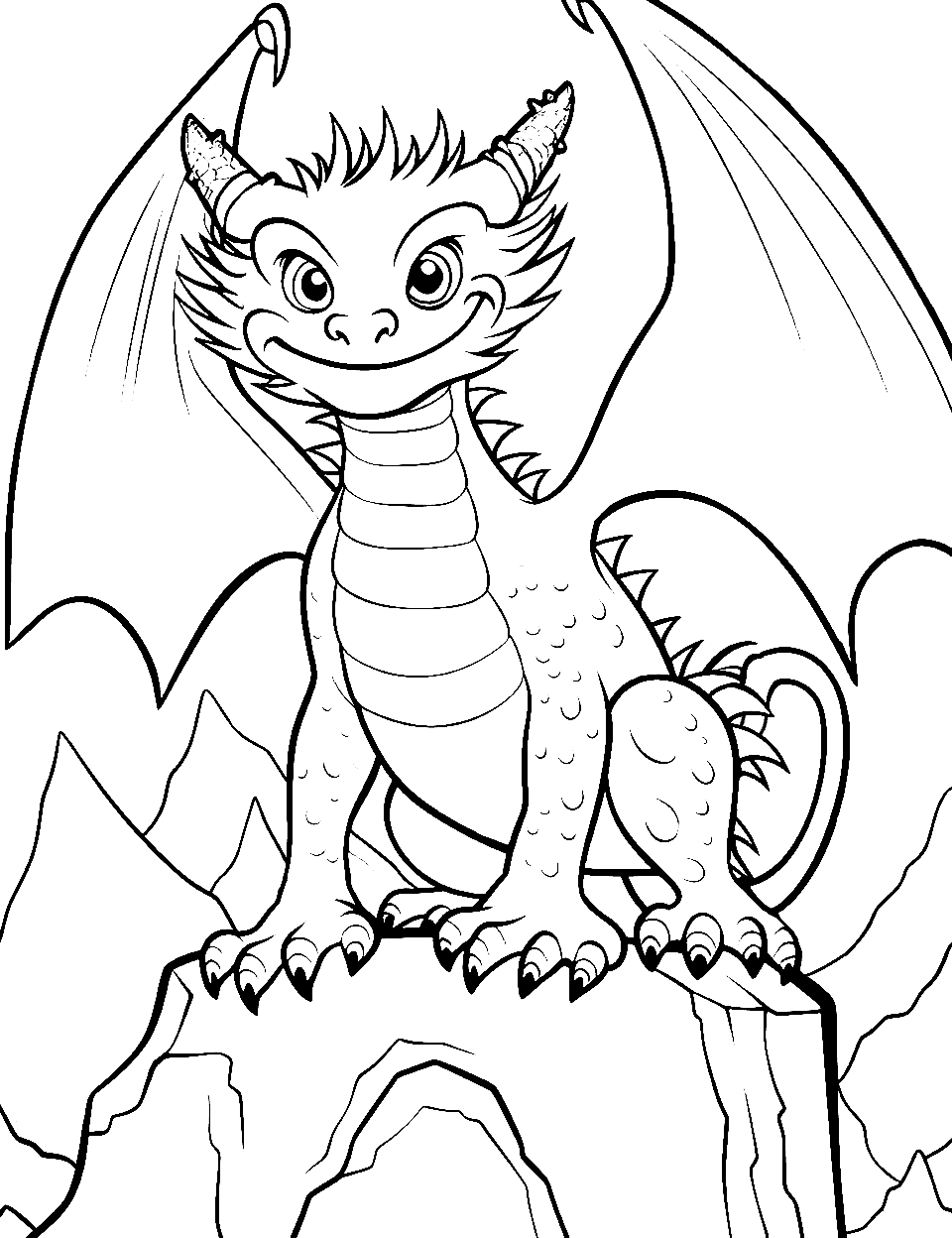
Wings spread wide, this dragon sits on a rocky ledge with its striped belly facing you and its claws curled over the edge.
The face is soft and smiling rather than fierce, which makes it an easy first mythical beast for a younger child. Long open stretches on the wings and the mountains behind take colored pencil blending well. A warm body against a cool grey cliff gives you instant contrast.
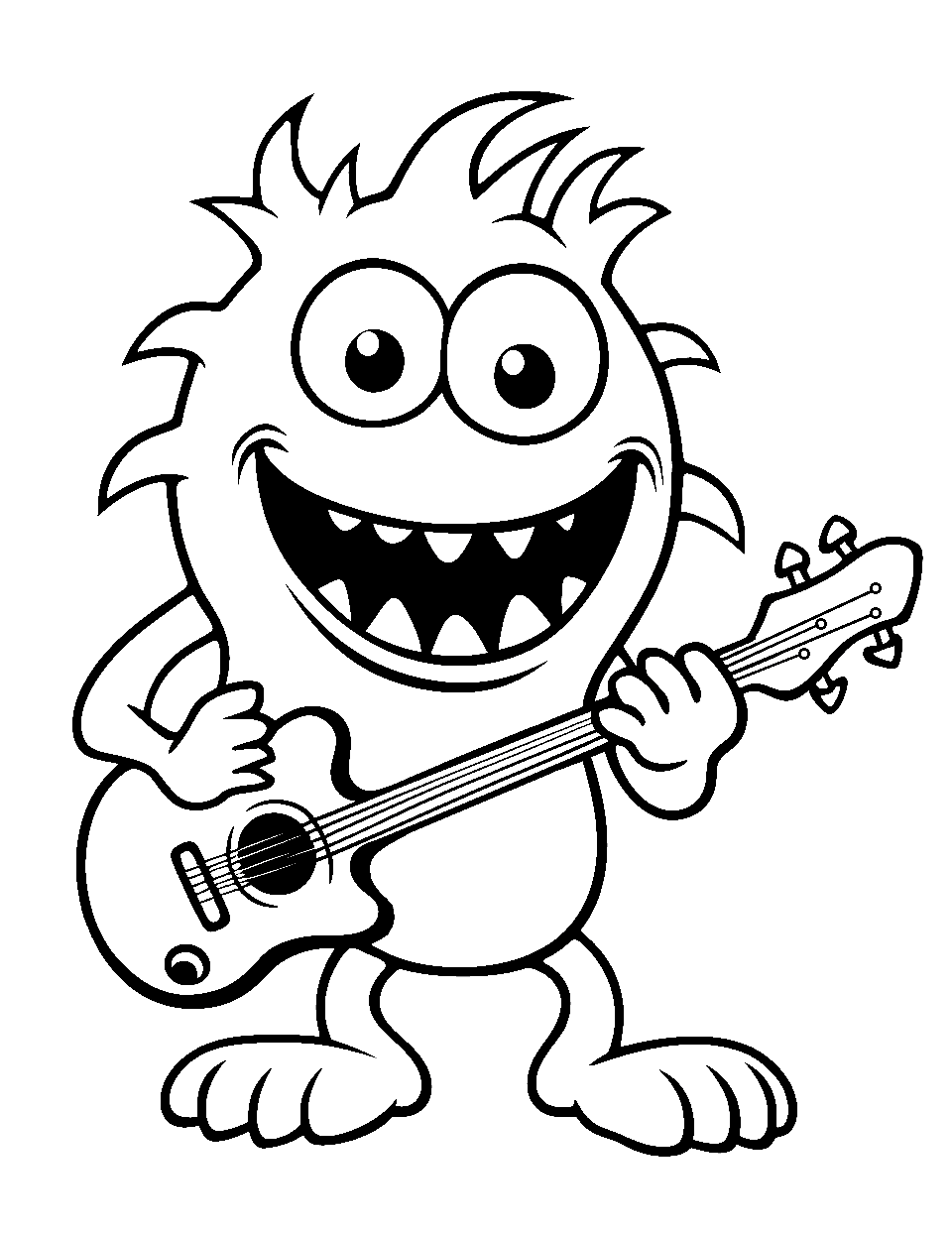
A grin this wide should come with earplugs.
The shaggy monster here holds a guitar across its body, one hand near the sound hole and one on the neck, mouth open on a full row of pointed teeth. The guitar body is one clean shape that suits a bold marker color. Younger kids can flat-color the fur in a single shade and still be pleased with the result.
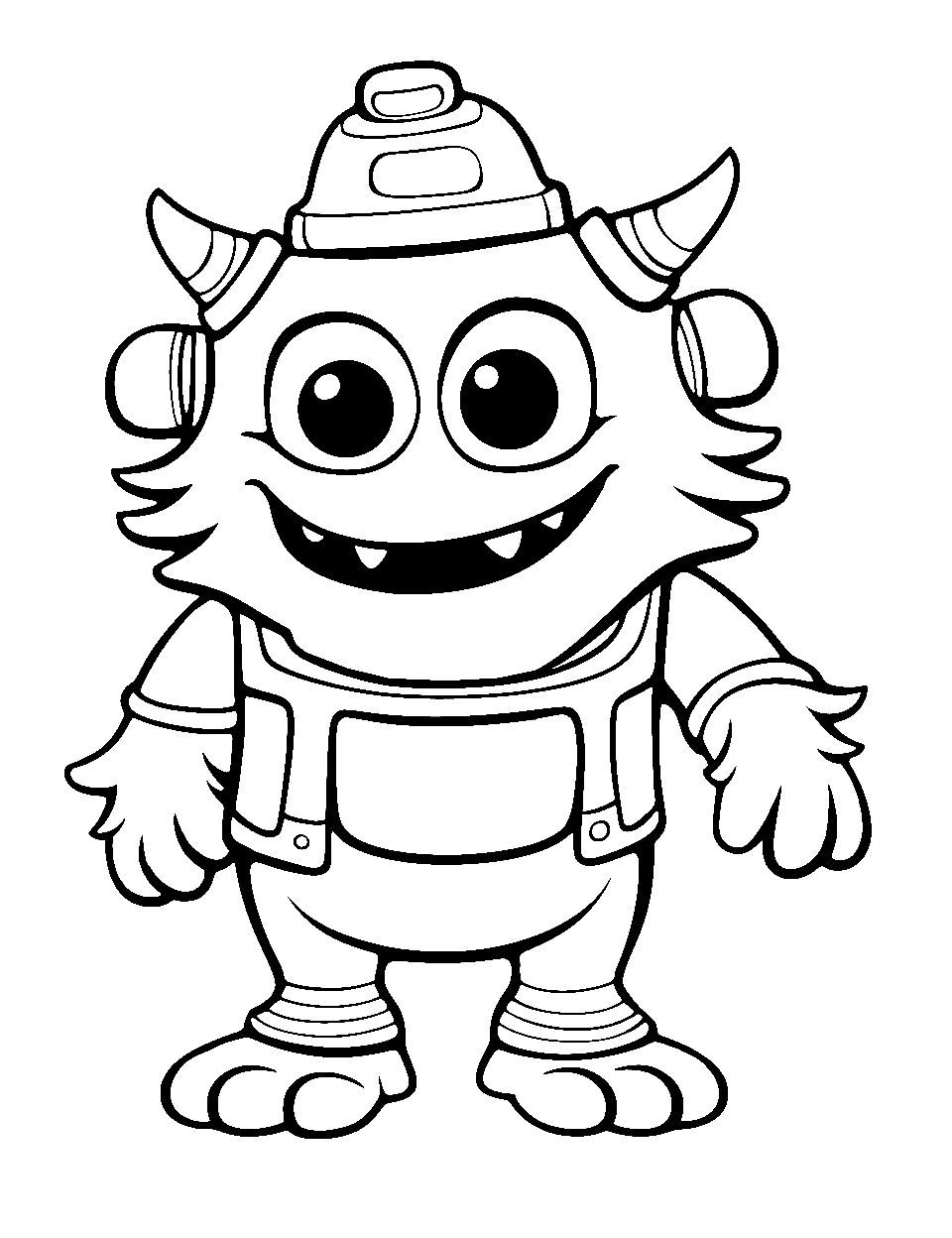
Two curved horns poke out from under a helmet on this round-eyed monster, who wears overalls with a big front pocket and cuffed boots. Everything is drawn as simple closed shapes, which puts it among the easiest sheets in the set for a preschooler. Bright work colors on the overalls with a softer shade on the fur keeps the outfit and the monster separate.
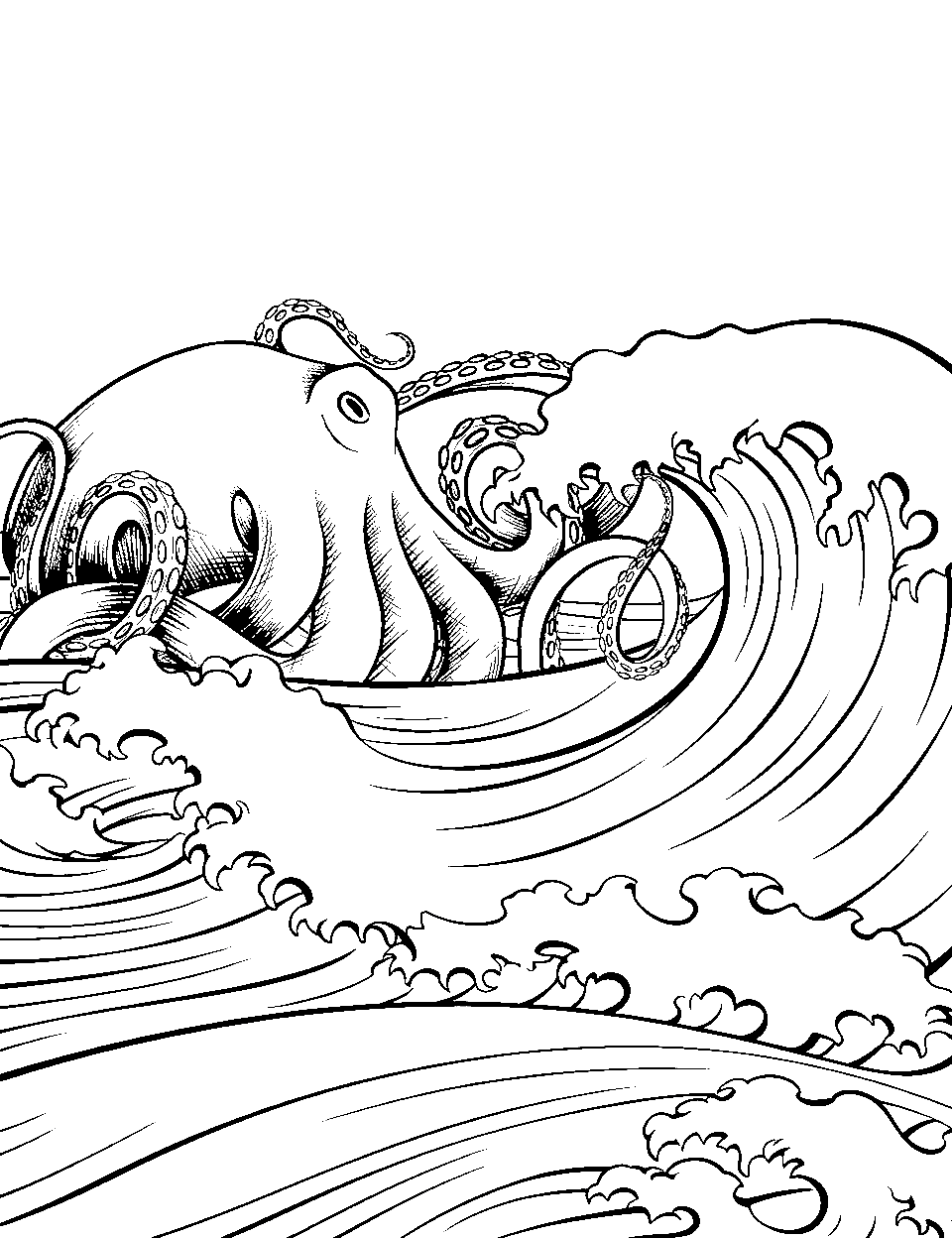
Terror of the deep, drawn at full size. A many-armed kraken rises out of tall curling waves, with rows of suckers running along each tentacle and one round eye above the water. Each sucker is its own small oval, so the tentacles take real patience to fill in without smudging. The wave lines are fine and repetitive, so this is a colored-pencil sheet for an older child or an adult rather than a crayon page for a toddler. Grey-green arms against layered blues make the water look like it is moving.
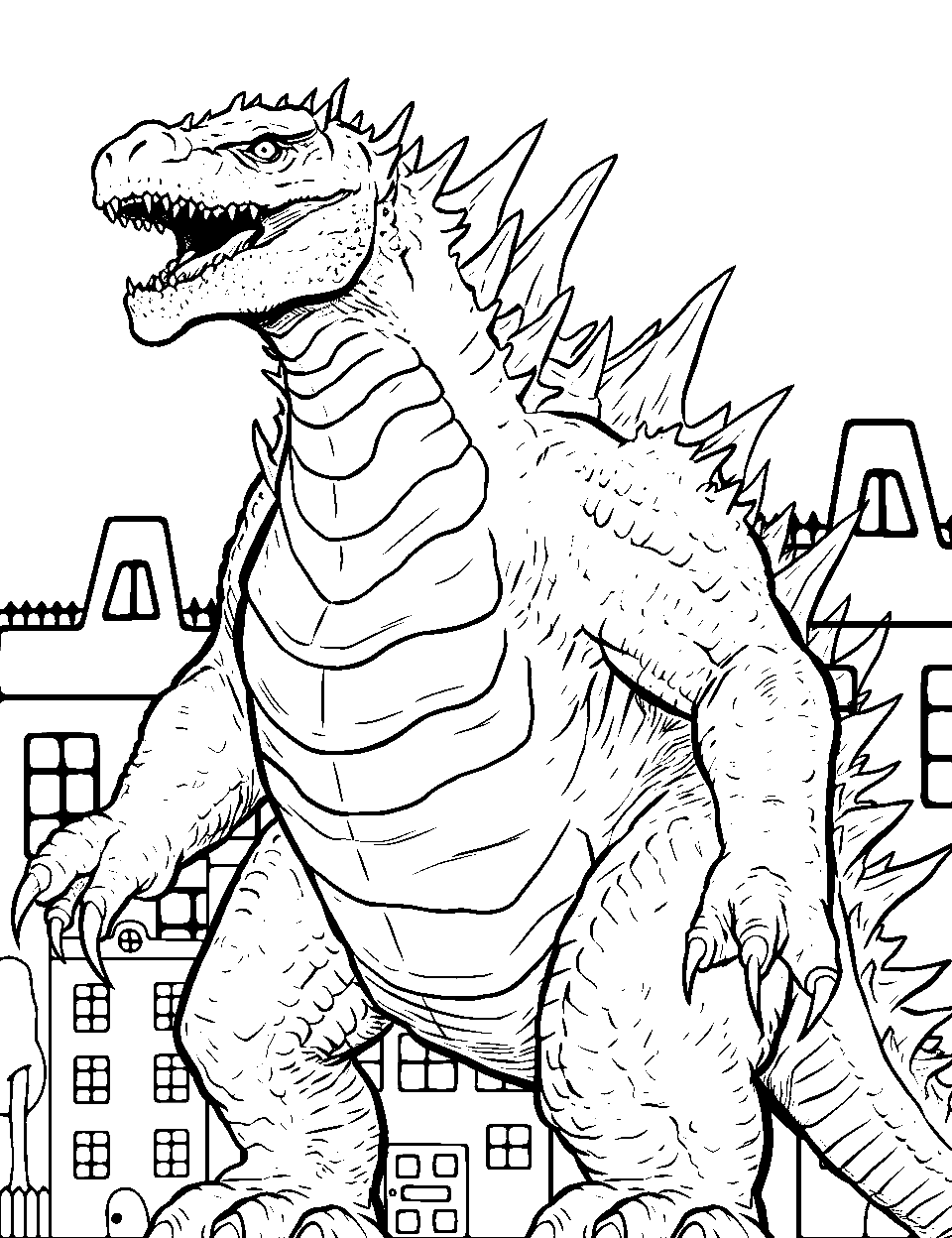
Jagged plates run down the spine of this towering reptile as it walks between city buildings with its jaws open.
Scale texture is drawn in small repeated marks across the chest and legs, so plan on a sharp pencil rather than a fat crayon. Grey scales with a hot orange sky behind the rooftops gives you the classic movie-poster look. Our Godzilla coloring pages have more in this style if it becomes a favorite.
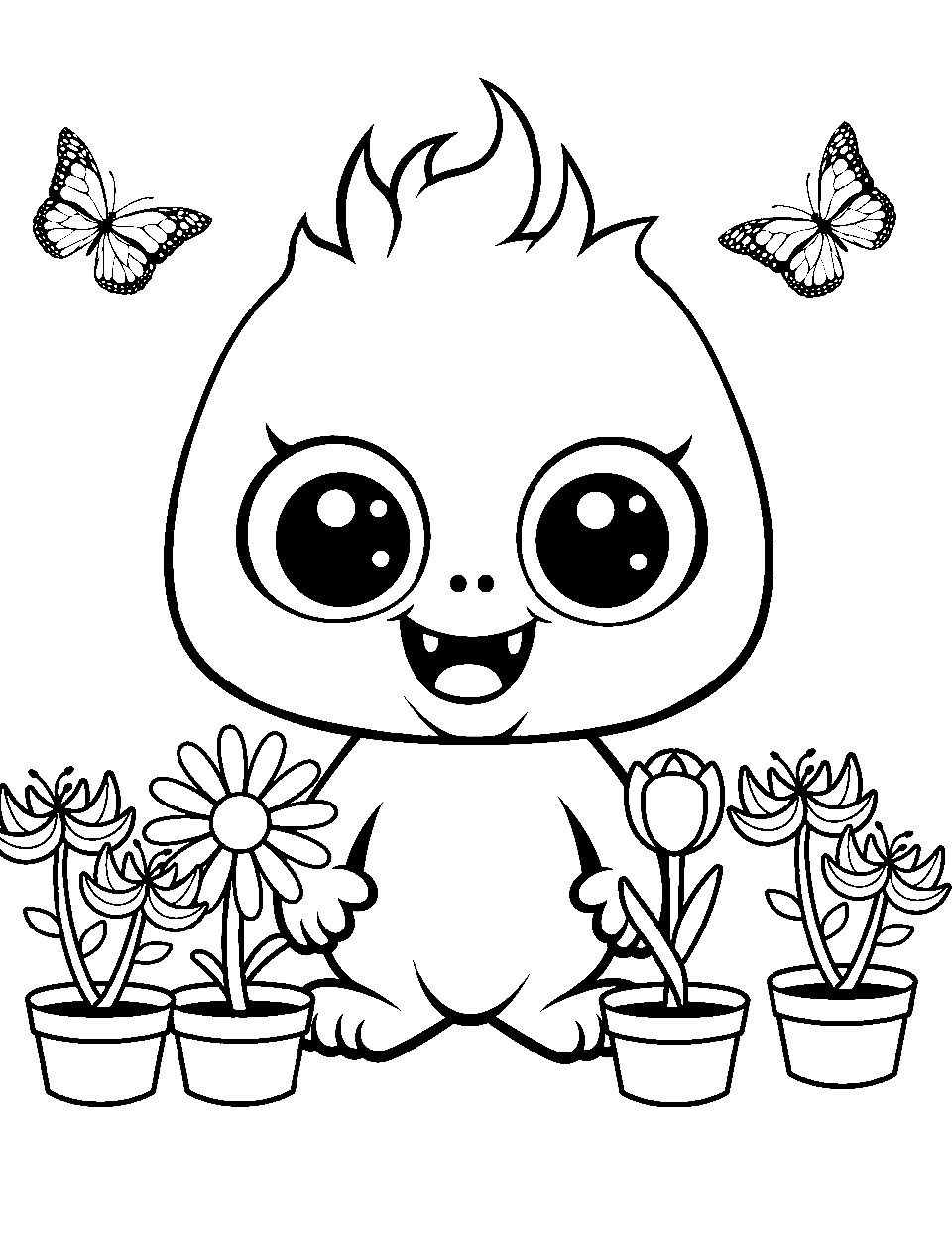
Enormous sparkling eyes take up half the face of this kawaii monster, who sits among potted flowers with butterflies drifting overhead.
Each bloom is a different shape and each pot is a simple outline, so a small area of the page can absorb the whole crayon box. Pastels suit the soft round body. This is the friendly one for a child who finds fangs and claws a bit much.
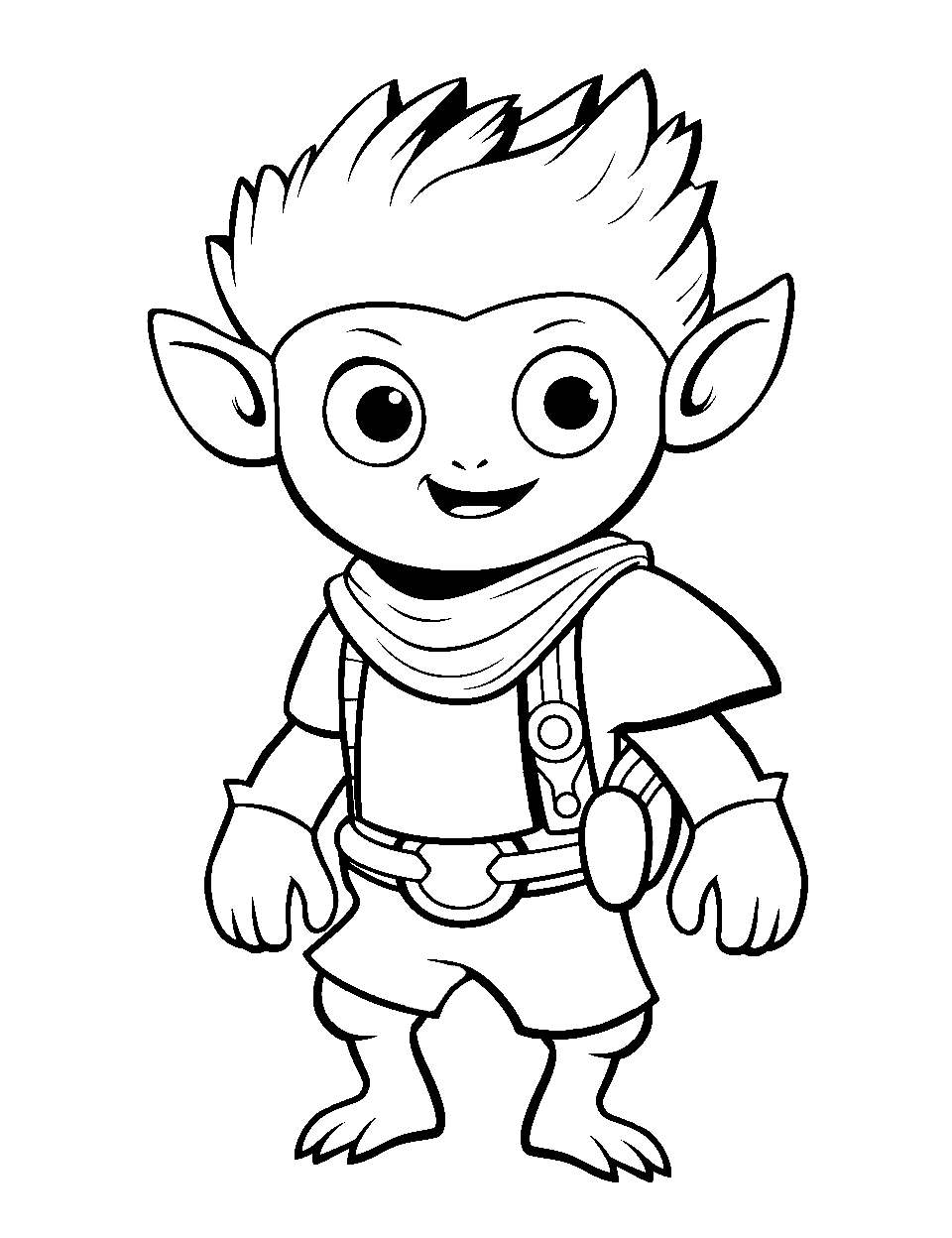
Pointed ears and spiky hair frame the face of this small adventurer, who wears a neck scarf, a short cape and a belt with a round pouch clipped to it.
Nothing in the drawing is frightening, so it works for kids who want the adventure without the teeth. Earthy leather tones on the belt and boots with one bold shade on the cape make the outfit stand out. Ask your child to name the character and write it under the picture.
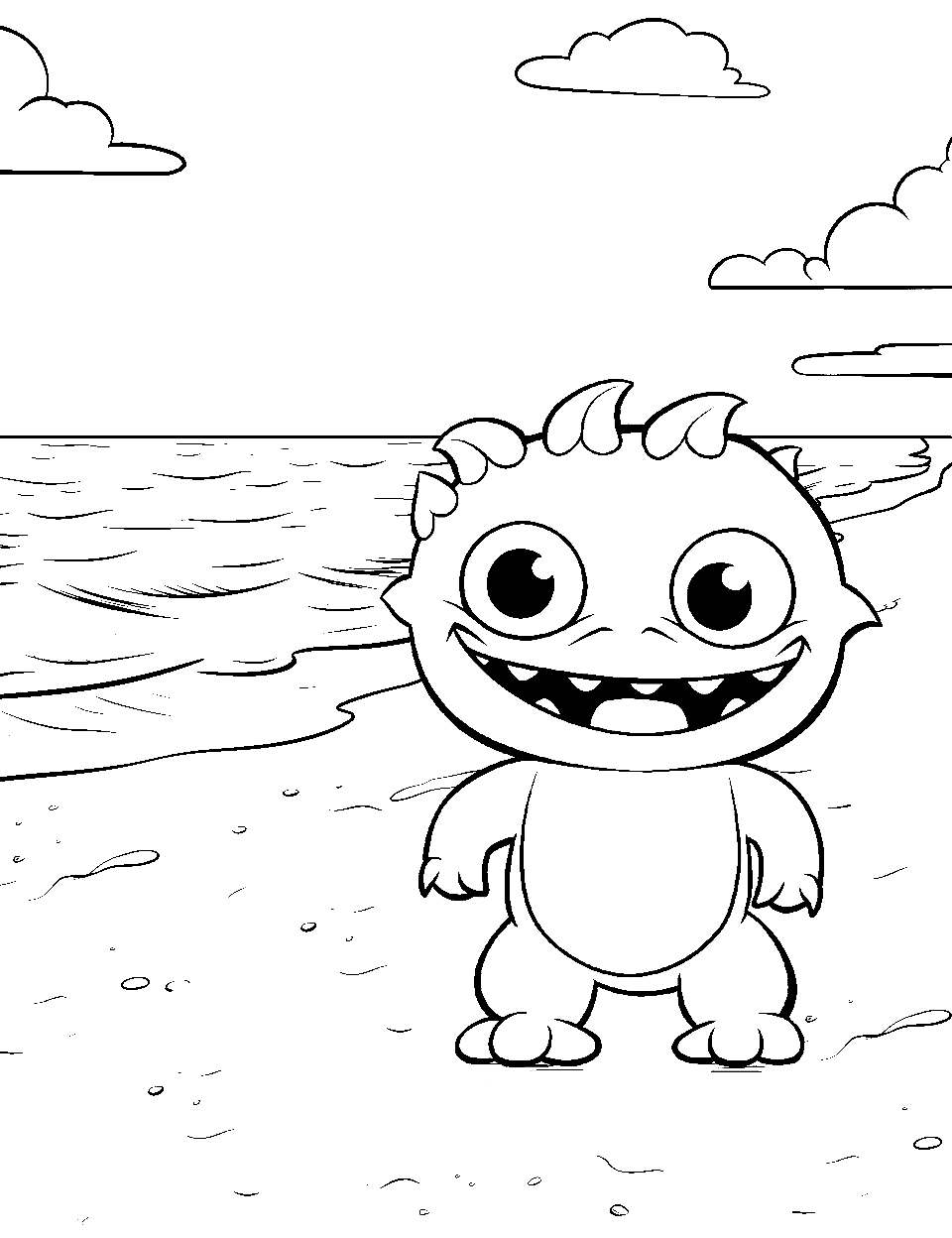
Small waves roll in behind this round little monster as it stands on wet sand, grinning, with three horn nubs along its head.
The sky above holds a few simple clouds and a lot of white space, which is a nice place for a sunset wash. A young child can finish the whole sheet with crayons. Print it with the rest of our beach coloring pages before a trip to the coast.
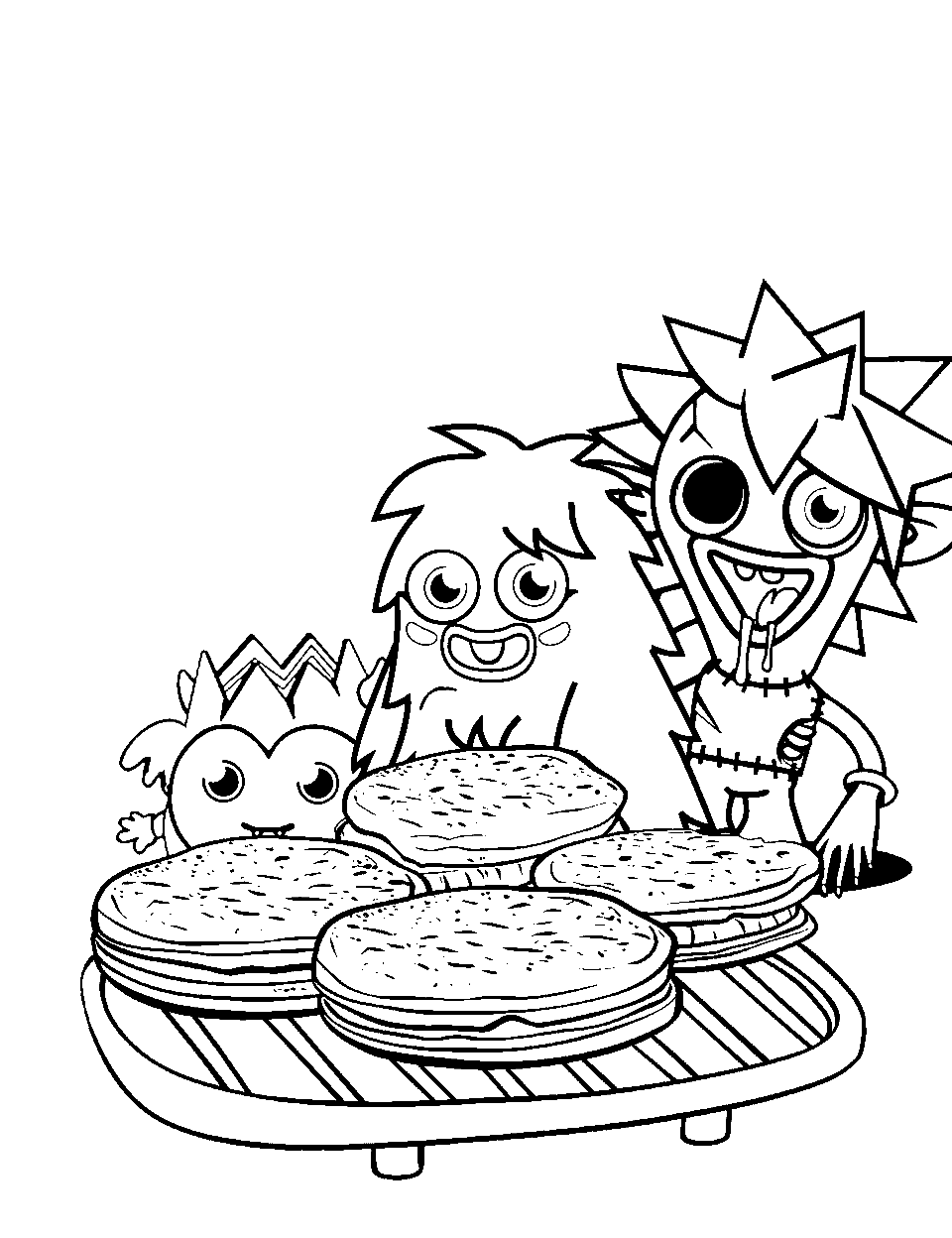
Lunch is served, and nobody is waiting politely.
Three monsters crowd behind a long tray stacked with round burger buns: a small one crowned with zigzag spikes, a shaggy one with wide friendly eyes, and a spiky-haired one with a stitched neck. The buns carry a speckled texture that looks great in two shades of tan. A large empty area on the left leaves room to draw the drinks.
Every scale on this one is drawn separately. A thick snake coils among leafy trees and tall grasses, its head resting on the front loop of its body and one round eye looking out at you. The scale pattern runs the whole length of the body without a break, so a steady hand matters more than speed here. It is one of the most detailed sheets in the set, which makes it a good fit for older kids, teens and adults working in pencil. Build the body from three greens and keep the jungle behind it lighter so the snake stays in front.
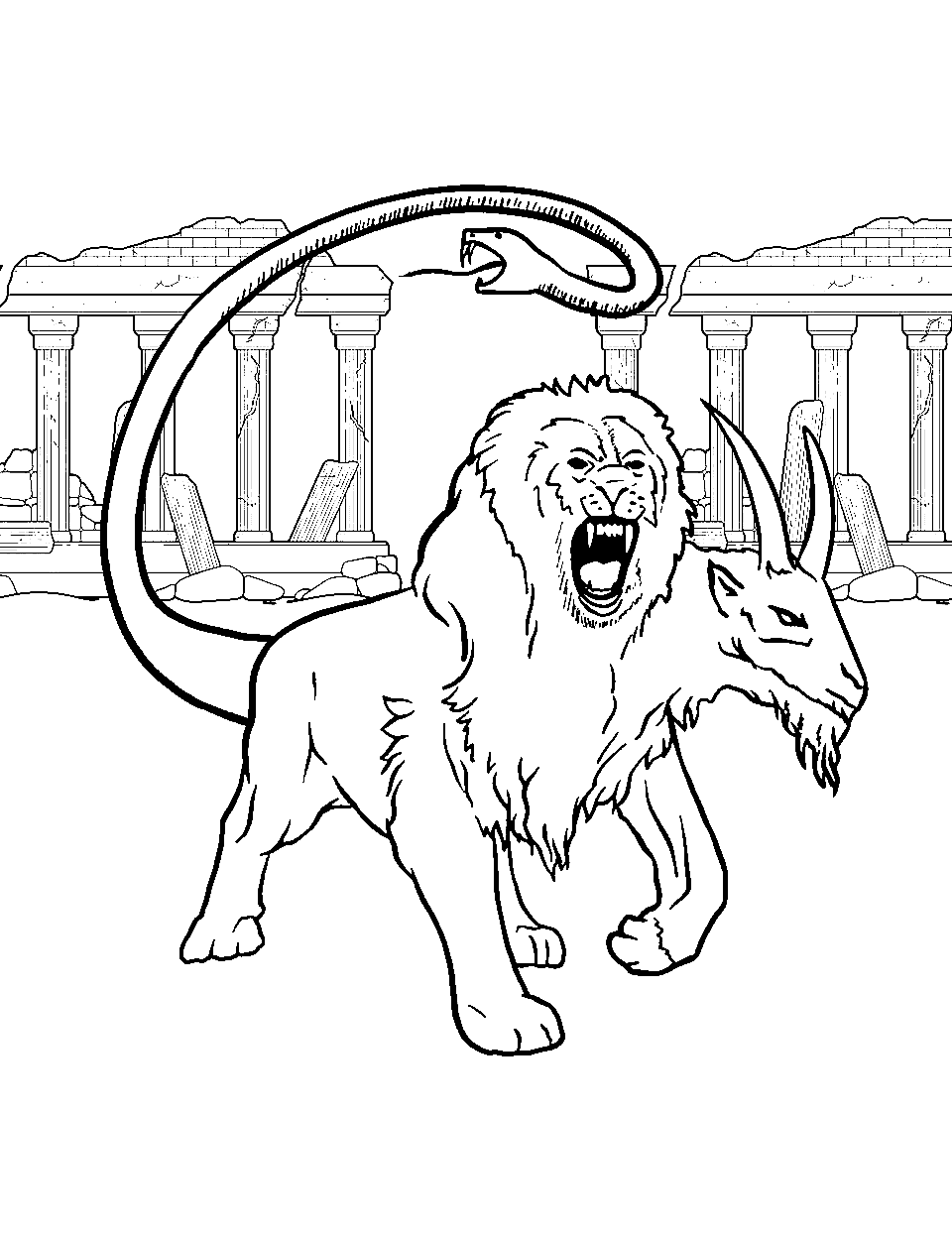
Greek mythology turns up here in full. The chimera stands in front of broken columns with a roaring lion head, a goat head rising from its shoulder and a long tail ending in a snake’s head. Each head carries its own texture, from the lion’s mane to the tight scales on the snake, so the level of detail shifts across one page. Three creature parts give you a natural reason to run three color schemes on one animal. Older kids studying myths at school can label each head once the coloring is done.
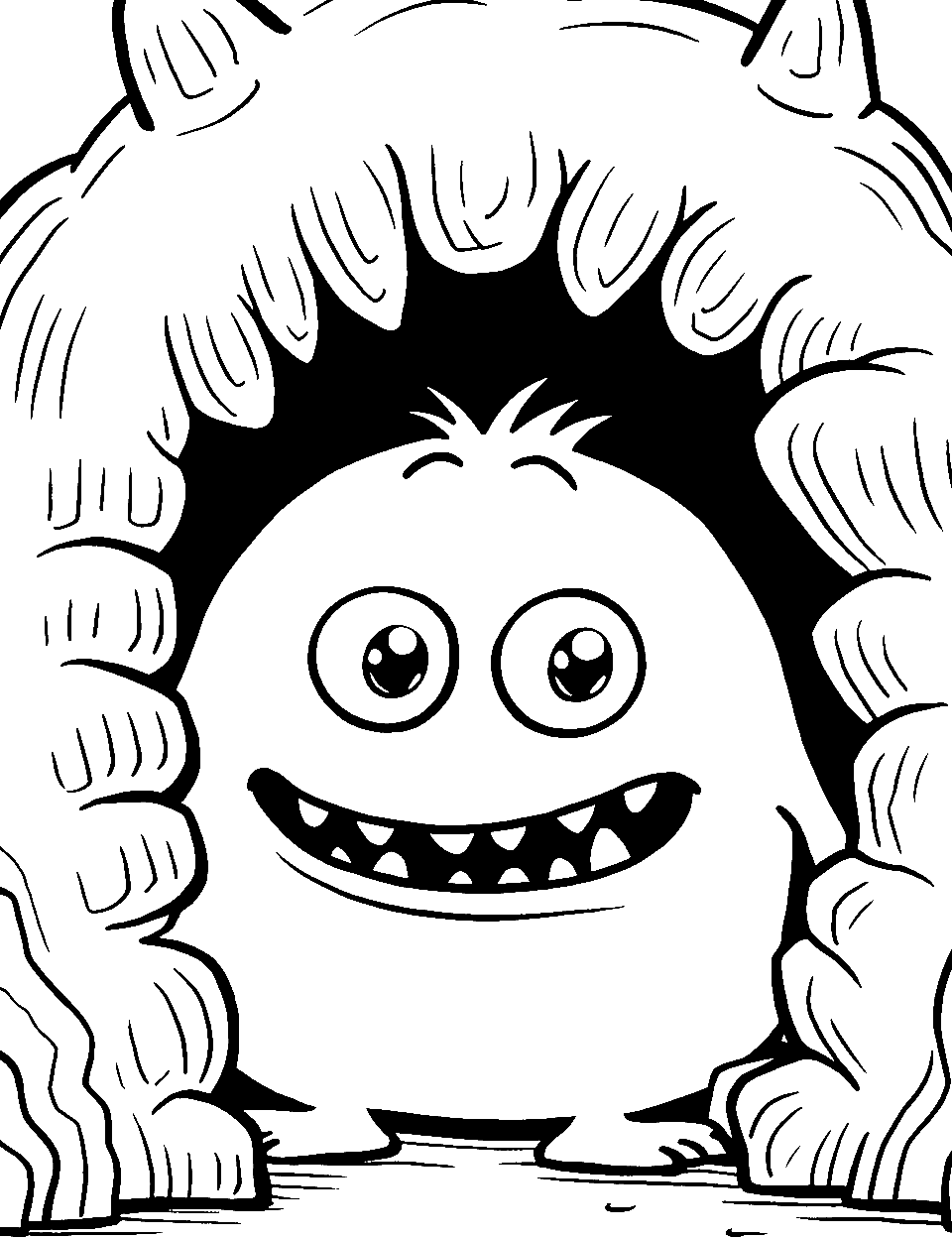
A grinning round monster fills the mouth of a cave, framed by pale rock shapes above and on both sides. The opening behind it is solid black on the page, so a light body color will stand out sharply against it. The shapes are large and simple, which makes this an easy win for small hands.
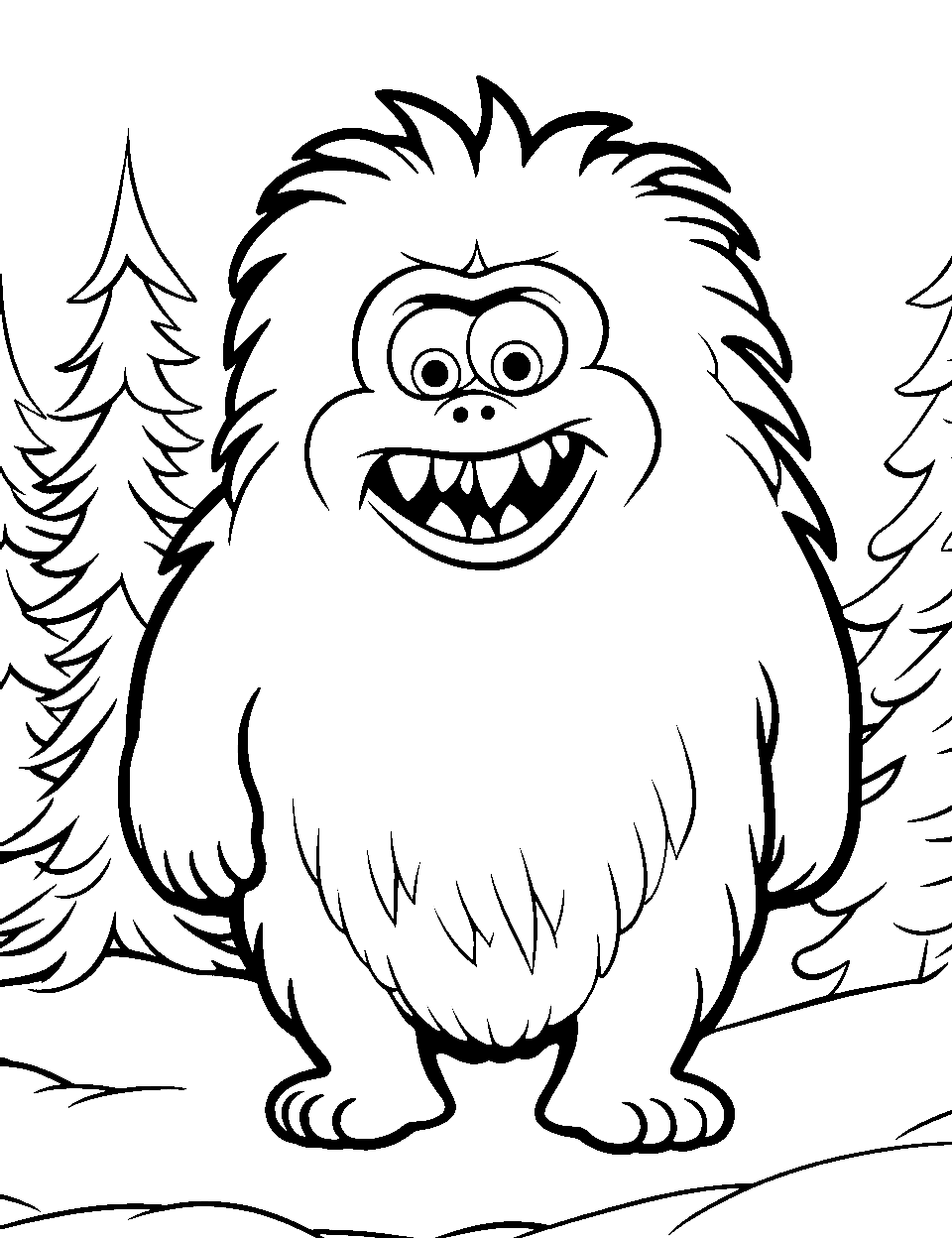
Long shaggy fur covers this yeti from head to foot as it stands between snowy pines, showing a wide mouthful of teeth.
The fur is drawn in loose strokes rather than tight detail, so it forgives a heavy hand. Pale blues and greys keep it cold, and leaving the body mostly white works just as well. The loose fur strokes leave room for two or three blended shades instead of one flat white.
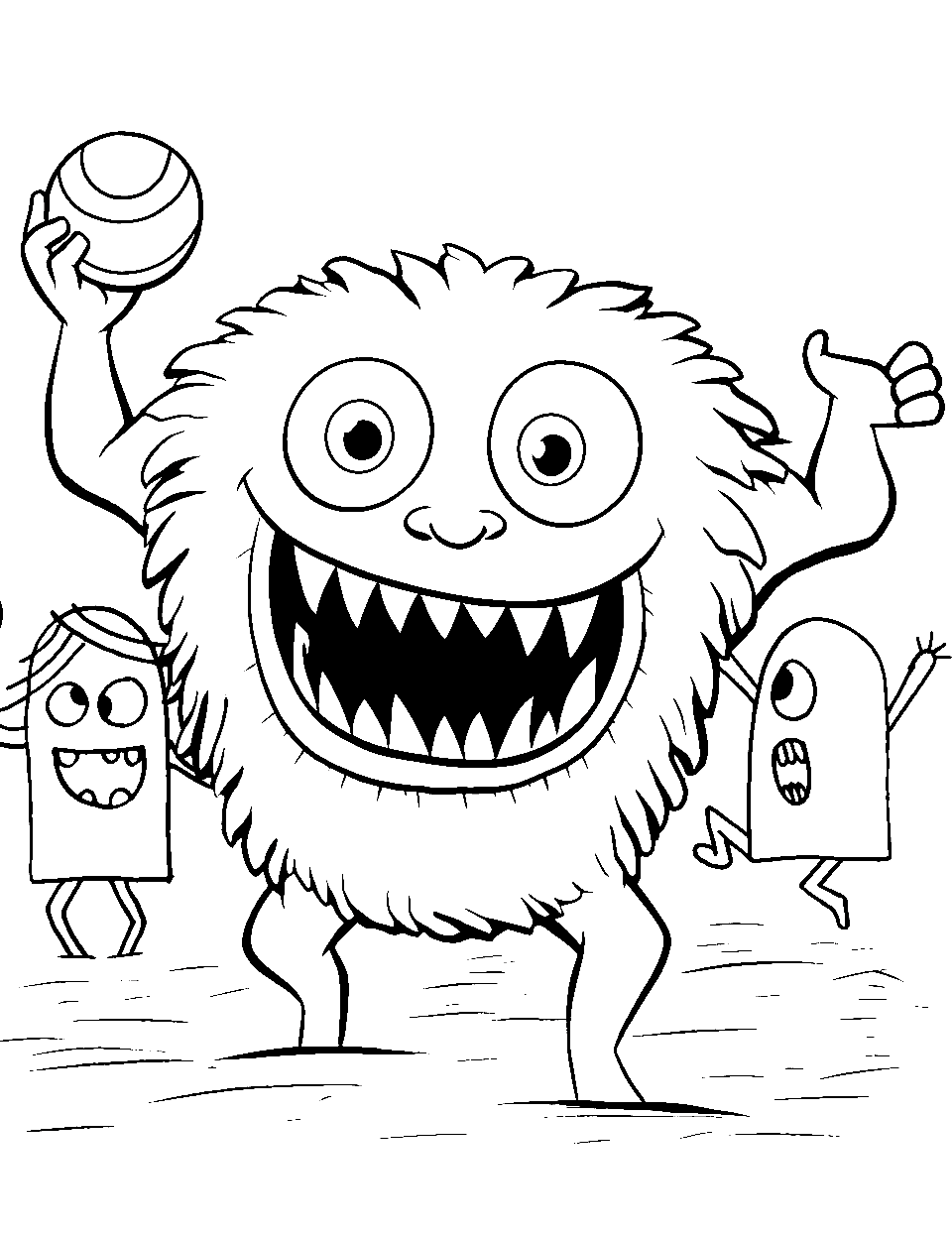
One paw holds a ball high in the air while the other gives a thumbs up, and two small block-shaped monsters cheer from behind.
The open mouth is drawn with a full row of pointed teeth, giving you a big black and white shape to fill or leave alone. The ground is nearly empty, so there is space to add a net or a scoreboard. The black and white teeth make a strong graphic anchor even before any other color goes down.
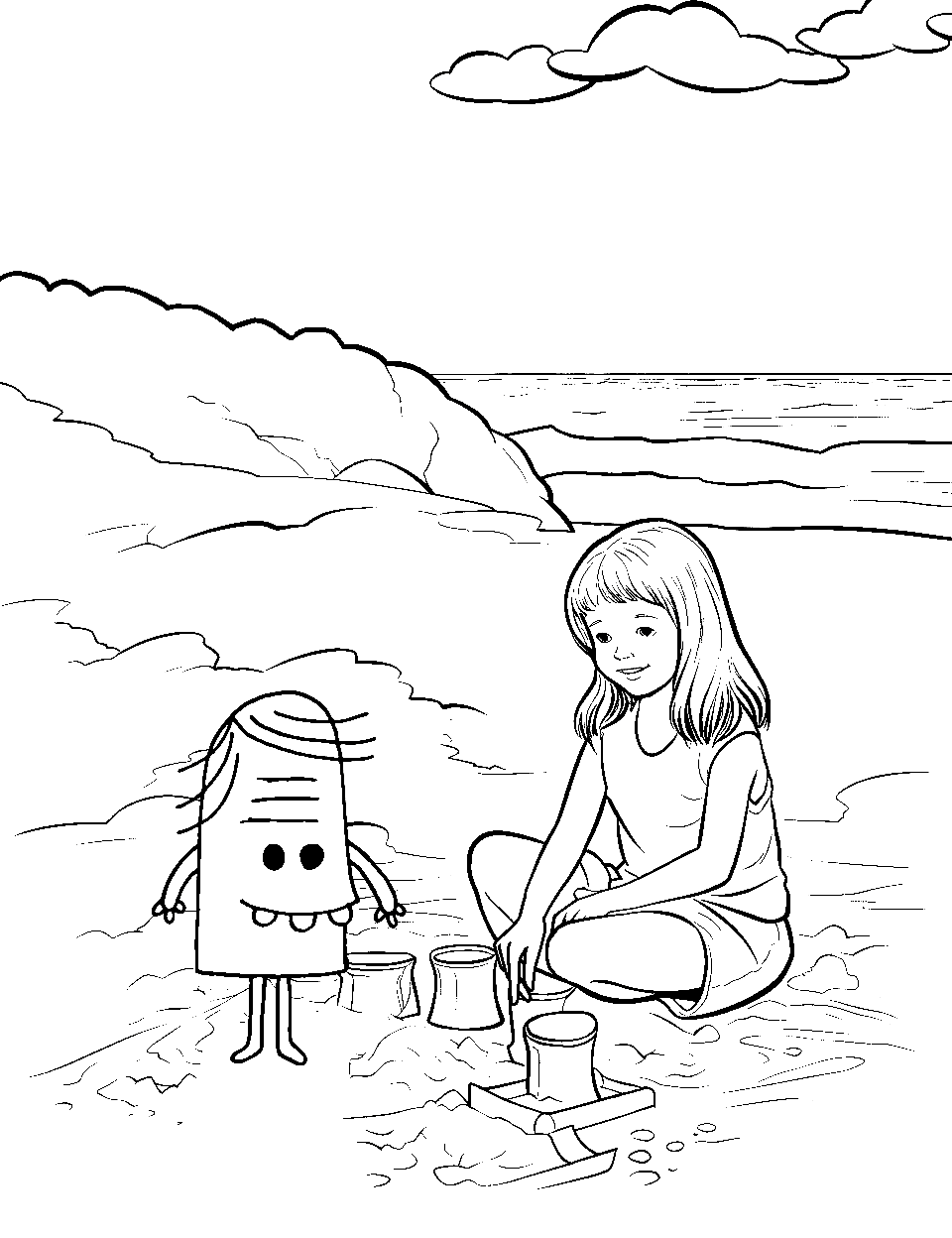
A small figure sits cross-legged on the sand shaping a small tower while a tall striped monster stands beside it with its arms out.
The shoreline, the cliff and the clouds are drawn in fine sketchy lines, so this one rewards colored pencils over markers. Keep the monster in a bright shade so it separates from the soft beach tones. It is a good page for a conversation about imaginary friends.
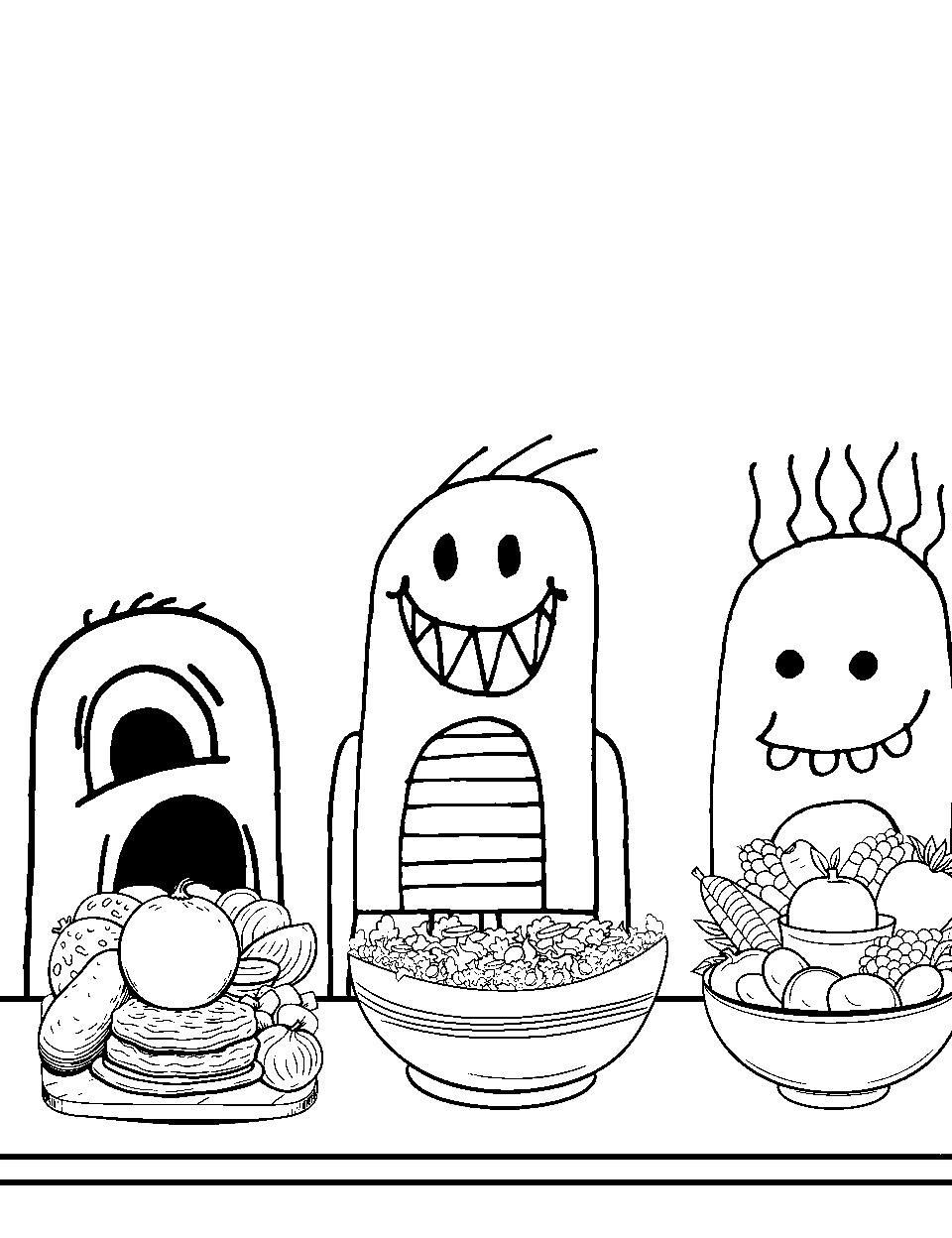
Dinner is a group project for these three.
They stand shoulder to shoulder behind a counter holding a platter of burgers and fruit, a bowl of leafy salad and a bowl piled with corn and other vegetables. The food is drawn in many small pieces, which makes this a long, quiet activity rather than a quick one. The small stacked pieces reward patient color-blocking more than a quick flat fill.
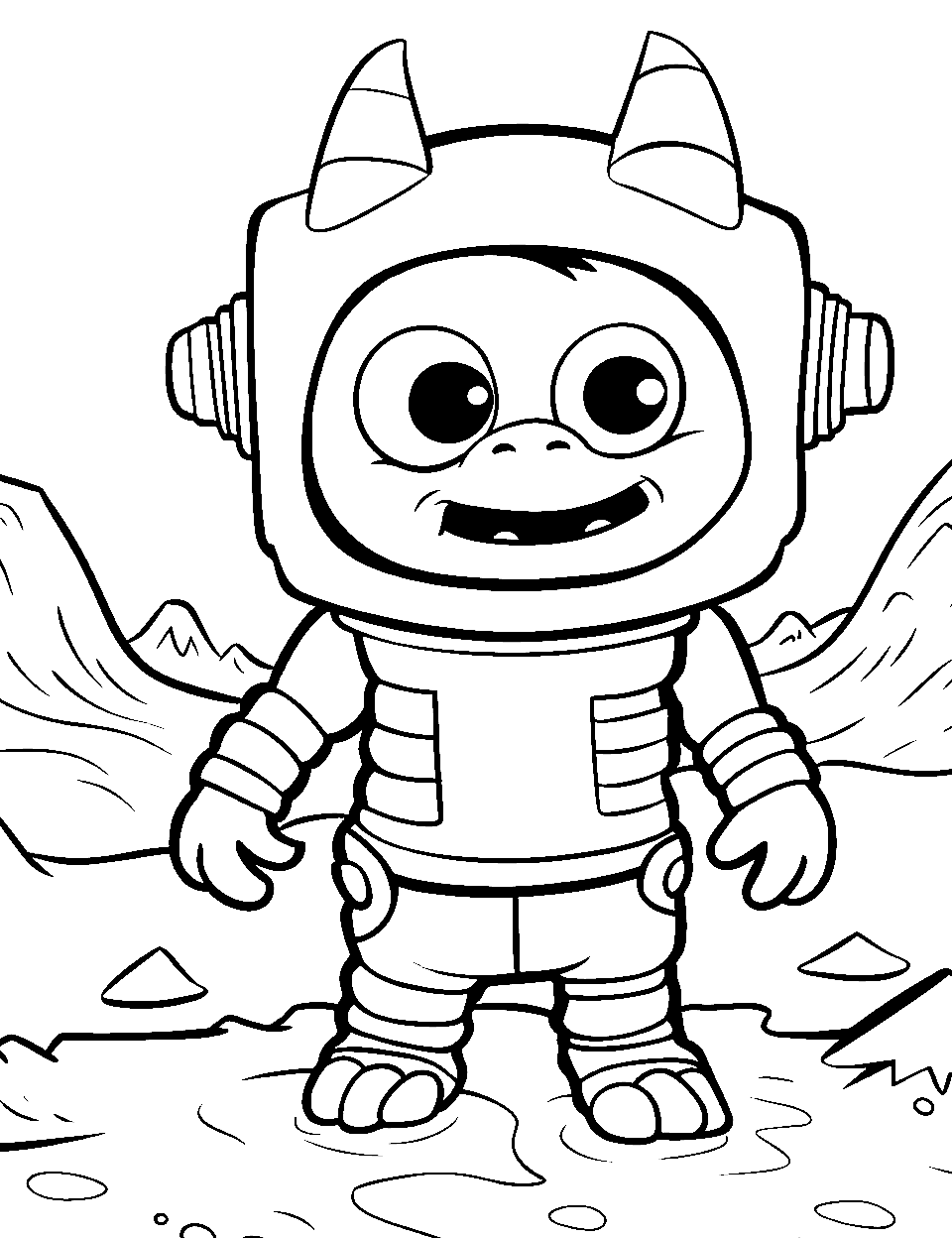
Boxy helmet on, horns poking straight through the top.
This monster wears a ribbed suit with joint rings at the elbows and knees, and behind it sits a bare stretch of low hills and scattered rocks with nothing growing. Metallic greys on the suit against rust-colored ground sells the idea of somewhere far from home. More space scenes are waiting if your child wants a whole mission.
Pedaling straight at you with a grin full of square teeth, this fuzzy monster rides a bicycle along a path lined with trees.
The spokes and frame are drawn cleanly enough to take a metallic shade. Both eyes are enormous, which gives a young child an easy first target before tackling the bike. The metallic spokes catch the eye fastest, so they are worth finishing before the wider background shapes.
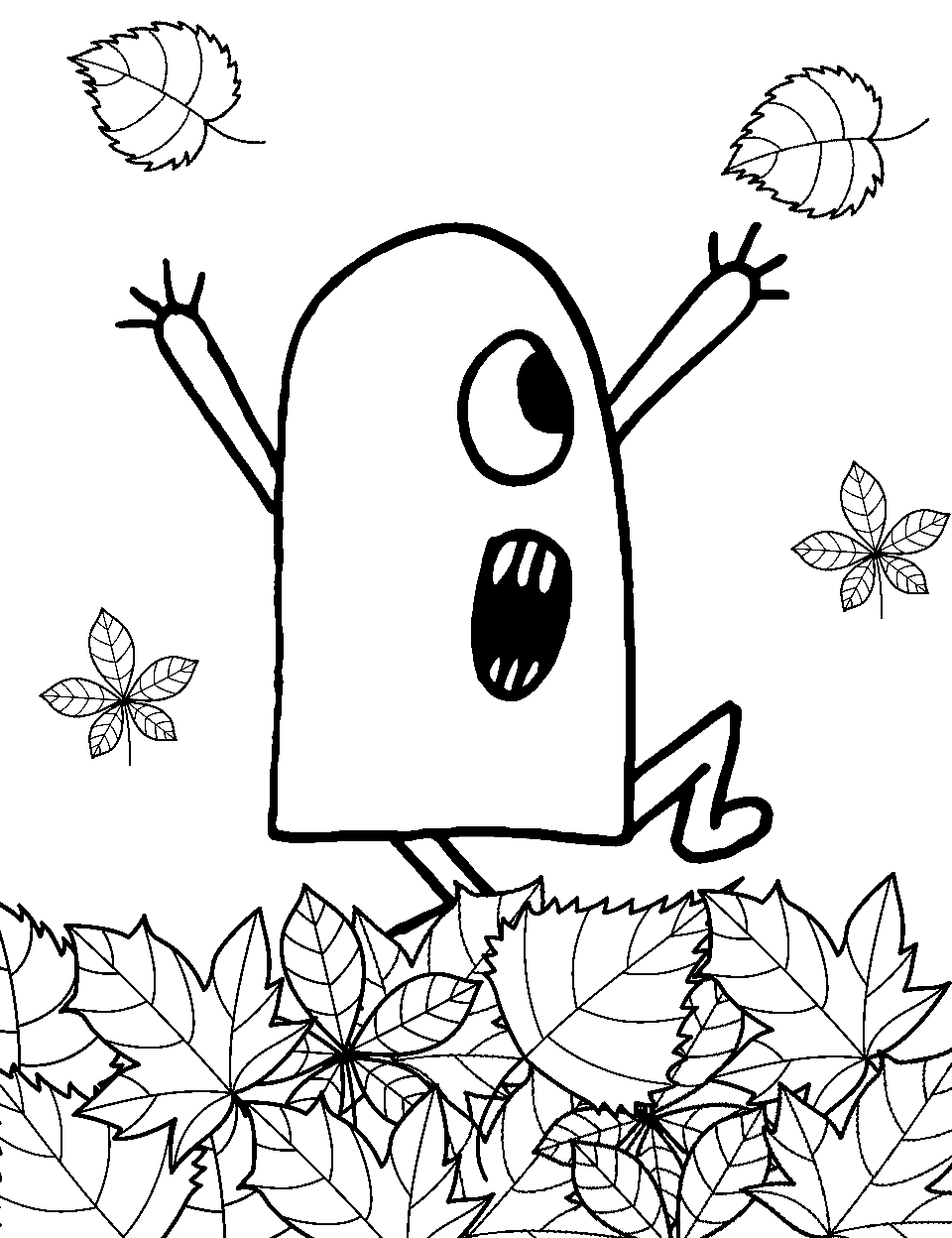
Arms up, one leg kicked out, this one-eyed monster leaps over a thick pile of fallen leaves while more drift through the air around it.
The monster is a plain dome shape, but the pile below is packed with veins and points, so one sheet holds both an easy job and a hard one. Reds, oranges and yellows in the leaves, then something unexpected on the monster. The dome-shaped monster and the veined leaf pile sit at opposite ends of the difficulty scale on one page.
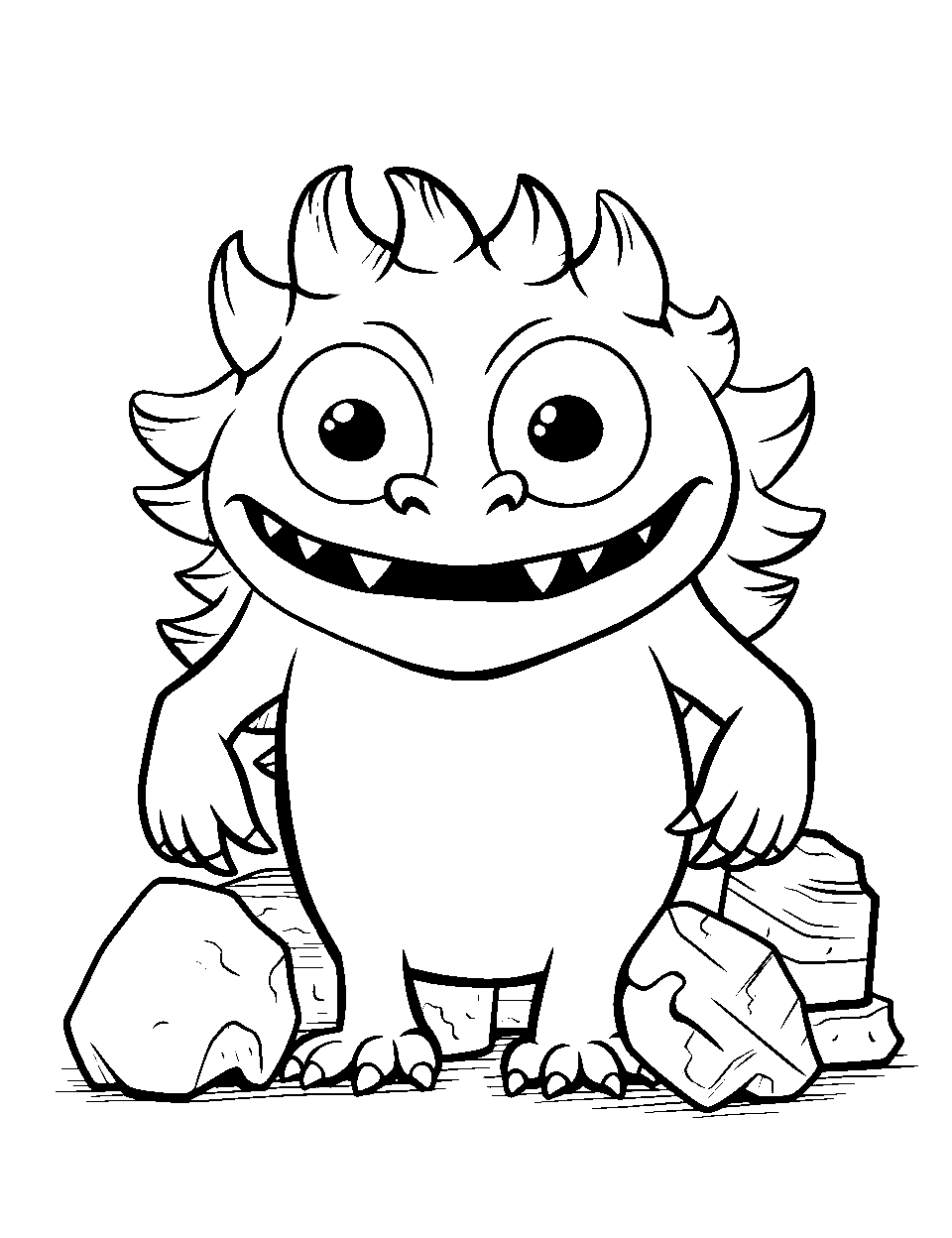
Small horns curl along the top of this friendly monster’s head, and chunky boulders sit on the ground at either side of its feet.
The rocks carry straight cut lines that suit grey pencil shading, while the fluffy body takes a bold flat color. Thick outlines throughout mean markers will not make it look messy. The straight-cut rock lines and the soft fluffy body give the page two very different textures to contrast.
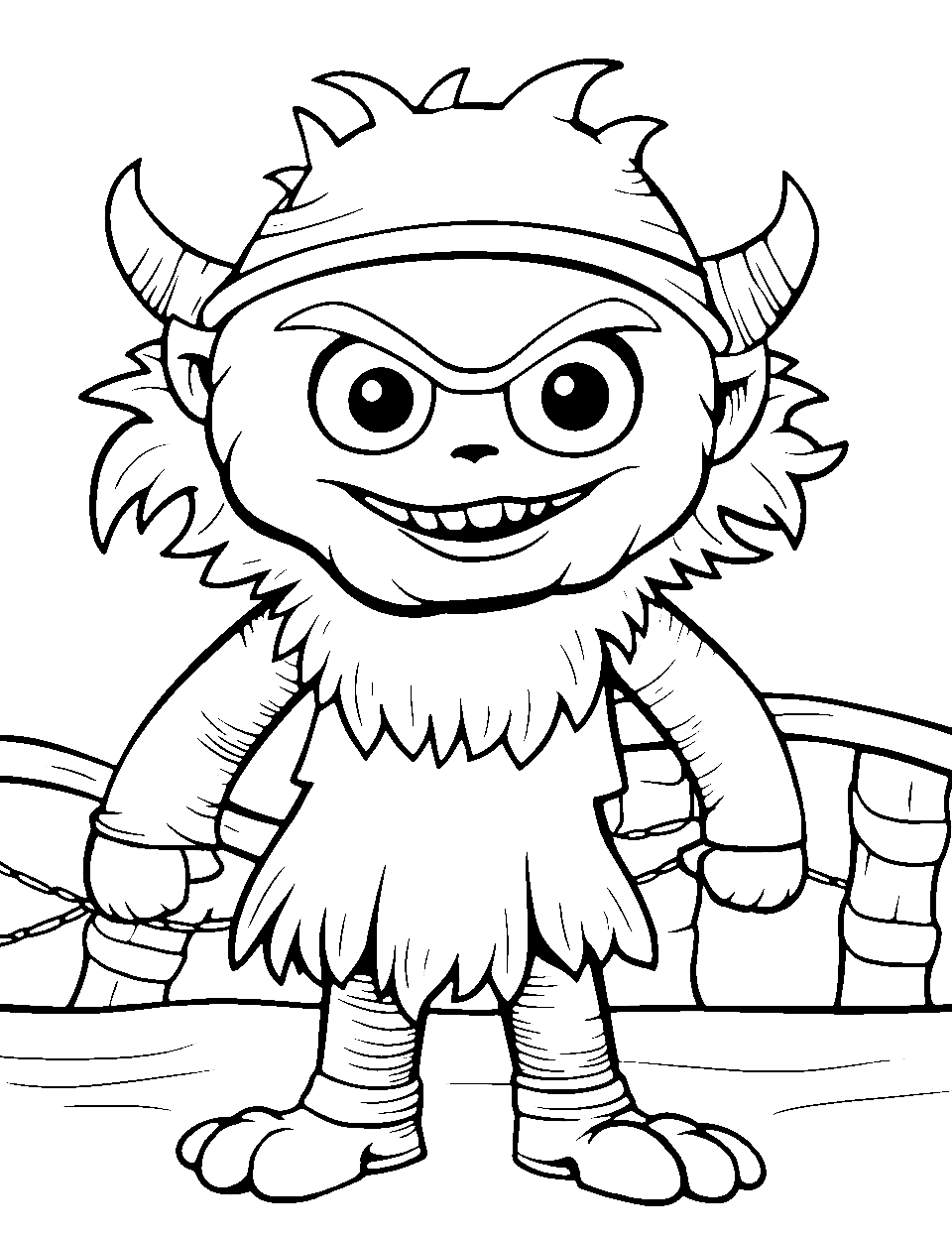
A wide headband with two horns sits on this furry monster’s head, and strips of cloth are wrapped around its wrists and ankles.
Behind it you can make out a curved wooden rail and a few taut ropes. The costume pieces are separate shapes from the fur, which keeps color choices simple. A strong pick for an afternoon of make-believe.
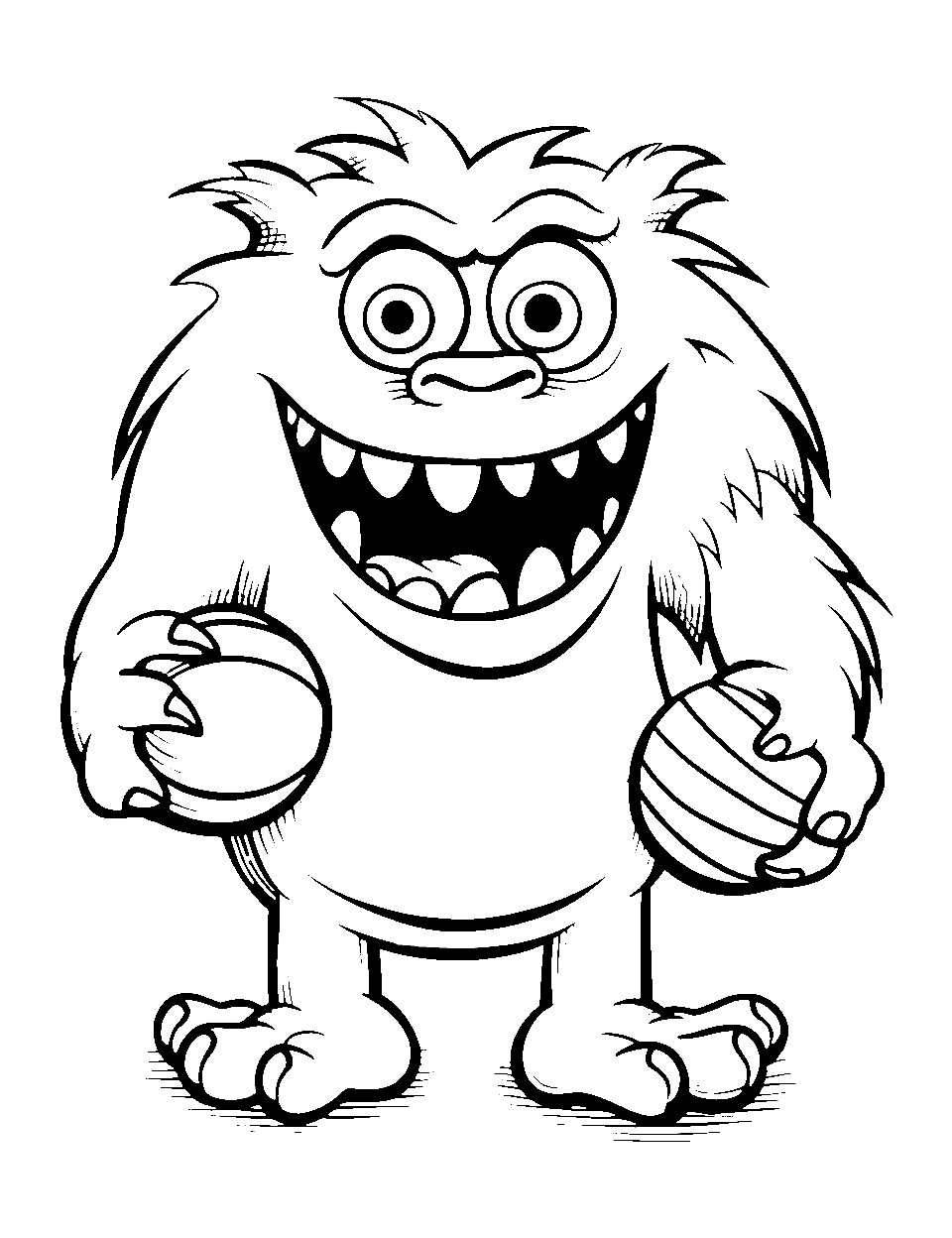
Two balls, one in each paw, and a smile that takes up half the face.
One ball is plain and round while the other carries curved stripes, so your child gets practice keeping two patterns apart. The body is one large fuzzy shape with no fussy detail inside it. If sports are the current obsession, our basketball coloring pages go deeper.
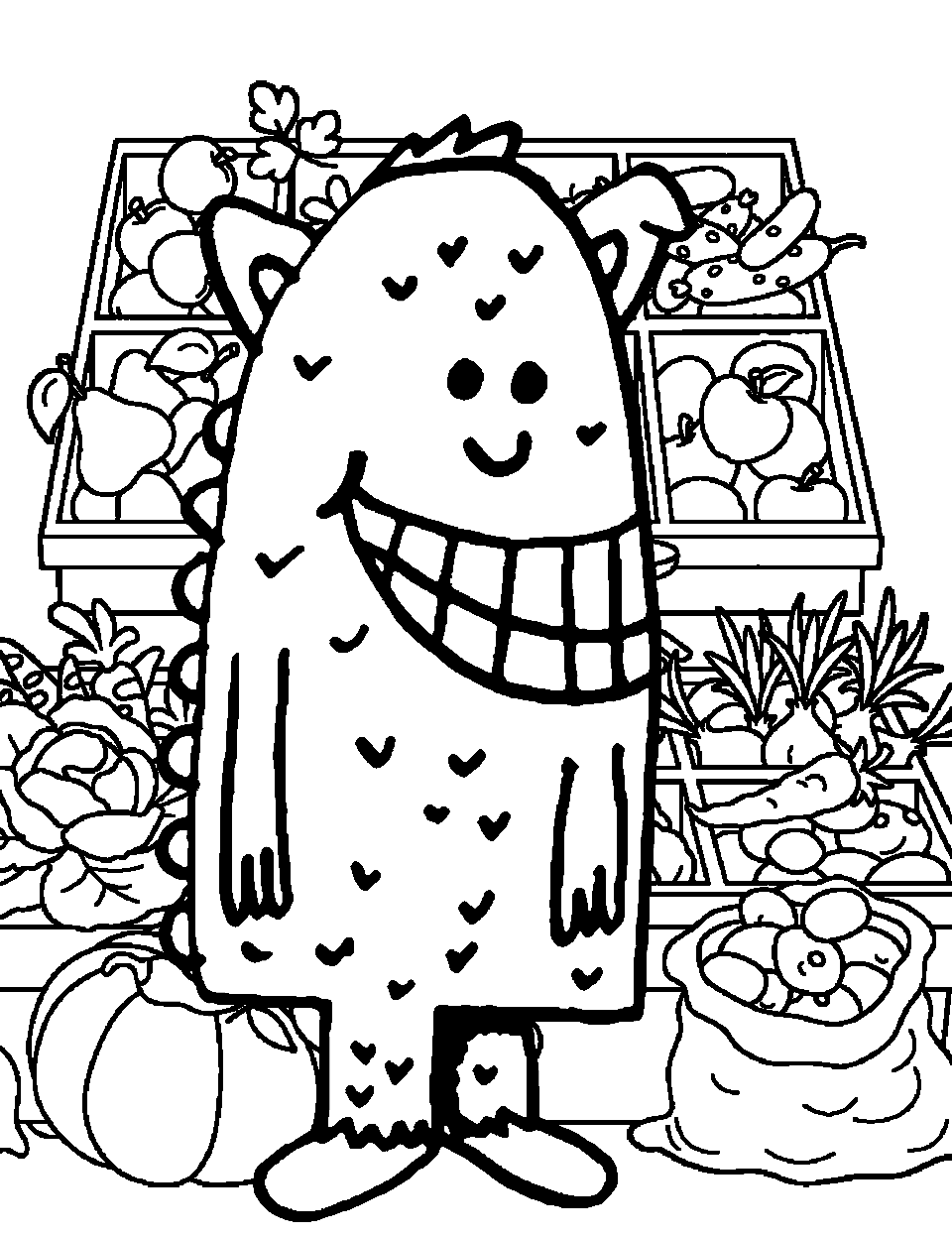
Hearts dot the body of this tall monster as it stands grinning in front of stacked produce crates.
Apples, pears, carrots, cabbages, a pumpkin and a sack of potatoes fill nearly every corner of the page. All that produce is a fair excuse to work through the whole crayon box. Each vegetable holds its own shape well enough to take a slightly different shade of the same color family.
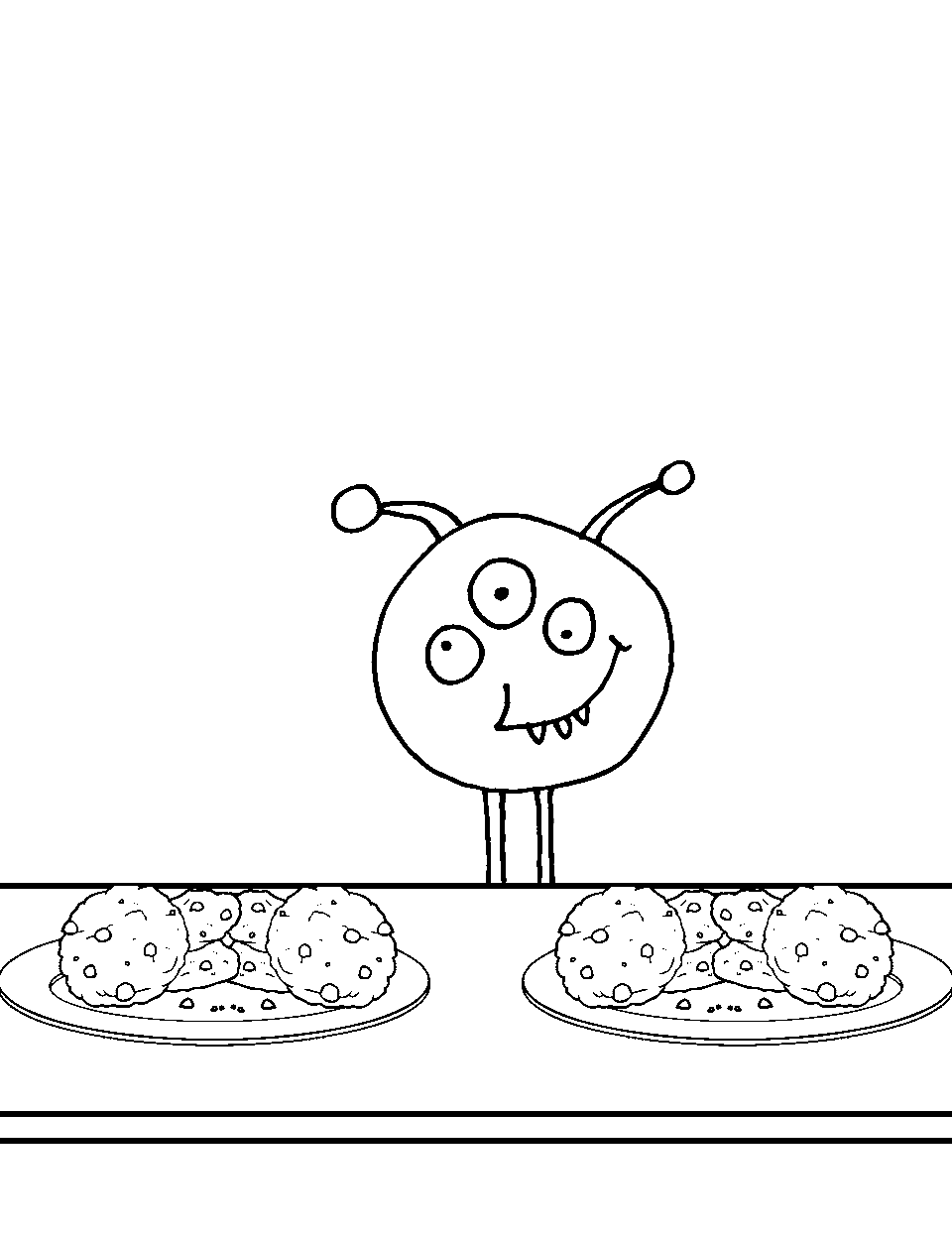
Antennae with round tips wobble above this monster, who peers over a counter at two plates of chunky cookies.
The cookies are speckled with chips and the rest of the sheet is wide open, so it finishes fast for a child who loses interest quickly. Warm browns for the cookies, any wild color for the monster. The wide open background behind the counter is the fastest part of the page to finish.
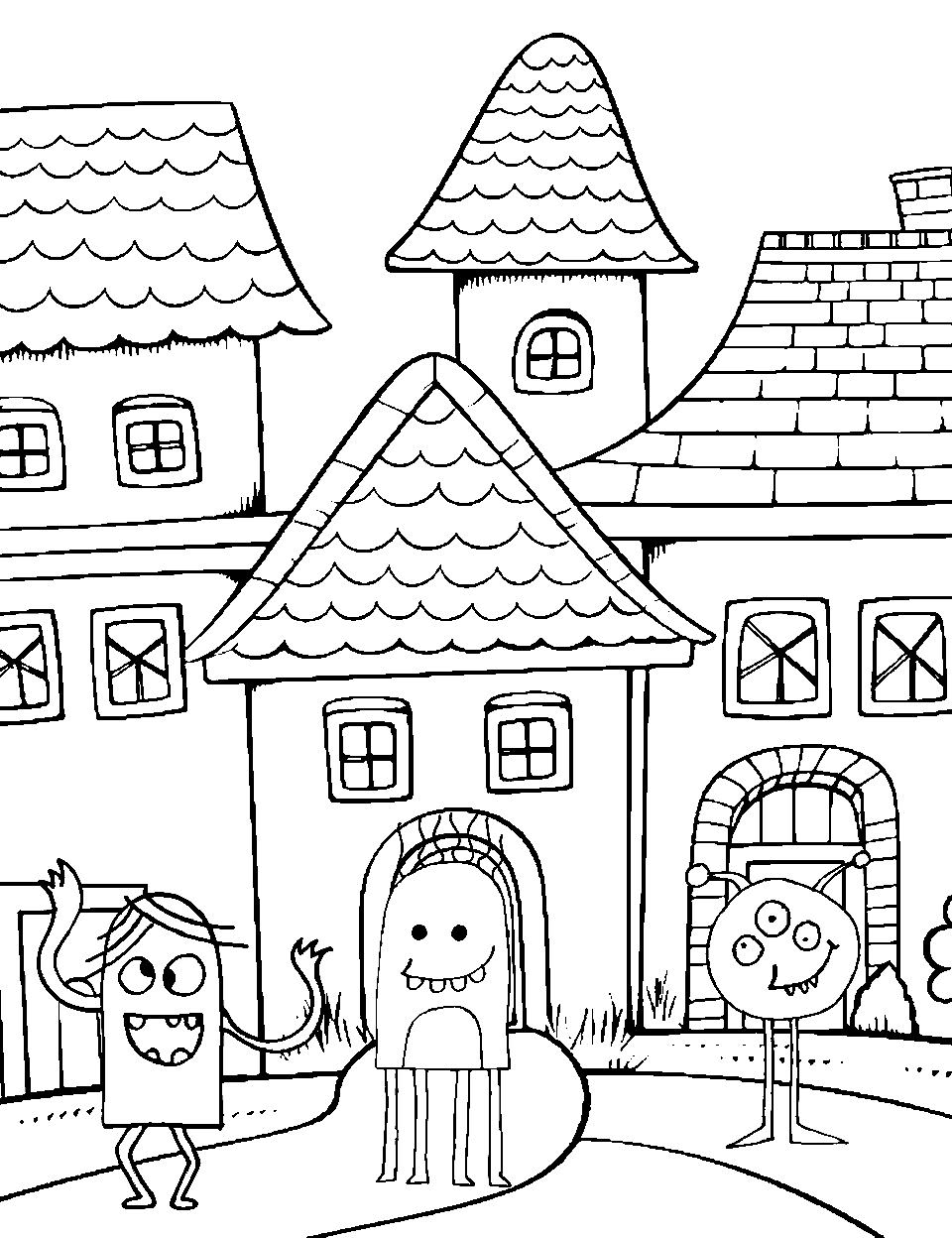
Three odd little monsters stand on a curved street in front of a cluster of houses with tiled roofs and shuttered windows.
One has a long curling tail, one is a tall shape balanced on four thin legs, and the third has three eyes and stick legs. The roof tiles are drawn as rows of scallops that are satisfying to fill in one at a time. Bring it out alongside our Halloween coloring pages in October.
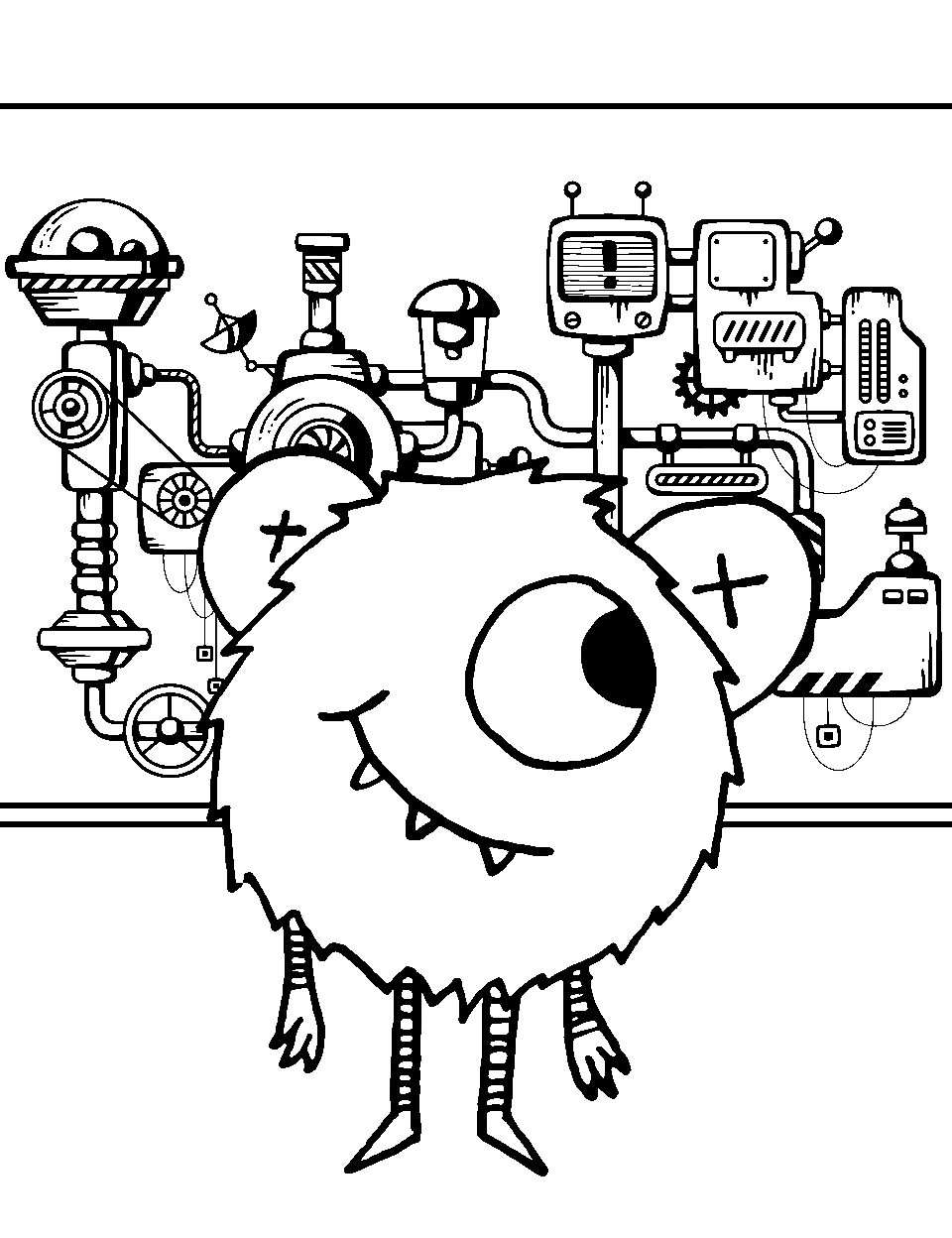
A one-eyed round monster with cross-stitched ears stands in front of a wall of invented machinery: dials, pipes, gears, levers and a small dish antenna. Every dial face and gear tooth is outlined separately, so the machinery half asks for a sharp pencil point kept fresh. The machine half is dense and detailed while the monster is smooth and simple, so two children of different ages can share one page. Metallic greys behind, one loud color in front. Older kids can label what each machine is supposed to do, which pairs well with our science coloring pages.
A small round monster stands in the open flap of a triangular tent, pines all around and a stream running past in the foreground.
The dark tent opening frames it nicely, and the trees give you plenty of green to work with. Fine grass tufts and stones along the bank suit pencils better than markers. Good company before a first camping trip.
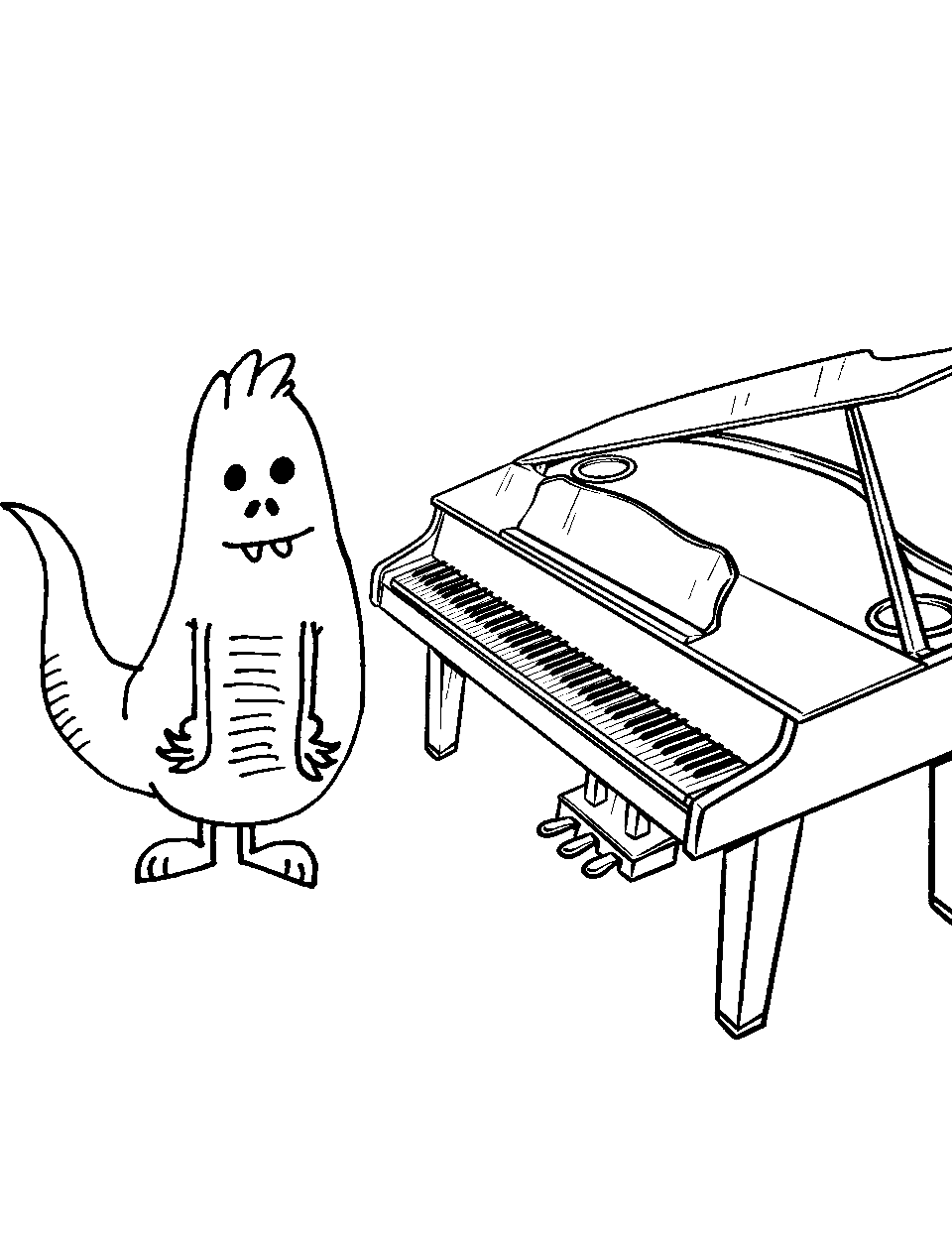
Music closes out the set.
A tall monster with a swishing tail stands next to an open grand piano, lid propped up and every key drawn in. Those black keys are the one fiddly part of the page, so hand this sheet to a child who likes precision. The monster itself is nearly all outline, which leaves room for a pattern of your own invention.
By using our free coloring pages, you acknowledge and agree to our full disclaimer. All materials are for personal, non-commercial use only and all rights belong to their respective license holders.
Which Monster Page Should You Print First?
Start with a thick-lined sheet if your child is under six, because those pages are built from large closed shapes a crayon cannot ruin. The reading monster, the cave monster, the helmeted monster in overalls and the beach monster all fall in that group.
The kraken, the coiled snake, the chimera and the Godzilla sheet run the other way. Fine repeated lines, small scales and busy backgrounds suit a nine-year-old with colored pencils, or an adult who wants a quiet hour.
A few sheets split the difference on purpose. The autumn leaves page pairs a plain dome-shaped monster with a densely drawn leaf pile, and the machinery page puts a simple round monster in front of a wall of gears, so two kids of different ages can share one print.
Plain paper is fine for crayons and pencils. Switch to cardstock when markers or paint come out, since thin paper buckles and lets marker ink through onto the table.
Activities to Do With Monster Coloring Pages
Do not stop at coloring. A finished monster is the starting point for an afternoon, and most of these ideas need nothing you do not already own.
Create DIY Monster Masks
Turn a page into something wearable. The sheets with a big, wide-open mouth work best here, so the yeti, the guitar player and the wide-mouthed ball holder are your best candidates. Print on heavy cardstock, color the face, then cut around the head and open two eye holes. Tape a craft stick to the bottom edge, or punch a hole at each side and thread elastic through.
Write a Creature Backstory
Ask your child to invent a life for the monster they just colored. What is its name, where does it sleep, what does it eat, and who is it afraid of? Write the answers on the back of the page. The adventurer with the cape and the monster in the horned headband both suggest a story already, so they are easy prompts for a child who says they cannot think of anything.
Texture Rubbing Experiments
Monsters come covered in fur, scales and bumps, which makes them ideal for rubbings. Slide a coin, a leaf or a piece of sandpaper under the page and rub over the top with the side of a crayon. The fur on the yeti and the scales on the snake take texture especially well, and the difference between the two is worth pointing out to a curious child.
Monster Matching Memory Game
Print two copies each of five to ten monsters, color the pairs to match, then cut them into cards of roughly equal size. Turn them face down and take turns flipping two at a time. Cardstock stops the design showing through the back, which is the usual reason a homemade memory game stops working after one round.
Glow-in-the-Dark Gallery
Make the artwork work at night. Trace the outlines with glow-in-the-dark puffy paint, or fill the monsters with fluorescent marker. Once everything is dry, tape the pages to a bedroom wall and switch the light off. The kraken and the chimera look best under this treatment because their outlines are long and continuous.
Does Coloring Actually Calm Kids Down?
Coloring measurably lowers stress markers. A two-experiment study of 60 university students found that a 30-minute coloring session reduced self-reported anxiety and produced measurable drops in heart rate and skin conductance (1). The evidence is not limited to children, either. A study of 39 healthy adults collected saliva before and after 45 minutes of art making and recorded a statistically significant drop in cortisol, the body’s main stress hormone (2). The study team, led by Drexel University researcher Girija Kaimal, wrote that art making “resulted in statistically significant lowering of cortisol levels.”
The findings in children are more specific. In a randomized controlled trial of 40 children aged 7 to 12 in a hospital burn unit, the group given 30 minutes of coloring a day for seven days showed larger reductions in pain and perceived stress, and better sleep, than the group on routine care alone (3). A separate trial of 50 children aged 5 to 10 waiting for a scheduled hospital procedure found lower fear and anxiety scores among those handed a picture template and coloring pencils (4).
None of that makes a printable a treatment. It does explain why a stack of monster sheets earns its place in the car, in a hospital bag, or in the drawer nearest the kitchen table.
FAQs
Are These Monster Coloring Pages Scary for Toddlers?
Most of these monsters are friendly rather than frightening, with round bodies, big eyes and open smiles. A handful are not. The kraken, the coiled snake, the chimera and the Godzilla style kaiju are drawn realistically, with teeth, claws and a lot of fine detail. Preview the set yourself and print the tea party, the garden monster and the cave monster for a sensitive toddler.
What Paper Is Best for Printing These Pages?
Standard printer paper handles crayons and colored pencils without any trouble. Move up to cardstock or another heavyweight sheet when markers or paint come out, because thin paper wrinkles under a wet medium and lets marker ink bleed through onto the surface below. Cardstock is also the right call if you plan to cut a page out for a mask or a memory game.
Can I Use These Pages for a Classroom Activity?
Yes, these printables are free for personal and educational use, so print as many copies as your group needs. They work well for Halloween parties, wet-break art, storytime follow-ups and myth units, since the chimera and the kraken both come straight out of Greek and Norse legend. The simple sheets also fill an early-finisher folder without any prep.
Do Coloring Pages Help With Child Development?
Coloring builds the same hand control a child later needs for writing: holding a pencil steadily, keeping pressure even and stopping at a line. It also gives children a low-stakes way to sit with a feeling rather than act on it, which is why hospital trials keep testing it and finding lower stress and pain scores, as covered above. Fifteen quiet minutes counts.
Are Any of These Sheets Worth Coloring as an Adult?
Four of them are. The kraken, the coiled snake, the chimera and the Godzilla page carry the small repeated detail that adult coloring books are built on, and each can easily fill an hour with pencils. Print them on heavier paper if you plan to use alcohol markers, and work from the background forward so you are not resting your hand on finished work.
How Can I Make the Coloring Pages More Durable?
Laminate a finished page to keep it in one piece, or slide it into a plastic sheet protector, which costs less and takes seconds. The sheet protector has a second use: with a dry-erase marker your child can color the same monster over and over, wipe it clean and start again. That trick works well in the car with the simpler sheets.