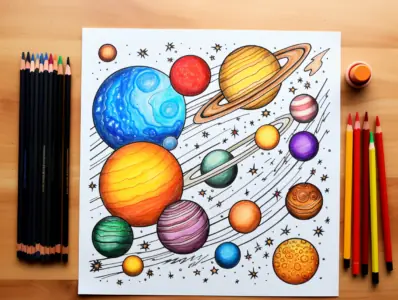
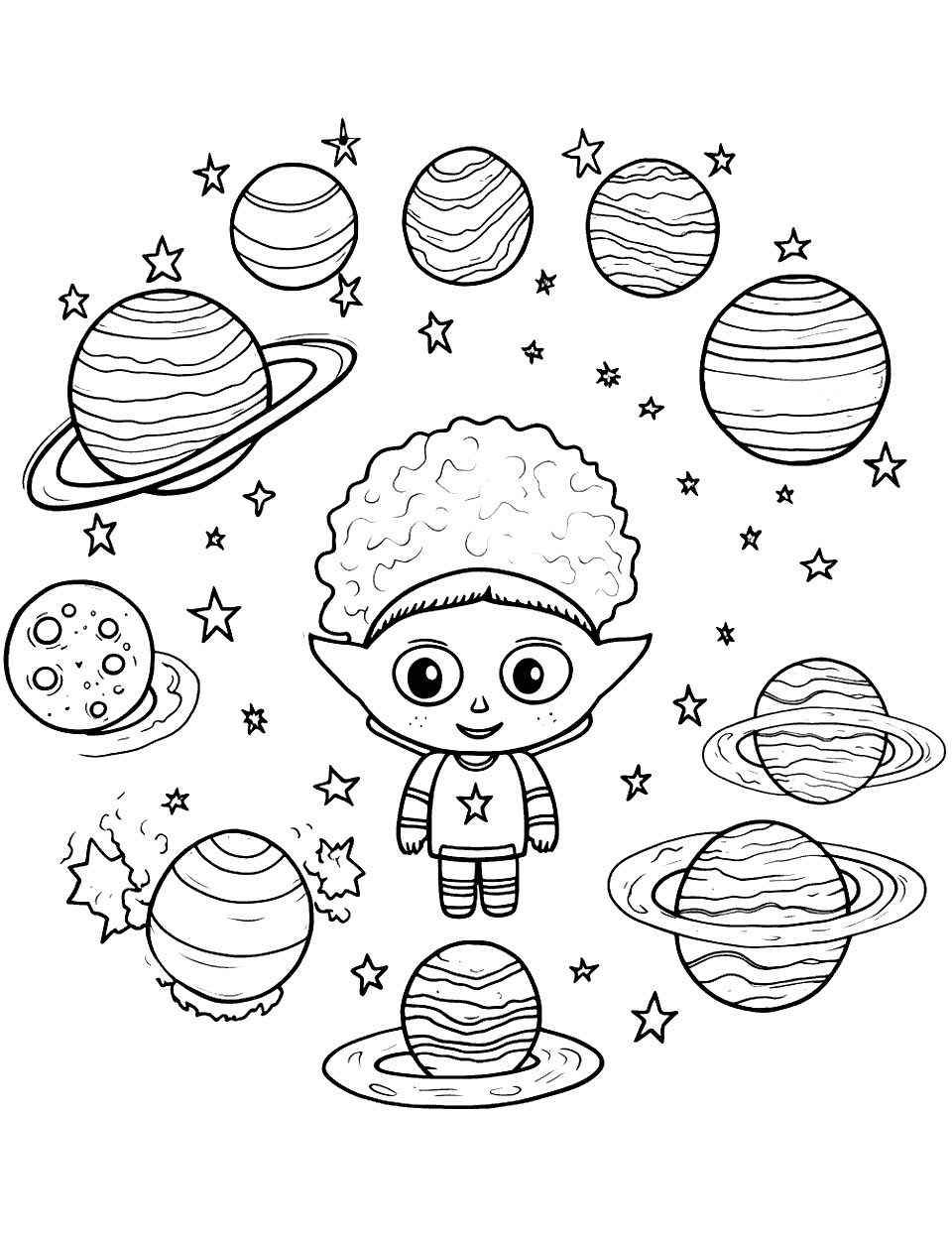
Journey through space from your home with these exciting solar system coloring sheets.
Ready to blast off? Our solar system coloring pages are the perfect launchpad for little astronauts and aspiring astronomers. Whether you are teaching a science lesson on the planets or just looking for some quiet creative time, these free printables are out of this world. Grab your crayons, markers, or colored pencils and prepare for a journey from the fiery sun to the icy outer reaches of Pluto!
Mercury's Rocky Surface
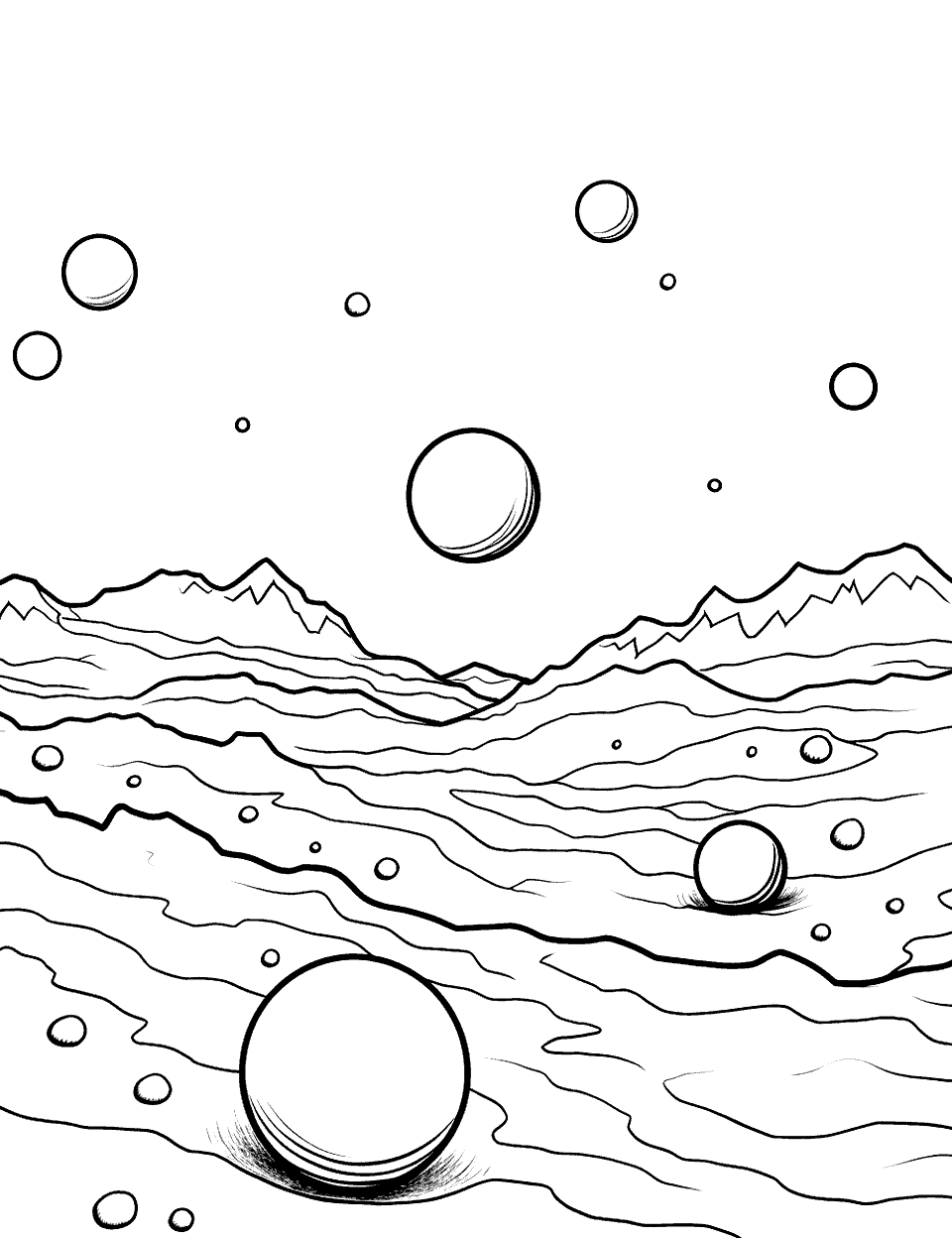
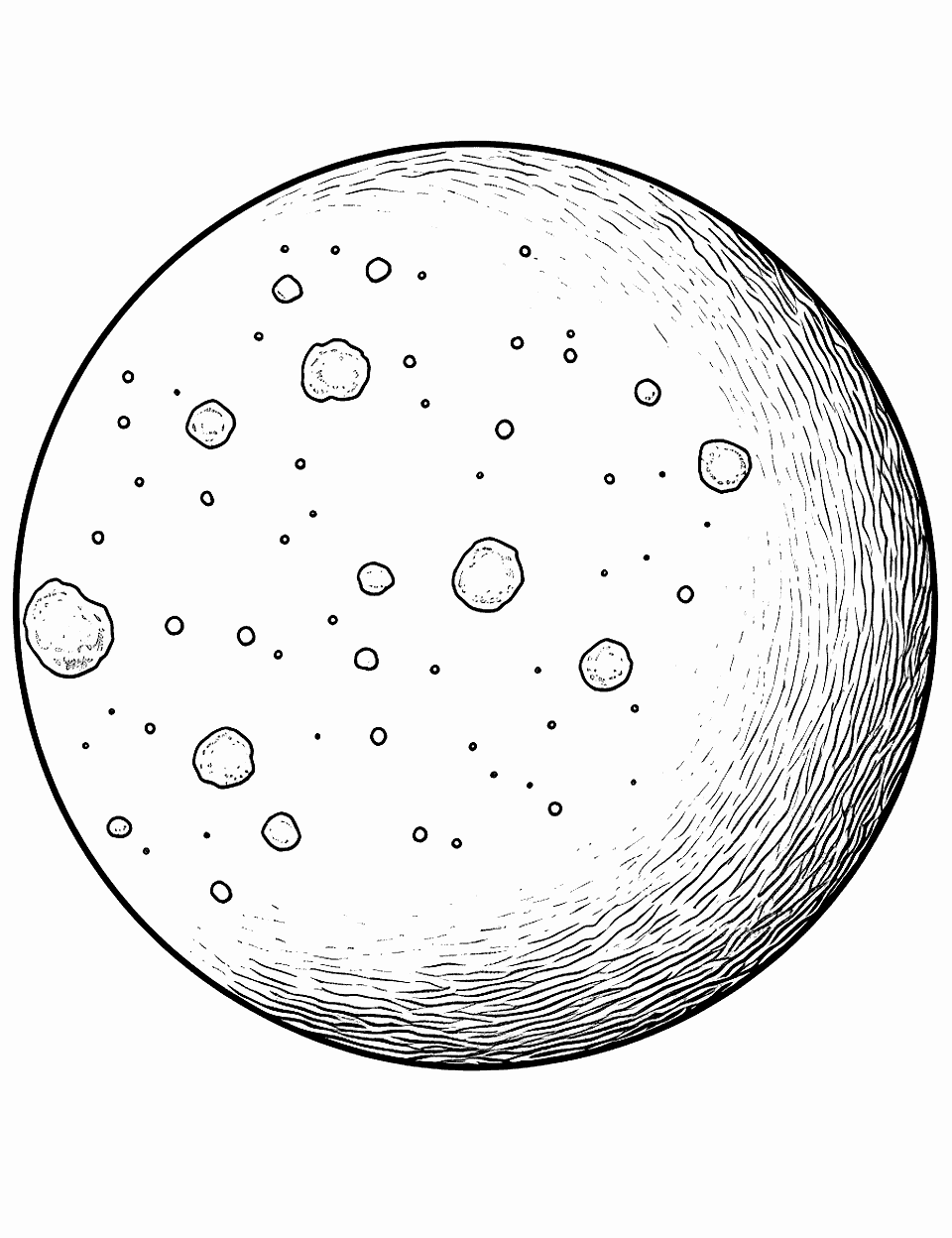
Welcome to the smallest planet in our solar system. Mercury is closest to the sun, so it gets incredibly hot. Use your imagination to color this barren, crater-filled landscape.
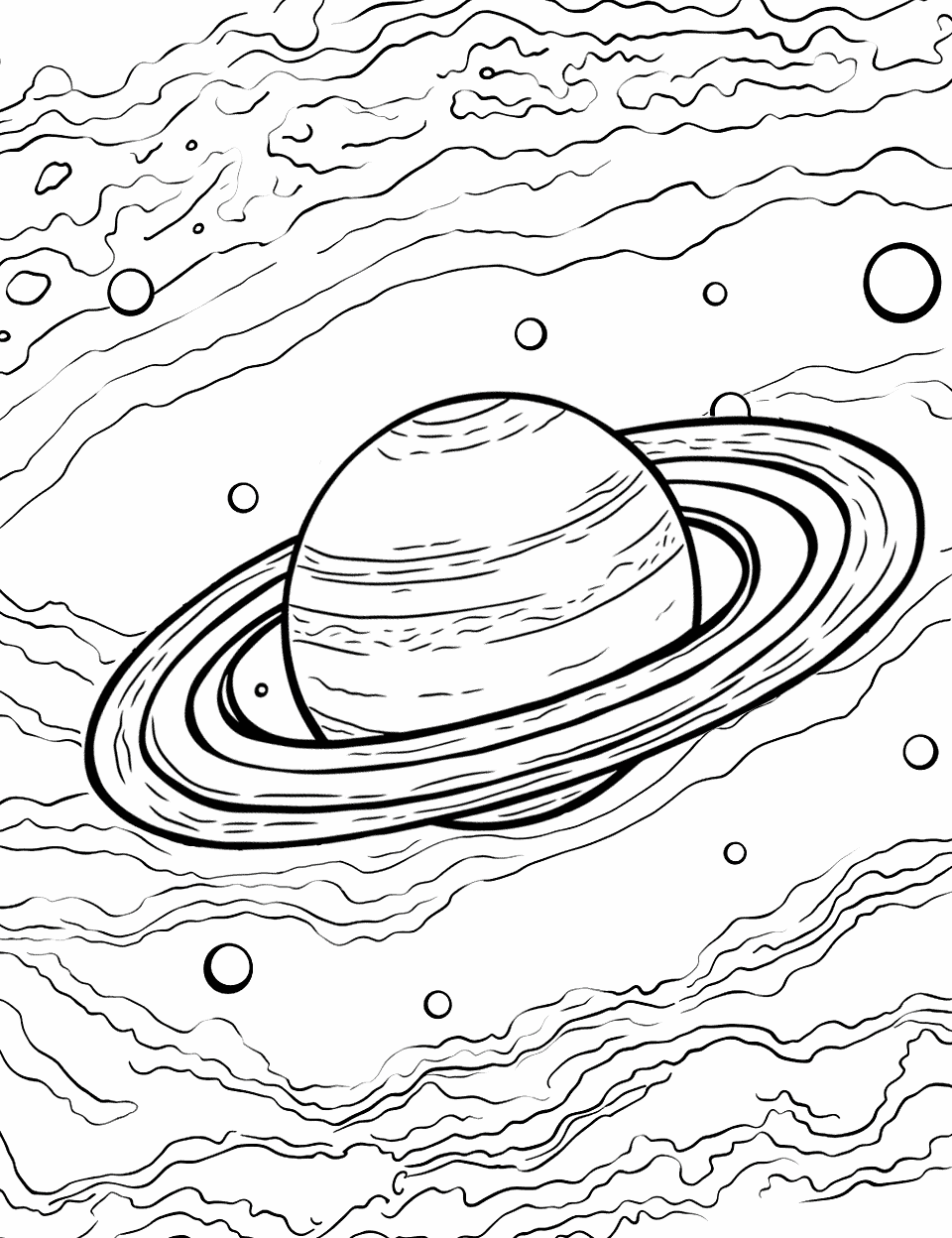
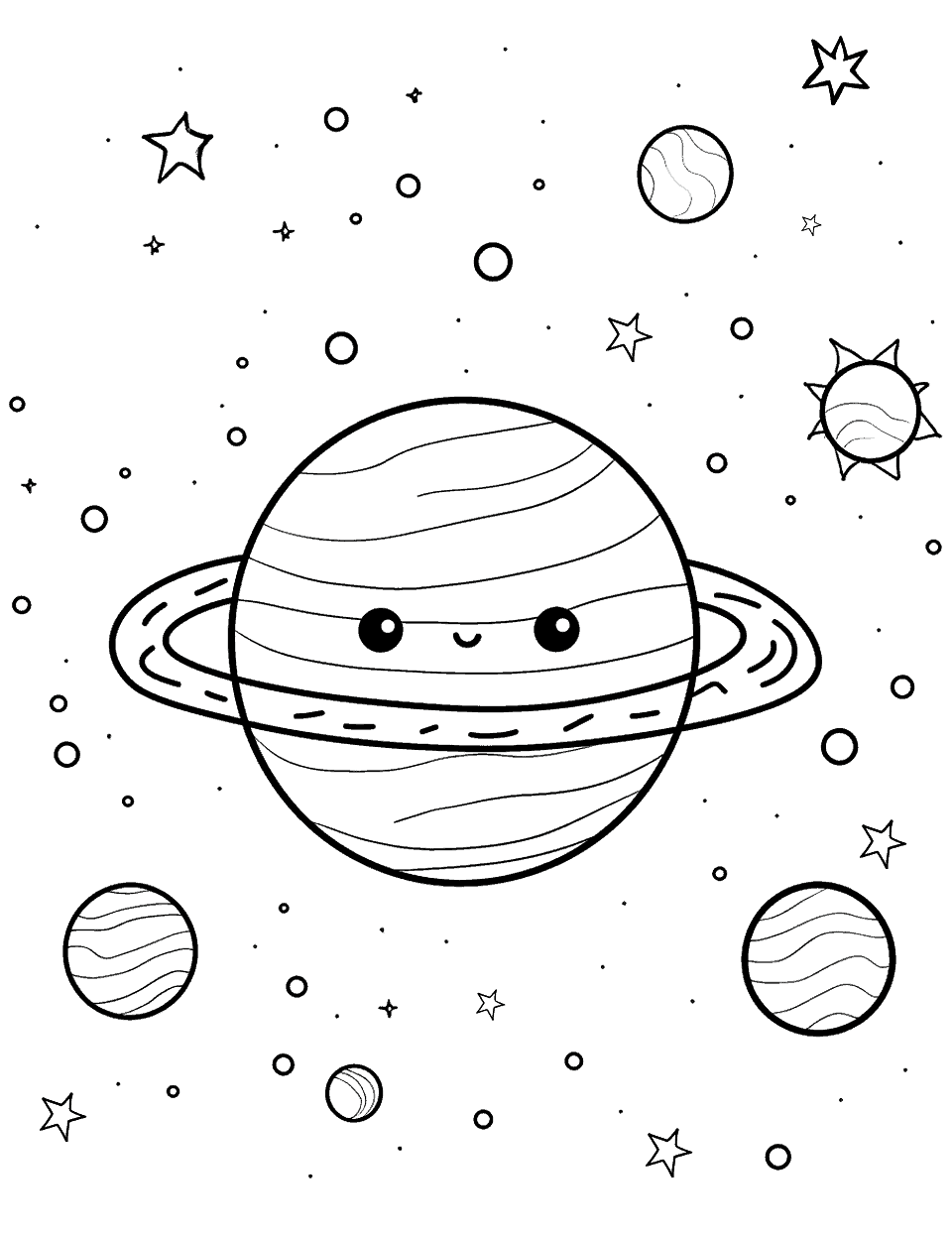
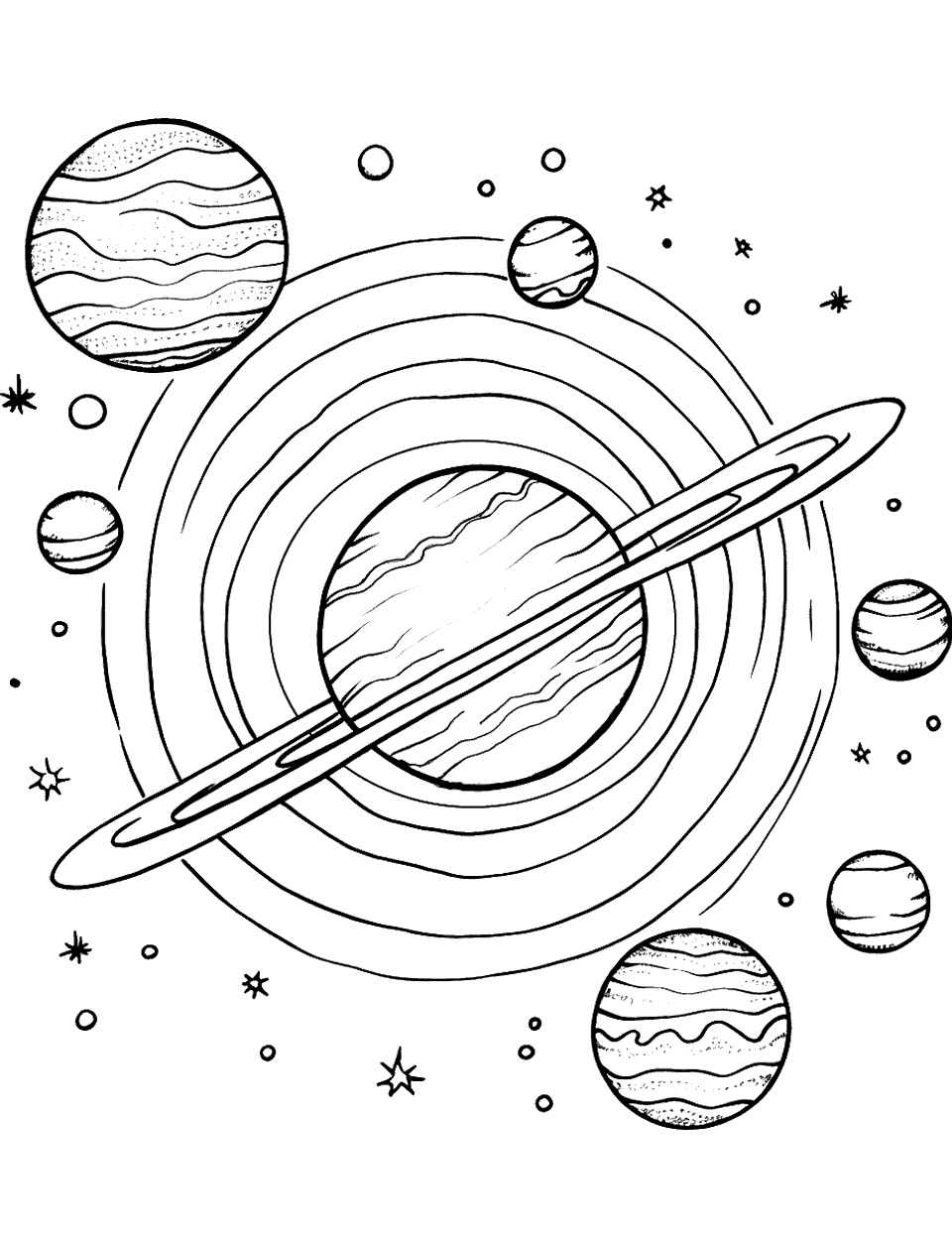
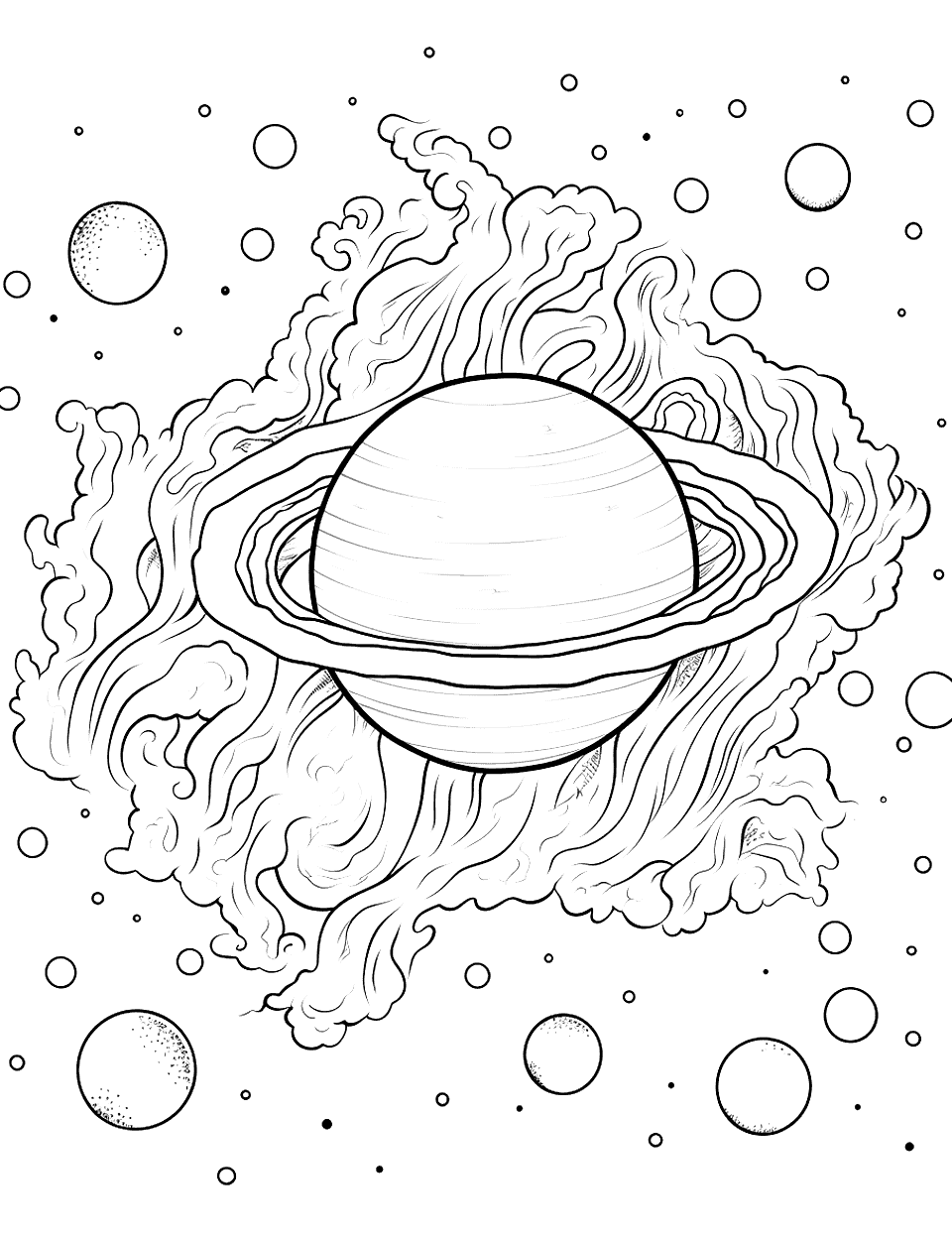
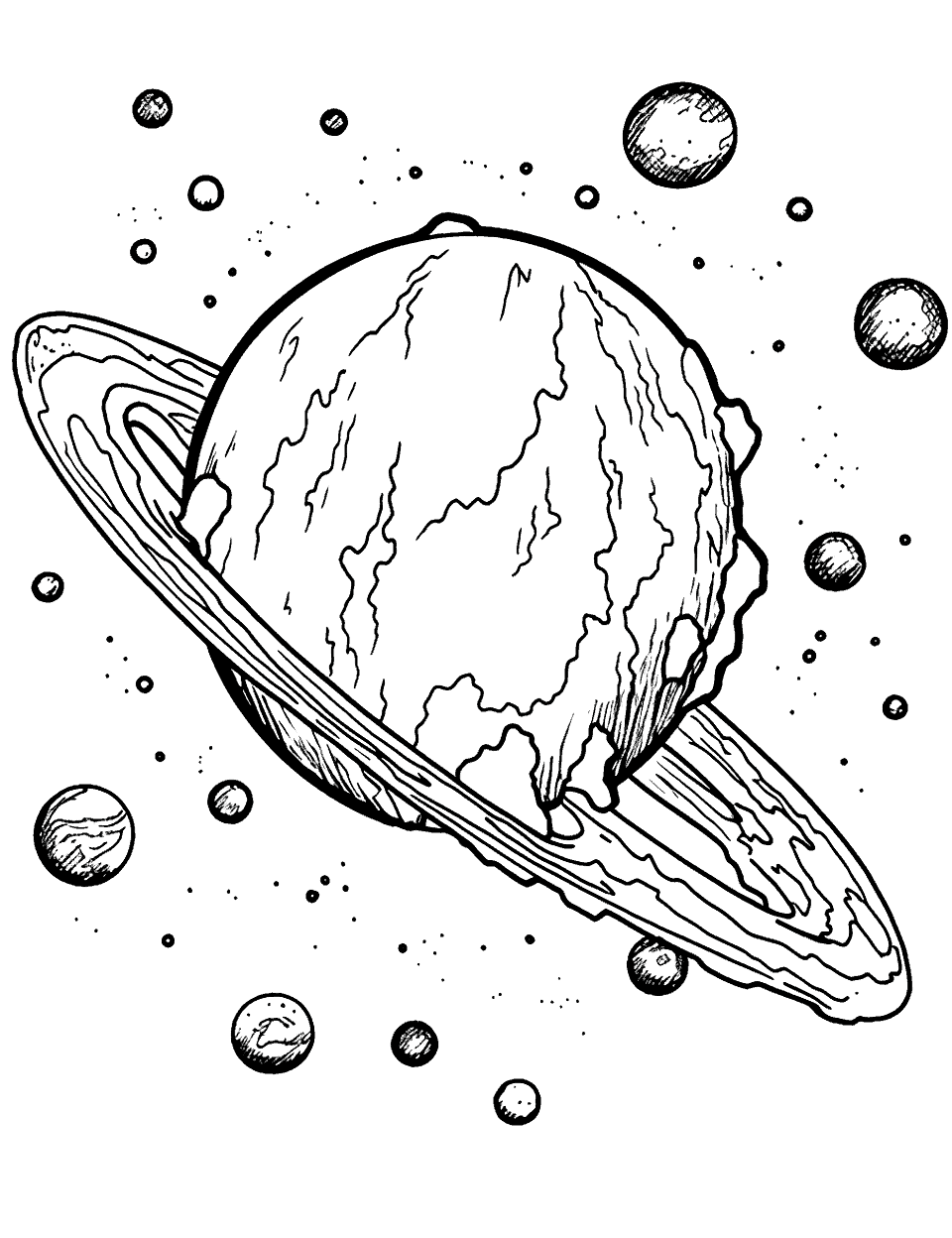
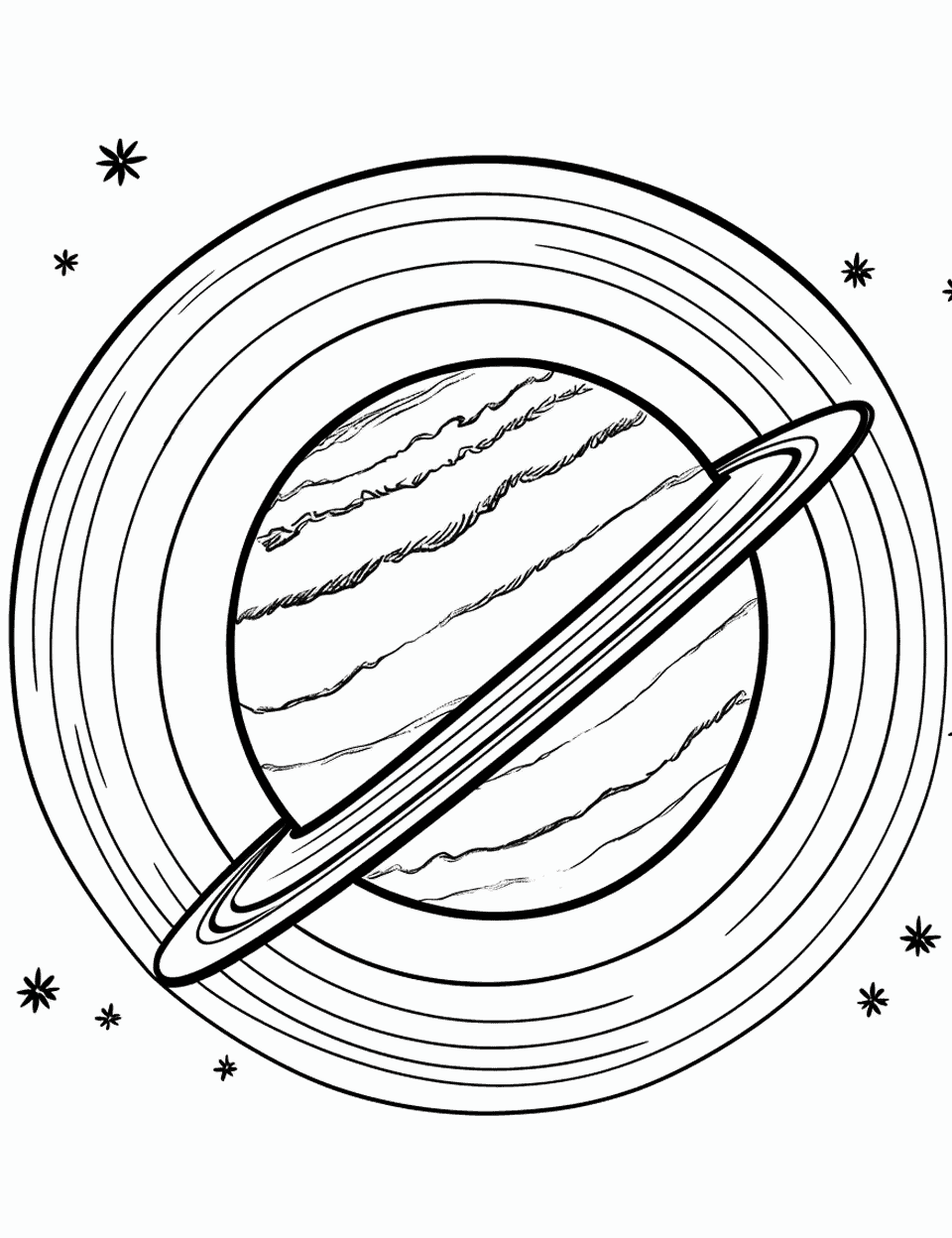
Saturn is famous for its spectacular ring system. These rings are made of ice and rock. Try using different shades of yellow, beige, and gray to show the layers of this gas giant.
Here is the King of Planets! Jupiter is massive and known for its swirling clouds. That giant circle is the Great Red Spot, a storm that has been raging for hundreds of years.
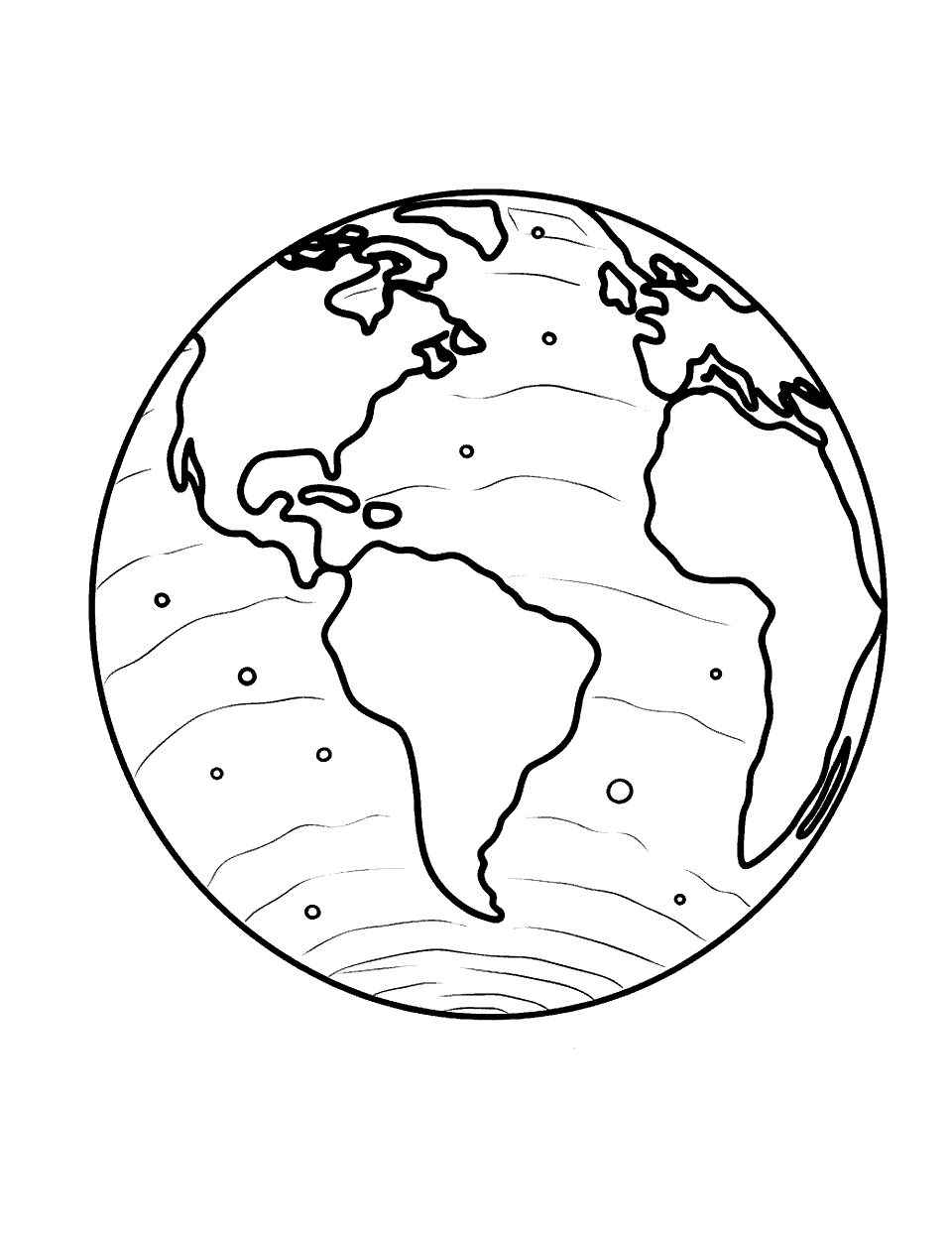
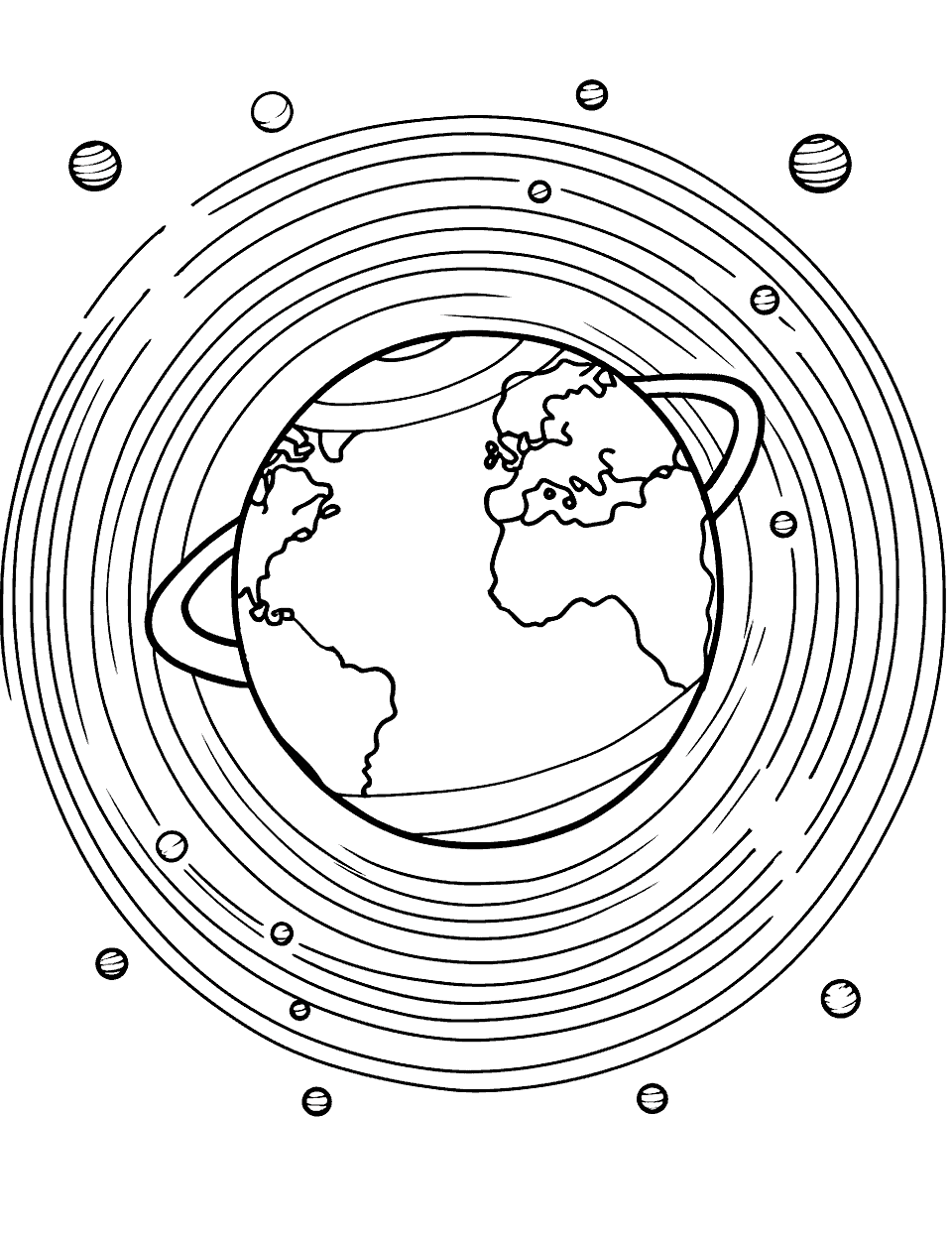
There is no place like home. This view of Earth from outer space shows our continents and oceans. Remember to use plenty of blue for the water and white for the swirling clouds.
Mars is known as the Red Planet because of its rusty iron soil. In the distance, you can see Olympus Mons, the largest volcano in the entire solar system.
It might be a dwarf planet now, but Pluto is still a favorite for many. It is incredibly cold and far away from the sun, so give this icy surface a cool, frosty look.
Our moon is covered in impact craters from meteors hitting it over millions of years. This detailed sheet is great for practicing shading with gray and silver pencils.
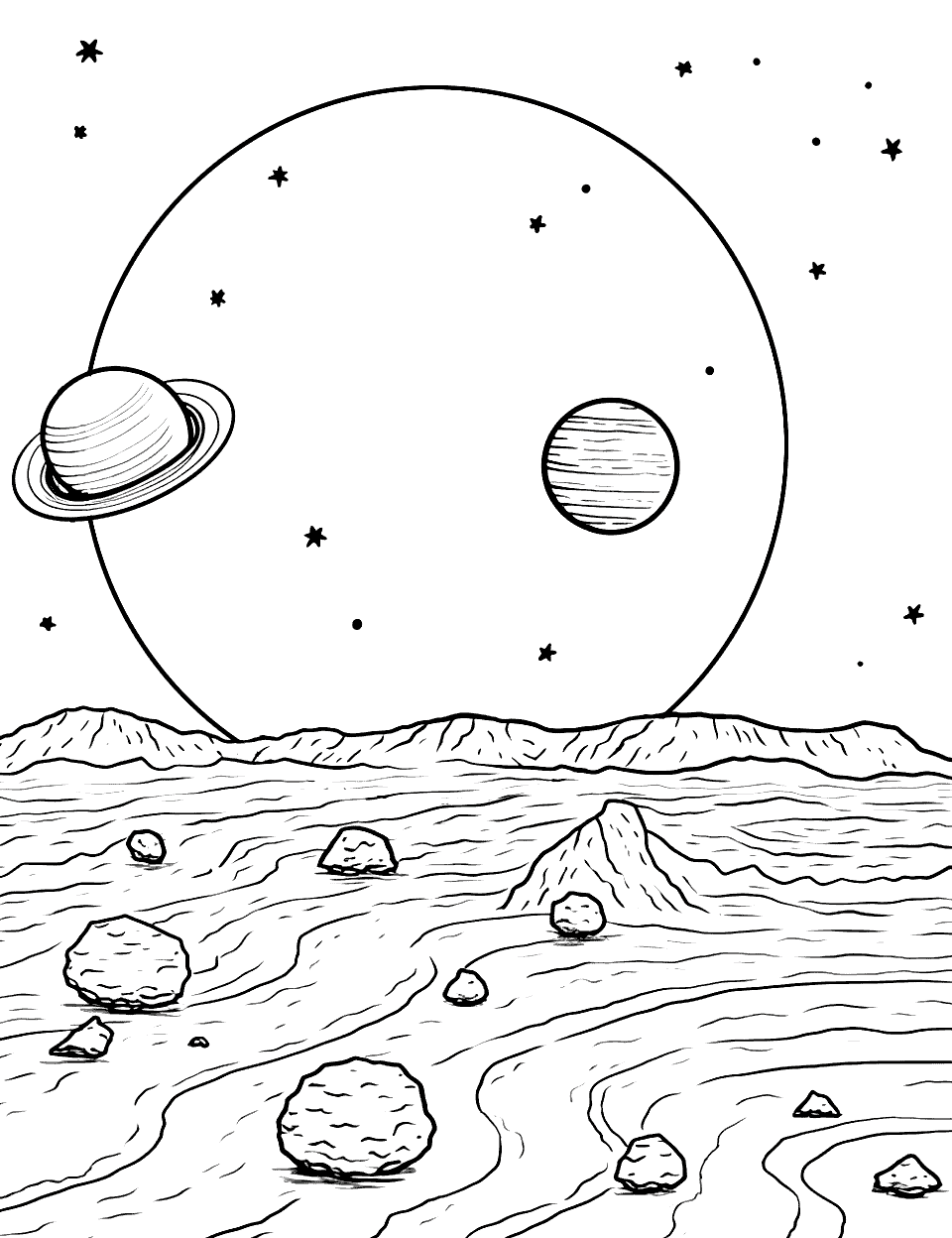
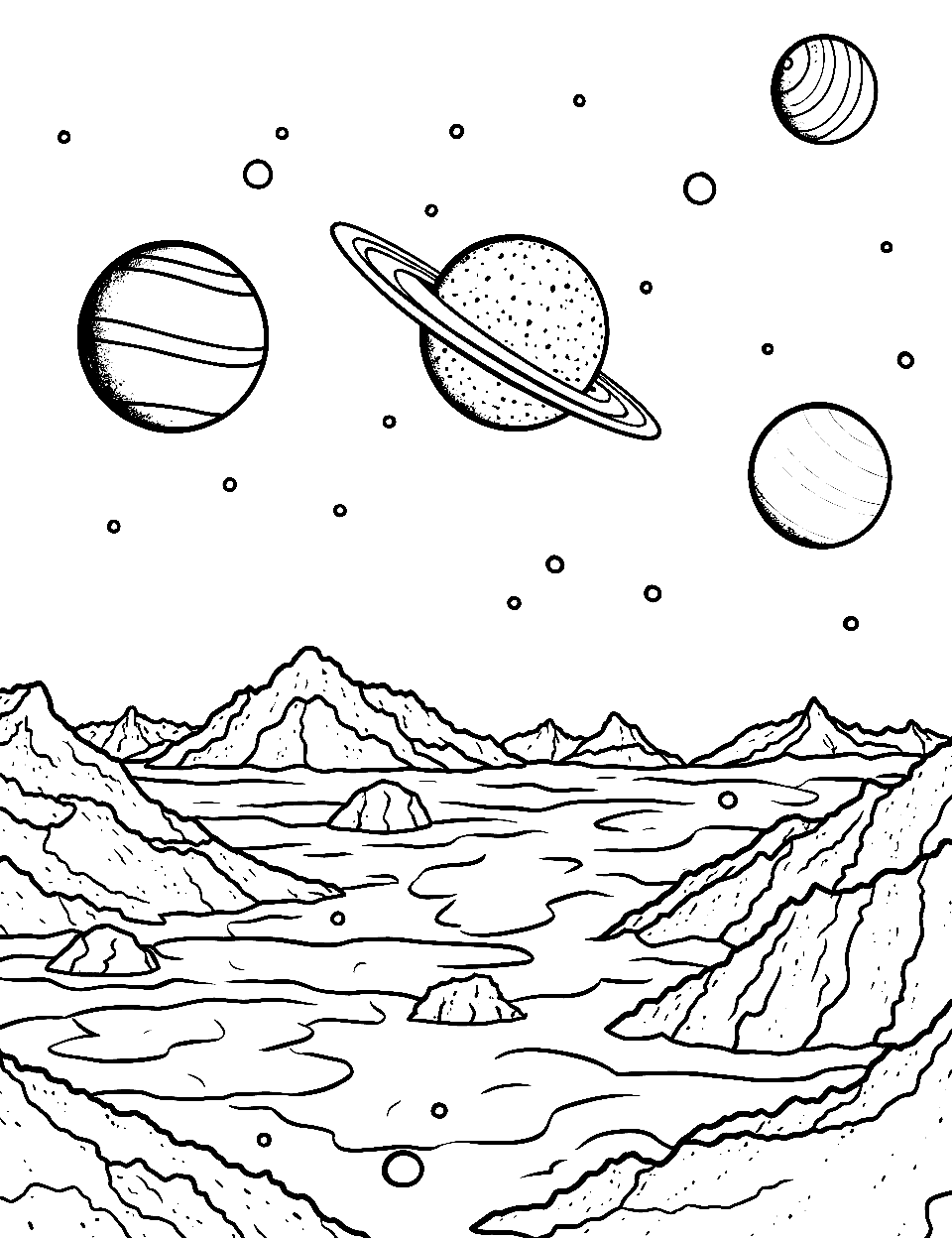
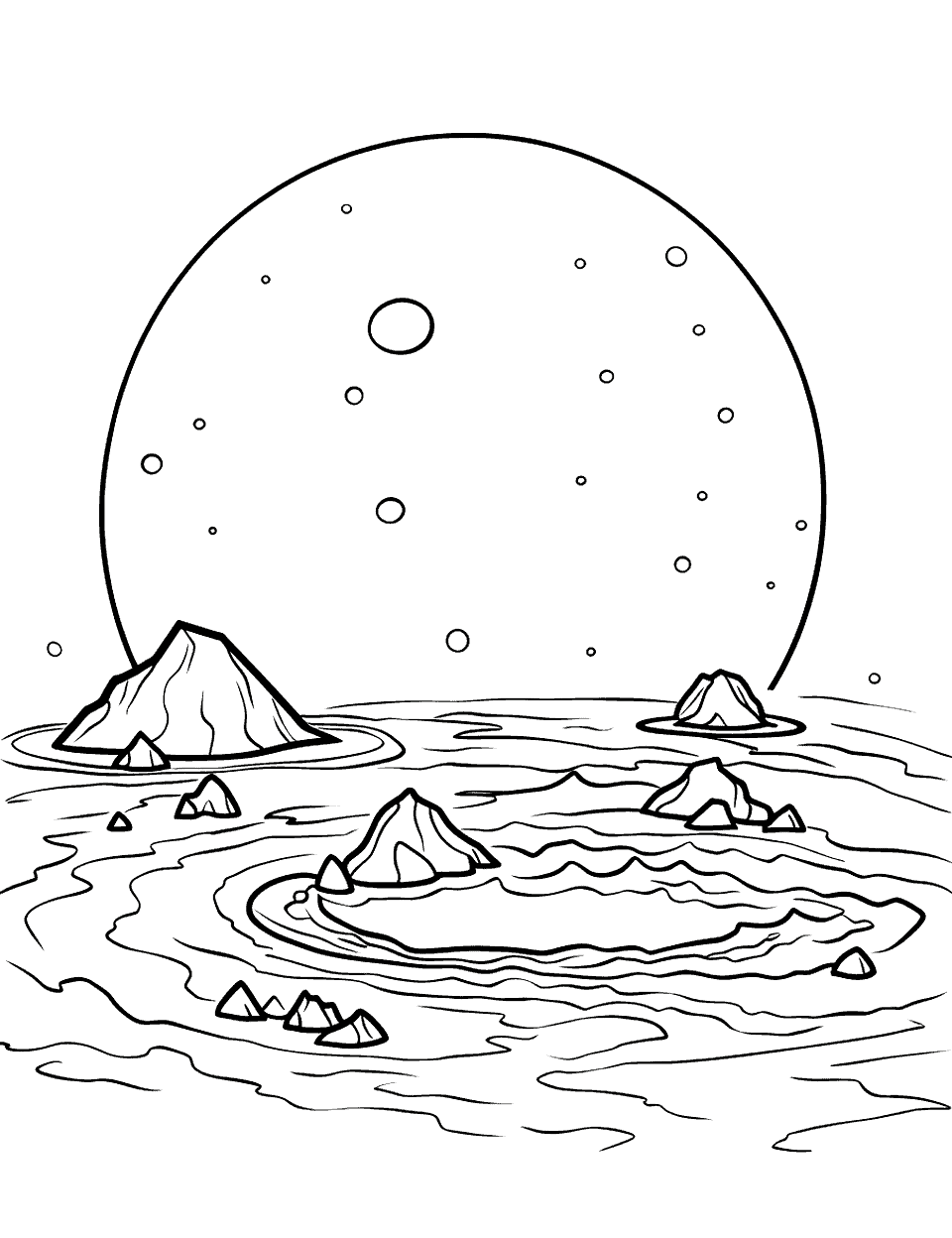
Meet Eris, a dwarf planet that is even more massive than Pluto! It hangs out in the scattered disc of the solar system. The star-filled background is perfect for glitter pens.
Between Mars and Jupiter sits the asteroid belt. It is full of rocky leftovers from the formation of the solar system. Color these rocks in various shapes and sizes.
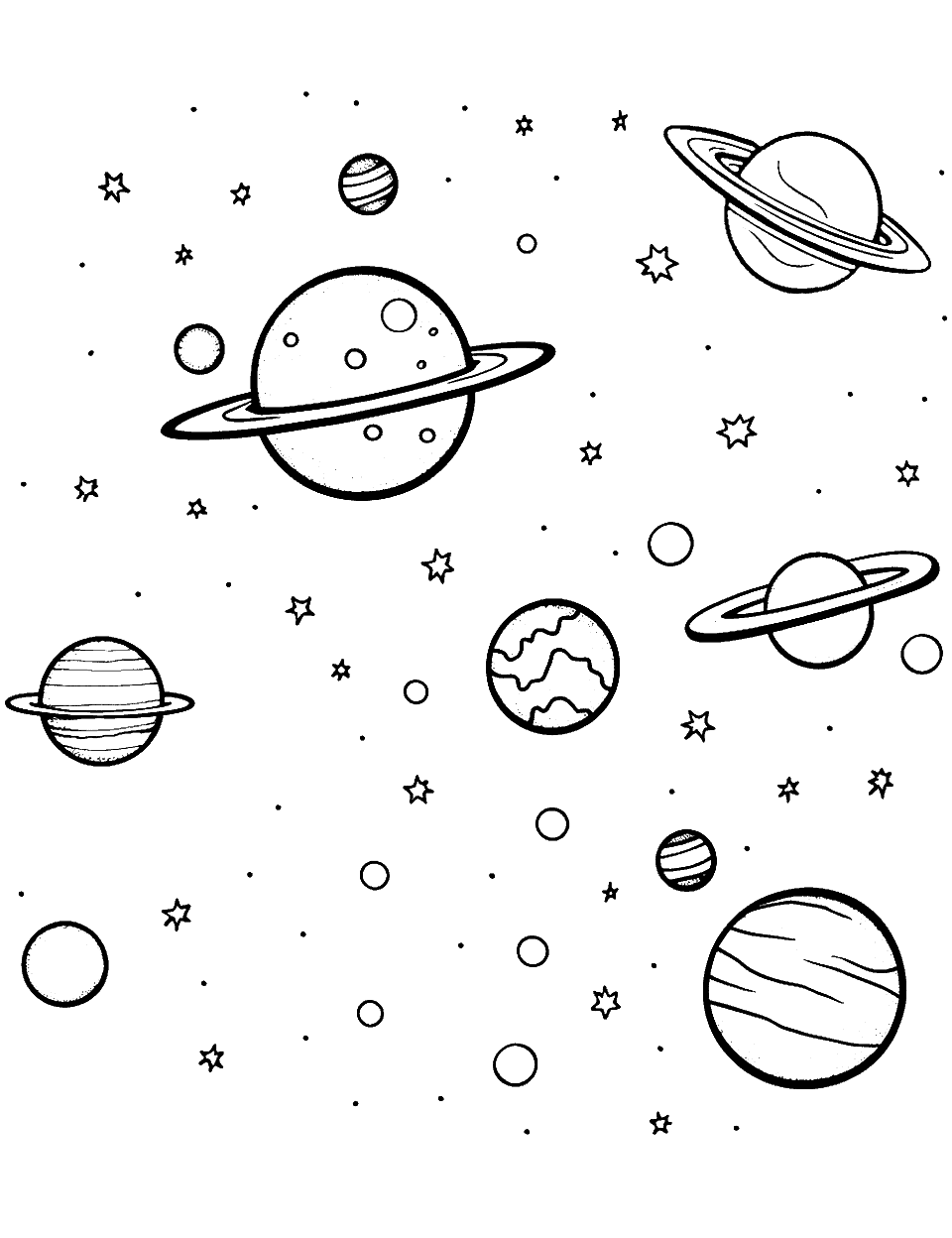
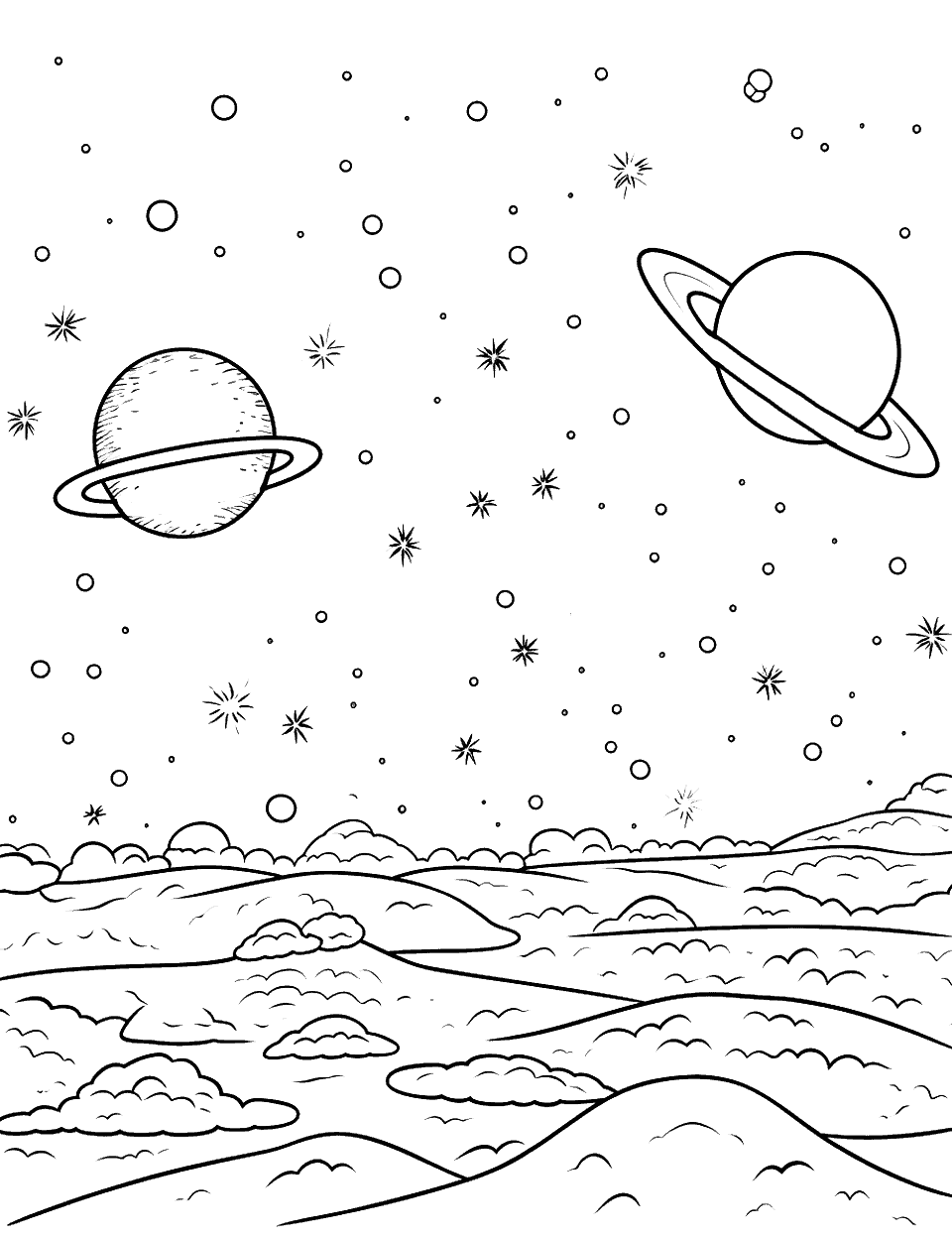
Sometimes you just need to get lost in the stars. This vast space scene features different-sized stars, making it a relaxing page to fill with vibrant colors.
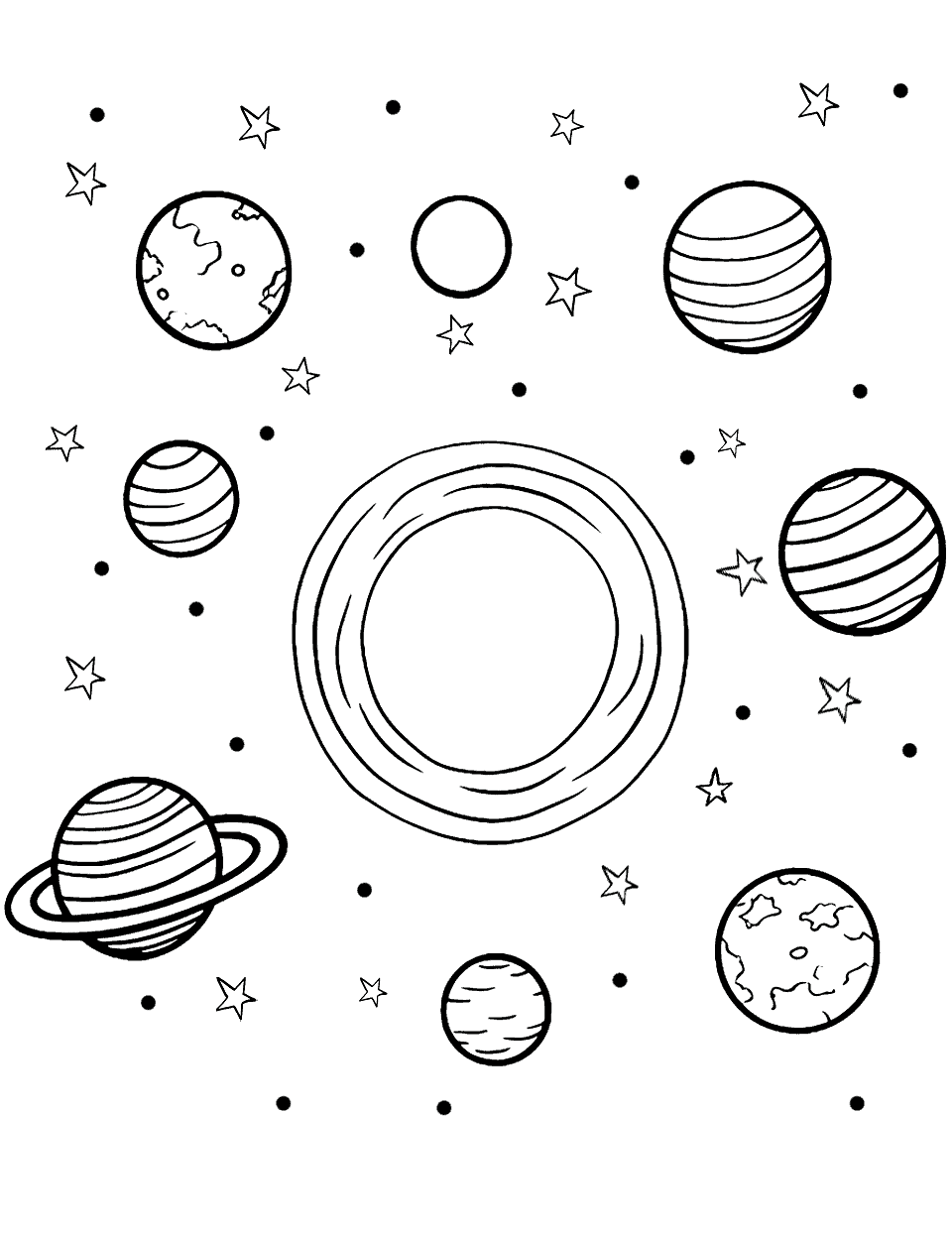
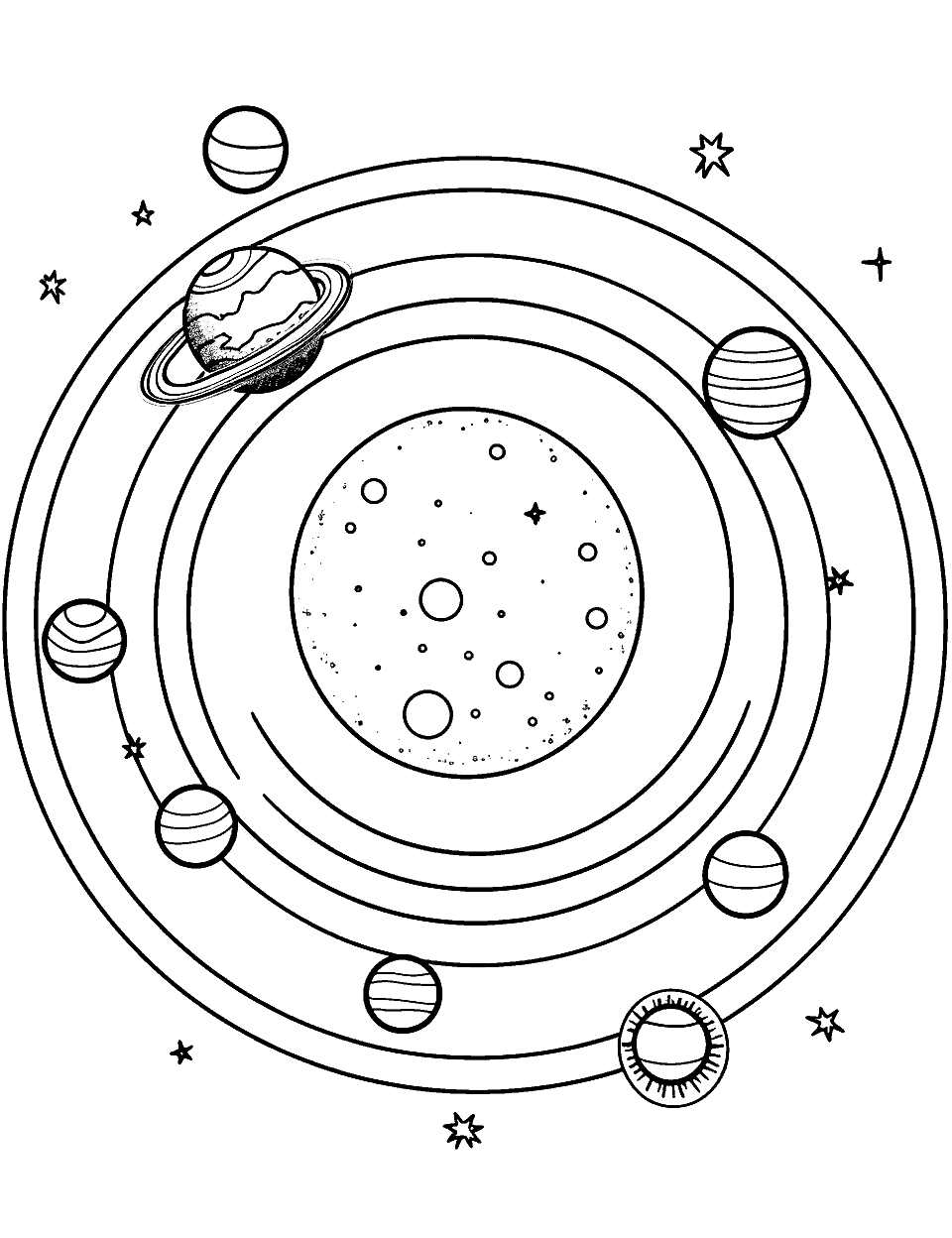
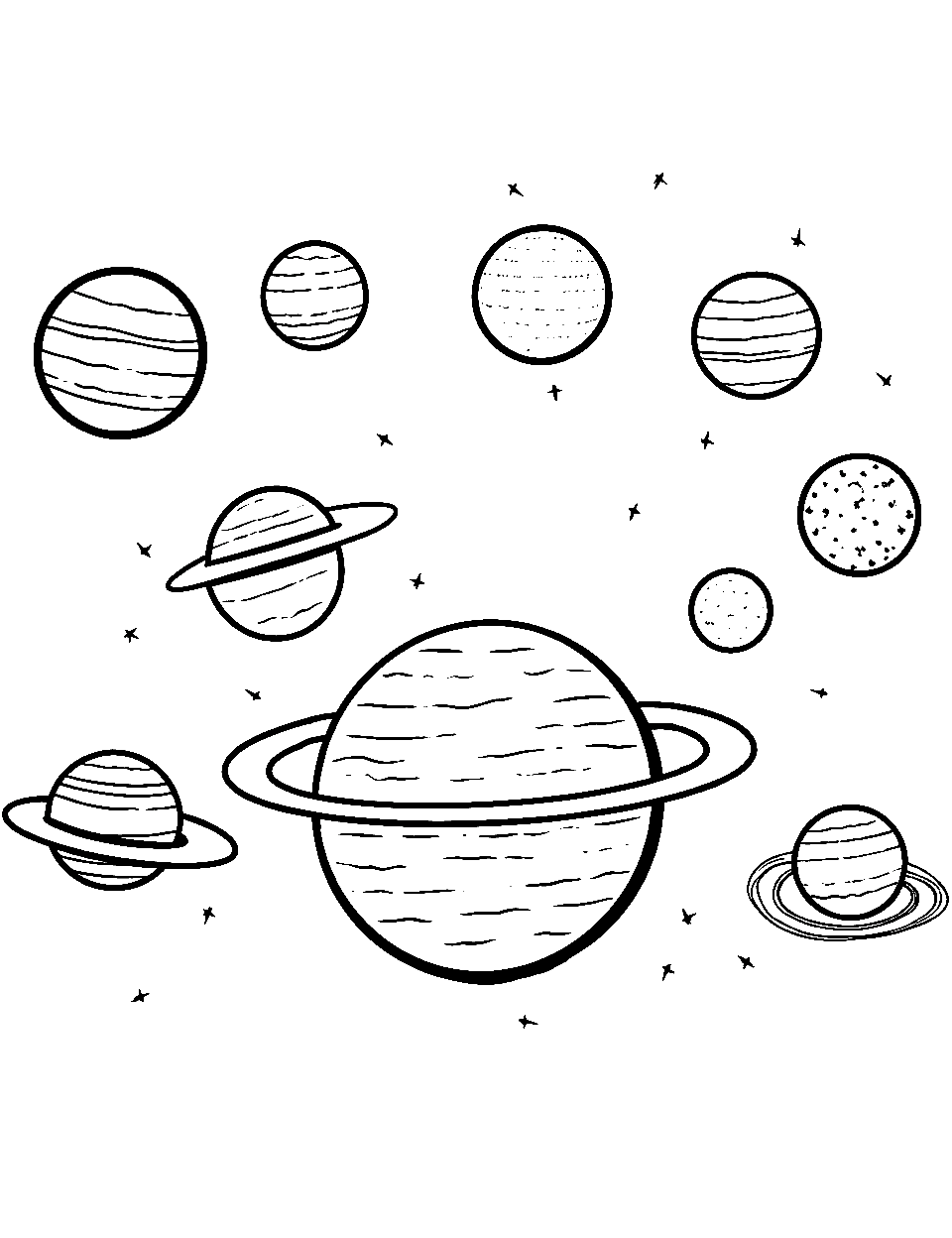
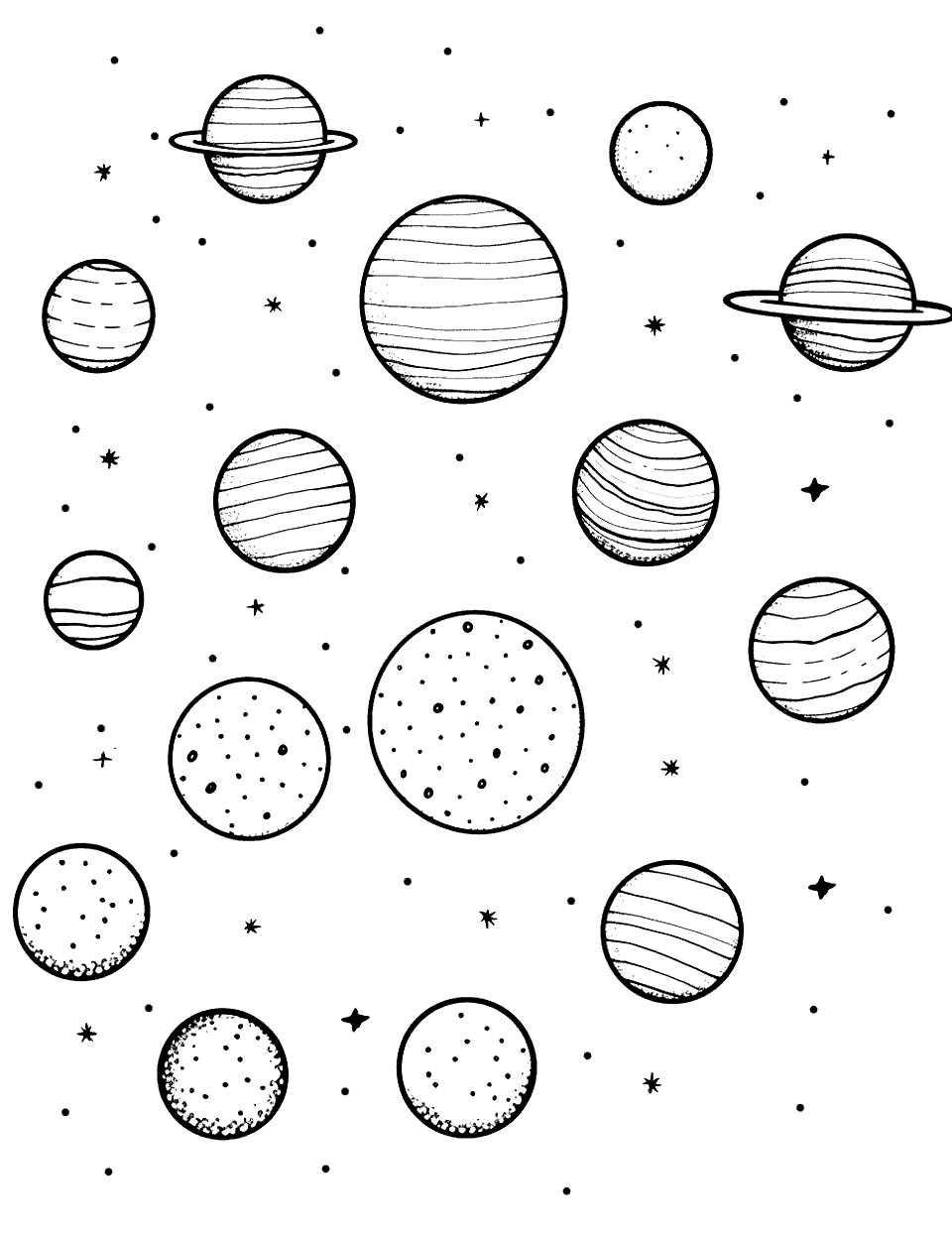
This is an easy-to-color layout for toddlers or preschoolers. It shows Earth and other planets in a simple style, making it great for practicing staying inside the lines.
Our solar system lives inside the Milky Way galaxy. This spiral galaxy page has swirling arms and a bright center, perfect for experimenting with blending colors.
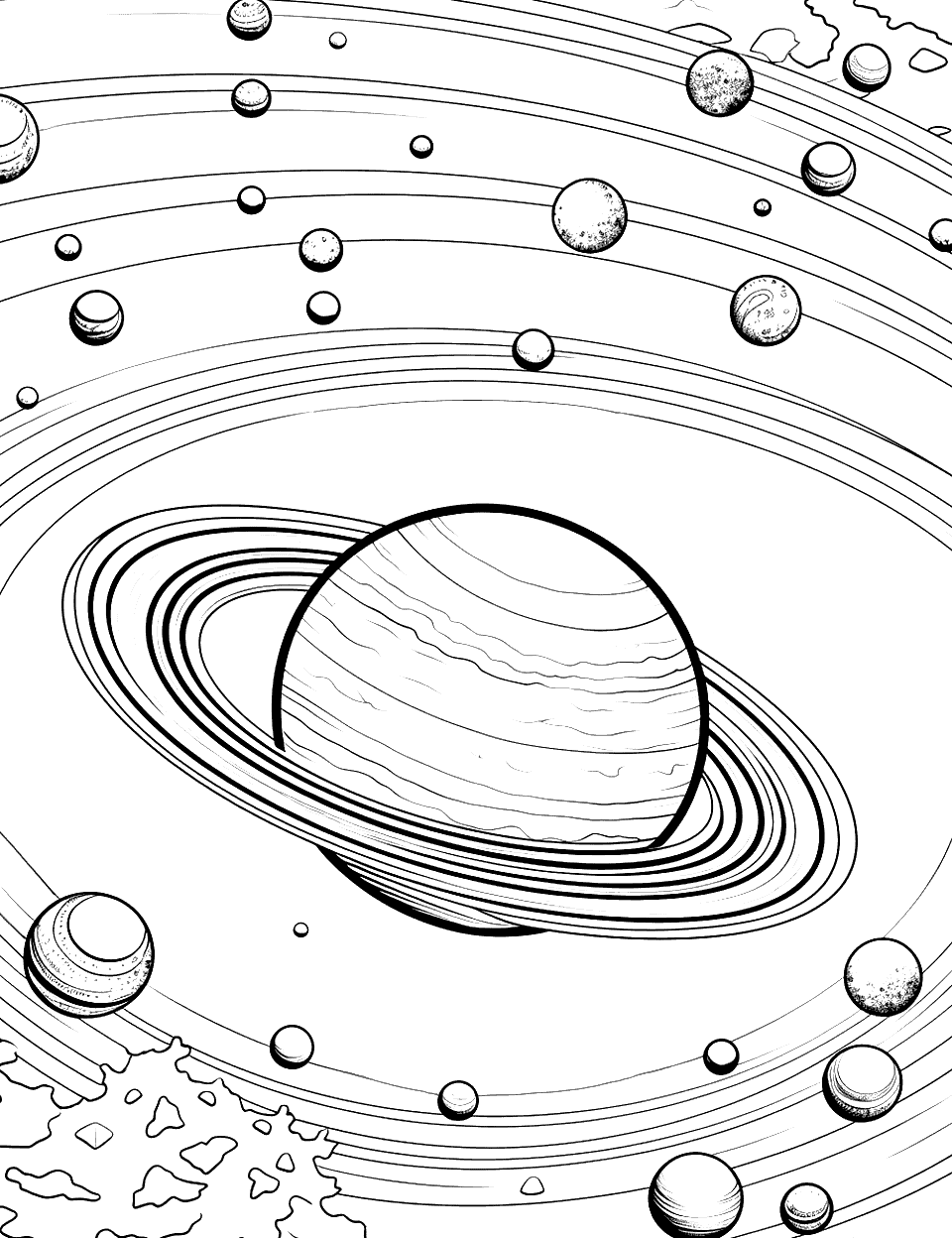
Saturn has more than 80 moons! This page highlights a few of them orbiting the ringed planet. Titan is the most famous one, so you might want to make one stand out.
Jupiter acts like a mini solar system with its massive family of moons. This sheet depicts the giant planet surrounded by its loyal natural satellites.
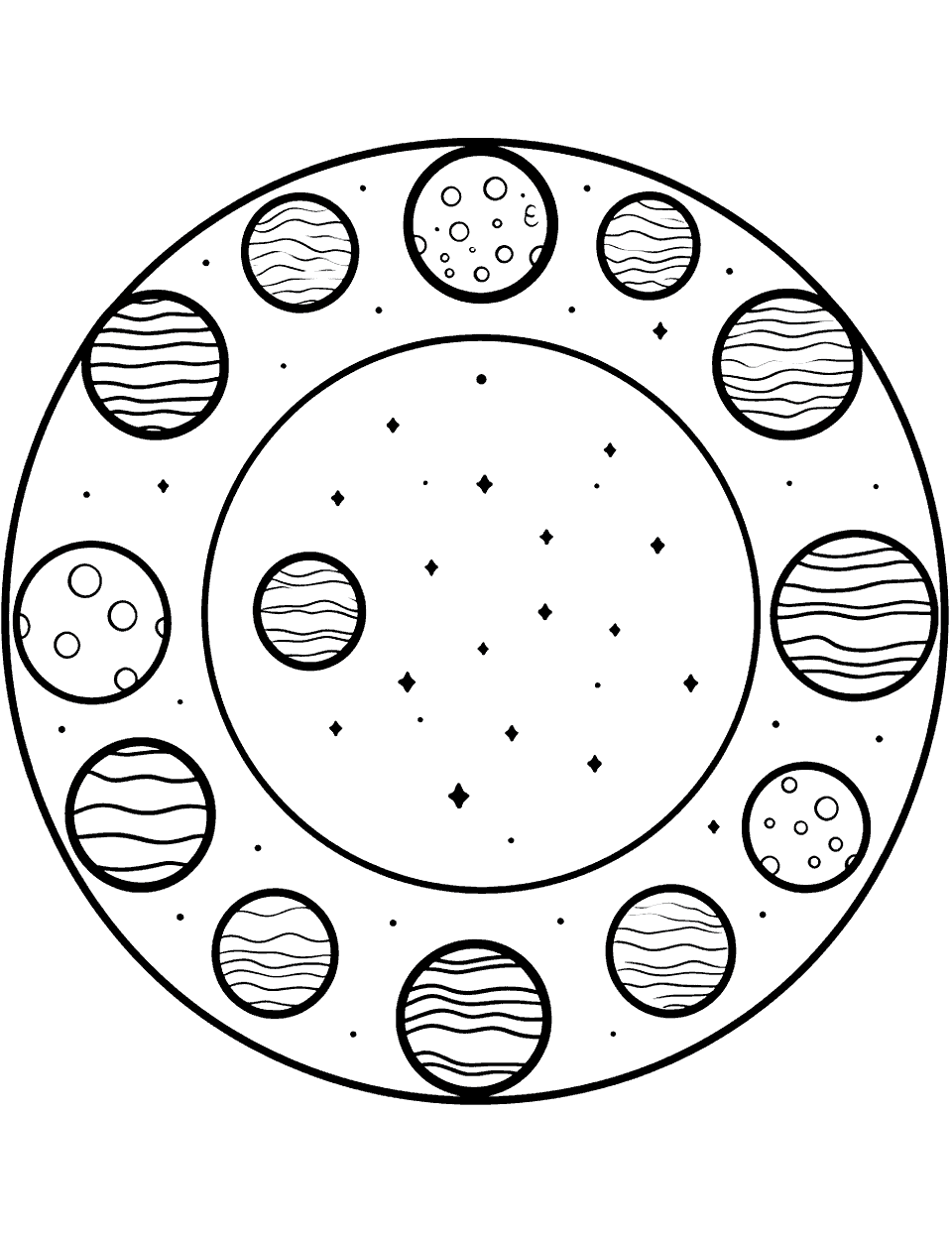
Learn about the lunar cycle with this educational sheet. It displays the different phases of the moon, from new moon to full moon, in a circular layout.
Venus is the hottest planet because of its thick atmosphere. The surface is covered in volcanoes and lava flows. Use dark reds and oranges to show the heat.
This science diagram shows the layers of Earth’s atmosphere, including the troposphere and stratosphere. It is a great way to visualize the shield that protects our planet.
The Northern Lights look magical from the ground, but they are even more stunning from orbit. Use greens, purples, and blues to create the dancing lights.
Did you know Mars has ice? This page shows the Red Planet’s polar ice caps. It is a cool contrast between the dusty red terrain and the white frozen poles.
Our planet acts like a giant magnet. This educational coloring page illustrates the invisible magnetic field lines that protect us from solar radiation.
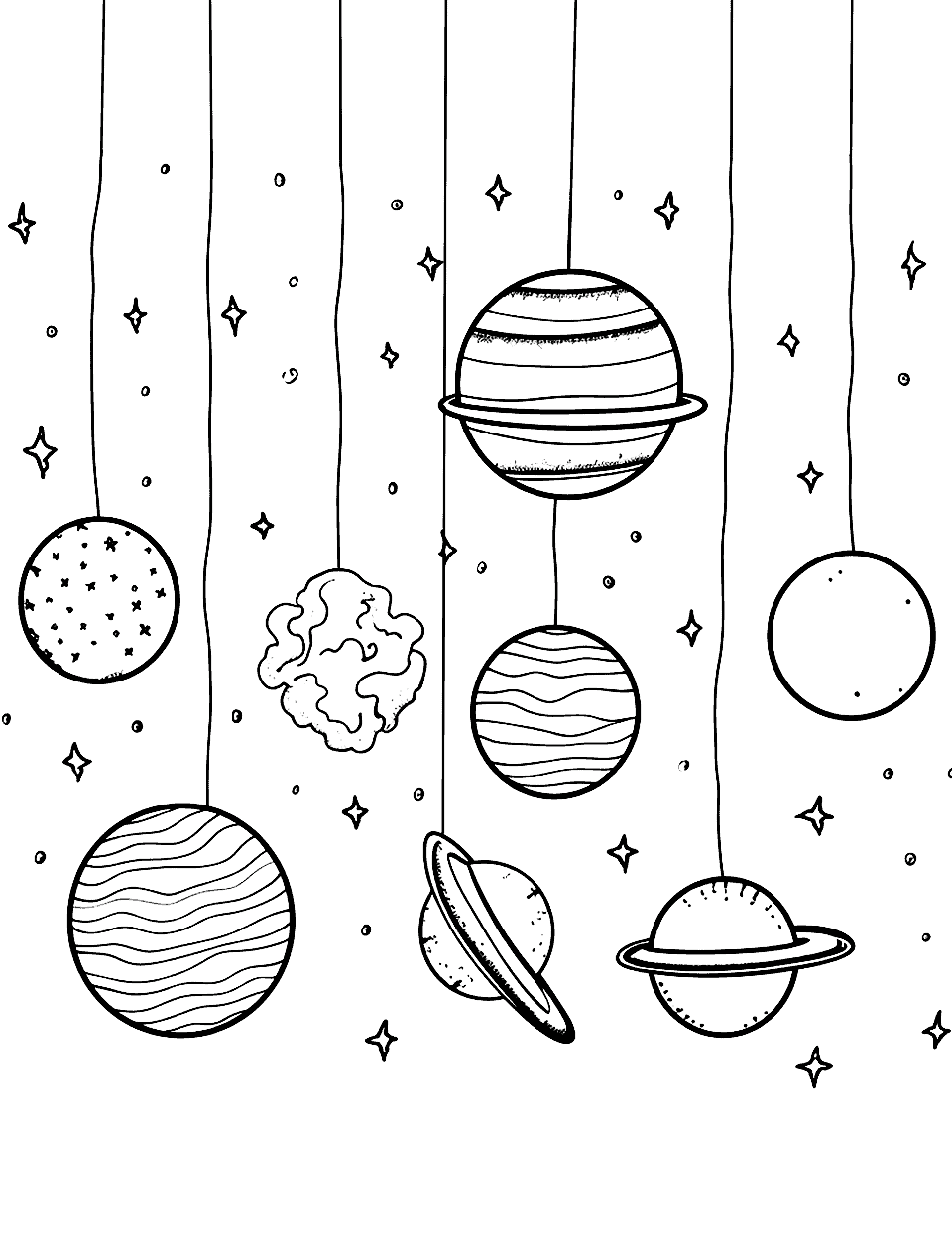
This design features all eight planets hanging on a decorative hook. It is a cute “mobile” style drawing that puts the whole solar family in one place.
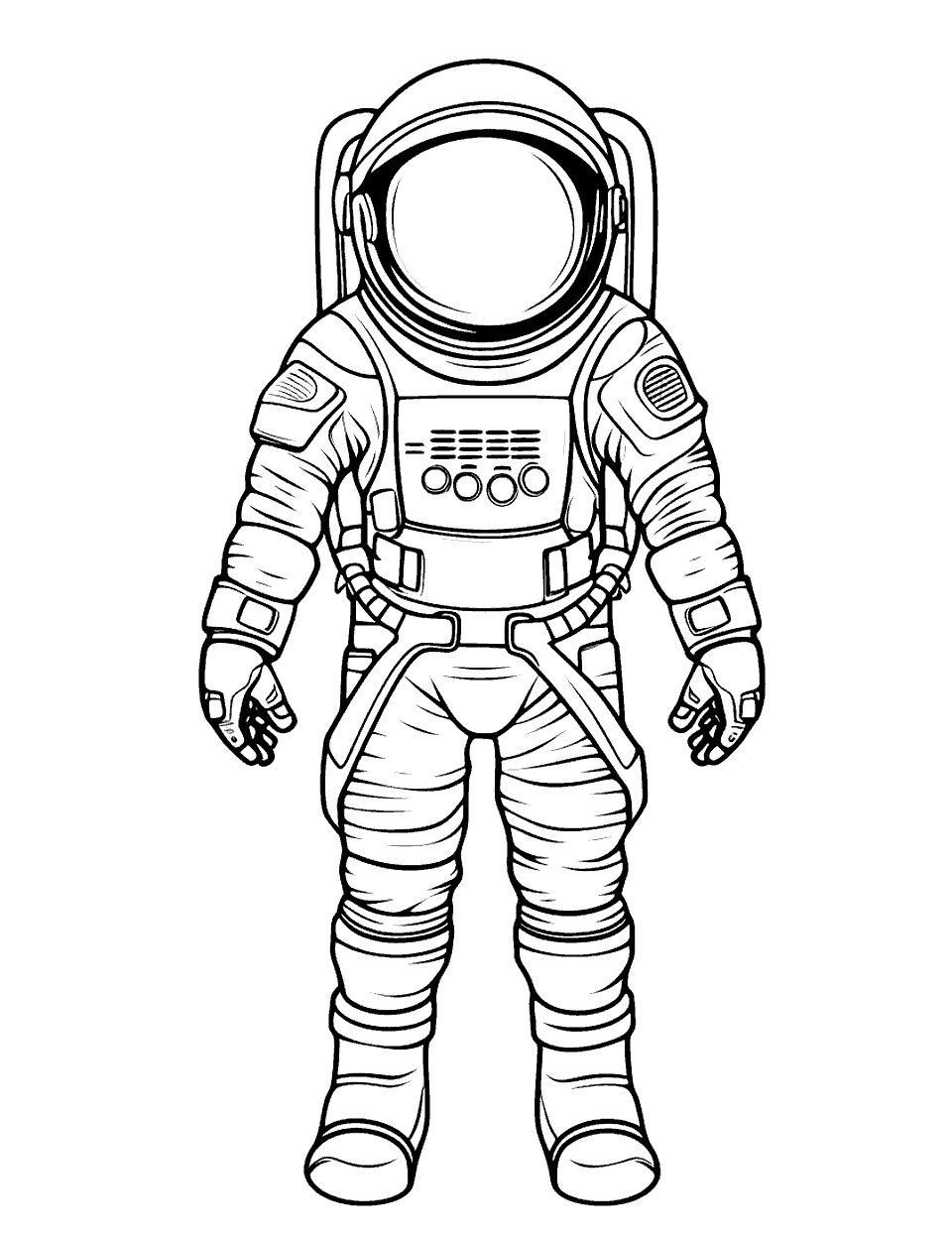
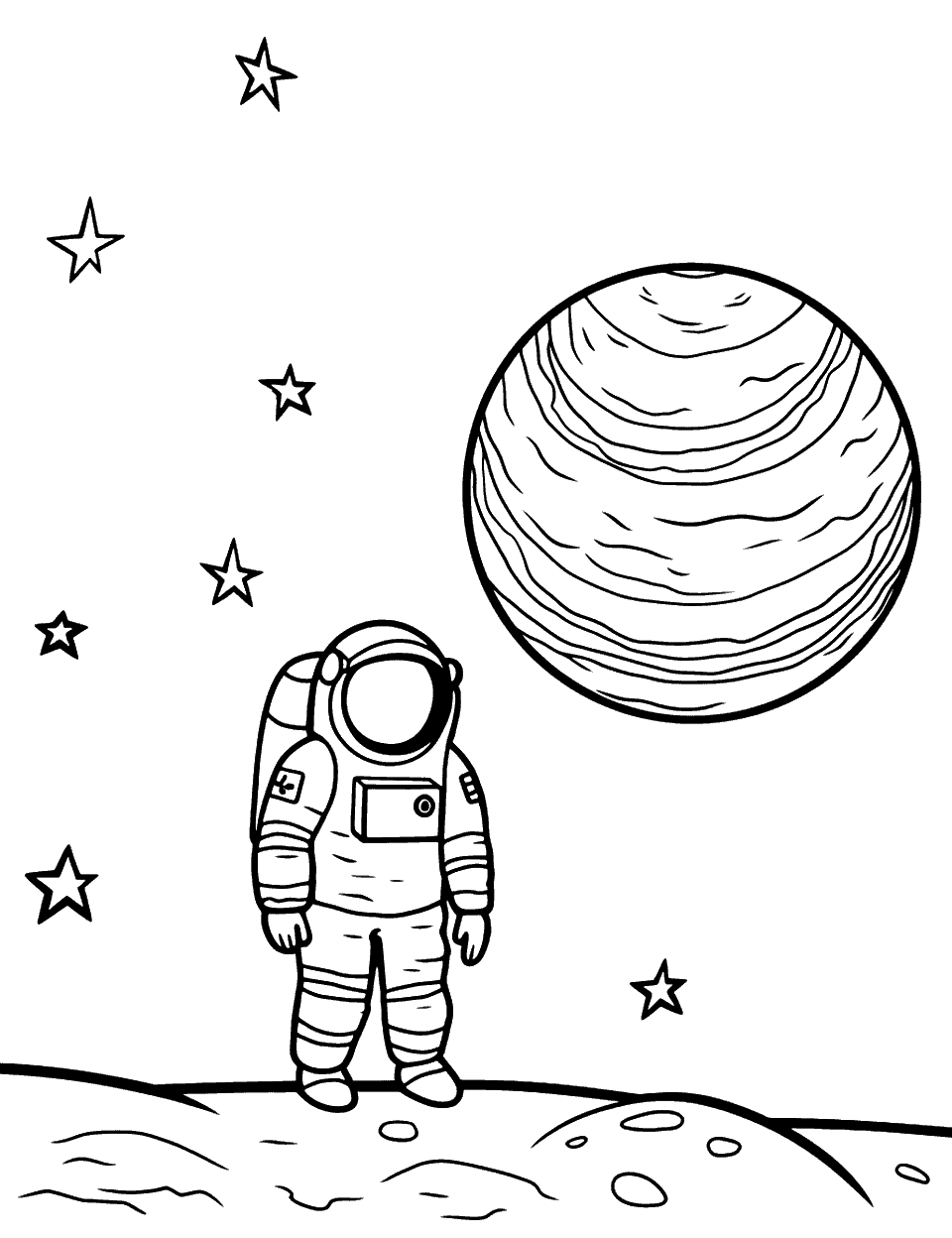
Design your own gear! This detailed space suit features a helmet, gloves, and life-support pack. You can decide if it is for NASA or a futuristic space force.
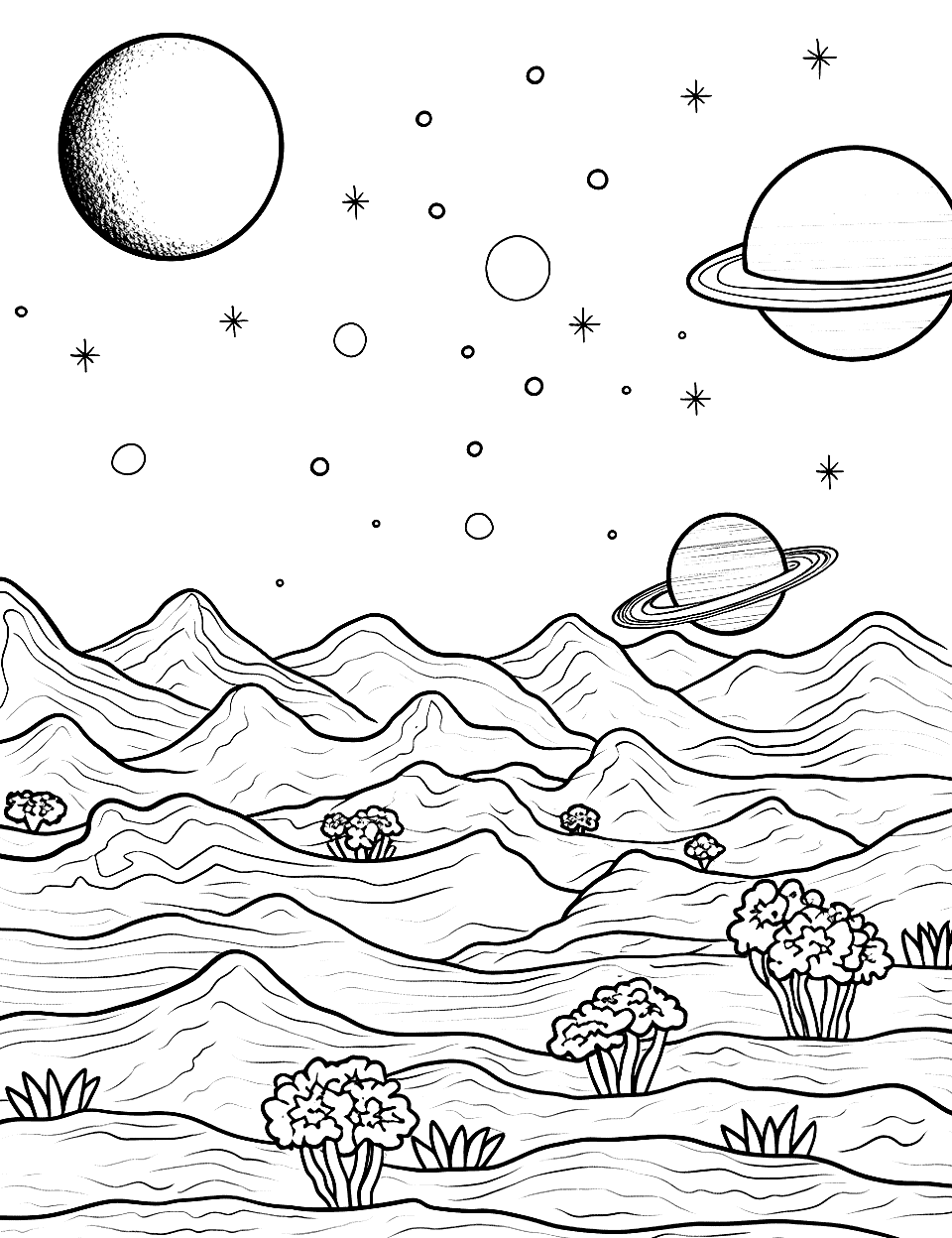
Let your imagination run wild with this alien world. It features strange plants and geography that don’t exist on Earth. There are no wrong colors here!.
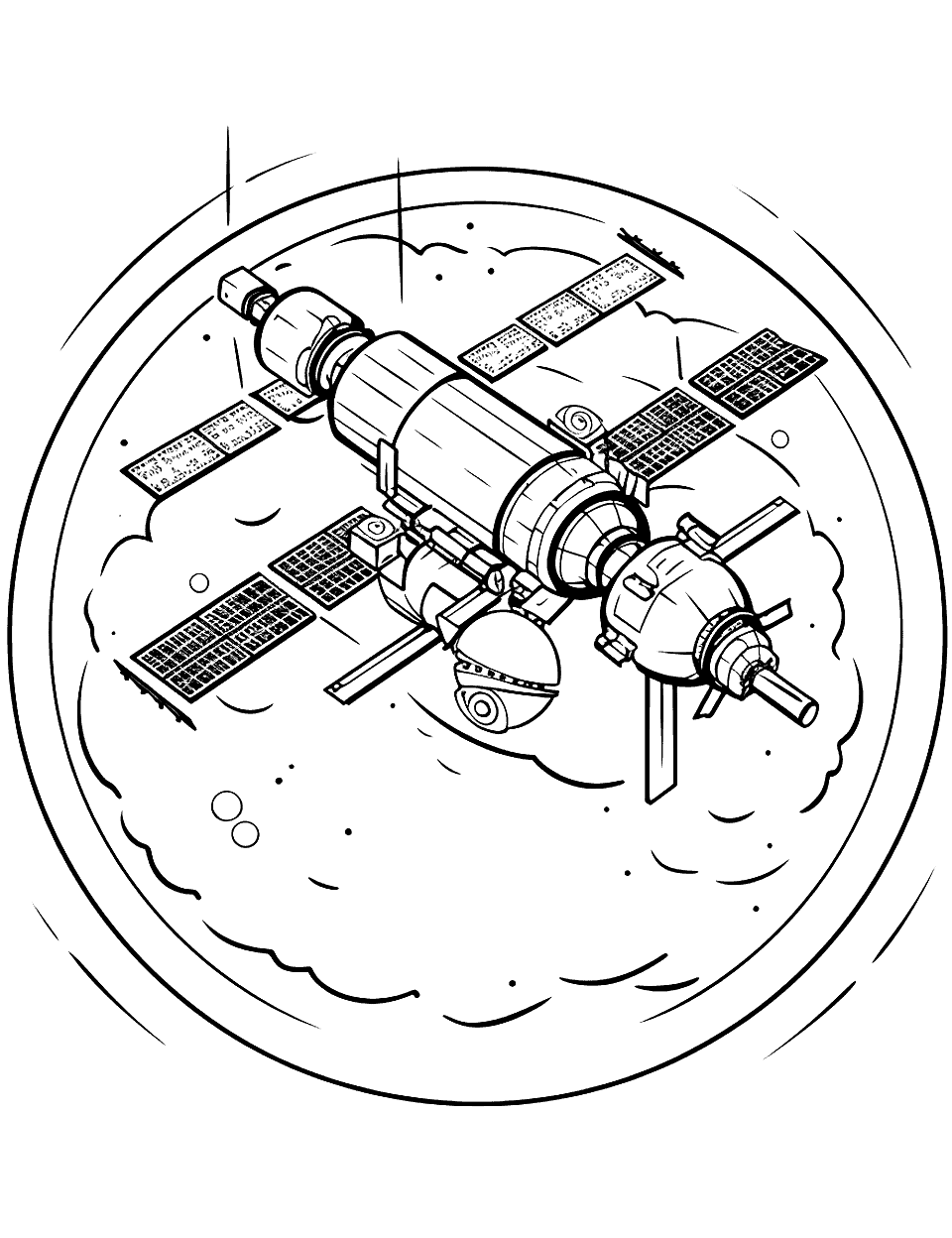
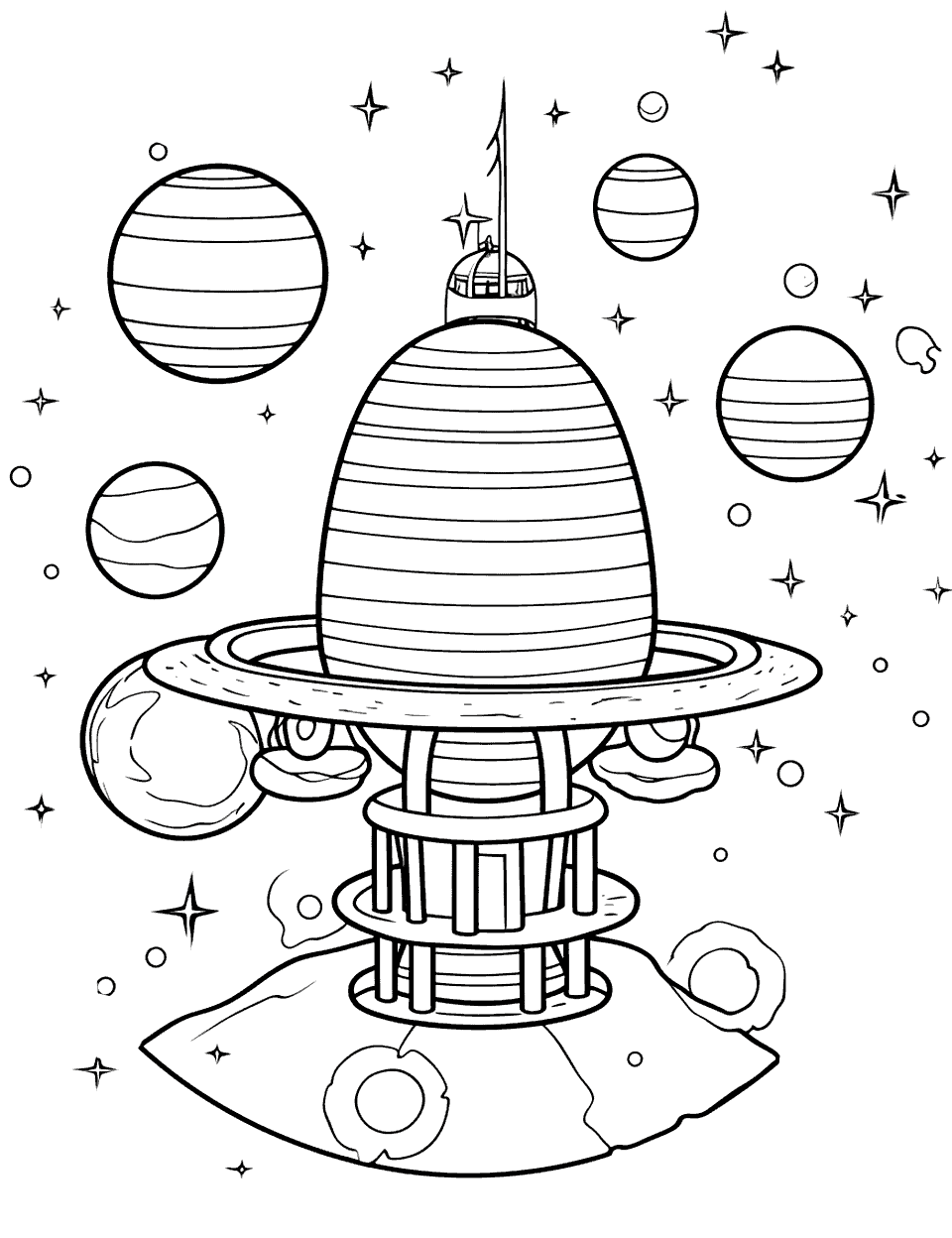
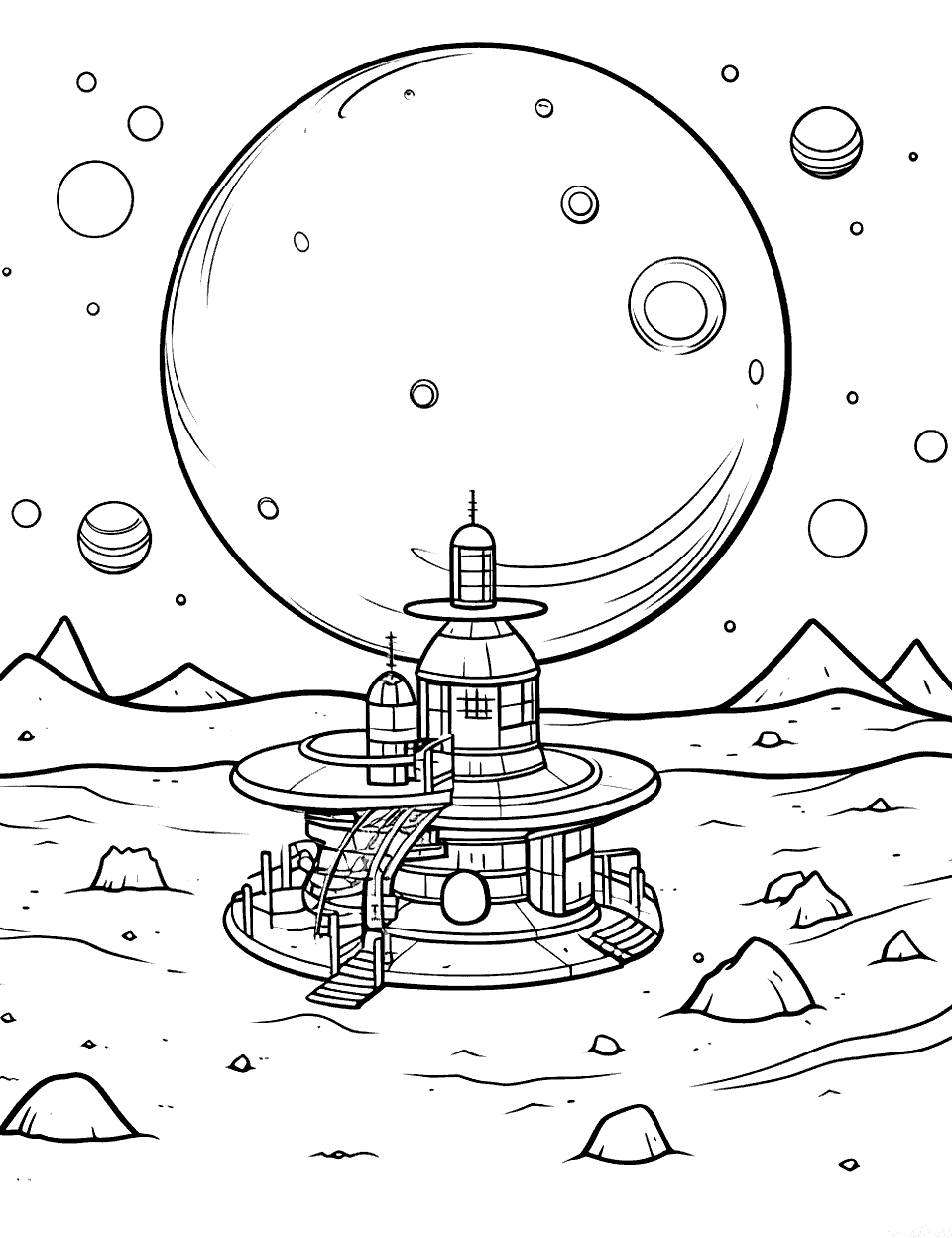
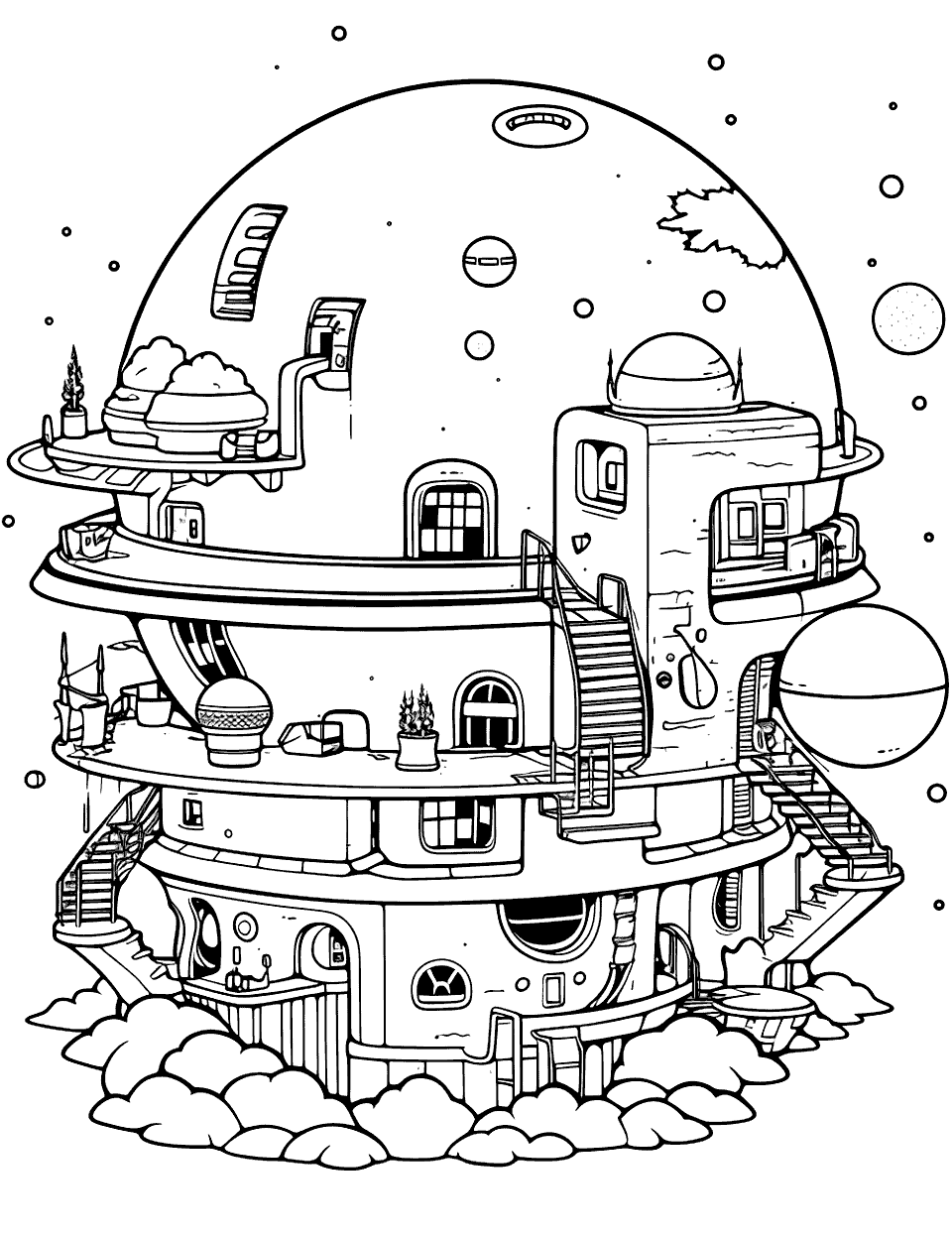
Living in space requires special technology. This futuristic rotating habitat creates artificial gravity so astronauts can live comfortably for long periods.
By using our free coloring pages, you acknowledge and agree to our full disclaimer. All materials are for personal, non-commercial use only and all rights belong to their respective license holders.
Activities to Do With Solar System Coloring Pages
Don’t just let those finished masterpieces gather dust. You can turn coloring time into a full-blown science lesson with these fun, hands-on activities.
Create a DIY Solar System Mobile
This is a classic project that helps kids understand the order of the planets. Have your child color and cut out the sun and all eight planets. Punch a small hole at the top of each one and tie a piece of string or fishing line to it. Attach the strings to a clothes hanger or two crossed sticks. Make sure to hang them in the correct order from the sun: Mercury, Venus, Earth, Mars, Jupiter, Saturn, Uranus, and Neptune.
Glow-in-the-Dark Galaxy Wall
Turn a bedroom ceiling into a planetarium. After your child colors the planets, have them outline the edges or fill in specific craters with glow-in-the-dark puffy paint. Once the paint dries, stick the pages to the wall or ceiling using safe adhesive putty. Turn off the lights, and watch their artwork light up the room!
Planet Fact Flashcards
Combine art with memorization. Print the “Simple Solar System” or individual planet pages at a smaller scale (try 4 pages per sheet in your printer settings). On the back of each cutout planet, help your child write three cool facts, such as “Jupiter is the biggest planet” or “Mars is red.” Use these cards to play quiz games during dinner or car rides.
Space Storyboarding
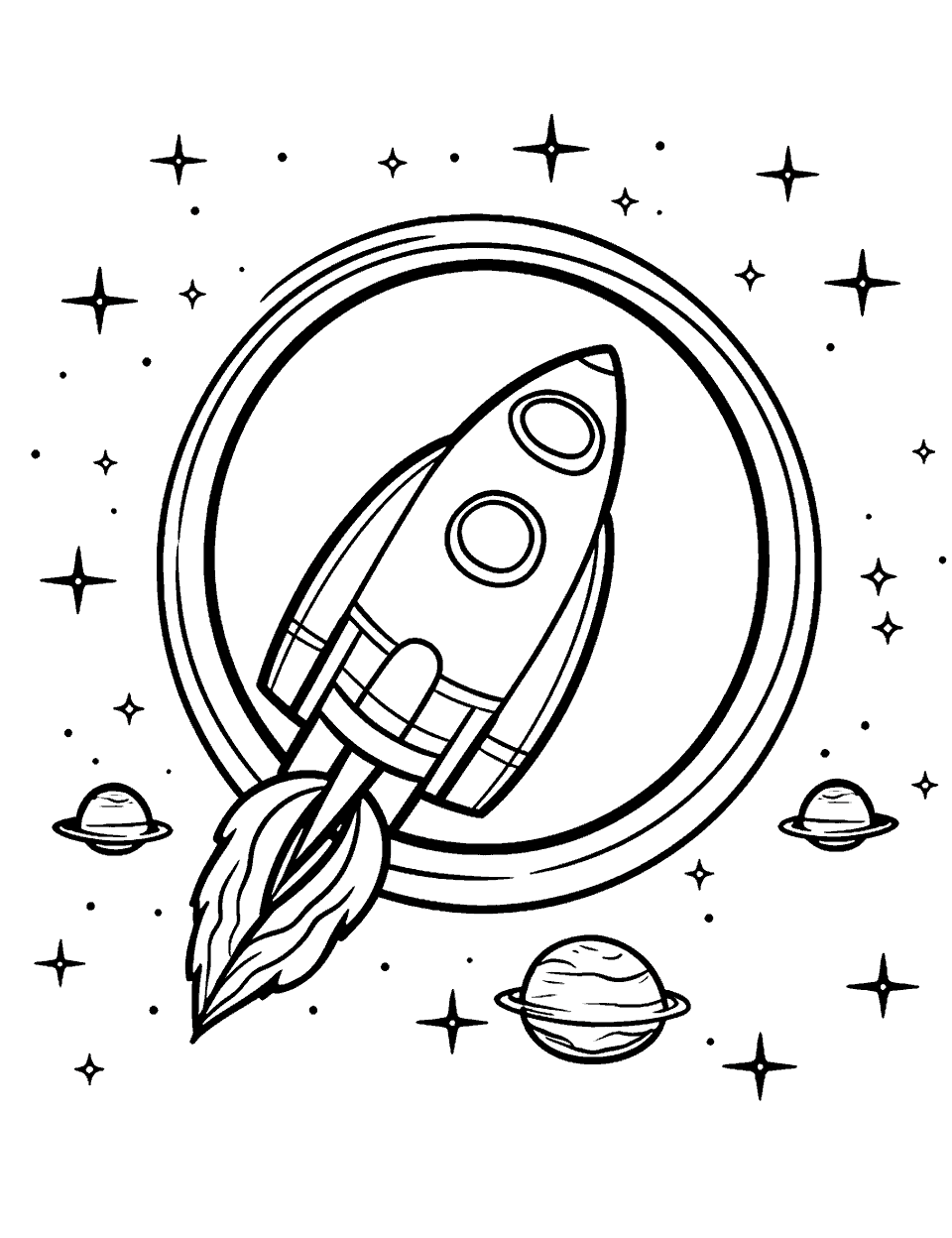
Use the pages featuring astronauts, rockets, and aliens to write a comic book or short story. Lay the coloring pages out on the floor in a sequence to create a timeline. Ask your child to narrate the story of the astronaut traveling from Earth to the alien landscape. This is fantastic for building narrative skills and vocabulary.
The “To Scale” Challenge
Space is big, really big. To teach older kids about distance, take the colored planets outside to a park or a long hallway. Place the Sun at one end. Then, try to pace out the relative distances of the planets. You will quickly realize how close the inner planets are and how incredibly far away Uranus and Neptune sit! It puts the “space” in outer space into perspective.
FAQs
What Is the Correct Order of the Planets?
The order of the planets starting from the sun is Mercury, Venus, Earth, Mars, Jupiter, Saturn, Uranus, and Neptune. A popular mnemonic device to remember this is “My Very Educated Mother Just Served Us Noodles.”
Why Is Pluto No Longer Considered a Planet?
In 2006, the International Astronomical Union reclassified Pluto as a “dwarf planet.” This is because it has not “cleared its neighborhood,” meaning there are many other rocks and debris of similar size in its orbit path.
What Is the Best Way to Color Gas Giants?
Gas giants like Jupiter and Saturn don’t have solid ground; they have swirling clouds. The best way to color them is by blending. Watercolor pencils or soft pastels work great for smudging colors together to create that stormy, gas-like effect.
Are These Coloring Pages Suitable for Preschoolers?
Yes, many of the pages are designed with simple outlines and large shapes, specifically the “Simple Planets” and “Sun with a Face” sheets. These are perfect for toddlers and preschoolers developing fine motor skills.
How Can I Make the Stars on the Page Look Real?
To make stars pop against a black space background, try using a white gel pen or correction fluid (white-out) after you have colored the background dark blue or black. You can also use glitter glue to add a sparkle effect.