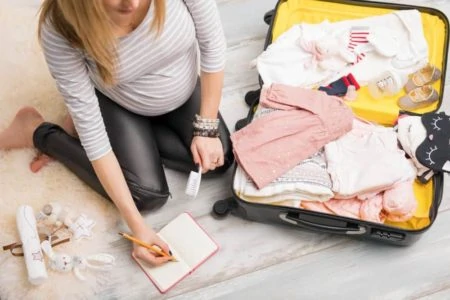
Labor is unpredictable. The last thing you need is to be scrambling for a toothbrush between contractions. Whether you are a minimalist or an over-packer, having your hospital bag ready to go is the ultimate peace of mind.
Our team of experienced moms has collaborated to create this comprehensive list. We know exactly what you need, and what you can leave behind, for you, your partner, and your new arrival.
Use this guide to ensure you are fully prepared when it is time to head to the hospital.
Key Takeaways
- Timing matters: Aim to have your bags packed and staged by the 32-to-35-week mark.
- For Mom: Prioritize ID/insurance, an extra-long phone charger, comfortable nursing-friendly clothes, and postpartum recovery items.
- For Partner: Pack snacks, hydration, a change of clothes, and entertainment for the downtime.
- For Baby: Install the car seat base early and pack a going-home outfit, diapers, and seasonal layers.
When To Pack
Don’t wait for the first contraction to start zip-locking toiletries. Panic packing often leads to forgotten essentials. Since babies often arrive on their own schedule, aim to have your bags packed and ready well before your due date.
A good goal is the 32 to 35-week mark. Even if you hope to make it to full term, being prepared early eliminates unnecessary stress. Once that bag is packed, it can sit in your bedroom or by the door, offering a visual reminder that you are ready for the big day.
We cannot control much during pregnancy, but we can control how prepared we are.
Where To Leave the Bag
Many parents leave their hospital bags at home by the front door. However, keeping it in the trunk of your car is a smart strategy. If you go into labor while running errands or at work, you can head straight to the hospital without making a detour home.
If you have other children and plan to return home to settle them before heading to the hospital, leaving the bag at home works fine.
There is no wrong answer, but if your home is a significant distance from the hospital, keep the bag with you whenever you leave the house during that final month.
Printable Hospital Bag Checklist PDF
Download Hospital Bag Checklist PDF
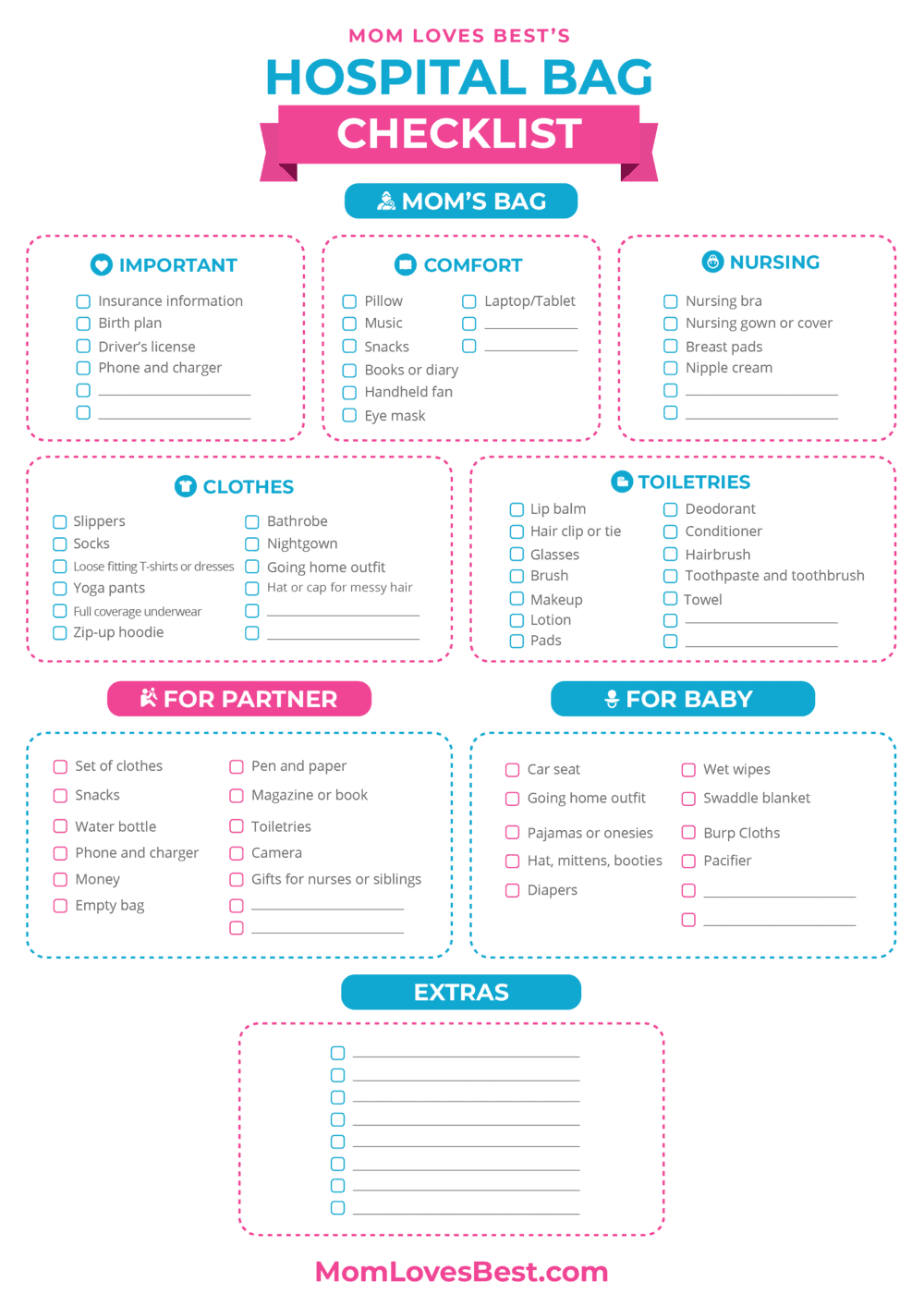
Mom’s Hospital Bag Checklist
Essentials
- ID and Insurance Card: Hospital registration requires a photo ID (driver’s license or passport) and your current medical insurance card.
- Hospital Paperwork and Birth Plan: Bring any pre-registration forms and multiple copies of your birth plan for the nurses and doctors.
- Extra-Long Phone Charger: Hospital outlets are notoriously far from the hospital bed. A 10-foot cable ensures your phone stays charged and within reach.
- Lip Balm: Hospitals have very dry air, and heavy breathing during labor dehydrates your lips quickly.
- Hair Ties or Headband: Keep your hair off your face and neck during labor. You will appreciate not having to brush hair out of your eyes during contractions.
- Glasses and Case: Even if you wear contacts, labor is long and exhausting. You may want to switch to glasses for comfort.
- Non-Slip Socks or Slippers: Hospital floors are cold and slick. Grip socks keep you steady, while slippers offer comfort for hallway walks (1).
- Reusable Water Bottle: Stay hydrated with a bottle that has a straw; it is much easier to sip from while lying down or laboring in different positions.
Non-Essentials
- Massage Tools: A tennis ball or massage roller can provide counter-pressure on your lower back during contractions.
- Portable Speaker/Headphones: Music can be a powerful coping mechanism. Create a playlist that relaxes or motivates you.
- Entertainment: Labor can involve a lot of waiting. Download movies, bring a book, or pack a tablet to pass the time before active labor kicks in.
- Your Own Pillow: Hospital pillows are often flat and covered in plastic. Bringing your own (in a colored pillowcase so it doesn’t get lost) helps you rest better.
- Eye Mask: Hospitals are bright places with blinking lights. An eye mask helps you catch a nap during the day or night.
Mom’s Hospital Bag Checklist for Postpartum
Essentials
- Heavy Flow Pads: The hospital provides bulky pads, but you may prefer a specific brand or thinner, high-absorbency options for postpartum recovery.
- Nursing Bras or Tanks: If you plan to breastfeed, bring comfortable, wire-free nursing bras that offer easy access.
- Toiletries: Pack travel sizes of shampoo, conditioner, body wash, face wash, and deodorant. That first shower after delivery is incredibly refreshing.
- Comfortable Clothing: loose-fitting joggers or pajamas are best. Avoid tight waistbands. A robe is excellent for skin-to-skin time and nursing.
- Going-Home Outfit: You will likely still look about six months pregnant when you leave, so choose loose, soft maternity clothes.
- Nipple Cream: If breastfeeding, nipple cream is vital for preventing soreness in those early days.
Non-Essentials
- Makeup: You certainly don’t need it, but some moms feel more like themselves with a little mascara or concealer for photos.
- Nursing Pillow: While bulky to carry, a nursing pillow can make learning to latch much easier in a hospital bed.
- Shower Sandals: Cheap rubber flip-flops are great for shower hygiene.
- Gifts for Nurses: A small basket of packaged snacks or chocolates is a sweet way to thank the staff taking care of you, though it is never required.
Partner’s Hospital Bag Checklist
Essentials
- Snacks and Hydration: You might not be allowed to eat during labor, but your partner needs fuel. Pack protein bars, jerky, trail mix, and drinks so they don’t have to leave the room.
- Change of Clothes: Labor can last a long time. Fresh clothes, including a clean shirt and comfortable pants, are a must. Layers are key as hospital temperatures fluctuate.
- Toiletries: A toothbrush, toothpaste, deodorant, and face wipes will help your partner feel human after a long night.
- Payment Method: Bring a credit card or cash for the cafeteria, vending machines, and parking fees.
- Button-Down Shirt: If your partner wants to do skin-to-skin with the baby, a button-down shirt makes this easy and accessible.
Non-Essentials
- Pillow and Blanket: The pull-out chair or couch for partners is rarely comfortable. Having their own pillow makes a huge difference in sleep quality.
- Tablet or Laptop: Useful for entertainment during quiet periods or for updating family members.
Baby’s Hospital Bag Checklist
Essentials
- Installed Car Seat: You cannot leave the hospital without one. Ensure the base is properly installed in the car weeks before your due date.
- Going-Home Outfit: Pack two different sizes (newborn and 0-3 months) just in case your baby is bigger or smaller than expected.
- Weather-Appropriate Gear: If it is cold, bring a warm hat and a blanket to tuck over the buckled car seat (never under the straps).
- Pediatrician Contact Info: The hospital will ask for the name and phone number of the doctor who will care for your baby after discharge.
Non-Essentials
- Baby Book: If you want the nurses to stamp your baby’s footprints directly into your memory book, pack it in your bag.
- Photo Props: If you plan to take your own birth announcement photos, bring a cute swaddle, letter board, or name tag.
- Sibling Gifts: Some parents bring a small gift “from the baby” to give to older siblings when they visit, helping to foster a positive initial connection.

FAQs

How Long Do You Stay In Hospital After Birth?
The length of your hospital stay depends on the type of delivery and recovery. Typically, you can expect to stay 24 to 48 hours for a routine vaginal birth. For a C-section, the stay is usually longer, averaging 2 to 4 days to ensure proper incision healing.

What Should I Wear to the Hospital For Labor?
Wear loose, comfortable clothing that is easy to change out of. A maxi dress or large T-shirt and sweatpants are great options. Once admitted, many women switch to the hospital gown for convenience, but you can bring your own labor gown if you prefer something softer.

What Should You Not Pack In Your Hospital Bag?
Leave valuables like expensive jewelry, large amounts of cash, and non-essential electronics at home. Hospitals can be chaotic, and you don’t want to worry about losing precious items. Also, avoid bringing too many diapers or wipes; the hospital provides these for your stay.

Do I Need to Bring Formula to the Hospital?
Generally, no. Hospitals provide formula if you choose to formula feed or if supplementation is medically necessary. However, if you have a specific brand preference or your baby requires a specialized formula, you can bring your own ready-to-feed bottles.

Do I Need to Bring My Breast Pump to the Hospital?
Most hospitals provide hospital-grade pumps for use during your stay. However, bringing your own breast pump can be helpful if you want the lactation consultant to teach you how to use your specific model before you go home.

How Much Colostrum Should You Bring to Hospital?
If you have been antenatally expressing and freezing colostrum, bring what you have collected in a cooler bag. Ask your midwife or doctor beforehand about storage facilities at the hospital. This is especially helpful if you have gestational diabetes or a planned C-section.
Should I Wash Baby Clothes Before Packing Them?
Yes, you should wash all baby clothes before packing them for the hospital. Newborn skin is extremely sensitive, and washing removes any chemical residues, dust, or irritants from the manufacturing process. Use a gentle, fragrance-free detergent.