Finding the right breast pump often feels like a high-stakes guessing game. What works miracles for your best friend might feel like a medieval torture device to you.
We’ve tested the market’s leading options, analyzed real mom feedback, and put these pumps through the wringer to find the ones that actually deliver. Whether you need a heavy-duty workhorse for exclusive pumping, a silent wearable for the office, or a simple manual tool for relief, we have identified the top performers.
Here is how to find the perfect match for your lifestyle and your milk supply.
- Battery-operated or power cord
- Expresses milk quickly and comfortably
- Closed system
- Strong suction feature
- Includes cooler and ice packs
- Easy to find Replacement parts
- Small and compact
- Monitors feeding patterns
- Double pump extracts high volumes
- Good price for double electric pump
- Portable
- Variable suction speeds
- 10 massage and expression settings
- Backlit screen for nighttime
- Fits in your palm
- Keep your hands free
- Tracks volume and pumping history
- Battery lasts for five sessions
- Affordable
- Can be sterilized in microwave
- Soft massage cushion
Types of Breast Pumps
Breast pumps generally fall into two camps: single and double. Single pumps tackle one breast at a time, while double pumps handle both simultaneously. Double pumps are usually more expensive, but they save you significant time and often stimulate better milk production.
Beyond that, you will find three specific categories:
Manual Breast Pumps
These units operate without electricity. You provide the power by squeezing a handle or lever to create suction.
Pros
- Manual pumps are silent, lightweight, and extremely portable.
Cons
- Suction is weaker, meaning you get less milk for more physical effort.
Personal Electric Pumps
These are the most common pumps for daily use. They use a motor to generate strong, consistent suction and usually plug into a wall or use a battery.
Pros
- Features often include digital screens, timers, customizable suction cycles, and nightlights.
Cons
- They are heavier, noisier, and cost significantly more than manual options.
Hospital Grade Pumps
These are the heavy-duty powerhouses of the pumping world. Designed for multiple users (with personal accessory kits), they feature powerful motors capable of initiating and maintaining milk supply for moms who pump 8 or more times daily (1). Because they cost thousands of dollars, most moms rent them rather than buy them.
Pros
- Closed systems: Barriers prevent milk from ever entering the motor, making them safe for multiple users.
Cons
- Bulky and very expensive to purchase outright.
How to Choose a Breast Pump
Your lifestyle dictates your pump choice. A stay-at-home mom occasionally leaving the baby for yoga has different needs than a working mom pumping three times a day in a corporate cubicle.
Consider these factors before adding anything to your registry:

Cost
Budgets vary, but be wary of going too cheap. Inexpensive motors often die quickly or lose suction, forcing you to buy a replacement anyway.
Most reliable pumps sit between $30 for manuals and $300 for high-end electrics. While it feels like an investment, it is usually cheaper than a year of formula (2). Also, always check your insurance; many plans cover a pump fully.

Milk Volume
If you have an oversupply or need to pump exclusively, you need a machine built for heavy usage.
Occasional pumps, or manual ones, are fine for relieving pressure or skipping one feed. However, if you are replacing multiple feeds a day, you need the durability of a double electric pump to maintain your supply (3).

Single or Double
Pumping is a labor of love, but it is also a chore. If you want to cut your time attached to the machine in half, a double pump is non-negotiable.

Portability
If you are returning to work or travel frequently, lugging a giant machine is a nightmare. Look for compact options with rechargeable batteries. If you mostly pump at home, a larger unit that requires a wall outlet might be fine.

Ease of Cleaning
Some pumps have five parts per bottle; others have two. When you are washing pump parts at 2 a.m., those extra pieces matter. Look for pumps with fewer nooks and crannies to scrub.

Adjustable Suction
Nipples are sensitive, and your comfort levels will change. A pump with a single suction setting is a recipe for pain. You need a unit with adjustable vacuum strength and cycle speed to mimic how a baby nurses: fast at first to trigger flow, then slower and deeper.

Power Source
Being tethered to a wall outlet limits where you can sit. Built-in rechargeable batteries offer the most freedom. If you choose a plug-in model, consider getting a car adapter or a manual backup pump for emergencies or power outages.
Product Reviews
We evaluated suction power, comfort, portability, and noise levels to bring you these top 15 recommendations.
Spectra S1 & S2 Breast Pumps
Best Electric Breast Pumps
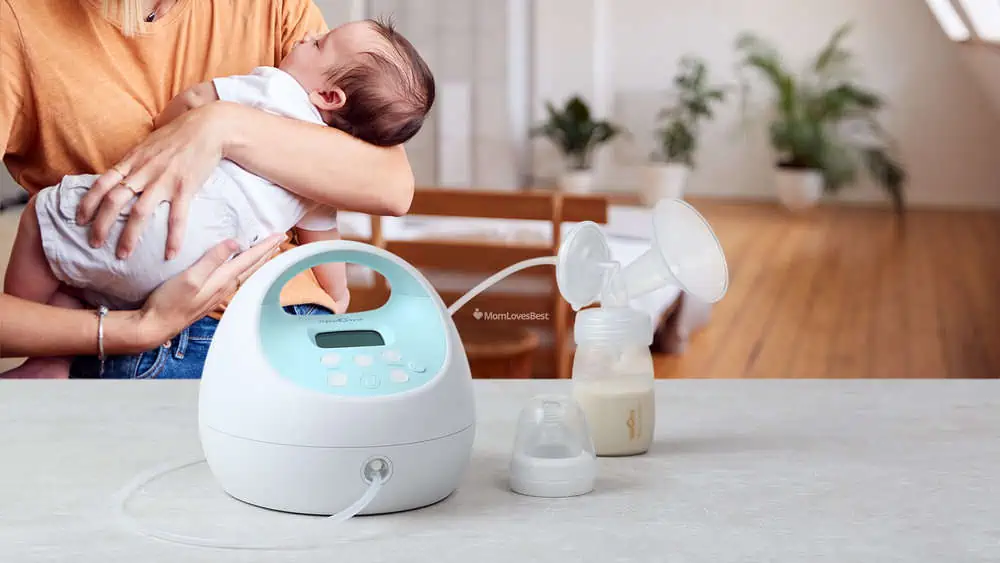
The Spectra S1 (blue) and Spectra S2 (pink) are essentially the same machine, with one key difference: the battery.
The Blue S1 has a built-in rechargeable battery, giving you the freedom to pump without hunting for an outlet. The Pink S2 must stay plugged into the wall. If you can spare the extra cash, the S1’s mobility is a game-changer for exclusive pumpers.
Both units are closed systems, meaning milk cannot backflow into the motor, keeping things hygienic. They feature a “massage mode” to trigger letdown and allow you to adjust the cycle speed and vacuum strength independently. This lets you tailor the suction to exactly what feels right for your body that day.
At just over 3 pounds, they aren’t the smallest pumps, but the integrated handle makes them easy to move. The nightlight is a thoughtful touch for middle-of-the-night sessions, and the motor is quiet enough that you won’t wake the baby.
The Spectra purrs like a kitten and feels so close to nursing your baby. I cannot recommend it enough. I used a different highly recommended pump for my first, and used the Spectra S2 for my second, and what a difference! So much more comfortable and effective. I only wish I had the S1 for the battery portability!

Editor's Note:
Katelyn Holt RN, BSN, BC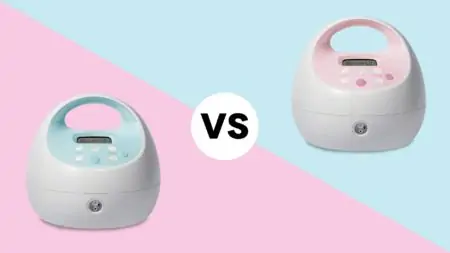
Pros
- Versatile: S1 works on battery; S2 is plug-in only.
- Discreet: Extremely quiet operation.
- Hygienic: Closed system prevents mold and bacteria growth in the motor.
- Effective: Highly adjustable settings empty the breast efficiently.
Cons
- Tubing: Can slip off the pump if you move around too much.
- Vibration: The unit vibrates slightly during use, which some moms find annoying.
Our Ratings
Medela Freestyle Flex Breast Pump
Best Hands-Free Breast Pump
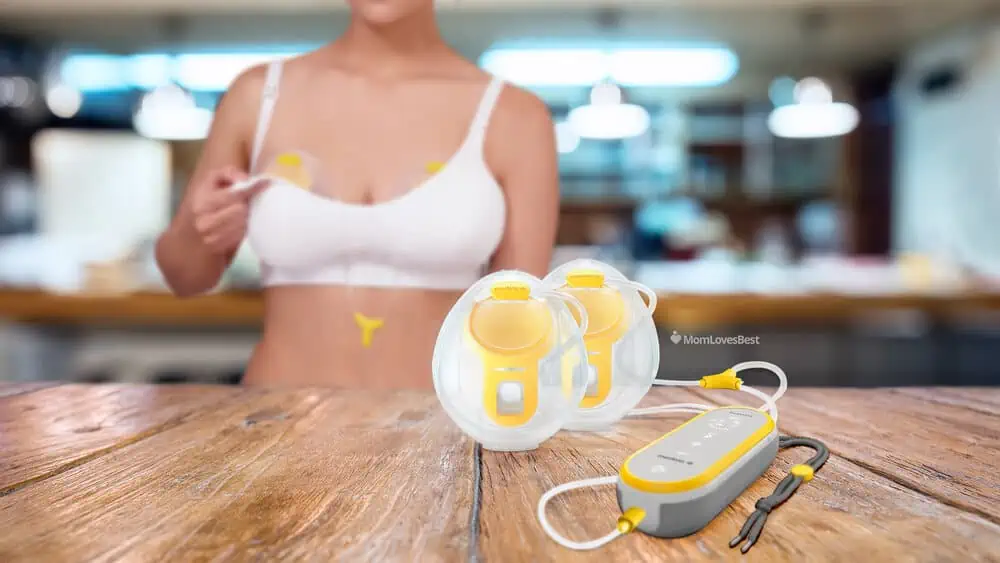
This pump is designed for life in motion. The motor unit is compact enough to slide into a pocket, and the USB-rechargeable battery frees you from the wall outlet.
Medela uses “PersonalFit Flex” breast shields with this model. They have a soft rim and an oval shape that you can rotate to find the best fit for your breast shape. This small design change can significantly improve comfort and milk flow compared to standard hard plastic flanges.
It connects to the MyMedela app, allowing you to automatically track pumping sessions. While it is small, it still features Medela’s signature 2-Phase Expression technology, which alternates between fast and slow rhythms to mimic a nursing baby.
Pros
- Portable: Lightweight unit fits in your palm or pocket.
- Smart: Connects to an app for easy tracking.
- Comfortable: Oval flanges adapt better to breast shapes than round ones.
- Efficient: Double pumping capability saves time.
Cons
- Battery Life: Lasts about two hours, requiring frequent charging if you pump exclusively.
- Suction: While good, it may not be as robust as a larger hospital-grade unit.
Our Ratings
Medela Pump in Style Advanced Breast Pump
Best Breast Pump for Large Breasts & Twins

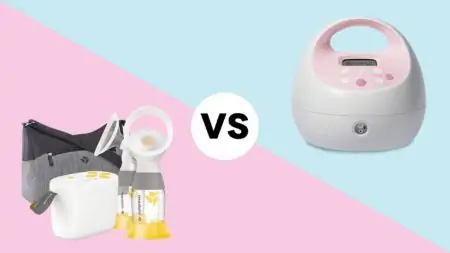
The “PISA” (Pump In Style Advanced) is a classic workhorse in the pumping community. It is often favored by moms with large breasts or twins because of its reliability and the wide availability of flange sizes.
This kit comes built into a tote bag, making it a grab-and-go solution. It includes a cooler bag and ice pack, which is essential for working moms transporting milk home. The suction is strong and consistent, helping to maintain supply even when demand is high.
While newer models have hit the market, this unit remains a favorite for its straightforward durability. It includes 24mm and 27mm flanges, but Medela makes a wide range of sizes you can buy separately if you need a custom fit.
Pros
- Strong Suction: Reliable performance for maintaining supply.
- All-in-One: Comes with a tote and cooler for immediate portability.
- Parts Availability: You can find spare valves and membranes at almost any big-box store.
Cons
- Heavy: The motor is built into the bag, making it bulkier than modern portable pumps.
- Open System: Moisture can technically enter the tubing, so you must keep an eye on hygiene.
Our Ratings
Medela Sonata Smart Double Electric Breast Pump
Best Breast Pump with App
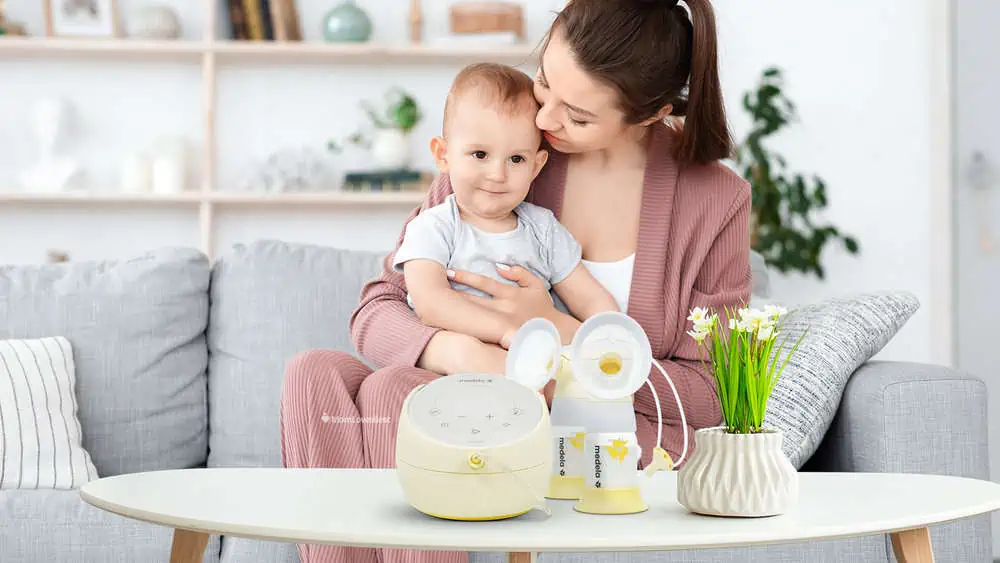
The Sonata acts as a personal lactation assistant. It connects to the MyMedela app to track baby’s growth and your pumping output effortlessly.
It features two different pumping rhythms to change up the stimulation, and the lithium-ion battery means you aren’t stuck sitting by a wall socket. A neat feature is the “quiet” design; it is significantly more discreet than the older Pump in Style models.
Many moms report excellent output with the Sonata, crediting its strong suction and comfortable breast shields. It is a closed system, so hygiene is easy to maintain. However, high-tech features come with a higher price tag.
Pros
- Quiet: Engineered to be much quieter than standard electric pumps.
- Smart: App integration helps you monitor supply trends.
- Efficient: Double pumping with hospital-level performance.
Cons
- Price: It is a significant investment.
- Reliability: Some users have reported error codes or technical glitches over time.
Our Ratings
Bellababy Double Electric Breast Pump
Best Breast Pump for Working Moms
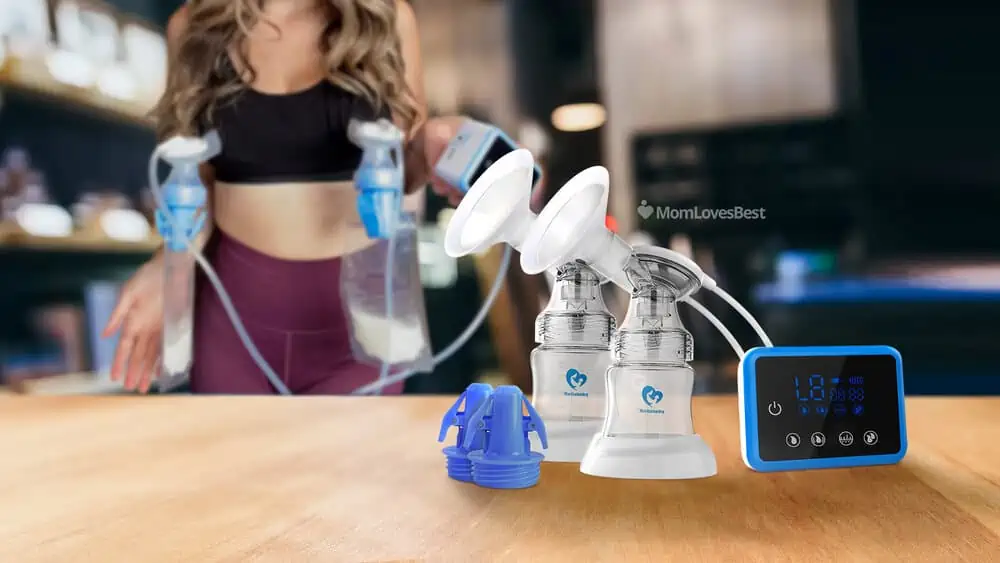
The Bellababy is a budget-friendly favorite that punches above its weight class. It is compact, has a sensitive touch panel, and doesn’t require an outlet, making it perfect for pumping in a car or a cramped office lactation room.
It features independent controls, meaning you can adjust the suction for the left and right breasts separately. This is brilliant for moms who have a “slacker boob” that produces less milk or is more sensitive than the other.
While it is a closed system with strong suction, be aware that it can be a bit aggressive. You will want to start on the lowest settings and work your way up.
Pros
- Value: Excellent features for a lower price point.
- Customizable: Independent controls for left and right sides.
- Portable: Great battery life for travel or work.
- Closed System: Sanitary and easy to clean.
Cons
- Accessories: Does not include a carrying bag.
- Sensitivity: The touch screen can be overly sensitive to accidental bumps.
Our Ratings
Motif Portable Double Electric Breast Pump
Best Breast Pump for Travel
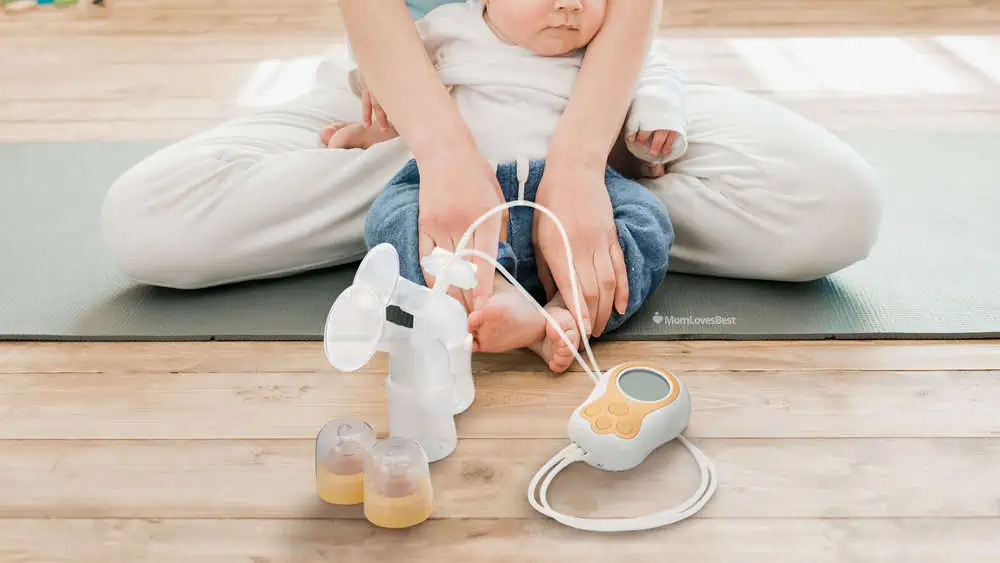
Weighing less than half a pound, the Motif Duo is built for vacations and road trips. It is tiny enough to slip into a purse, yet it still manages to be a double electric pump.
It features a memory function that saves your preferred settings, so you don’t have to fiddle with buttons every time you sit down to pump. With 10 expression and massage levels, you have plenty of room to find a comfortable rhythm.
The motor is quiet and the screen is backlit, making it easy to use in a dim hotel room or on a plane without disturbing others.
Pros
- Tiny: One of the most compact motors available.
- Memory: Remembers your settings for a faster start.
- Quiet: Discreet enough for travel.
Cons
- Parts: Replacement valves and tubing can be harder to find in local stores.
- Power fade: Suction may decrease slightly as the battery drains.
Our Ratings
Medela Symphony Breast Pump
Best Hospital Grade Breast Pump
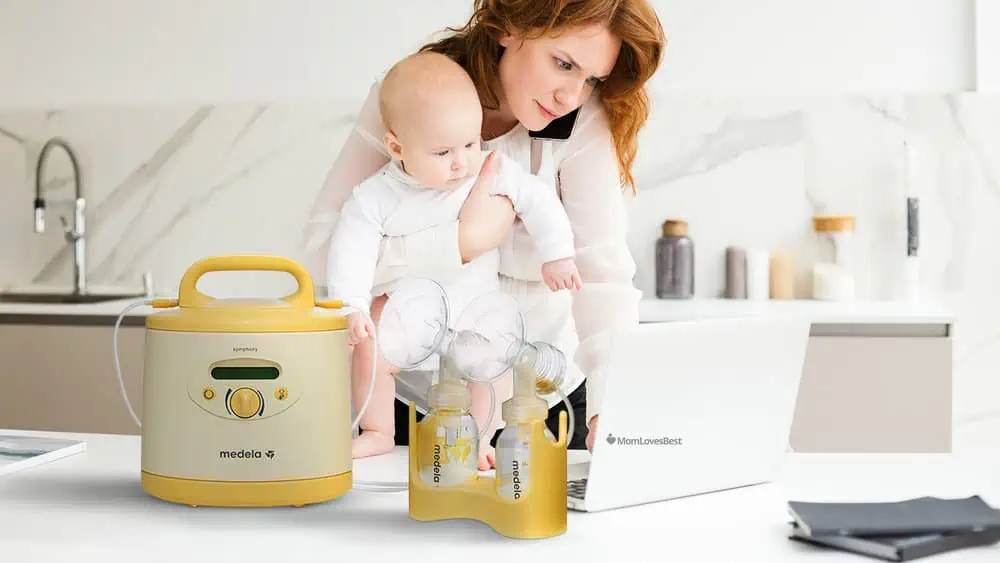
Buying a Symphony is rare due to the price; renting one is the norm. It is designed for multi-user safety and extreme durability.
The 2-Phase Expression technology on this machine is incredibly smooth and efficient. If standard consumer pumps aren’t emptying you, or if you are trying to induce lactation, this is the pump lactation consultants usually recommend.
It is bulky and heavy, so it is not a pump you want to carry back and forth to work. However, for a dedicated pumping station at home, it is unbeatable in terms of power and longevity.
Pros
- Durability: Built to run all day, every day, for years.
- Efficiency: Specifically designed to initiate and build milk supply.
- Hygiene: True closed system safe for rental use.
Cons
- Cost: Prohibitively expensive to buy; monthly rental fees add up.
- Bulk: Heavy and not portable.
Our Ratings
Willow Wearable Breast Pump
Best Wearable Breast Pump
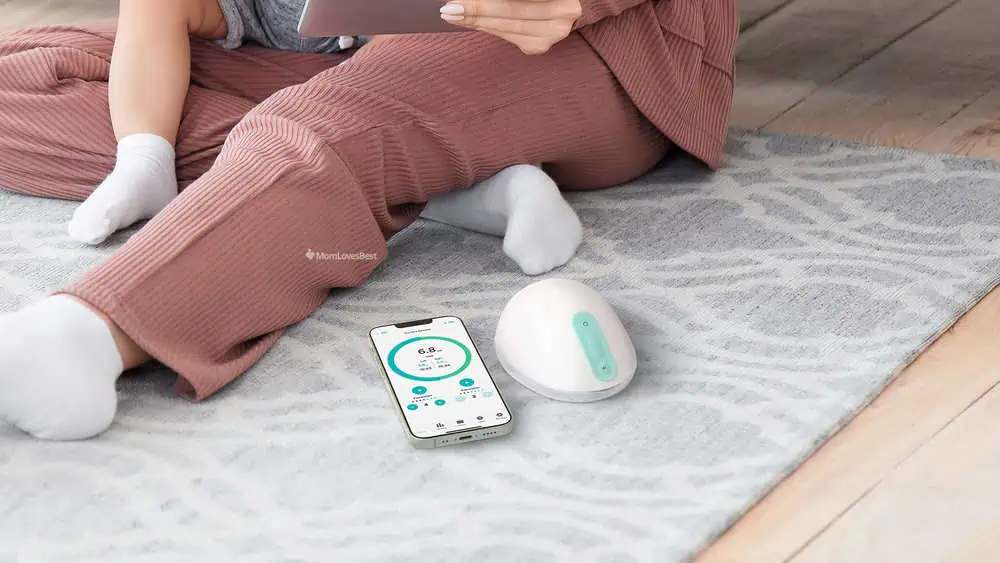
The Willow is unique because it offers true 360-degree mobility. Unlike other wearables that might leak if you bend over, the Willow can pump directly into spill-proof bags, allowing you to lie down or chase a toddler without making a mess.
Everything fits inside your bra, with no external tubes or hanging bottles. It is discreet enough to wear during a Zoom call or while driving. You can also buy a reusable container if you prefer not to buy disposable bags constantly.
It connects to an app to track volume, though some users find the volume sensors can be finicky. The suction is strong, which some moms love and others find a bit intense.
Pros
- Leak-proof: The only pump that lets you pump while bending over or lying down (when using bags).
- Discreet: Fits entirely inside the bra.
- Smart: App tracks your volume automatically.
Cons
- Cost: The pump is expensive, and the proprietary bags are an ongoing cost.
- Learning Curve: Learning to align the nipple correctly takes practice.
- Cleaning: The reusable container is tricky to clean thoroughly.
Our Ratings
Medela Harmony Manual Breast Pump
Best Manual Breast Pump
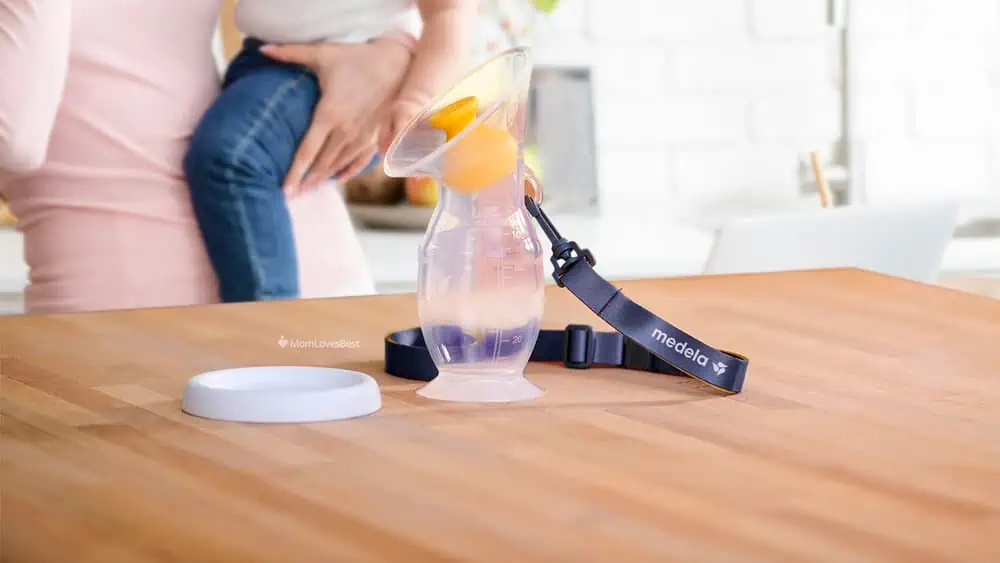
Every mom should have a manual pump in her glovebox or diaper bag, and the Medela Harmony is the best of the bunch. It is affordable, effective, and reliable.
The handle swivels, allowing you to use the shorter end for rapid stimulation and the longer end for deeper expression. This mimics the 2-phase technology of their electric pumps but gives you total control over the speed and intensity.
It is perfect for relieving engorgement, pumping discreetly in a bathroom stall, or finishing a pumping session to ensure you are fully empty. Plus, it is completely silent.
Pros
- Affordable: A cheap backup that works great.
- Silent: No motor noise whatsoever.
- Control: You determine the speed and suction with your hand.
Cons
- Effort: Your hand will get tired if you try to pump a full bottle.
- Parts: O-rings can wear out over time, reducing suction.
Our Ratings
Philips Avent Manual Comfort Breast Pump
Best Portable Breast Pump
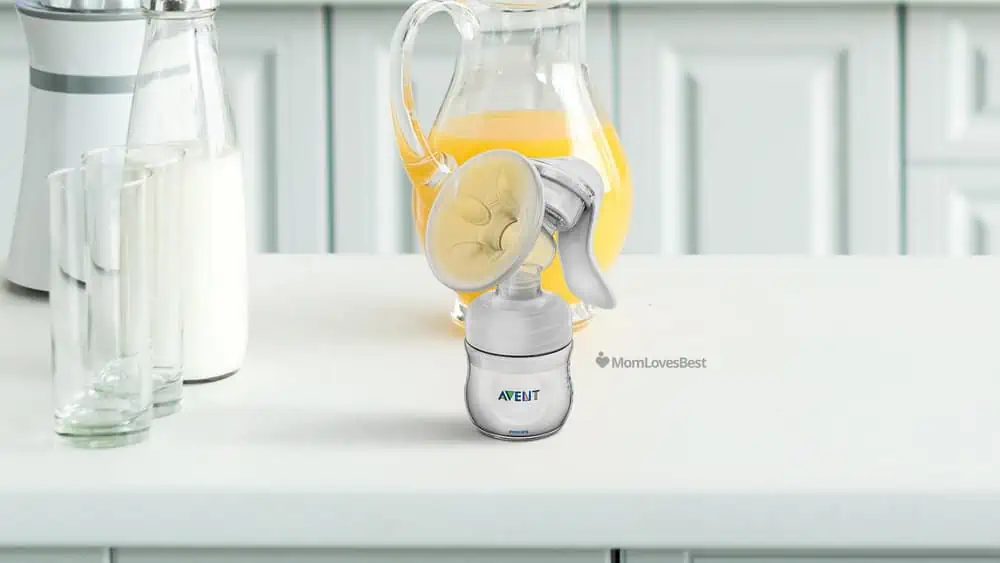
This pump features a unique design that allows milk to flow directly into the bottle even when you are sitting up straight. This saves your back from the dreaded “hunch” required by other pumps.
The flange includes a soft massage cushion with “petals” intended to stimulate milk flow gently. It is compact and compatible with the entire Philips Avent line of bottles and storage cups.
While it is great for comfort, getting a strong seal sometimes requires pressing it firmly against the breast, which takes some getting used to.
Pros
- Ergonomic: Lets you sit back comfortably while pumping.
- Comfort: Soft silicone massage cushion feels gentle on the skin.
Cons
- Noise: The handle can develop a squeak over time.
- Suction: Relies on a tight seal that can be tricky to maintain.
Our Ratings
Haakaa Silicone Manual Breast Pump
Best Milk Catcher Breast Pump

This is a one-piece silicone suction cup that attaches to your breast. You suction it onto one side while your baby nurses on the other. It catches the “letdown” milk that usually drips into a nursing pad.
It is completely silent, requires no hands, and has no moving parts. Many moms are shocked to find they collect 2 or 3 ounces effortlessly during a feed. It is also great for relieving clogged ducts by filling it with warm water and Epsom salts and suctioning it to the breast.
Just be careful: because it has no base, it tips over easily. There is nothing worse than crying over spilled milk!
Pros
- Simple: No cords, batteries, or assembly required.
- Passive: Collects milk while you do nothing.
- Cheap: Very inexpensive way to build a freezer stash.
Cons
- Not a full pump: It won’t empty your breast effectively on its own.
- Measurement: The ounce markings are often inaccurate.
Our Ratings
Freemie Liberty II Breast Pump
Hands-Free Runner Up
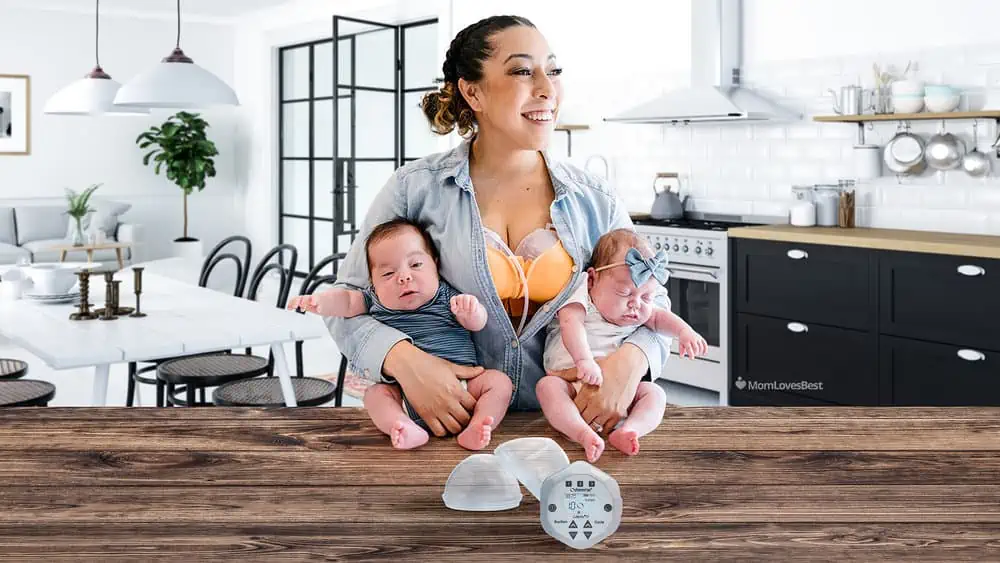
The Freemie system uses collection cups that sit inside your regular bra, connected by tubes to a small motor you clip to your waist. This lets you pump with your shirt on and your hands free.
The cups hold a generous 8 ounces each, making them great for moms with a large supply. The external motor is powerful and programmable, offering a bit more “oomph” than some all-in-one wearable pumps.
It is not as subtle as the Elvie, as you still have tubing running under your shirt, but it is a highly effective way to multitask.
Pros
- Capacity: Holds large volumes of milk (8oz per cup).
- Hands-Free: Cups fit in your bra so you can work or drive.
- Versatile: Programmable timer and sleep timer.
Cons
- Fit: Can be bulky for large-chested women.
- Tubing: You still have to deal with tubes connecting the cups to the motor.
Our Ratings
Philips Avent Single Electric Breast Pump
Best Single Electric Pump
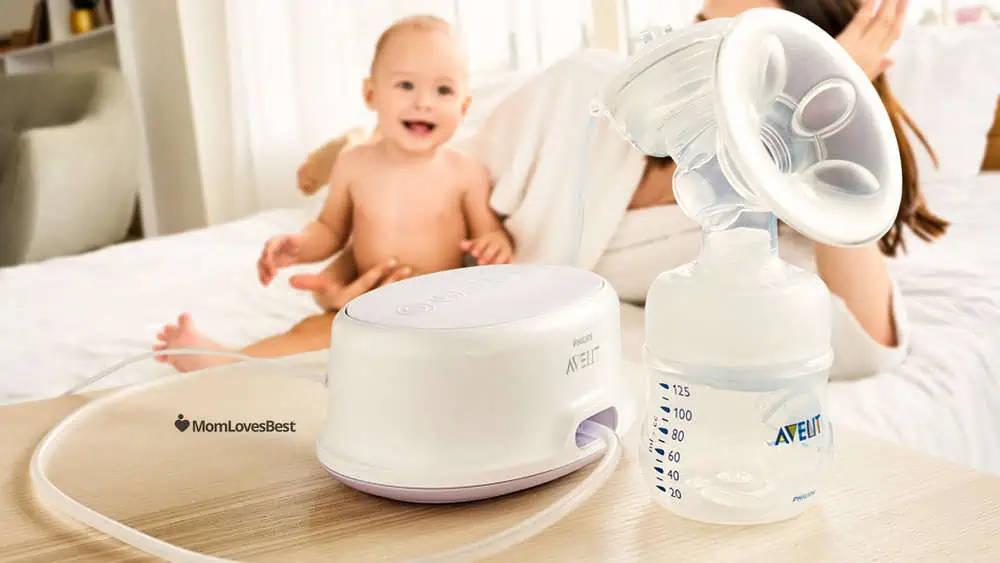
If you don’t pump often enough to justify a double pump but want something easier than a manual, this single electric option strikes a good balance.
It features the same comfortable, soft massage cushion as the manual version. It automatically starts in a gentle stimulation mode and then lets you choose from three pumping settings.
Because it is a single pump, it takes twice as long to pump both sides, but it is lightweight and easy to toss in a bag for occasional use.
Pros
- Comfort: Very gentle on sore nipples.
- Compact: Easy to transport.
- Simple: Intuitive design is easy to assemble and clean.
Cons
- Slow: Single pumping takes double the time.
- Durability: Not designed for heavy, daily exclusive pumping.
Our Ratings
Elvie Pump Double Silent Wearable Breast Pump
Best Bag-Free Wearable Pump
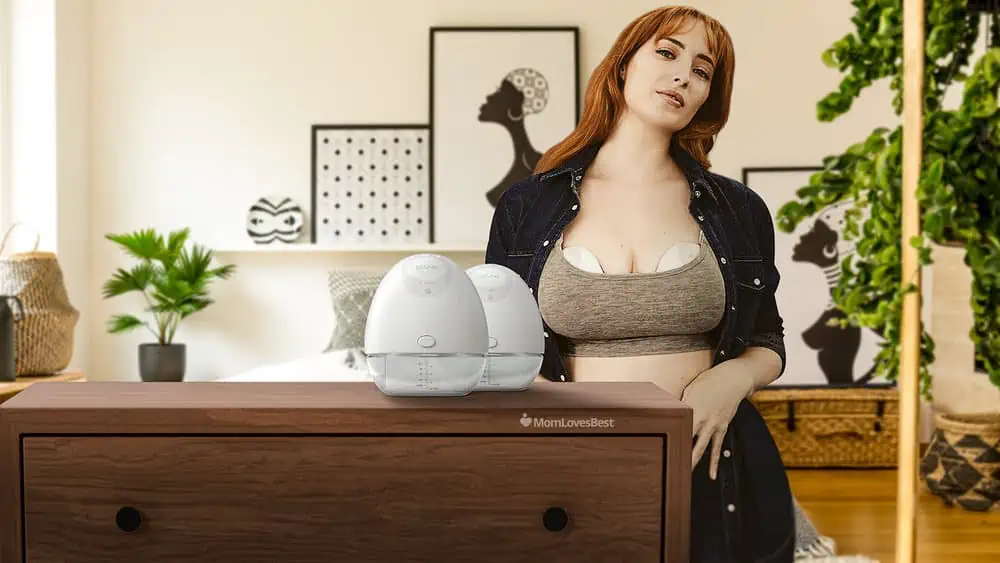
The Elvie is the sleekest, quietest pump on the market. It fits entirely inside your bra and is practically silent, meaning you could pump during a conference call and no one would know.
Unlike the Willow, the Elvie uses reusable bottles that click into the pump, so you don’t have to buy bags. It stops automatically when the bottle is full to prevent overflow.
It connects to a slick app that controls the pump and tracks volume. While it is incredibly convenient, the suction is generally gentler than a hospital-grade wall pump, so it may take longer to empty fully.
Pros
- Silent: Truly discreet operation.
- Cost-saving: Reusable bottles mean no recurring cost for bags.
- Wearable: No tubes or wires.
Cons
- Size: It adds significant bulk to your chest silhouette.
- Suction: Can be finicky to align; if the sensor gets wet, it stops working temporarily.
Our Ratings
Lansinoh Signature Pro Double Pump
Most Affordable Electric Pump

This pump is a reliable, closed-system unit that offers three different pumping styles and eight suction levels. It is flexible, works on batteries or AC power, and comes with soft-rimmed flanges.
A major plus is that Lansinoh bottles are widely available and affordable. The pump is compatible with their “pump into bag” system, letting you pump directly into storage bags to save cleanup time.
It is a bit louder than the Spectra or Elvie, and the vibration can be distinct, but for the price point, it is an excellent value for moms who need a reliable daily pumper.
Pros
- Value: Great features for the price.
- Hygienic: Closed system prevents milk backup.
- Comfort: Soft flanges are included.
Cons
- Suction: Gentler than some heavy-duty pumps, which might not work for everyone.
- Noise: Noticeably louder than premium models.
Our Ratings
Do I Need a Breast Pump?
Technically, no. You can hand express or exclusively nurse. But realistically? A pump is a freedom machine.
Even if you plan to be a stay-at-home mom, life happens. You might want a date night, you might need to take antibiotics, or you might just want to sleep for more than three hours while your partner takes a feeding shift.
If you are returning to work, a pump is non-negotiable. It is your modern-day wet nurse, allowing you to maintain your supply and provide breast milk even when you are miles away from your baby.
Think of the breast pump as your backup plan. Even if you want to nurse directly, having a stash of milk in the freezer reduces anxiety. If you get sick or have an emergency, your baby is covered.
Editor's Note:
Katelyn Holt RN, BSN, BCOpen System vs. Closed System
You will hear these terms a lot. Here is the breakdown:
Closed System: These pumps have a barrier (usually a membrane or diaphragm) between the collection kit and the motor. Milk cannot get into the tubing or the pump itself. This is hygienic and prevents mold.
Open System: These have no barrier. Milk vapor or condensation can theoretically enter the tubing. If you use an open system, you need to clean the tubing if you see moisture and never share the pump with others.
Breast Pump Accessories You Might Need
The pump is just the engine; you need tires to drive the car.
Spare Parts: Valves and membranes wear out. If your pump suddenly loses suction, 90% of the time, replacing these tiny silicone parts fixes it. Keep a stash on hand (4).
Hands-Free Bra: Do not sit there holding bottles for 20 minutes. A pumping bra holds the flanges in place so you can scroll your phone, work, or eat.
Storage: You will need milk bags for the freezer and bottles for the fridge. If you commute, a good cooler bag with dedicated ice packs is essential.
Breast Pump FAQs

What is the Most Highly Rated Breast Pump?
The Spectra S1 and Medela Pump in Style are consistently the highest-rated pumps by moms.
The Spectra S1 is loved for its quiet motor, rechargeable battery, and customizable vibration settings. The Medela Pump in Style is praised for its durability and widespread availability of parts.

What Breast Pumps Do Hospitals Recommend?
Hospitals almost universally use and recommend the Medela Symphony.
This hospital-grade rental pump is designed to initiate milk supply effectively, making it ideal for mothers of premature babies or those struggling with low supply.

Is Renting a Hospital-Grade Pump Worth It?
Renting is worth it if you are struggling to establish a supply or have a baby in the NICU. The powerful motors in hospital-grade pumps are more effective at stimulating milk production than standard personal pumps.
Once your supply is established (usually after a few months), most moms transition to a personal electric pump.

Which Breast Pump Has the Strongest Suction?
The Spectra S1 and the Medela Symphony are known for having the strongest, most efficient suction.
However, stronger isn’t always better. You want a pump that balances strength with comfort to avoid damaging nipple tissue.

Which Breast Pump is Less Painful?
Pumps with soft silicone flanges, like the Philips Avent or the newer Medela Flex shields, tend to be less painful.
The Medela Harmony manual pump allows you to control the exact pressure, which is helpful if you are very sensitive.

How Long Do Most Breast Pumps Last?
A personal electric breast pump motor is usually rated for 300 to 500 hours of use, which translates to about one year of exclusive pumping.
Disposable parts like valves, membranes, and tubing need to be replaced much more frequently, every 4 to 8 weeks, to maintain suction.

How Do I Know What Size Flange to Use?
Your flange size is based on the diameter of your nipple, not your breast size. The tunnel should fit your nipple closely without rubbing against the sides, but not so tight that it chafes.
Measure your nipple base (excluding the areola) in millimeters and add 3-4mm to find your size. Using the wrong size is the number one cause of pumping pain.