Let’s be honest: getting a preschooler to sit still for a “lesson” is nearly impossible. The best way for kids this age to learn is through play. But with thousands of boxes labeled “educational” on the shelves, it is hard to tell which ones actually teach skills and which ones are just noise machines.
We dug through the clutter to find toys that strike the perfect balance between learning and fun. We wanted tools that encourage critical thinking, motor skills, and creativity without feeling like homework.
Whether you want to spark an interest in STEM or just need five minutes of peace while they build a tower, this list has you covered.
- 360 degrees of mobility
- 3 exciting game modes
- 2 light-up buttons
- STEM-supported toy
- Comes in easy-to-carry box
- BPA-, lead- & phthalate-free
- Encourages teamwork
- Colorful game board
- Develops critical skills
- 484 pieces
- Compatible with other Lego sets
- Improve creativity & imagination
- High-quality set
- Act and think like a real chemist
- 15-page activity guide
- Action-packed game
- Colorful educational cards
- Develops cognitive skills
Interactive vs. Educational: What is the Difference?
Many people use “interactive” and “educational” as synonyms, but they mean different things. It helps to know the difference when shopping for your child’s development.
Interactive toys react to your child. They might light up, make sounds, or give instructions. These teach cause and effect, but they often guide the play experience heavily.
Educational toys focus on teaching a specific skill, but they aren’t always high-tech. A simple set of wooden blocks is educational because it teaches physics, balance, and geometry, but it isn’t interactive.
Why Educational Toys Are Important
Play is the primary job of a preschooler. Here is how the right toys support their growth:
- Cognitive development: Puzzles and games boost logic, pattern recognition, and problem-solving skills. They teach kids that actions have consequences.
- Motor skills: Handling small pieces, stacking blocks, or pressing buttons refines both fine and gross motor coordination.
- Social skills: Board games and role-play sets teach sharing, taking turns, and reading emotional cues.
- Language acquisition: Toys that involve storytelling, reading, or singing help expand vocabulary and sentence structure.
- Creativity and confidence: Open-ended toys allow children to build worlds from scratch, which boosts self-esteem and imagination.
How To Choose The Right Toy
Preschoolers are curious, but their attention spans are short. You need a toy that grabs them immediately but offers enough depth to keep them coming back.
Consider these factors before buying:
- Open-ended vs. Close-ended: Close-ended toys (like puzzles) have a clear solution. Open-ended toys (like blocks or art supplies) can be used differently every time. A healthy toy box needs a mix of both.
- Durability: Preschoolers play hard. Look for solid wood or high-quality ABS plastic that can survive being thrown or stepped on.
- Skill level: The toy should challenge them slightly but not frustrate them. If it is too hard, they will give up; if it is too easy, they will get bored.
Product Reviews
We tested top-rated options to find the most engaging, durable, and truly educational toys for your preschooler.
Gears! Gears! Gears! Building Set
Fascinating for STEM Learning

This set is a fantastic introduction to engineering and mechanics. Unlike standard blocks that just stack, these pieces interlock to create moving systems. You arrange the gears, attach the handle, and watch the whole structure spin.
It encourages logic and problem-solving because if one gear isn’t placed correctly, the chain reaction stops. The bright colors keep kids engaged, and the physical motion is satisfying to watch.
The set includes 116 pieces, so the building possibilities are vast. However, parents should know that cleaning up that many pieces takes time, and the bucket fills up fast.
Kidzlane Color Matching Egg Set
Top of the Class
Plastic eggs might seem simple, but this set is a powerhouse for toddler and preschool development. On the outside, they look like regular eggs in a carton. Inside, each egg reveals a specific color and a corresponding number of pegs (1 through 12).
Your child learns counting, color recognition, and matching skills all at once. They have to orient the egg halves correctly to snap them back together, which builds fine motor dexterity.
Kids love the element of surprise when cracking them open. While the carton is sturdy, the hinge can wear down over time with heavy use.
Teach and Tag Movi
Teacher’s Pet
Movi is an active robot that gets kids off the couch. Instead of a screen they stare at, Movi rolls around the room and encourages preschoolers to move, dance, and follow directions.
He offers six different games focused on listening skills, animal sounds, and basic movements. For example, he might say, “Green Light!” for them to run or ask them to act like a specific animal. This builds gross motor skills and helps burn off energy indoors.
He requires a hard, flat surface to roll effectively, so he won’t work well on thick carpets.
Smarkids Building Blocks
Dad Will Love This
If your child loves tinkering, this construction set is a step up from standard stacking blocks. It includes nuts, bolts, wheels, and wrenches, allowing kids to build robots, cars, and animals.
This type of play is excellent for fine motor development because twisting a nut onto a bolt requires precise hand-eye coordination. It also teaches patience and planning.
The pieces are BPA-free and sturdy. Just be warned: with 160 pieces, you will want a dedicated storage bin to keep them from taking over your living room floor.
Busytown Eye Found It! Game
Fun for the Family

Board games are often too complex for preschoolers, but “Eye Found It!” hits the sweet spot. The game board is massive, over 6 feet long, which immediately excites little ones.
The goal is to race to Picnic Island by finding hidden objects on the board, like “buckets” or “fire hydrants.” It promotes teamwork rather than competition, as everyone wins or loses together. This creates a positive social environment and reduces tantrums.
You need a large floor space to play this, so clear the area before you open the box.
LEGO Classic Brick Box
Ol’ Reliable

Lego remains the gold standard for open-ended play. This medium creative box gives kids nearly 500 pieces to build whatever they can imagine, from cars to castles.
Unlike themed sets that only build one thing, this box encourages pure creativity. It helps children understand structure, balance, and geometry naturally. The included windows, eyes, and wheels add personality to their creations.
The only downside is the universal parenting truth: stepping on a Lego brick hurts. We recommend a designated play mat for easy cleanup.
My First Microscope
Expertly Designed

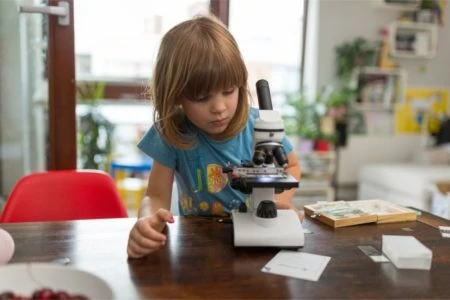
Real microscopes are frustrating for preschoolers because they require closing one eye and focusing carefully. This version solves that with two large eyepieces and a simplified focus knob.
It offers 8x magnification, which is perfect for looking at rocks, leaves, coins, or fabric. It features a built-in LED light to illuminate the object. This toy encourages scientific observation and gets kids interested in the details of the world around them.
It does not zoom in as close as a “real” lab tool, but it is exactly right for a 3-year-old’s capabilities.
My First Chemistry Kit
Geeky and Great

If your child asks “why” constantly, this kit gives them hands-on answers. It provides the tools and safe powders to conduct real experiments, like making goop or color-changing liquids.
This introduces the scientific method: guessing what will happen, testing it, and observing the result. It is a fantastic bonding activity since adult supervision is required.
The set includes Petri dishes, pipettes, and measuring spoons. You will need to supply some household staples like flour or vinegar to complete the experiments.
VTech Little Apps Tablet
Modern and Portable

Kids always want to play with your phone, so this tablet is a great decoy that actually teaches them something. It features a color-changing screen and a piano keyboard.
The 12 learning activities cover letters, counting, number order, and matching. It is particularly good for travel or waiting rooms since it is self-contained.
The volume control is a lifesaver for parents. While it doesn’t have a touch screen like an iPad (it uses buttons), it is durable enough to survive being dropped, which most real tablets can’t claim.
Kingwora Forest Animals Matching Game
Firm Favorite
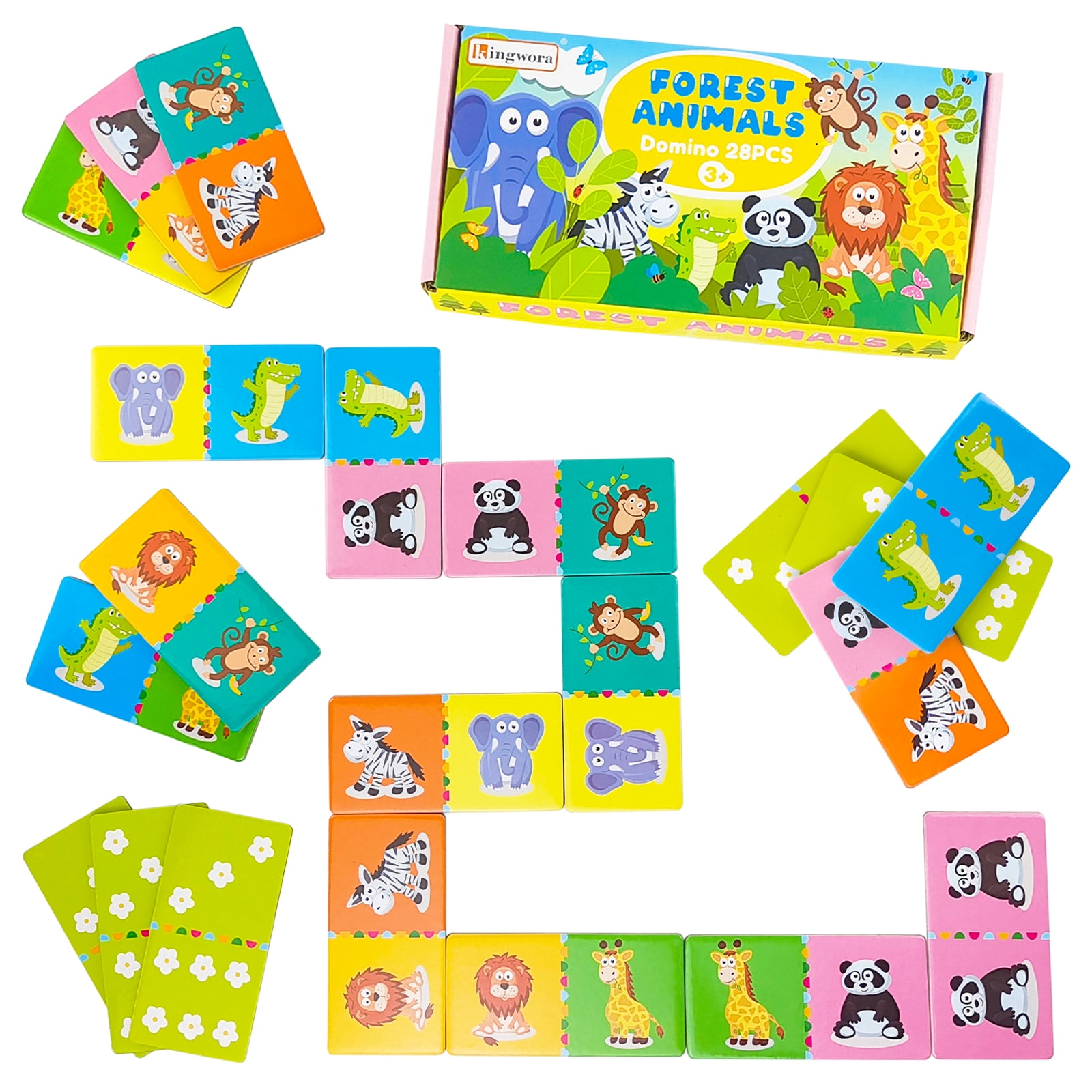
This is a versatile puzzle game that adapts to different ages. It works like dominoes but uses cute forest animals instead of dots, making it accessible for kids who can’t count high numbers yet.
It builds visual recognition and strategic thinking. You can play it as a speed game where players race to find a match, or slow it down for turn-taking practice.
The pieces are thick cardboard, so they hold up well to grabby hands. It is compact and easy to pack for trips to the grandparents’ house.
Match It! Spelling
School Worthy

These self-correcting puzzles make learning to spell frustration-free. Each word (like “cat” or “frog”) is broken into puzzle pieces. The pieces only fit together if the spelling is correct.
This gives children immediate feedback without a parent having to hover and correct them. It covers three-letter and four-letter words, making it a great bridge to reading.
The bright illustrations help link the word to the object. Once your child masters these specific words, the replay value drops, but it is an excellent starter tool.
Robo Alive Crawling Spider
Unconventional & Great Fun

This toy leans heavily into the “fun” side of educational play. It is a realistic robotic spider that scuttles across the floor. While it might startle you, it fascinates curious kids.
It provides a safe way to observe how arachnids move without the danger of a real bite. Parents can use it as a prop to talk about nature, biology, and why we respect wildlife.
It isn’t programmable, so the interaction is limited to turning it on and watching it go. However, it sparks imaginative play and reaction skills.
Design & Drill Robot
It’s Robot Time

This toy combines the fun of a robot with the satisfaction of using tools. Kids use a kid-safe plastic screwdriver to attach colorful bolts to the robot’s body.
This is pure fine motor skill training. Lining up the screwdriver and turning it strengthens the hand muscles needed for writing later on. It also allows for creative expression since they can arrange the bolt colors however they like.
Once built, the robot has movable arms and wheels. The bolts are small, so keep them away from younger siblings who might still mouth objects.
Spelly Straws
Simple but Brilliant
Sometimes the best learning happens during snack time. These connector pieces let you build a straw structure that spells out words or names.
It makes drinking water or milk exciting and encourages letter recognition in a low-pressure environment. The set comes with 44 pieces, including varied connector shapes to handle curves and joins.
They are dishwasher safe, which is a huge plus. Just be aware that creating long words requires a lot of suction power to drink through!
VTech Touch and Learn Desk
Attention Keeper

This activity desk acts as a command center for learning. It includes interactive activity cards that slide into the desktop, covering topics like human anatomy, animals, and numbers.
It converts into an easel and a chalkboard, giving kids a vertical surface for art. Vertical drawing is actually great for wrist development and shoulder stability.
The LED display teaches stroke order for writing letters. It takes up a bit of floor space, but since it serves multiple functions (desk, easel, music player), it is worth the footprint.
VTech Touch & Teach Word Book
Classic and Effective

This book bridges the gap between paper books and tablets. The pages are touch-sensitive, so when your child presses a picture, the book speaks the word or plays a sound.
It introduces over 100 words across everyday categories like food, home, and pets. This auditory reinforcement helps children connect printed images with spoken language.
It is durable and chunky, making it easy for small hands to carry. The “Find It” quiz mode adds a gamified element that tests their memory.
Qurious Space STEM Flashcard Game
Designed by Moms
Flashcards can be boring, but this set turns them into a fast-paced game. The double-sided cards feature real NASA imagery, making them visually stunning and accurate.
You can play four different games with the deck, ranging from simple matching to trivia. It is a great way to expand a child’s vocabulary with words like “galaxy,” “orbit,” and “telescope.”
The compact tin makes it perfect for restaurants or travel. While the concepts are advanced, the gameplay is simple enough for preschoolers to enjoy with help.
FAQs

What Activities Help a Baby’s Brain Grow Intellectually?
Activities that help a baby’s brain grow include reading aloud, engaging in back-and-forth conversation, playing with sensory textures, exploring new environments, and providing open-ended toys that stimulate curiosity and problem-solving.

What Toys Can Help a Child’s Cognitive Development?
Toys that aid cognitive development include puzzles, building blocks, shape sorters, and memory games because they force the brain to recognize patterns, plan ahead, and understand cause and effect.

What Age is Most Crucial For Brain Development?
The first three years of life are considered the most crucial for brain development because this is when the brain forms neural connections faster than at any other time, establishing the foundation for learning and behavior.

What Toys Help With Social Skills?
Board games, dolls, and role-play sets (like kitchens or toolbenches) help social skills by encouraging children to cooperate, negotiate roles, practice empathy, and take turns with peers.

What Toys Promote Physical Development?
Ride-on cars, climbing structures, balls, and tunnels promote physical development by engaging gross motor skills like balance, coordination, and strength.

How are Montessori Toys Different?
Montessori toys are typically made from natural materials (like wood), focus on one specific skill at a time, and are grounded in reality rather than fantasy to encourage focused, independent learning.

How Many Toys Should a Preschooler Have?
There is no set number, but fewer toys often lead to better play; having too many options can overwhelm a child, so rotating a small selection of 5 to 10 toys at a time encourages deeper engagement and creativity.
Are Battery-Operated Toys Bad for Development?
Battery-operated toys are not inherently bad, but they should be balanced with non-electronic toys because passive entertainment limits imagination, whereas manual toys force the child to do the “work” of play.