Winter brings shorter days, colder nights, and the need for serious preparation. While we might miss the summer sun, shopping for tiny winter gear is surprisingly fun.
However, keeping a baby warm involves more than just picking the cutest sweater. You need breathable fabrics, safe layers, and practical designs that make diaper changes easy.
We curated a list of the best baby winter clothes for every climate. We skipped the scratchy fabrics and bulky items that restrict movement. Instead, we focused on cozy, functional, and adorable options recommended by parents. Here is everything you need to keep your little one toasty until spring arrives.
- Ribbed cuff sleeves
- Cozy hood and footed one-piece suit
- Quilted chevron padded pram with sherpa lining
- Carefully sized for baby
- 100% organic GOTS certified cotton
- High-quality breathable fabric
- Expandable shoulders
- Trusted Carter's quality
- Strong nickel-free snaps
- Pearlized button front closure
- Comfortable, snuggly, and safe fabric
- Soft, 100% cotton material
- Polyester microfleece
- Front zipper for easy changes
- Soft, safe, and flame resistant textile
- Stretchy microfleece fabric
- Naturally water resistant
- Extra snuggly
- Waterproof poncho sole
- 100% satisfaction guarantee
- Soft-soled bottom
How to Choose Baby Clothes for Winter
Before you stock up on adorable knitwear, you need to know what actually works. Here are the key factors to consider when buying winter gear for your baby.
Materials and Layering
Your baby needs to stay warm without overheating. The right fabric makes all the difference. Keep these material tips in mind:
- Base layers need breathability: Cotton or cotton blends are ideal for the layer touching your baby’s skin because they wick away moisture.
- Outer layers need insulation: Quilted polyester or fleece works best for snowsuits, buntings, and jackets to trap heat.
- Nighttime needs safety: Microfleece is excellent for keeping your baby warm at night without the bulk of heavy blankets.
Features to Look For
Babies require frequent changing, and winter layers can complicate that process. If you have a drooler or a baby prone to diaper blowouts, you need clothes that come off quickly. Look for these convenient features:
- Expandable necklines: Stretchy shoulders allow you to pull shirts down fast rather than struggling over your baby’s head.
- Smart fasteners: Snaps, zippers, and magnetic closures at the crotch prevent you from having to undress your baby completely for a diaper change.
Features to Avoid
Safety and comfort are your top priorities. Some cute items create hazards or frustration. Avoid these specific design elements:
- Neck accessories: Scarves pose a strangulation risk. Use a turtleneck or a bib style with snaps to protect the neck area instead.
- Excessive decoration: Large bows, loose buttons, and rhinestones can irritate skin or become choking hazards if they detach.
Product Reviews
We analyzed warmth, durability, and ease of use to find the best gear for the cold season. Here are our top picks for keeping your baby cozy.
The North Face Reversible Jacket
Best Baby Winter Jacket
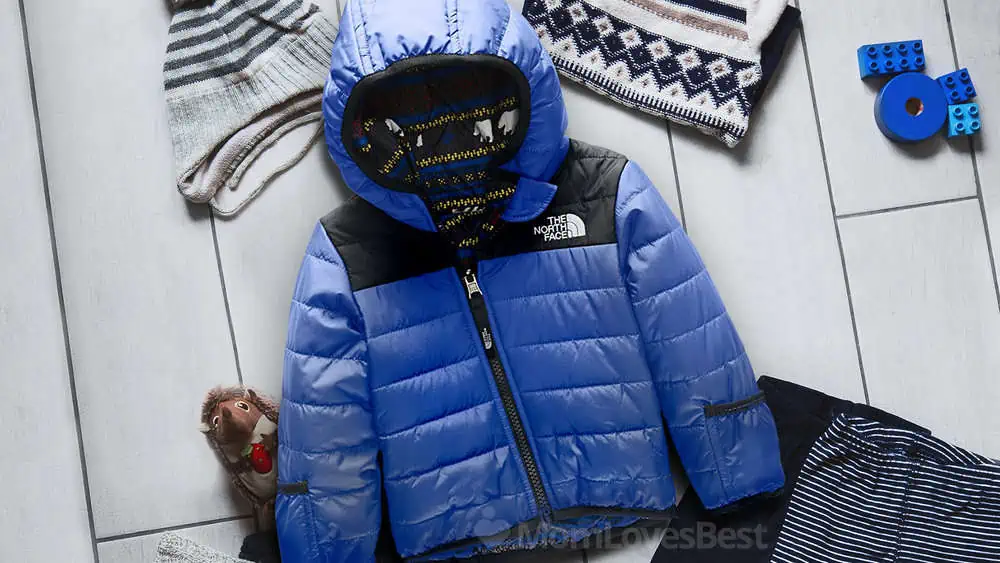
A full snowsuit isn’t always practical for quick errands. The North Face Reversible Jacket offers warmth without the restriction of a full suit. It features a lightweight polyester build with a durable water-repellent finish, perfect for guarding against snow and rain.
We love the fold-over cuffs, which eliminate the need for separate mittens that often get lost. The jacket is fully reversible, giving you a solid color on one side and a print on the other. It is an excellent choice for parents who want a high-quality coat that works in car seats (when properly adjusted) better than bulky puffers.
Urban Republic Quilted Fleece Pram Snowsuit
Best Baby Winter Snowsuit
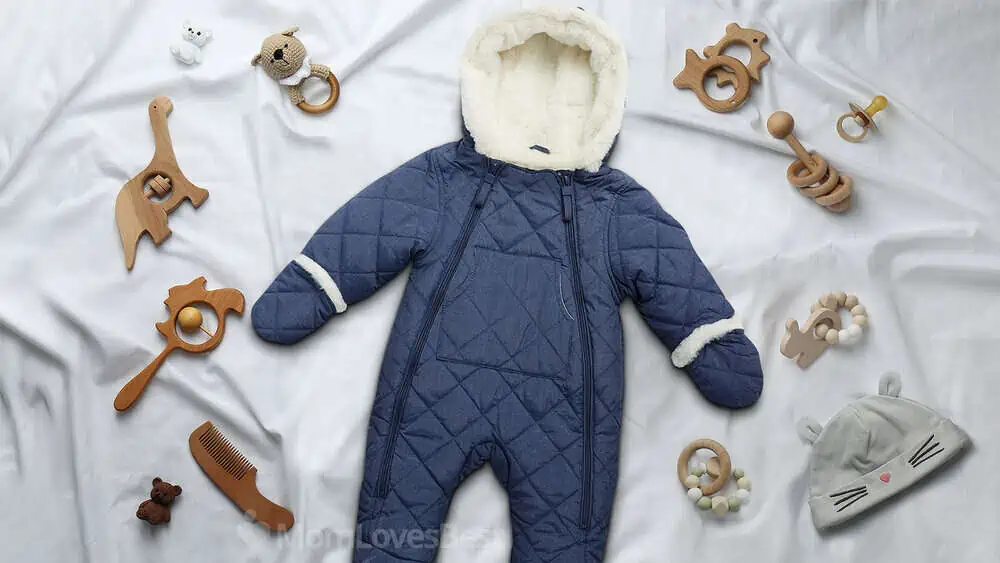
When temperatures drop, you need a heavy-duty layer for outdoor adventures. This Urban Republic snowsuit features a quilted exterior and a plush Sherpa lining to trap body heat effectively.
The design focuses on parent convenience. The zipper extends down both legs, allowing for diaper changes without exposing your baby’s entire body to the cold. Ribbed cuffs seal out drafts, and the Sherpa-lined hood adds extra protection for the head and ears. It is also fully machine washable, which is a must for winter gear that tends to get muddy or wet.
Burt's Bees Wearable Blanket
Best Baby Winter Sleepwear
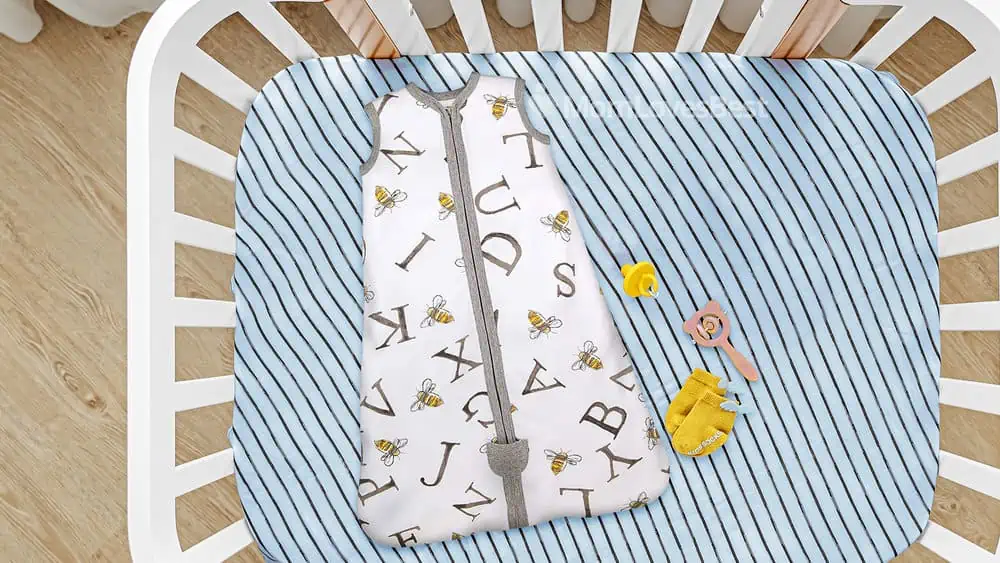
Loose blankets in a crib are a safety hazard, so a wearable blanket is essential for chilly nights. Burt’s Bees offers a GOTS-certified organic cotton option that is breathable yet warm.
This sleep sack has a TOG rating suitable for standard room temperatures, preventing overheating while keeping drafts away. The high-quality zipper includes an interior guard to prevent snagging or chafing against delicate skin. It unzips from the bottom, allowing you to change a diaper in the middle of the night while keeping your baby’s chest warm.
Simple Joys by Carter's Long-Sleeve Bodysuit
Best Baby Winter Bodysuit
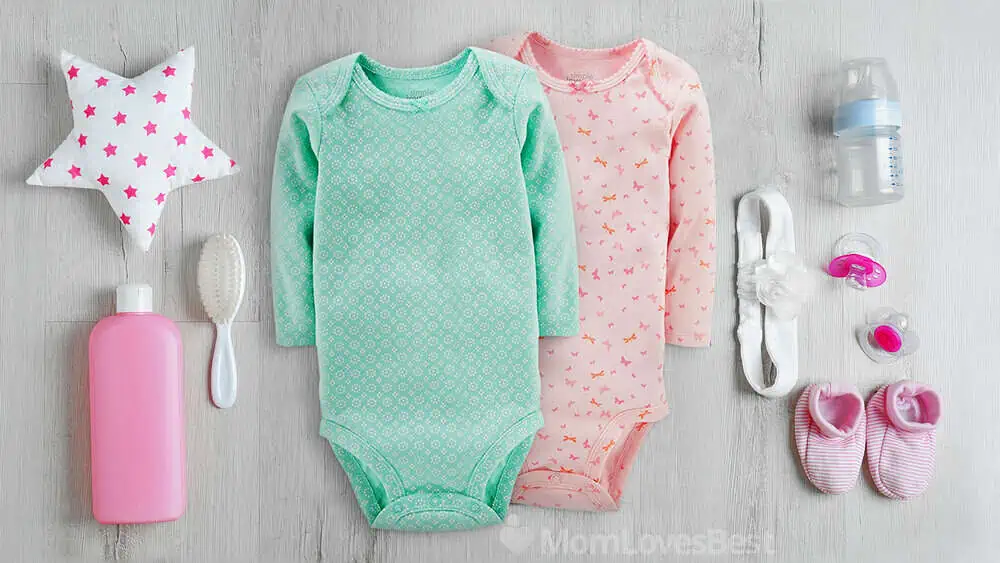
Long-sleeve bodysuits are the foundation of any winter wardrobe. You can use them as a base layer under sweaters or wear them alone with pants in milder weather.
This set from Carter’s includes five bodysuits made from 100% cotton. The fabric is soft and breathable, reducing the risk of your baby getting clammy under heavy layers. The expandable shoulders make them easy to slide off in the event of a blowout, and the reinforced snaps at the crotch withstand constant use. They are durable, affordable staples that wash well without shrinking.
Little Me Unisex Newborn Sweater
Best Baby Winter Sweater
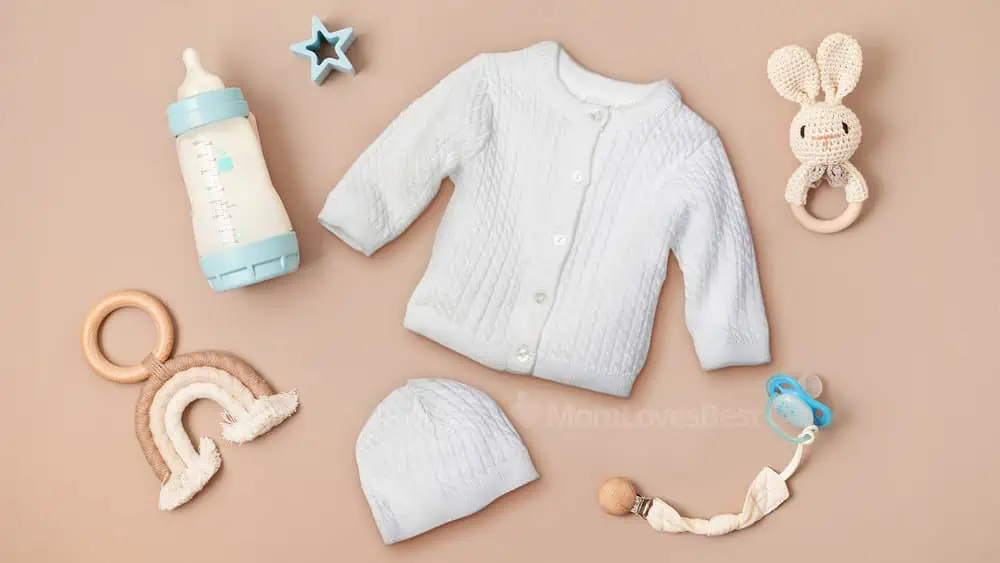
Sweaters are perfect for those in-between days when a coat is too much but a shirt isn’t enough. This Little Me set combines classic style with pure cotton comfort.
The set includes a sweater and a matching hat with an adorable knitted design. Unlike wool, which can be itchy, this cotton knit is soft against sensitive skin. The pearlized buttons add a touch of class, making this a great option for holiday photos or family gatherings. The cuffs are ribbed to help keep sleeves in place on active little arms.
Gerber Baby Boys' Blanket Sleeper
Best Baby Winter Pajamas
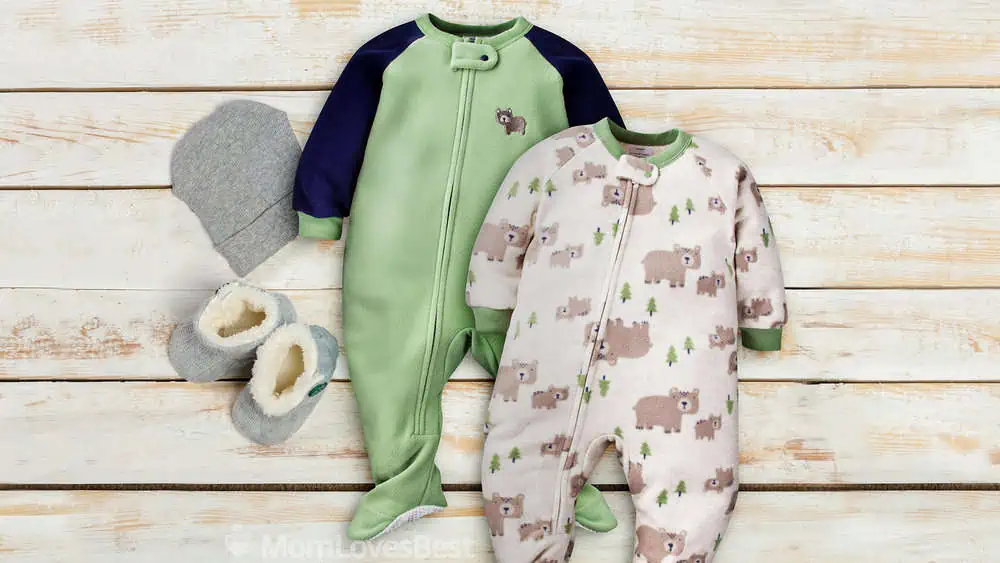
Safety guidelines advise against loose bedding, so your baby’s pajamas need to do the heavy lifting. These Gerber blanket sleepers are made from microfleece, which is flame-resistant and incredibly warm.
In most homes, this sleeper provides enough warmth without needing additional layers underneath. The zipper runs from the neck down to the ankle for easy access. We appreciate the tab at the neck that covers the zipper pull to protect your baby’s chin. While this listing features boy-centric colors, Gerber offers plenty of options for girls as well.
Zutano Unisex Cozie Fleece Bootie
Best Baby Winter Booties
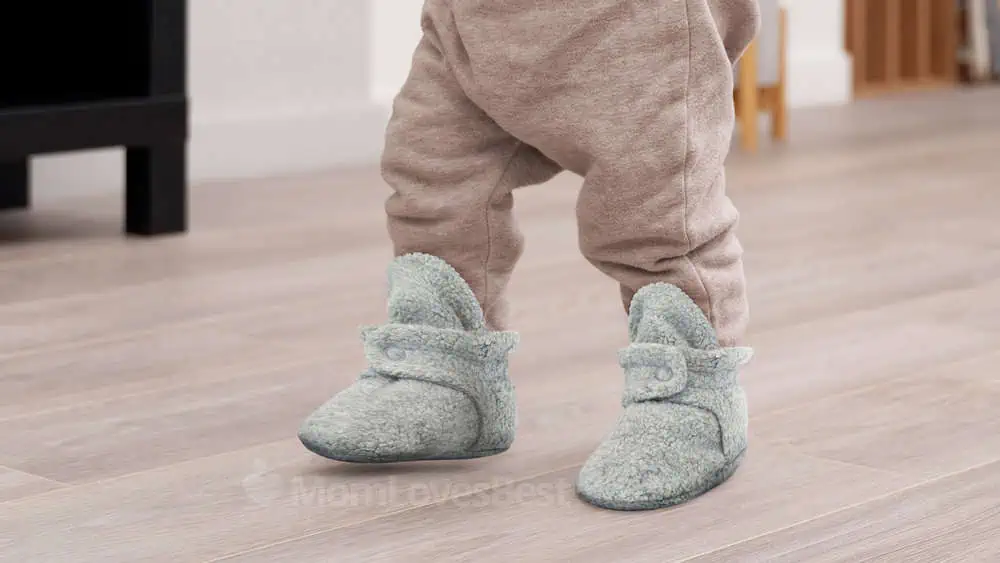
Keeping socks on a baby is a universal parenting struggle. Zutano booties solve this problem with a clever two-snap design that wraps securely around the ankle.
These booties feature a fleece exterior and a soft, organic cotton lining. They are warm enough for outdoor walks but comfortable enough for indoor wear. The wide ankle opening makes them easy to put on, but the snap system makes it nearly impossible for babies to kick them off. They come in a huge range of colors to match any outfit.
N'Ice Caps Sherpa Lined Fleece Set
Best Baby Winter Hat and Mittens Set
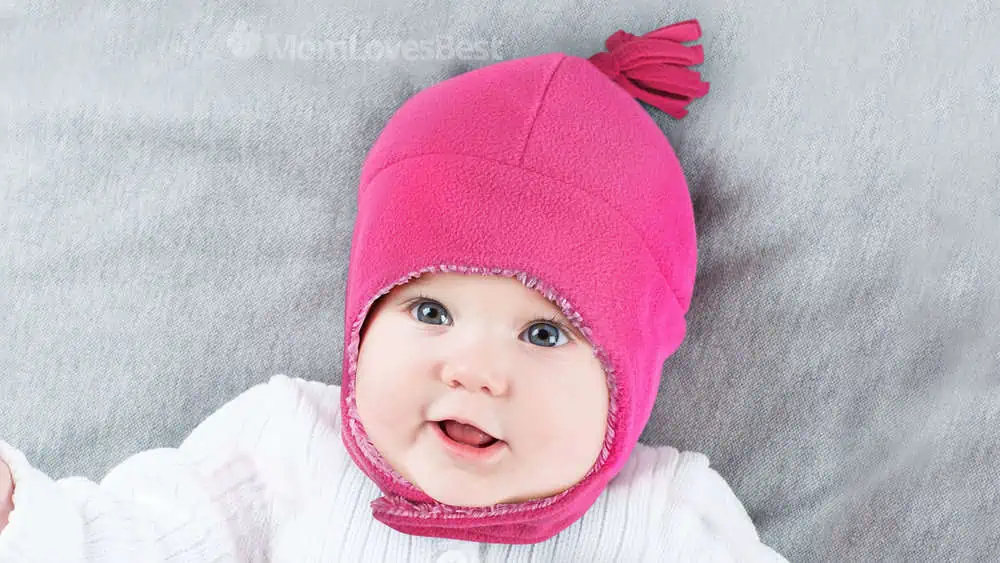
Headwear is crucial for temperature regulation. This set from N’Ice Caps includes a Sherpa-lined hat and matching mittens designed for extreme cold.
The hat features ear flaps and a Velcro chin strap, ensuring it stays put even on windy days. The material is absorbent, preventing sweat buildup that can chill your baby. The mittens have elastic wrists to keep them secure, though parents of smaller babies might need to roll the sleeves of a jacket over the cuffs for a tighter fit.
MarJunSep Warm Baby Gloves
Best Baby Winter Gloves
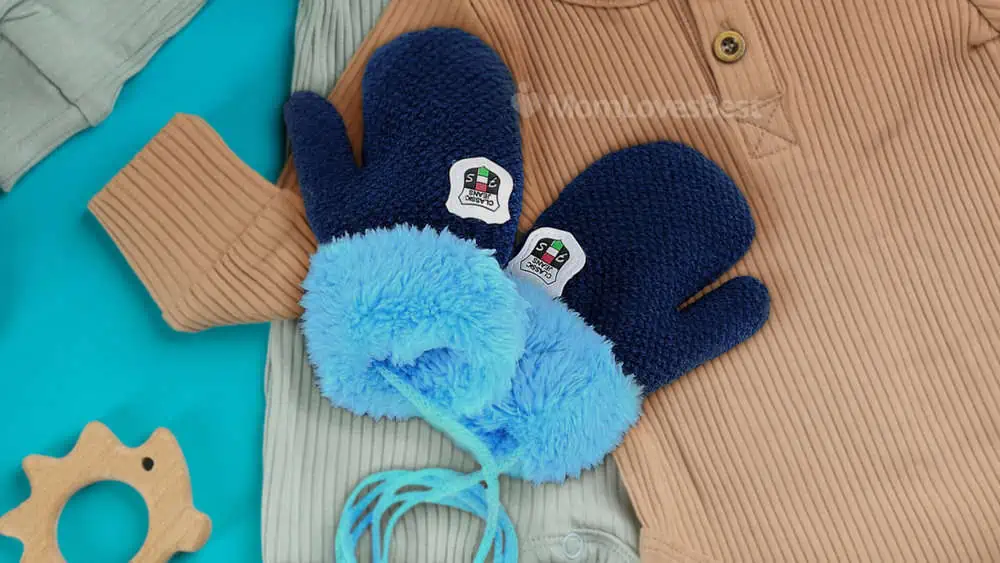
If you prefer gloves with individual fingers for better dexterity, this set is a solid choice. Made from a blend of cotton, acrylic, and velvet, they offer a good balance of stretch and warmth.
The plush lining adds comfort, and the material is breathable to prevent sweaty palms. This pack includes two pairs, which is helpful since gloves tend to disappear. They are sized generously to allow for growth, so your baby will have plenty of wiggle room for their fingers.
Enteer Infant Snow Boots
Best Baby Winter Snow Boots
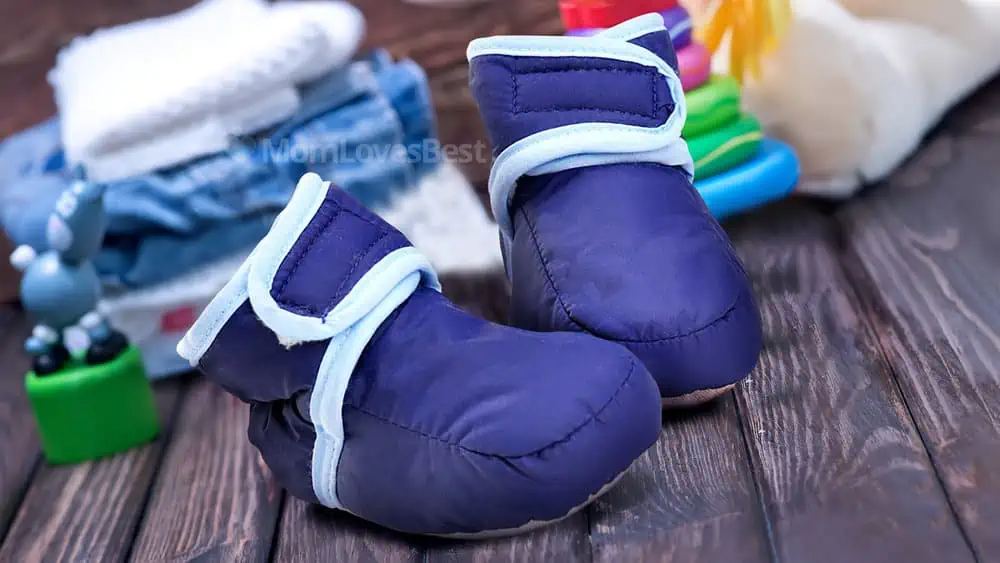
Standard booties might not cut it for snow days. These soft-soled snow boots provide extra insulation and water resistance for tiny feet.
The boots are lightweight and flexible, promoting healthy foot development for pre-walkers. A folded Velcro strap secures the boot around the ankle, minimizing the chance of them slipping off. The faux fur lining ensures toes stay warm and snug. While they aren’t meant for heavy walking in deep snow, they are perfect for stroller rides and carriers.

Dressing Your Baby in Winter
Navigating winter dressing requires a balance between safety and warmth. Here are some practical tips for every scenario.
At Home: Thin Layers
It is tempting to bundle your baby up, but indoor heating often makes thick clothes unnecessary. Overheating is a real risk, so layering is your best strategy.
Start with a long-sleeved onesie. We prefer onesies over shirts because they snap at the crotch and won’t ride up. Layer a pair of footed pajamas over the onesie. If the outfit doesn’t have feet, add a pair of socks to keep toes warm (1).
Going Outdoors
A good rule of thumb is to dress your baby in one more layer than you are wearing.
If you are comfortable in a sweater, your baby likely needs a onesie, a shirt, and a sweater or jacket. If you need a heavy winter coat, your baby needs a snowsuit. Always remember to remove the heavy outer layer immediately when you go back inside to prevent rapid overheating.
In the Stroller and Babywearing
Strollers allow for extra insulation. Use a high-quality stroller blanket or a dedicated bunting bag. We love the plush options from JJ Cole because they allow for harness straps to pass through safely.
If you are babywearing, your body heat acts as a powerful heater. Your baby usually only needs their indoor outfit and a hat. You can drape a blanket over the carrier for wind protection, but avoid over-bundling inside the wrap or carrier to ensure a secure fit.
In the Car Seat: The Puffy Coat Rule
This is a critical safety rule: No puffy coats in the car seat.
Thick winter coats compress during a crash, leaving the harness straps too loose to protect your baby. Dress your baby in thin, warm layers (fleece is great). Buckle them in tightly, then place a blanket over the straps or put their coat on backward over their arms (2).
Shower-cap style covers, like the Cozy Cover, are safe because they go over the seat rather than under the baby. However, remove the cover once the car heats up to ensure airflow.
Extremities Matter
Babies lose heat rapidly through their heads, hands, and feet. Their bodies cannot regulate temperature as well as adults can (3).
Always use a hat that covers the ears. Mittens protect fingers from frostnip, though an extra pair is wise since they get wet from snow or chewing. Socks or booties are mandatory; if you use a footed snowsuit, putting socks on underneath helps keep the suit in place.
Sleeping: What to Wear
Nighttime dressing causes anxiety for many parents. You want them warm, but safety guidelines prohibit loose bedding.
Crib-sleeping babies should not have loose blankets due to SIDS risks. Use a sleep sack (wearable blanket) over a long-sleeved sleeper. This creates a cozy pocket of air without the risk of suffocation.
Swaddling is an option for younger babies who are not yet rolling over. To swaddle safely:
- Lay a blanket flat and fold down the top corner.
- Place your baby face-up with their head above the fold.
- Straighten the left arm and wrap the left side of the blanket over the body, tucking it under the right side.
- Straighten the right arm and wrap the right side of the blanket over the body, tucking it under the left side.
- Fold the bottom up loosely, leaving room for hips to wiggle.
Stop swaddling immediately once your baby shows signs of rolling over (usually around 2 to 4 months). At that point, swaddling becomes dangerous.
Avoid Overheating
Overheating is a major risk factor for SIDS. It is actually safer for a baby to be slightly cool than too hot (4).
Always remove hats when the baby is sleeping or indoors. Check your baby’s comfort level frequently:
- Check the chest or neck: It should feel warm and dry, not sweaty or hot.
- Ignore the hands: Hands and feet usually feel cool to the touch and are not a good indicator of core temperature.
- Watch for signs: Flushed cheeks, rapid breathing, or sweat indicate the baby is too hot. Remove a layer immediately.
Baby Winter Clothes FAQs

What Should a Newborn Wear Home From the Hospital in Winter?
A newborn should wear a long-sleeved bodysuit, pants, and socks (or a footed sleeper) plus a hat. Place a blanket over the buckled car seat straps for warmth. Do not put the baby in a snowsuit or thick jacket before buckling them into the car seat.

How Many Winter Outfits Does a Newborn Need?
You should aim for 5 to 7 sleepers, 5 to 7 long-sleeved bodysuits, and 2 to 3 sweaters or sweatshirts. You only need one good winter coat or snowsuit for outdoor travel. This rotation ensures you have backups for inevitable spit-ups and diaper leaks.

What Is the Best Footwear for Babies in Winter?
For pre-walkers, fleece booties that snap or velcro around the ankle are best because they stay on. Socks alone often slip off. Once your baby is walking outdoors, invest in waterproof, soft-soled snow boots with insulation.

What Is the Best Fabric for Baby Winter Clothes?
Cotton is best for base layers because it breathes and prevents sweating. Fleece and wool are excellent for mid-layers and outerwear because they trap heat effectively. Avoid synthetic fabrics directly against the skin if your baby has eczema.

How Do I Know if My Baby Is Too Cold?
Touch your baby’s chest, tummy, or back of the neck. These areas should feel warm. If they feel cold, add a layer. Hands and feet are naturally cooler due to circulation and are not reliable indicators of core body temperature.