There are distinct differences between the two, and knowing them helps you spend your hard-earned cash on the right fit.
If you have shopped for children’s clothes and felt confused by the sizing, you are not alone. Parents everywhere ask about the real difference between 24 months vs. 2T.
Key Takeaways
- 24 months clothes fit 18-24 month olds, while 2T generally fits toddlers between 2 and 3 years old.
- 24 months items have a rounder cut for diapers, whereas 2T clothes have a slimmer silhouette for toilet training.
- You will find 24 months clothes in the baby aisle and 2T clothes in the toddler or children’s department.
- Brand sizing varies significantly, so you must always check the specific height and weight chart.
Is 2T the Same as 24 Months?
While 24 months is technically two years, the clothing sizes are not identical. This distinction confuses parents frequently. I didn’t realize there was a practical difference between these sizes until my first child grew out of both.
It comes down to how children’s clothes are measured, labeled, and intended for use.
Baby clothes are sized by age ranges. You see 6-12 months or 12-18 months on tags. These sizes fit a child up to the top end of that range.
Therefore, items marked 18-24 months (or just 24 months) fit a baby older than 18 months and up to 24 months.
However, 2T indicates the item is for a toddler of two years old. A child who just hit their second birthday and a child approaching their third birthday should be able to wear it. Think of 2T as “2 turning 3.”
When you compare clothes labeled 24 months against 2T, you will spot several functional differences.
Differences Between 2T and 24 Months
If you are wondering how the fits differ specifically, these factors weigh in.
Departments and Shopping
You usually find clothes labeled 24 months in the baby department. Retailers group them with infant items because they accommodate younger, less mobile children.
In contrast, 2T clothes hang in the toddler or children’s department. These sections cater to walking, running, and climbing kids.
Diapers vs. Potty Training
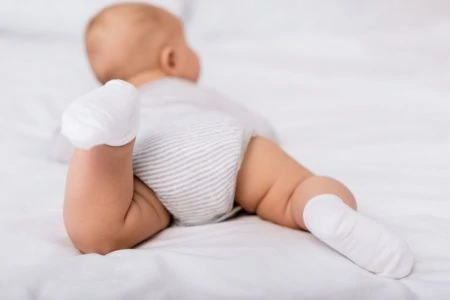
The cut of the pants is the biggest physical difference. Clothes labeled 24 months feature a generous cut around the bottom to accommodate diapers. Designers assume a child under two years is still wearing a diaper, so they leave extra room. The silhouette is rounder and curvier.
Designers assume toddlers in 2T are starting to potty train. Consequently, the clothes have a closer cut in the diaper area. The silhouette is slimmer and straighter.
If you put a 2T pair of jeans on a child wearing a bulky cloth diaper, they might be too tight in the rise.
Ease of Access
Fasteners differ greatly between the sizes. 24 months clothes often have snaps at the crotch (inseam snaps). This allows parents to change diapers without removing the entire outfit.
Conversely, 2T clothing rarely includes inseam snaps. These items look like miniature adult clothes. The lack of snaps encourages potty independence, as it is easier for a toddler to push down elastic-waist pants than to fuss with buttons or snaps.
Style and Mobility
24-month clothes generally look more baby-like. They prioritize comfort for crawlers or early walkers. The fabrics are often softer and stretchier to allow for stumbling and napping.
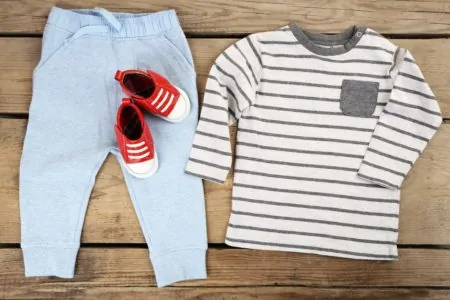
2T clothes are more fashion-forward. They are designed for active play, running, and jumping. You will see more zippers, buttons, and durable fabrics like denim.
Brand Variations
To complicate matters, brands do not use standard clothing measurements. Each manufacturer sets its own guidelines.
Some manufacturers, such as Gerber, use identical height and weight ranges for 24 months and 2T. Others, like Carter’s, use distinct measurements for each size.
Here is how Carter’s separates the sizes:
- 24M: Designed for a height of 32-34 inches and weight of 28-30 pounds.
- 2T: Designed for a height of 35-36.5 inches and weight of 29-31 pounds.
Gerber takes a different approach:
- 24M and 2T: Both sizes list a height of 32-34 inches and weight of 28-32 pounds.
Baby Gap adheres to strict differences in sizing:
- 24 Months: Fits a height of 31-33 inches and weight of 27-30 pounds.
- 2T: Fits a height of 33-36 inches and weight of 30-33 pounds.
Always check the specific size chart on the tag or the brand’s website before purchasing.
FAQs

Is size 2 the same as 2T?
Size 2 and 2T are very similar, but “Size 2” is rare in US sizing. Usually, size 2 implies a generic child size, while the “T” in 2T stands for Toddler. Toddler sizing usually accommodates a diaper slightly better than a generic size 2, which might be found in European brands or fancy dress clothes.
When should I switch from 24 months to 2T?
You should switch to 2T when your child becomes taller, more active, or begins potty training. If the 24-month onesies are pulling at the shoulders or the pants are too short, it is time to move to the toddler section.
Can a 1-year-old wear 2T?
A large 1-year-old can wear 2T, but the fit might be awkward. Since 2T is cut for walking toddlers with less bulk in the diaper area, a 1-year-old who is still crawling or wearing heavy diapers might find 2T pants uncomfortable or too long in the legs.
The Same, But Different
Why are 24 months and 2T different? It comes down to developmental stages rather than just chronological age.
Clothes labeled 24 months give your child extra room around the caboose for a diaper. They create a rounder silhouette and often include snaps for easy changes. 2T creates a straighter outline and assumes diapers are on their way out.
Check the size chart, consider your child’s potty training status, and choose the fit that allows them to play freely.