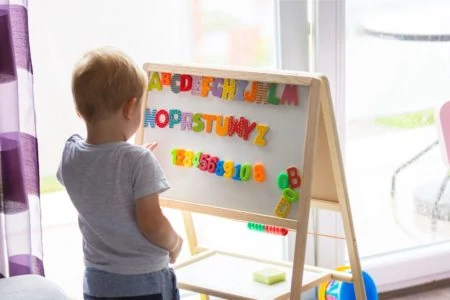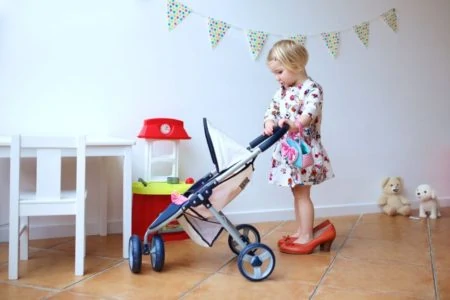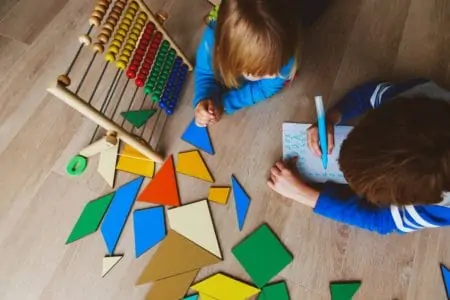
Five is a magical transition age. Your child is likely leaving the toddler years behind and stepping into the world of “big kid” school, which brings a whole new set of milestones. While we often feel the pressure to turn every moment into a rigorous academic lesson, the best learning happens when kids don’t even realize they’re doing it.
We combined our parenting experience with deep market research to curate this list of 25 educational toys. These picks strike the perfect balance between skill-building and pure, unadulterated fun.
- Passive & active learning
- Wide range of knowledge
- Stylus is attached to base
- Durable
- Meets ASTM standard
- Familiarizes colors, shapes, and geography
- Explorer vest has plenty of pockets
- Working compass
- Clipboard encourages note-taking
- Simple, age-appropriate science
- No household items needed
- Fun experiments
- No gadgets required
- Attention holding & versatile
- Flexible play options
- Promotes logical thinking
- 65-piece set
- BPA-, lead-, and phthalate-free
- Follows Magic School Bus show
- 33 experiments to try
- Progressively builds knowledge
- Durable, reusable skeletons
- Combines art & science
- Comes in other variants
- Compatible with other sets
- Structured & free-form play
- Screen-free & non-motorized
What Should a 5-Year-Old Be Learning?
Every child develops at their own unique pace. It is completely normal for a kid to zoom ahead in reading while taking a little longer to master hopping on one foot. We all learn in different ways.
However, there are general milestones you can look out for. Keep in mind that these are skills an average child acquires between their fifth and 6th birthday. It isn’t a magical switch that flips the morning they turn five.
Here are the key developmental leaps to expect this year.
Counting to Ten and Beyond
Most children can count to ten by their 5th birthday. At this stage, it often transitions from rote memorization (saying words in order) to understanding the actual concept of quantity and one-to-one correspondence.
Naming Shapes and Colors
Recognizing colors and geometric shapes is a foundational skill for math and literacy. It expands your child’s vocabulary and helps them describe the world around them with more precision (1).
Using Positional Vocabulary
Your child should start mastering words that describe where things are in space. Understanding terms like “under,” “behind,” “next to,” and “on top of” helps reduce frustration and improves their ability to follow complex directions.
Understanding Money Basics
While they won’t be ready to balance a checkbook, 5-year-olds begin to identify different coins and bills. They start grasping the concept that money is exchanged for goods, and they may understand simple equivalencies, like four quarters making a dollar.
Recognizing Sight Words
Full reading fluency might be a year or two away, but many 5-year-olds can identify familiar words. If they see a red octagon, they know it says “STOP,” or they might recognize their name or popular logos.
Copying Shapes
There is a big difference between seeing a square and drawing one. At five, fine motor skills improve enough that children can look at a shape (like a triangle or square) and copy it onto paper with reasonable accuracy.
Drawing With Detail
Say goodbye to simple stick figures. Drawings start to include more details, such as fingers, hair, and clothing. You might see a person with a body, arms, and legs rather than just a head with sticks attached.
Stacking and Building
Fine motor precision meets patience. If you ask your child to build a tower of ten blocks, they generally have the steady hand and focus to do it without it toppling over immediately.
Social Play and Sharing
This is a golden age for social development. Kids begin to understand the concept of rules, taking turns, and cooperative play. This makes board games and team activities much more enjoyable for everyone involved.
How to Choose Educational Toys for 5-Year-Olds
With thousands of options on the shelves, finding the right tool for learning can feel overwhelming. Here is what to look for.

Educational Purpose
Aim for a mix of skills. While reading and math are important, don’t neglect STEAM (Science, Technology, Engineering, Arts, Math) toys or those that promote gross motor skills. A balanced toy box supports a balanced brain.

Interests and Personality
The best educational toy is the one they actually want to play with. Lean into their current obsessions. If they love dinosaurs, get a paleontology kit. If they never sit still, look for active learning games.

Longevity and Durability
Five-year-olds can still be rough on their belongings. Look for high-quality materials like wood or thick plastics. You also want a toy that offers “play longevity,” meaning it will still be interesting to them six months from now.

Safety Features
Choking hazards are less of a concern now, but you should still be mindful if there are younger siblings in the house. Ensure all art supplies are non-toxic and that science kits use safe ingredients.

Price vs. Value
Educational toys range from simple card games to high-tech robots. Set a budget before you shop. Often, a mid-range toy that encourages open-ended play offers better value than an expensive electronic toy with limited functions.
Product Reviews
We’ve tested and analyzed the top picks to help you find the perfect match for your budding genius.
LeapFrog Magic Adventures Globe
Building Global Citizenship
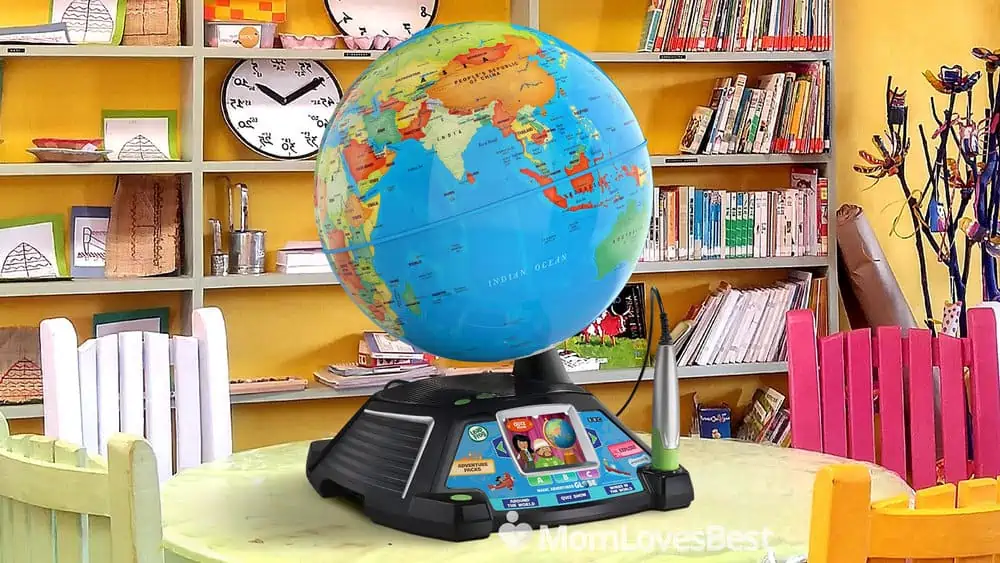
Geography can be a dry subject for little ones, but LeapFrog brings it to life with video. By tapping the stylus anywhere on the globe, kids unlock thousands of facts about geology, habitats, and cultures.
The standout feature is the 2.7-inch integrated screen. It plays over 600 custom videos from the BBC Wildlife team, giving kids a visual connection to what they are learning. It also features interactive puzzle games and quizzes to test their knowledge. This is a fantastic investment for visual learners who get bored with standard maps.
Pros
- Combines active and passive learning.
- Huge database of facts keeps it fresh.
- Attached stylus prevents loss.
Cons
- The video screen is relatively small.
Our Ratings
Imagimake: Mapology World
Geo Hero
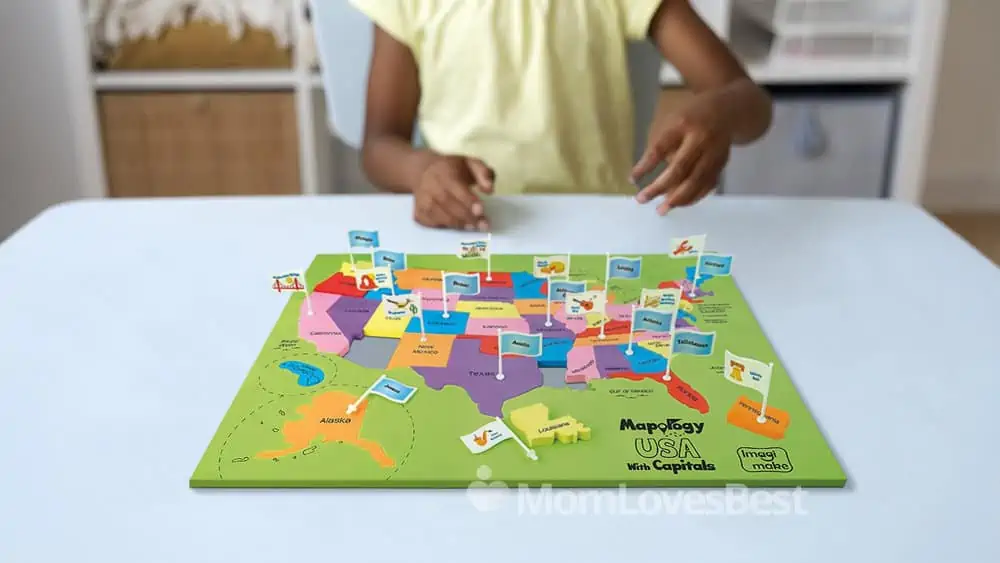
If you want to turn a geography lesson into a hands-on game, Imagimake is the way to go. This foam map set helps children understand the shapes and locations of countries and states through tactile play.
The set includes puzzles for both the World and the USA. The foam pieces are thick and easy for 5-year-old hands to manipulate. It is a brilliant way to introduce the concept that the world is made up of many different places without overwhelming them with text.
Pros
- Includes two distinct puzzles.
- Meets ASTM safety standards.
- Builds spatial awareness and geography skills.
Cons
- Pieces can be tight, making it tricky for some kids.
Our Ratings
Sphero Specdrums
Unique Concept
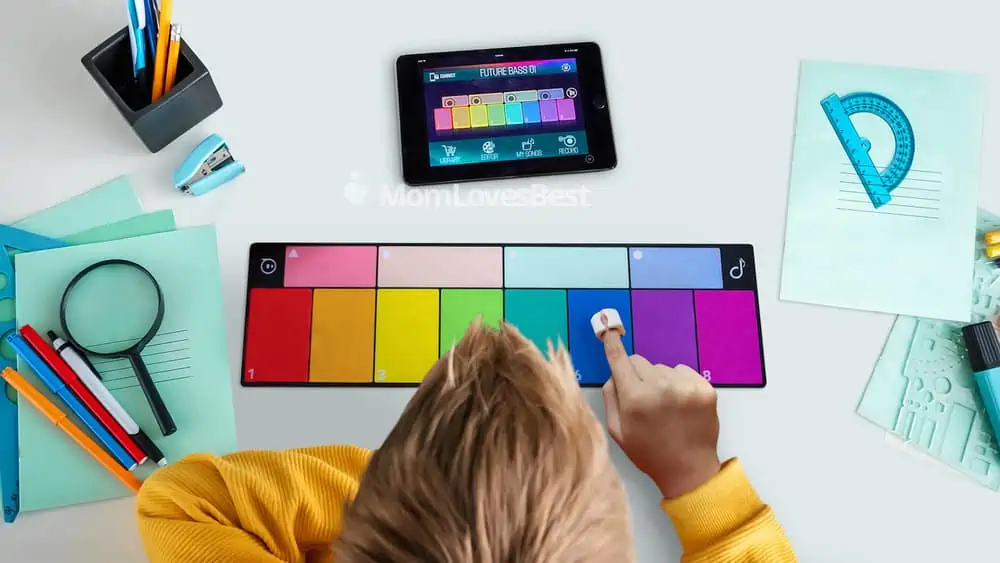
This is where creativity meets technology. Sphero Specdrums are app-enabled rings that turn colors into music, making them perfect for kids who love to make noise.
Simply slip a ring on your finger and tap it against the included color pad or any colored surface in your house. The ring identifies the color and plays a corresponding sound loop through the app. It connects via Bluetooth to phones or tablets, allowing kids to compose beats on the go.
Pros
- Durable silicone fits various finger sizes.
- Highly portable for travel entertainment.
- Encourages musical experimentation.
Cons
- Relies entirely on a connected app.
Our Ratings
Outdoor Explorer Kit
Curiosity Unleashed
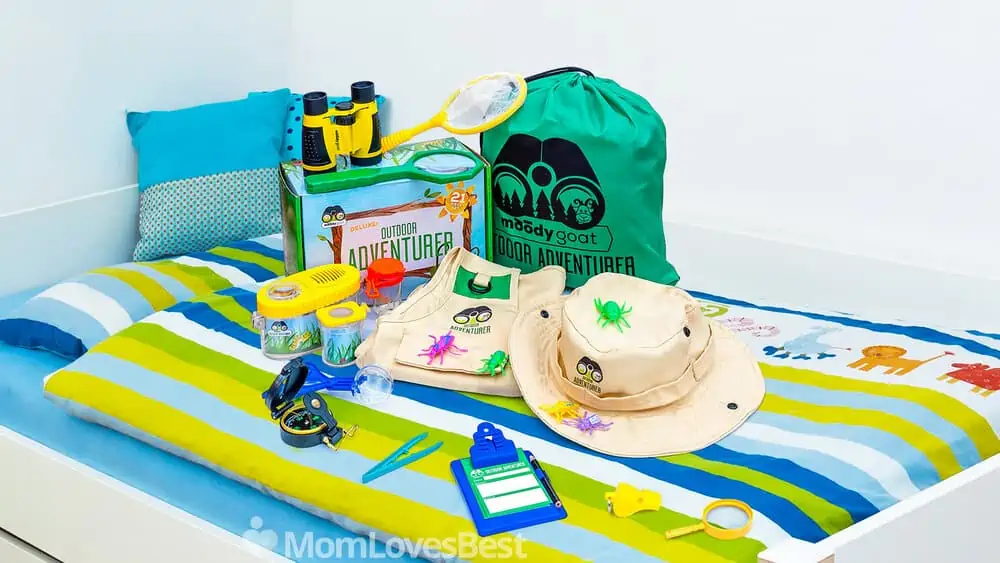
Sometimes the best classroom is the backyard. This affordable kit includes everything a little adventurer needs to investigate the ecosystem right outside their door.
It features globe-ended tongs for gentle bug collection, observation boxes, a working compass, and a vest with plenty of pockets. It encourages observation, patience, and a respect for nature. If you are trying to limit screen time, this kit is a powerful motivator to get them outside.
Pros
- Vest adds a fun role-play element.
- Clipboard makes note-taking feel official.
- Promotes active outdoor play.
Cons
- The included plastic insects are a bit cheap.
Our Ratings
Galt Toys Slime Lab
Gorgeously Gross
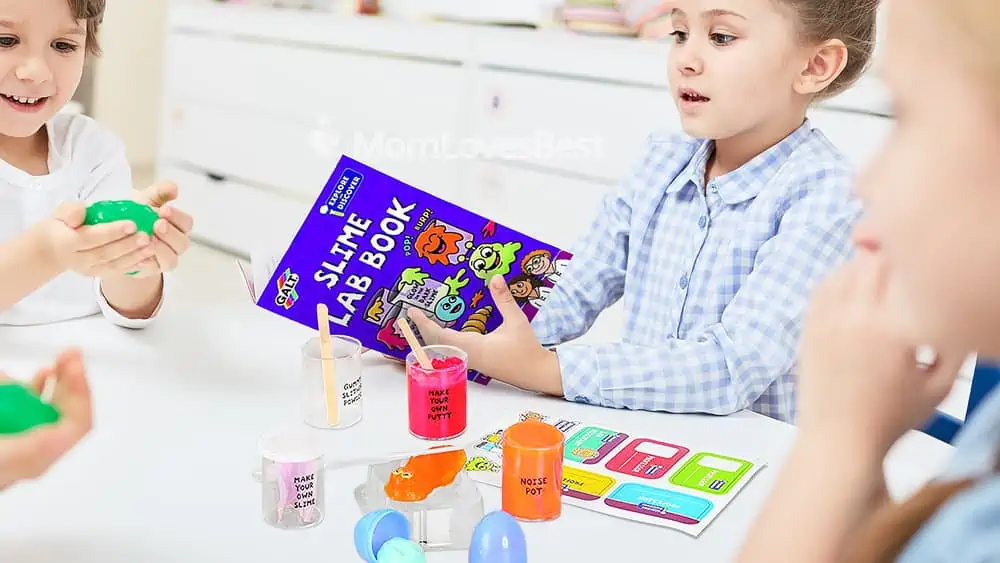
Kids love slime, and this kit uses that obsession to sneak in some chemistry lessons. The Galt Toys Slime Lab features seven different experiments that are perfectly pitched for a 5-year-old’s attention span.
The 16-page booklet guides you through making glow-in-the-dark aliens, bouncy balls, and the crowd-favorite “fart noise” slime. Unlike many kits that require you to raid your pantry, this box comes with almost everything you need. It is messy, but the giggles are worth it.
Pros
- Science concepts simplified for young kids.
- comprehensive kit saves hunting for supplies.
- High engagement factor.
Cons
- It is slime; expect a mess.
Our Ratings
Botley the Coding Robot Activity Set
Programmable Fun
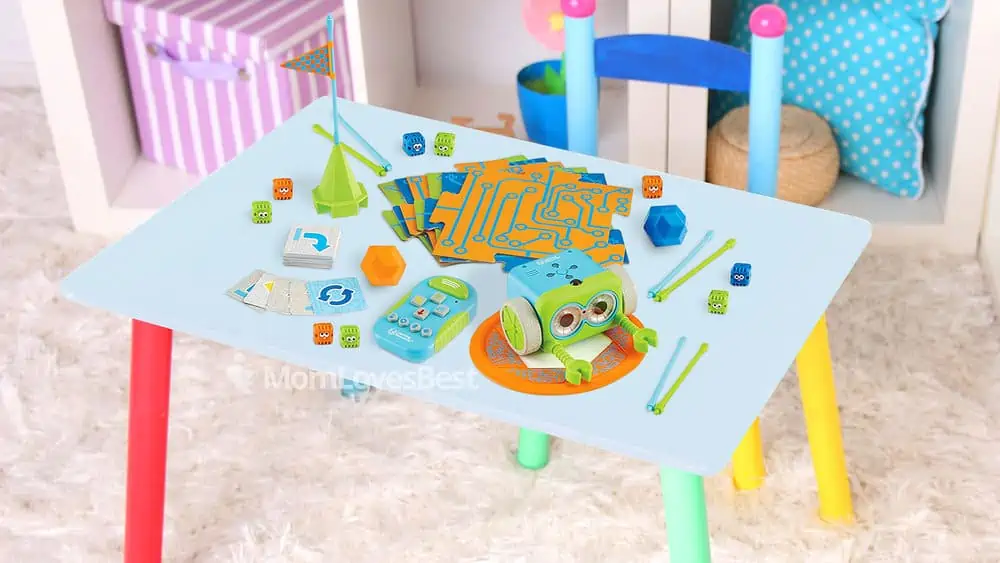
Botley is our favorite introduction to logic and coding because it is 100% screen-free. Instead of staring at a tablet, kids use a remote programmer to send commands to the robot.
The set includes 77 pieces, allowing children to build obstacle courses and challenges. It teaches the core concept of coding: inputting a sequence to achieve a specific result. If Botley hits a wall, your child has to debug the sequence and try again.
Pros
- Completely screen-free coding experience.
- Grows with the child through advanced challenges.
- Encourages problem-solving and logic.
Cons
- Requires 5 AAA batteries (not included).
Our Ratings
CoolToys Monkey Balance Cool Math Game
Single Player Fun
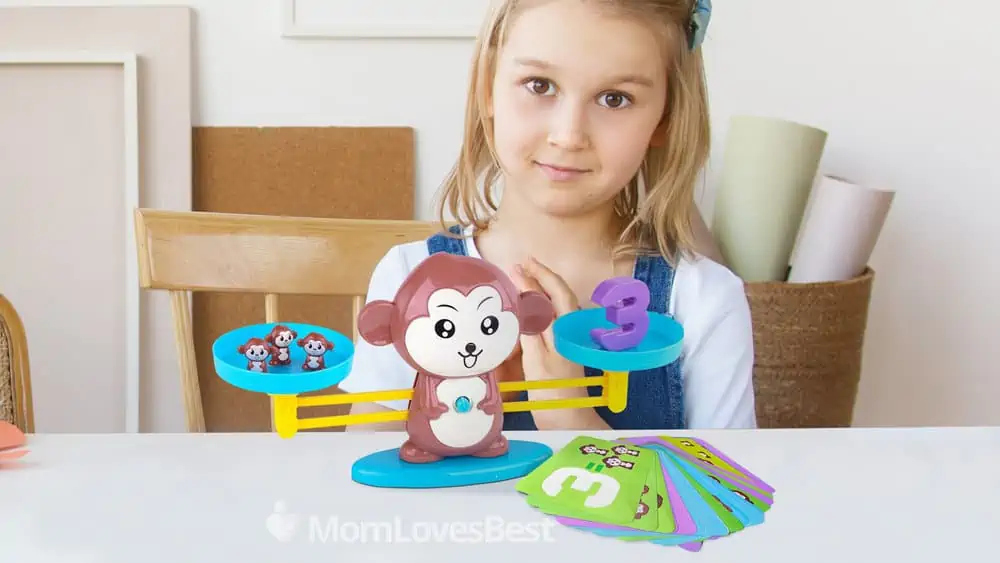
Math can be abstract, but Monkey Balance makes it physical. This game uses a scale to help children visually understand the relationship between numbers and quantity.
The goal is to balance the scale by placing small monkeys on one side and a weighted number on the other. It is self-correcting, if the math is wrong, the scale won’t balance. It is perfect for visual learners and works just as well for solo play as it does for groups.
Pros
- Makes abstract math concepts concrete.
- Safe, BPA-free materials.
- Includes 65 pieces for varied play.
Cons
- The gameplay might be too simple for advanced counters.
Our Ratings
The Magic School Bus Engineering Lab
Ms. Frizzle Approved
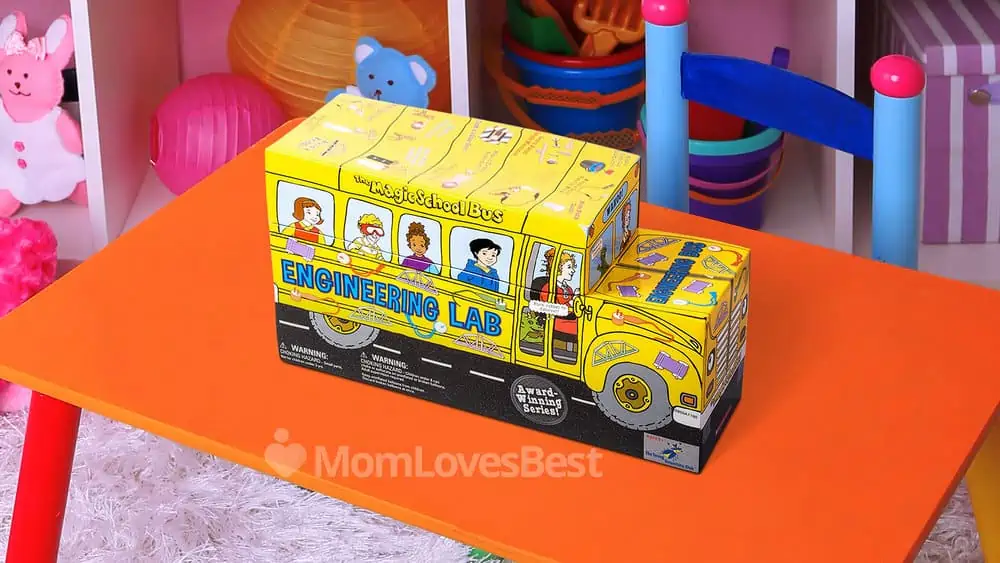
Ride along with Ms. Frizzle in this comprehensive engineering kit shaped like the iconic bus. It is packed with 33 experiment cards covering electricity, solar power, and mechanics.
The kit includes real components like a solar panel, motor, and buzzer. It encourages kids to act like real scientists: asking questions, forming a hypothesis, and testing their theories. If your child is a fan of the show or books, the branding adds an extra layer of excitement to the learning process.
Pros
- Strong connection to the beloved franchise.
- Teaches the scientific method, not just tricks.
- Wide variety of experiments included.
Cons
- You will need to supply some household items like vinegar.
Our Ratings
Create With Clay Dinosaurs
Playful Paleontology
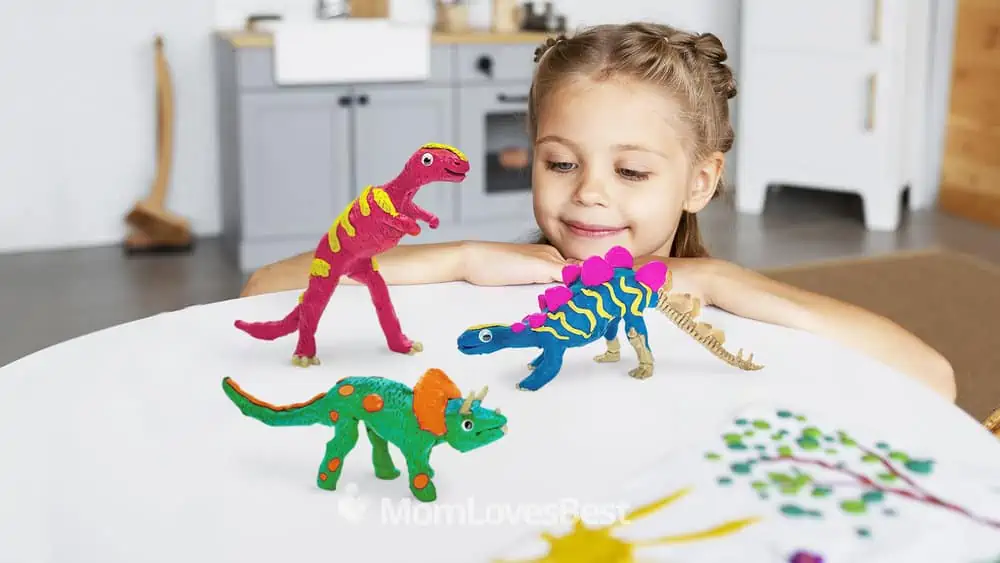
This set combines arts and crafts with paleontology. It provides three plastic dinosaur skeletons (T-Rex, Stegosaurus, Triceratops) and plenty of clay to bring them to life.
Kids can use the non-toxic clay to build muscles and skin over the skeletons, learning about anatomy in the process. Once the clay is on, they can play with their creations or strip it off and start again. It is a fantastic sensory activity that results in a cool toy.
Pros
- Skeletons are durable and reusable.
- Great blend of art and science.
- Clay is non-sticky and easy to mold.
Cons
- The kit could use a bit more clay volume.
Our Ratings
Gears! Gears! Gears! Robots in Motion
Screen-Free Robotics
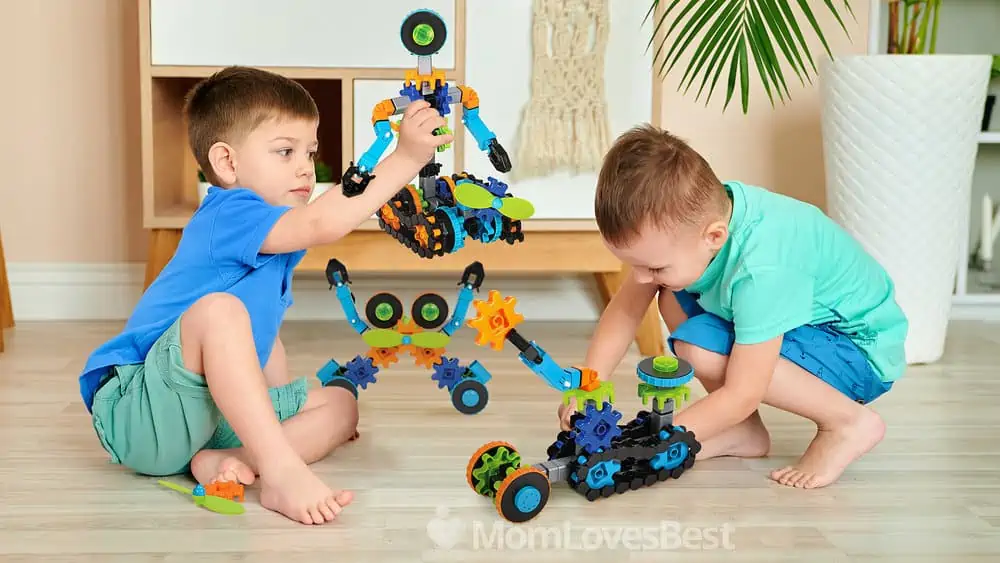
This 110-piece set is an excellent introduction to mechanical engineering. Kids can follow instructions to build specific robots or freestyle their own spinning, twisting machines.
Unlike many robot toys, this one doesn’t require batteries or coding. The movement comes from the child physically turning the gears, which offers immediate feedback on cause and effect. It is fully compatible with other Gears! sets, making it a great addition to a growing collection.
Pros
- Promotes open-ended, creative engineering.
- No batteries or screens required.
- Develops fine motor skills and logic.
Cons
- Disassembling the pieces can be tough for little hands.
Our Ratings
Merge Cube
Holographic Fun
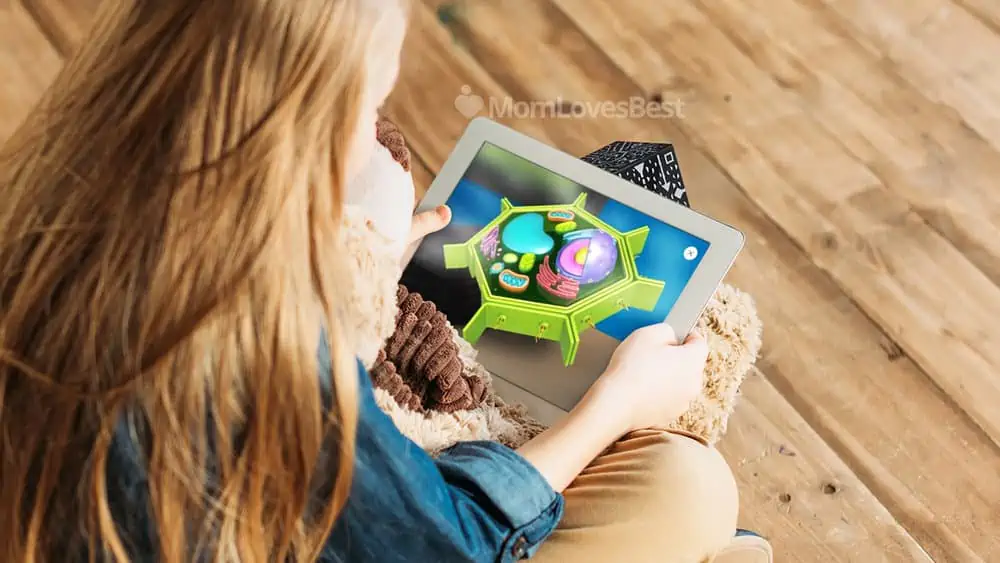
The Merge Cube looks like a simple foam block, but when viewed through a smartphone or tablet, it transforms into a hologram kids can hold in their hands. It utilizes Augmented Reality (AR) to teach science, anatomy, and geography.
By rotating the cube in real life, the image on the screen rotates, allowing kids to inspect a beating heart, a globe, or a solar system from every angle. It is a stunning visual tool that brings abstract concepts right into your living room.
Pros
- Incredible engagement for visual learners.
- Access to a wide library of educational apps.
- Soft, durable foam construction.
Cons
- Full access requires a subscription and a compatible device.
Our Ratings
GeoSafari Jr. Ladybug Garden
Marvelous Metamorphosis
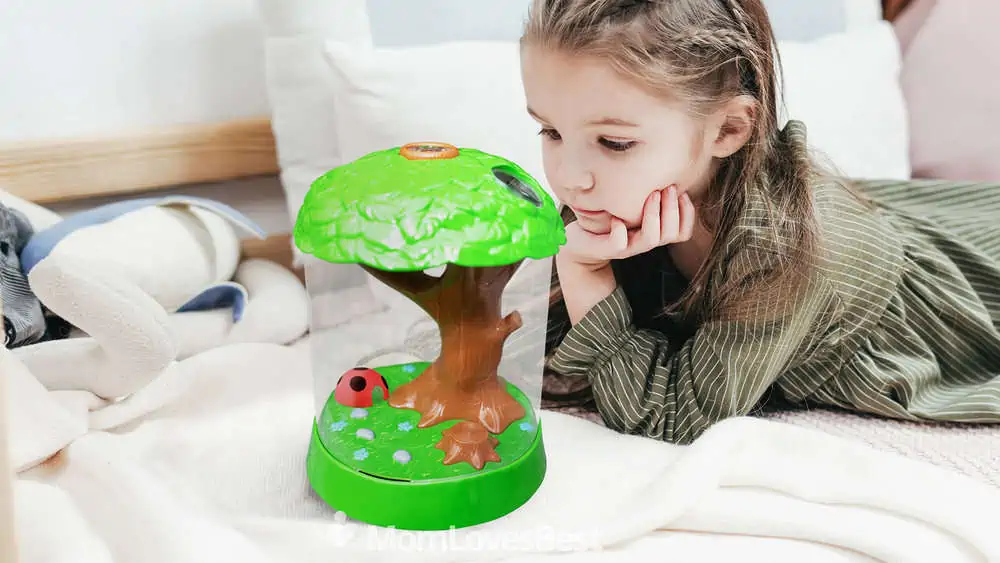
Witnessing metamorphosis firsthand is a childhood rite of passage. This robust habitat allows your child to watch larvae transform into ladybugs over the course of a few weeks.
The container features built-in magnification spots for close-up viewing and a secure lid to prevent accidental insect escapes. It teaches responsibility and biology in a very direct way. Note that you have to order the larvae separately, so plan ahead for their arrival.
Pros
- Teaches life cycles and patience.
- Built-in magnifiers enhance observation.
- Habitat is reusable for future projects.
Cons
- Live larvae must be purchased separately.
Our Ratings
Learn & Climb 21 Experiments Science Set
Attention Grabber
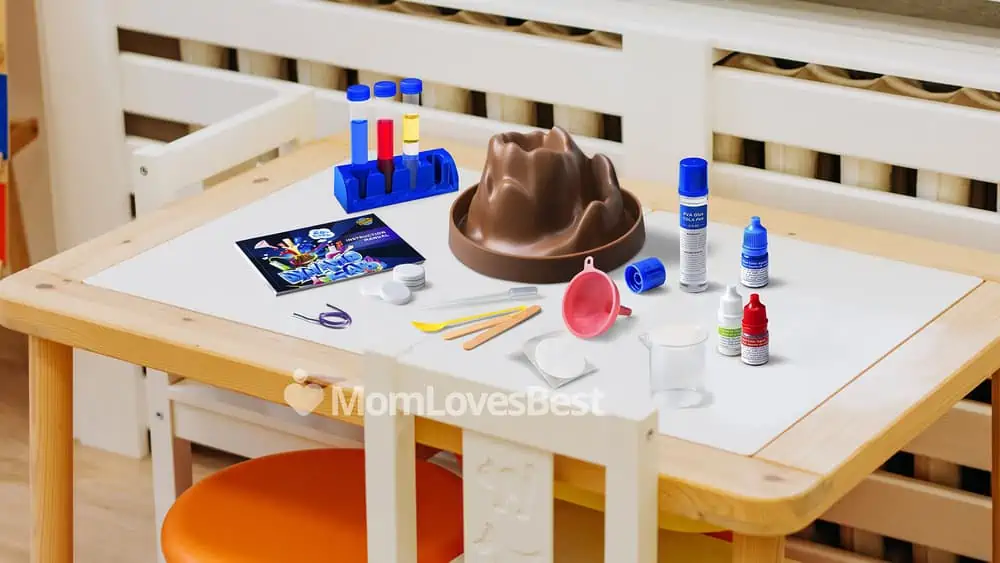
If you aren’t sure which branch of science your child enjoys, this sampler kit is a great starting point. It offers 21 different activities ranging from chemistry to physics.
The kit includes sturdy, reusable equipment like test tubes, Petri dishes, and a beaker, alongside materials like PVA glue and baking soda. The experiments are flashy enough to keep a 5-year-old entertained, think volcanoes and color changing, without being overly complicated to set up.
Pros
- Includes helpful instructional videos.
- Experiments scale in difficulty.
- Good quality, reusable plastic equipment.
Cons
- You will need to add common household items.
Our Ratings
Squishy Circuits Kit Electric Circuit
Electrifyingly Good
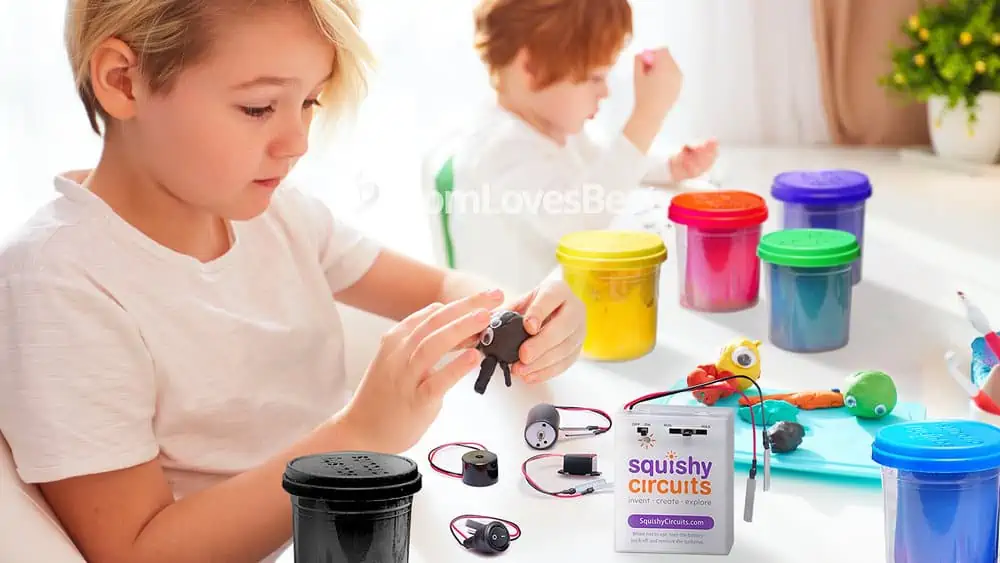
Squishy Circuits uses conductive dough to teach kids the basics of electricity safely. It is essentially play dough that lights up.
The kit includes a battery holder, LEDs, and conductive dough. Kids mold the dough into shapes and connect the lights to create completed circuits. It is a brilliant, hands-on way to explain conductivity and polarity without the risk of shocks or soldering irons.
Pros
- Safe introduction to electrical engineering.
- Highly creative and open-ended.
- Includes app access for project ideas.
Cons
- The dough eventually dries out (but you can make more).
Our Ratings
Sight Word Swat Game
Slap-Tastic
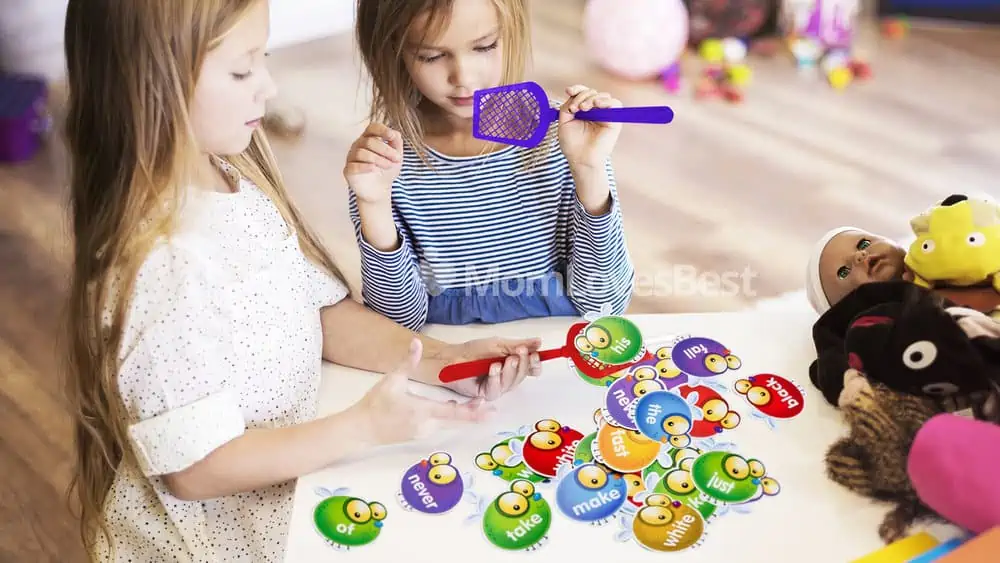
For high-energy kids who struggle to sit still for reading time, Sight Word Swat is a game-changer. It turns literacy into a physical race.
The game is simple: an adult (or another player) calls out a word, and the child races to “swat” the matching fly card with their plastic swatter. With five difficulty levels and color-coded cards, it grows with your child’s vocabulary. It’s fast, competitive, and very effective for memorization.
Pros
- Combines gross motor skills with reading.
- Includes blank cards for custom words.
- Comes with a storage bag for easy cleanup.
Cons
- Competitive kids might get a little too aggressive with swatters.
Our Ratings
Dive into Shapes!
Perfectly Formed
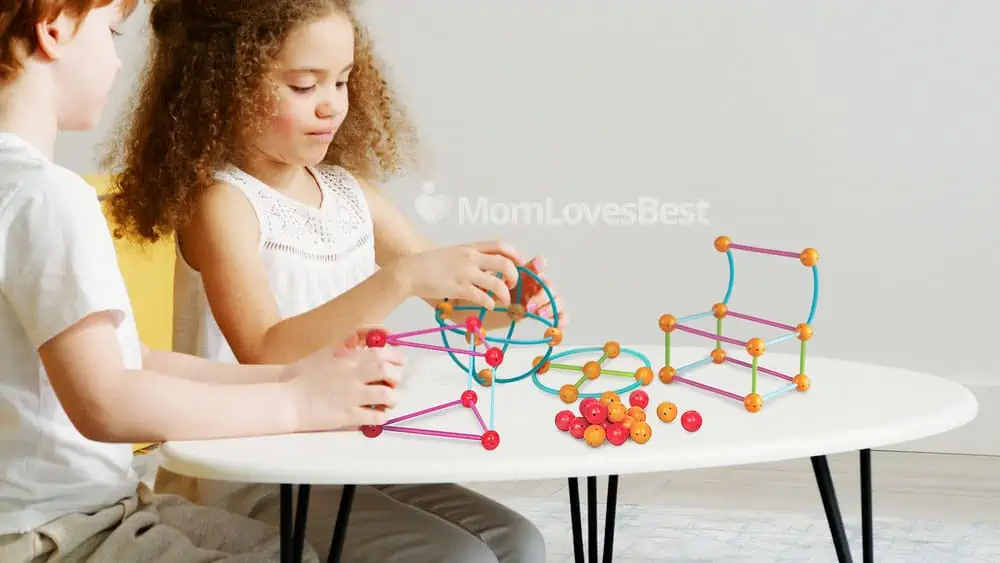
Geometry goes 3D with this “Dive into Shapes” set. Using plastic connector balls and sticks, children can build everything from simple squares to complex polyhedrons.
The included activity cards present challenges, such as building a cube and then figuring out how to make it larger. It is excellent for developing fine motor skills and spatial reasoning. While it looks simple, the open-ended nature of the set keeps kids engaged for surprisingly long stretches.
Pros
- Strong focus on fine motor development.
- Visualizes complex 3D geometry concepts.
- Allows for both structured and free play.
Cons
- More activity cards would be an improvement.
Our Ratings
Crashapult! STEM Challenge
Laugh And Learn
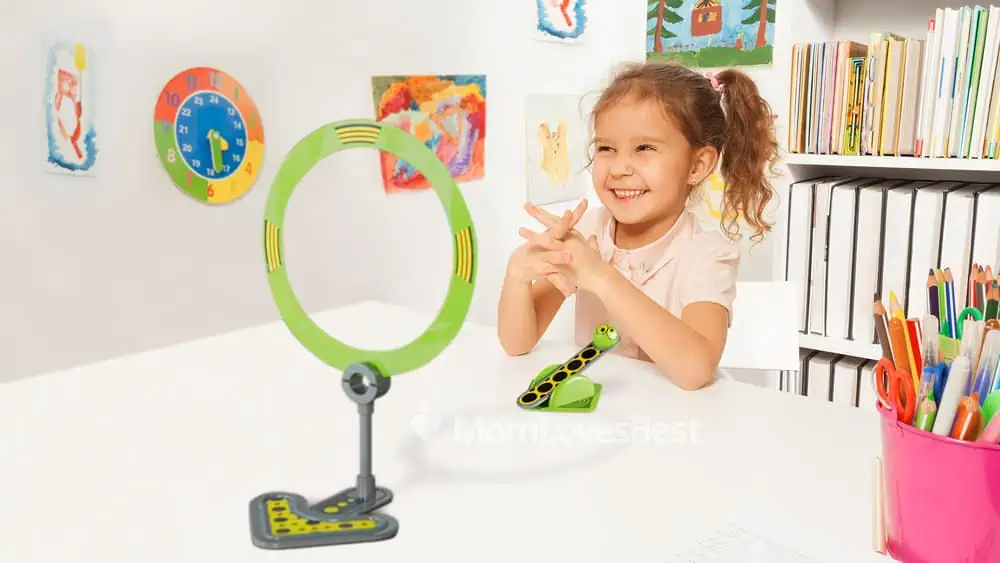
Physics is all about force, motion, and trajectory, and the Crashapult teaches all three. This kid-powered catapult challenges children to launch balls through hoops and into target cups.
It is a trial-and-error game where kids adjust the force and angle of their launch to hit the target. It requires no batteries and can be set up indoors or outdoors. It is a sneaky way to teach critical thinking while they think they are just launching stuff across the room.
Pros
- Active play that teaches physics.
- Adjustable challenges for different skill levels.
- Battery-free fun.
Cons
- The accessory set is a bit sparse.
Our Ratings
GeoSafari Ant Factory
Amazing Arthropods
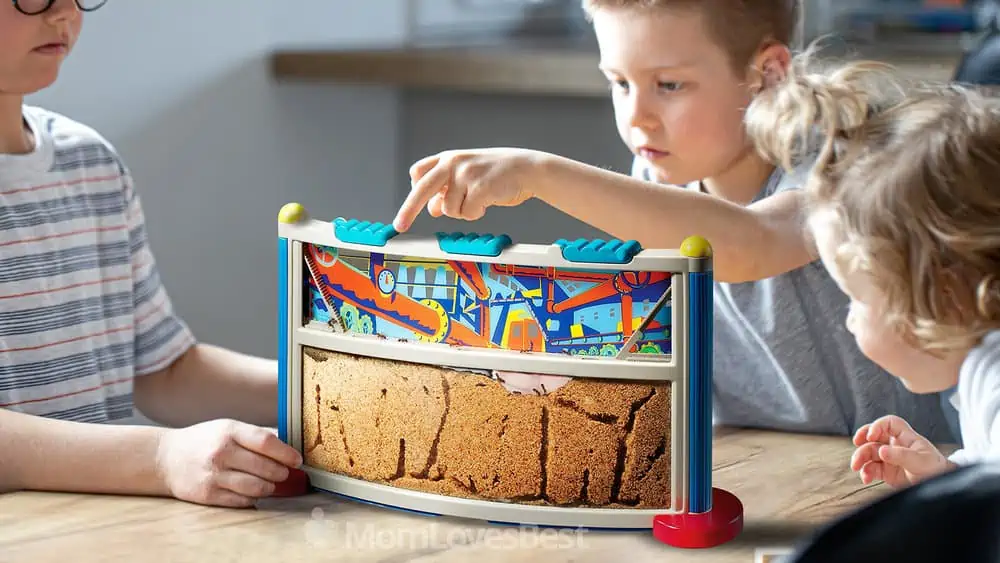
An ant farm is a classic for a reason. The GeoSafari Ant Factory lets kids observe an underground colony in action, watching as the ants tunnel, work, and communicate.
Safety is the priority here, and the habitat is designed to be escape-proof. You can feed and water the colony through specific ports without opening the main lid. It comes with a tunnel starter tool and dropper, though you will need to supply the sand and the ants yourself.
Pros
- Fascinating look at insect behavior.
- Secure, escape-proof design.
- Includes a guide on ant care.
Cons
- Sand and ants are not included in the box.
Our Ratings
Educational Insights Hot Dots
A World Of Literacy
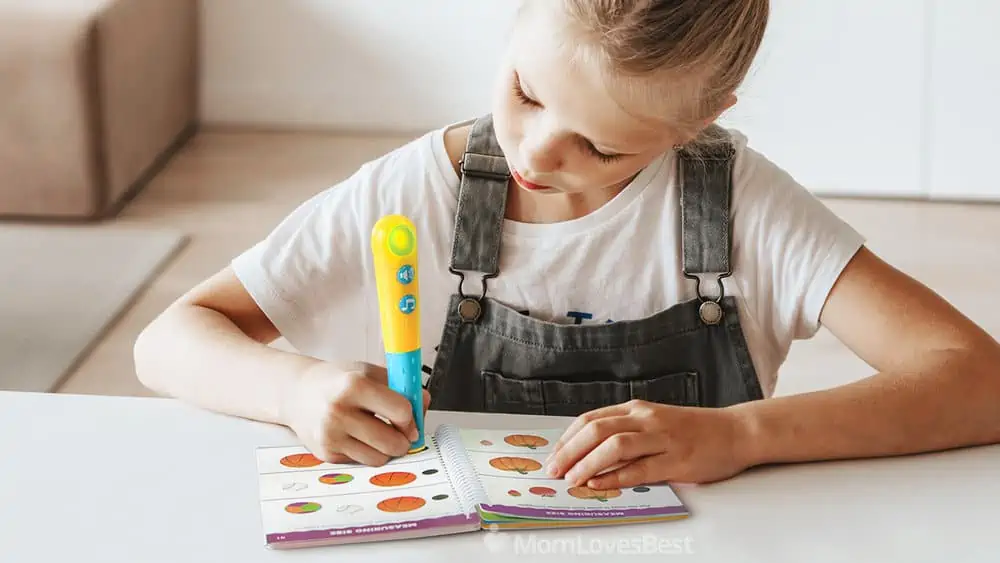
Hot Dots is perfect for independent learning during quiet time or travel. The set includes two spiral-bound books with 100 lessons covering phonics, punctuation, and vocabulary.
The magic lies in the interactive pen. When your child presses it to an answer dot, it lights up and creates a sound to indicate if they are right or wrong. This immediate feedback loop allows kids to self-correct and learn without needing a parent hovering over their shoulder.
Pros
- Excellent for car rides and quiet time.
- Promotes independent study habits.
- Expandable with other Hot Dots book sets.
Cons
- The pen can occasionally give false readings if not held straight.
Our Ratings
Jackinthebox Space Educational Stem Toy
A Space Explorer’s Delight
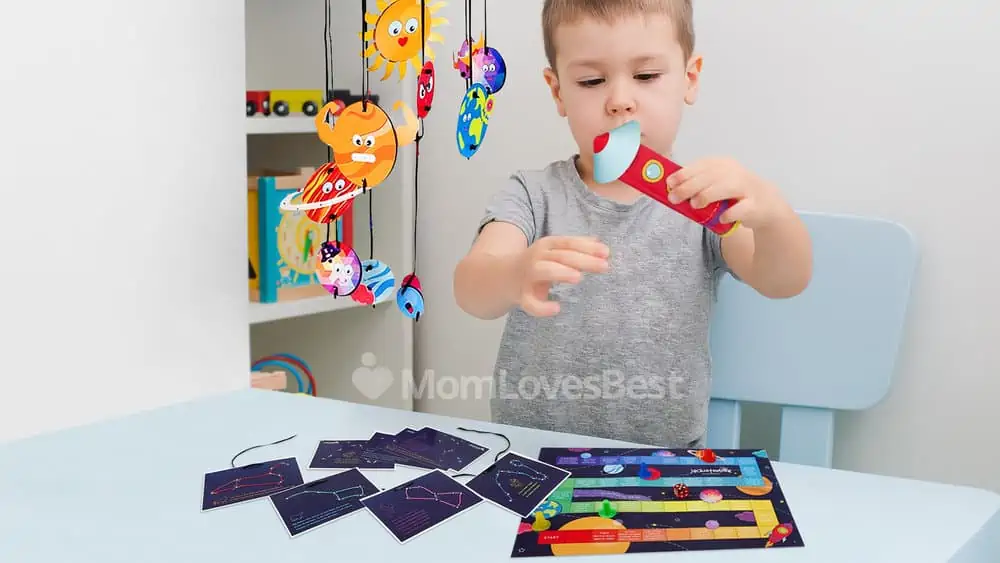
If you have a crafty kid who dreams of astronauts, this 3-in-1 box is a winner. It includes materials for three distinct projects: a solar system mobile, a kaleidoscope, and a rocket experiment.
It even includes a guide for a tasty “Oreo moon phase” activity (cookies not included). While it is more of a craft kit than a hardcore science set, it sparks curiosity about the cosmos and results in items they can display in their room.
Pros
- Great variety of creative projects.
- Appropriate difficulty for 5-year-olds.
- Produces tangible keepsakes.
Cons
- Does not include deep educational background info.
Our Ratings
Beaker Creatures Liquid Reactor Super Lab
For Budding Scientists
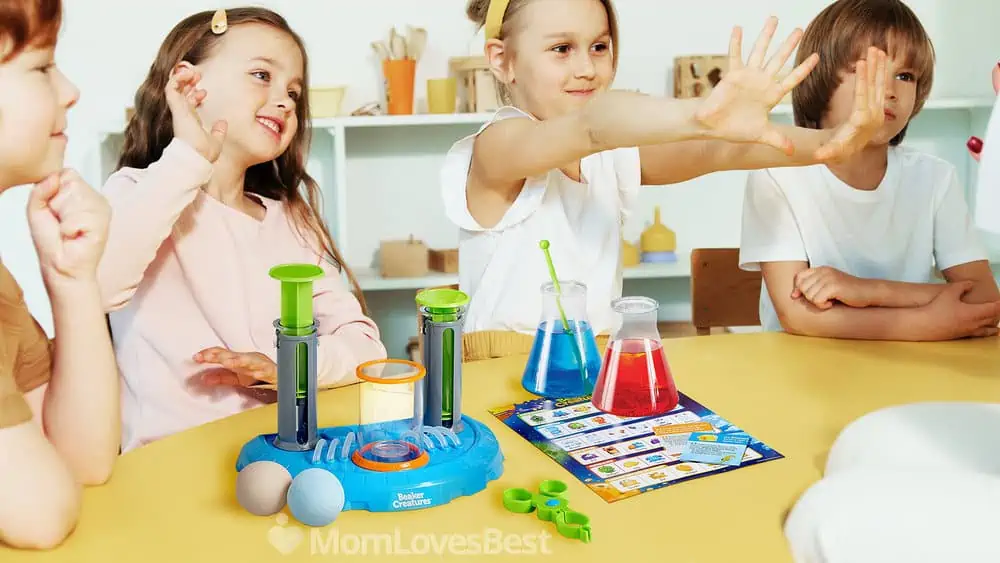
This toy combines the excitement of a blind-bag collectible with a fizzing chemical reaction. Kids use the “reactor lab” to pump water into a chamber containing a reactor pod. As the pod dissolves in a bubbling frenzy, it reveals a small collectible creature.
It creates a sense of drama and excitement around science. While the reaction is the main event, the lab equipment itself is sturdy and can be used for other water-based experiments once the pods are gone.
Pros
- Exciting reveal keeps kids engaged.
- Sturdy lab equipment is reusable.
- Collectibility encourages repeat play.
Cons
- Refill pods can get expensive.
Our Ratings
Plugo Tunes by PlayShifu
Music to your ears
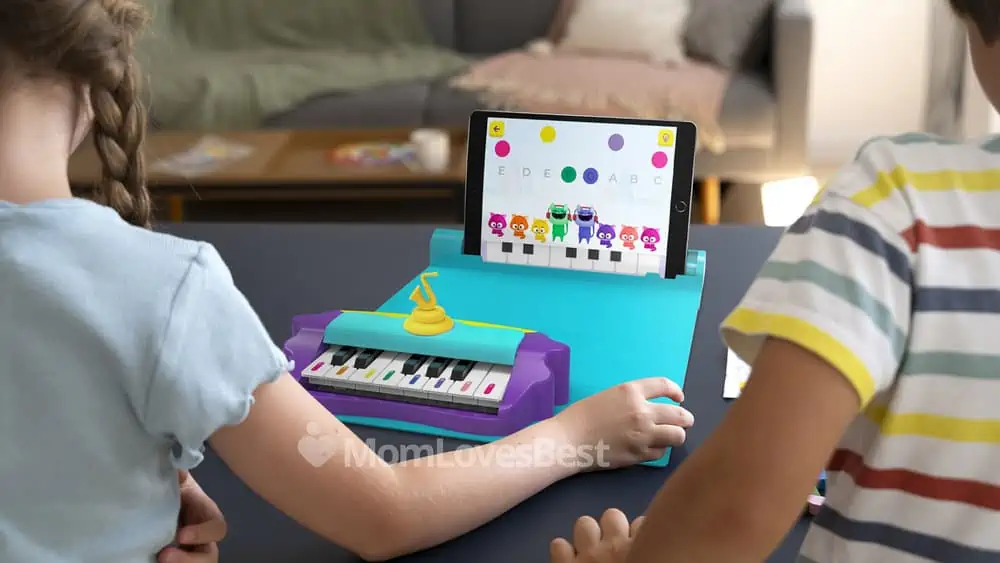
Plugo Tunes cleverly gamifies music lessons using AR technology. You place the physical piano keyboard in front of your tablet, and the screen guides your child’s fingers to the right notes.
It works similarly to “Guitar Hero” but with a real educational outcome. Kids learn musical notes, rhythm, and over 50 songs. It requires an app download initially, but after that, it works without Wi-Fi, making it a solid option for travel if you have the table space.
Pros
- Gamifies music theory effectively.
- Allows recording and playback.
- No batteries needed for the keyboard itself.
Cons
- Requires a compatible tablet or smartphone.
Our Ratings
Circuit Explorer Deluxe Base Station
Flexible Creativity
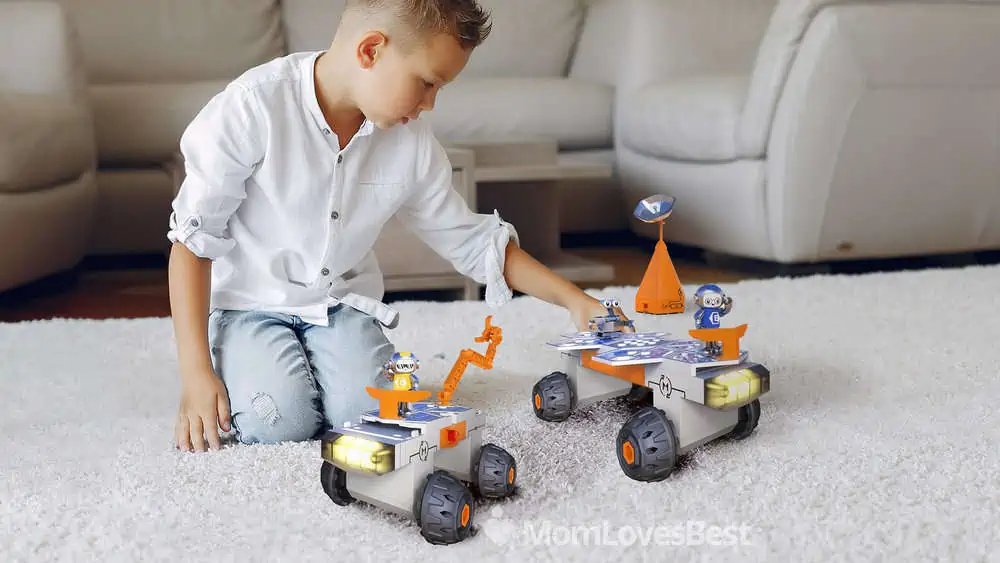
Circuit Explorer takes building blocks and adds an electric twist. The pieces themselves are the circuit connectors, allowing kids to build a space station that actually lights up and moves.
Because the connections are built into the blocks, it removes the frustration of fiddly wires. The instructions are image-based, meaning pre-readers can follow along easily. It is a fantastic bridge between standard construction toys and electronics kits.
Pros
- Intuitive “snap-together” circuitry.
- Instructions require no reading.
- Promotes logic and spatial skills.
Cons
- Requires plenty of AAA batteries.
Our Ratings
Learn & Climb Play Money
Financial Literacy
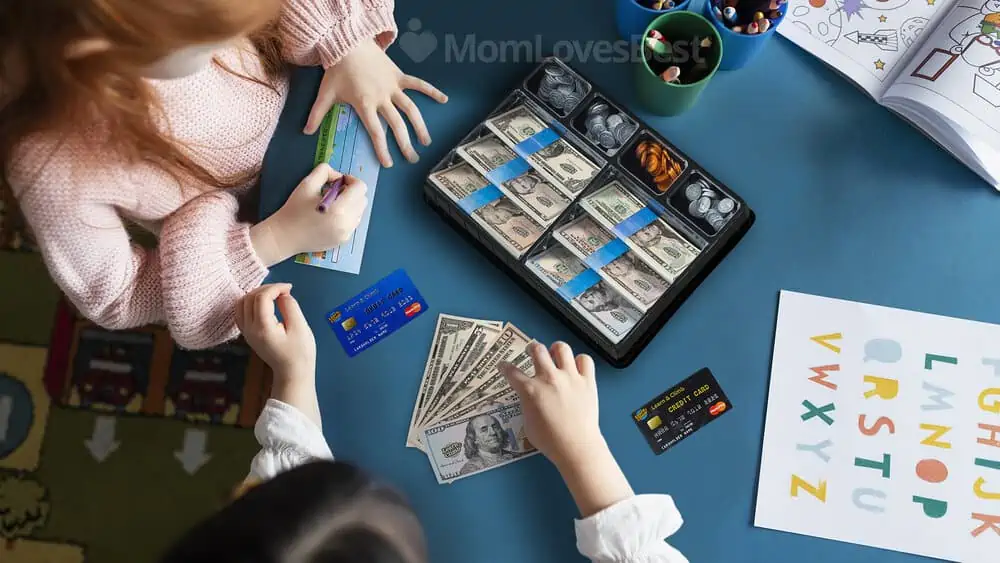
Never underestimate the power of playing “store.” This set includes realistic bills, coins, credit cards, and even a checkbook to help kids grasp the basics of commerce.
The money looks authentic enough to be engaging but is clearly marked as play money. It is perfect for setting up a pretend grocery store or restaurant at home, turning playtime into a practical math lesson on addition, subtraction, and making change.
Pros
- Highly realistic design.
- Teach addition and subtraction naturally.
- Great for imaginative role-play.
Cons
- Coins are small and can get lost easily.
Our Ratings
Sum Swamp Board Game
Adds Up To Fun
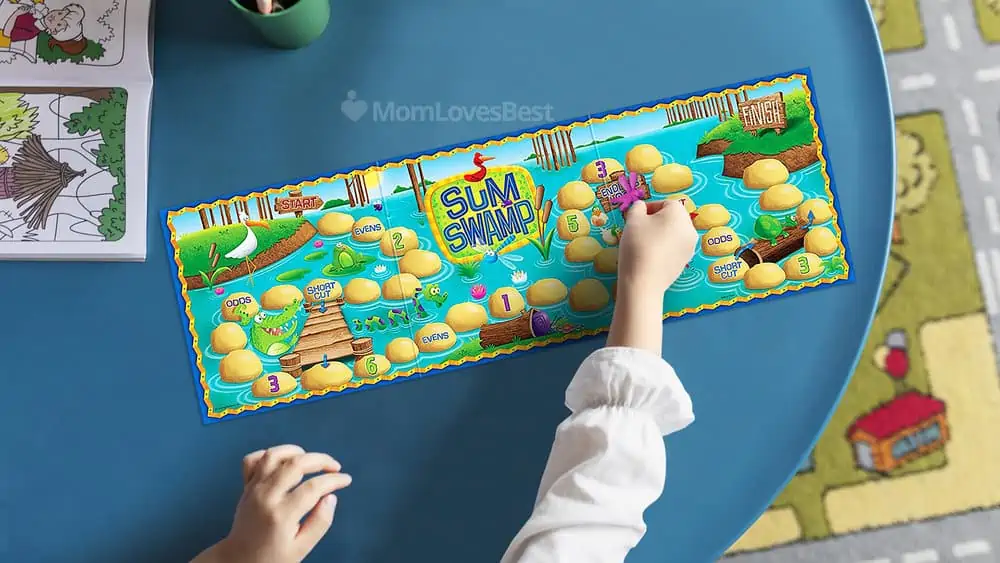
If your child resists math worksheets, Sum Swamp is the solution. This board game disguises addition and subtraction drills as a race through a swamp filled with critters.
Players roll dice to determine their moves, solving simple math problems to advance. It hits the sweet spot of being easy to learn but competitive enough to keep kids interested. It is essentially homework that feels like playtime.
Pros
- Excellent for fluency in basic math.
- Fun swamp theme appeals to kids.
- Short game time prevents boredom.
Cons
- Older children might outgrow it quickly.
Our Ratings
FAQs

Are Educational Toys Better Than Regular Toys?
Not necessarily. Any toy that encourages imagination, social play, or problem-solving is educational. However, specific educational toys are designed to target and refine particular skills, like coding or phonics, more efficiently than general toys.
How Much Should I Spend on a Toy for a 5-Year-Old?
You do not need to spend a fortune. Many excellent learning games cost under $20. Focus on the value of play rather than the price tag; a simple deck of cards can teach as much math as an expensive electronic tablet if used correctly.
What Are STEM Toys?
STEM stands for Science, Technology, Engineering, and Math. These toys are designed to spark interest in these fields through hands-on play, fostering critical thinking, logic, and problem-solving skills from a young age.
Laugh And Learn
Play is the serious work of childhood. While we all want our kids to be smart and successful, the best educational toys for 5-year-olds are the ones that prioritize fun over rigid lessons.
Whether it is a gooey slime kit or a high-tech coding robot, the goal is to spark curiosity. When a child is genuinely interested, the learning happens naturally. So pick something that looks fun, get down on the floor with them, and enjoy the process.