What lives down there? Hand over a crayon and find out.
The ocean is the easiest theme to hand a mixed-age table, because one page can be a smiling starfish and the next can be a whale covered in texture. This set of ocean coloring pages runs all 40 sheets across that whole range.
Marine animals fill the first half: seahorses, a dolphin, a shark, a sea turtle, two octopuses and a submarine shaped like a fish. The second half moves up to the shoreline for sandcastles, lighthouses, pelicans and palm trees.
Every sheet prints on plain letter paper. Pick one to match the child in front of you, or work down the list together over a rainy week.
Cute Seahorse Among the Bubbles
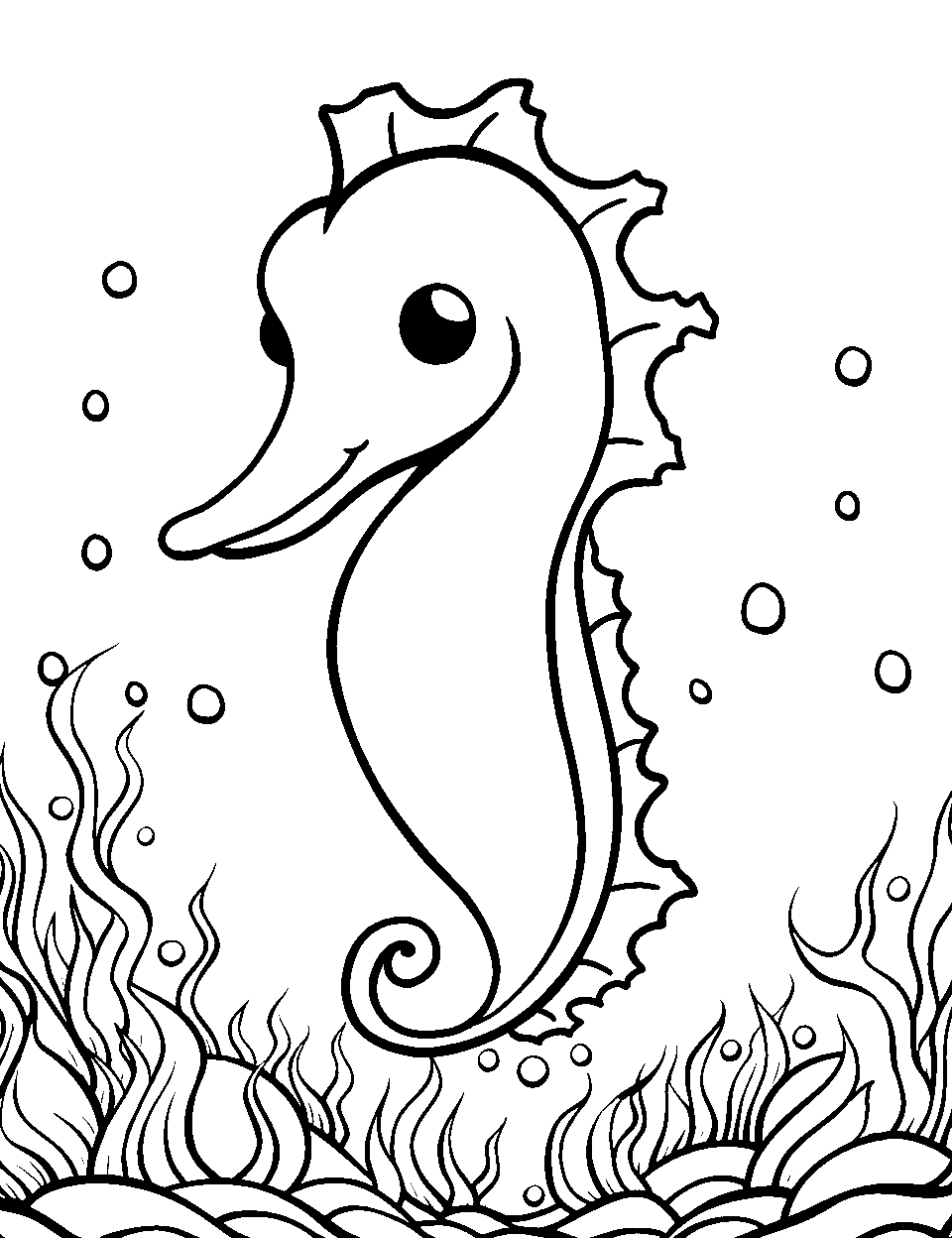
A round-eyed seahorse hangs in the water with its tail curled into a neat spiral. The outlines are thick and the shapes are big, so a preschooler can fill it in without going off course. Bubbles float on both sides of the body and wispy seaweed grows along the bottom.
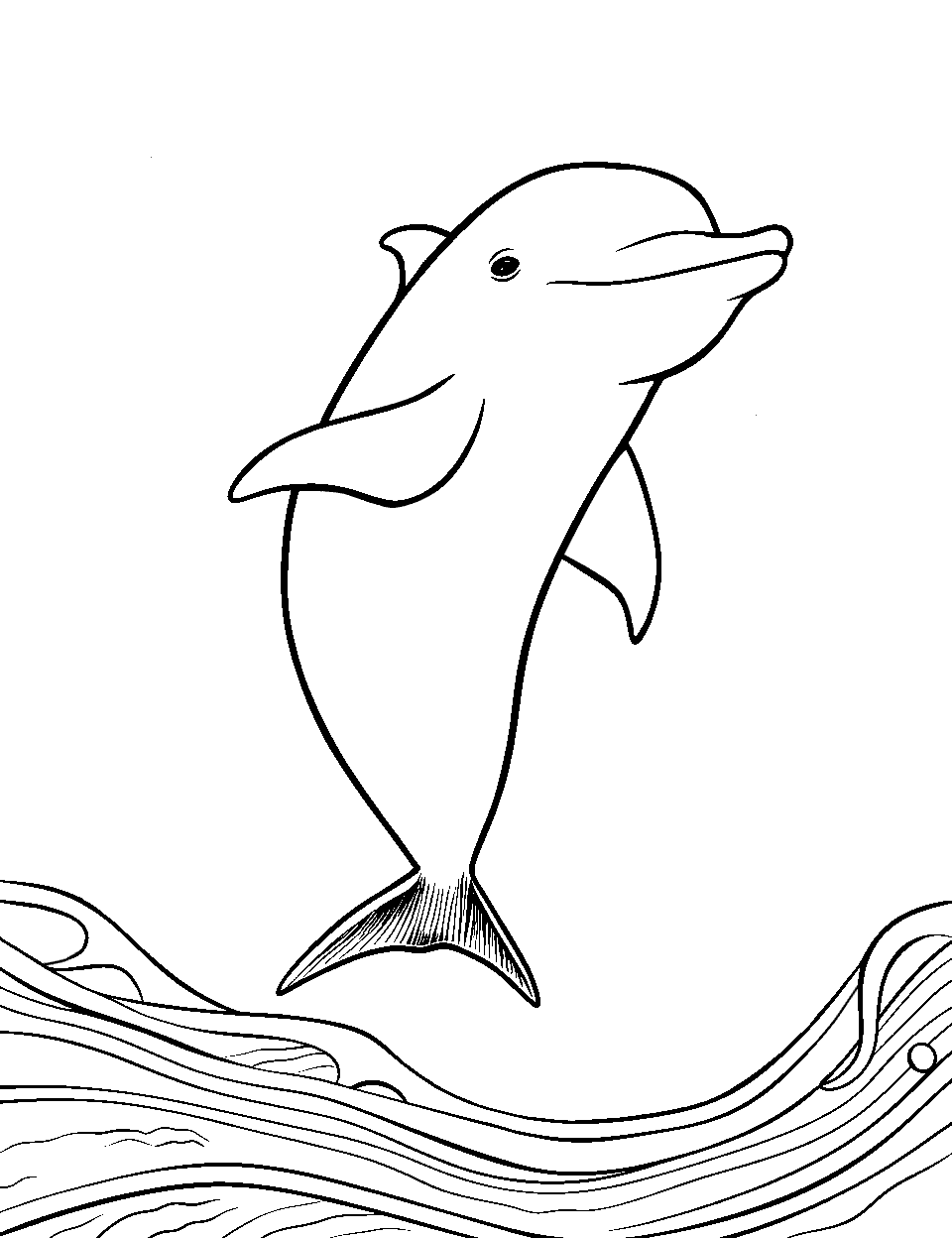
This playful dolphin is caught mid-leap above a set of long, rolling waves. Nearly every line on the page is a single smooth curve, which makes it one of the quickest sheets here to finish. Gray for the body and two layered blues for the water lines keeps it looking like open sea.
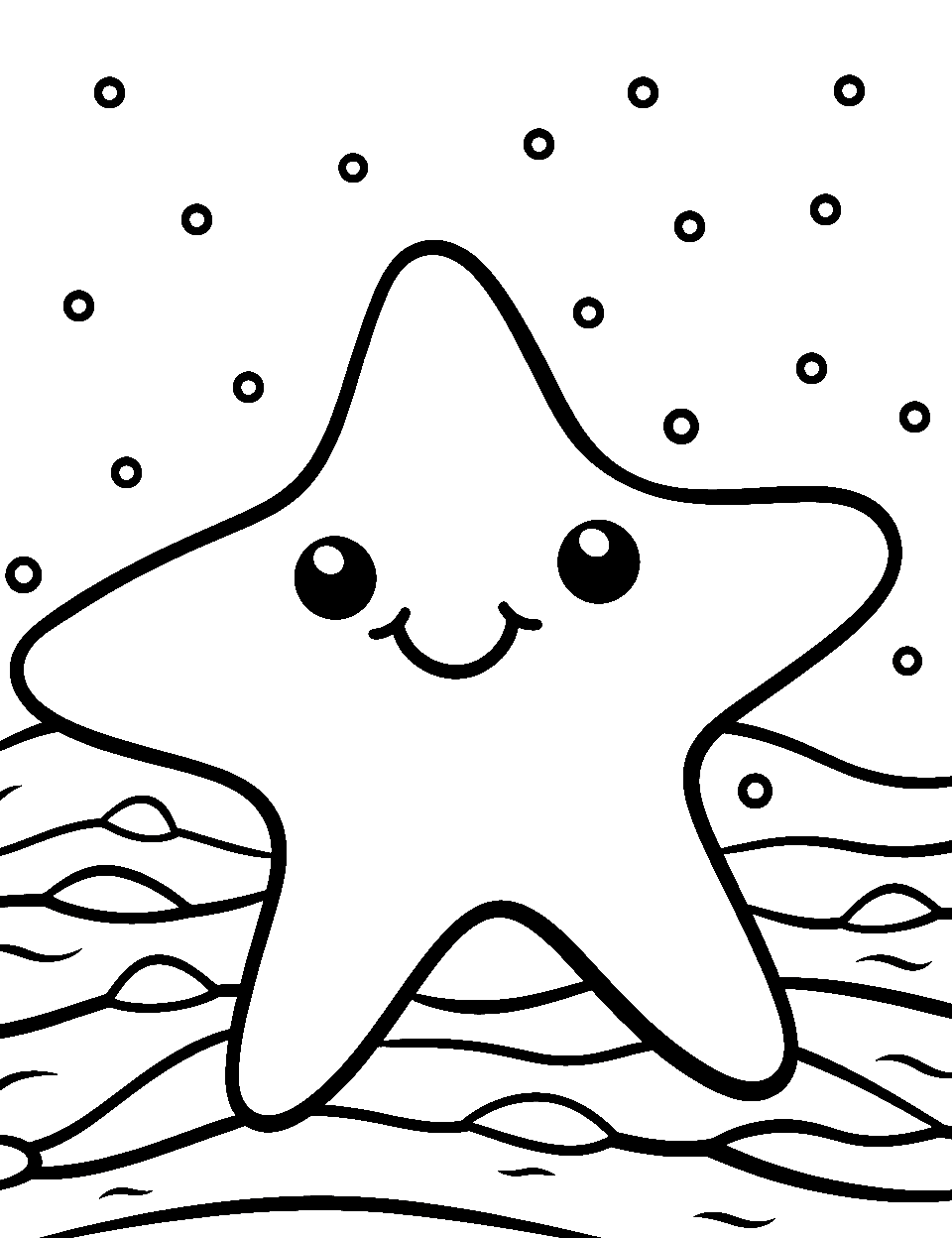
A smiling starfish sits front and center on this kawaii cartoon-style sheet. Its five arms are drawn as one thick outline with no interior detail to work around. Yellow or coral pink for the star and soft tan for the ridges of sand underneath works well. Small open circles fill the space above it if a child wants somewhere to practice tiny bubbles.
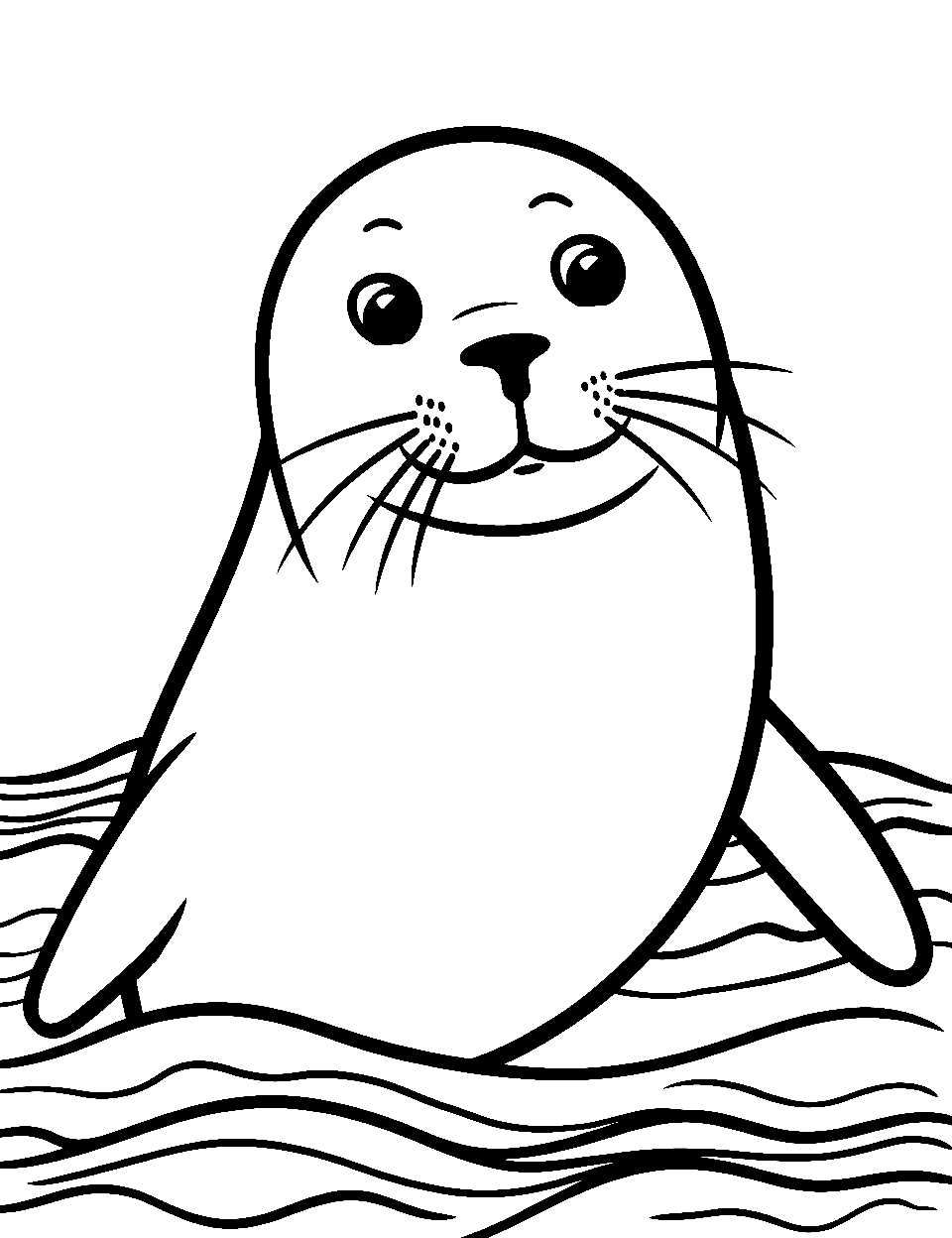
Here is a cute coloring page of a seal lifting its head and shoulders clear of the water. The whiskers and the wavy water lines are the only fine detail on the whole sheet. Gray or soft brown for the seal, then blue for the ripples running behind it.
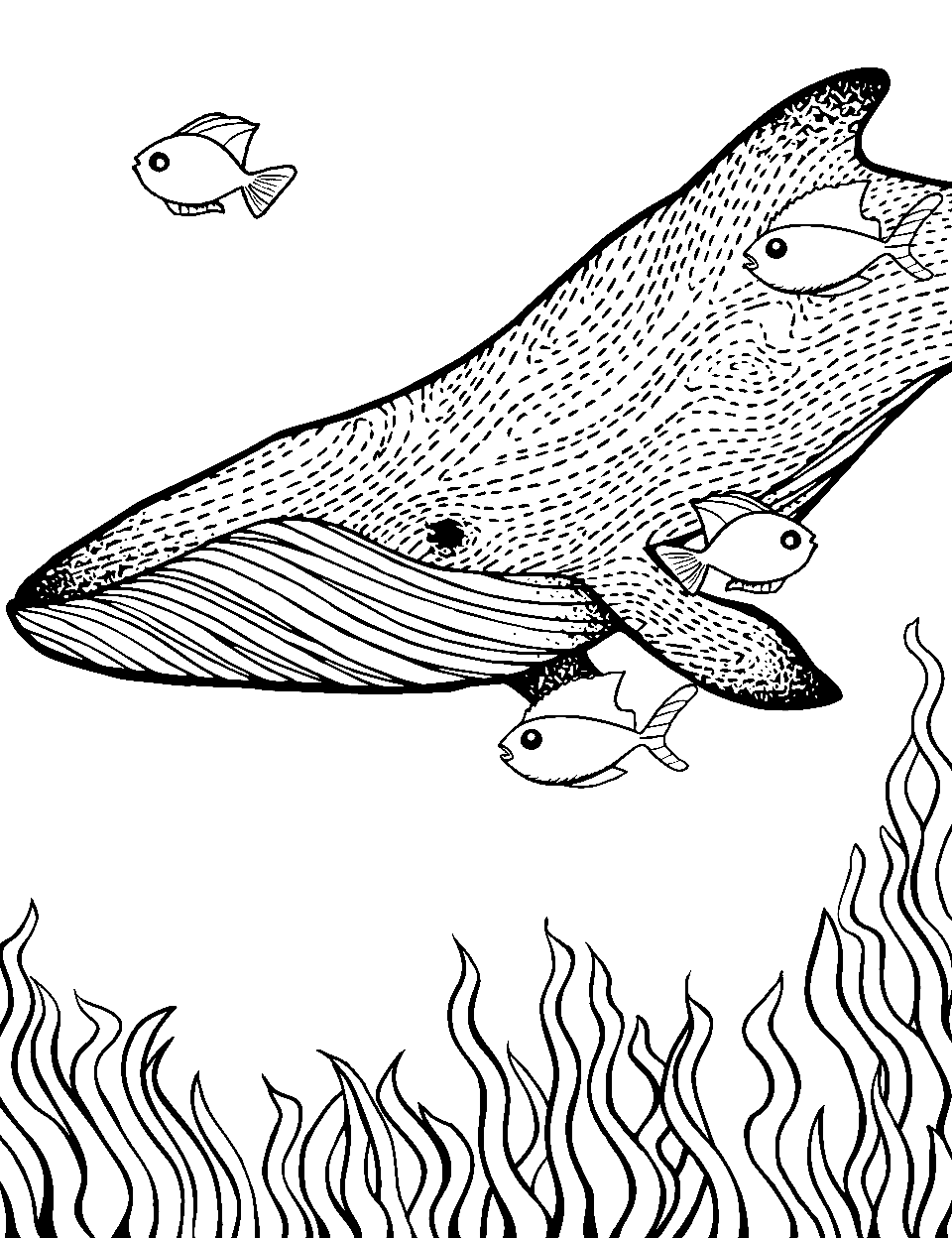
This whale takes up most of the page, drawn with dotted texture across its back and long grooves running down its throat. Four small fish swim around it and a band of tall seaweed crosses the bottom. The texture rewards colored pencils far more than markers, so hand this one to an older child or keep it for yourself. A deep blue-gray back with the throat grooves left pale gives the best contrast.
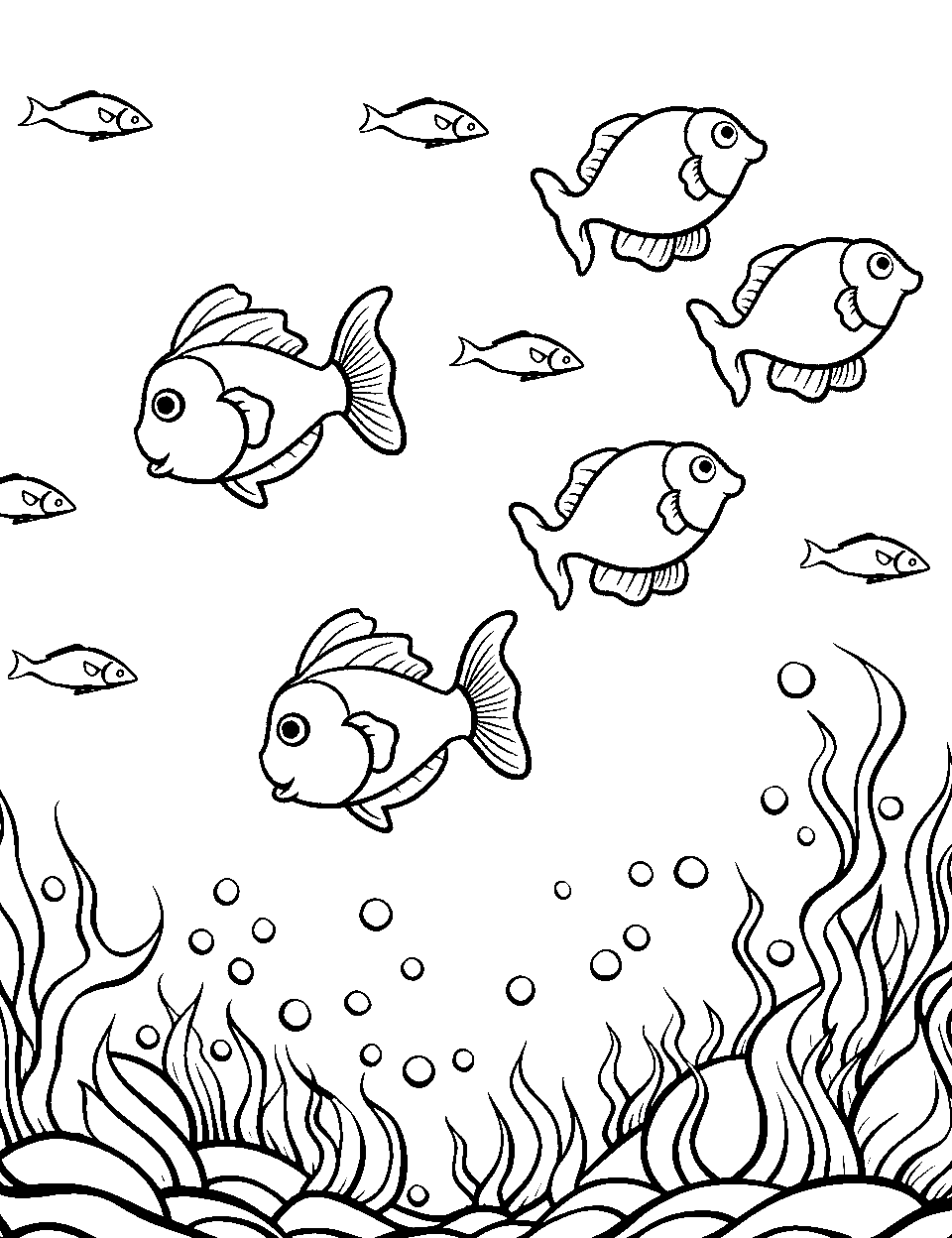
A group of round cartoon fish drifts above a bed of seaweed and smooth rocks, with slim little minnows tucked between the bigger ones. Every fish is a closed shape, which makes this the ideal page for a different color per fish. Bubbles rise from the seabed and can be left white so they read as air.
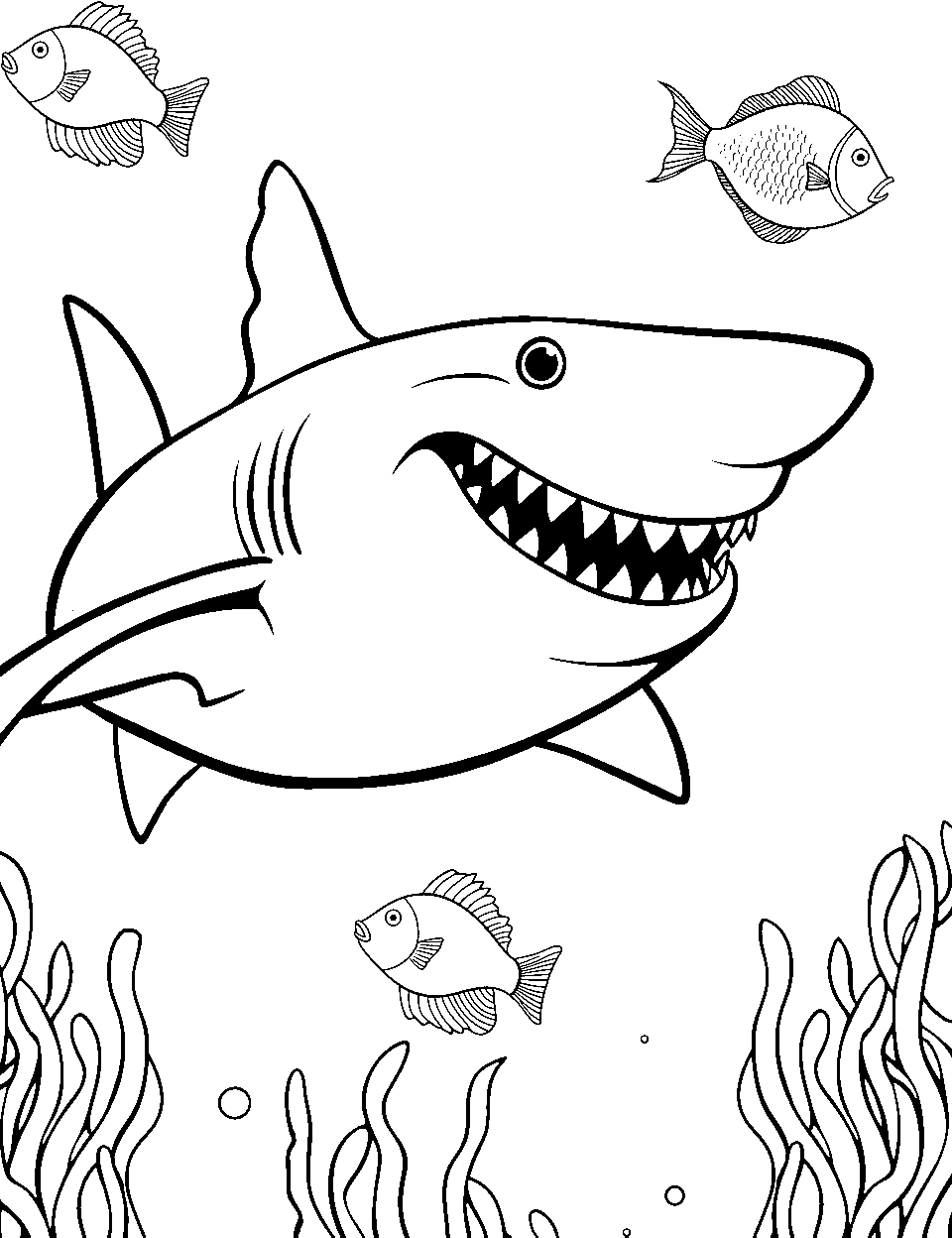
A shark fills the middle of this page with its mouth open and a row of triangular teeth on show. It is grinning rather than menacing, which suits younger kids who love sharks but do not want the scary version. Three small fish keep their distance near the top and bottom of the frame. Gray across the back fading to white on the belly is the classic pick.
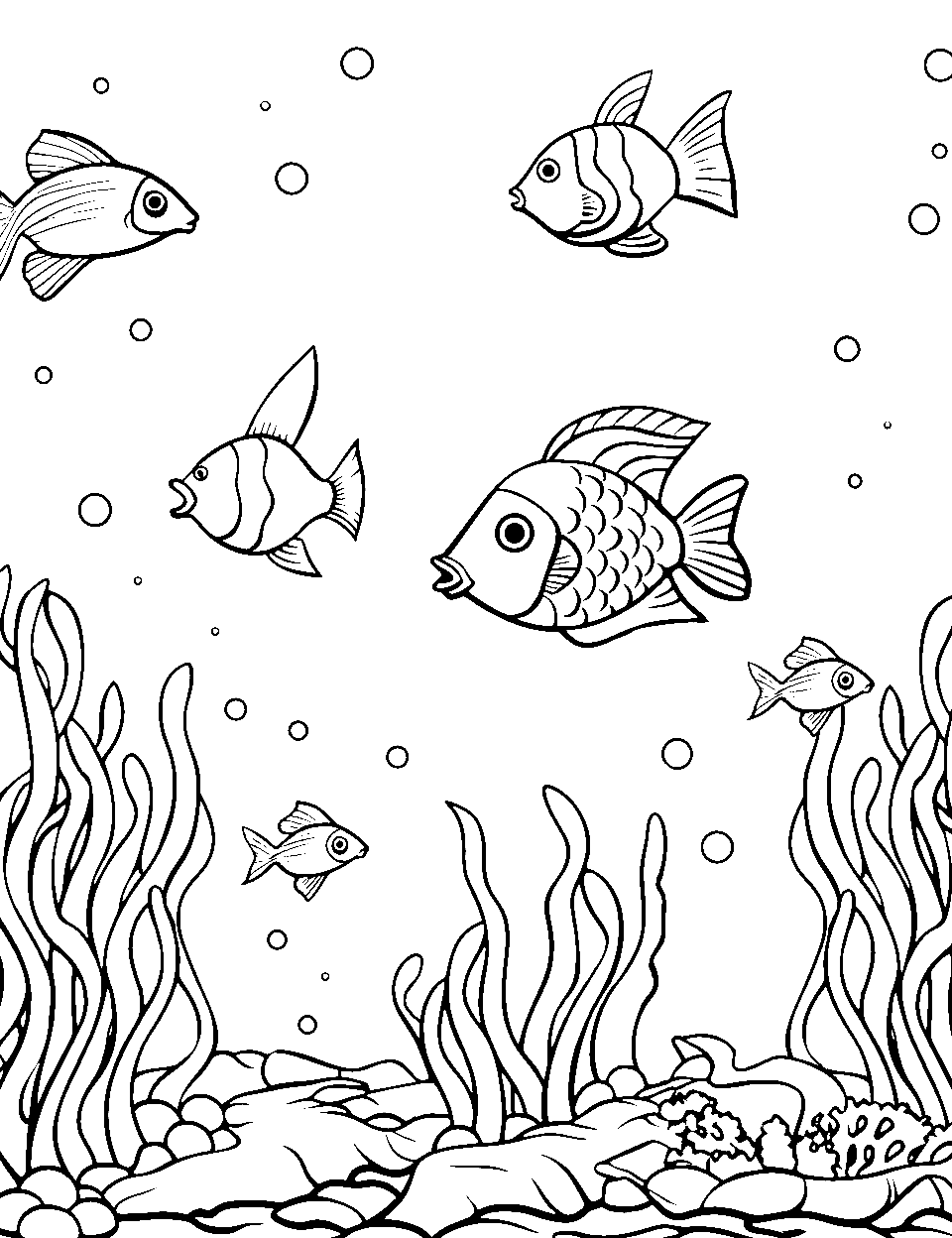
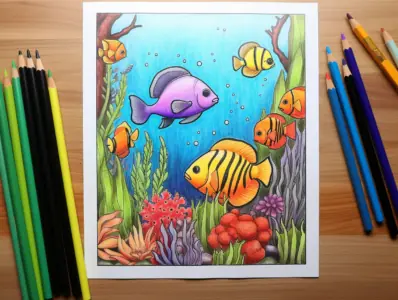
A school of tropical fish swims above tall strands of seaweed, and each one is patterned differently, from wide stripes to overlapping scales. Bubbles are scattered right through the water around them. Give every fish its own scheme and the finished page ends up looking like a reef tank.
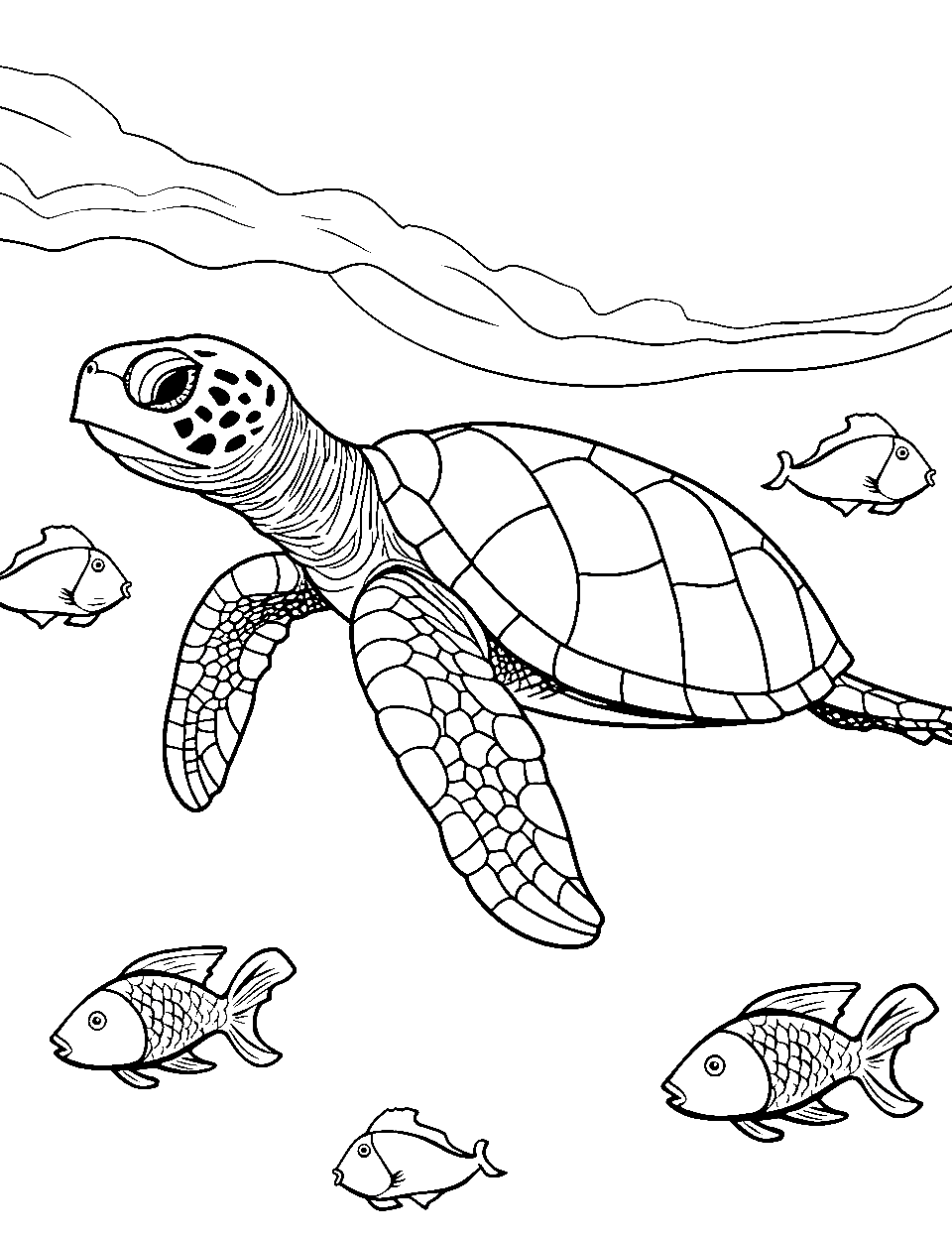
This sea turtle glides along just under the surface, drawn with mapped-out plates on its shell and scales across both front flippers. Small fish swim above and below it, and the waterline is visible at the top of the page. The shell segments make it good practice for greens and browns, or for trying a slightly different shade in every plate.
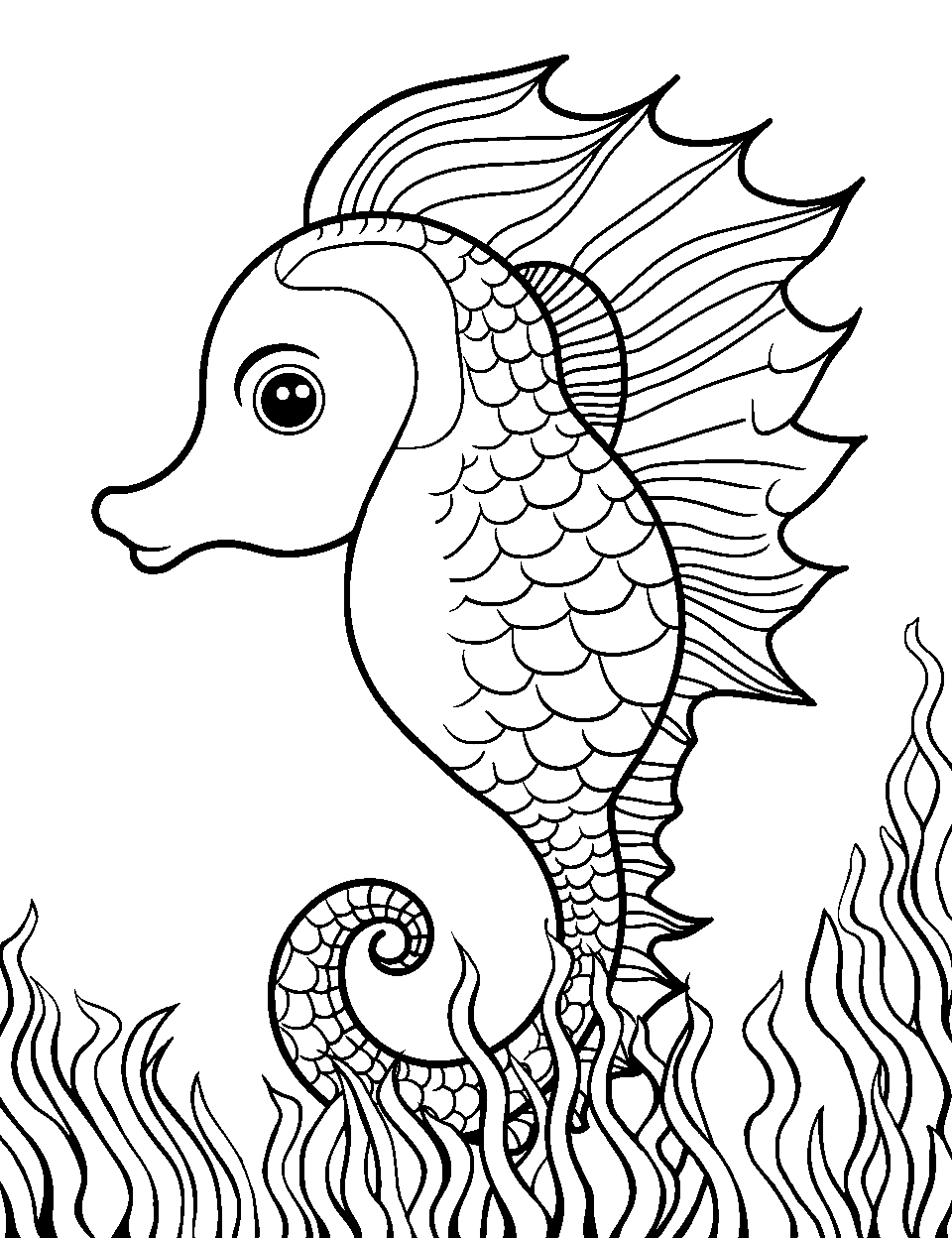
This seahorse is the grown-up twin of the cute one near the top of the list, covered in rows of scales with a long ridged fin down its back. Fine seaweed grows across the bottom of the sheet. Colored pencils handle the small scale shapes much better than thick markers here. It is a slow, satisfying page for an older child or an adult.
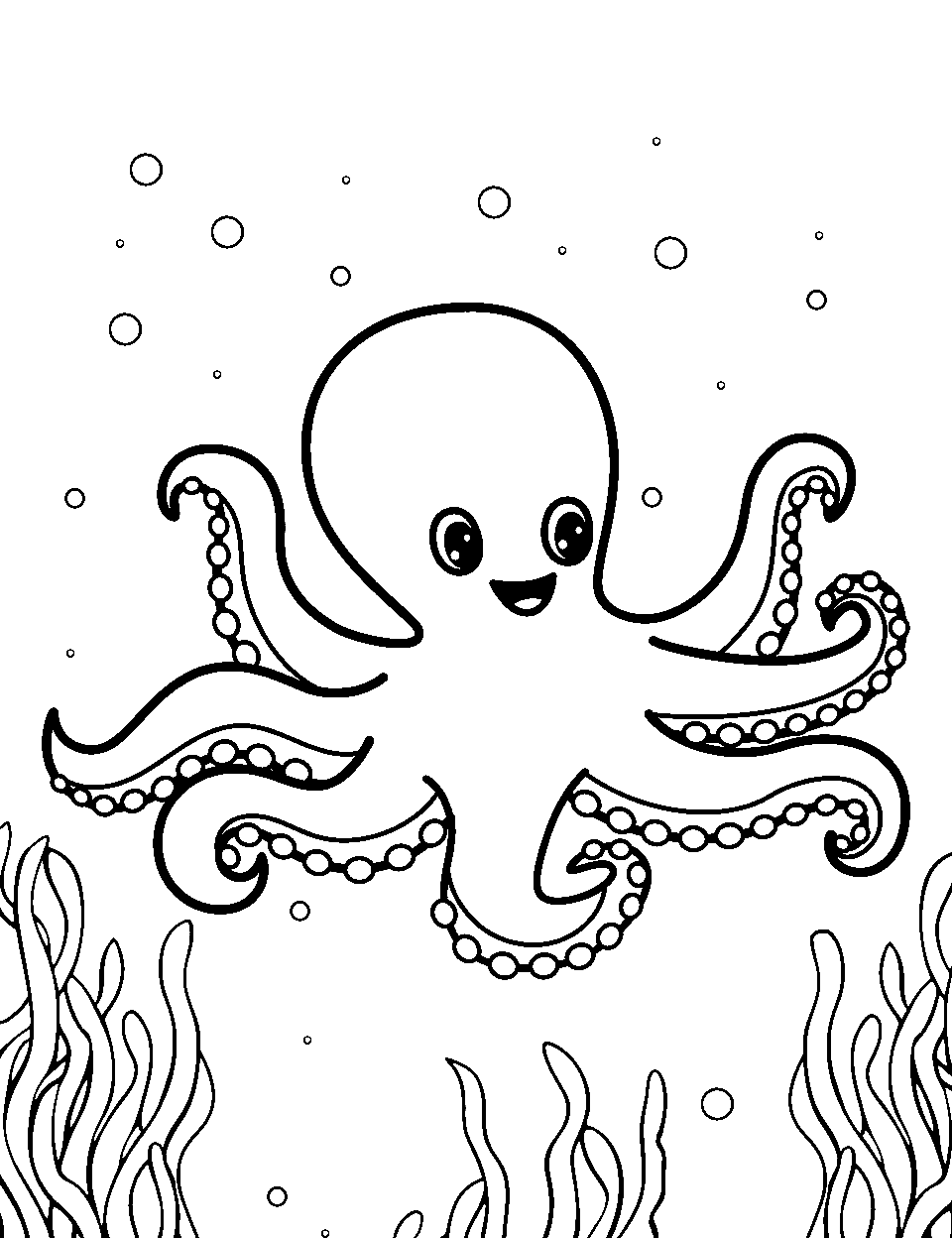
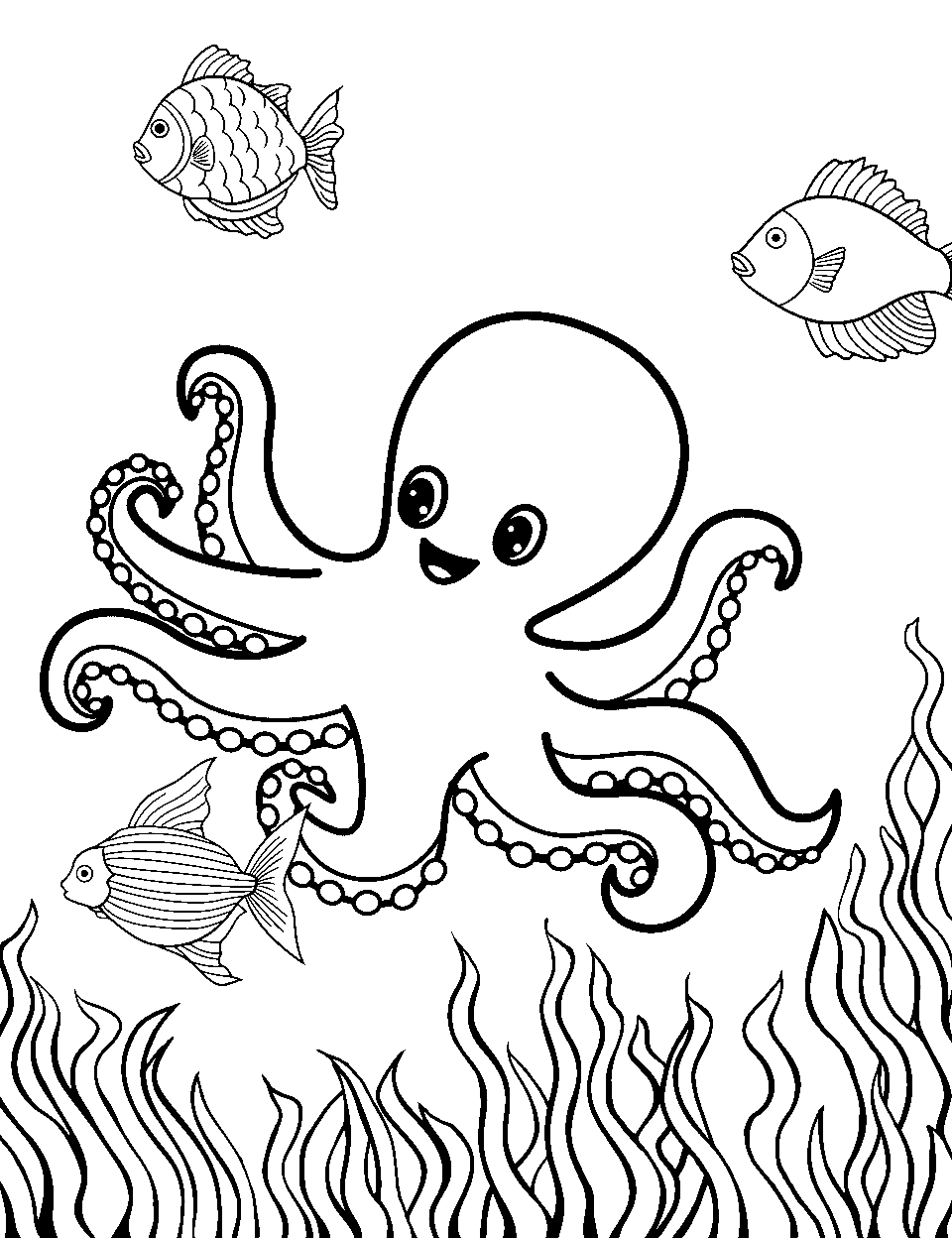
An octopus with its tentacles curling in every direction smiles out from the middle of the page. Each arm carries a line of round suckers that are fun to dot in with a contrasting color. Bubbles float above and seaweed grows below, leaving plenty of open space around the body.
Rolling ridges of sand fill this page with bubbles rising through the water above them. One small plant grows on the left and a tuft of sea grass sits over on the right. There are no animals at all, so it is a calm, low-pressure sheet, and it doubles as a background if you cut fish out of the other pages and glue them on.
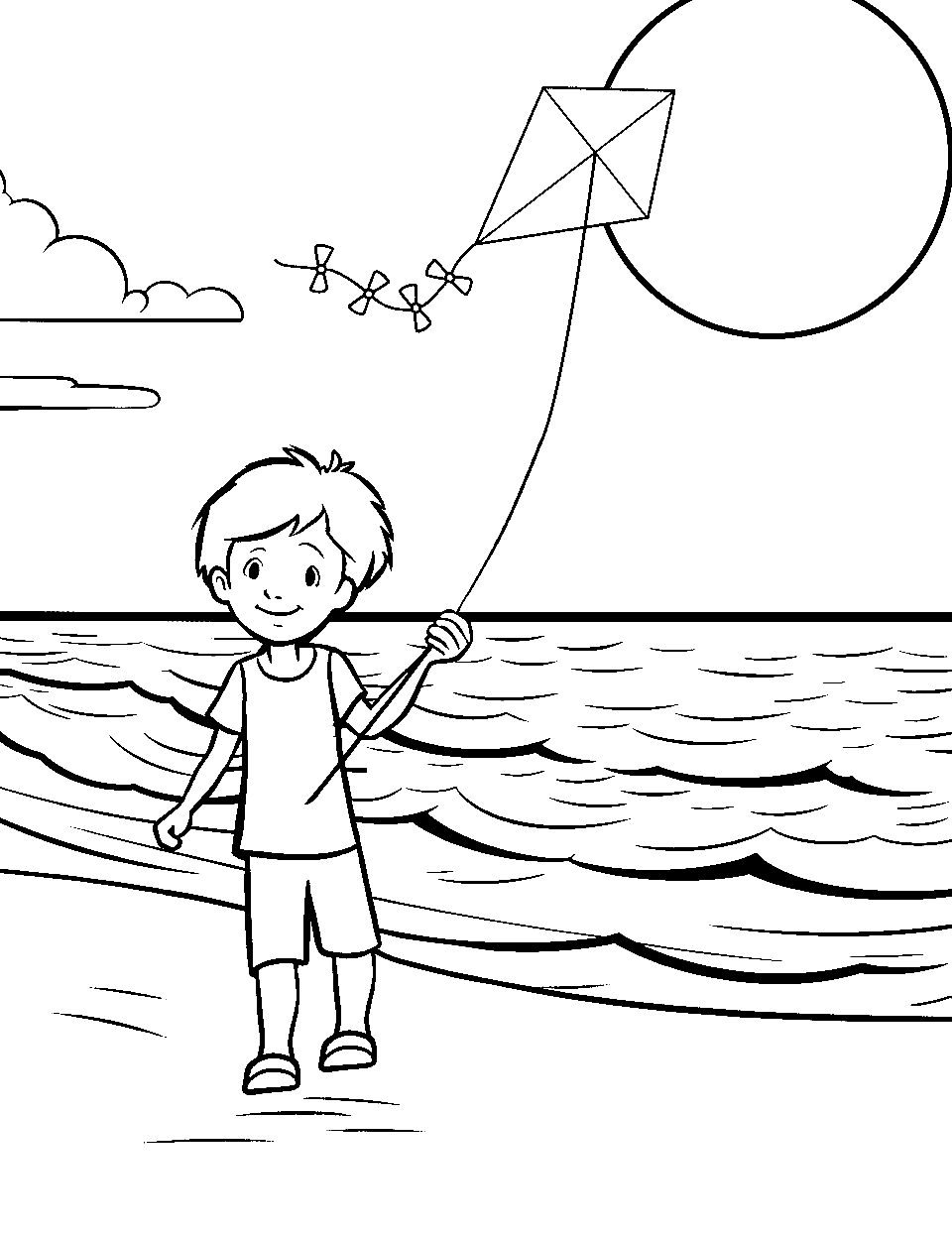
This sunny beach scene puts a boy at the water’s edge with a diamond kite and a bow-knotted tail trailing behind it. A large sun disc sits in the top corner and flat clouds drift on the left. The sea fills the whole background in long horizontal lines, which is an easy place to blend two blues into each other.
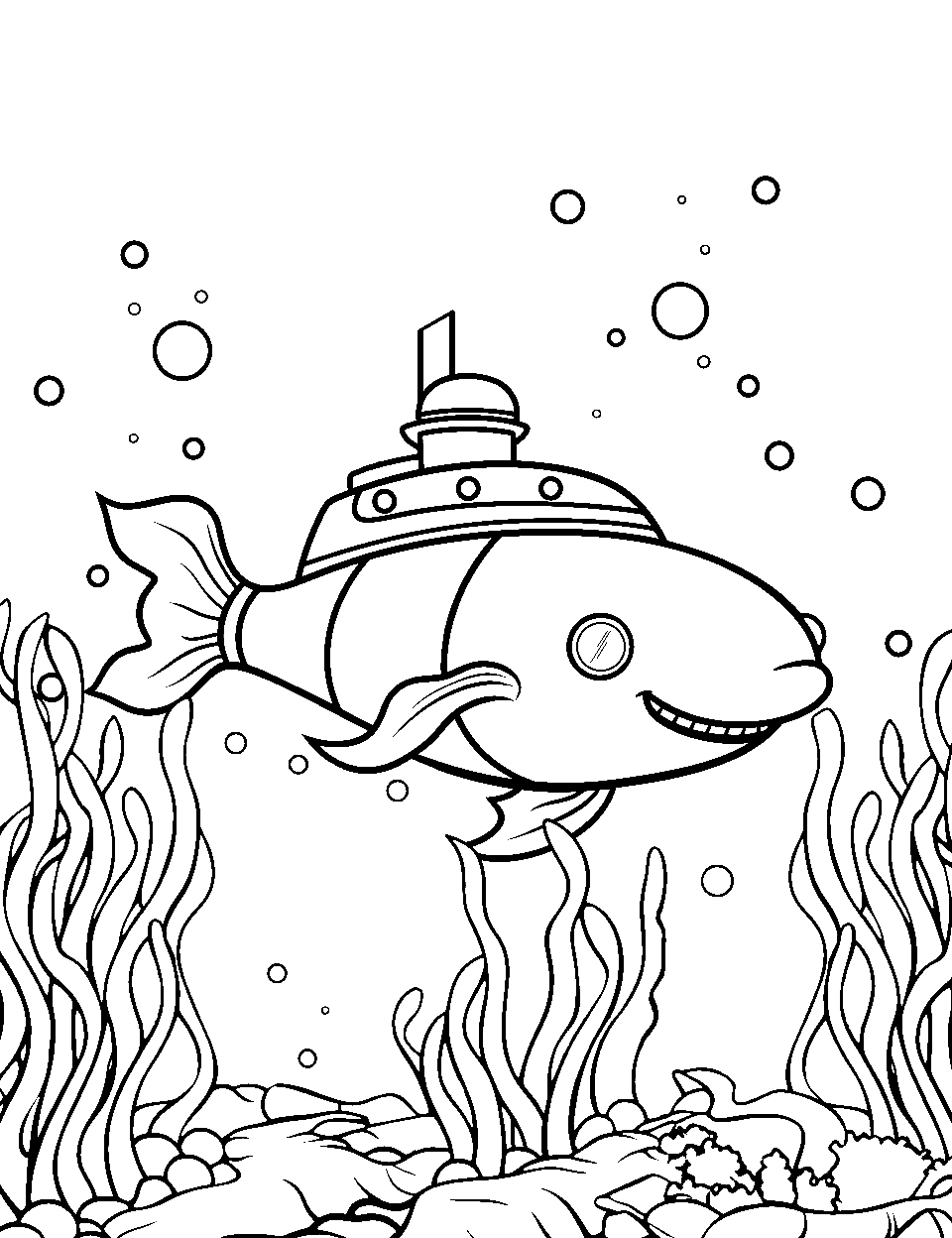
This isn’t your average boat. It is a submarine built to look like a fish, with a tail fin at the back, a porthole where the eye should be and a periscope on top. Bubbles rise around it while seaweed sways over the rocks below. Metallic gray with one bright accent color on the fins makes the joke land.
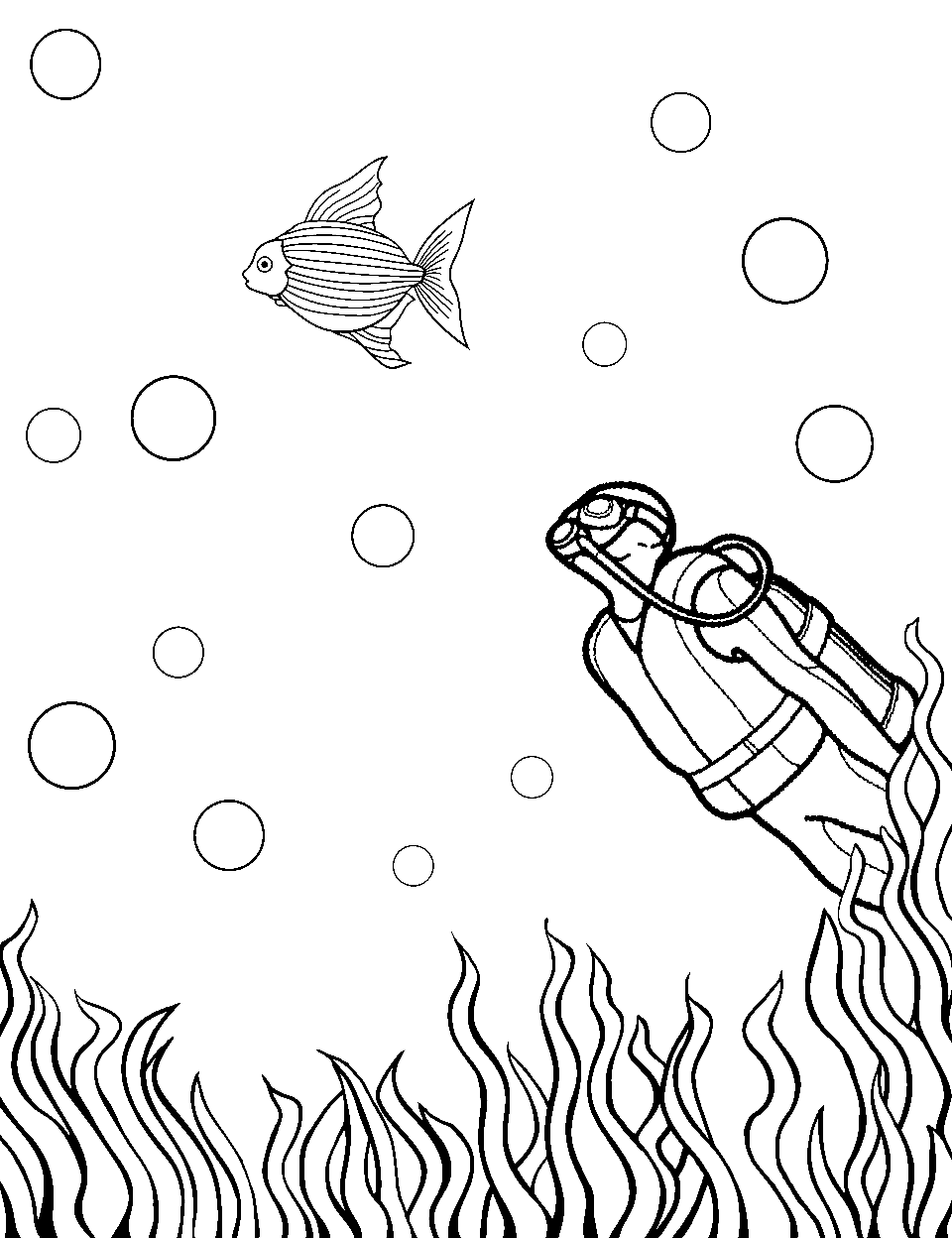
A scuba diver swims down the right side of the page with an air tank strapped on and a mask covering the face. One striped fish hangs in the upper left corner and big round bubbles drift between the two. Those bubbles are large enough for small hands, so this sheet works at a mixed-age table.
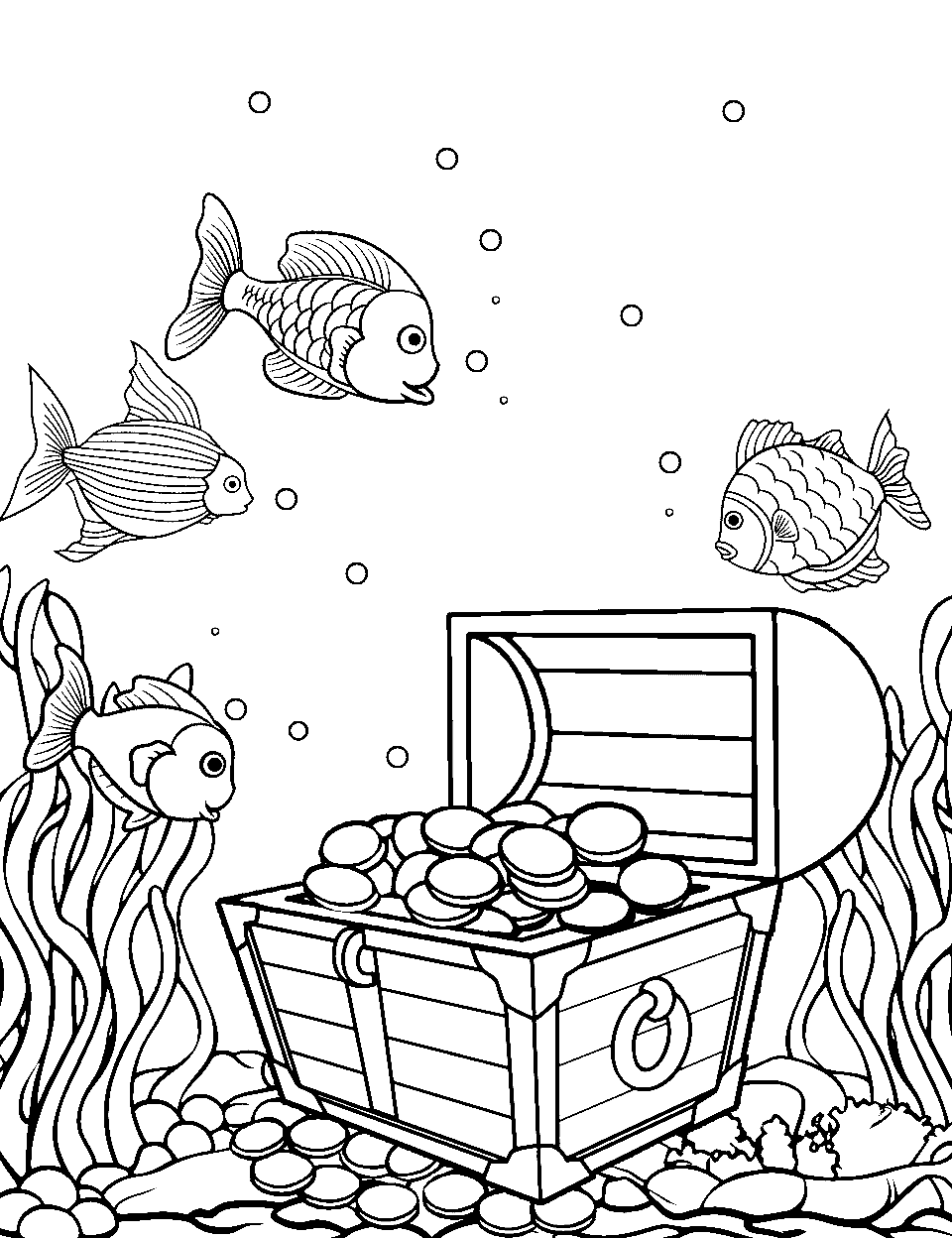
An open treasure chest piled with round coins sits on the sea bed while four fish circle around it. The coins are simple ovals, so they are a quick win in gold or copper. Seaweed frames both sides of the chest and pebbles cover the sand below it.
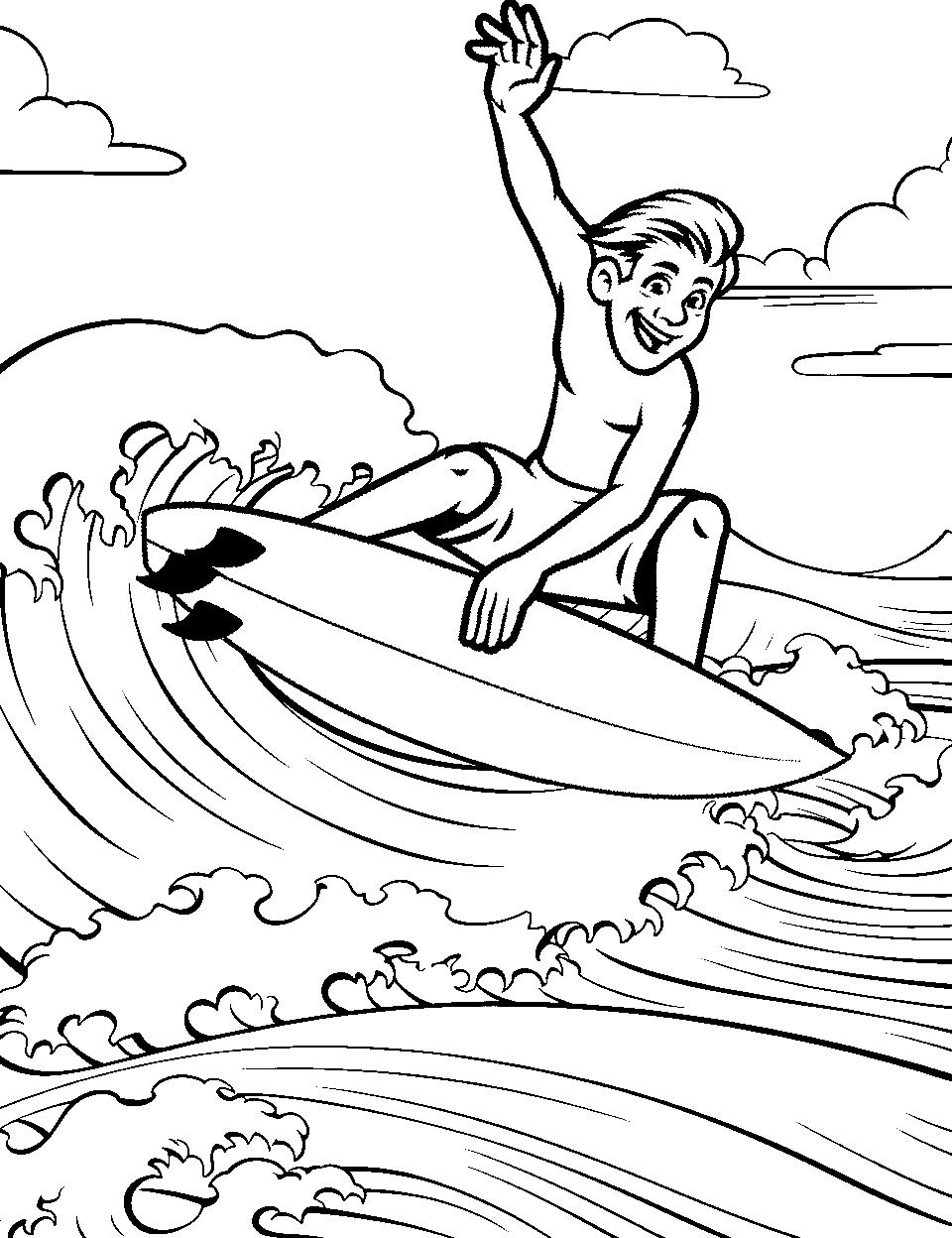
A grinning surfer rides a breaking wave with one arm thrown up in the air. The wave curls and foams across the bottom half of the sheet, and all that white water can be left blank or shaded very lightly. Clouds sit high in the sky above the board.
A second octopus, this one with dotted suckers along every arm, floats above a thick bed of seaweed. Three fish share the page and each is drawn with its own fin and scale pattern. Purple or deep red for the octopus makes it stand out against all that green.
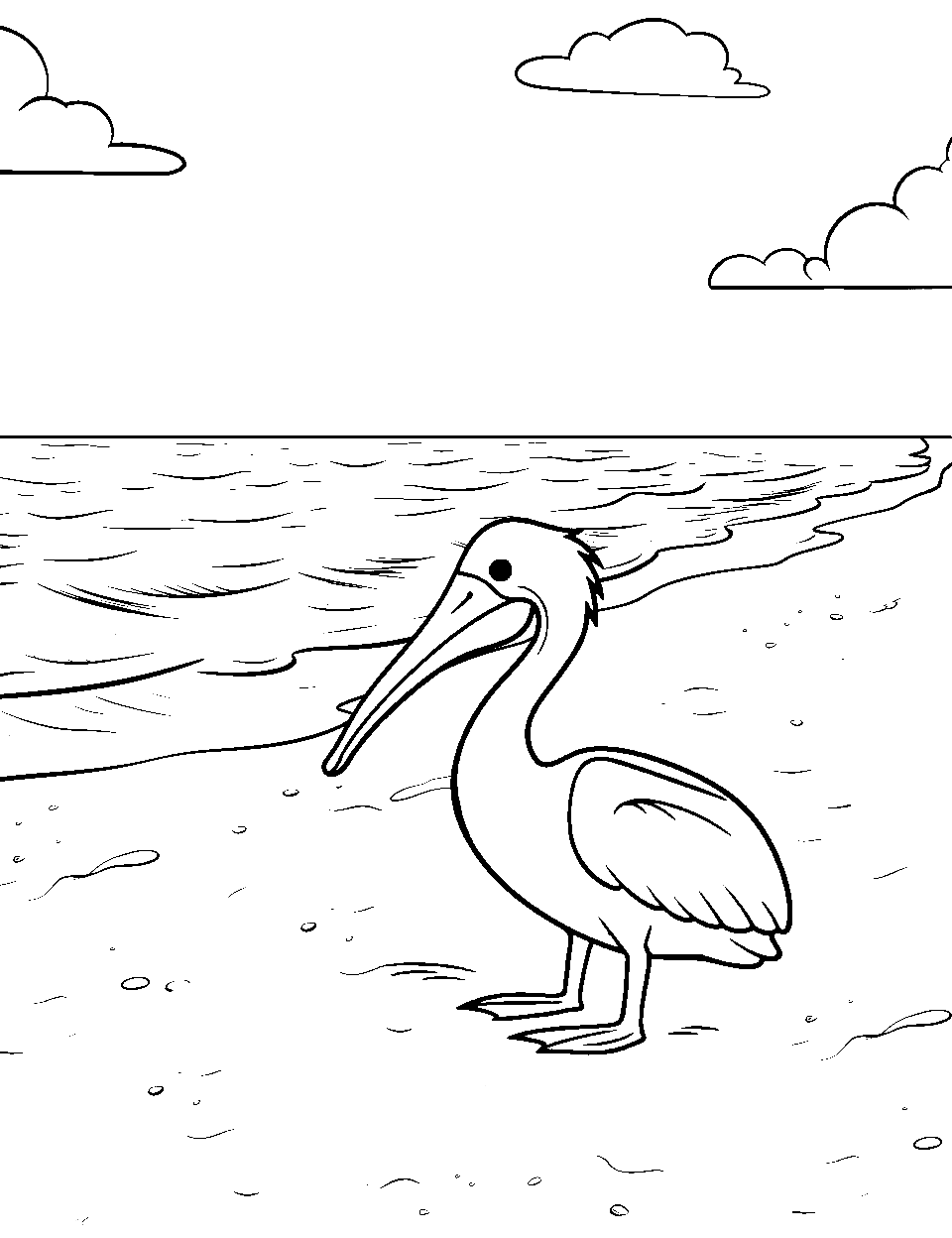
A pelican stands on wet sand with the shoreline curving away behind it. Its long pouched bill is the biggest single shape on the page and takes color quickly. The sand around it is left nearly empty apart from a few speckles, so there is room to add your own shells or footprints.
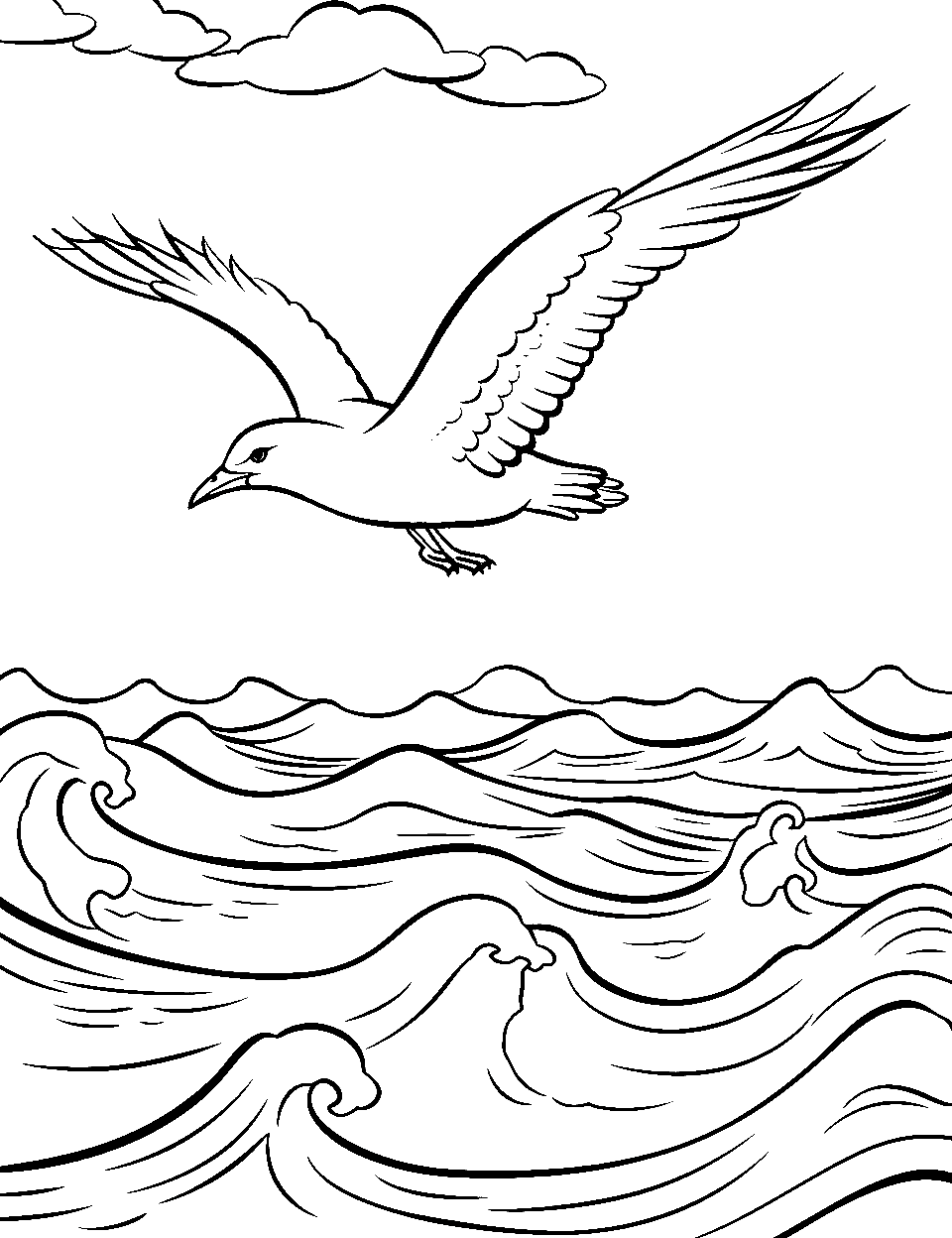
A seagull glides across the top of this page with both wings spread and every feather drawn in. Below it the sea is a stack of choppy waves topped with small curls of foam. The feathers reward a sharp pencil, while the water can be blocked in quickly with a marker.
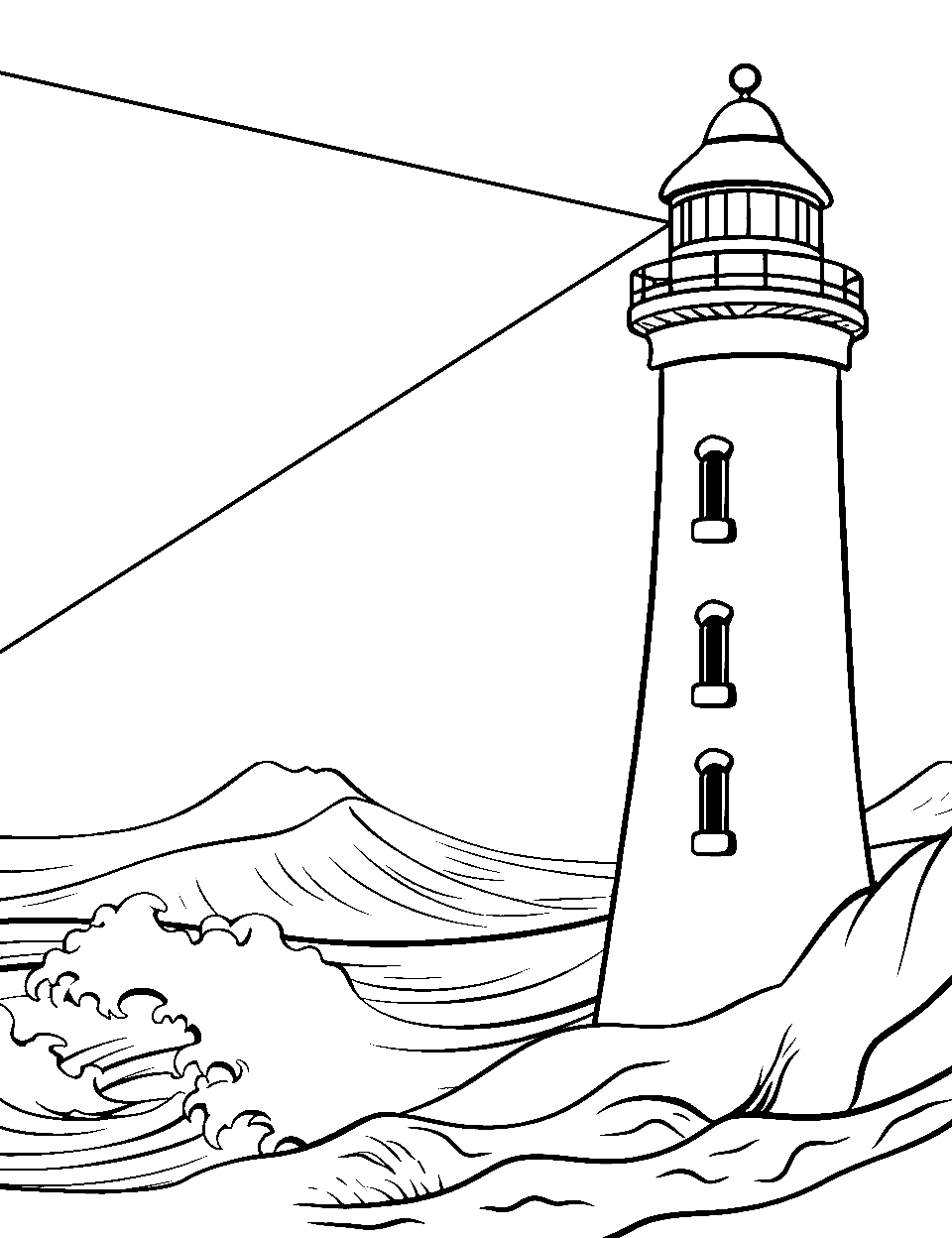
A tall lighthouse stands on rock at the right of the page, with a wedge of light drawn out across the sky to the left. A wave breaks against the rocks at its base. The tower itself is drawn plain, so the classic red-and-white banding is entirely up to you.
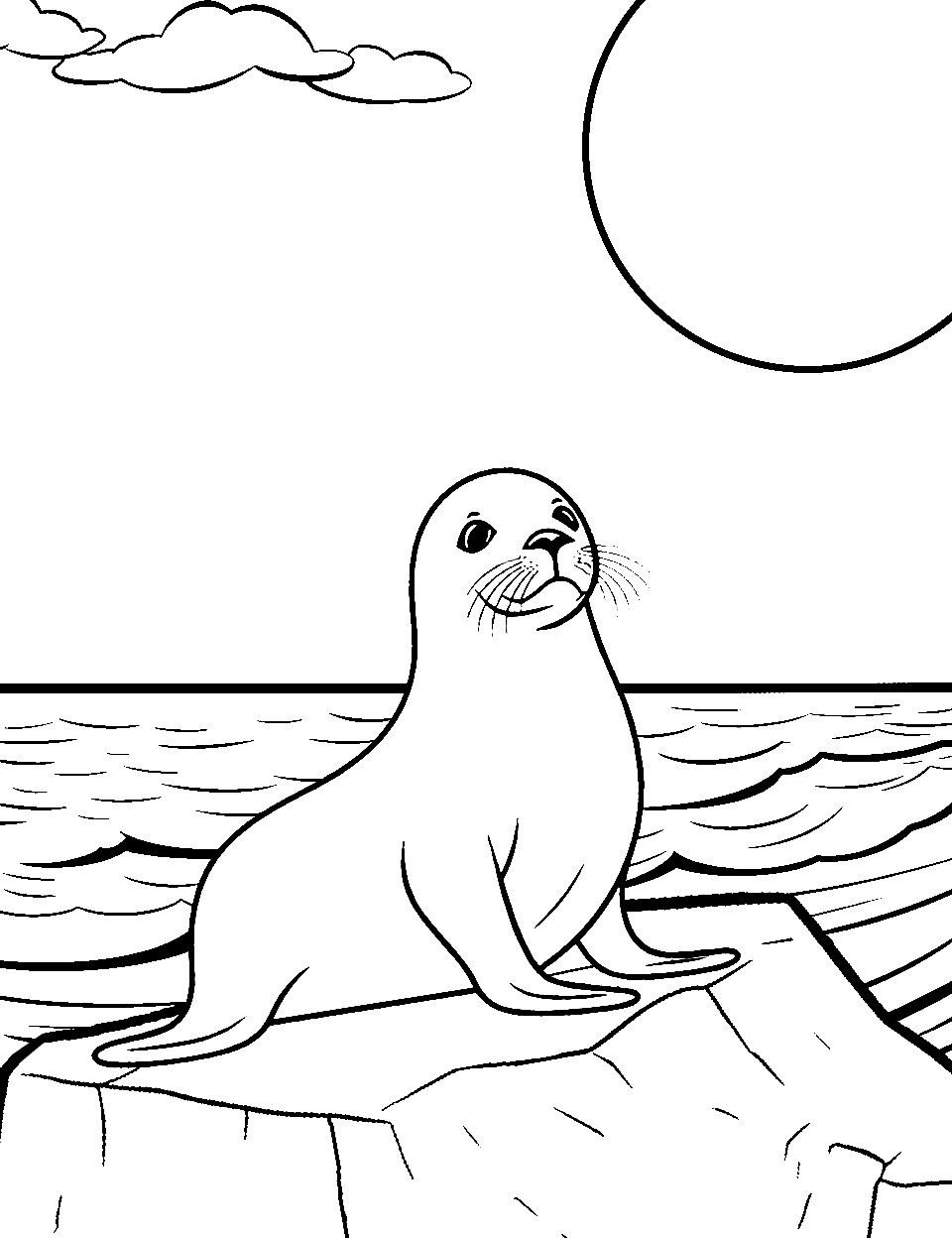
A sea lion sits up on a flat rock with a large sun disc behind it and calm water stretching to the horizon. Nearly all of the detail is in the face, and most of that is whiskers. Everything else is broad open shapes, which makes it a comfortable middle-ground sheet for early school age.
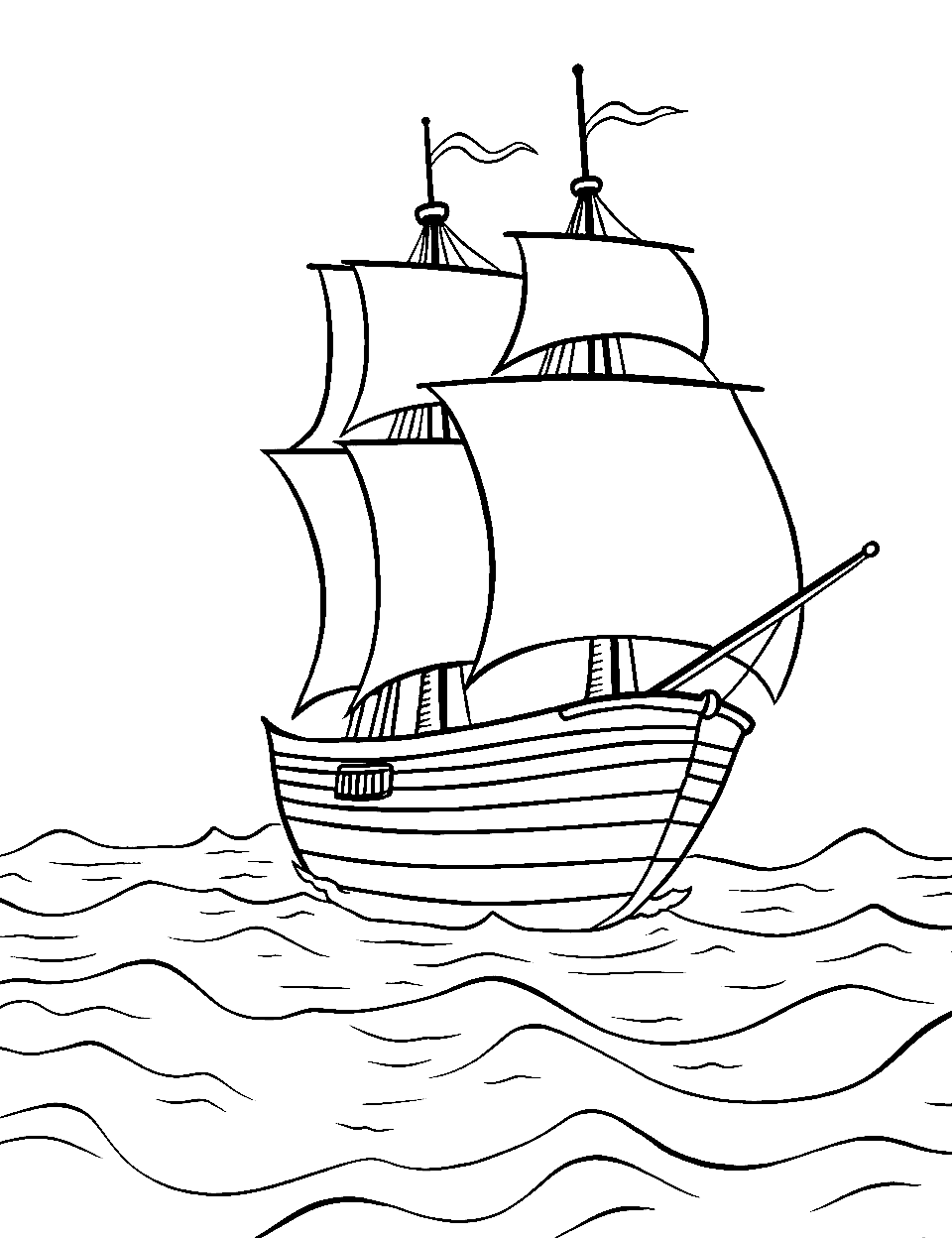
A wooden sailing ship rides low waves with its sails full and pennants streaming from both masts. The hull is drawn in long planks that look good in two shades of brown. Color the sails black and it turns into a pirate ship instead.
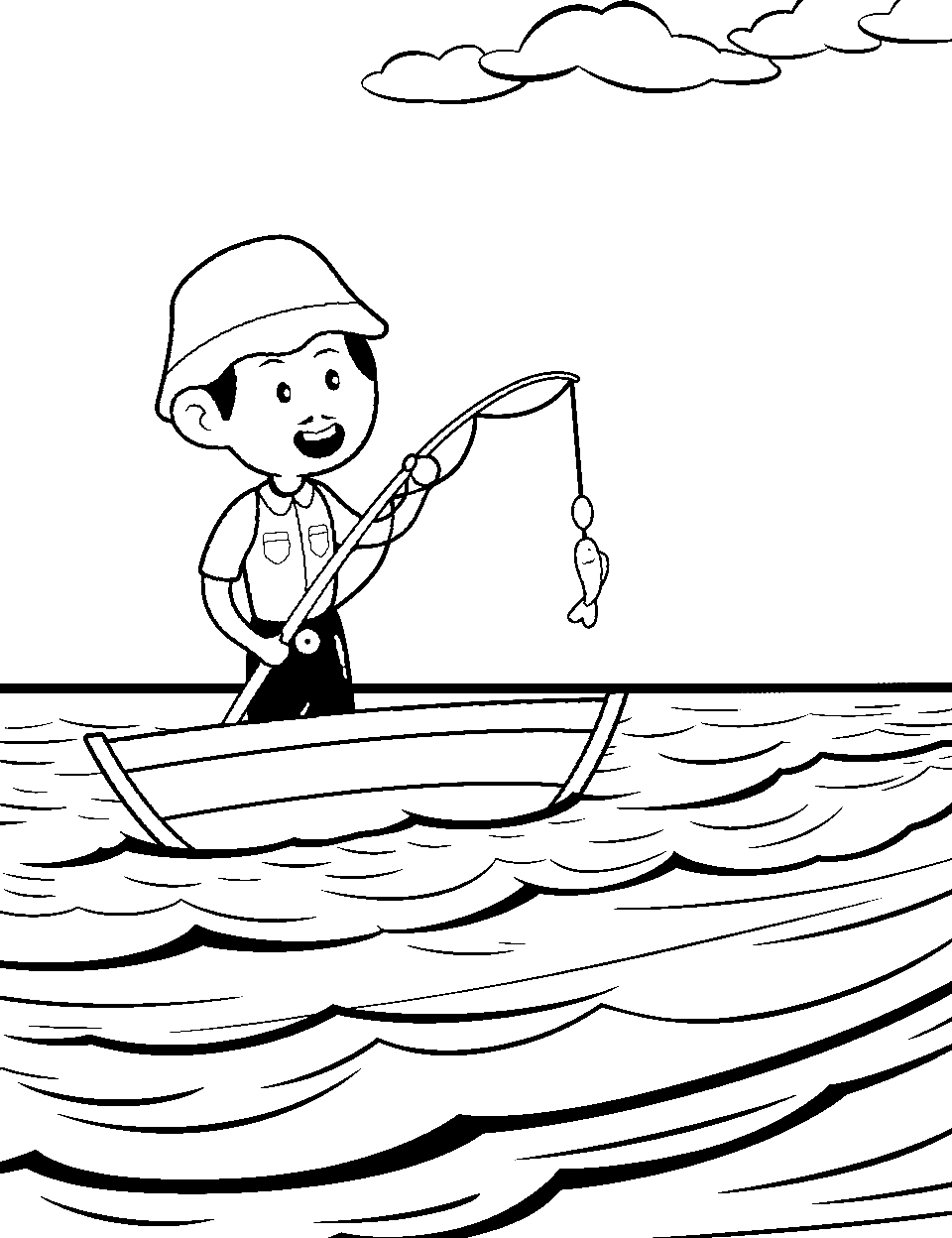
A fisherman in a bucket hat and overalls leans out of a small rowboat with a fish already dangling from his line. He is grinning about it, and the sea behind him is drawn in long rippling rows. That striped water is the fastest part of the page, so save the little fish for last.
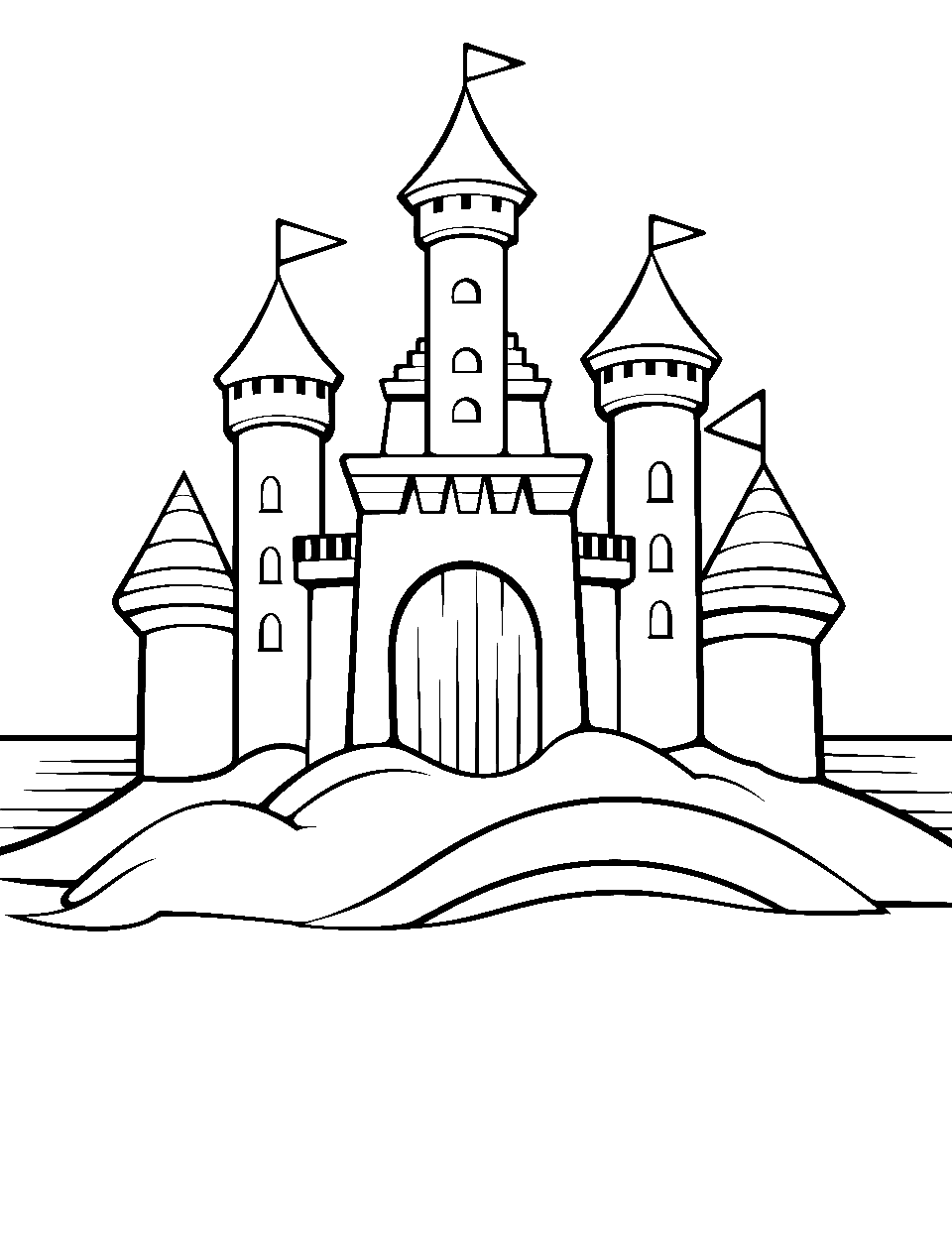
This sandcastle has round towers with cone roofs, flags on the turrets and an arched wooden door in the middle. It sits on a mound of sand with the shoreline drawn flat behind it. Keeping the castle in sandy tans and saving the bright colors for the flags gives the sheet its best contrast.
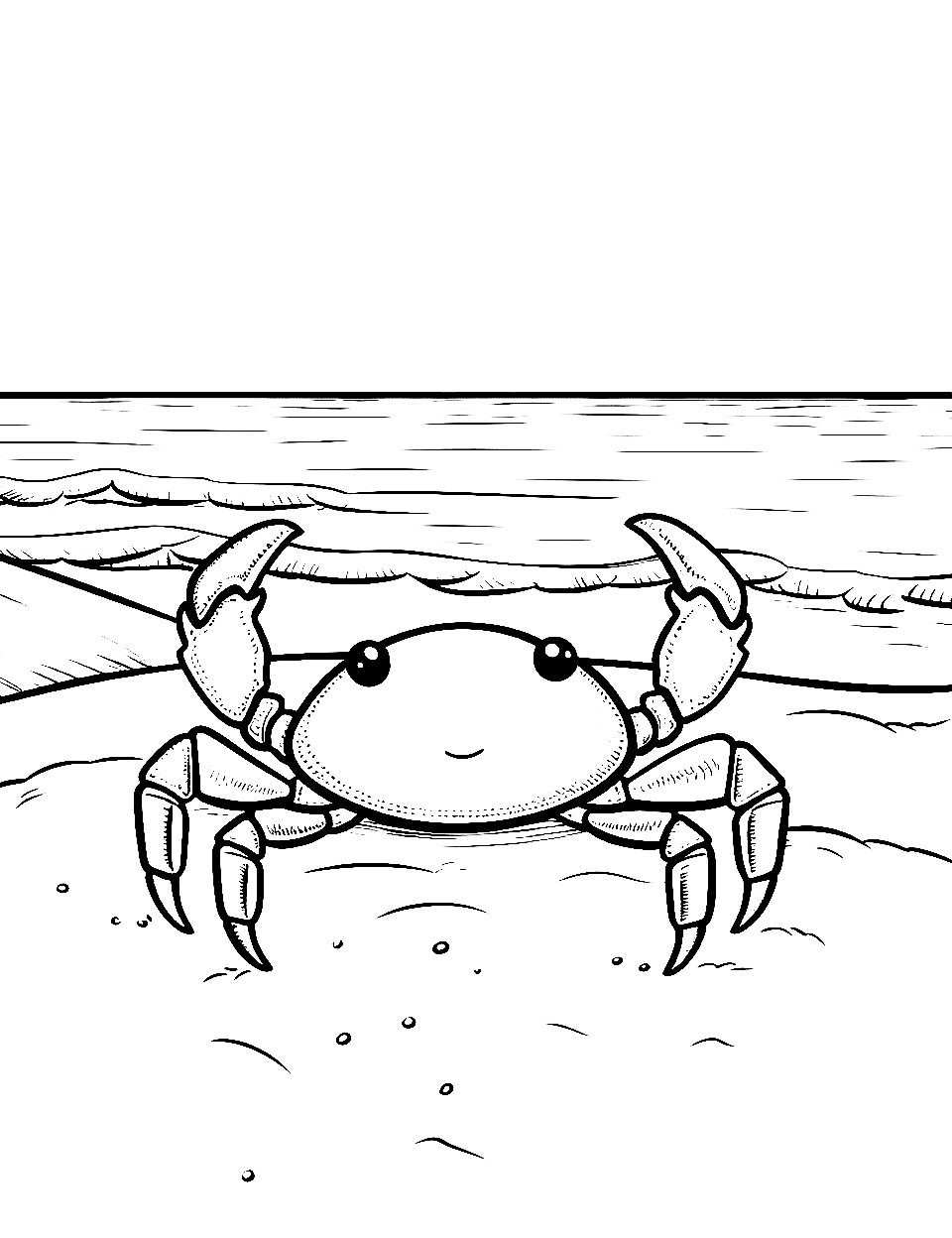
A crab walking on the sandy beach faces straight out of the page with both claws raised. Its shell is one big oval, so a young child can fill it with a single sweep of red or orange. The sea rolls in behind it in low, soft lines.
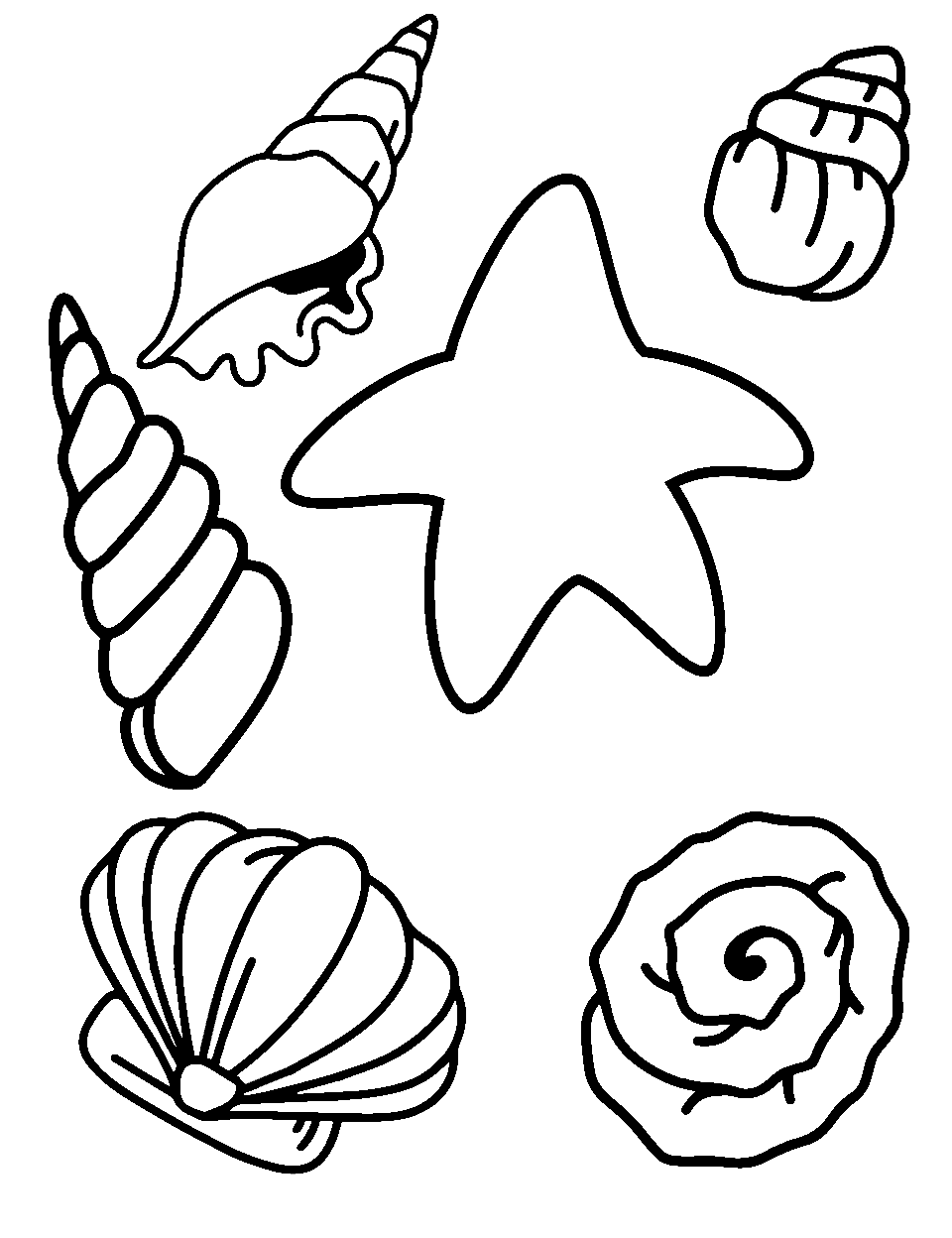
A starfish sits in the middle of this page with five different shells arranged around it, including a spiral conch, a ridged scallop and a coiled snail shell. There is no background at all, just white space between the shapes. That makes it the best sheet in the set for coloring, cutting out and gluing onto card.
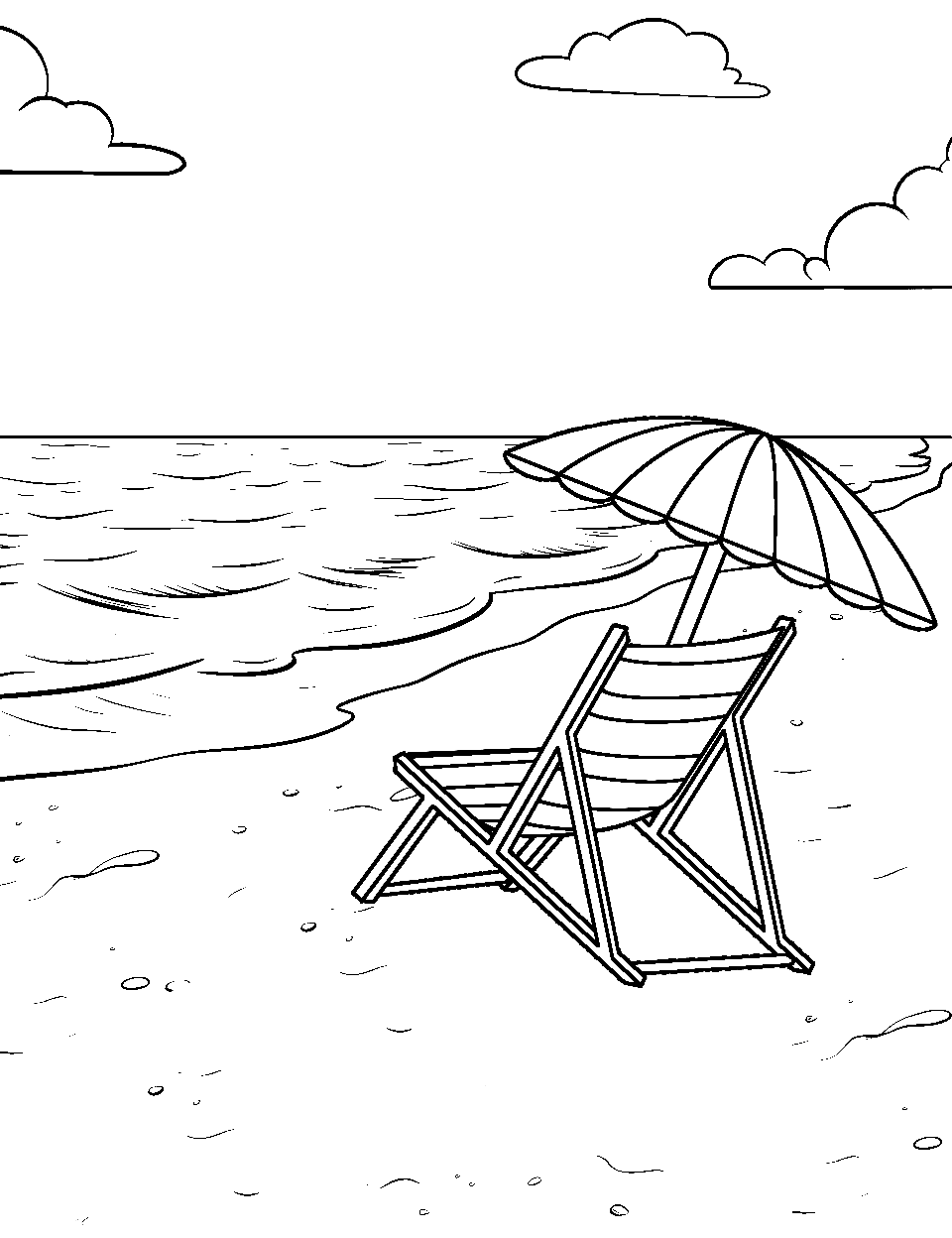
A striped umbrella leans over a folding deck chair on an empty stretch of sand. The umbrella panels are separated by clean lines, so alternating two colors around it is simple. The water and clouds behind are drawn lightly and can be left almost white for a bright, hot look.
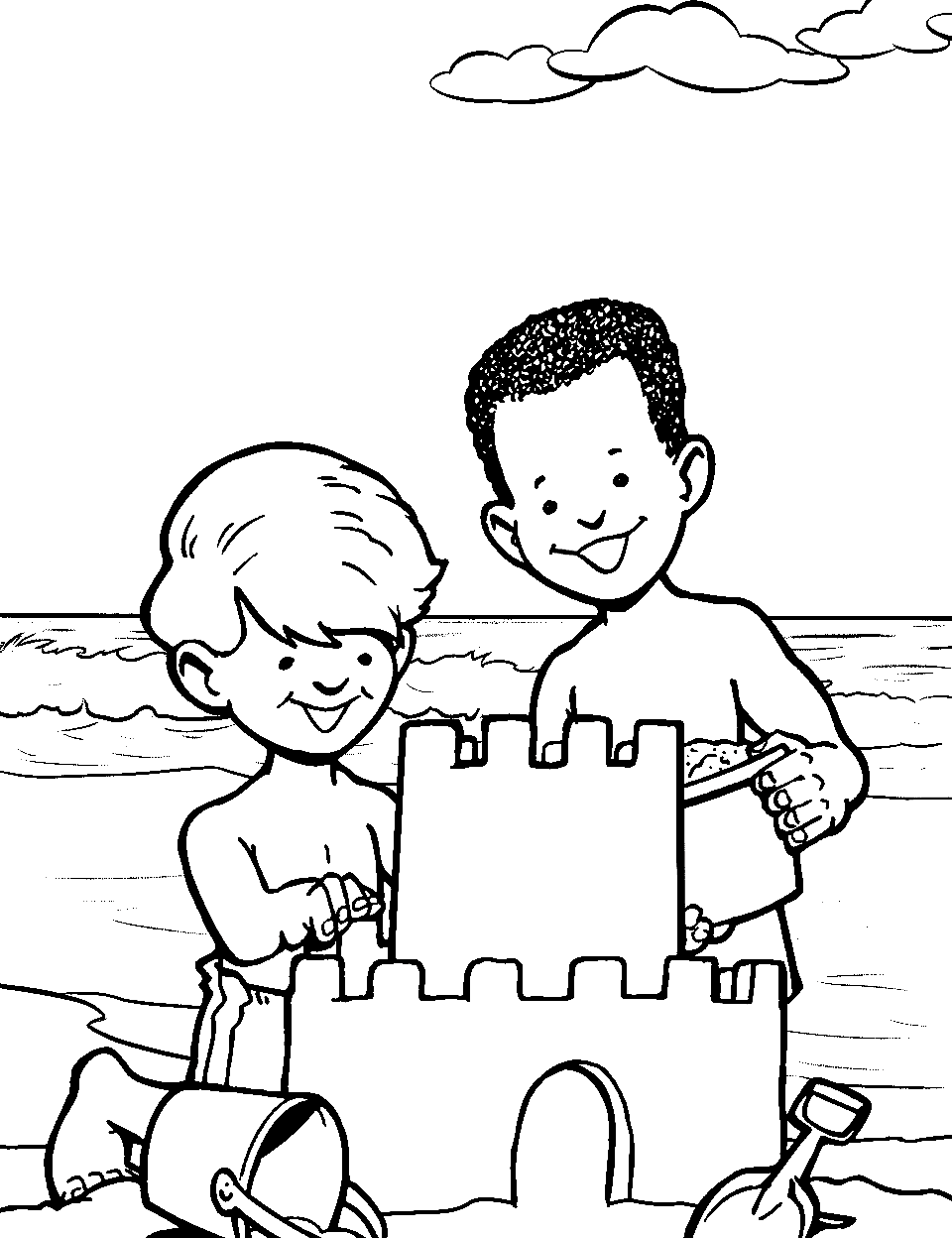
Two grinning kids kneel behind a sandcastle with battlements and an arched door, one of them tipping out a bucket of sand. A spade and a second bucket sit in the foreground. The faces carry most of the detail, so this suits a child who is past the scribble stage and wants to color hair, skin and swimwear separately.
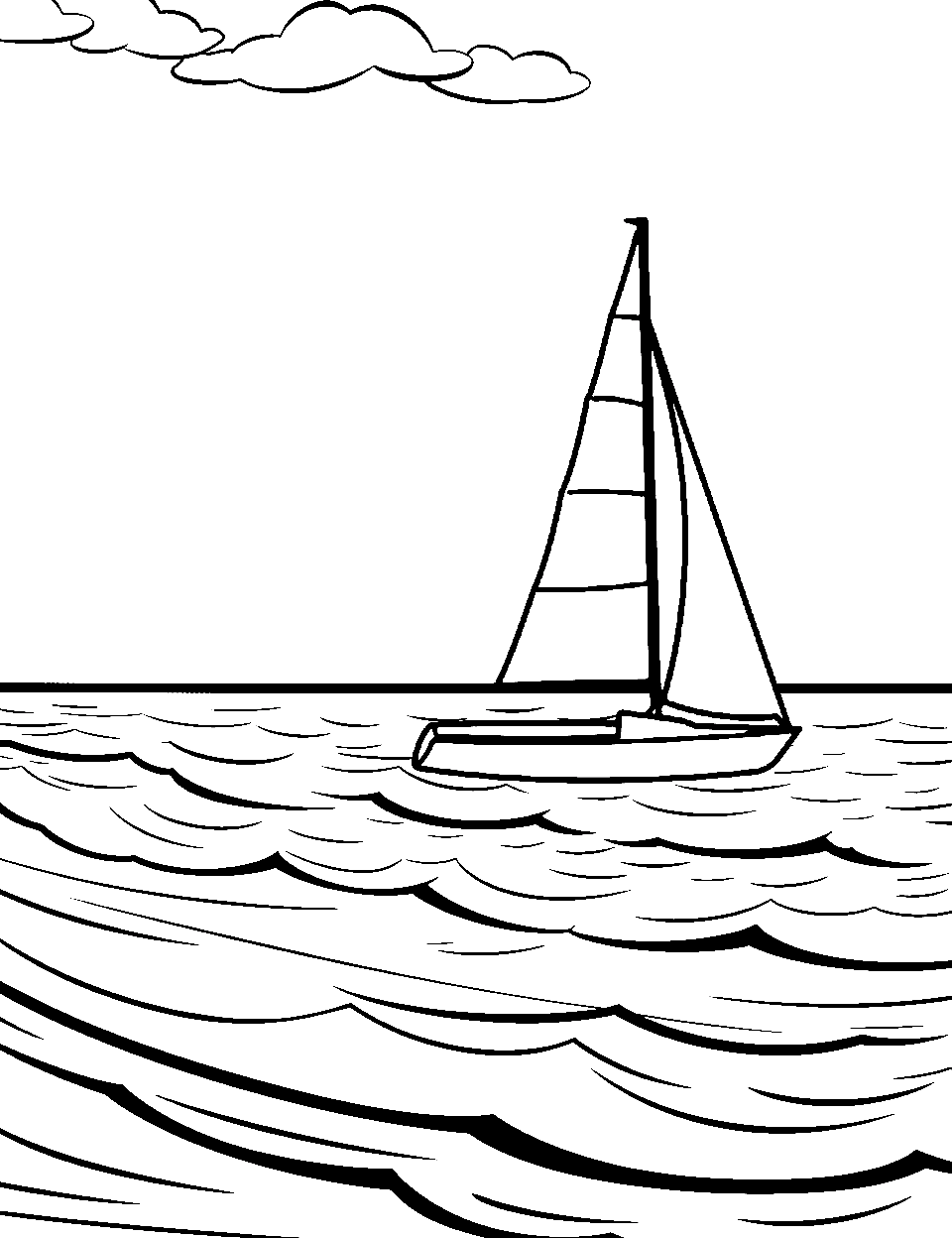
A single sailboat sits right on the horizon line with two sails up and one cloud above it. Most of the page is water, drawn as long curved bands that grow bolder toward the bottom. Shading those bands from pale to deep blue is good practice for anyone learning to build color up in layers.
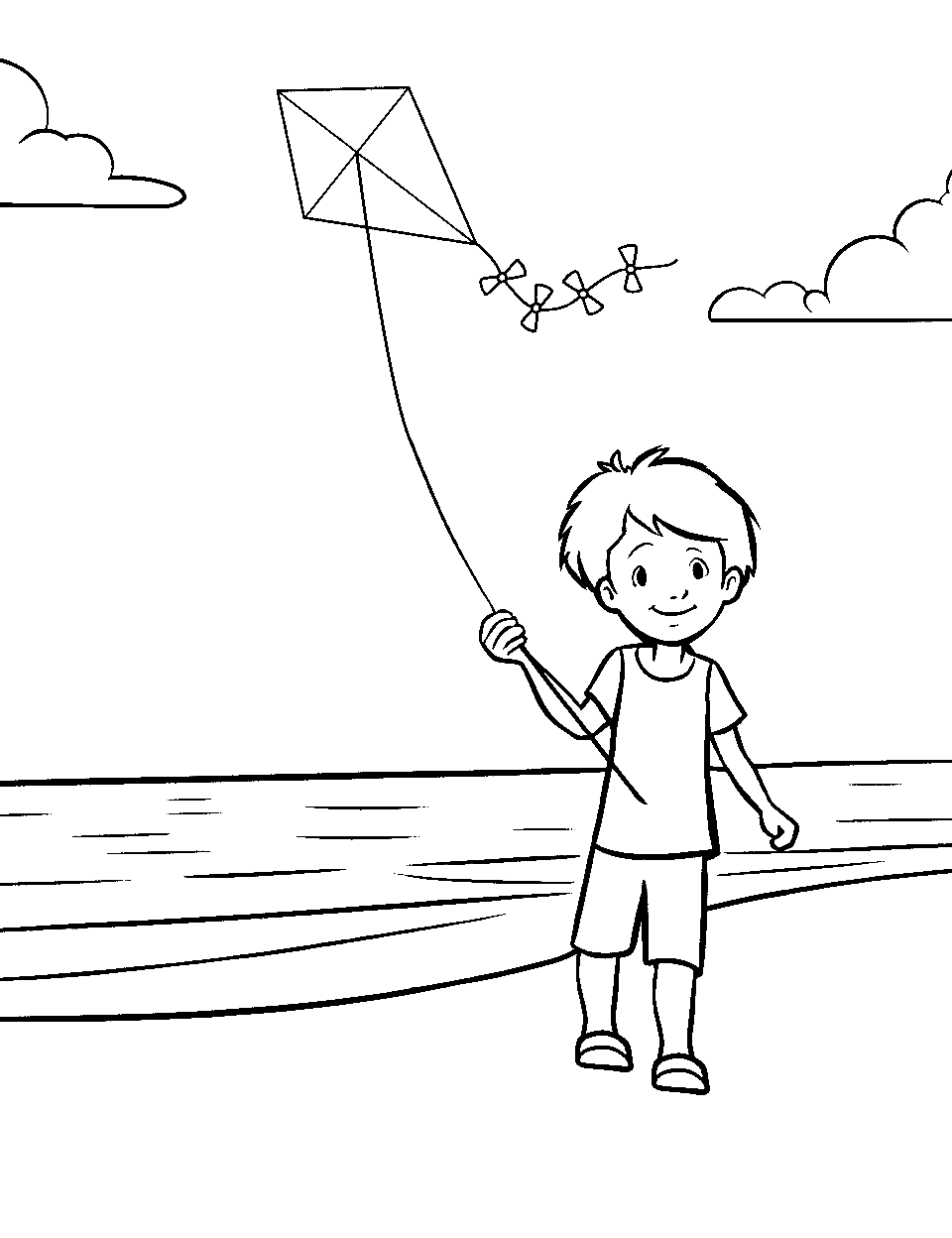
A boy walks along the shore holding the string of a diamond kite whose tail is knotted with bows. The shoreline curves behind him in a few clean lines and there is no sun in this one. It is the simpler of the two kite pages here, so it is the one to hand a younger sibling.
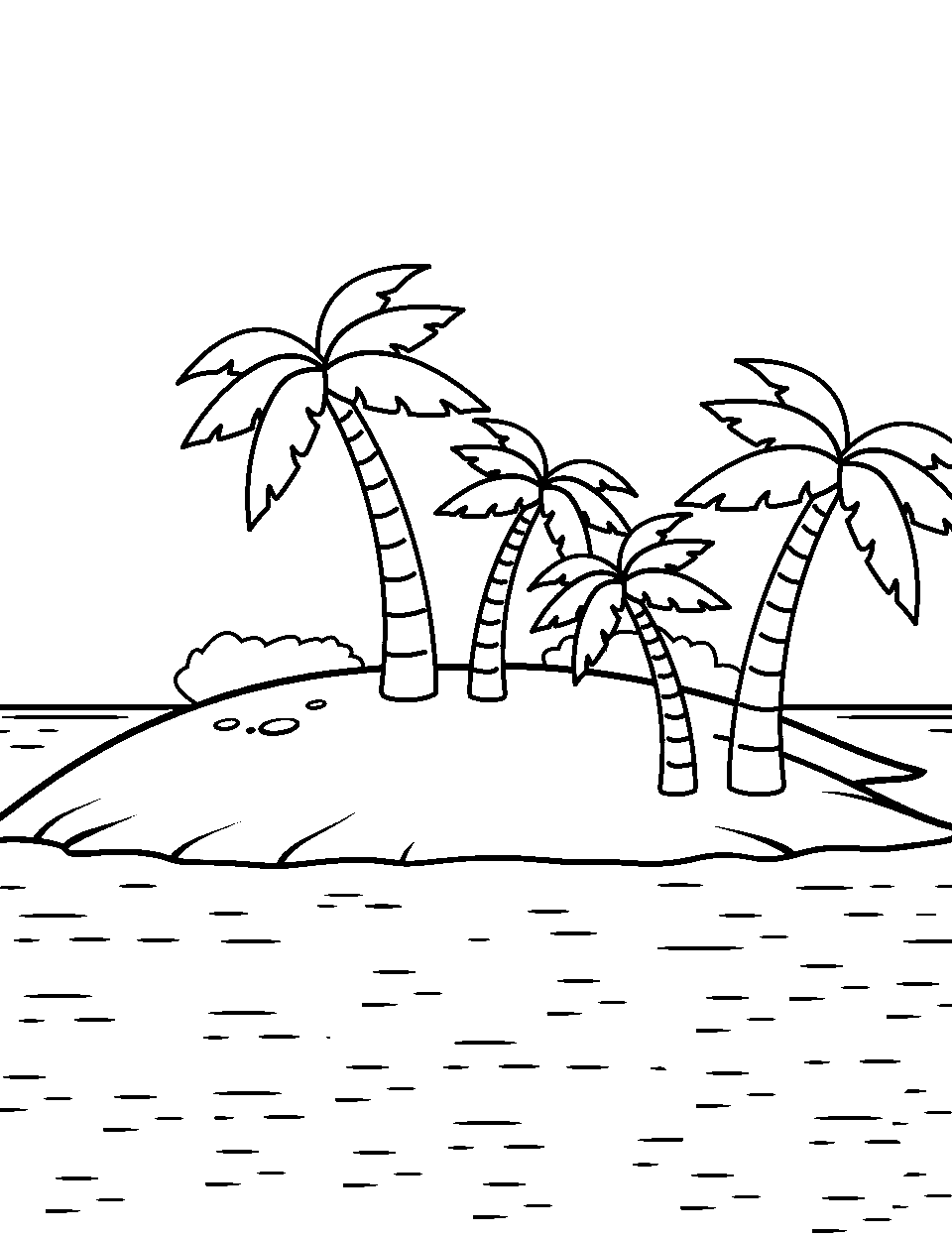
Four palm trees lean over a small island with a bush at one end and a scatter of pebbles across the sand. The water around it is filled with short dashes that stand in for ripples. Leave those dashes white or trace them in blue; either way the island still reads clearly.
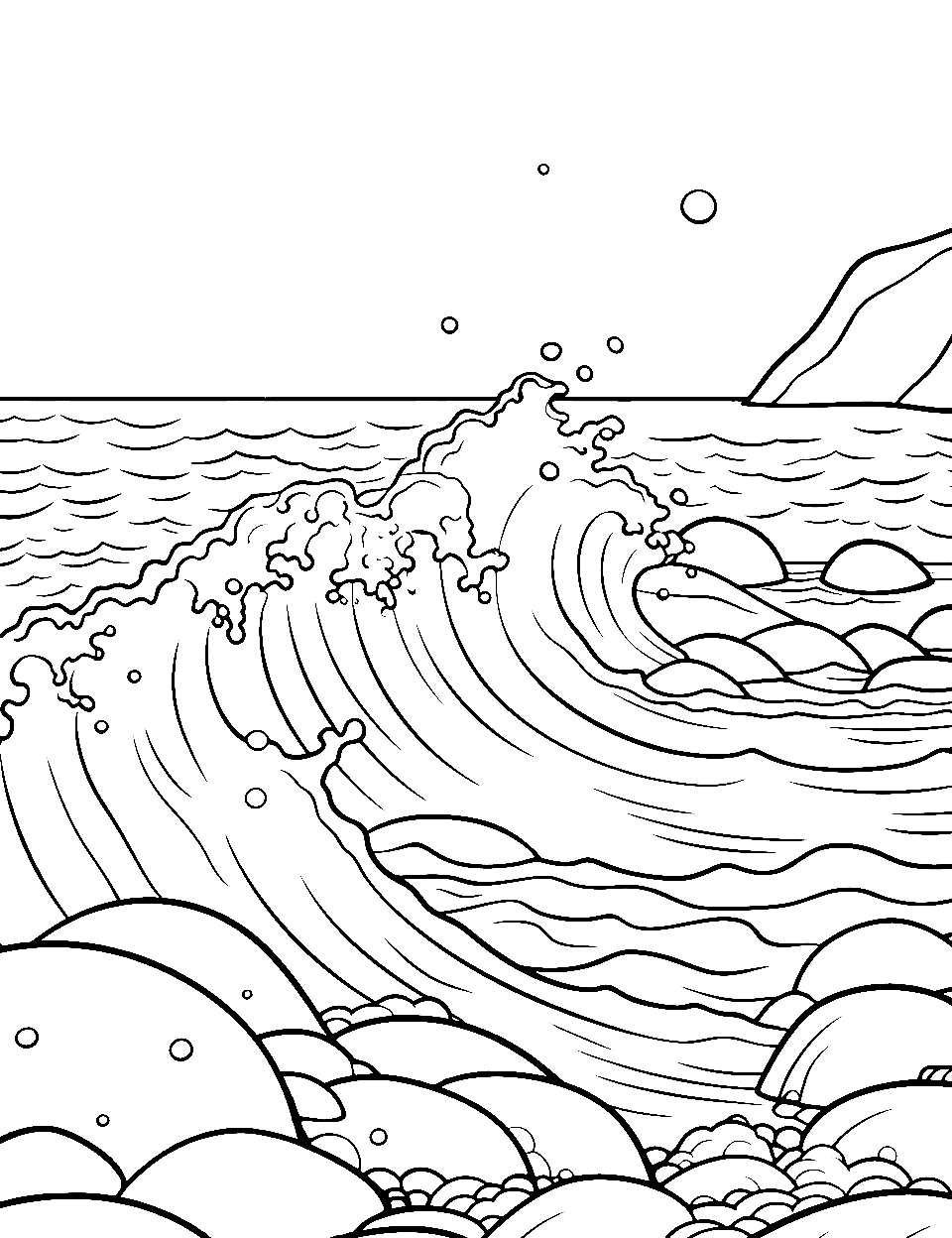
One big wave curls and breaks across the middle of this page, with spray flying above it and smooth boulders piled in the foreground. A headland juts in at the top right corner. Nobody appears in the frame, so it is the sheet for someone who wants to work purely on water, and it is the most detailed of the beach scenes.
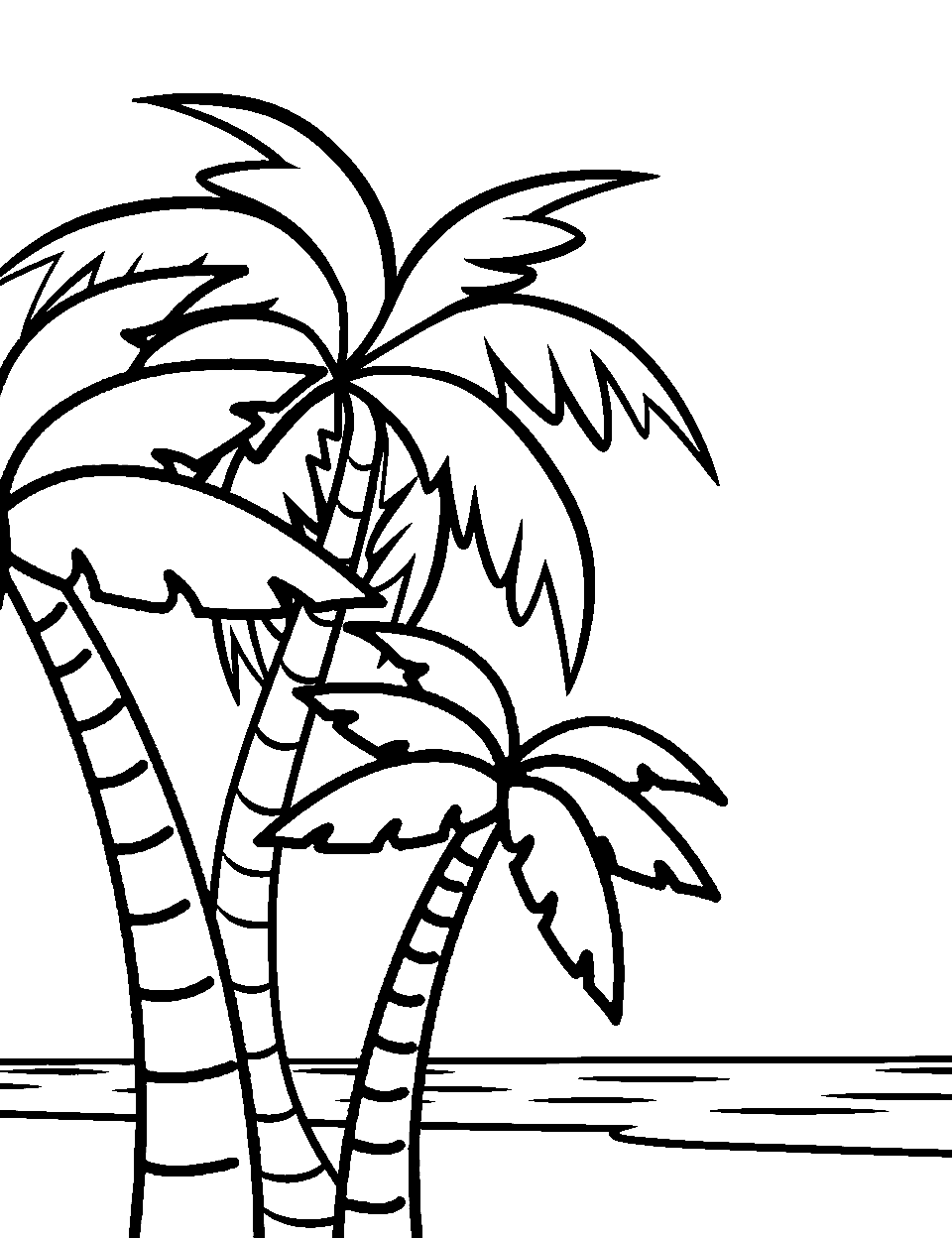
Three palm trees fill this page from the ground up, with ringed trunks and long spiky fronds. The horizon is a single flat line behind them and nothing else shares the frame. Big open fronds make it fast to color, and it works nicely as a border page for a summer bulletin board.
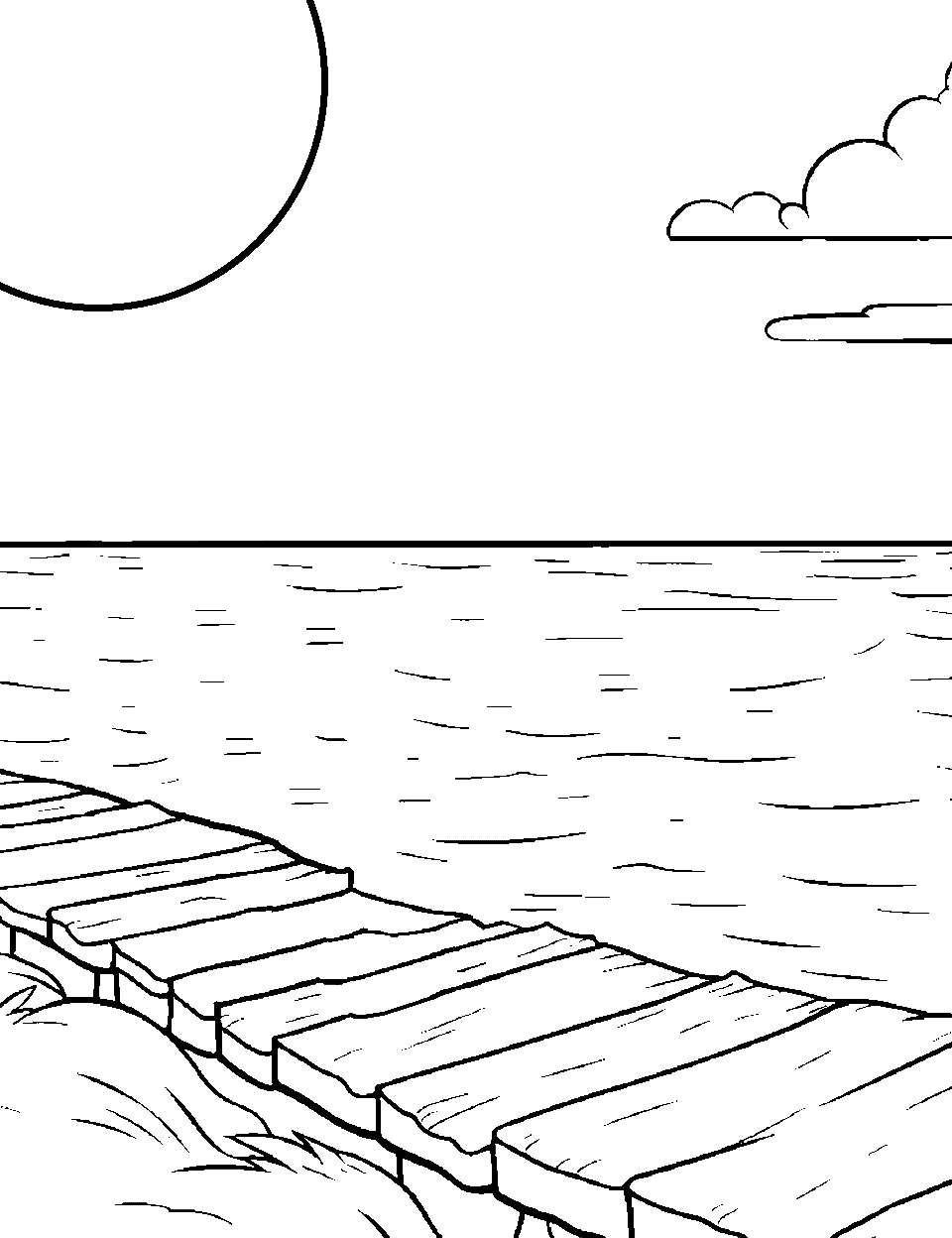
Wide wooden planks run from the bottom of the page out toward calm water, with a large sun disc low in the sky and a couple of flat clouds off to the right. The planks are drawn with grain lines that look good in two or three browns. The water is nearly empty, which makes this a restful page rather than a busy one.
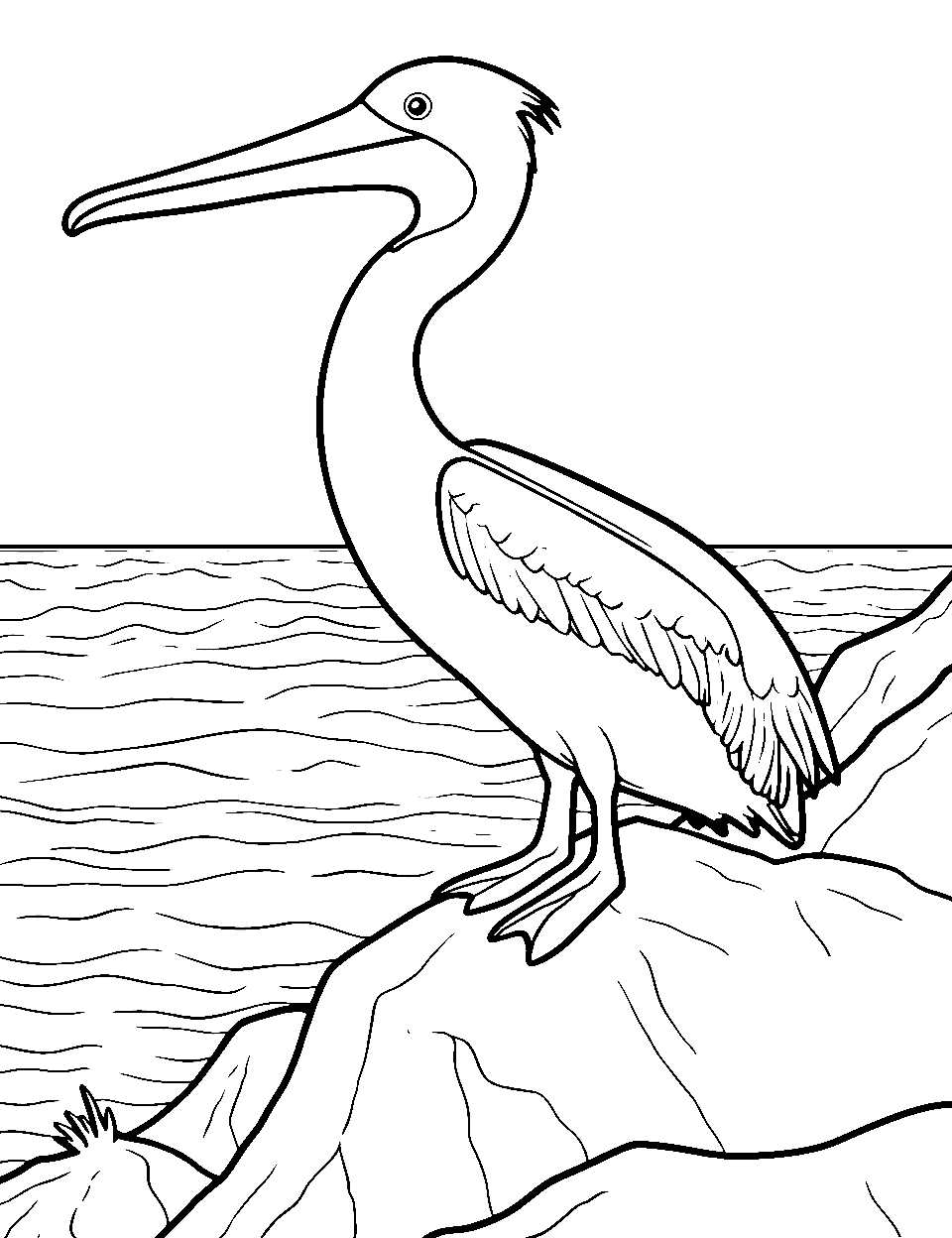
A pelican stands on a rock at the edge of the water with its long bill tipped up and its wing feathers laid out in neat rows. This bird perched above the waterline is the more detailed of the two pelican sheets in this set. Keep the body in soft grays and browns and let the beak be the brightest thing on the page.
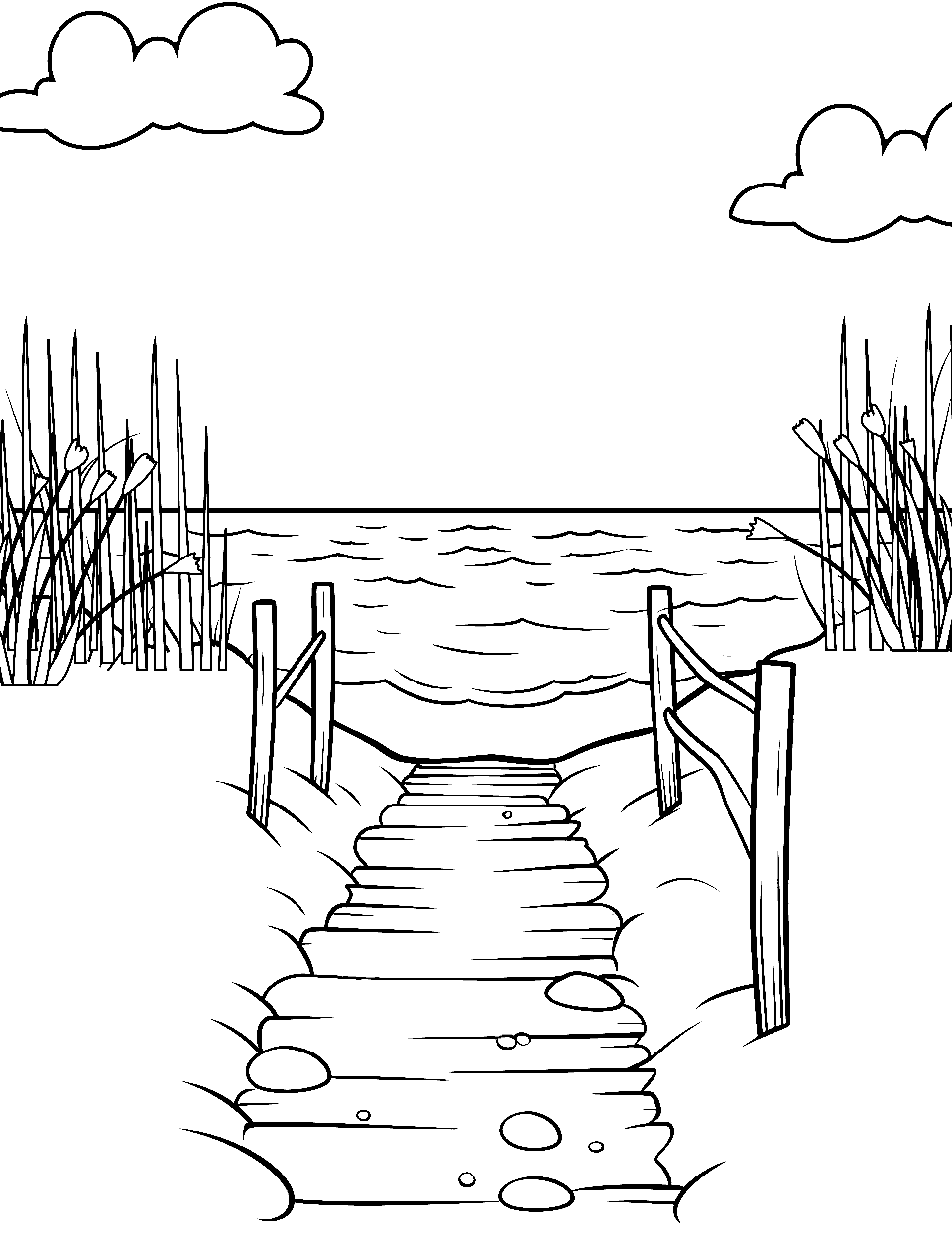
A plank boardwalk runs straight down the middle of this page toward the sea, with weathered fence posts on both sides and tall beach grass along the edges. Two clouds sit in an otherwise empty sky. The grass is the fiddly part, so it is worth doing that first while hands are still steady.
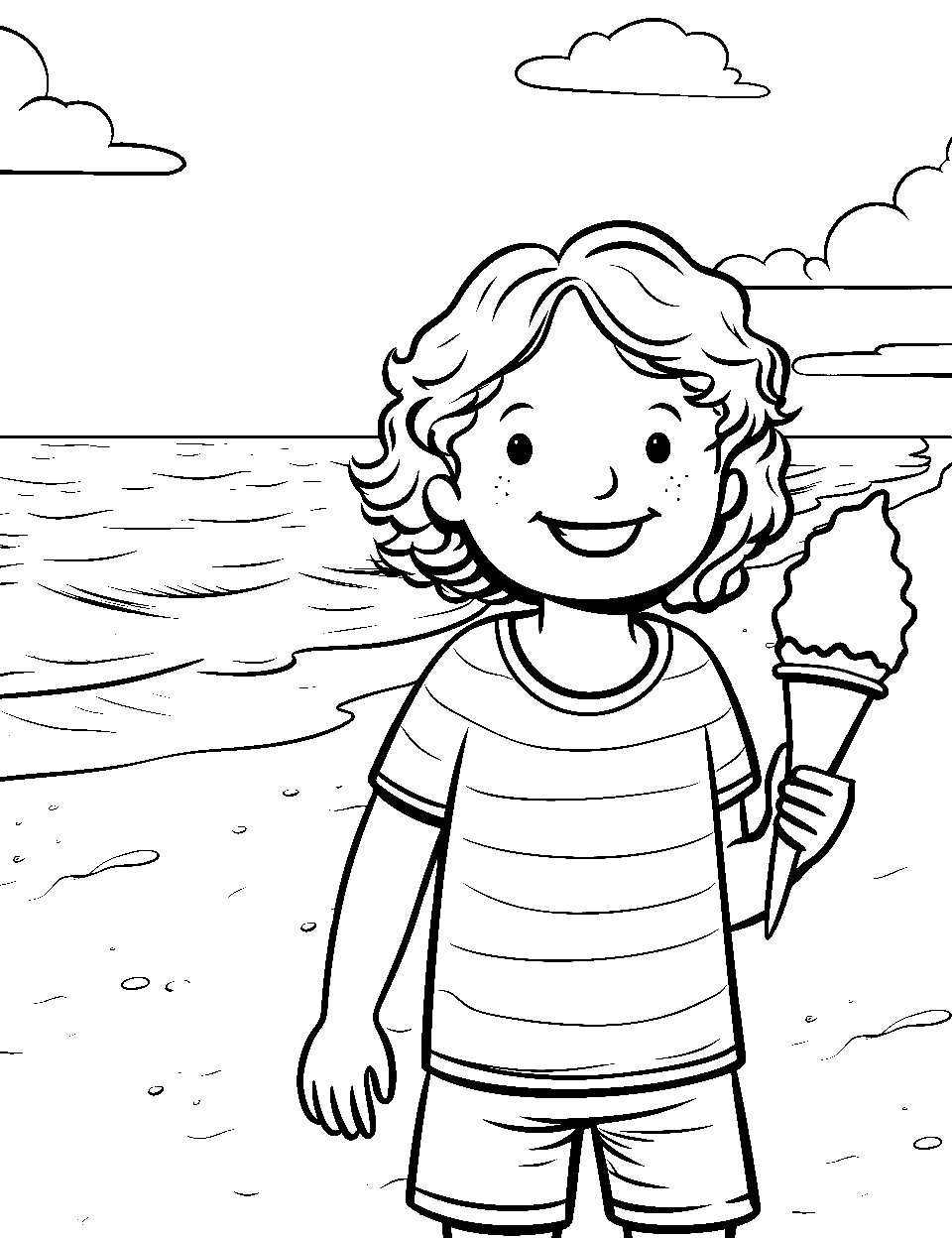
A curly-haired child in a striped tee holds up a soft-serve ice cream cone with the shoreline stretching out behind. The stripes on the shirt are asking to be colored in alternating shades. Freckles and a wide grin give the face character without much fine line work.
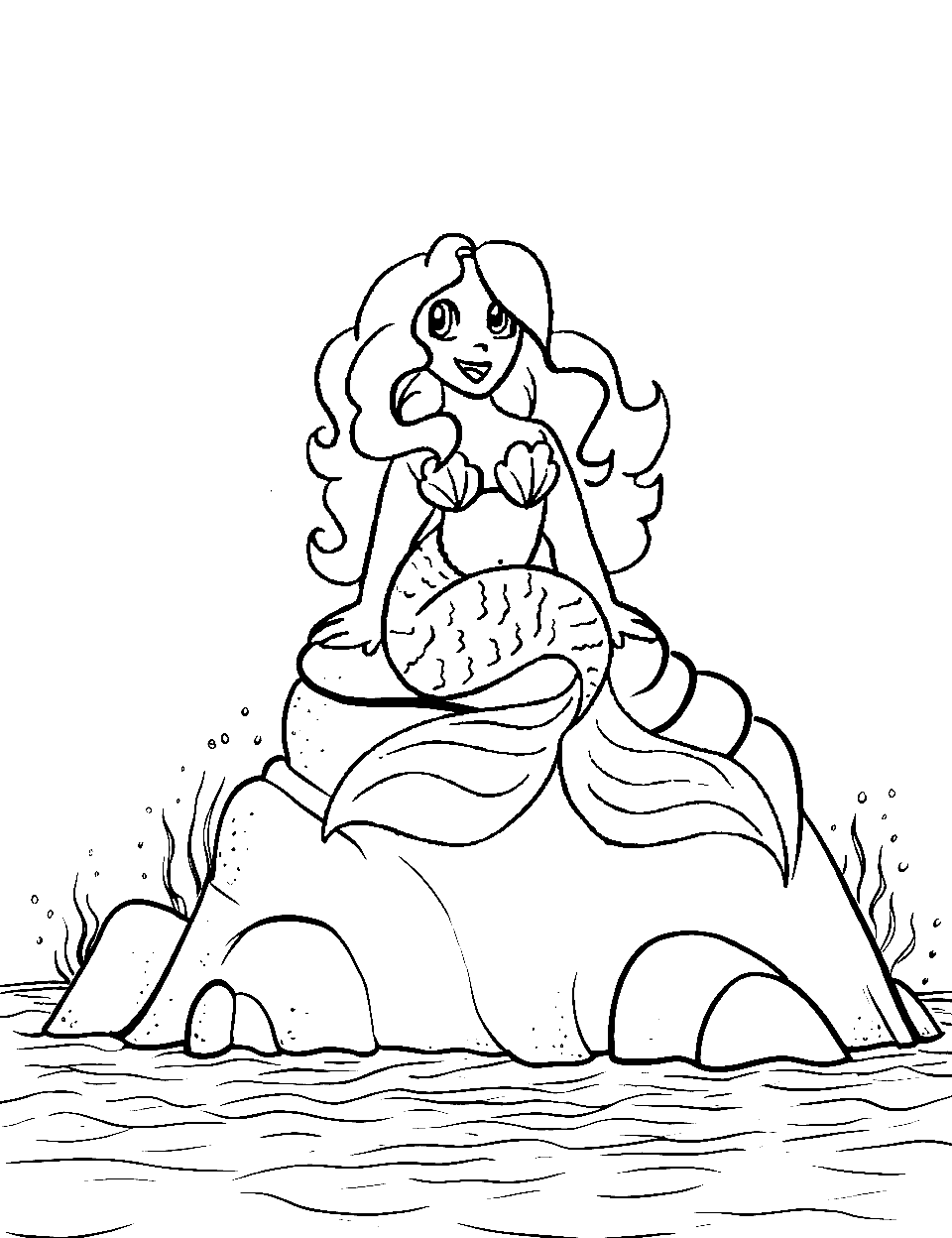
A mermaid with long wavy hair sits on a rock with her scaled tail draped over the side and water below. Her top is drawn as two shells and small sprigs of seaweed grow at the base of the rock. Both the hair and the tail take a lot of color, so this is a good page for blending two shades into one another.
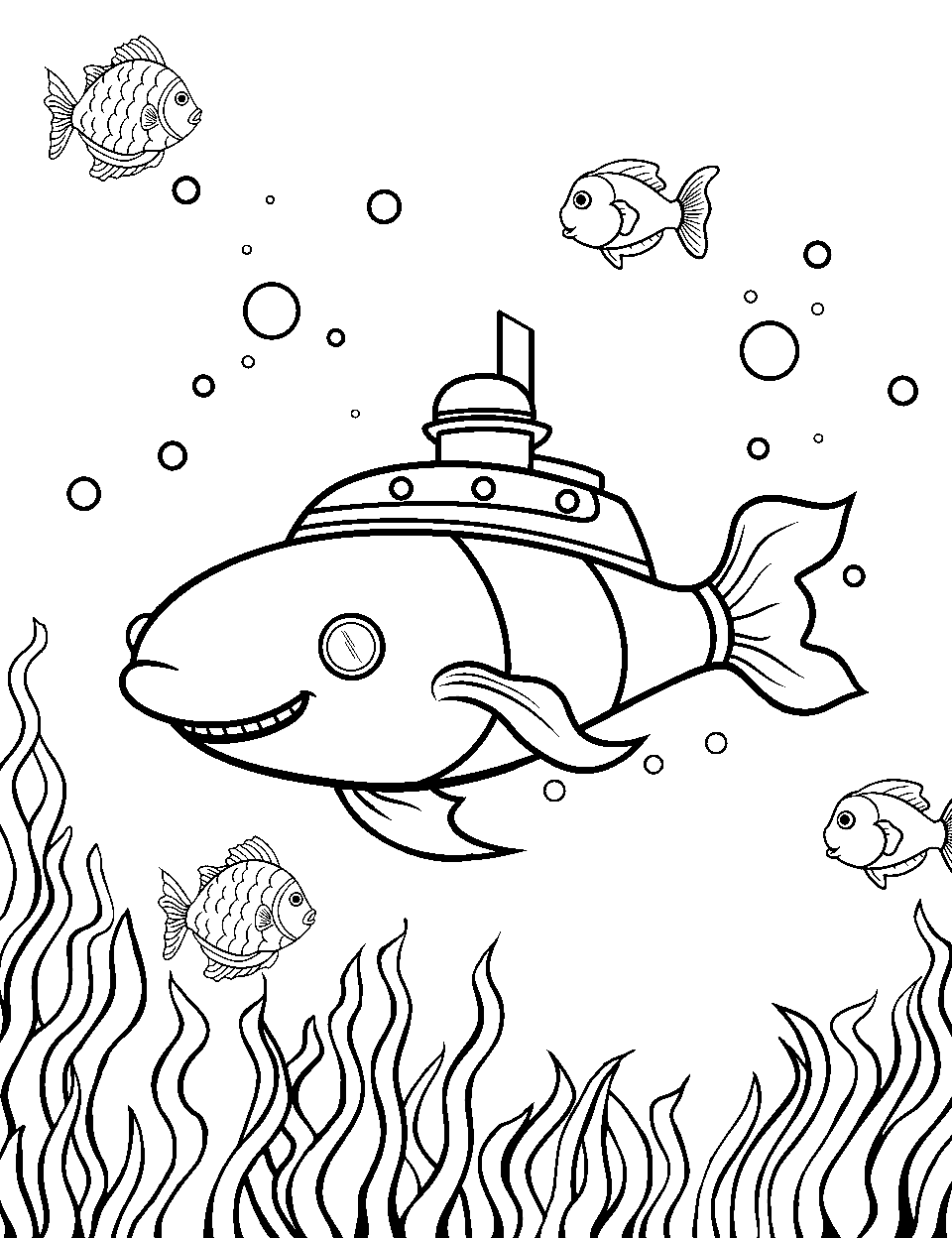
The fish-shaped submarine turns up again here, this time with four fish swimming in to inspect it. Bubbles fill the water and a thick band of seaweed runs along the bottom. Color it in the same shades you used on the earlier submarine sheet and the two make a neat pair to pin up side by side.
By using our free coloring pages, you acknowledge and agree to our full disclaimer. All materials are for personal, non-commercial use only and all rights belong to their respective license holders.
Which Ocean Coloring Page Should You Print First?
Start with the kawaii starfish, the cute seahorse or the seal if the child is under five, because each of those is a single thick outline with almost no interior detail. Working up from there, the set sorts into three rough tiers.
Chunky outlines, big spaces: Kawaii Starfish, Cute Seahorse, Seal Popping Out of Water, Sandy Ocean Floor Discovery. Nothing on these pages is small enough to lose to a crayon.
Middle ground: Dolphin, Big Grinning Shark, Crab, Sandcastle, Beach Umbrella and Chair, Boat Sailing on a Calm Sea, Smiling Octopus, Treasure Chest. Recognizable shapes with a few interior lines to stay inside.
Detailed, slow pages: Realistic Whale, Graceful Sea Turtle, Detailed Seahorse, Seagull, Ocean Waves Crashing on Rocks. These carry texture, feathers or scale patterns and suit colored pencils, older kids and adults.
If you are printing for a group with a wide age spread, pull one sheet from each tier so nobody is stuck with a page that is too fiddly or too plain.
What Can Kids Learn From These Ocean Coloring Pages?
A blue whale can reach 110 feet long and 330,000 pounds (1), longer than most family driveways and heavier than a loaded semi truck. Every animal on these sheets is real, and the numbers behind them are worth pausing on.
The sea turtle sheet has a similar hook. An adult green sea turtle measures only 3 to 4 feet and weighs 250 to 400 pounds, and its lifespan is estimated at 70 years or more (2), so the turtle your child is coloring could outlive them.
The two seahorse pages carry the best story of the set. The female passes her eggs to the male, who carries them in a brood pouch and later releases anywhere from a few dozen to 1,000 fully formed babies, of which roughly 0.5 percent survive to adulthood (3). Ask a five-year-old to guess which parent gives birth and you will get a good reaction.
The scuba diver and the fish submarine are worth a word too. Only 28.7% of the global seafloor has been mapped with modern high-resolution equipment, and explorers have seen less than 0.001% of the deep ocean seafloor (4). Most of what is down there is still undrawn, which is a fair prompt for a child to invent a creature of their own on the back of the sheet.
Activities to Do With Ocean Coloring Pages
Coloring is just the start. A finished sheet becomes a prop, a puppet or a card with about ten more minutes of work, and most of these need nothing you do not already have.
Create a Shoebox Aquarium
Do not let those colored fish flop around in a drawer. Paint the inside of an old shoebox blue, cut out your colored sea creatures, tape a piece of thread to the top of each one and fix the other end to the lid. Stand the box on its side and you have a diorama with fish hanging at different depths.
Ocean Stick Puppets
Once the shark, the dolphin or the mermaid is finished, help your child cut the figure out along its outline. Tape a popsicle stick or a sturdy straw to the back of each one. The sofa becomes the stage and the puppet show writes itself.
Textured Sand Art
Bring the beach onto the page. Use a glue stick on the sandy parts of a sheet, such as the ocean floor scene or the beach umbrella page, then sprinkle craft sand or crushed graham crackers over the glue. Shake off the excess and the sand reads as texture under your fingers.
Under the Sea Memory Game
Print two copies each of the smaller animal pages, such as the starfish, the crab and the cute seahorse. Color the pairs to match, cut them into square cards and lay them face down. Take turns flipping two at a time to find the matching sea creatures.
Educational Scavenger Hunt
Hide the finished pages around the living room or the backyard and hand out a checklist of clues instead of names: something with eight arms, something that breathes air but swims, something that carries its own house. It gets kids moving and makes them think about the animal rather than just spotting it.
Ocean Themed Greeting Cards
Reduce the print size to fit half a sheet of paper before you print. Fold construction paper in half for the card and paste the colored image on the front. The kawaii starfish and the seal make good birthday cards, and the shell page works as a thank-you note for a teacher.
FAQs
What Paper Is Best for Coloring Pages?
Plain printer paper is fine for crayons and colored pencils, which covers most of these sheets. Switch to cardstock or a heavier multimedia paper if your child works in markers or watercolor, because thin paper lets marker ink bleed through onto whatever is underneath. Cardstock also holds up better for the pages you plan to cut out, such as the shells or the stick puppets.
Are These Coloring Pages Educational?
They work best as a starting point rather than a lesson on their own. Each sheet names a real animal or a real coastal scene, so you can pair the coloring with one fact about the species, as with the seahorse pages where the male carries the eggs. Younger children also get practice holding a crayon and staying inside a line, which is reason enough on a wet afternoon.
How Do I Print These Pages?
Click the image for the sheet you want, which opens the full-size file on its own. Then use your browser’s print function, Ctrl+P on Windows or Command+P on a Mac, and print at letter size. Choose the black-and-white or grayscale setting to save color ink, since every page is line art.
What Age Group Are These Suitable For?
The set spans toddlers to adults, which is why the tiers above are worth a look before you print. The kawaii starfish, the seal and the sandy ocean floor have the thickest outlines and the fewest lines, so they suit the youngest hands. The whale, the sea turtle and the breaking wave carry real texture and are better for older kids or for an adult who wants a slow page.
Which Ocean Animals Are in This Collection?
Fifteen of the forty sheets are marine animals: two seahorses, two octopuses, a dolphin, a shark, a whale, a sea turtle, a seal, a sea lion, a crab, a starfish, a pelican on sand, a pelican on a rock and a seagull. Two more sheets are schools of fish, and the rest cover beach and boat scenes, including a second starfish paired with shells to cut out, from a lighthouse and a tall ship to a mermaid and a submarine shaped like a fish.
Can I Use These for a Classroom Activity?
Yes, and they slot in most easily during a marine biology unit or around World Oceans Day in June. Print one sheet per tier so a mixed-ability class finishes at roughly the same time, or run the memory game above with two copies of the smaller animals. They also work as a quiet option for free time and rainy recess.