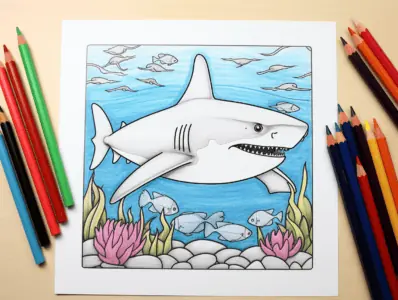
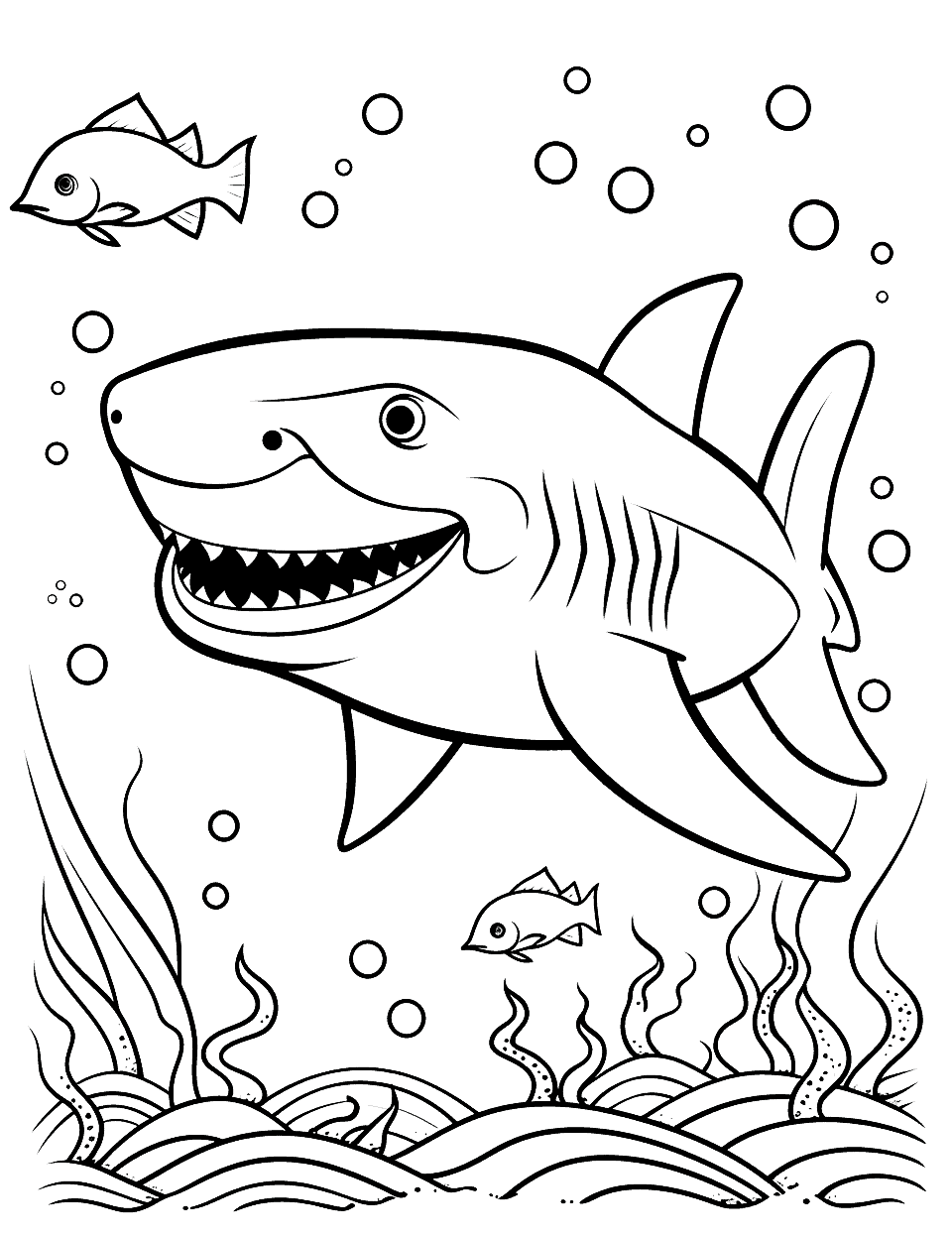
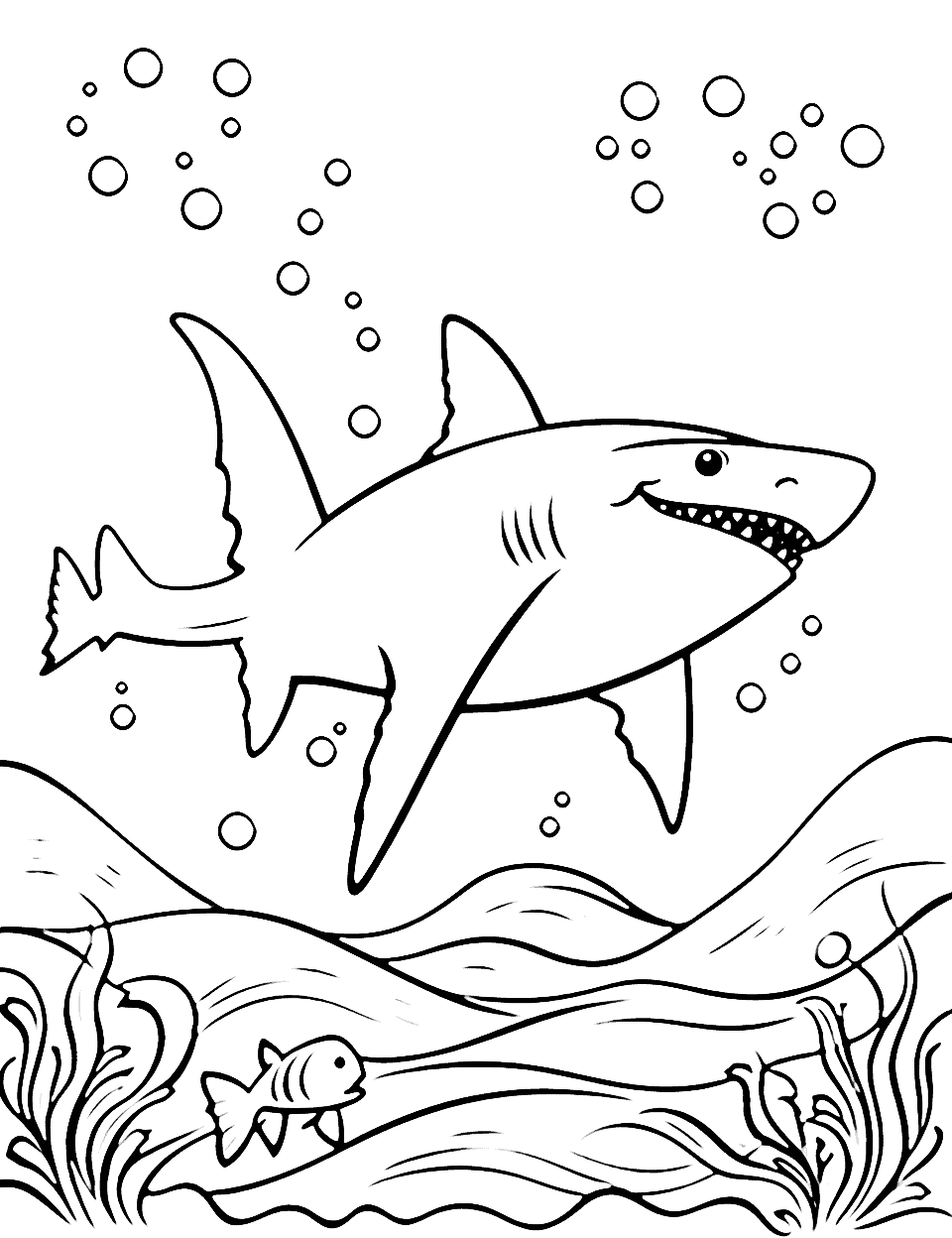
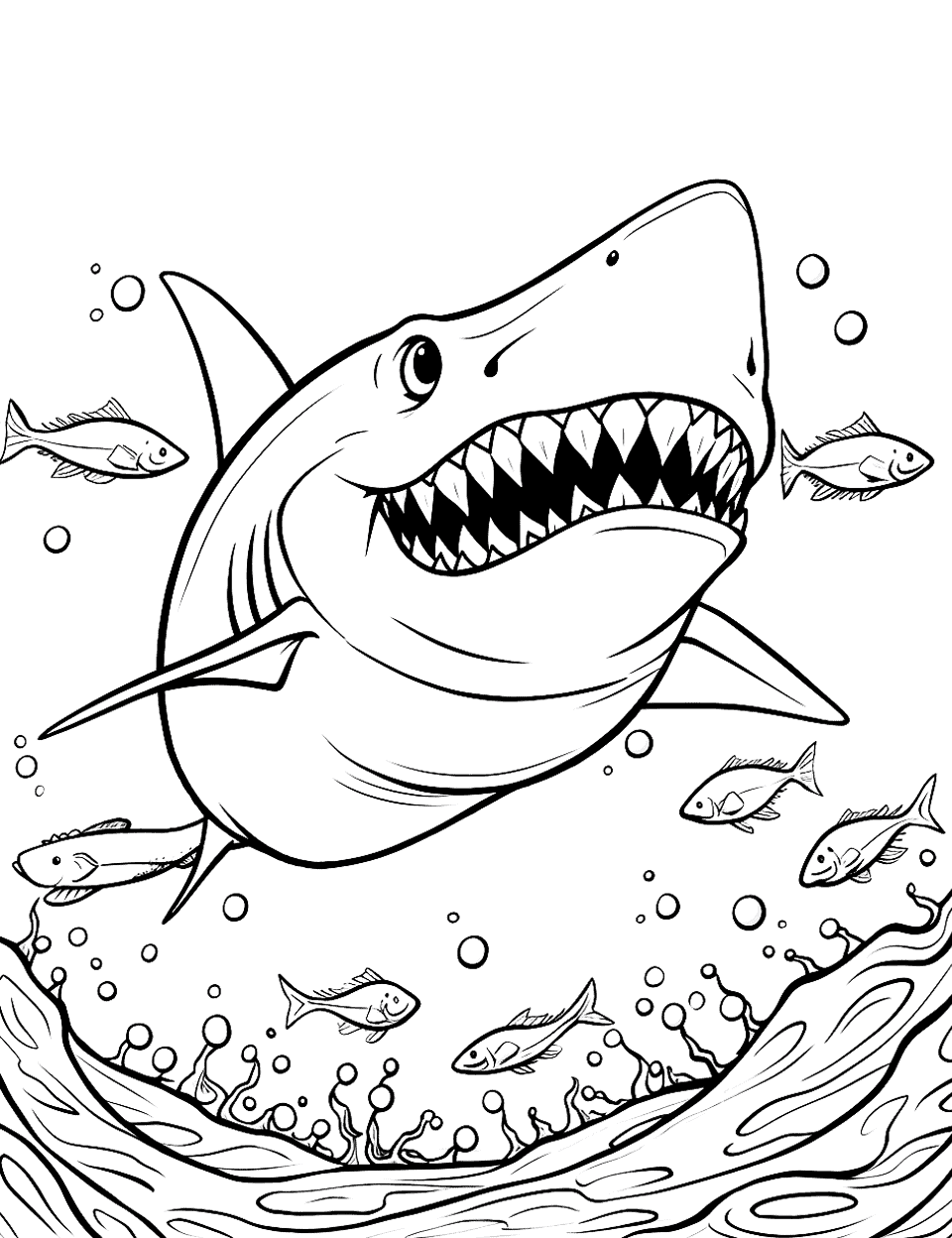
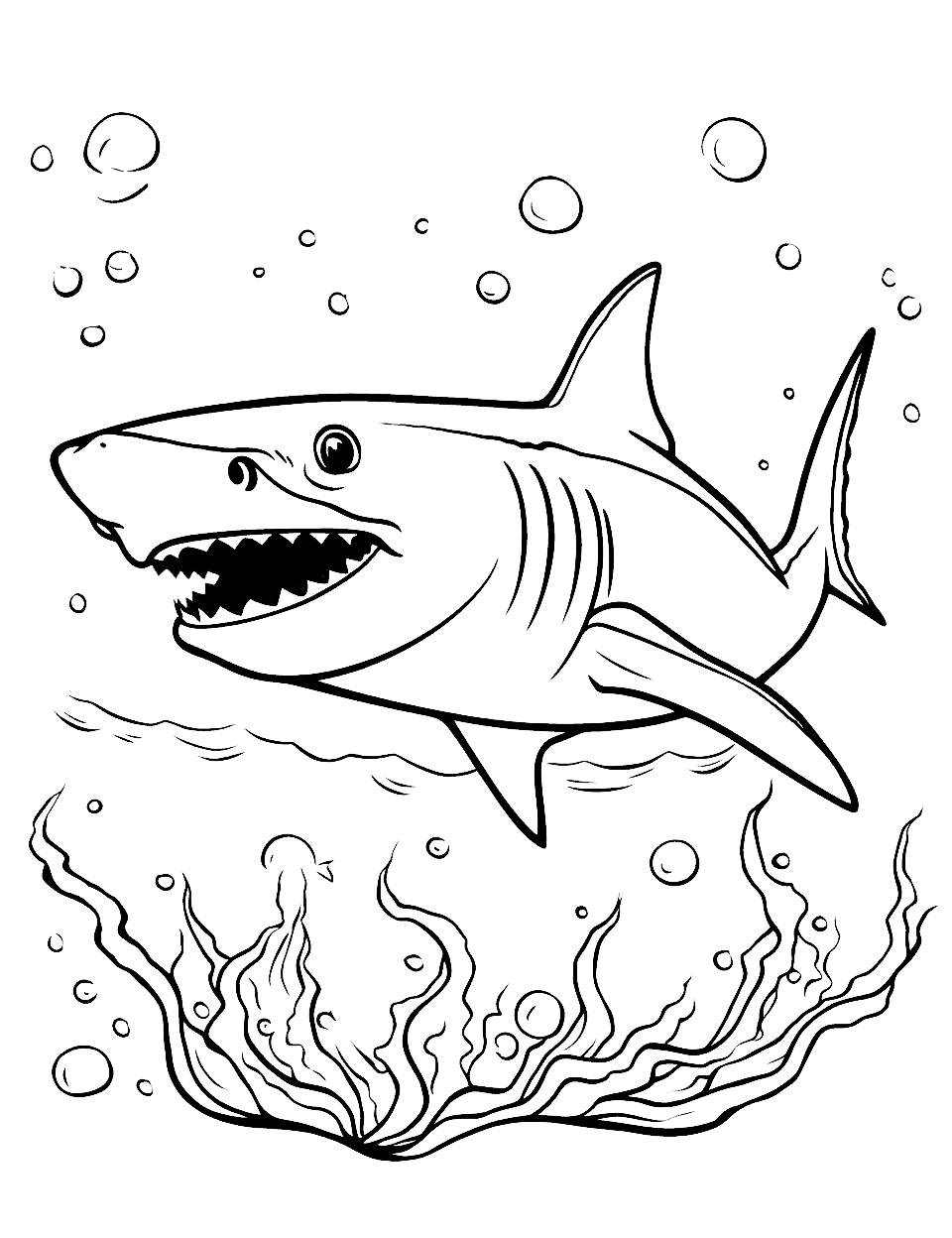
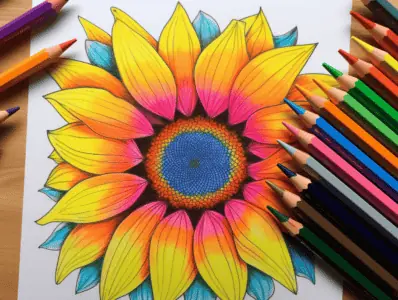
Ready to take a bite out of a rainy afternoon? This collection holds 50 free shark coloring pages, from chunky cartoon grins a toddler can finish with three crayons to detailed kelp forest scenes that will keep an older kid busy for an hour.
You will find reef swimmers, a swirl-covered decorative shark, a standoff with a pirate ship, an open treasure chest and a shark and dragon mash-up. Every sheet prints on standard letter paper, so use whatever is already in the tray.
Scroll through, pick your favorites, and print as many as you like. Below the sheets there is a guide to choosing by age, real shark facts to color by, and six ways to reuse a finished page.
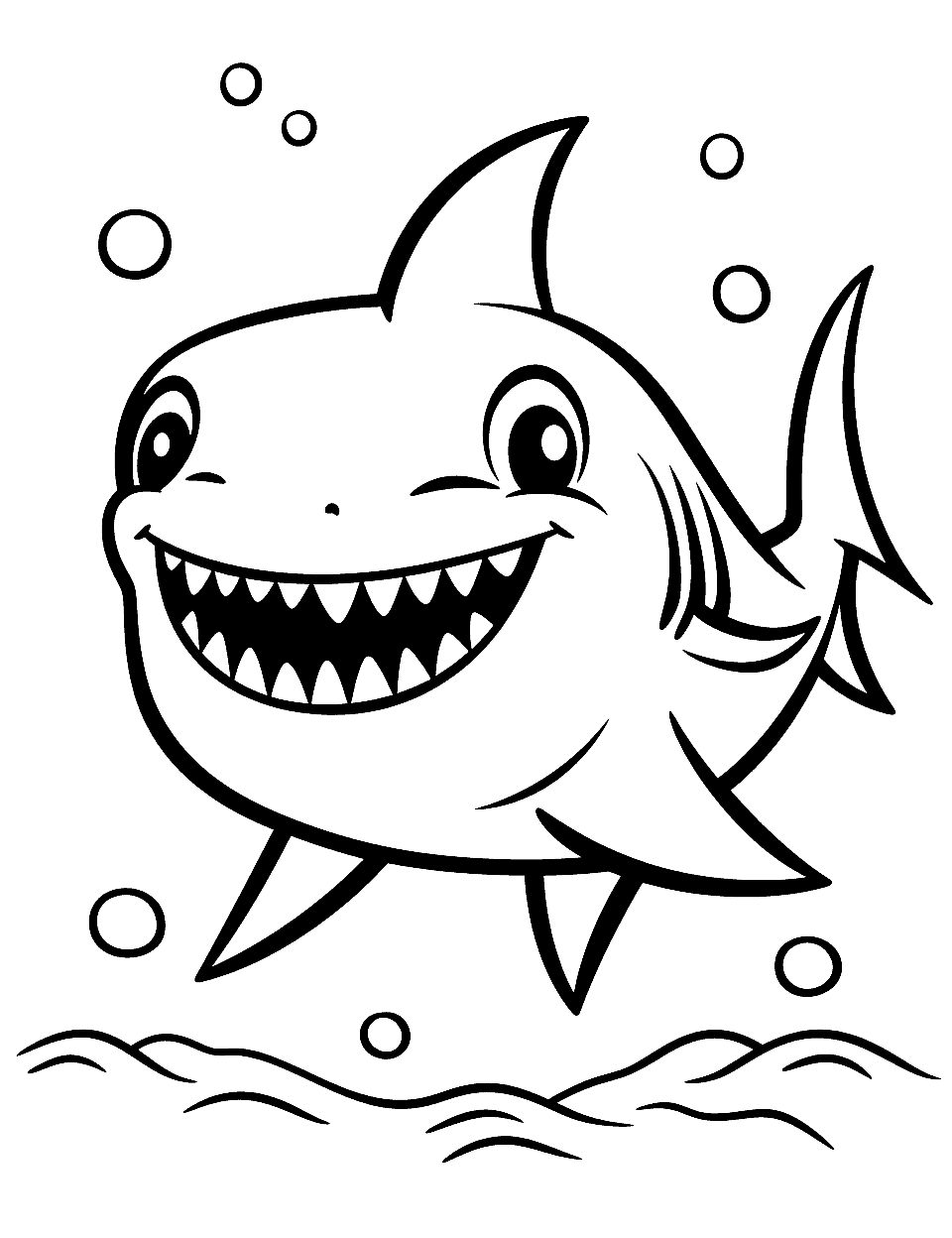
Smiling Cartoon Shark
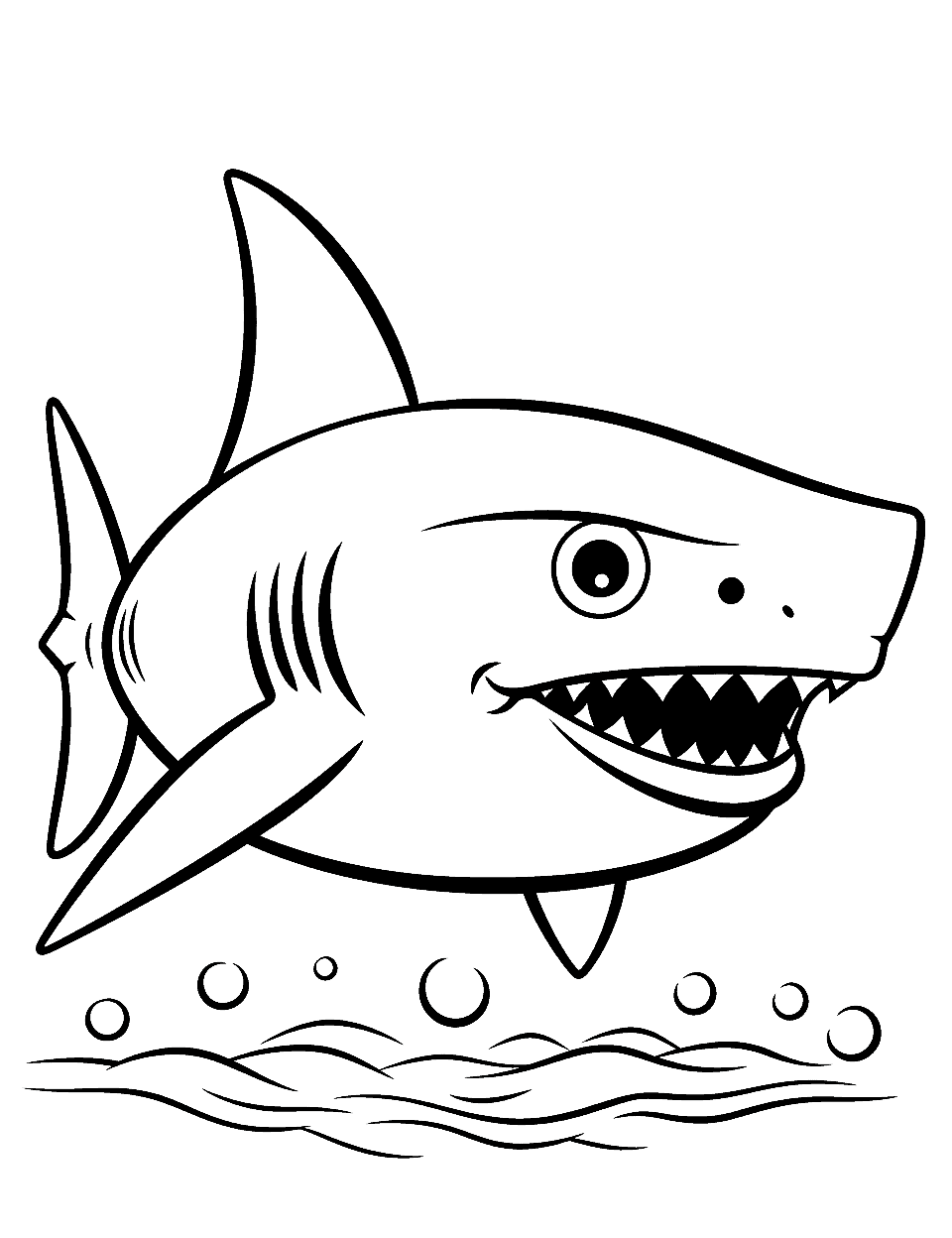
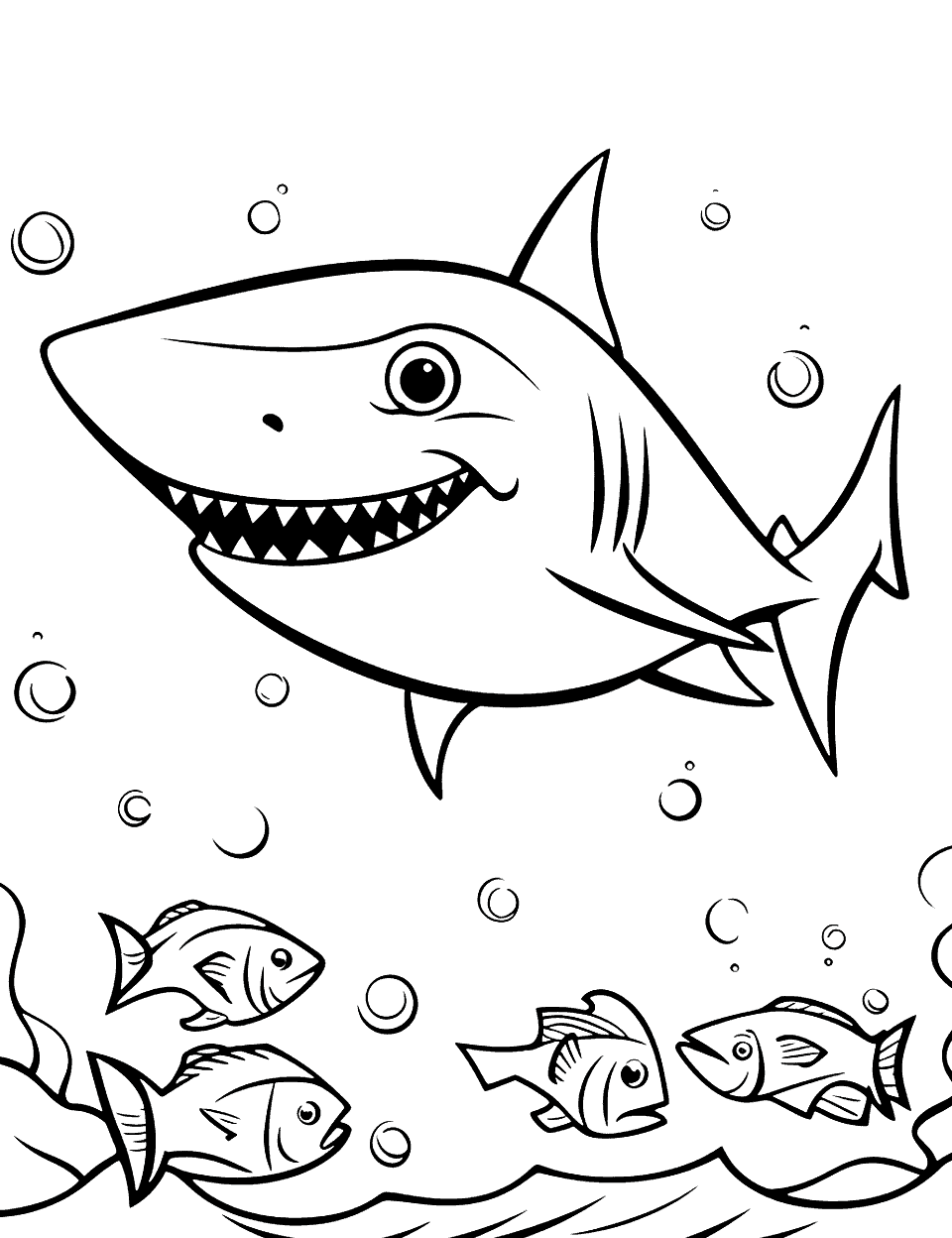
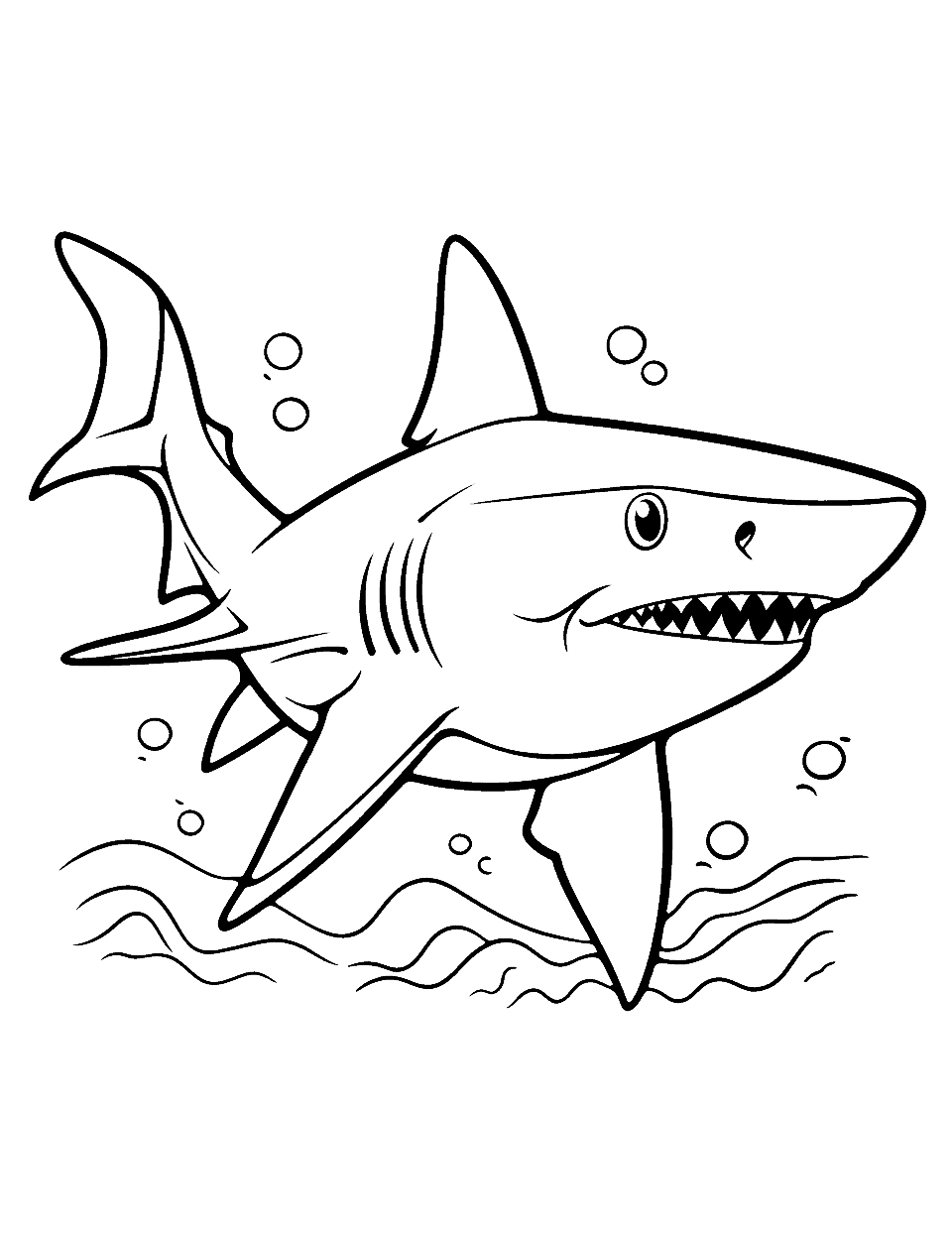
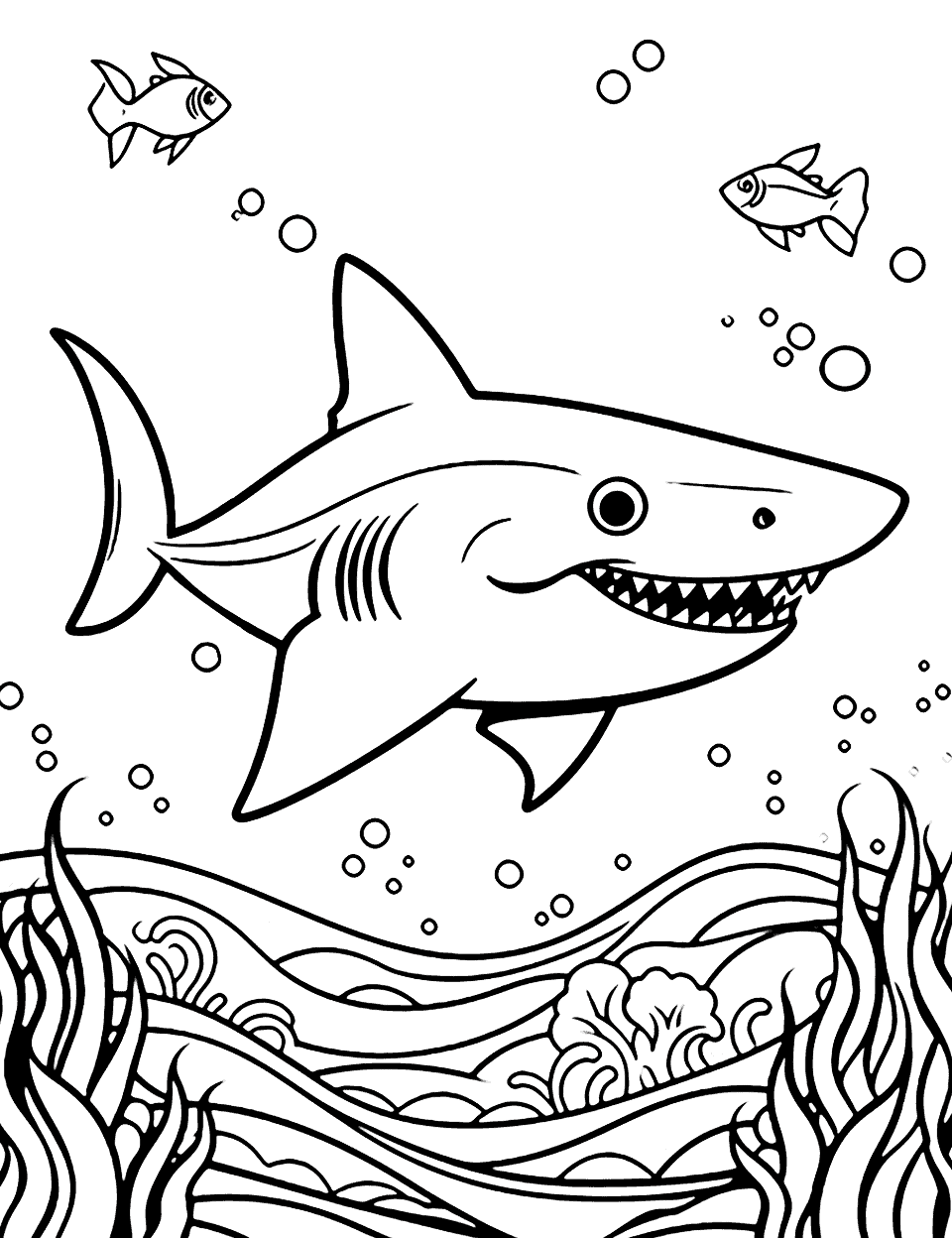
Thick, chunky lines and a wide toothy grin make this the friendliest sheet in the set. There is almost no fine detail, so a toddler can fill the whole body with one crayon and still feel finished. Try a pale blue on the water line at the bottom and leave the bubbles white. Children who like this one usually reach for our baby shark pages next.
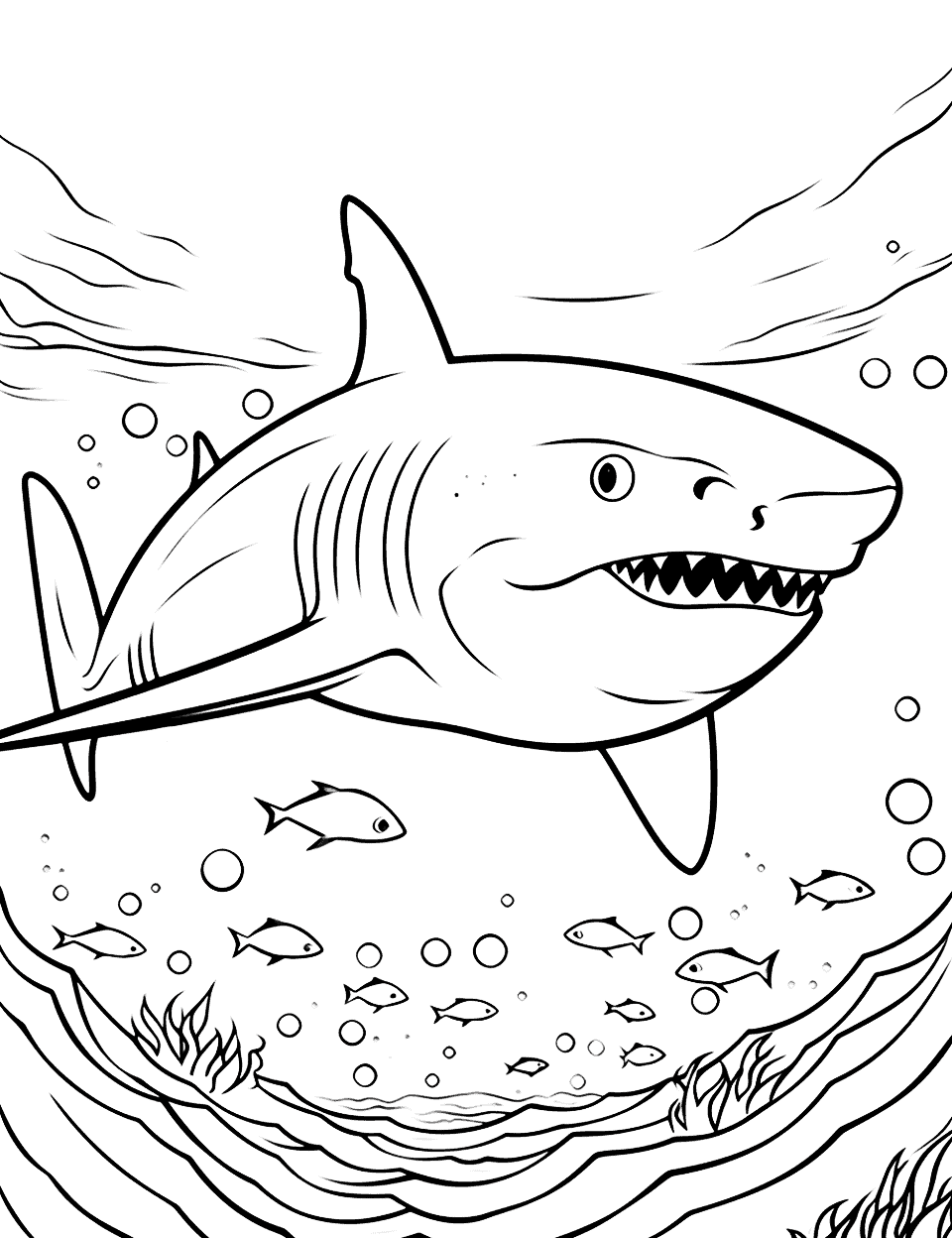
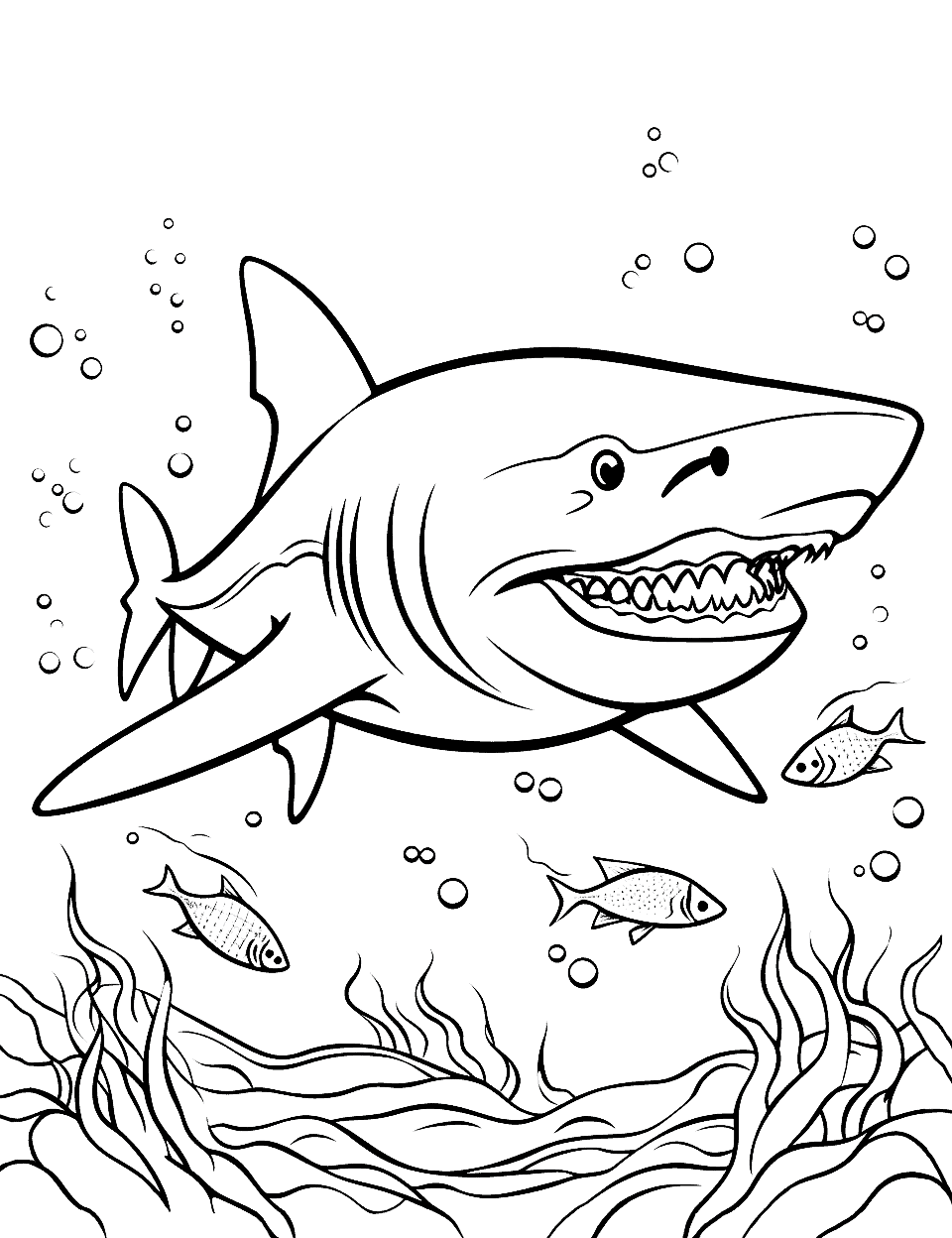
A realistic shark glides across the middle of the page while tiny fish scatter over the ocean floor below it. Layer two blues, dark along the bottom and light near the surface lines, so the water gains some depth. The little fish are the spot for your brightest pencils. It suits a child who has outgrown chunky outlines but is not ready for tiny pattern work.
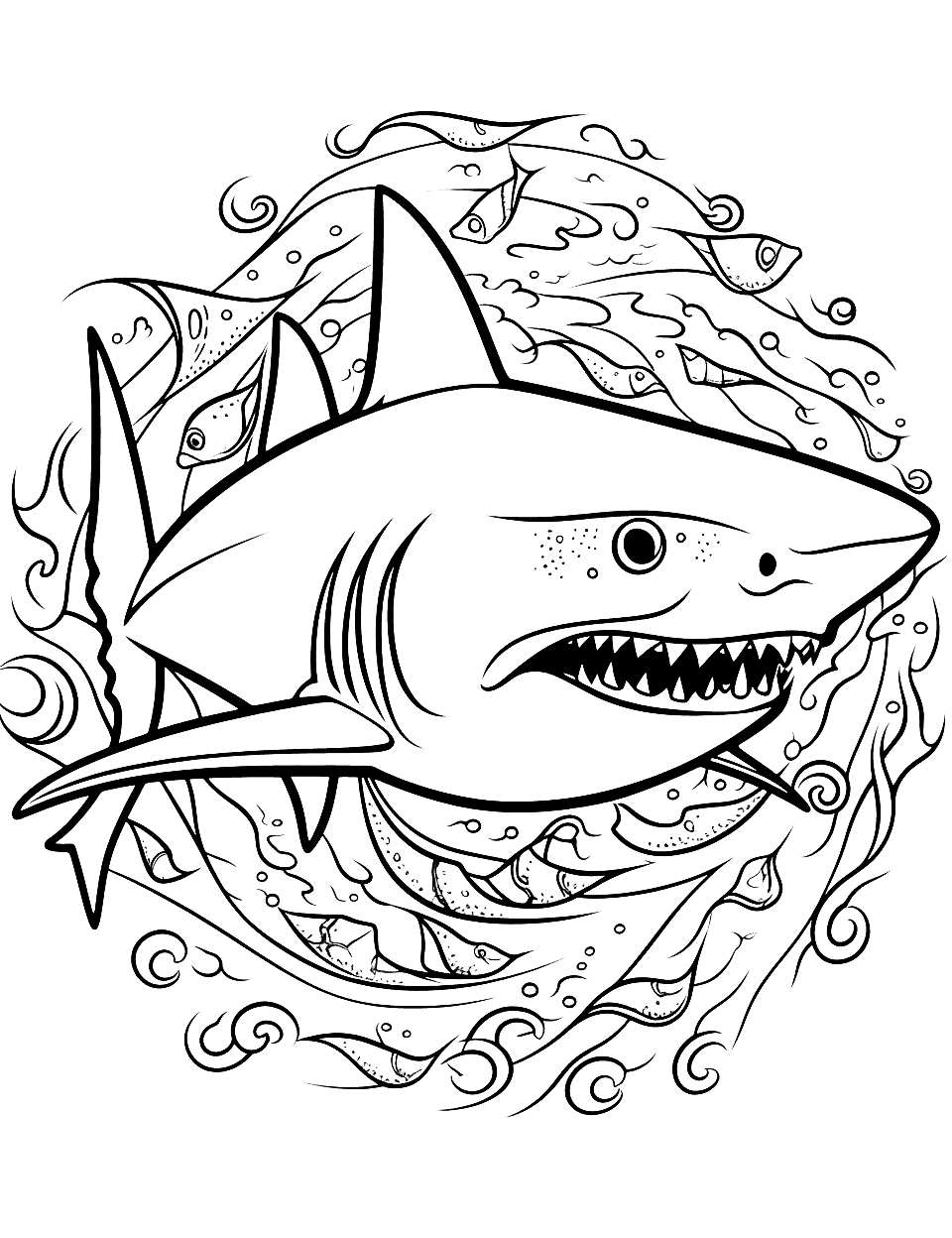
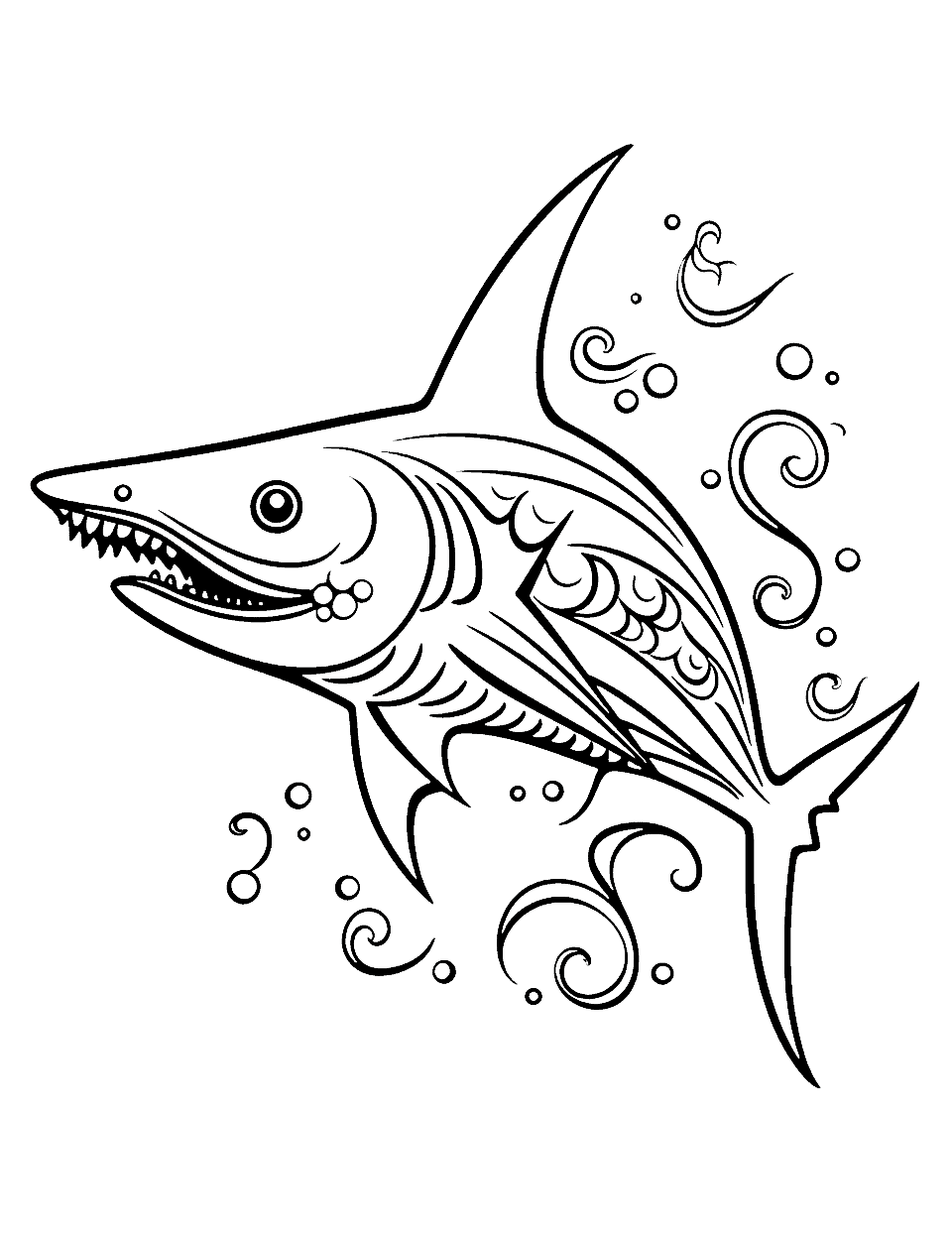
A shark sits inside a ring of swirling water, seaweed and small fish, drawn as a round mandala. The pattern work is fine, so gel pens or sharp colored pencils beat markers here. Repeating one color all the way around the ring makes the circle read as a frame. Older kids and adults tend to claim this one first.
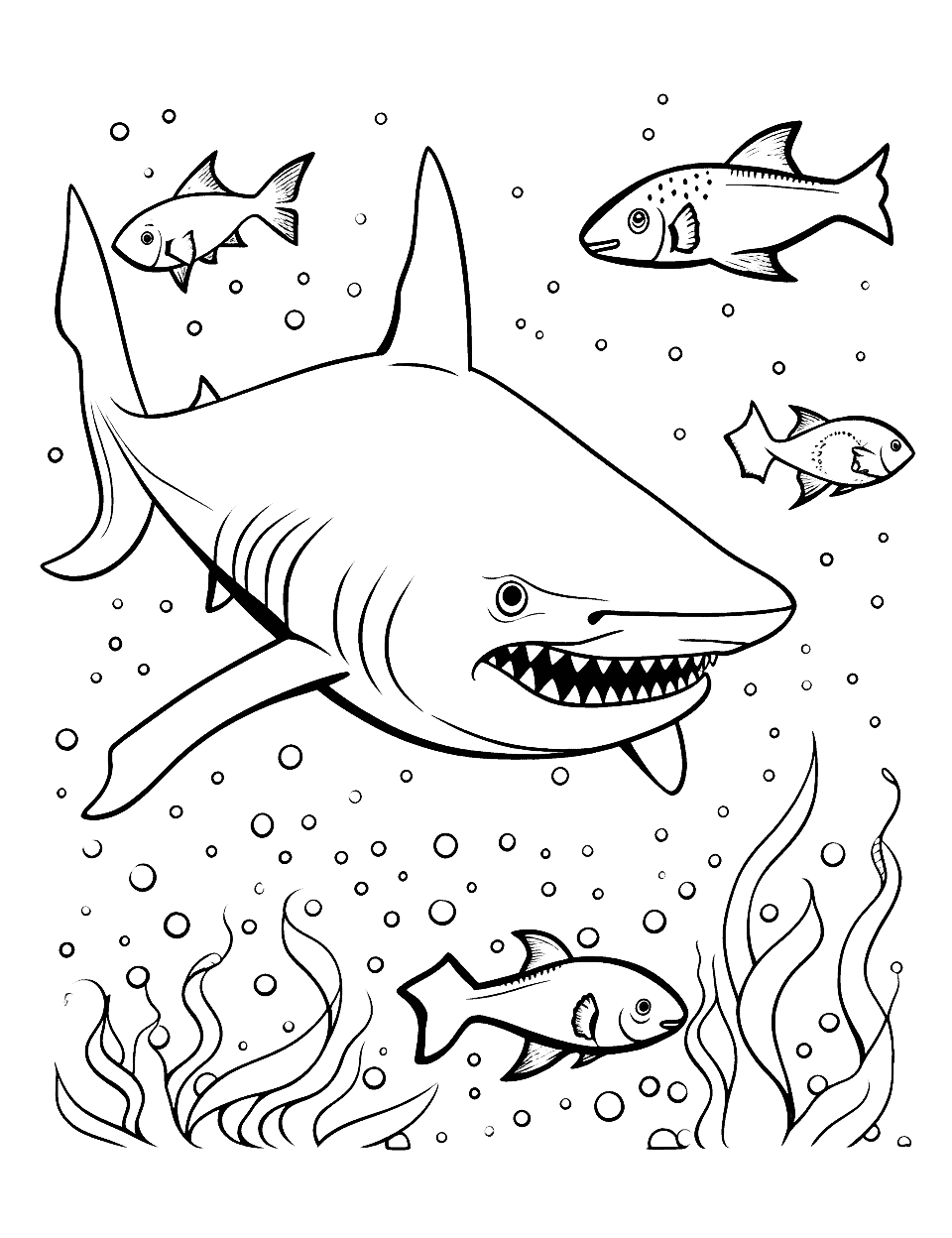
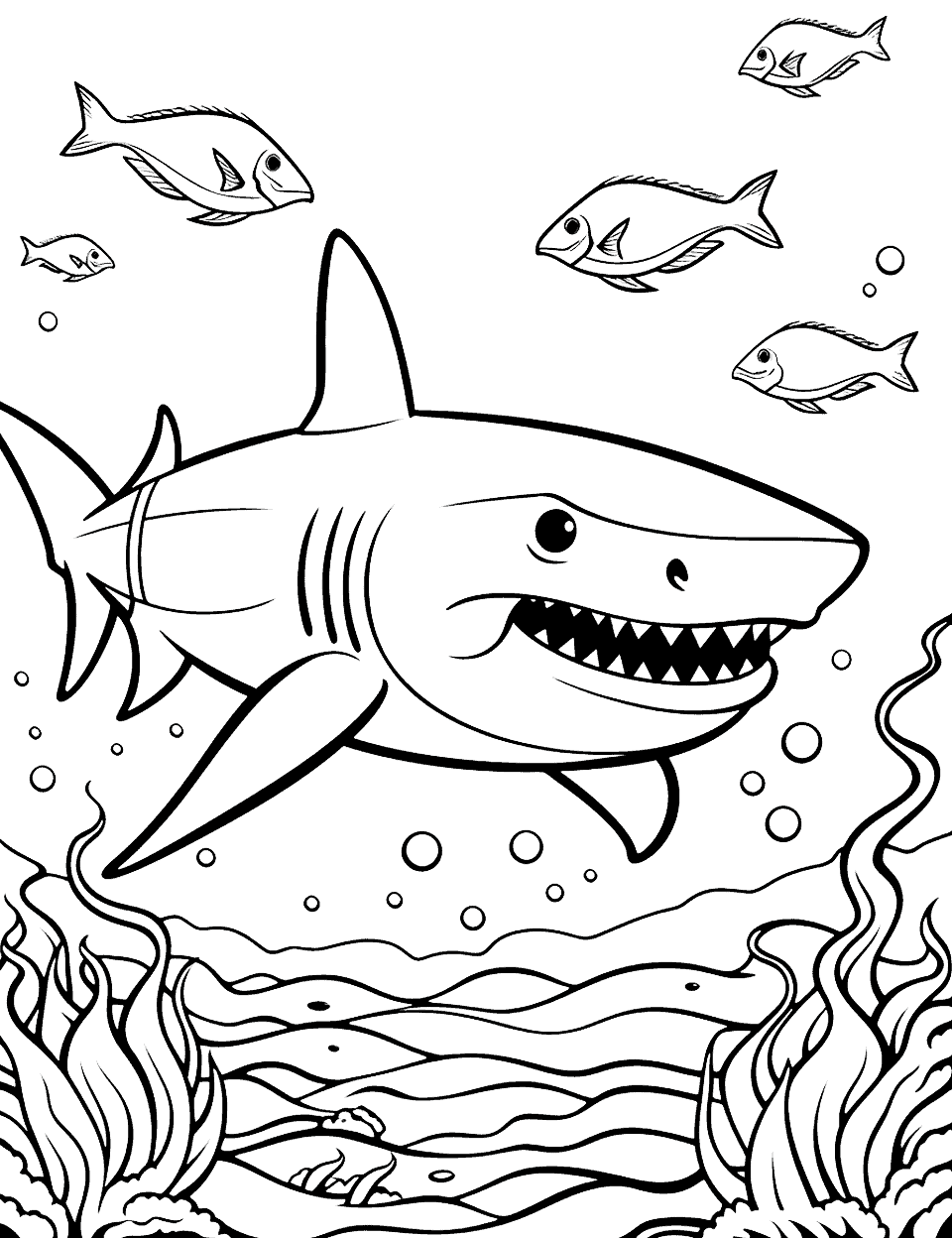
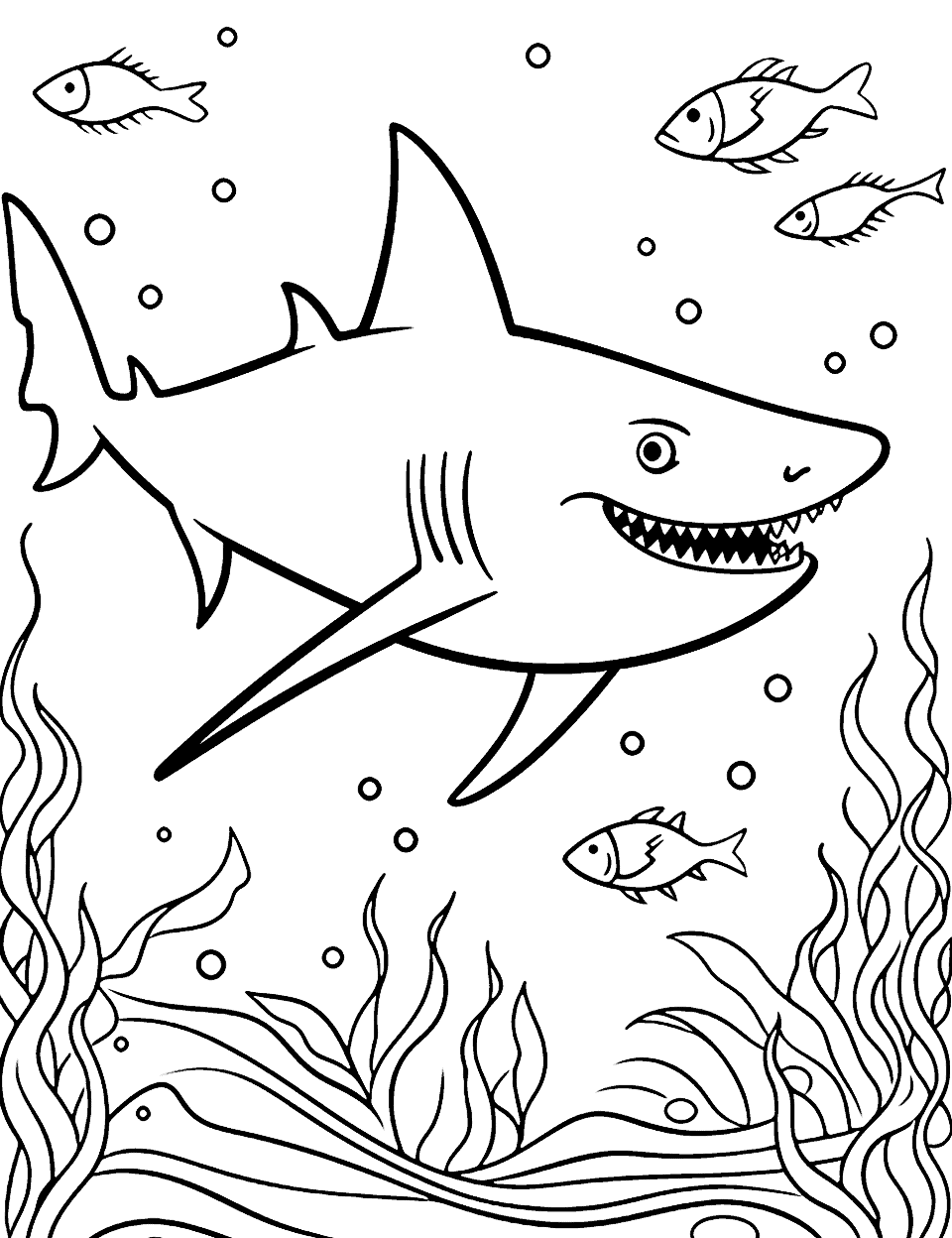
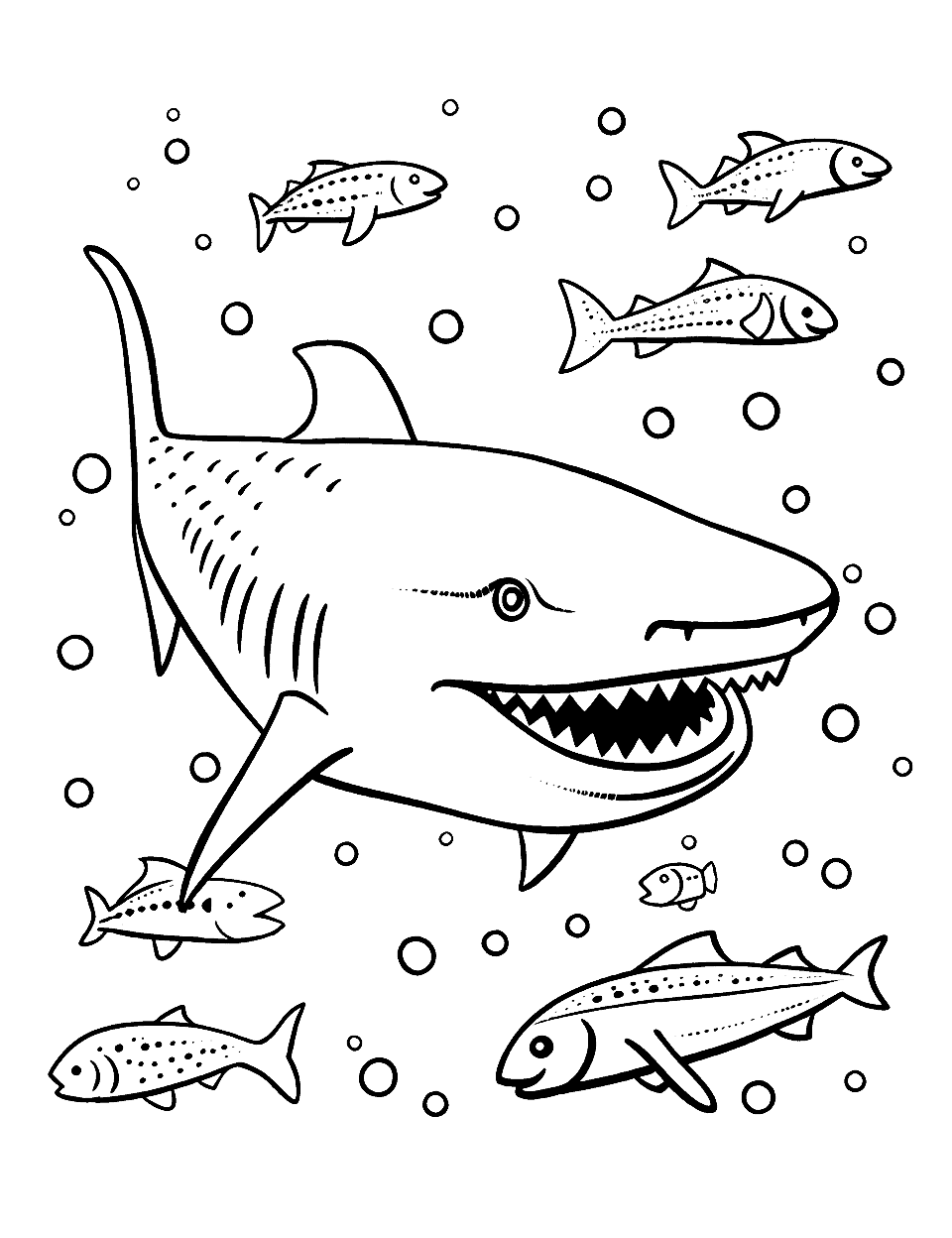
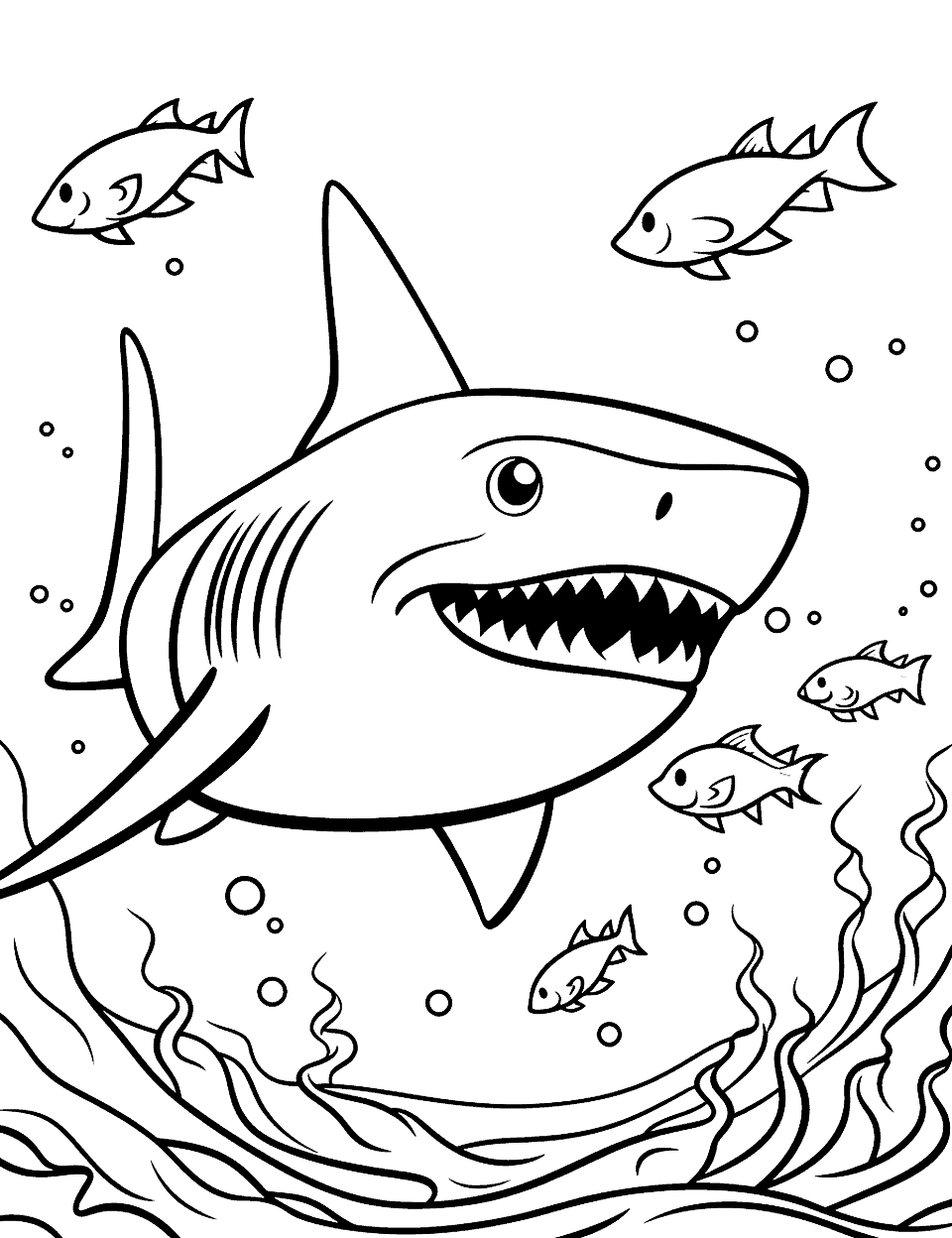
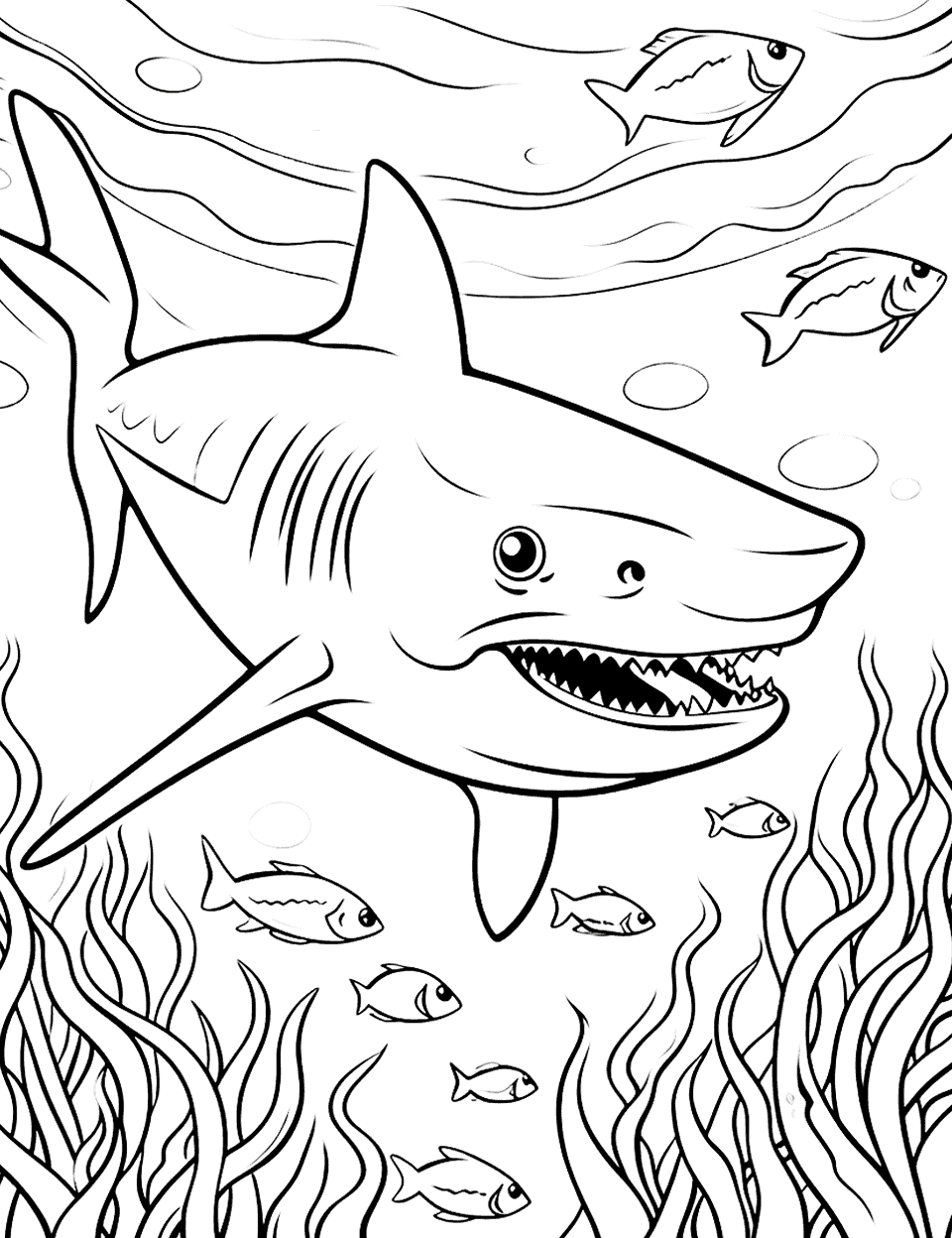
Four fish hover around a long-snouted shark that fills the center of this page. Give each fish its own color and the busy background sorts itself out. The bubbles are small circles, so a fine tip beats a fat crayon. Medium difficulty, and a good print for a quiet twenty minutes.
Bold outlines and wide open shapes make this the quickest sheet to finish. There is enough blank space inside the body to add stripes, spots, or your child’s name. Good for preschoolers and for anyone coloring with chunky crayons.
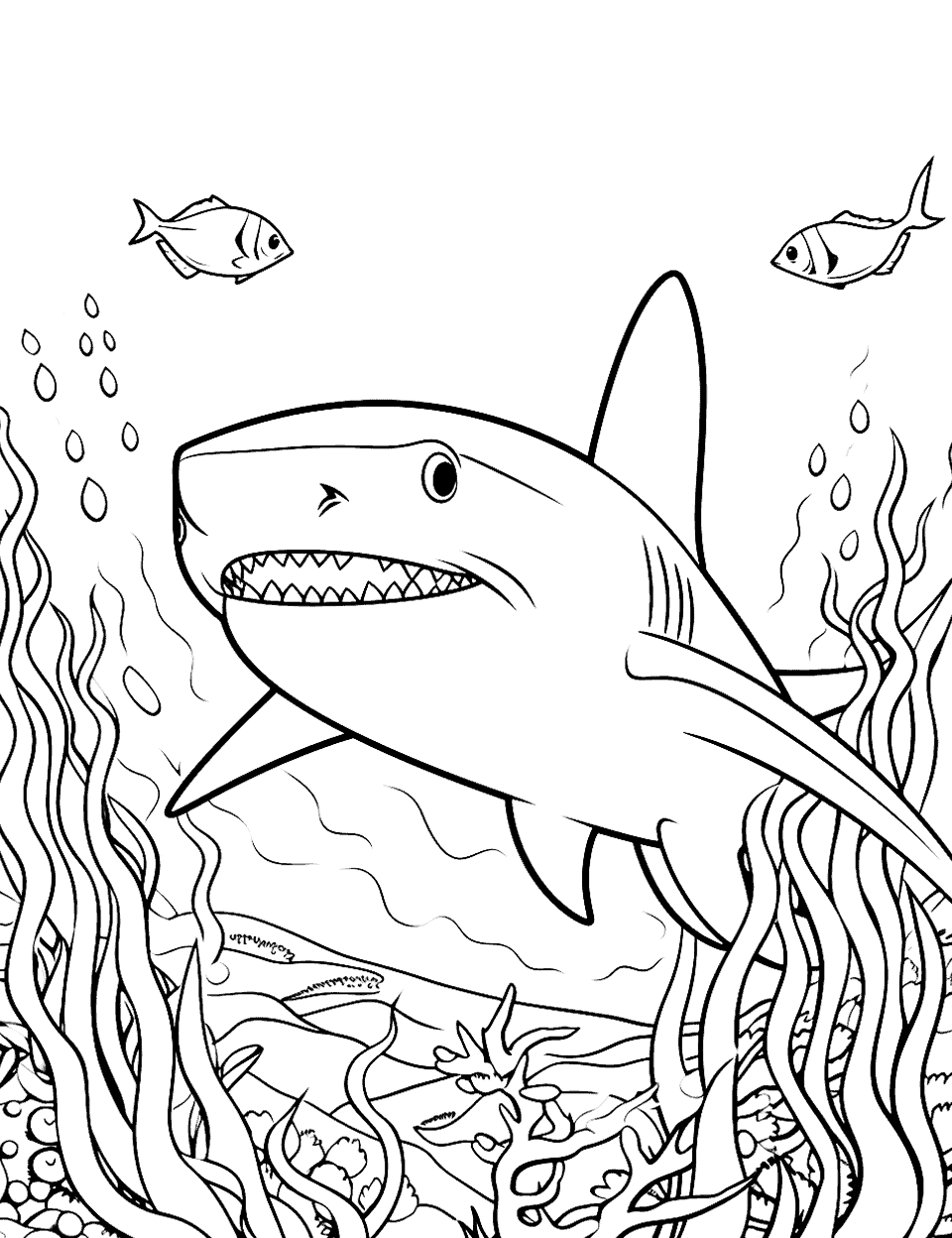
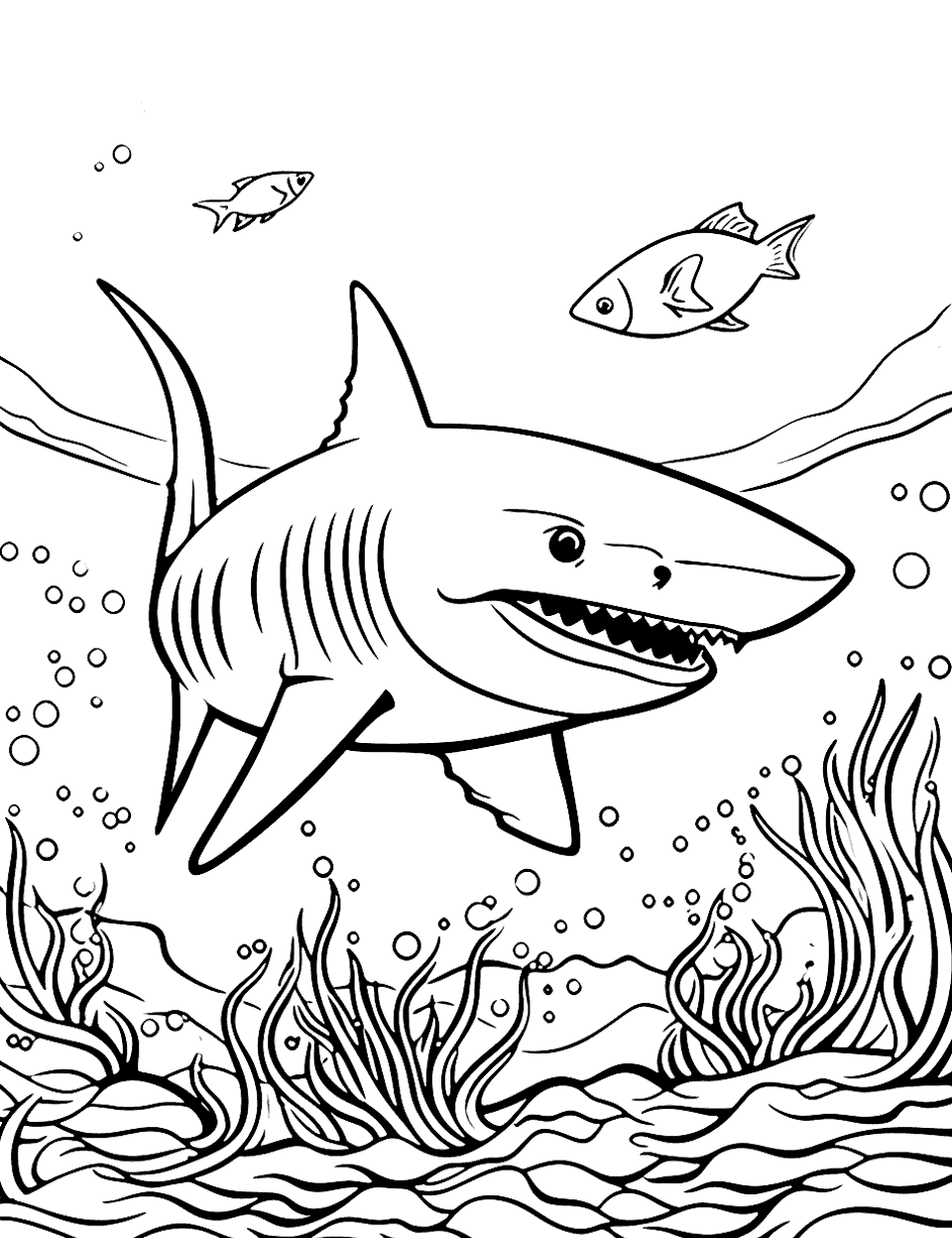
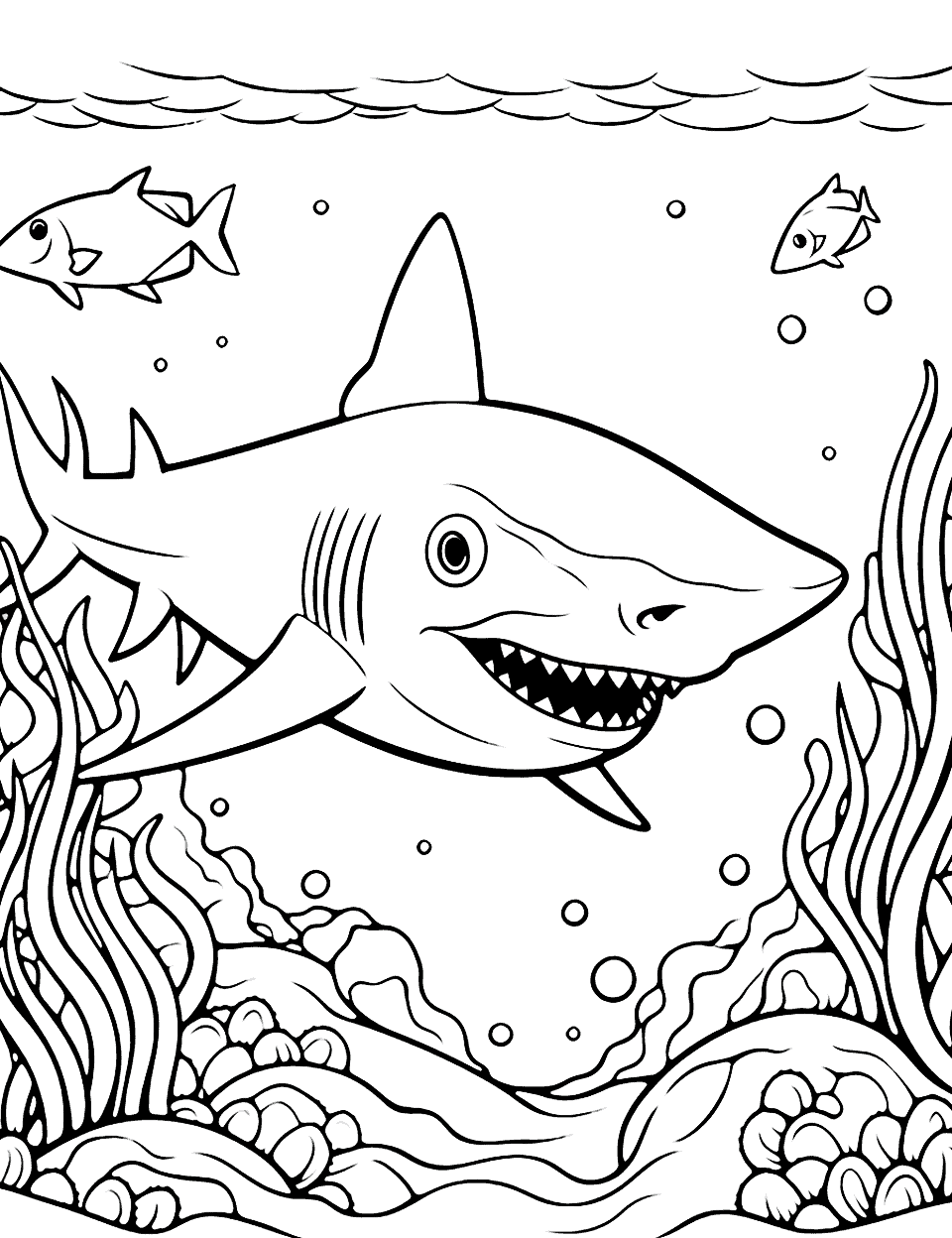
Tall strands of sea grass frame a shark cruising just above the sea floor, with two small fish tucked near the top corners. Vary your greens strand by strand so the plants do not flatten into one block. Shells and pebbles along the bottom edge reward a fine tip. Plan on a longer sitting for this one.
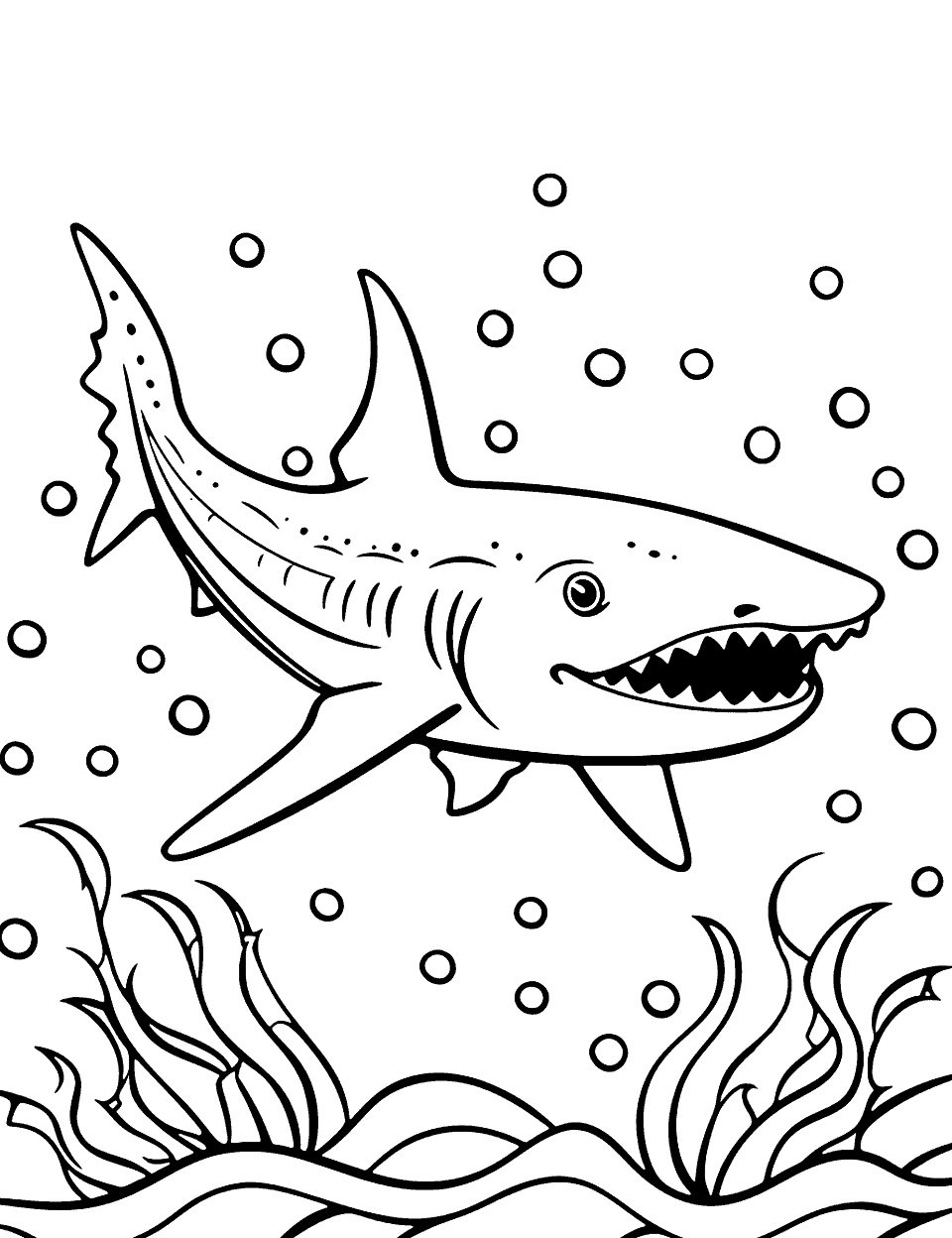
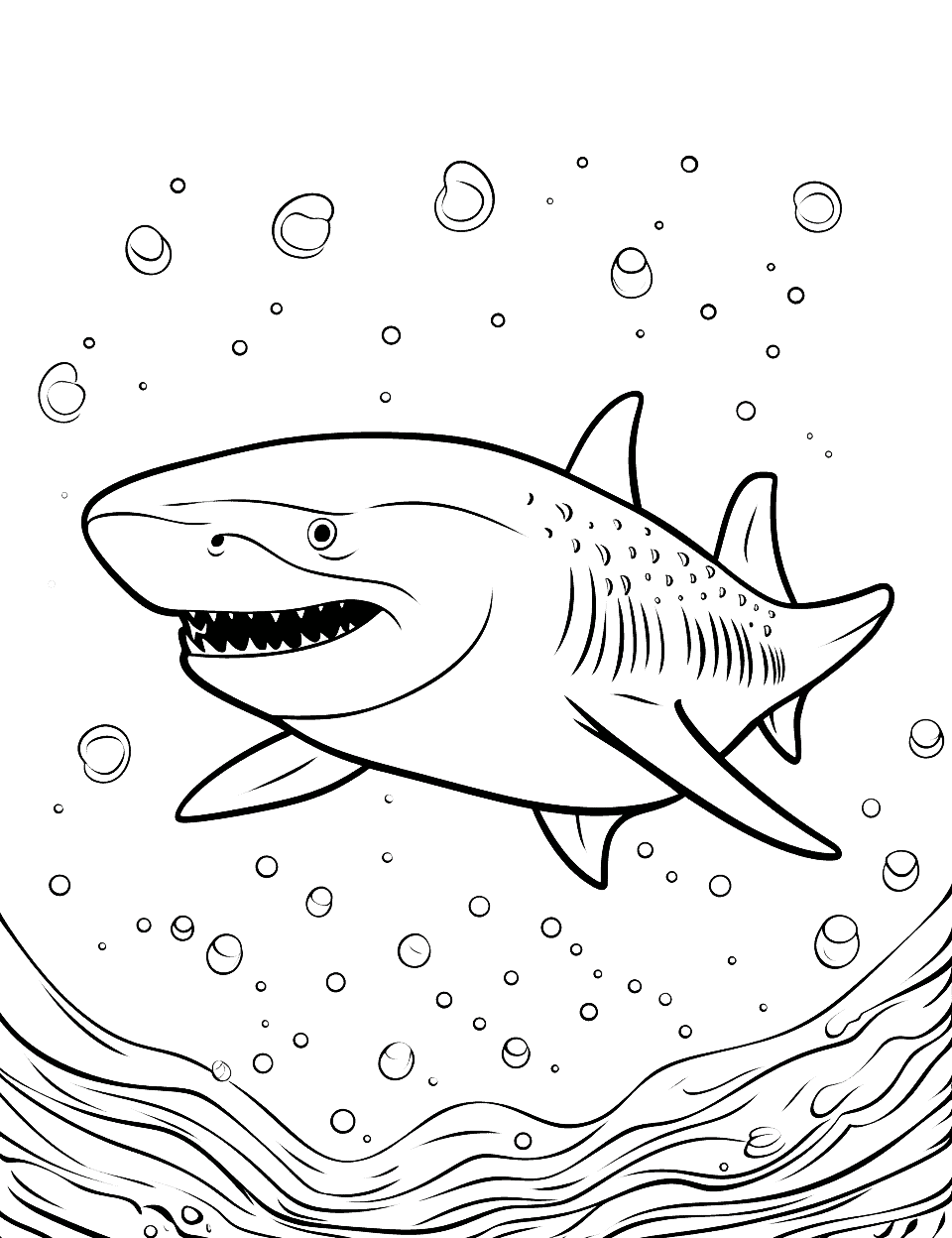
Dots run along this shark’s back and loose bubbles fill the water all around it. Leave the bubbles white, or give them the palest blue, so they still read as air. The spots are small, and a sharpened pencil holds their shape better than a marker. Counting the bubbles out loud is an easy way to keep a younger child at the table.
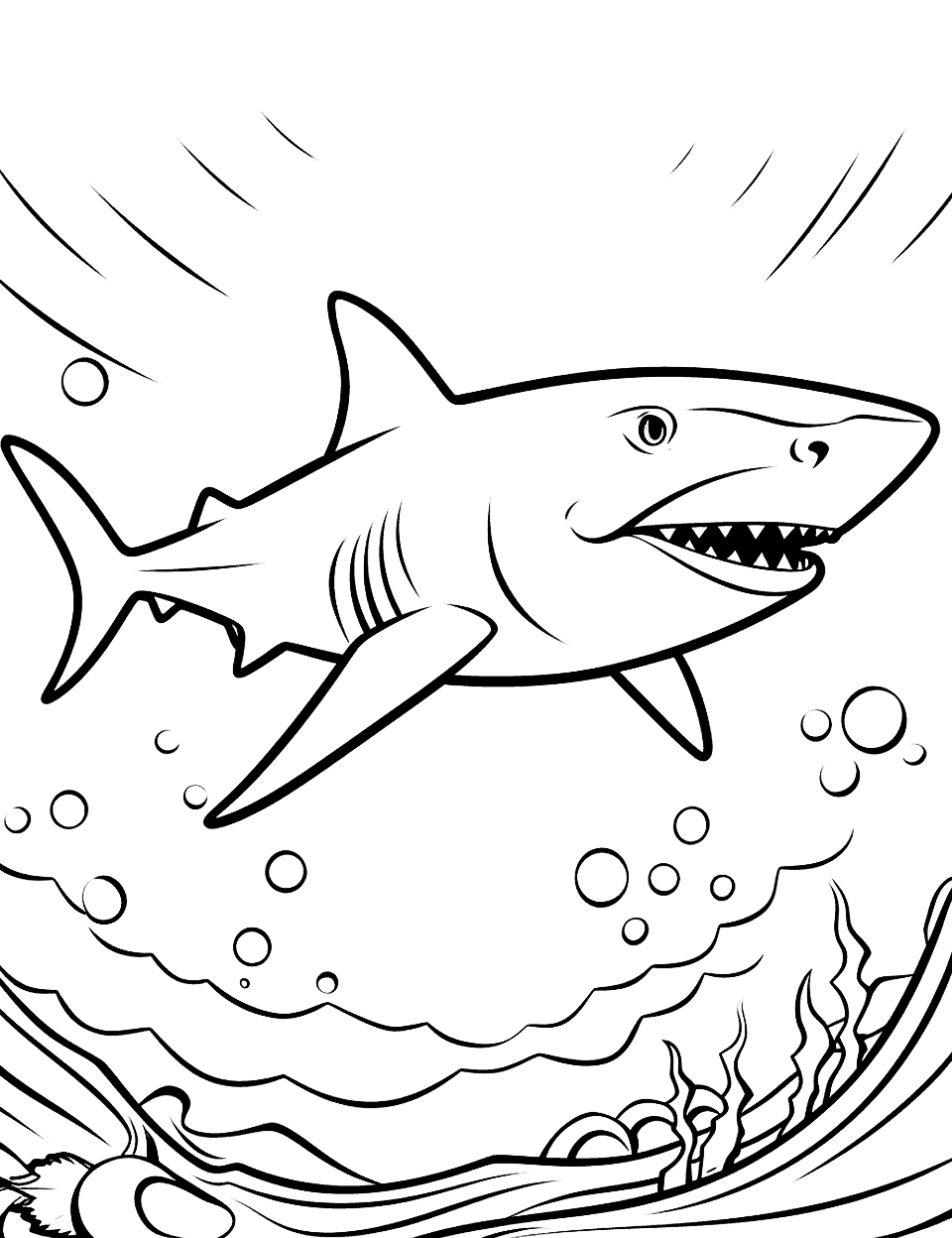
Speed lines streak across the top of the page while the shark powers forward through a trail of bubbles. Bold strokes suit this one, and pressing harder on the water behind the tail sells the movement. Keep the shark itself lighter so it stands apart from the busy background. There is no prey in sight here, just a shark in a hurry.
This shark wears a closed-lip grin that softens the row of teeth underneath. The wavy lines along the bottom are sea floor ripples, easy to shade with the side of a crayon. Two thin seaweed strands stand at either edge and take almost no time at all. It sits in the middle of the pack: more detail than the toddler pages, far less than the mandala.
A broad-bodied shark takes up most of the page while two small fish swim past below it. The size gap is the whole point, so color the fish something loud and leave the shark in grays. Kelp rises from the sea floor and gives you somewhere to use green. Ask your child which one they would rather be.
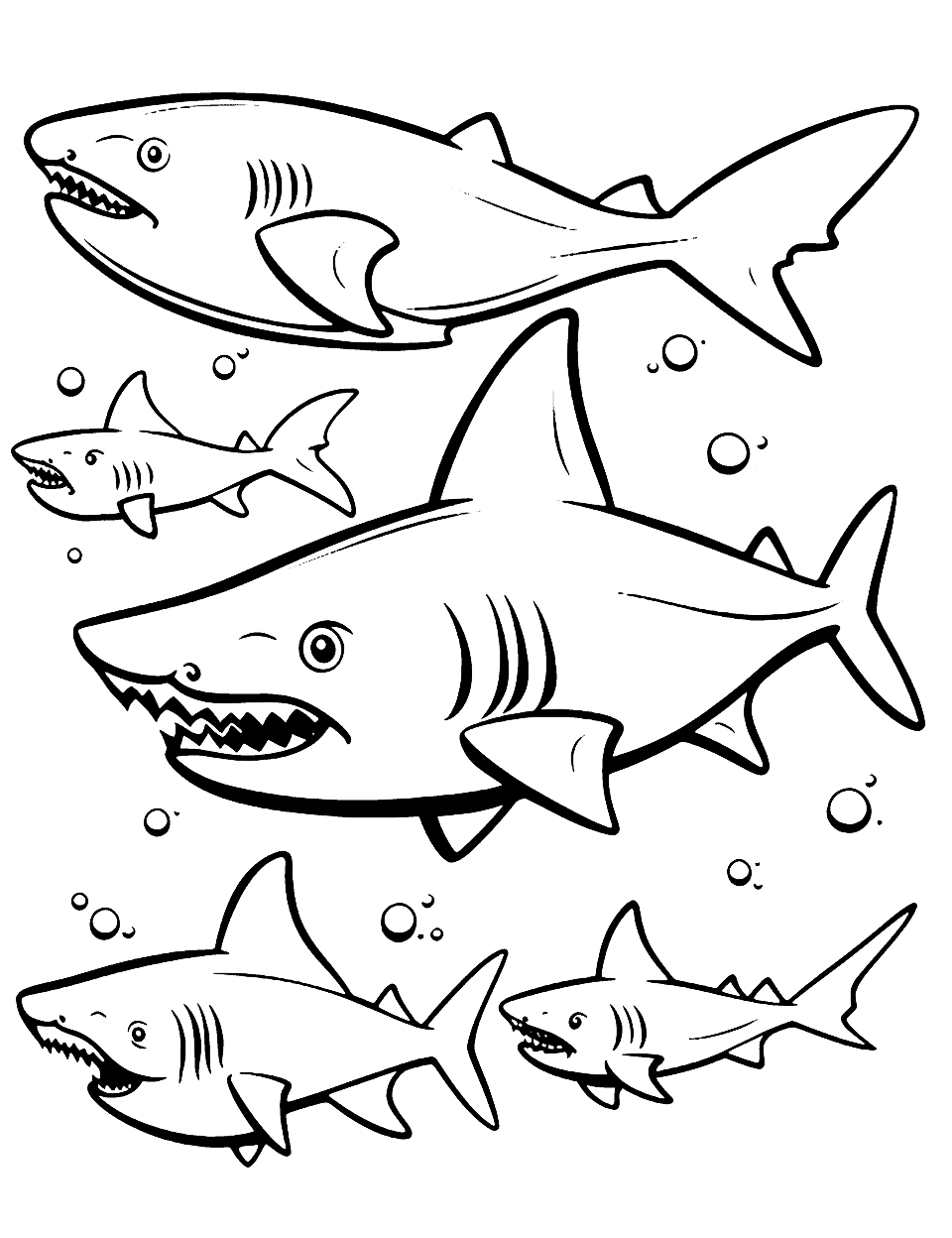
Five sharks of different sizes share this page, with only a few bubbles drifting between them. All that open space is an invitation to add your own seaweed, fish, or a sunken ship. Coloring each shark a different shade turns the sheet into a size comparison. It also finishes fast, which makes it handy for a classroom print.
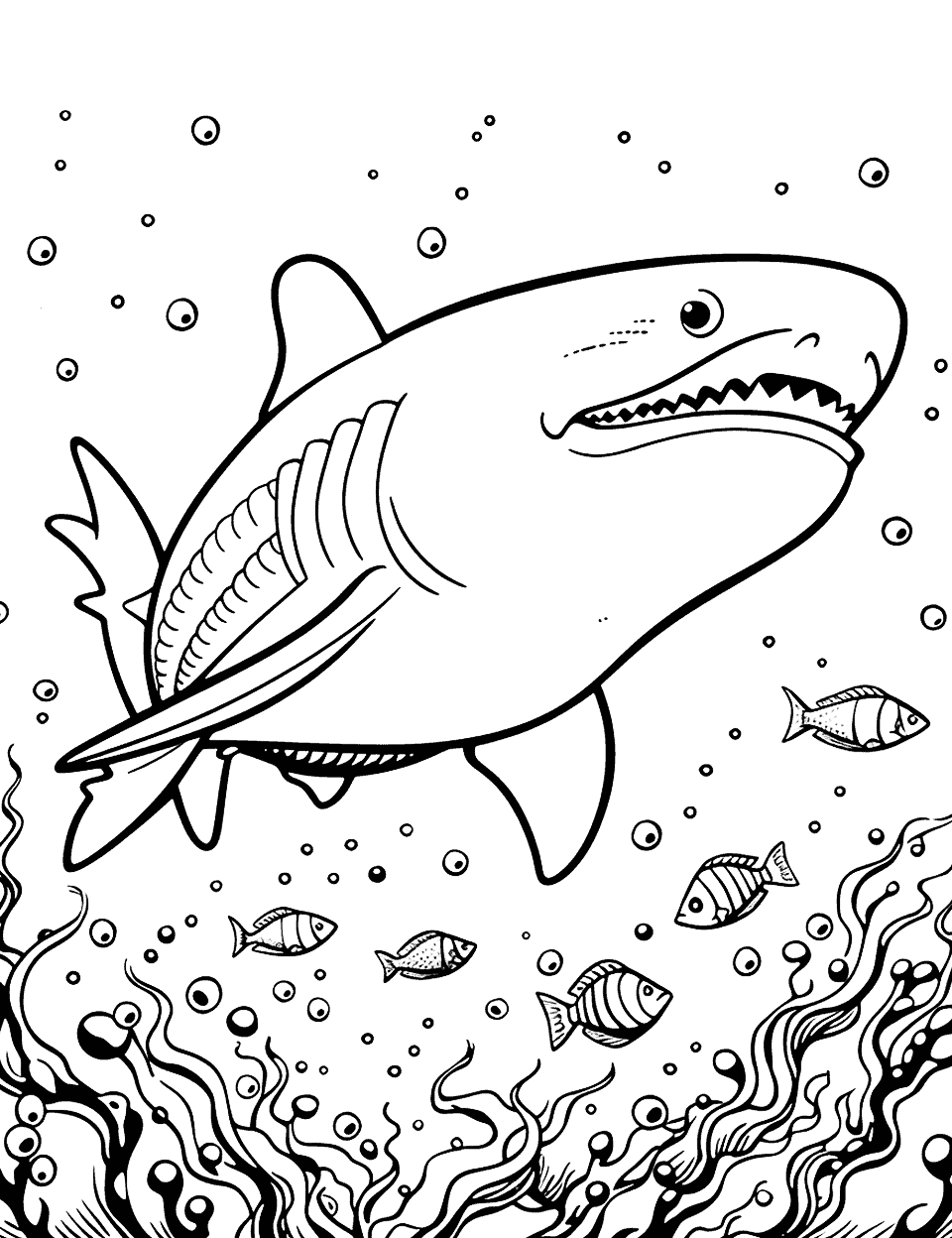
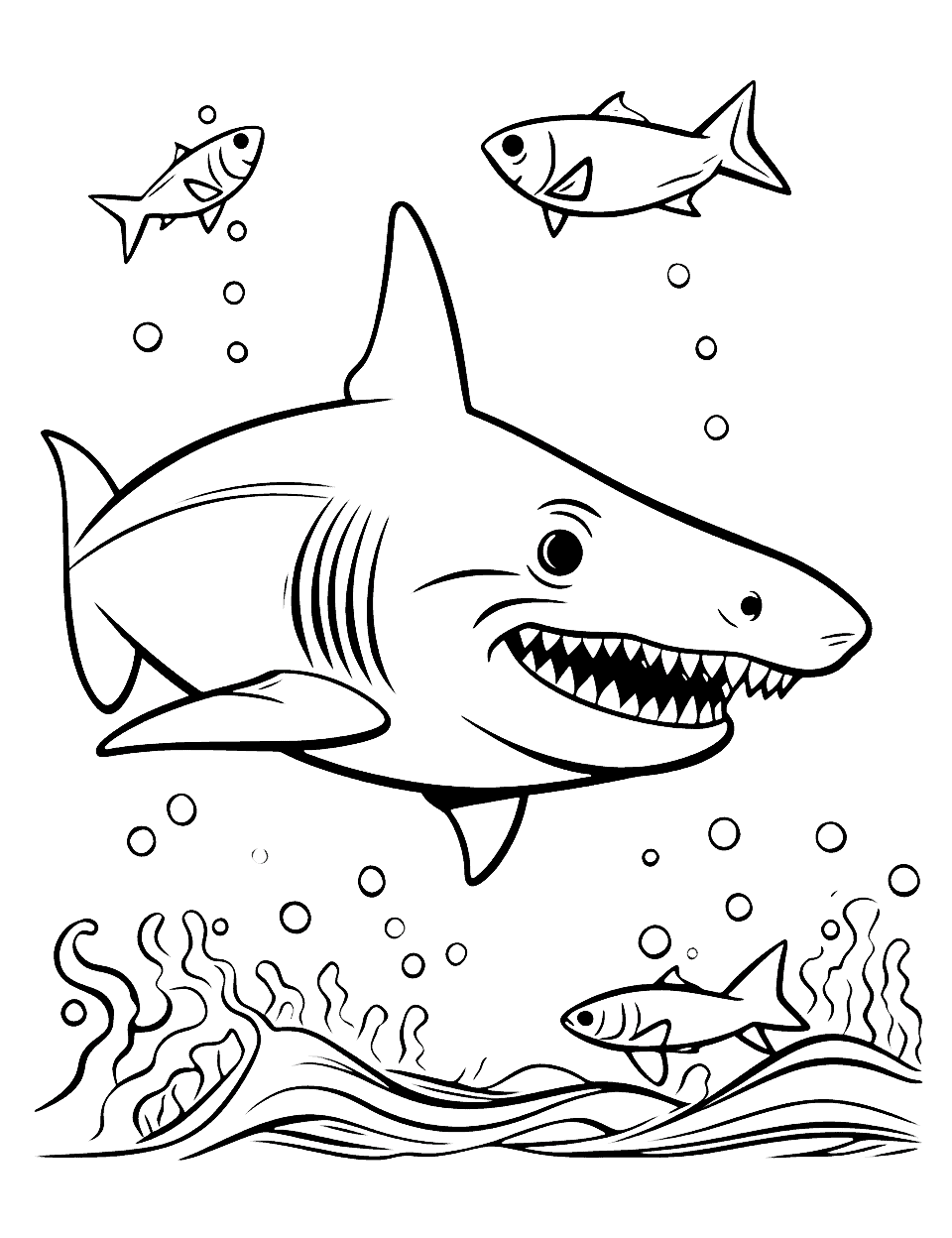
A heavy-bodied shark angles across the page with its gill slits and long pectoral fin clearly drawn. The bottom third is packed with coral, waving anemones and small striped fish, and that is where the detail work lives. Warm pinks and oranges down low make the gray shark stand out above them. Give each anemone its own shade so the crowded bottom edge still reads as separate shapes. Save it for a child who does not mind a busy page.
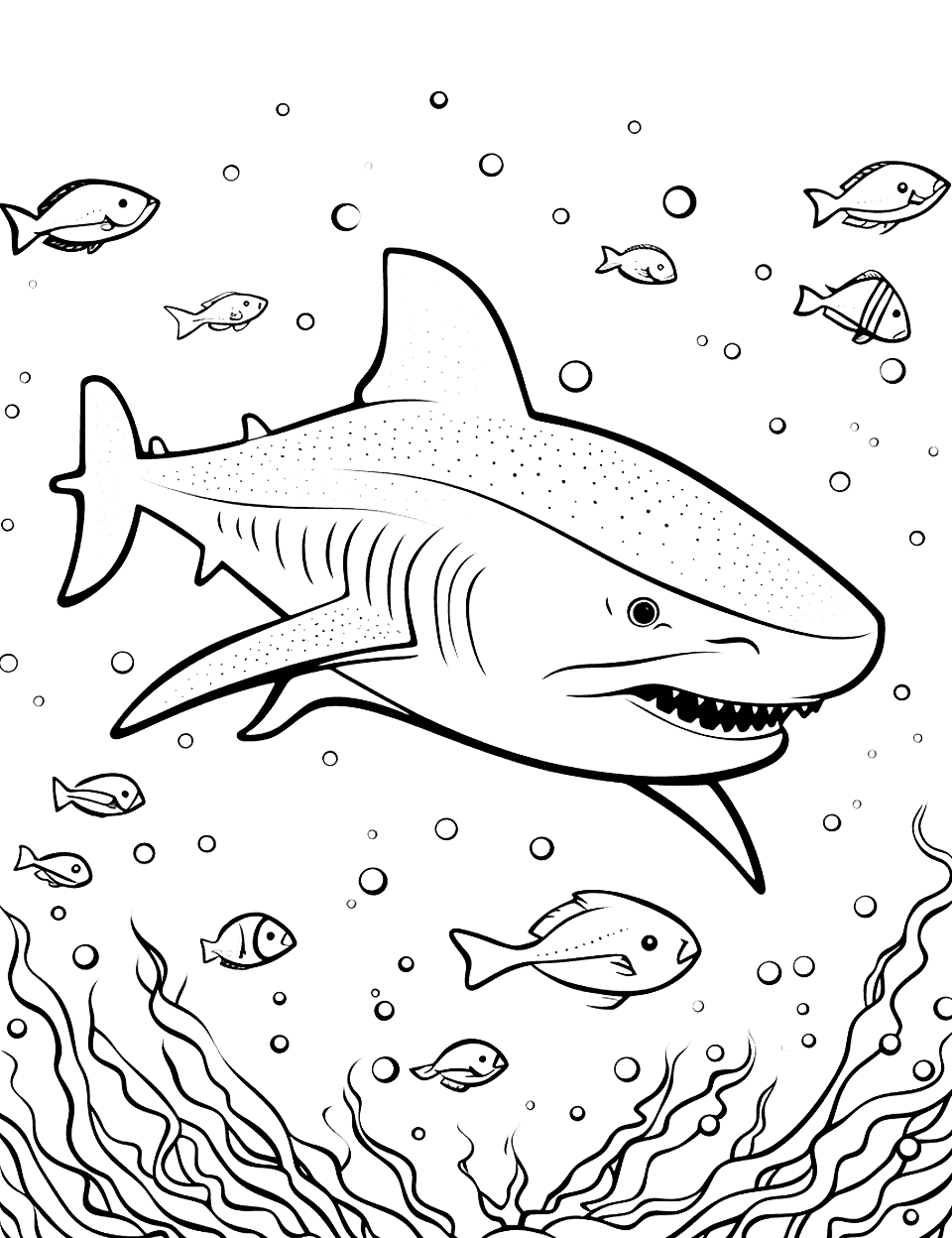
Fine dots cover the back of this shark, and a dozen or so small fish drift around it. Dot the pattern with a sharp pencil rather than filling it in, or the texture disappears. Give the fish a mix of colors so the school does not turn gray on gray. The seaweed along the bottom is loose and quick to finish.
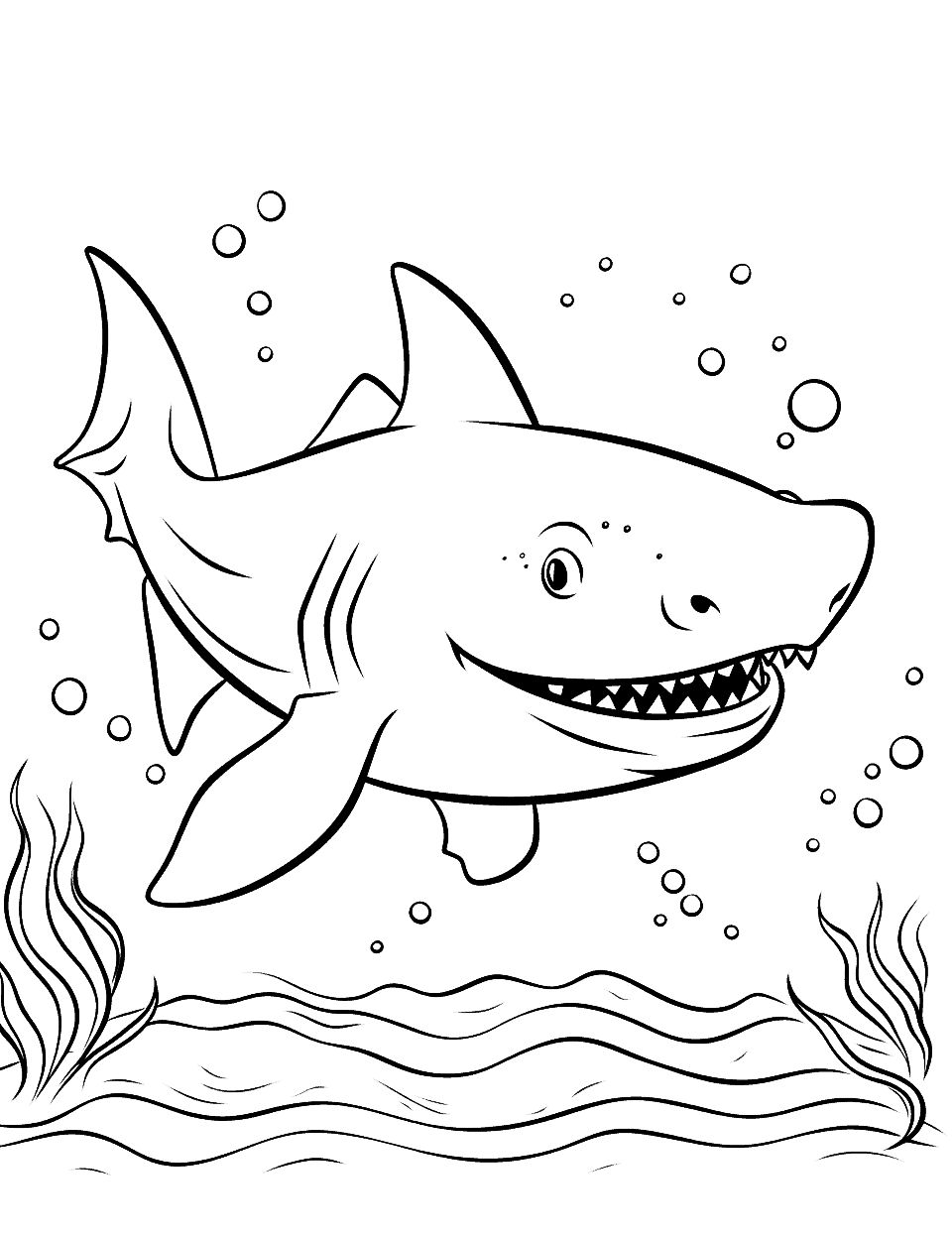
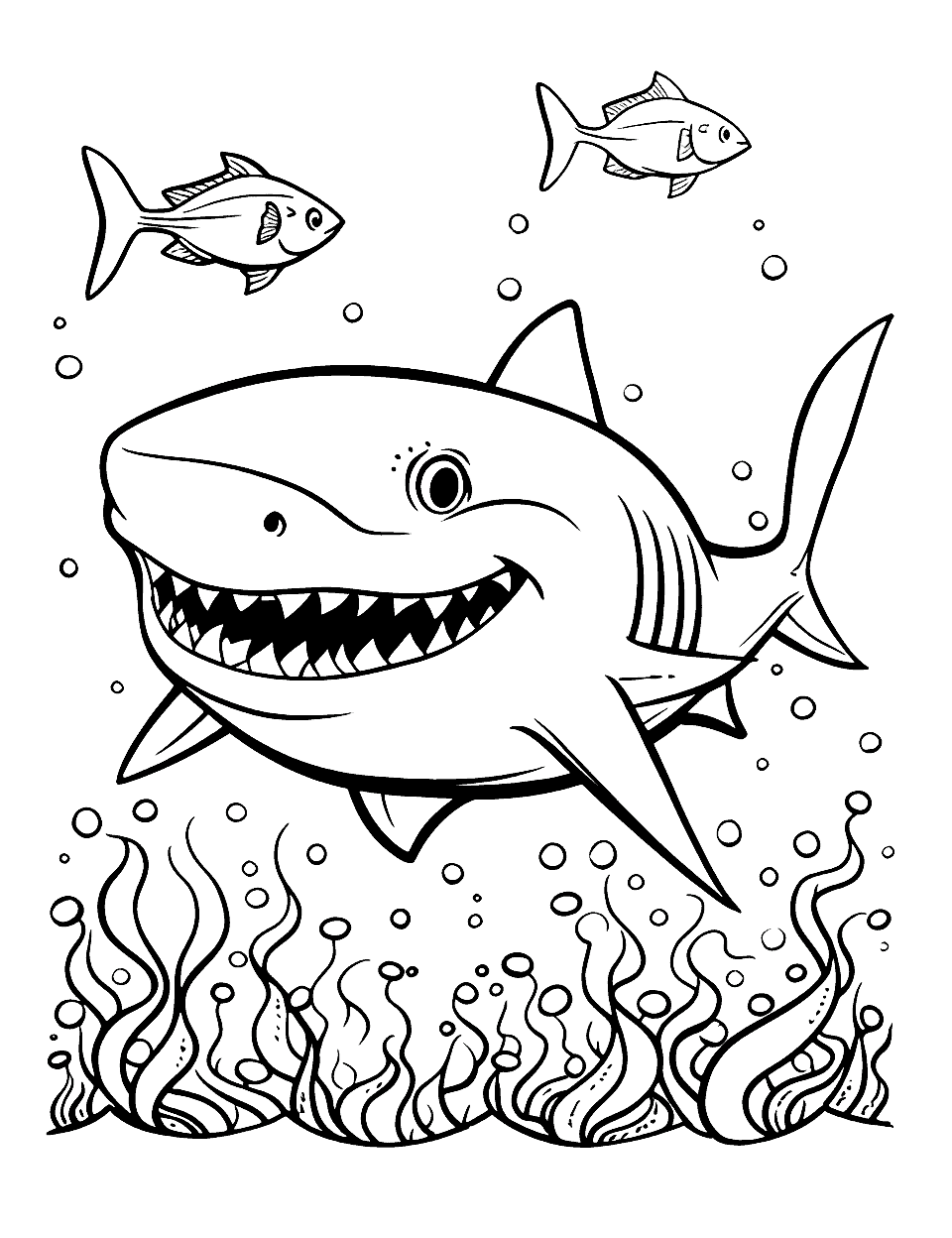
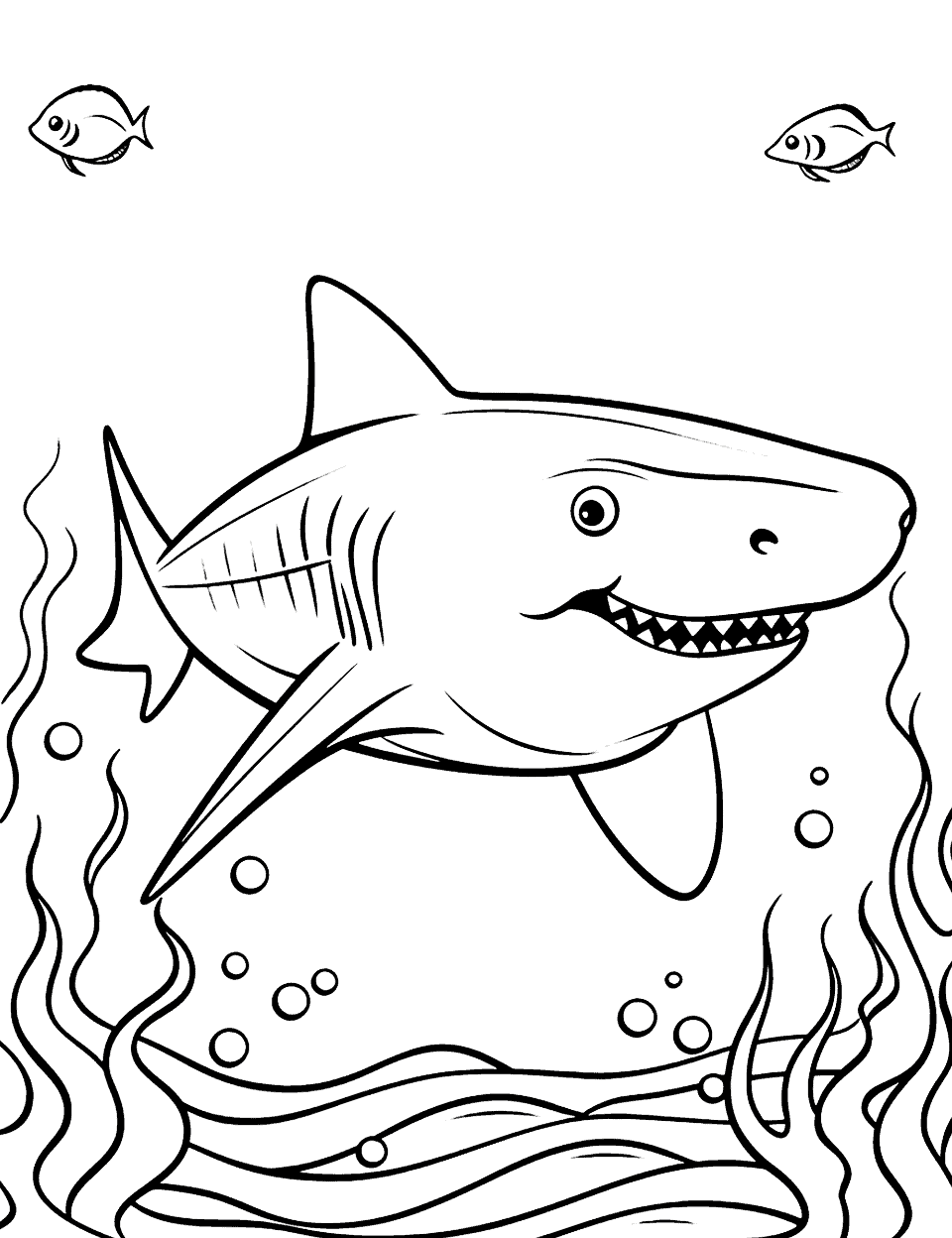
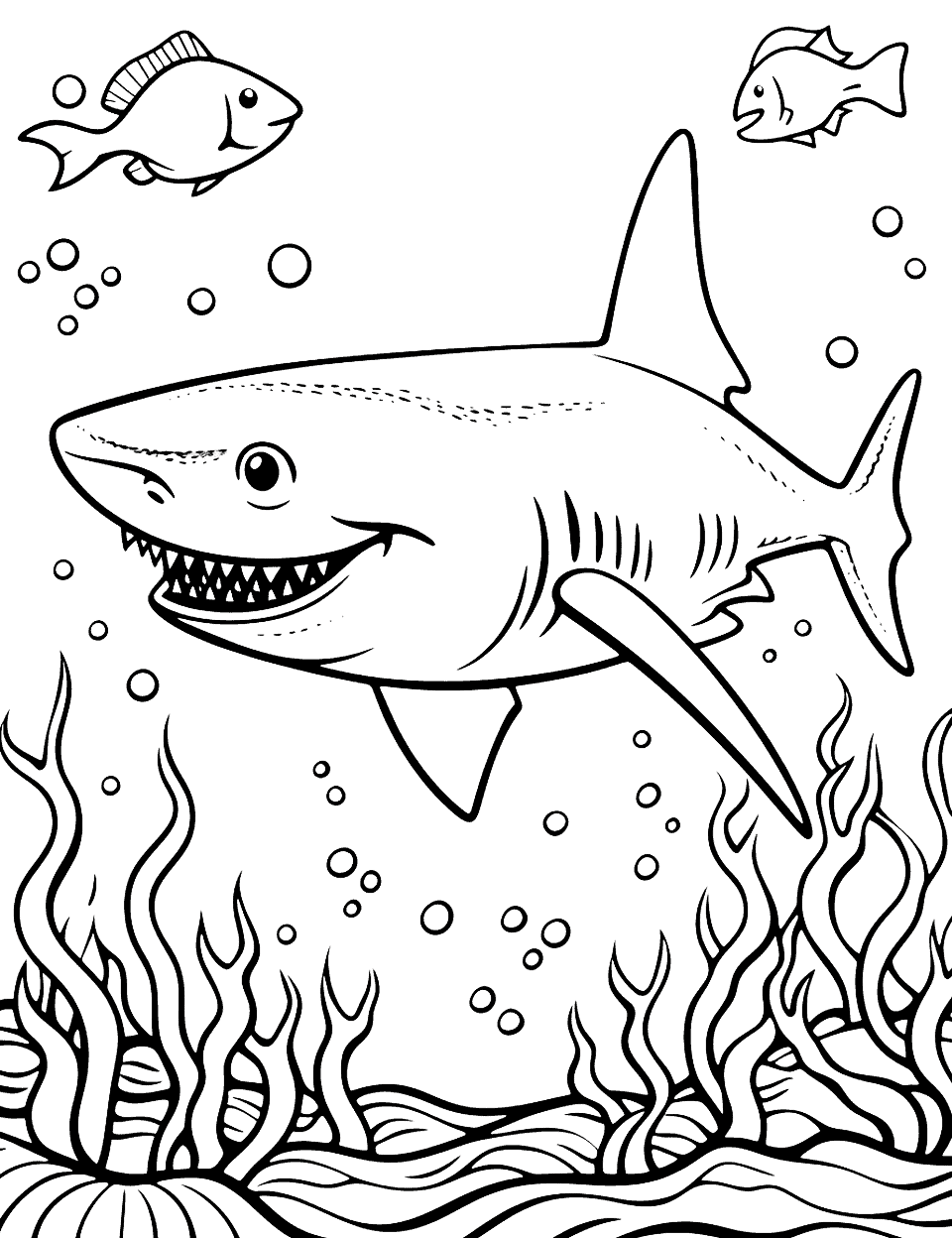
A wide cartoon grin and a thick body make this shark more silly than scary. A bed of curling seaweed runs across the entire bottom edge, so pick two greens and alternate them. Two fish drift near the top and give the page some balance. Good for a child who finds realistic shark drawings a bit much.
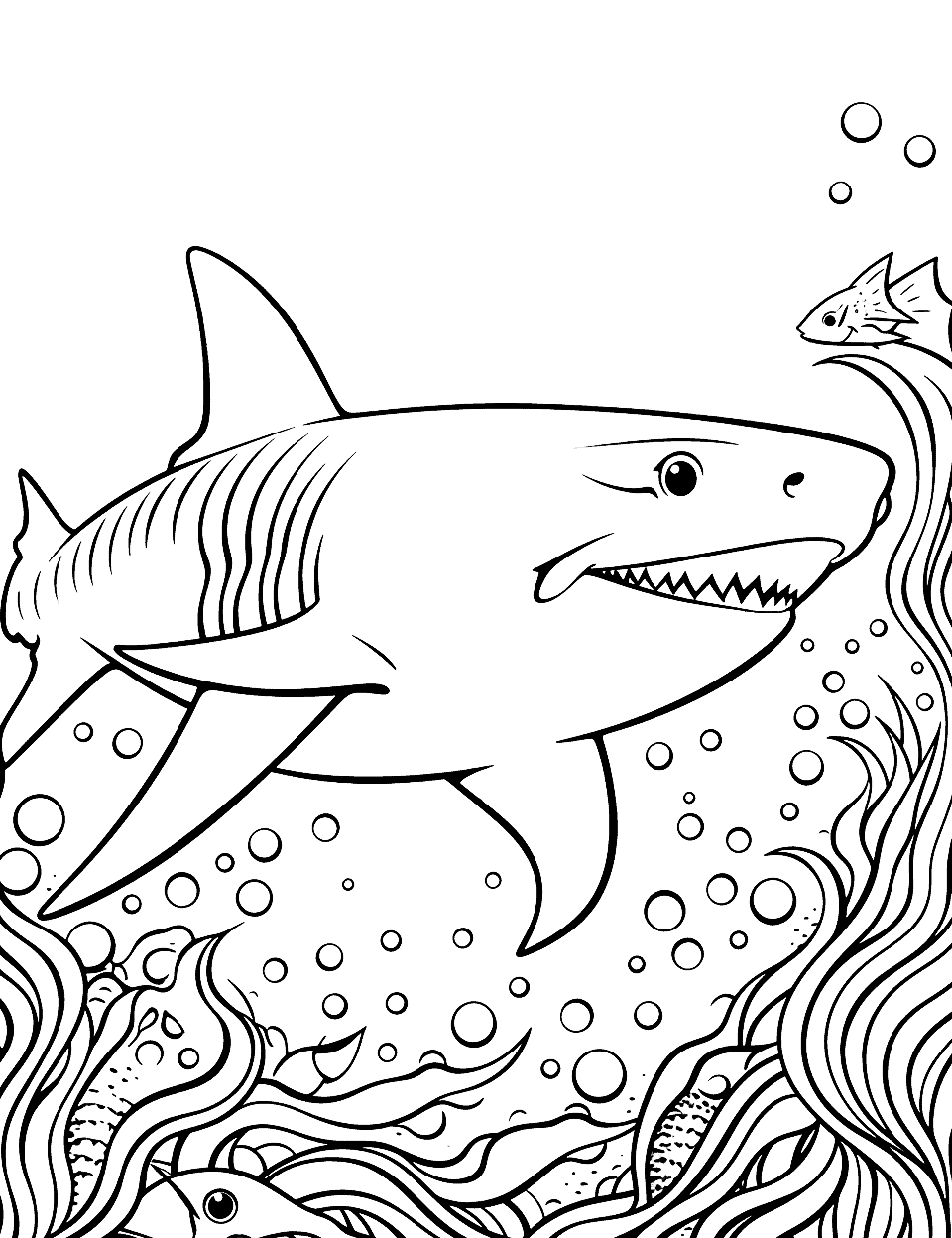
The shark fills nearly the whole frame, so most of your time goes into one large body. Round bubbles in several sizes float up the right side beside a curtain of seaweed. Shade the back darker and the belly paler, the way real sharks are countershaded. Look closely at the bottom left, where a small fish hides in the weeds.
Swirls, scallops and curls decorate this shark instead of realistic shading. The fins carry the finest pattern work, which suits gel pens or a fine marker. Nothing here is meant to be lifelike, so rainbow colors work as well as gray. Adults and older kids usually pick this one for a wind-down session.
A long shark cruises beneath a loose group of fish, with weeds and rock along the sea floor. Color the fish first, then choose a shark shade that does not compete with them. Its mouth is wide open, so the teeth need a careful hand or a white gel pen. Print it alongside our other sea creature sheets for a full ocean set.
This drawing keeps the outline clean and streamlined, which makes the body shape easy to study. Three small fish and a few kelp strands sit low on the page, leaving plenty of white space. A light gray body with darker fin tips comes close to the real thing. It also prints well at half size for a card or a bookmark.
Long kelp fronds run up both edges while the shark glides through the middle of the page. Layering two greens, one on the fronds and one on the sea floor ripples, keeps the background from going flat. Scattered bubbles give a younger colorist an easy job while an older sibling handles the kelp. Expect this one to take a while.
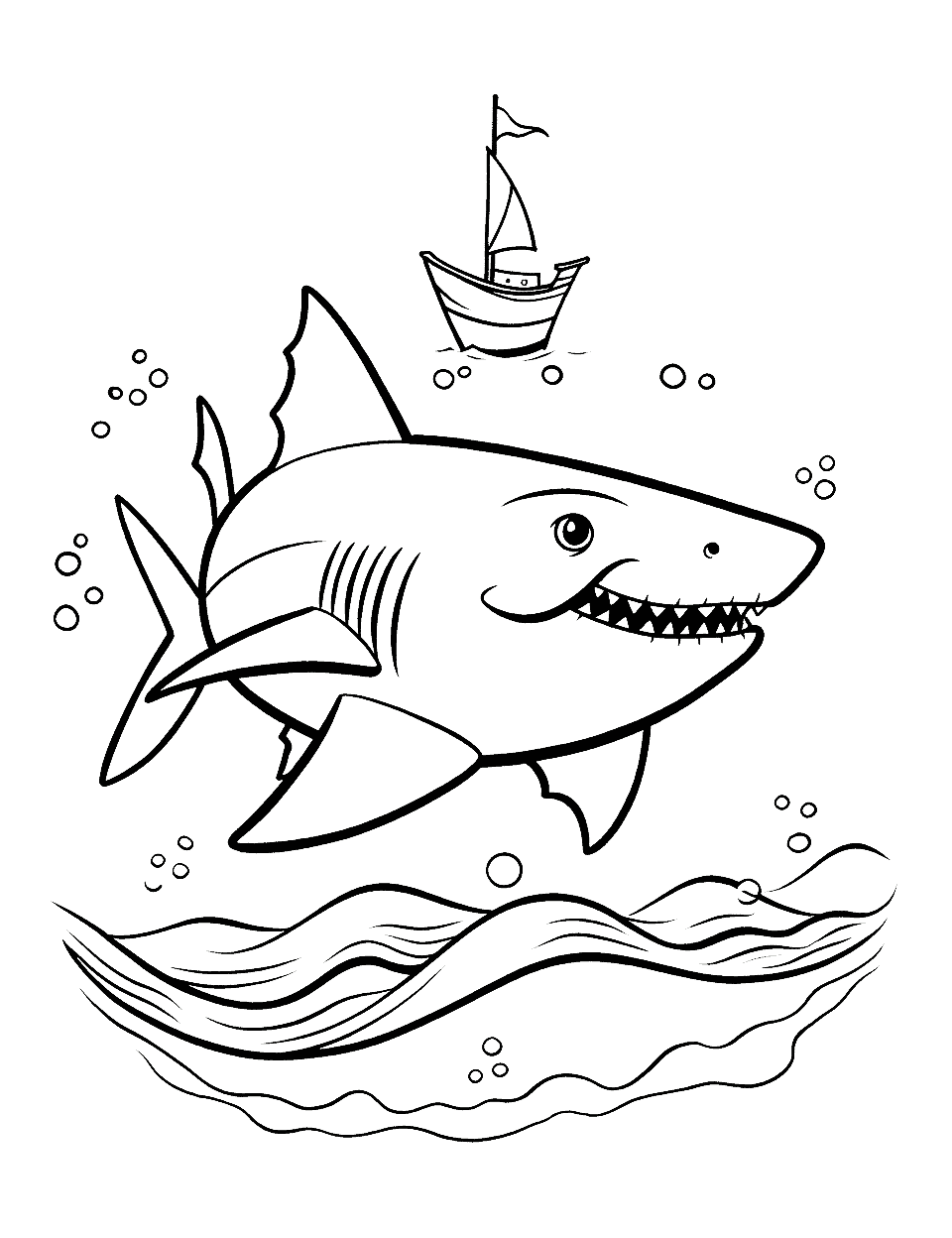
A small sailboat bobs on the horizon while a cheerful cartoon shark swims below it. The boat is the only man-made object on the whole page, so it earns a bright red or yellow. Wavy lines across the bottom stand in for the water surface and take one quick pass of blue. Ask your child to invent a reason the shark is following the boat.
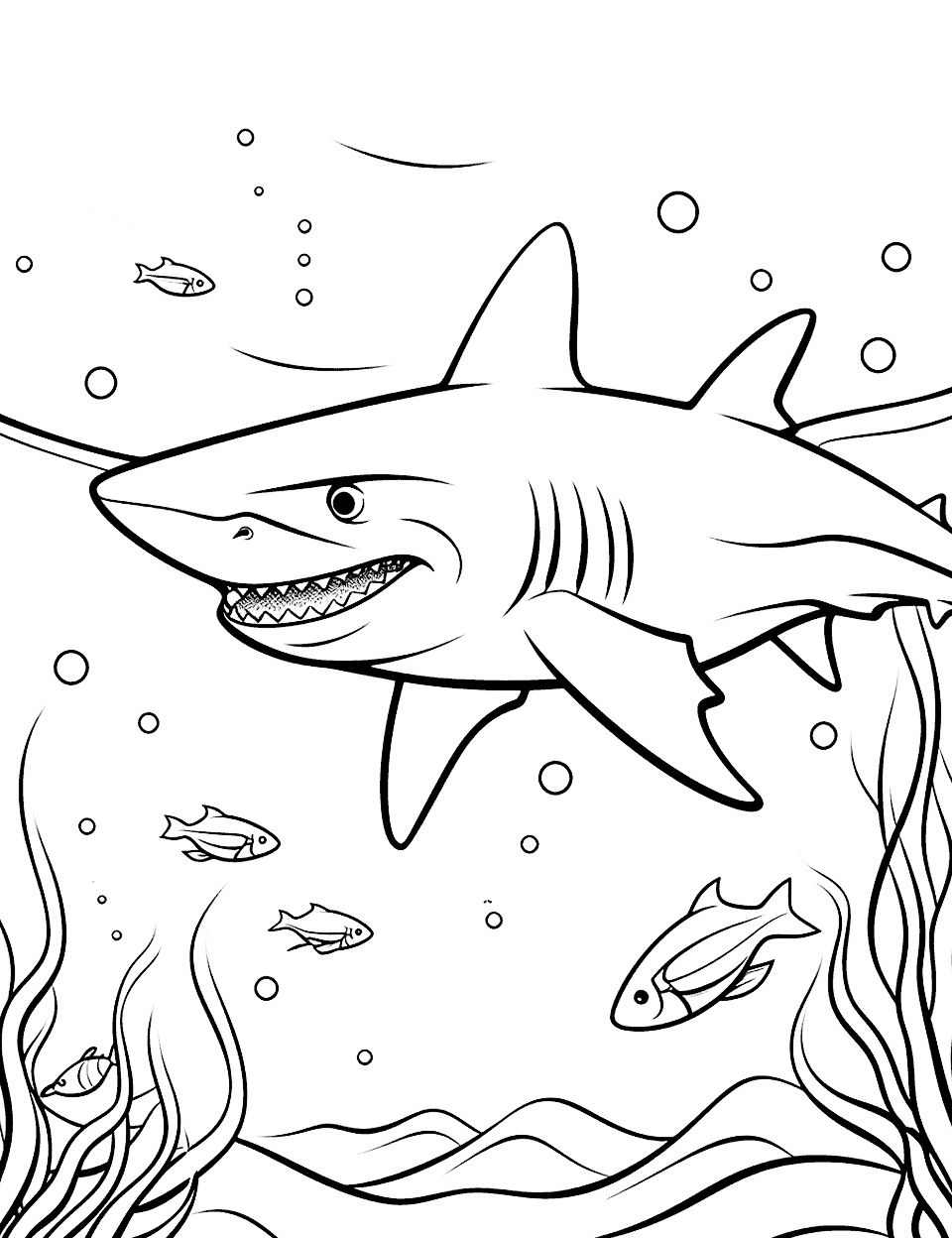
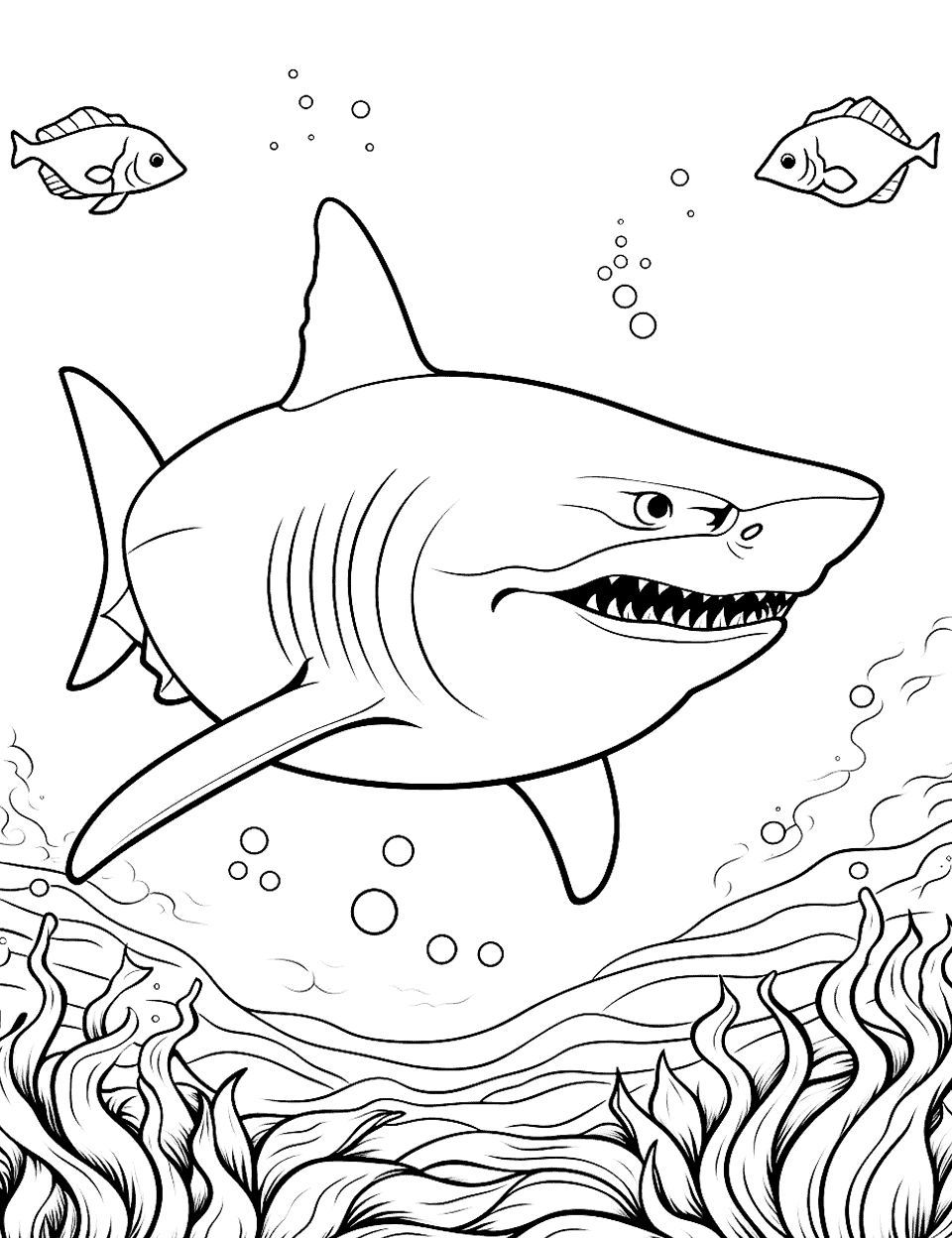
A furrowed brow gives this shark a serious face that older kids tend to like. Two fish keep their distance near the top, which you can play up with a splash of color. The sea floor is a tangle of grass and ripples for anyone who wants more to do. Standard printer paper is fine unless you plan to use markers.
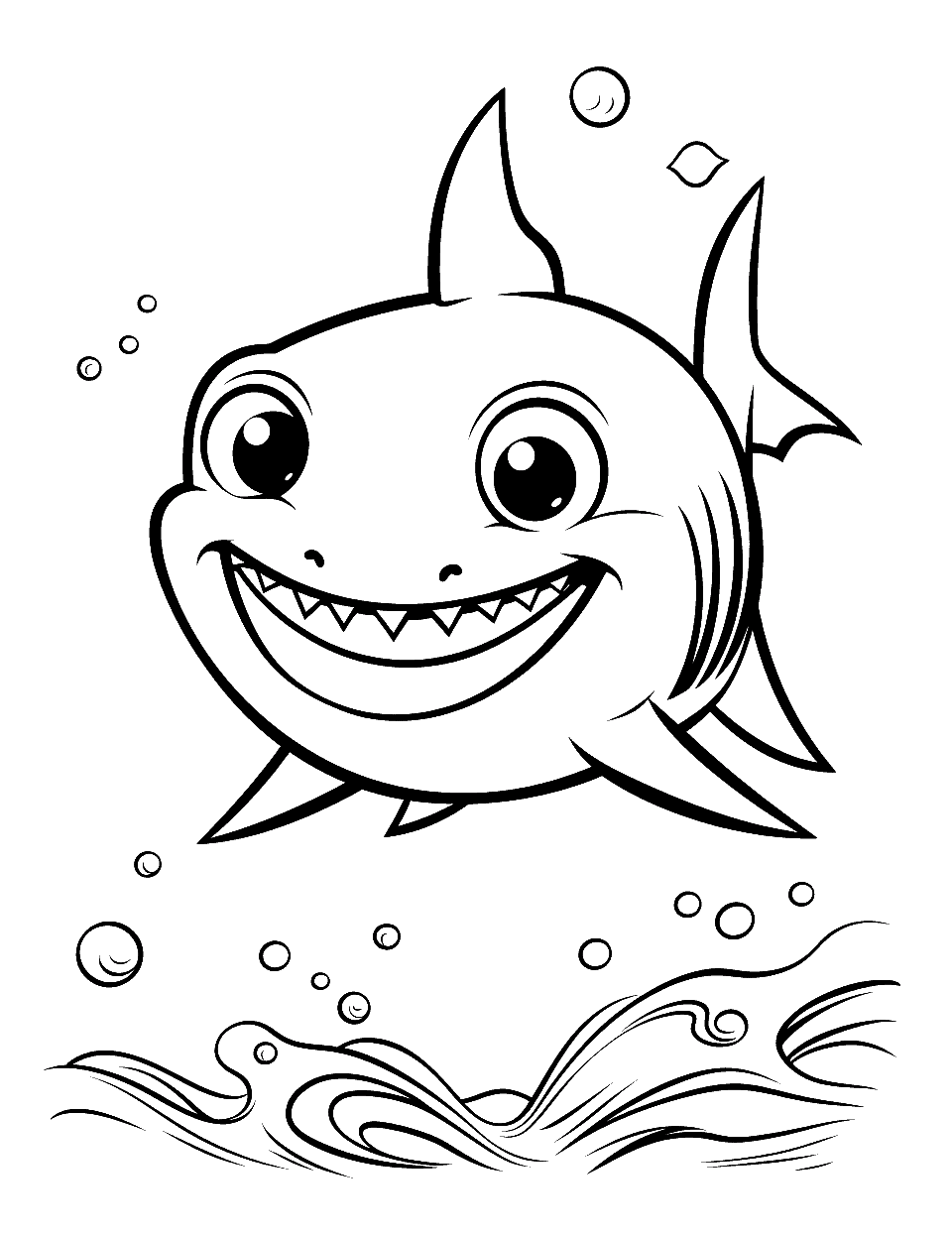
Huge round eyes and a soft, rounded body make this the cutest sheet in the collection. The lines are wide and forgiving, so small hands can stay inside them. Pastel blues and pinks suit it better than a realistic gray. Printed on cardstock, it also works as the front of a birthday card.
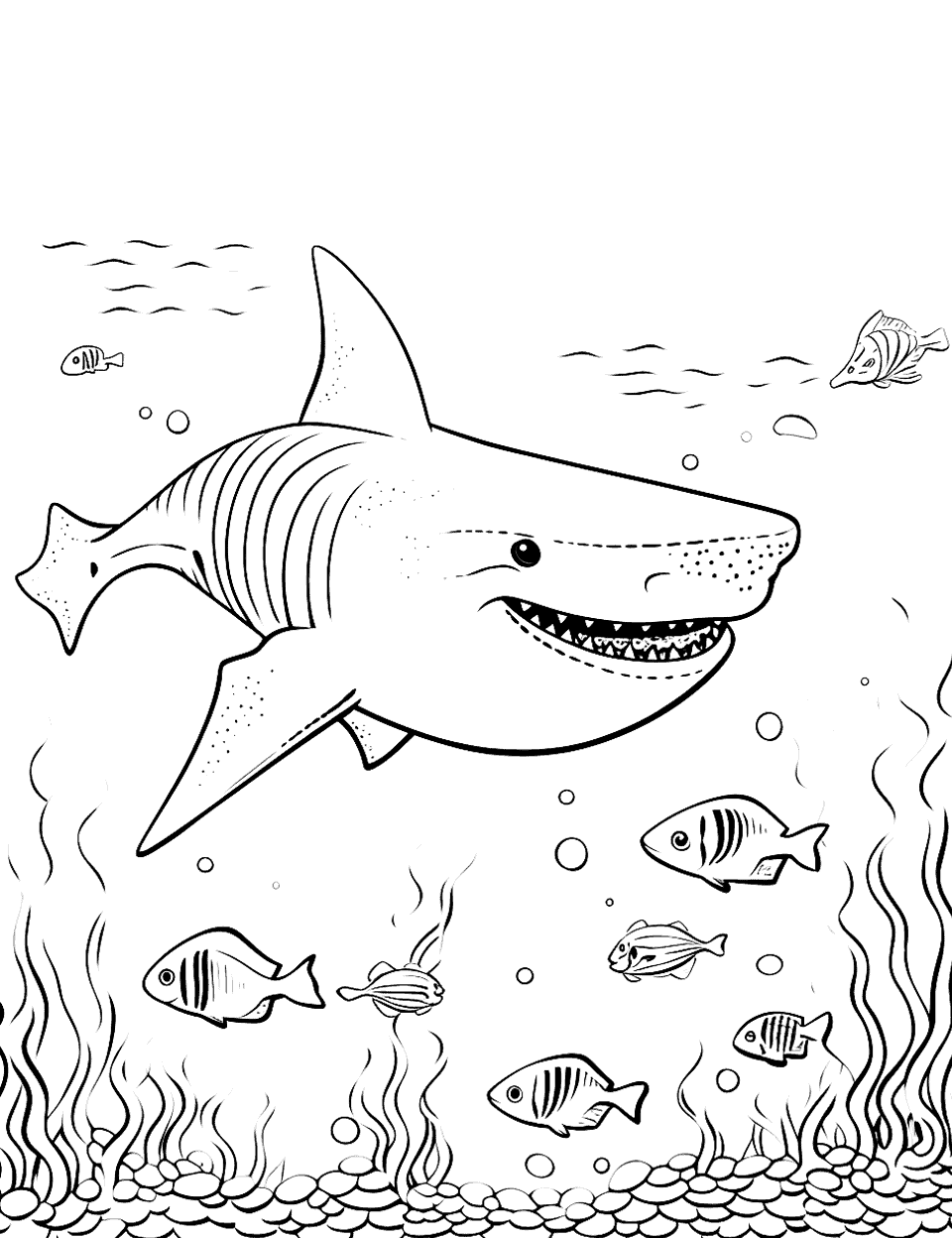
Short dashes speckle this shark’s back and sides, a texture worth doing with a pencil point. Below it swims a school of striped fish over a bed of small round pebbles. Alternating two grays on the pebbles saves you from coloring every one differently. There is a lot going on down low, so this is a settle-in-and-stay page.
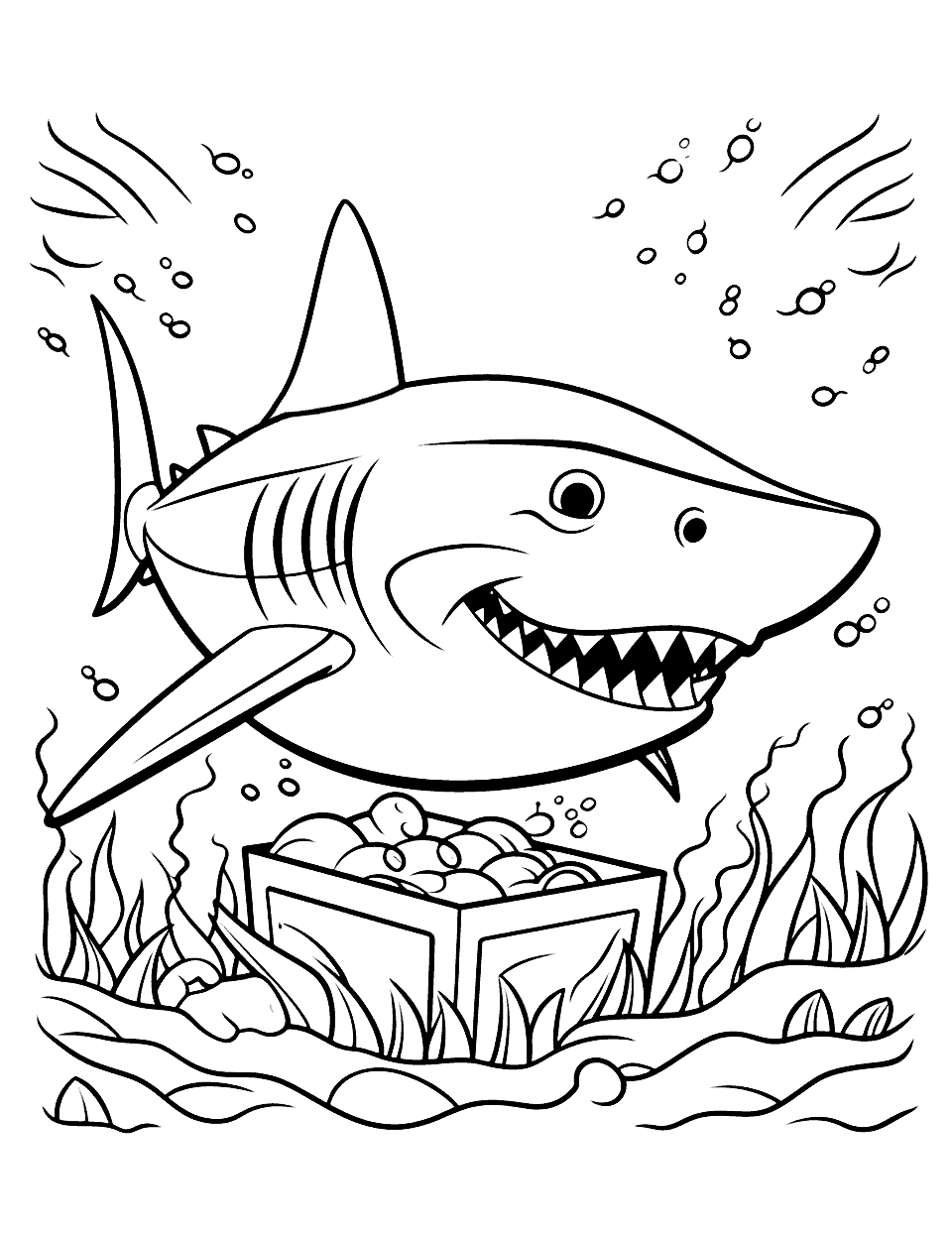
An open chest spills round jewels across the sea floor while a cartoon shark hovers above it. Gold on the chest with a different color on each jewel gives the page its payoff. The shark itself is simply drawn and colors quickly. Glitter glue on the treasure is worth the mess if you have some.
Kelp climbs both edges of the page and a shark cuts across the open water in between. Three small fish share the space, one of them right below the shark’s belly. Dark blues and purples turn this into a night scene, while pale blues keep it a sunny afternoon. That choice is a nice way to show a child how color sets a mood.
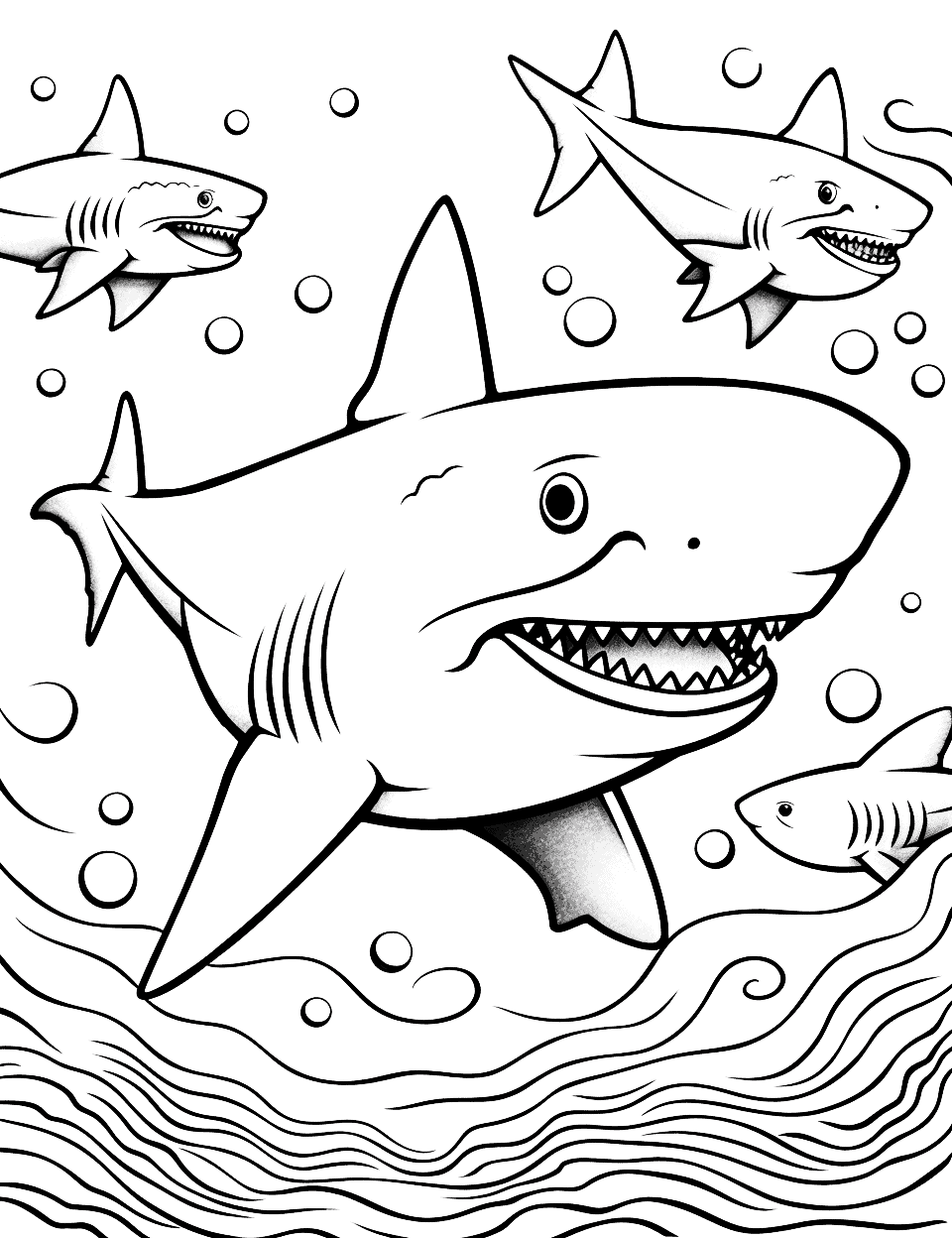
One large shark leads while two smaller ones swim above and behind it. Long wavy lines fill the bottom half and go fastest with the side of a crayon. Coloring the trio in three shades of the same blue keeps them looking like family. It finishes quickly, so it works well on a party table.
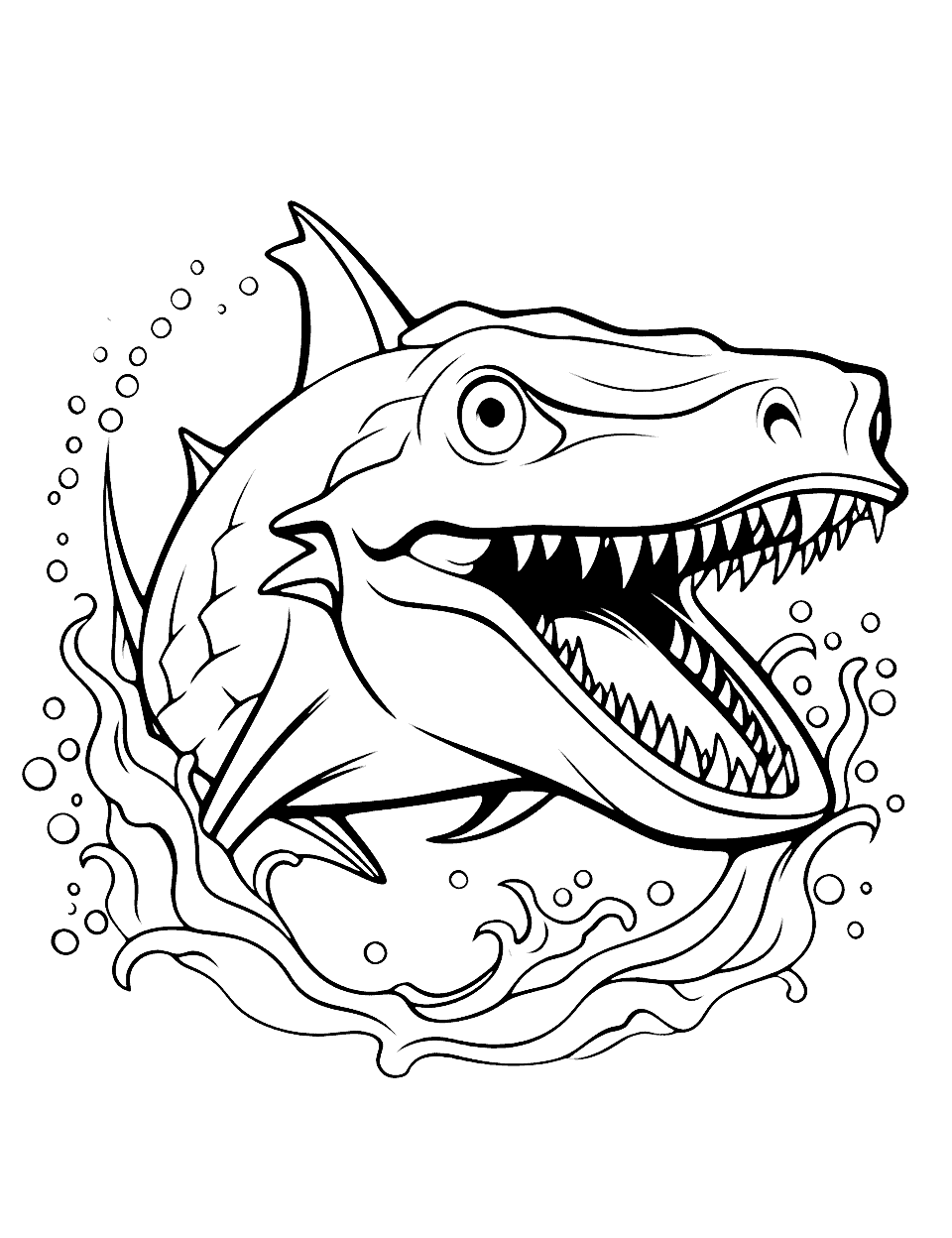
An open-jawed head with a ridged snout and a spiked fin makes this the fantasy sheet of the set, part shark and part dragon. Water swirls curl around it like a frame, so one color there ties the whole page together. Nothing about this creature is real, which makes green scales and purple teeth fair game. The mouth holds the most detail on the page.
A relaxed, smiling shark takes the center while one fish swims above it and another below. The wavy sea floor and a few short weeds finish the scene without crowding it. Countershading, dark on top and pale underneath, is easy to practice on this body shape. A solid middle option for ages six and up.
Two clusters of bubbles rise above a shark drawn with clean, simple lines. Down at the sea floor a couple of fish poke out from the weeds, and that is the only fiddly part. Leaving the bubbles uncolored keeps them looking like air rather than beads. Good for a child who wants a shark but not an hour of shading.
This shark comes straight at the reader with its mouth open and rows of teeth showing. Small fish scatter on both sides and along the bubbly sea floor beneath it. Leave the teeth white and go dark inside the mouth for the strongest contrast. It is the most dramatic sheet here, so it may not suit a sensitive young child.
A shark swims above a low patch of coral and weed that sits in the bottom third of the page. Round bubbles in several sizes float across the top and are easiest left white. Darker fin tips are a realistic touch if you want to color a specific species. The open water in between is a good place to blend two blues.
A wide grin and clearly drawn gill slits give this shark plenty of definition to work with. Two fish pass overhead while a third swims along the sea floor below. Keep the background pale so the shark stays the focus of the page. The lines are medium weight, which suits colored pencils.
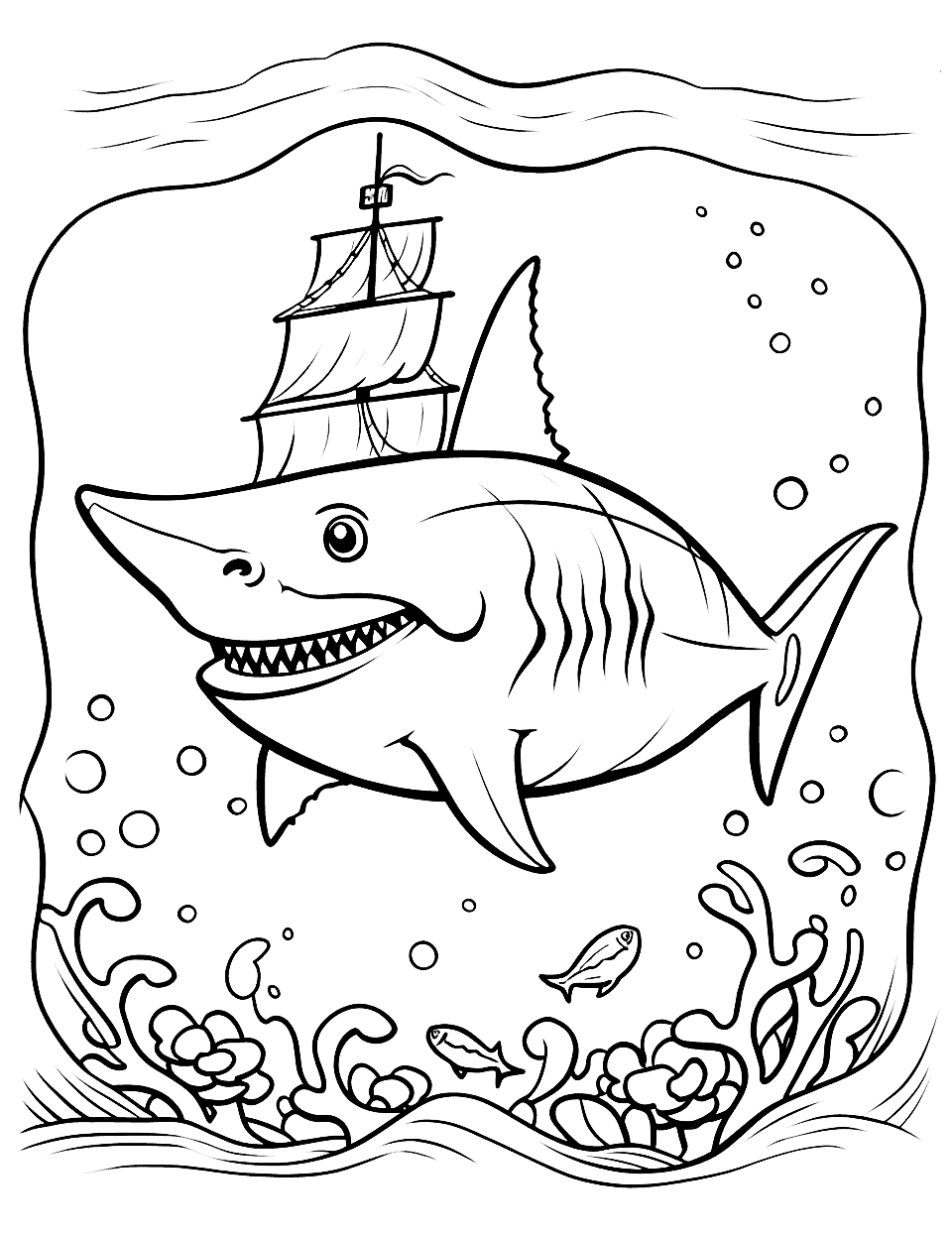
A tall sailing ship looms behind the shark, its sails and rigging drawn in fine lines. Brown on the hull and cream on the sails leaves the shark free to be any color you like. Coral and small fish decorate the bottom edge inside a soft rounded frame. Pair it with a pirate story and the coloring lasts twice as long.
Half a dozen speckled fish circle a shark drawn with the same dotted texture. Since everything shares one pattern, color is what separates the shark from the school. The plain background leaves room to add your own seaweed. A relaxed page with no tiny corners to fight.
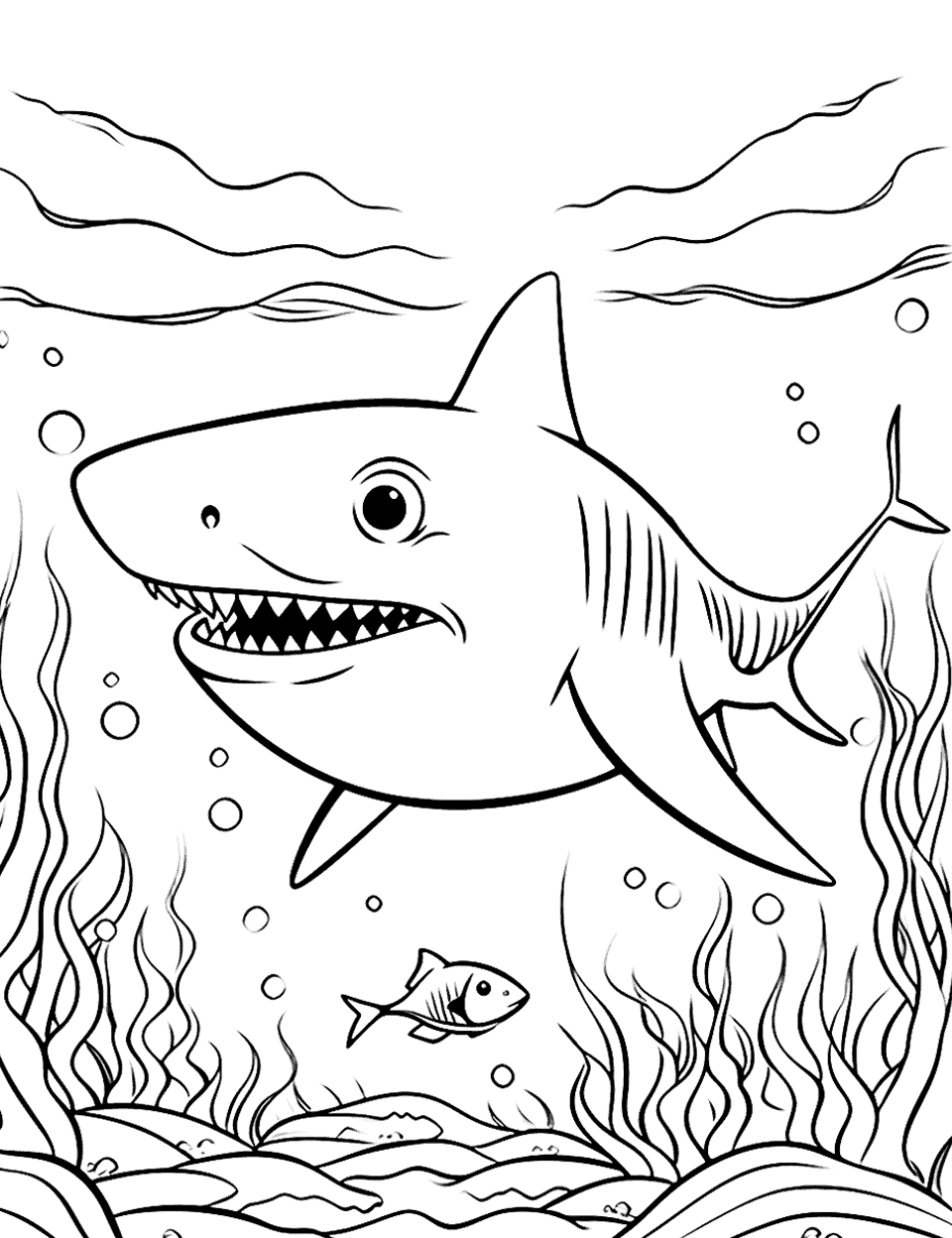
Ripple lines across the top show the water surface seen from below, with the shark hanging just beneath it. Kelp rises along the right edge and a single fish swims near the sea floor. A pale wash at the top fading darker toward the bottom mimics how light really behaves underwater. Straightforward enough for a seven-year-old to finish alone.
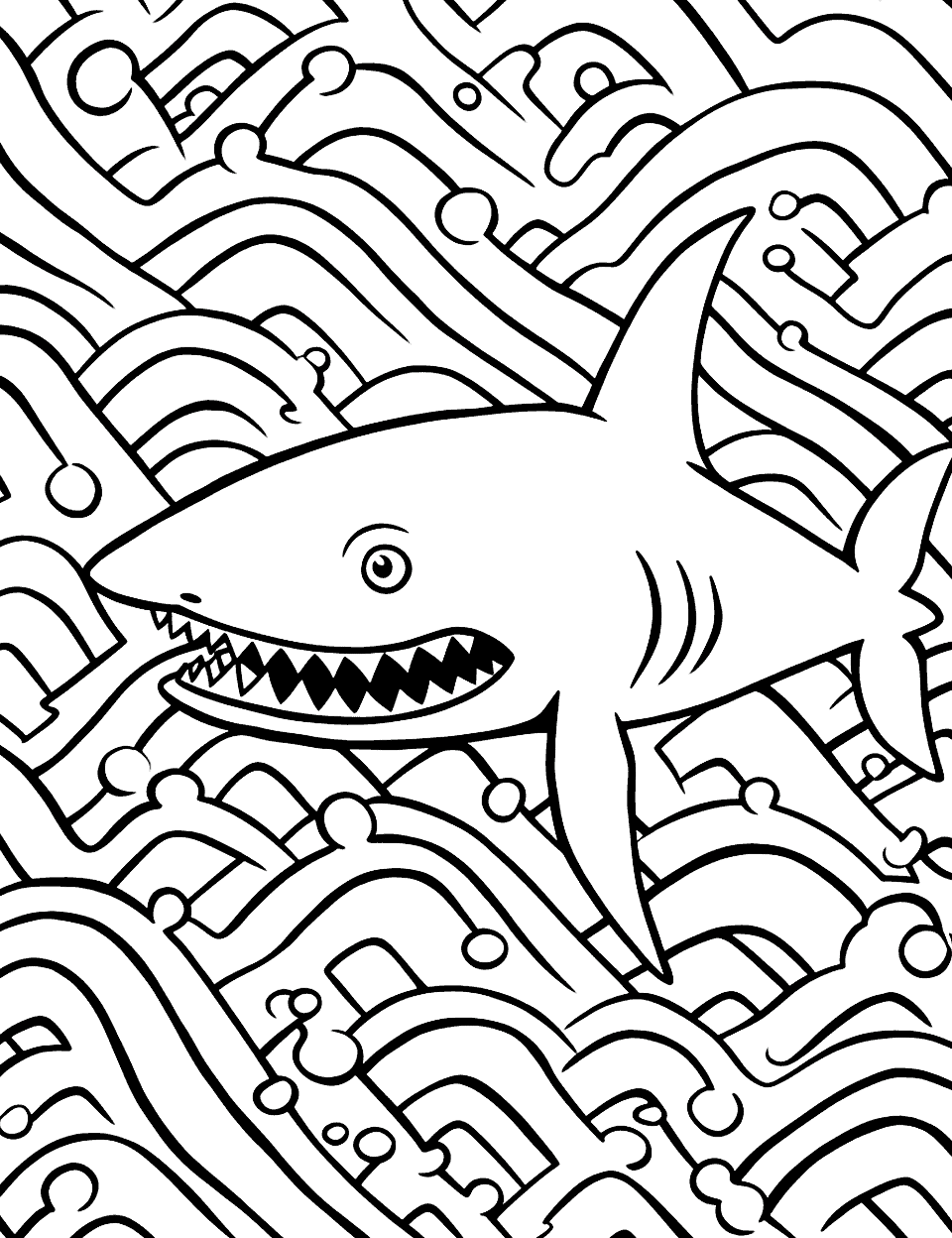
The background is a dense tangle of loops and waves that works as both a pattern and a puzzle. The shark sits on top of it in bold, clean lines, so it stays readable no matter what happens behind it. Two alternating colors through the maze make the path pop. This is the sheet to hand an adult who wants something absorbing.
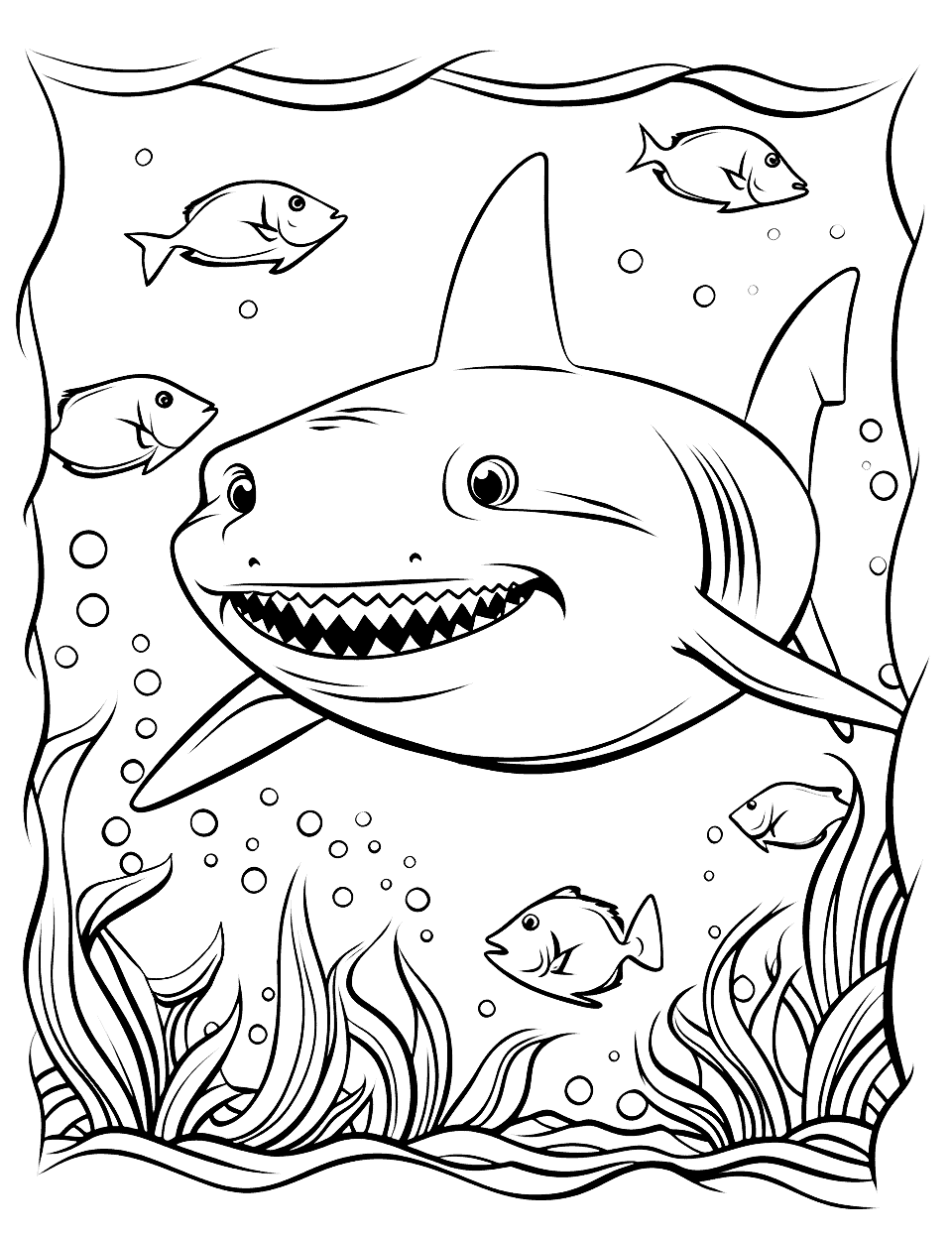
A decorative wavy border frames the whole scene, which makes the finished page look ready to pin up. Inside it a grinning shark shares the water with half a dozen small fish and a bank of seaweed. Coloring the border one solid shade sets off everything inside it. There is enough detail for an older child and enough open space for a younger one.
A realistic shark swims high in the frame while the bottom half fills with kelp, rock and drifting bubbles. Because the sea floor is so busy, holding it to one or two greens stops the page turning muddy. The shark’s body has room for gentle shading from a dark back to a pale belly. This is one of the more detailed sheets in the set.
A big smile and a raised brow make this shark look genuinely pleased with itself. A row of small fish parades along the bottom edge, each one large enough for small hands. One of the friendliest pages here for a preschooler.
A shark noses forward while two fish drift above and a thick bed of seaweed covers the lower third. Long strands like these go faster with a marker than a pencil. Leave the open water pale so the crowded bottom does not swallow the shark. Print two copies if more than one child wants a turn.
Dashed markings run along the top of this shark’s body, a nice detail to pick out in a second shade of gray. Two fish swim overhead while sea grass fills the bottom edge. The grass strands are thin, so a sharp pencil beats a broad marker. Middle difficulty, and a satisfying page to finish.
Nothing dramatic happens here, which is exactly the appeal: one calm shark, a few bubbles and a quiet sea floor. The sparse background means a child can add their own details, from a sunken chest to a diver. Soft blues and greens fit the mood. A good wind-down sheet for the end of the day.
Clean outlines and a mostly empty page make this one of the fastest sheets to color. A single wavy line stands in for the water beneath the shark. Nice for a young child who gets discouraged by busy pages.
Kelp curls and loops across the bottom of this page in long ribbons, with a shark and four small fish above. The ribbons are wide enough for markers, which is unusual on the busier sheets. Give the fish contrasting colors so they do not vanish into the weeds. Expect a good twenty-five minutes of coloring.
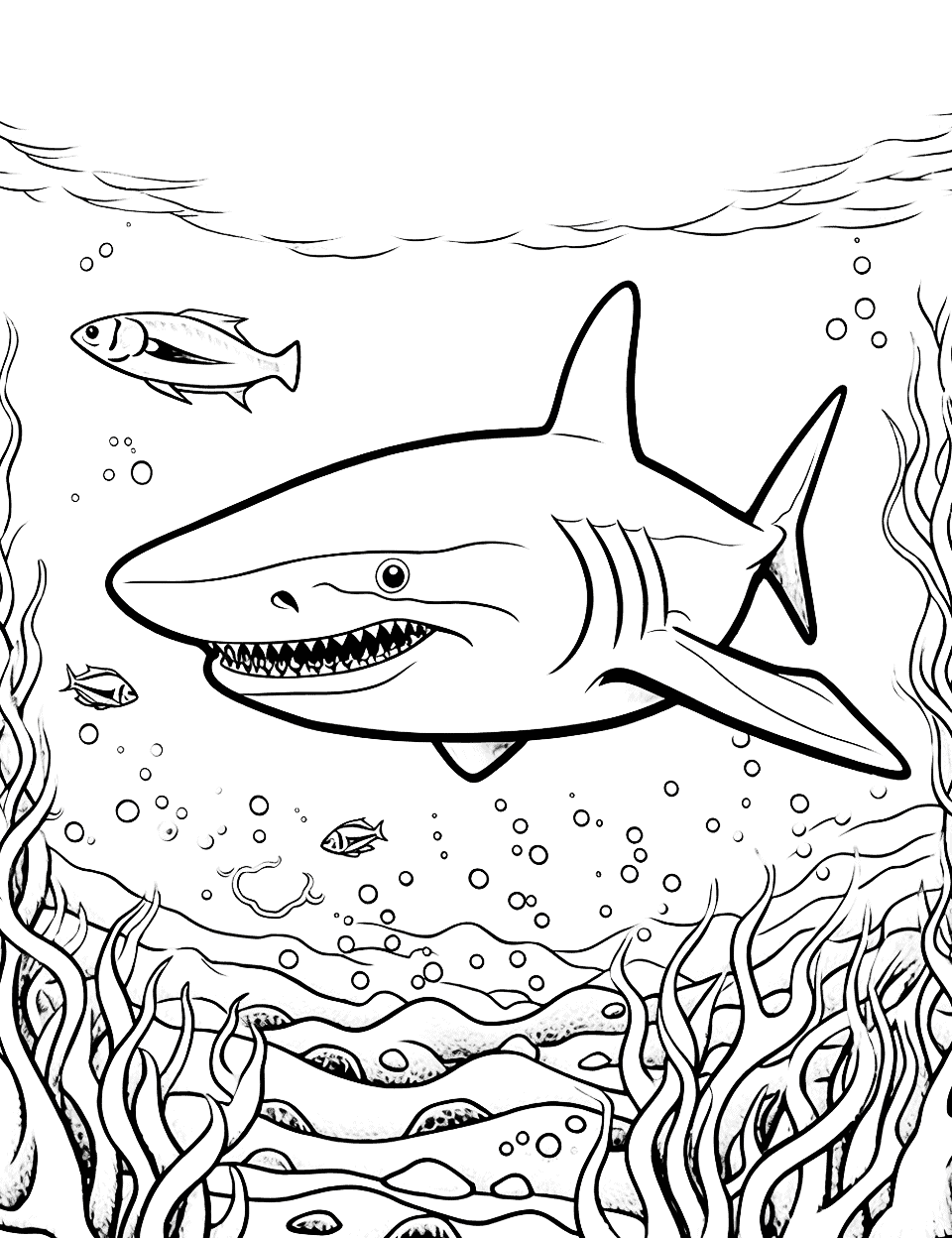
Neat rows of dots trail down this shark’s back and along its tail. The rest of the page is open water and rippled sand, so the dots are where your patience goes. Bubbles in several sizes drift up from the sea floor and look best left white. The calm posture keeps the whole page gentle rather than fierce.
Two curtains of kelp frame the shark, and a bed of rounded stones and coral runs along the bottom. Alternating shades on the stones is faster than trying to make each one unique. Ripples across the very top of the page mark the water surface. There is a lot to color here, so it suits an older child.
Swirling current lines fill the lower half of the page and give it an almost patterned feel. The shark above them is drawn simply, with just a few gill lines and a bold grin. Following each swirl with a different blue turns the bottom into a wave pattern. Two small fish near the top are the only spot for a warmer color.
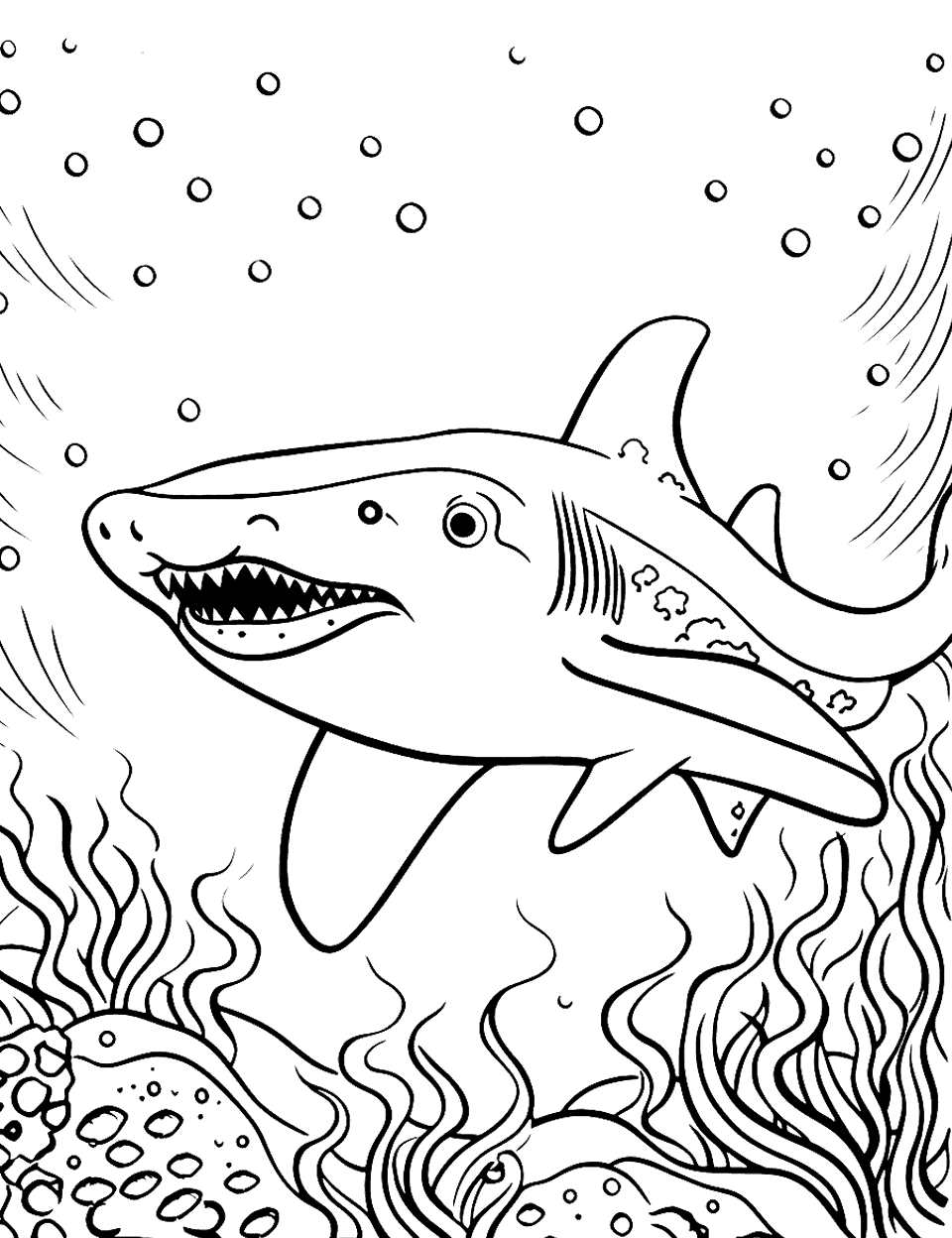
Curled markings decorate this shark’s flank, an unusual touch among the more realistic sheets. Weeds and rounded rocks fill the bottom left while bubbles drift up the right side. Because the pattern is fine, a pencil holds the line better than a marker. The open water between them can take a smooth blue wash.
A dense kelp forest runs the full height of the page with a shark cutting through the middle of it. Half a dozen small fish gather below, each one an easy target for a bright color. Ripples along the top show the surface far overhead. Layer two or three shades of green through the kelp so the fronds do not blur into one flat wall. This is the most detailed underwater scene in the collection, so allow plenty of time.
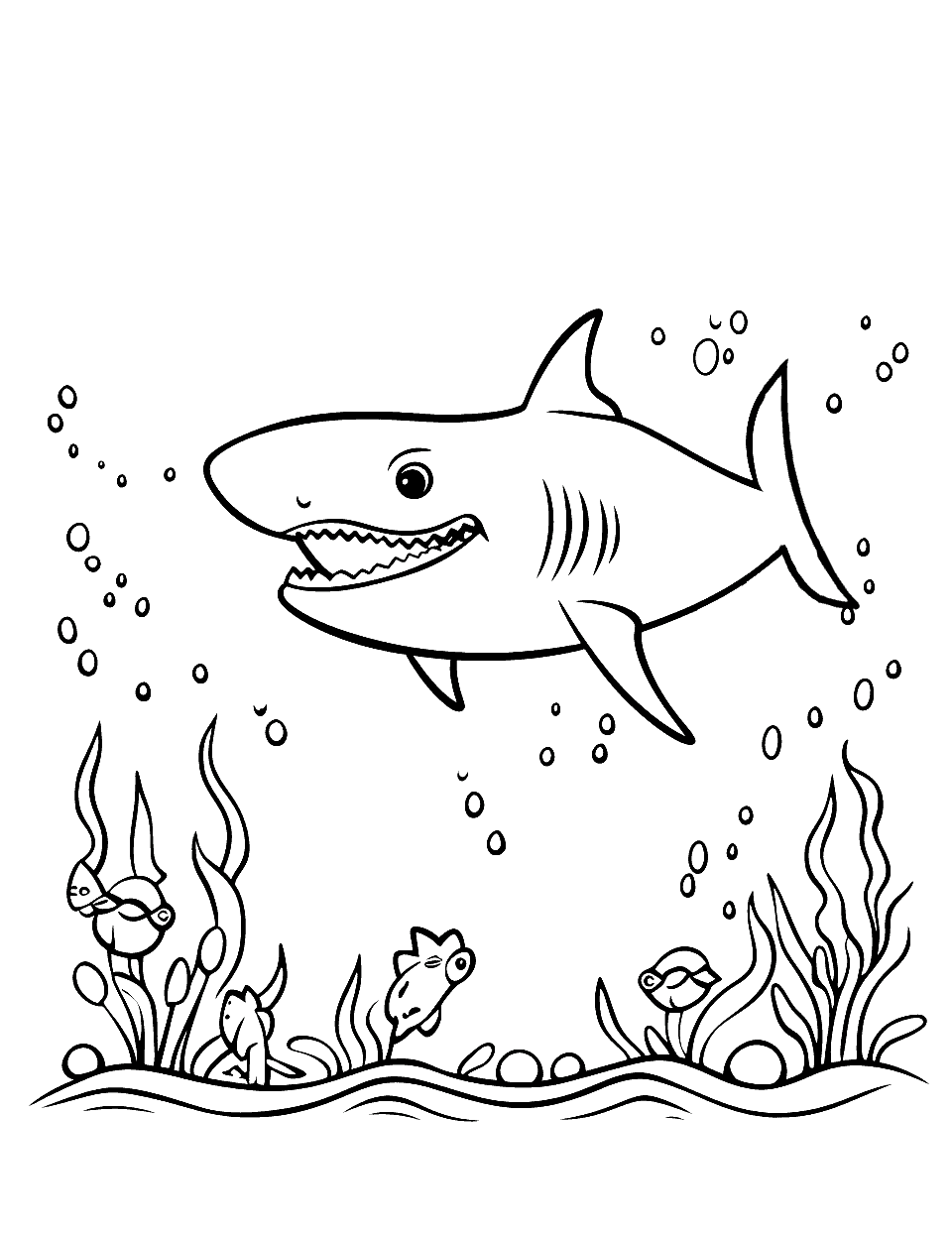
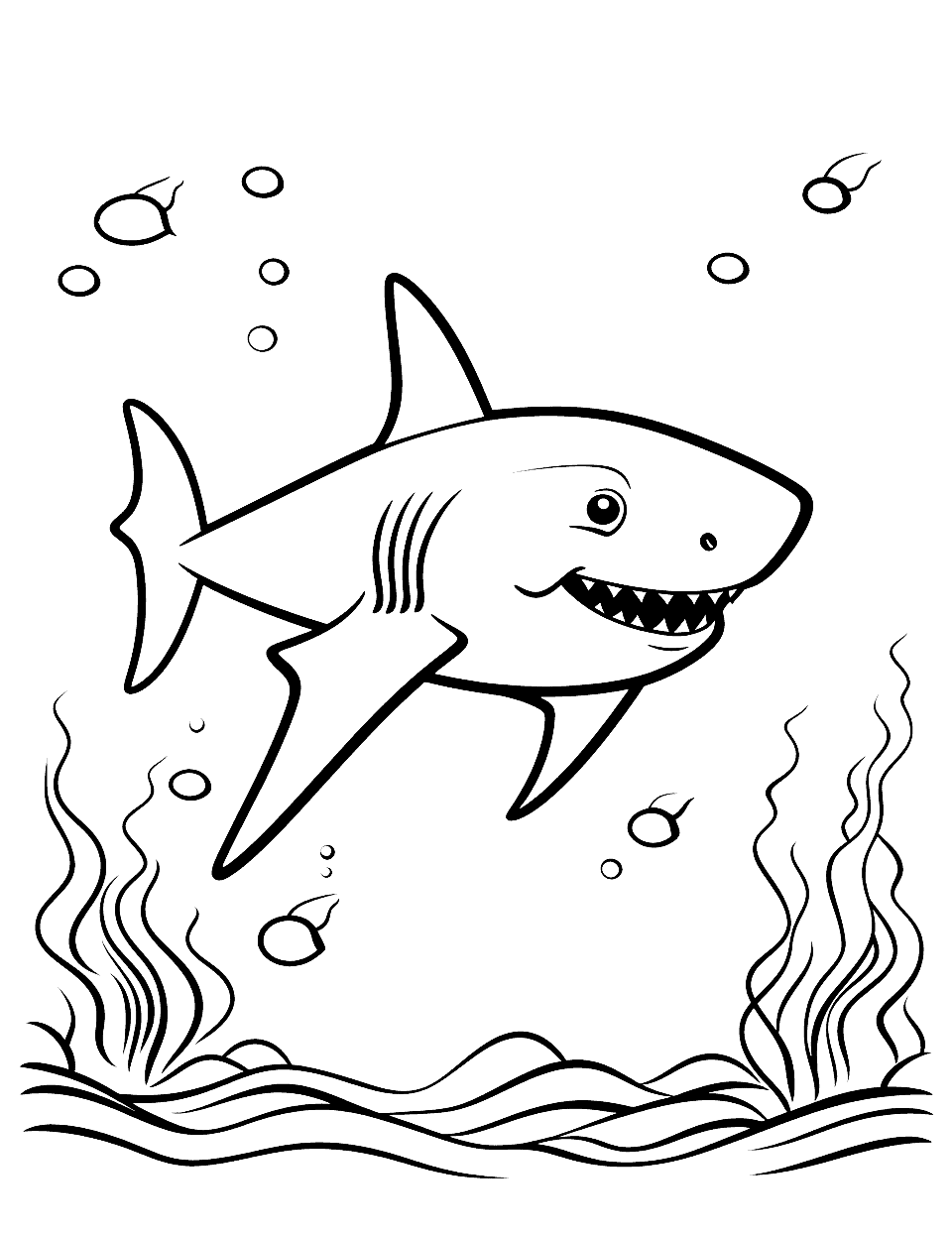
A small, simply drawn shark swims through open water with a handful of bubbles and two little fish. The sea floor is a few wavy lines and two clumps of weed, so the page finishes quickly. Let a younger child pick any colors at all here, since nothing about it needs to be realistic. A gentle sheet to end the set on.
By using our free coloring pages, you acknowledge and agree to our full disclaimer. All materials are for personal, non-commercial use only and all rights belong to their respective license holders.
Which Shark Sheet Should You Print First?
Start with the chunky cartoon sheets if your child is under five. Smiling Cartoon Shark, Easy Shark Outline, Baby Shark’s First Swim, Happy Shark and Simple Shark Above the Waves all use thick lines and wide open shapes that forgive a wobbly crayon.
Elementary-age colorists do better with the mid-detail scenes, where a shark shares the page with a few fish and some seaweed. Shark and the Little Sailboat, Shark Finds the Treasure Chest, Three Sharks in the Waves and Shark Below the Water Surface all sit in that range.
Save the pattern-heavy sheets for older kids and adults. Shark Mandala, Decorative Swirl Shark, Shark Pattern Maze and Shark in the Kelp Forest carry the finest line work here and reward gel pens or sharp colored pencils.
One printing note: standard copy paper is fine for crayons and pencils, but markers bleed through it. Cardstock or heavy bond paper holds the ink without ghosting onto the sheet below.
How Big Do Real Sharks Get?
Real sharks run from small reef species up to the whale shark, which can reach 12.2 meters and weigh as much as 40 tons by some estimates (1). The basking shark is not far behind at around 32 feet and more than five tons, which is roughly the length of a school bus.
The first sharks appeared in the ocean about 455 million years ago, according to NOAA Fisheries, and their skeletons are not bone at all. Sharks are cartilaginous fish, so the frame under all that muscle is made of the same flexible material as the tip of your nose (2).
They are far less interested in people than the movies suggest. The International Shark Attack File confirmed 65 unprovoked bites worldwide in 2025, below the most recent ten-year average of 72 (3). “The International Shark Attack Files provide baseline data about shark attacks on people that are rigorously and scientifically investigated, evaluated and summarized on an annual basis,” said Gavin Naylor, director of the Florida Program for Shark Research. That is a useful thing to have on hand when a child asks whether sharks eat people while coloring one.
Activities to Do With Shark Coloring Pages
The fun does not have to stop when the last fin is filled in. A finished sheet turns into a craft, a game, or a science lesson with very little extra effort. Here are six ideas that use what you already have at home.
Create a Deep Sea Diorama
Turn a shoebox into an underwater scene. Color and cut out the sharks, then hang them from the top of the box on thread so they float in the middle. Paint the inside blue, add sand or small stones along the bottom, and cut seaweed from green paper. Sheets with plain backgrounds, like Four Sharks, One Page, cut out most cleanly for this.
Make Shark Fact Trading Cards
Glue the smaller shark images onto index cards or stiff cardstock. On the back, have your child write what they know about that shark: how big it grows, what it eats, where it lives. Real numbers make the cards worth keeping, and the section above has a few to start with. The 455 million years figure usually earns a reaction.
Design a Shark Mobile
Pick four or five sharks in different sizes, color them, and cut them out. Punch a hole at the top of each one, thread string through, and tie them to a hanger or two crossed wooden dowels. Hanging them at different heights keeps the mobile balanced and turning. Four Sharks, One Page gives you a ready-made size range on a single sheet.
Ocean Themed Party Bunting
Print several sheets, cut them into triangles or cut the sharks out whole, and string them along a length of ribbon. Alternate a cartoon sheet with a detailed one so the line has some variety to it. Cardstock holds its shape far better than copy paper if the bunting is going outdoors.
Shark Memory Matching Game
Print two copies each of four or five different sheets, color the pairs identically, then glue them onto squares of cardboard. Flip them face down, shuffle, and play a standard memory game. Sheets with distinct silhouettes, such as the mandala and the pirate ship, are easiest for young players to tell apart.
Storytelling Puppets
Glue a popsicle stick or a paper straw to the back of each cut-out shark to make a stick puppet. A few characters go a long way: the grinning cartoon sharks make friendly leads, and the wide-mouth shark makes an excellent villain. Ask your child to give each puppet a name and a problem to solve, and the show writes itself.
FAQs
What Is the Rarest Shark in the World?
The speartooth shark is one of the rarest sharks on record, known from only a handful of tropical rivers and estuaries in northern Australia and southern Papua New Guinea. Australia lists it as critically endangered, and because it lives in murky tidal rivers rather than open ocean, almost nobody sees one in the wild.
Do Sharks Sleep at Night?
Sharks rest, but not the way people sleep. Species like the great white have to keep water moving over their gills, so they slow down and enter a restful state while still swimming. Others, including nurse sharks, pump water over their gills using their cheek muscles, which lets them lie still on the sea floor for hours at a time.
How Many Teeth Can a Shark Lose in a Lifetime?
A single shark goes through tens of thousands of teeth in its life. A sandbar shark alone will have around 35,000 teeth over the course of its lifetime, according to NOAA Fisheries, because rows of replacements sit behind the working teeth and rotate forward whenever one breaks off. That constant turnover is why fossil shark teeth turn up on beaches so often.
Are Sharks Fish or Mammals?
Sharks are fish, not mammals. They belong to a group called cartilaginous fish, which means their skeleton is built from cartilage, the same flexible material in your nose and ears, rather than bone. Unlike mammals, they breathe through gills instead of lungs and never nurse their young.
Which Shark Sheets Are Easiest for Preschoolers?
The thick-lined cartoon sheets are the easiest: Smiling Cartoon Shark, Easy Shark Outline, Baby Shark’s First Swim, Happy Shark and Simple Shark Above the Waves. Each one uses wide shapes and very little background, so it can be finished with three or four crayons before a young child loses interest. If they want more to do, move up to the sheets with a few background fish rather than the pattern-heavy pages.
What Is the Best Paper for Coloring With Markers?
Cardstock or heavy bond paper is the best choice for markers. Standard printer paper is thin enough that marker ink bleeds through and can crinkle the page. Set the printer to its best quality setting, and slide a scrap sheet underneath while coloring so nothing transfers to the table.
How Do I Make the Water Look Realistic?
Blend your blues from dark at the bottom of the page to light near the surface, the way daylight actually fades with depth. Add a touch of green near seaweed and a hint of gray under the shark where its shadow would fall. Leaving the bubbles uncolored keeps them looking like air rather than beads.