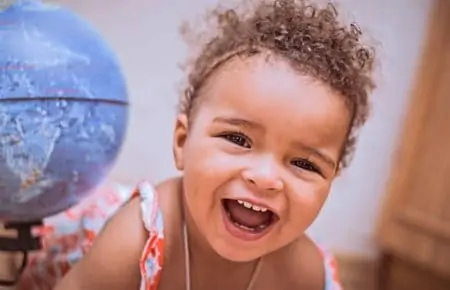
Using cute color baby names is one of the most popular ways to name a baby. When you look for your favorite color to name your little boy or girl, you might miss out on many obscure, ancient, or otherwise subtle color names beyond “Blue” and “Rose.”
You won’t have to waste hours searching and sifting through endless color names for babies. Just check out our rainbow-filled list of awesomely trendy and unique baby names that mean colors and find out which shade suits your little guy or girl best.
100 Cute Color Names for Babies
Head over the rainbow to a world of memorable color baby names for the little one you love.
Amber
Amber comes from the Arabic “anbar” and represents one of the more rare gemstones of a yellow-orange tone made from fossilized tree resin. It can also mean “fierce,” which makes the Amber you name inspired to be a strong girl in no time.
- Origin: French, Arabic
- Meaning: Yellowish orange
- Pronunciation: AEM-Bahr
- Variations: Ambar, Ambre
- Namesakes: Amber Scott, an Australian ballet dancer at The Australian Ballet. Amber Joseph, a Barbadian racing cyclist who rode at the 2020 UCI Road World Championships.
- Popularity: Amber ranked 2,858th worldwide and is most popular in the U.S., where it’s ranked 283rd.
Amethyst
Amethyst comes from the Greek “amethystos,” meaning “intoxicate.” The purple amethyst stone was believed to protect its owner from drunkenness. The only intoxicating thing will be the adorable little girl you name Amethyst.
- Origin: Greek
- Meaning: Purple
- Pronunciation: AEM-ah-Thihst
- Variations: Amathyste, Amethyste, Amethist
- Popularity: In 2014, 1,301 people were named Amethyst worldwide, mostly in the U.S.
Ash
- Origin: English, Hebrew
- Meaning: Ash tree, gray color
- Variations: Asher, Ashe
- Namesakes: Ash Atalla, an Egyptian-British TV producer of The Office and The IT Crowd. Ashley “Ash” Bowie, an American musician of the indie rock band Polvo.
- Popularity: Ash is uncommon worldwide, used mostly in India, and ranked 128th in Bhutan.
- Description: Ash comes from the Old English words “æsc,” meaning “ash,” and “lēah,” meaning “forest glade.” It’s unisex and also means “happy.” Ash is a short, unique way to make the gray color cool again for your little one’s name.
Auburn
Auburn began as a surname brought to England after the Norman Conquest of 1066. Auburn represents the autumnal colors of red and brown for the baby you’re expecting, no matter when they’re due.
- Origin: English
- Meaning: Reddish brown
- Pronunciation: AW-Bern
- Variations: Auburn, Auburne
- Namesakes: Auburn Williams (known as Auburn), an American singer-songwriter who released the album Same Girl in 2007.
- Popularity: Auburn is ranked 1,091st worldwide, mostly in the U.S.
Aurelia
Aurelia is derived from the Latin family name Aurelius, made up of “aureus,” meaning “golden.” This Roman name has more history than other color baby names often do, so it can bring a rich tapestry to your little girl.
- Origin: Latin
- Meaning: Golden-haired
- Pronunciation: ow-REH-lee-a
- Variations: Auralea, Aurelea, Aurelija
- Namesakes: Aurelia Conde, a Cuban track and field athlete who competed in the 1968 and 1972 Summer Olympics. Aurelia de Perón, the first wife of former Argentine president Juan Perón.
- Popularity: Aurelia ranked 3,515th worldwide, is most popular in Mexico, and ranked 158th in Romania.
Azure
Azure was originally an incorrect French translation of the Arabic “lazaward,” meaning “lapis lazuli,” the sky blue stone. Azure is not only an exotic shade but a fancy way to bring the shade of blue to the life of your little boy or girl.
- Origin: French, Arabic
- Meaning: Sky blue
- Pronunciation: AA-Zhhur
- Variations: Azore, Azuree, Azzure
- Namesakes: Azure Parsons, an American actress known for the films 2 Guns and Dark Places.
- Popularity: Azure is rare worldwide but used most in Ghana, where it ranks 1,143rd.
Beryl
Beryl refers to the semi-precious green stone, which originated as the Greek “berylis.” It became popular in England in the 19th-century, when “jewel” names were all the rage. Beryl is unisex and can shine so bright for your little one.
- Origin: Greek
- Meaning: Light green gemstone
- Pronunciation: BEH-Rihl
- Variations: Beril, Berille, Beryle
- Namesakes: Beryl Bryden, an English jazz singer known as “Britain’s queen of the blues.” Beryl Noakes, a British swimmer who competed at the 1960 Summer Olympics.
- Popularity: Beryl is mildly uncommon worldwide, is used most in England, and ranked 112th in Jamaica.
Bianca
Bianca is an Italian version of Blanche. It also means “pure” and is associated with beauty and femininity. Bianca is one of the prettiest color names for girls you can give to your little princess.
- Origin: Italian
- Meaning: White
- Pronunciation: BYAAN-Kaa
- Variations: Beonca, Biannca, Bionca
- Namesakes: Bianca Jagger (born Blanca Macías), a Nicaraguan married to Mick Jagger from 1971 until 1978. Bianca Andreescu, a Canadian tennis player who won the U.S. Open in 2019.
- Popularity: Bianca ranked 1,705th worldwide, is most popular in Brazil, and ranked 50th in Romania.
Blaine
Blaine is an English version of the Gaelic name Bláan, taken from “blá,” meaning “yellow,” likely given to a blond boy. Blaine also has Hebrew origins, meaning “slender” or “thin.” Your Blaine can be blond or brunette and still enjoy this handsome name.
- Origin: Gaelic
- Meaning: Yellow
- Variations: Blayne, Blaene, Blain
- Namesakes: Blaine Higgs, the current Canadian premier of New Brunswick. Blaine Harrison, an English musician in the indie rock band Mystery Jets.
- Popularity: Blaine is uncommon worldwide, used mostly in the U.S., and ranked 759th in Canada.
Blue
Blue came into favor among color names for babies recently, mainly in the U.S. As a surname, Blue, meaning the color came from the English “blǣwen” and Norse “blár.” The unisex Blue can be as literal as you’d like for the baby you’re expecting.
- Origin: English
- Meaning: The color blue
- Variations: Bleu
- Namesakes: Blue Carter, the daughter of musicians Beyoncé and Jay-Z. Blue Balliett, an American author, best known for her children’s book Chasing Vermeer.
- Popularity: Blue is rare worldwide and used most in the U.S.
Borage
Borage is from the Latin “borrago,” and is unisex. The borage species is a blue star flower that grows in Mediterranean climates, referred to as the “herb of gladness.” Borage is an interesting name to bring some color and happiness to the little one you love.
- Origin: English
- Meaning: Borage flower, blue
- Pronunciation: BOHR-age
- Variations: Burrage
- Popularity: In 2014, 14 people were named Borage worldwide, mostly in India.
Bowie
Bowie started as a Scottish and Irish surname, from the Gaelic “buidhe” meaning “yellow” or “fair-haired.” Bowie, as a first name, captures the coolness factor for the little rock star you expect.
- Origin: Gaelic
- Meaning: Yellow
- Variations: Bowen
- Namesakes: Bowie Kuhn, the 5th American Commissioner of Major League Baseball from 1969 to 1984. Bowie Fung, a Hong Kong actor and a matinée idol in the 1950s and 1960s.
- Popularity: Bowie is extremely rare worldwide and is used most in the U.S.
Boyd
Boyd originated as a Scottish surname built from the Celtic “boidhe,” meaning “fair.” Boyd is one of many color names for boys given to blonds, but times are such that your little Boyd can rock his unique look.
- Origin: Scottish
- Meaning: Yellow
- Variations: Boyt
- Namesakes: Boyd “Rainmaker” Melson, an American boxer and bronze medalist at the 2005 US Amateur Boxing Championships. Boyd Cordner, an Australian rugby league footballer, playing for the Sydney Roosters in the NRL.
- Popularity: Boyd is somewhat uncommon worldwide, used mostly in the U.S., and ranked 157th in Zambia.
Brick
Brick was an English surname meaning “good guy” or “mason,” but became a given name for redheads with freckles. Brick is a popular nickname, but your little boy can also start life with this fascinating, brick-colored name.
- Origin: Gaelic
- Meaning: Red, freckled
- Pronunciation: BRIHK
- Variations: Brik, Bric, Bricke
- Namesakes: Brick Haley, the American football coach for the University of Minnesota Golden Gophers. Brick Smith, an American baseball player for the Seattle Mariners in 1987 and 1988.
- Popularity: Brick is rare worldwide but used mostly in the U.S.
Brindle
The word brindle comes from “brindled,” originally “brinded,” from an old Scandinavian word. The color brindle is a brown, tawny color with streaks of another color, usually found in animal fur. It’s unisex, so your adorable Brindle can be the little girl or boy you love best.
- Origin: Scandinavian
- Meaning: Black-tan combination
- Pronunciation: BRIN-dl
- Variations: Brindill, Brindell, Brindel
- Popularity: In 2014, 63 people were named Brindle worldwide, mostly in the U.S.
Bruno
Bruno is derived from the German “brun” meaning “brown.” It was used in Italy for boys with brown hair, but the Bruno in your life can enjoy this tough yet sweet name all to himself.
- Origin: German
- Meaning: Brown
- Pronunciation: BRUW-No
- Variations: Bruino, Bruneo, Brunow
- Namesakes: Bruno Ganz, a Swiss actor known for films with the directors Werner Herzog and Wim Wenders. Bruno Tabacci, the Italian President of the Lombardy region from 1987 to 1989.
- Popularity: Bruno ranked 277th worldwide, is most popular in Brazil and ranked 15th in the Central African Republic.
Burgundy
Burgundy is a famous province in central France called Bourgogne. Burgundy wine bears the dark-purplish-red color of burgundy. It’s unisex and rarely used, so you can paint your baby’s identity with this gorgeous French color name.
- Origin: French
- Meaning: Dark red
- Pronunciation: BER-gahn-Diy
- Variations: Burgandey, Burgandi, Burgandy
- Popularity: In 2014,196 people were named Burgundy worldwide, mainly in the U.S.
Carmine
Carmine is the Italian male version of Carmen and a variation of Carmelo. It refers to a vivid red in Latin and is very popular in Italy today. Carmine is one of the most boyish color baby names around for your little guy.
- Origin: Italian, Latin
- Meaning: Red crimson
- Pronunciation: KAAR-Miyne
- Variations: Carmino
- Namesakes: Carmine DeSopo, an American politician who served in the New Jersey General Assembly from 1996 to 1998. Carmine Persico Jr., the American mob boss of the Colombo crime family in New York City from 1973 to 2019.
- Popularity: Carmine is mildly uncommon worldwide and is used most in Italy, where it ranks 112th.
Cherry
Cherry is the English word for the fruit cherries, which bear a strong red color. In French, Cherry translates to Cherise. It can also mean “dear one” or “darling” and is an endearing way to name the sweetest little girl you know.
- Origin: English
- Meaning: Cherry red
- Pronunciation: CHEH-Riy
- Variations: Cherri, Cherrie, Cherie, Cheri
- Namesakes: Cherry Hood, an Australian artist known for her oversized paintings of children’s faces. Cherry Chevapravatdumrong, an American executive producer of the TV series Family Guy.
- Popularity: Cherry ranks just over the top 5,000 names worldwide and is most popular in the Philippines, where it ranks 143rd.
Claret
Claret is an English name for red Bordeaux wine. In Latin, Claret also means “bright,” “brilliant,” and “clear.” Like a fine wine, your little Claret can grow better with age with this top name by his or her side.
- Origin: English, Latin
- Meaning: Dak red
- Pronunciation: KLARE-eht
- Variations: Clarret, Clarot, Clarrot
- Popularity: Claret is very rare worldwide and is used most in Venezuela, where it ranks 1,833rd.
Clementine
Clementine is a French female derivative of Clement and means “merciful.” Saints and popes were often named Clement, and “My Darling Clementine” is one of the most popular vintage songs. You can call your orange-celebrating girl Clem for short.
- Origin: French
- Meaning: Orange
- Pronunciation: Kleh-men-TIYN
- Variations: Clementyn, Clementyne
- Namesakes: Clementine Stoney, an Australian swimmer who competed at the 2000 Summer Olympics. Clementine Paddleford, an American food writer who wrote for the New York Herald Tribune.
- Popularity: Clementine ranked 3,768th worldwide and is most popular in DR Congo, where it ranks 75th.
Clover
Clover is derived from the common name for the green Clover plant and the Old English “clāfre.” Being associated with a green four-leaf clover can only be lucky for the baby boy or girl you’re soon to meet.
- Origin: English
- Meaning: Green herb with trifold leaves
- Pronunciation: KLOW-Vaher
- Variations: Claefer, Klover
- Namesakes: Clover Moore, the Australian Lord Mayor of Sydney since 2004.
- Popularity: Clover is rare worldwide, used mostly in the U.S., and ranked 521st in Jamaica.
Cobalt
Cobalt comes from the German name Kobalt, from “kobold,” which means “goblin” in old mining culture. It’s unisex, and the vividly painted cobalt blue color is unforgettable, just like your uniquely named little Cobalt can be.
- Origin: German
- Meaning: Blue
- Pronunciation: KOH-Bault
- Popularity: In 2014, 29 people were named Cobalt worldwide, mostly in the U.S.
Cole
Cole comes from the English surname Colby, referring to the black color of coal. It also has Greek origins, meaning “victorious people.” Cole is a modern-sounding color name for boys with a rich history to bestow on anything they wish to accomplish.
- Origin: English, Greek
- Meaning: Coal-black, charcoal
- Pronunciation: KOWL
- Variations: Coal, Coale, Col
- Namesakes: Cole Kehler, a Canadian ice hockey player with the Utah Grizzlies in the ECHL. Cole Hauser, an American actor, nominated for the Independent Spirit Award for the film Tigerland.
- Popularity: Cole is uncommon worldwide but used mainly in the U.S., where it ranks 1,405th.
Copper
Copper is a chemical element using the symbol Cu, which comes from the Latin “cuprum,” for Cyprus- the island where ancient Romans first discovered copper. It’s an unusual name for girls who’ll enjoy defying the odds.
- Origin: Latin
- Meaning: Reddish-brown element
- Pronunciation: KAA-Per
- Variations: Copar, Coper, Coppar
- Namesakes: Allan “Copper” Kent, an Australian rugby union player who claimed one international rugby cap for Australia.
- Popularity: Copper is extremely rare worldwide and used most in the U.S.
Coral
The beautiful pinkish-red coral color was named after coral found in the ocean, famously worn by ancient Egyptians and Romans. The feminine girl’s name Coral is a pretty way to show your little girl how lovely you think she is.
- Origin: English, Greek
- Meaning: Red-pink
- Pronunciation: KAOR-aeL
- Variations: Corall, Corral, Corelle
- Namesakes: Coral Atkins, an English actress who ran a home for disadvantaged children. Coral Smith, an American reality TV personality on MTV’s The Real World: Back to New York.
- Popularity: Coral is uncommon worldwide and is used most in Myanmar, where it ranks 144th.
Crimson
Crimson is an English word from the Persian “qirmiz,” meaning “red,” belonging to the English kermes, a type of insect. The cool bluish-red of Crimson can be a once-in-a-lifetime name for the little girl you want to assign a color to.
- Origin: English
- Meaning: Bluish-red
- Pronunciation: KRIHM-Zuwn
- Variations: Crimsen, Crimsun, Crymson
- Popularity: In 2014, 275 people were named Crimson worldwide, mostly in the U.S.
Cyan
Cyan is derived from the Greek “kyanos,” meaning “dark blue” or a “lapis lazuli” color that’s a greenish shade of blue. Today, Cyan refers to paint of this particular color, while Cyan can also perfectly name your newest addition to the family.
- Origin: English, Greek
- Meaning: Bluish-green
- Pronunciation: Siy-AEN
- Variations: Cyandra
- Popularity: Cyan is rare worldwide, used mostly in China, and ranked 272nd in Hong Kong.
Dove
Dove comes from the Old English “douve,” referring to the bird called a dove, a well-known symbol of peace. The dove’s color is a warm gray with white. Dove is one of your little guy or gal’s most peaceful color baby names.
- Origin: English, Hebrew
- Meaning: Gray/White
- Pronunciation: DUWV
- Variations: Dova, Dohv
- Namesakes: Dove-Myer Robinson, an Australian mayor of Auckland City. Dove Cameron (born Chloe Hosterman), an American actress who won a Daytime Emmy Award for the TV series Liv and Maddie.
- Popularity: In 2014, 1,809 people were named Dove worldwide, mostly in the U.S.
Ebony
Ebony comes from the Greek “ebenos,” meaning a “dark-wooded tree.” Ebony is a strong, regal girl’s name that’s become popular among African-Americans. You can celebrate this organic girl’s name for the beautiful lady you cherish most.
- Origin: English, Greek
- Meaning: Blackwood
- Pronunciation: EH-behn-Iy
- Variations: Ebbony, Eboni, Ebonie
- Namesakes: Ebony Obsidian, an American actress known for the Amazon drama series Hunters. Ebony Hoffman, the current American assistant coach for the Seattle Storm.
- Popularity: Ebony is uncommon worldwide, is used most in the U.S., and ranked 883rd in Australia.
Esmeralda
Esmeralda came from the Latin “esmaraldus,” meaning “green precious stone.” It became famous in Victor Hugo’s The Hunchback of Notre Dame. Esmeralda is one of those color names for girls to help your little one shine as bright as a jewel.
- Origin: Spanish, Latin
- Meaning: Emerald green
- Pronunciation: Ehs-meh-RAAL-Daa
- Variations: Esmarelda, Esmerelda, Ezmeralda
- Namesakes: Esmeralda Pimentel, a Mexican actress appearing in the telenovela Verano de amor in 2009. Esmeralda Silami, a Brazilian jumper, and two-time Olympian.
- Popularity: Esmeralda ranked 3,264th worldwide, is most popular in Mexico, and ranked 49th in Albania.
Fiona
Fiona is the Latin form of the Gaelic “fionn,” meaning “fair,” “blonde,” and sometimes “vine.” It’s super popular in the British Isles and remains one of the most classic names for girls, no matter their attributes.
- Origin: Gaelic, Latin
- Meaning: White
- Pronunciation: Fiy-OW-naa
- Variations: Fionna, Fyona, Fionah
- Namesakes: Fiona Shaw (born Fiona Wilson), an Irish actress known for the Harry Potter film series (2001–2010). Fiona Watt, a British children’s author known for her That’s Not My… series.
- Popularity: Fiona ranked 3,256th worldwide, is most popular in England, and ranked 27th in Scotland.
Flannery
Flannery is an Anglo form of the Gaelic Ó Flannabhra, meaning “descendant of Flannabhra” or “red eyebrows.” Flannery is unisex, so it could be equally as cute for a little boy or girl, with red hair or not.
- Origin: Gaelic, French
- Meaning: Red, russet hair
- Pronunciation: FLAE-neh-Riy
- Variations: Flan, Flainn, Flann, Flannan
- Namesakes: Flannery O’Connor, an American writer known for her sardonic Southern Gothic style.
- Popularity: In 2014, 241 people were named Flannery worldwide, mostly in the U.S.
Flynn
Flynn was an Irish surname taken from “Ó Floinn,” meaning “descendant of Flann,” which denoted a “reddish complexion.” Flynn is the perfect name for the little boy you wish to keep young forever.
- Origin: Irish
- Meaning: Ruddy red, son of the red one
- Pronunciation: FLIHN
- Variations: Flin, Flyn, Flyne
- Namesakes: Flynn Appleby, an Australian rules footballer for Collingwood in the Australian Football League. Flynn Berry, an American writer, known for her book Under the Harrow.
- Popularity: Flynn is very rare worldwide but mostly used in the U.S.
Forest
Forest also means “woodsman” in French and comes from the Latin “foresta,” from “foris” which means “outside.” This green, earthy boy’s name can bring all the wonders of the woods to the little boy in your life.
- Origin: French
- Meaning: Deep green, woods
- Variations: Forrest, Forrreste
- Namesakes: Forest Whitaker, an American actor and winner of an Academy Award and two Screen Actors Guild Awards. Forest W. Hopkins, a member of the Pennsylvania House of Representatives.
- Popularity: Forest is rare worldwide but mainly used in the U.S., where it ranks 2,237th.
Giada
Giada is derived from the Spanish “piedra de la ijada,” meaning “loin stone,” which connects to the idea that jade can foster healing in the loins. This healing Italian version of Jade can bring some exotic luck to your little girl.
- Origin: Italian
- Meaning: Jade green
- Pronunciation: JHAA-Daa
- Variations: Jade
- Namesakes: Giada De Laurentiis, an Italian-American chef and the host of Food Network’s Giada at Home. Giada Wiltshire, an Italian beauty pageant contestant who won Miss World Italy in 2007.
- Popularity: Giada is rare worldwide but mostly used in Italy, where it ranks 551st.
Ginger
Ginger also means “pure” and “chaste,” but became known as a nickname for people with red hair. This auburn-shaded name for girls has a vintage flair that will stand out for the little redhead you love most.
- Origin: English
- Meaning: Red hair
- Pronunciation: JHIHN-Jher
- Namesakes: Ginger Strand, an American author whose 2005 debut novel Flight, adapted from her short stories. Ginger Huber, an American diver and silver medalist at the 2013 World Aquatics Championships.
- Popularity: Ginger is uncommon worldwide but mainly used in the U.S., ranked 520th in Ecuador.
Granite
Granite is a very unusual name connoting gray like the stone and is similar to other names like Stone or Flint. Granite is one of the most distinct names from this selection and deserves just as unique a little boy to bear the name.
- Origin: English
- Meaning: Rock, gray/white
- Pronunciation: GRAE-Naht
- Variations: Granet, Granit, Granyt
- Popularity: In 2014, 120 people were named Granite worldwide, mainly in the U.S.
Gray
Gray may have come from the Gaelic surname McGrath, derived from the Old English “græg,” meaning “gray” and might have denoted a hair color. Your little guy won’t have to worry about going gray for a long time.
- Origin: Anglo-Gaelic
- Meaning: Gray
- Variations: Grayson
- Namesakes: Gray Davis Jr., the American 37th governor of California from 1999 to 2003. Gray Gaulding Jr., an American stock car racing driver, competing in the NASCAR Xfinity Series.
- Popularity: Gray is rare worldwide but primarily used in the U.S, while it’s ranked 1,024th in Liberia.
Grun
Grun is a version of the German “gruene,” also meaning “fresh” or “raw.” It appears more as a surname, but your little green Grun can have the name all to himself since it’s rarely given out these days.
- Origin: German
- Meaning: Green
- Pronunciation: GRUEHN
- Variations: Gruner, Gruener
- Popularity: In 2014, 24 people were named Grun worldwide, mostly in Russia.
Hazel
Hazel comes from the lime tree and is associated with that color. It’s derived from the Old English “hæsel” and was popular in the 19th-century when plant names were often used. The charming, unisex Hazel remains an old-world name for your little one.
- Origin: Old English
- Meaning: Brownish-green, lime green
- Pronunciation: HHEY-Zehl
- Variations: Haizel, Hayzel, Hazelle, Hazyl
- Namesakes: Hazel McCallion, the 5th Canadian mayor of Mississauga, Ontario, from 1978 until 2014. Hazel Wightman, an American tennis player and founder of the Wightman Cup competition for women.
- Popularity: Hazel ranked 2,993rd worldwide, is most popular in the U.S., and ranked 100th in Jamaica.
Heather
Heather is the name for shrubs with pink or white flowers, from the English “hather.” It represents a pale shade of blue to pink or purple mixed with gray. Whatever color your Heather is, it’s a classic name for a little traditional girl.
- Origin: English
- Meaning: Gray
- Pronunciation: HHEH-DHer
- Variations: Hethar, Hether, Heathar
- Namesakes: Heather Langenkamp, an American actress best known for the Nightmare on Elm Street horror film series. Heather Headley, a Trinidadian-American actress who won the 2000 Tony Award for Best Actress for Aida.
- Popularity: Heather ranked 968th worldwide, is most popular in the U.S. and ranked 47th in Northern Ireland.
Henna
Henna is also Arabic for John, but best known as the reddish Henna tattoo, or a version of Hannah. It also means “estate ruler” and is a pretty choice for the little girl who outlasts everyone else.
- Origin: Arabic
- Meaning: Reddish dye
- Pronunciation: HHAHN-aa
- Variations: Hena
- Namesakes: Henna Johansson, a Swedish wrestler who competed at the 2012 Summer Olympics. Henna Virkkunen, a Finnish Member of the European Parliament since 2014.
- Popularity: Henna is uncommon worldwide but is mostly used in Finland, where it ranks 166th.
Hunter
Hunter started as an English and Scottish surname given to hunters and bird catchers. It was one of many occupational names and has found favor as a first name in the modern world, so your hunter-green boy can thrive with this cool name.
- Origin: English
- Meaning: Deep green
- Variations: Huntar
- Namesakes: Hunter Thompson, an American writer who founded the gonzo journalism movement. Hunter Shinkaruk, a Canadian ice hockey player for Dinamo Riga in the Kontinental Hockey League.
- Popularity: Hunter is uncommon worldwide but is mostly used in the U.S.
Hyacinth
Hyacinth appeared as a Greek mythological hero named Hyakinthos. It has come to mean the blue larkspur flower or the color purple. The meeting between blue and purple is a great place to name your little guy or gal.
- Origin: Greek
- Meaning: Blue/purple flower
- Pronunciation: HHAY-ah-Sihnth
- Variations: Hyacinthe
- Namesakes: Hyacinth Flemmings, a Jamaican cricketer who played in the 1973 Women’s Cricket World Cup. Hyacinth Wijeratne, a Sri Lankan actress known for the films Karumakkarayo and Ho Gaana Pokuna.
- Popularity: Hyacinth is uncommon worldwide but is mostly used in Jamaica, where it ranks 36th.
Iris
In Greek mythology, Iris was known as a messenger of the gods and the personification of the rainbow. Regarding baby names that mean colors, Iris is one of the most awesome since it captures every color there is to have.
- Origin: Greek
- Meaning: Rainbow
- Pronunciation: AY-Rihs
- Variations: Iriss, Irys
- Namesakes: Iris González, a Chilean billionaire businesswoman and the wealthiest person in Chile. Iris Komar, a German swimmer and gold medalist at the 1970 European Aquatics Championships.
- Popularity: Iris ranked 1,202nd worldwide, is most popular in Germany, and ranked 27th in Honduras.
Ivory
Ivory is unisex and refers to the white color found when looking at an elephant’s tusks. It comes from the French “ivurie,” and the Latin “eboreus,” meaning “of ivory.” Ivory is super special to use for the cute baby you want to name.
- Origin: English, Latin
- Meaning: Creamy white
- Pronunciation: AYVAH-Riy
- Variations: Ivoree, Ivori, Ivorie
- Namesakes: Ivory Nwokorie, a Nigerian powerlifter and gold medalist at the 2012 Summer Paralympics. Ivory Kimball, an American judge, and advocate for the Memorial Amphitheater at Arlington National Cemetery.
- Popularity: Ivory is rare worldwide, primarily used in the U.S., and ranked 503rd in the Solomon Islands.
Jacinthe
Despite its orange association, Jacinthe is a French version of Hyacinthe. It’s a distinctive orange with notes of gold and yellow. This gorgeous color and exotic name can belong to the darling, new girl in your life.
- Origin: French
- Meaning: Orange
- Pronunciation: Jhae-SIHNTH
- Variations: Jacinth, Jacynth
- Namesakes: Jacinthe Pineau, a Canadian swimmer who competed at the 1992 Summer Olympics. Jacinthe Laguë, a Canadian actress, known for the film The Five of Us.
- Popularity: In 2014, 4,520 people were named Jacinthe worldwide, mostly in Canada, while it’s ranked 978th in French Polynesia.
Jade
Jade is green but denotes the decorative jade stone. It’s from the Spanish “piedra de la ijada,” meaning “stone of the bowels,” since jade was said to heal bodily issues. With this lucky name, your little Jade will be of sound mind and body.
- Origin: Spanish
- Meaning: Bluish-green stone
- Pronunciation: JHEYD
- Variations: Jayde, Jaid, Jaed
- Namesakes: Jade MacRae, an Australian soul singer known for her top 40 single So Hot Right Now in 2005. Jade Alleyne, a British actress, known for the CBBC sitcom 4 O’Clock Club.
- Popularity: Jade is mildly uncommon worldwide but is mostly used in England and ranks 318th in Australia.
Jasmine
Jasmine also means “gift from God” in Persian. The Jasmine flower is white or yellowish-white, symbolizing love and beauty. The unforgettable scent of jasmine makes this one of the prettiest color names for babies.
- Origin: Persian
- Meaning: White flower
- Pronunciation: JHAEZ-Mihn
- Variations: Jasmin, Jasmyn, Jazmin
- Namesakes: Jasmine Guinness, the Irish heiress to the Guinness brewing fortune. Jasmine Sagginario, an American singer, known for winning Radio Disney’s 2009 Next Big Thing competition.
- Popularity: Juana is mildly uncommon worldwide, used most in the U.S., and ranked 421st in Haiti.
Jett
Jett is an English word that describes both a jet “aircraft” and a “jet black mineral.” It was originally an English surname and is better known as a last name today. Jett is unisex and ready to take on the cool baby boy or girl you’re expecting.
- Origin: English
- Meaning: Black
- Variations: Jet, Jette
- Namesakes: Reginald Jett Pangan, a Filipino musician known for the Filipino rock band The Dawn. Jett Thomas, an American politician who participated in the early construction of the University of Georgia.
- Popularity: Jett is very rare worldwide but is mostly used in the U.S.
Lilac
The English Lilac is from the French via the Arabic “lilak.” It may have originated as the Persian “nilak,” meaning “bluish.” The blue/purple lilac flower makes a lovely start in life for the little flower girl in your life.
- Origin: Arabic
- Meaning: Lavender flower
- Pronunciation: LAY-Laek
- Variations: Lilach, Lilak, Lylac
- Namesakes: Lilac Emery Haynes, an English actress known for the TV series True Blood (2008).
- Popularity: In 2014, 572 people were named Lilac worldwide, mostly in the U.S., while it’s ranked 7,674th in New Zealand.
Linnea
Linnea is taken from the 18th-century Swedish scientist Carl Linnaeus, who inspired the name for the Linnaea flower. It’s based on the Swedish “lind,” for the “linden/lime tree.” This green girl’s name can keep life fresh for the beautiful girl you love.
- Origin: Swedish
- Meaning: Linden/Lime tree
- Pronunciation: Liy-NEY-aa
- Variations: Linnaea
- Namesakes: Linnea Quigley, an American actress known as a “scream queen” in 1980s horror films. Linnea Mellgren, a Swedish figure skater and the 2015 Golden Bear of Zagreb champion.
- Popularity: Linnea is uncommon worldwide, is mostly used in the U.S., and ranks 239th in Sweden.
Marigold
Marigold is a color name and a flower called “Mary’s gold” to symbolize the Virgin Mary. The flower is a golden yellow and can be an adorable, bright name for your new bundle of joy.
- Origin: English
- Meaning: Golden/yellow flowers
- Pronunciation: MEH-riy-Gowld
- Variations: Maragold, Maregold, Marigolde
- Namesakes: Marigold Southey, the Australian Lieutenant-Governor of Victoria from 2001 to 2006. Marigold Churchill, daughter of British politician Winston Churchill.
- Popularity: In 2014, less than 5,000 people were named Marigold worldwide, mostly in the Philippines.
Mauve
Mauve comes from the French word for “mallow plant.” The petals of the mallow plant are purple, which is how “mauve” became the name for a violet color. Mauve is rare, so your young Mauve may be one of the only violet girls for miles.
- Origin: French
- Meaning: Violet
- Pronunciation: MAOV
- Variations: Mauv, Mawve
- Popularity: In 2014, 103 people were named Mauve worldwide, mostly in France, where it’s ranked in the top 10,000 names.
Mazarin
Mazarin started as a French name in honor of a 17th-century cleric named Cardinal Mazarin. Mazarine Blue is also the name of a beautiful butterfly. It’s a gorgeous way to bring a French blue to the little girl, you know.
- Origin: French
- Meaning: Deep blue
- Pronunciation: Mah-zaah-REEN
- Variations: Mazarine
- Popularity: In 2014, 281 people were named Mazarin worldwide, mostly in DR Congo.
Melanie
Melanie is derived from the Greek “melania,” meaning “blackness,” and “melas,” meaning “dark.” It came to England from the Normans as the French name Melanie. Melanie is super popular and a fantastic start in life for the young lady you love.
- Origin: Greek
- Meaning: Black, dark
- Pronunciation: MEHL-ah-Niy
- Variations: Melane, Melenie, Melannie
- Namesakes: Melanie Brown (known as Mel B), an English member of the pop group The Spice Girls. Melanie Phillips, a British journalist for The Guardian and New Statesman.
- Popularity: Melanie ranked 752nd worldwide, is most popular in the U.S., and ranked 94th in DR Congo.
Midori
Midori is one of those Japanese color names for girls associated with a human quality–in this case, fame. Midori is also the name of a Japanese green liquor. It’s exotic and fun for the famous little gal in your life.
- Origin: Japanese
- Meaning: Green
- Pronunciation: Miy-DOW-riy
- Variations: Midoree, Midorie, Midory
- Namesakes: Midori Goto, a Japanese-American violinist with the New York Philharmonic. Midori Furusawa, a Japanese cross-country skier who competed at the 1998 and 2002 Winter Olympics.
- Popularity: Midori ranks just over the top 5,000 names worldwide but is most popular in Japan, where it’s ranked 153rd.
Mirado
Despite the root “morado,” meaning “deep violet” in Spanish, Mirado also has African origins meaning “carefulness.” Mirado is rare among color names for boys, so enjoy this purple name he’ll be sure to love.
- Origin: Spanish
- Meaning: Deep violet
- Pronunciation: Mih-RAA-Do
- Popularity: Mirado is rare worldwide but is mostly used in Madagascar, where it ranks 791st.
Moss
Moss has many meanings, including the Egyptian “saved by water.” It’s also given as an alternate version of the Hebrew name Moses. In nature, green is often represented by moss, and it makes a cute way to name the cool green boy in your life.
- Origin: Hebrew
- Meaning: Green
- Variations: Moses
- Namesakes: Moses “Moss” Cass, the Australian Minister for Environment and Conservation between 1972 and 1975. Moss Dickinson, the Canadian mayor of Ottawa from 1864 to 1866.
- Popularity: In 2014, less than 5,000 people were named Moss worldwide, while it’s used most in Bangladesh and ranked 1,962nd in Ireland.
Nila
Nila comes from the Indian Sanskrit “nila,” meaning “moon,” “enchanting moon,” and “dark blue.” Its association with blue and the moon makes Nila a mysterious girl’s name, symbolizing tranquility and honesty for the happy girl in your life.
- Origin: Indian
- Meaning: Blue
- Pronunciation: NIY-laa
- Variations: Nilah, Nilla
- Namesakes: Nila Moeloek, an Indonesian politician and Minister of Health from 2014 to 2019. Nila Håkedal, a Norwegian beach volleyball player who competed in the 2004 Summer Olympics.
- Popularity: Nila ranked 4,486th worldwide, is most popular in India, and ranked 412th in Nepal.
Obsidian
Obsidian is named after a volcanic glass of a greenish-black color. It’s a powerful word since, in ancient Mexico, Obsidian was called “itzli,” meaning “the God of stone.” Obsidian is unisex and adds an intense flair to your little one’s name.
- Origin: English, Latin
- Meaning: Black, blackish green
- Pronunciation: Ob-SIH-dee-Ahn
- Popularity: In 2014, 24 people were named Obsidian worldwide, mostly in the U.S. and Canada.
Oliver
Oliver comes from the Latin “olivarius,” meaning “olive branch bearer.” In addition to its green color, olive branches also symbolize peace and goodwill. Oliver makes a serene choice for a precocious little boy to have.
- Origin: Latin
- Meaning: Green olive tree
- Pronunciation: AAL-ah-Vahr
- Variations: Olivor, Olliver, Olyver
- Namesakes: Oliver Gavin, a British racing driver who won five American Le Mans Series class championships. Oliver Dragojević, a Croatian recording artist, awarded the Order of Danica Hrvatska in 1995.
- Popularity: Oliver ranked 1,212nd worldwide, is most popular in Germany, and ranked 80th in Uganda.
Onyx
Onyx comes from the Greek “onyx,” meaning “fingernail.” Onyx is a black gemstone, occasionally with streaks of pink, which explains the “fingernail” association. Onyx has become one of the most fabulous color names for babies around.
- Origin: Greek
- Meaning: Black stone
- Pronunciation: AA-Nihks
- Variations: Oniks, Onyks, Onyxx
- Namesakes: Kyle McNeely (known as Onyx), an American wrestler known for appearing in NWA Total Nonstop Action from 2003 to 2004.
- Popularity: In 2014, 616 people were named Onyx worldwide, mainly in the U.S., while it’s ranked 1,655th in Malta.
Orrin
Orrin is derived from the Irish “odhrán,” meaning “brown” or “little pale green one.” It was often given to dark-haired baby boys but can be a unique name for boys of any hair color today.
- Origin: Irish
- Meaning: Dark-haired, green
- Pronunciation: AOR-Rihn
- Variations: Oren, Orin, Orren, Oryn
- Namesakes: Orrin Hatch, an American U.S. senator from Utah from 1977 to 2019. Orrin Evans, an American jazz pianist, awarded a Pew Fellowships in the Arts in 2010.
- Popularity: Orrin is very rare worldwide but is mainly used in the U.S. and is ranked 1,059th in Guyana.
Phoenix
Phoenix is derived from a mythical Greek bird symbolizing renewal and immortality. It was a purplish-red bird, related to the term “Phoenicians,” which referred to an ancient people as “those who work with red dyes.” This strong symbol can help your little one fly high.
- Origin: Greek
- Meaning: Dark red
- Pronunciation: FIY-Nihks
- Variations: Phenix, Pheonix, Phoenyx
- Namesakes: David Farrell (known as Phoenix), an American musician and member of the rock band Linkin Park. Phoenix Melville, a British-French director whose films mix fantasy and realism.
- Popularity: Phoenix is rare worldwide, mostly used in the U.S., and ranked 2,713rd in Hong Kong.
Plum
Plum comes from the Old English “plume,” for “plum tree.” It’s unisex and was also used in the late 1800s to describe anything “desired” in life- like how you can’t wait to meet your baby boy or girl!
- Origin: English, French
- Meaning: Red-purple
- Variations: Plumm
- Namesakes: Plum Johnson, a Canadian writer who won the RBC Taylor Prize in 2015 for her memoir They Left Us Everything. Mariko Umeda (known as Plum Mariko), a Japanese wrestler for Japan Women’s Pro-Wrestling from 1986 to 1992.
- Popularity: In 2014, 221 people were named Plum worldwide, mostly in the U.S.
Poppy
Poppy is derived from the poppy flower and the Old English “popæg.” Poppies are symbols of remembrance for fallen soldiers and have always had a thoughtful meaning. They can bring this red-hearted feeling to your little girl’s name too.
- Origin: Latin
- Meaning: Red flower
- Pronunciation: PAAP-iy
- Variations: Popi, Popie, Poppie
- Namesakes: Poppy Adams, a British TV documentary director/producer who made films for the BBC and The Discovery Channel. Poppy Gilbert, a British actress known for the Netflix series Stay Close (2021).
- Popularity: Poppy is uncommon worldwide but mostly used in South Africa, where it ranks 1,230th.
Primrose
Primrose comes from the Latin “primus,” meaning “first.” The primrose flower is usually the first to bloom in early springtime. Primroses come in various colors, so your little girl can be the shade of Primrose she loves best.
- Origin: English
- Meaning: First (colorful) rose
- Pronunciation: PRIHM-Rows
- Variations: Prymrose
- Namesakes: Primrose Potter, an Australian philanthropist associated with The Australian Ballet. Primrose Cumming, a British children’s book writer known for the book Silver Snaffles.
- Popularity: Primrose is uncommon worldwide, mostly used in South Africa, and ranks 633rd in Zimbabwe.
Rainbow
Rainbow comes from the Old English “renboga,” made up of “regn,” meaning “rain” and “boga,” meaning “anything bent or arched.” A symbol of hope after the storm, Rainbow is one of the most bohemian color baby names around.
- Origin: Old English
- Meaning: Multicolored arc of light
- Pronunciation: REYN-Bow
- Variations: Rainbeaux, Rainbowe, Reinbow
- Namesakes: Rainbow Rowell, an American author known for the young adult novel Fangirl (2013). Rainbow Francks, a Canadian actor, known for the TV series Stargate Atlantis.
- Popularity: Rainbow is rare worldwide but mostly used in China.
Rangeen
Rangeen is a very exotic Hindi name for girls encompassing a rainbow of different colors. You can be guaranteed your Rangeen is one of the few the world over, but she can still shine with a spectrum of color behind her name.
- Origin: Indian
- Meaning: Colorful
- Pronunciation: RAYNG-Geen
- Popularity: In 2014, 593 people were named Rangeen worldwide, mostly in Pakistan, where it’s ranked in the top 10,000 names.
Raven
Raven is the name of a blackbird, based on the Old English “hræfn” and the Old Norse “Hrafn.” The bird’s dark black color became associated with “raven-haired.” Your little one can be the most memorable around with this unisex name.
- Origin: Old English
- Meaning: Jet-black
- Variations: Ravenn, Ravenne, Ravyn
- Namesakes: Raven-Symoné, an American actress on VH1’s list of “100 Greatest Child Stars of All Time.” Raven Mimura, an American artist, known for illustrations for Dungeons & Dragons books.
- Popularity: Raven is rare worldwide but mainly used in the U.S., where it ranks 2,045th.
Reed
Reed began as a nickname/surname associated with someone’s hair or complexion being ruddy or red. It also means “of the cleared land” and is one of many color baby names from the red family for your little guy or girl.
- Origin: Old English
- Meaning: Red
- Variations: Raede, Reyde, Rheed
- Namesakes: Reed Low, a Canadian ice hockey player in the National Hockey League. Reed Diamond, an American actor known for the TV series Homicide: Life on the Street.
- Popularity: Reed is uncommon worldwide and mostly used in the U.S., where it ranks 1.404th.
Rory
Rory is an Anglo variation of the Irish Ruaidhrí, from “ruadh,” meaning “red,” and “rígh,” meaning “king.” Rory is unisex, so you can name the red king or red queen you cherish the most.
- Origin: Gaelic
- Meaning: Red king
- Pronunciation: RAOR-iy
- Variations: Rori, Rorrie, Rorry
- Namesakes: Rory Lamont, a rugby union player for Glasgow Warriors and Scotland. Rory Kennedy, an American documentary filmmaker and the youngest child of U.S. Senator Robert F. Kennedy.
- Popularity: Rory is uncommon worldwide, is mainly used in the U.S., and is ranked 204th in Ireland.
Rosa
Rosa is based on the Latin “rosa,” from the Greek “rhodon,” meaning “rose.” Roses are most famously red, but your little Rosa can be whatever color rose she wants to be most.
- Origin: Italian, Spanish
- Meaning: Rose (color/flower)
- Pronunciation: ROW-Zah
- Variations: Rose, Rosae, Rosah
- Namesakes: Rosa González, a Spanish politician in the Congress of Deputies from 2008 to 2016. Rosa Ponzillo, an American operatic soprano with the New York Metropolitan Opera.
- Popularity: Rosa ranked 52nd worldwide, is most popular in Mexico, and ranked 5th in Peru and Ecuador.
Rowan
Rowan started as the Irish surname Ó Ruadháin, also connoting red hair. It is also an Arabic female name referring to a river in Paradise. Rowan is unisex and can provide some Gaelic romance to a young boy or girl, you know.
- Origin: Irish
- Meaning: Red-haired
- Pronunciation: ROW-ahn
- Variations: Rowin, Rowyn, Rowen
- Namesakes: Rowan Williams, the 104th Welsh Archbishop of Canterbury. Rowan Crothers, an Australian swimmer and gold medalist at the 2020 Tokyo Paralympics.
- Popularity: Rowan is uncommon worldwide, most used in Egypt, and ranked 426th in Israel.
Roy
The English Roy and the Norman “roy,” means “king,” as does “rey” in India. The Scottish Gaelic Roy is used as a nickname derived from “ruadh,” meaning “red.” The red king in your life can rule over his kingdom with this classic name.
- Origin: Scottish, Gaelic
- Meaning: Red, king
- Variations: Rey, Roi, Roye
- Namesakes: Roy Scheider, an American actor known for the films Jaws and Jaws 2. Roy Andersson, a Swedish film director, known for A Swedish Love Story (1970).
- Popularity: Roy ranked 900th worldwide, is most popular in the U.S., and ranked 42nd in Israel.
Ruby
Ruby as a name is based on the ruby gemstone. It comes from the Latin “rubinus,” meaning “red.” The ruby is the birthstone for July babies, but you can name your gorgeous red girl no matter when she arrives.
- Origin: Latin
- Meaning: Deep red stone
- Variations: Rubi, Rubie, Rubye
- Namesakes: Ruby Dee, an American actress known for the stage and film versions of A Raisin in the Sun (1961). Ruby Dhalla, a Canadian member of Parliament in the House of Commons from 2004 to 2011.
- Popularity: Ruby ranked 1,872nd worldwide, is most popular in the U.S., and ranked 102nd in Jamaica.
Rufus
Rufus originated as a Latin surname in ancient Rome, likely for people with red hair or living in a red house. Its daring, red association makes Rufus a perfectly adorable option among color names for boys around.
- Origin: Latin
- Meaning: Red
- Pronunciation: RUW-Fahs
- Variations: Rufes, Ruffis, Ruffus
- Namesakes: Rufus Brome, the 12th Bishop of Barbados. Rufus Skillern, a Canadian football player for the San Jose State Spartans.
- Popularity: Rufus is uncommon worldwide, mostly used in Nigeria, and ranks 143rd in Liberia.
Russell
Russell was a surname derived from the French “russel” meaning “red hair color.” It also means “fox-colored,” but your witty boy can have any hair color and still rock as the coolest Russell you know.
- Origin: French, Old Norse
- Meaning: Red-haired
- Pronunciation: RAHS-ehl
- Variations: Roussell, Rusell, Russel
- Namesakes: Russell Crowe, a New Zealand-Australian actor known for the film Gladiator (2000), for which he won an Academy Award. Russell Miller, a British author of fifteen books, including biographies of Hugh Hefner and L. Ron Hubbard.
- Popularity: Russell ranked 1,181st worldwide, is most popular in the U.S., and ranked 93rd in New Zealand.
Russet
Russet was named after a “coarse woolen cloth with a reddish-brown shade.” It’s unisex, associated with autumn, and makes a unique way to honor all the warmer-colored things in life for your little one.
- Origin: English
- Meaning: Reddish brown
- Pronunciation: RAH-Saht
- Variations: Ruset, Russett
- Popularity: In 2014, 76 people were named Russet worldwide, mostly in the U.S.
Saffron
Saffron comes from the Arabic “za’faran,” meaning “yellow.” Saffron is a spice created from the Saffron Crocus plant to add a famous yellow hue and flavor to foods like paella. Saffy is a cute way to nickname your pretty Saffron and keep her grounded.
- Origin: Arabic
- Meaning: Orange-yellow
- Pronunciation: SAAFF-Rahn
- Variations: Saffrone, Safron, Saphron
- Namesakes: Saffron Burrows, an English actress known for the film Circle of Friends. Saffron Aldridge, an English fashion model who worked for Ralph Lauren in the 1990s.
- Popularity: In 2014, 1,440 people were named Saffron worldwide, mostly in England, while it’s ranked 2,139th in Wales.
Sage
Sage is both a green herb and a way to describe a wise prophet in Latin. It’s unisex and is a combination of yellowish-green and gray. Sage is organic and ideal for the baby boy or girl you’re expecting.
- Origin: English, French
- Meaning: Earthy green herb
- Variations: Saege, Saige
- Namesakes: Sage Steele, an American TV anchor and co-host of SportsCenter on ESPN. Sage Watson, a Canadian athlete and the reigning Pan American champion in the 400 meters hurdle.
- Popularity: Sage is uncommon worldwide, most used in DR Congo, and ranks 355h in Congo.
Sakura
Sakura is the Japanese name for bright pink cherry blossom petals. It comes from “saku” meaning “blossom,” and “ra” meaning “virtuous.” Little girls everywhere will love being named after the memorable pink blossoms in spring.
- Origin: Japanese
- Meaning: Cherry blossom
- Pronunciation: SAA-kuw-Raa
- Variations: Sakurah, Sakurra
- Namesakes: Sakura Tange, a Japanese voice actress known for the anime series Cardcaptor Sakura. Sakura Ishimoto, a Japanese professional shogi player.
- Popularity: Sakura is uncommon worldwide, mostly used in Japan, and ranks 564th in Myanmar.
Scarlett
Scarlett is based on the French “escarlate,” referring to a bright red cloth. It also originated as the Latin “scarlata.” Scarlett O’Hara of Gone With The Wind may be the most famous Scarlett, but your little girl can be unforgettable in red too.
- Origin: French, Latin
- Meaning: Deep red
- Pronunciation: SKAAR-Leht
- Variations: Scarlet,Scarlette
- Namesakes: Scarlett Johansson, an American actress and the world’s highest-paid actress in 2018 and 2019. Scarlett Westbrook, a British climate justice activist and spokesperson with the UK Student Climate Network.
- Popularity: Scarlett is uncommon worldwide, mostly used in the U.S., and ranks 585th in Chile.
Sienna
Sienna is a famous Italian city in Tuscany where the burnt orange clay of the same color was created. The “earth” color of Sienna has made it a more subtle color name for the little girl you love best.
- Origin: Italian
- Meaning: Burnt orange
- Pronunciation: Siy-EHN-aa
- Variations: Siena, Siennya
- Namesakes: Sienna Guillory, an English actress known for the Resident Evil film series. Sienna Miller, an American-British actress who appeared in Italian Vogue and the 2003 Pirelli calendar.
- Popularity: Sienna is rare worldwide, mostly used in the U.S., and ranks 519th in Curaçao.
Sigal
Sigal represents the Hebrew word for the violet flower, which gives this unisex name its color. It can also mean “treasure.” Sigal is a unique way to name either your baby boy or girl and stand out among other more literal color names.
- Origin: Hebrew
- Meaning: Purple, violet
- Pronunciation: SIY-Gaal
- Namesakes: Sigal Bujman, an Israeli filmmaker who co-created the travel series Fantastic Festivals of the World (2003-2010). Sigal Gottlieb, an American applied mathematician, and professor at the University of Massachusetts Dartmouth.
- Popularity: Sigal is rare worldwide and used most in Israel, where it ranks 311th.
Skye
Skye comes from the old Norse “sky,” meaning “cloud.” The Isle of Skye is also the largest island in the Inner Hebrides of Scotland. Skye and the sky blue color become one with this cool unisex name for babies.
- Origin: Scottish
- Meaning: Sky blue
- Pronunciation: SKIE
- Variations: Sky, Skai
- Namesakes: Skye Gyngell, an Australian chef and a food editor for Vogue. Skye Alexandra Sweetnam, a Canadian singer, known for voice work in the film The Barbie Diaries.
- Popularity: Skye is rare worldwide, mostly used in the U.S., and ranks 611th in Australia.
Steele
Steele began as an Anglo-Norman surname that might also have Scandinavian origins. The association with the metal steel and the silver color makes this one of the strongest color names for boys out there.
- Origin: English, Scandinavian
- Meaning: Hard as steel, silver-gray
- Pronunciation: STIYL
- Variations: Steale, Steel
- Namesakes: Steele Johnson, an American diver and silver medalist at the 2016 Rio Games. Steele Hall, the 36th Australian Premier of South Australia from 1968 to 1970.
- Popularity: In 2014, 1,359 people were named Steele worldwide, mostly in the U.S., while it’s ranked 5,003rd in Australia.
Sterling
Sterling came from the English “staerling,” the starling bird. It has common associations with silver, as in “sterling silver,” and even the British Pound Sterling. Money, birds, or jewelry, the unisex Sterling makes all the difference in name quality.
- Origin: English
- Meaning: Silver
- Pronunciation: STER-Lihng
- Variations: Styrling, Stirling
- Namesakes: Sterling Morrison, an American guitarist and one of the founding members of the Velvet Underground rock group. Sterling Hyltin, an American principal dancer at the New York City Ballet.
- Popularity: Sterling is uncommon worldwide, mostly used in the U.S., and ranks 660th in the Bahamas.
Sunny
Sunny is one of those cheerful color names for babies associated with the yellow warmth of the sun. It’s also used as a nickname for Indian names like Sunil or Sunita, but your Sunny can shine on like no other.
- Origin: English
- Meaning: Sunshine yellow
- Pronunciation: SAHN-Niy
- Variations: Sunni, Sunney, Sunnie
- Namesakes: Sunny Anderson, an American Food Network personality who hosted How’d That Get On My Plate? in July 2008. Sunny Omoregie, a Nigerian footballer for Lincoln Red Imps.
- Popularity: Sunny ranked 4,424th worldwide, is most popular in India, and ranked 679th in Nigeria.
Tanner
Tanner began as an occupational English surname for leather makers, possibly from the German “tanne” meaning “fir tree.” Tanner is a cute boy’s name that feels old-fashioned and modern at the same time for the little guy in your life.
- Origin: Old English
- Meaning: Beige color
- Pronunciation: TAEN-er
- Variations: Taner, Tannor, Tannyr
- Namesakes: Tanner Houck, an American baseball player for the Boston Red Sox of Major League Baseball. Tanner Sparks, an American record producer who’s recorded award-winning artist Switchfoot.
- Popularity: Tanner is uncommon worldwide but mostly used in the U.S., where it ranks 2,124th.
Teal
As a color, Teal comes from a bird called the Eurasian teal, with a green-cyan stripe on its head. Teal is distinct enough, so the little Teal you know can make this rare name memorable again.
- Origin: English
- Meaning: Cyan green
- Pronunciation: TIYL
- Variations: Teale, Teel, Teele
- Namesakes: Teal Marchande, an American actress known for the Nickelodeon sitcom Kenan & Kel. Teal Bunbury, an American soccer player for the U.S. national team.
- Popularity: In 2014, 1,811 people were named Teal worldwide, mostly in the U.S., where it’s ranked 7,621st.
Titian
Titian was created when the Italian Renaissance painter Titian typically painted women with reddish-golden hair. This Latin name is beyond tradition and etymology since it has a world all on its own for the baby boy you’re expecting.
- Origin: Latin
- Meaning: Reddish-gold
- Pronunciation: TISH-aen
- Namesakes: Tiziano Vecelli (known as Titian), an Italian Renaissance painter and the most important member of the 16th-century Venetian school. Titian Peale, an American scientific illustrator, known for his wildlife paintings.
- Popularity: Titian is extremely rare worldwide, is most used in Indonesia, and ranks 2,668th in Rwanda.
Violet
Violet is derived from the Latin “viola,” meaning “purple.” It comes from the violet flower and became popular in the late 18th-century Victorian era. Flowers and colors come together to form this popular, pretty name for girls.
- Origin: Latin
- Meaning: Purple
- Pronunciation: VAY-Leht
- Variations: Violete, Violette, Vyolette
- Namesakes: Violet Attlee, the wife of British Prime Minister Clement Attlee. Violet Warren, the first female Canadian bush pilot in the British Air Transport Auxiliary (ATA) during WWII.
- Popularity: Violet ranked 2,741st worldwide, is most popular in the U.S., and ranked 33rd in Zimbabwe.
Viridian
Viridian is a very uncommonly used name based on the Latin “viridis,” meaning “green.” It remains rare to this day and can be that fresh addition of green for your little one’s life.
- Origin: Latin
- Meaning: Blue-green
- Pronunciation: Veh-RIY-diy-Aen
- Variations: Veridian
- Popularity: In 2014, 45 people were named Veridian worldwide, mostly in the U.S.
Walken
Walken may have started as a Norman and German surname, but it means “rainbow” in the Aboriginal culture. It’s hardly used as a first name but can bring a myriad of colors and cuteness to your little boy in no time.
- Origin: Aboriginal
- Meaning: Rainbow
- Pronunciation: WAHL-ken
- Popularity: In 2014, 76 people were named Walken worldwide, mainly in Haiti, where it’s ranked 11,774th.
Ward
Ward is an Old English name derived from “weard,” meaning “watchmen or guard,” but it means “blossom” in Arabic. This unique name can make your little boy look smart and complete.
- Origin: English, Arabic
- Meaning: Black, lion, flowers
- Variations: Warde
- Namesakes: Ward Cornell, a Canadian broadcaster who hosted Hockey Night in Canada between 1959 and 1972. Ward Brackett, an American artist, known for his work with Reader’s Digest and Cosmopolitan.
- Popularity: Ward is uncommon worldwide, used mostly in the U.S., and ranked 442nd in Syria.
Xanthe
In Greek mythology, Xanthe was one of the water-nymph daughters with blond hair who resided in the ocean. This golden goose of color names can turn your little girl’s moniker into something ancient and truly special, on land or sea.
- Origin: Greek
- Meaning: Golden, yellow
- Pronunciation: SAEN-Dhiy
- Variations: Xanthia
- Namesakes: Xanthe Huynh, an American voice actress known for the anime series K-On!. Xanthé Mallett, a Scottish forensic anthropologist at the University of Newcastle in Australia.
- Popularity: Xanthe is extremely rare worldwide but mostly used in Australia, where it ranks 1,867th.
Zold
Other than Zold being the Hungarian word for “green,” it’s incredibly rare globally. Zold sounds more like an exotic name of an otherworldly being who happens to be a shade of green. Your little girl can be just that special being.
- Origin: Hungarian
- Meaning: Green
- Popularity: In 2014, 5 people were named Zold worldwide, mostly in the U.S.