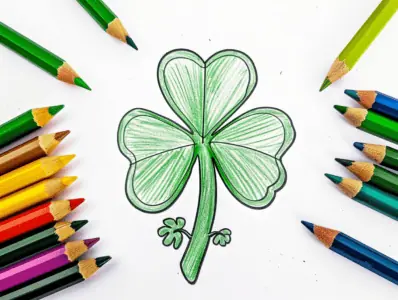
Grab every green crayon you own. The luck starts here.
Twenty-five free shamrock sheets are waiting below, from chunky clover outlines a toddler can fill in minutes to fine line scenes that will hold an adult for an hour.
The set runs well past plain clovers. There is a leprechaun under a rainbow, an Irish castle, a bee, a frog, a hedgehog and a whole cupcake picnic, so nobody has to color the same three leaflets twenty-five times over. Several of them sit happily beside our St. Patrick’s Day collection.
Print whichever ones you like, hand out the green crayons, and see who reaches for the four leaf clover first.
Leprechaun Under a Rainbow
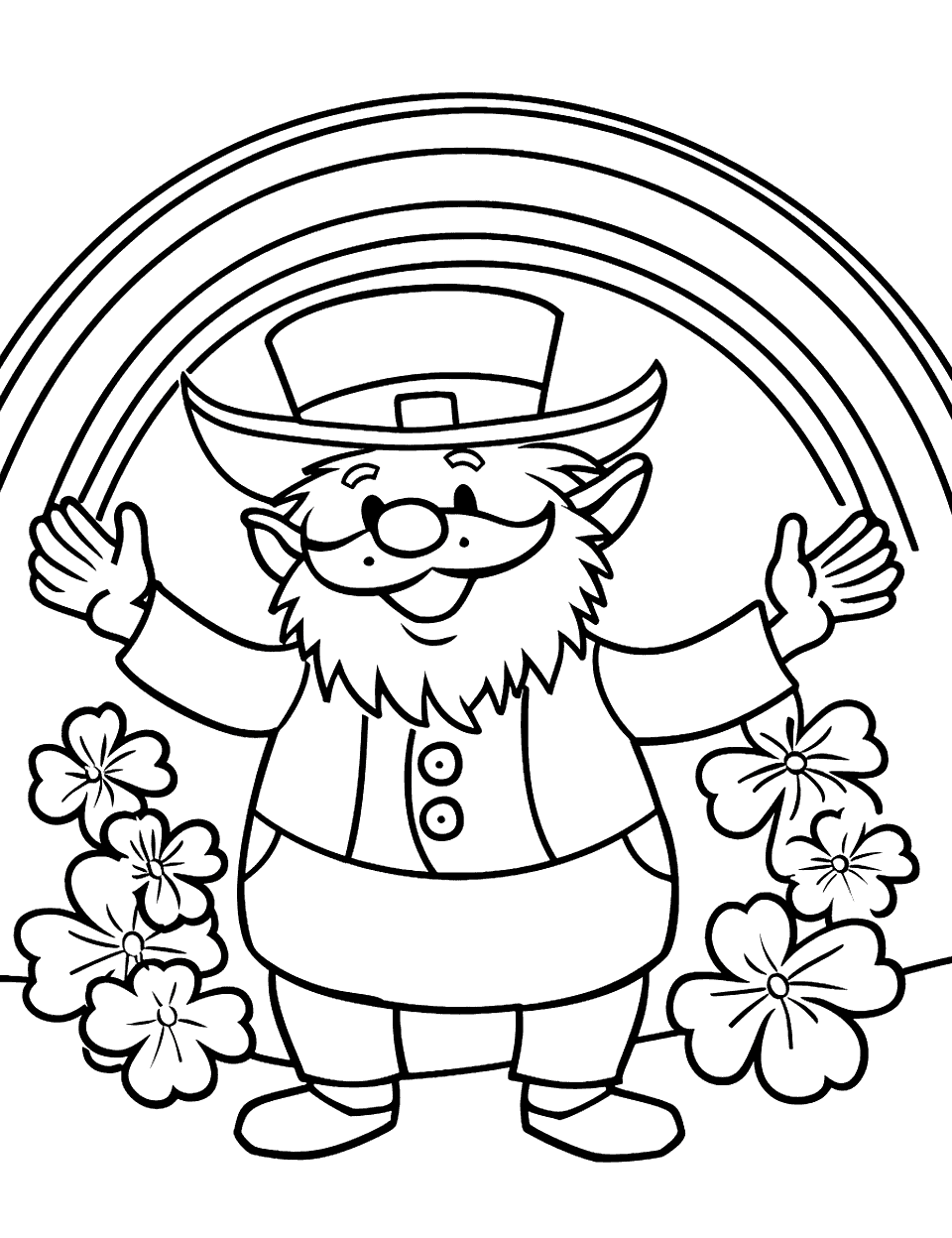
A grinning leprechaun throws both arms wide under a banded rainbow, with clover blossoms heaped around his boots. His buckled hat, jacket buttons and bushy beard are all drawn in thick, forgiving outlines. Give the rainbow its proper band order and save a separate shade for the beard so it stands clear of the coat. Big shapes and few small details make this a good starter sheet for little hands.
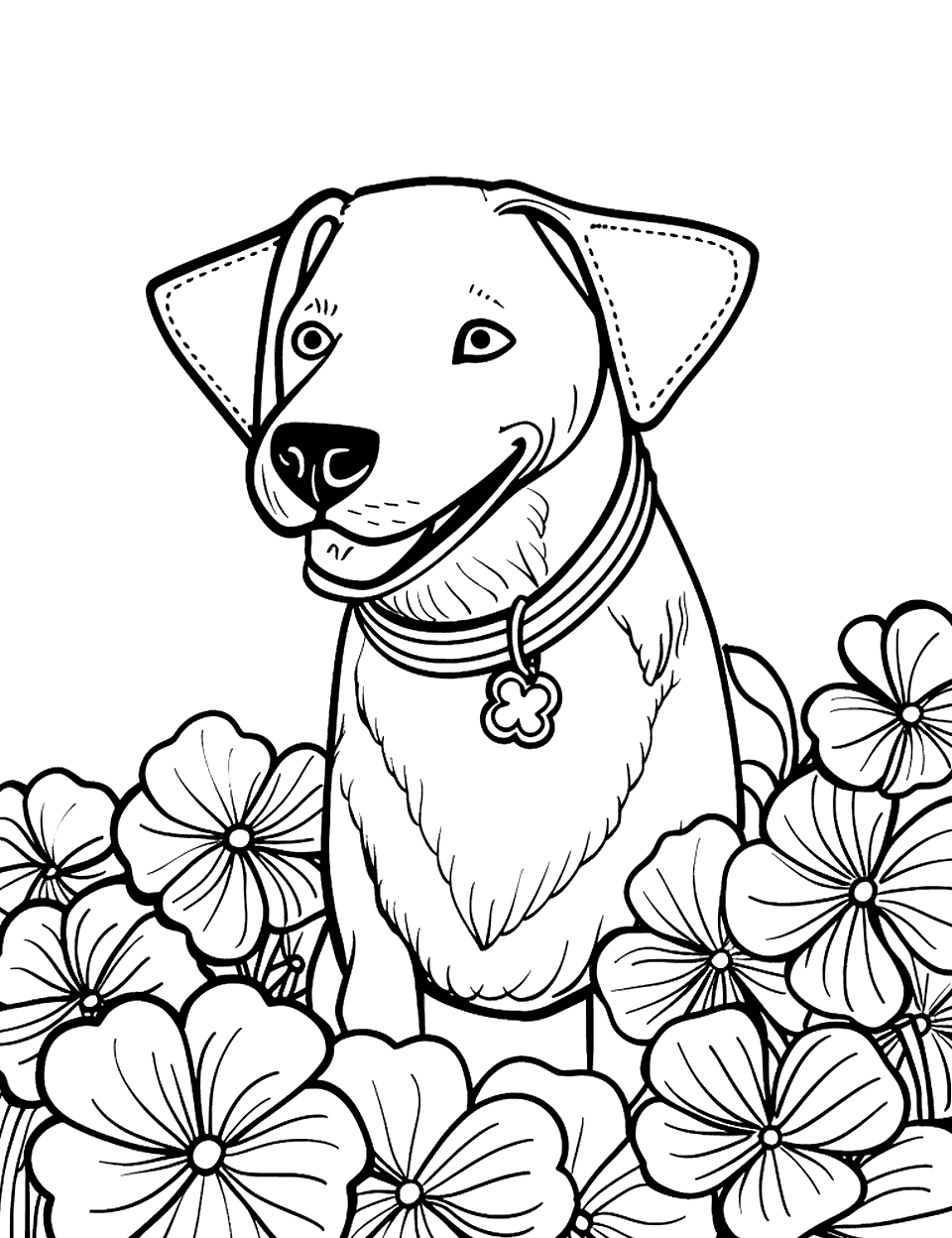
A friendly dog sits chest deep in oversized clover blossoms, wearing a collar with a clover shaped tag. The face carries finer lines than the flowers, so it rewards a freshly sharpened pencil. A warm brown or golden coat against cool greens gives the page instant contrast. Colored pencils hold the fur strokes better than thick markers do.
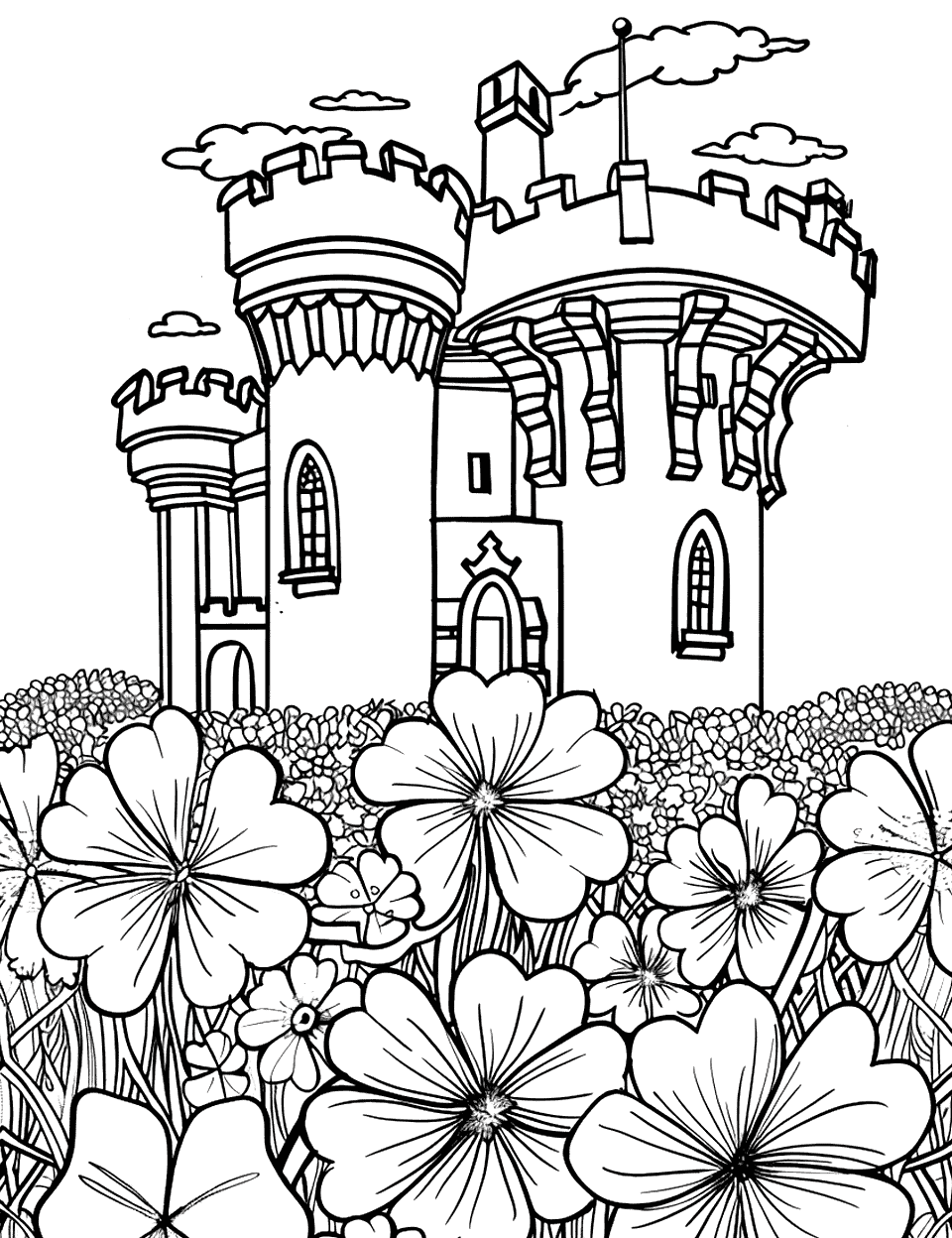
Round towers, battlements and arched windows rise behind a bank of huge clover blossoms, with small clouds drifting past the flagpole on the tallest tower. Grey stone above and deep green below keeps the two halves of the drawing apart. The flower bed along the bottom is dense and takes a while, so this is a rainy afternoon sheet rather than a five minute one. Reach for a whole garden of greens instead of one flat shade.
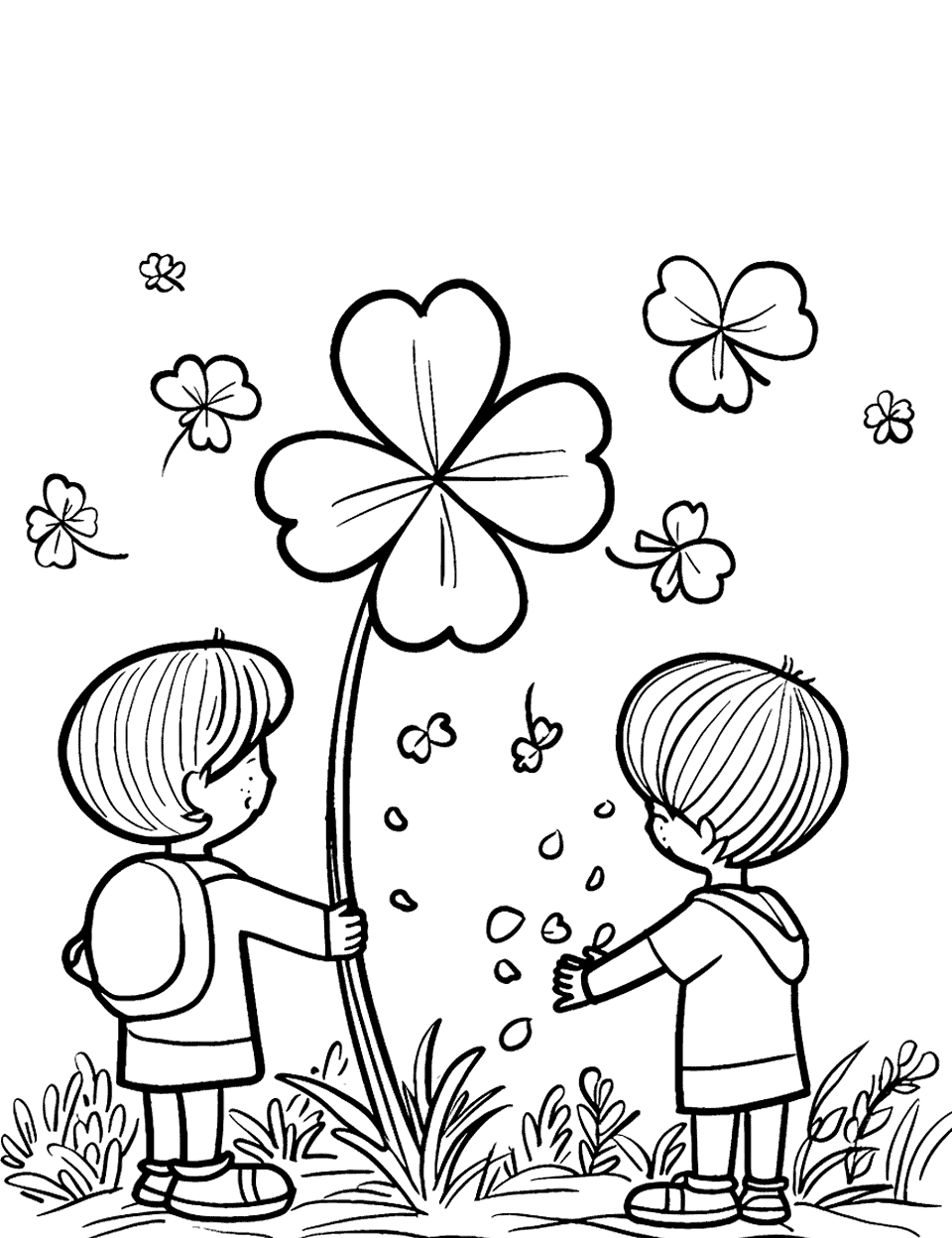
Backs to us, two children look up at a four leaf clover taller than either of them, one of them shouldering a backpack. Small clovers drift through the air and petals fall between the pair. The leaflets are wide and mostly empty, which makes this an easy early elementary pick. Color the floating clovers in paler greens so the big one stays the center of attention.
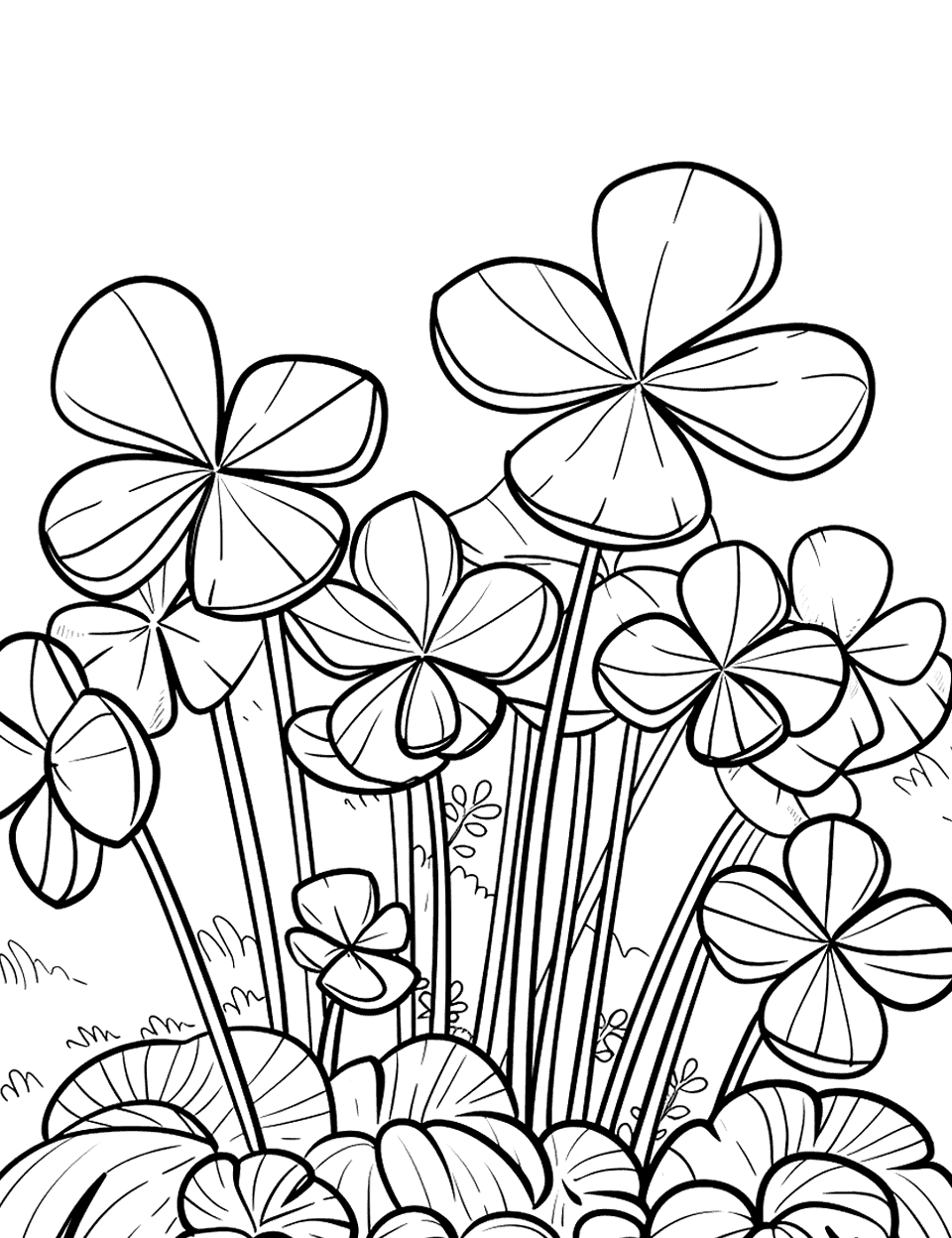
Broad rounded leaflets fan out from long straight stems and crowd the whole frame, with only light vein lines inside them. Sprigs and grass fill the gaps along the bottom for anyone who likes fiddly corners. This is the sheet for blending: lay a yellow green base down first, then darken the outer edge of each leaflet. The result looks rounded rather than flat, which is hard to manage on smaller shapes.
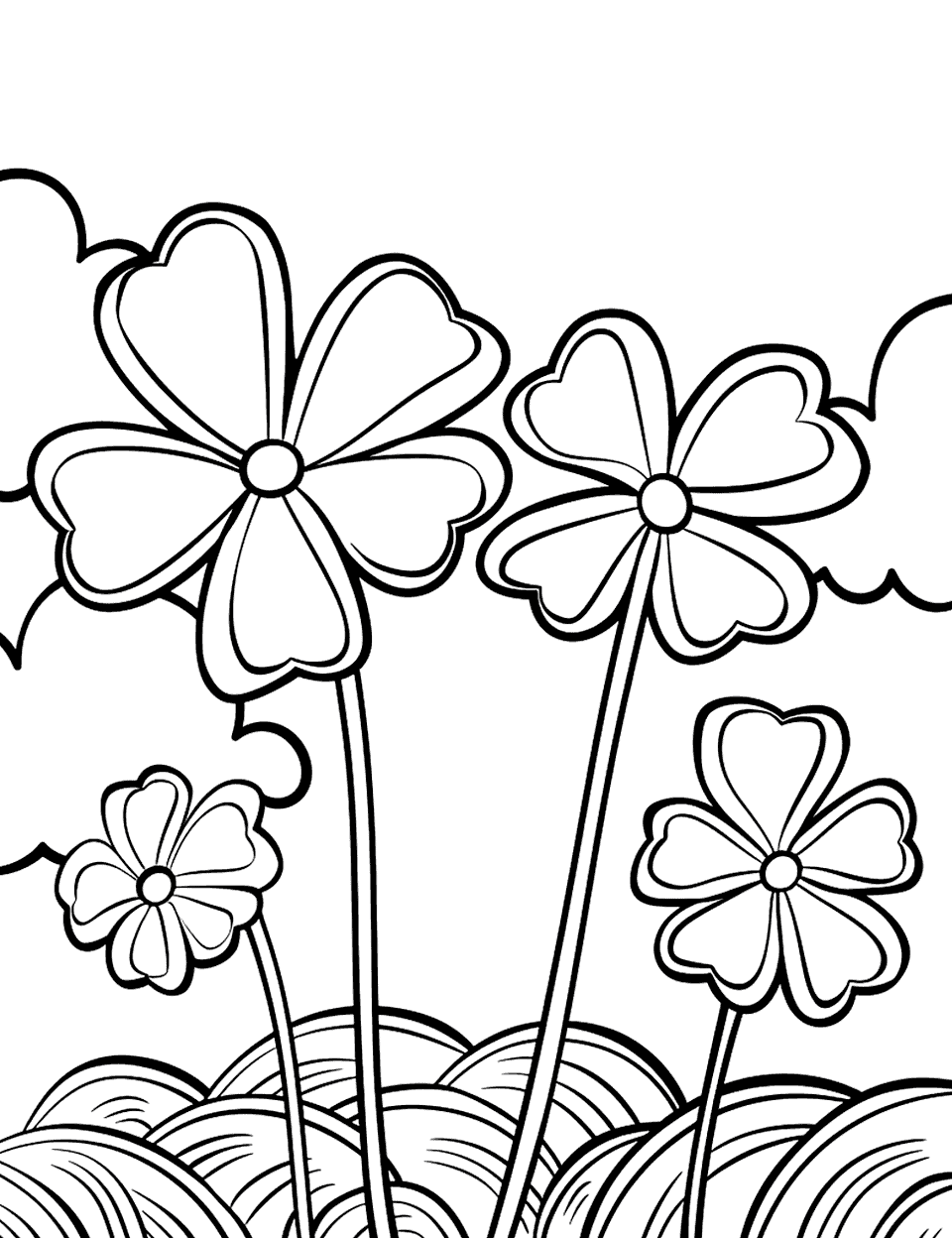
Four clover flowers on tall stems lean against a background of soft outlined clouds, with rounded bushes filling the bottom edge. The shapes are large and the lines are thick, so chunky crayons will not ruin it. A pale blue sky behind the clouds makes the green read as green without much effort. Pair it with the sunny day sheets for a spring display.
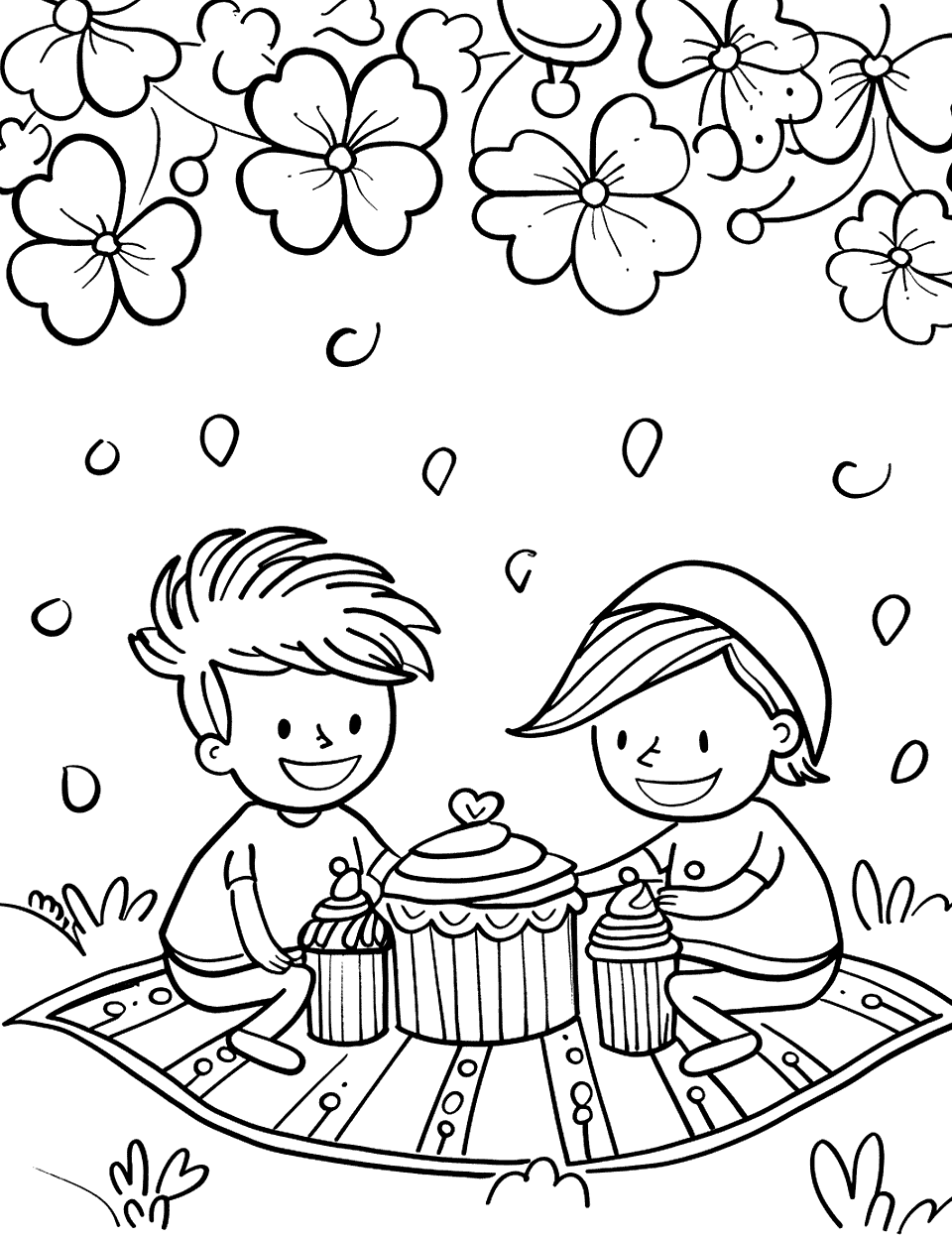
Two kids sit facing each other on a striped picnic blanket, a big frosted cupcake between them and a smaller one in each pair of hands. A border of clover blossoms hangs across the top of the page while petals drift down over the scene. Frosting swirls are a good excuse for pinks and creams on a page that is otherwise all green. The blanket stripes give younger colorers a simple pattern to repeat.
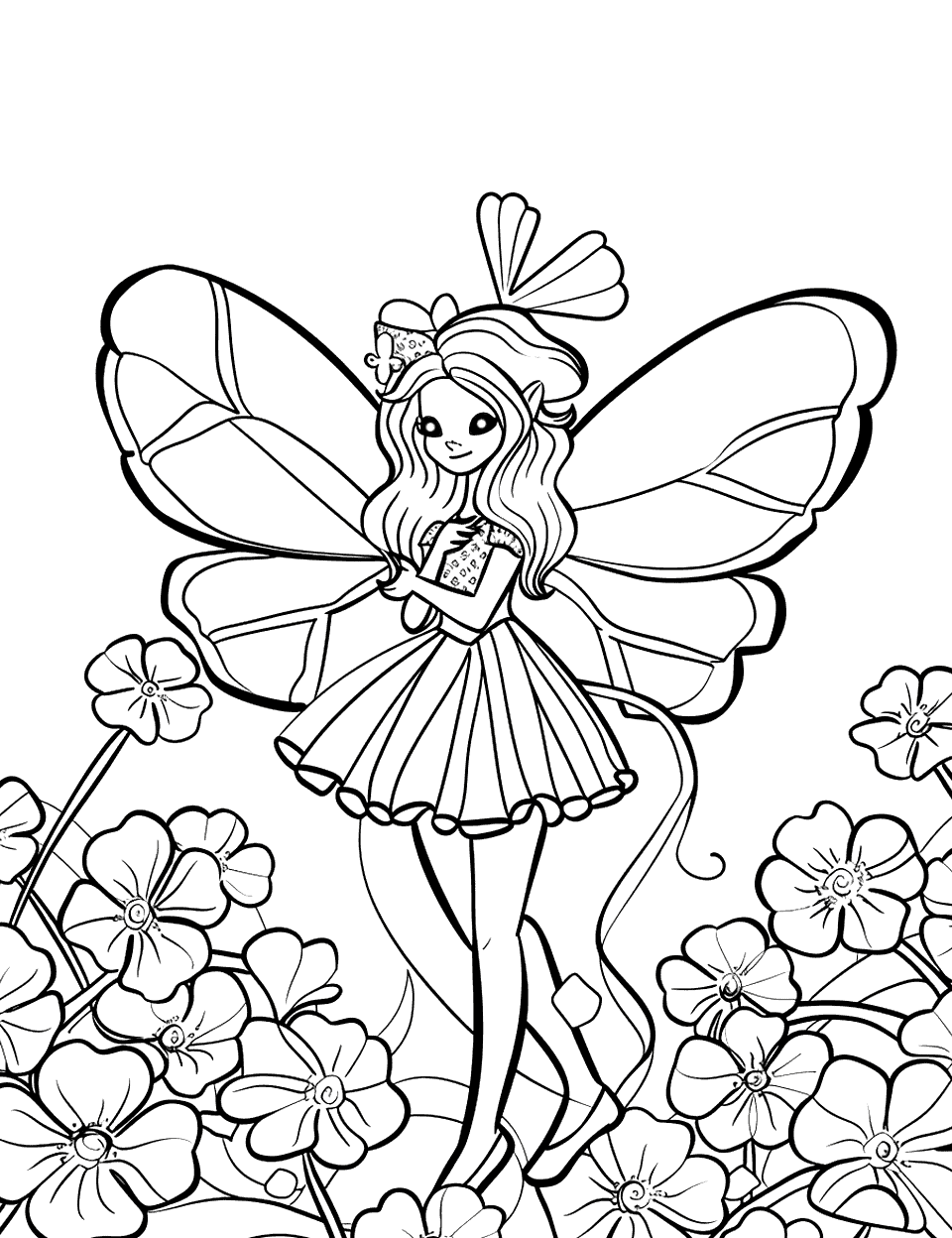
A fairy with wide butterfly wings hovers above a bed of clover blossoms, her hands drawn together at her chest. Her hair, the wing panels and the ruffled skirt are all built from fine lines. Metallic or pearly pencils suit the wings if you have a set. Keep the flowers a shade darker than the dress so the figure stays in front of them.
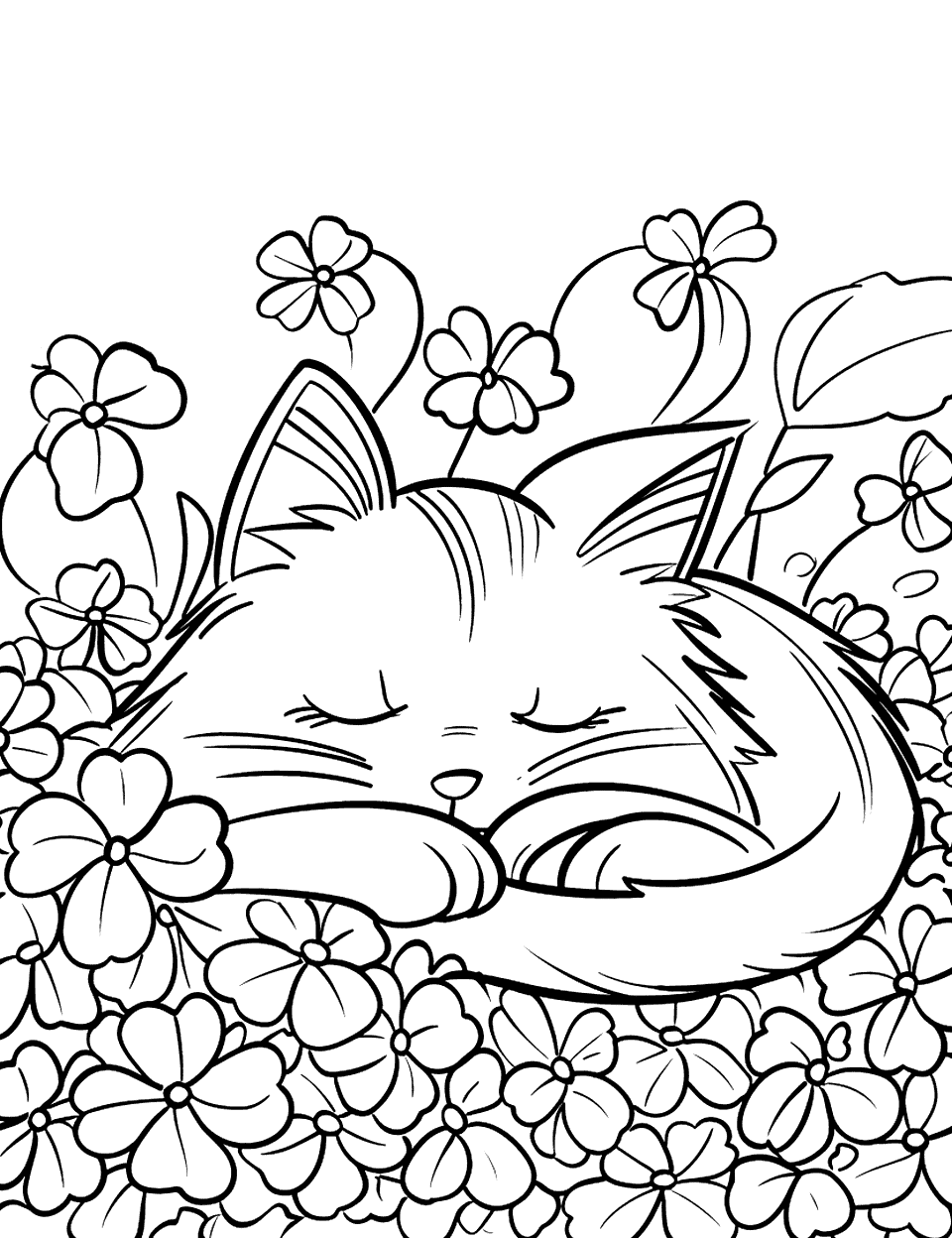
Curled nose to tail with one paw tucked under its chin, a cat sleeps in a thick bed of clover blossoms. Fur strokes run the length of its back and tail, so pencils beat markers here. Ginger, grey or tabby stripes all sit well against green. The flowers cover nearly the whole page, which makes this a long and calming sheet.
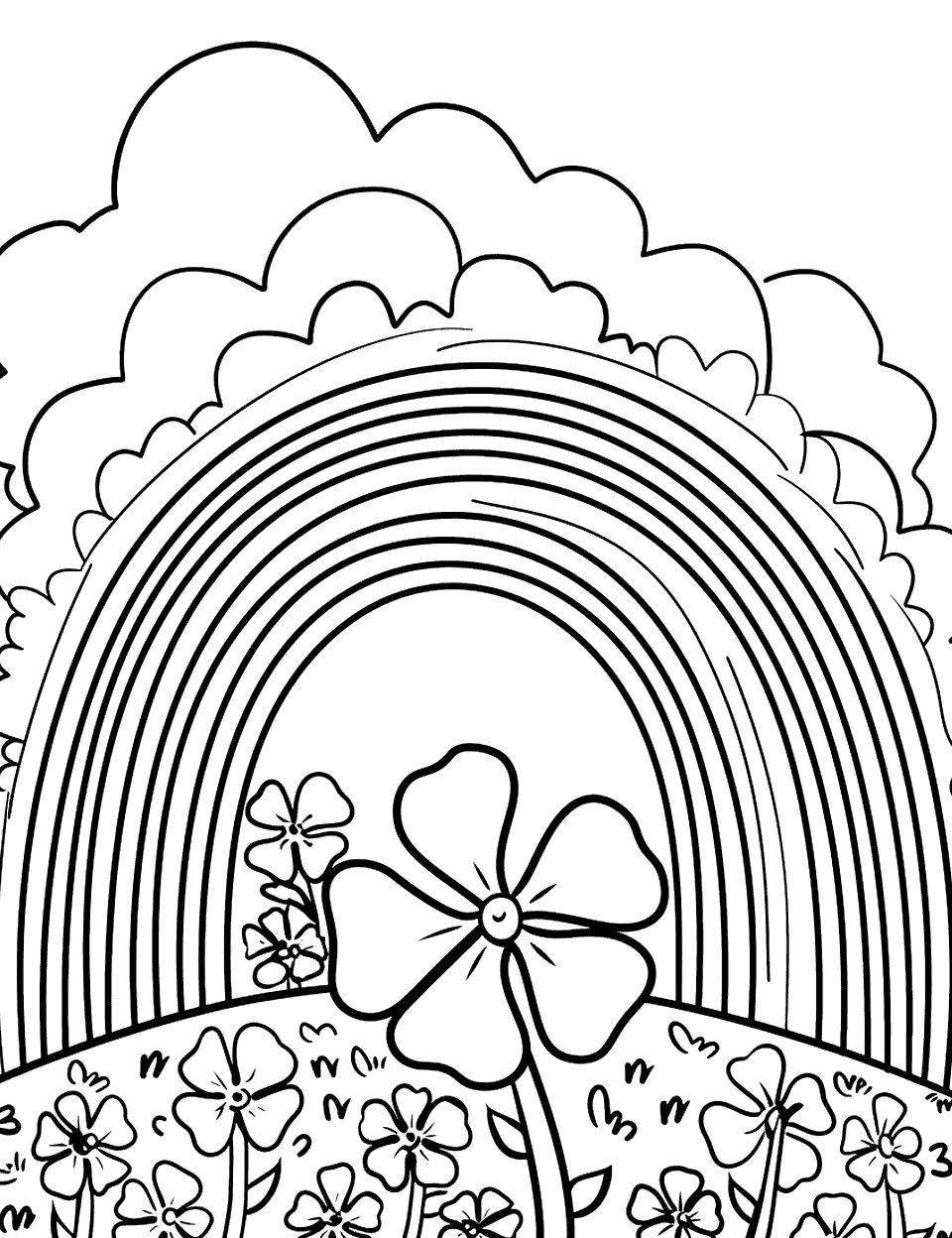
A wide rainbow of many thin bands arcs over a low hill, with one large clover flower standing in front of it. Puffy clouds sit behind the arc and small clovers dot the grass below. Those narrow bands are a neat fine motor challenge for a child practicing staying inside the lines. Fine tip markers or sharp pencils work far better here than crayons.
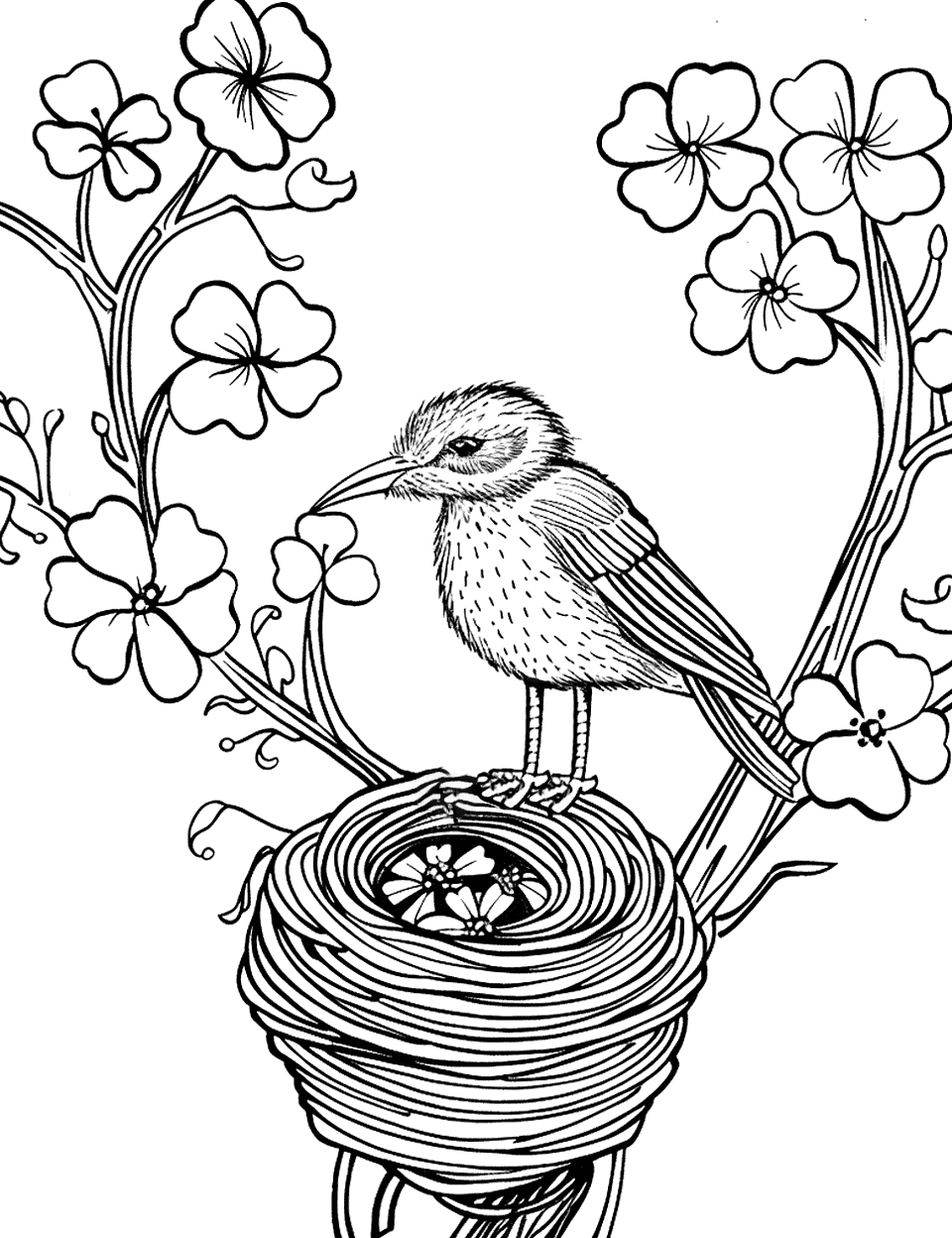
Every feather on this bird is drawn separately as it perches on the rim of a woven nest with clover blossoms tucked inside. Branches carrying more blossoms frame the scene on both sides. The detail level puts this one with older kids and adults who enjoy slow work. A warm brown bird against pale green flowers keeps the two subjects distinct.
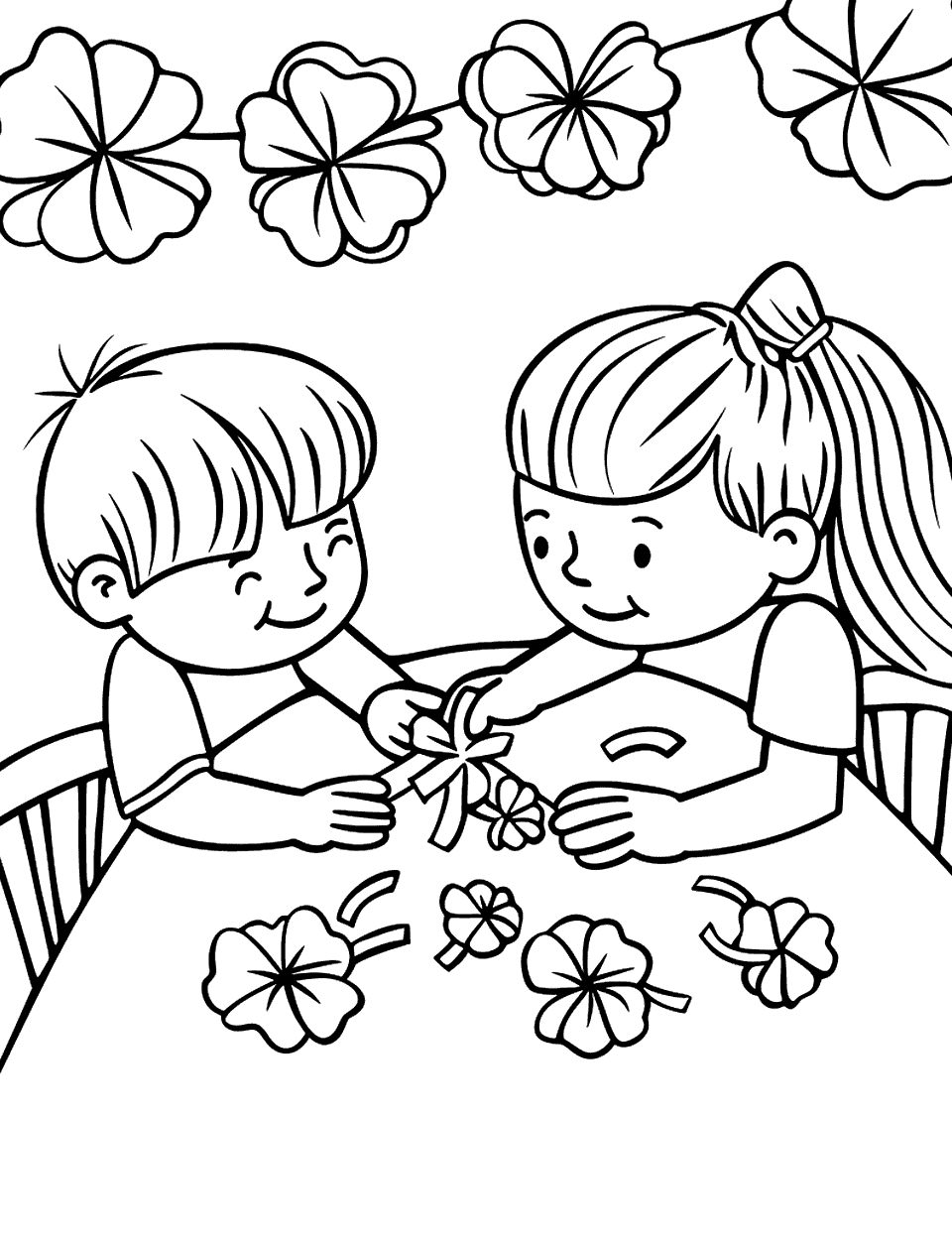
Two children lean over a table, tying a small bunch of clovers together with a ribbon while more cut clovers lie scattered in front of them. A clover garland is strung across the top of the page. Their faces and hands are simple shapes, so this suits younger colorers. It also pairs neatly with the garland craft further down this page.
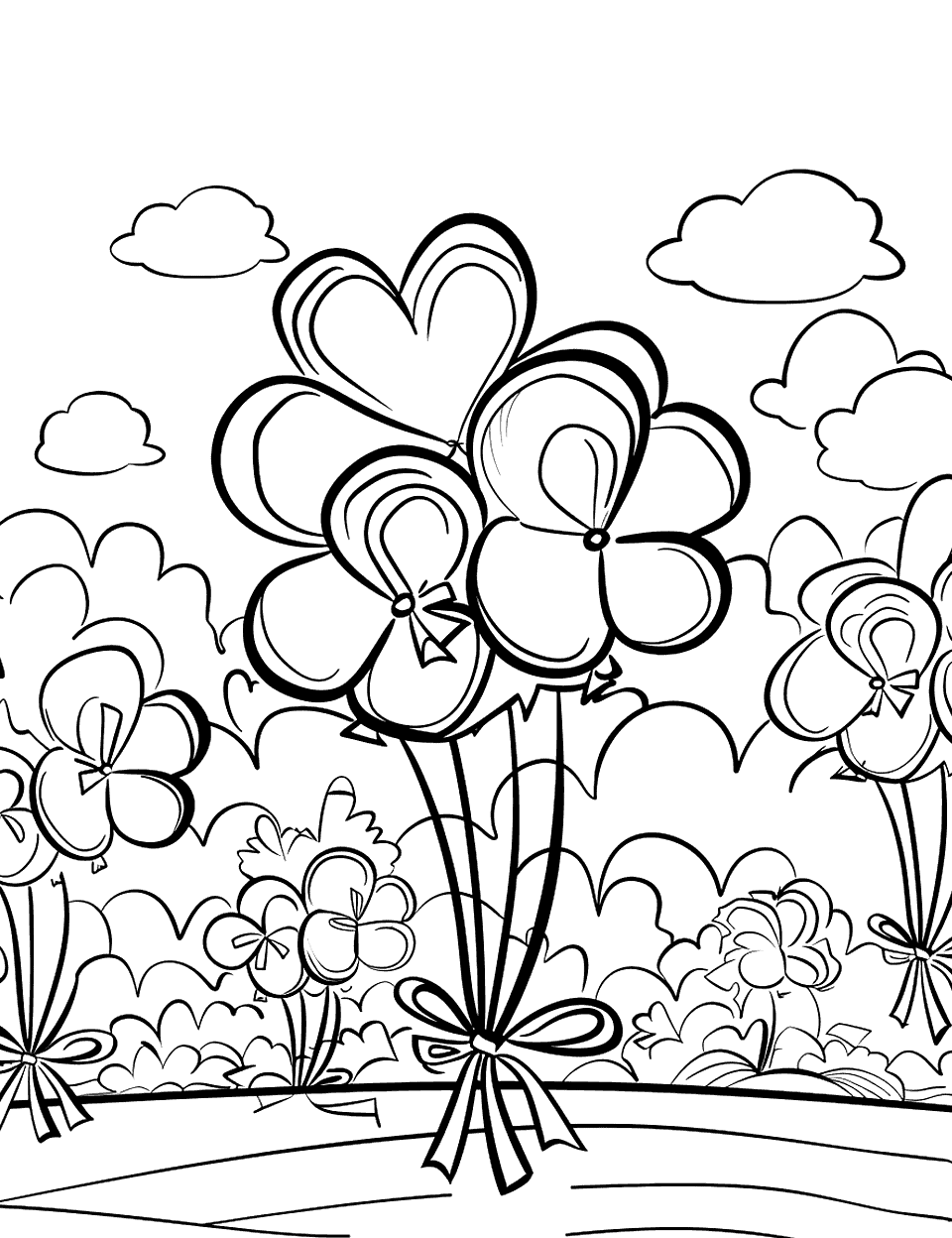
A bunch of clover shaped balloons is tied off with a big ribbon bow, with more bunches drifting in at both edges of the page. Simple clouds float behind them above a line of bushes. Balloons are a good place to practise one color per petal, or to run a rainbow across the bunch. The thick outlines forgive crayon slips, so hand this one to the youngest at the table.
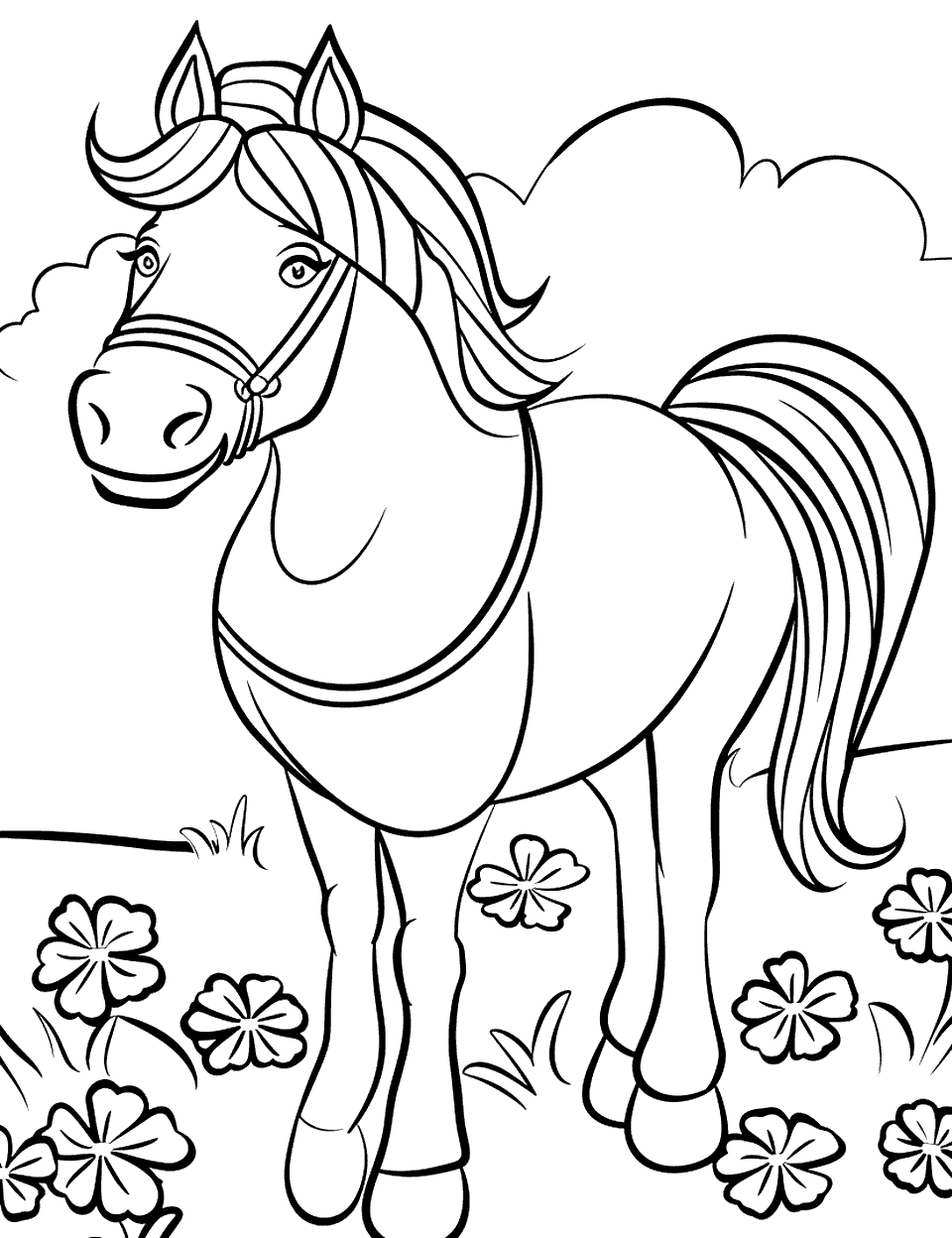
Mane and tail swept to one side, a horse in a plain halter stands in a meadow dotted with clover flowers. A cloud sits behind its shoulder. The mane is drawn in long ribbons that take highlights well, so try two shades of the same color along it. Younger kids can stick to one coat color and spend their energy on the flowers.
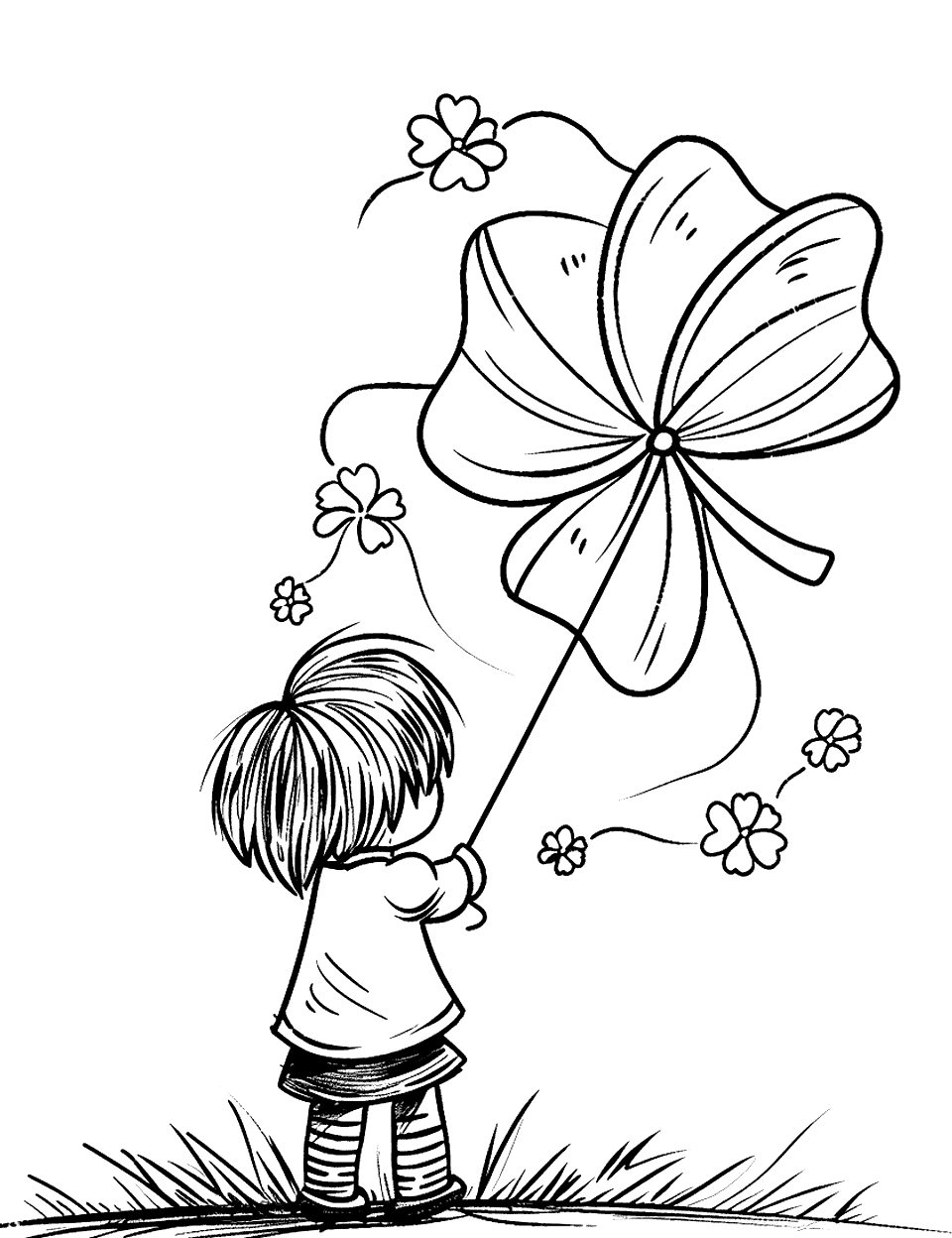
A child seen from behind holds the string of a kite shaped like a four leaf clover, with a ribbon tail curling off one leaf. Small clovers blow past on either side of the page. The kite is the biggest shape here, so it can carry a bold pattern while the child stays soft and simple. It sits naturally alongside the spring sheets once March turns into April.
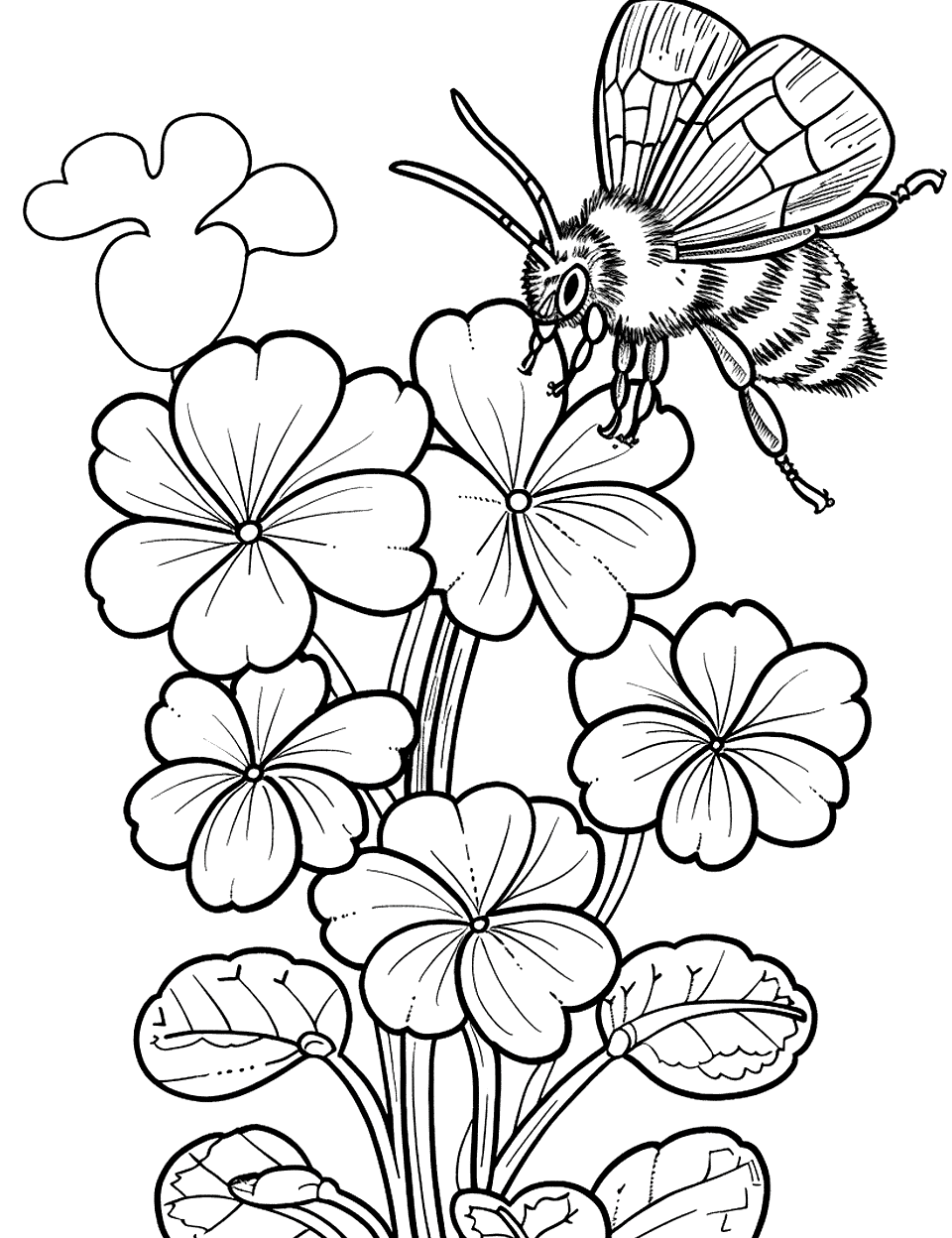
A detailed bee hovers over an open clover blossom, its wings drawn as fine paneled shapes and its body covered in short fur lines. Broad clover flowers fill the lower half of the page. Yellow and dark brown bands on the body give the bee depth straight away. Save this one for a colorer who enjoys tiny areas, since the wings alone hold a lot of small shapes.
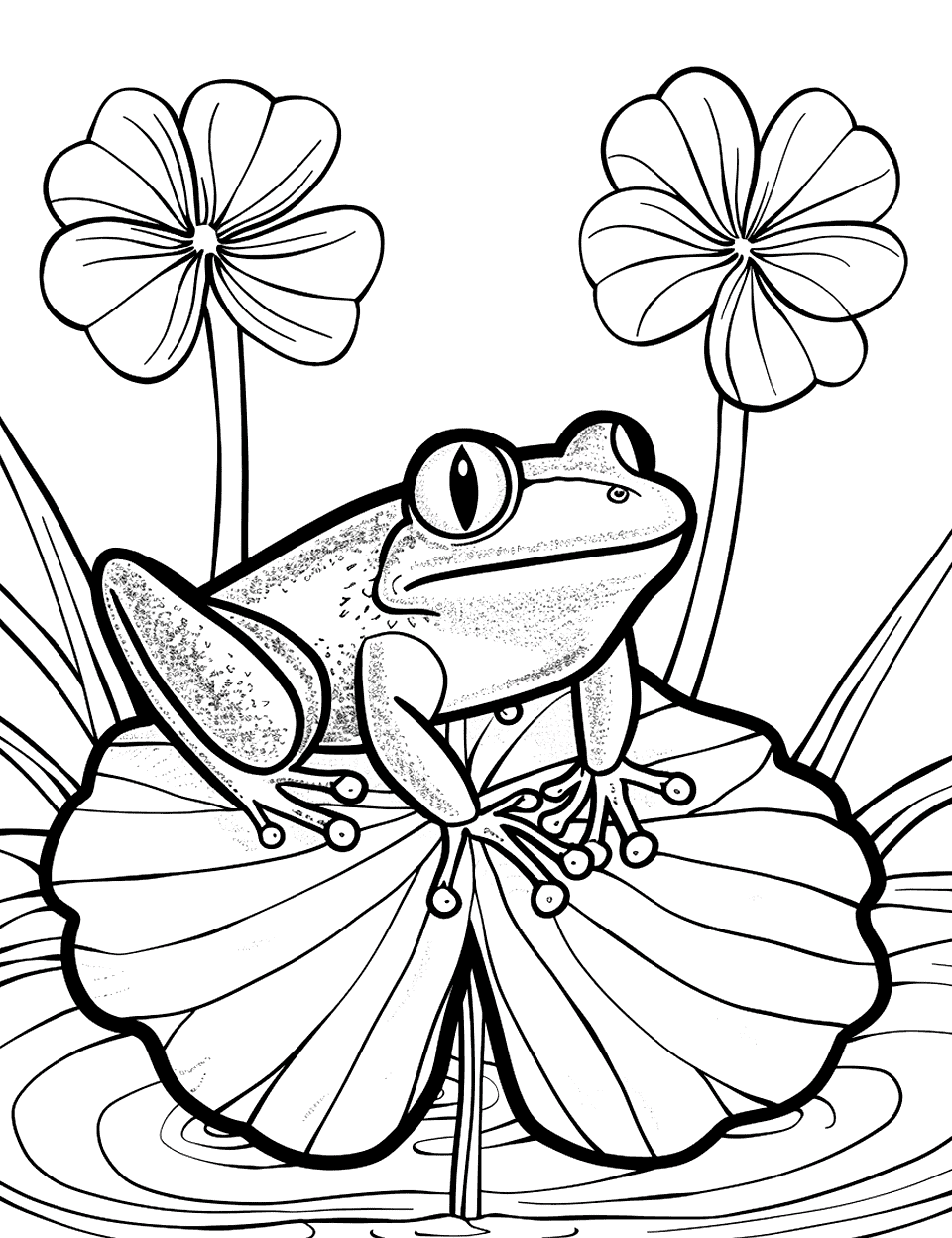
On a broad clover leaf floating in rippled water sits a wide eyed frog, with two tall clover stems rising behind it and reeds leaning in from both sides. Its back is stippled with dots that can be left white or dabbed in a darker green. Bright green on the frog and a blue grey pond stop the leaf from vanishing into the background. The water ripples are worth a light hand rather than full color.
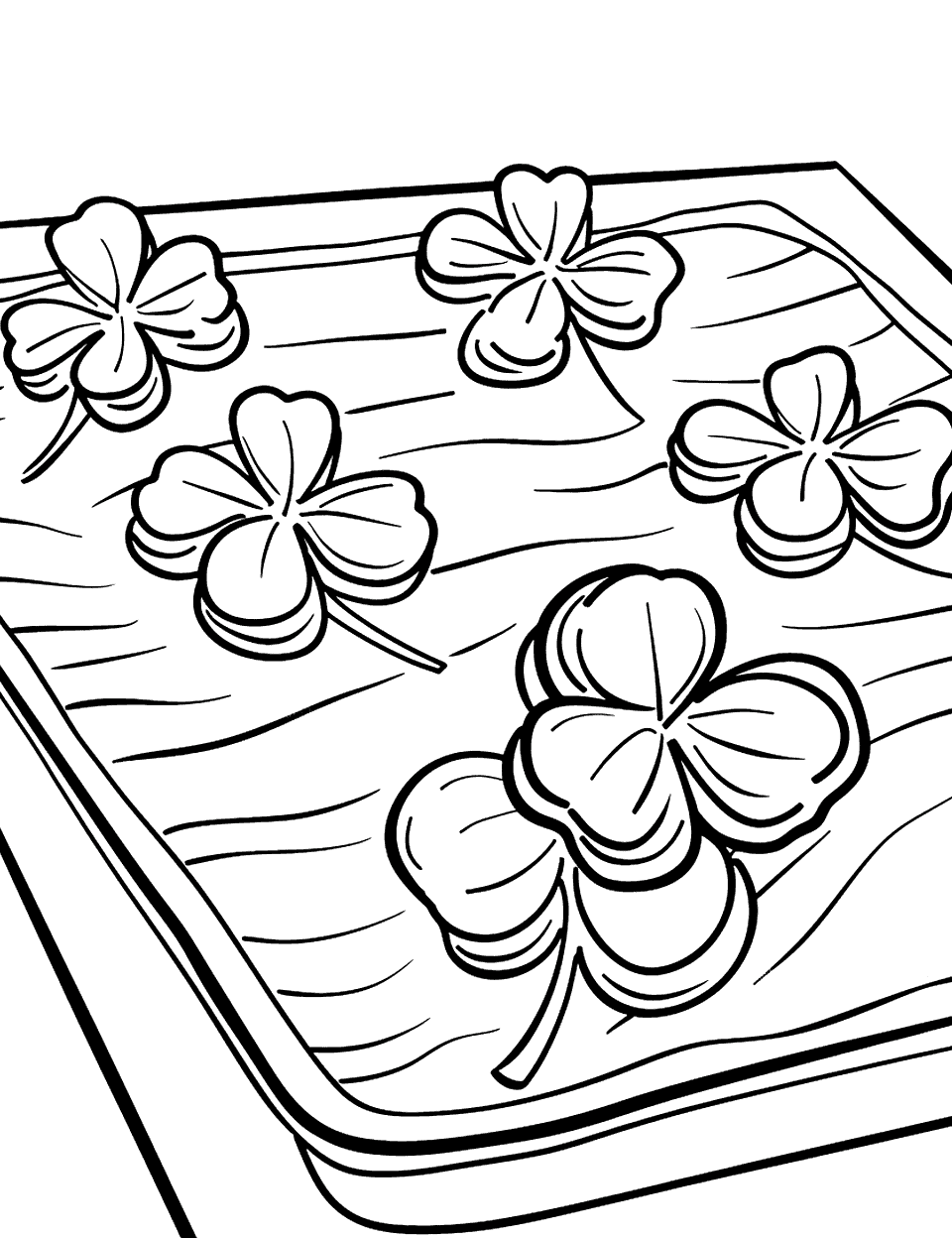
Shamrock shaped cookies are spread across a baking tray, each one a stem plus three rounded leaves. The raised rim of the tray frames them and the lines inside it are the only background. Warm tans and golden browns read as cookies, while going green turns them into icing instead. Cut the finished sheet down and it makes a decent placemat for a March table.
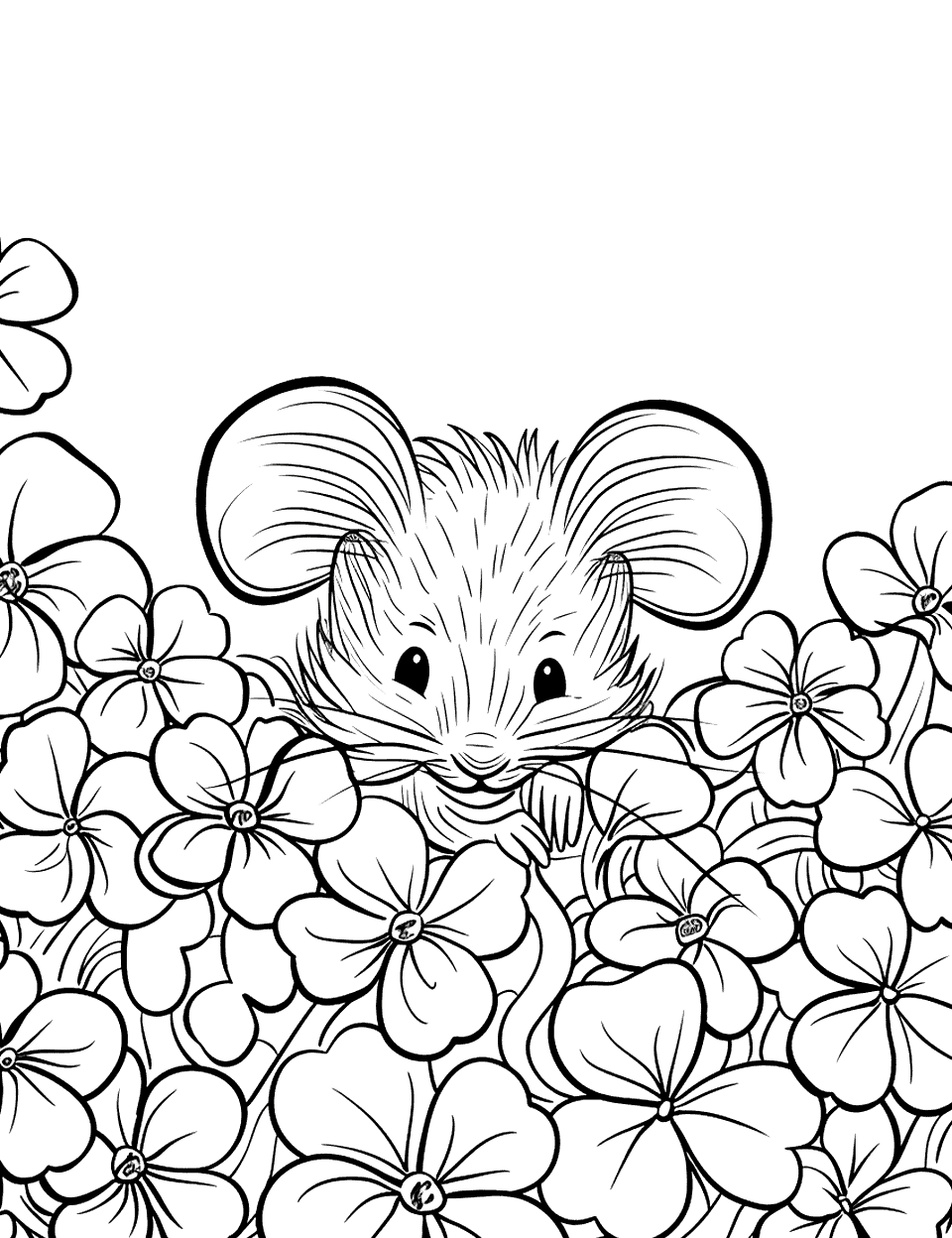
Only the top half of a round eared mouse shows above a dense bank of clover blossoms, its paws resting on a petal and its whiskers stretching out across the flowers. The mouse is smooth and simple while the clover bed behind it is packed with overlapping petals. That split makes it a fine page for two colorers to share. Soft grey fur against green flowers is the easy choice, though brown works just as well.
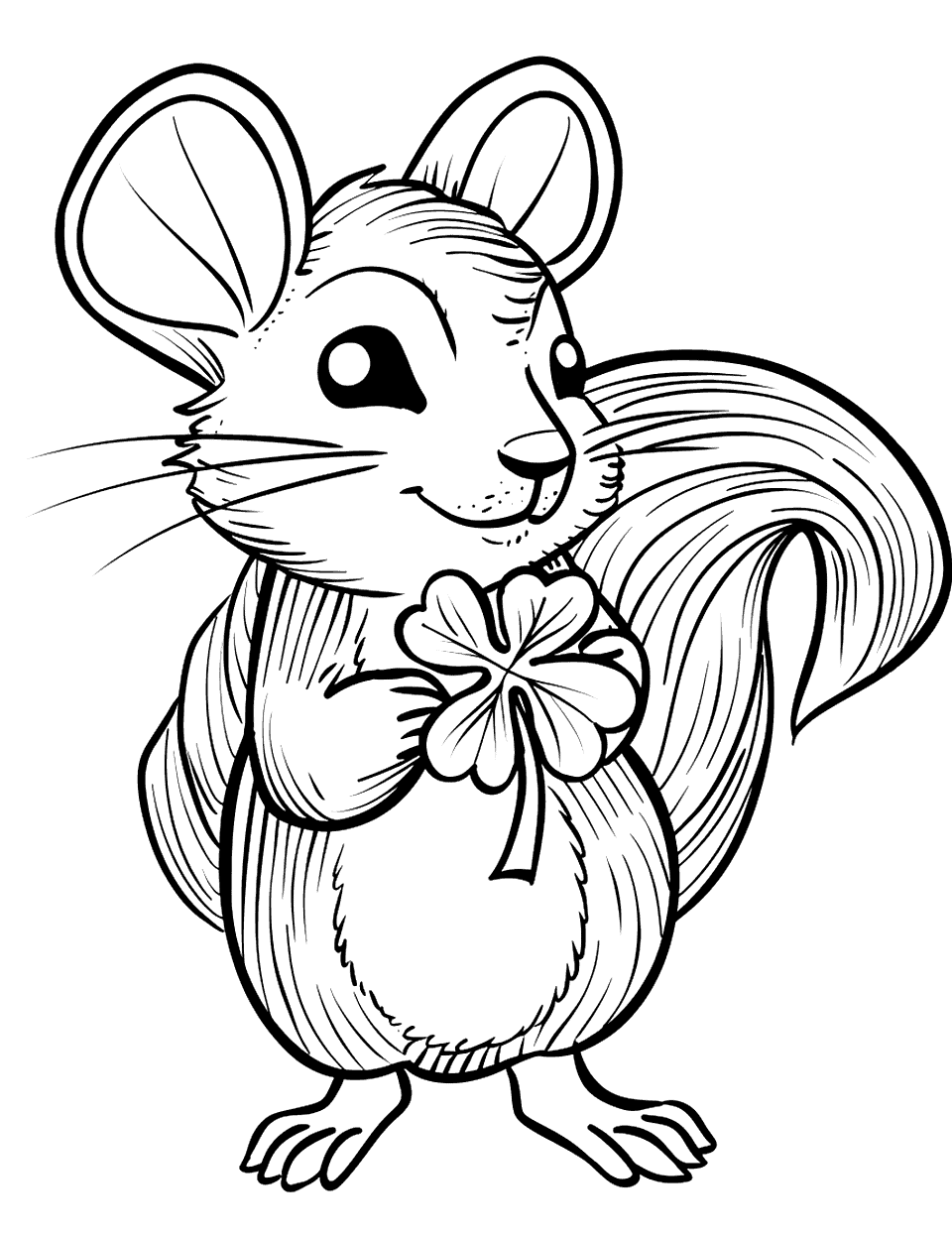
A squirrel stands upright on its back feet, holding a four leaf clover in both front paws. Long whiskers, big round ears and a curled bushy tail take up most of the page. The fur is drawn in long strokes that suit a two tone brown. One large subject and no background makes this a quick win for a short attention span.
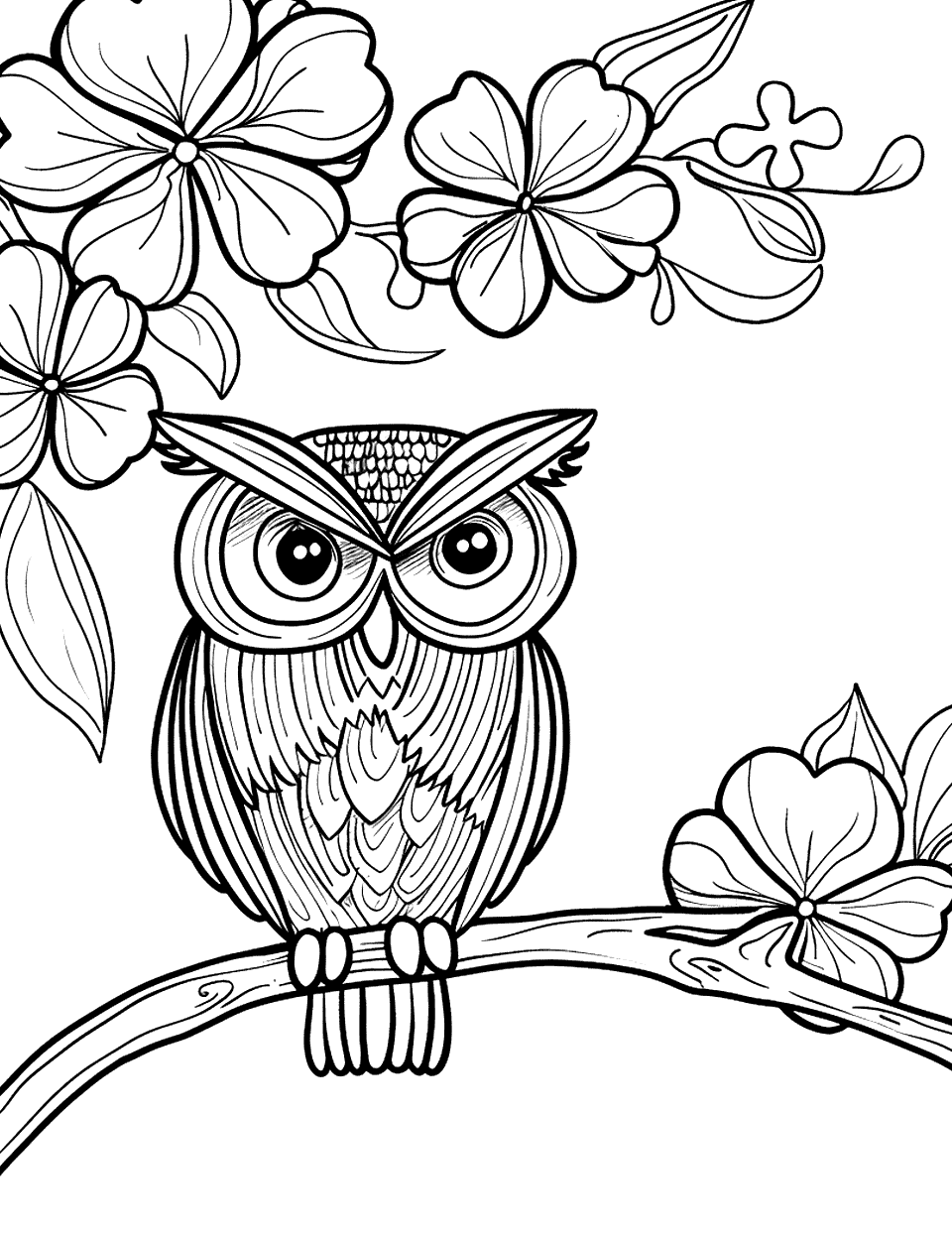
Big round eyes and feathered brows dominate this owl, which grips a bare branch while clover blossoms and leaves spill across the top corner and the right edge. The chest feathers are drawn as neat overlapping rows. Layer two browns on the body and leave the eye rings pale so the face stays bright. The open space around the branch takes a sunset wash nicely if you use watercolor pencils.
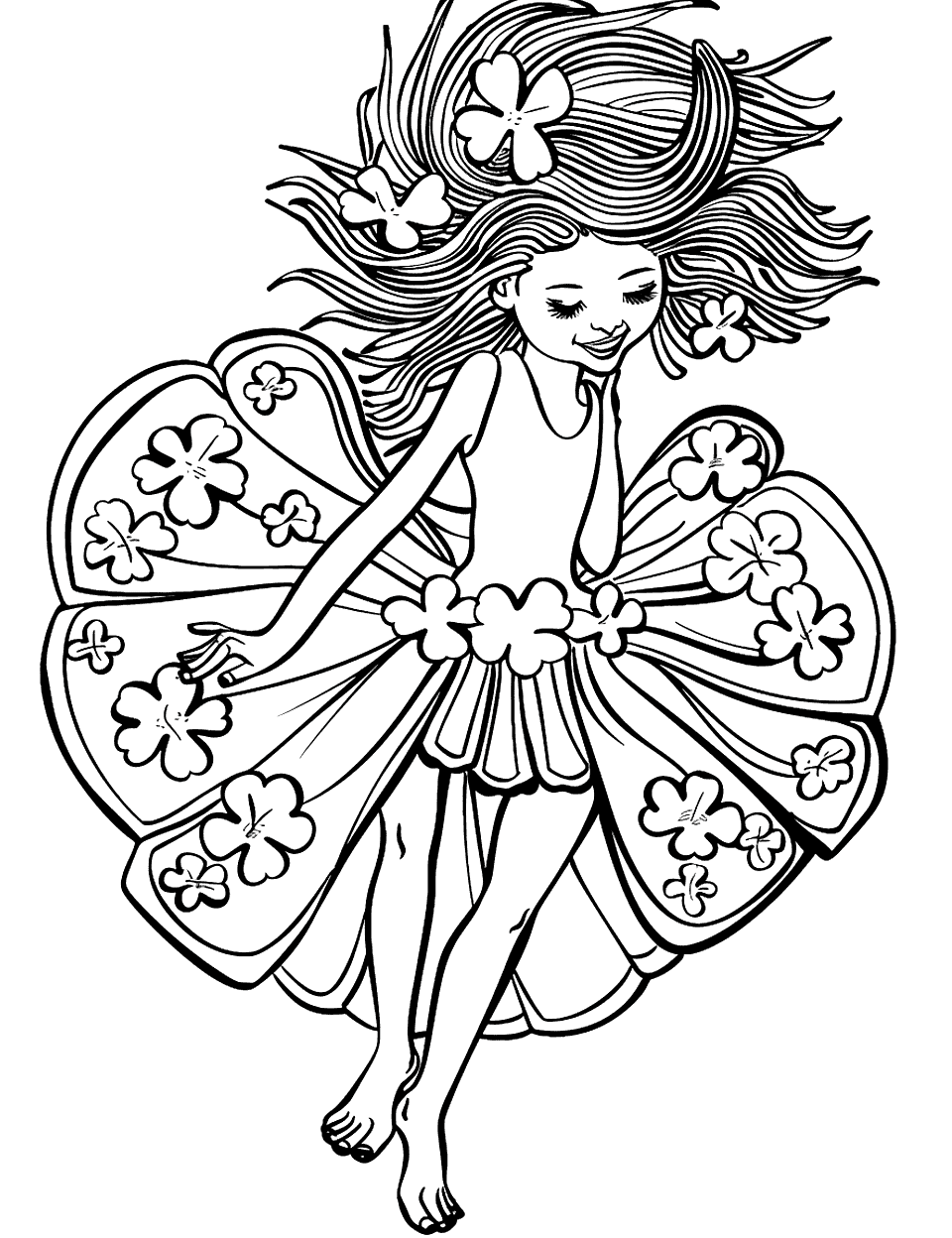
A barefoot dancer spins with her eyes closed and her long hair streaming out behind her, clover blossoms tucked into it. Wide fan shaped panels behind her are scattered with more clovers. The hair is drawn in dozens of thin strands, so it calls for pencils and patience. Pick one accent color for every clover on the page and the whole sheet ties together.
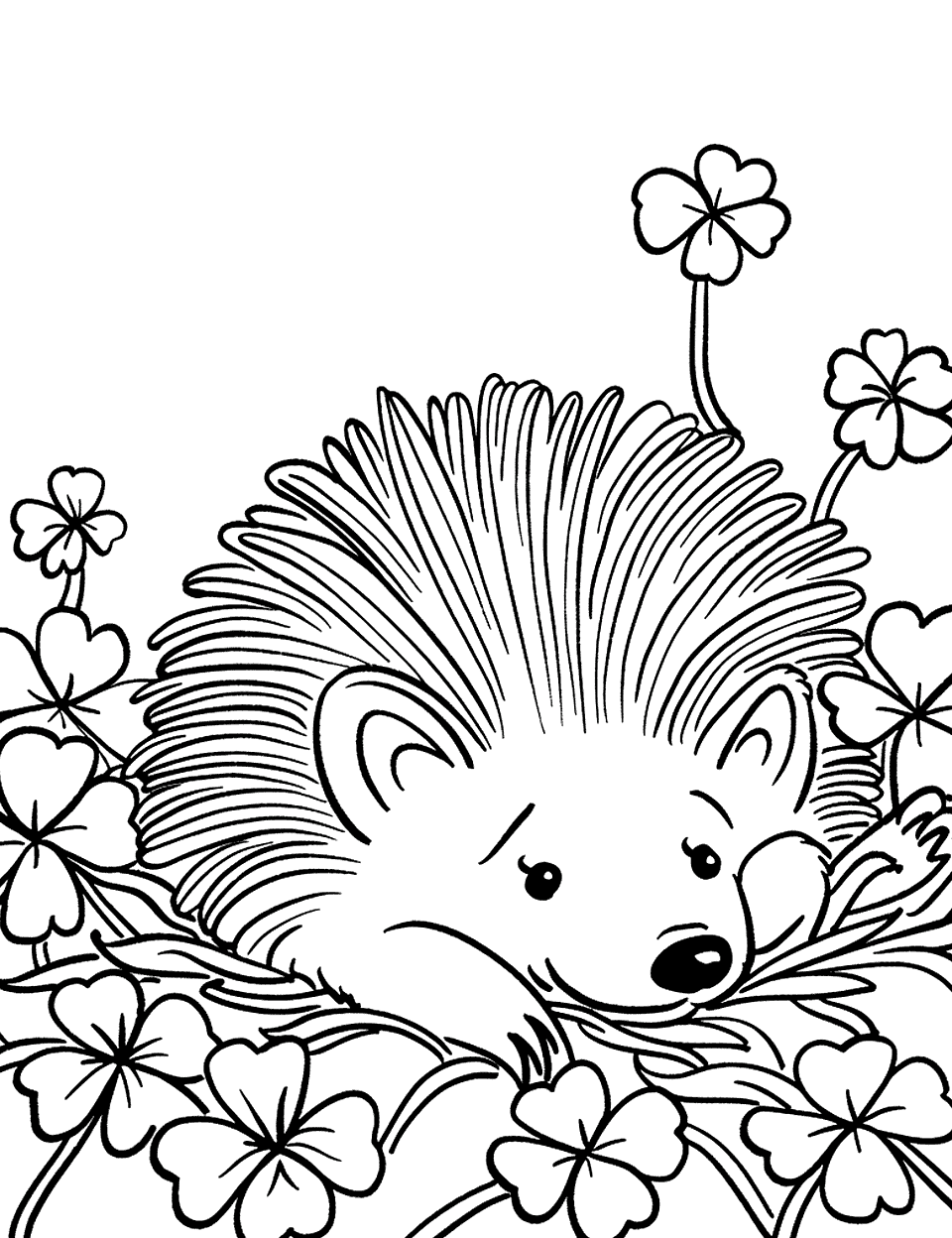
Spines drawn as long sweeping strokes cover the back of a hedgehog lying low in a patch of clover, with blossoms and leaves pressing in from every side of the frame. Those spines are the fun part: short dark strokes over a light brown base give them texture. The face is simple enough that a younger sibling can take that half of the page. Leave a few spines pale so the back does not go solid.
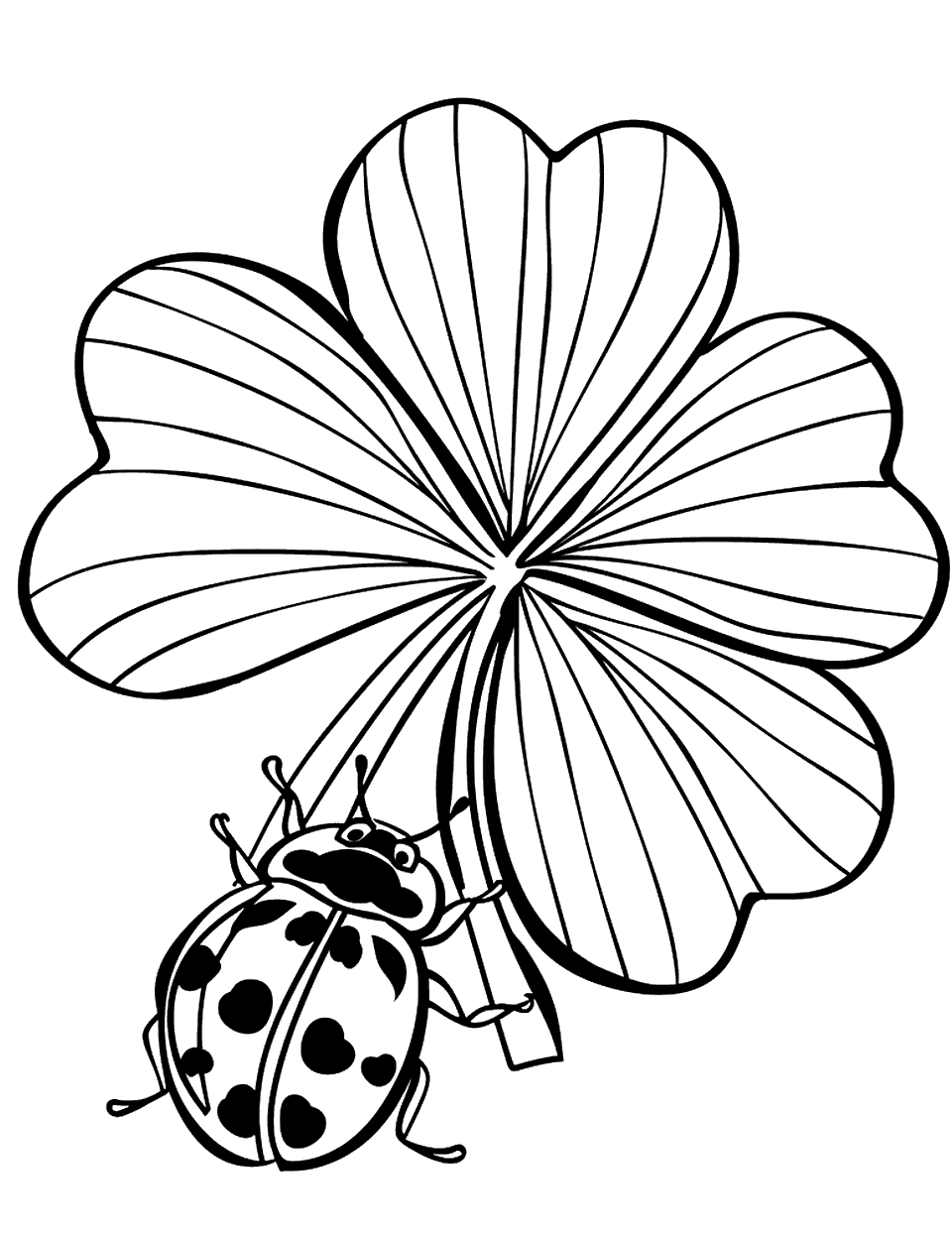
A ladybug climbs the stem of a single four leaf clover that fills almost the entire page. Each leaflet is ruled with fine vein lines running out from the center. Red with black spots against a deep green leaf is the obvious pairing, and it works. The shapes are large enough that this one enlarges well into a poster or a window decoration.
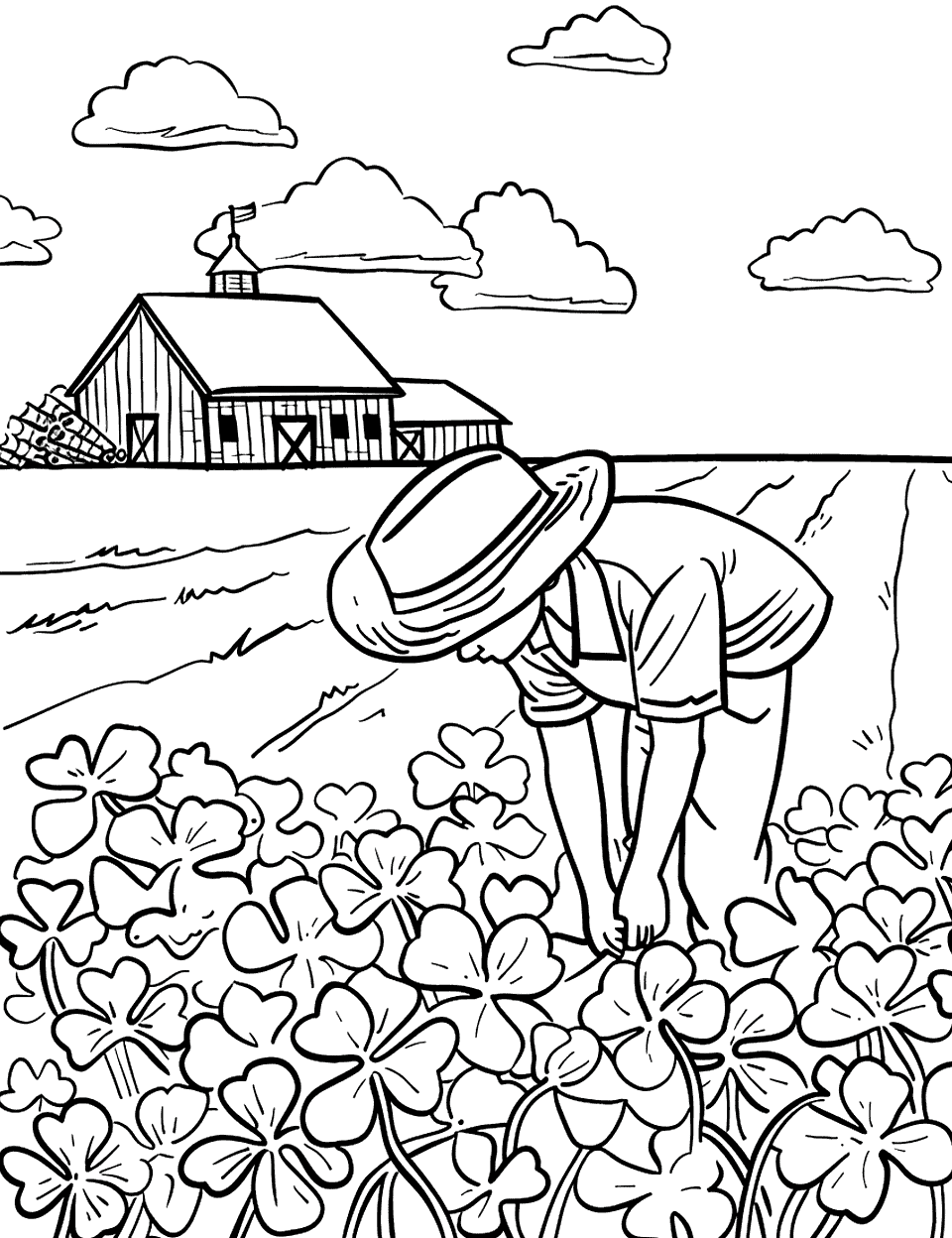
Behind a thick field of clover stand a barn and a row of clouds, while a farmer in a wide brimmed hat bends over the plants in the foreground. The clover up close is drawn large and detailed; the background stays plain and open. That contrast lets kids race through the sky and slow down in the field. Straw yellow for the hat and a red barn give the page two warm anchors against all the green.
By using our free coloring pages, you acknowledge and agree to our full disclaimer. All materials are for personal, non-commercial use only and all rights belong to their respective license holders.
Which Sheet Should You Print First?
Start with the leprechaun, the balloon bunches, the cloud sheet or the cupcake picnic, all thick lines and wide open shapes that a preschooler can finish in one sitting. Pick by how much patience the colorer has, not by age alone.
The middle ground is the horse, the kite, the cookie tray and the squirrel, where there is real detail but plenty of room to move. These are the sheets that suit a school age child who wants something to look at but does not want to be beaten by it.
Save the bee, the nesting bird, the owl, the dancer’s flying hair and the castle’s flower bed for anyone who likes slow, fine work with sharp pencils. Those five reward a full afternoon and look genuinely good on a wall afterwards.
Activities to Do With Shamrock Coloring Pages
Finished pages do not have to end up on the fridge. Here are six ways to put them to work around St. Patrick’s Day.
Create a Lucky Garland
Color a run of clover sheets in different greens and golds, then cut the shapes out. Punch a hole at the top of each one and thread them onto ribbon or baker’s twine. Hang the garland along a mantel, a stair rail or a doorway. Spacing the shapes evenly is a quiet measuring lesson for older kids.
DIY Greeting Cards
Shrink the simpler sheets to about half size before printing, color them in, and glue them onto folded cardstock. One clover on a plain front looks better than a crowded collage. Write the message inside and post one to a grandparent who will keep it on the windowsill until June.
Hidden Shamrock Scavenger Hunt
Color and cut out a stack of clovers, then hide them around the house: on a bookshelf, behind a pillow, taped under the fridge handle. Give each child a basket and a time limit. Number the backs before you hide them so you know when every last one has been found.
Sparkly Wall Art
Trace the outlines with liquid glue, sprinkle green or gold glitter over the wet lines, then tip the page to shake off the excess. Fine glitter clings better than the chunky sort. Let the whole thing dry flat overnight, because glue on a hanging page slides downward.
Festive Table Place Settings
Print the simplest clover sheets, let the kids color them, and laminate the results into placemats. Cut out single clovers and write a name on each one for place cards. Clear contact paper does the same job if you do not own a laminator.
Stained Glass Window Art
Color a page hard with oil pastels or crayons so the wax sits thick on the paper. Brush a thin layer of vegetable oil over the back with a cotton ball, then blot it. The paper turns translucent, and taped to a sunny window it glows like stained glass. Keep this one for older kids, since the oil stage gets messy fast.
What Exactly Is a Shamrock?
A shamrock is a young sprig of clover with three leaflets, and no single plant species owns the name. When the National Botanic Gardens in Glasnevin asked people around Ireland to send in the plant they call shamrock, 221 people from 30 counties replied: 46 percent of the samples were lesser clover and 35 percent were white clover, with wood sorrel among the rest (1). Charles Nelson, the botanist who ran it, wrote that the experiments showed “there is no single, uniquely Irish species that can be equated with shamrock.”
That is worth knowing before you start coloring, because the sheets in this set treat the shamrock loosely too. Some show three leaflets, some show four, and several draw the clover as an open flower rather than a leaf. All of them are recognizable as the March plant, which is the part that matters to a child with a green crayon.
Clover art also has plenty of company at this time of year. Around 60 percent of US consumers say they plan to celebrate St. Patrick’s Day, and decorations are one of the categories they spend on (2), which is why colored clovers turn up on classroom doors and party tables all through the month.
FAQs
Is a Shamrock the Same as a Clover?
A shamrock is a clover, but the word covers a young sprig with three leaflets rather than one particular species. It comes from the Irish seamrog, meaning little clover. Botanists still disagree about which plant deserves the title, and both lesser clover and white clover have a strong claim to it. A four leaf clover is a rare variant of the same plant, treated as a luck charm rather than a national emblem.
How Rare Is a Four-Leaf Clover?
Four leaf clovers are rare because the fourth leaflet comes from a recessive trait, and how often it shows up is influenced by growing conditions. In 2010 a University of Georgia team led by plant breeder Wayne Parrott mapped the genetic markers behind the four leaf trait in white clover and published the work in Crop Science (3). That is why one patch yields several and the next yields none.
Why Are Shamrocks Associated With St. Patrick?
Tradition holds that St. Patrick used the shamrock’s three leaflets to explain the Christian Trinity to the people he was preaching to in Ireland. The story is traditional rather than something he recorded himself, but it stuck, and the plant became the emblem of the day. That is also why the three leaf sprig, not the four leaf clover, is the proper St. Patrick’s Day symbol.
What Are the Best Colors for These Pages?
Green does most of the work, but one flat green makes a page look dead. Layer two or three shades instead, lime through the middle of each leaflet and forest green along the edges, so the leaves look rounded. Gold suits coins, buckles and ribbons, while orange and white bring in the rest of the Irish flag. Backgrounds are where blues, pinks and sunset shades belong.
How Can I Make My Coloring Pages Look 3D?
Shading does it. Press harder along one edge of each leaflet and ease off toward the middle, keeping the light coming from the same side across the whole page. A thin outline in a darker shade of the same color lifts the shape further. For real texture, glue on buttons, sequins or scrunched tissue paper once the coloring is finished.
Are These Coloring Pages Free to Print?
Yes. Every sheet here is free for home, classroom and community use, and you can print as many copies as you need. Heavier paper stops marker bleed and stands up to glue and glitter far better than standard copy paper. Set the printer to fit the page so nothing gets cropped at the edges.