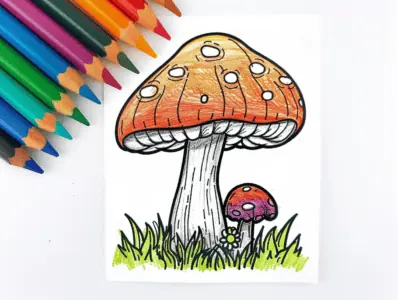
Red cap with white spots, or a color no forest has ever seen?
Mushroom coloring pages pull in two very different crowds, and this set covers both. Some sheets are chunky toadstools drawn with thick outlines for a toddler and a fat crayon.
Others are detailed woodland scenes with ferns, leaf litter and fine cap texture that will hold an adult for a whole evening. There is a fairy-style mushroom house, gnomes, a kawaii mushroom family and a snowy winter sheet in between.
Every page here is free to print. Each description says what is actually drawn on the sheet, so you can pick before you print instead of after.
Frog Sitting on a Mushroom
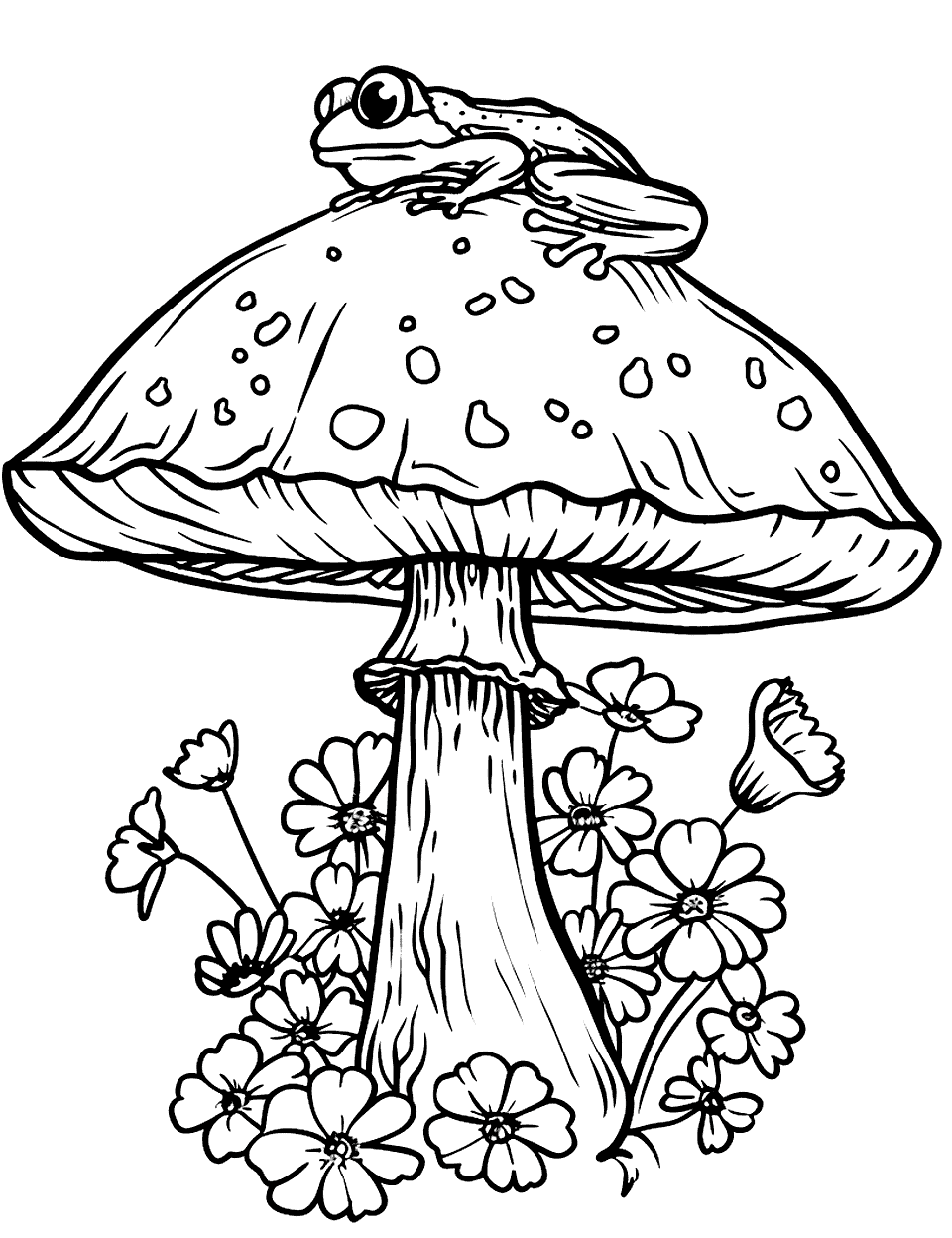
A wide-eyed frog stretches out along the top of a spotted cap, and a bed of small flowers crowds the stem below. The frog and the cap spots are big open shapes that a marker fills fast. Green frog on a red cap is the classic pairing, though a purple frog is just as good. Leave the flower petals for last, since they are the fussiest part of the page.
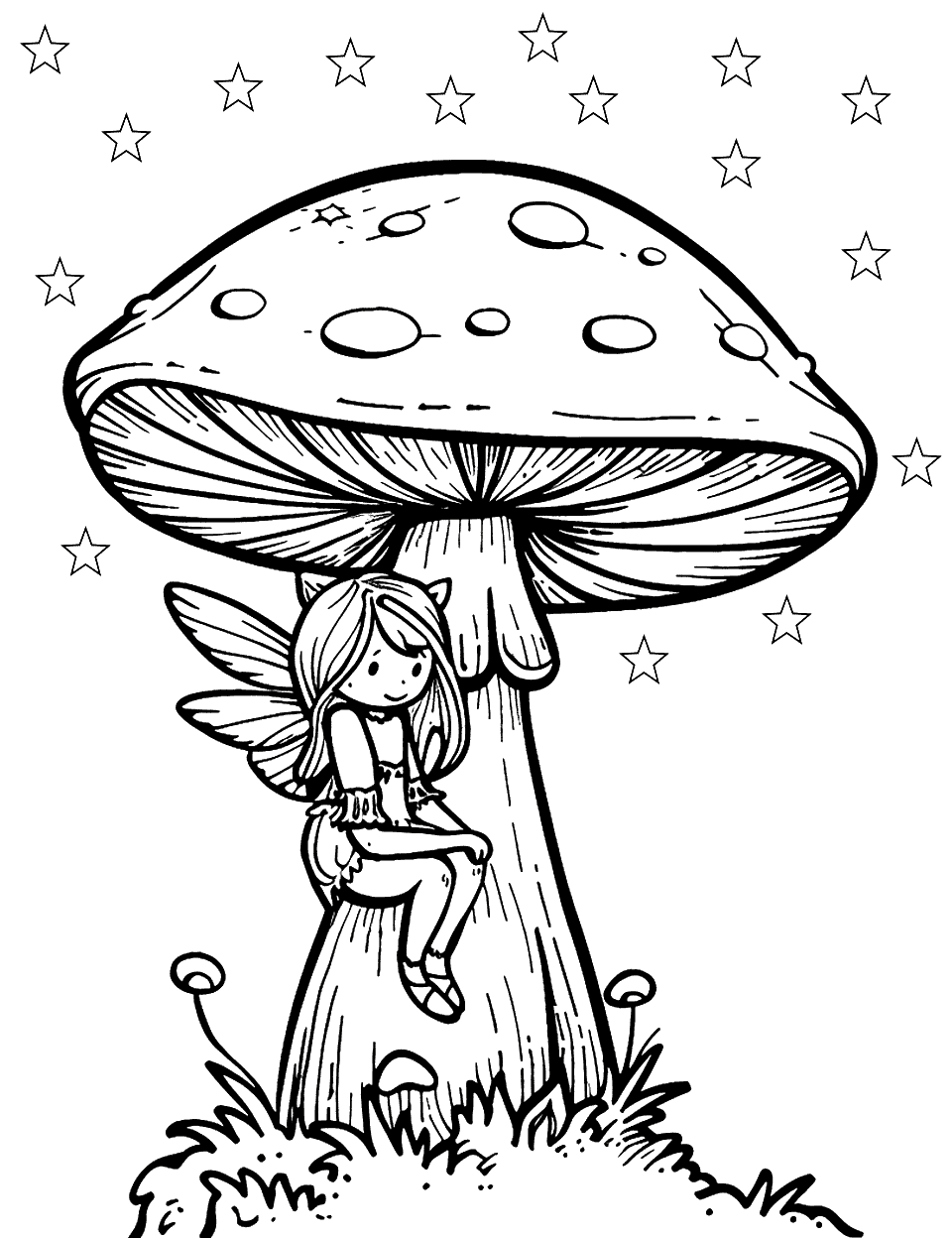
A winged fairy leans against the stem with her legs crossed, tucked in the shade of a tall cap. Outlined stars fill the sky behind her, so there is room for deep night blue around the twinkling stars above. Her dress, hair and wings take fine work, which suits a kid who likes to slow down. A younger sibling can take the stars and the grass while an older one handles the fairy.
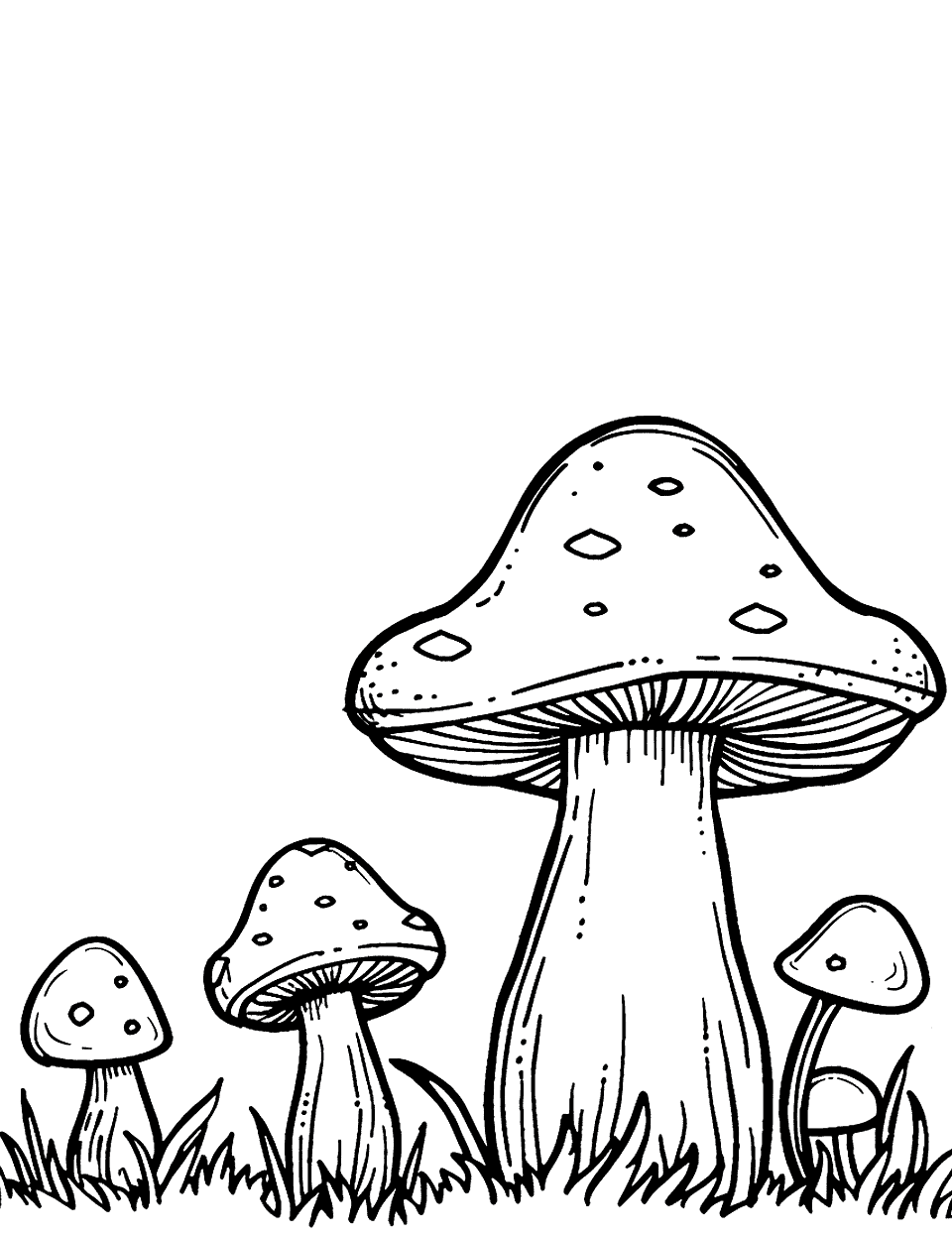
Mushrooms in a few different sizes stand in a strip of grass along the bottom of the page. The whole top half is blank, which makes this a good sheet for a drawn-in sky or a name in bubble letters. Thick outlines and almost no interior detail suit preschoolers. Try one color family, pale on the small caps and deep on the big one.
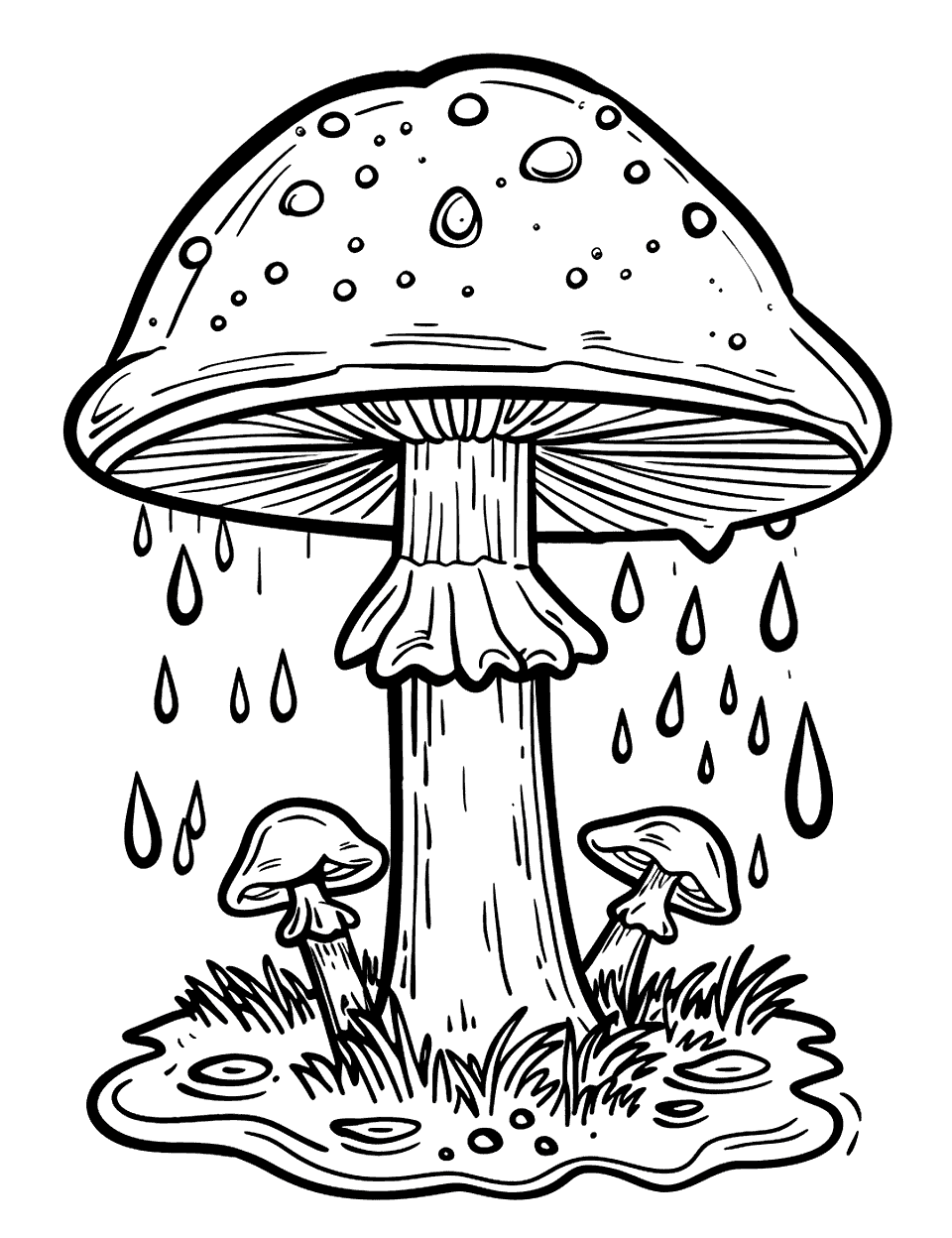
Rain falls in fat teardrop shapes around a broad cap while a puddle spreads across the ground below. Small mushrooms shelter close to the stem, and the grass sits in tufts at the water’s edge. Grey and blue are the obvious call, so warm yellow in the puddle gives the storm a break. Each drop is its own closed shape, which makes them easy targets for small hands.
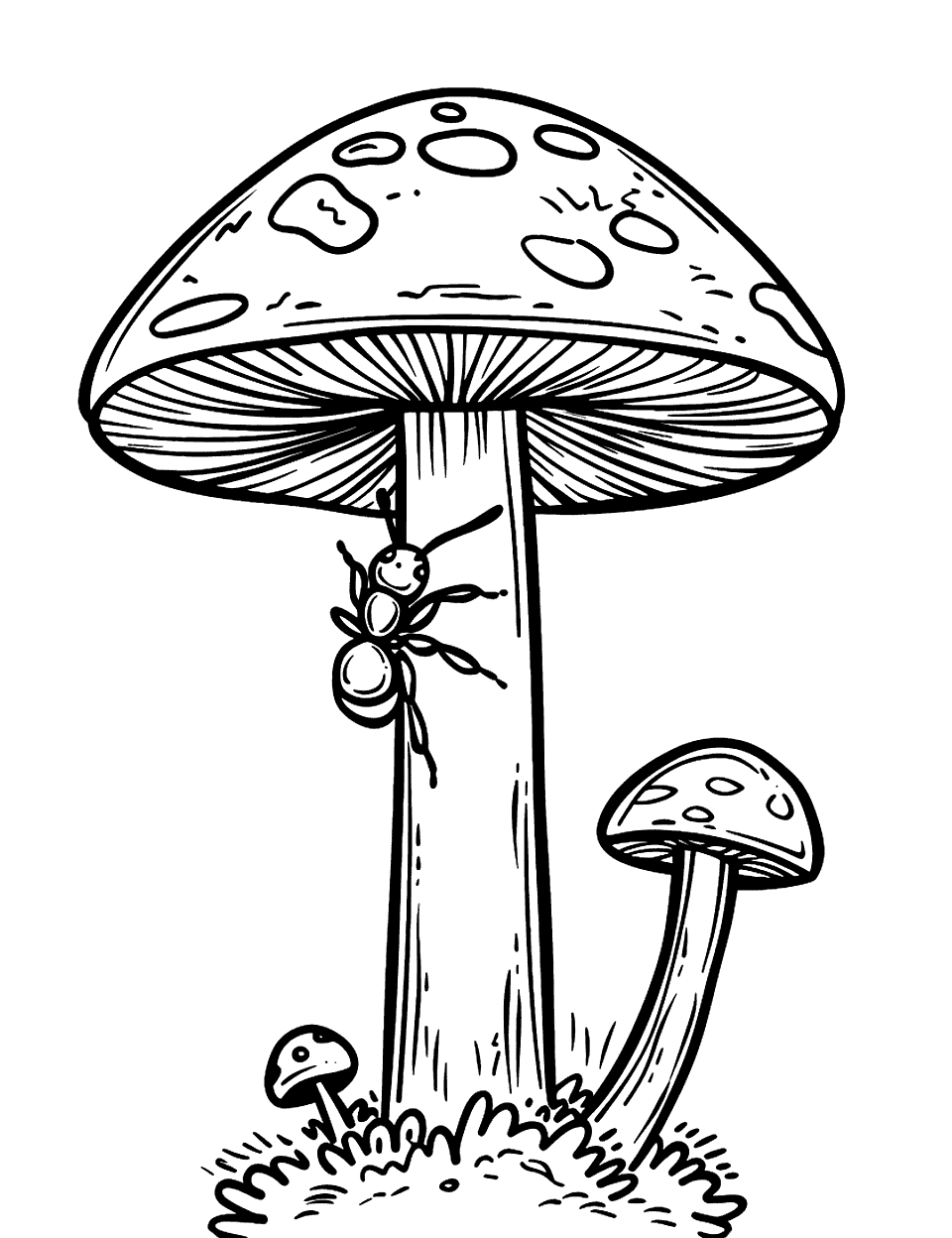
An ant grips the tall stem partway up, headed for the cap. The underside of that cap is drawn in fine radiating lines, so a light pencil shade keeps them visible instead of burying them. A second mushroom leans in from the right with its own dotted cap. Black or deep red on the ant makes it read clearly against a pale stem.
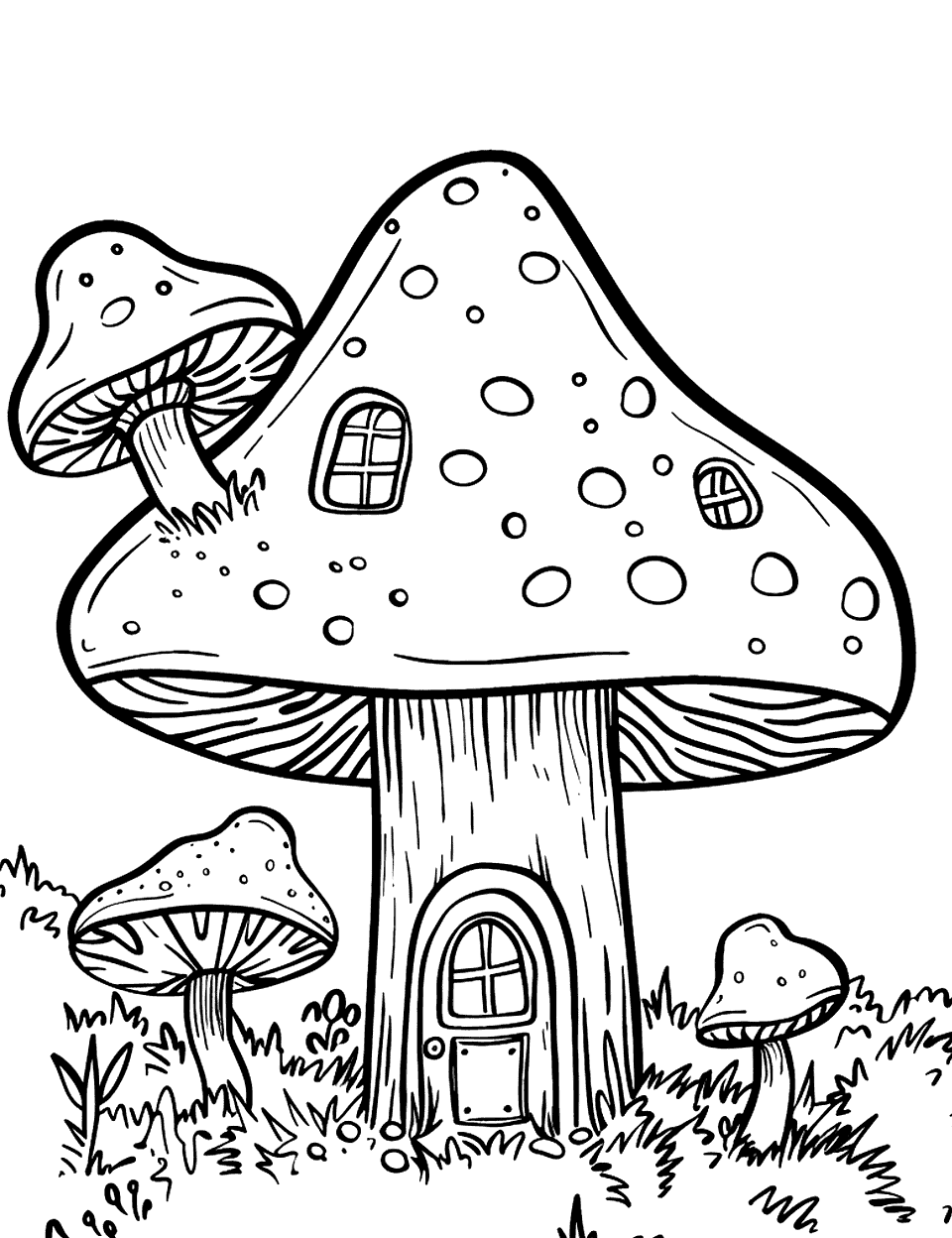
This cap has been turned into a house, with a round-topped door on the stem and windows set into the cap itself. The spots are large and round, and the grass at the base is loose and scribbly. Kids usually want to add smoke or a path, and there is white space at both sides for it. A bright roof over a warm brown door gives the storybook look.
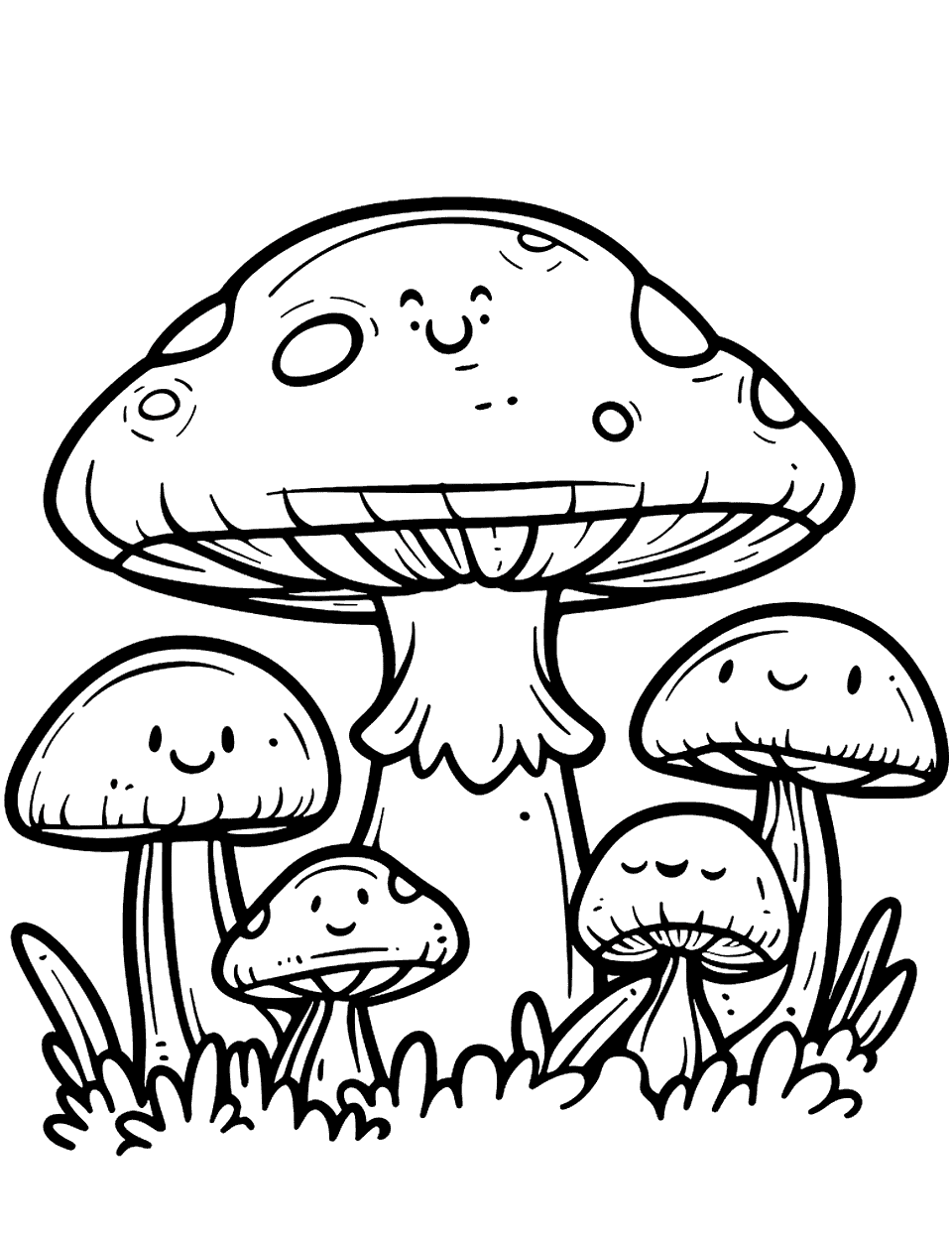
A grinning cap towers over a huddle of smaller mushrooms, each with its own little face. Every shape is chunky and closed, so the color has nowhere to leak. This is the friendliest page in the set for a toddler. Give each face a different shade and the group turns into a family portrait.
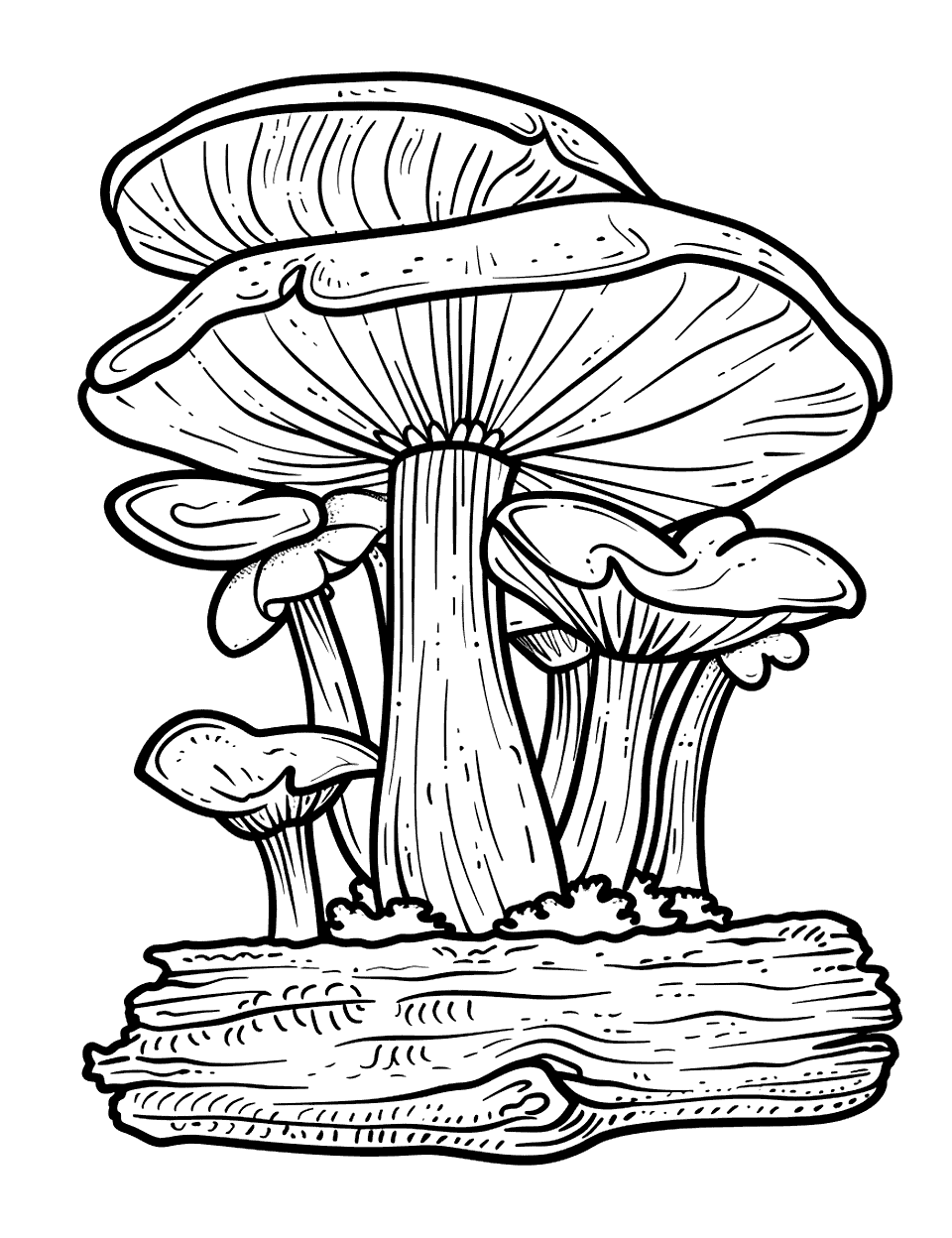
Wavy, shelf-like caps grow in a tight cluster on a fallen log. The caps overlap each other, which makes this a good page for practicing a light to dark shift across a shape. Oyster mushrooms are usually pale, cream to soft grey, so muted colors stay true to life. The bark lines on the log reward a fine tip more than a crayon.
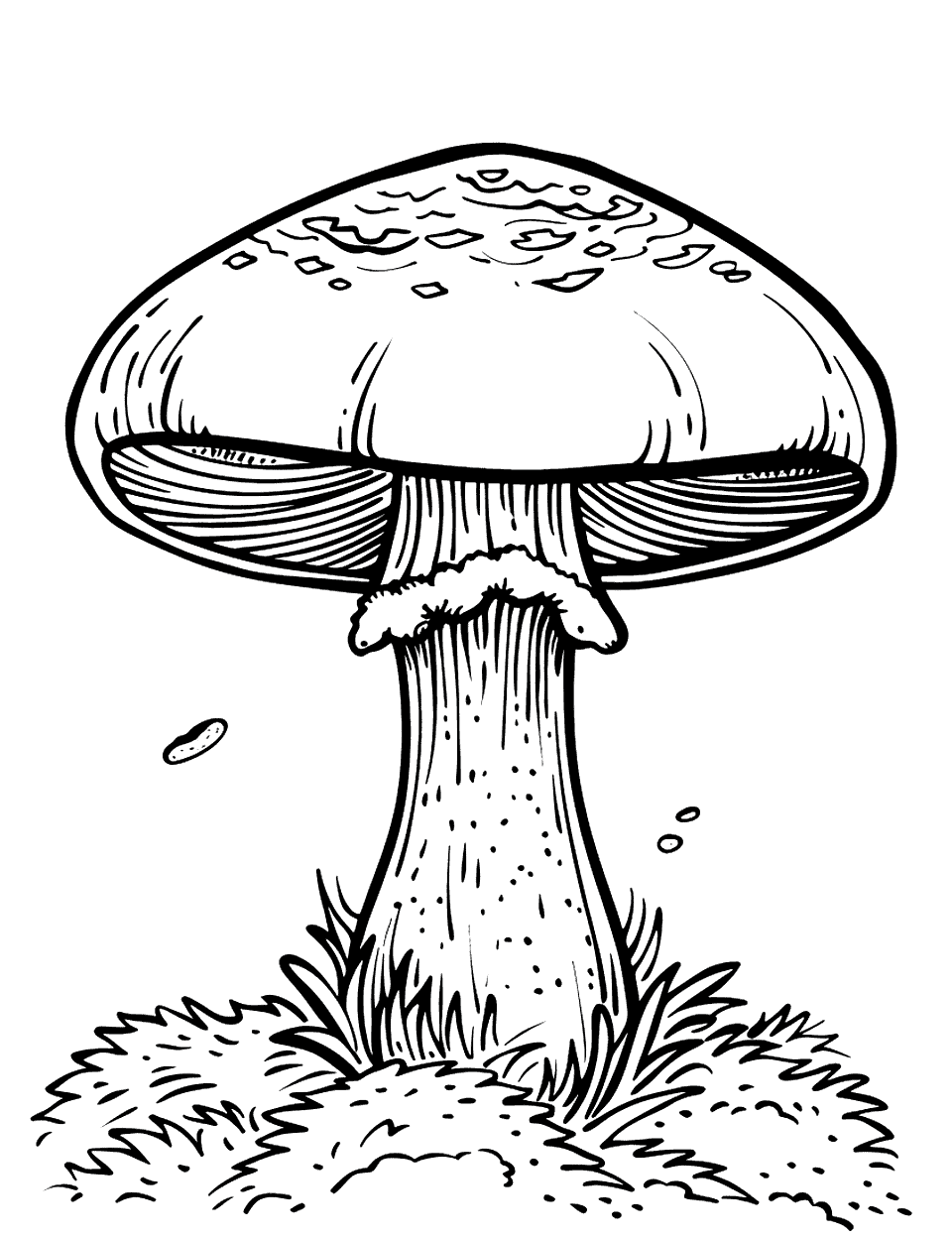
One thick-stemmed mushroom stands alone on a mound of grass, with a cracked, patterned cap and a ragged collar under it. There is no busy background competing for attention, so the cap is the whole job. Browns and tans keep it realistic, and the speckled stem takes a dotted pencil texture well. A single subject like this is a gentle start for anyone nervous about detail.
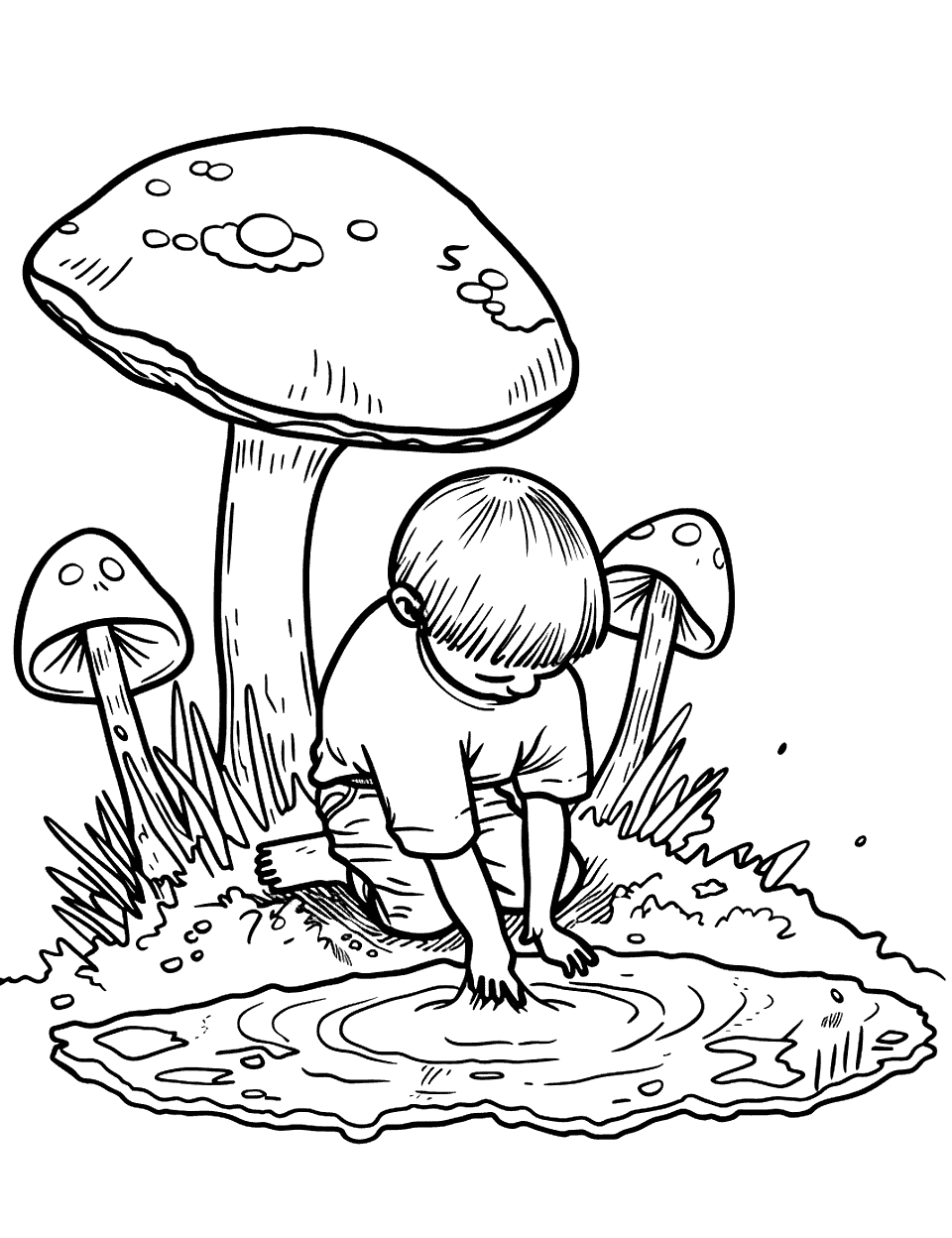
A barefoot child bends over a puddle with one hand in the water, ringed by ripples. Mushrooms lean in from either side and the ground is drawn with loose grass strokes. Skin tone, hair and a shirt give kids choices the pure nature pages do not. The puddle can be any color at all, which is half the fun.
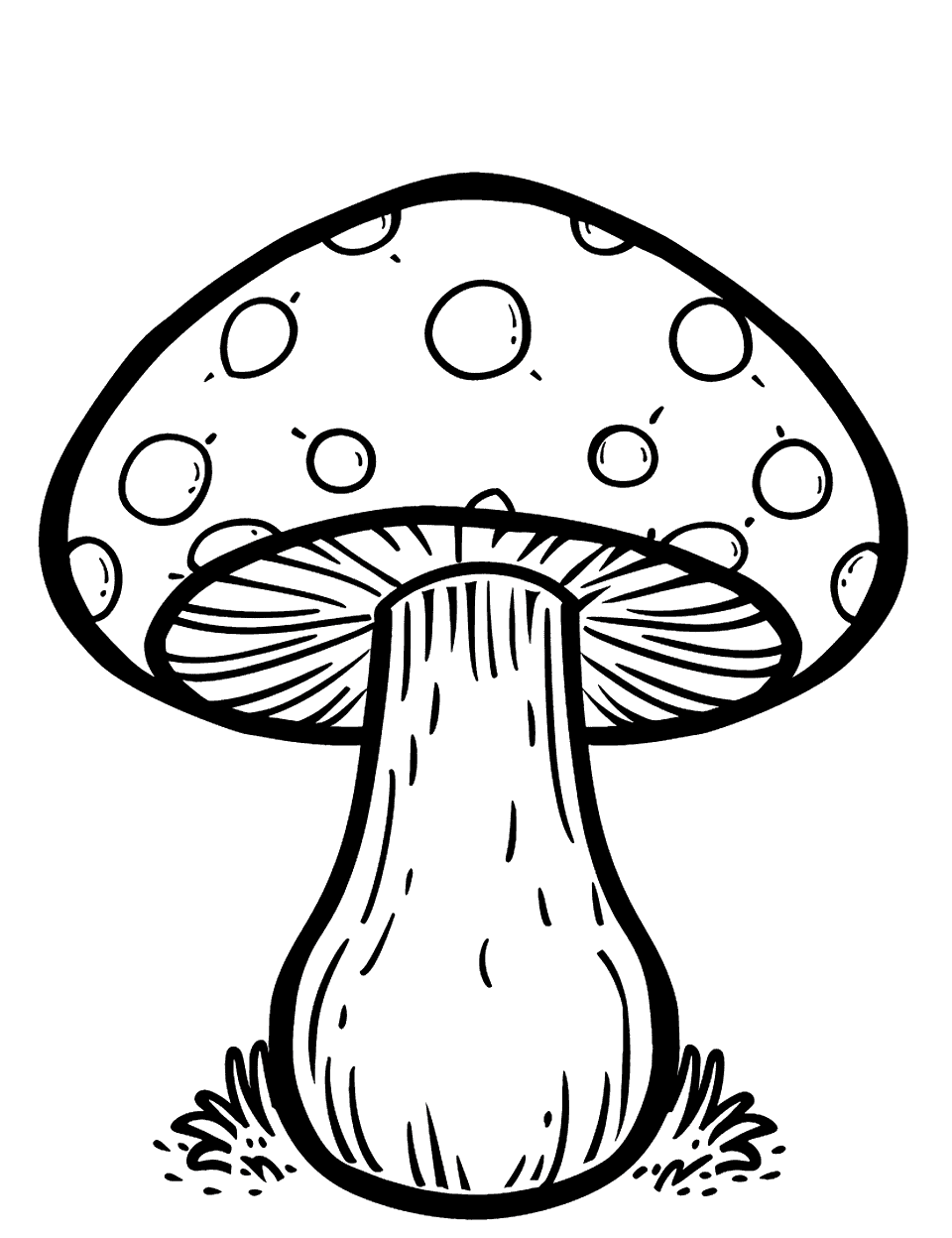
Heavy, thick outlines make this single toadstool one of the easiest pages here. The cap carries big round spots and the stem widens toward the ground, with a small tuft of grass on each side. Nothing on the sheet is smaller than a fingertip, so it works for a toddler with a chunky crayon. Red cap and white spots is the storybook answer.
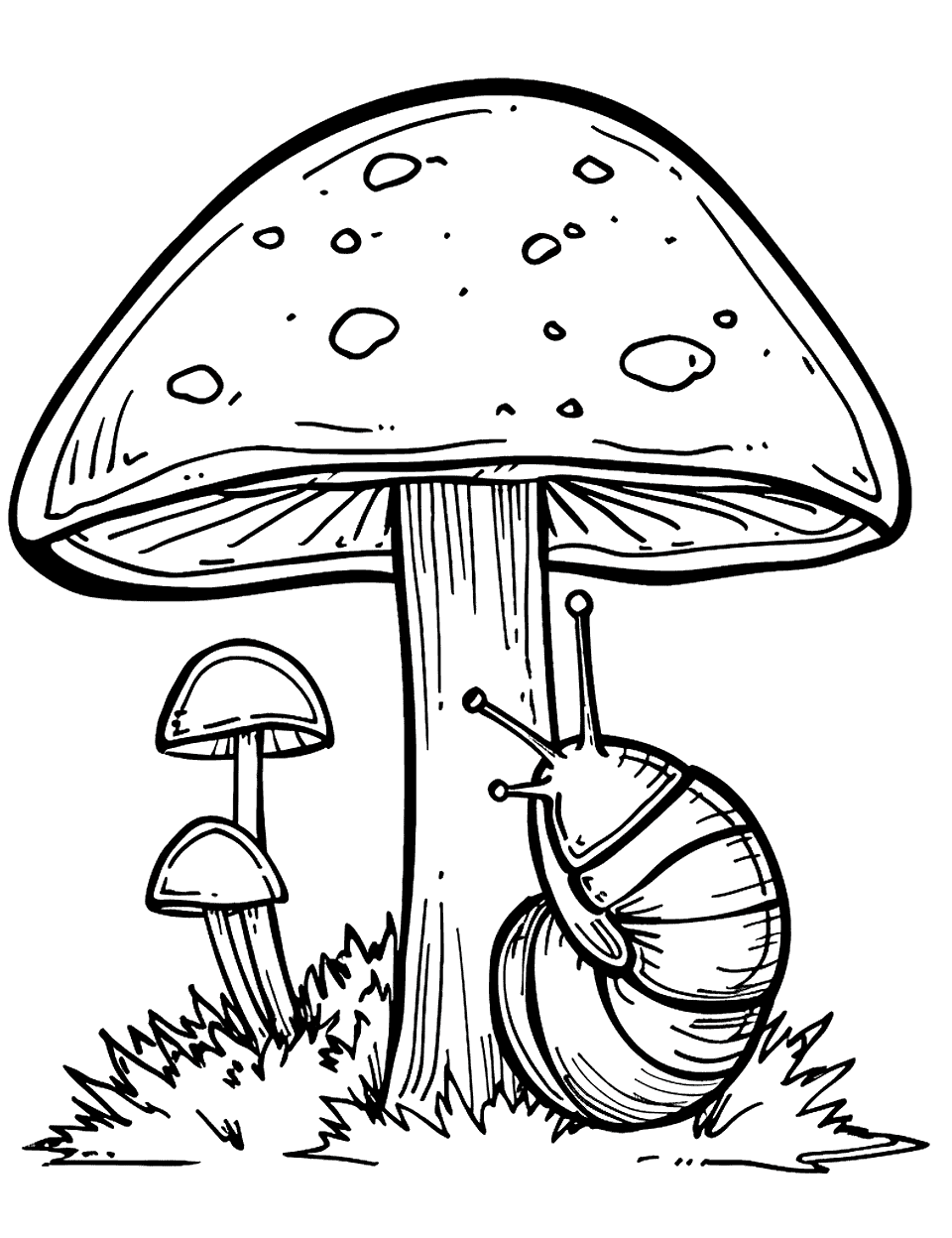
A snail rests at the foot of the stem with its shell tipped against it and its eye stalks raised. A couple of small mushrooms sit off to the left in a patch of spiky grass. The shell spiral is one long line, oddly satisfying to trace in a darker shade. Keep the big cap pale and the snail stays the star.
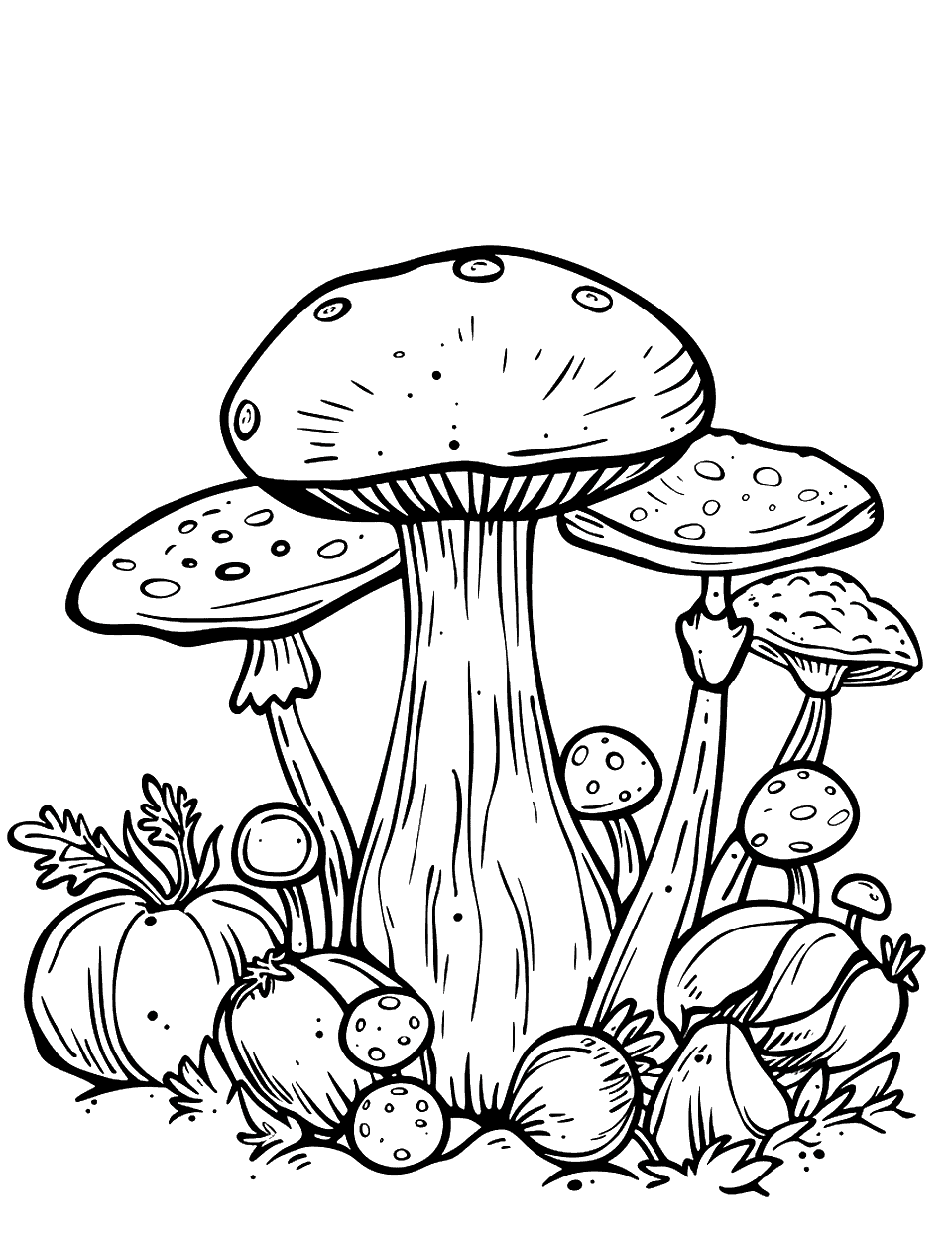
A cluster of caps at several heights rises out of a bed of round fresh vegetables and leafy tops. The produce packs the bottom edge, so the busiest part of the page is right where small hands start. There is enough here to split over two sittings. Greens and oranges below with one bold cap color above keeps it from turning muddy.
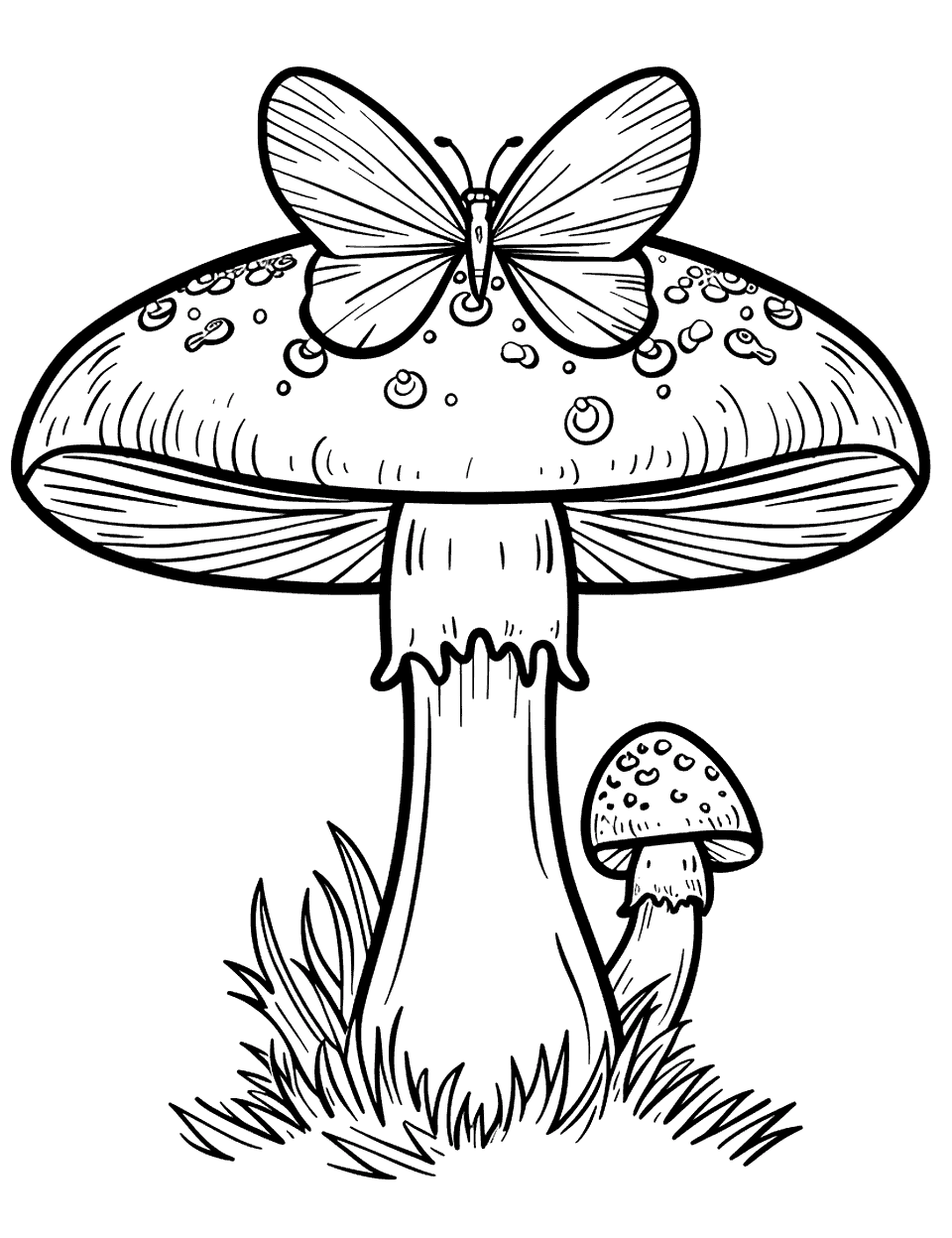
A butterfly rests with its wings open on top of a broad cap dotted with raised bumps. Fine lines run through the wings and along the underside of the cap. A small mushroom pokes up on the right beside a clump of grass. Wings like these look best with two or three shades blended outward from the body.
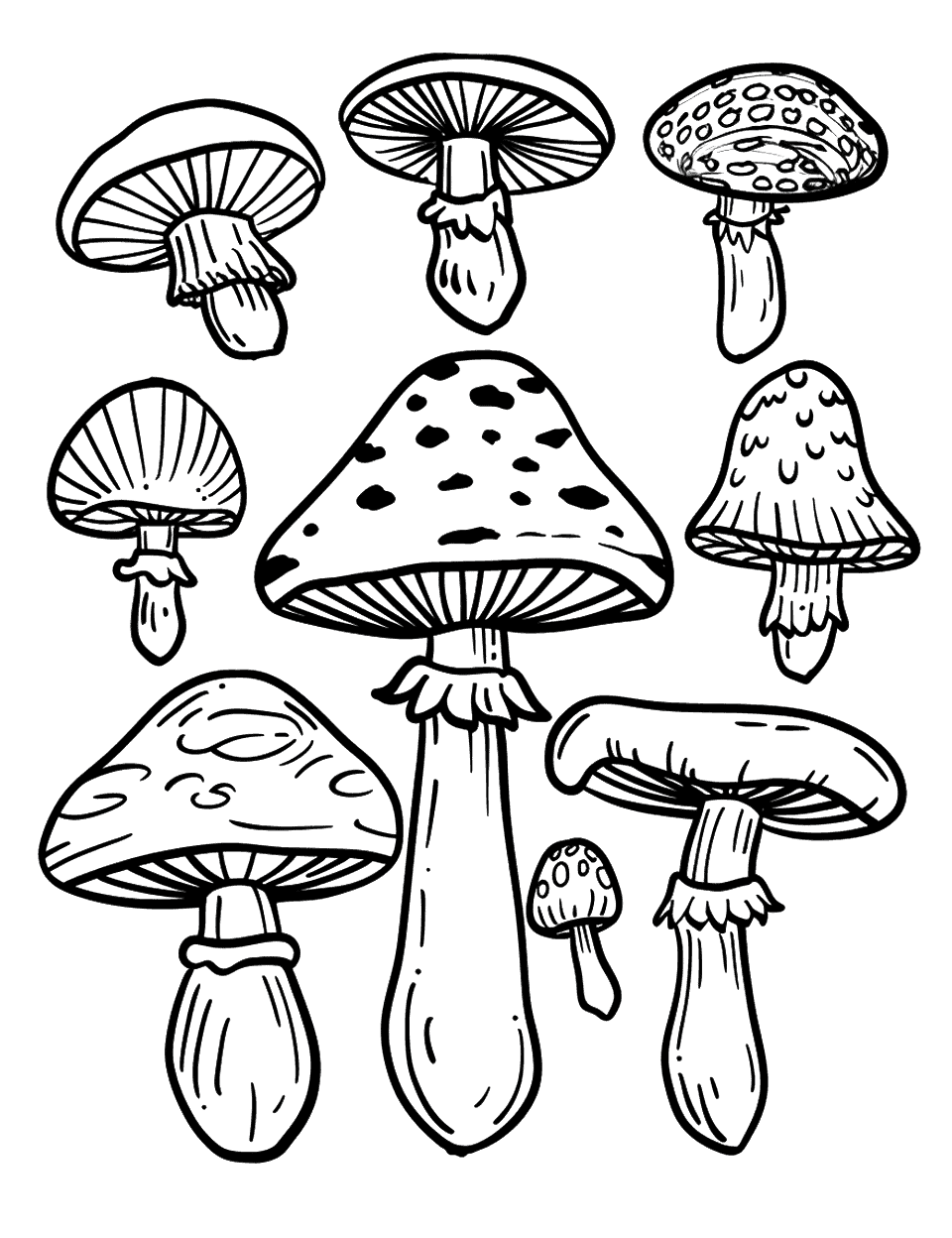
This page is a scatter of mushrooms with no ground beneath them, each drawn with a different cap pattern. Some are spotted, some are ribbed, one is a smooth dome, one lies on its side. It doubles as a color-testing sheet: one shade per mushroom, no scene to worry about. Cut them out afterward and they make ready-made bookmarks.
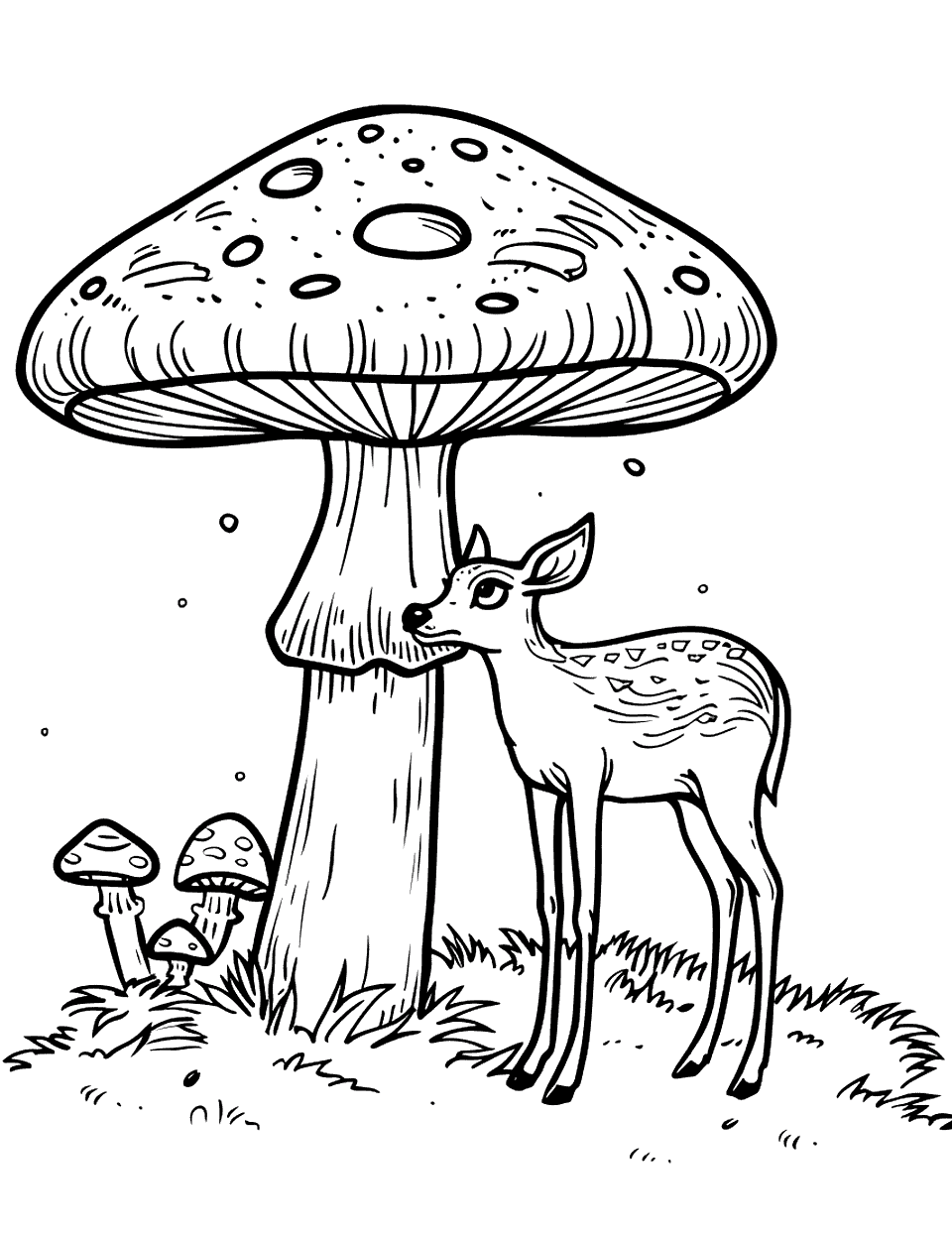
A spotted deer stands nose to stem beside a mushroom taller than it is. Small caps cluster in the grass on the left, and the ground is drawn in short strokes. The fawn’s spots and the cap’s spots can echo each other in one shared shade. There is enough detail here to hold an older child for a while.
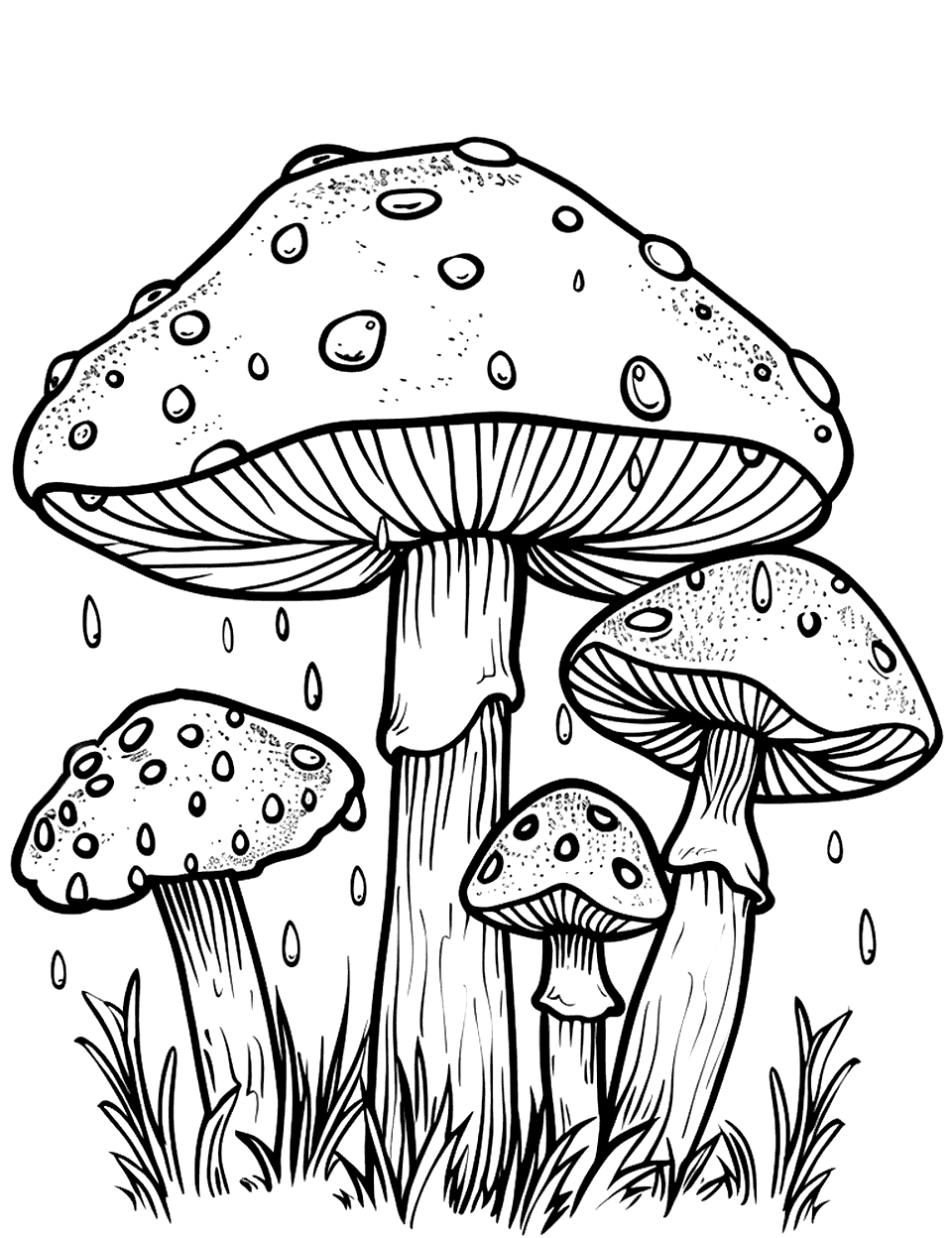
Drops sit on the tops of the caps while more fall through the air around them. A large spotted mushroom anchors the page with smaller ones crowding in on both sides. The stippled texture across the caps takes a light touch, so colored pencils beat markers here. Leave the drops white and they read as water with no extra effort.
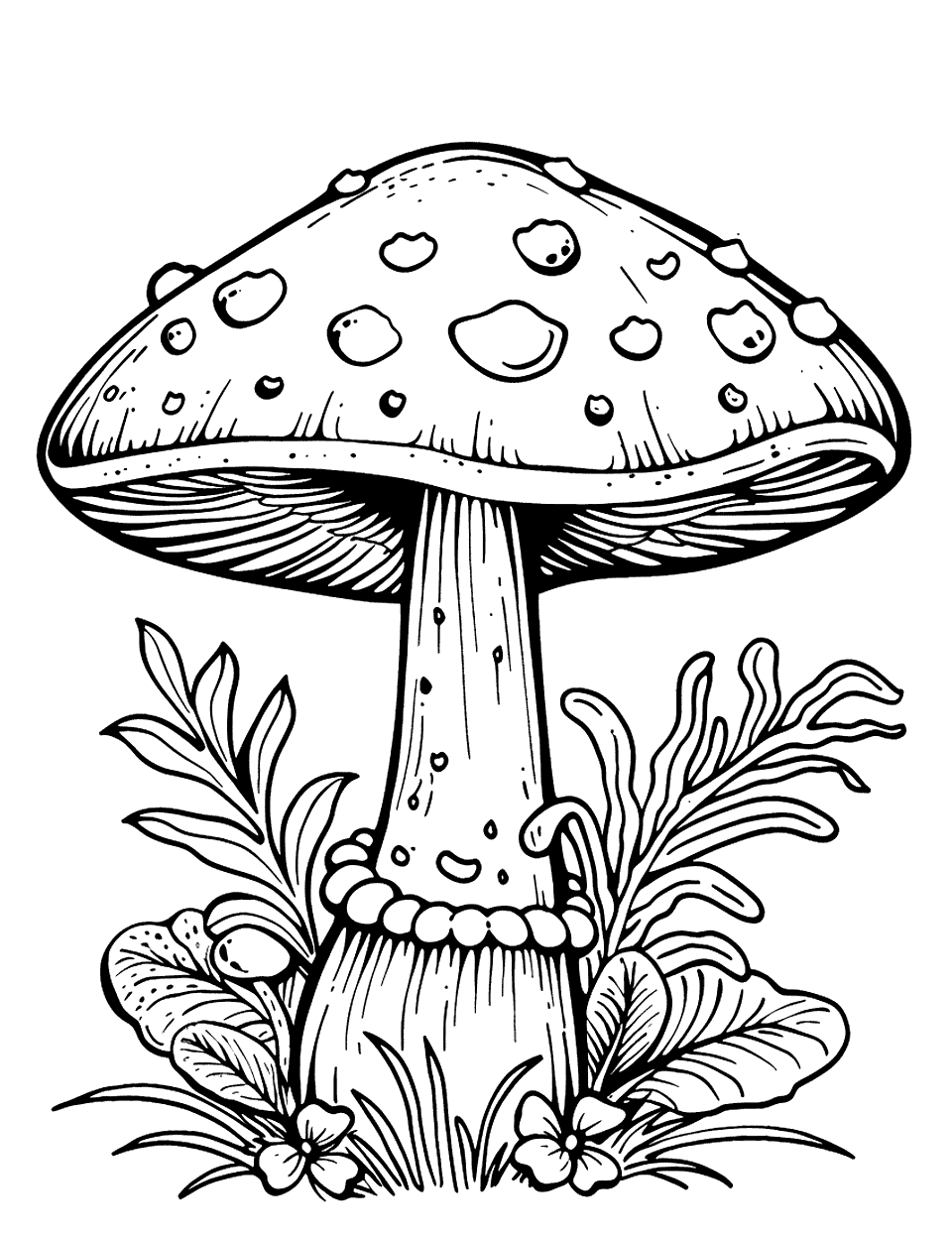
Long fern fronds and broad leaves frame a mushroom with a beaded ring around its stem. A couple of small flowers sit low in the grass at the base. Green does most of the work here, so vary it: yellow-green in the fronds, something deeper in the leaves. That leaves the cap to carry the only warm color on the page.
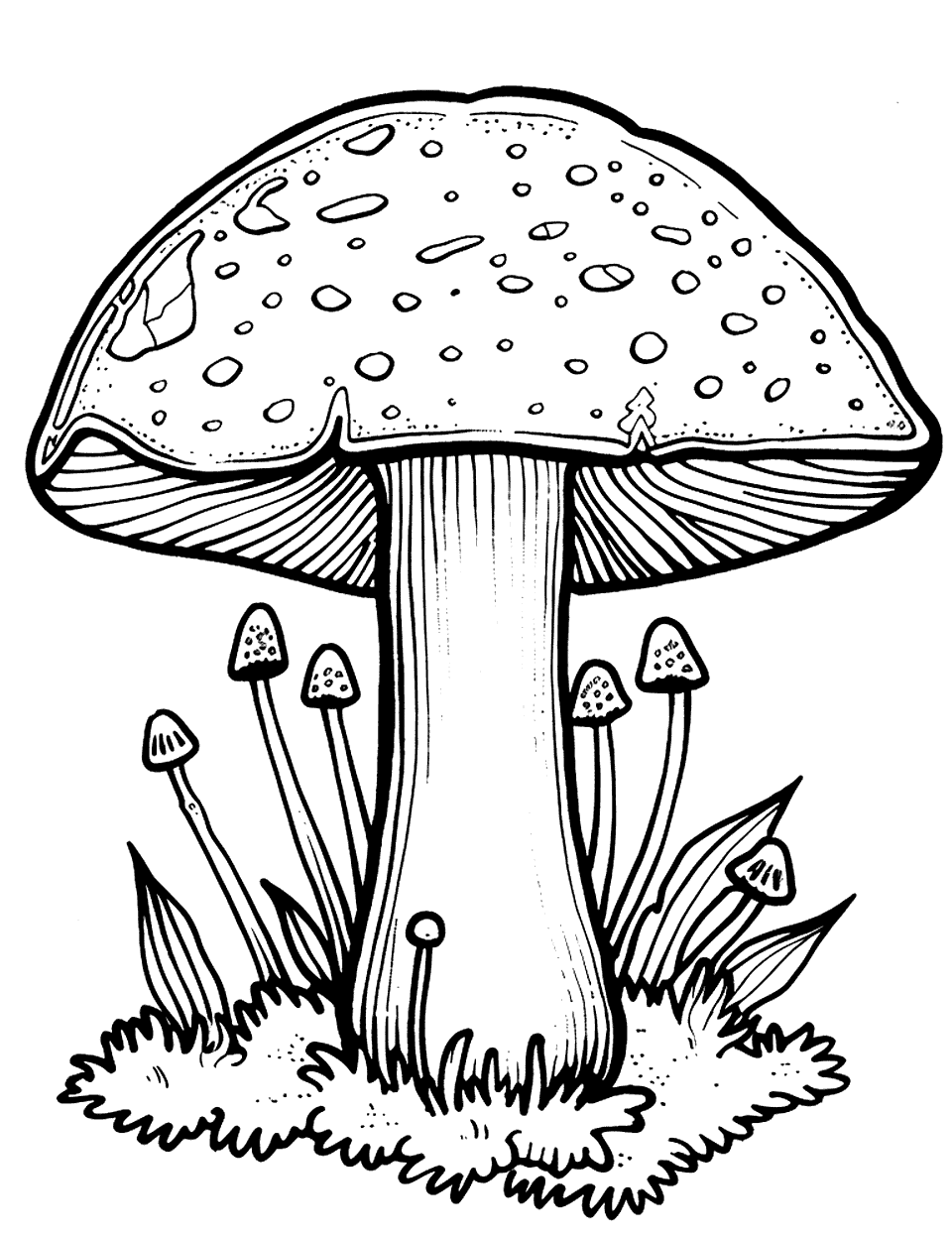
A big cap spreads over a mound of moss where thin, long-stemmed mushrooms poke up at every angle. Broad leaves lean in from both sides. The moss is drawn as tight scribbles, which is exactly what a stubby green crayon is for. An older kid can pick out each little mushroom in its own shade.
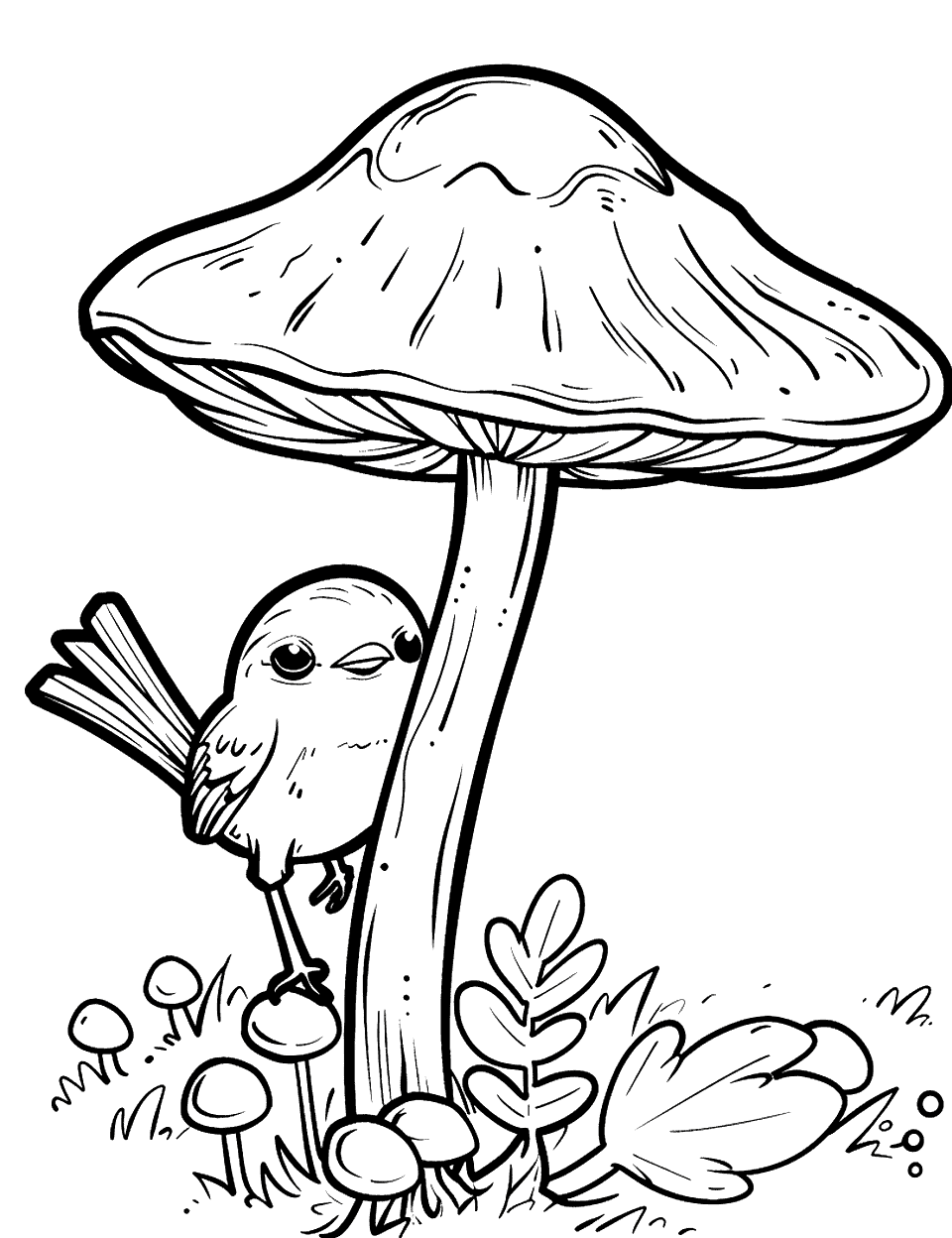
A round little bird clings to the stem with its tail feathers fanned out behind it. Above it a smooth cap spreads wide with almost no pattern, leaving a large open area to fill. Small mushrooms, a leafy sprig and a fallen leaf fill the ground line. Browns and rust on the bird against a pale cap keeps it easy to read.
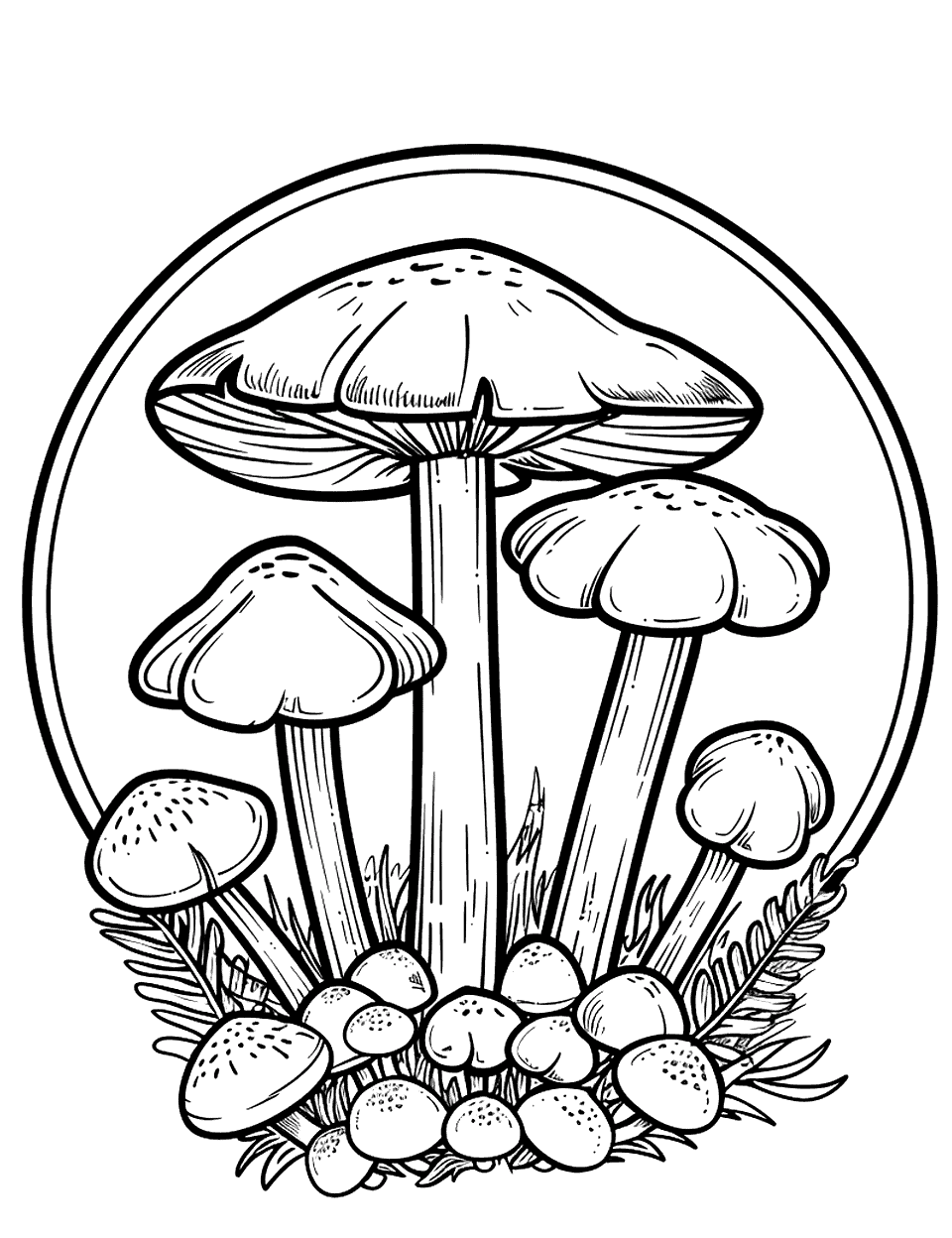
A ring drawn around the whole scene holds a group of mushrooms with rounded, umbrella-like caps. Button-shaped mushrooms bunch at the base among ferns and grass. The border makes this one look finished the moment it is colored, which suits a frame or a card front. Color the background inside the circle for a poster effect.
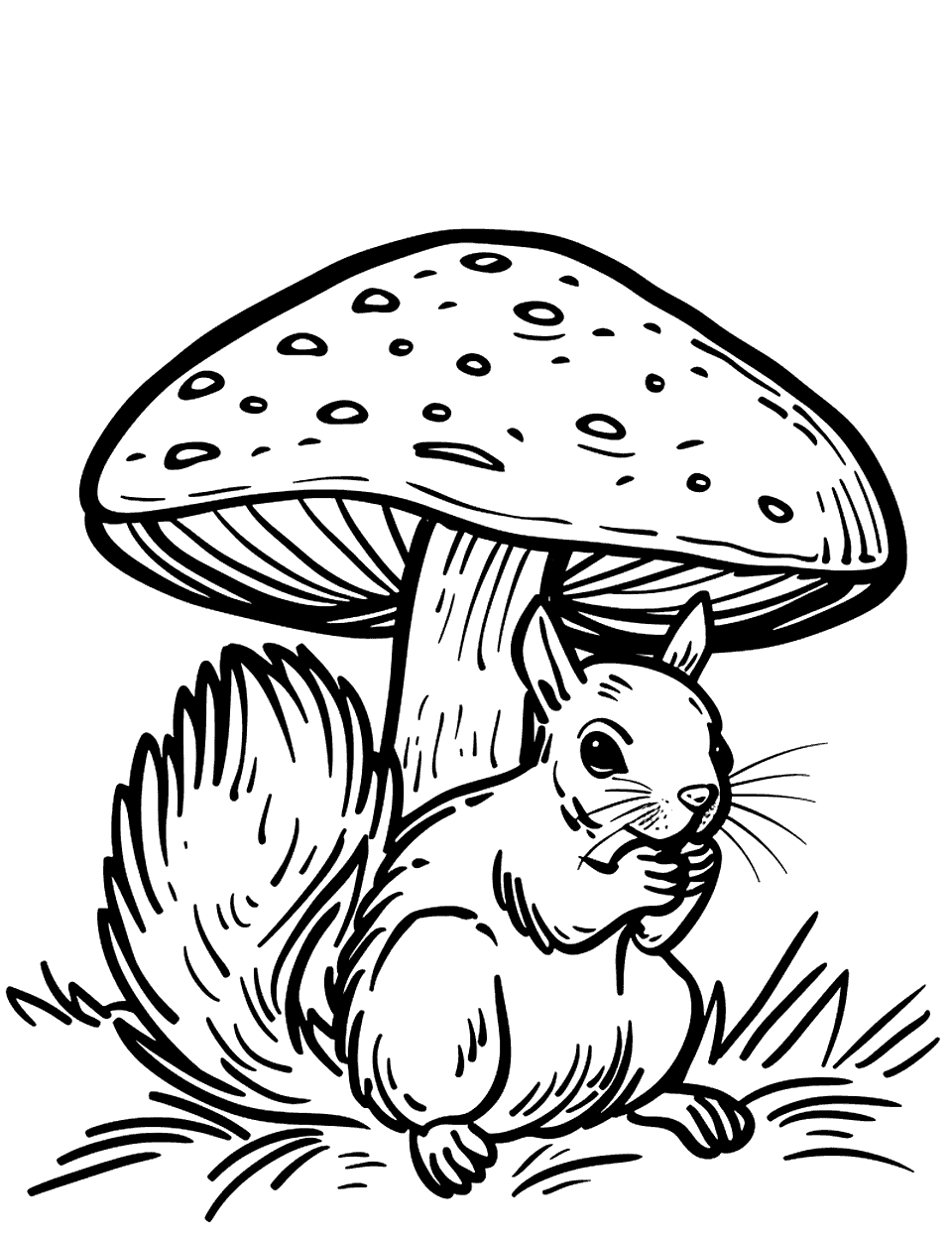
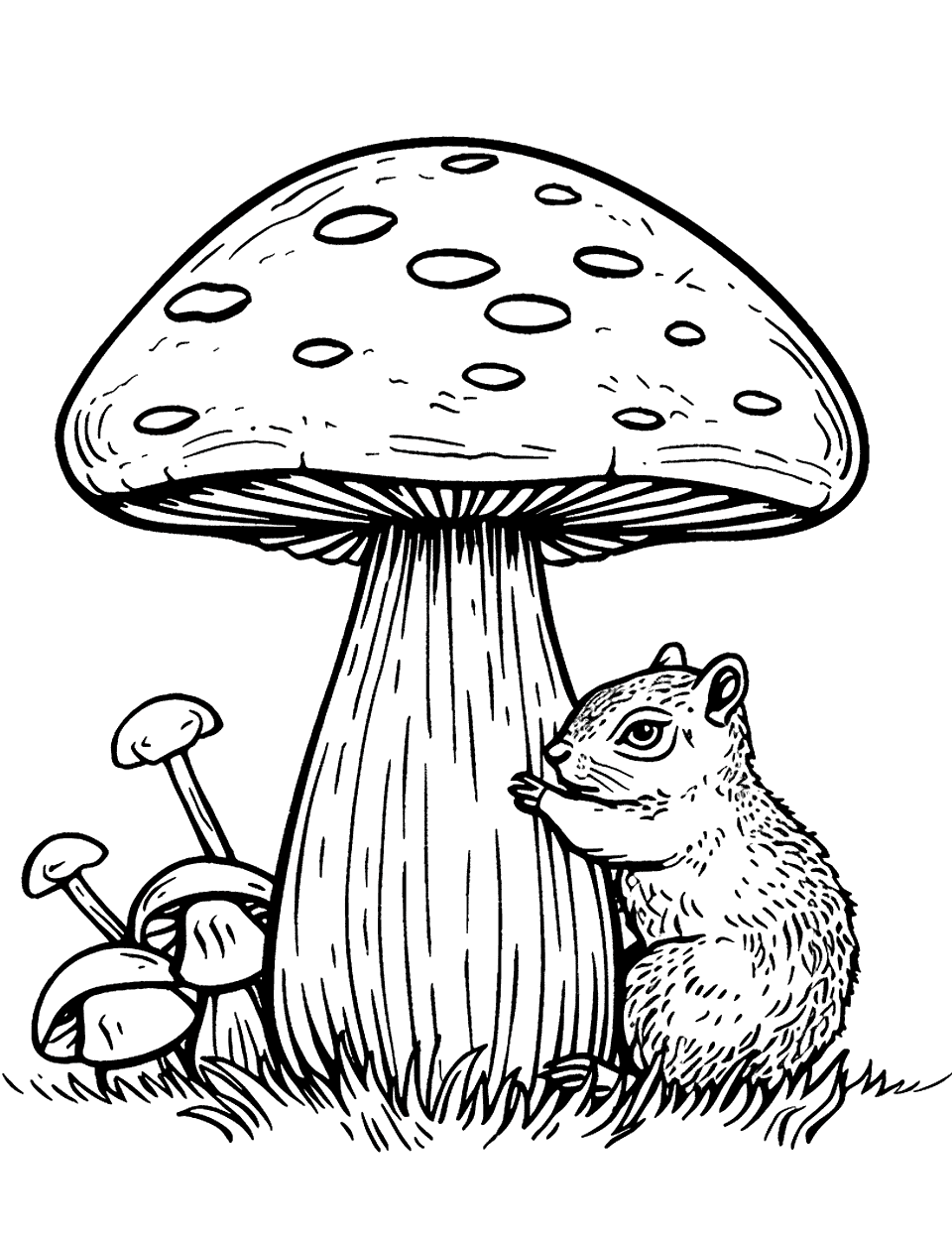
A squirrel sits beneath a spotted cap with its bushy tail curled up behind it and its paws at its mouth. The cap works like an umbrella overhead. Grey or red-brown fur both look right, and the tail is one big shape to fill. Whiskers and the eye are the only fine details, so this page moves quickly.
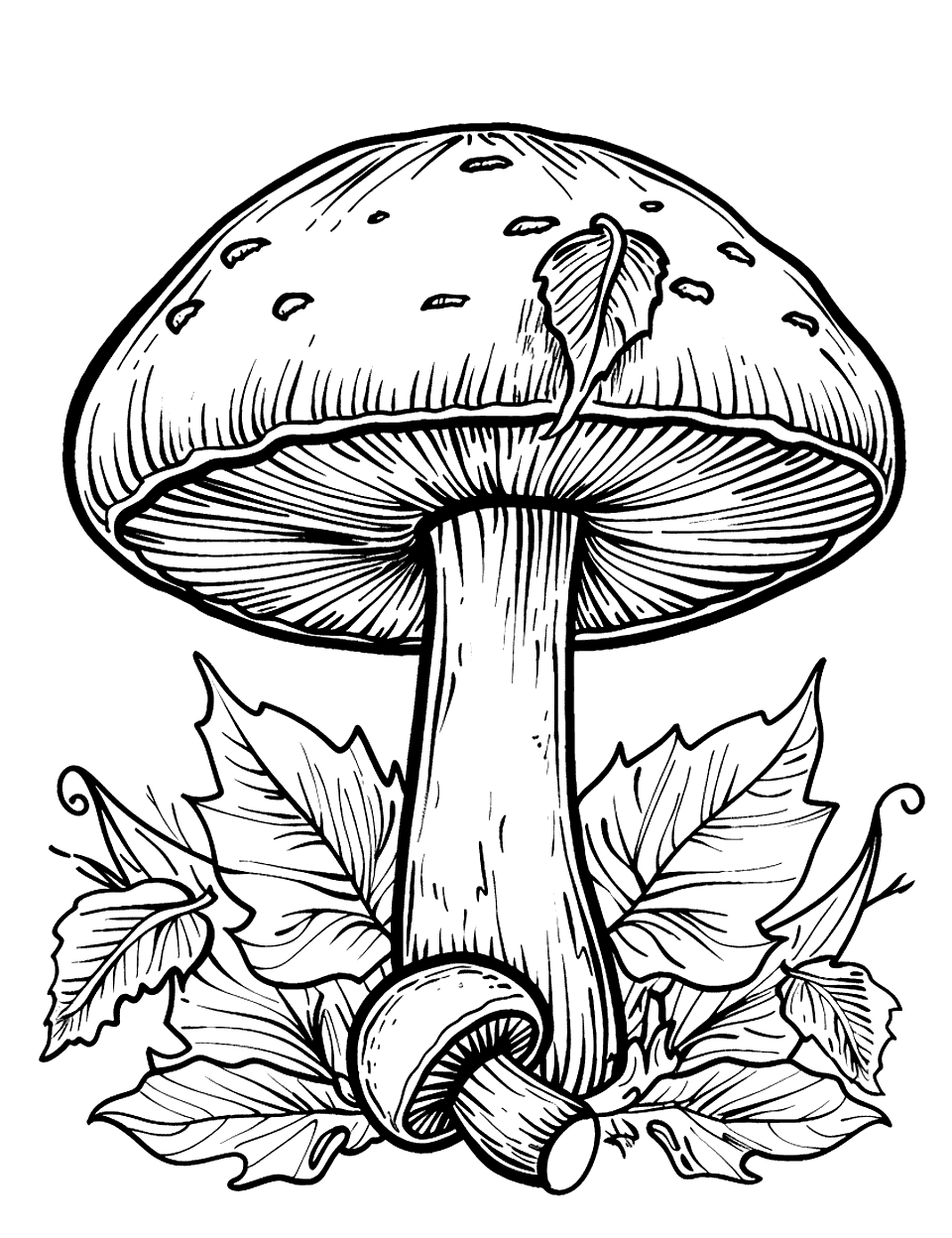
A single leaf has landed on the cap while more fallen autumn leaves pile up around the base. A second small mushroom lies tipped on its side in the leaf litter. Every leaf carries its own vein pattern, which makes this a slow, absorbing page rather than a quick one. Warm reds, oranges and golds are the obvious palette, and they do look good.
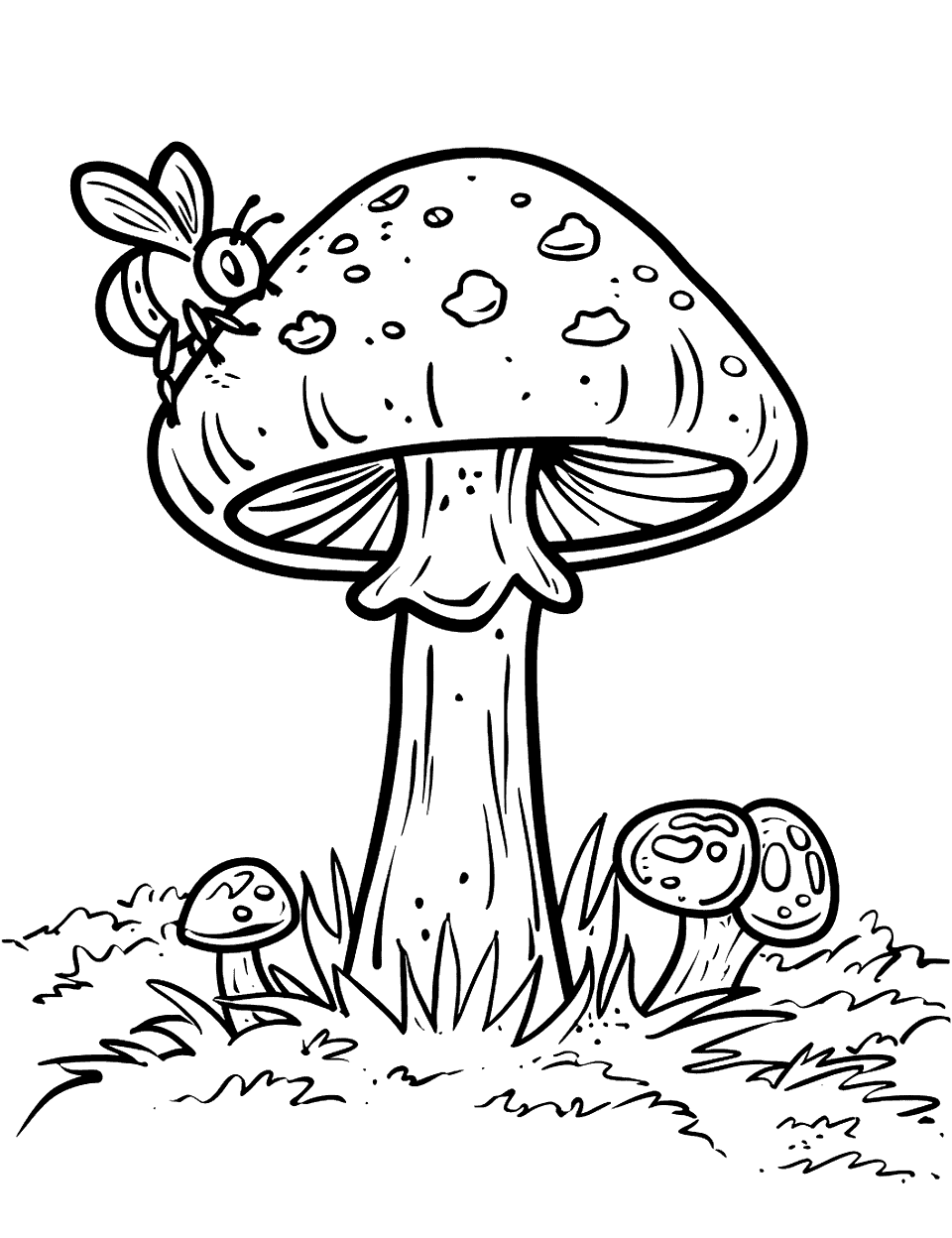
A bee perches on the left edge of a spotted cap with its wings still raised. Grass fills the bottom of the page and small mushrooms sit low on the right. The bee is small, so color it first while your hand is steady. Yellow and black stripes against a red cap make a strong, simple contrast.
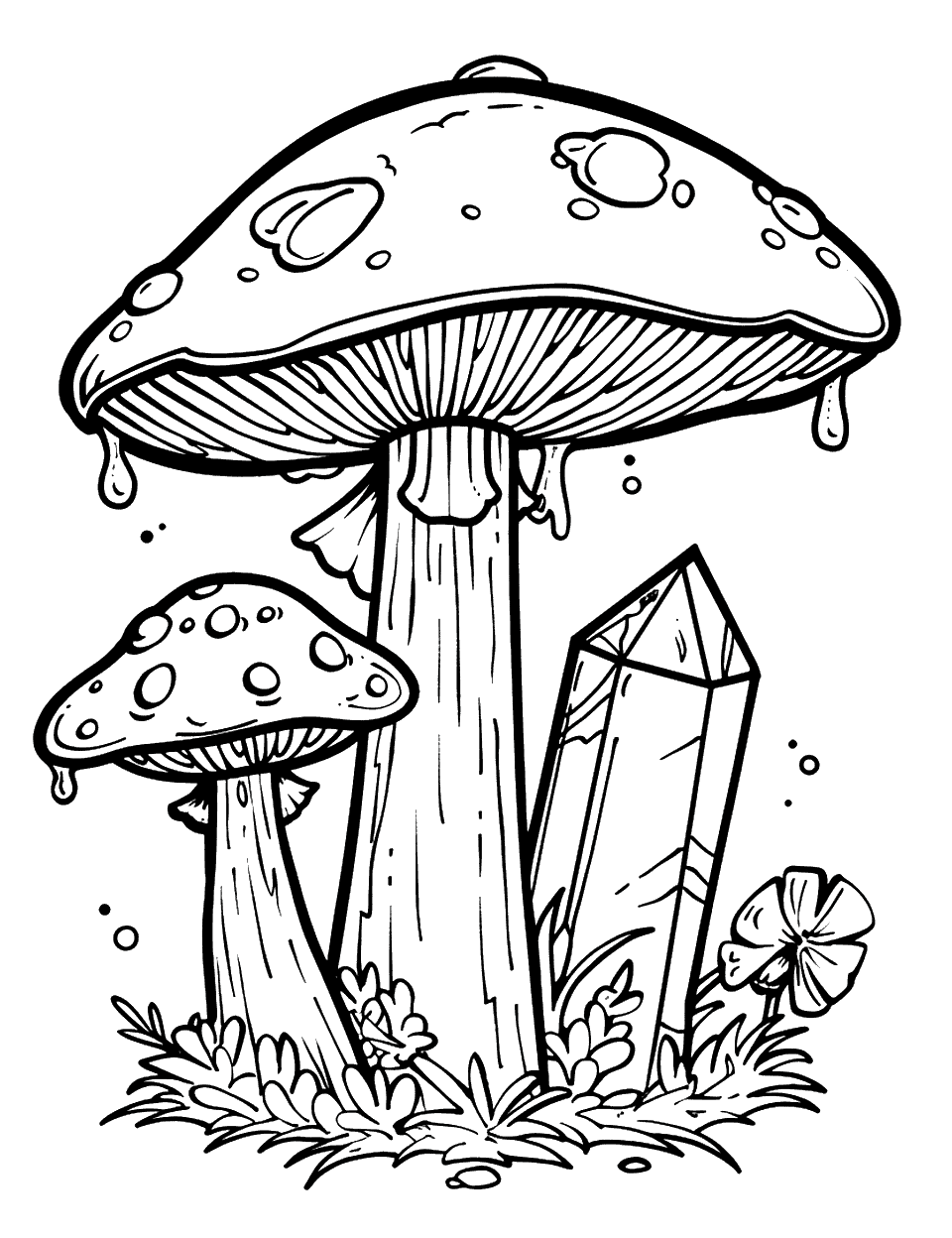
A tall pointed crystal rises out of the grass beside a couple of spotted mushrooms, with drips falling from the cap edges. A single flower sits over at the right. The crystal’s flat faces are made for blending, pale at the tip and deeper at the base. Purples and blues sell the fantasy without much effort.
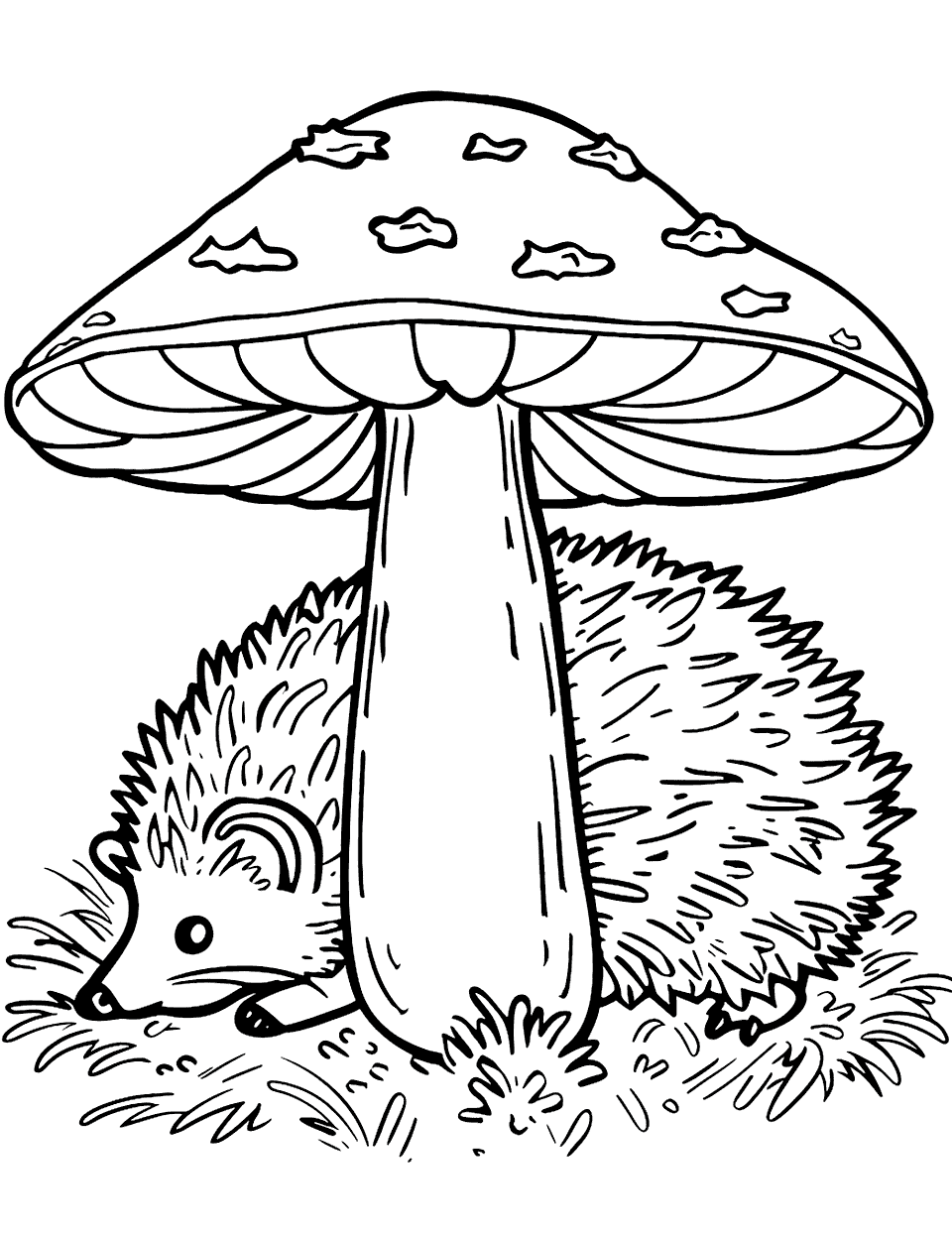
A hedgehog tucks in beside the stem with its spiny back rounded out behind the mushroom and its face poking out low on the left. The cap above is broad and lightly marked. All those quills are short strokes rather than closed shapes, so a sharp pencil beats a marker. Brown quills with a pale face keep it looking like a real hedgehog.
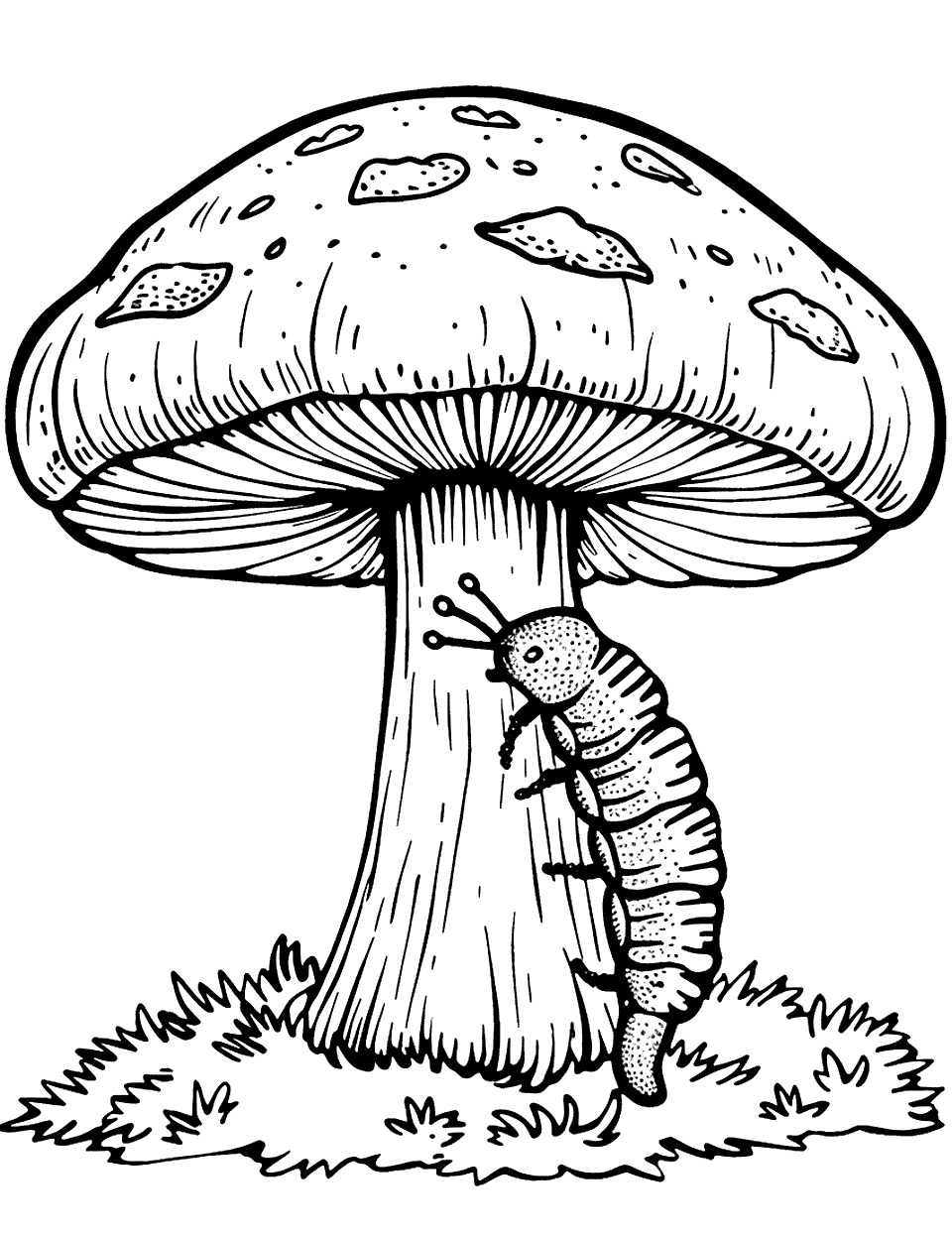
A ridged caterpillar climbs the stem with its body curling down toward the grass and its antennae up. The cap above is broad with soft patches across the top. Coloring it segment by segment builds a stripe pattern almost by accident. This is the page for a bug-obsessed kid.
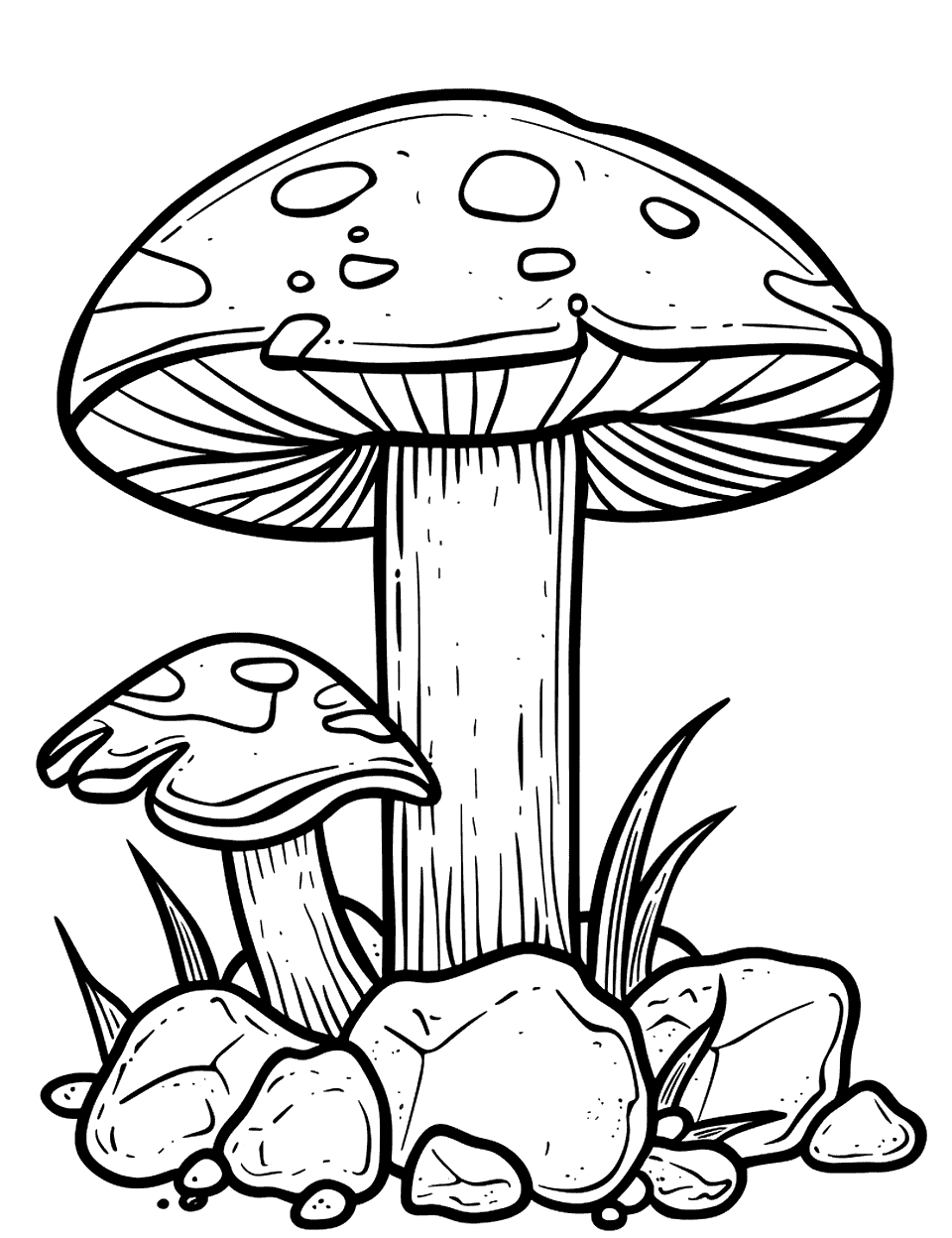
Smooth rounded rocks bunch at the base of a mushroom, with a smaller one leaning in from the left. The shapes are large and the lines are heavy, which puts this among the easier sheets in the set. Grey rocks under a bright cap is the fastest route to a finished page. A few blades of grass in a second green add more to do if you want it.
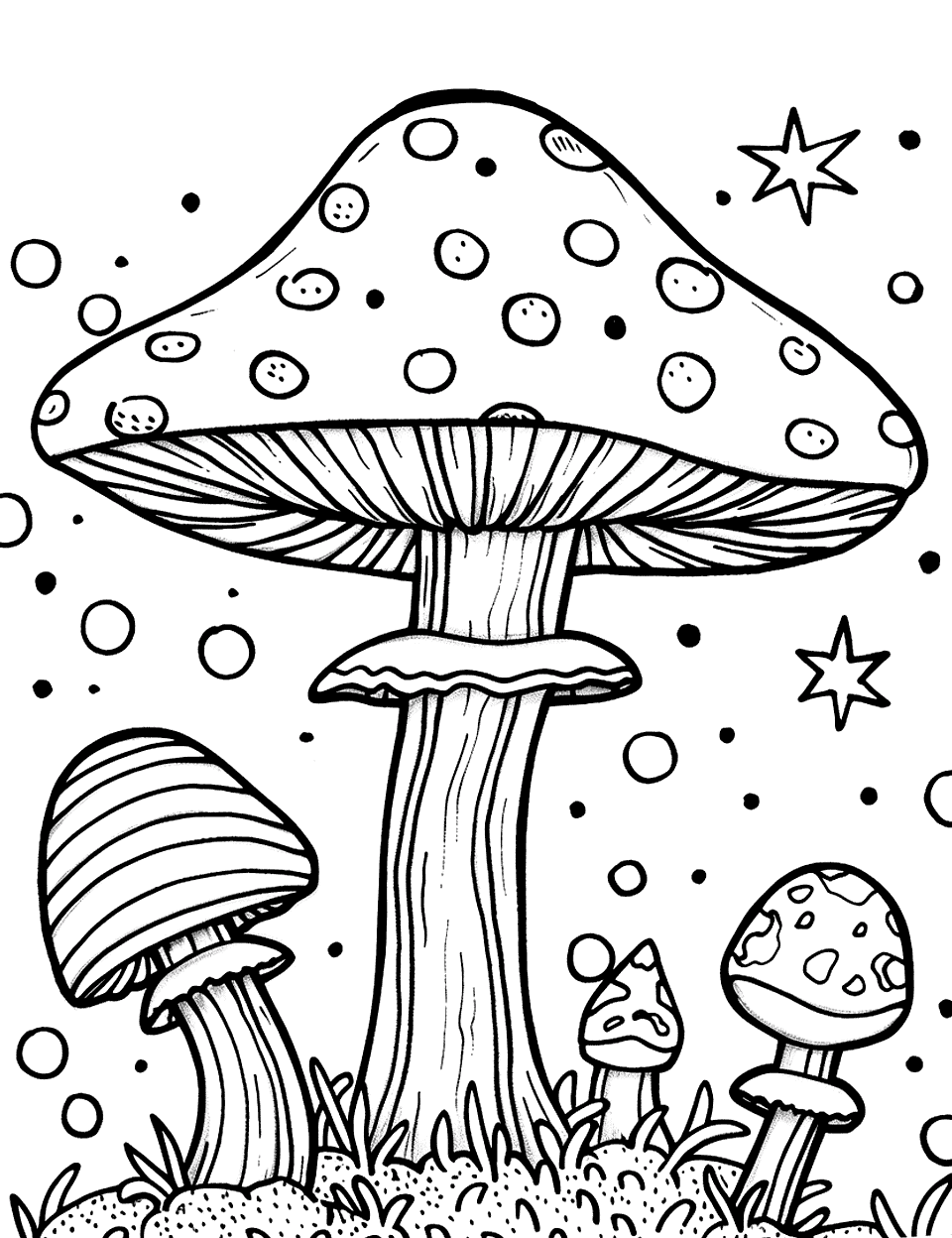
Outlined stars and floating dots fill the sky around a tall spotted mushroom with a ruffled ring on its stem. Smaller caps line up along the grass at the bottom. A dark sky makes those circles pop, so color the background last and work around them. Older kids can try blending navy into black across the top.
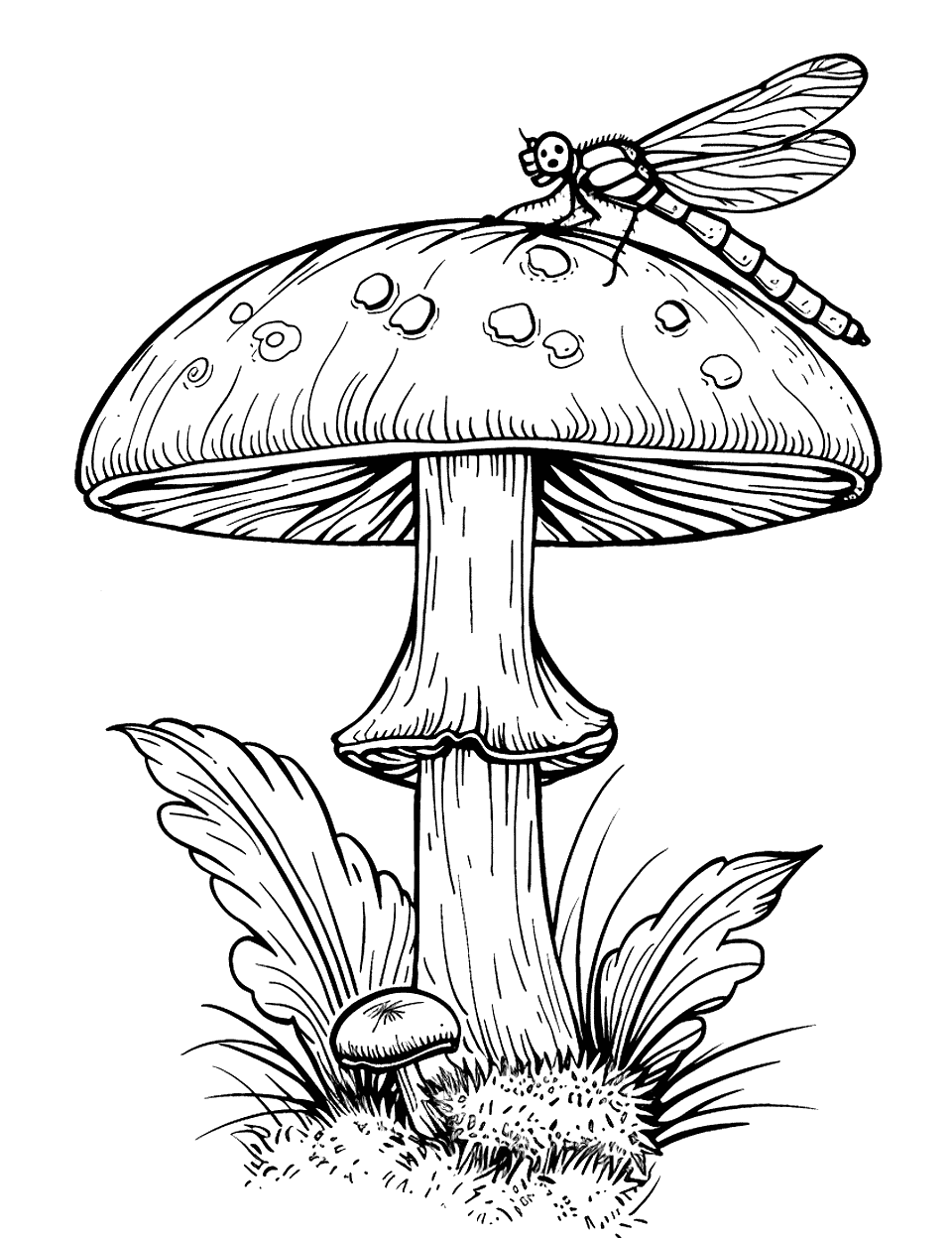
A dragonfly rests along the top of the cap with its long segmented tail hanging out past the edge. Big leaves fan out from the base and a tiny mushroom hides among them. The wings are drawn as fine mesh and look best left pale with only a wash of color. Give each tail segment a different shade for a jewel effect.
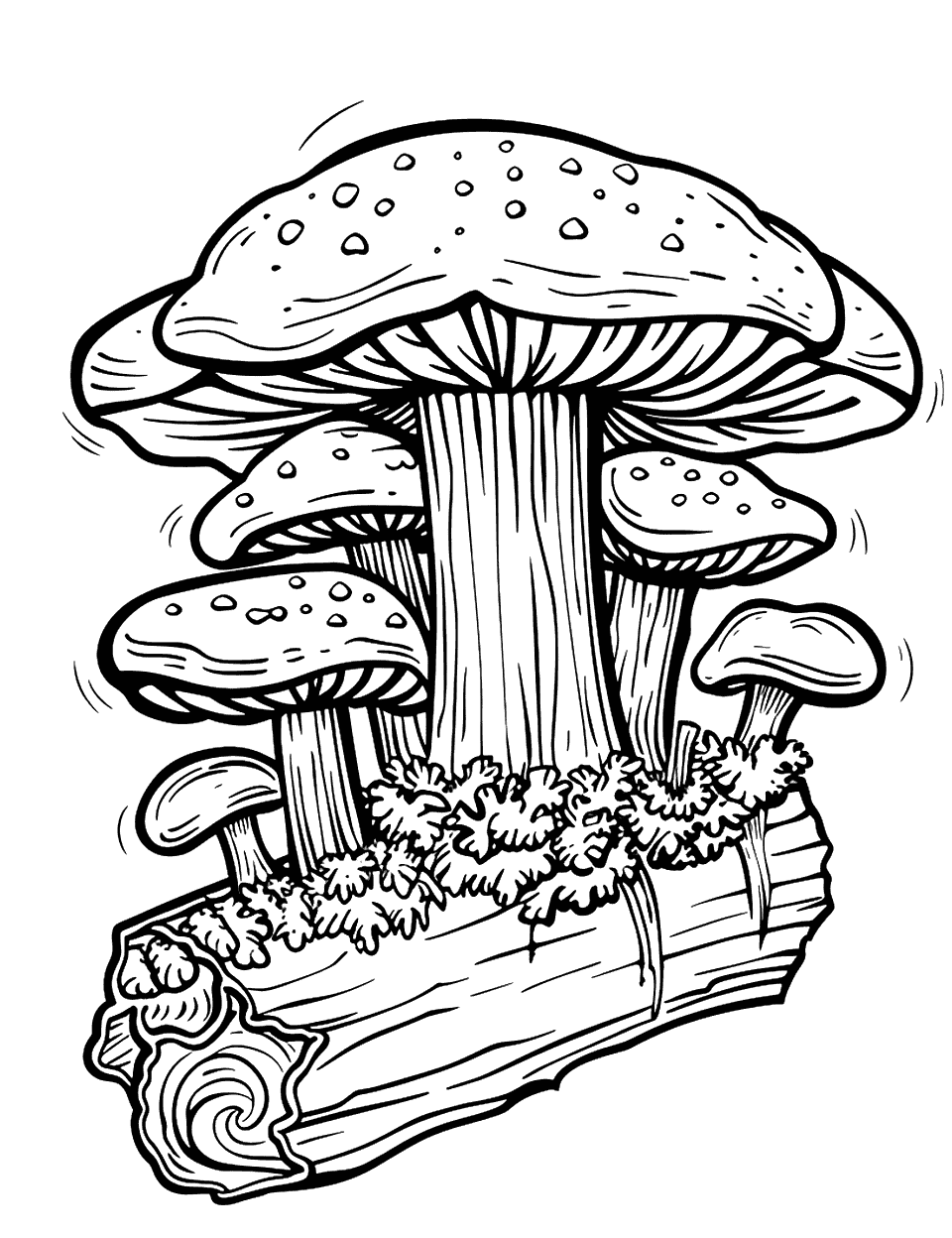
A whole colony sprouts from a mossy fallen log, caps at every height and angle. The log’s grain runs in long straight lines across the bottom of the page. Mushrooms really do grow like this on dead wood, so browns and mossy greens will look right. A rainbow colony is more fun, and nobody is checking.
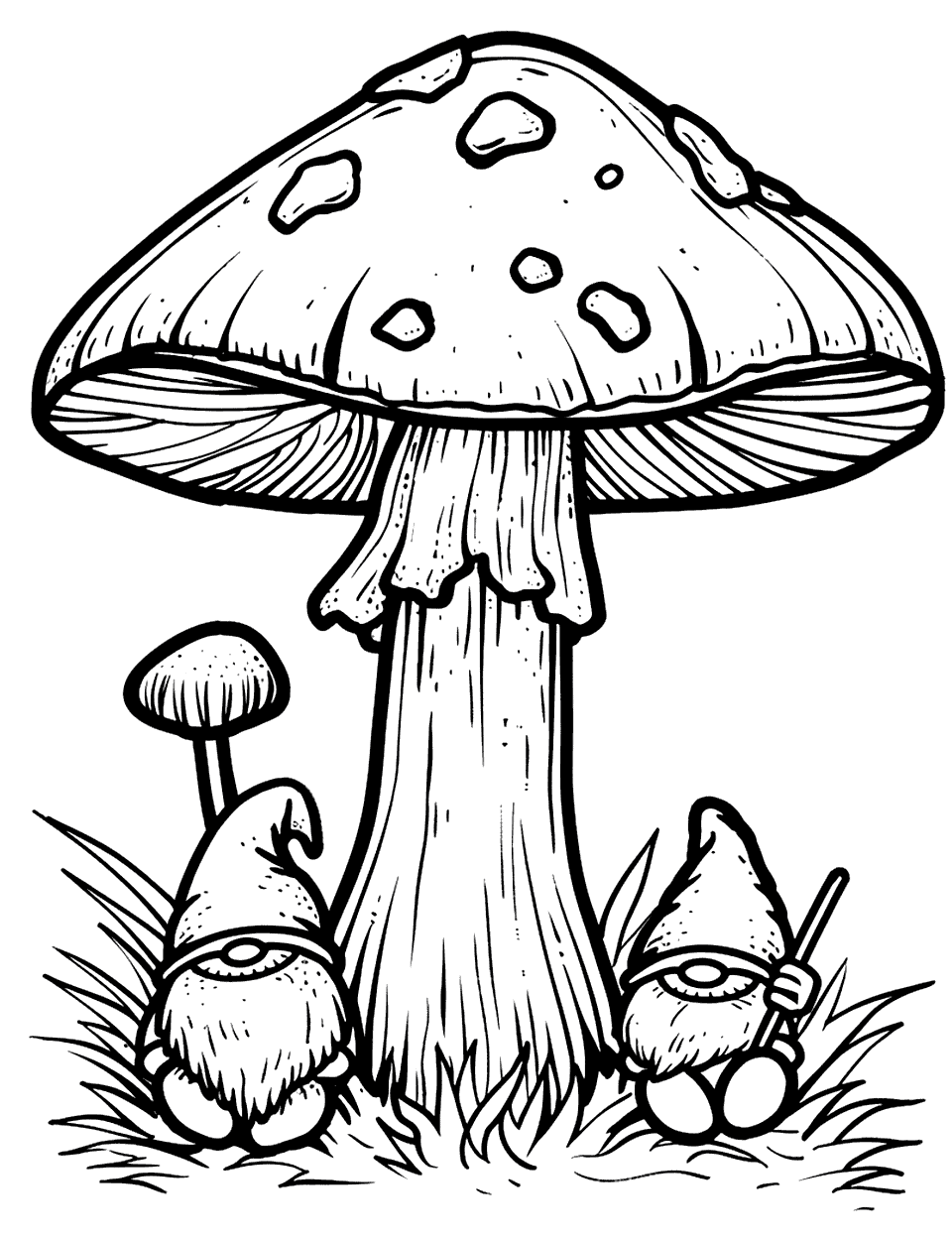
Two gnomes with pointed hats and long beards sit in the grass on either side of a thick stem, one of them holding a stick. Their hats are the biggest shapes on the page and beg for red. The mushroom above them is plain enough that a younger child can take it while an older one does the gnomes. Beards left white against a dark hat give the sharpest contrast.
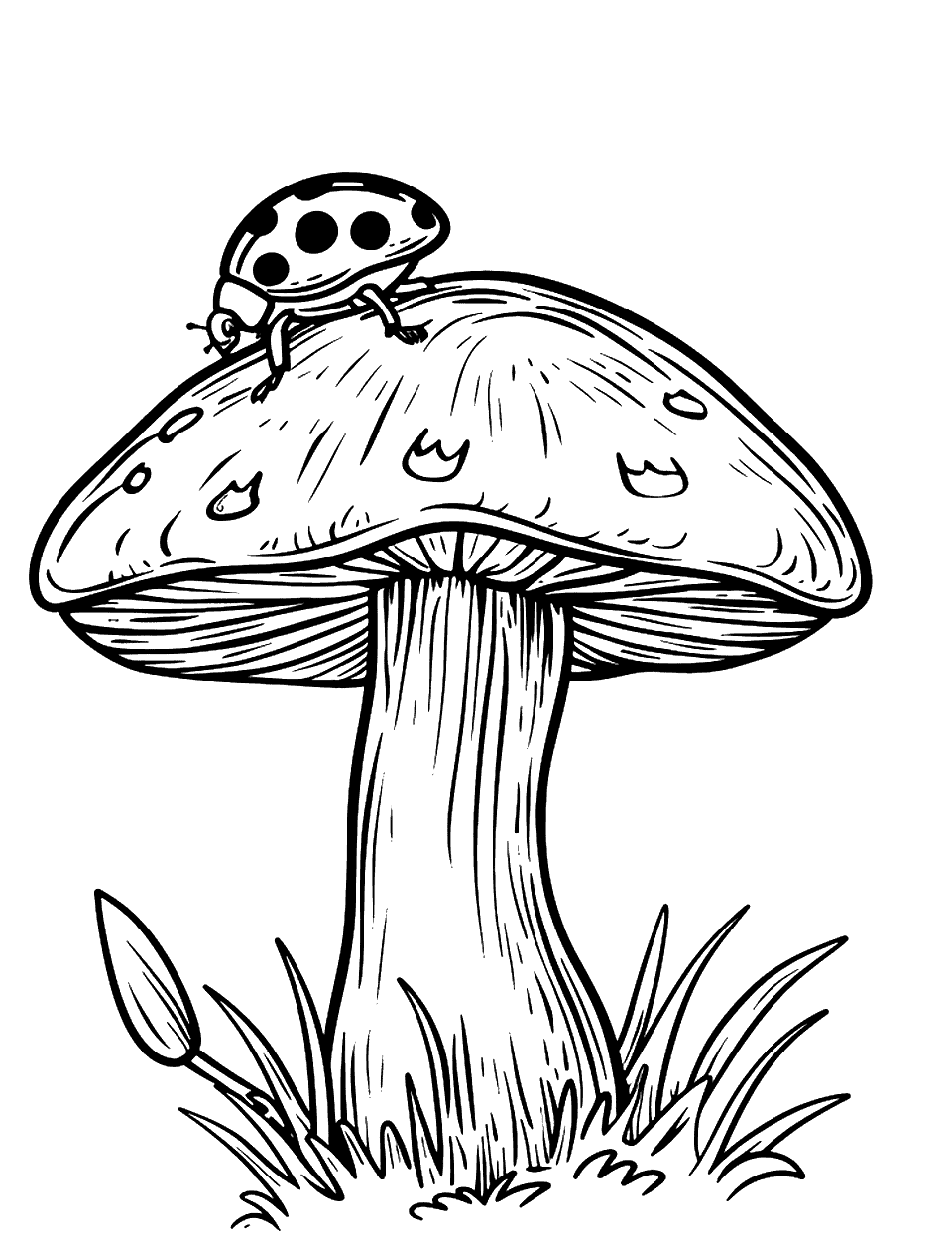
A ladybug walks across the top of a smooth cap with its legs braced on the curve. The cap carries a few soft markings and the stem is drawn with long grain lines. Grass and a single closed bud fill the bottom corner. Red with black spots on the ladybug is the one part worth slowing down for.
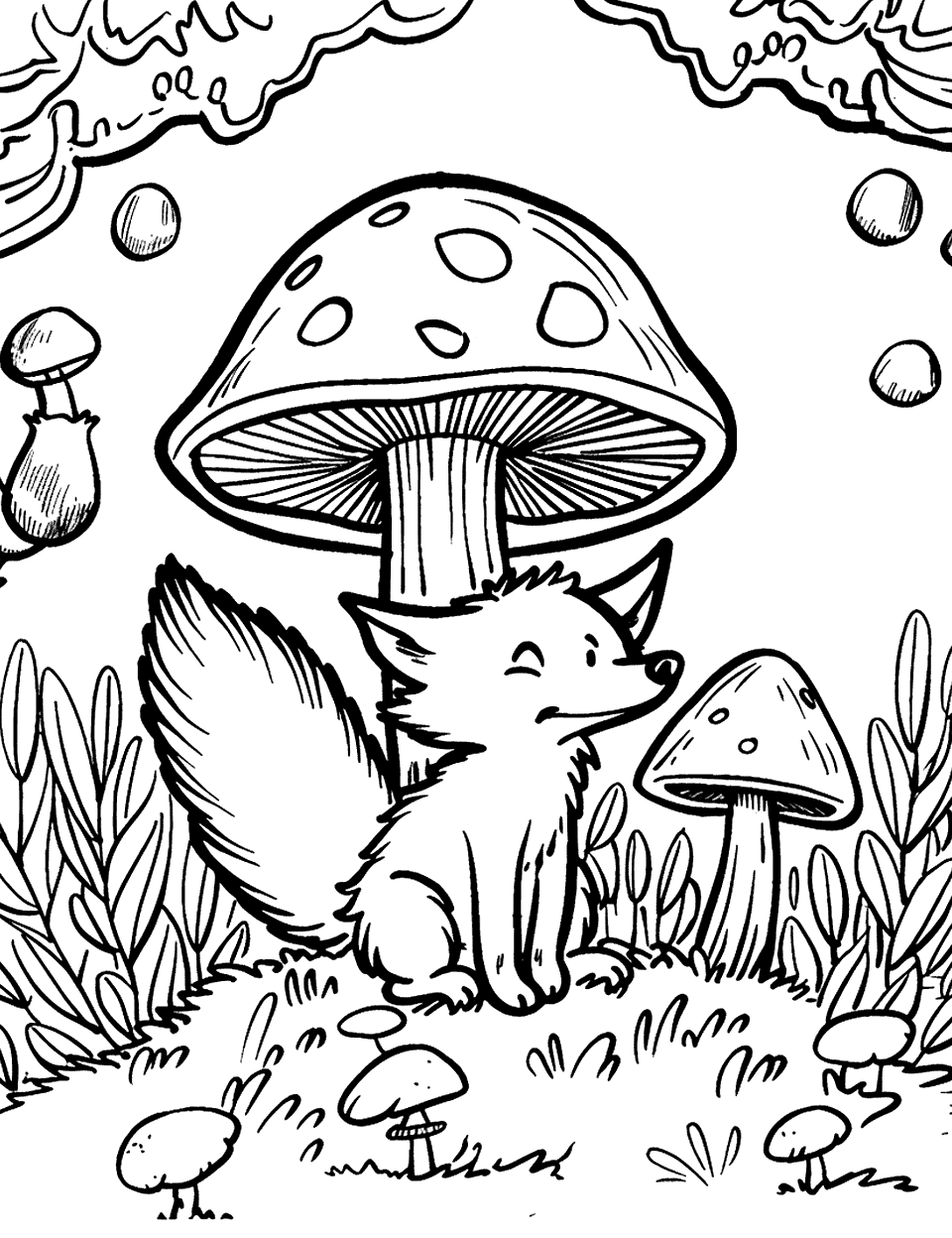
A baby fox sits under a spotted cap with its tail curled around its side and its eyes closed. Leafy plants line both edges, mushrooms dot the ground, and round shapes float in the background. Orange fur, a white chest and a dark nose is all it takes to make the fox read as a fox. The border of leaves is repetitive in a good way once the fox is done.
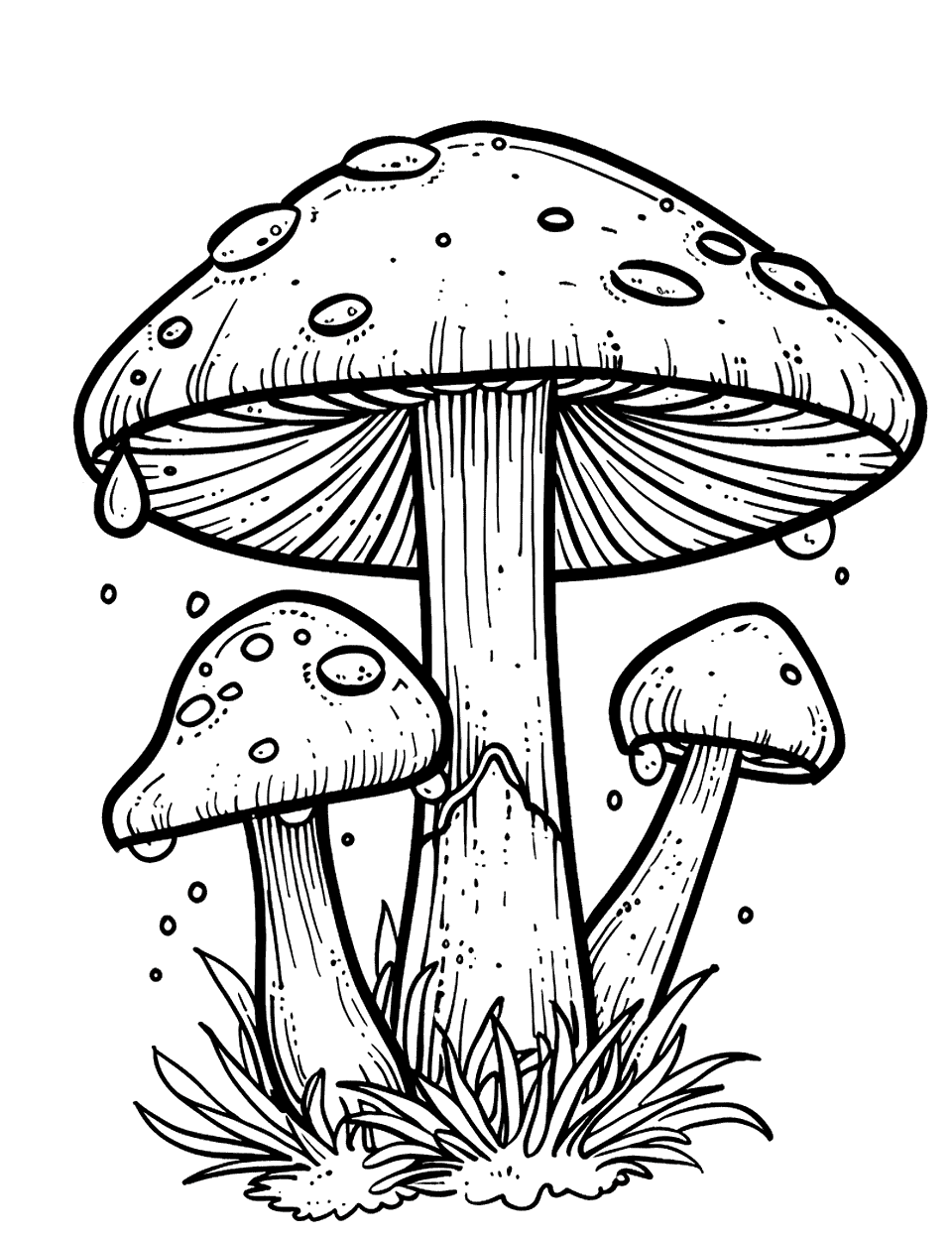
Fat dew drops cling to the rim of a big cap and a few more hang in the air beside it. A couple of smaller mushrooms lean out from the base above a clump of grass. Leaving the drops uncolored is the simplest way to make them look wet. A pale blue on one side of each drop reads as a highlight if you want to push it.
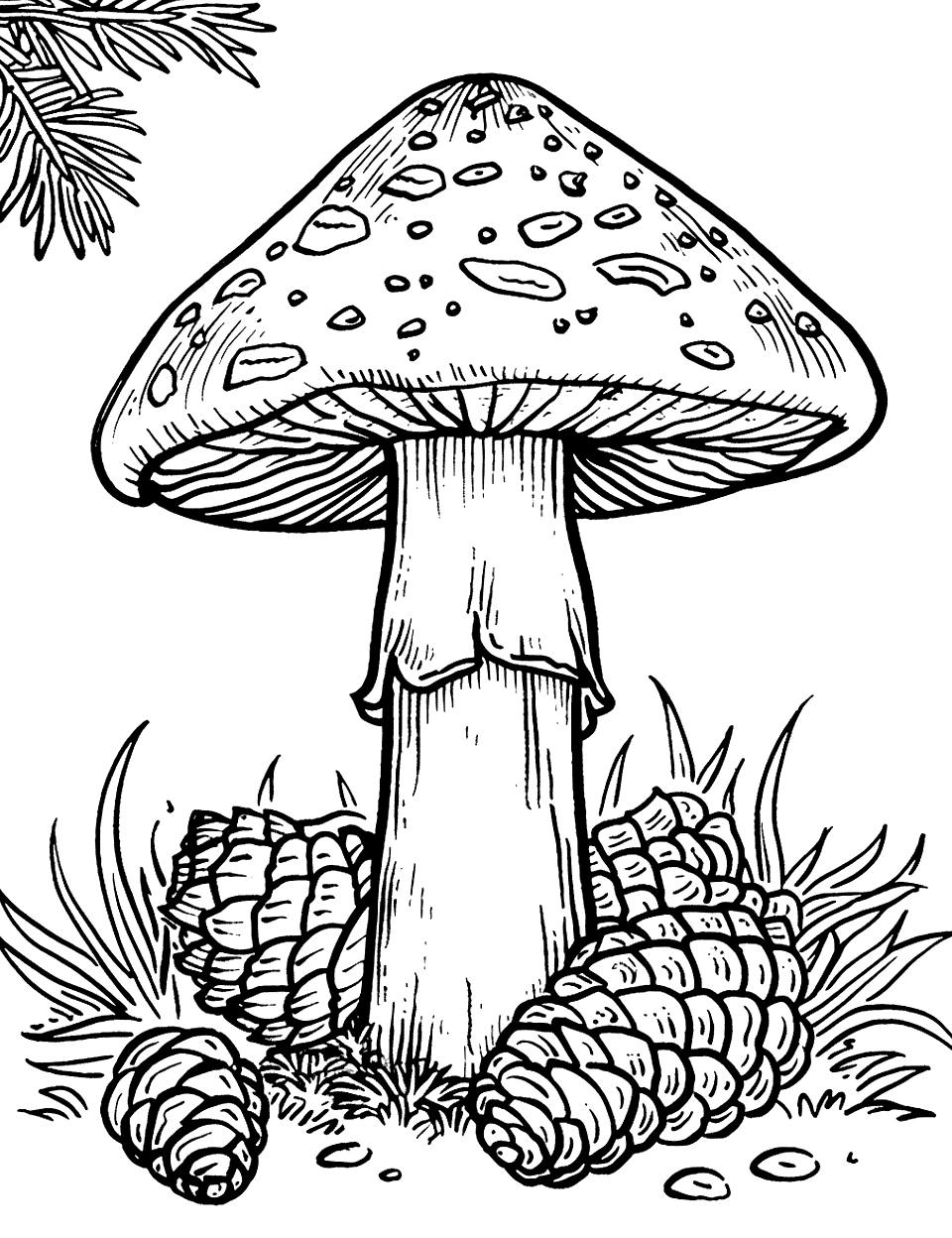
Pine cones lie scattered around the base of a tall mushroom, every scale drawn separately. A pine branch reaches in from the top left corner. The cones take patience and pay it back, especially in layered browns. The cap above is simple by comparison, so start there to warm up.
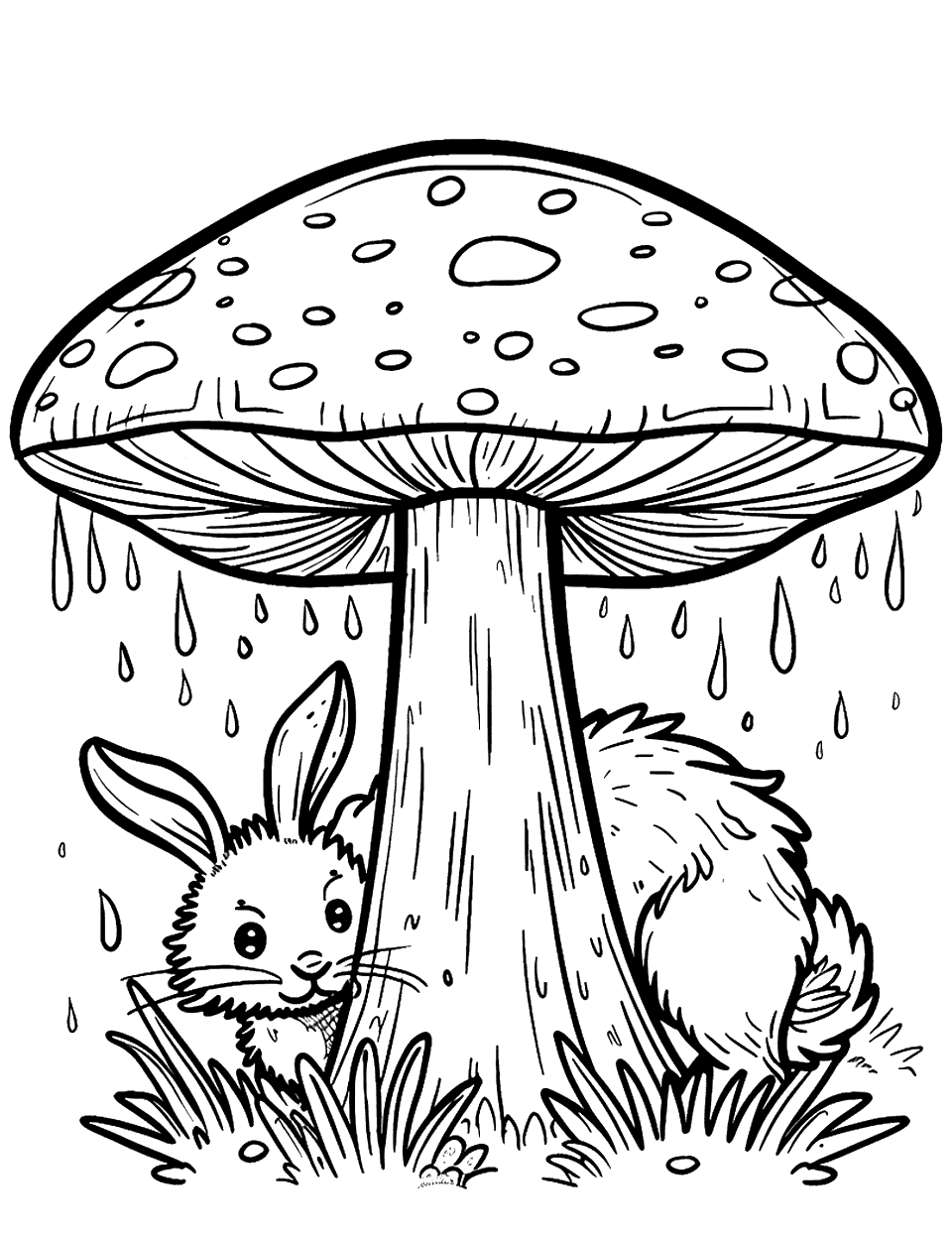
A rabbit peers out from behind the stem with its ears up and its fluffy tail showing on the other side. Rain falls in teardrops down both sides of the cap. The face is the only fine work; everything else is broad and forgiving. Grey or soft brown fur against a bright cap makes the hiding spot obvious.
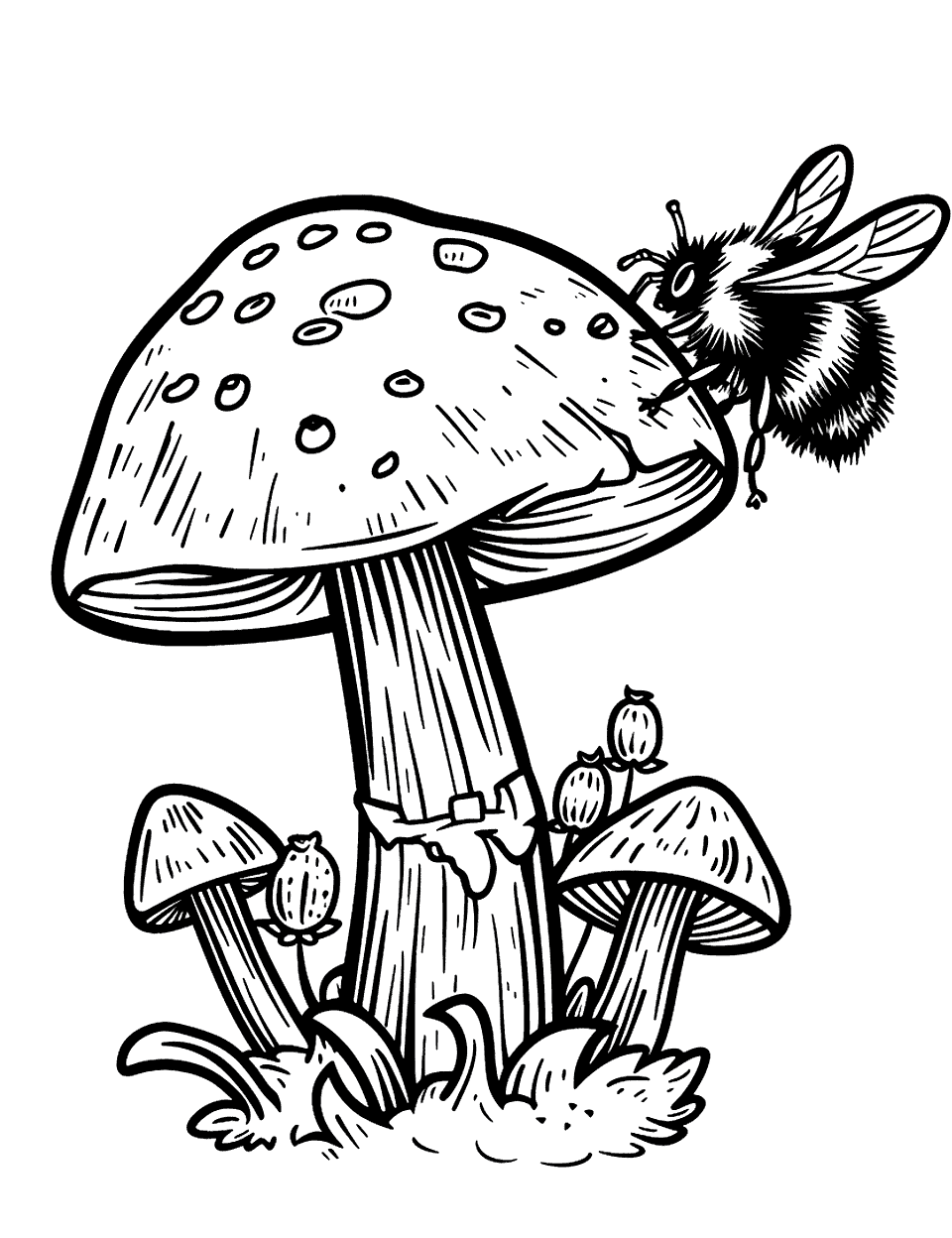
A fuzzy bumblebee grips the right edge of a spotted cap with its wings raised. Below it, small mushrooms and slim buds crowd around the base. The bee’s body is drawn with dense fur strokes, so build it up in layers rather than one flat fill. Mushrooms make no pollen, so treat this as a visit rather than a meal.
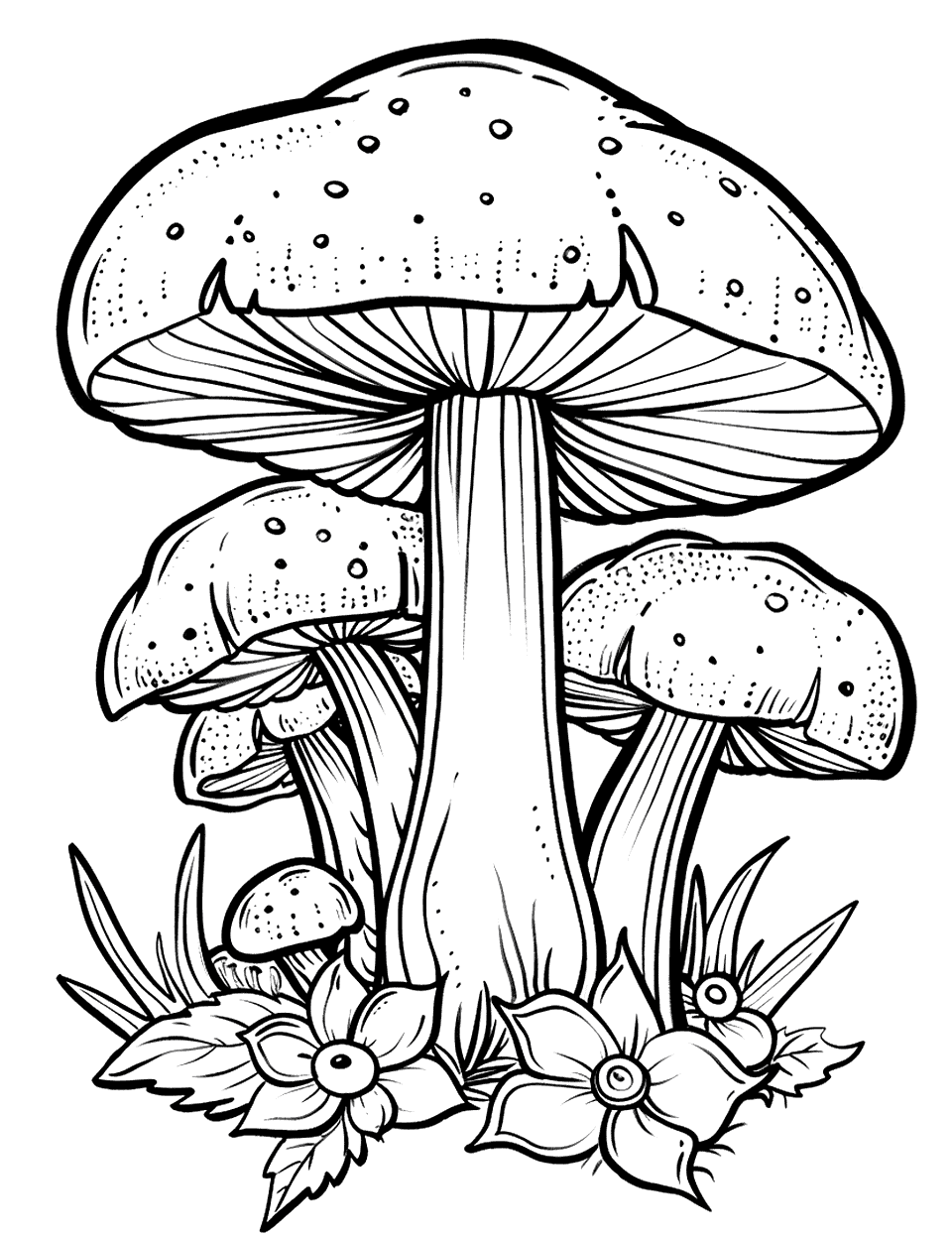
Round-petaled flowers bloom at the base of a tall mushroom flanked by two smaller ones. Leaves and grass blades fill the gaps between the stems. The caps carry a fine dotted texture that a colored pencil handles better than a marker. Repeat one flower color up in the cap and the page hangs together.
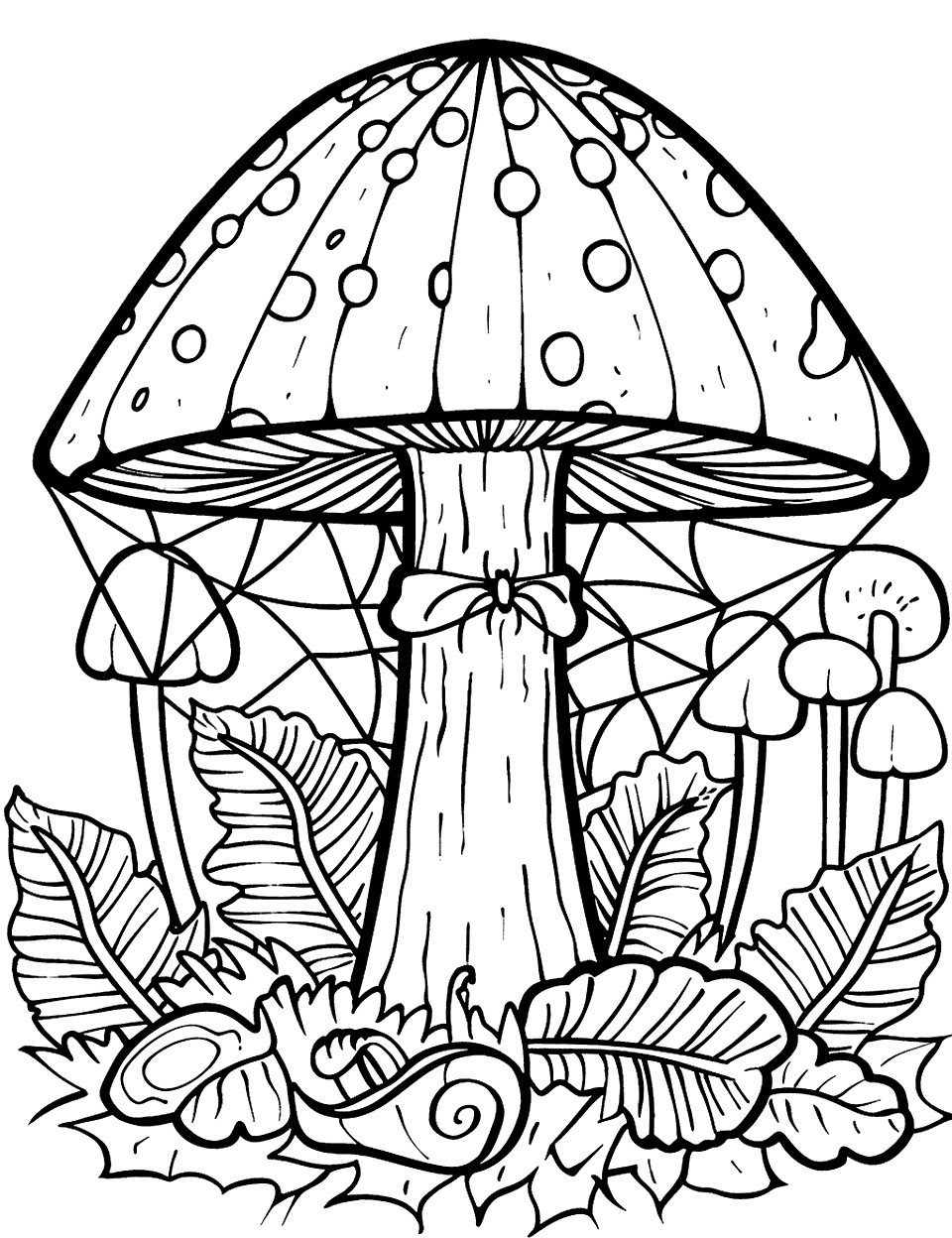
A web stretches behind the stem, its threads running from under the cap down into the leaves. Big leaves and small mushrooms fill the bottom, and a curled spiral sits at the front. The web itself sits empty, which makes it a gentler pick for a squeamish kid. Leave the web white against a colored background and it shows up best.
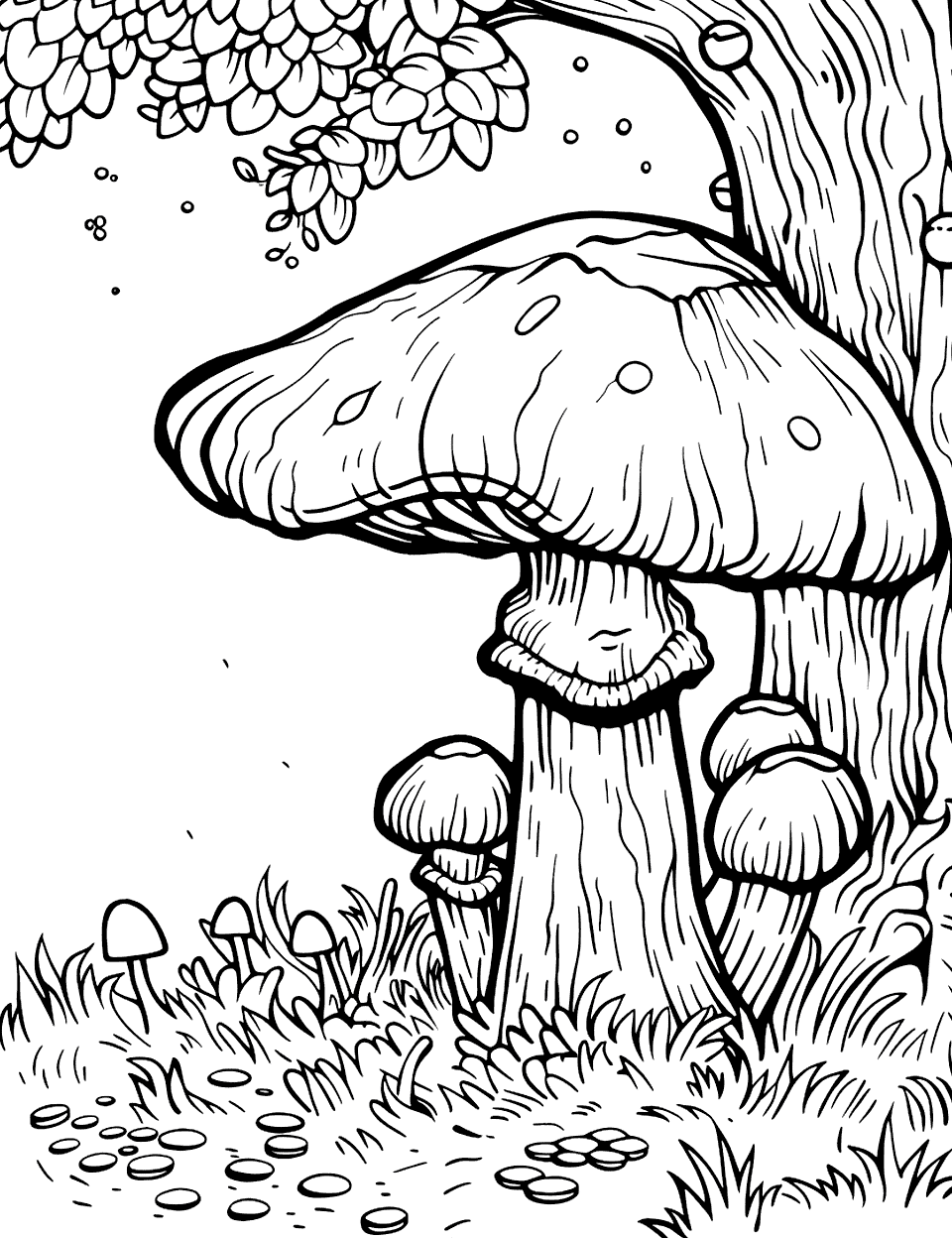
A wide-capped mushroom grows in the shadow of a tree trunk with leafy branches overhead. Small mushrooms and pebbles dot the grass in front of it. Cooler greens and blue-greys suit the shady mood better than bright primaries. The sky at the top left is blank, which is room for your own bird or sun.
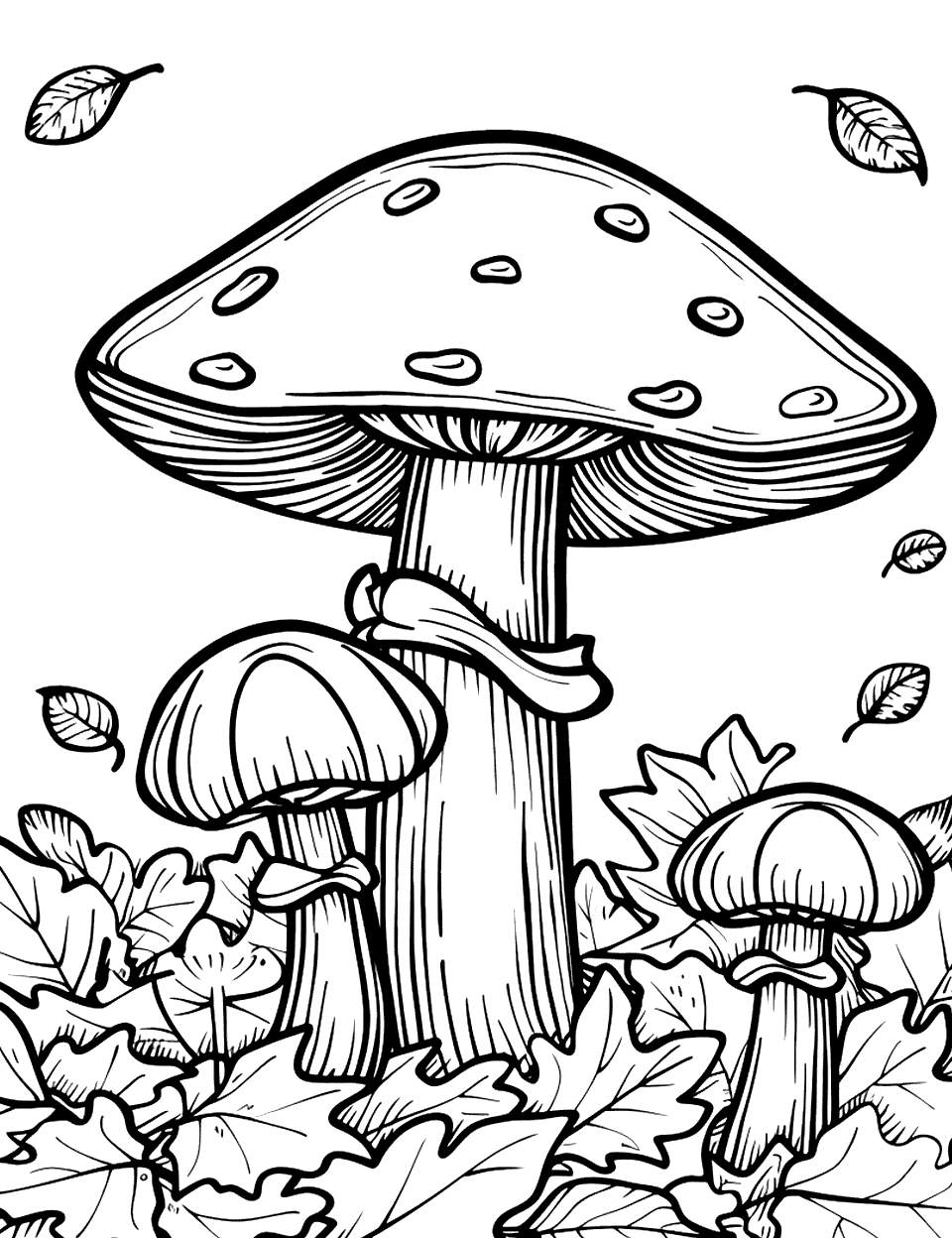
Oak leaves blanket the ground around a spotted cap while more drift down through the air. A couple of smaller mushrooms push up through the litter. The leaves are large and open, so this is an easier autumn page than it first looks. Reds, rusts and browns throughout, with one leaf left bright yellow, gives it a focal point.
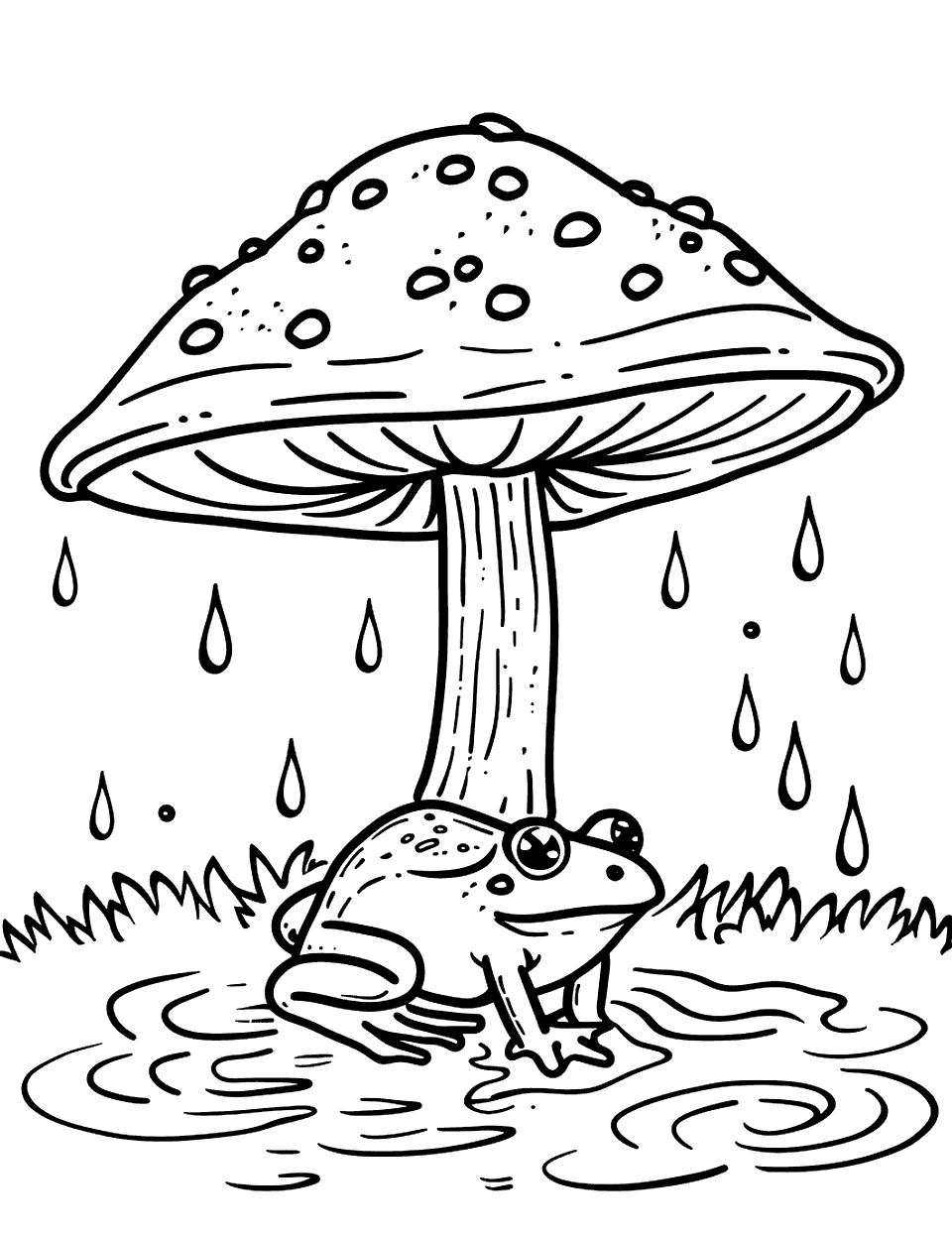
A frog sits in a rippling puddle right under the stem, sheltered by the cap while rain falls around it. Grass lines the far edge of the water. The frog is drawn simply, which suits younger kids who came for the animal. Green frog, red cap and a blue puddle is the version most children reach for first.
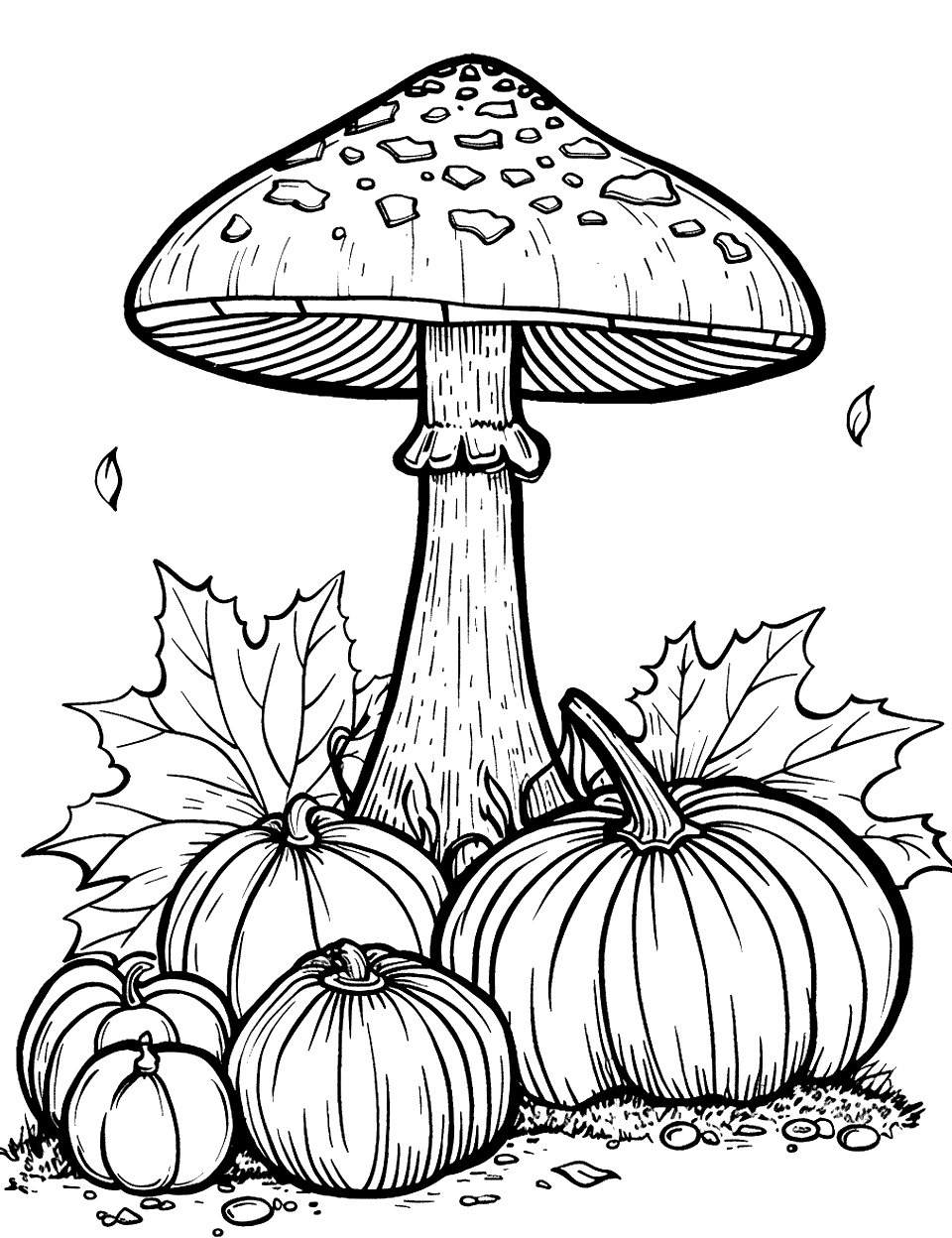
A tall mushroom rises out of a pile of pumpkins with maple leaves fanning out behind them. The pumpkins range from small to large and each has deep ribs to follow. This is the sheet to print in October. Orange pumpkins with a contrasting cap stop the mushroom disappearing into the pile.
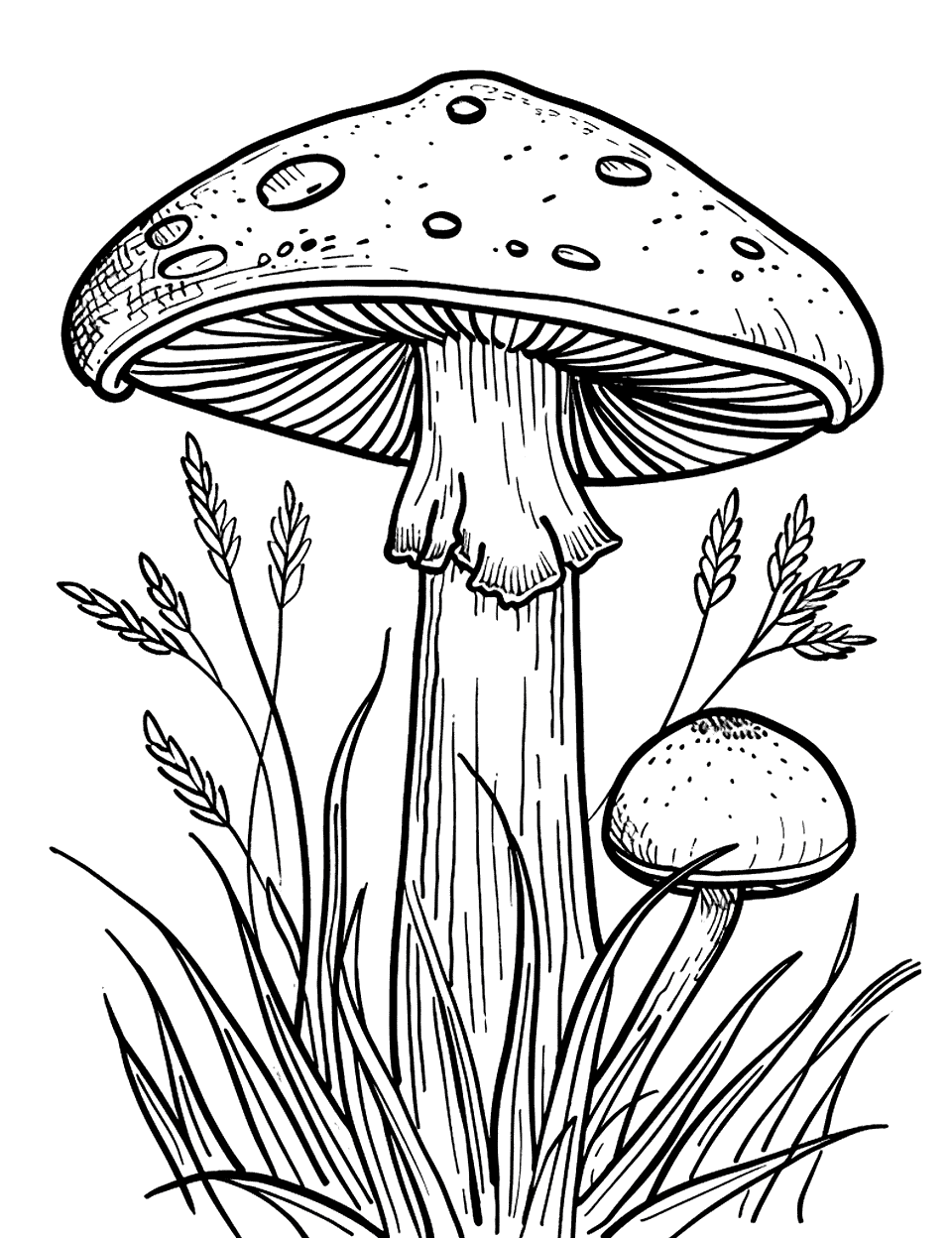
Long blades of grass and slim seed heads rise around a mushroom with a torn ring on its stem. A rounder, speckled cap sits low on the right. All that grass means a lot of narrow gaps, which is good practice for control. Two or three greens keep it from going flat.
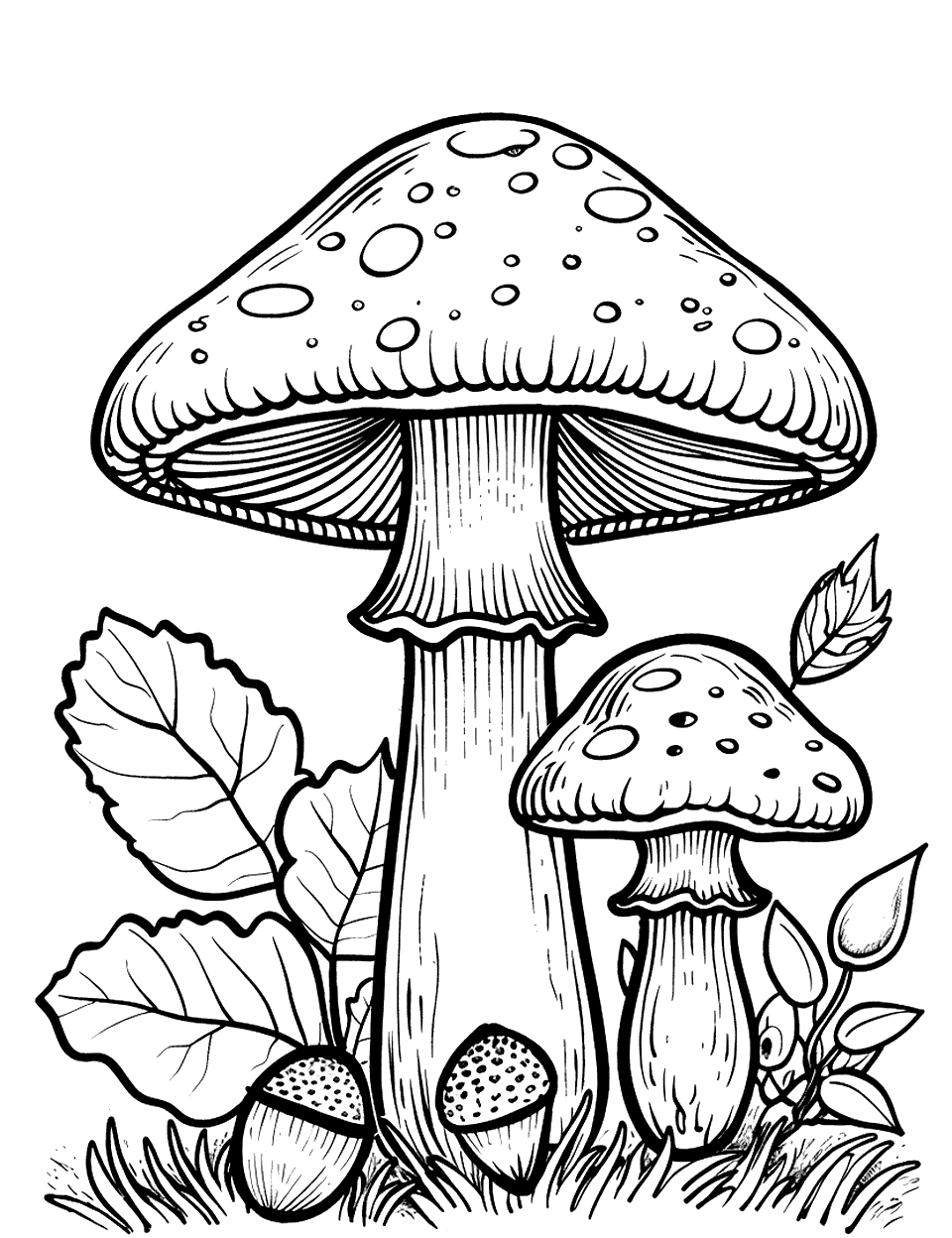
Acorns rest at the base of a tall mushroom growing beside a smaller spotted one. Broad leaves and a slim twig fill the left and right edges. The acorn caps carry a stippled texture worth a darker brown. Everything on this page says fall, so warm colors will do the job on their own.
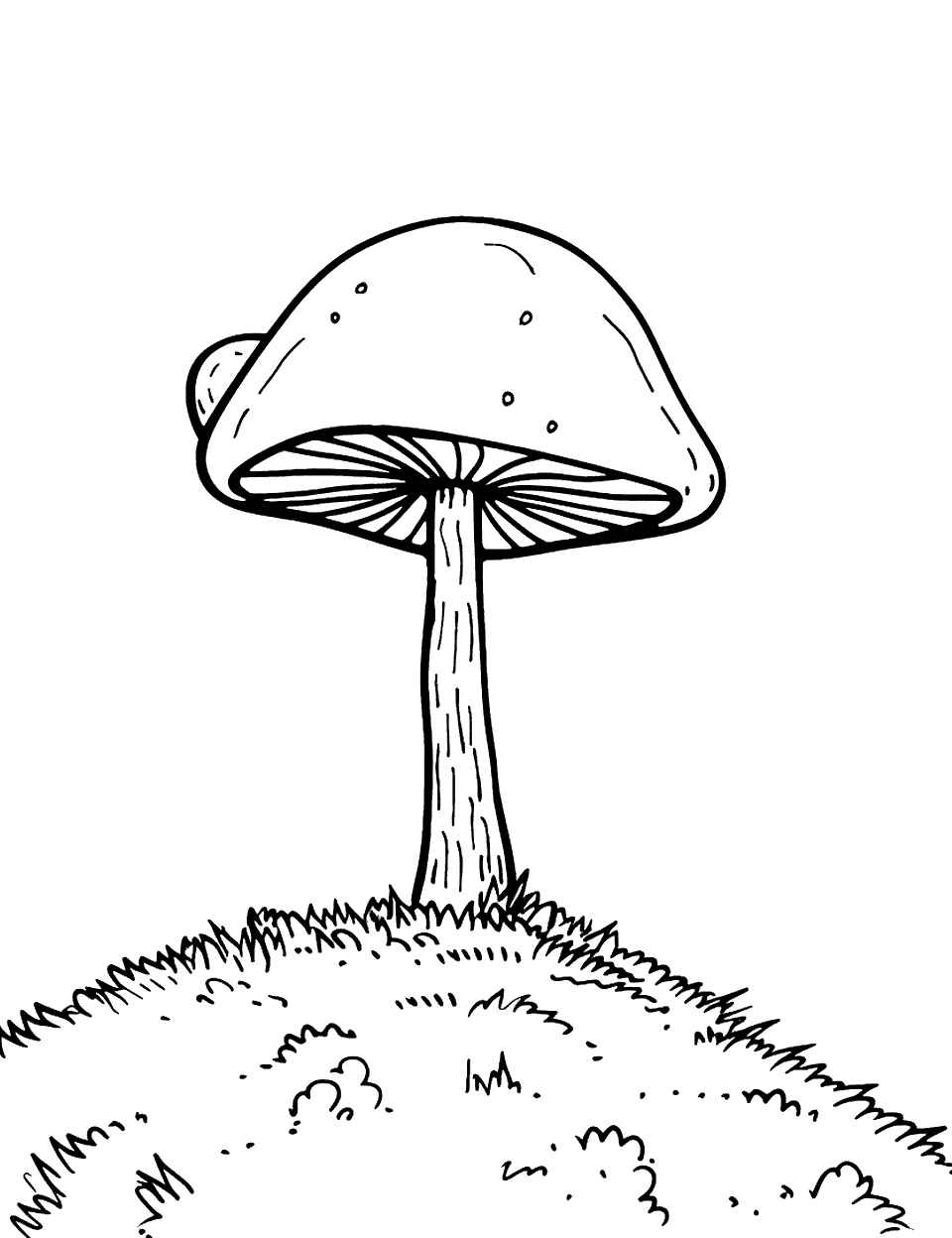
One simple mushroom stands on a grassy hill with nothing else on the page. The cap is smooth with a few small dots and the stem is a single narrow shape. This is the least demanding sheet in the whole set, and a fair first page for a two or three year old. The empty sky above it can become whatever the day needs.
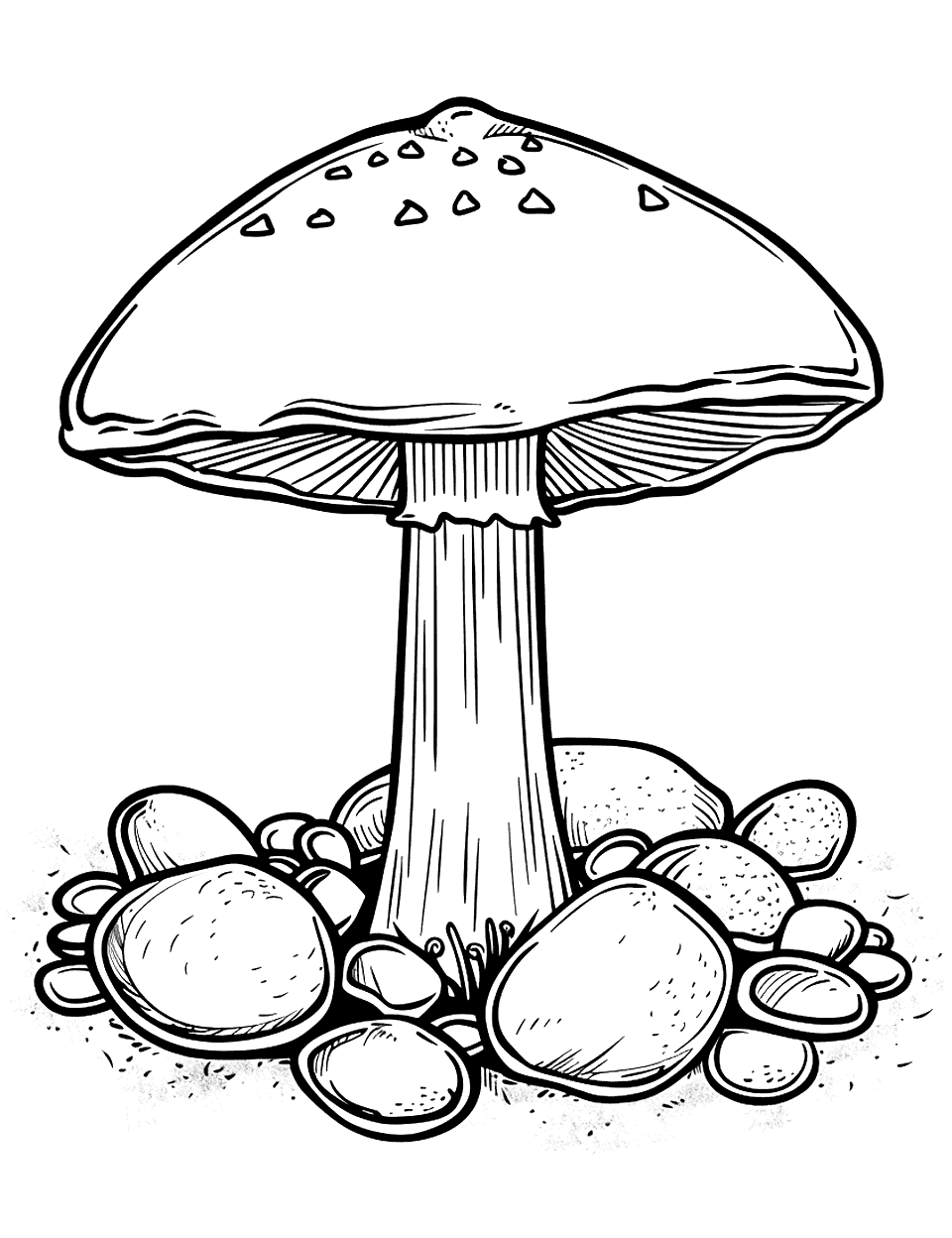
Smooth pebbles ring the base of a wide-capped mushroom, some large and some small. Near the top of the cap sits a row of small triangular marks. Greys and warm tans across the stones let a bright cap stand out. Every pebble is a closed shape, which makes this a tidy page to fill.
A squirrel stands on its hind legs with both front paws against the stem, looking up at a cap far bigger than it is. A little cluster of mushrooms grows to the left. The fur is drawn in short strokes that layer well in two browns. Keep the cap pale and the squirrel reads first.
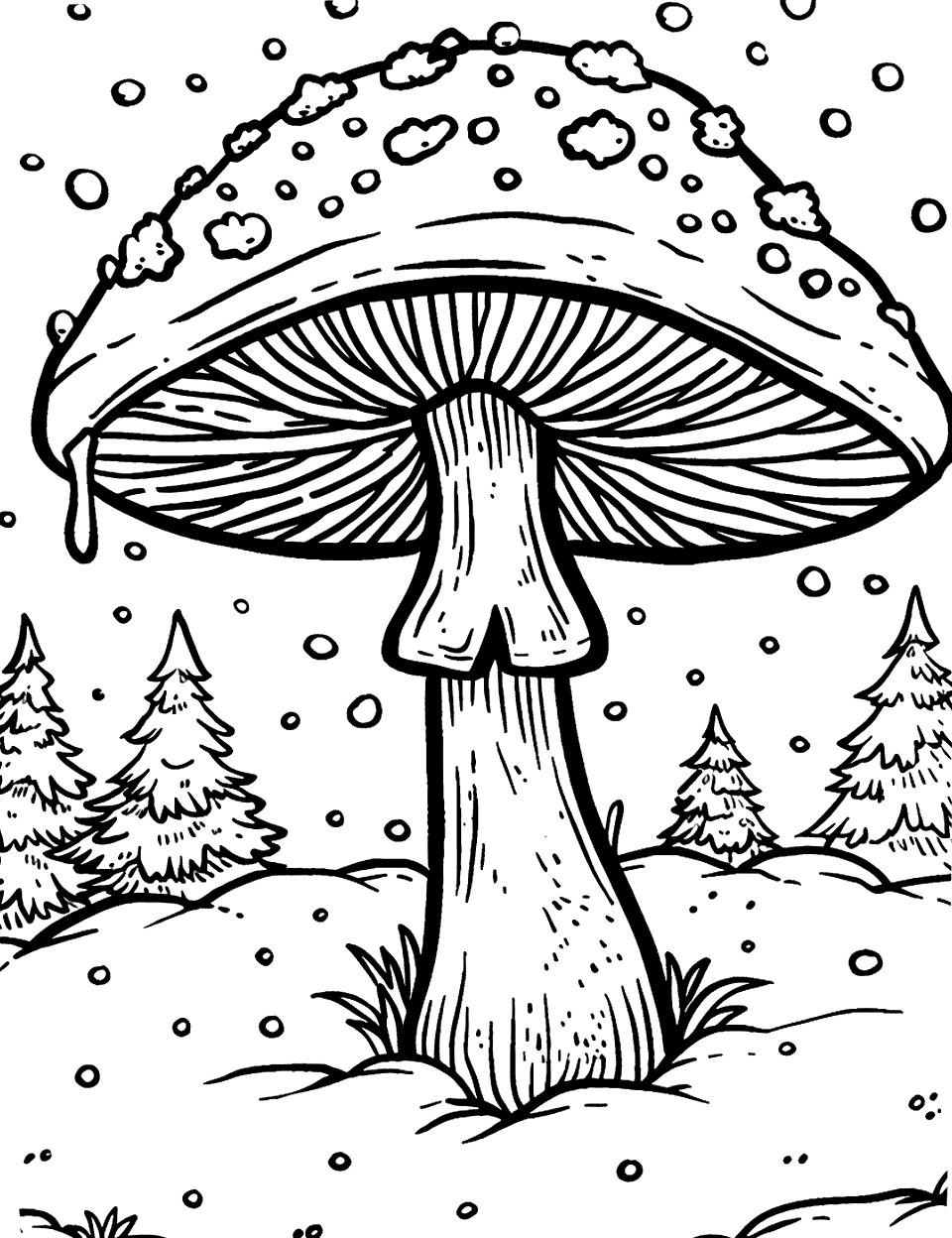
Snow settles on the cap and falls through the air in this winter scene, with pine trees standing in drifts behind. The ground is drawn as soft white mounds. Leaving the snow blank and coloring only the trees and the cap gives the coldest effect. Pale blue shadows under the drifts add depth if you want more to do.
By using our free coloring pages, you acknowledge and agree to our full disclaimer. All materials are for personal, non-commercial use only and all rights belong to their respective license holders.
What Colors Are Real Mushrooms?
Most of the mushrooms you will see are brown, tan, white or grey, with a handful of bright exceptions worth copying. The storybook red cap with white spots comes from the fly amanita, which has reddish-orange, orange to yellow caps with whitish warts (1). Chanterelles run bright yellow to orange. Meadow mushrooms carry pink gills that darken to chocolate brown, and a shaggy mane’s cap and gills turn inky as it ages. A giant puffball, according to the same fact sheet, can grow 8 to 24 inches across and fruits from August through October.
Ohio alone is home to 2,000 or more kinds of wild mushrooms, according to the same fact sheet, so the real range runs far past anything 50 sheets can hold.
None of that binds a kid with a crayon. A blue cap with green spots is a perfectly good answer. But when a child wants the page to look like something they could actually find outside, those are the colors to reach for.
Which Sheets Work Best for Little Kids?
The easiest pages here are the ones with few shapes and heavy lines: Lone Mushroom on a Hill, Bold Spotted Toadstool, Simple Mushroom Landscape and Cute Kawaii Mushroom Family. Each has large closed areas and little fine detail, so a toddler with a chunky crayon can stay inside the lines.
The most demanding are the detailed nature scenes: Oyster Mushroom Cluster, Mushroom Among Autumn Leaves, Mushroom and Pine Cones and Fungi Collection on a Log. Overlapping shapes and fine texture make those a better fit for colored pencils and an older child, or an adult who wants an hour to themselves.
The animal sheets sit in between. Frog and Mushroom in the Rain, Squirrel and a Mushroom, Rabbit Hiding Under a Mushroom, Fawn Beside a Giant Mushroom and Baby Fox Near Mushroom Patch each give a child one detailed face to work at with plenty of easy space around it.
Activities to Do With Mushroom Coloring Pages
Finished pages do not have to go straight on the fridge. Five ways to keep them in play:
1. Build a Standing Paper Forest
Print on cardstock, color, then cut each mushroom out. Tape a folded strip of card or half a paper tube to the back so it stands up on its own. Line them along a shelf by height and the set becomes a small forest.
2. Rub a Texture Into the Caps
Slide something textured under the page before you start: a leaf, a coin, a piece of burlap. Rub the side of a crayon over the cap and the pattern comes through. It gives a flat drawing a surface that feels real.
3. Glow in the Dark Spots
Go over the cap spots or the stars with glow paint or a glow marker. Tape the page beside a bed and those marks hold a faint light after the room goes dark. Starry Night and Mushrooms is the best candidate for it.
4. Match the Sheet to the Yard
Take the realistic pages outside and see how many shapes you can match on a walk. According to Ohio State University Extension, chanterelles run bright yellow to orange and grow under hardwoods and hemlock for a solid 4 months, June through September, so summer is a good season to look. Look only, and say why. According to the same fact sheet, there is no test or characteristic to tell an edible mushroom from a poisonous one, and 3 destroying-angel Amanita species turn up July through October, deadly poisonous every time, so nothing found outdoors goes in a pocket or a mouth.
5. Fairy Garden Backdrop
Tape colored pages to the wall behind a potted plant or a small fairy garden. From the front the artwork reads as depth, as though the garden carries on into a woodland. Swap the backdrop out as new pages get finished.
FAQs
What Are the Best Colors for Mushrooms?
Brown, tan, white and grey cover most real mushrooms, with red, orange and yellow on the showy ones. The red cap with white spots that kids reach for first is a real pattern, borrowed from the fly amanita. On the fantasy sheets (the fairy, the gnomes, the crystal), purple, teal and neon green all work. There are no rules once the page leaves the printer.
Are These Coloring Pages Suitable for Toddlers?
Yes, several of these sheets are drawn for the youngest hands. Lone Mushroom on a Hill, Bold Spotted Toadstool and Cute Kawaii Mushroom Family use thick outlines and large closed shapes with no fine detail. Skip the leaf-litter and pine cone pages until a child can control a pencil, and hand those to an older sibling instead.
Can I Paint These Pages Instead of Using Crayons?
Paint works well on these pages as long as you print on heavy paper. Watercolor and markers both bleed through standard copy paper and buckle it, so use cardstock or a mixed-media sheet. Let each color dry before the next one touches it, since these drawings have a lot of small shapes sitting side by side.
What Paper Should I Print Coloring Pages On?
Plain copy paper is fine for crayons and colored pencils, which is what most of these sheets get used with. Move up to cardstock for markers, paint or anything you plan to cut out and stand up, like the paper forest activity. Cardstock also stops a marker on one page from marking the next sheet in the stack.
Are Mushrooms Plants?
No, mushrooms are fungi, and fungi sit in a kingdom of their own, separate from plants and animals. They grow in soil and wood and help decompose organic matter (2), which is why so many of these sheets show mushrooms on a fallen log or in leaf litter. A mushroom is only the fruiting part; the rest of the organism is threaded through the ground below it.
How Do I Print These Coloring Pages?
Click the image or the download button under the design you want and a printable file opens. Print it straight from your browser or save it first and print later. If a page comes out cropped, set your printer to fit or shrink to page rather than actual size.