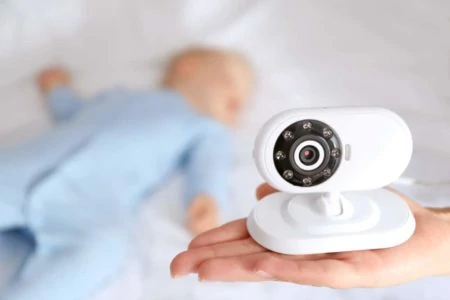
Monitoring a sleeping baby is nerve-wracking for any parent, but for deaf or hard-of-hearing parents, the anxiety hits different. Standard audio monitors just don’t cut it when you can’t rely on hearing a cry from the other room.
You need technology that taps you on the shoulder or lights up the dark. While many monitors claim to be accessible, few offer the strong vibration alerts or distinct visual cues necessary to wake a deep sleeper.
We researched the best baby monitors designed to keep deaf parents connected. We prioritized features like haptic feedback (vibration), bright visual sound indicators, and crystal-clear night vision. Here is how to keep a close eye, and feel, on your little one without losing sleep.
- Large and clear screen
- Room temperature monitoring
- Infrared vision
- Two-way audio intercom
- Displays nursery temperature
- Light alerts, lullaby & night vision
- DECT 6.0 provides crystal clear transmission
- Go hands free
- Lights and vibration alerts
Do You Really Need a Baby Monitor?
You don’t legally need a monitor to be a great parent. If you live in a compact apartment, your baby might never be far enough away to worry about.
However, for most deaf parents, a reliable monitor is less about luxury and more about basic safety. It buys you freedom. You can wash dishes, watch a movie, or sleep deeply knowing a light or vibration will alert you if the baby wakes up. It bridges the sensory gap and reduces the constant need to physically check the nursery.
Key Features for Deaf Parents
Statistically, millions of parents navigate child-rearing with hearing loss. The industry has finally started catching up, moving away from audio-only units to sensory-inclusive tech.
When shopping, ignore the generic marketing fluff and focus on these three non-negotiable features.
- Visual Sound Indicators: Look for a “sound bar” or LED array on the parent unit. These lights illuminate progressively from green to red based on the noise level in the nursery. It allows you to “see” the noise instantly, even if the volume is off.
- Haptic Feedback (Vibration): This is the gold standard. The parent unit (or a connected accessory) should vibrate strongly when the baby cries. This is crucial for nighttime monitoring, as a strong vibration on your nightstand or under your pillow is often more effective than a light.
- VOX Mode (Voice Activated Exchange): This battery-saving feature keeps the screen dark until sound is detected. For deaf parents, this is helpful because the sudden lighting up of a dark room acts as a massive visual cue that something is happening.
Other Specs That Matter
Once you have the alerts covered, look at the usability features that make life easier.
- Range and Connectivity: WiFi monitors connect to your phone, giving you unlimited range and the ability to use a smartwatch for wrist vibrations. Non-WiFi (RF) monitors are more secure and suffer less lag but have limited range.
- Two-Way Talk: Even if you can’t hear the baby clearly, they can feel your presence. A talk-back button lets you soothe them with your voice while you walk to the room.
- Battery Life: Video streaming and vibration motors drain batteries fast. Look for units with at least 8 to 10 hours of life so it survives the night without chirping at you.
- Expandability: If you plan on having more children, get a system that supports multiple cameras (split-screen) so you don’t have to carry two parent units.

Product Reviews
We tested these units for vibration strength, visual alert clarity, and video reliability. Here are our top picks.
Motorola Video Baby Monitor
Best All Around
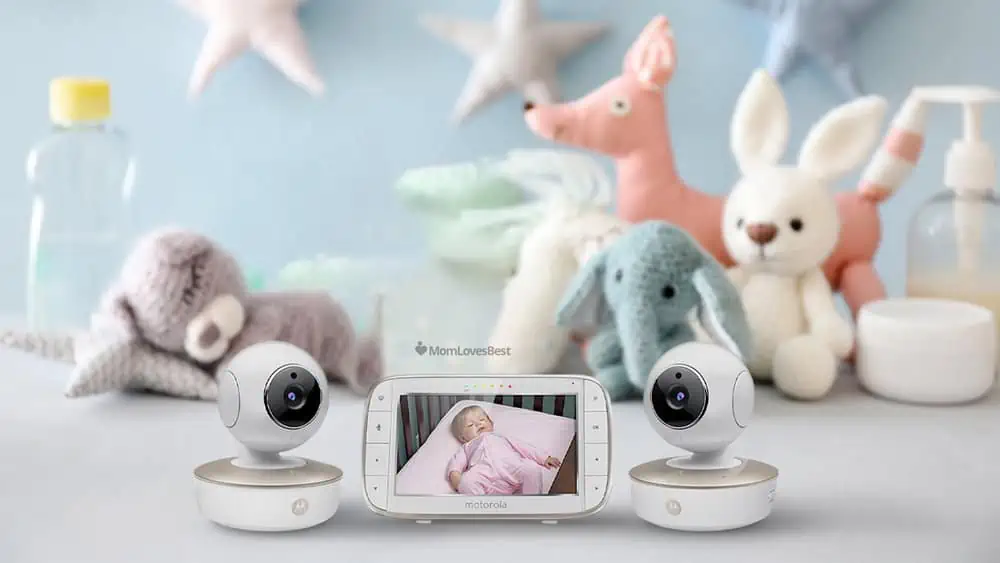
This Motorola system is a solid choice for parents who want eyes everywhere. It ships with two cameras, allowing you to monitor the crib and the play area simultaneously without moving equipment. The standout feature for accessibility is the parent unit’s user-friendly interface and visual cues.
The 5-inch LCD screen is large enough to see breathing movements, and the infrared night vision is crisp. Crucially, it features sound-level lights along the top of the unit. Even if you are watching TV with the volume off, those LEDs will light up red when the baby cries, giving you an immediate visual trigger.
You can also pan, tilt, and zoom the cameras remotely. This is helpful if your toddler tends to roll into the corners of the crib where stationary cameras can’t see.
Pros
- Large 5-inch screen offers great visibility.
- Remote pan, tilt, and zoom controls.
- LED sound-level indicators work well visually.
- Includes two cameras for multi-room coverage.
Cons
- Battery life struggles with constant video use.
- Microphone sensitivity can be overwhelmed by white noise machines.
Our Ratings
Dr. Meter Baby Monitor
Best for Viewing
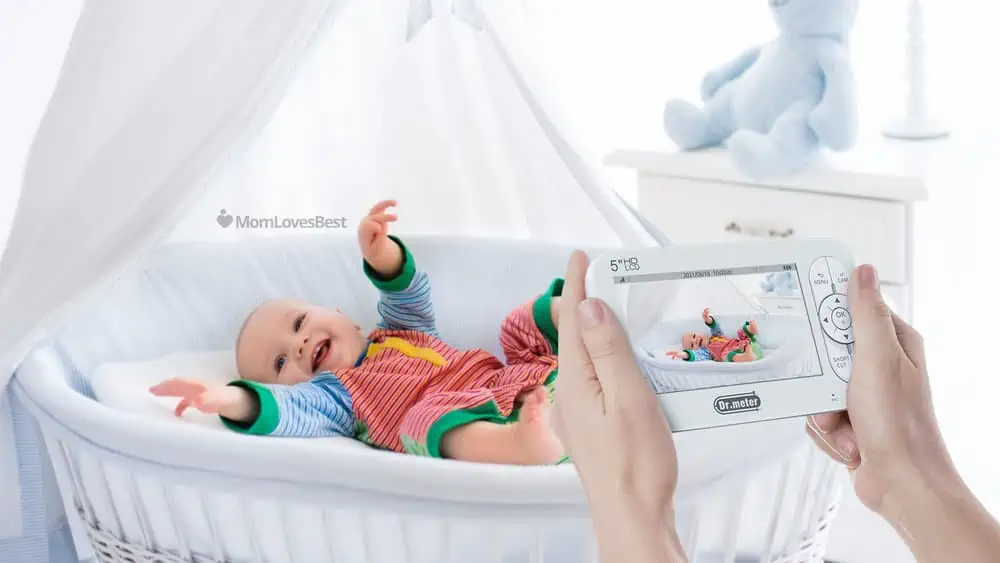
If you have a growing family or a large house, the Dr. Meter system is designed to scale with you. It supports up to four cameras total, which is ideal for deaf parents who need visual confirmation in every room the child might occupy.
While it lacks a dedicated vibration motor, it compensates with a loud visual alert system. The sound-activated LED bar gives you a clear indication of noise intensity. It also utilizes a high-resolution screen that makes reading your baby’s body language easy, even in low light.
The two-way audio allows you to comfort your child instantly. Setup is plug-and-play, meaning you don’t have to fiddle with WiFi passwords or app pairings.
Pros
- Expandable up to four cameras.
- Clear LED sound bar for visual monitoring.
- Sharp night vision quality.
- No WiFi required (more secure).
Cons
- No built-in vibration alert.
- Battery life is average at roughly 6 hours.
Our Ratings
VTech DM221 Vibrating Baby Monitor
Best for Convenience
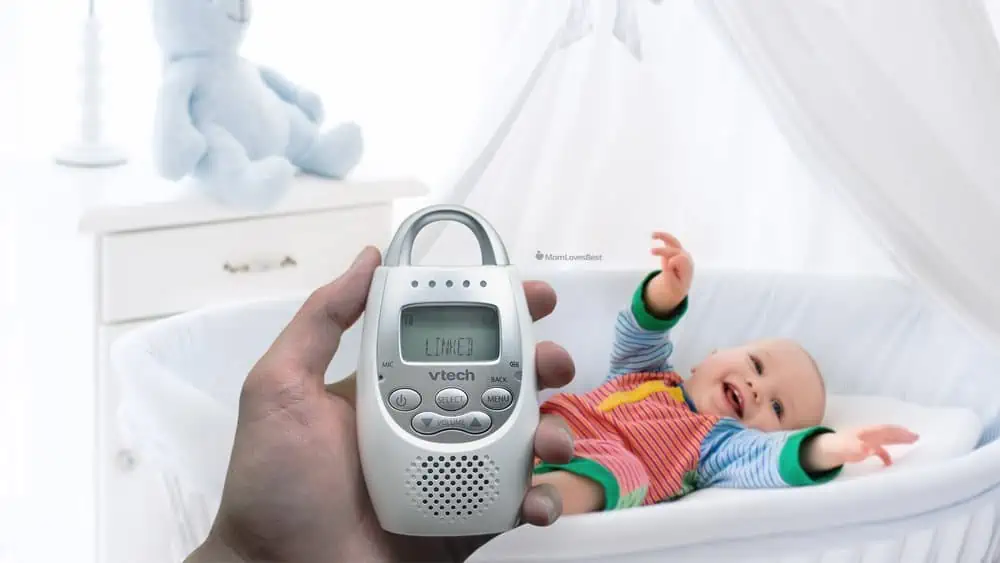
The VTech DM221 is widely considered the “old faithful” of audio monitors, and it is specifically beloved by the deaf community for one reason: the vibration. It features a belt clip that vibrates vigorously when sound is detected.
The parent unit has a five-level sound indicator that arches over the top, acting as a graphic equalizer for your nursery. You can mute the audio entirely and rely solely on the vibration and lights.
It does not have a camera, so you won’t get video. However, the range is fantastic (up to 1,000 feet outdoors), and the battery lasts much longer than video units. Many parents use this as a secondary travel monitor or strictly for the vibration alerts while sleeping.
Pros
- Strong vibration alert on the belt clip.
- Bright 5-level visual sound indicator.
- Excellent long-range connectivity.
- Talk-back intercom system.
- Very affordable compared to video units.
Cons
- No video screen.
- Occasional static interference.
Our Ratings
Nanit Pro Smart Baby Monitor
Best for Tech
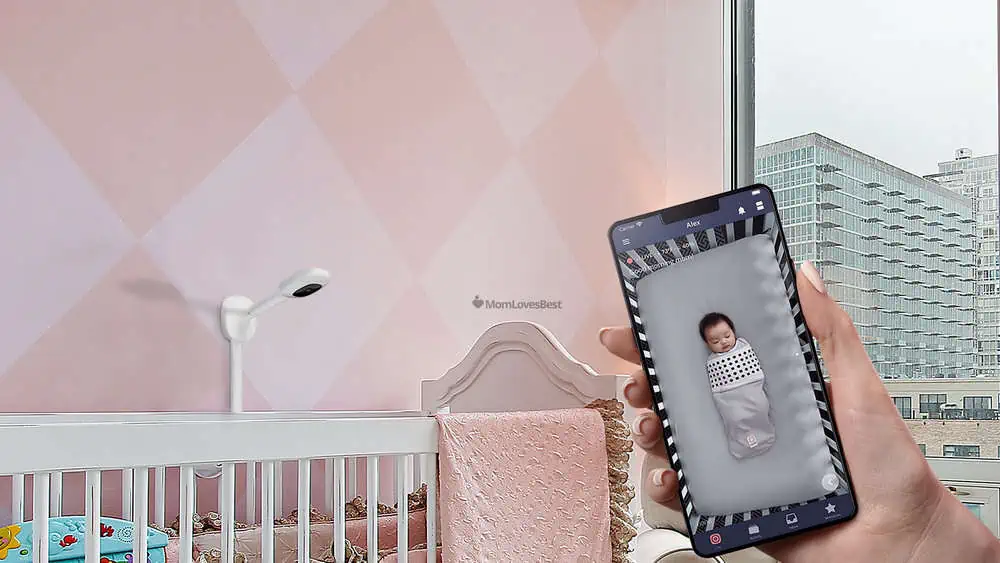
The Nanit Pro is a smart monitor that leverages your smartphone to bridge the accessibility gap. Because it connects via WiFi, you receive notifications directly on your phone. If you wear an Apple Watch or similar smartwatch, those notifications become wrist vibrations, ensuring you feel the alert anywhere in the house.
The video quality is superb (1080p HD), and the overhead wall mount provides a perfect view of the crib without blind spots. The app tracks sleep patterns, room temperature, and humidity.
For parents worried about breathing, the Nanit works with “Breathing Wear” (swaddles/bands) to track respiration motion without electronics touching the baby. If motion stops, your phone, and by extension your watch, will alert you immediately.
Pros
- Sends alerts to phone/smartwatch (great for vibration).
- Breathing motion monitoring capabilities.
- Crystal clear 1080p video.
- Background audio continues even when other apps are open.
- Remote night light control.
Cons
- Requires WiFi and a smartphone (no separate parent unit).
- Advanced features require a paid subscription after the first year.
Our Ratings
Nannio Hero3 Video Baby Monitor
Best Value Baby Monitor

The Nannio Hero3 is an underrated gem that checks the specific boxes deaf parents need without the high price tag. Its primary selling point is the VOX (Voice Activated Exchange) mode combined with vibration.
When the VOX mode is active, the screen stays off to save battery. The moment the baby cries, the screen lights up (visual cue) and the unit vibrates (tactile cue). This dual-alert system is excellent for napping parents.
It offers a respectable 985-foot range and includes five lullabies you can play remotely. The night light on the baby unit is soft enough not to wake the child but bright enough to help you navigate the room during feeding times.
Pros
- Vibration alert is built-in.
- VOX mode lights up the screen automatically upon noise.
- No WiFi setup needed.
- Budget-friendly price point.
- Easy installation.
Cons
- Night vision is grainy compared to HD models.
- Vibration sensitivity can be high, triggering on minor noises.
- Battery degrades noticeably after long-term use.
Our Ratings

FAQs

What Is the Number 1 Best Baby Monitor for Deaf Parents?
For pure tactile feedback, the VTech DM221 is often rated #1 because of its dedicated vibration belt clip. However, if you need video, the Nanit Pro is the top choice because it can send vibration alerts to a smartwatch, or the Nannio Hero3 for its built-in unit vibration.

Do Baby Monitors Record Conversations?
Most standard RF (radio frequency) monitors do not record audio or video; they simply stream it live. Wi-Fi-enabled smart monitors (like the Nanit) often record clips of “events” (crying or movement) and store them in the cloud, so check your privacy settings if this concerns you.

Do You Leave the Baby Monitor on All Night?
Yes, most deaf parents leave the monitor on all night. To ensure you wake up, it is best to use a monitor with a “VOX” or “ECO” mode that activates the screen light and vibration only when the baby cries, preventing the battery from dying mid-sleep.

Is a Wi-Fi Monitor Better for Deaf Parents?
Wi-Fi monitors are generally better for tech-savvy parents because they integrate with other devices. Being able to receive a notification on a vibrating wristband (smartwatch) is often more reliable than hoping to see a light on a stand-alone monitor screen across the room.

Are Wearable Baby Monitors Worth It?
Yes, wearables (like the Owlet or breathing bands) are incredibly valuable for deaf parents. Instead of listening for a cry, you get a direct alert to your phone or base station if the baby’s heart rate or oxygen levels shift, providing an extra layer of safety.