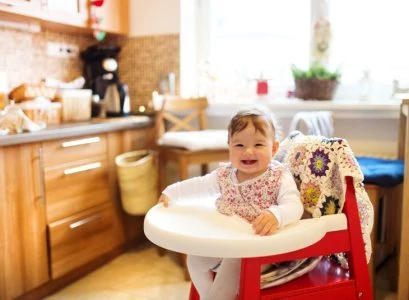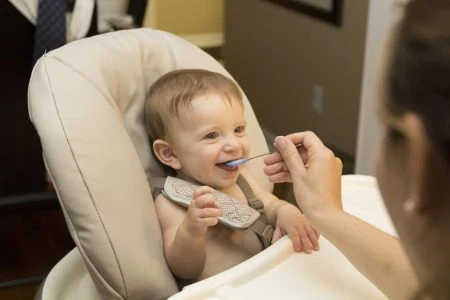
Mealtime is messy enough without worrying about safety hazards. Yet, thousands of children land in the emergency room every year due to high chair accidents.
The good news? Most of these injuries are entirely preventable.
We consulted safety experts and dug into the data to bring you the essential guide on keeping your little diner secure. Here is how to navigate high chair safety with confidence.
Key Takeaways
- Select the right fit: Choose a chair with a wide base, a five-point harness, and a passive crotch restraint.
- Buckle up every time: Falls are the most common injury, so always use the straps, even for quick snacks.
- Create a safety zone: Position the chair away from tables, counters, and walls so your baby cannot push off and tip over.
- Stay supervised: Never leave your child unattended in the chair, as choking or slipping happens silently and quickly.
The Reality of High Chair Injuries
High chair injuries are surprisingly common. Research indicates that roughly 24 children receive treatment in U.S. emergency rooms every day for high-chair-related accidents (1). That adds up to nearly 9,500 children annually.
Common Types of Injuries
Falls are the biggest culprit. In fact, over 90 percent of high chair injuries happen when a child falls or jumps out of the seat (2).
When a child falls from that height, they risk:
- Head trauma: This includes concussions and neck injuries.
- Fractures: Broken bones are common in hard falls.
- Oral injuries: chipped teeth or cut lips.
- Lacerations: Deep cuts or scrapes.
However, falls aren’t the only danger. Other risks include:
- Choking: This can happen on food or small items left on the tray.
- Burns: Hot drinks or appliances placed within reach are dangerous.
- Pinching: Little fingers can get caught in tray latches or folding joints.
- Tipping: Energetic toddlers can push off the table with their feet, causing the chair to flip backward.
Choosing the Right High Chair
Skip the urge to buy the first cute chair you see. You need an age-appropriate high chair that meets current safety standards. Here are the main styles to consider.
- Traditional High Chair: These are standalone units with long legs. They bring your baby up to table height. Look for models with a five-point harness and a removable tray for easy cleaning.
- Space-Saving High Chair: These sit on top of a regular dining chair. They differ from boosters because they often recline and have their own tray. They are great for small apartments but must be strapped tightly to the adult chair.
- Hook-On High Chair: These portable seats clamp directly onto a sturdy table. They are excellent for travel or restaurants. Only use these once your baby has strong head and neck control.
- Booster Seat: Designed for toddlers, these elevate your child so they can reach the table. They usually lack a full harness, so they are not safe for infants or younger babies who cannot sit still.
A Note on Vintage Chairs
Antique or heirloom high chairs are charming, but they can be dangerous. Older models often lack crotch posts, wide bases, and proper harness systems. It is safer to stick with modern chairs that meet current ASTM International safety standards.
Essential Safety Features
When shopping, prioritize these four components to ensure stability and security.
- Five-Point Harness: Just like car seats, the safest high chairs use straps over the shoulders, hips, and between the legs. This prevents your baby from standing up or sliding out under the tray.
- Passive Crotch Restraint: This is a fixed post attached to the seat (not the tray) that sits between your baby’s legs. It prevents them from slipping out the bottom if the tray is removed or the straps are loose.
- Wide Footprint: A chair with legs that splay outward is harder to tip over. It might take up more floor space, but the stability is worth it.
- Locking Wheels: If you want a portable chair with wheels, verify they lock securely. You do not want the chair rolling away while you are trying to feed your child.
Pro Tip
9 Rules for High Chair Safety
1. Buckle Up Every Time
This is the golden rule. Even if your baby is calm, you must use the harness. It only takes a split second for a child to stand up or slide out. A tray is not a restraint; it can detach or move.
2. Lock It Down
Before placing your baby in the seat, do a quick stability check. Ensure the folding mechanism is locked, wheels are secured, and any straps attaching it to a dining chair are tight.
3. Clear the “Kick Zone”
Position the high chair far enough away from the table or counter so your child cannot push against it with their feet. If they kick hard enough, they can tip the entire chair backward.
4. Supervise Constantly
Never leave your child alone in a high chair. Choking is silent, and accidents happen instantly. If you need to leave the room, take your baby with you.
5. Use the Restraints Correctly
A loose strap is a useless strap. Adjust the harness so it fits snugly against your child’s body. As they grow, re-adjust the fit to ensure it is not too tight or too loose.
6. Keep Hazards Out of Reach
Your baby has a longer reach than you think. Keep the table clear of hot coffee, sharp cutlery, heavy centerpieces, and tablecloths that can be pulled down.
7. No Standing allowed
If your child tries to stand in the high chair, take them out immediately. Teach them that the chair is strictly for sitting and eating. If they view it as a jungle gym, the risk of a fall skyrockets.
8. Sanitize Regularily
Food trapped in crevices creates a breeding ground for bacteria. Clean and disinfect the chair often. Removable tray liners and machine-washable seat covers make this easier.
9. Monitor Recalls
Baby gear gets recalled for safety issues frequently. Register your product with the manufacturer so you get notified of defects. You can also check Recalls.gov periodically.
FAQs

Is a High Chair Considered a Restraint?
Yes, and that is a good thing. A high chair safely contains your baby during mealtimes, keeping them away from hot stoves and sharp objects in the kitchen.
It allows you to cook or eat while knowing your baby is secure. However, it should only be used for feeding or supervised table activities, not as a “babysitter” for long periods.

What Safety Standards Must High Chairs Meet?
High chairs in the US must meet ASTM F404 standards. To pass, a chair is tested for stability (tipping), structural integrity (collapsing), and restraint reliability.
It must also have a passive crotch restraint to prevent “submarining” (sliding under the tray) and carry specific warning labels.

How Often Do Babies Fall From High Chairs?
Falls are shockingly common. Statistics suggest roughly 9,400 children are treated in emergency rooms annually for high chair injuries.
The vast majority of these accidents happen when children are not strapped in or are left unattended. Consistent supervision and harness use drastically reduce this risk.

When Is My Baby Ready for a High Chair?
Most babies are ready around 6 months old. The key milestone is the ability to sit up upright with little to no support.
If your baby slumps over or cannot hold their head steady, they are not ready for a standard high chair. Some models have a recline feature for younger babies, but these are for bottle feeding, not solids.

When Can I Stop Using the Straps?
You should use the straps for as long as your child uses the high chair. Even toddlers can lose their balance or try to climb out.
Once your child is old enough to sit calmly without restraints (usually around age 3), they are likely ready to transition to a booster seat or a regular chair, rather than using a high chair without straps.

Why Is a Footrest Important for High Chair Safety?
A footrest provides stability and comfort. Without one, a baby’s legs dangle, which can pull on their hips and cause discomfort, leading to fidgeting.
A fidgety baby is more likely to try to stand up or wiggle out of the harness. A solid footrest helps them sit still and focus on eating.
The Bottom Line
High chair safety is about vigilance and the right gear. By choosing a stable chair with a five-point harness and supervising every meal, you can prevent the vast majority of accidents. Keep the area clear of hazards, strap them in every single time, and enjoy those messy, memorable mealtimes with peace of mind.
In recent years, the safety standards for high chairs have been updated by the U.S. Consumer Product Safety Commission to include the following (3):
- More rearward stability.
- A visible warning label.
- A permanent passive crotch restraint.

Editor's Note:
Dr. Po-Chang Hsu, MD, MS