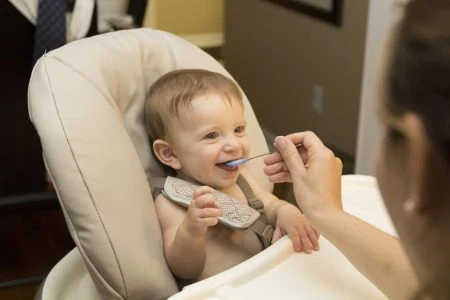
Raising a tiny human comes with a lot of gear. Strollers, cribs, monitors, bouncers (and the list goes on). It is easy to feel overwhelmed by the sheer volume of “must-haves” marketed to new parents.
While your baby definitely needs a safe spot to eat, does that spot have to be a traditional high chair? Not necessarily.
Let’s break down the pros, cons, and alternatives to help you decide if a high chair is the right fit for your kitchen and your lifestyle.
Key Takeaways
- Safety is priority #1: Look for five-point harnesses, stable bases, and adjustable footrests to prevent choking hazards.
- Check your footprint: Traditional chairs can be bulky; consider folding models or booster seats if you have a smaller kitchen.
- Budget matters: Prices range from $20 to $400+; higher costs usually mean better materials, longevity, and ergonomic design.
- Cleanability is key: Avoid excessive fabric padding and opt for smooth surfaces or dishwasher-safe trays to minimize mess.
You might decide a traditional high chair isn’t your vibe, and that is totally fine. However, your baby still needs a designated, secure place for meals. The best high chairs offer convenience, but they aren’t the only solution.
Is It Safe?
Safety is the biggest factor here. While it might seem easier to feed your baby in a swing, bouncer, or Bumbo seat, these items aren’t designed for swallowing food. They often put babies in a reclined or slumped position, which significantly increases the risk of choking.
High chairs are purpose-built to keep your baby upright and secure. However, they aren’t risk-free; falls are a common injury when children aren’t strapped in properly (1).
Here is what to look for to ensure maximum safety:
- Harness: A 3-point or 5-point harness is non-negotiable.
- Crotch post: Prevents the baby from sliding out under the tray (submarining).
- Stability: Wide bases prevent tipping (though watch your toes).
- Locking wheels: If it rolls, it needs to lock.
- Smooth edges: No sharp hinges or pinch points.
For a deeper dive, check out our guide on high chair safety. The AAP also provides crucial guidelines you should review.
The Importance of Posture
Beyond just keeping the baby contained, a good chair supports proper posture. You want to look for the “90-90-90” rule: hips, knees, and ankles should all be at 90-degree angles.
This is why a footrest is critical. When a baby has dangling feet, they have less core stability. Less stability means they have to work harder to chew and swallow safely. If you opt for an alternative seat, ensure it still offers foot support.
Do You Have the Space?
Traditional high chairs are notorious floor-hogs. If you have a compact kitchen or dining area, a chair with a wide footprint might become a constant tripping hazard.
If you are tight on square footage, you have options. You can skip the standalone chair and use a booster seat that straps directly to a dining chair.
Before you consider using a booster seat high chair, it is important to be sure your baby has good head control and back muscle coordination. They should at least be able to sit a significant amount of time without the aid of back support (and not fall over while sitting). Booster seats offer minimal trunk support, so these are best for infants closer to a year old.

Editor's Note:
Dr. Leah Alexander, MD, FAAPYou also need to decide on the setup. Do you want a tray, or do you want the baby pushed right up to the table? Tray-less options allow for better social interaction, but they mean you will be wiping down your dining table constantly.
For families who want the standalone experience without the bulk, space-saving high chairs or folding high chairs are solid compromises. They tuck away when mealtime is over.
As a pediatrician, I do not recommend the recline feature on a high chair. An infant should sit upright for feeding to prevent choking.
Editor's Note:
Dr. Leah Alexander, MD, FAAPCan You Afford It?
Baby gear adds up fast. A high chair sits right up there with car seats and strollers in terms of cost. You can spend anywhere from $20 for a basic plastic model to over $400 for a designer wooden chair.
If the price tag of a premium chair makes you sweat, consider a hook-on high chair. They are portable, fraction of the cost, and great for travel or restaurants.
Versatility and Longevity
Some parents view a high chair as a temporary annoyance (roughly 6 months to 2 years). Others view it as furniture.
If you want bang for your buck, look for a “grow-with-me” chair. We love this option by Stokke because it evolves from an infant seat to a toddler chair, and eventually into a sturdy seat for a specialized adult (up to 242 lbs).
Because it blends into your home decor and lasts for decades, it offers better value than a plastic chair that ends up in a landfill after two years.
The Cleanup Factor
Babies are messy. We are talking spaghetti-sauce-in-the-hair messy.
Many traditional chairs come with plush, padded fabric covers. They look comfy, but they are a nightmare to clean. Crumb crevices and stains are inevitable.
If you want to keep your sanity, we suggest an easy to clean high chair. Look for sleek wood or plastic designs with minimal crevices. A removable, dishwasher-safe tray is also a game-changer for those post-dinner deep cleans.
FAQs

How Can I Feed My Baby Without a High Chair?
While we recommend high chairs for the safest positioning, you do have alternatives. A travel booster seat with a tray is a secure option that attaches to a standard dining chair. Hook-on chairs (lobsters) are also excellent for clipping onto countertops or tables, provided the surface is stable. Avoid feeding infants in car seats, swings, or on your lap, as these positions increase choking risks.

Why Does Everyone Love the IKEA High Chair?
The IKEA Antilop is a cult favorite for two reasons: price and simplicity. It costs roughly $20 and has zero fabric, meaning you can hose it down or wipe it clean in seconds. Its simple design also promotes good posture (though many parents add an aftermarket footrest). It isn’t fancy, but it gets the job done without breaking the bank.

Why Do You Need a High Chair With a Footrest?
A footrest provides stability. Imagine sitting on a barstool with your legs dangling; eventually, your lower back hurts and you slouch. For a baby, that instability distracts them from the complex task of eating. A footrest allows them to brace their feet, sit upright, and focus on chewing and swallowing safely.

When Does a Baby Stop Using a High Chair?
Most children transition out of a high chair between 18 months and 3 years old. The timeline depends on their size and maturity. Once a toddler is tall enough to reach the table from a booster seat (or a regular chair) and can sit still through a meal, they are ready to graduate.

Which Type of High Chair Is Best?
The “best” chair depends on your lifestyle. If you have a small apartment, a folding or hook-on chair is superior. If you want a piece of furniture that lasts a lifetime, an adjustable wooden chair like the Stokke Tripp Trapp is best. If you hate laundry, a plastic chair without fabric cushions is the winner.

When Can a Baby Sit in a High Chair?
Most babies are ready for a high chair around 6 months old. The key indicator is physical development, not just age. Your baby should be able to hold their head up steadily and sit upright with minimal support before you place them in a high chair for feedings.
The Bottom Line
Don’t buy a high chair just because it was on a registry checklist. You know your home and your budget better than anyone else.
All you really need is a safe, upright place for your baby to eat that allows you to supervise them closely. That might be a $400 heirloom chair, a $20 plastic seat, or a portable booster strapped to a dining chair.
Focus on these factors when deciding:
- Safety (harness + footrest).
- Available floor space.
- Budget.
- Ease of cleaning.
Whichever option you choose, always strap them in and stay close by. Happy feeding!