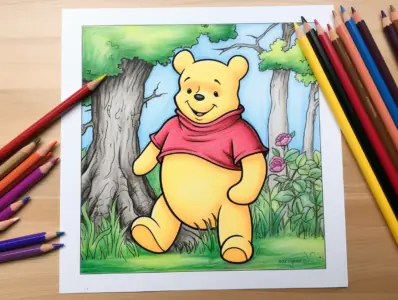
Honey pots, snow days and a bear who never hurries. Grab the crayons.
Winnie the Pooh has been wandering the Hundred Acre Wood since 1926, and these 18 free Winnie the Pooh coloring pages bring him along with Eeyore, Owl, and Christopher Robin.
Some sheets are chunky, thick-lined drawings a preschooler can finish with two crayons. Others are detailed pencil-style scenes full of feathers, stitching, and forest undergrowth that reward colored pencils and a bit of patience.
There are seasonal sheets for Valentine’s Day, Easter, a harvest table, and gift-wrapped presents, plus honey pots, balloons, a tea break, and a snowy walk home. Grab the crayons and pick one.
Pooh Bear and the Honey Pot
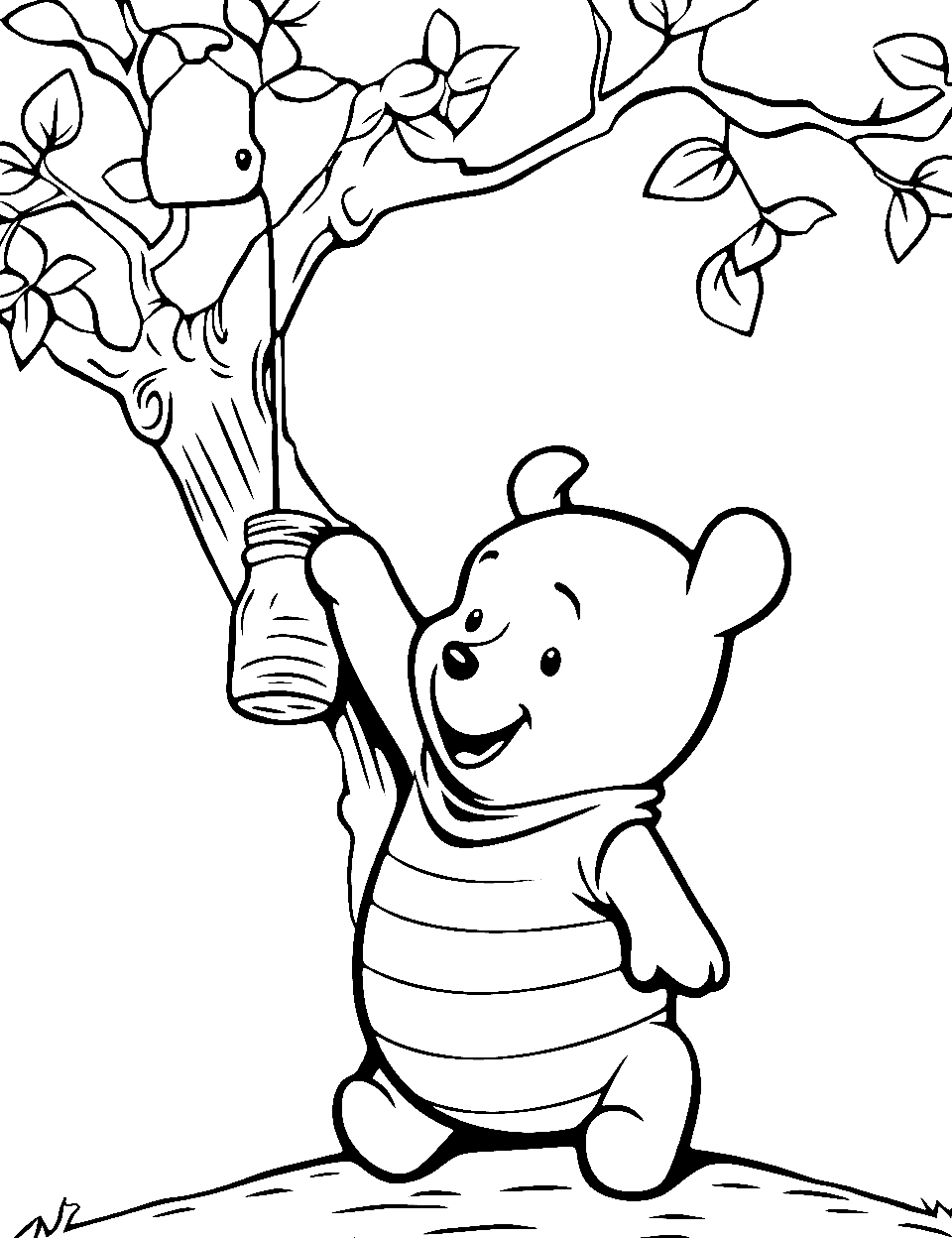
Pooh stands on a little grassy rise with both arms stretched up toward a honey pot roped to a leafy branch. There is a lot of open sky between the branches, so a soft blue wash behind the leaves makes the tree pop. Give the pot a deep amber and keep his shirt the classic red. The shapes are wide and simple, which suits crayons and younger hands.
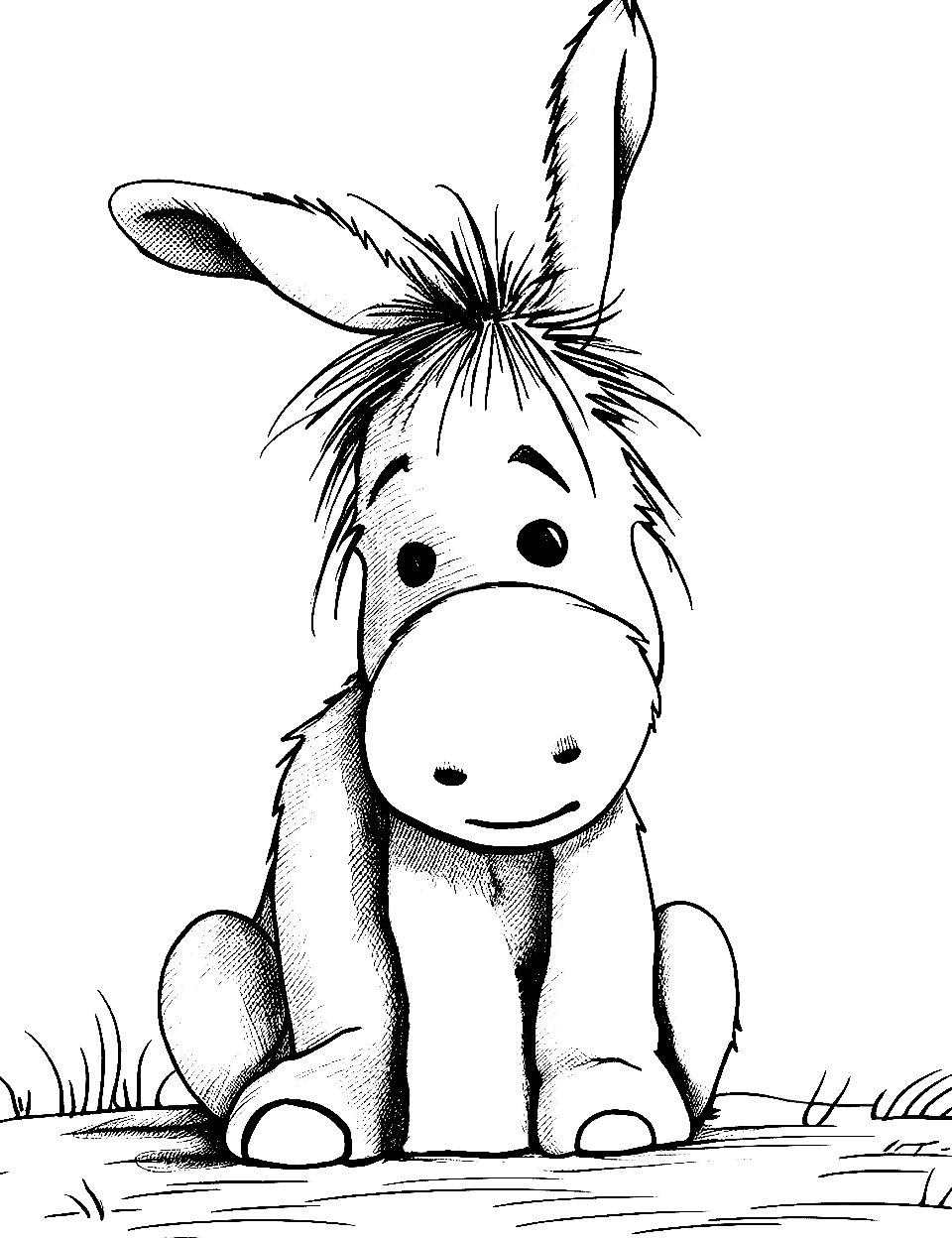
This Eeyore is drawn in a soft, sketchy style, sitting square in a patch of grass with his mane sticking straight up between his ears. The fine shading lines inside his coat suit colored pencils far better than thick markers. Try layering two or three grays over his body and a warmer green in the grass. Older kids and adults will get the most out of the detail here.
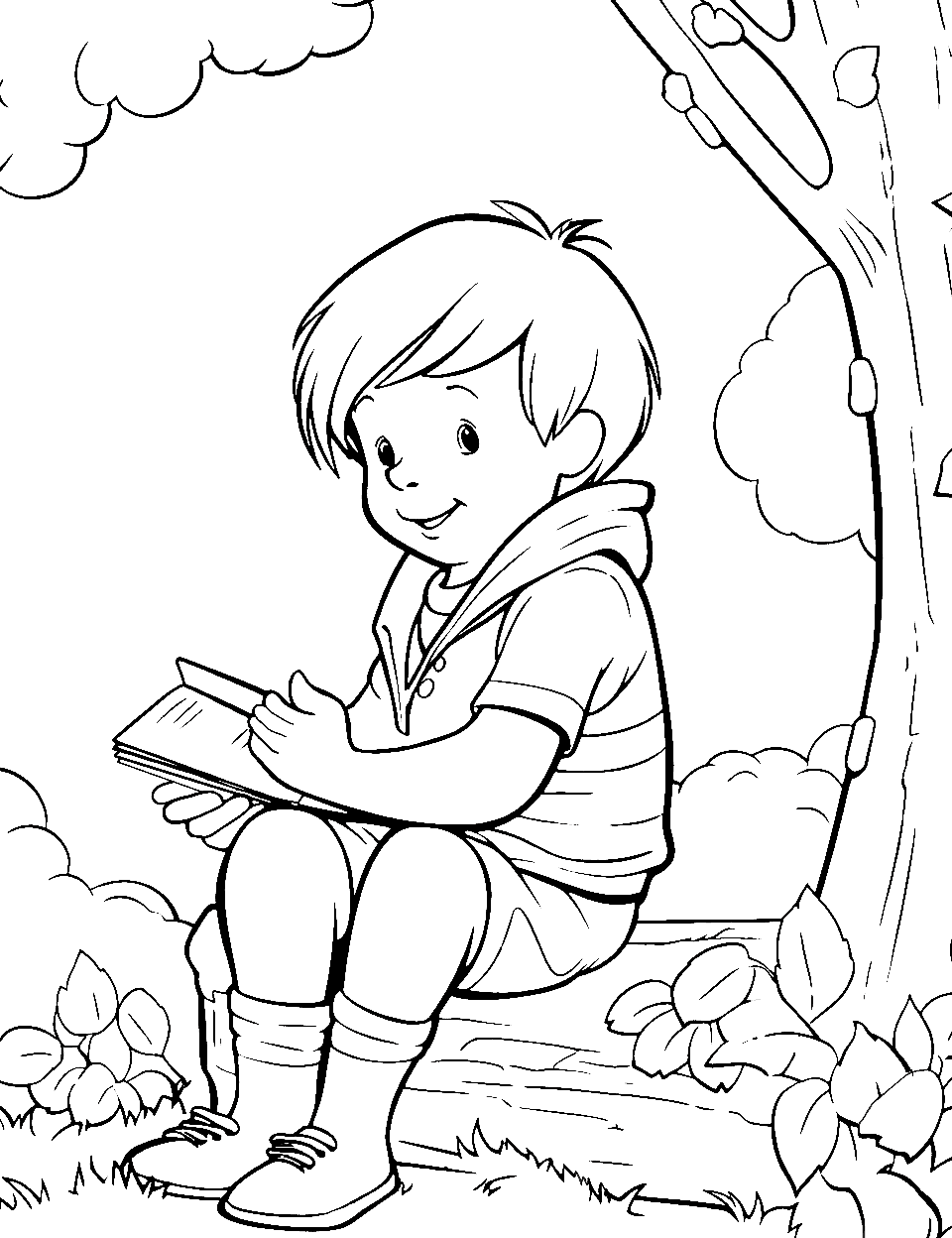
A boy sits on a fallen log with an open book in his hands and a small smile on his face. A tree trunk climbs out of the frame behind him, with clouds along the top and leafy bushes filling the lower corners. There is plenty of background, so this is a quiet, take-your-time page. Warm brown for the log and two or three different greens in the leaves keep the woodland feel.
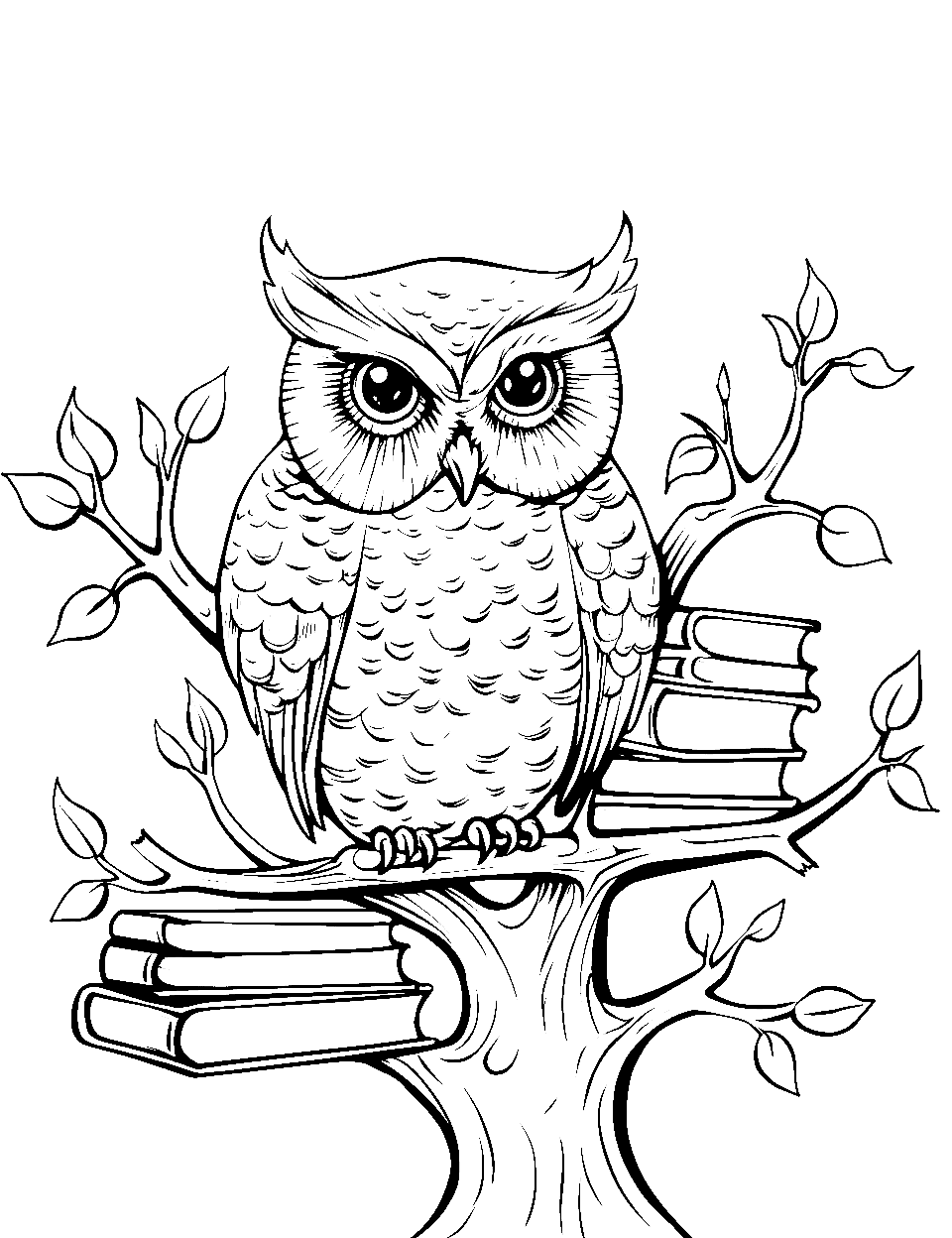
One of the most detailed sheets in the set. A large owl covered in scalloped feathers perches on a branch lined with books. Every feather is outlined separately, which makes it satisfying work for anyone who likes small, careful areas. Browns and tans in colored pencil layer nicely over the feather rows, and giving each book spine its own color helps them stand out from the tree.
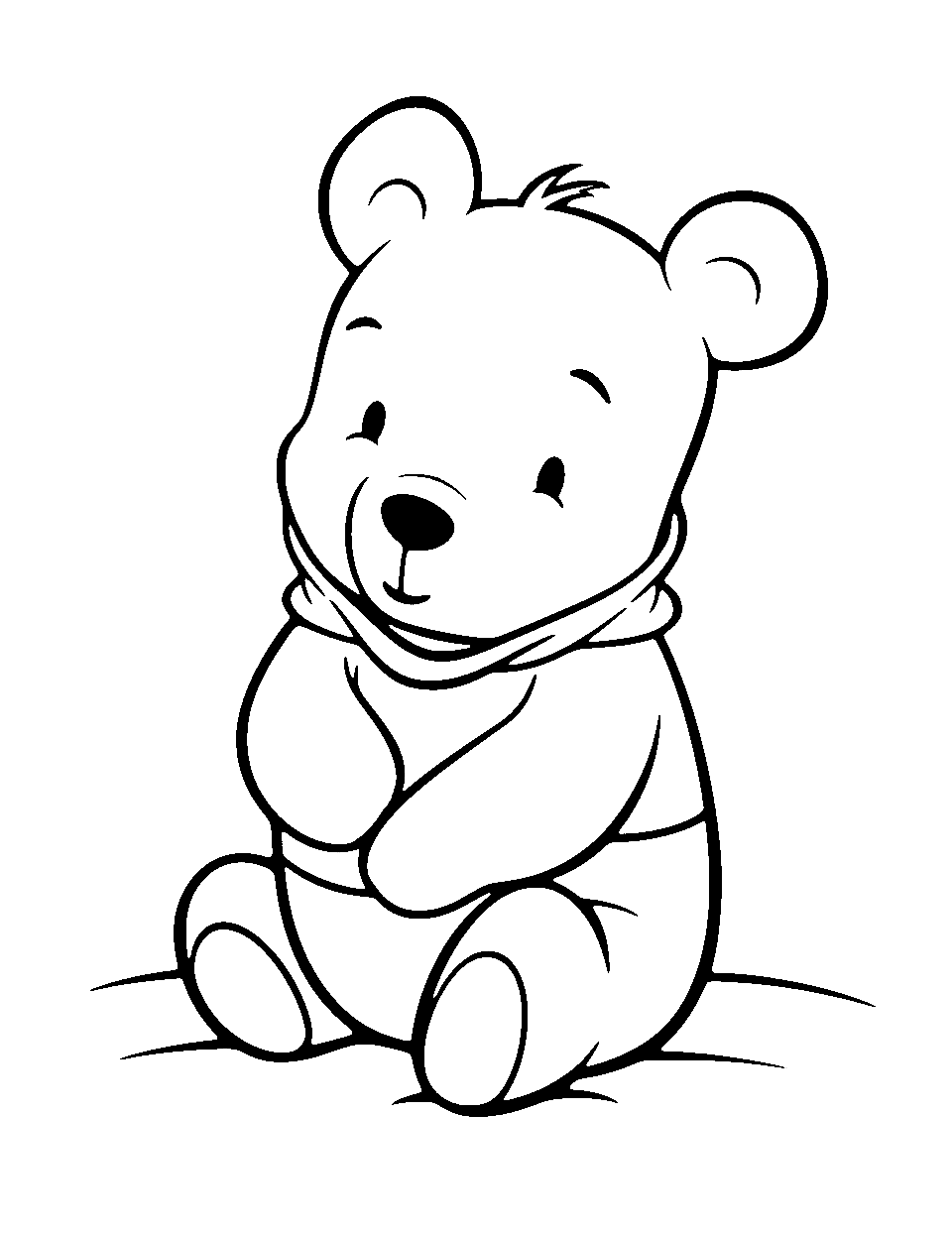
Thick outlines, big shapes, and an empty background make this one of the easiest pages here. Pooh sits with his paws folded and his head tipped to one side, drawn in the same kawaii style that works so well for little hands. A toddler can fill him in with two crayons, red for the shirt and yellow for the bear. Print this one first if you are coloring alongside a preschooler.
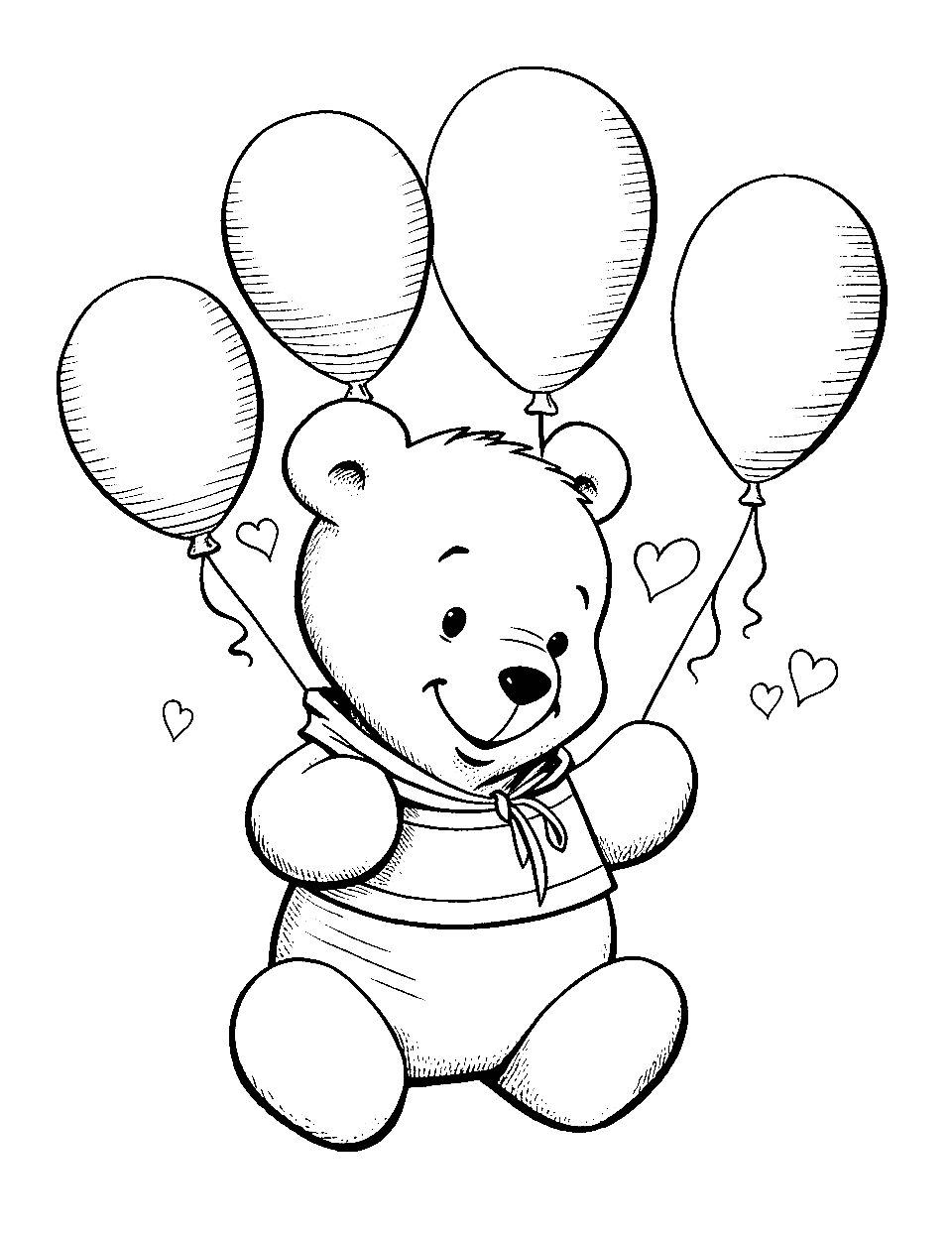
Pooh sits holding a fistful of balloon strings while small hearts drift through the air around him. The balloons themselves are plain ovals, so they are a good place to try a pattern of stripes, dots, or a different shade on each one. Pink and red hearts keep it firmly a Valentine’s page. Print it with our other Valentine’s coloring pages for a card-making afternoon.
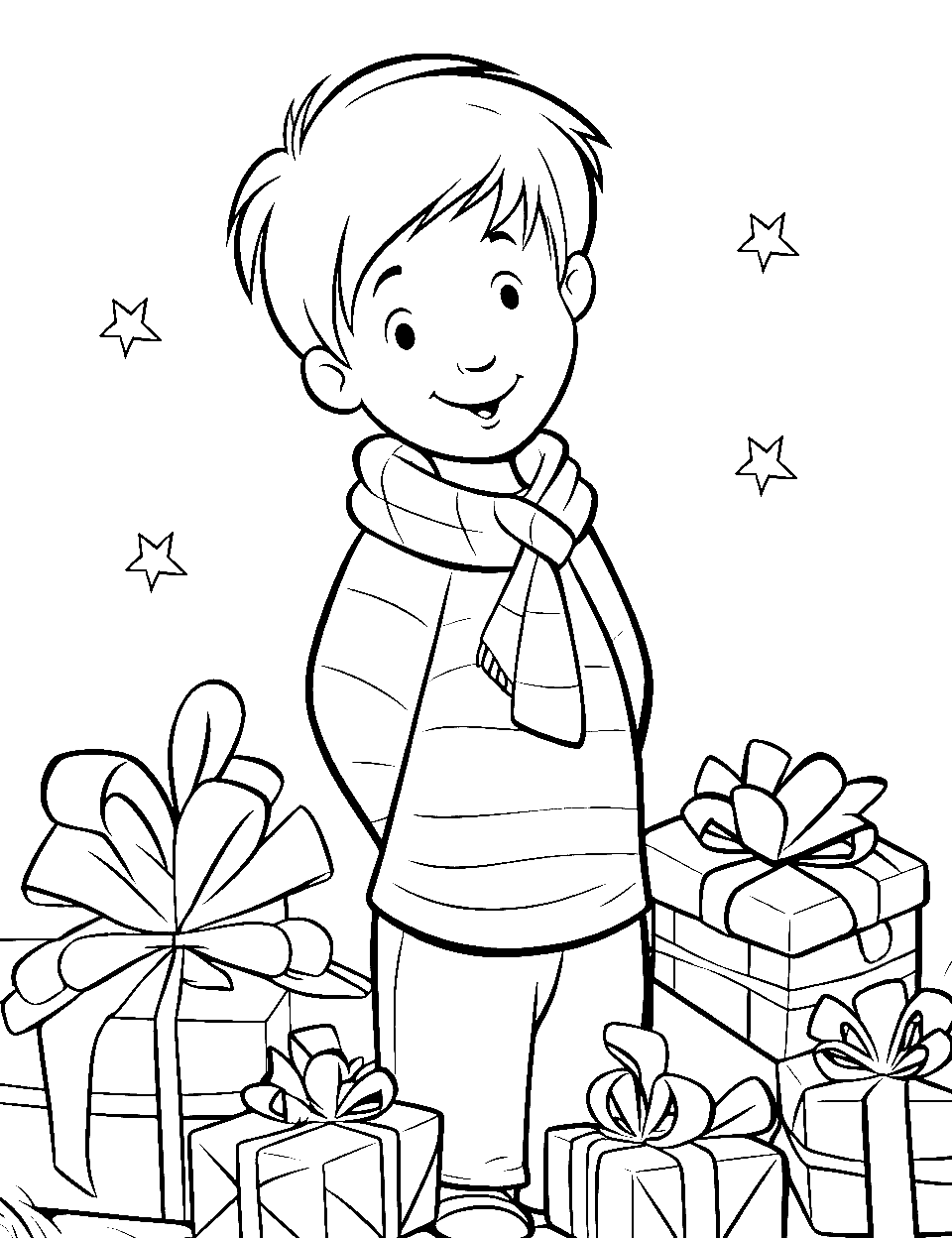
A boy in a striped sweater and a long scarf stands surrounded by wrapped presents, with stars dotted across the sky behind him. The bows and boxes give you lots of small areas to fill, so it is good practice for staying inside the lines. Let kids invent a different wrapping paper pattern for every box. It keeps small people busy on a morning when the living room is already knee-deep in paper.
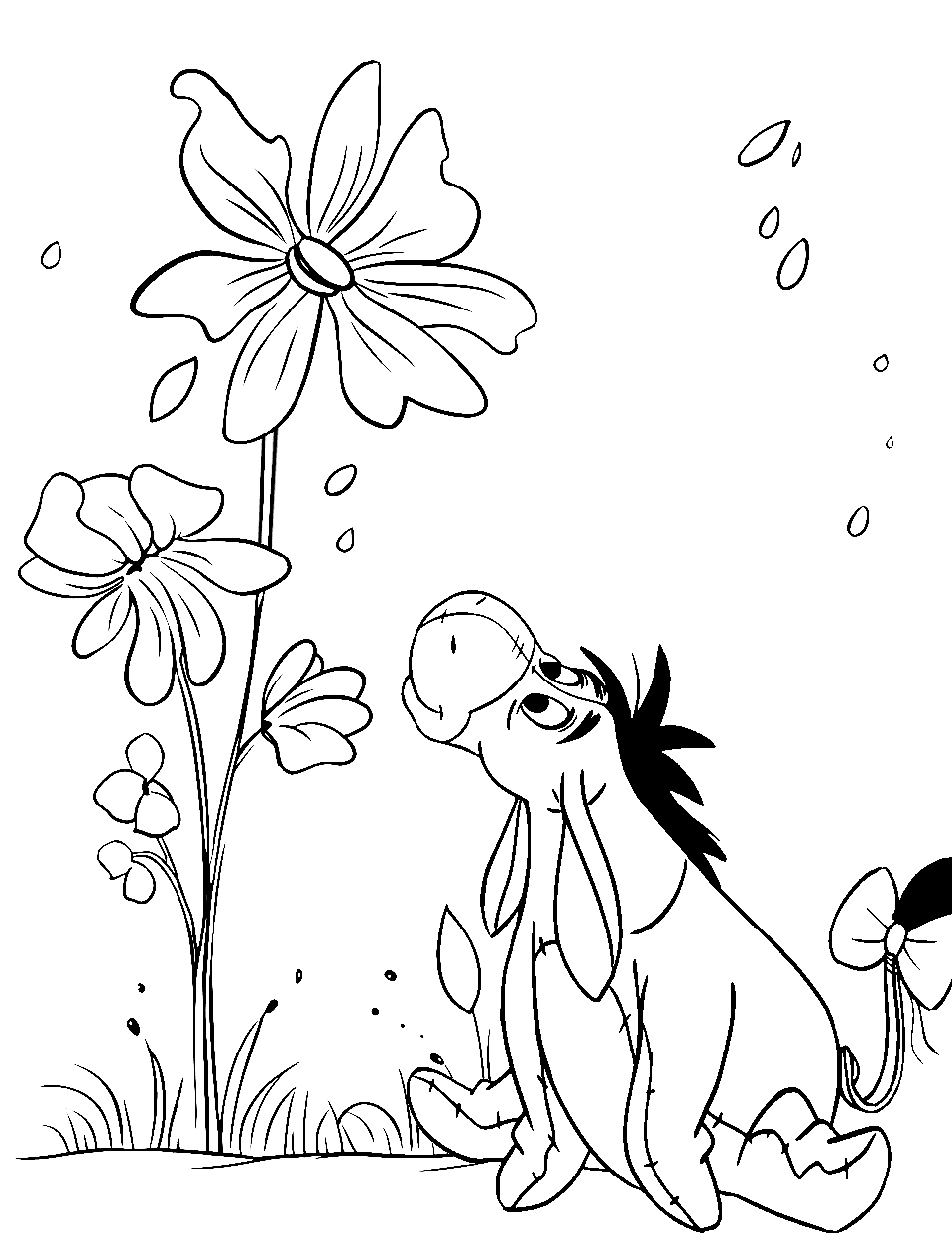
Eeyore tips his head back to look up at a flower taller than he is, with loose petals floating down around him. You can see the stitching along his patched body and the bow tied on the end of his tail. Those big open petals are perfect for blending two shades of the same color. It is a gentle spring page rather than a busy one.
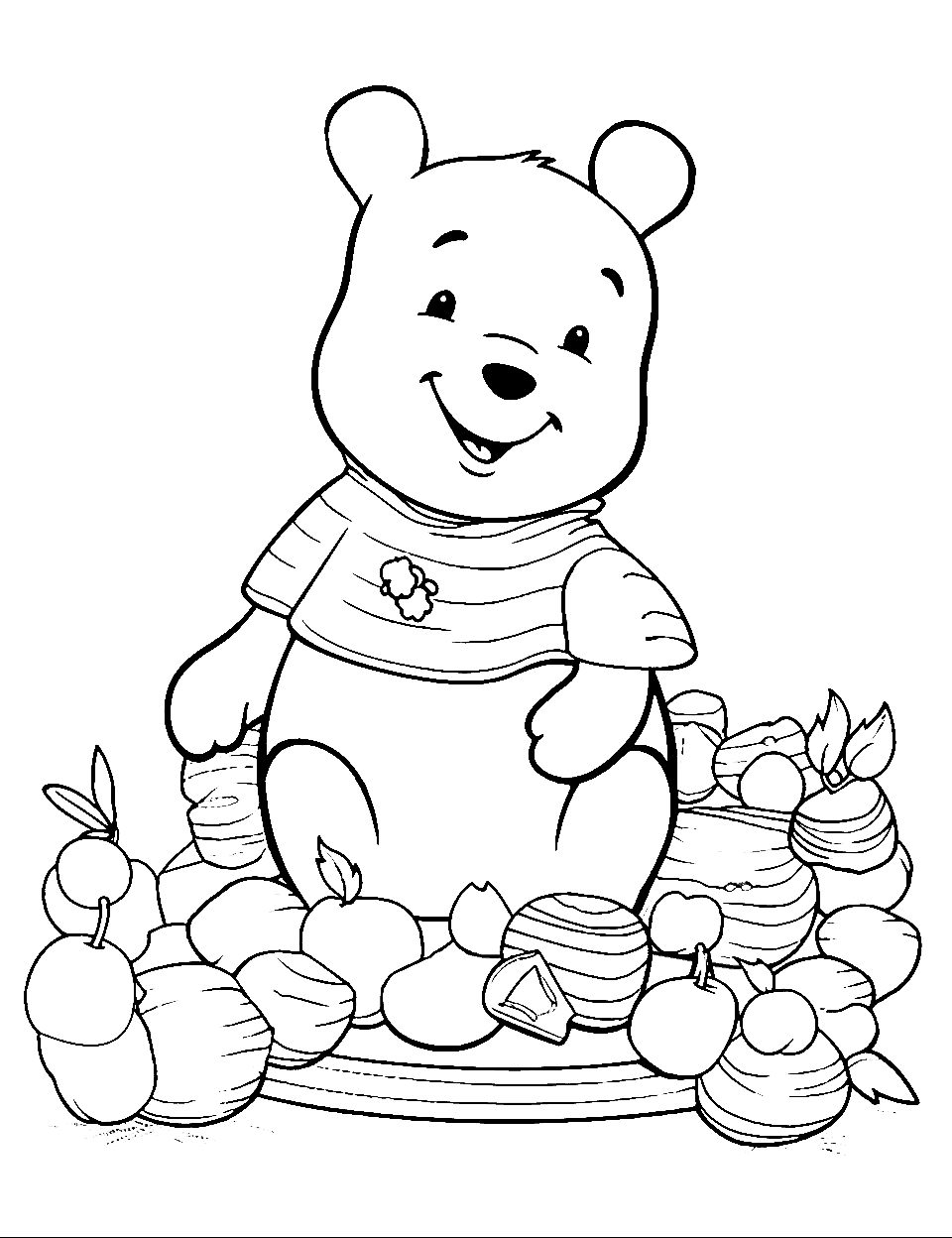
Pooh grins out from behind a spread of apples, pears, and round gourds piled up in front of him. There is a small flower detail on his shirt. Reds, oranges, and deep yellows turn the whole thing into a harvest table. Pair it with a few Thanksgiving jokes to keep kids at the table before dinner.
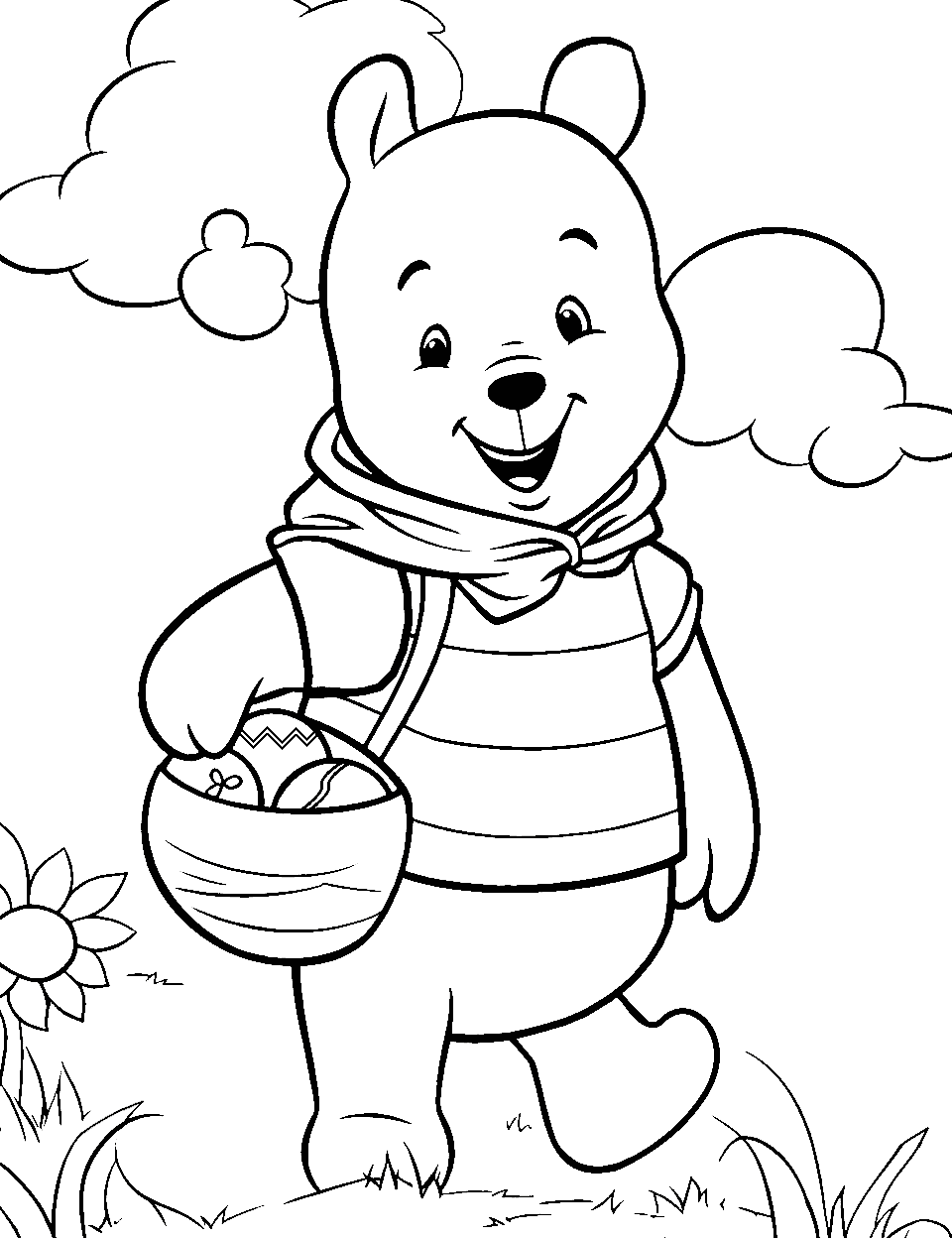
Pooh walks through the grass with a basket of decorated Easter eggs hooked over one arm, clouds behind him and a single flower at his feet. The eggs already have bands and zigzags drawn on them, so kids can pick a different pastel for each section. Everything else on the page is wide open, which keeps it manageable for younger colorers. Laminate the finished sheet and it works as a placemat for Easter lunch.
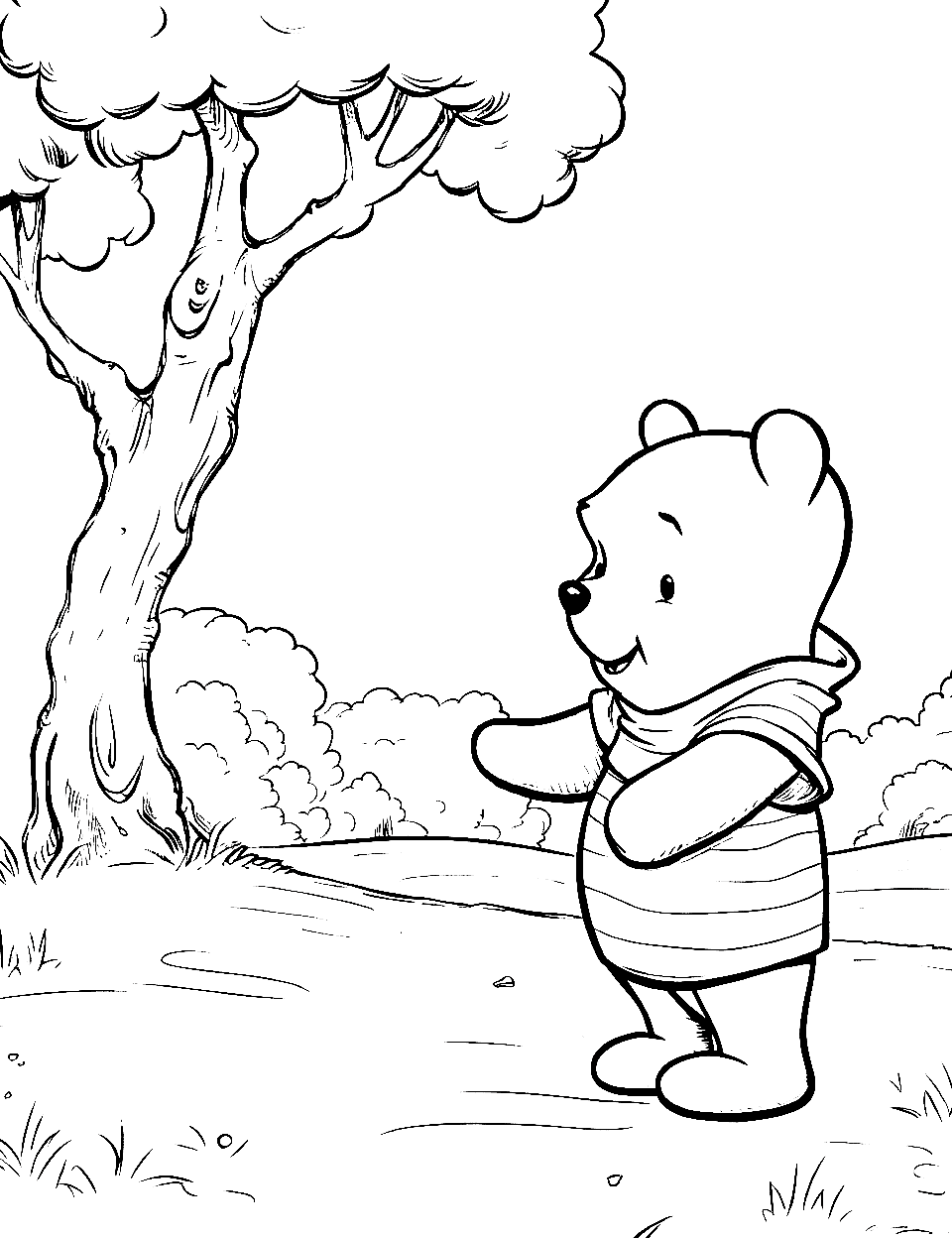
Winnie the Pooh stands out on an open path, looking back toward a big gnarled tree with a rounded canopy. Knots and curved grain lines are drawn into the bark, which is a nice place to layer two browns. Most of the page is open ground and sky, so it colors up quickly. A pale green field and a bright blue sky are really all it needs.
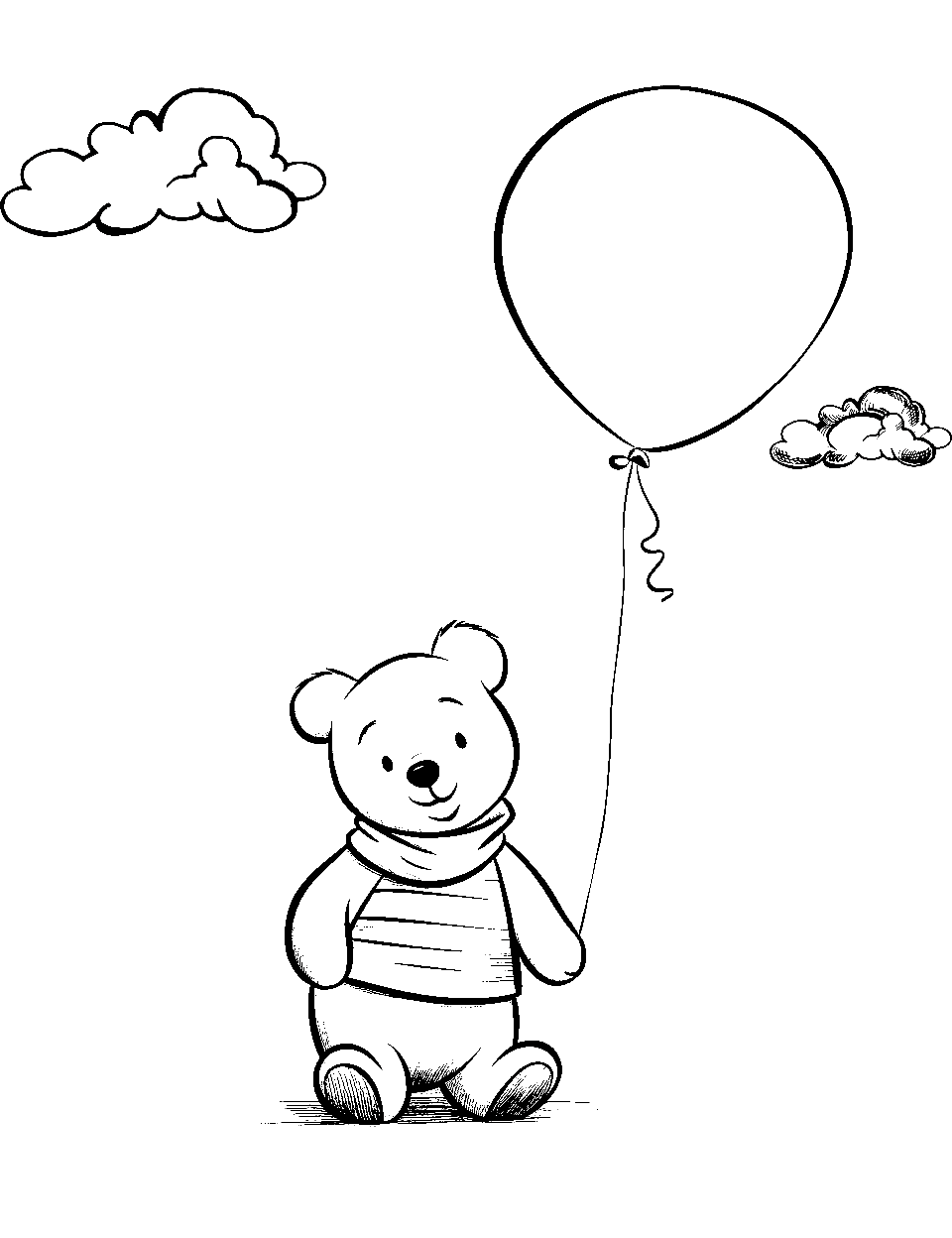
One big empty balloon floats above Pooh while he sits on the ground holding the string. Because the balloon takes up so much of the page, it is the obvious spot for a bold single color or a pattern of your own invention. A little sky shows around the edges. The soft, sketchy outlines suit colored pencils better than markers.
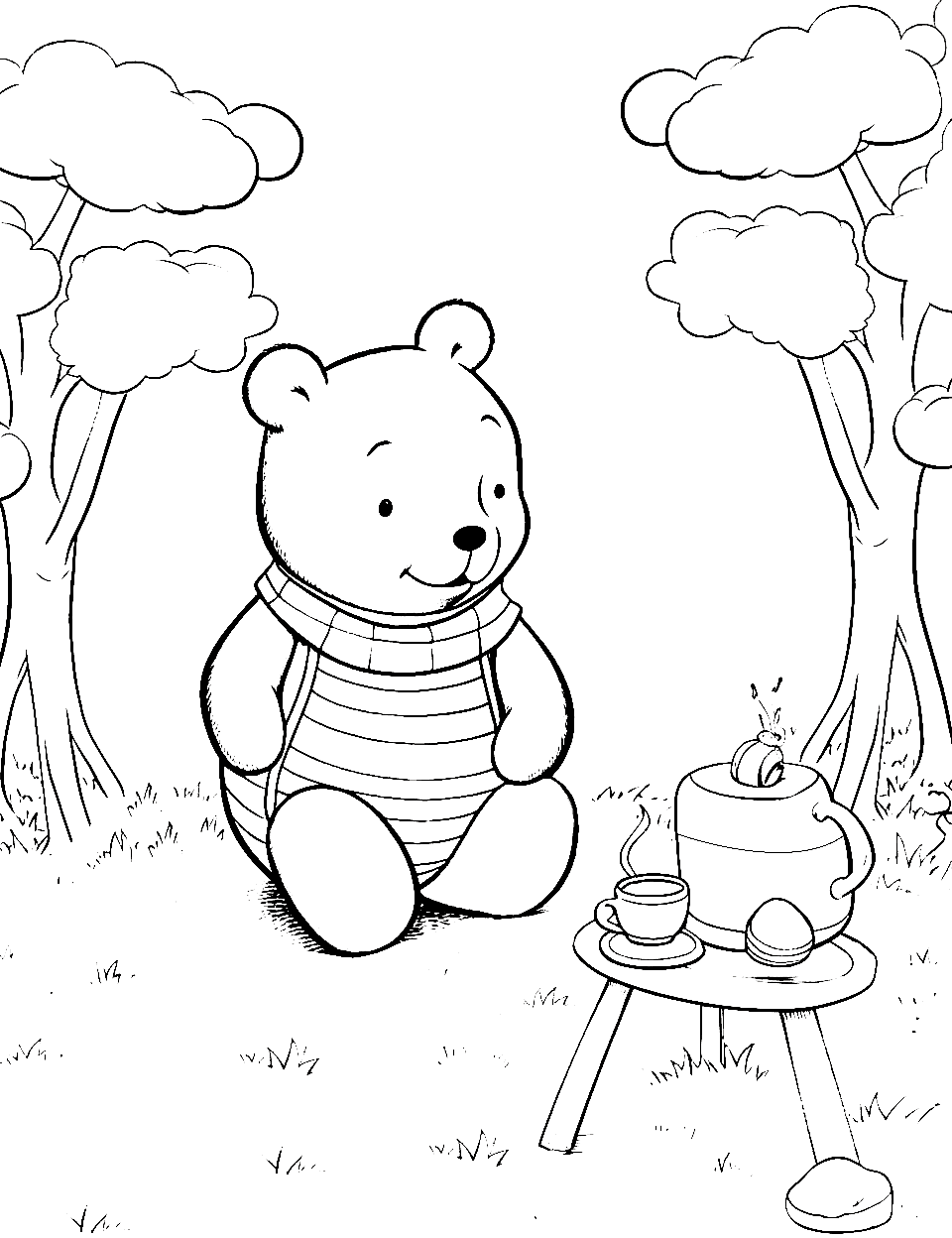
Pooh sits in a grove of round-topped trees beside a small table set for tea. Warm yellows on the tea things and a soft green underfoot match the calm mood of the scene. The trees are simple shapes, so a younger child can handle the background while an older sibling works on the table.
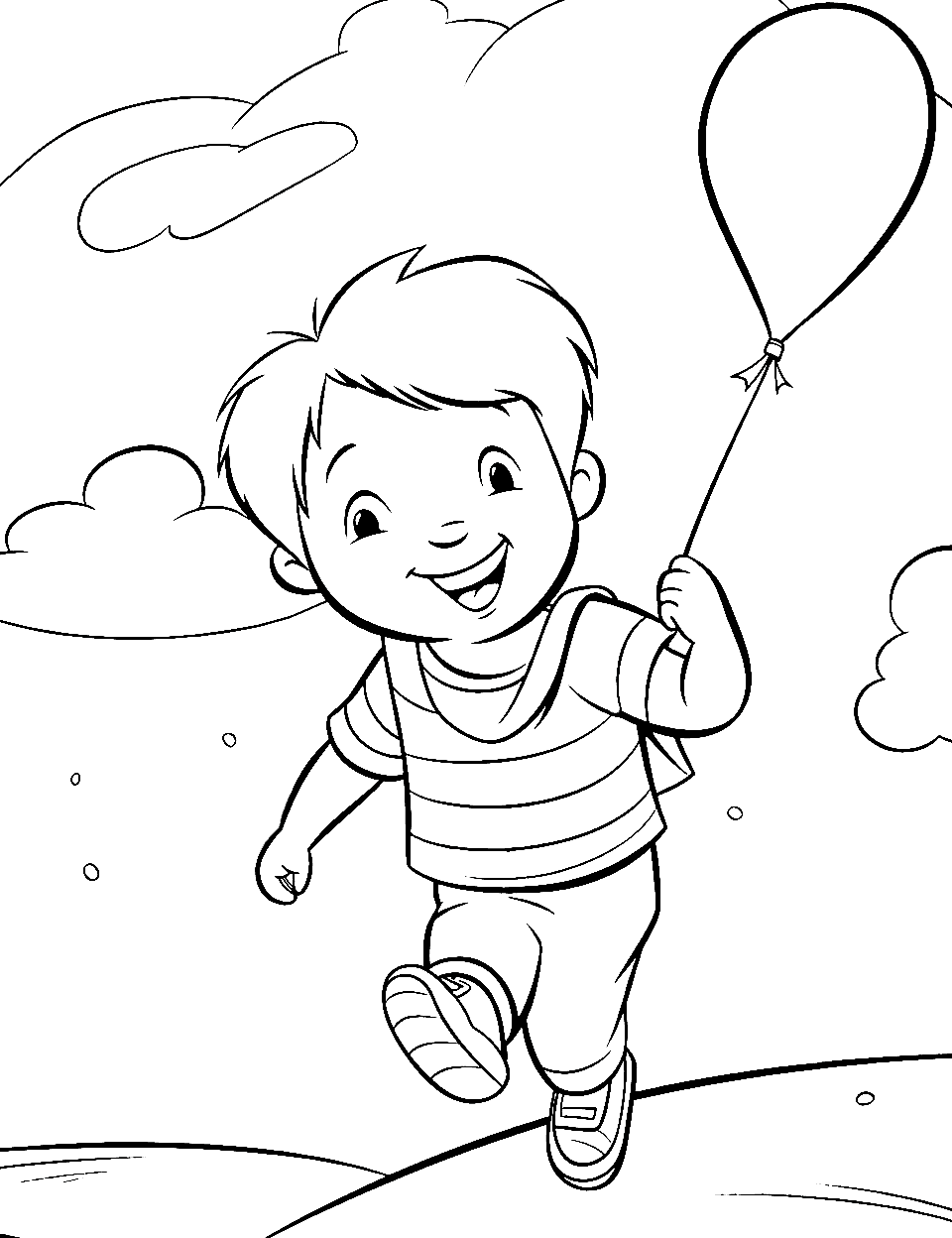
A boy runs straight toward you with a balloon trailing behind him and a huge grin on his face. His striped shirt is the obvious place for two alternating colors. Clouds fill the sky behind him, so leave those pale and let the balloon carry the brightest shade on the page. It is one of the quicker scenes to finish in a single sitting.
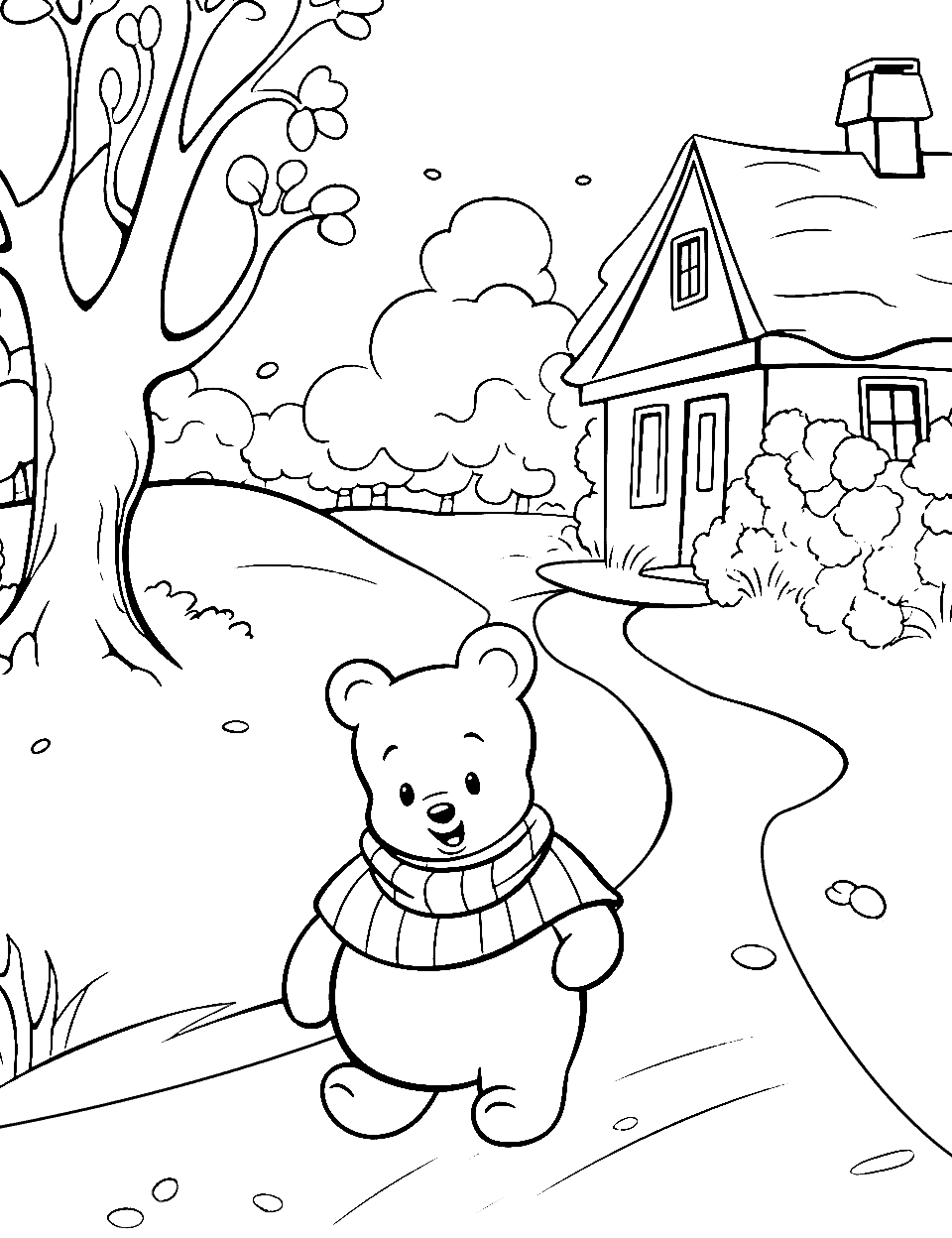
Pooh walks a curving path in a chunky knitted sweater while flakes drift down around him. Behind him sits a cottage with a chimney, and a bare tree reaches over the path from the left. Leave the ground and the roof white, color only the cottage, the sweater, and the tree, and you have a proper snowy day without much work. The ribbing on the sweater is drawn in, so a light and a dark version of one color makes it look genuinely knitted.
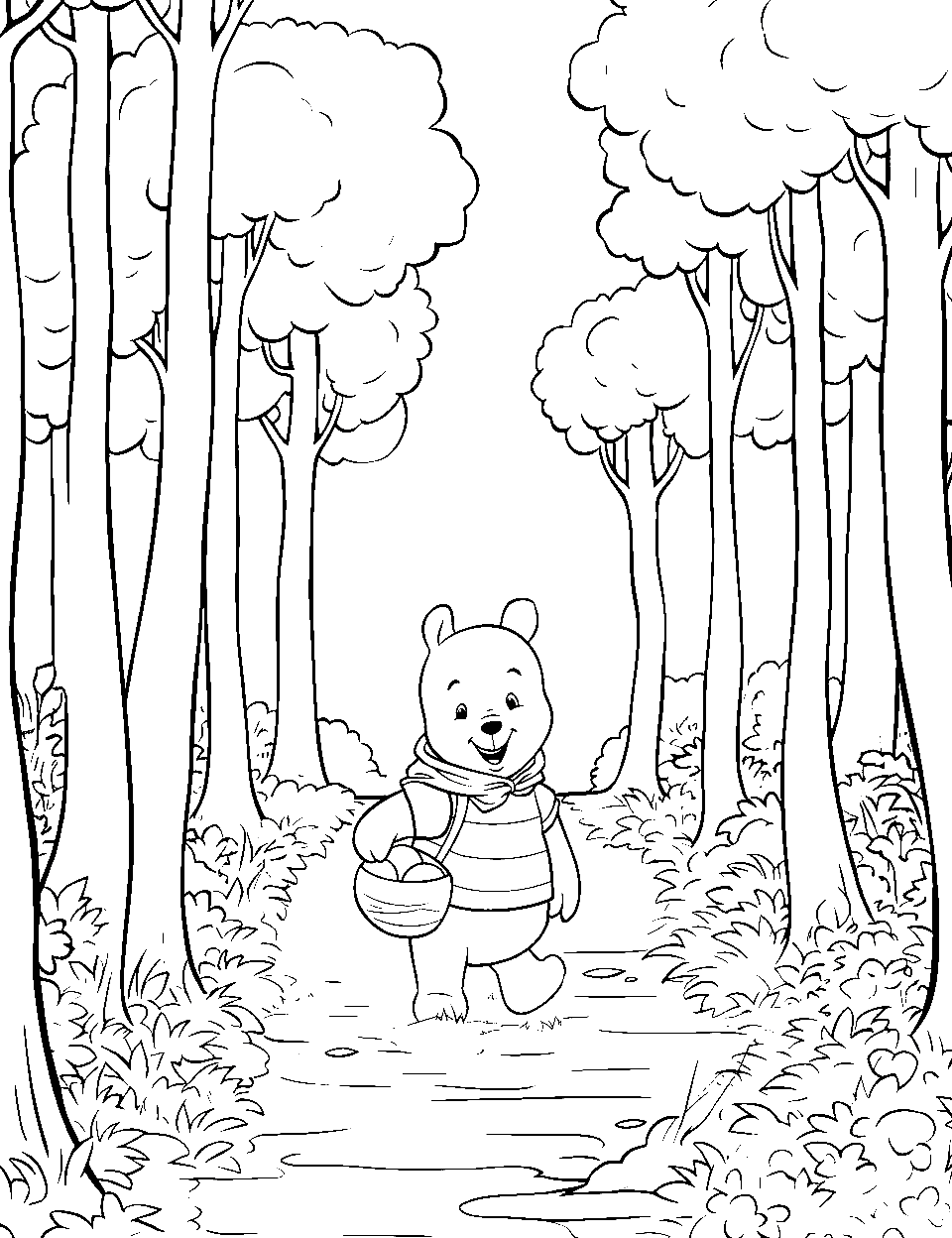
Tall, straight trees line both sides of a path while Pooh walks down the middle with a small basket over his arm. The undergrowth on either side is drawn as clusters of leaves, which gives you a lot of small shapes to vary with different greens. It is a busier page than it looks at first glance. Save it for a rainy afternoon when there is time to fill it in properly.
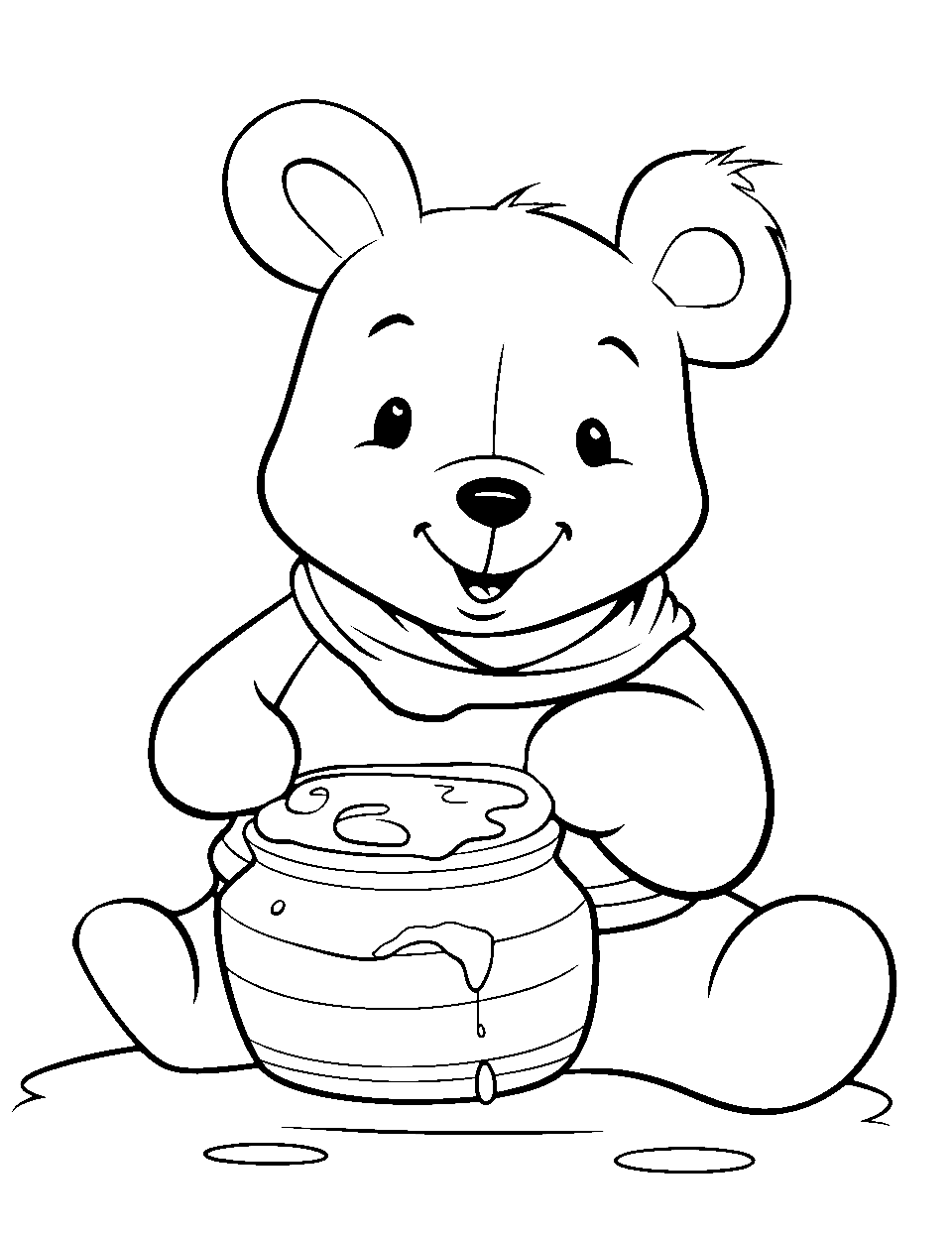
Pooh sits with a honey pot in his lap, honey pooled across the top and running down one side. The lines are thick and the background is empty, another good sign for younger kids. A deep golden yellow for the honey next to a soft clay color for the pot looks best. Printed small, it also makes a sweet front for a homemade card.
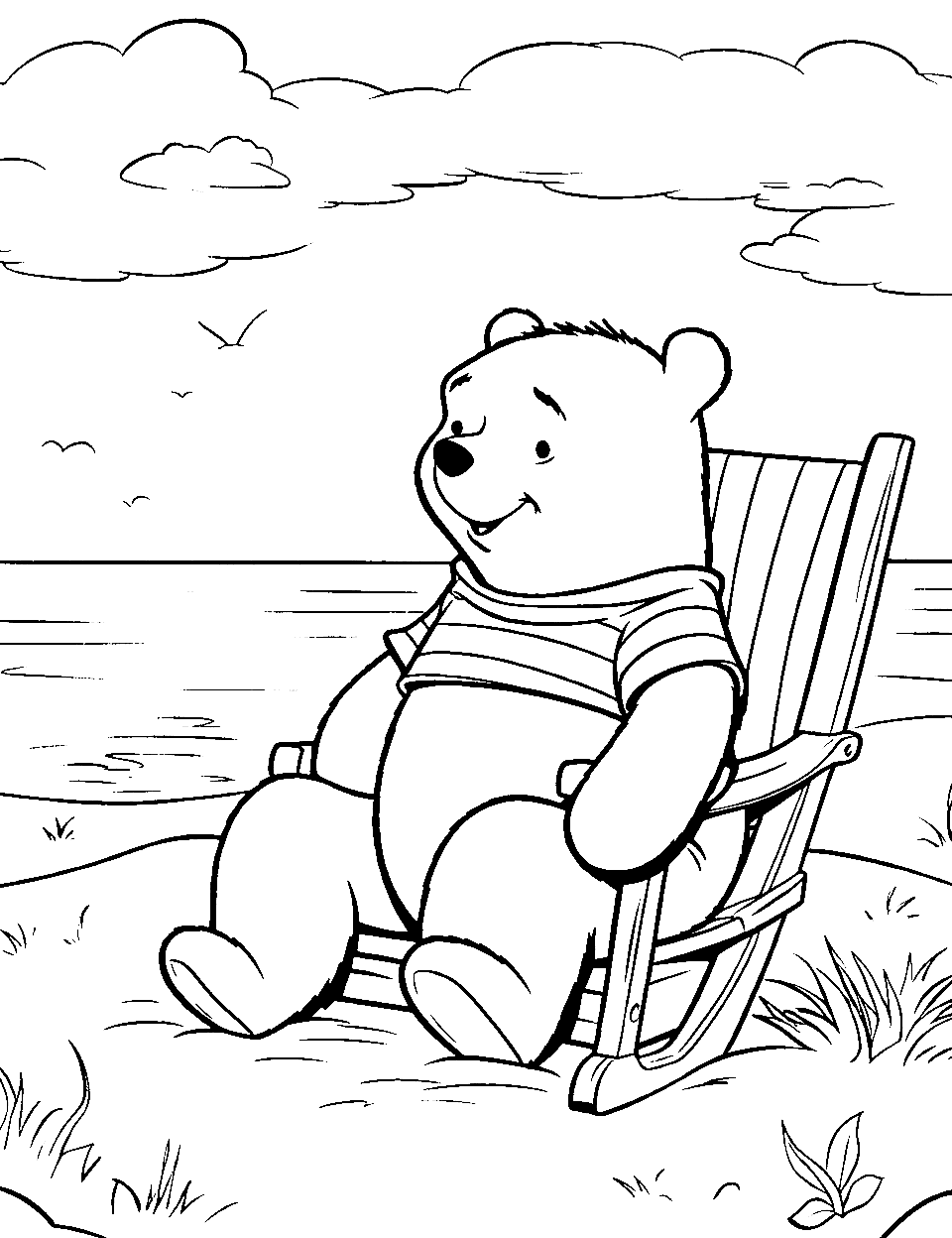
Pooh leans back in a wooden deck chair with water stretching out behind him and a few birds in the sky. The chair slats and the bands of water are long, easy shapes to fill with blues. Keep the grass tufts at his feet green and the clouds pale for a proper summer scene. It is a relaxed page, and a good one to take outside.
By using our free coloring pages, you acknowledge and agree to our full disclaimer. All materials are for personal, non-commercial use only and all rights belong to their respective license holders.
Where Did Winnie the Pooh Come From?
Winnie the Pooh started as a real bear in a London zoo. Lieutenant Harry Colebourn bought a black bear cub in 1914 on his way to the war in Europe, named her Winnie after his home city of Winnipeg, and left her at London Zoo that December (1). Milne and his son Christopher were among the visitors who came to see her.
Milne turned that bear into a book, and the book itself is now free to read. His Winnie-the-Pooh, published in 1926, entered the US public domain on January 1, 2022, characters and all (2). Tigger arrived later, in the 1928 sequel, so he stayed under copyright until 2024, and Disney still owns its own later versions of everyone.
The original Eeyore is drier than the cartoon. In the 1926 book, Alan Alexander Milne has Eeyore answer a friendly hello with “Not very how,” then add, “I don’t seem to have felt at all how for a long time” (3). Read a chapter aloud while the coloring is going on and the sheets stop being generic bear pictures.
Which Sheet Should You Print First?
Start a preschooler on the thick-outline sheets and save the sketchy, fine-lined ones for older kids and adults. Simple Sitting Pooh, Sweet Honey Treat, and Pooh and a Single Balloon are mostly large curved shapes with empty backgrounds. Owl and the Book Branch, Eeyore Sitting in the Grass, and Forest Path Stroll pack in feathers, stitching, and leaf clusters that need a sharpened pencil.
There is a reason the big shapes come first. Most 3-year-olds can copy a circle, and most 4-year-olds can draw a person with three or more body parts (4), so a page built from wide curves matches what a small hand can already control. Detail that a child cannot stay inside turns coloring into a chore.
The middle group suits roughly ages five to nine. Easter Basket Walk, Christopher Robin and the Presents, and Snowy Winter Day have enough going on to hold attention without demanding fine control, and each one has a few small areas, the eggs, the bows, the sweater ribbing, for a child who wants a challenge.
Activities to Do With Winnie the Pooh Coloring Pages
A finished sheet does not have to end up on the fridge. Every idea below uses pages that are actually in this set, so nothing here needs a character we did not include.
Hundred Acre Wood Stick Puppets
Put on your own puppet show. Color the characters, cut them out carefully, and glue popsicle sticks to the back of Pooh, Eeyore, Owl, and Christopher Robin to make sturdy handles. A cardboard box turned on its side becomes the stage. Kids can act out a chapter you have just read, or invent a story of their own.
DIY Honey Pot Party Favors
Planning a birthday party? The honey pot sheets are made for decorating mason jars. Color the images, cut them out, and use Mod Podge to stick them to the glass. Fill the jars with yellow candy so they read as honey pots, and set one at each place.
Custom Storybook Covers
Encourage your child to write their own adventure. Staple several blank sheets of paper together to form a book, then glue a colored Christopher Robin Reading or Forest Path Stroll picture onto the front. The cover gets made before the story does, which is often the part that gets a reluctant writer started.
Pin the Tail on Eeyore
Give a classic party game a Hundred Acre Wood twist. Print Eeyore Sitting in the Grass on cardstock, and tape it to the wall at kid height. Cut a tail from gray paper or yarn and add a bow, since that is how Eeyore wears his in the flower sheet. Blindfold the players and see who gets closest.
Decorative Nursery Bunting
Brighten a bedroom or playroom wall. Color several pages, then cut them into triangles or leave them as rectangles. Punch a hole in each top corner and thread ribbon or twine through them. Hung above a cot or a reading corner, the banner does the job of expensive nursery art for the price of a printer cartridge.
Pooh Bear Greeting Cards
Send a smile to a grandparent. Print the pages at a smaller scale, four to a sheet, so the finished picture fits a folded piece of cardstock. The honey pot and balloon designs work best small because their shapes stay readable. Add a message inside like “You are sweeter than honey.”
Character Memory Game
Turn the printer into a game shop. Print two copies each of several sheets, color the pairs identically, and cut the character faces into square cards. Glue them onto cardboard so they survive being flipped a hundred times. Start with six pairs for a young child and add more as they get quicker.
Seasons Wall Calendar
Use the holiday sheets to mark the year. Valentine’s Day Hearts, Easter Basket Walk, Pooh’s Harvest Spread, and Snowy Winter Day each land in a different season, so color one at a time and pin it above a wall calendar when its month arrives. Kids get a small ceremony to look forward to, and you get a decoration that changes itself.
FAQs
What Age Group Is Best for These Coloring Pages?
These pages work from toddler age up to adult, because the drawing styles vary a lot. Simple Sitting Pooh and Sweet Honey Treat have thick outlines and empty backgrounds that a two or three-year-old can handle. The pencil-style sheets, Owl and the Book Branch and Eeyore Sitting in the Grass, have fine interior lines that reward an older child or a grown-up with colored pencils.
Are Piglet and Tigger in This Collection?
No. This set features Winnie the Pooh, Eeyore, Owl, and Christopher Robin. Piglet, Tigger, Rabbit, Kanga, and Roo belong to the wider Hundred Acre Wood cast but do not appear on these particular sheets, so plan any craft or party game around the characters that are here.
What Supplies Should I Use to Color?
Match the supply to the sheet. Crayons and thick markers suit the bold-outline pages, while the sketchy Eeyore and the feathered owl need colored pencils to get inside the fine lines. If you are using markers or watercolor, print on cardstock or heavier paper first, or the ink bleeds through and the sheet wrinkles.
Are These Coloring Pages Free to Print?
Yes, every sheet here is free for personal and classroom use, with no limit on copies. Print a stack for a home rainy day, a library activity hour, or a full class. The underlying 1926 book and its characters are also in the US public domain, one more reason a teacher can use them without a licensing worry.
Can I Use These Pages for a Birthday Party?
Yes, and a coloring station is one of the easiest party activities to run. Set out a stack of sheets and a tub of crayons on a low table for the stretch between food and cake, when small guests need something calm. The honey pot and balloon designs double as favor bag stuffers because they print well at half size.
How Do I Print the Coloring Pages?
Click the image or the download button under the sheet you want, which opens the file in your browser. Send it to the printer and choose “Fit to Page” so nothing gets cropped at the edges. Standard paper is fine for crayons and pencils; switch to cardstock for markers or paint.