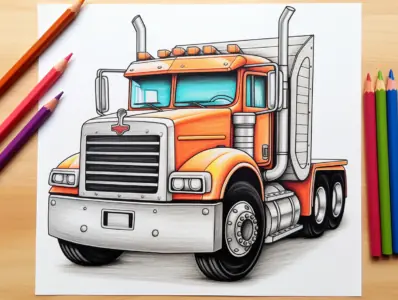
Does your kid stop to watch every semi that rolls past?
Fifty truck coloring pages sit below, from long-hood semis and farm stake beds to a monster truck, a camper rig and a police truck with a star on its side. Every sheet is a clean black-and-white line drawing that prints on regular paper.
The set runs from easy to detailed. Some sheets are one truck on a blank background, which suits a preschooler with fat crayons. Others pack in mountains, a forest, a city block or a market stall for a child who wants to work on something for an hour.
Scroll through, print whichever ones your kid points at, and take as many copies as you need.
Vintage Flatbed Truck
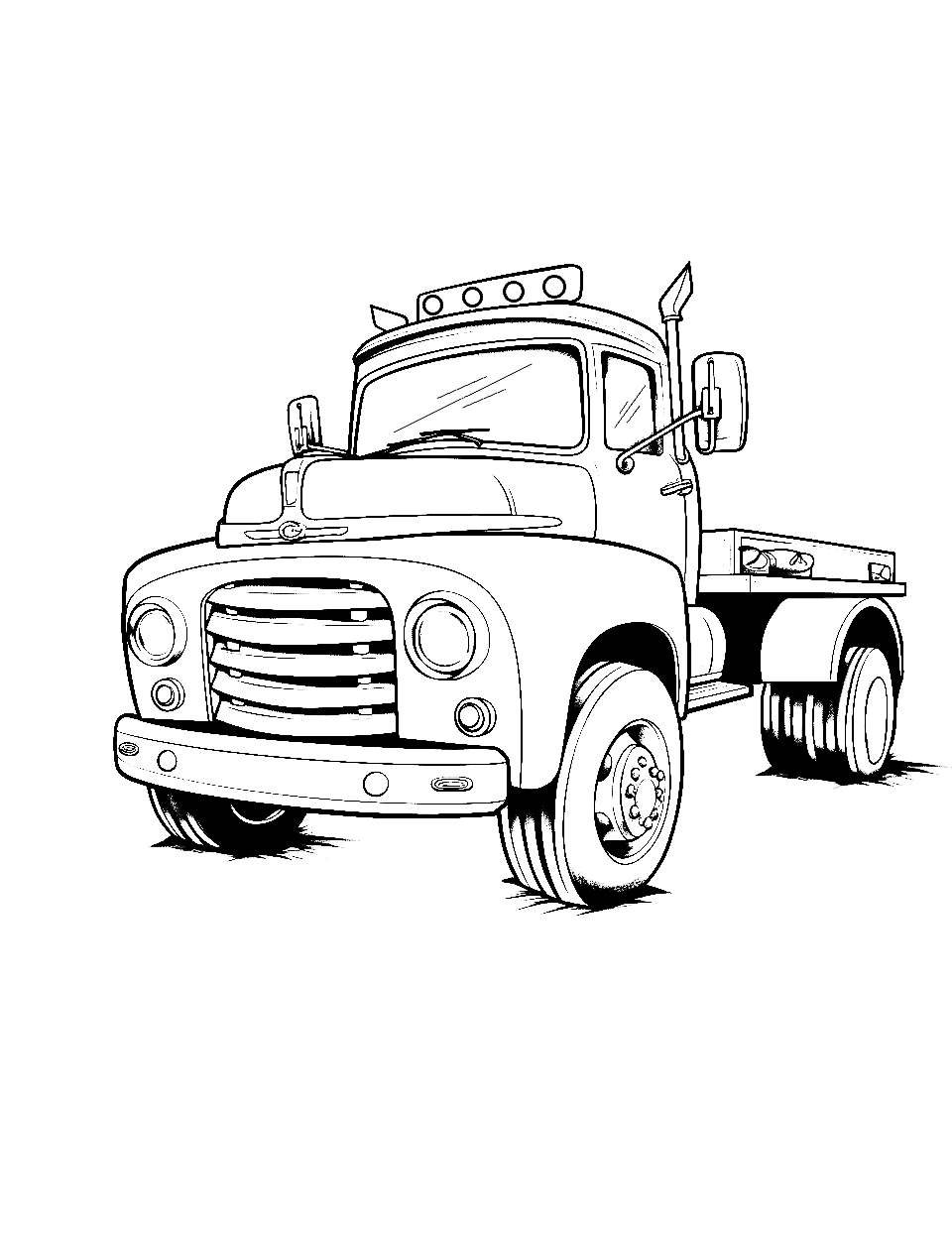
This old hauler sits on a blank background with nothing behind it, so the truck itself gets all the attention. The wide grille is built from straight horizontal bars that fill in fast with a single color. Try a deep red cab with silver bumpers and chrome wheels. With no scenery to finish, it makes a good warm-up sheet for a younger colorer.
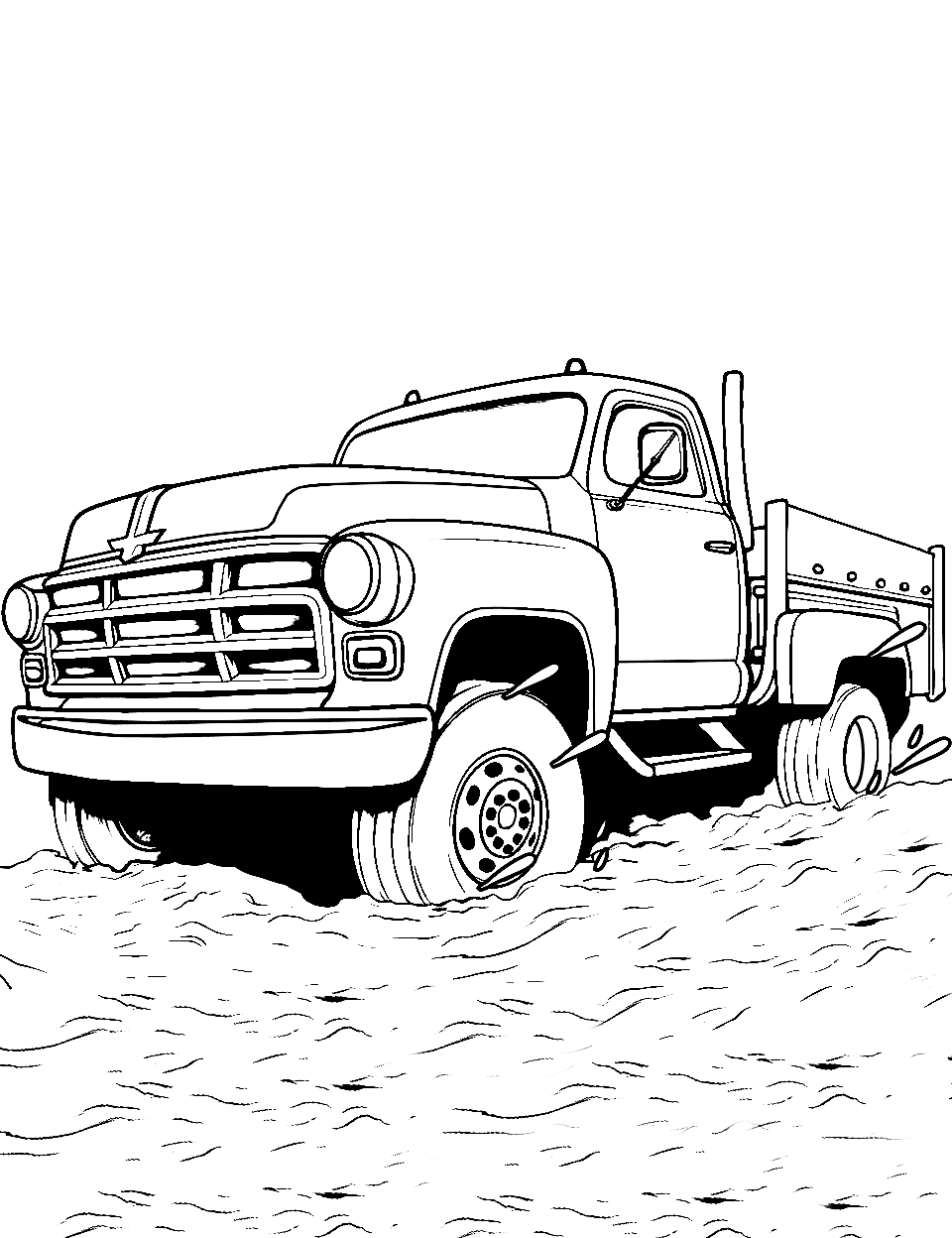
A classic pickup rolls over ground drawn in loose scribbled texture, which reads as churned-up mud under the tires. The bed sits high with a step behind the cab, and two long chrome strips run down the hood. Browns and tans in the ground let the truck’s paint color stand out against it. All that texture takes patience, so this one suits a child who likes filling small areas.
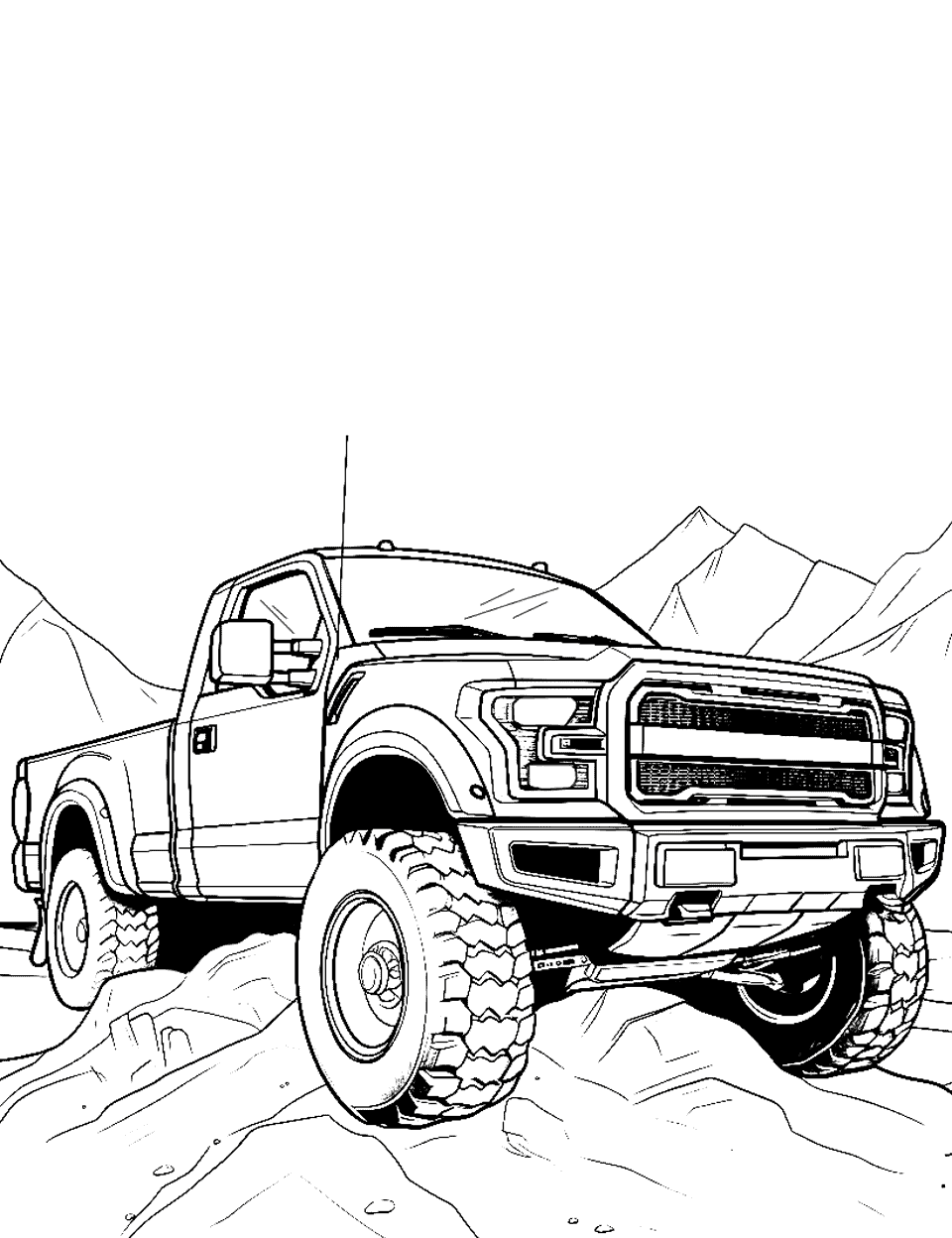
Oversized knobby tires and a raised suspension put this modern pickup high off the ground. A mountain ridge runs across the background and a few small stones sit in the sand near the front wheel. The grille is drawn as dark mesh, so a marker or a heavy pencil press makes it read against a lighter body. Save this sheet for a kid who enjoys working through tire treads.
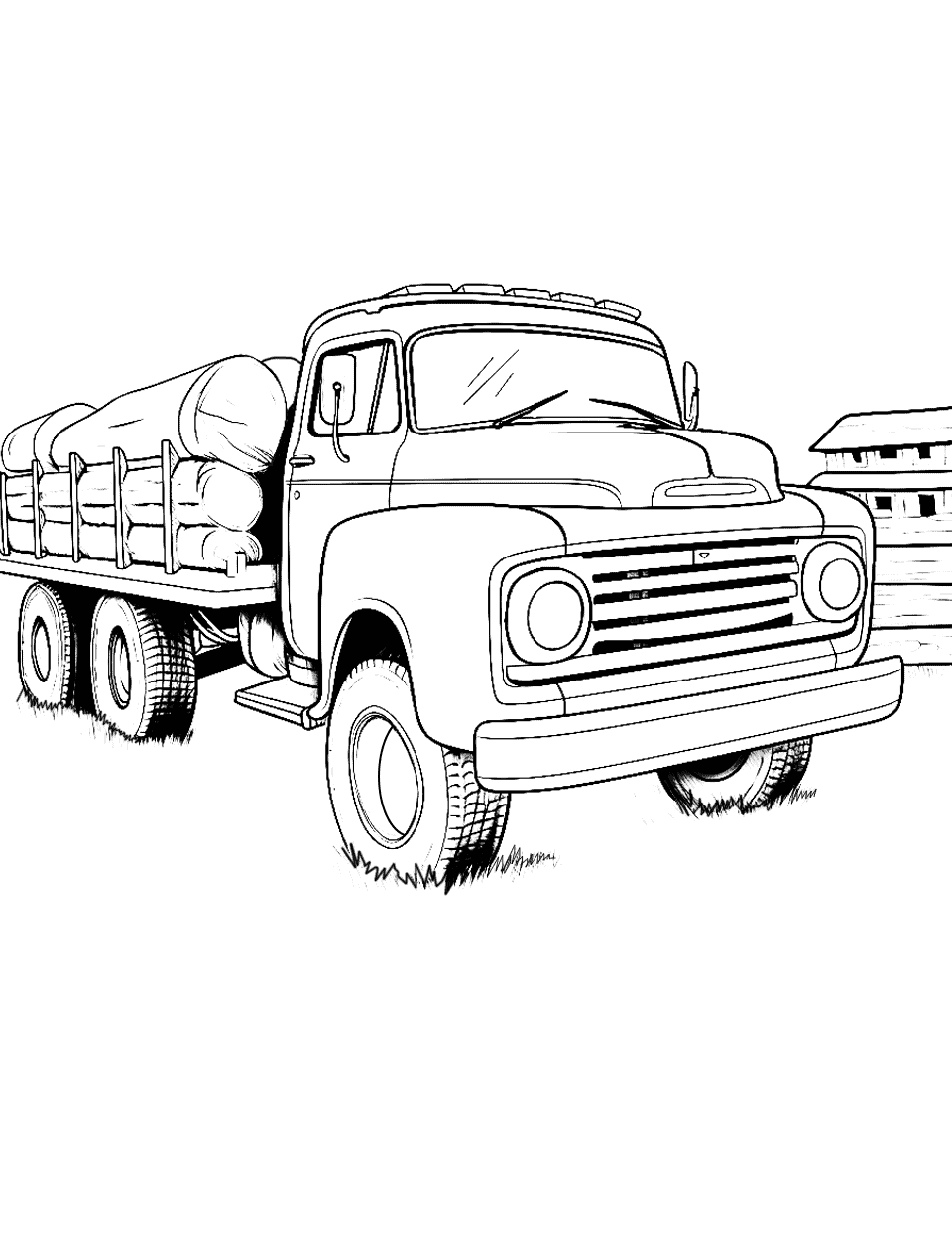
Logs are stacked in the stake bed of this work truck with the cut ends facing you. Farm buildings peek in at the right edge and grass grows around the wheels, which gives it a serene farm setting. Ring the log ends in two shades of brown so they look like real cut timber. The doubled-up back wheels are worth a darker gray.
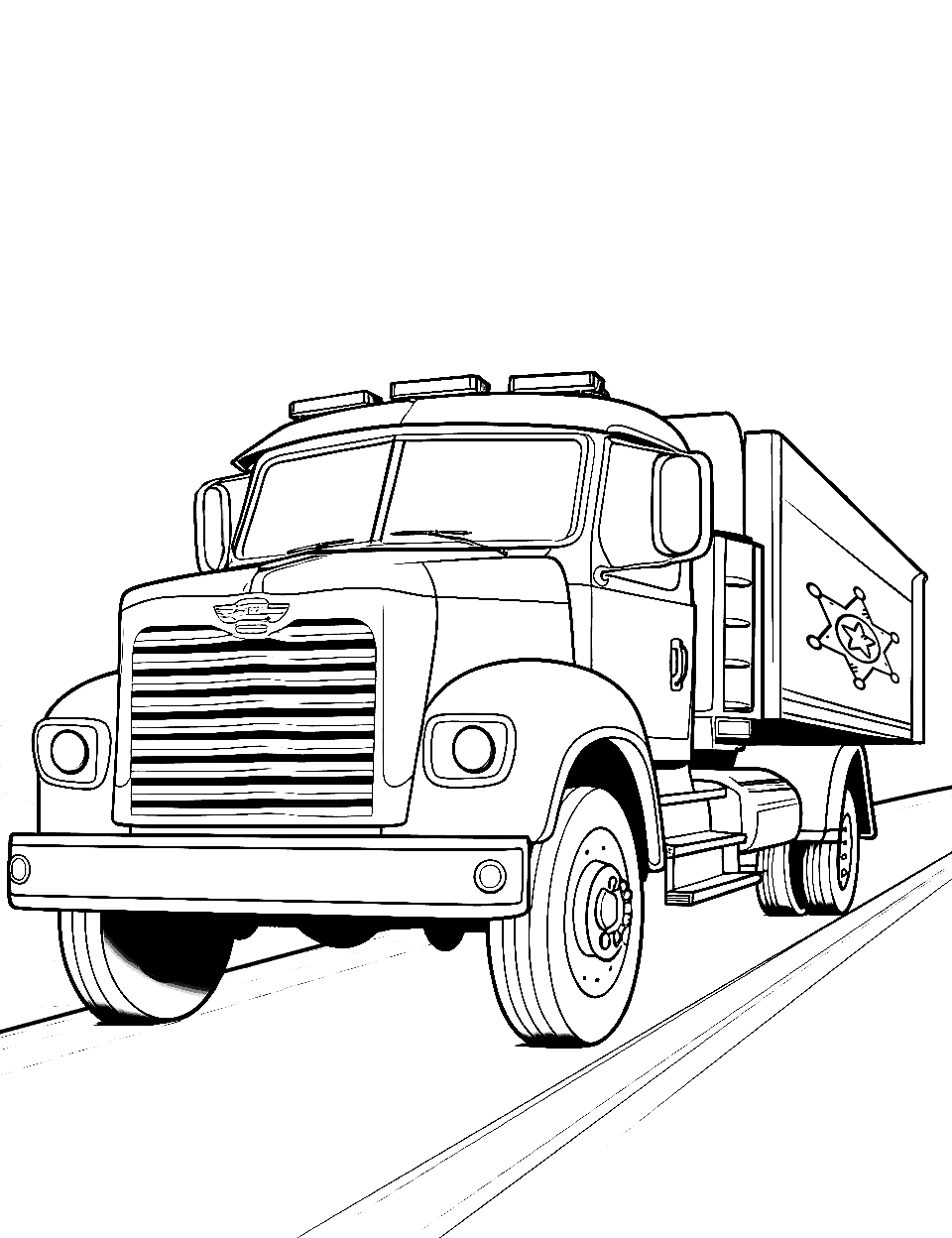
A star badge on the side of the box body marks this one out as a police truck. A light bar runs across the roof and the road falls away toward the bottom corner in straight lane lines. Blue and white is the usual choice, and the star is a good spot for gold. The body panels are large and flat, so it colors quickly.
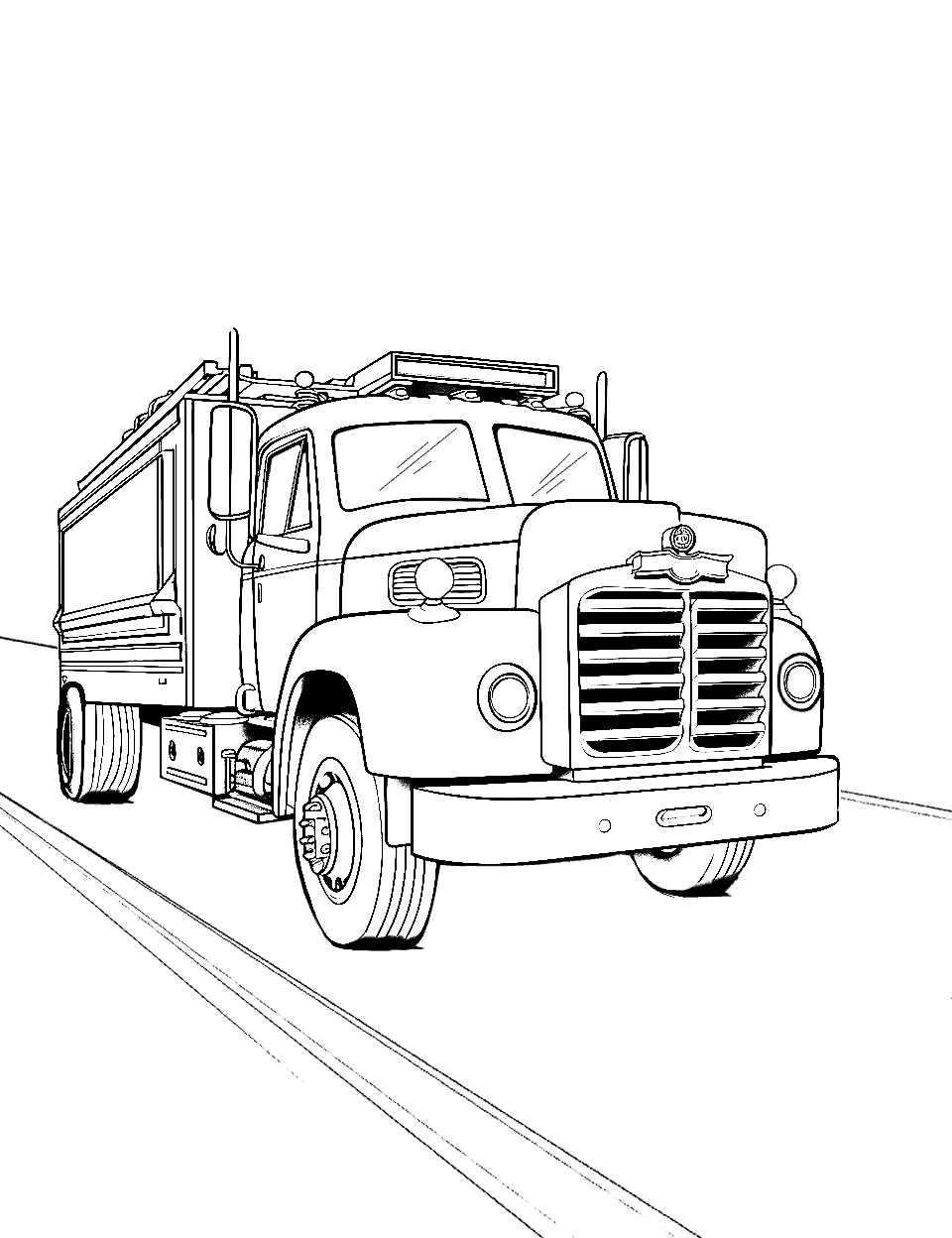
The roof light bar and the row of compartment doors along the body mark this out as a fire truck. Its grille is a tall block of vertical bars that takes silver or gray nicely. Classic red on the body with a white roof is the safe pick, though plenty of departments run yellow-green rigs. The road underneath is left plain, leaving room to draw in your own street.
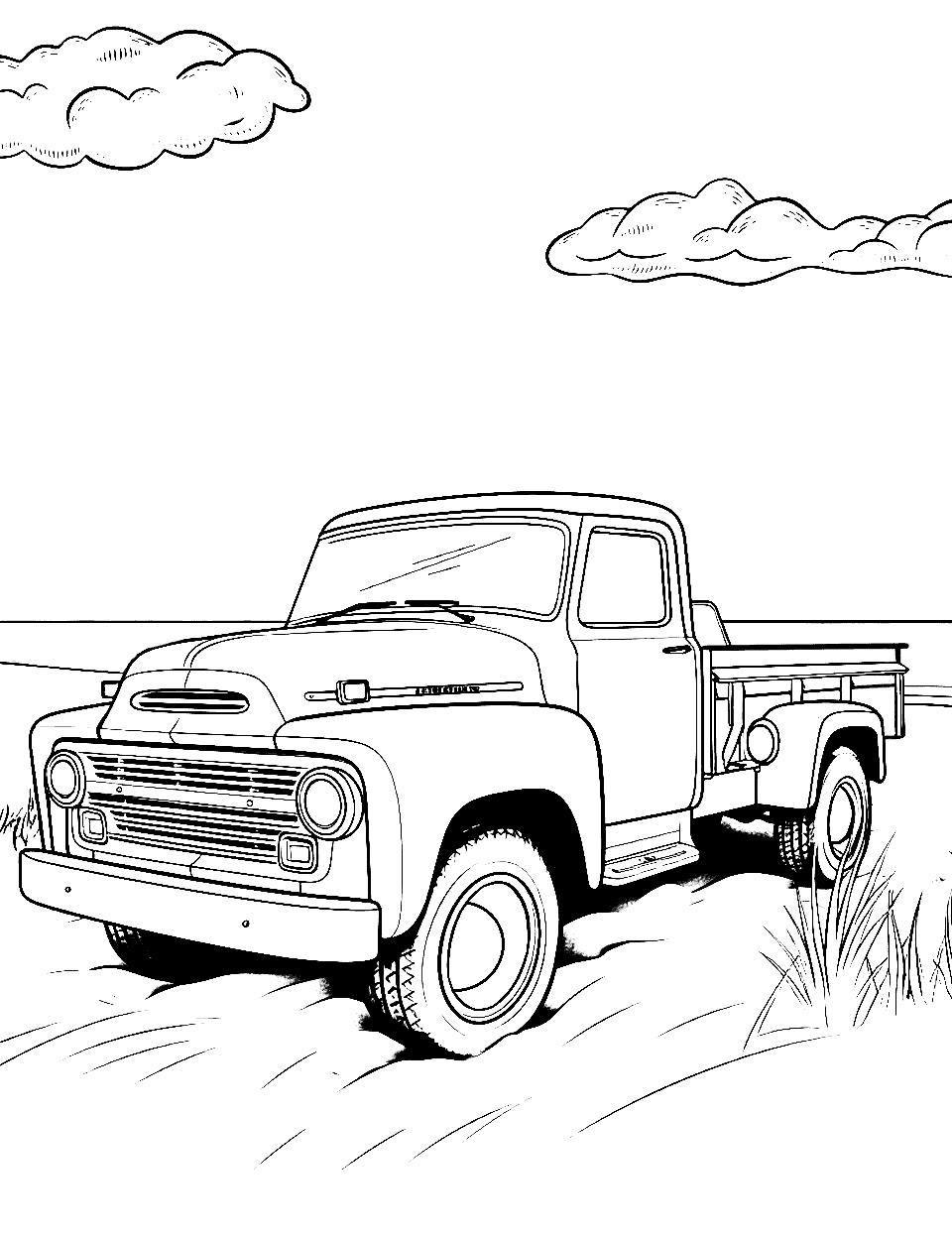
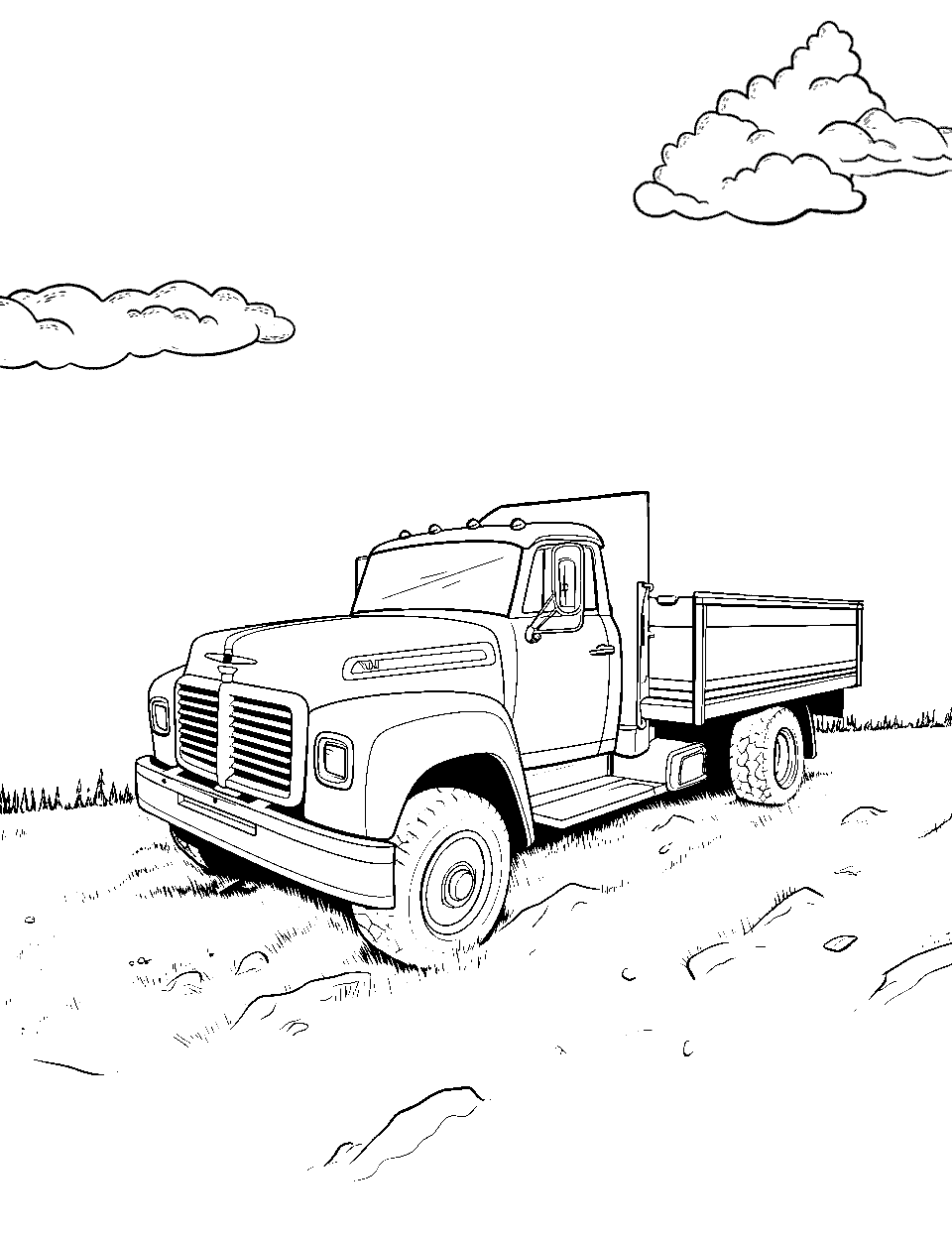
Two puffy clouds float above a classic pickup parked on flat, open ground. The bed is empty and the side rails are clean straight lines, so this half of the page fills in fast. Leave the clouds white and put the color into the sky behind them for the strongest contrast. If sand and surf sound better, we keep a separate set of sheets on the beach.
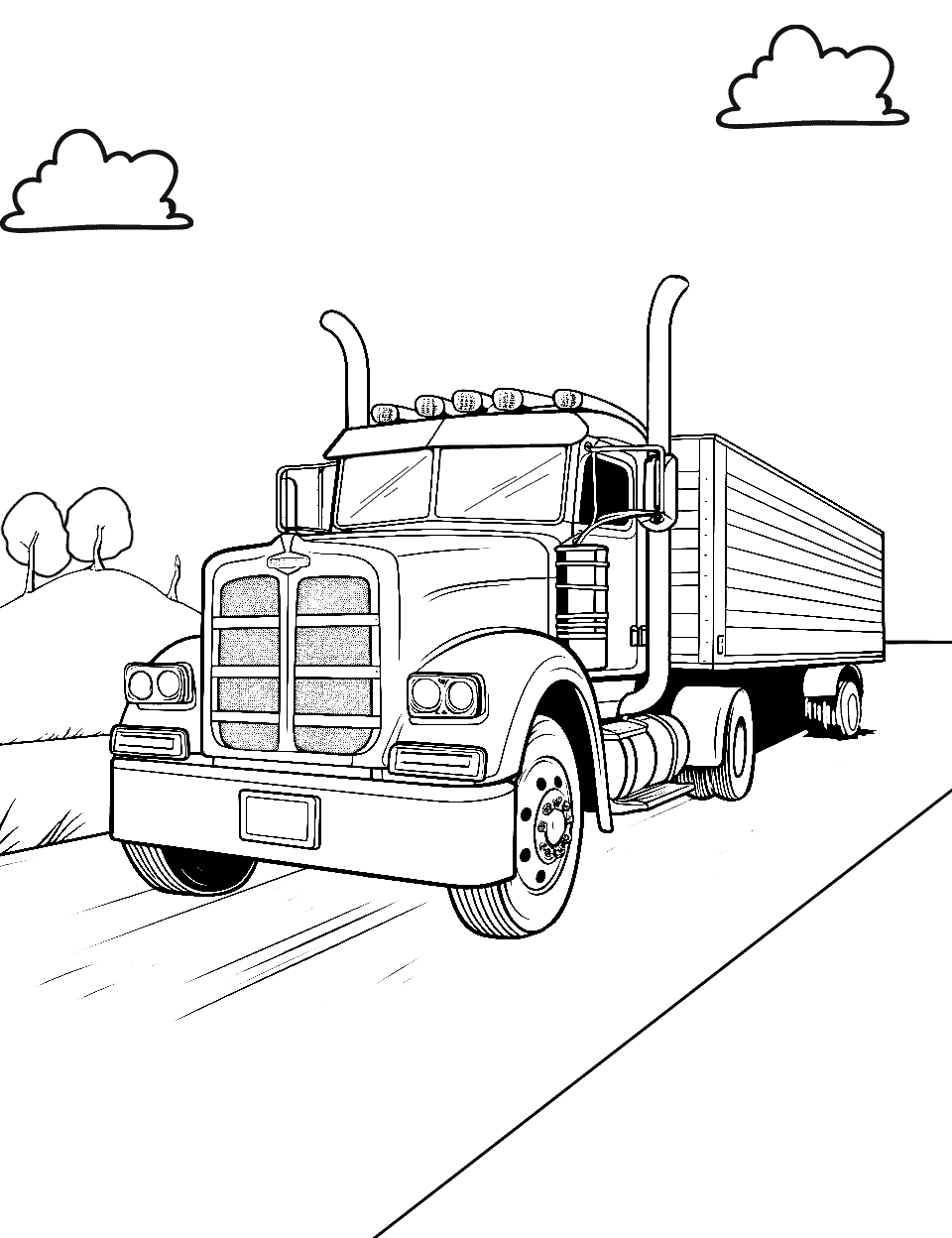
This semi pulls a long box trailer along a highway with rolling hills and a few trees behind it. Twin exhaust stacks rise behind the cab and small lights run across the roof. The trailer side is one big blank panel, which makes a fine spot for a made-up company name or a stripe. Older kids can shade the road to suggest speed.
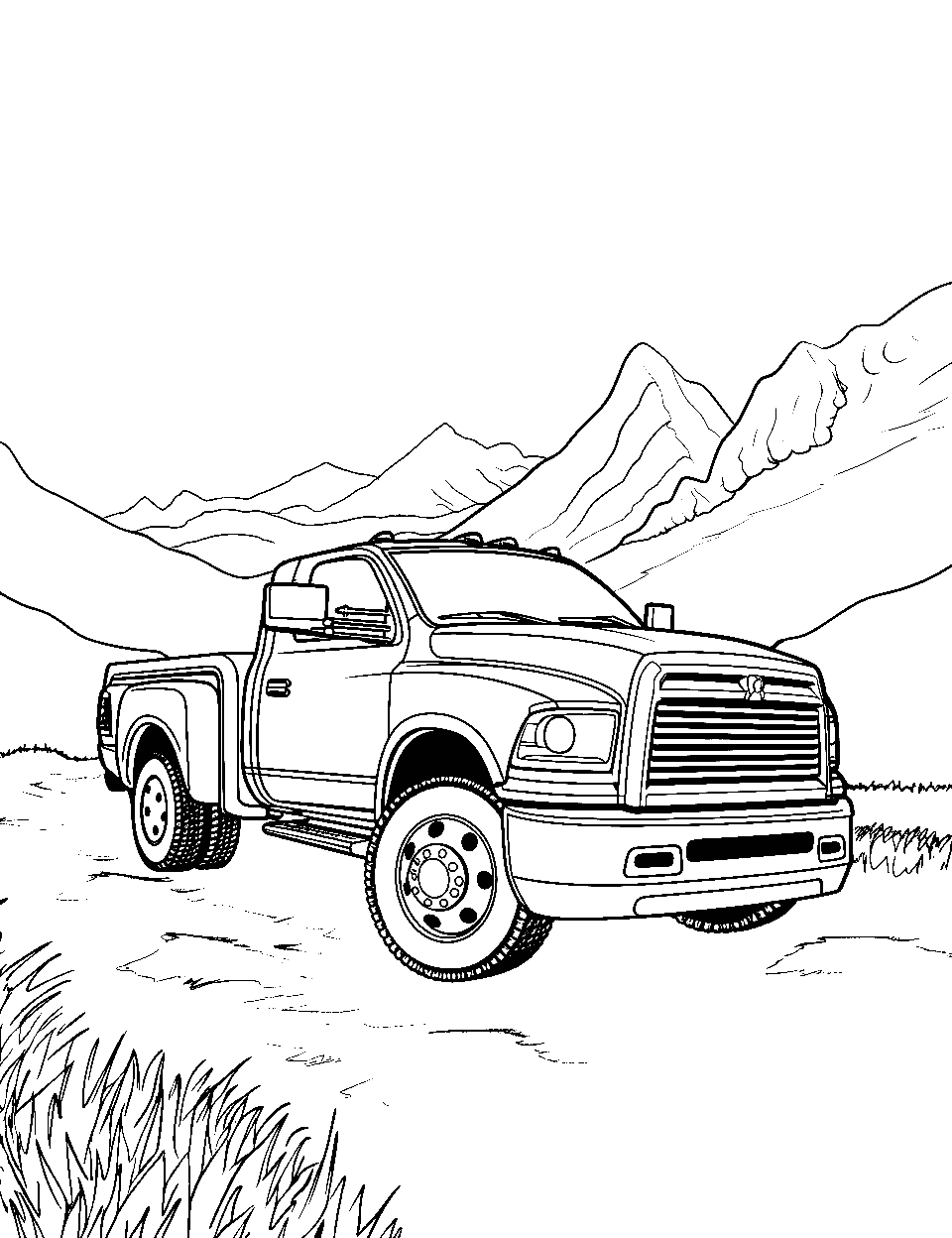
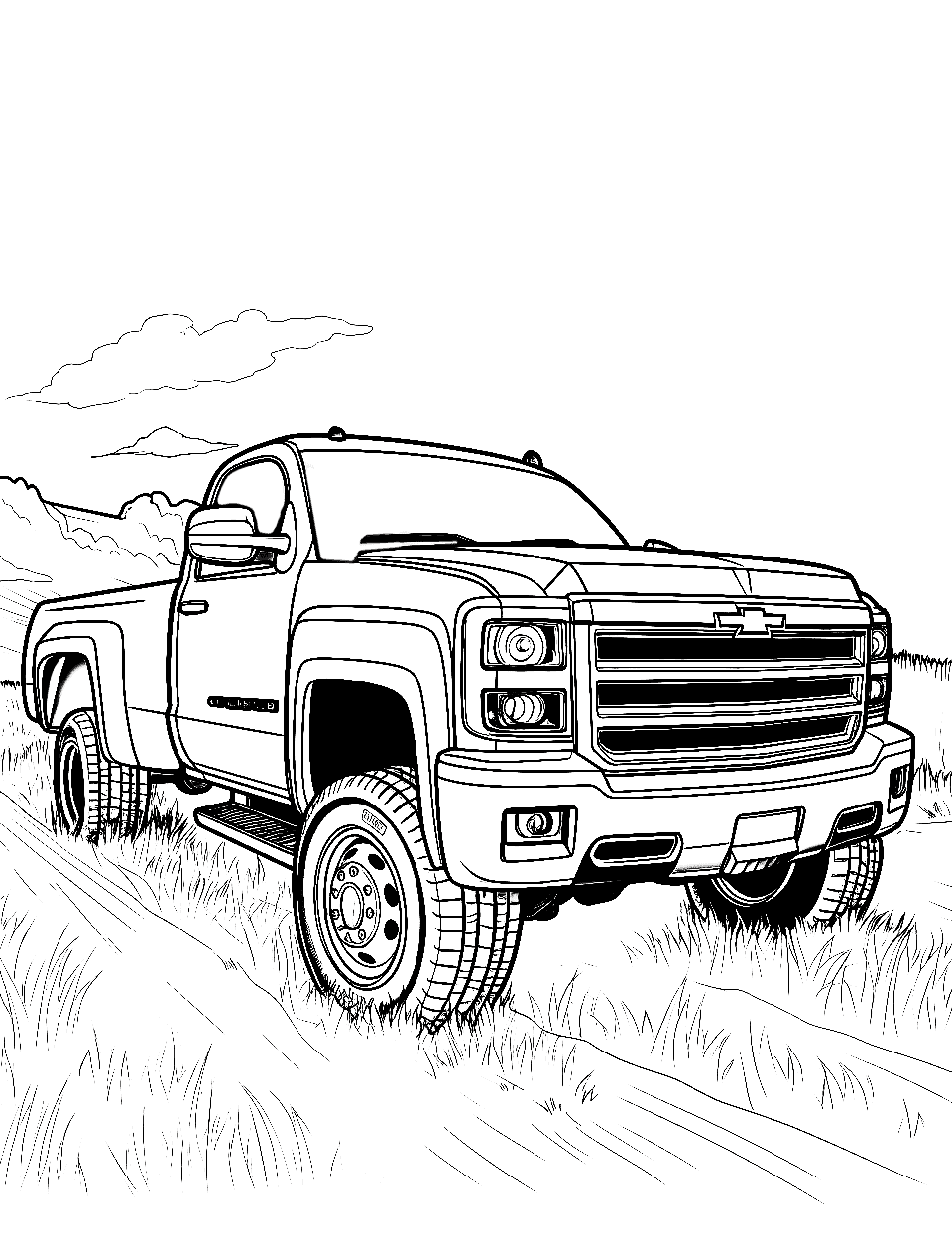
A modern pickup stands in a field of tall grass with a mountain range sketched lightly behind. The grille is split by a wide horizontal bar and the wheels have five-spoke centers. Layer two greens in the grass, lighter at the tips and darker at the base, to give the field depth. The mountains are drawn with thin lines, so a pale gray keeps them where they belong.
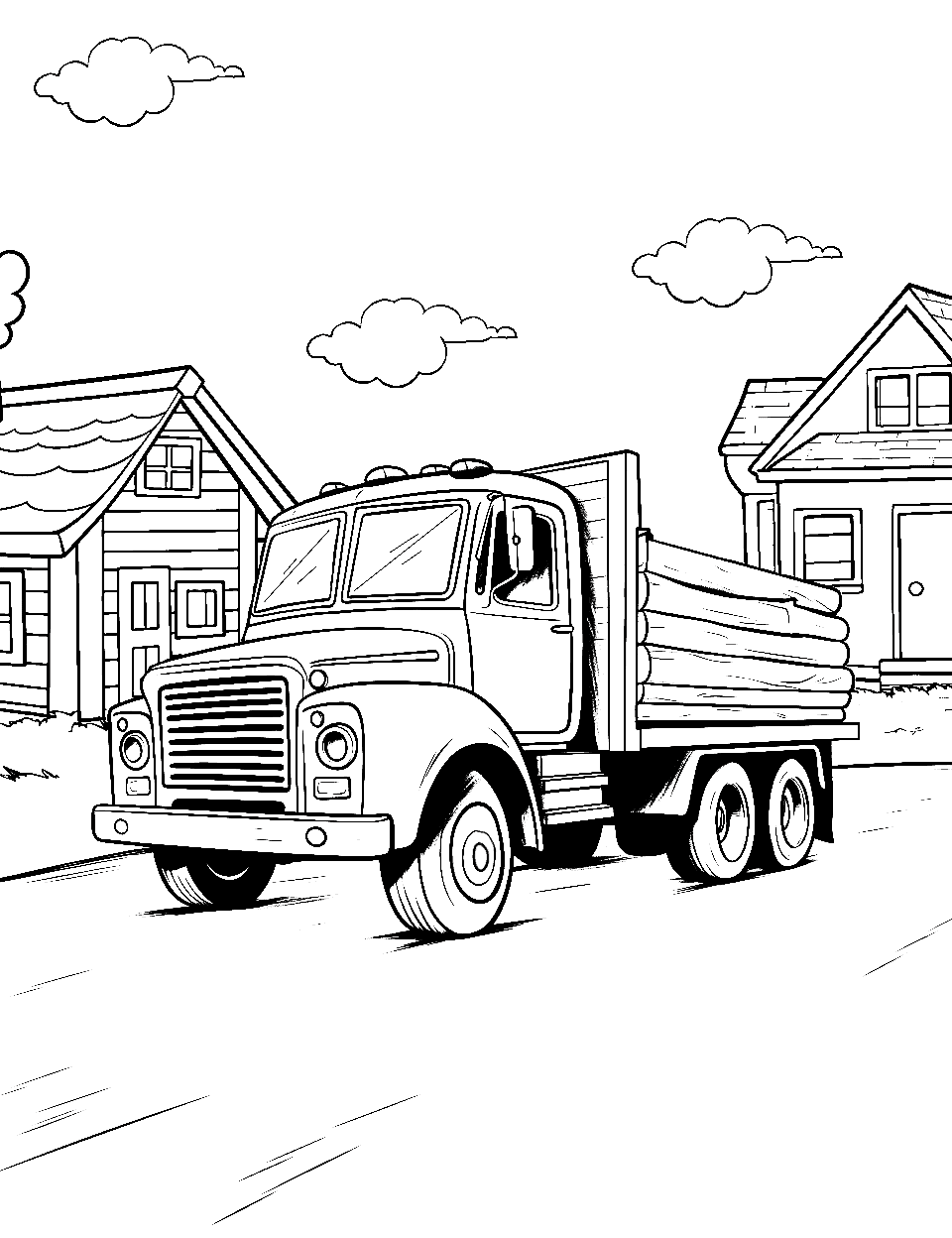
Flat boards are stacked in the bed of this delivery truck, and two wooden houses stand behind it. The truck rides on two rear axles, so there are plenty of wheels to work through. Warm brown on the lumber with a bright cab color keeps the load and the truck separate. House siding drawn as long horizontal lines rewards a steady hand.
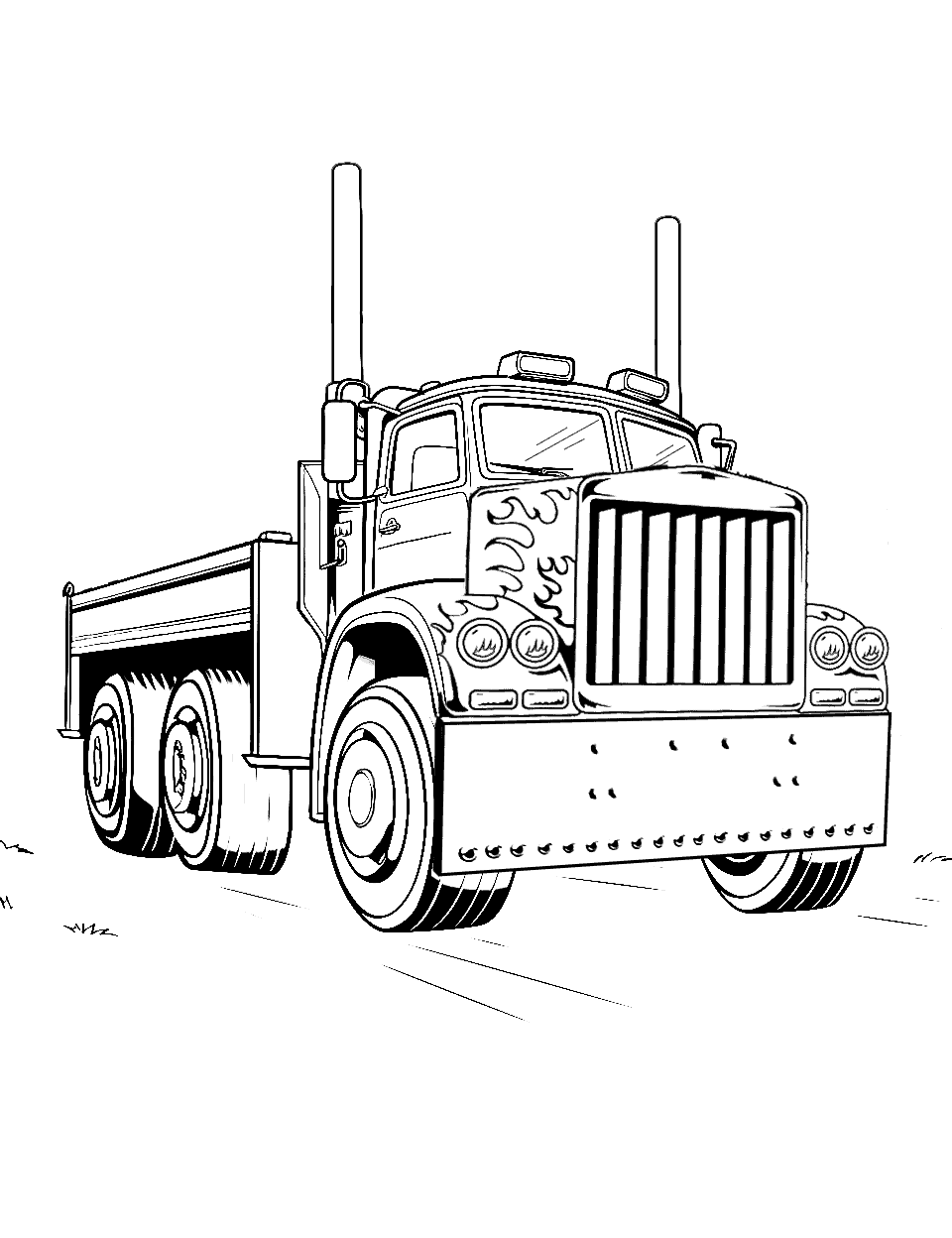
Flames curl back along the hood of this big rig, and they are worth planning before you start. Two tall exhaust stacks stand behind the cab and the grille is a panel of vertical bars. Red, orange and yellow inside the flames against a darker body is the classic look. The bed behind the cab is plain and can stay simple.
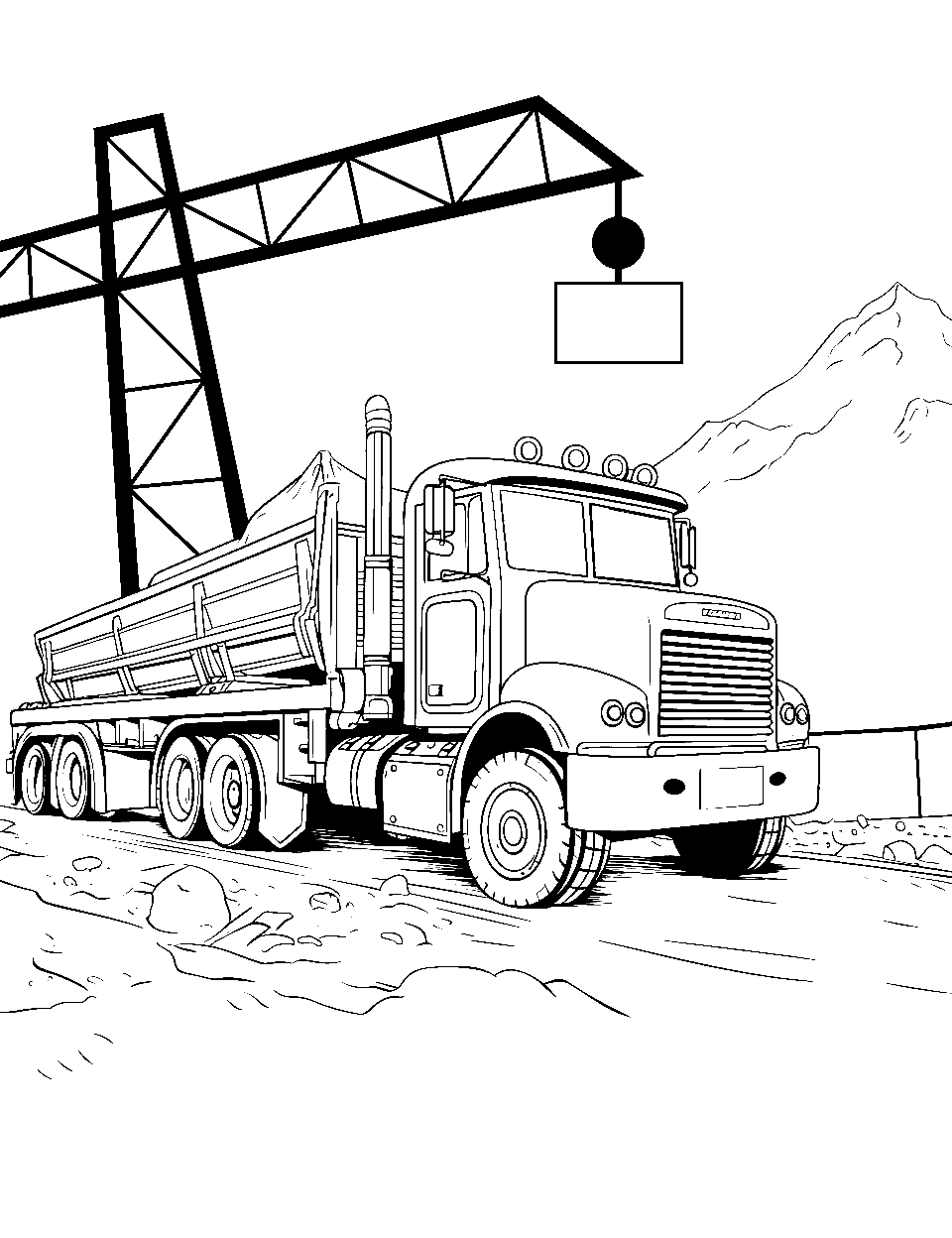
A tall lattice crane stands behind this work truck with its hook hanging over the site. The truck’s bed is loaded and the ground is broken up with rocks and loose stones. Yellow is the usual construction color, so use it on the crane and pick something else for the truck to keep the two apart. The crane tower is all straight-line detail, which suits an older child.
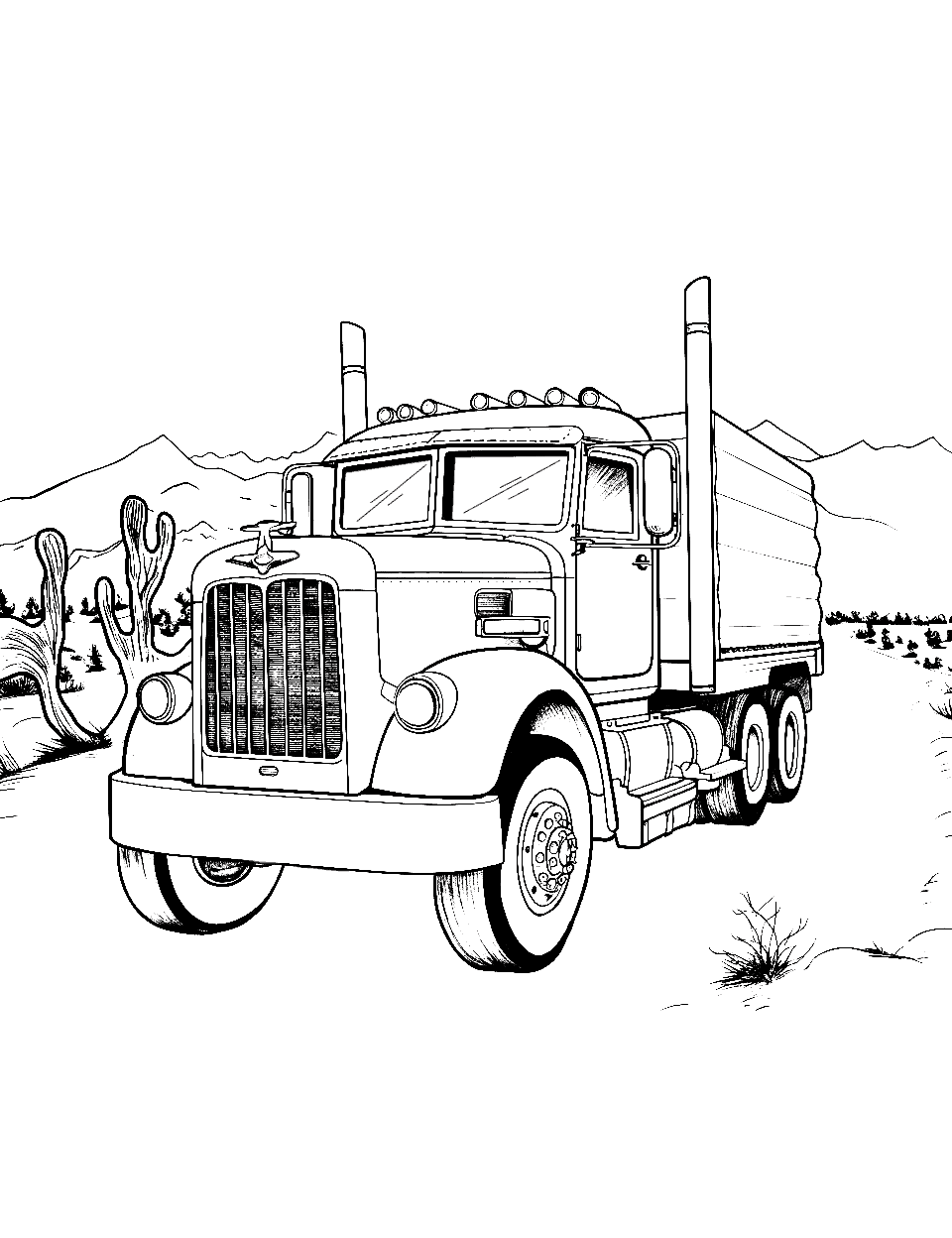
Cacti stand at the left edge while a long-hood semi rolls through the desert. The grille is a tall stack of vertical bars with marker lights above the windshield. Sandy tans in the background make the truck’s color jump forward. A dry bush near the bottom corner is an easy place to start.
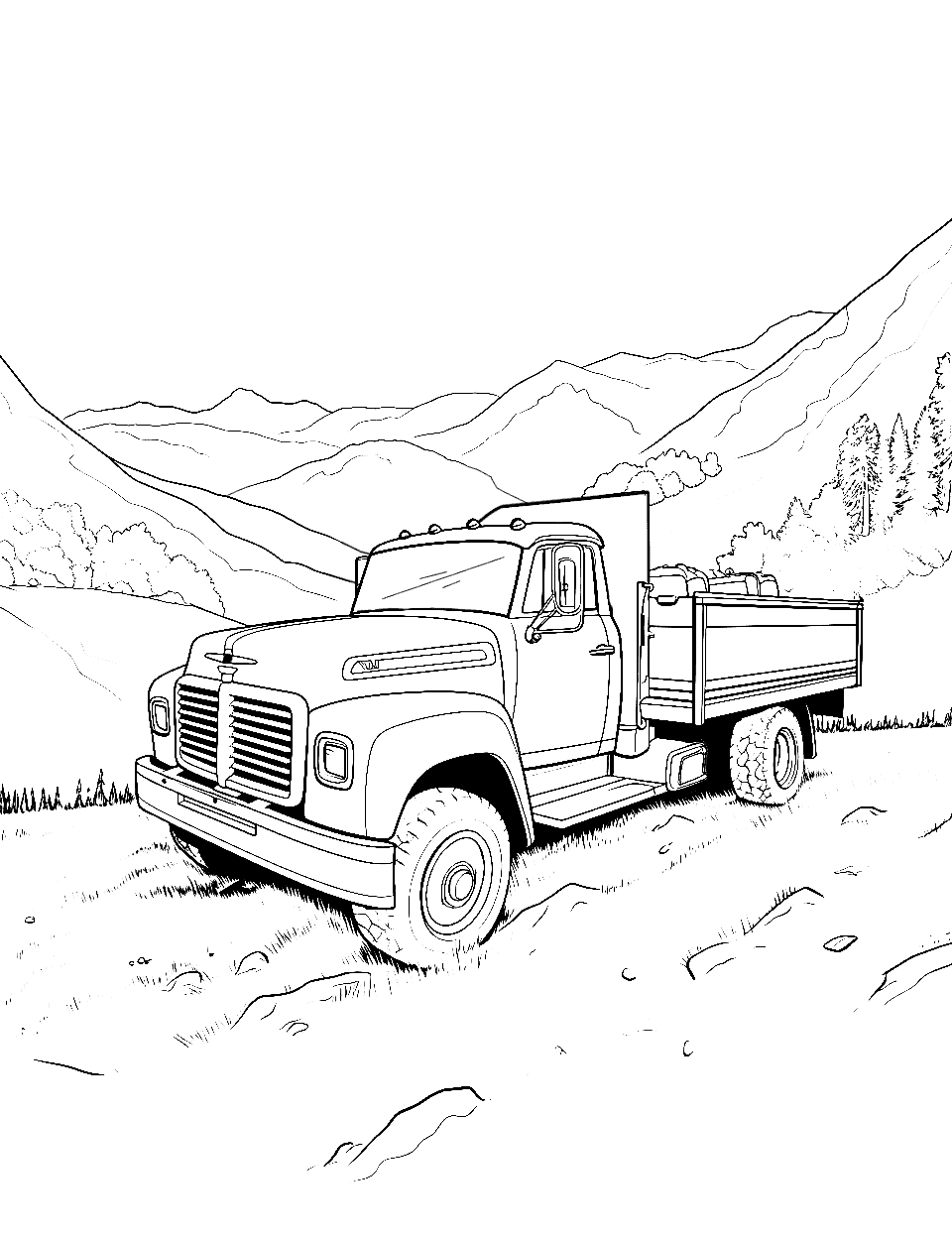
A loaded stake-bed truck climbs a rough dirt track with mountains sketched behind it. Rocks are scattered along the roadside and small pines cluster at the left. Gray and brown on the track, greens in the trees, then something bold on the cab. There is a lot of background here, so it works as a longer, quieter project.
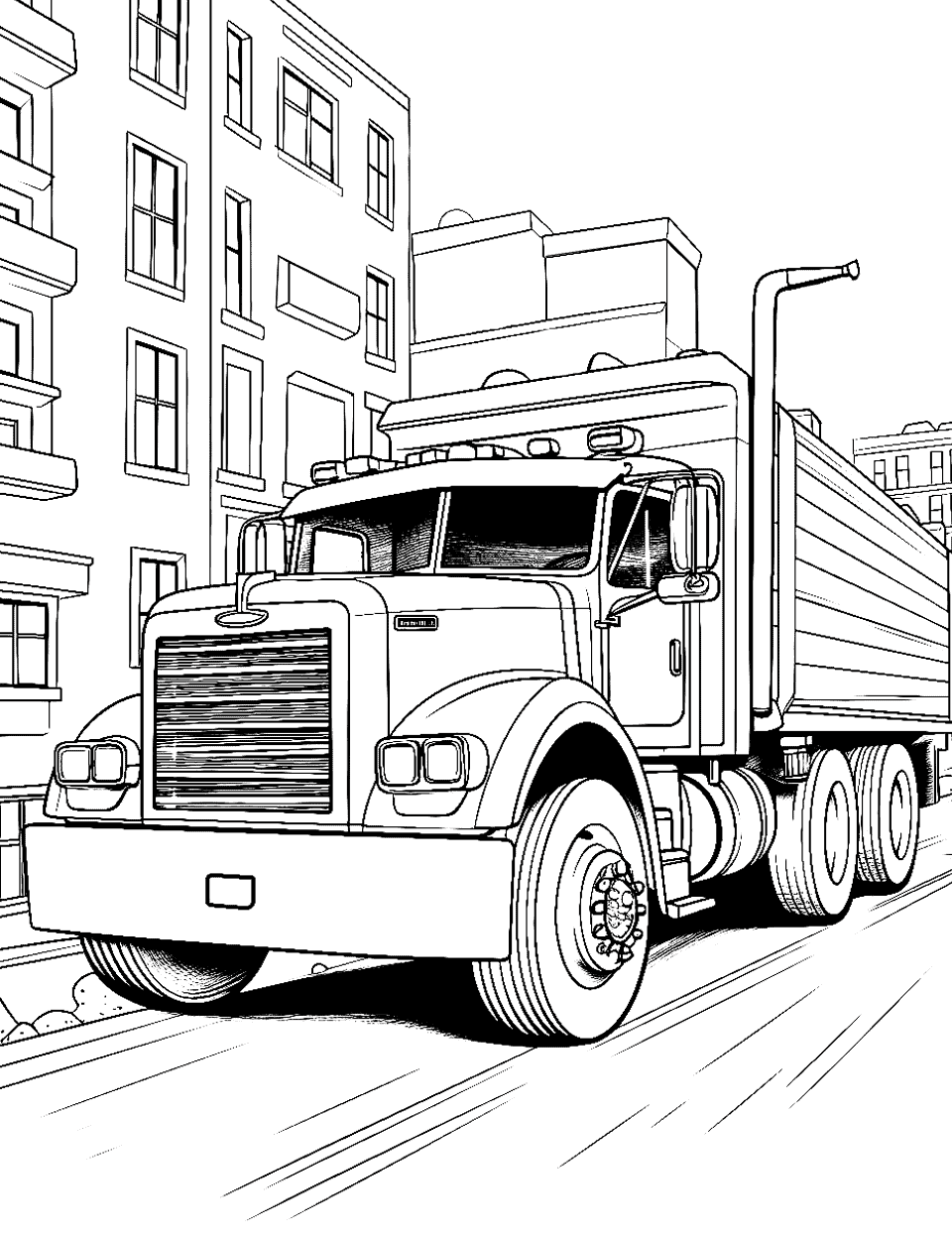
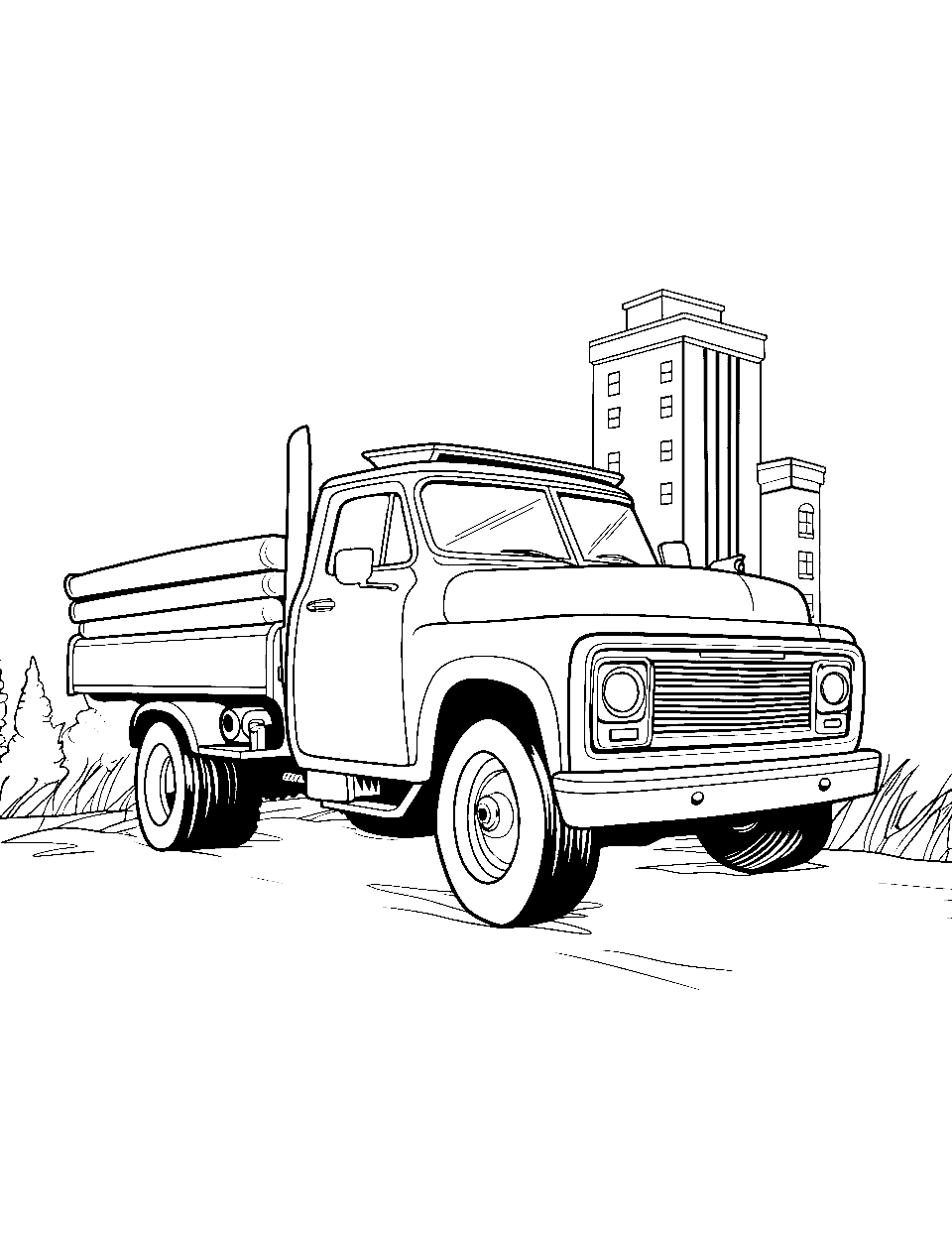
Tall buildings rise behind this semi as it comes down the street toward you. Motion lines trail across the road and suit a light gray. Every window in the buildings can take its own color if your child wants a long sitting. The chrome grille and the front bumper are the biggest blank areas on the truck itself.
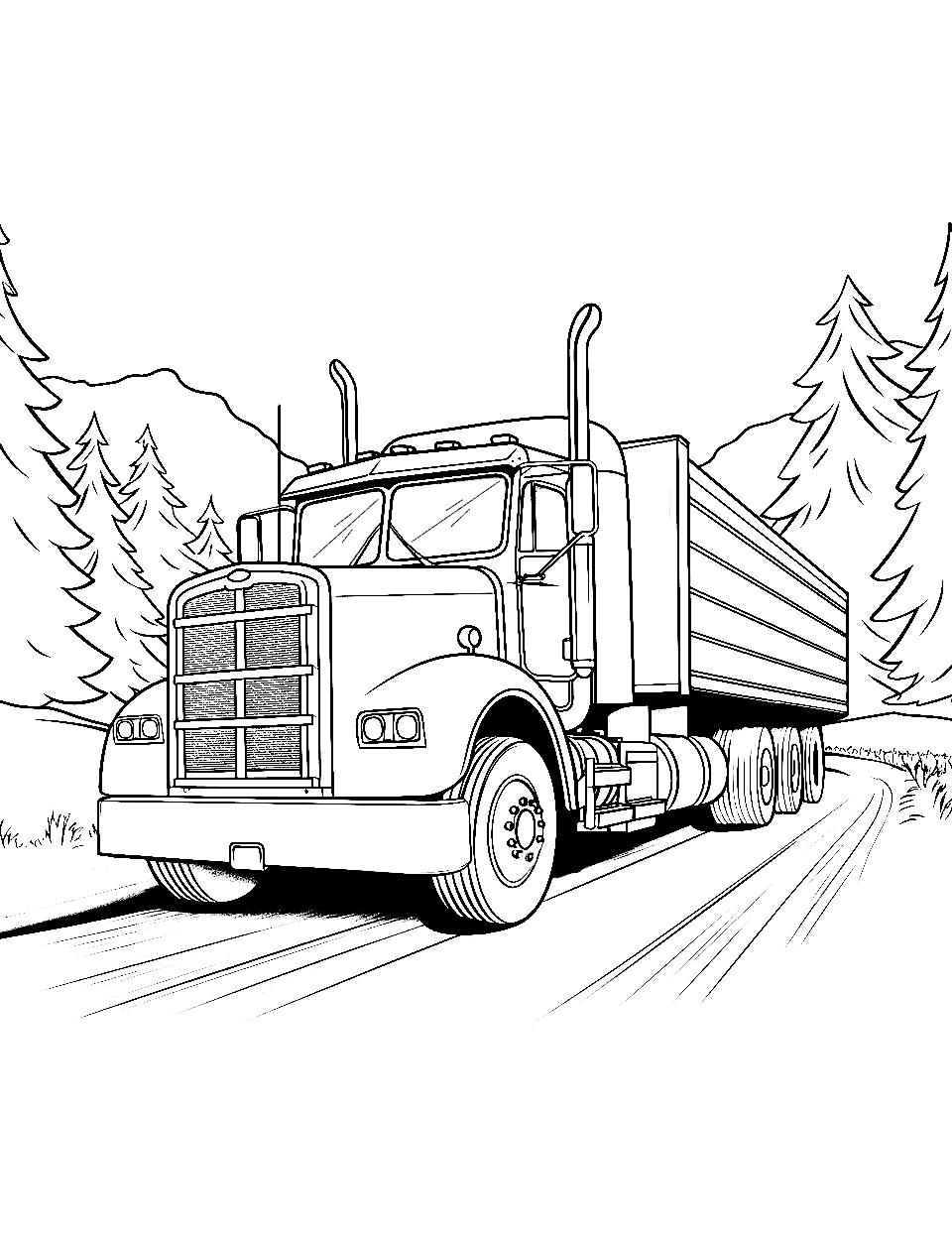
Pine trees line both sides of the road as this rig hauls its trailer past. The mountain outline behind the trees is faint, so a pale blue or gray fits. Dark green in the pines gives the truck room to be a brighter color. The trailer side is ribbed with long lines that look good in two alternating shades.
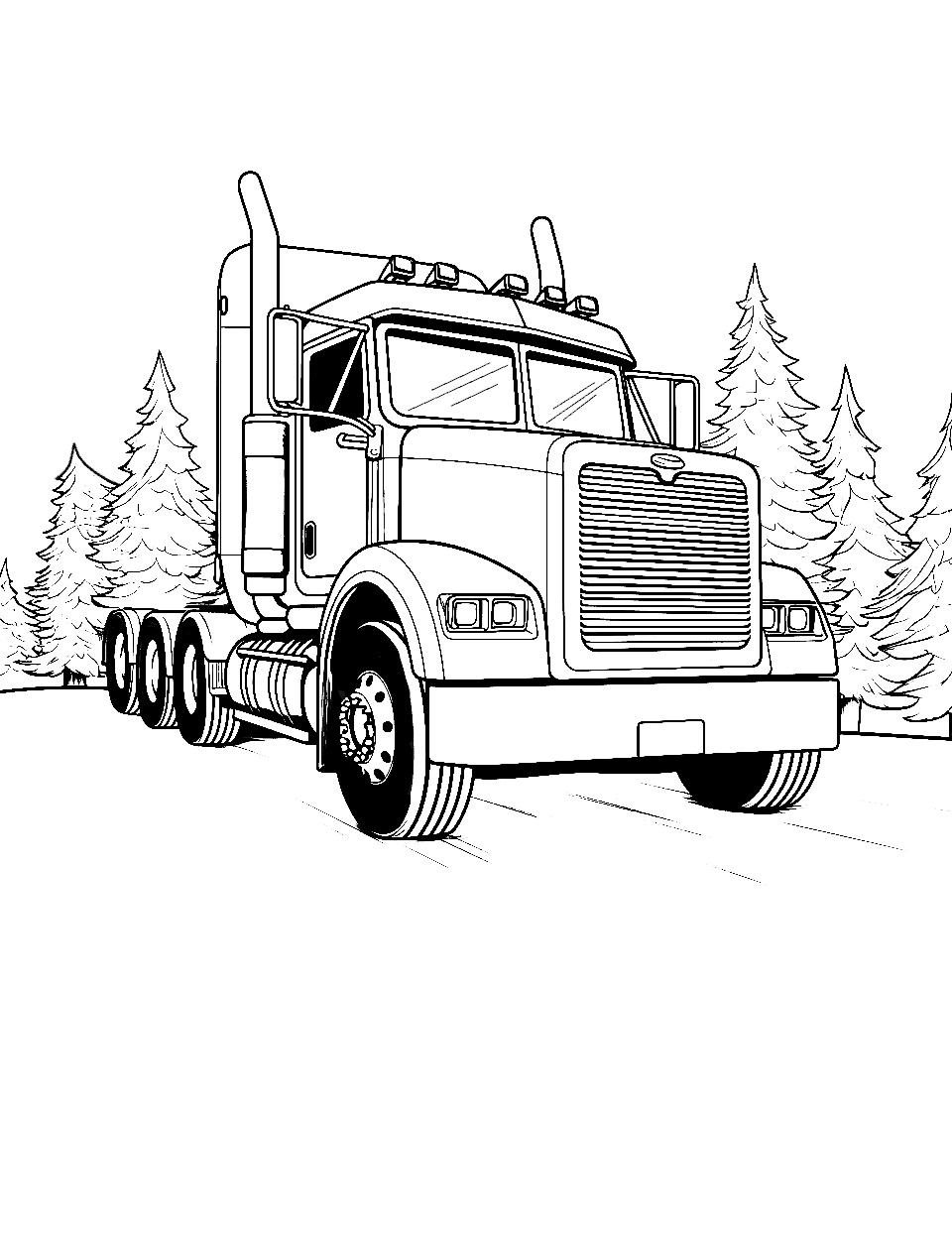
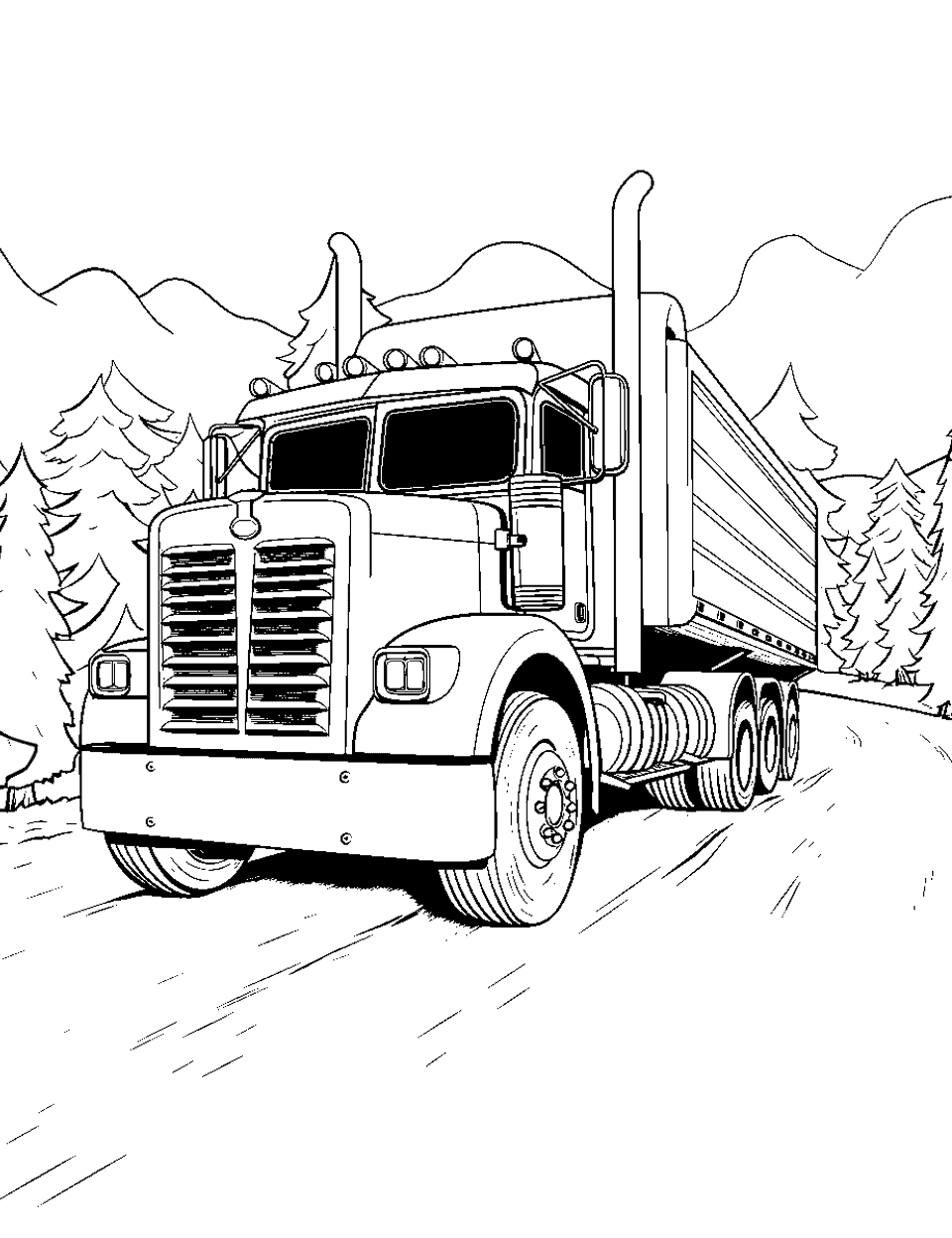
Here is the tractor unit on its own with no trailer hitched behind it. Pines fill the background and the road runs off to the left. Because the drawing is mostly truck, it is a good sheet for practicing one careful paint color. The flat plate behind the cab is the fifth wheel, where a trailer would connect.
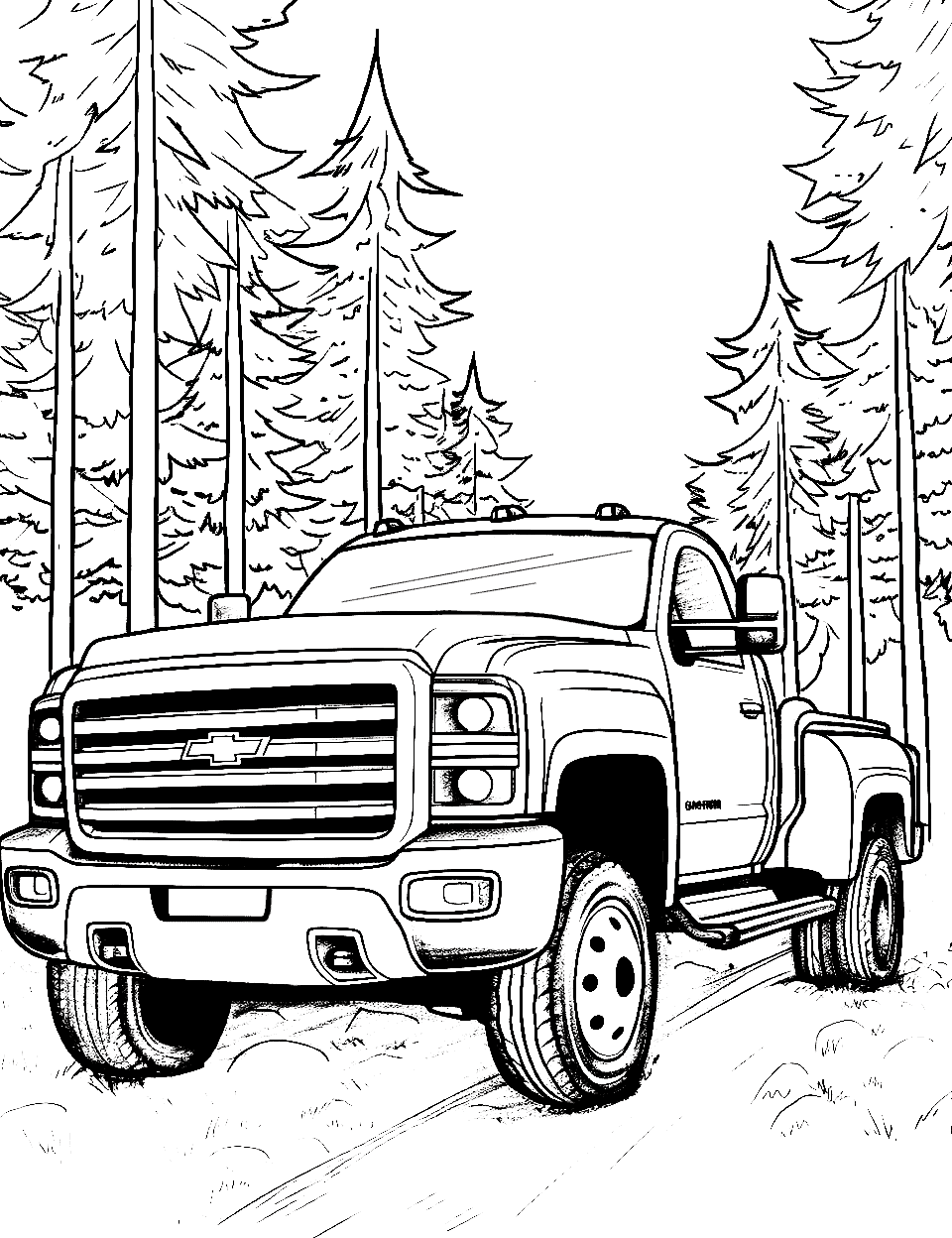
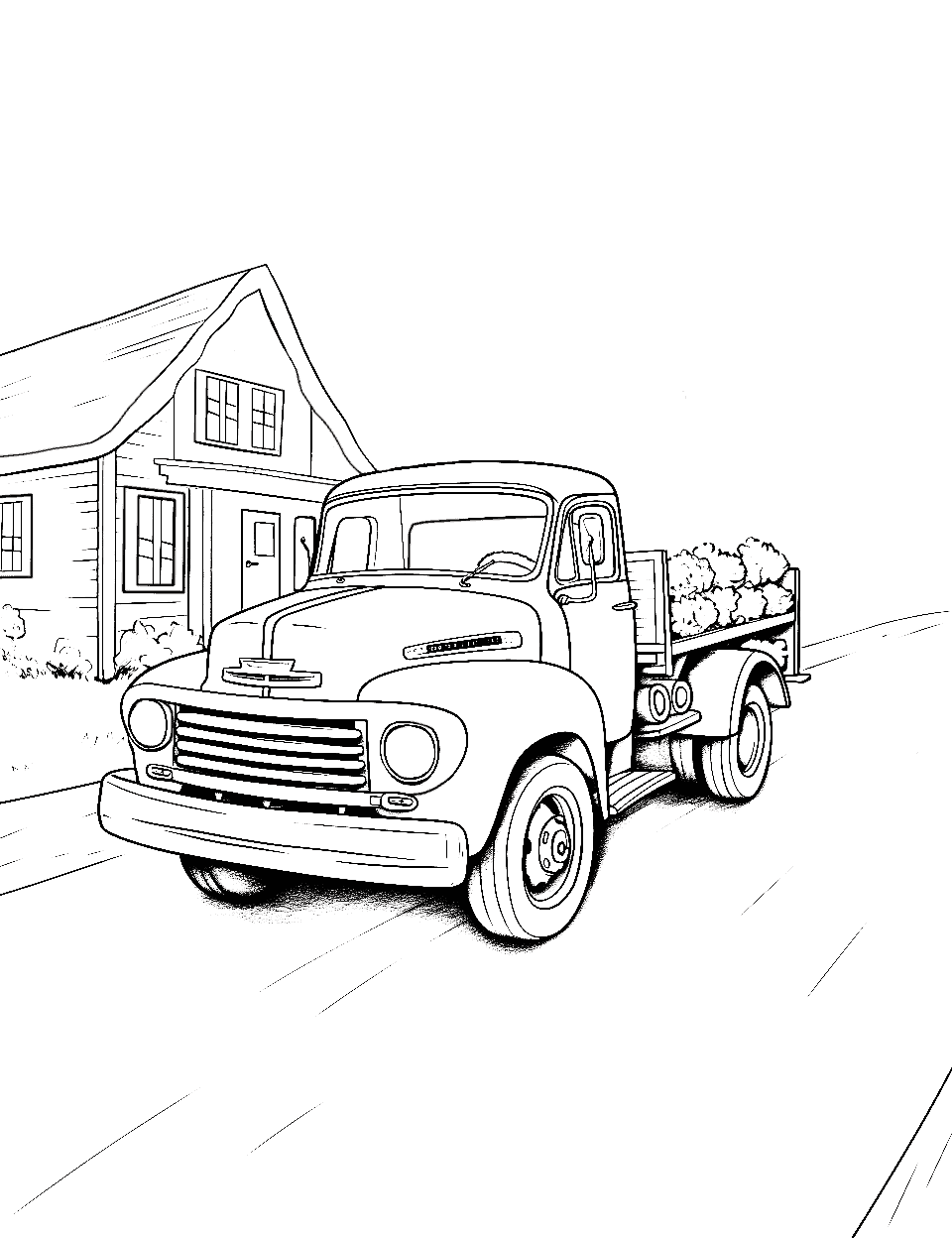
A bowtie badge sits in the center of the grille on this modern Chevy pickup. Tall bare trunks run up out of the frame on both sides for a deep forest feel. A bright body color stops the truck disappearing into all that brown. The headlight units are split into sections and look sharp in light gray.
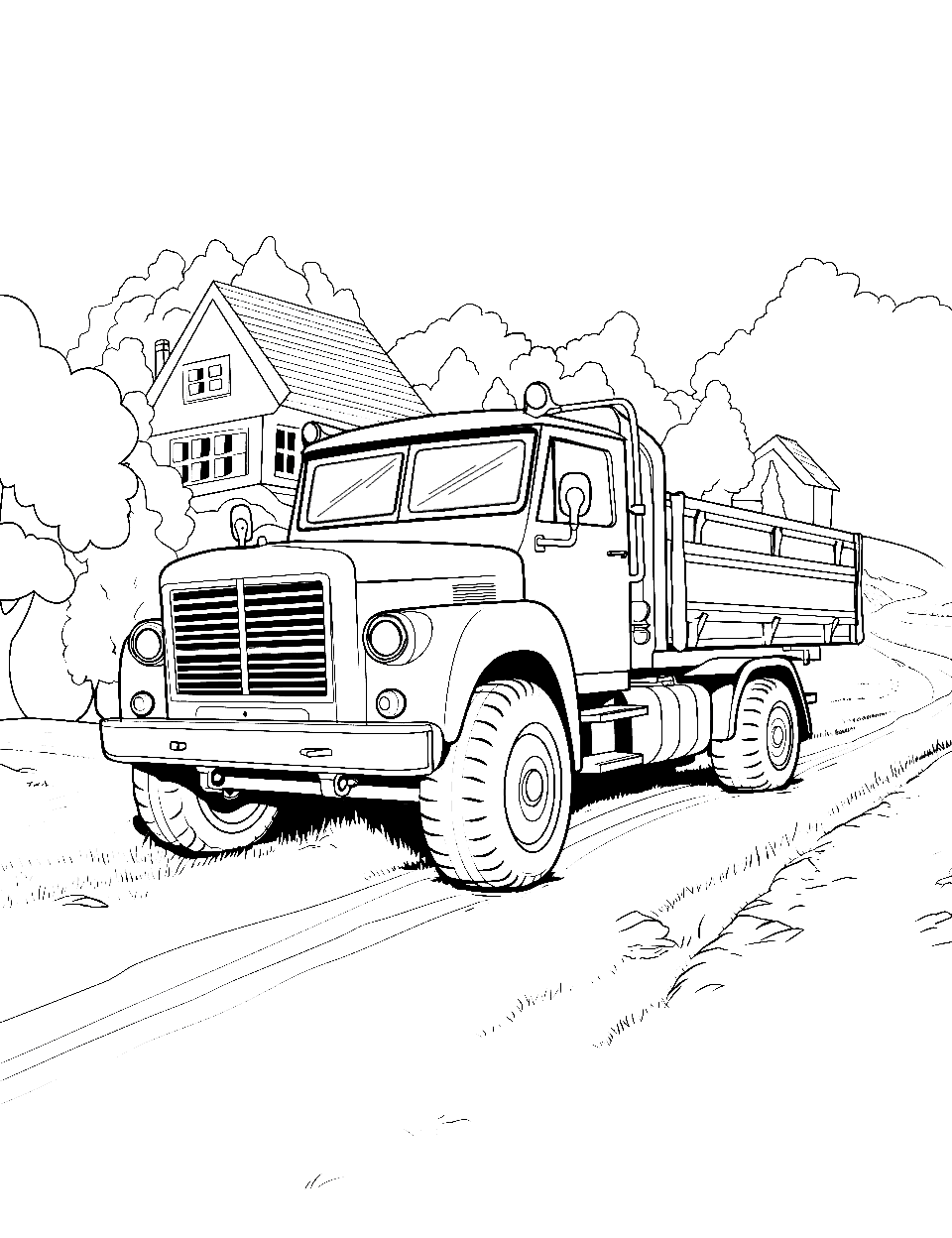
A house with a peaked roof sits among trees behind this stake-bed truck. The dirt road curves away at the bottom of the page with grass along its edge. Leafy greens behind and a warm color on the cab keep the truck as the main subject. Nothing here is fussy, so a younger child can finish the whole page.
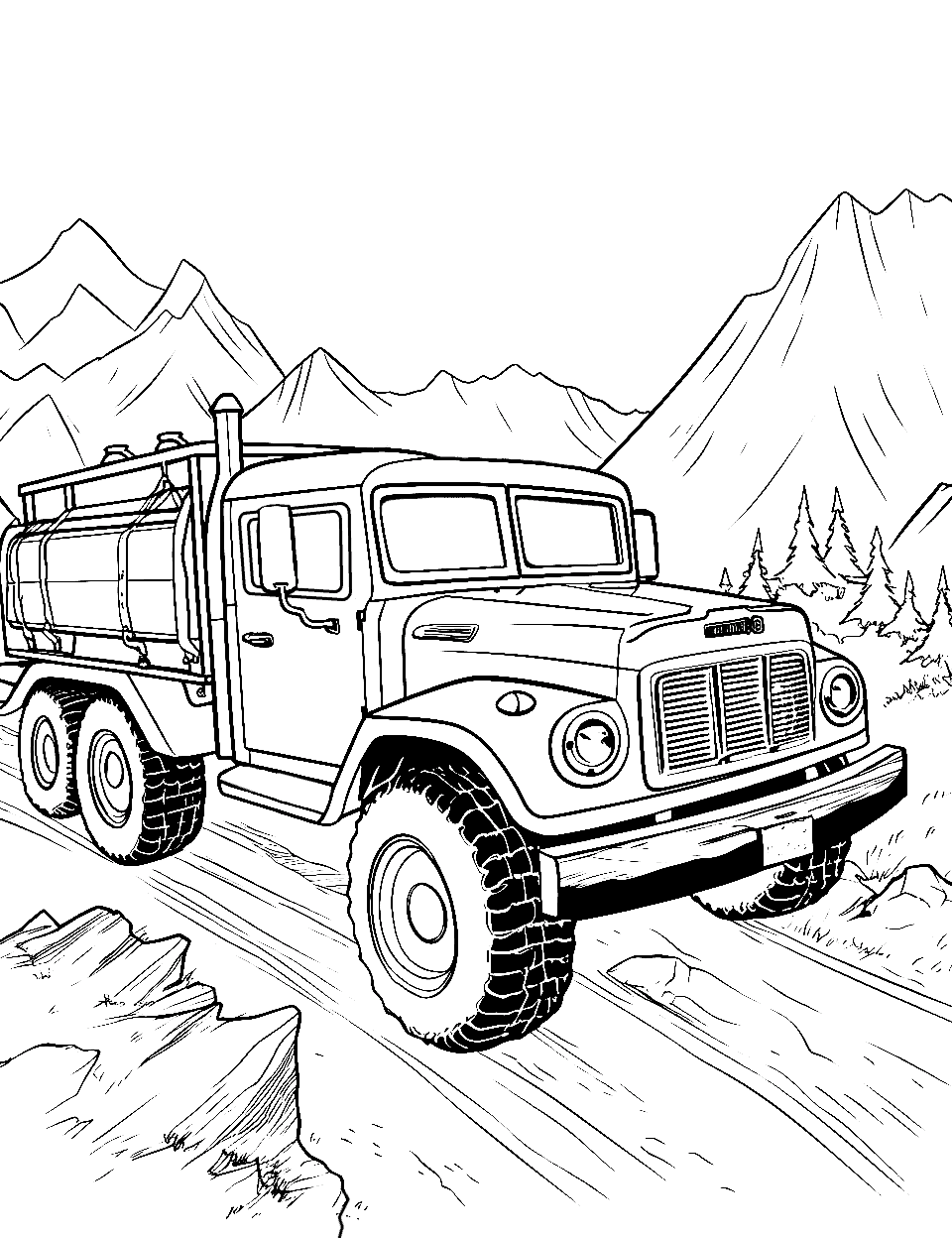
Six big knobby tires carry this heavy truck over a rocky trail. A round tank rides on the frame behind the cab and mountains rise off to the right. Olive green and dull tan fit the look, though there is no rule against a wild color. The tire treads are drawn in detail and are the best part to take slowly.
White sidewalls on the tires give this vintage truck an old-fashioned look. A tall building stands in the background while boards ride in the bed. Leave the tire walls white and color only the treads to keep that period touch. The rounded fenders take shading well once a child is ready for it.
The bed of this pickup is heaped with flowers, drawn as a cluster of small rounded blooms. A wooden house with a peaked roof stands just behind it. This is the sheet to reach for when your child wants every color in the box on one page. Pinks, purples and yellows in the load, then one calm color on the truck.
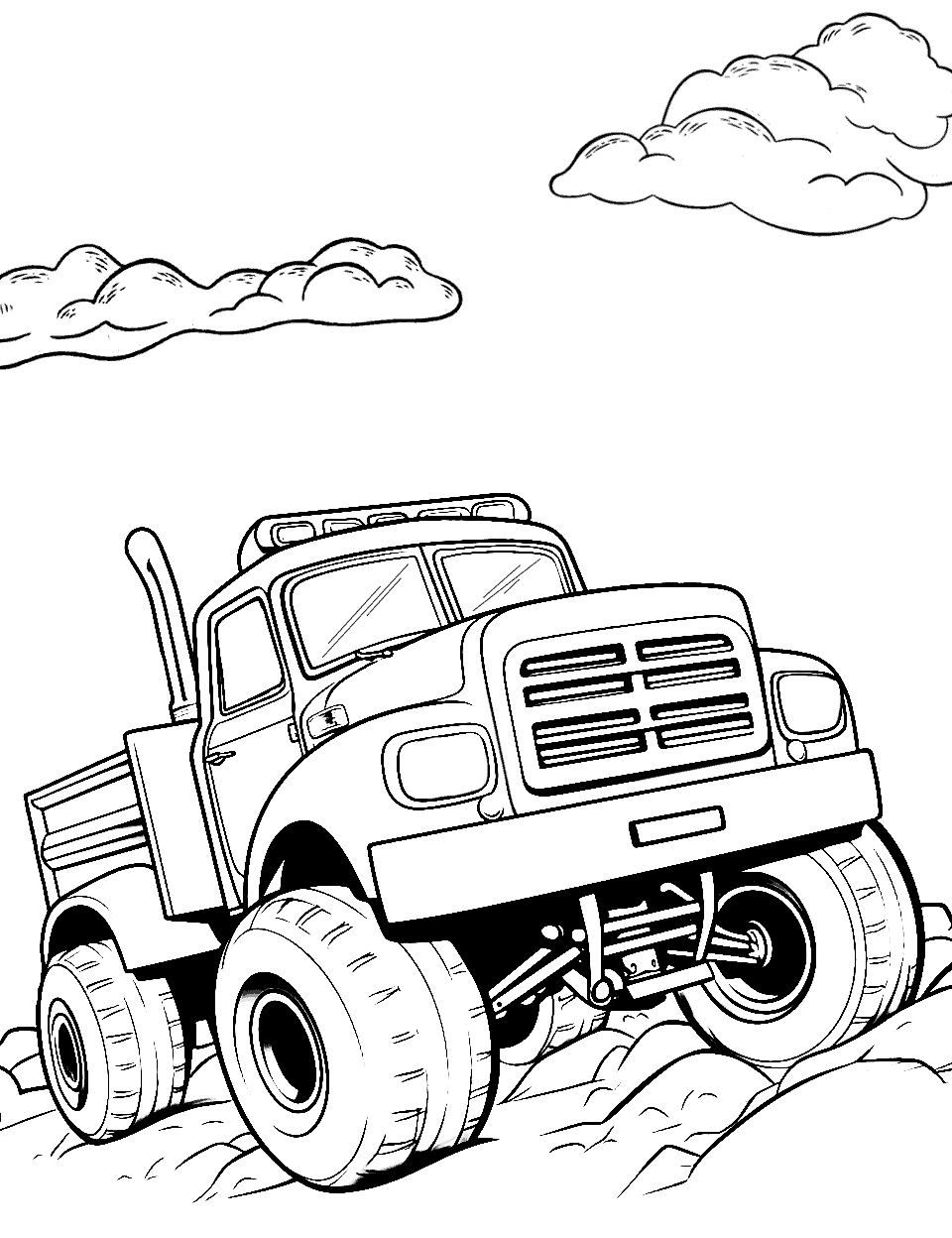
Giant tires and a lifted frame make this monster truck tower over rough ground. You can see straight through to the axles and springs underneath, which is unusual on a coloring sheet. Bright body colors against black tires give the strongest contrast. The clouds drifting above can stay white.
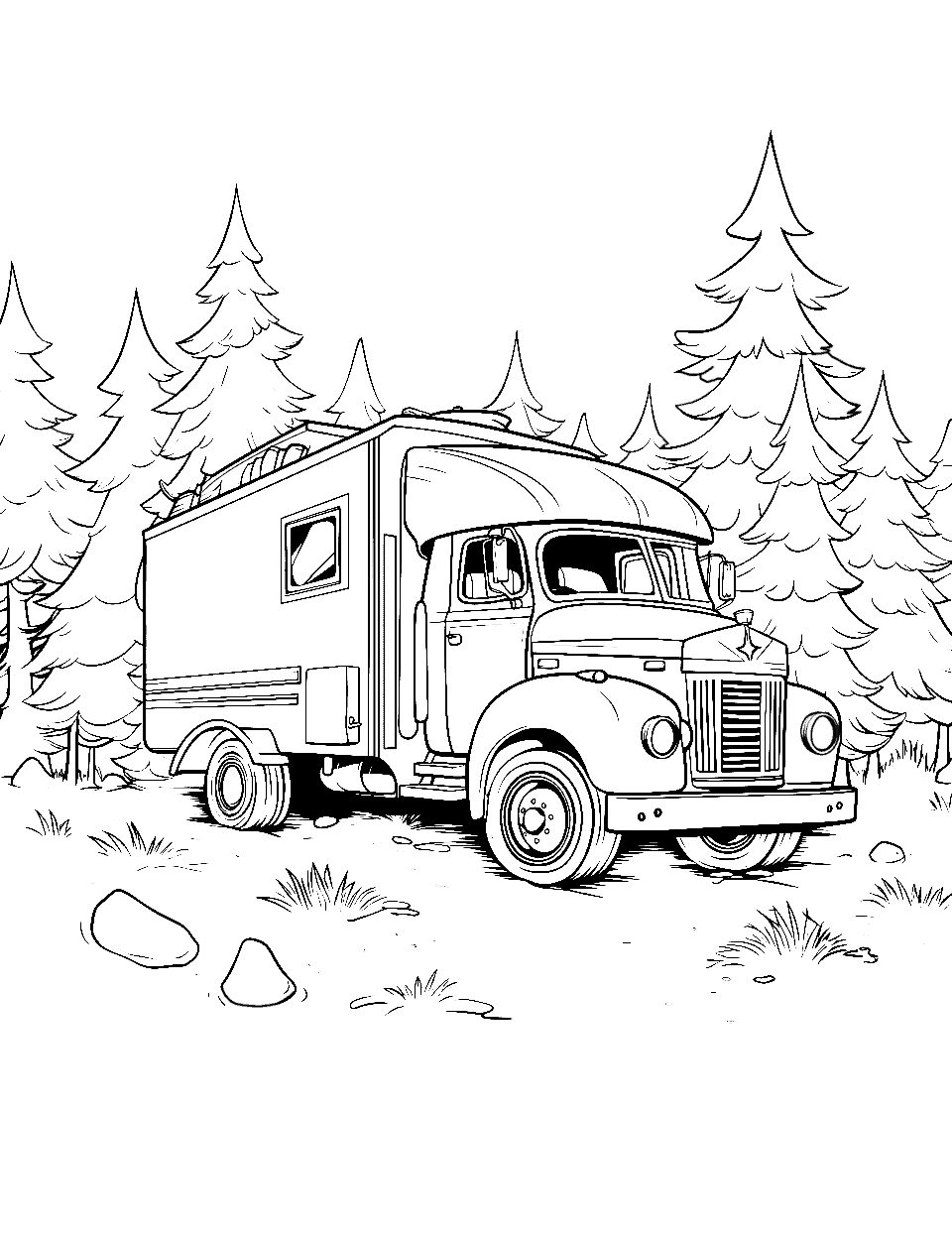
A boxy camper body rides on the back of this old truck, complete with a small window and a side door. Pine trees stand behind it while rocks and grass fill the ground. Two-tone the camper, one color on the panel and another on the trim, the way real rigs are painted. Our camping coloring pages make a good follow-up sheet.
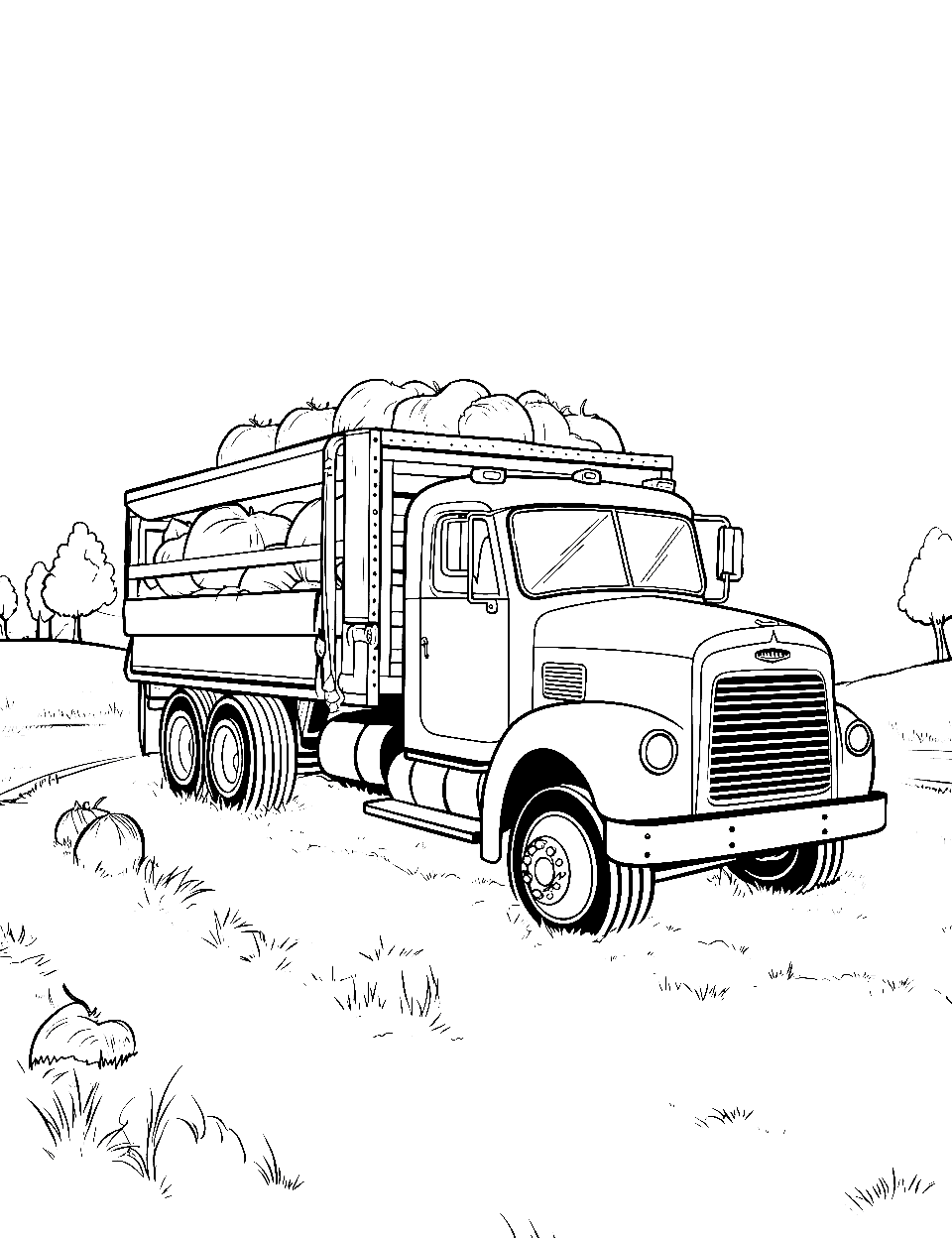
Round pumpkins fill the stake bed of this farm truck, and a couple more sit in the grass by the front wheel. A bare tree and a low hedge line the field behind. Orange is the obvious choice, and mixing in a few green and pale yellow ones looks closer to a real patch. Pair it with pumpkins from our fall set for a whole afternoon.
Two clouds hang in an otherwise empty sky above this parked stake-bed truck. The ground is broken with small rocks and short loose lines, and the bed is empty. All that white space is an invitation to draw a background of your own. Keep the truck simple and let your child fill the sky however they like.
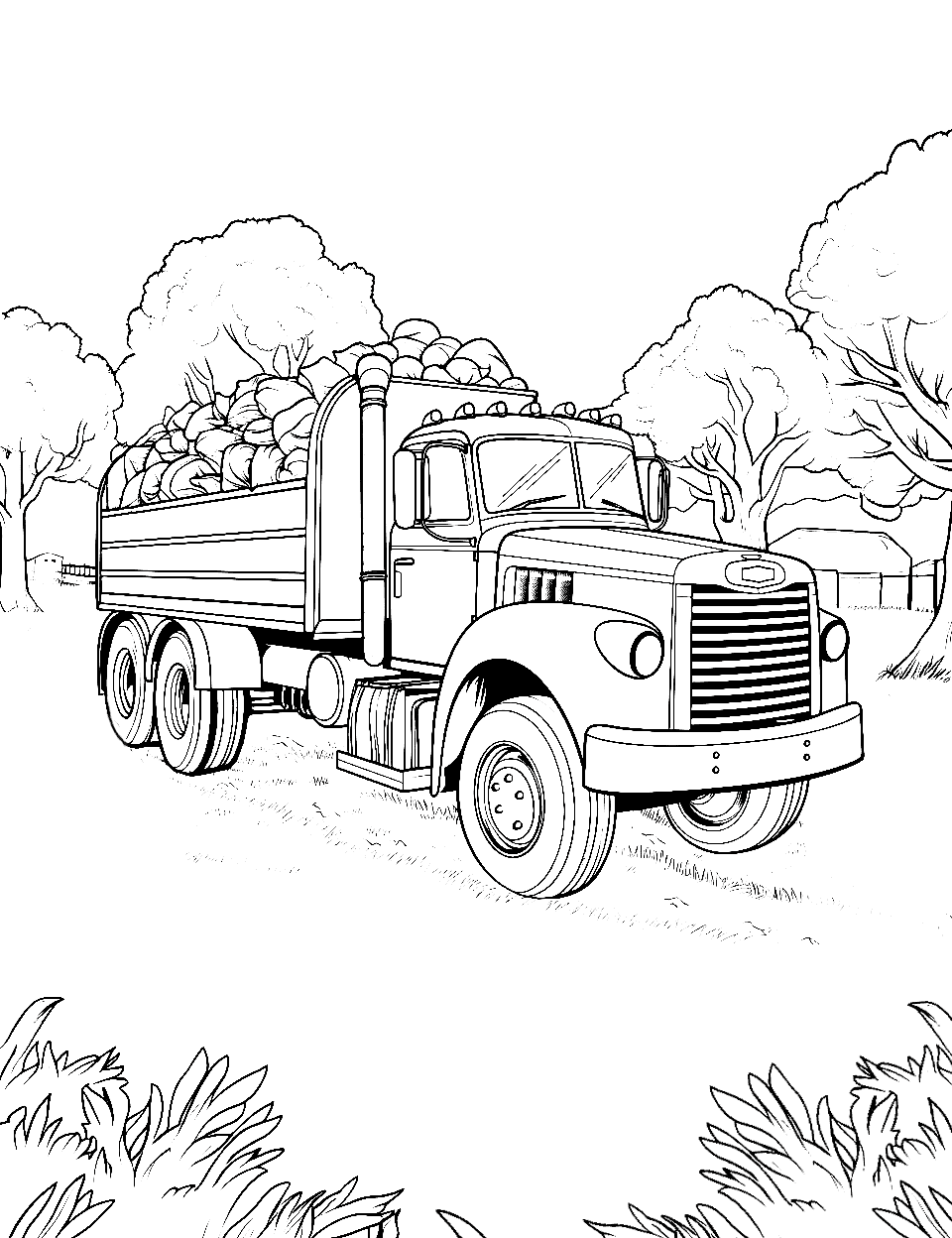
The high-sided bed of this truck is heaped with round fruit piled above the rails. Orchard trees stand behind and a low fence runs along the right. Reds and yellows in the load with green trees behind make the page feel like picking season. Two rear axles mean another set of wheels to get through.
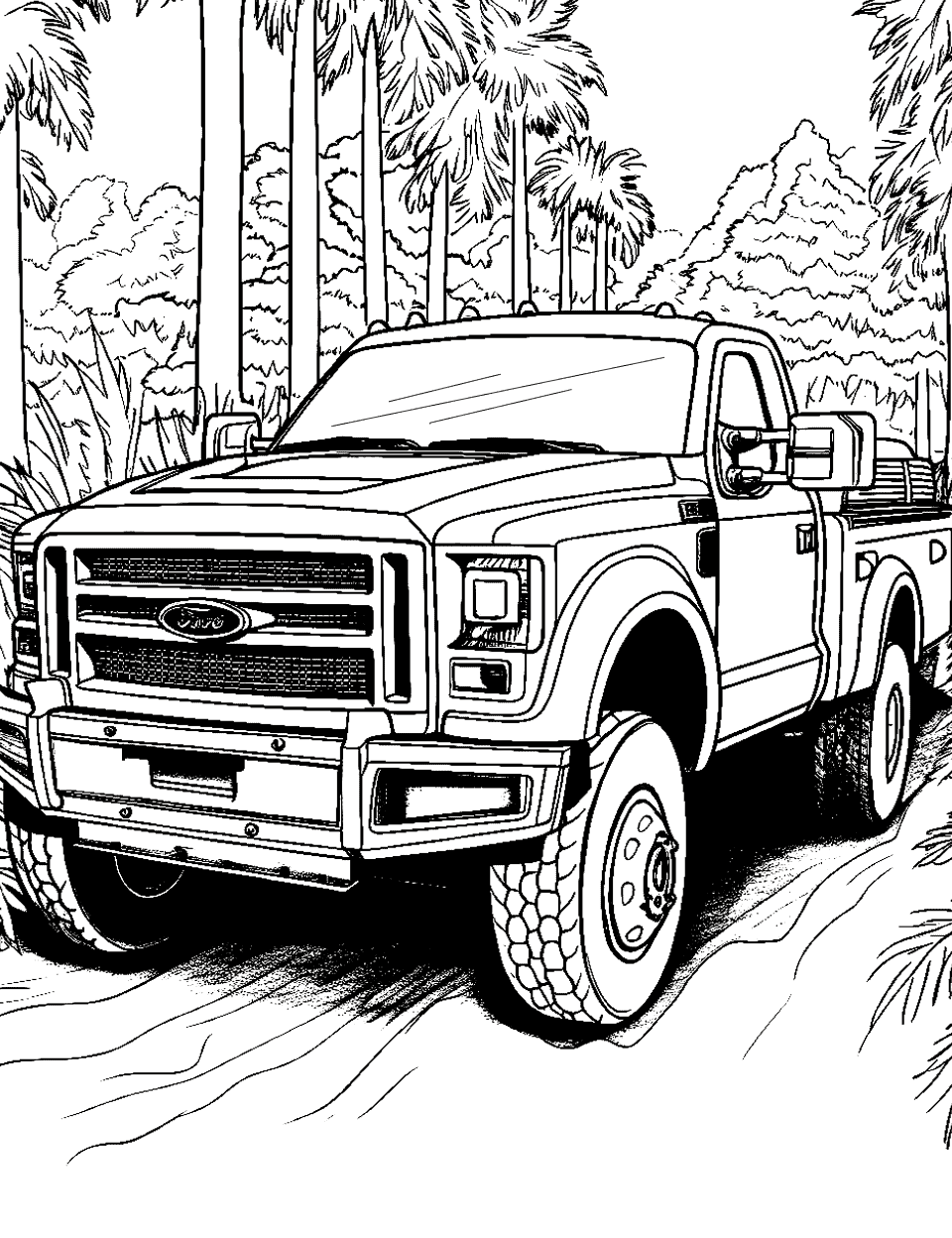
The word Ford is spelled out across the grille of this heavy pickup. Palm trees and thick brush crowd the track on both sides. Deep greens in the leaves and a strong body color stop the truck getting lost in the jungle. The tire treads and the bar across the front carry the most detail.
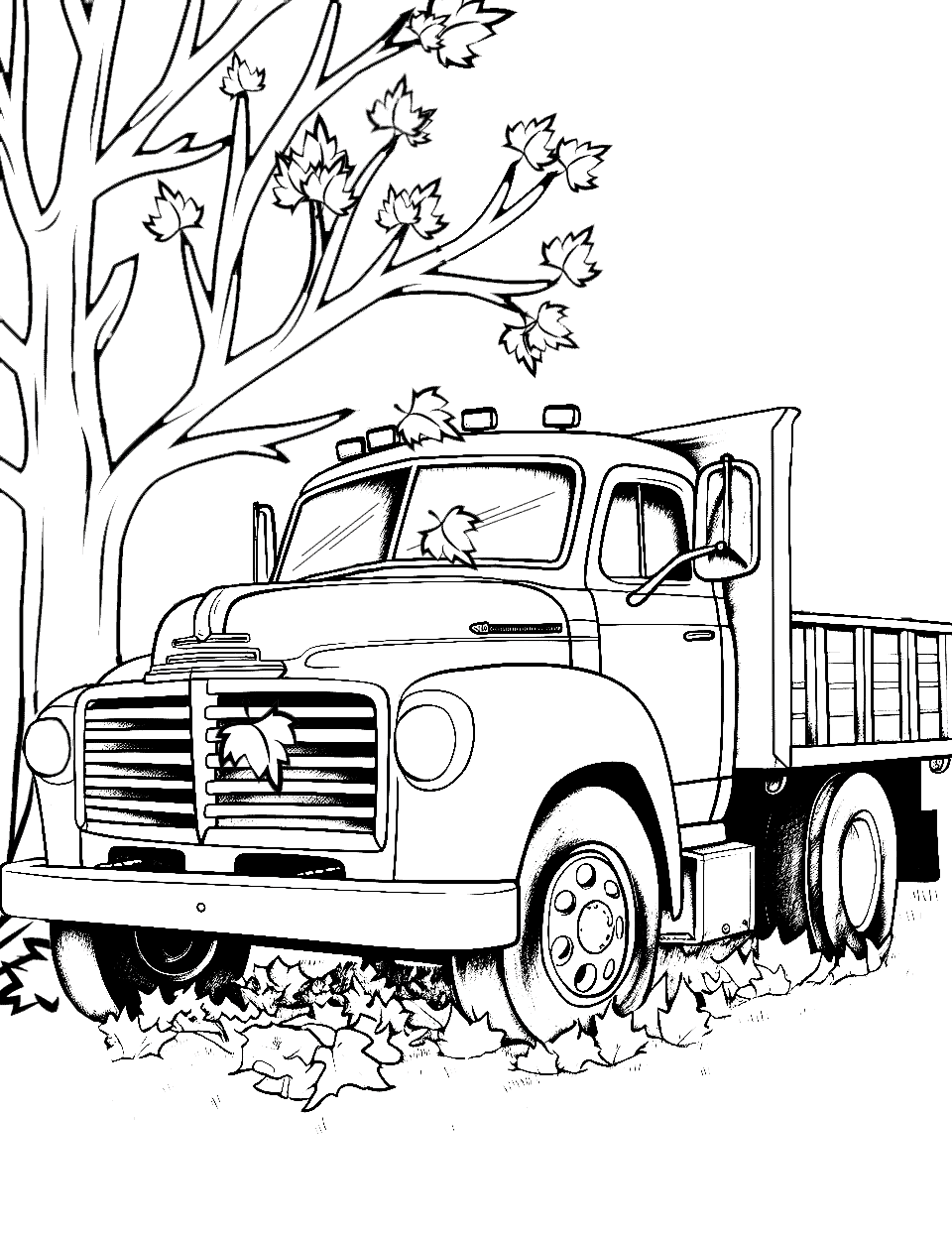
Maple leaves drift down from a bare tree onto this parked stake-bed truck, and more of them cover the ground below. One leaf has landed right on the grille. Reds, oranges and golds in the colorful fall leaves against a cool cab color make the season obvious. There are a lot of separate leaves, so plan for a long sit-down.
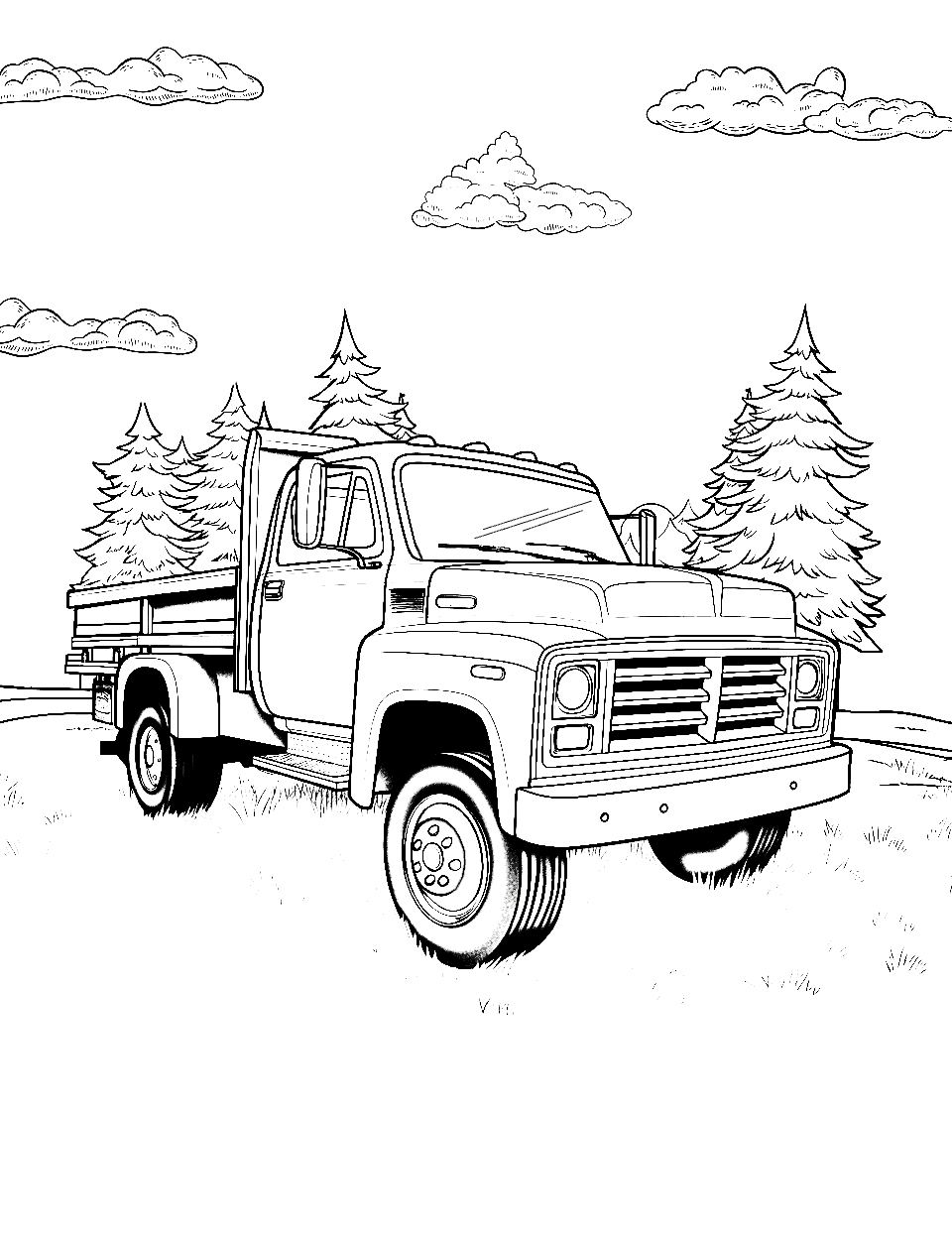
A square-shouldered truck stands in an open meadow with pines and clouds behind. The body lines are mostly straight, which makes this one forgiving for markers. Try a two-tone paint job, one color on the doors and another below the trim line. Short grass strokes around the wheels look good in two greens.
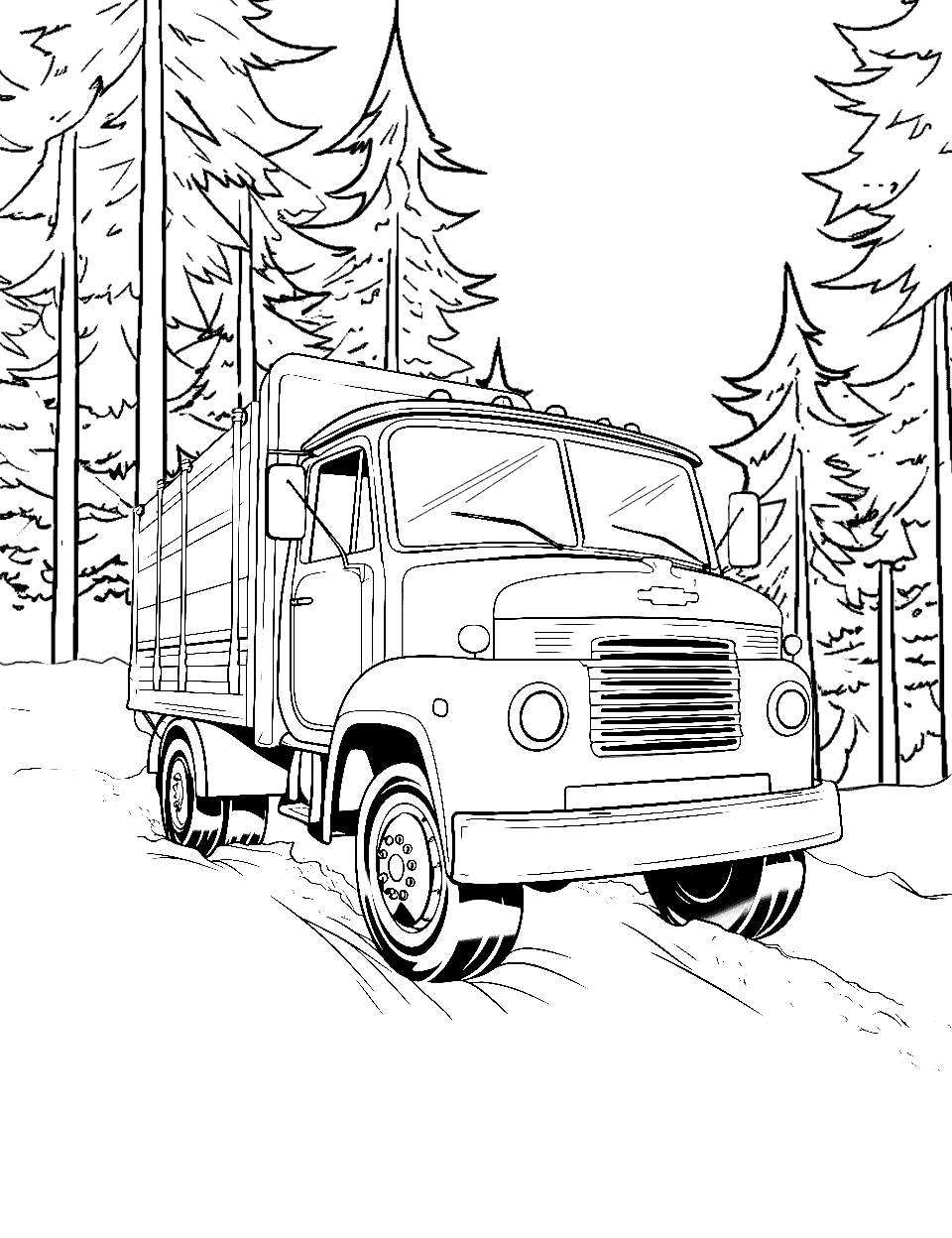
A bowtie badge sits on the grille of this delivery truck as it comes down a forest road. Tall pines crowd both sides while the road itself is left almost blank. That empty road is the place to add snow, puddles or fallen needles. Our snowy winter sheets are the next stop for anyone who wants more of that.
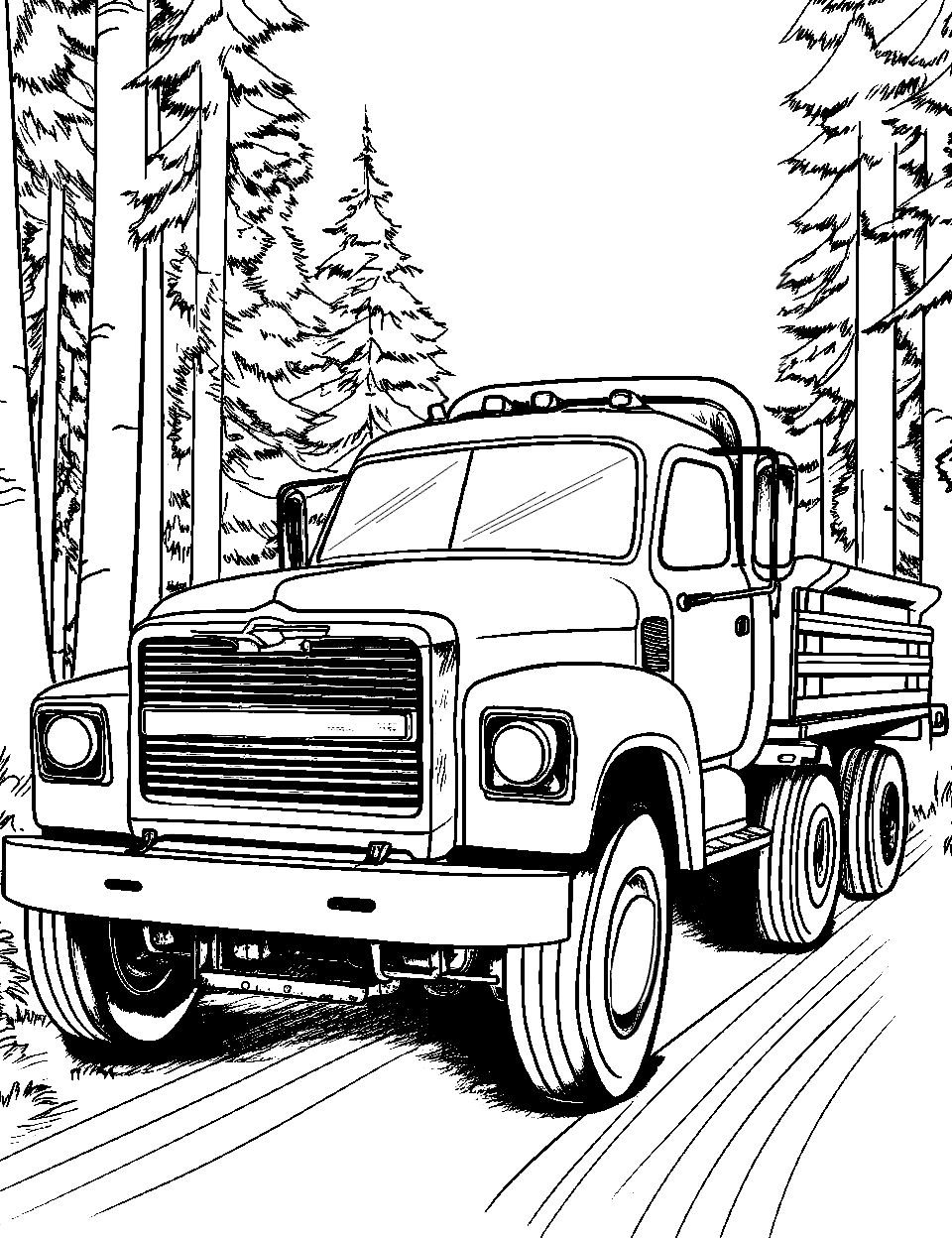
This heavy truck comes straight at you down a track between tall pines. The grille and bumper fill most of the front of the drawing and set the tone for the page. Choose the body color first, then either match the wheels to it or go plain black. The stake sides at the back are thin slats that look best in wood brown.
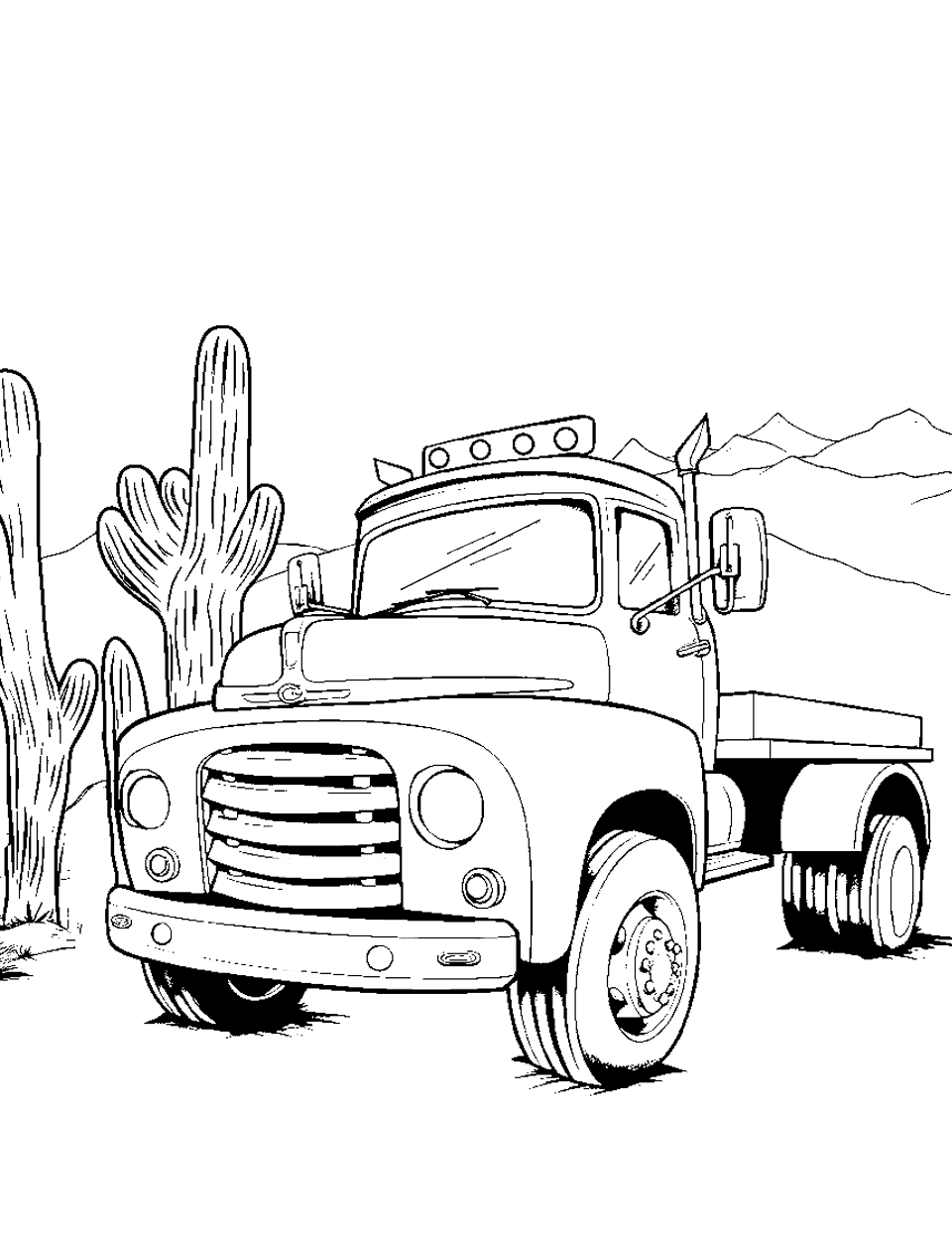
A tall saguaro cactus stands right beside this old flatbed truck with a low mountain line behind. Small lights sit in a row above the windshield and the grille is wide and chromed. Sun-bleached colors, dusty tan and faded turquoise, suit the desert setting. The cactus ribs are long vertical lines that look good in two greens.
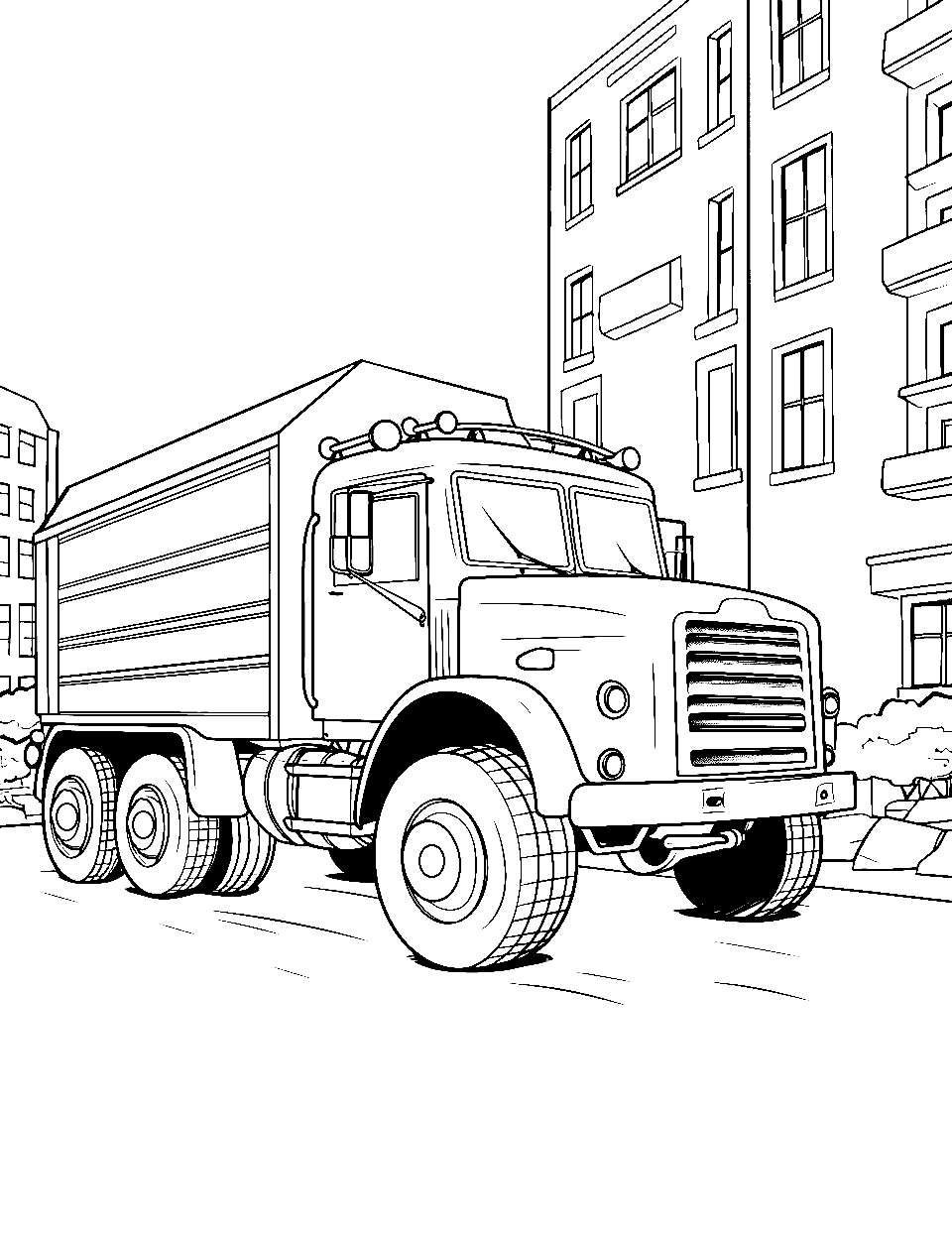
City buildings with rows of square windows rise behind this heavy truck. The body has high ribbed sides and rides over two rear axles. Those long straight lines let one color run from front to back without stopping. The windows behind are small squares, and leaving a few uncolored looks like glass catching the light.
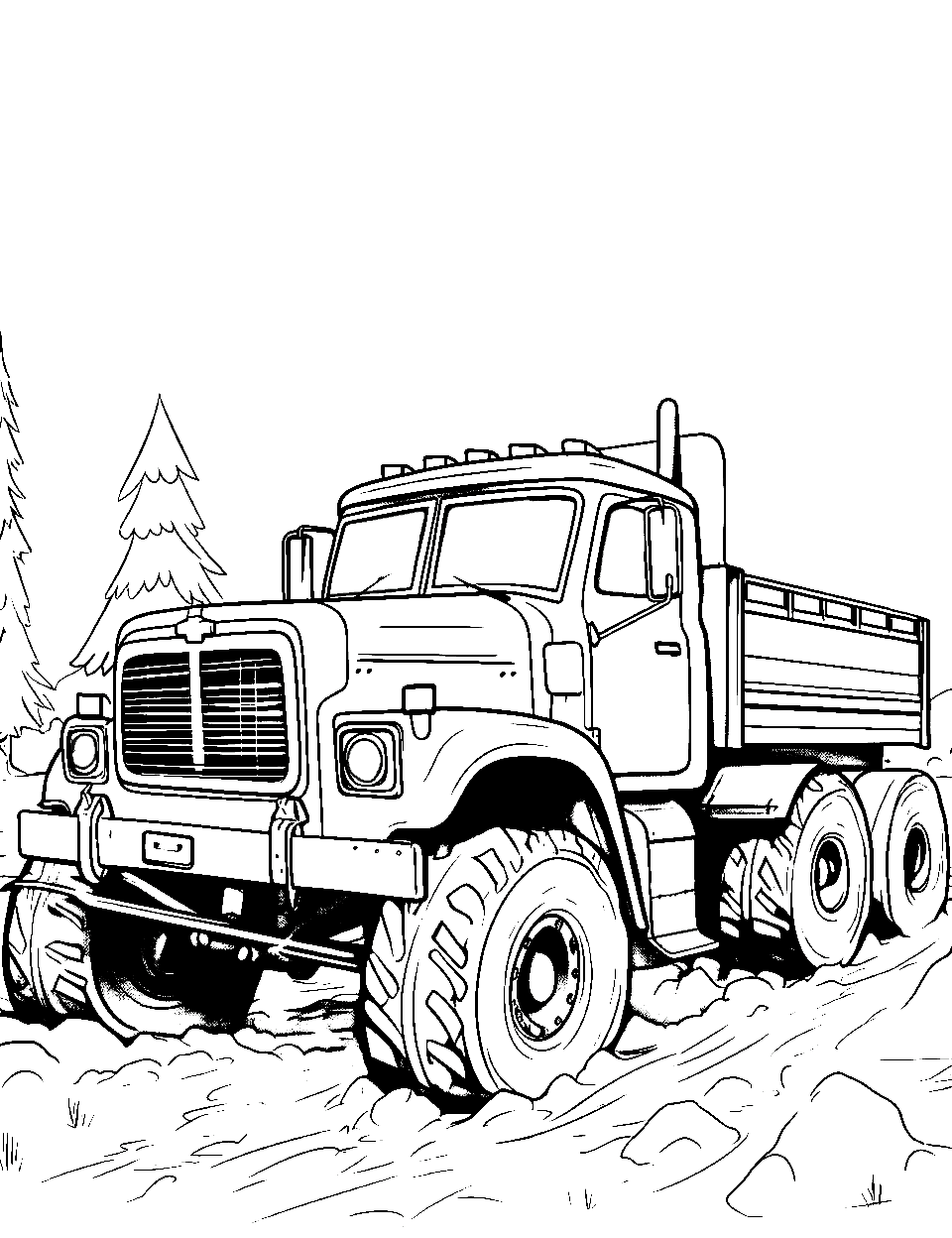
A bowtie badge and six chunky tires make this a work truck built for rough ground. The dirt underneath is drawn with loose stones and short strokes. Muted body colors with dark tires keep it looking like a real working vehicle. The tall exhaust pipe behind the cab is a small detail worth picking out in silver.
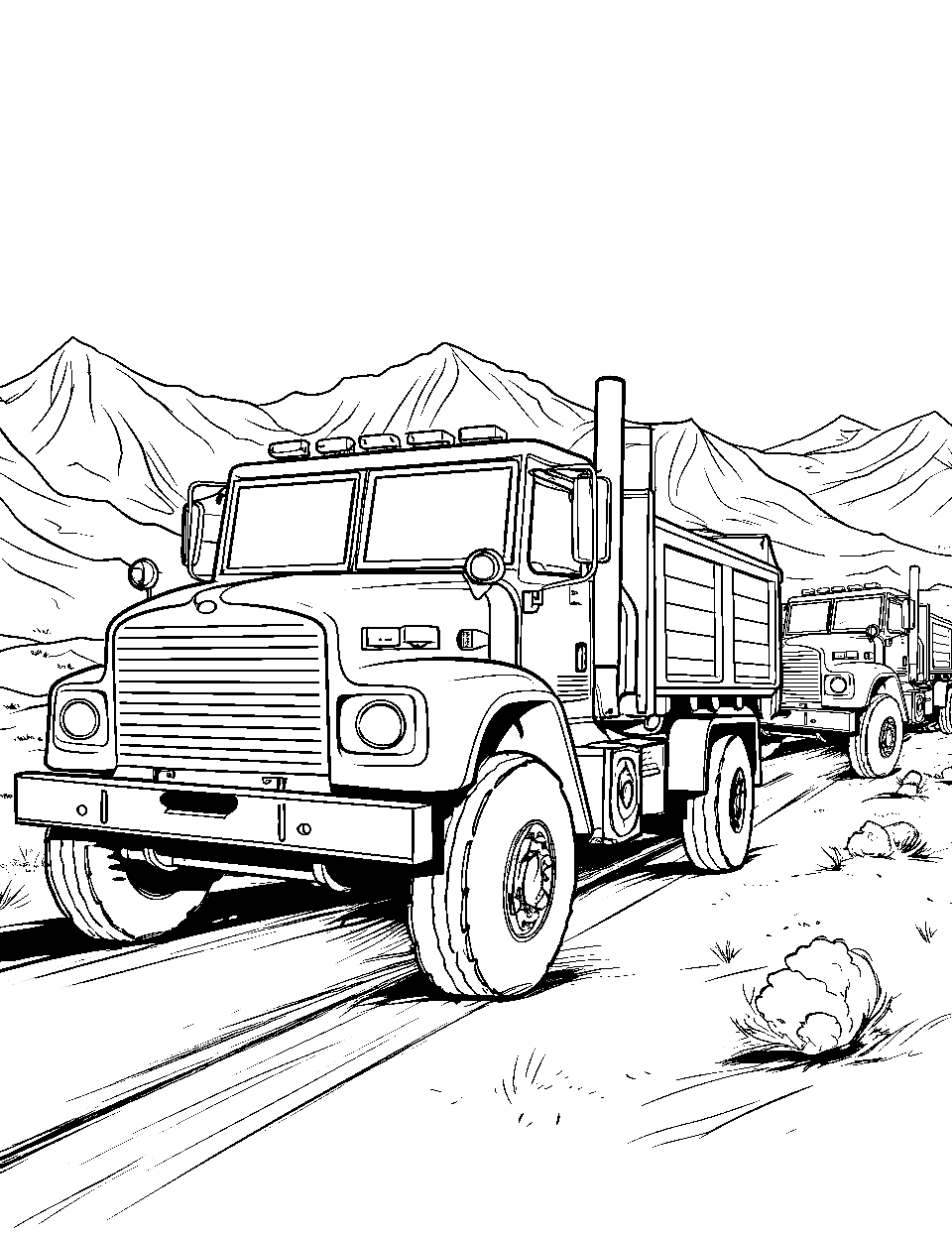
A second truck follows the first one along a mountain road here, which is what makes it a convoy. Both have flat, boxy cabs and high-sided cargo beds. Olive drab on the trucks with a lighter tan road is the traditional look. The truck in the distance is drawn smaller and simpler, a nice way to show a child how distance works in a picture.
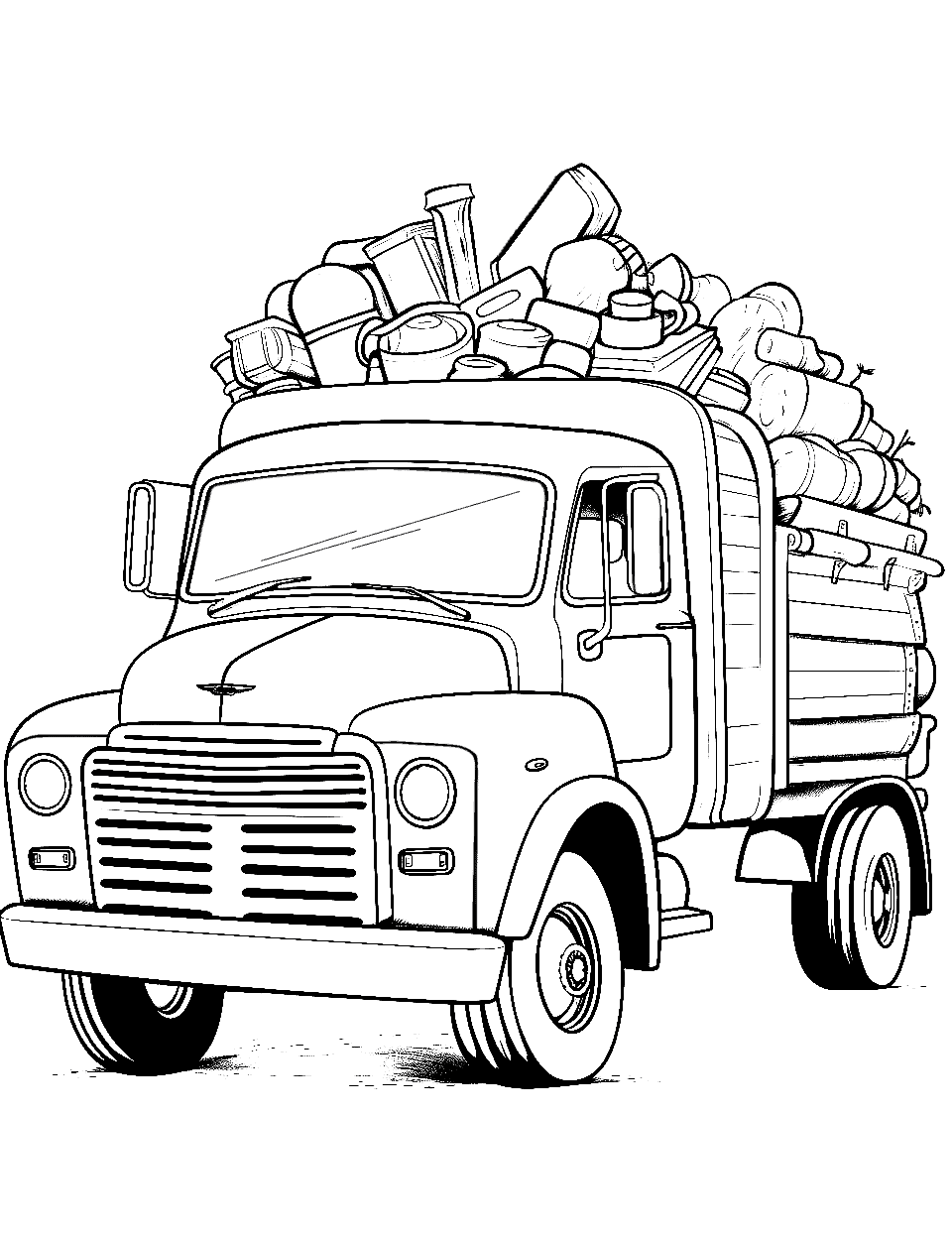
The bed of this truck is piled high with bundles, jugs, boxes and rolled-up gear. Almost nothing in the load repeats, so every shape can take a different color. The cab below is plain by comparison and gives the eye somewhere to rest. This is one of the busiest sheets in the set and suits an older child.
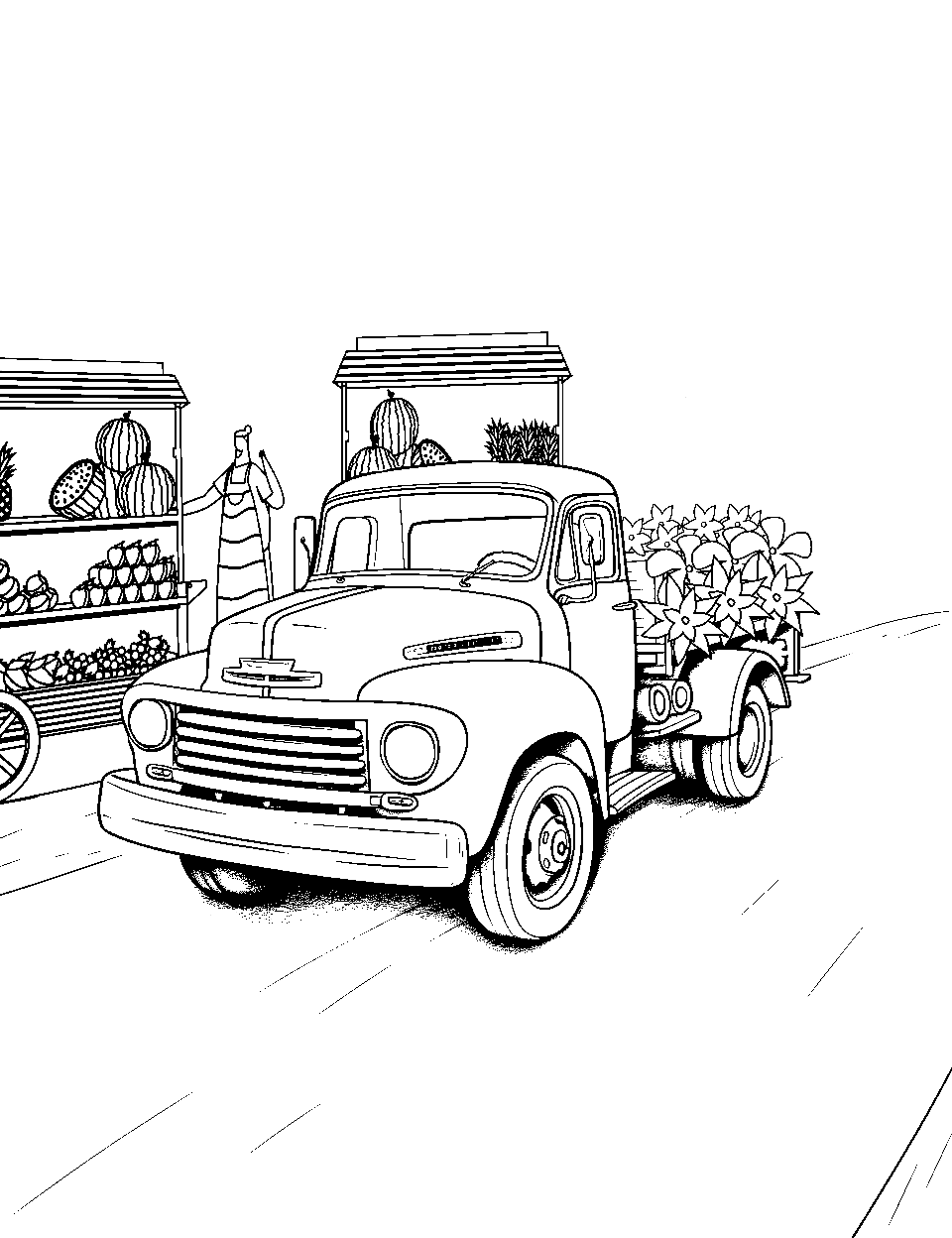
A market stall stacked with crates of produce fills the background while a pickup pulls away with flowers in the bed. Round fruit and vegetables sit in rows along the stall shelves. Give each crate its own color and the market comes alive with very little effort. The truck has smooth rounded fenders and stays simple by comparison.
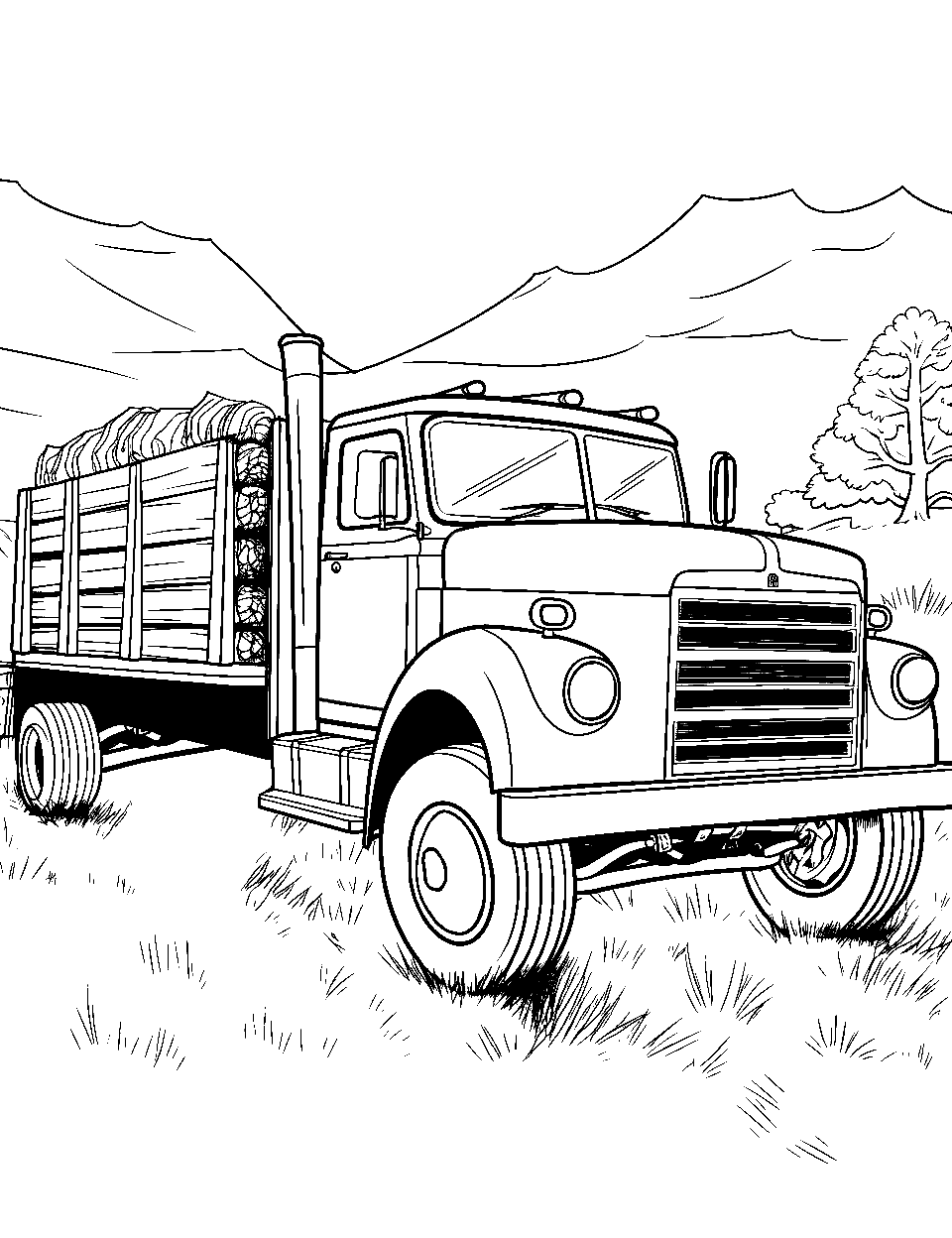
Rounded bundles are packed behind the stake sides of this farm truck, stacked to the top rail. A single tree stands at the right with mountains running across the back. Straw yellow in the load, greens in the field, and the truck can be any color at all. The foreground grass is quick strokes and can stay light.
A long-hood semi pulls its trailer past a line of pines toward the mountains. Twin stacks and a row of roof lights sit above the cab. Silver on the stacks and grille gives the chrome its shine against a colored body. The road stretches out along the bottom of the page and takes a flat gray.
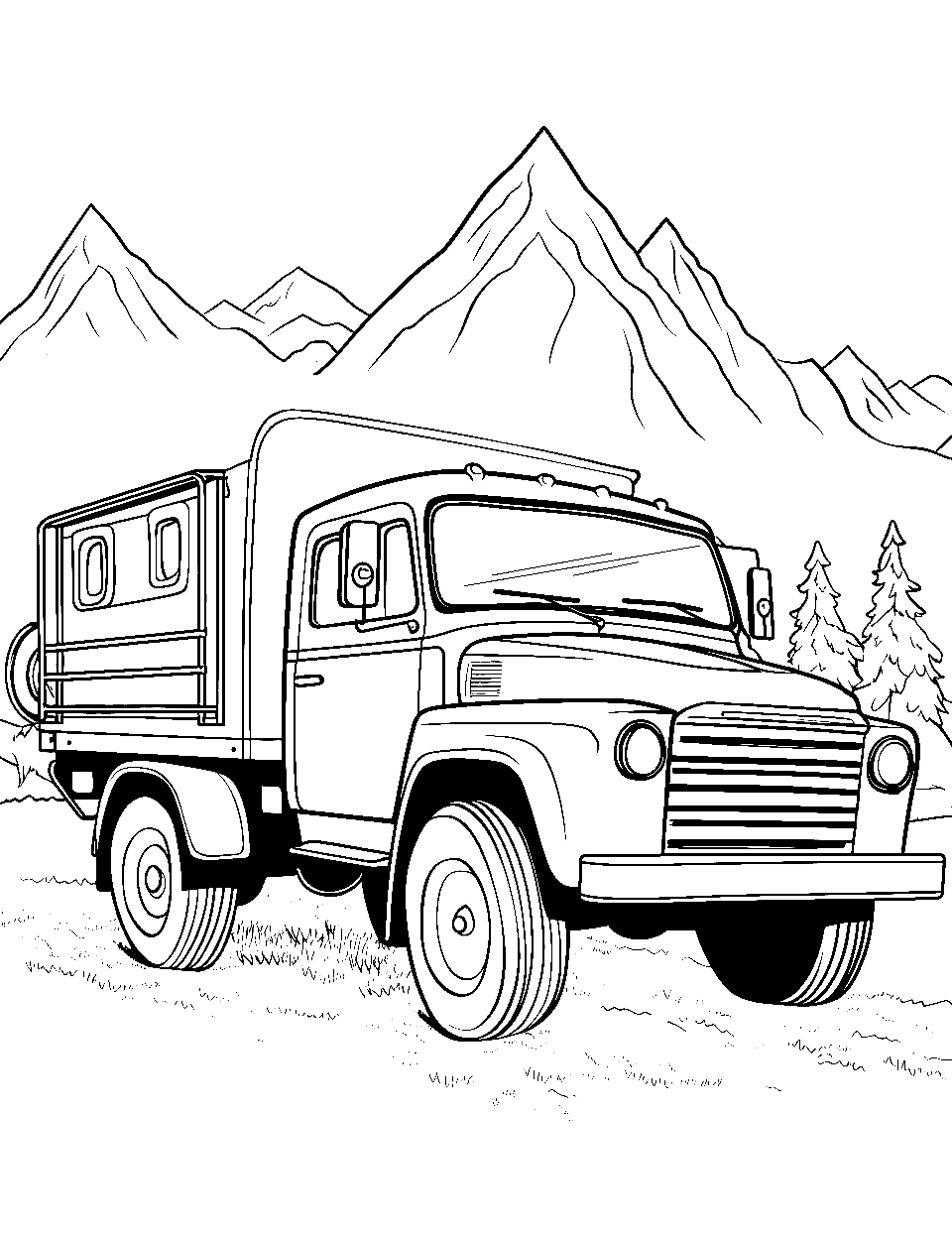
A sharp mountain peak fills the sky behind this truck with its windowed box body. Small pines sit at the base of the slope and the ground is left mostly open. Purple and gray shading on the peak beats plain brown and makes a good blending practice. Keep the truck bright so it is not swallowed by the scenery.
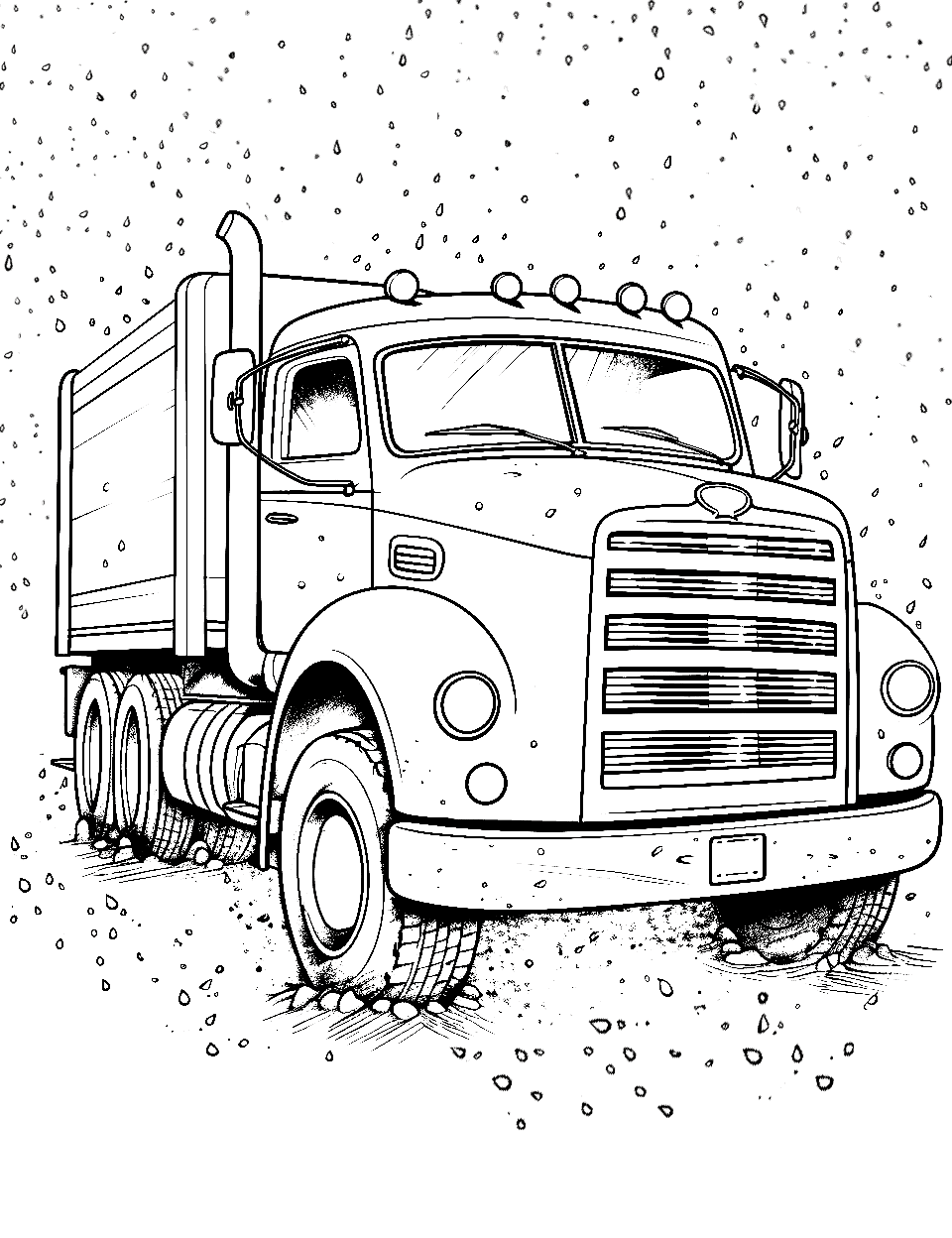
Dots fill the air across the whole page, which reads as heavy rain around this truck. The road underneath is speckled too, as if drops are bouncing off it. Blues and grays fit the weather, and leaving the dots white keeps them looking wet. Headlights picked out in yellow suggest a truck pushing through the downpour.
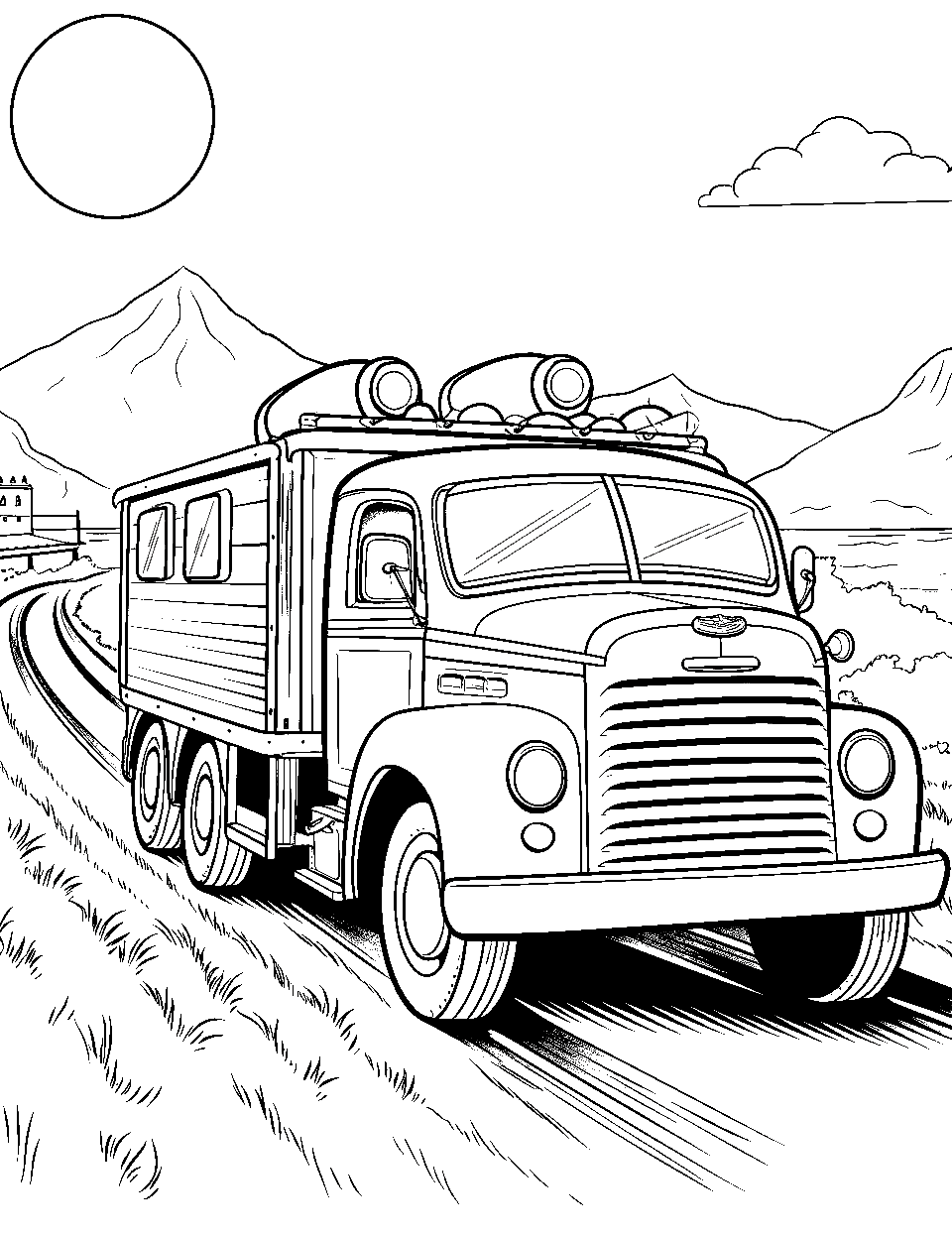
A round sun sits in the corner of the sky while this truck follows a curving highway. Round spotlights are mounted along the top of the cab. Warm yellows and oranges in the sunny summer sky set the mood before you even reach the truck. The road curving away behind it gives a sense of a long trip ahead.
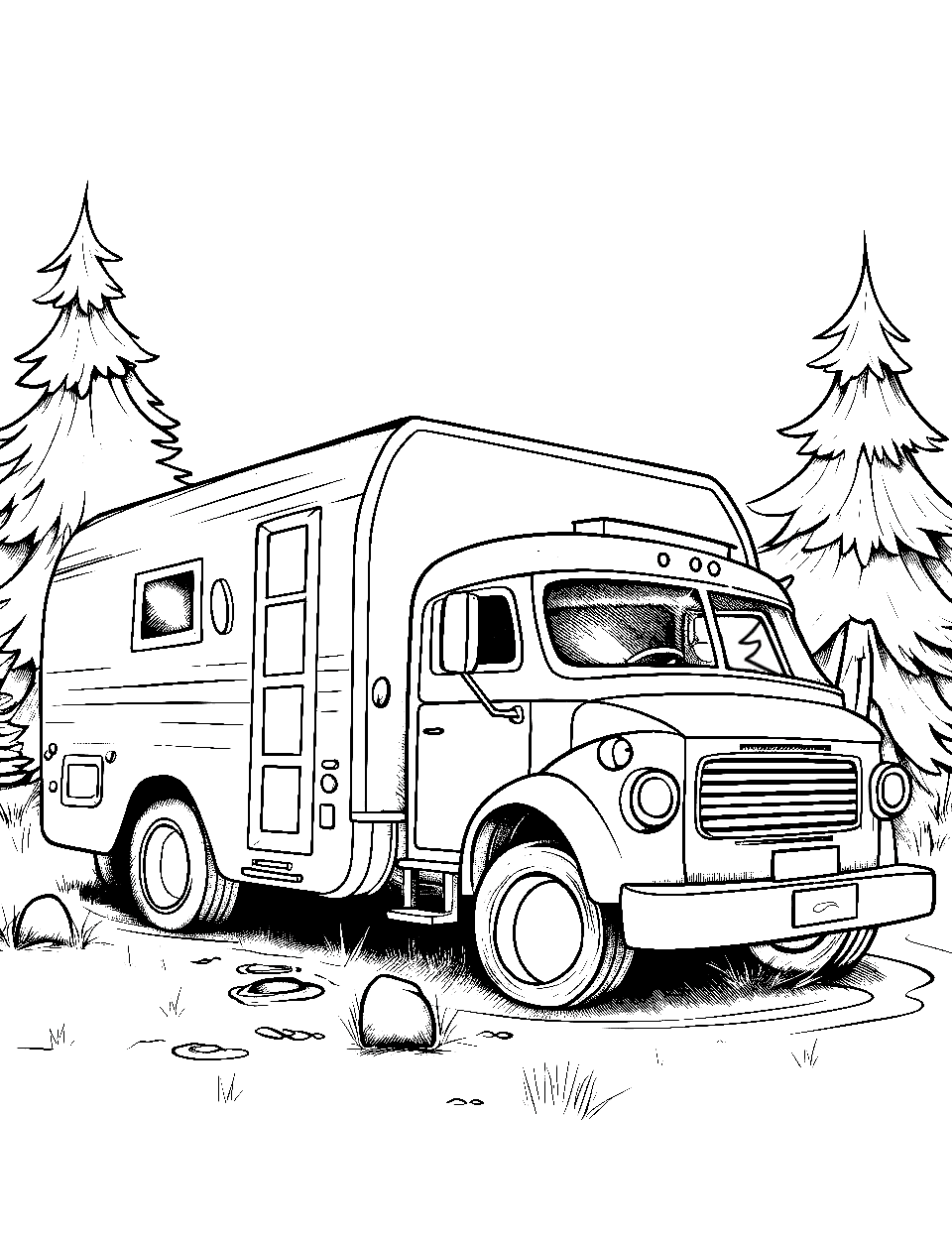
This camper truck is parked among pine trees with rocks and grass around the wheels. The camper body has a door, a small window and a rounded roofline. Cream with an orange stripe makes it look like a real vintage rig. The trees behind can be layered in two greens for depth.
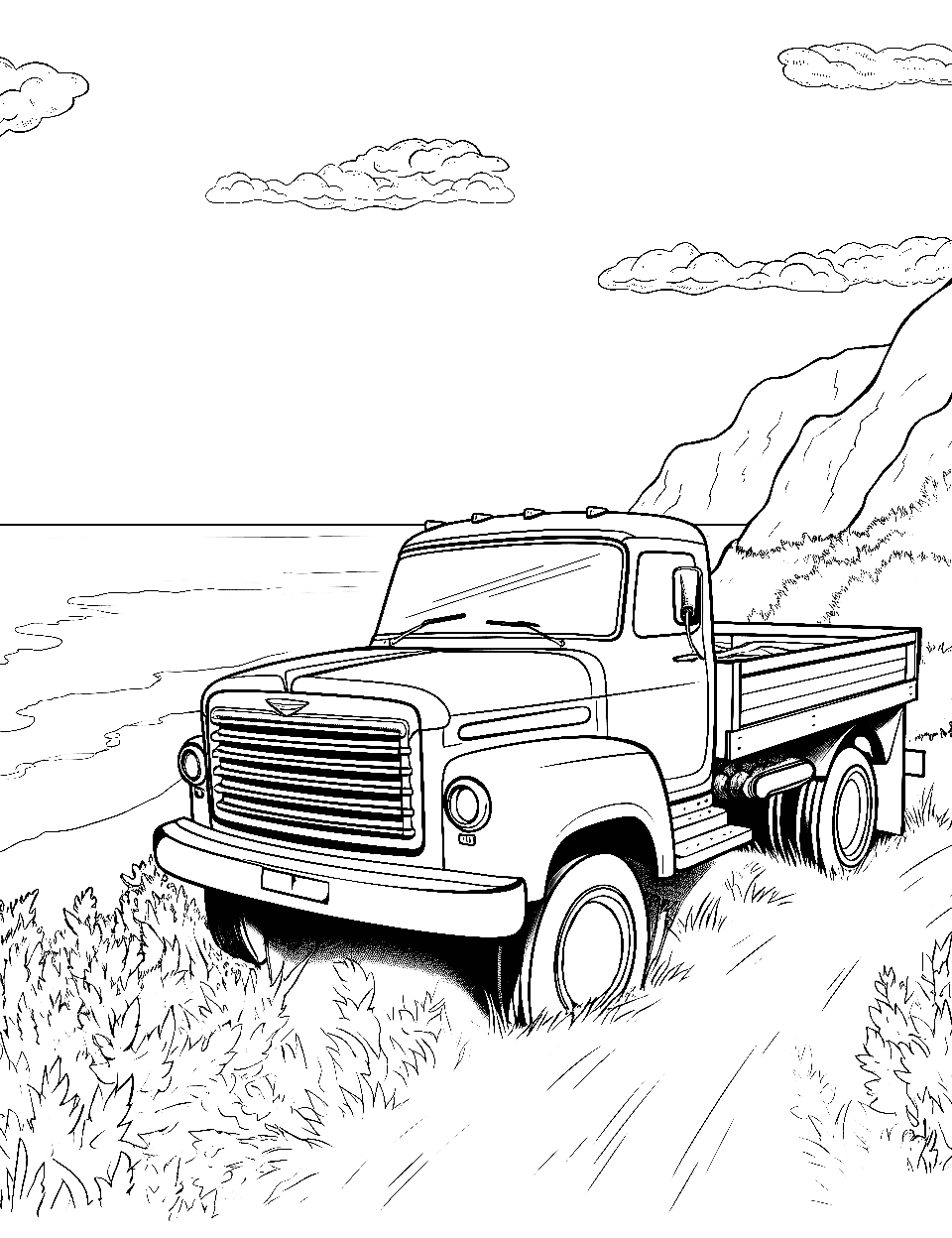
This truck is parked on a grassy bluff with the sea stretching out behind it. A steep headland rises on the right side of the horizon. Blues in the water, greens in the brush, and the shoreline can stay pale. The flat bed at the back is one big open shape and colors in quickly.
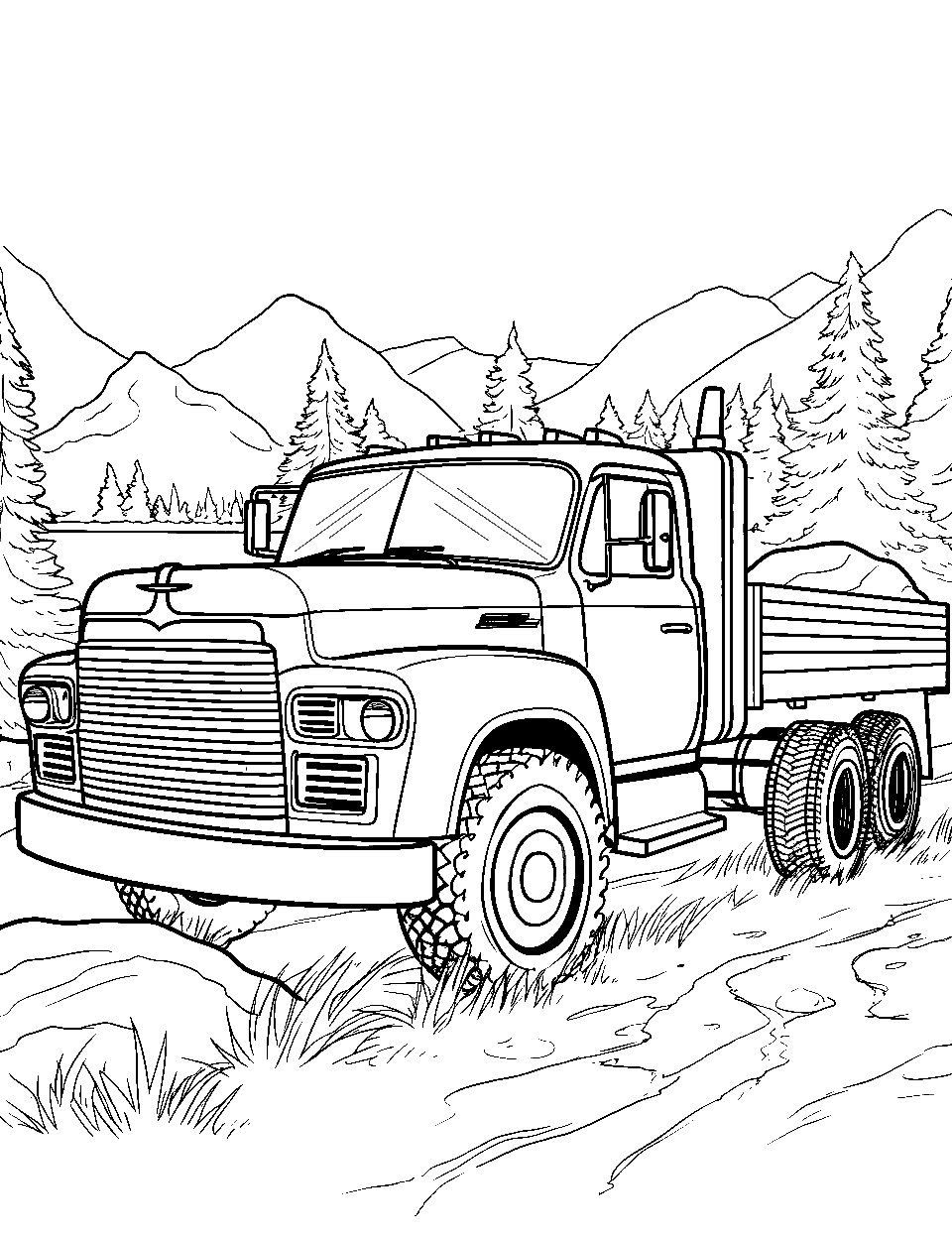
A dirt track runs beside the water here, with pines and mountains filling the far bank. The truck has a stake bed, chunky tires and two rear axles. Cool blues behind with a warm cab color make the truck step forward. Grass and loose stone along the track give a texture fan plenty to do.
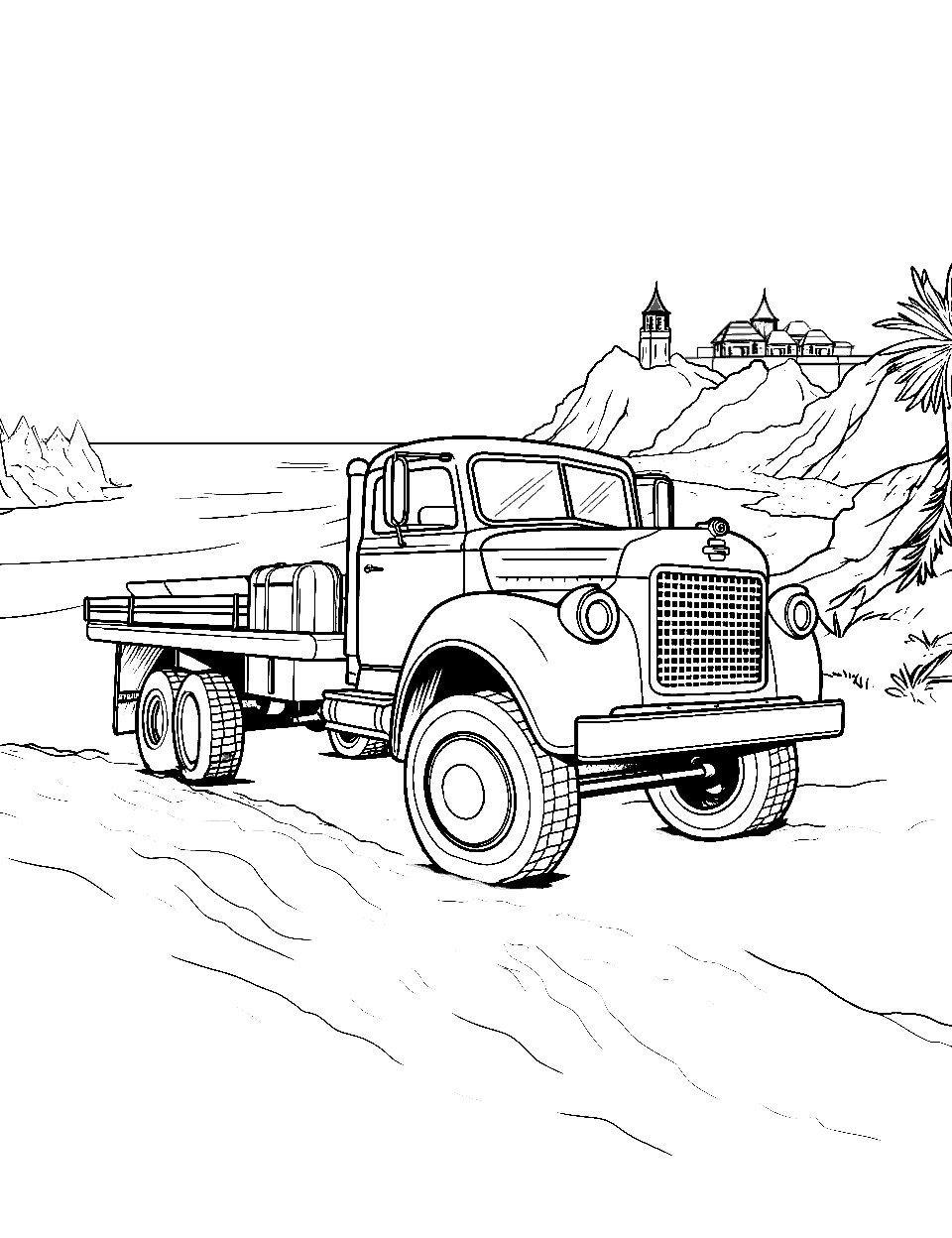
Sand, sea and a headland with houses on top make this the beach sheet of the set. Palm leaves hang in at the right edge and the water runs flat across the middle. Pale yellow sand and layered blues in the sea do most of the work here. The truck’s flat bed stays empty, so there is room to imagine what it is carrying.
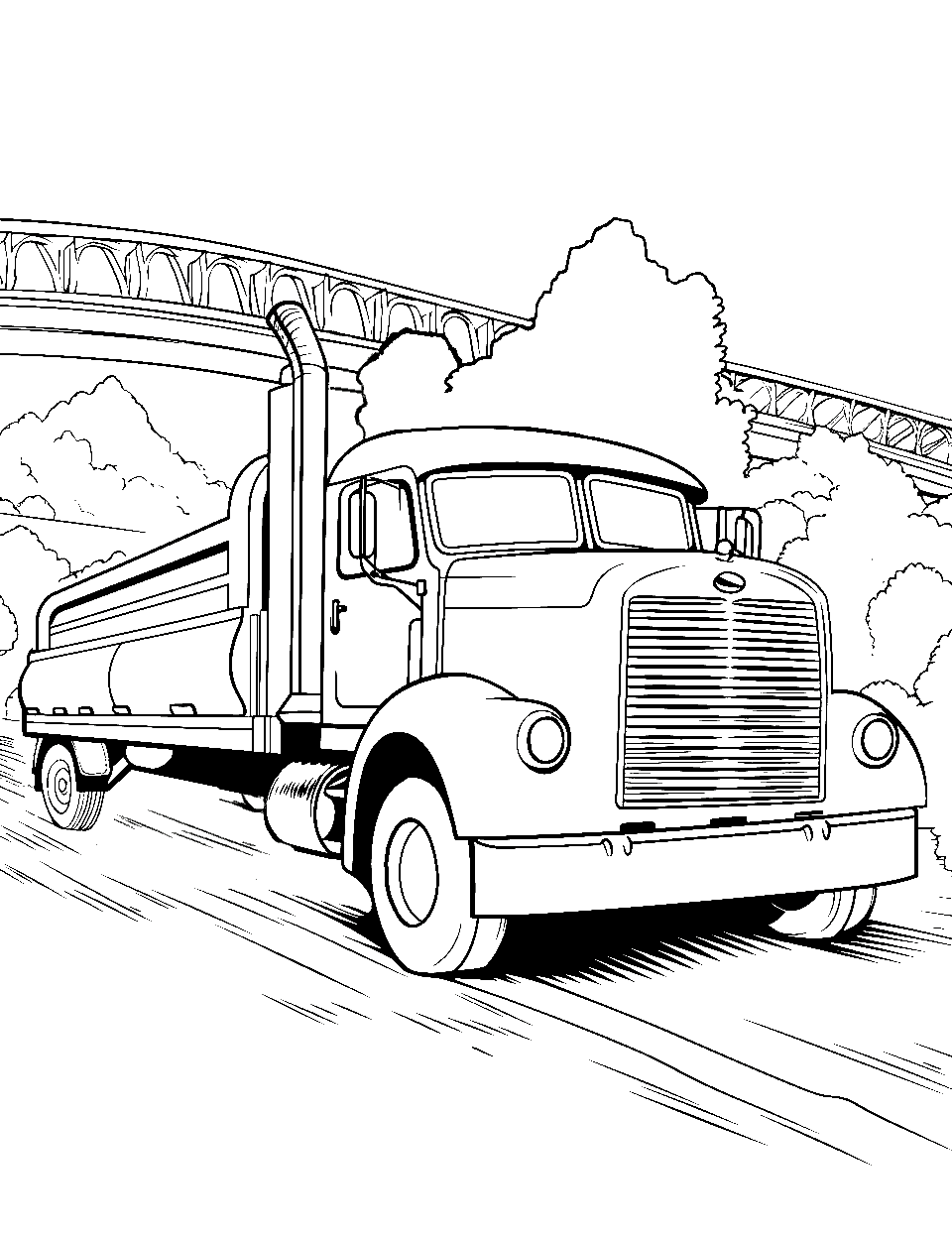
A tall arched bridge crosses the sky behind this truck as it drives underneath. Trees fill the gaps between the bridge supports. Stone gray on the arches with green behind gives the bridge its weight. The truck’s high-sided bed and tall stack are the easiest parts to start on.
A bowtie badge and stacked headlights identify this modern Chevy pickup, parked in a grass field. Clouds sit low on the horizon behind it. The grille is split into wide bars that look sharp in chrome gray. Long grass strokes in the foreground can stay light so the truck holds the attention.
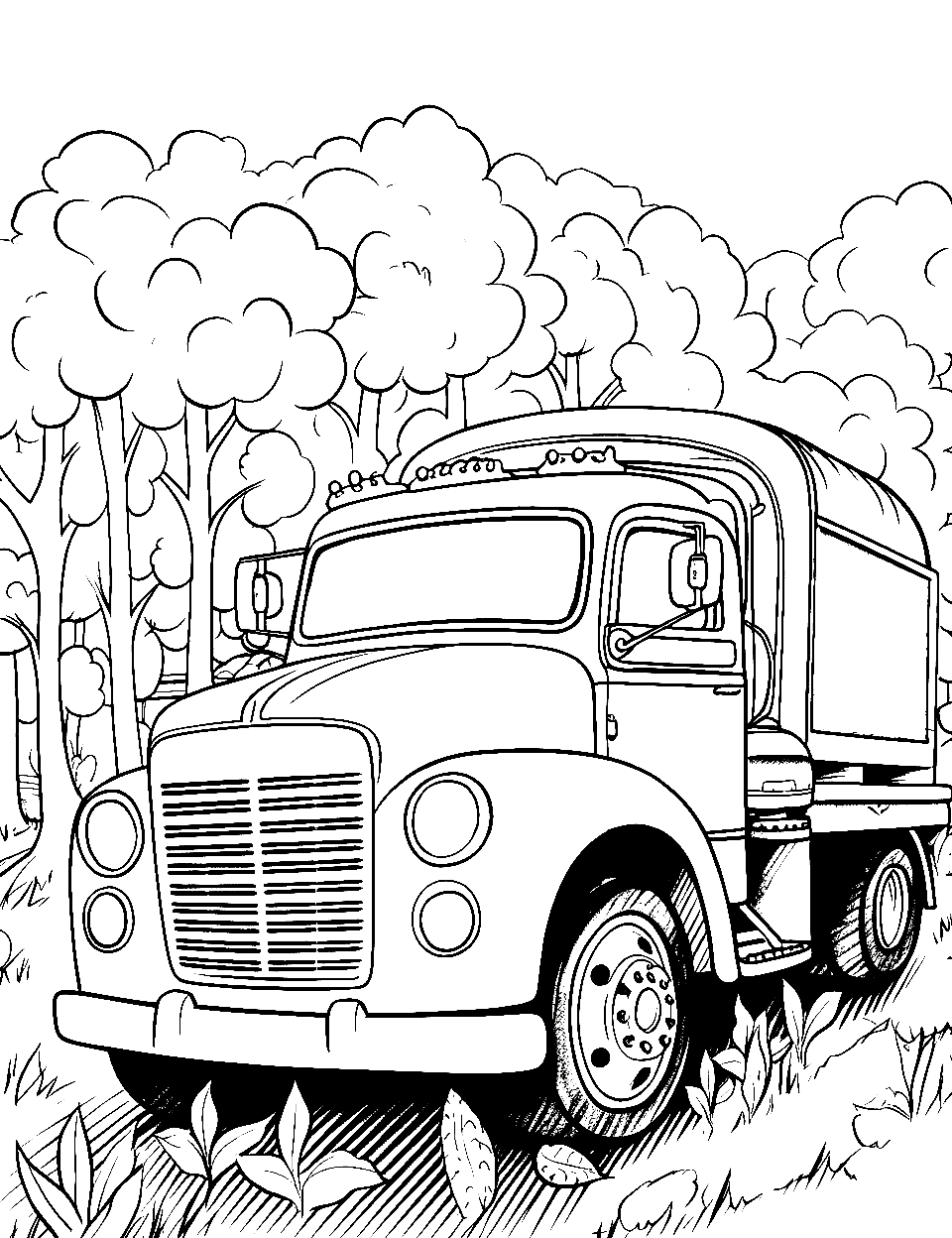
A rounded canvas cover stretches over the cargo bed of this old truck, parked among leafy trees. Broad leaves and grass grow up around the front wheel. Canvas takes a light tan or olive, which leaves the cab free for something brighter. Round headlights and a wide grille finish off the front end.
By using our free coloring pages, you acknowledge and agree to our full disclaimer. All materials are for personal, non-commercial use only and all rights belong to their respective license holders.
What Age Are These Truck Coloring Pages Best For?
Most children can start with these sheets around age 3 and keep using them into early elementary school, because the set runs from single trucks on blank paper to scenes with dozens of small shapes. The CDC lists drawing a circle after being shown how as a milestone by 3 years of age (1), so in practice a three-year-old can usually fill a large area like a door panel or a wheel, even if the crayon wanders well past the line.
By 4, children are drawing a person with 3 or more body parts (2), and in practice that same hand control tends to show up as neater work inside a grille, a window or a tire tread. That is the point where the busier pages start to pay off.
For toddlers, start with the plainest sheets: the vintage flatbed on the blank background, the stake-bed truck parked under two clouds, or the semi with no trailer. Older kids usually head straight for the crowded pages, the crane at the construction site, the market stall, or the truck piled with supplies.
How Big Is a Real Big Rig?
A loaded tractor-trailer can weigh up to 80,000 pounds, must fit inside a width limit of 102 inches, and cannot put more than 34,000 pounds on a tandem axle set (3). That is why real rigs run doubled-up wheels, which you can count on these sheets.
It makes a good fact to hand a child mid-crayon. Ask them to count the wheels on the big rig sheets, compare that with the pickups, and the reason for all those extra tires explains itself.
Activities to Do With Truck Coloring Pages
The coloring is the start, not the end. Every finished sheet is a piece of paper art that can be cut, glued, hung or played with, and most of these take ten minutes to set up.
Create a Truck Garland
Cut out four or five finished trucks, punch a hole in the top corner of each, and thread them onto a length of yarn. Hang the line across a window or over a bedroom door. Alternating a big rig, a pickup and the monster truck keeps the shapes interesting along the string.
Build a Paper City
Draw roads, parking bays and a gas station on a flattened cardboard box, then cut out the colored trucks and drive them around it. The city sheets in this set, the semi between the tall buildings and the heavy truck downtown, give your child a model to copy. Tape a folded paper tab to the base of each truck so it stands up on its own.
Make Popsicle Stick Puppets
Tape a popsicle stick to the back of each cut-out truck and you have a puppet cast. Kids can crouch behind the sofa and run a story where the fire truck races past and the farm truck breaks down on the hill. Telling it out loud is where most of the value sits.
Truck Match Memory Game
Print two copies each of four or five sheets, color the pairs to match, then cut them into squares and play memory face down. Pairs that already look similar, the two Chevy pickups or the two desert scenes, make the game harder for older players. Cardstock holds up far better than printer paper here.
Mixed Media Art Project
Go past crayons: cotton balls make exhaust smoke, real twigs glue onto the lumber truck, and torn brown paper works for the mud under the tires. The pumpkin truck takes orange tissue paper well. Gluing and tearing gives small hands a different job than gripping a crayon does.
Design a Puzzle
Glue a finished page onto a cereal box panel, draw six or eight puzzle shapes on the back, and cut them out. Use fewer, bigger pieces for a preschooler and more, smaller ones for a school-age child. Store each puzzle in a labeled zip bag so pieces from different trucks do not end up mixed.
FAQs
How Do I Print These Coloring Pages?
Click the download link under the sheet you want, save the file, then print it at 100 percent scale on letter size paper. Turning page scaling off keeps the truck full size instead of shrinking it inside a white border. Line art needs very little ink, so a draft or economy setting is usually enough.
What Is the Best Paper for Coloring Pages?
Plain printer paper is fine for crayons and colored pencils, and cardstock is the better choice for markers, gel pens or paint. Marker ink soaks through thin copy paper and will mark whatever sits underneath, so slide a spare sheet behind the page if you have no cardstock. Watercolor needs thicker paper again.
Are These Coloring Pages Free to Use?
Yes. Print them at home, in a classroom or at a library group as often as you like, at no cost, for personal and educational use. What is not allowed is selling the printed sheets or reposting the files on another site.
Can I Use These for a Classroom Activity?
Yes, and they slot neatly into a transportation or community helpers unit. The police truck and the fire truck cover the community helpers side, while the farm, lumber and market sheets show how goods travel from a field to a store. For a preschool table, hand out the plain-background sheets so children can finish one in a single session.
What Skills Does Coloring Help Develop?
By 4 years of age, the CDC expects a child to draw a person with 3 or more body parts, and coloring is one way that hand control gets practiced along the way. Filling in a shape with a crayon builds the pencil grip, hand-eye coordination and sit-still focus that come before handwriting. It is also one of the few quiet activities most children will choose on their own.
Do You Have Brand-Specific Trucks?
A few sheets carry a badge you can actually read. Two of the modern pickups wear the Chevy bowtie on the grille, one heavy pickup has Ford spelled across the front, and a delivery truck and a six-wheel work truck carry the bowtie as well. The rest are drawn as general types rather than exact models, so a semi is just a semi and the monster truck is not any one show truck.
How Can I Make the Pages Reusable?
Slide the printed sheet into a plastic page protector or laminate it, and dry-erase markers wipe straight off. One laminated page can cover a car trip, a restaurant wait and a rainy afternoon. Keep a square of paper towel in the pencil case as the eraser.
Which Truck Sheet Is Easiest for a Toddler?
The vintage flatbed on the blank white background is the easiest one here, because it has no scenery at all and only a handful of large shapes. The parked stake-bed truck under two clouds and the semi with no trailer come close behind. Leave the crane site, the market stall and the supply-piled truck until your child can stay inside smaller lines.