Did you know that emergency rooms treat roughly 10,000 stroller-related injuries every year (1)? While strollers are life-savers for getting out of the house postpartum, they come with risks many parents overlook.
The good news is that most injuries are preventable with the right knowledge. If you are worried about making a mistake, take a deep breath. We are here to help you navigate the features, safety habits, and best practices to keep your little passenger secure.
First, let’s look at age requirements. A fully reclinable stroller is essential for newborns until they have the core strength to sit up. In this mode, your baby lies flat, just like in a bassinet. Once your child hits the six or seven-month mark, they can typically handle sitting upright (2). Before that milestone, an upright seat poses a risk of your infant slumping forward or falling out.
Key Takeaways
- Prioritize infant safety: Select a stroller that reclines fully for babies under six months and always buckle the five-point harness.
- Check the construction: Look for a wide wheelbase to prevent tipping and ensure the brakes lock the wheels internally rather than relying on tire pressure.
- Load with care: Place heavy bags in the bottom basket (not on the handles) and ensure the storage area is located in front of the rear axle.
- Stay vigilant: Keep your baby close, check leg openings for a snug fit, and never use a stroller on an escalator.
Essential Stroller Safety Tips
When you are expecting your first baby, your brain is likely swimming with checklists. Buying a stroller is a huge milestone, so keep these safety features top of mind while shopping:
1. Lock the Brakes Every Time
You wouldn’t park your car in neutral, and you shouldn’t leave your stroller unlocked either. It is vital to engage the brakes every single time you stop, even on flat ground.
Look for brakes that lock the mechanism inside the wheel hub rather than just pressing a bar against the tire (3). If you are shopping in person, test them out. They should be easy to toggle, even if you are wearing sandals.
We also recommend brakes that lock two wheels simultaneously or offer independent locks for extra security.
Finally, check the brake lever placement. Poorly designed models place the lever within reach of the child. Ensure it is out of grabbing range so your toddler doesn’t accidentally release the brake while you are parked.
2. Buckle Up With a Five-Point Harness
The harness is your first line of defense, and you should use it every single ride. Babies are surprisingly wiggly, and even a newborn can slide out if not secured.
A five-point harness is the gold standard for safety. It secures your baby at the shoulders, waist, and between the legs to prevent sliding. If your newborn needs extra stability, you can roll up small baby blankets to place alongside them. Just remember to remove these props once your baby starts rolling over.
3. Choose a Wide Base for Stability
A wide stance equals a stable ride. While some trendy city strollers feature ultra-slim profiles, they can be prone to tipping over on uneven curbs. A wider wheelbase lowers the center of gravity and helps keep all four wheels on the ground.
4. Load the Storage Basket Correctly
The under-seat basket is perfect for hauling your diaper bag and groceries. However, the placement of the basket matters. Avoid strollers where the storage hangs directly over or behind the rear wheels, as this shifts weight backward.
Ideally, the basket should sit low and forward of the rear axle. This keeps the stroller balanced even when fully loaded.
Handlebar Safety Warning
5. Check Footrests on Double Strollers
If you are shopping for a side-by-side double stroller, look closely at the footrest area. Avoid models with separate footrests for each seat. The gap between them can act as a trap for a small foot, leading to twisted ankles. Look for a single, continuous footrest that spans the entire width (5).
6. Check for Snug Leg Openings
For infants, leg openings must be small enough to prevent the baby from slipping through. This entrapment risk can lead to strangulation if the body passes through but the head does not (6).
If the stroller converts from a bassinet to a seat, ensure you can close off the leg openings completely for younger babies. Always using the harness prevents this sliding risk entirely.
7. Test the Steering and Suspension
Fighting with a stroller that pulls to the left is exhausting. Look for wheels with a swivel-lock feature.
Unlocked swivel wheels make turning a breeze on smooth floors. Locked wheels provide stability on rough terrain like gravel or grass. Before buying, push the stroller with one hand. It should track in a straight line without forcing you to constantly correct it.
8. Use the Elevator, Not the Escalator
This is a critical safety rule: never take a stroller on an escalator. It is incredibly dangerous and can lead to falls or equipment entrapment. Always use the elevator or a ramp. If neither is available, ask for help to carry the stroller while you carry the baby separately.
How to Use Your Stroller Safely
Buying a safe stroller is step one, but how you use it matters just as much. Follow these daily habits to keep your passenger protected:
1. Respect Weight and Height Limits
Strollers are rated by weight, not just age. Since kids grow at different rates, exceeding the manufacturer’s weight limit can compromise the frame’s integrity and stability.
If you use a “stroller board” attachment for an older sibling, check its specific limit too. These attachments are not meant for big kids or adults; most max out around 50 pounds.
2. Use Stroller Boards With Caution
If you attach a riding board for your toddler, teach them the rules of the road. No jumping or wild movements. Sudden shifts in weight can make the stroller difficult to steer or cause it to tip.
3. Never Leave Your Baby Unattended
It only takes a split second for a stroller to roll away or for a curious baby to wiggle into a dangerous position. Always stay within arm’s reach and keep your eyes on your child.
4. Secure Toys and Accessories
My son hated sitting still, so toys were a must-have distraction. However, loose toys can fall and hurt your baby, or get tangled in the wheels.
Use short, stroller-specific links to secure toys to the bumper bar. Give them a firm tug to ensure they won’t pop loose. Avoid long ribbons or strings, as these pose a strangulation hazard.
5. Monitor Temperature and Sun Exposure
Parking in the shade is smart, but remember that the sun moves. A spot that is shady now might be in full glare in twenty minutes.
Be careful about covering the stroller with a thick blanket to block the sun. This creates a “greenhouse effect” inside, reducing airflow and dangerously raising the temperature. Instead, use the built-in canopy or a breathable mesh sunshade to prevent overheating.
6. Keep Fingers Clear When Folding
Folding mechanisms are notorious pinch points. Keep your toddler at a safe distance before you collapse or unfold the stroller. Little fingers are quick, and you don’t want them anywhere near the hinges.
7. Listen for the Click
Strollers can spontaneously collapse if they aren’t fully locked into the open position (7). Read your manual to understand the locking mechanism.
Most modern strollers provide an audible “click” when the frame is rigid and secure. Give the handle a firm shake before placing your baby inside to double-check.
8. Register Your Product and Check Recalls
Recalls happen, usually due to issues like faulty buckles or frame defects (8). The Consumer Product Safety Commission (CPSC) is your go-to resource for checking product safety history (9).
Fill out the registration card that comes with your stroller. This ensures the manufacturer can contact you directly if a safety issue is discovered.
When Is a Stroller Newborn Ready?
You can wheel your baby around from day one, provided the stroller offers the right support. Newborns lack neck control, so they must lie flat or be secured in a car seat.
You have three main options for the newborn stage:
- Travel Systems: This bundle includes a stroller, an infant car seat, and a car base. It allows you to move the baby from the car to the stroller without waking them.
- Bassinet Strollers: These feature a flat sleeping surface, acting like a mobile crib. This is the healthiest position for a baby’s developing spine and breathing.
- Car Seat Frames: These are lightweight metal frames that your infant car seat clicks into. They are great for quick errands but usually lack features for older toddlers.
Avoid standard umbrella strollers for the first few months. They rarely recline fully and offer little suspension, which can be jarring for a fragile infant.
Once your baby can hold their head up and sit with support (usually around 6 months), you can transition to a standard upright stroller seat.
Safe Sleeping in Strollers
Napping on the go is often inevitable, but you need to be careful. Here is how to keep naptime safe:
- Lie flat: If your baby falls asleep, recline the seat as far back as possible to keep their airway open.
- Watch the slump: In an infant car seat, babies can sometimes slump forward, restricting breathing. Use rolled blankets along their sides (not behind the head) to keep them upright.
- Keep faces clear: Never drape heavy blankets over the baby’s face or the stroller opening.
- Seal the gaps: For smaller babies, secure the leg openings so they don’t slide down while sleeping.
Stroller Safety FAQs

What Are Common Stroller Hazards?
The most frequent hazards include unintentional tipping, fingers getting pinched in hinges, brake failures, and babies slipping through leg openings. Always inspect the frame stability and harness quality before buying.

Do Babies Need to Face You in a Stroller?
Facing the parent is beneficial for newborns as it allows for constant monitoring and bonding. As babies grow and become curious (around 6-9 months), facing outward helps them engage with their environment.

Can a Bumpy Stroller Ride Hurt Your Baby?
Yes, excessive shaking can be harmful to a newborn’s developing brain and neck. Stick to smooth surfaces and ensure your stroller has adequate suspension until your baby has stronger neck control.

How Should a Newborn Sit in a Stroller?
Newborns should lie completely flat in a bassinet attachment or a fully reclined seat. Alternatively, they can be secured in a compatible infant car seat clicked into the stroller frame.

Is It Safe to Use a Car Seat in a Stroller?
Yes, provided the car seat clicks securely into the stroller or uses a manufacturer-approved adapter. Always listen for the audible “click” to ensure it is locked before moving.

Are 3-Point Harness Strollers Safe?
A 5-point harness is significantly safer because it restrains the hips and shoulders. A 3-point harness is acceptable for older toddlers but is not recommended for infants or active babies who might slide out.

How Do You Go Up and Down Stairs With a Stroller?
Never push a stroller with a baby inside up or down stairs. If you must use stairs, take the baby out and carry them, then fold the stroller and carry it separately.

Can You Use a Stroller on an Escalator?
No, you should never use a stroller on an escalator. It is highly dangerous and can result in the stroller tipping or getting caught in the machinery. Always use the elevator.
When Is It Safe to Jog With a Baby?
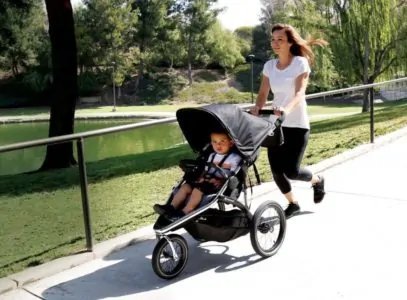
Most experts recommend waiting until your baby is at least 6 to 8 months old before using a jogging stroller. Their neck muscles need to be strong enough to withstand the vibrations of running.