Ever watch your child staring at their feet or stacking blocks and wonder if what they are doing is normal for their age?
Playtime is much more than just fun and games; it is a critical learning experience that shapes how your little one develops.
Keep reading to discover the six stages of play and explore different activities that boost social, emotional, and cognitive growth.
Key Takeaways
- Play evolves through six distinct stages: Unoccupied, Solitary, Onlooker, Parallel, Associative, and Cooperative.
- Sensory activities allow children to engage their five senses to explore textures, tastes, and the world around them.
- Pretend and dramatic play foster emotional maturity, social skills, and cognitive development through role-playing.
- Active play styles, such as constructive and outdoor activities, help build fine and gross motor skills while encouraging creativity.
6 Stages of Play
Just like crawling and walking, play develops in specific stages. Sociologist Mildred Parten Newhall identified these six distinct phases that change as your child grows.
Unoccupied Play (Birth to 3 Months)
This initial stage occurs from birth to around three months old. To an adult, it might not look like play at all. It often resembles random movements, wiggles, or staring into space, but these actions serve a purpose. Unoccupied play sets the foundation for future exploration (1).
Your baby is learning how their body moves and how to control their limbs. It can be as simple as:
- Kicking their legs in the air.
- Studying their own hands or feet.
- Observing objects moving around them.
Solitary Play (Birth to 2 Years)
Solitary play typically lasts from birth up to two years old and is very common among toddlers. As the name suggests, this is when a child plays alone, seemingly unaware or uninterested in what others are doing. It is an excellent method for shy kids and suits their developing communication skills.
This stage is crucial because it teaches independence. Learning to entertain oneself is a vital life skill. You want your child to be comfortable in their own company rather than constantly relying on you or others for entertainment.
Spectator or Onlooker Behavior (2 Years)
Around age two, you might notice your child pausing to watch other children play without actually joining in. This is called onlooker behavior. It is a method of observation where they learn the “rules” of play by watching others interact.
They might ask questions or show visible interest, but they won’t jump into the action just yet. Parents sometimes worry when they see this, fearing their child is lonely or antisocial, but it is a completely normal developmental phase.
Onlooker play benefits children who need a bit more time to feel comfortable. It gives them the confidence to observe social dynamics before taking their play to the next level.
Parallel Play (2+ Years)
Parallel play usually begins around age two and can continue for several years. You will see two or more children playing in the same room, often with similar toys, but not playing with each other. They play side-by-side, mirroring each other’s actions without direct interaction.
This stage is a bridge to social play. It allows children to learn about taking turns, respecting space, and being a companionable presence. It indicates that your child is becoming interested in their peers, even if they aren’t ready to collaborate yet.
Associative Play (3 to 4 Years)
Between ages three and four, children enter the associate play stage. This is similar to parallel play in that they are technically playing separately, but they are now involved with one another.
The key difference here is interaction. While they might be working on separate lego towers or drawings, they are talking, trading materials, and engaging with each other. There are no formal rules or shared goals yet, but this is how children first learn the basics of friendship and socialization.
Cooperative Play (4+ Years)
Cooperative play typically kicks in around age four. This is the “mash-up” stage where all previous social and cognitive skills come together.
Children now share toys, establish rules, assign roles, and work toward a common goal. This is when your child starts making real friends and establishing favorite playmates in preschool or kindergarten. It requires advanced social skills like negotiation and compromise.
Sensory Play

Sensory play involves any activity that stimulates the five senses: sight, sound, touch, smell, and taste. This type of play is instinctive. When a baby puts a toy in their mouth or squishes mud between their fingers, they are conducting sensory experiments to understand the world.
These activities encourage investigation and help build neural connections in the brain. It allows children to categorize objects and sensations, forming their own conclusions about their environment.
Tips for Sensory Play
If you are ready to set up some sensory activities, keep these safety and sanity tips in mind:
- Supervise closely: Since sensory play often involves exploring with the mouth, you must watch carefully to prevent choking. Always supervise these activities.
- Create a sensory bin: For toddlers and preschoolers, a sensory bin is a game-changer. Fill a plastic tub with dry rice, beans, or water, and add scoops or small toys.
- Take it outdoors: If the activity involves water, sand, or paint, head outside. This contains the mess and saves you from stressing about clean-up time.
- Choose safe objects: If your child is still in the “mouthing” phase, avoid small items or non-edible materials. Stick to taste-safe options like cooked pasta or crushed cereal (2).
- Dress for the mess: Sensory activities get messy. Dress your child (and yourself) in old clothes so you can focus on the fun rather than the laundry.
Pretend and Dramatic Play
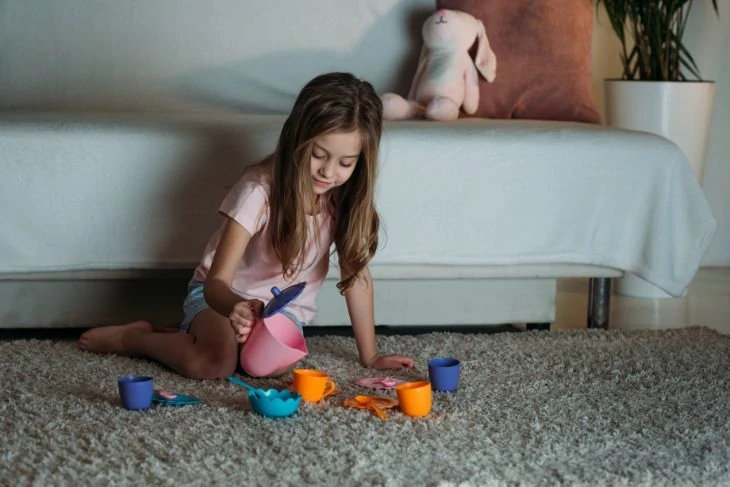
Kids of all ages love to pretend. Whether they are at home or school, imaginative play helps them process what they observe in the real world. Pretend play usually splits into two categories: fantasy play and sociodramatic play.
In fantasy play, your child might slip in and out of character, constantly narrating the scene to you. This often peaks during the preschool years.
In sociodramatic play, the child is fully immersed. If your daughter is pretending to be a princess, she stays in character. Children often base these storylines on fairy tales or favorite TV shows. This type of play is vital for developing social skills, emotional maturity, and abstract thinking.
Pretend Play Ideas and Activities
Here are some fun ways to encourage your child’s imagination:
- Host a tea party: Preschoolers love hosting events. Set out a toy tea set and let your child take the lead. You can even invite stuffed animals to fill the empty chairs.
- Open a vet clinic: If your child loves animals, grab a toy doctor kit and line up their plushies. Pretending to check heartbeats and bandage paws teaches empathy and caretaking.
- Pretend to be animals: This is a hit with toddlers. Get down on all fours, bark, meow, and crawl around the house. It is simple, physical, and hilarious for little ones.
- Sail a laundry basket boat: Transform a laundry basket into a pirate ship or sailboat. You can make a cardboard flag and push them around the living room floor while they navigate the “high seas.”
- Create a library: Let your book-lover play librarian. Set up shelves, create a fake checkout stamp, and let them “read” stories to you during story hour.
Constructive Play
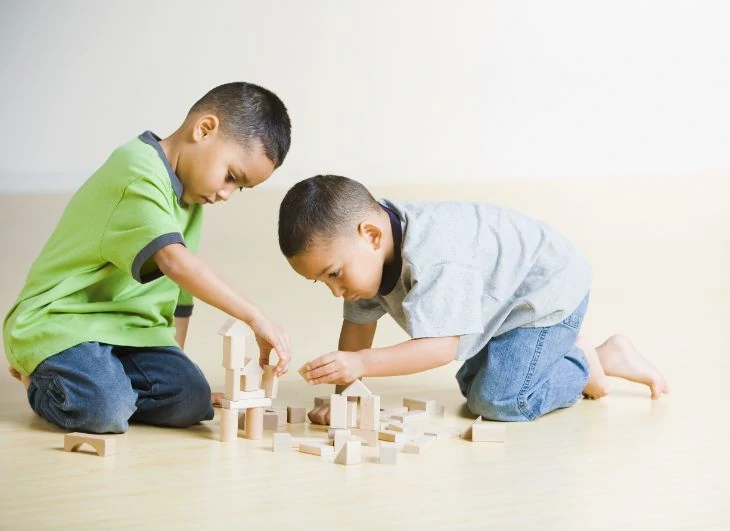
Constructive play is all about building, creating, and assembling. This type of play kicks into high gear around age two as attention spans lengthen and fine motor skills improve.
Unlike random play, constructive play is goal-oriented. Your child wants to build a specific structure or create a specific object. This develops abstract thinking, perseverance, and spatial awareness (3).
Constructive Play Ideas and Activities
Encourage your little engineer with these activities:
- Assembling a train track layout.
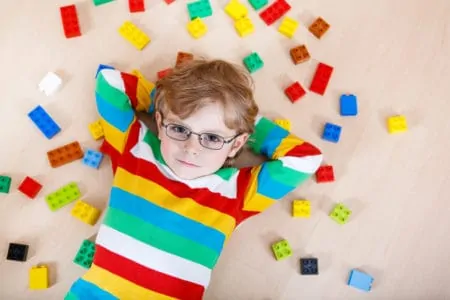
- Building towers with blocks or LEGOs.
- Stacking cups or nesting toys.
- Constructing a fort using blankets and pillows.
- Taking old electronics apart to see how they work.
- Sewing simple patterns by hand.
- Building dams or rivers in the mud.
- Creating ramps for toy cars.
- Designing mosaics with tiles or paper.
- Setting up elaborate domino runs.
- Sculpting sandcastles at the beach or in a sandbox.
- Knitting, crocheting, or weaving.
- Molding shapes out of playdough or clay.
Outdoor and Physical Play

Physical play is essential for a healthy childhood. It involves whole-body movement, helping children develop gross motor skills, balance, and coordination.
This can start as early as tummy time for babies to strengthen neck muscles. As they grow, physical play evolves into running, jumping, and organized sports. It is one of the best ways for children to burn off energy and benefit from active living.
Physical Ideas and Activities
Get moving with these energetic ideas:
- Animal walks: Challenge your toddler to hop like a frog, waddle like a duck, or crab-walk across the living room. It engages their muscles and their imagination simultaneously.
- Balloon volleyball: Keep a balloon in the air without letting it touch the ground. It is safe for indoor play and improves hand-eye coordination for toddlers and older kids alike.
- Build an obstacle course: Use pillows, chairs, and boxes to create a course. Have them crawl under, climb over, and jump across obstacles.
- Hula hooping: Once children are in school, hula hooping becomes a fun challenge. It strengthens the core and can turn into a friendly backyard competition.
- Dance party: Crank up the music and dance like nobody is watching. It is a mood booster and a great cardio workout for the whole family.
- Backyard baseball: Use a plastic bat and a wiffle ball to teach batting skills. It helps with coordination and makes them feel like a major league player.
- Hide and seek: A classic for a reason. You can play this indoors on a rainy day or outdoors for fresh air. It teaches problem-solving and patience.
- Jump rope: This old-school activity is incredible exercise. Start with a simple jump over a stationary rope for little ones, or teach older kids to jump continuously.
Creative Play
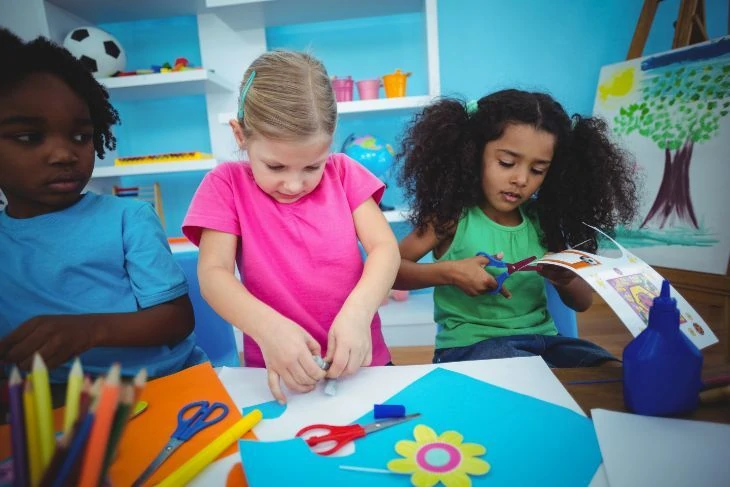
Creative play allows children to express themselves and spark their imagination. The goal here isn’t the final product, but the process of creating. This type of play is a favorite among toddlers and preschoolers.
Engaging in creative activities supports cognitive flexibility, emotional expression, and fine motor development.
Creative Play Ideas and Activities
Unleash your child’s inner artist with these suggestions:
- Rock star performance: Let your child grab a hairbrush “microphone” and put on a concert. It encourages self-expression and confidence.
- Make homemade music: You don’t need real instruments. Wooden spoons on pots and pans or dried beans in a plastic container make excellent rhythm instruments.
- Dress up: Keep a bin of old clothes, hats, and scarves. Dressing up allows children to explore different identities and careers, from doctors to shopkeepers.
- Storytelling: Picture books are great prompts. Even if your child can’t read yet, ask them to look at the pictures and tell you the story.
- Baking: The kitchen is a lab for creativity. Let them pour ingredients or decorate cupcakes. It teaches following directions and results in a tasty treat.
- Collage making: Give them safety scissors, old magazines, and a glue stick. Cutting and pasting builds hand strength and allows them to create unique art.
- Gardening: Kids love digging in the dirt. Plant quick-growing seeds like beans or sunflowers so they can see the results of their work. It connects them to nature and teaches responsibility.
FAQs

What Are the 6 Stages of Play?
The six stages of play identified by sociologist Mildred Parten are Unoccupied Play, Solitary Play, Onlooker Behavior, Parallel Play, Associative Play, and Cooperative Play. These stages generally progress by age as a child’s social and cognitive skills develop.
Why Is Play Important for Child Development?
Play is essential because it contributes to the cognitive, physical, social, and emotional well-being of children. It offers an ideal opportunity for parents to engage fully with their children and allows kids to use their creativity while developing their imagination, dexterity, and physical, cognitive, and emotional strength.
At What Age Does Cooperative Play Start?
Cooperative play typically begins around age 4 or 5. This is when children start to play together with a shared goal, follow rules, and assign roles within their game, requiring more advanced social skills like negotiation and sharing.