Noticing a flat spot on your baby’s head can be stressful, but take a deep breath, it is incredibly common. Since babies spend a lot of time on their backs to sleep safely, their soft skulls often mold to the surface beneath them.
When my child was diagnosed with plagiocephaly (the medical term for flat head syndrome), I immediately went into research mode. I wanted safe, supportive solutions to prevent it from getting worse during our daily walks and playtime.
I spent hours analyzing the safest options to find the best infant pillows for flat head syndrome.
These pillows meet strict criteria for comfort, breathability, and quality materials. They are excellent tools for redistributing pressure on your baby’s head during supervised use in strollers or bouncers. Read on to learn more about preventing flat spots and to find the perfect supportive cushion for your little one.
- Supports head and neck
- Machine washable
- Works with three- and five-point harnesses
- Grows with your child
- Multi-purpose
- Provides optimal neck support
- Distributes pressure over the skull
- Suitable for newborn to three months
- 100% organic European cotton
What Is Flat Head Syndrome?
Flat head syndrome typically occurs when an infant spends significant time lying on their back. A baby’s skull is still forming, meaning it is extremely soft and pliable.
Since the enactment of the Safe to Sleep campaign (lying babies on their backs during sleep to reduce the risk of SIDS), parents have noticed flat spots more frequently (1).
While the condition usually resolves on its own as your baby grows and starts rolling over, pediatricians recommend plenty of tummy time. They also suggest periodically turning your baby’s head to alternate sides while they are lying on their back.
Too much time in one position is the most common cause, but other factors contribute to head flattening (2):
- Utero positioning: This happens if there is limited amniotic fluid to cushion the baby’s head in the womb, or if you are carrying multiples.
- Premature birth: Preemies have softer skulls and spend more time lying down in the hospital, making them more susceptible.
- Muscular tightness (Torticollis): If a baby has a tight neck muscle, they may struggle to turn their head, causing them to rest in the same spot constantly.
- Craniosynostosis: This is a rare birth defect where skull bones fuse too early. It requires medical attention, so consult your pediatrician if you are concerned.
Product Reviews
We have researched and reviewed the top-rated supportive pillows to help prevent and treat flat spots during supervised activities.
Boppy Dinosaur Head and Neck Support
Best Multifuntional Infant Pillow
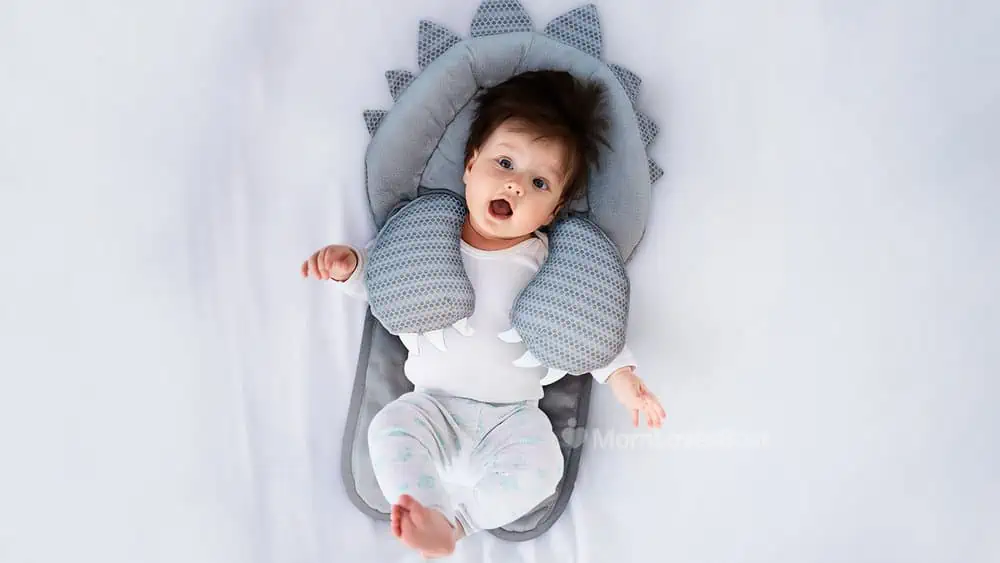
Parents love this adorable dinosaur design, which adds a bit of fun to your baby gear. Beyond the cute look, it provides excellent cushioning for both the head and neck.
The design features a specific cutout to cradle the head, allowing your baby to relax fully after tummy time. It is specifically engineered for use in strollers, bouncers, and swings.
Because it works with three-point and five-point harnesses, your little one remains secure in their seat without the pillow sliding around.
While primarily for babies up to four months, the modular design allows you to remove inserts. This versatility means the pillow can adapt as your child grows, potentially serving as a neck support for a toddler.
Pros
- Supports head and neck simultaneously.
- Compatible with 3 and 5-point harnesses.
- Machine washable for convenience.
- Super soft padding for comfort.
Cons
- Side arm support sits very close to the head.
- Padding may be too bulky for smaller newborns.
Our Ratings
Kakiblin Baby Travel Pillow
Best Baby Pillow for Travel
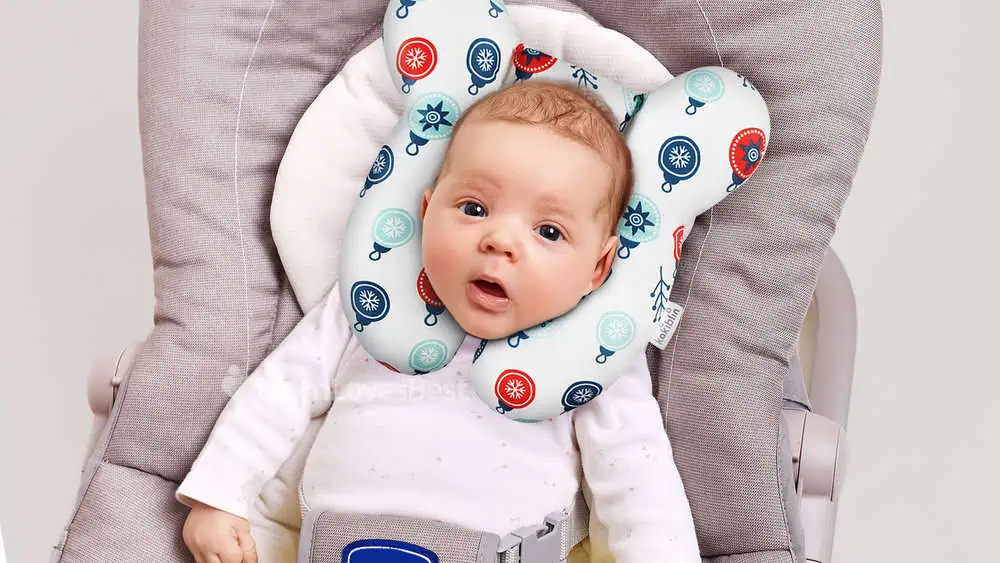
This unique U-shaped pillow offers versatility that standard circular pillows lack. While many designs are strictly for lying flat on the floor, the Kakiblin creates a comfortable nest for the head and neck in seated gear.
It is ideal for a bouncer, stroller, or while nursing. We love products that serve multiple purposes, and this fits the bill.
However, a critical safety note: Do not use this (or any aftermarket pillow) inside a car seat while the vehicle is moving. Adding padding that did not come with the car seat can compromise safety and void warranties (3).
Additionally, never place this pillow in a crib. Pillows and loose bedding should stay out of the sleep environment until toddlerhood (4).
The benefit of this design is that it transitions well. It works as a neck pillow for toddlers traveling by plane or stroller, extending its lifespan significantly.
Pros
- Grows with your child into toddlerhood.
- Provides excellent neck support in strollers.
- Available in several fun colors.
Cons
- Needs frequent fluffing to maintain shape.
Our Ratings
Babymoov Lovenest Baby Head Support Pillow
Great Baby Pillow for Travel
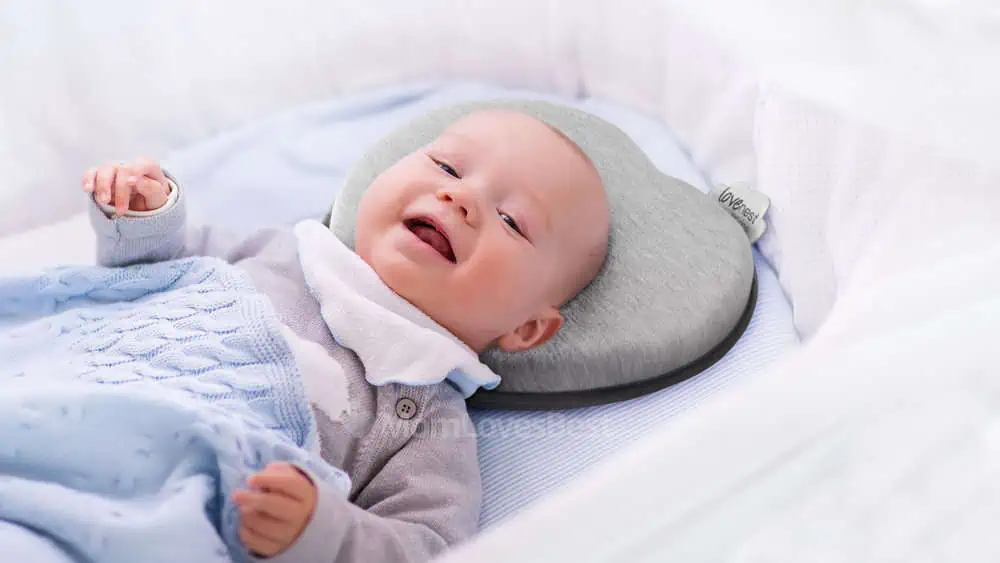
The Babymoov Lovenest is a classic choice, designed by a pediatrician to distribute pressure evenly over the skull. It is compact, lightweight, and perfect for preventing postural plagiocephaly from day one.
Its small size allows it to fit easily into bassinets (for supervised awake time), swings, strollers, and bouncers. It is also great for use on a play mat.
Remember to monitor your baby constantly while they use this pillow. It is not safe for overnight unsupervised sleep.
This specific model suits newborns up to 3 or 4 months old, which is when they spend the most time on their backs. The cocoon shape guides the head to the center, reducing the risk of a flat spot forming on the side.
We love that it is machine washable. Lay it flat or hang it to dry, and it will be ready for another round of use quickly.
Pros
- Portable and lightweight design.
- Distributes pressure evenly over the skull.
- Created by a pediatrician.
- Made from soft, breathable cotton.
- Machine washable for easy cleaning.
Cons
- Cover is not removable.
- May restrict head movement for active babies.
Our Ratings
Boppy Noggin Nest Head Support
Best Neutral Design
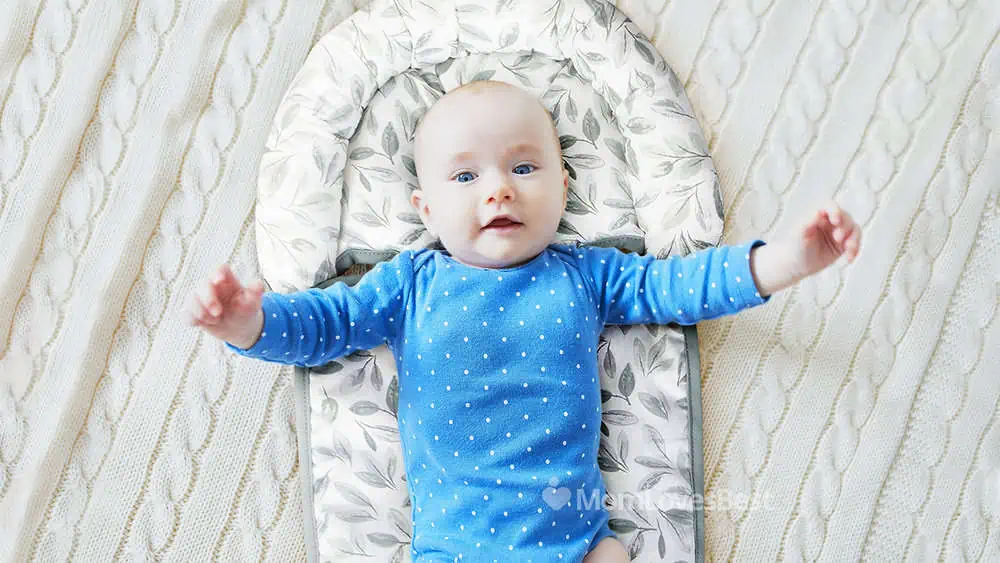
The Boppy Noggin Nest features a clever cut-out design that relieves pressure on the back of the head while keeping the baby stable. It is compatible with most 3 and 5-point harness systems found in strollers and swings.
This support fits babies from birth to 4 months old. The soft cotton blend fabric is gentle and smooth, so it won’t snag your baby’s fine hair or irritate their skin.
We appreciate the gender-neutral aesthetics, making it a great baby shower gift or a reusable item for future siblings.
Maintenance is simple since it is machine-washable. Tumble dry on low or air dry to preserve the filling. Boppy is known for durability, so this support should hold up well through multiple washes.
Its compact rectangular shape makes it easy to slip into a diaper bag, ensuring you have head support wherever you go.
Pros
- Machine-washable for easy care.
- Cut-out design relieves pressure effectively.
- Fits easily in diaper bags.
Cons
- Only suitable for smaller infants (approx. 11 inches wide).
- Fabric is a blend, not 100% cotton.
Our Ratings
WelsLife Organic Cotton Pillow
Most Versatile Design

If you are looking for a quality pillow with breathable materials, this option by WelsLife is a fantastic choice. It features hypoallergenic cotton filling to ensure safety for sensitive skin, while the outer fabric uses a 3D air mesh construction for better airflow.
Its portability is a major plus. You can easily toss this in the diaper bag for use in the stroller during walks or on a blanket during picnics.
While it is machine-washable, hand-washing will help it maintain its shape longer. If you do use a machine, select cold water and the gentlest setting. The 100% certified organic cotton makes it an eco-friendly choice for green-conscious parents.
This pillow works best in strollers, bouncers, and infant swings to keep the head aligned.
Pros
- 100% certified organic cotton through strict testing.
- Lightweight and portable for travel.
- Hypoallergenic materials are gentle on skin.
Cons
- May cause sweating in very hot climates.
Our Ratings
Treatment and Prevention of Flat Head Syndrome
You can take proactive steps to prevent flat head syndrome during your daily routine. Whether sleeping, traveling, or playing, the goal is to vary your baby’s head position.
Safe Sleep Habits
Always place your baby on their back to sleep to prevent SIDS. To combat flat spots, alternate which end of the crib you place their head. Babies naturally turn toward the door or sources of light. By switching ends, you encourage them to turn their head in different directions.
Active Playtime
When your baby is awake, prioritize tummy time. This relieves pressure on the back of the skull and strengthens neck and shoulder muscles.
If your baby hates tummy time, try short bursts or lay them on your chest. You can also engage them with toys on different sides to encourage head-turning.
For a visual guide on treating flat head syndrome at home, watch this helpful video from Stanford Children’s Health.
Using Infant Pillows Safely
Infant pillows are useful tools for specific situations. They are designed to distribute the weight of the head evenly, reducing the pressure that causes flattening.
These are excellent for use in strollers, swings, or during supervised play on a mat. They can be a lifesaver if you have a fussy baby who needs extra comfort in their bouncer.
Important Safety Warning: According to the Safe to Sleep campaign, pillows are not safe for babies during sleep (5). Only use these pillows when your baby is awake and you are watching them.
FAQs

What Kind of Pillow is Good For Flat Head Syndrome?
For flat head syndrome (plagiocephaly), use pillows with a concave center or “donut” shape. These are designed to cradle the head and distribute pressure evenly across the skull rather than focusing it on one spot. Always supervise your baby when using these pillows.

Does Flat Head Syndrome Affect the Brain?
No, flat head syndrome does not damage the brain or affect development. It is primarily a cosmetic issue regarding the shape of the skull. In rare cases involving craniosynostosis (fused bones), surgery might be needed, but typical positional plagiocephaly is harmless to the brain.

How Long Does it Take For a Baby’s Head to Reshape?
With consistent repositioning and tummy time, you may see improvements within a few weeks. Significant rounding often happens by six months of age as the baby becomes more mobile and sits up. The head shape can continue to improve up to 18 months.

When Should I Worry About My Baby’s Head Shape?
Consult your pediatrician if you notice a flat spot that doesn’t improve with repositioning, if the ears look misaligned, or if your baby has trouble turning their head to one side. Your doctor can evaluate for tight neck muscles (torticollis) or refer you to a specialist.

Is Helmet Therapy Always Necessary for Flat Head Syndrome?
No, helmet therapy is not always necessary. Many cases resolve with repositioning techniques and increased tummy time. Helmets are typically reserved for moderate to severe cases where conservative methods have not worked by 4 to 6 months of age.
In Conclusion
Flat head syndrome is a common bump in the road for many parents, but it is rarely permanent. With a mix of tummy time, repositioning, and the right support during stroller rides, your baby’s head will likely round out beautifully on its own.Remember, these pillows are tools for awake time, not for the crib. Keep playing, keep moving, and trust that you are doing a great job supporting your little one’s development.