Ready for some serious monkey business at the kitchen table?
Monkey coloring pages are an easy yes for most kids. The animal is familiar, the shapes are friendly, and a page of curled tails and big grins does not ask for much precision.
This set holds 30 free printable sheets. A few are chunky toddler outlines, a few are shaggy fur-by-fur portraits for a child who likes a long project, and the rest sit somewhere in between: cartoon monkeys with balloons and backpacks, plus quieter jungle scenes with vines, leaves and water.
Print whichever one suits the mood. There are craft ideas and real monkey facts further down for when the coloring is finished.
Cute Baby Monkey
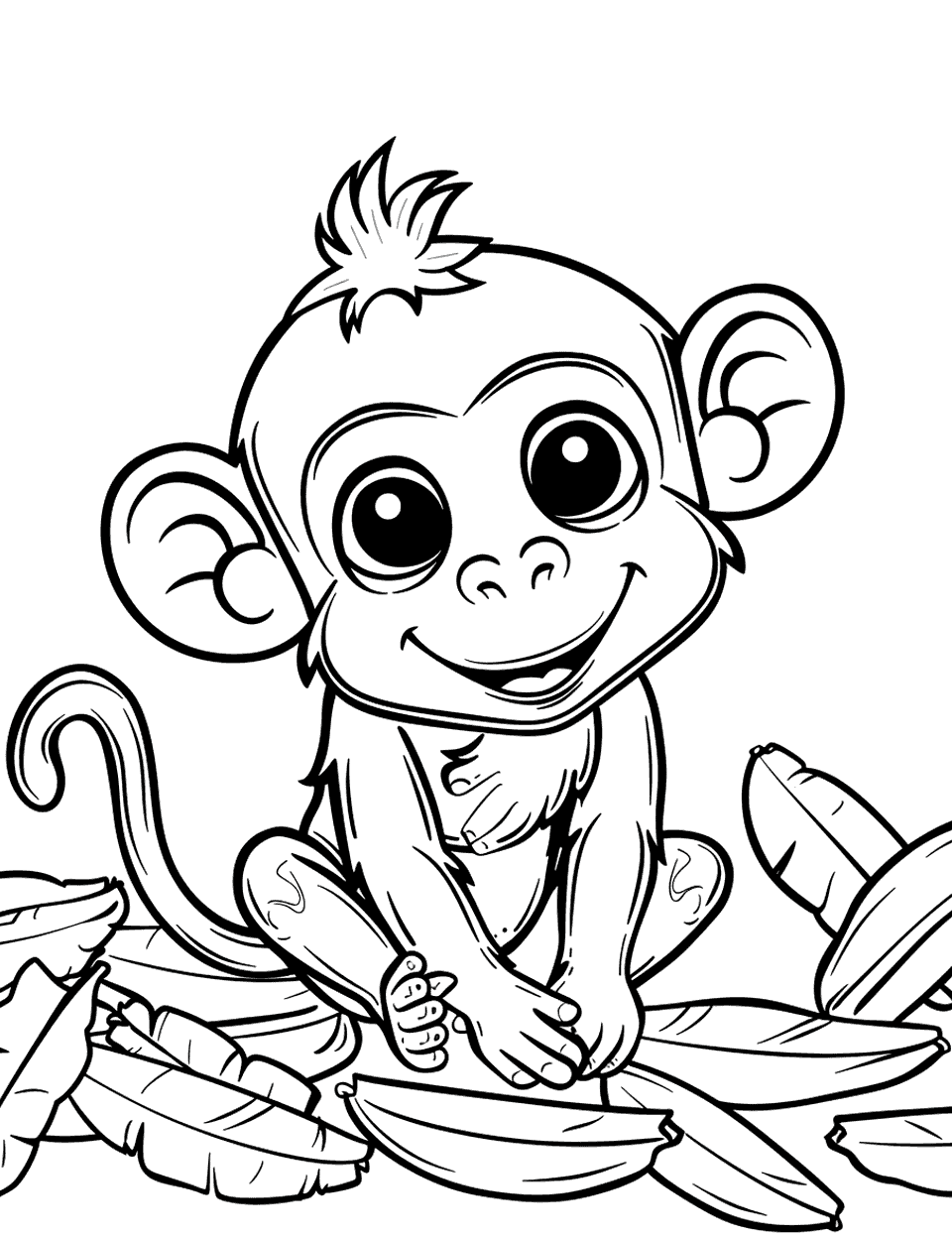
A wide-eyed baby monkey sits with its feet tucked in, grinning, in a heap of bananas and long leaves. The tuft of hair on its head and the loop of its tail are two easy shapes for a child to start with before tackling the pile below. Yellow bananas over green leaves is the obvious choice, but a purple monkey has never hurt anyone. The open belly and face leave plenty of room for crayons.
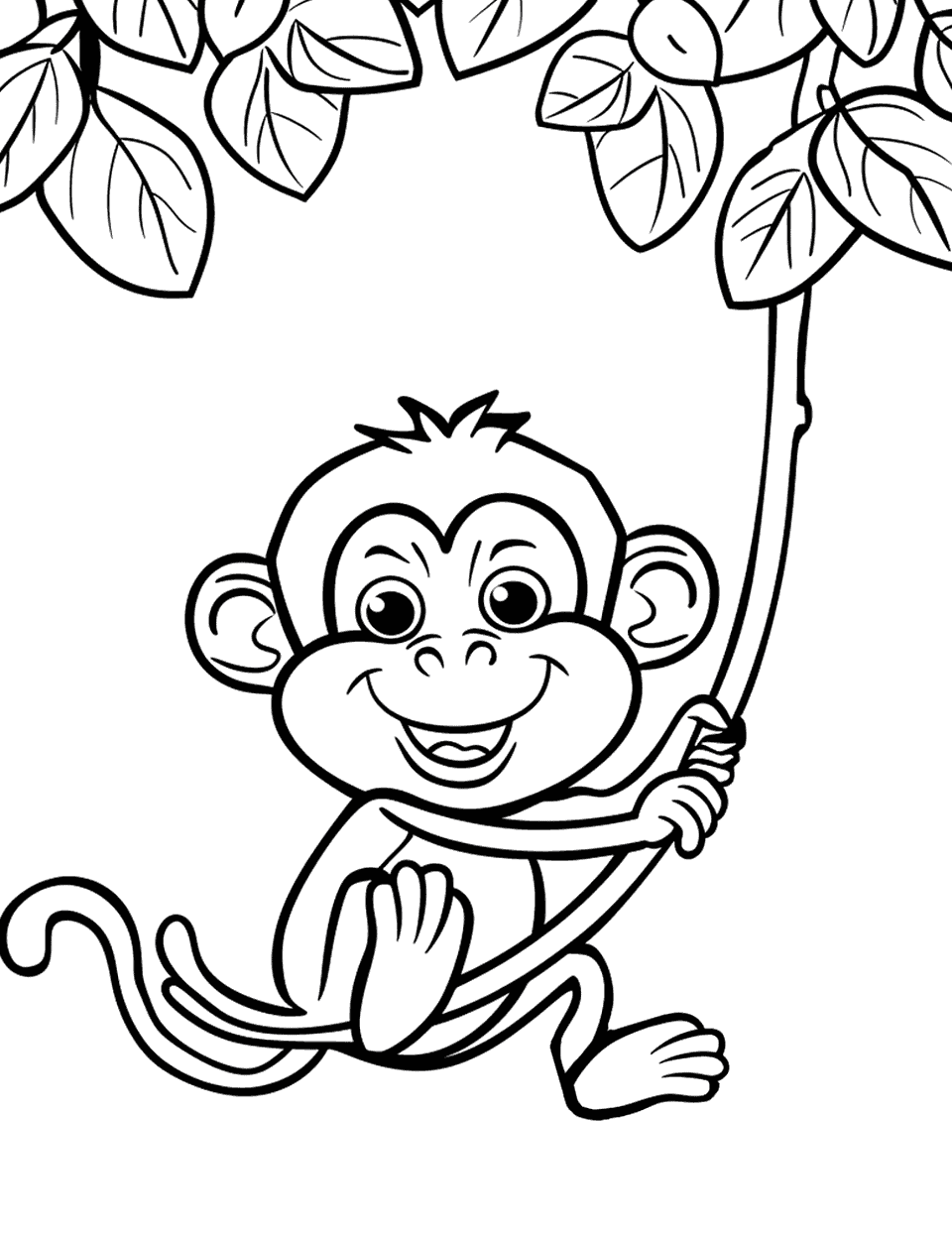
Here a cartoon monkey hangs one-handed from a vine, feet kicked out to the side, with leaves spreading across the top of the page. The outlines are thick and the body shapes are simple, so a wobbly hand will not spoil it. Try two or three greens on the leaves so the vine still reads as separate from the canopy.
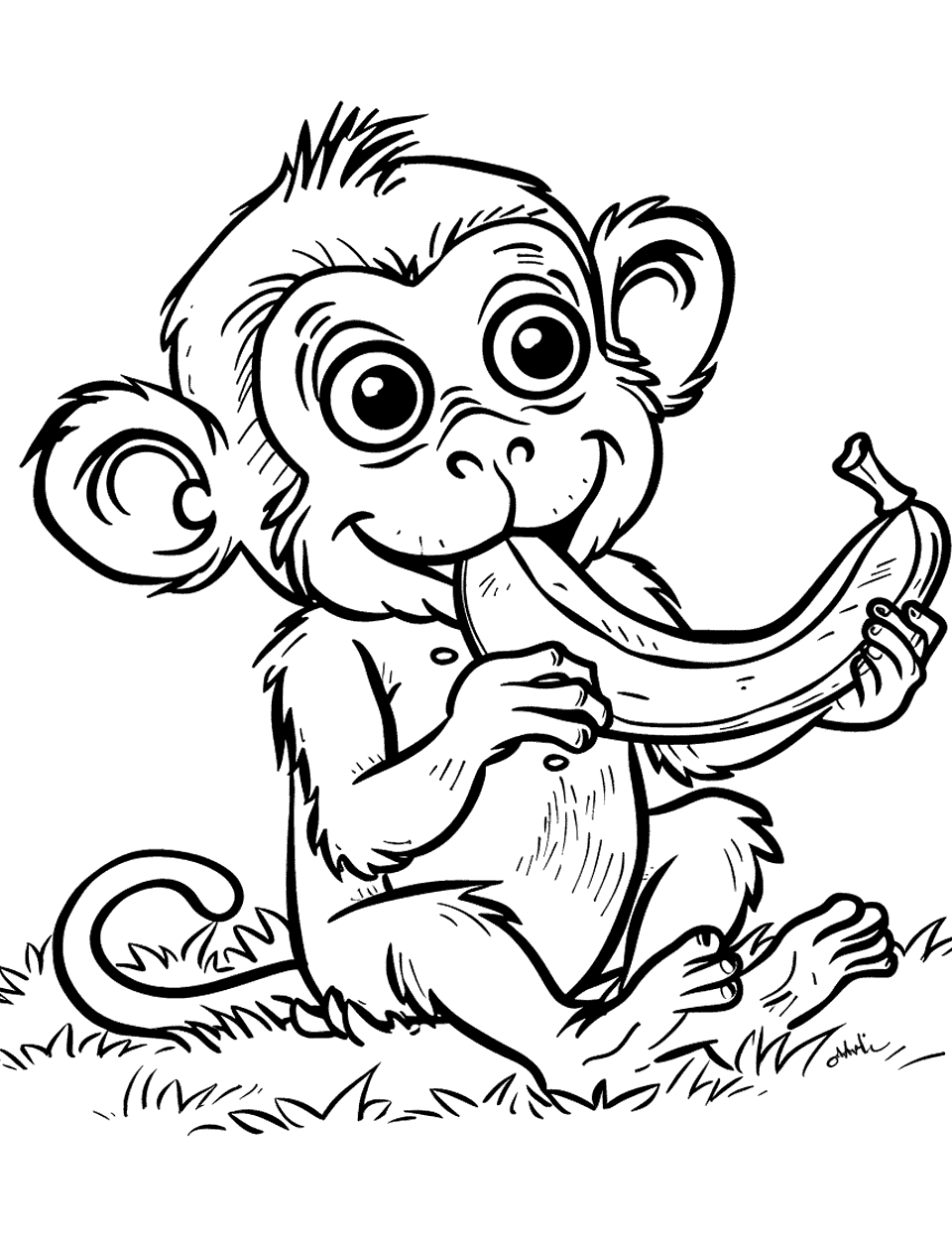
This monkey sits on a patch of grass and lifts a banana to its mouth with both hands. The fur is drawn with short strokes, so colored pencils hold the detail better than a fat crayon. Leave the banana pale and the fur darker and the whole page snaps into focus. It suits an early-elementary kid who is starting to care about staying inside the lines.
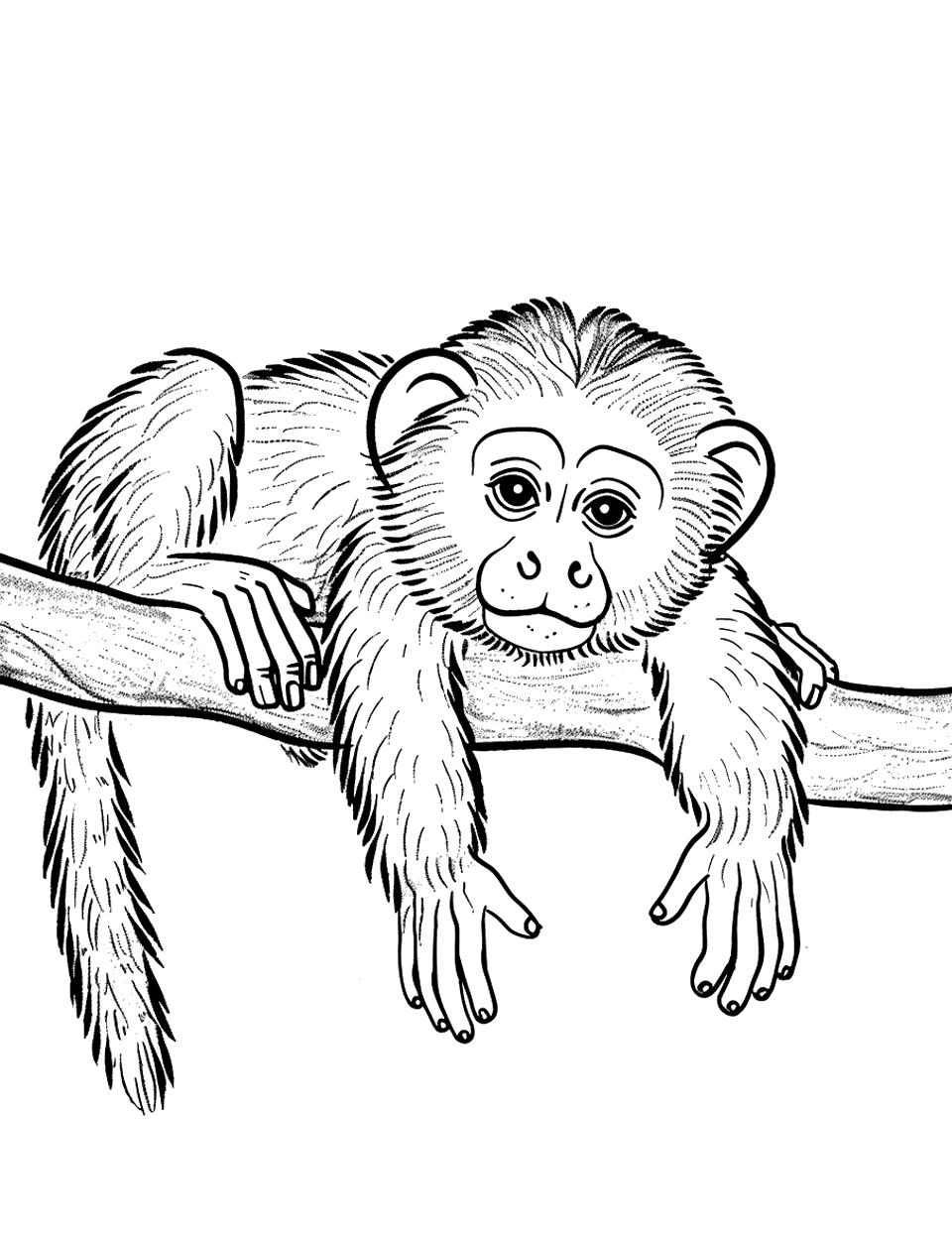
A shaggy monkey lies stretched along a thick branch, both arms hanging loose over the side and its chin down on the wood. Every part of the coat is built from fine hair lines, which makes this one of the slower sheets in the set. Older children can shade the fur in two browns and leave the branch grey. Print it on heavier paper if pencils are going to get pressed hard.
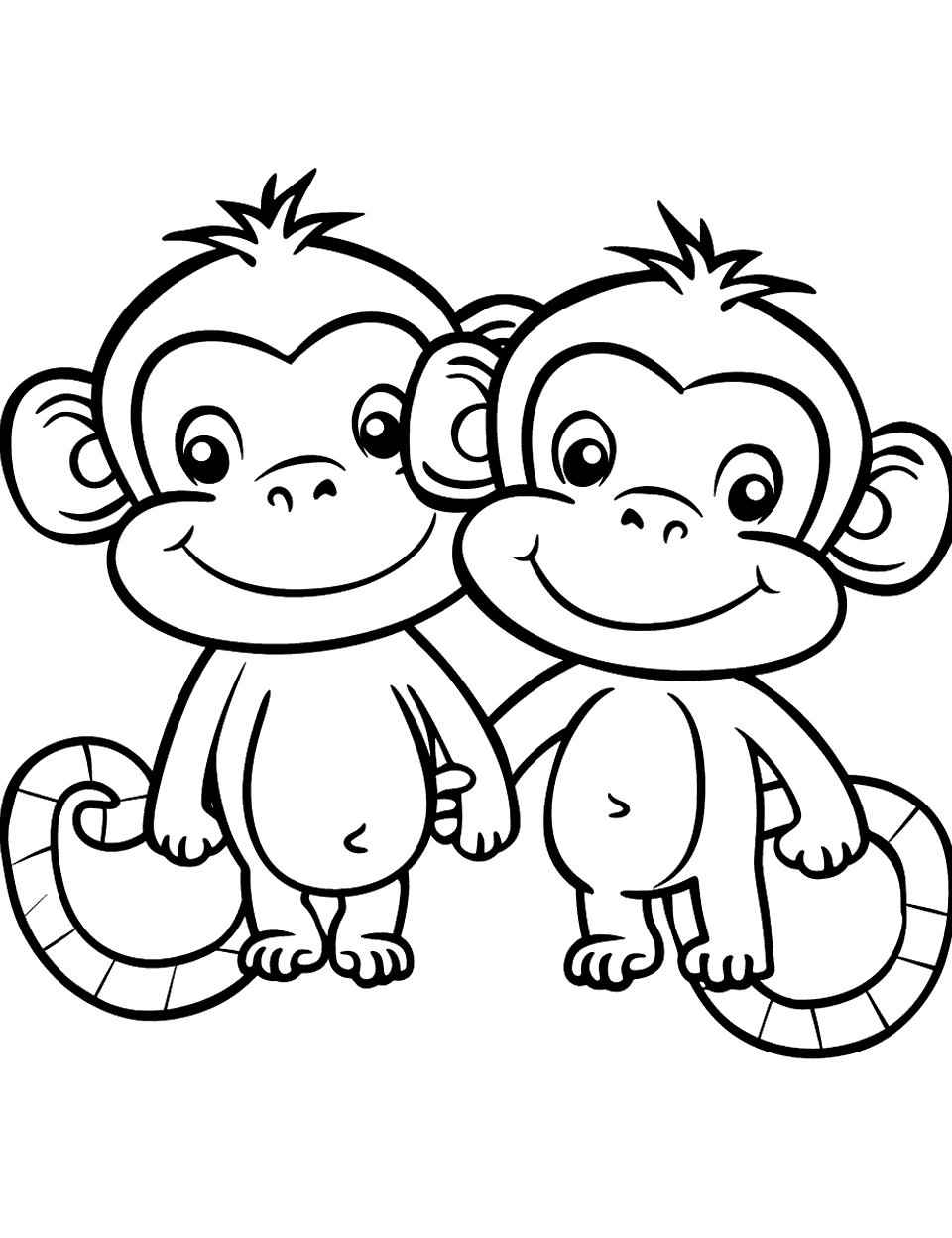
Two round-bodied monkeys stand shoulder to shoulder, both smiling, with striped tails curling out on either side. It is the simplest style here: bold lines, no fur texture, big empty middles. Little kids often color the pair in matching shades, so suggest one warm and one cool tone if you want a bit of contrast. Good for a busy afternoon when nobody wants a long project.
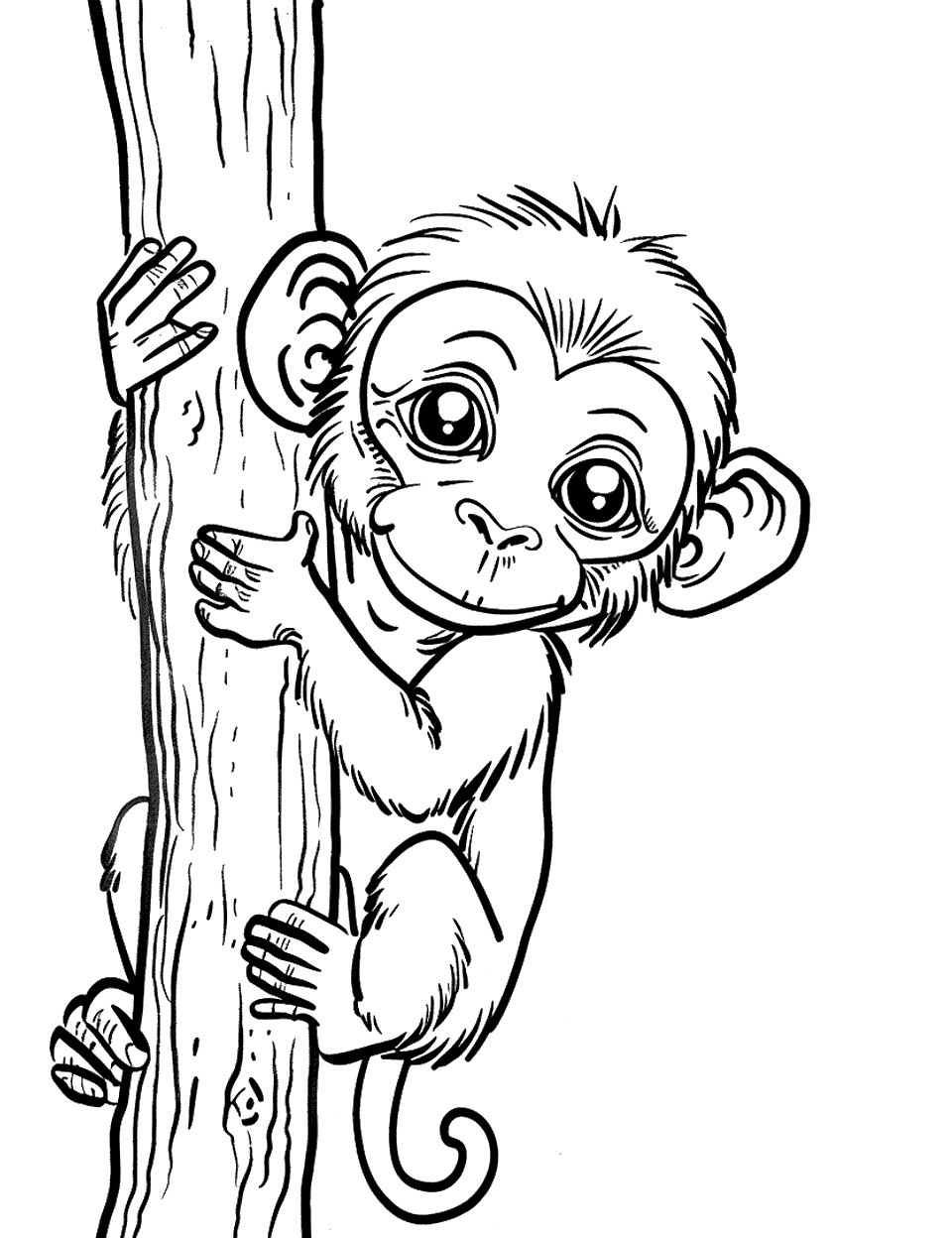
A baby monkey grips a tree branch with both hands and one foot, its head tilted out toward you. The bark is drawn in long vertical lines that reward a bit of patience with grey or light brown. The monkey’s face is open and easy, so a younger child can do the animal while an older sibling handles the branch.
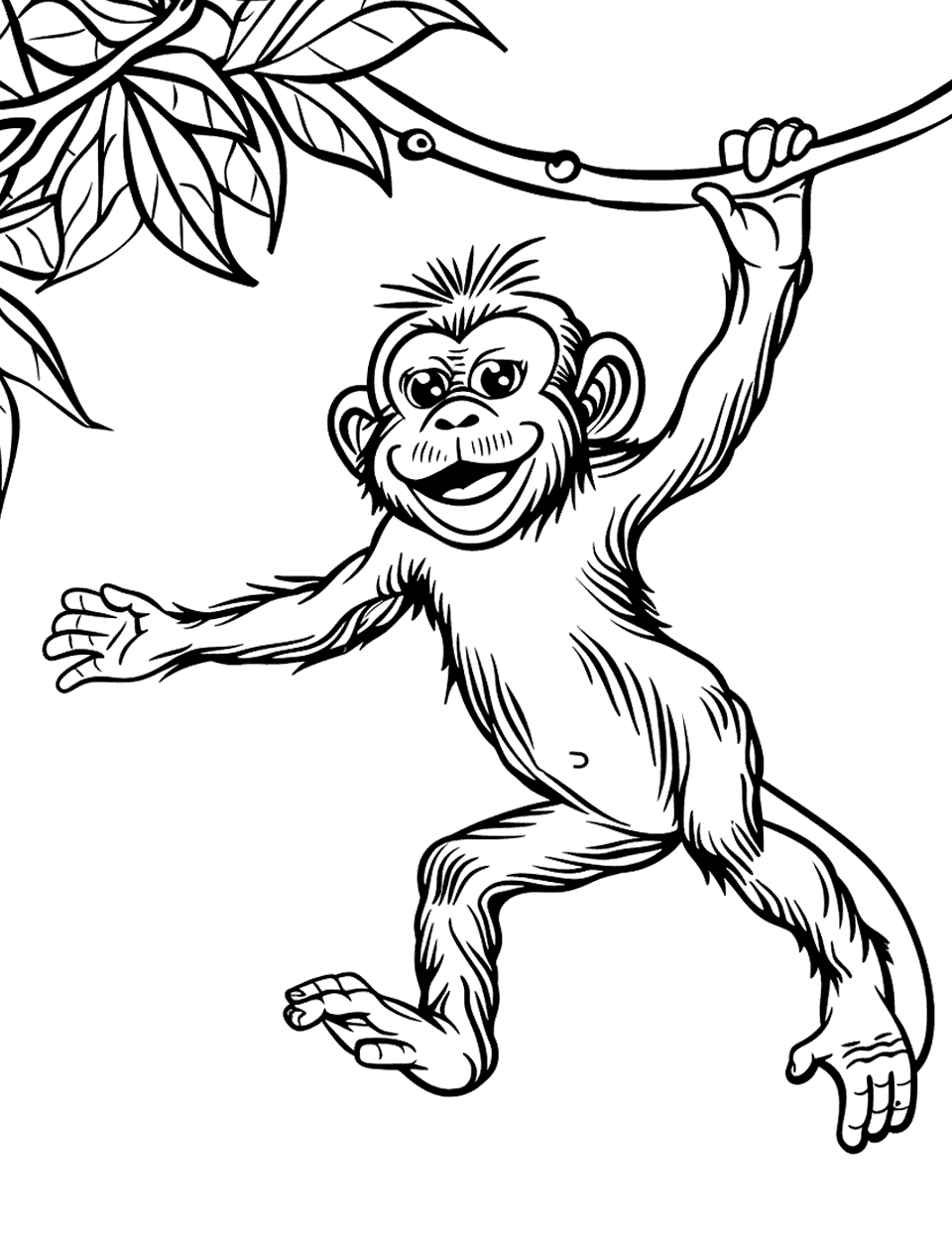
This monkey is caught mid-air, jumping past a hanging vine, mouth open in a laugh, with leaves bunched in the top corner. There is a lot of white space around the figure, which makes it a good candidate for adding your own background. Ask your child what the monkey is swinging toward and let them draw it in.
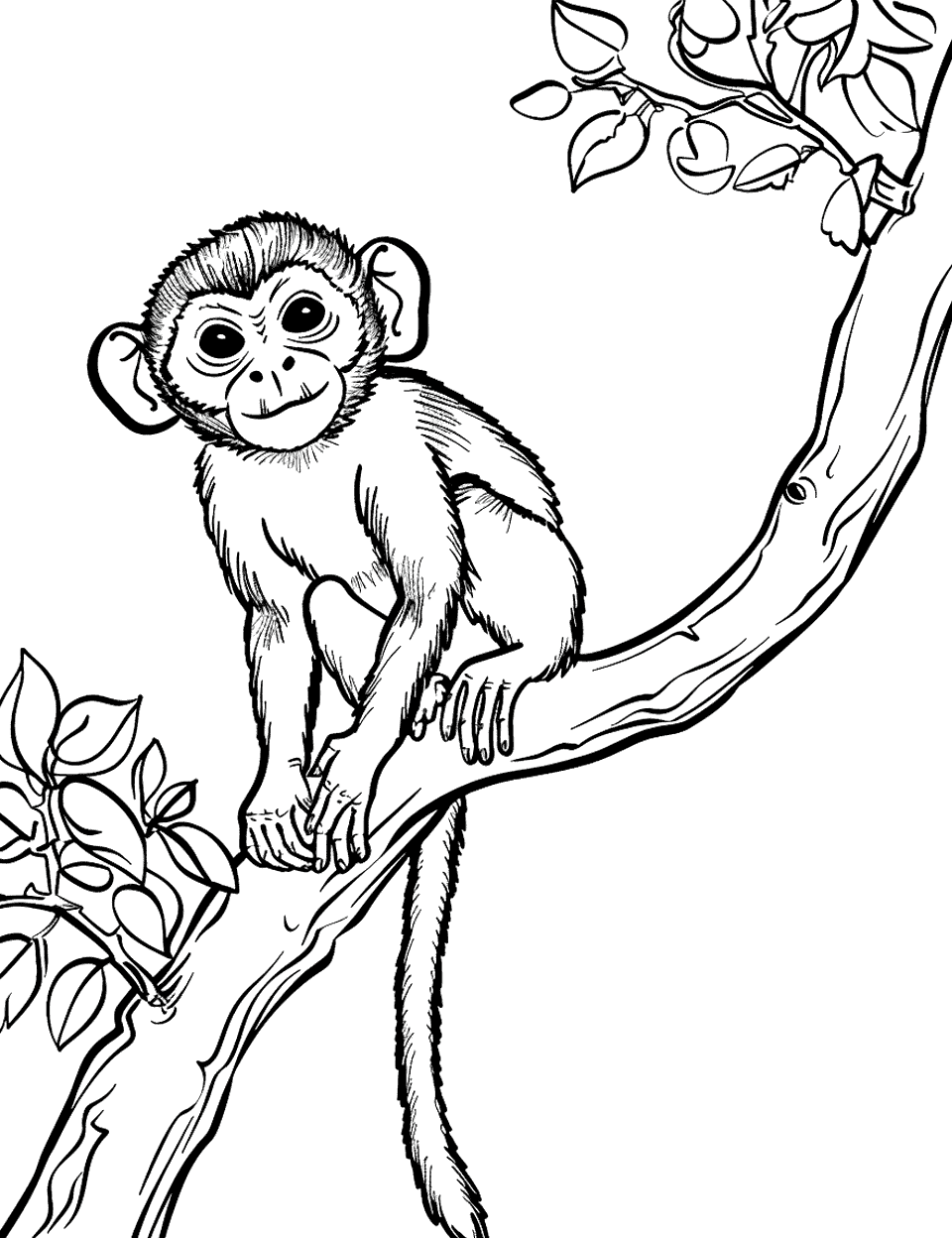
A small monkey perches on a curving branch with its long tail dropping straight down the page, and leafy twigs frame it above and below. The tail is the fun part: it runs nearly the full height of the sheet and takes a steady hand. Medium difficulty, so about right for ages six and up.
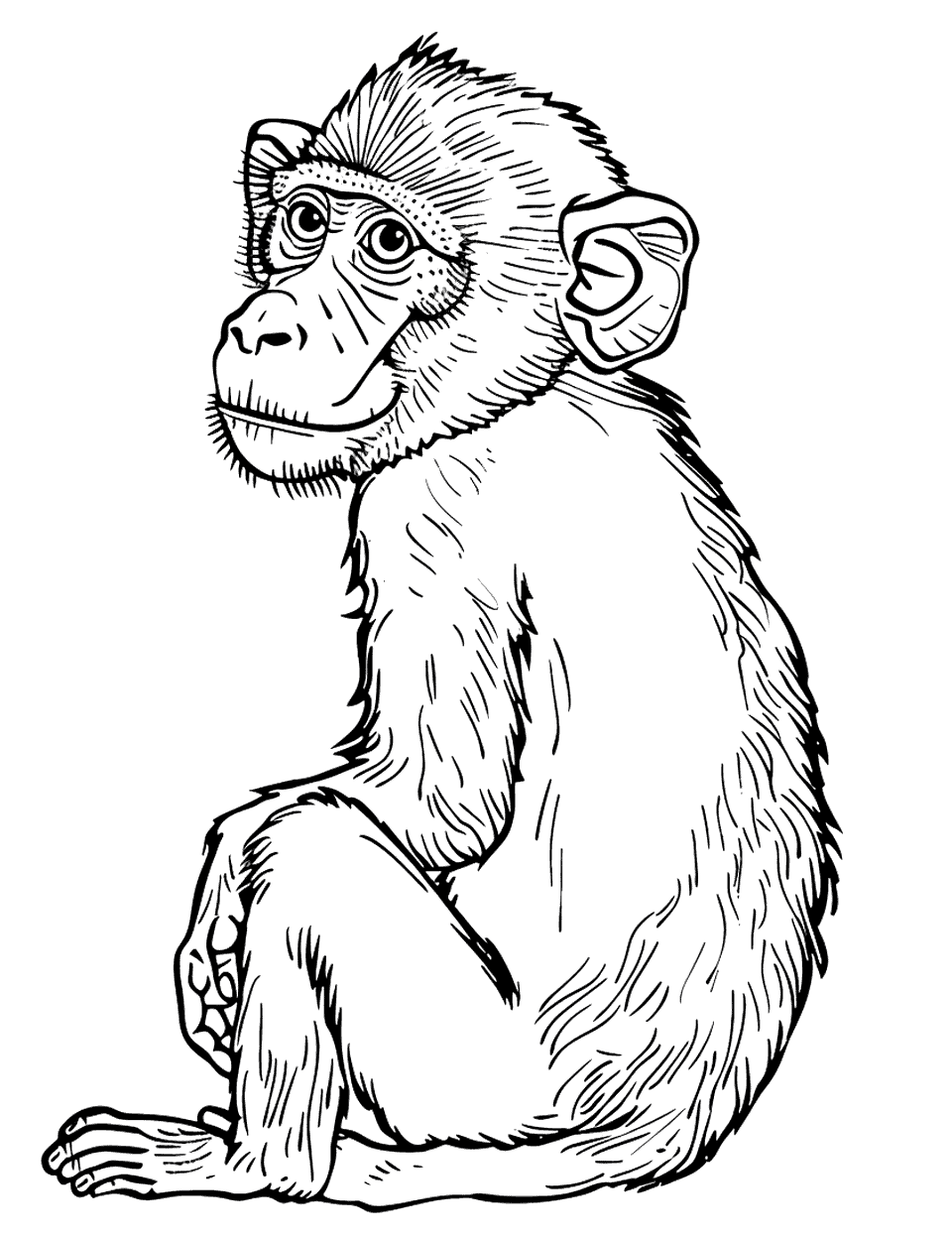
Drawn side-on, this monkey sits with its hands resting on the ground and its coat built from hundreds of short fur strokes. It is the most detailed sheet in the collection and the one most likely to appeal to a teenager or an adult. Layer two or three browns over the body and keep the face lighter, the way the drawing already suggests. Fine-tip pens work better here than anything thick.
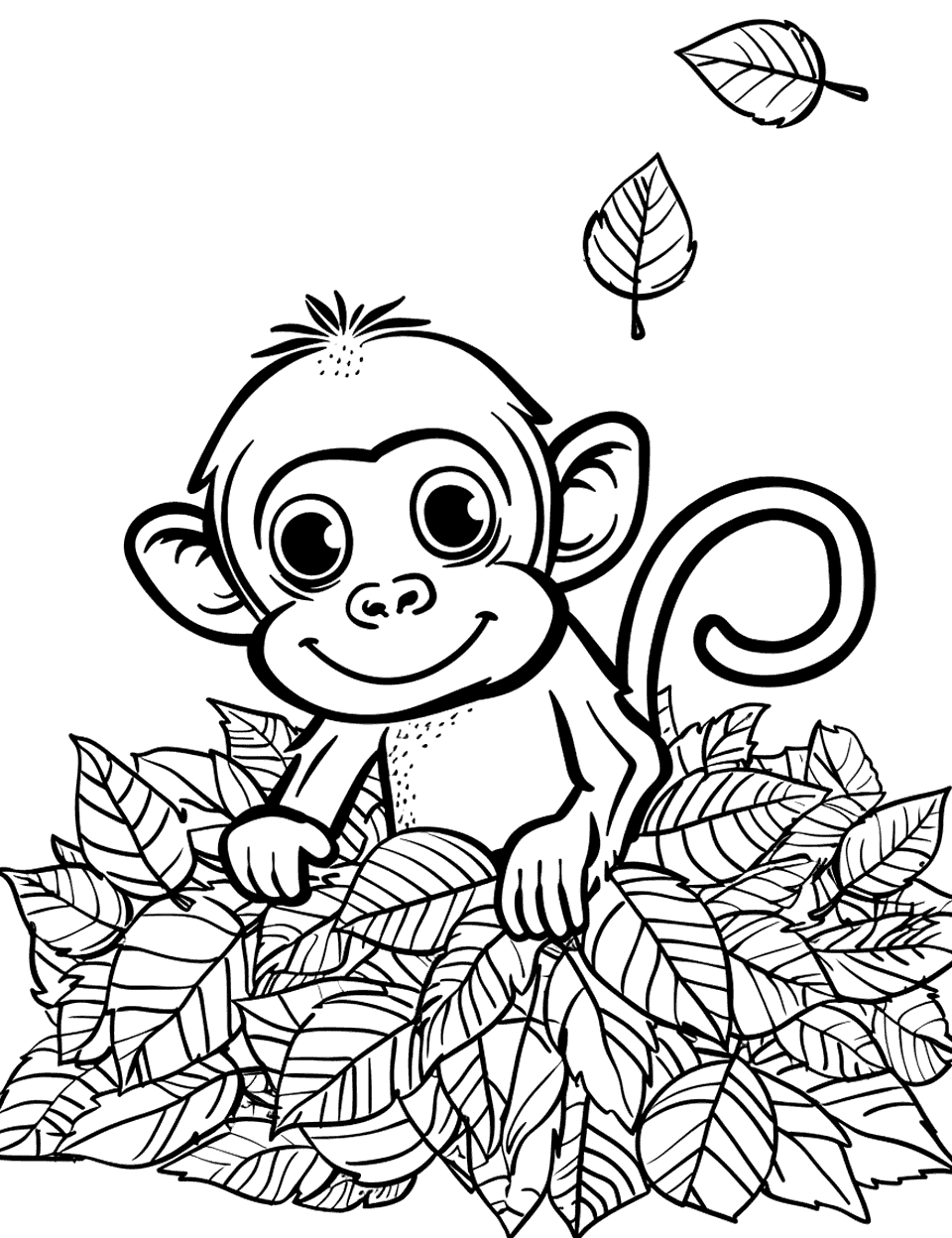
A cartoon monkey sits chest-deep in a heap of broad leaves while a few leaves drift down from the top corner. The leaves are all veined, so this is a quiet, repetitive page that some kids find genuinely relaxing. Autumn colors are the obvious route, though a green pile works just as well for a jungle story.
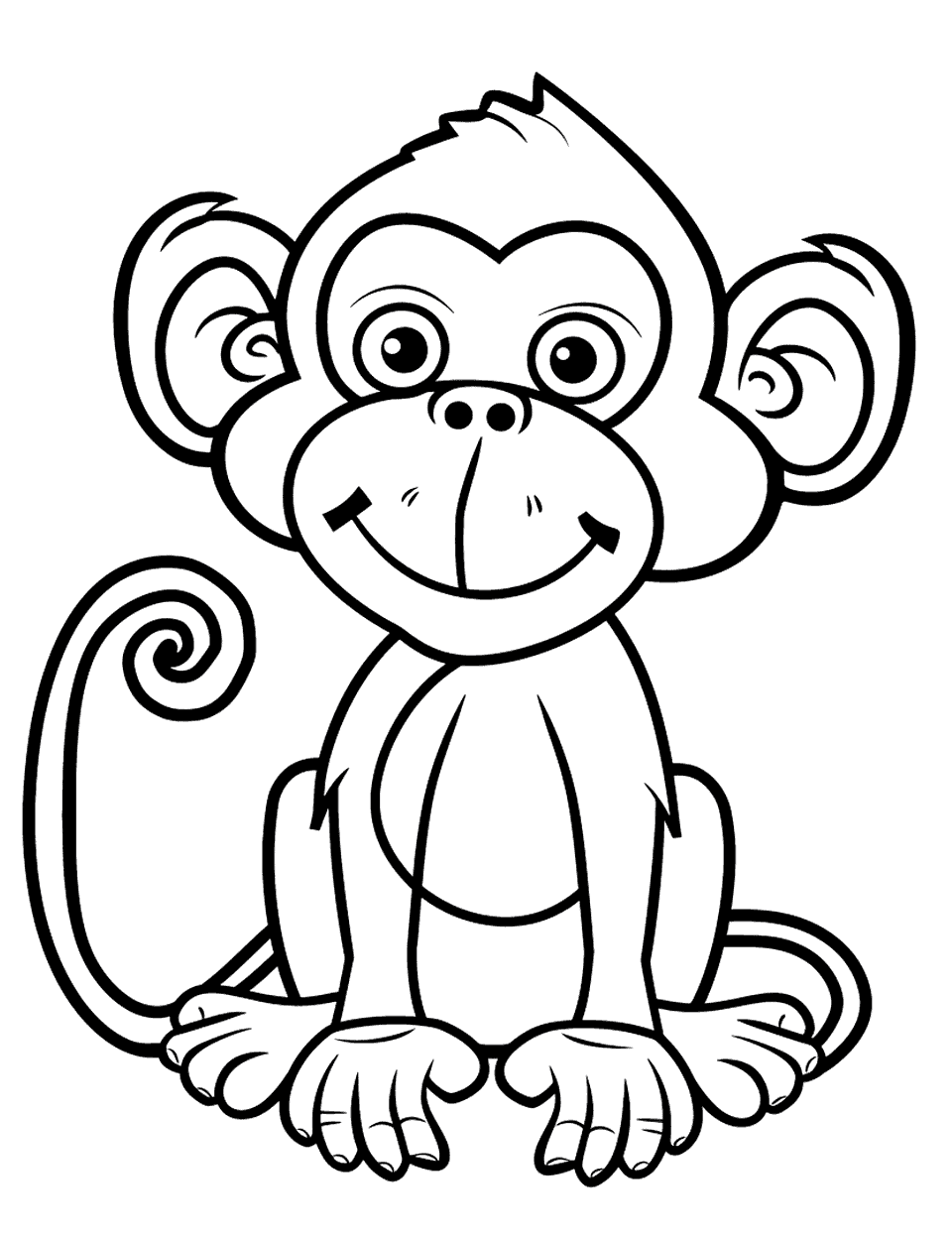
Fewest lines of anything here: a monkey sitting square to the front, curled tail out to one side, wide smile, thick even outlines. This is the sheet to hand a toddler or preschooler, and it holds up to dot markers, fingerpaint or a fistful of crayons. Nothing on the page is small enough to be frustrating.
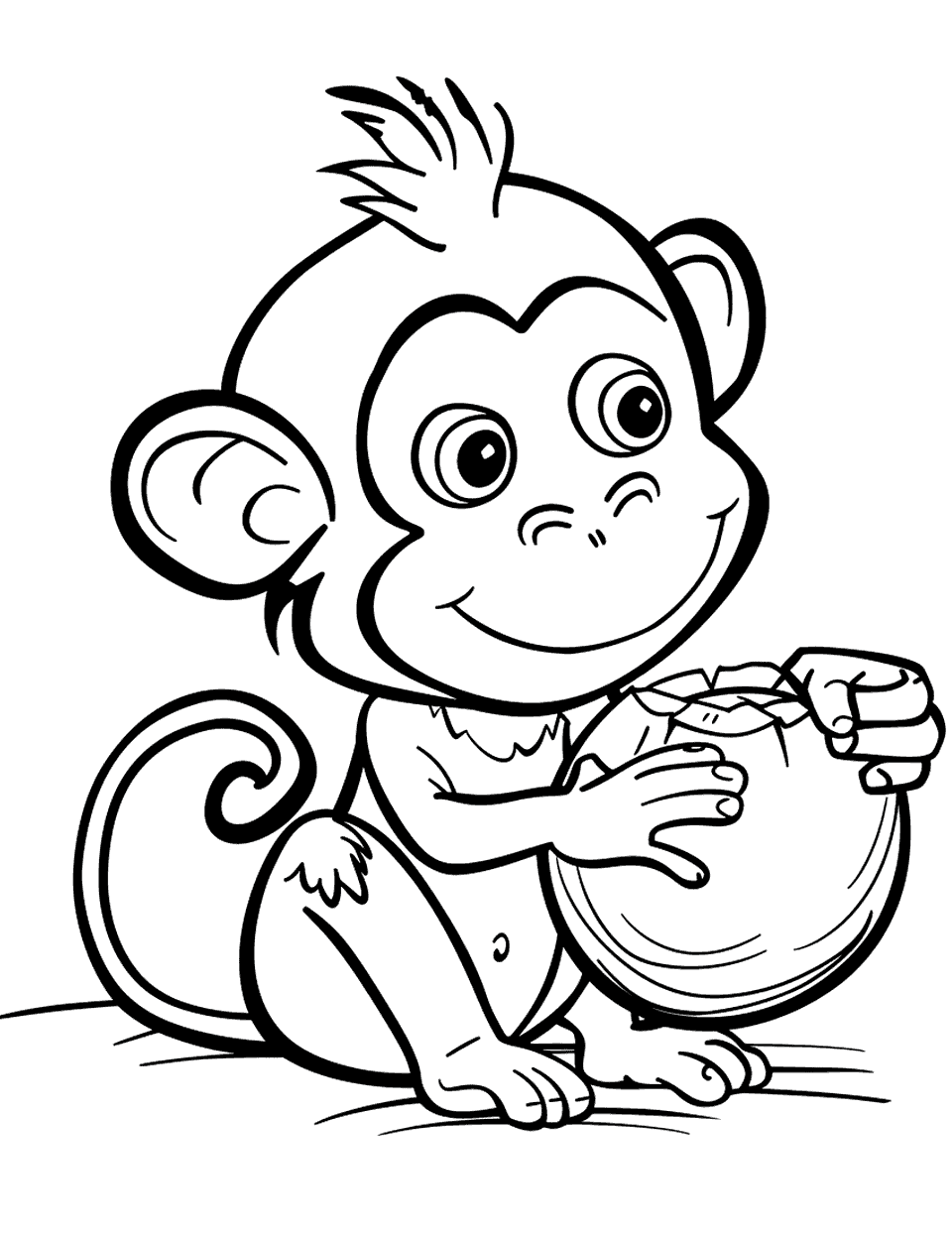
A cartoon monkey sits holding a round coconut, with a broken piece of shell pinched in its other hand. Brown on the shell and a pale center makes the split read clearly. The body is drawn in clean, open shapes, so it colors quickly. A nice one to pair with a snack of actual coconut if you can find it.
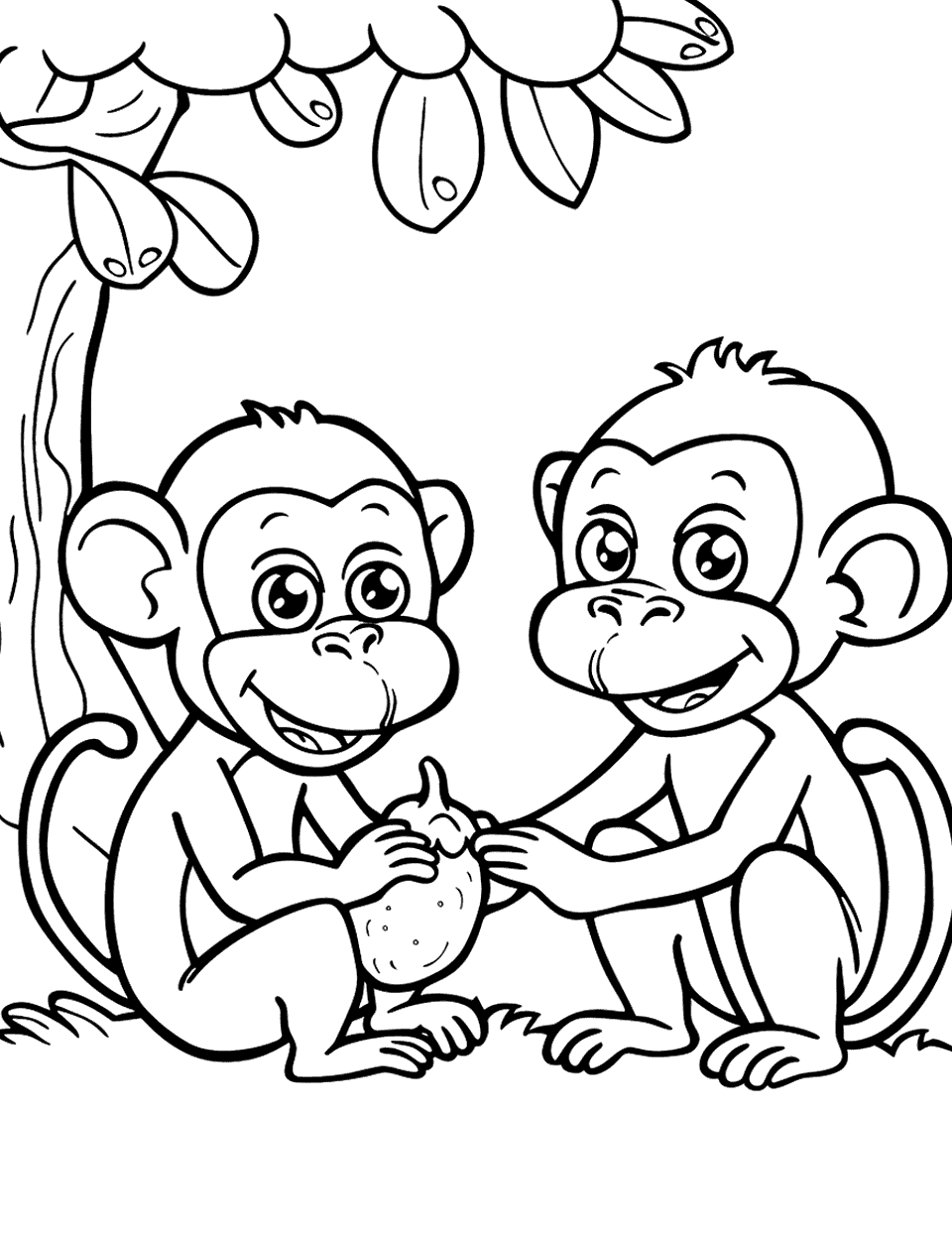
Two seated monkeys pass a round piece of fruit between them under a branch that is hung with more of it. Both faces are grinning, and the scene reads as a small story, which helps if your child likes to narrate while they color. Give each monkey a different shade so it is clear who is who.
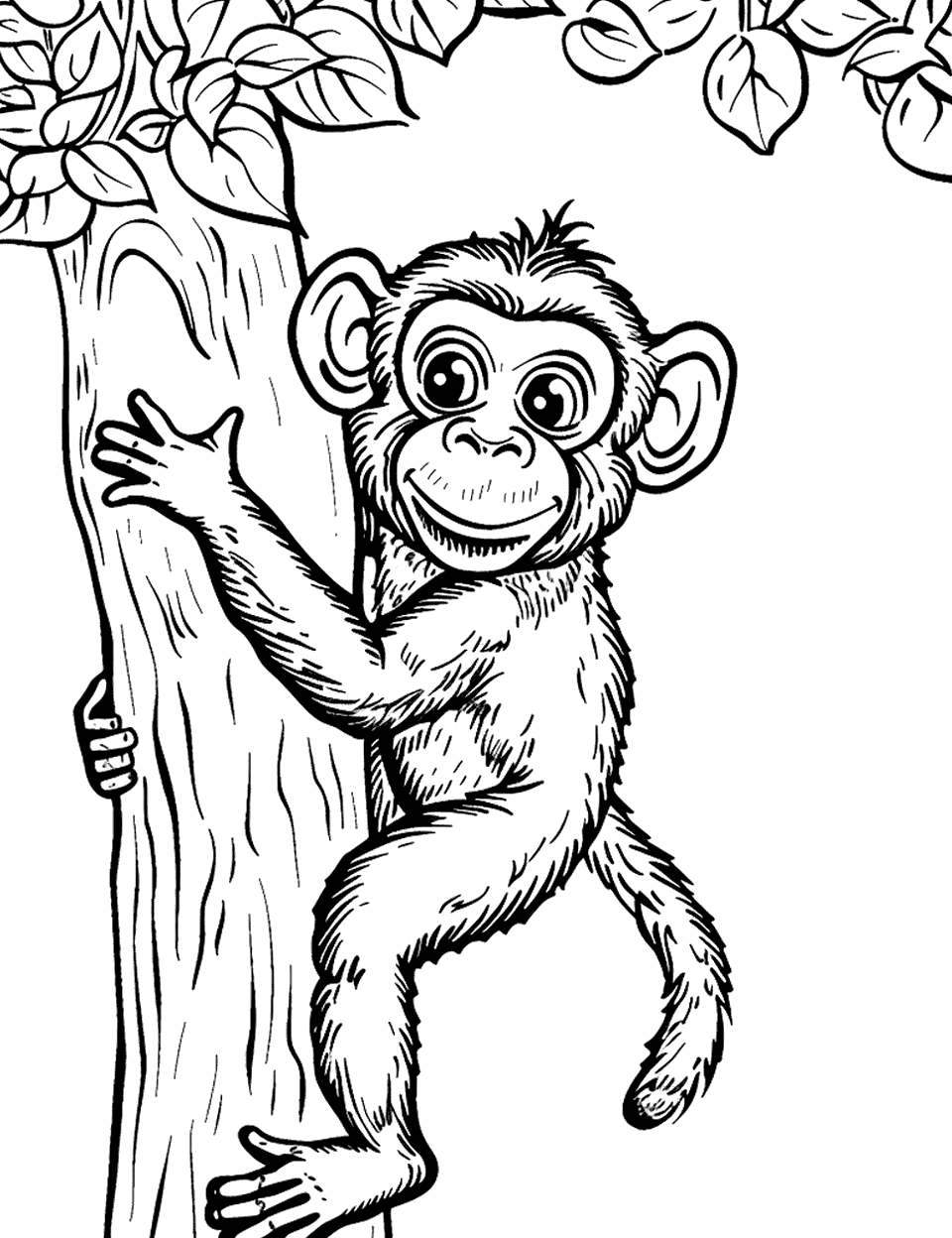
This monkey climbs a broad trunk with one hand and one foot planted on the bark and its face turned out toward you, with leaves crowding the top of the frame. The fur and the bark are both textured, so it takes longer than it looks. Keep the trunk in one flat color if your child wants to finish it in a single sitting.
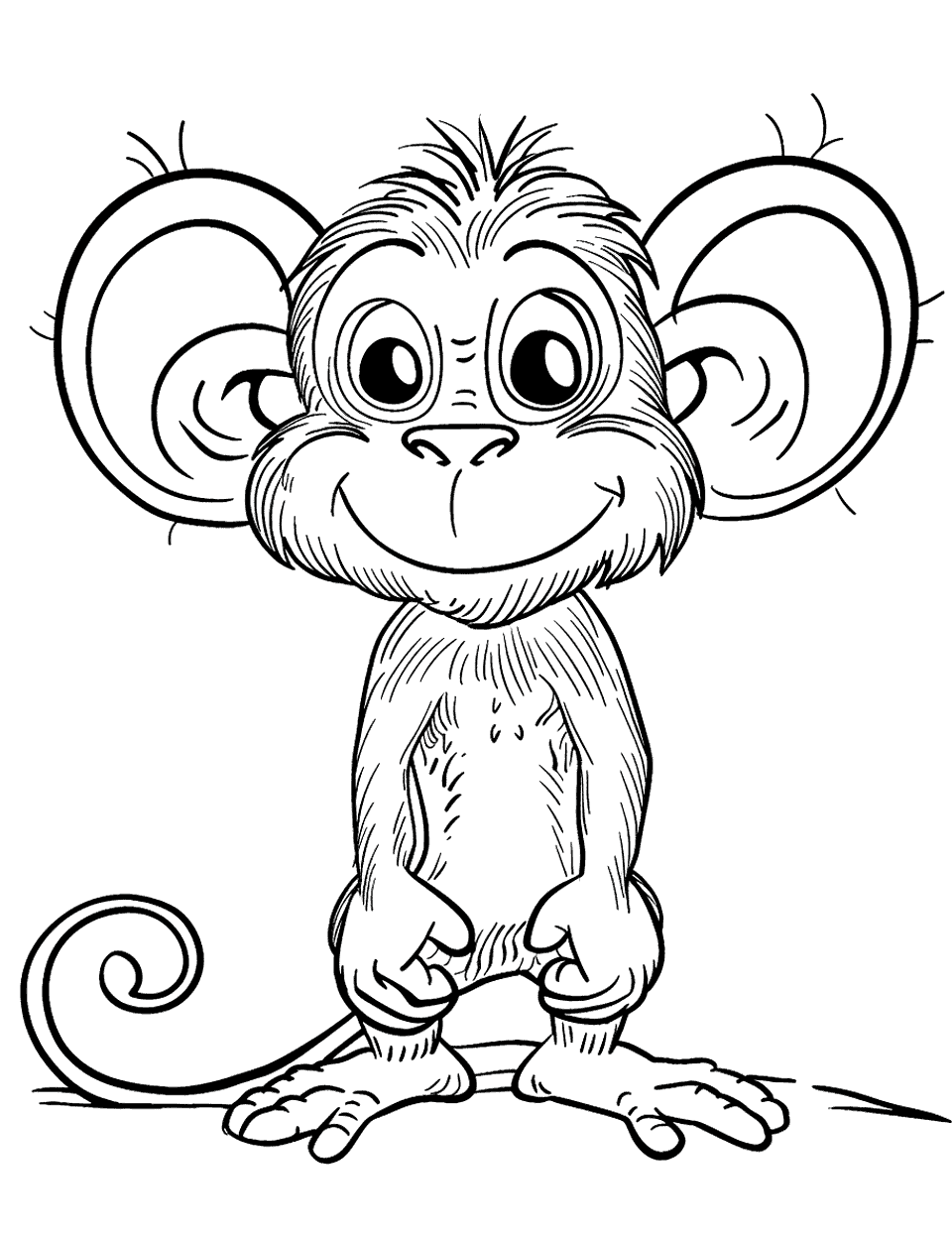
A comic-style monkey stands facing forward with two enormous round ears and a small grin. Those ears are the biggest open shapes on the sheet, so they are a good place to try a bright color or a pattern of stripes and dots. Kids who like silly drawings tend to pick this one first.
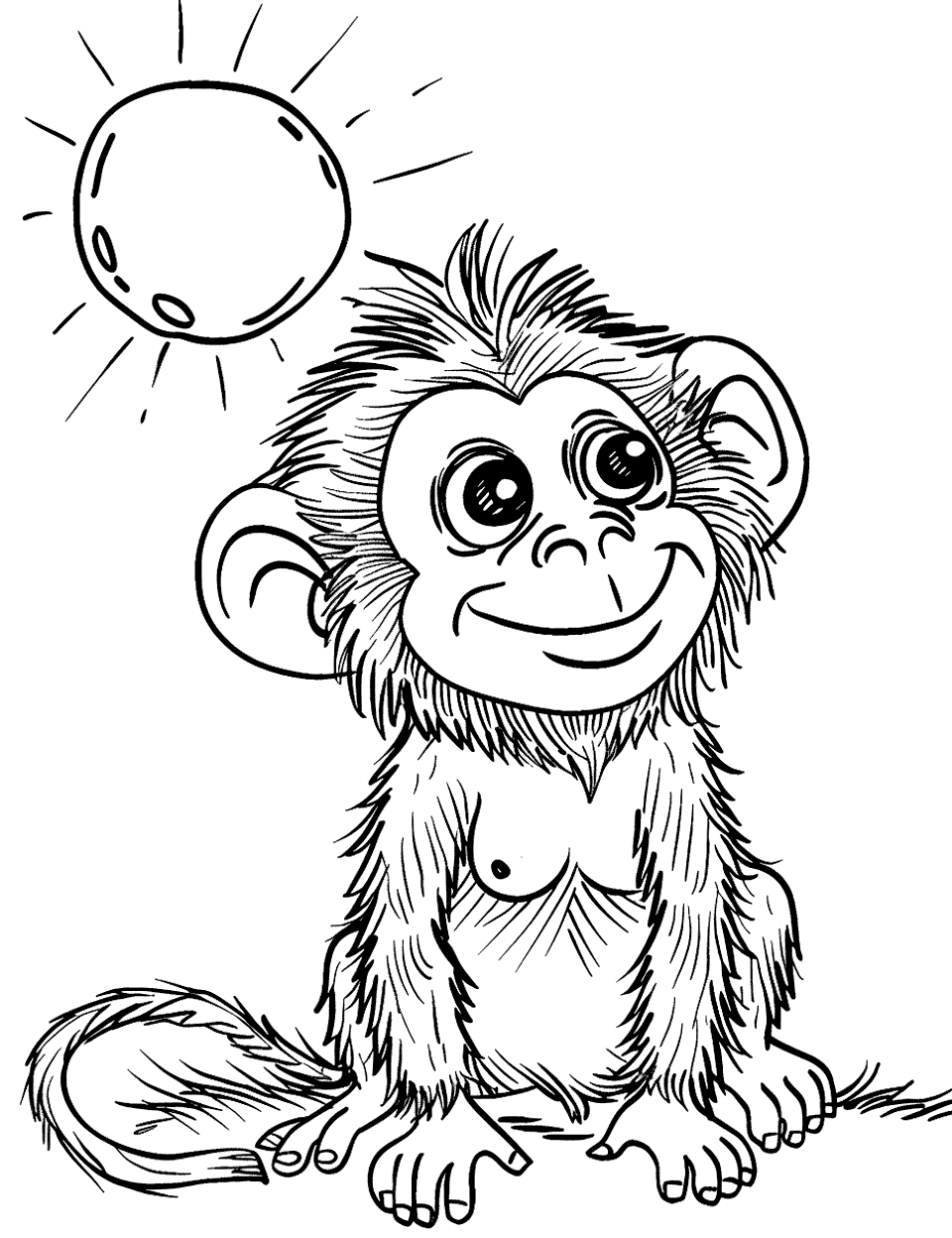
A round sun with straight rays sits in the upper corner while a shaggy monkey grins underneath it. Warm yellows and oranges in the sky and sun, then browns on the fur, is the version most kids reach for. The coat is drawn in fine strokes, so pencils will hold the texture better than markers.
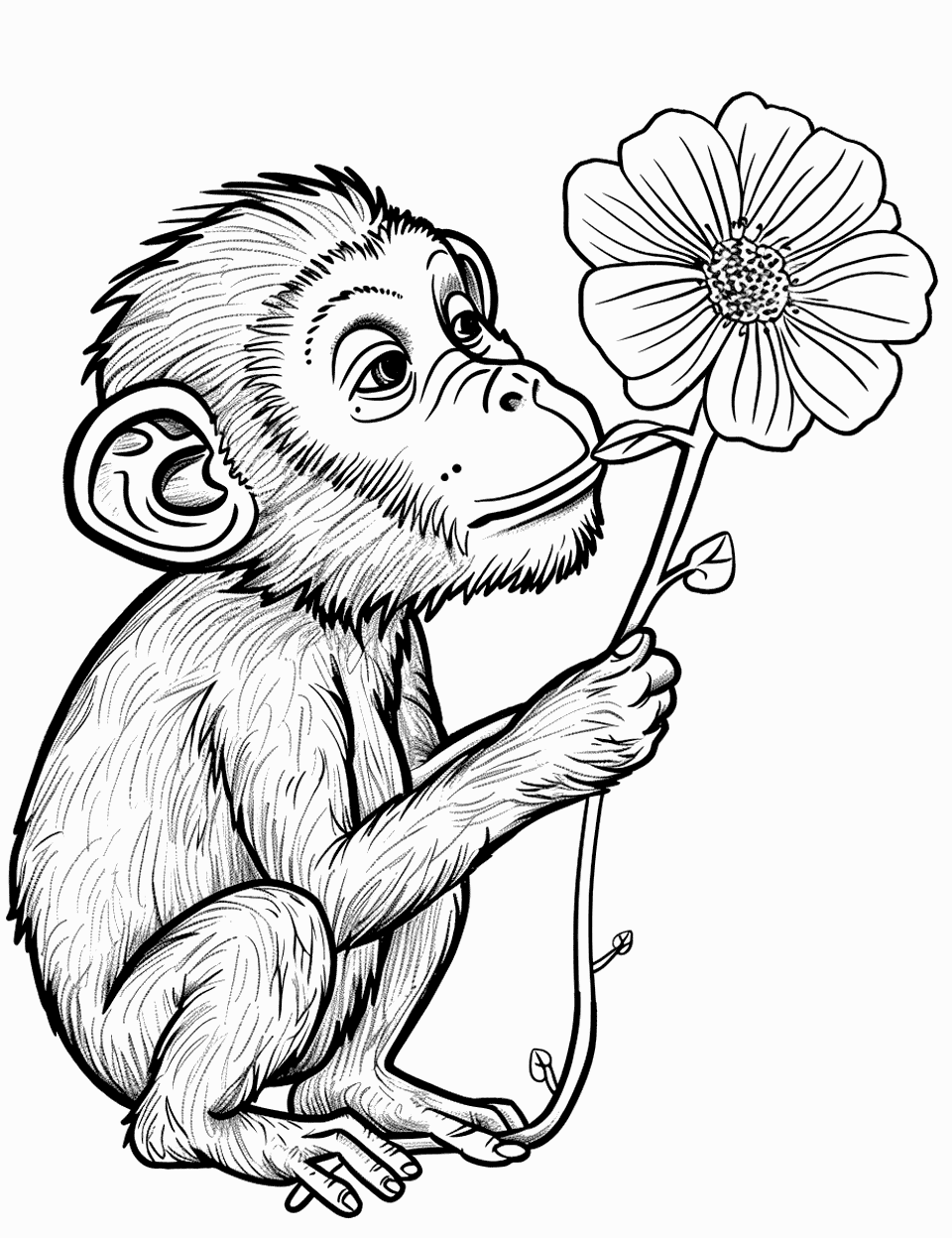
A monkey sits and lifts a wide, daisy-shaped flower to its nose, with the stem curling down past its feet. The petals are big and separate, which makes them an easy win before the harder fur begins. This is one of the calmer pages in the set and works well as a homemade card front.
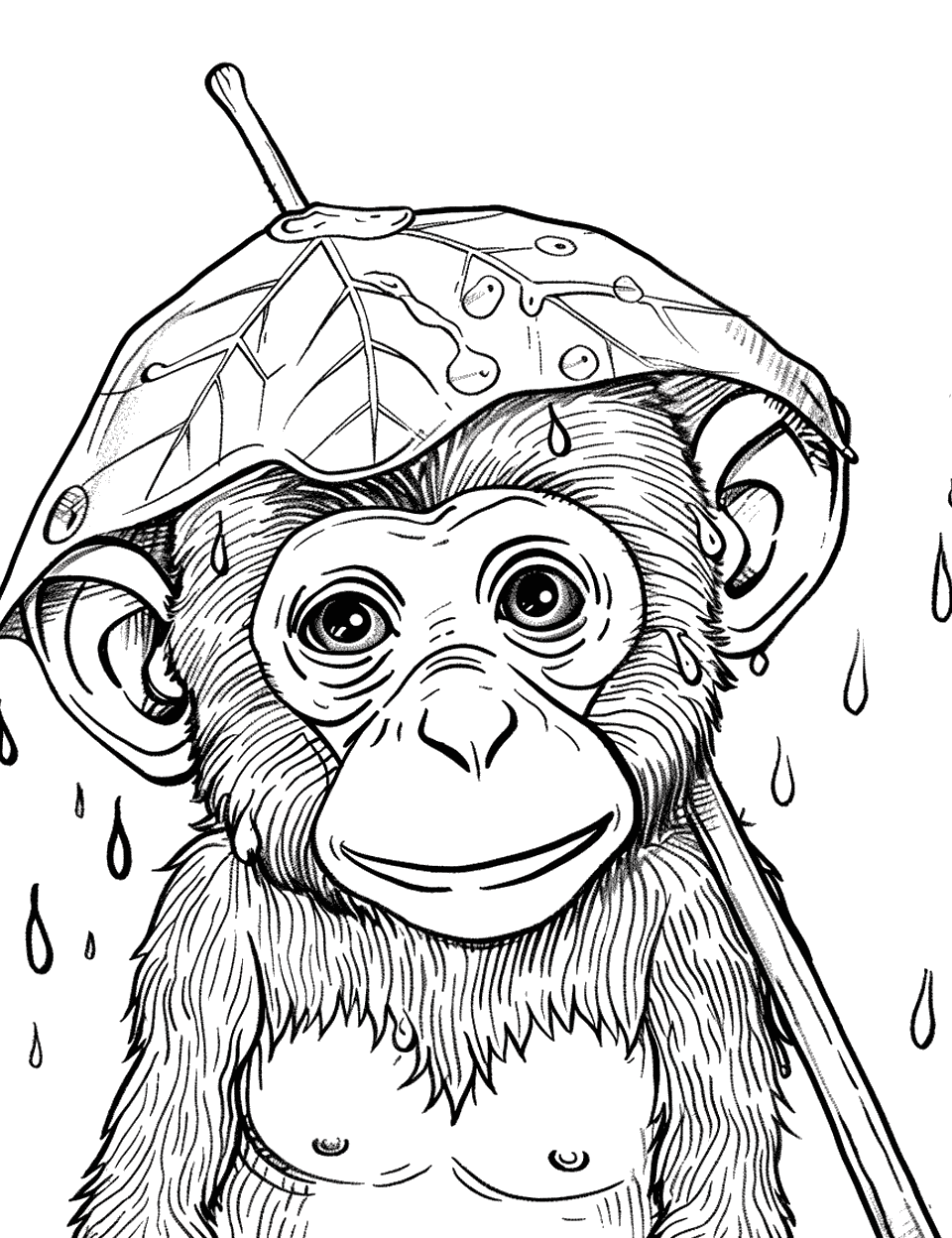
A close-up monkey holds a big leaf over its head like an umbrella while raindrops fall on both sides of its face. The drawing fills the whole page, so there is very little white space left over. Blue drops against a green leaf and a brown face give kids three clear zones to work through. Good for an actual rainy day, if you want the theme to match.
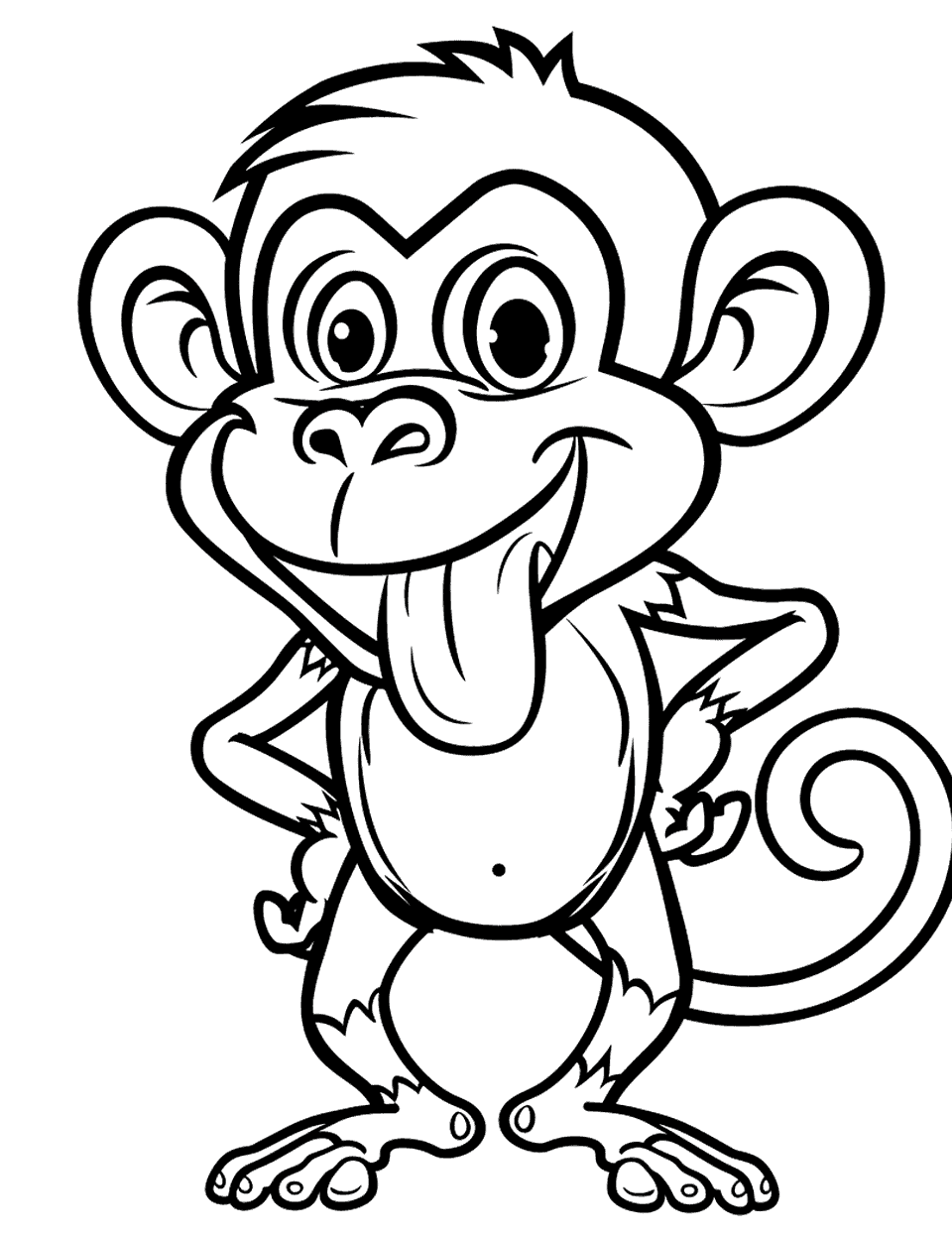
Hands on hips, tongue out, this bold cartoon monkey is pure cheek. The lines are thick and the shapes are large, which makes it another safe bet for younger children. The tongue is the one part worth a different color, so point it out before they cover everything in brown.
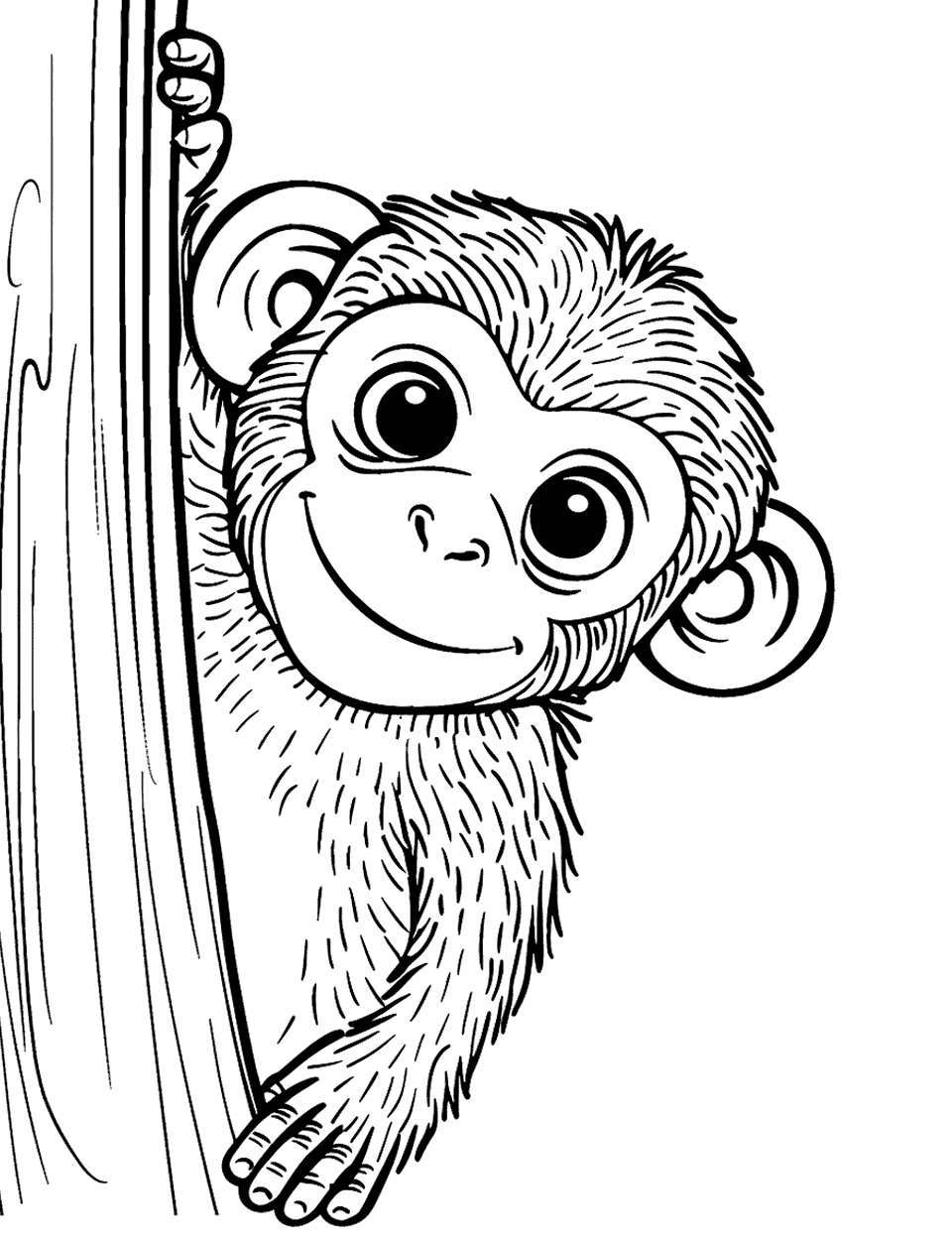
A monkey leans out from behind a tree trunk, one hand curled around the edge and one foot showing at the bottom. Only half the animal is visible, which is a nice prompt: ask your child to draw the rest of it on the other side of the trunk. The face is finely drawn, so save it for a child who has some pencil control.
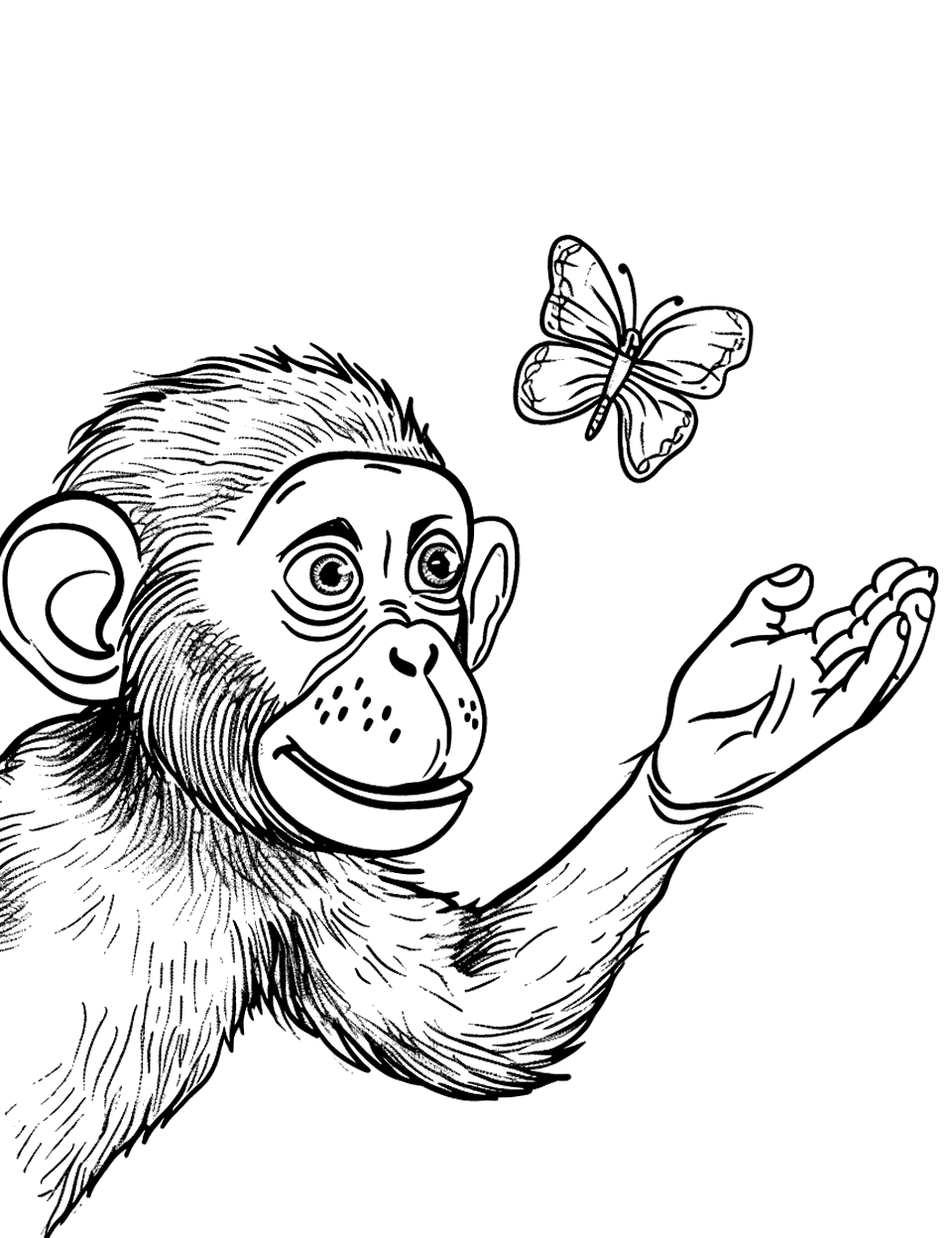
A monkey holds up an open palm while a butterfly hovers just above its fingers. The butterfly is the only thing on the page that invites bright color, so let it carry the whole scheme while the monkey stays soft and brown. It is a gentle sheet, and a good conversation starter about being still around small animals.
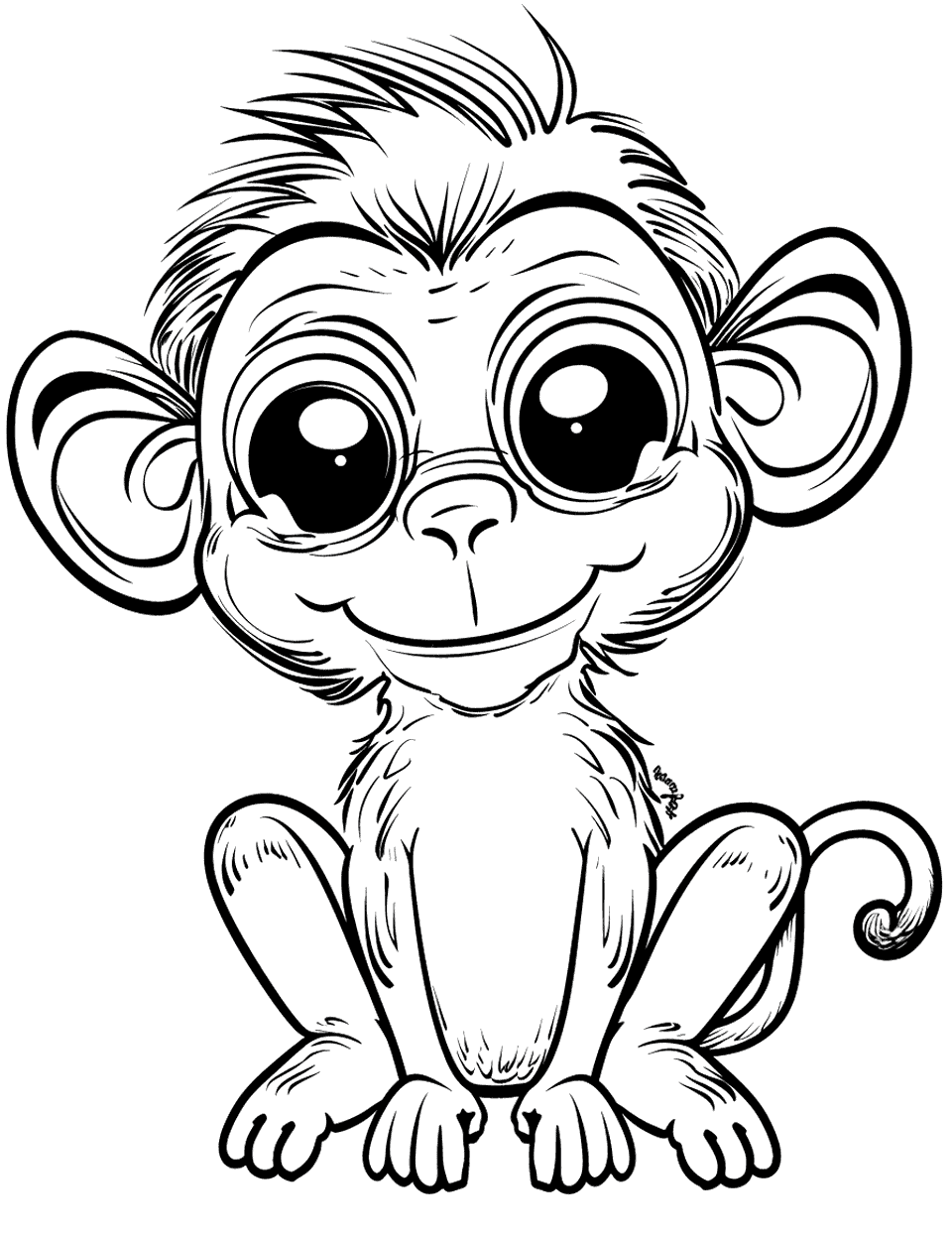
An oversized pair of glossy eyes takes up most of this monkey’s face as it sits square to the viewer, tail curling off to one side. The eye highlights are already drawn in, so remind children to leave those white spots alone. Everything else is open shapes with clean edges, which makes it fast to finish and hard to get wrong.
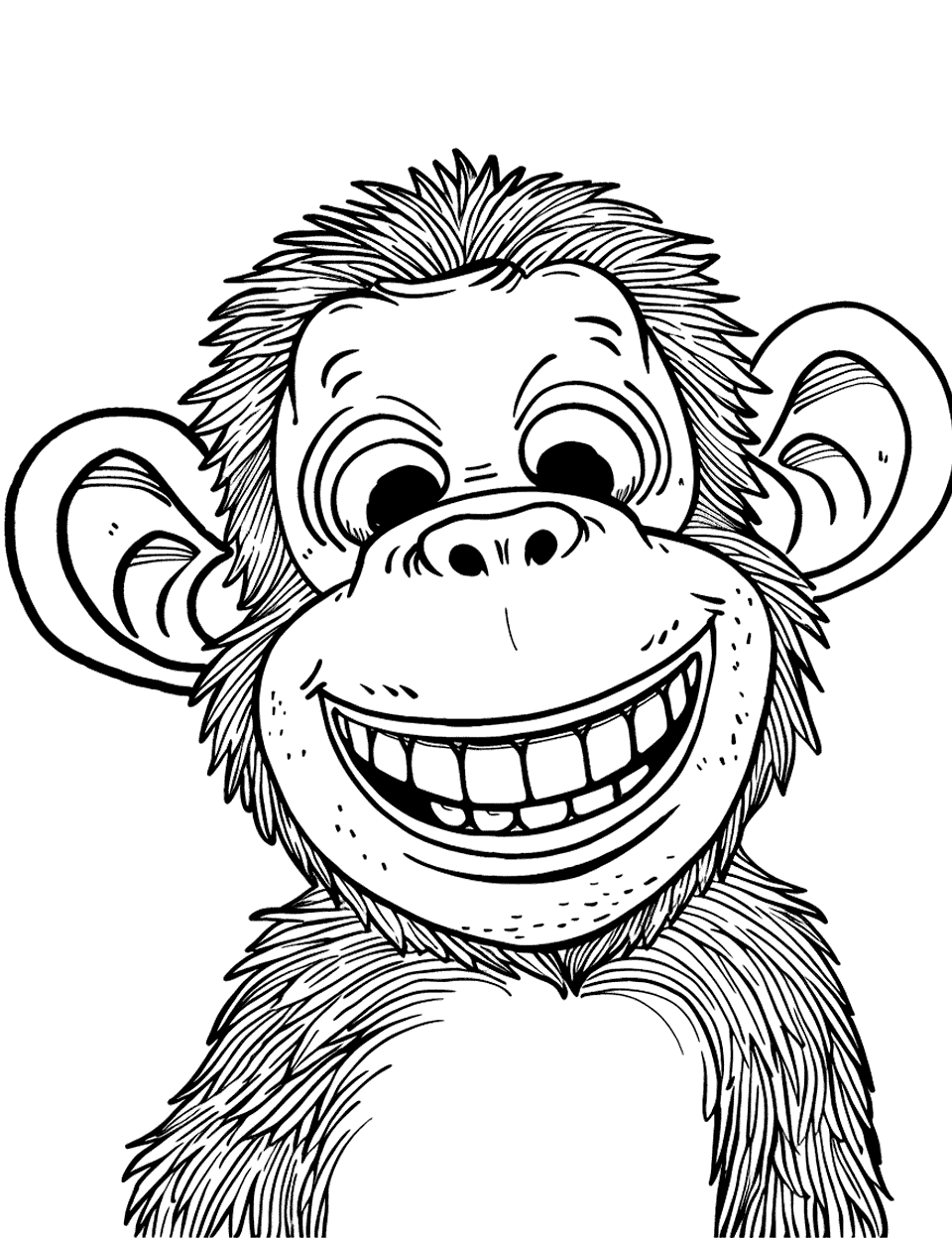
A head-and-shoulders portrait of a monkey mid-laugh, mouth wide open with a row of square teeth showing and ears sticking out. The face fills the sheet, so it enlarges well if you want a poster or a door sign. Pink for the mouth, white left on the teeth, brown on the fur is all it needs.
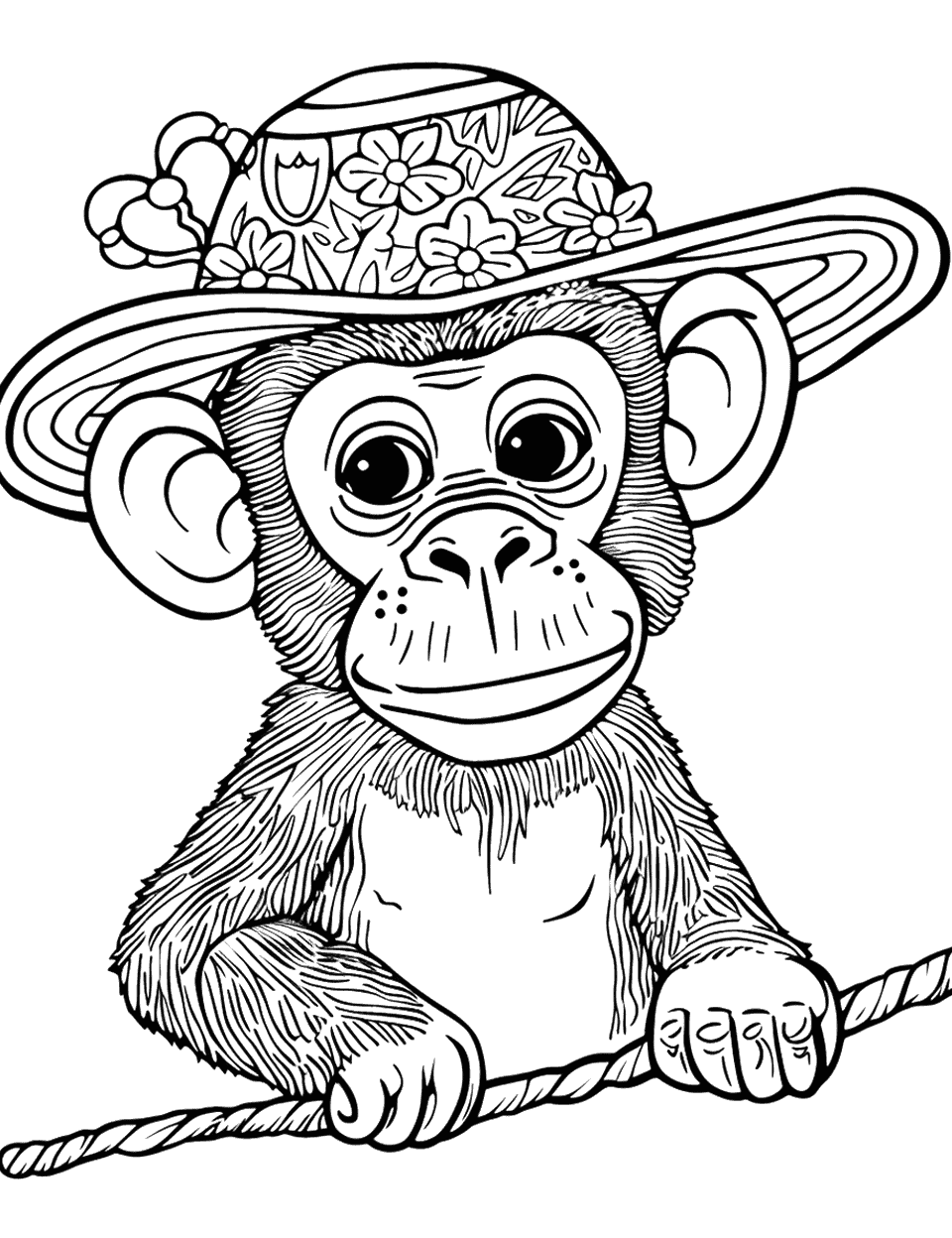
This monkey wears a wide-brimmed sun hat patterned with flowers and holds onto a rope with both hands. The hat is the detailed part, with small blooms and a band that can each take their own color. Kids who like to fill patterns will spend real time on the brim while the face stays simple.
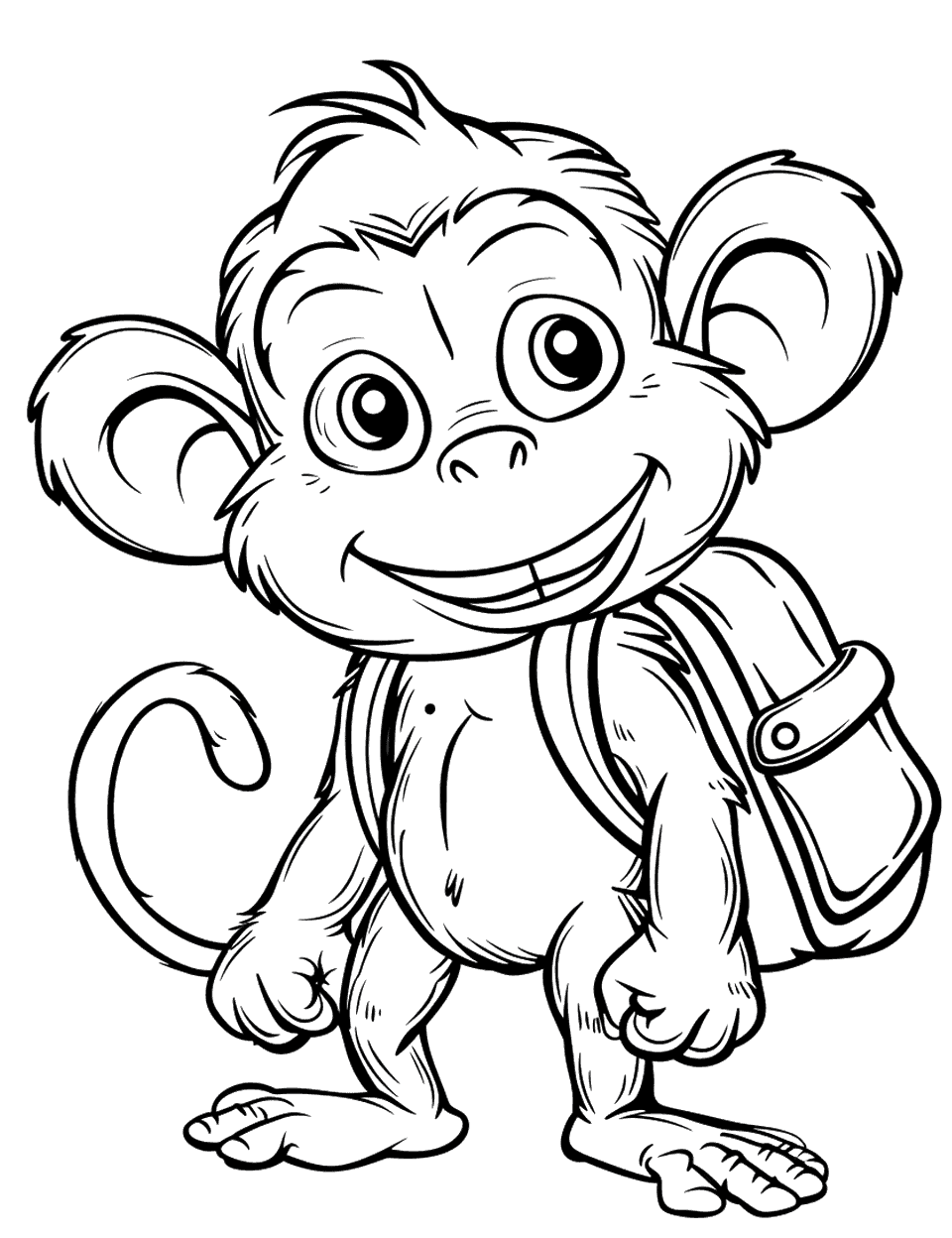
Standing upright with a strapped backpack on and a broad smile, this monkey looks ready to leave. The backpack has a buckle and a flap, which are the only small details on an otherwise open drawing. It is an easy back-to-school page, and children often color the pack to match their own.
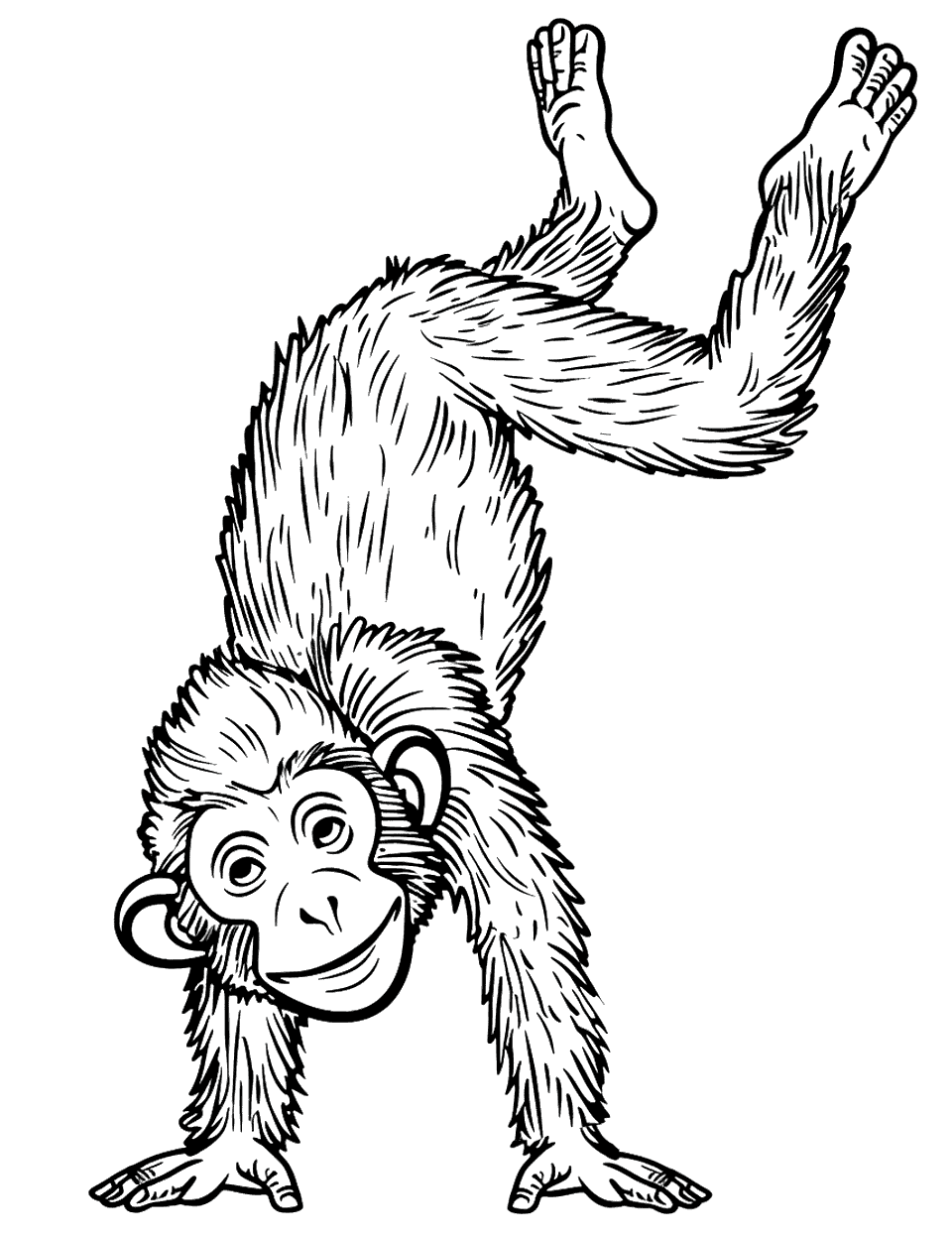
Balanced on both hands with its legs straight up in the air, this monkey has turned its head to look right at you. The upside-down pose makes it one of the more interesting shapes to color, and it also makes it harder to tell where the fur is going. Turn the page around while working on the legs; it helps more than you would think.
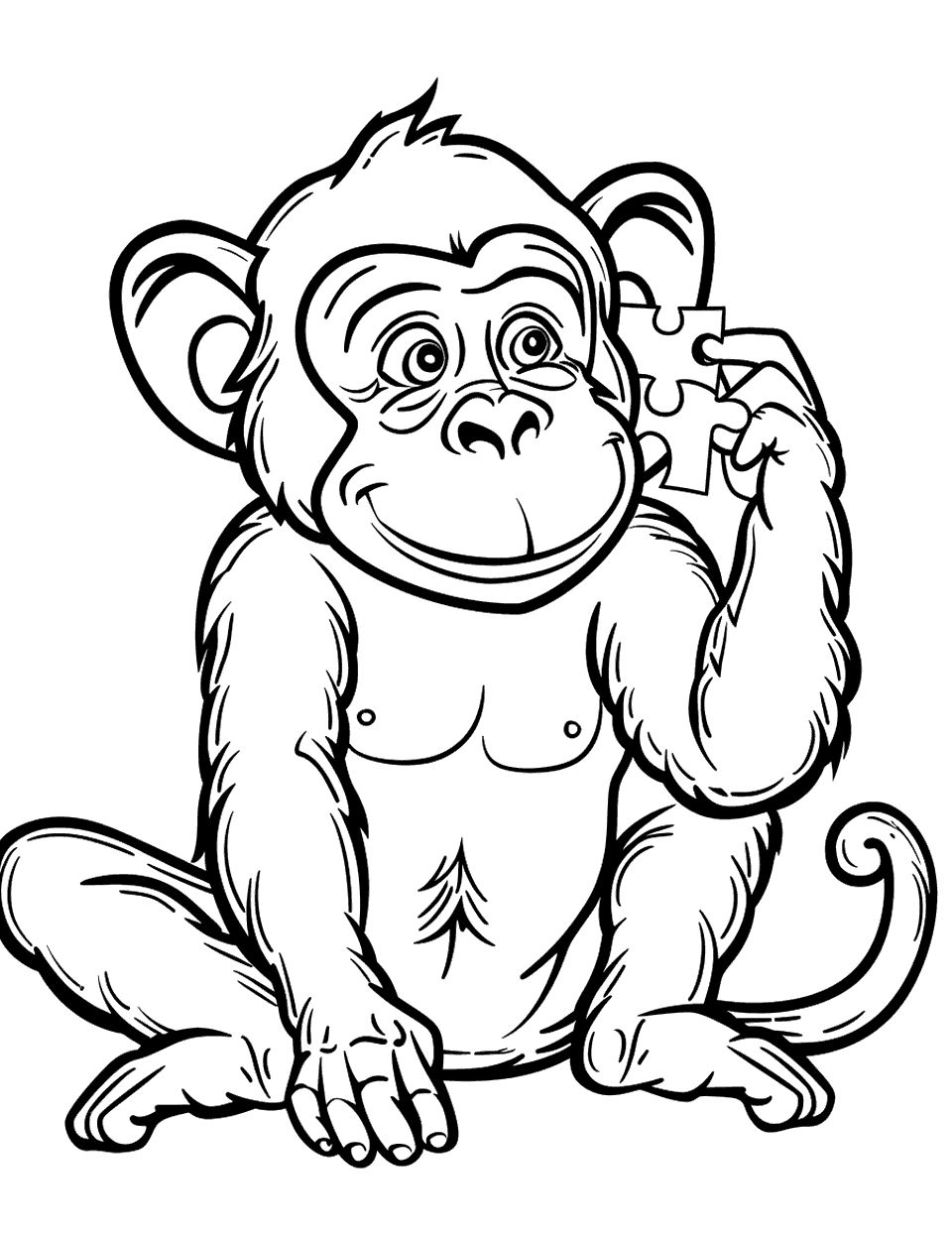
A seated monkey holds a single jigsaw piece up beside its head with a thoughtful look on its face. The puzzle piece is a small, sharp shape in the middle of a soft drawing, so a bright color there works nicely. Pair it with an actual puzzle on the table for a quiet stretch of the afternoon.
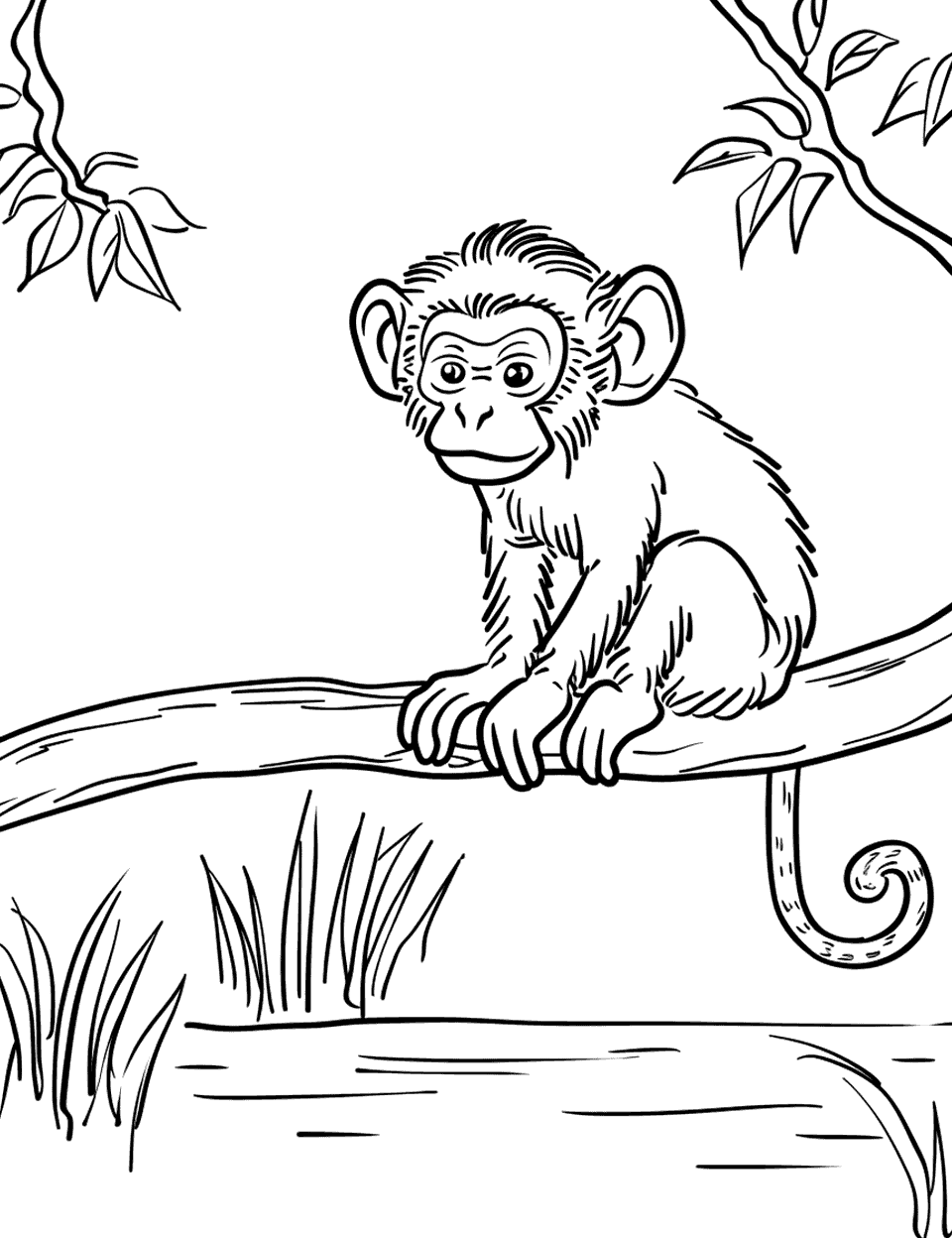
A monkey crouches on a long branch that stretches out over still water, with grass tufts on the bank and a vine trailing in from the corner. There are four separate zones here, water, bank, branch and animal, which makes it a good sheet for practicing color planning. Blue-green water under a brown branch keeps them distinct.
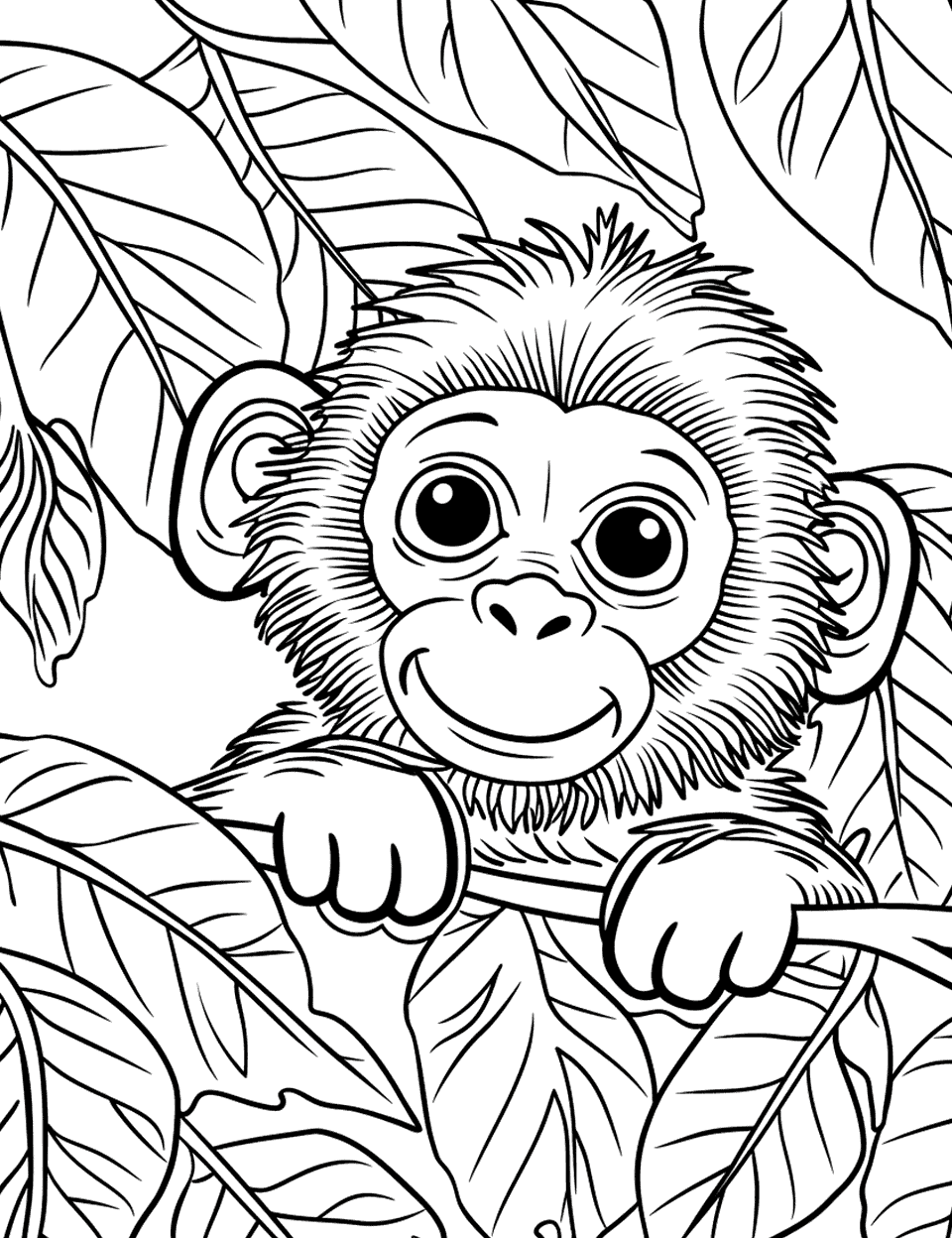
Big veined leaves fill this page edge to edge, with a monkey peeking over a stem it holds in both hands. The foliage takes far longer than the animal, so it is really a leaf-coloring sheet with a monkey in it. Several greens layered over each other keep the background from going flat. Best for an older child who does not mind a long sit.
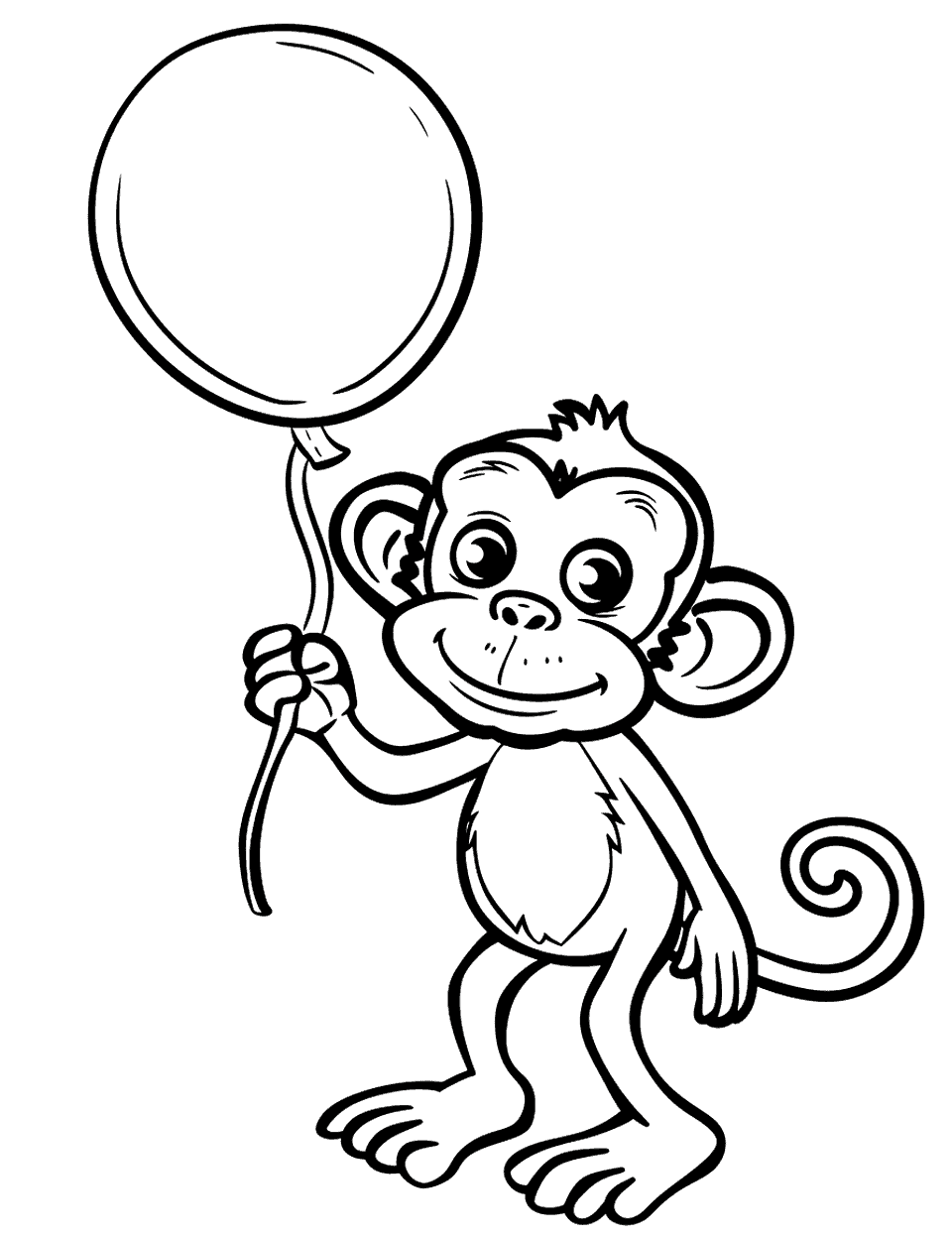
A small monkey stands holding the string of one large round balloon, drawn with clean, thick lines and almost no texture. The balloon is a big blank circle, which is an invitation to write a name or a birthday message inside it before coloring. Quick to finish and cheerful, so it makes a decent party-table page.
By using our free coloring pages, you acknowledge and agree to our full disclaimer. All materials are for personal, non-commercial use only and all rights belong to their respective license holders.
How Do You Pick the Right Monkey Coloring Page?
Match the line weight to the child, not the subject. Sheets with thick outlines and large open shapes suit toddlers and preschoolers: Easy Outline of a Monkey, Kawaii Monkey Friends, Monkey Making Faces and Monkey With a Balloon all leave room for a crayon to wander without ruining anything.
Older children who want a challenge should go straight to the fur. Realistic Monkey Sitting in Profile, Monkey Resting on a Branch and Monkey Hiding Behind Leaves are drawn with hundreds of short strokes and narrow gaps, which colored pencils and fine-tip markers handle far better than crayons.
Everything else sits in the middle. The cartoon jungle scenes, Jungle Monkey Adventure, Monkey in a Leaf Pile and Monkey on a Branch Over Water, give a school-age child a background to plan without any single area getting fussy.
One printing note: if paint or wet markers are coming out, run the sheets on cardstock or the heaviest paper your printer takes. Standard copy paper wrinkles and bleeds, and a page that buckles halfway through is the fastest way to end a coloring session.
What Should Kids Know About Real Monkeys?
Monkeys are not one animal but roughly 315 species spread across 43 genera, and the size range between them is enormous (1). According to that same zoo profile, the smallest of them, the pygmy marmoset, measures about 5 to 6 inches head to body and weighs just 3 to 5 ounces. At the other end, per the San Diego Zoo Wildlife Alliance, male mandrills run 33 to 59 pounds and measure 28 to 32 inches.
Tails are the other thing worth pointing out while your child colors one. Some New World monkeys, spider monkeys among them, have prehensile tails flexible enough to grab a branch or pick up something as small as a peanut. Old World monkeys do not have that grip.
Both facts turn a coloring page into a short conversation. Ask which sheet in this set has the longest tail (Monkey Perched on a Limb is a strong candidate) and whether that tail looks built for hanging or for balancing.
Activities to Do With Monkey Coloring Pages
The fun does not have to stop when the coloring does. A finished sheet is craft material, and these six ideas need almost nothing beyond what is already in the junk drawer.
Create a Monkey Mask
Any of the close-up faces works for this, and Laughing Monkey is the best fit because the head fills the page. Have your child color it, cut it out, then cut eye holes with adult help. Tape a popsicle stick to the bottom edge for a handheld mask, or punch a hole on each side and thread elastic.
Design a Jungle Diorama
Use an old shoe box for a three-dimensional jungle. Color and cut out a few monkeys along with trees or vines from the leafier sheets, then line the inside of the box with green construction paper. Glue the cutouts to the back wall, or hang them from the top with fishing line so they look like they are swinging.
Pin the Tail on the Monkey
Print a simple sheet, color it, then cut the tail off the drawing. Make separate paper tails for each player to color and label. Blindfold the players, spin them once, and see who tapes their tail closest to the right spot. Monkey With Big Eyes has a clean curling tail that is easy to copy.
Popsicle Stick Puppets
Color and cut out several monkeys, then glue each one to a popsicle stick. A cardboard box on its side makes a stage, or the back of the sofa works fine. Give each puppet a name before you start; children stick with the story much longer when the characters are already theirs.
Monkey Texture Art
Add something to touch. Brown yarn, faux fur scraps or felt glued onto the body gives the monkey a coat, and real dried leaves work for a jungle background. The detailed sheets like Realistic Monkey Sitting in Profile look best with this because the fur direction is already drawn in.
Write a Jungle Story
Have your child pick a finished page and write a few lines about it. Prompts help: What is the monkey called? What did it just eat? Who is waiting for it at home? Staple the story behind the picture so the two stay together, then hang the pair on the fridge.
FAQs
What Are the Best Colors for Monkey Coloring Pages?
Brown is the usual answer, in shades from light tan to almost black. Leaving the face, ears, hands and feet a shade lighter than the body is a common choice that makes the drawing look finished rather than flat. None of this is a rule, though. A purple monkey in a blue jungle is a perfectly good outcome, and pushing kids toward realism can take the fun out of it.
Are These Coloring Pages Suitable for Toddlers?
Yes, several of them are built for small hands. Easy Outline of a Monkey, Kawaii Monkey Friends and Monkey With a Balloon use thick lines and large open spaces, which is what a toddler needs when crayon control is still developing. Skip the fur-heavy sheets like Realistic Monkey Sitting in Profile at that age; the strokes are too close together to color into and the result is usually frustration.
Can I Use Paint Instead of Crayons?
Yes, and painting a coloring page is good brush practice because the outlines do the hard part for you. Print on cardstock or the heaviest paper your printer accepts first, because standard copy paper wrinkles as soon as it gets wet and colors bleed through to whatever is underneath. Watercolor works best on the open cartoon sheets; the detailed fur drawings lose their lines under a wet brush.
What Is the Difference Between a Monkey and an Ape?
The quickest test is the tail: most monkeys have one, and apes such as chimpanzees, gorillas and orangutans do not. Size is the other clue. The largest monkeys, male mandrills, top out around 33 to 59 pounds, while male gorillas run 300 to 400 pounds (2). Most of the monkeys in this set are drawn with a tail, so checking for one sheet by sheet turns the difference into a game.
How Can I Download These Pages?
Scroll the gallery above, then use the download link or button attached to the image you want. The file saves to your computer and prints as many times as you like, so there is no need to fight over a single copy. Printing two of the same sheet is also how you get a race, or a before-and-after when a child wants to try the same drawing twice.
Do Monkeys Only Eat Bananas?
No, bananas are a cartoon shorthand rather than a real diet. Wild monkeys eat a mix of fruit, seeds, leaves, nuts, flowers and insects depending on the species and the season, and the exact mix shifts with what is available. Several sheets here show food, Cute Baby Monkey, Monkey Eating Banana and Two Monkeys Sharing Fruit, so it is an easy point to make: ask your child to draw two other things a monkey might eat in the empty space.