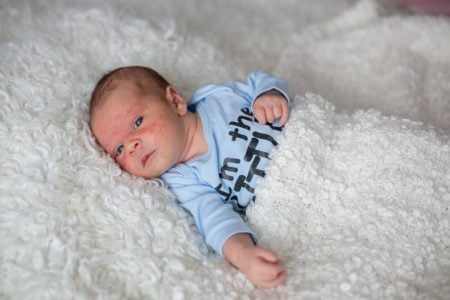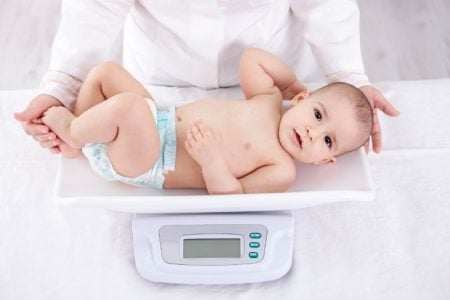
Watching your baby grow is one of the best parts of parenting. Those little rolls and chubby cheeks aren’t just cute; they are signs your little one is thriving.
However, tracking that growth can be stressful. Is she eating enough? Is he gaining weight fast enough? A home baby scale can give you peace of mind between doctor visits.
But with so many options, from mechanical trays to high-tech smart scales, it’s tough to pick the right one. We’ll break down the different types, explain safe usage, and help you find the perfect match for your nursery.
- Records a quarter of an ounce
- Free helpful companion app
- Easy to wipe down and clean
- Records weight, height, head circumference
- Remembers 15 weighings
- Super accurate weight readings
- Designed to work in water
- Tracks water temperature
- Safest baby bathtub and scale
- Measures within 0.5 ounces
- 10-year limited warranty
- Equipped with security lock
Reasons To Record Baby’s Weight
You might wonder if you really need a scale at home. Can’t the pediatrician handle it? While regular check-ups are vital, having a scale at home offers distinct advantages.
Here is why many parents choose to weigh at home:
- Monitor Overall Health: You can ensure your baby is hitting growth markers and staying in a healthy percentile.
- Track Food Intake: Weighted feeds (weighing before and after eating) help you confirm your baby is transferring enough milk.
- Record Milestones: Babies grow incredibly fast. tracking these changes lets you fill out the baby book with precision.
Types of Baby Scales
Not all scales work the same way. Here are the most common styles you will find on the market.
Mechanical Baby Scales
When you picture a doctor’s office, you probably imagine a mechanical scale. These use a sliding weight mechanism and springs to measure mass.
To use one, you slide indicators along a balance bar until the arm floats in the center.
They are incredibly durable and don’t require batteries. However, they are heavy, bulky, and generally harder to read than digital versions. These are best suited for professionals or midwives rather than a typical nursery.
Digital Baby Scales
Digital scales are the standard for home use. They use electronic sensors to detect weight and display it on an LCD screen.
These are popular because they are lightweight, easy to read, and fast. Speed is critical when you have a wiggly, naked baby. Most offer features like a “hold” button to lock in weight even if the baby moves.
Aquascales
If your baby hates being cold and naked on a scale, an Aquascale might be the answer. These combine a baby bathtub with a built-in digital thermometer and scale.
The water soothes the baby, keeping them still enough for an accurate reading. The scale calculates the weight of the baby while accounting for the water and movement.
Safety First
Multipurpose Scales
Baby gear can be expensive, so items that multitask are always a win. Multipurpose scales are designed to grow with your child.
Common designs include:
- Scales with a removable tray that reveals a standing platform for toddlers.
- “Mom and me” modes where you weigh yourself holding the baby, and the scale does the math.
These are excellent for longevity and value.
What to Look For
Before you buy, check for these specific features to ensure the scale is safe and easy to use.

Battery-operated
Cordless is key. You do not want to trip over a plug while holding an infant. Battery power lets you place the scale on a safe, flat surface anywhere in the house, like the changing table or the floor.
Tare Function
This is non-negotiable. The “Tare” button resets the scale to zero after you place a blanket or diaper on it. This ensures you are weighing only the baby, not their accessories.
No-slip Grips
Look for rubberized feet on the bottom of the scale. This keeps the unit from sliding across the counter or table if your baby starts kicking.

Easy-to-clean
Babies are messy. Whether it is a spit-up or a diaper leak, your scale will eventually get dirty. Choose a model with a smooth surface and minimal crevices where gunk can hide. Avoid fabric covers that aren’t machine washable.

Large Display
You need to be able to read the numbers instantly without squinting or leaning in. A backlit display is a huge bonus for those dim, middle-of-the-night weigh-ins.
Some little ones grow faster than others. Make sure your scale has a high max weight. I was surprised when my 22-week-old son maxed out the scale in the lactation room.

Editor's Note:
Katelyn Holt RN, BSN, BCProduct Reviews
We evaluated accuracy, stability, and ease of use to find the best options for your nursery.
Hatch Baby Grow Smart Changing Pad & Scale
Smartest Changing Pad Scale

The Hatch Baby Grow transforms a standard nursery item into a high-tech health tracker. It functions as a wipeable changing pad but hides a sensitive digital scale inside.
This device stands out because of its integration. You don’t need to drag out a separate scale; you just change your baby’s diaper and check their weight simultaneously. It measures to the quarter-ounce, making it precise enough for weighted feeds.
The real magic happens in the free companion app. It automatically logs the weight and lets you track feedings, sleep, and pumping sessions. The app visualizes this data into charts, helping you spot trends instantly.
Constructed from ABS plastic, it feels durable and is easy to sanitize. However, keep in mind that at over seven pounds, it is designed to stay on your changing table rather than travel with you.
Pros
- Dual-purpose design saves nursery space.
- App automatically syncs and tracks growth trends.
- High precision is ideal for breastfeeding moms tracking intake.
Cons
- Heavier and more expensive than standard scales.
Our Ratings
Ozeri All-in-One Baby & Toddler Scale
Measures Weight & Height
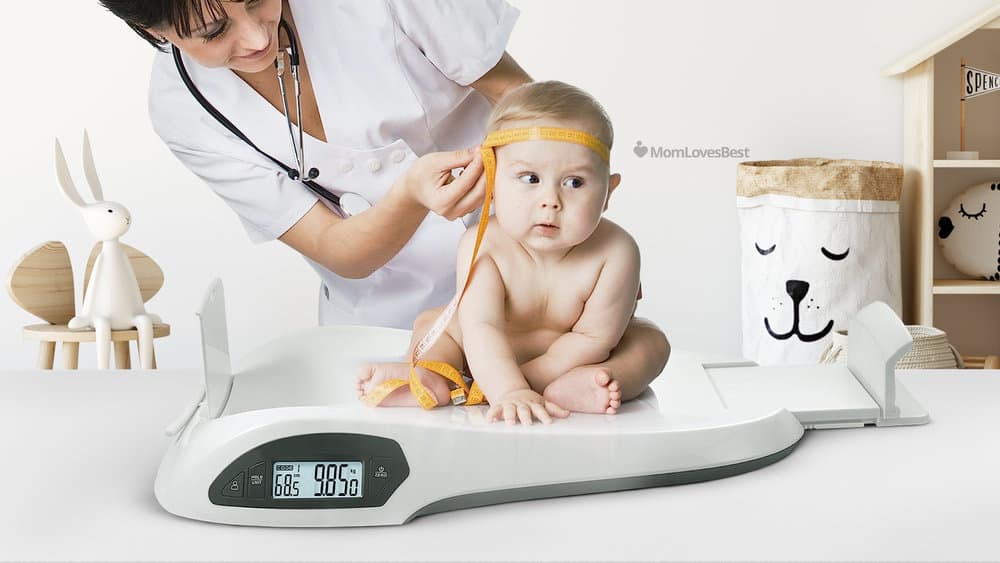
If you want the full clinic experience at home, the Ozeri All-in-One is a strong contender. It tracks weight, height, and head circumference, giving you a complete picture of your child’s physical development.
Accuracy is the headline here. It measures weight within 0.1 ounces, which is incredibly precise. The tare button makes it simple to subtract the weight of a dry diaper or onesie so you get the true number every time.
We love the memory storage. It saves up to 15 profiles for eight different children. If you have twins or multiples, this feature is a lifesaver. It also calculates the net change from the last weigh-in, doing the math for you.
The trade-off is comfort. It is a clinical tool without soft padding or ergonomic curves, so it feels a bit utilitarian compared to others.
Pros
- Tracks height and head circumference alongside weight.
- Extremely precise 0.1-ounce measurements.
- Memory function supports up to eight different user profiles.
Cons
- Lack of contoured padding may be less comfortable for the baby.
Our Ratings
Aquascale Bathtub Digital Scale
Relaxing for Baby’s Bathtime
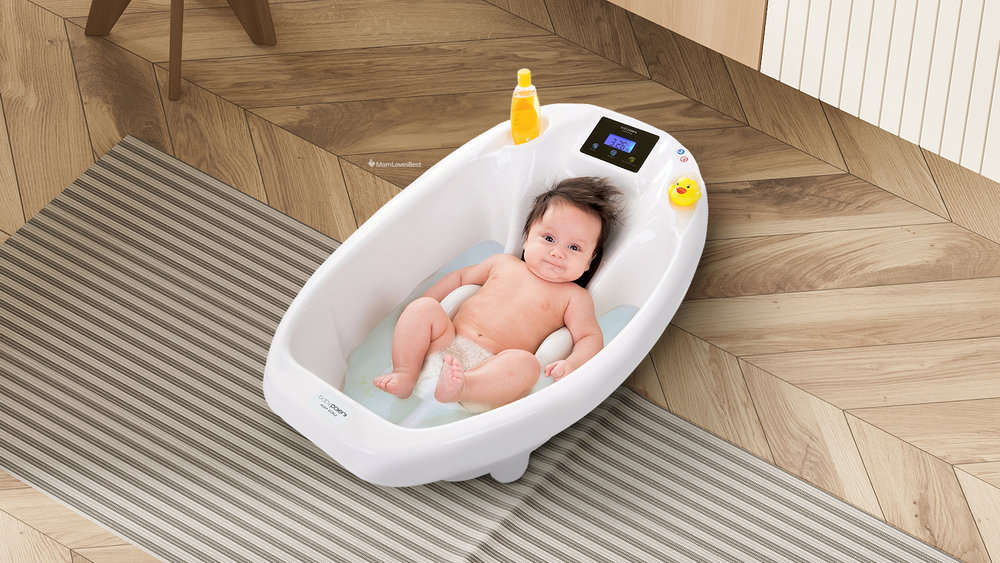
The Aquascale solves the “squirmy baby” problem by combining bath time with weigh-ins. Warm water relaxes most infants, making it easier to get a reading without the tears.
This tub displays weight in pounds or kilograms and accounts for water movement. It also features a built-in thermometer that continuously monitors water temperature, helping you prevent burns or chills.
Safety is built-in with an anti-slip insert and a crotch post to keep the baby from sliding down. The tub is versatile, too; you can remove the infant insert to accommodate toddlers up to two years old.
While it is bulkier than a flat scale, it eliminates the need for two separate bulky items (a tub and a scale). It is a smart choice for parents with limited storage space.
Pros
- Combining tasks saves time and keeps baby calm.
- Built-in thermometer ensures water safety.
- Convertible design works from newborn through toddlerhood.
Cons
- Large size makes it difficult to store or travel with.
Our Ratings
Health-o-Meter Grow With Me Scale
Easily Converts As Baby Grows

The Health-o-Meter Grow With Me lives up to its name. It starts as a tray scale for infants and converts into a standing platform for older kids.
For babies, the security lock keeps the tray stable on the base. Once your child is walking, you remove the tray to reveal a teddy bear-shaped platform that makes weighing fun for toddlers. It supports up to 60 pounds, meaning you will use this for years.
The “Hold” feature captures an average weight for moving babies, which reduces frustration. The large LED display is easy to read from a distance.
It isn’t the most high-tech option on the list, but its longevity makes it a great value. It’s perfect for families who want one product to last through several stages of childhood.
Pros
- Converts from infant tray to toddler standing scale.
- High weight capacity (60 lbs) ensures years of use.
- Fun bear design appeals to young children.
Cons
- Requires the baby to be relatively still for the best accuracy.
Our Ratings
Smart Weigh Comfort Baby Scale
Easy to Use Scale
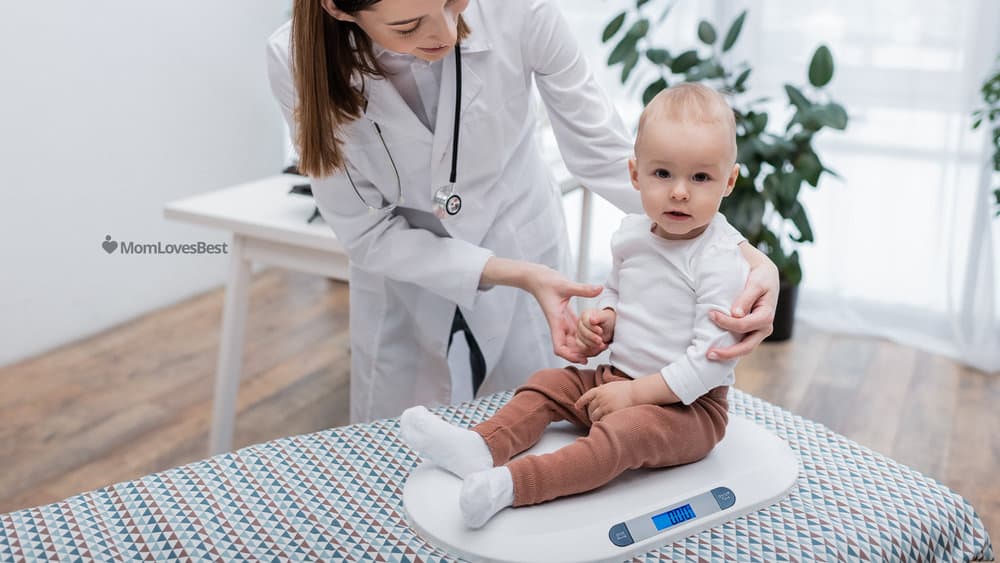
Sometimes simple is best. The Smart Weigh Comfort scale focuses on getting the job done without extra bells and whistles.
It features a gently curved platform that cradles the baby securely. The backlit display is a standout feature, making it easy to read in dimly lit rooms during night feeds.
Operation is intuitive: turn it on, place the baby, and read the number. If you want to use a blanket, just place the blanket first, hit “tare,” and then add the baby. The scale auto-offs to save battery life.
With a capacity of 44 pounds, it works well into the toddler years. It is lightweight and slim, making it easy to slide under a crib or into a closet when not in use.
Pros
- Backlit screen is excellent for low-light environments.
- Curved design helps keep the baby centered and secure.
- Simple interface is easy for anyone to use.
Cons
- Not sensitive enough for precise weighted feeding measurements.
Our Ratings
How Often Should You Weigh Your Baby?
For most healthy babies, you don’t need to obsess over the numbers. Weighing once a month is usually sufficient to track general growth trends (1).
However, specific situations call for more frequent monitoring. You might need to weigh weekly or even daily if:
- Your baby has not regained their birth weight within two weeks.
- You are working to increase your milk supply.
- Your baby has a medical condition affecting appetite or digestion.
In these cases, a home scale is a valuable tool for working with your lactation consultant or pediatrician.
A Word Of Caution
When to Be Concerned About Your Baby’s Weight
Doctors use growth charts to track percentiles (2). Staying on a consistent curve is generally more important than the actual weight number.
Trust your instincts. If your baby seems lethargic, has fewer wet diapers, or is extremely fussy at the breast, contact your provider.
Sudden drops in weight or a “failure to thrive” diagnosis require professional medical intervention, not just home monitoring.
FAQs
Still have questions about weighing your little one? Here are the answers to the most common queries.

How Much Do Baby Scales Cost?
Prices vary widely. You can find basic digital scales for around $40 to $60. High-tech smart scales or medical-grade devices can run well over $100.

Can I Rent a Baby Scale?
Yes. Many hospitals, lactation consultants, and local baby boutiques offer rental programs. This is a great option if you only need precise tracking for a few weeks.

How Do I Use a Baby Scale?
Place the scale on a hard, flat surface (no carpets!). Turn it on and wait for it to zero out. If using a blanket, place it on the scale and press “Tare.” Gently lay your baby on the tray and wait for the reading to stabilize.

How Do I Calibrate a Baby Scale?
Most home digital scales auto-calibrate when you turn them on. However, some models require a specific weight object to test accuracy. Always check your user manual for specific calibration steps.

Should I Weigh Baby Before or After Feeding?
For general growth tracking, it doesn’t matter as long as you are consistent (e.g., always naked, always in the morning). For weighted feeds to check milk transfer, weigh immediately before and immediately after feeding without changing the diaper.

Can You Use Normal Scales to Weigh Your Baby?
Yes, using the subtraction method. Weigh yourself holding the baby, then weigh yourself alone. Subtract your weight from the combined weight. Note that this is less accurate than a dedicated baby scale.

How Can I Check My Baby’s Weight At Home Without a Scale?
Without a scale, you can rely on wet diaper counts (6+ heavy wets a day) and the fit of their clothes. If they are outgrowing onesies and seem alert and happy, they are likely gaining well.

How Often Should a Baby Weighing Scale Be Calibrated?
Check the manual, but generally, checking calibration every few months is smart. If you move the scale often or drop it, recalibrate it immediately to ensure accuracy.

What Is the Best Baby Scale for Accuracy?
For high accuracy, look for scales that measure in 0.1-ounce or 5-gram increments, such as the Ozeri All-in-One. Consistent placement on a hard surface is just as important as the brand.