Let’s be real: most new parents expect diapers and spit-up, but few are prepared for the sheer volume of mucus a tiny human can produce. Whether it’s a cold, teething drool, or seasonal allergies, a stuffed-up baby is an unhappy baby.
Since little ones can’t blow their own noses, they rely on you to clear the blockage. It’s a gross job, but someone has to do it. To help you tackle the snot without losing your lunch, we tested and reviewed the top tools on the market.
Here is everything you need to know about nasal aspirators, how to use them safely, and which ones actually work.
- Quick and easy to use
- Full control over suction power
- Fun ball shape
- Five major protecting systems
- Easily portable
- BPA-free silicone
- Convenient disposable filters
- Easy control of suction
- BPA-free and phthalate-free
- Multiple tip options
- Compact design
- Can use batteries or oral suction
- Hospital-grade suction power
- Use at any angle
- Small and compact kit
- Dishwasher safe
- No need for replacement filters
- Hygenic design prevents mold
- 100% medical grade silicone
- No BPA, phthalates, or latex
- Hypoallergenic
- Soft hospital-grade silicone tip
- Mouth-controlled suction
- Easy to assemble
What Is a Nasal Aspirator?
A nasal aspirator is essentially a small vacuum for your baby’s nose. It uses suction to pull mucus out of the nasal passages when a baby is too congested to breathe, eat, or sleep comfortably.
Because babies are “obligate nose breathers” (meaning they prefer breathing through their nose), a blockage can be distressing. Since they haven’t mastered the art of blowing their nose into a tissue, this device does the heavy lifting for them.
3 Types of Nasal Aspirators
You will generally encounter three main designs when shopping for a snot-sucker.
Bulb Syringe
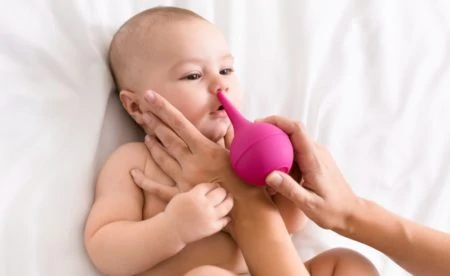
This is the “old school” option you likely received at the hospital. It features a rubber ball on one end and a tapered tip on the other. You squeeze the ball to push air out, insert the tip, and release the ball to suck mucus in. While cheap and simple, they are often difficult to clean thoroughly.
Electric Aspirator
If you want to automate the process, an electric aspirator is your best friend. These battery-operated gadgets generate continuous suction with the push of a button. They are great for consistent power, though some babies may find the motor noise startling.
Oral Suction Aspirator
This style has taken over the parenting world recently. It consists of a tube placed in the baby’s nose connected to a mouthpiece for the parent. You provide the suction power with your own lungs. It sounds gross, but don’t panic; a filter blocks the mucus from ever reaching your mouth. Parents love these because they offer the most control over suction strength.
How to Choose a Nasal Aspirator for Baby
Not all snot suckers are created equal. Here is what you should look for before buying:
Cleanliness
Hygiene is non-negotiable. Dark, moist environments are breeding grounds for mold and bacteria. Look for a device that disassembles completely for scrubbing. If you choose an oral suction model, check the price and availability of disposable filters. Transparency is also a bonus features; clear tips let you see if you actually cleaned everything out.

Material Safety
Since this device goes inside your baby’s body, the materials matter. Look for soft, medical-grade silicone tips. Silicone is flexible, durable, and hypoallergenic. Avoid hard plastics that could scratch delicate nasal membranes if your baby jerks their head suddenly.

Tip Size and Shape
Newborn nostrils are tiny, while toddlers need a bit more flow. A good aspirator should come with multiple tip sizes or a universal tapered design that sits against the nostril opening rather than going deep inside. This prevents injury and ensures a tight seal for better suction.
Suction Power
Thick, stubborn mucus requires more power than a thin, runny nose. However, too much suction can damage delicate tissues. Look for devices with adjustable settings (for electric models) or those that allow you to manually control the pressure (like oral suction types).
Product Reviews
Ready to help your little one breathe easier? Here are the top nasal aspirators we tested and trusted to get the job done.
Nosiboo Pro Baby Nasal Aspirator
Easiest to Clean Nasal Aspirator
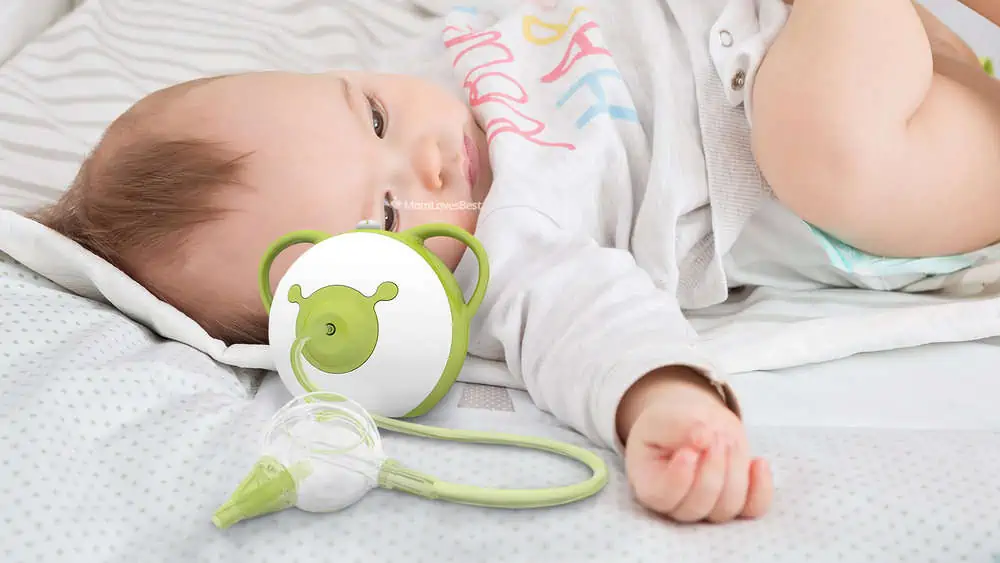
This isn’t just a medical device; it looks like a toy, which is a huge plus when you are approaching a wary toddler. Designed with help from ENT specialists, the Nosiboo Pro is a powerhouse.
The standout feature here is the “Colibri” head. It is the only part of the machine that needs cleaning, and it pops apart instantly to be rinsed under the tap. No tubes to scrub, no filters to buy.
We also love the adjustable control knob. You can dial the suction down for a newborn or crank it up for a congested toddler. It provides consistent, hospital-grade suction that battery-operated handhelds often struggle to match. While it is an investment, the durability and ease of use make it worth the price tag for many parents.
Pros
- Patented head design makes cleanup instant.
- Adjustable suction dial for different ages and congestion levels.
- Cute design helps distract nervous babies.
Cons
- It is bulky and requires a power outlet (not portable).
- The motor is louder than handheld versions.
Our Ratings
Watolt Electric Nose Suction for Baby
Best Electric Nasal Aspirator

If you need something effective that fits in your diaper bag, the Watolt is a fantastic choice. It is battery-operated and cordless, meaning you can unclog a nose in the car, at the park, or at grandma’s house.
The Watolt features three suction strengths, allowing you to customize the intensity. It also has a built-in music and light feature to distract fussy babies during the process. The operating noise is relatively quiet, so you might even get away with using it on a sleeping child.
Hygiene is simple, as the collection cup and silicone tips detach for washing. It is a great balance of portability and power without the “ick” factor of oral suction.
Pros
- Portable and cordless for on-the-go relief.
- Built-in lights and music to distract baby.
- Three adjustable suction levels.
- Parts can be sterilized.
Cons
- Batteries will need replacing over time.
Our Ratings
NoseFrida The Snotsucker Baby Nasal Aspirator
Best Nasal Aspirator for Newborns
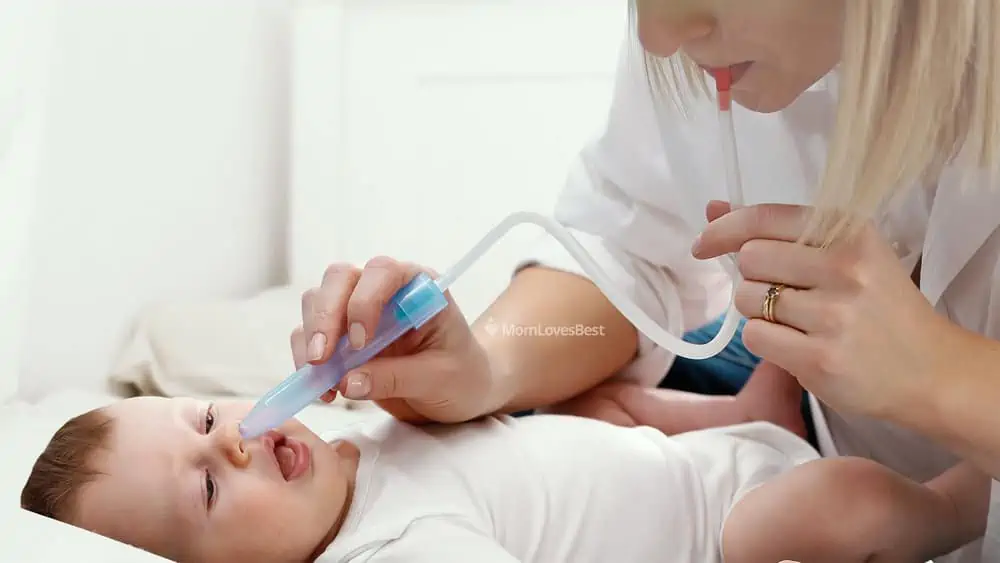
The NoseFrida is a cult classic for a reason. It popularized the oral suction method in the US, and despite the initial hesitation parents feel, it works incredibly well.
You place the red mouthpiece in your mouth and the blue tube against your baby’s nostril. This gives you complete control over the suction strength and duration, which is much safer than an automated machine for delicate newborns.
Don’t worry about inhaling anything gross; a disposable hygiene filter blocks mucus and bacteria transfer. The device is top-rack dishwasher safe, and the simplicity of the design means there are no tiny motors to break. It is lightweight, effective, and BPA-free.
Pros
- Complete control over suction strength.
- Disposable filters prevent germ transfer.
- Dishwasher safe for easy cleaning.
- Non-invasive tip sits outside the nostril.
Cons
- Requires purchasing replacement filters.
- Two-handed operation can be tricky with a squirmy baby.
Our Ratings
OCCObaby Baby Nasal Aspirator
Best Long-Use Nasal Aspirator
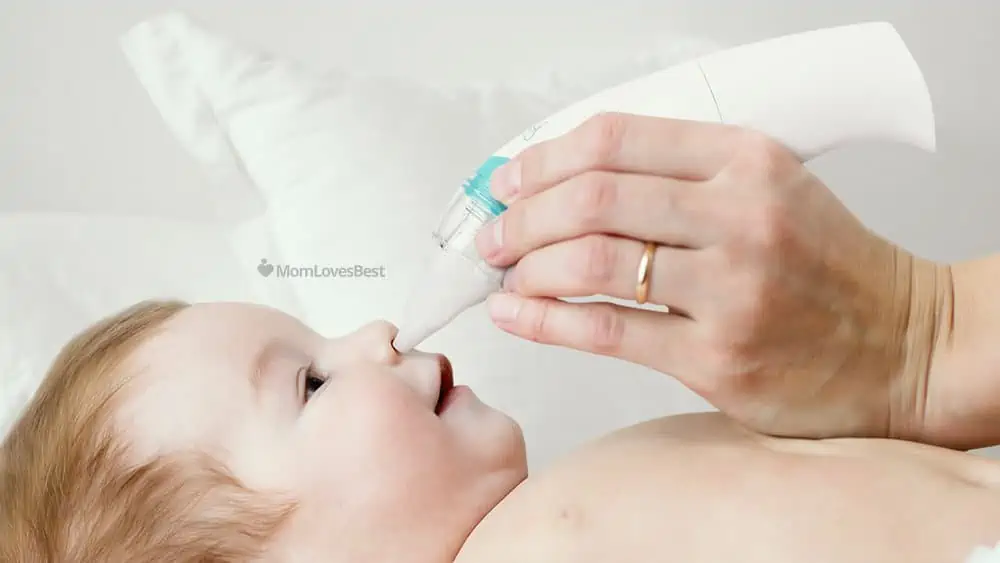
The OCCObaby set offers versatility that grows with your child. It includes three different silicone tips: one for newborns, one for power suction, and a long-reach tip for older kids.
What sets this apart is the dual-method kit. You get the battery-powered aspirator for quick jobs, but it also comes with a manual oral suction tool for when the batteries die or you need a silent option.
The main unit is waterproof and fits easily into a purse. While the electric motor is gentle, having the manual backup ensures you are never stuck with a congested baby and dead batteries.
Pros
- Includes both electric and manual oral suction tools.
- Three tip sizes for different ages.
- Waterproof base for easy cleaning.
Cons
- Electric suction is gentle and may struggle with very thick mucus.
Our Ratings
BabySmile Nasal Aspirator
Best for Squirmy Babies
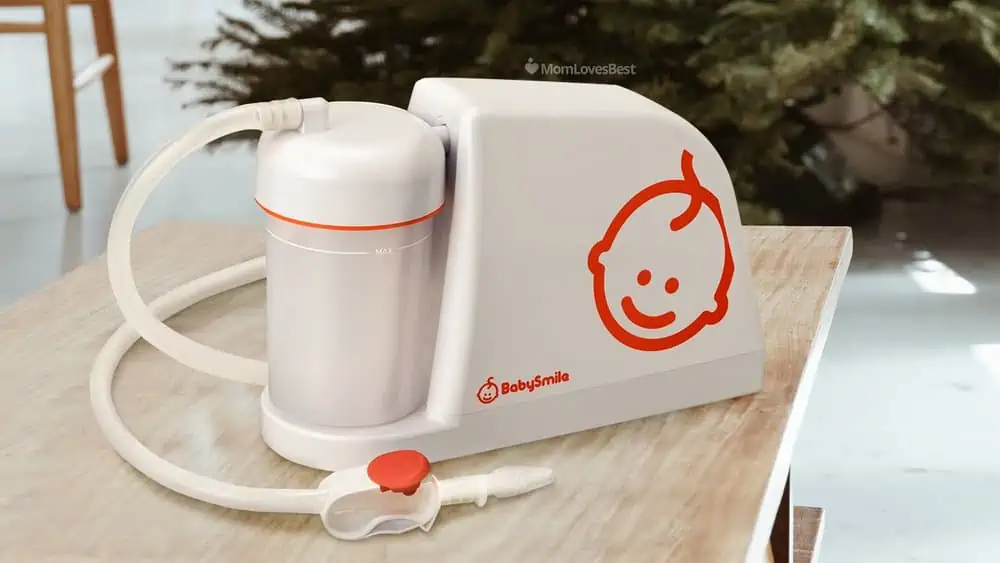
When you need serious power, the BabySmile delivers. This plug-in unit offers hospital-grade suction that clears congestion instantly. It is ideal for those moments when your baby is thrashing around and you only have a split second to get the job done.
You operate it by holding down a clip on the silicone tip, which allows you to start and stop suction precisely. The long, thin cord allows you to maneuver easily, so you can hold your baby in your lap or in a rocker while using it.
While it has more parts to clean than a simple bulb, the efficiency is unmatched for sticky, stubborn mucus. Just be sure to start on a lower setting to gauge your baby’s sensitivity.
Pros
- Hospital-grade power clears nose instantly.
- Long cord allows for flexible positioning.
- Silicone tip is soft and angled for comfort.
Cons
- More expensive than manual options.
- Multiple parts to disassemble and wash.
Our Ratings
BoogieBulb Cleanable Baby Nasal Aspirator
Best Bulb Nasal Aspirator
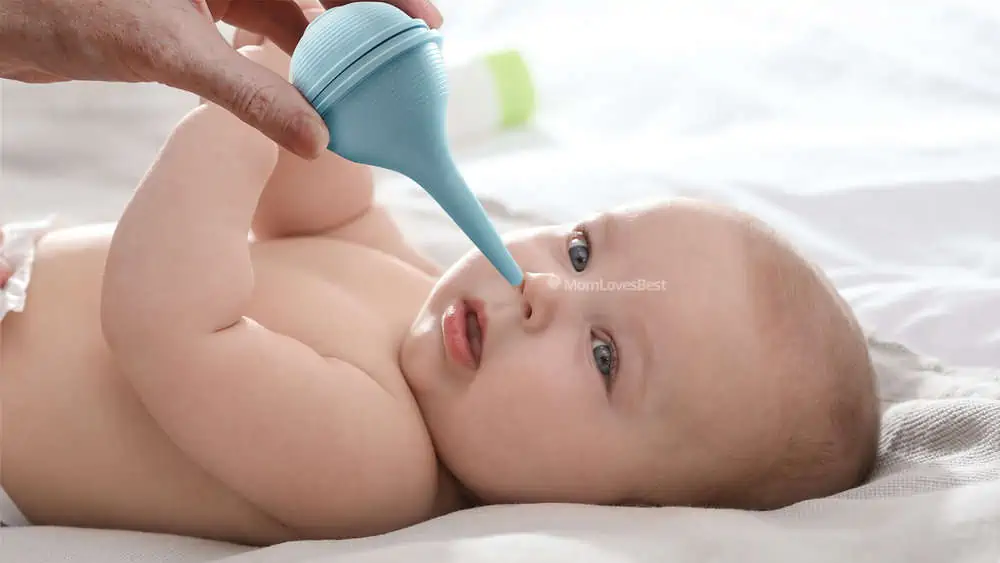
If you prefer the simplicity of a bulb syringe but hate the hygiene risks, the BoogieBulb is your answer. It works exactly like the hospital version (squeeze, insert, release), but with a twist: it pulls apart in the middle.
This allows you to scrub the inside, sanitize it in the dishwasher, and ensure it is completely dry before storing. This prevents the mold growth common in traditional bulbs.
It is made of hospital-grade latex and comes in different sizes. The company also offers a lifetime warranty, which is rare for a product at this price point.
Pros
- Opens up for full cleaning and drying.
- Dishwasher safe.
- Familiar, simple design.
Cons
- Suction is not adjustable.
- Bulb halves can separate during use if not secured tightly.
Our Ratings
Innovo Hospital Grade Silicone Twister Bulb
Best Budget Nasal Aspirator
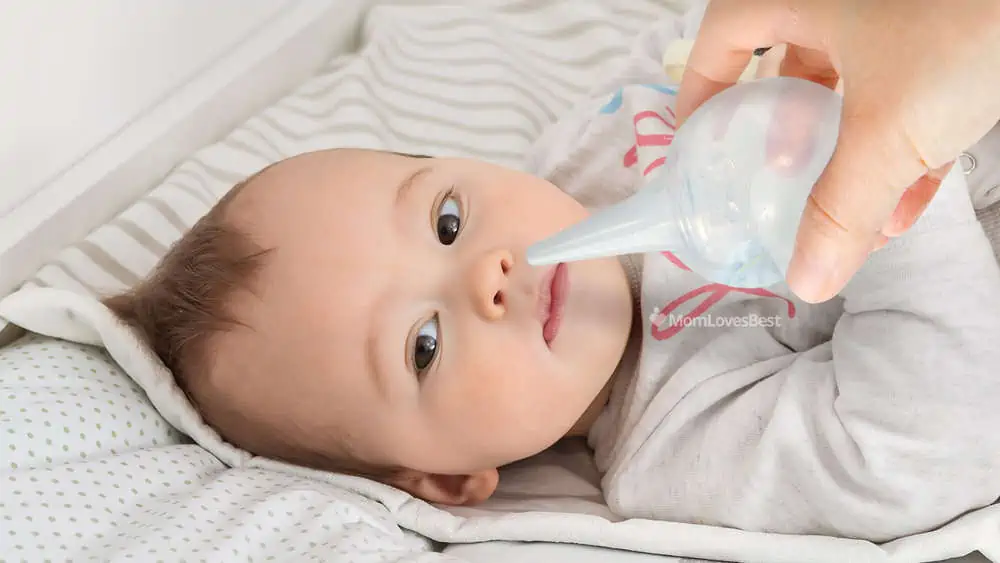
The Innovo Twister Bulb is a smart update to the traditional design. Made from 100% medical-grade silicone, it is transparent, allowing you to see exactly how much mucus you are extracting.
Seeing the contents isn’t just satisfying; it helps you know if you need to keep going. Like the BoogieBulb, the Innovo twists apart for easy cleaning.
The tip is designed to sit outside the nostril rather than being inserted deep inside, which is safer for inflamed nasal passages. It is free of BPA, phthalates, and latex, making it a safe, low-cost addition to your medicine cabinet.
Pros
- Transparent material lets you verify suction.
- Soft silicone is gentle on the nose.
- No ongoing costs for filters or batteries.
Cons
- Manual suction is less powerful than electric models.
Our Ratings
Bubzi Co Baby Nasal Aspirator
Best for Sinus Infections

The Bubzi Co aspirator combines the shape of a bulb with the control of oral suction. You place the soft silicone tip against your baby’s nose and use the mouthpiece to draw out mucus.
Because you control the suction with your breath, you can be incredibly gentle, which is crucial when a baby is suffering from a painful sinus infection. The tip is smaller than many competitors, designed to fit comfortably without stretching the nostril.
It disassembles easily for washing, and since your face is close to your baby’s during use, it can feel less clinical and scary than a loud machine.
Pros
- Precision control via oral suction.
- Soft tip won’t irritate inflamed noses.
- Compact and quiet.
Cons
- Some parents dislike the concept of mouth suction (despite the hygiene).
Our Ratings
How Do I Use a Nasal Aspirator?
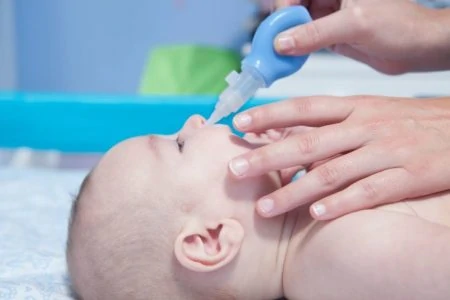
The technique varies by device, but one rule applies to all: moisture helps. Using saline drops or spray before suctioning thins the mucus, making it much easier to remove.
How to Use a Bulb Syringe Aspirator
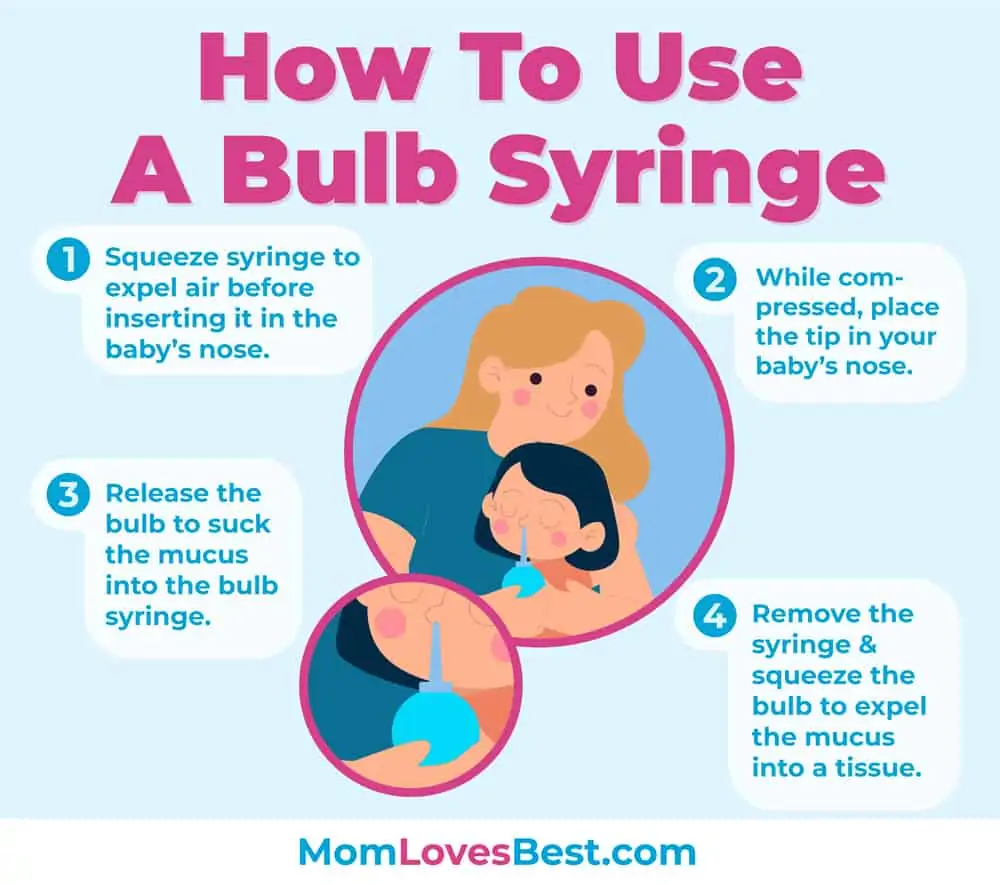
- Squeeze first: Squeeze the air out of the bulb before putting it near the baby’s nose.
- Insert gently: Place the tip just inside the nostril to create a seal. Do not push it deep into the nasal canal.
- Release: Slowly release your grip on the bulb to suction out the fluid.
- Clean: Remove the syringe, squeeze the snot into a tissue, and repeat if necessary.
How to Use an Electric Aspirator
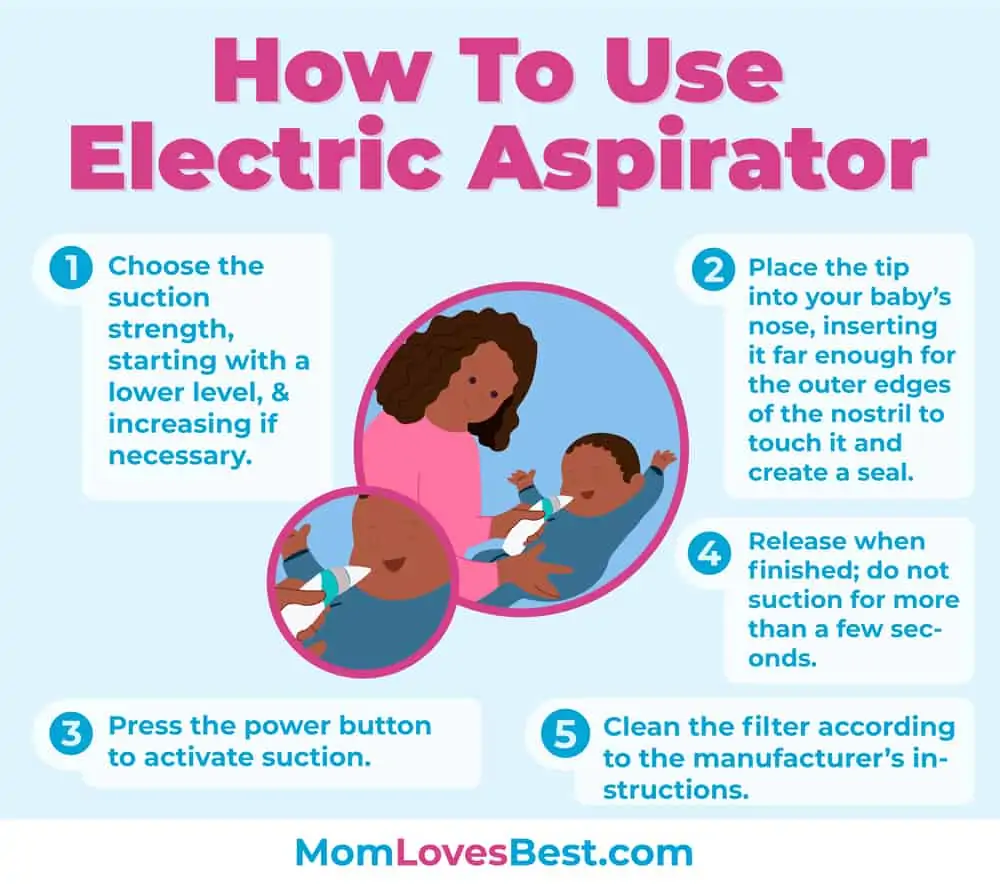
- Select setting: Start with the lowest suction level and increase only if needed.
- Position: Place the silicone tip against the nostril opening to form a seal.
- Power on: Press the button to start suction. Move the tip in a circular motion slightly to catch stubborn mucus.
- Limit time: Only suction for a few seconds at a time to avoid irritation.
How to Use an Oral Suction Aspirator
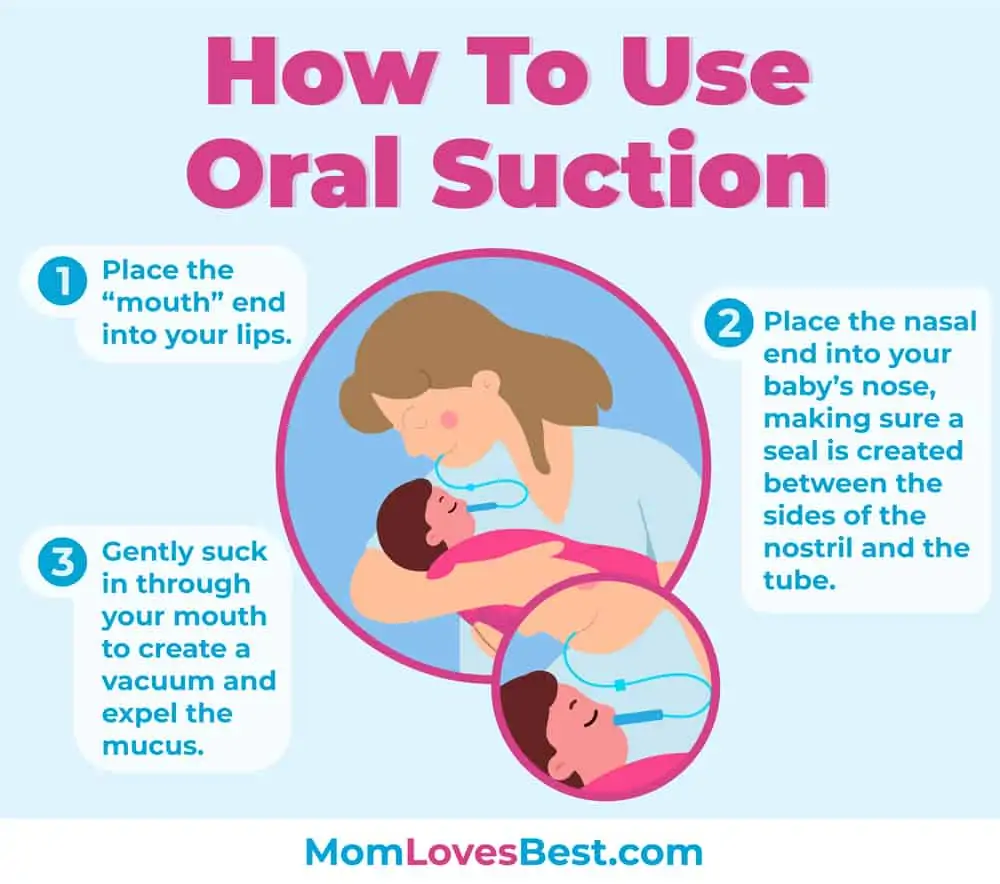
- Setup: Put the mouthpiece between your lips and the collection tube against your baby’s nostril.
- Inhale: Gently suck in through the mouthpiece. You are the vacuum.
- Adjust: Increase your breath strength as needed to dislodge the mucus.
Does Suctioning a Baby’s Nose Hurt?
Generally, no. It feels weird, and your baby will likely protest, but it shouldn’t cause pain. However, the nasal lining is sensitive, so you must be gentle.
Here are a few safety tips to keep in mind:
- Never blow air in: With bulb syringes, always squeeze the air out away from the nose. Blowing air into the nostril can push mucus into the ears or cause pain.
- Don’t overdo it: Limit suctioning to 3 or 4 times a day (usually before feeds or sleep). Suctioning too often can irritate the tissue, causing swelling that makes congestion worse (1).
- Watch the saline: Use drops sparingly (max 4 days in a row) to avoid drying out the nose. Always use infant-specific saline.
- Sanitize religiously: Bacteria loves snot. Wash your device with hot, soapy water after every use. If your device allows, boil or steam sterilize it daily during an illness.
FAQs

Is It Safe to Use a Nasal Aspirator on a Newborn?
Yes, it is generally safe to use a nasal aspirator on a newborn, provided you are gentle. Newborns have very tiny nasal passages, so use the smallest tip available and do not insert it deep into the nose. Always use a saline drop beforehand to loosen mucus, reducing the amount of suction needed.
How Often Should I Replace the Filters?
For oral suction aspirators like the NoseFrida, you should replace the hygiene filter after every single use. The filter traps bacteria and mucus, so reusing it can lead to mold growth or re-introducing germs to your baby (or yourself).
Can I Use a Nasal Aspirator for a Dry Nose?
No, you should not use an aspirator on a dry nose. Suctioning dry tissue is painful and can cause nosebleeds. If your baby has dry, crusty boogers, you must use saline drops or spray first to rehydrate and loosen the mucus before attempting to suction it out.
The Bottom Line
Nobody enjoys wrestling a squirming baby to suck snot out of their nose, but the relief it brings is worth the struggle. A clear nose means better sleep and easier feeding for your little one. Whether you choose a high-tech electric gadget or a simple, cleanable bulb, having a reliable aspirator in your medicine cabinet is a parenting essential you won’t regret.