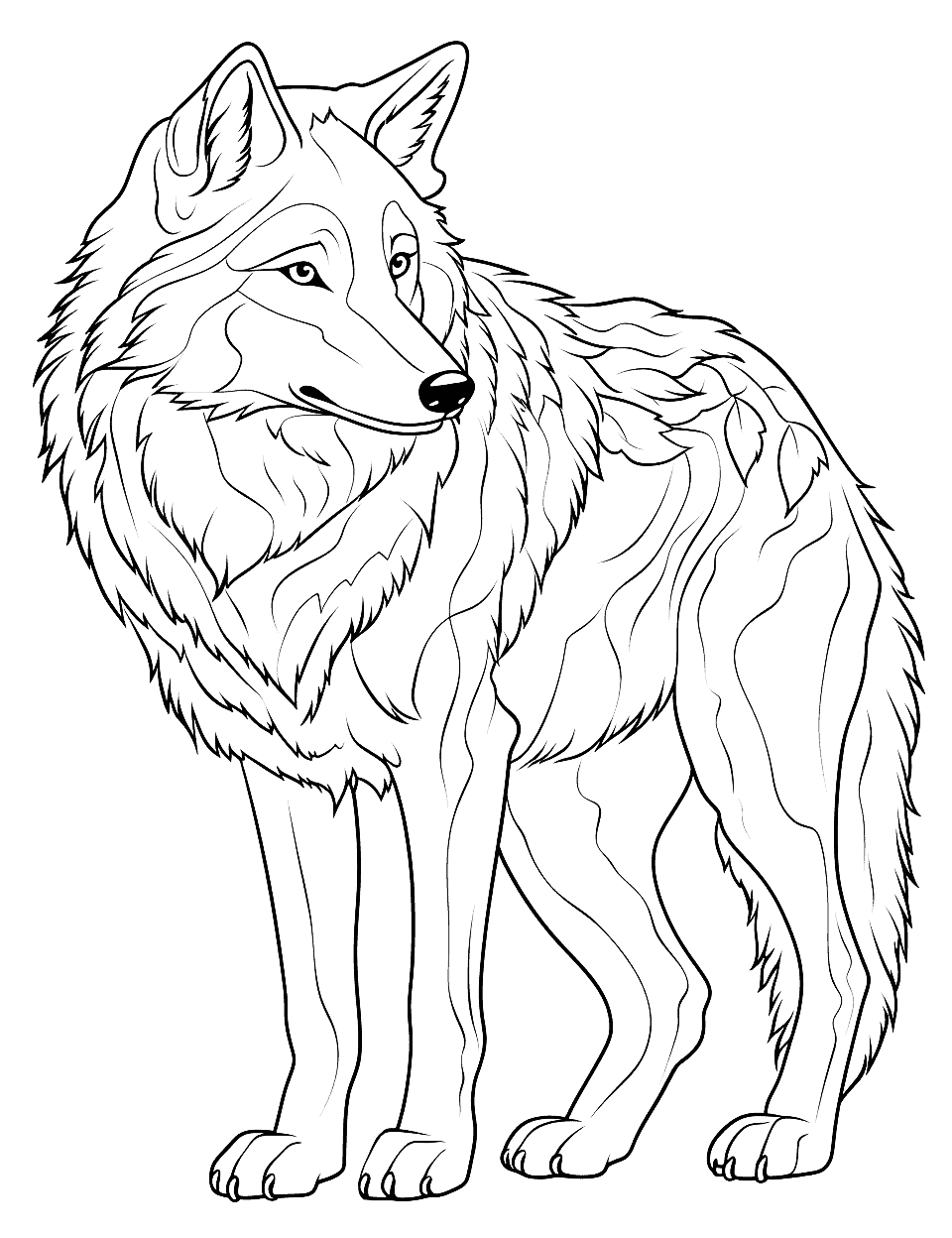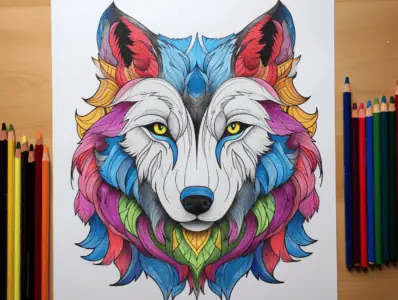
Gray, black, or reddish brown? Real wolves come in all three.
Fifty free wolf coloring pages are waiting below, and no two of them look alike.
Some are chunky cartoon pups a preschooler can finish before the popcorn is done. Others are layered fur portraits and detailed forest scenes that will hold an older kid, or you, for an hour.
Scroll through, pick your favorites, and print as many as you want.
Cute Wolf Cub
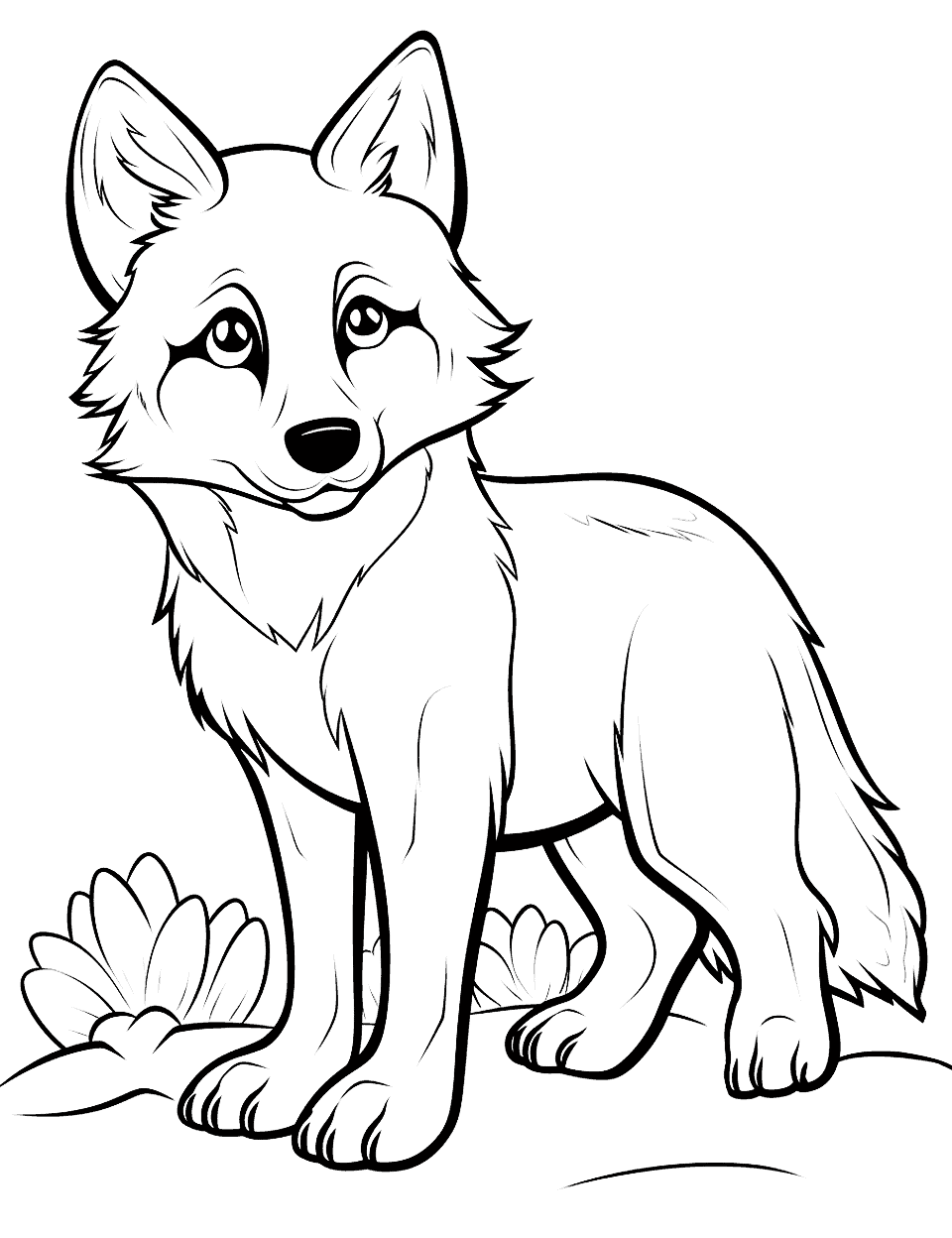
A wide-eyed cub stands on a low mound with two flowers tucked in beside its front paws. The face is drawn with plenty of open space, so young colorers can go bold on the eyes and nose without crowding anything. A soft tan body and one bright flower is enough to make the page pop.
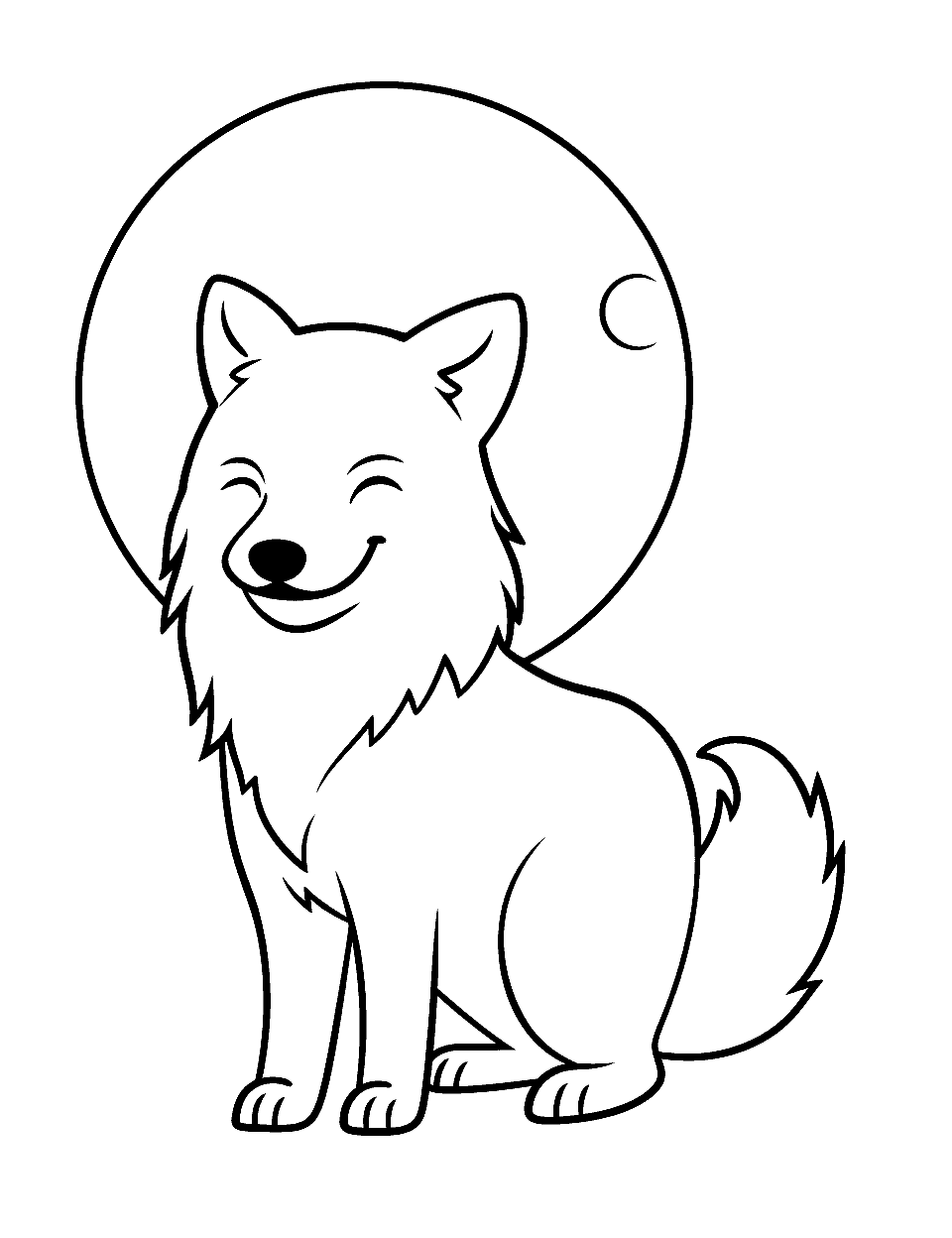
This grinning cartoon wolf sits with its tail curled around and a big round moon filling the space behind it. Its eyes are closed in a happy squint, which keeps the whole sheet forgiving for small hands. Color the moon pale yellow and the wolf light gray so the circle still reads as sky. If this style is your kid’s thing, we have a whole set of adorable kawaii sheets.
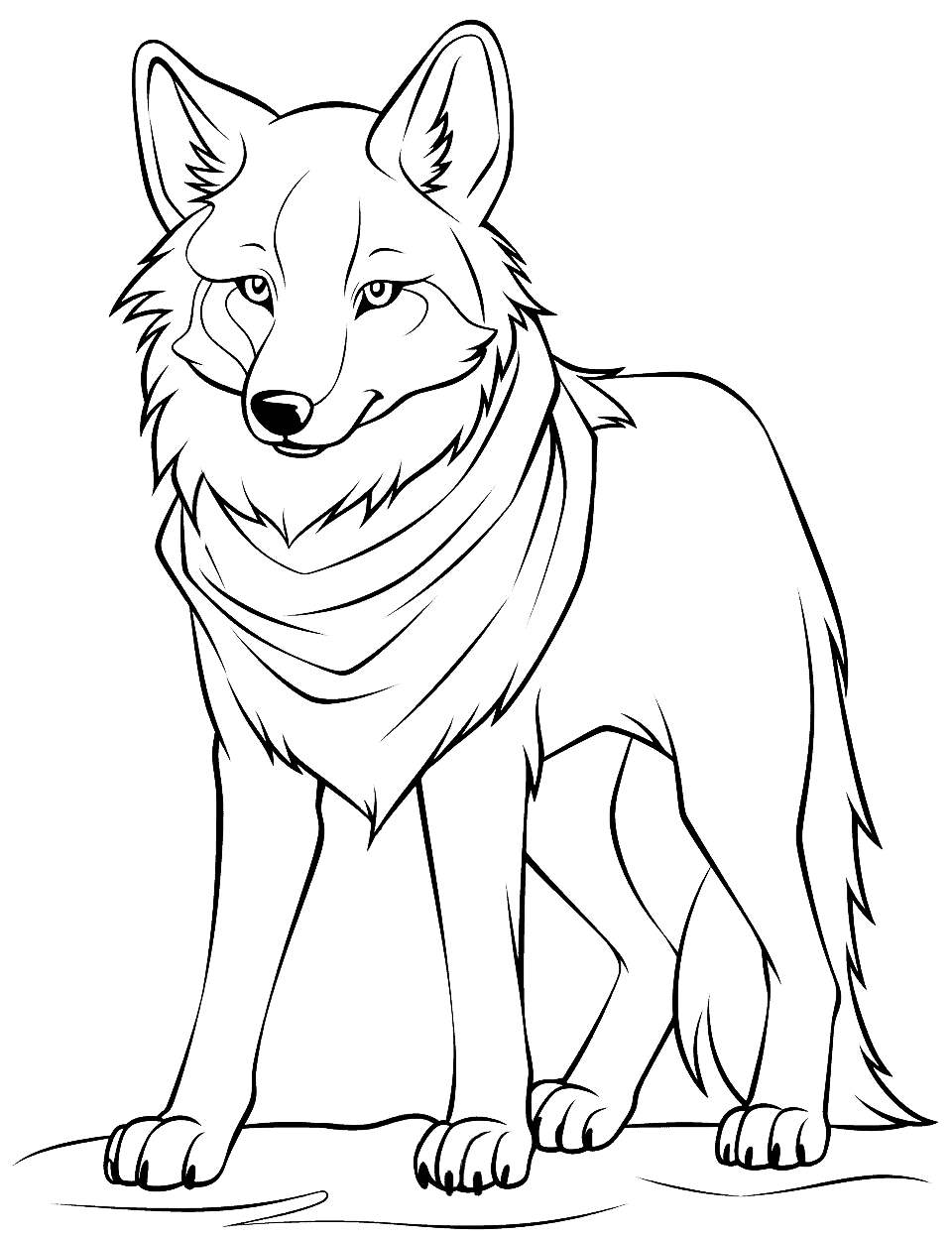
A sharp-eyed wolf stands with a triangular scarf knotted at its throat, drawn in clean anime line work. The scarf is the only large solid shape here, so it is the natural place for your strongest color. Everything else is fine lines that suit colored pencils better than thick markers. It sits next to our other anime-style pages.
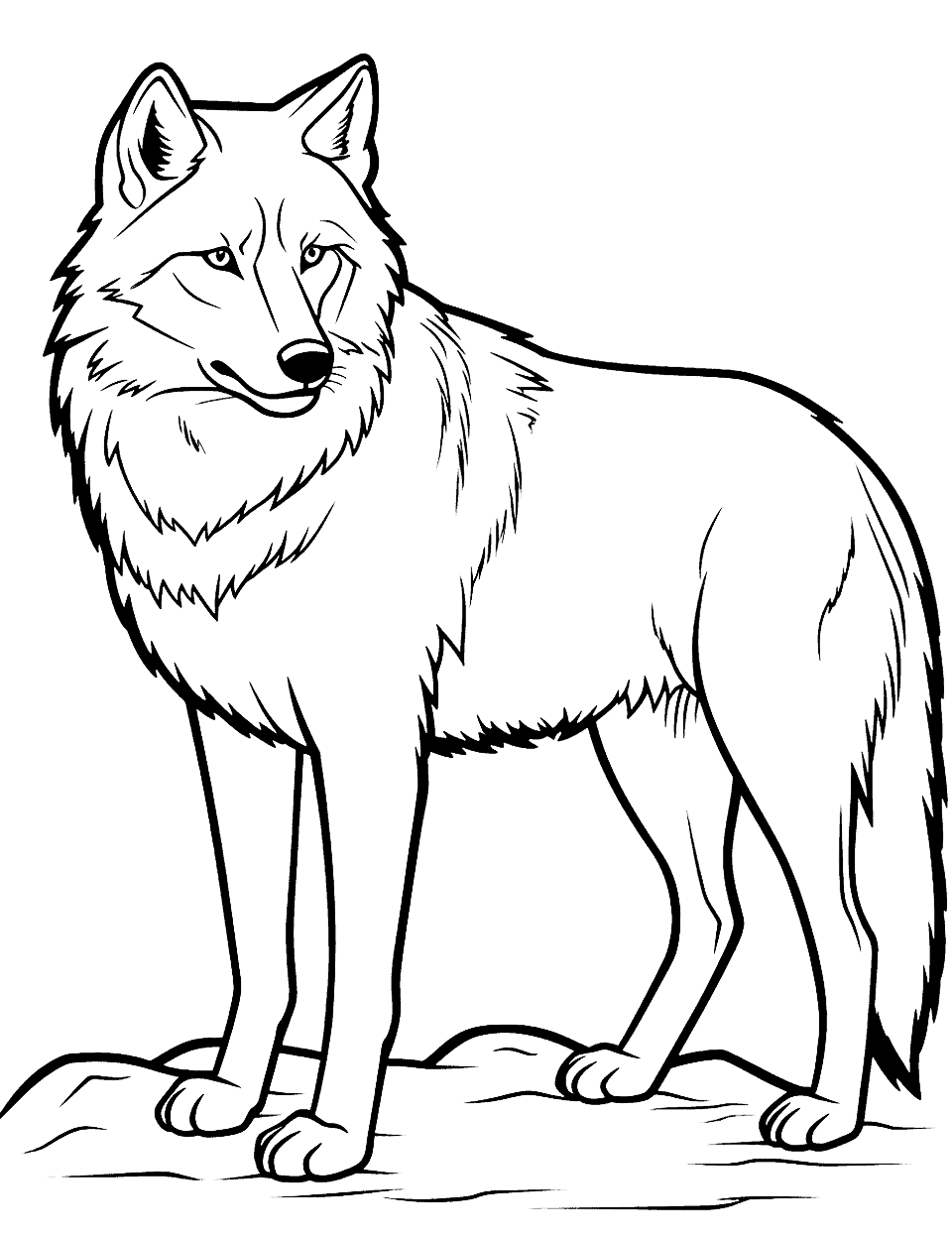
Here is a full-body wolf standing on bare rock, with layered fur lines running through the ruff and along the back. There is no busy background, so all of the attention goes into shading the coat. Mix at least three pencils rather than one flat gray, and keep the chest and lower legs lighter than the shoulders.
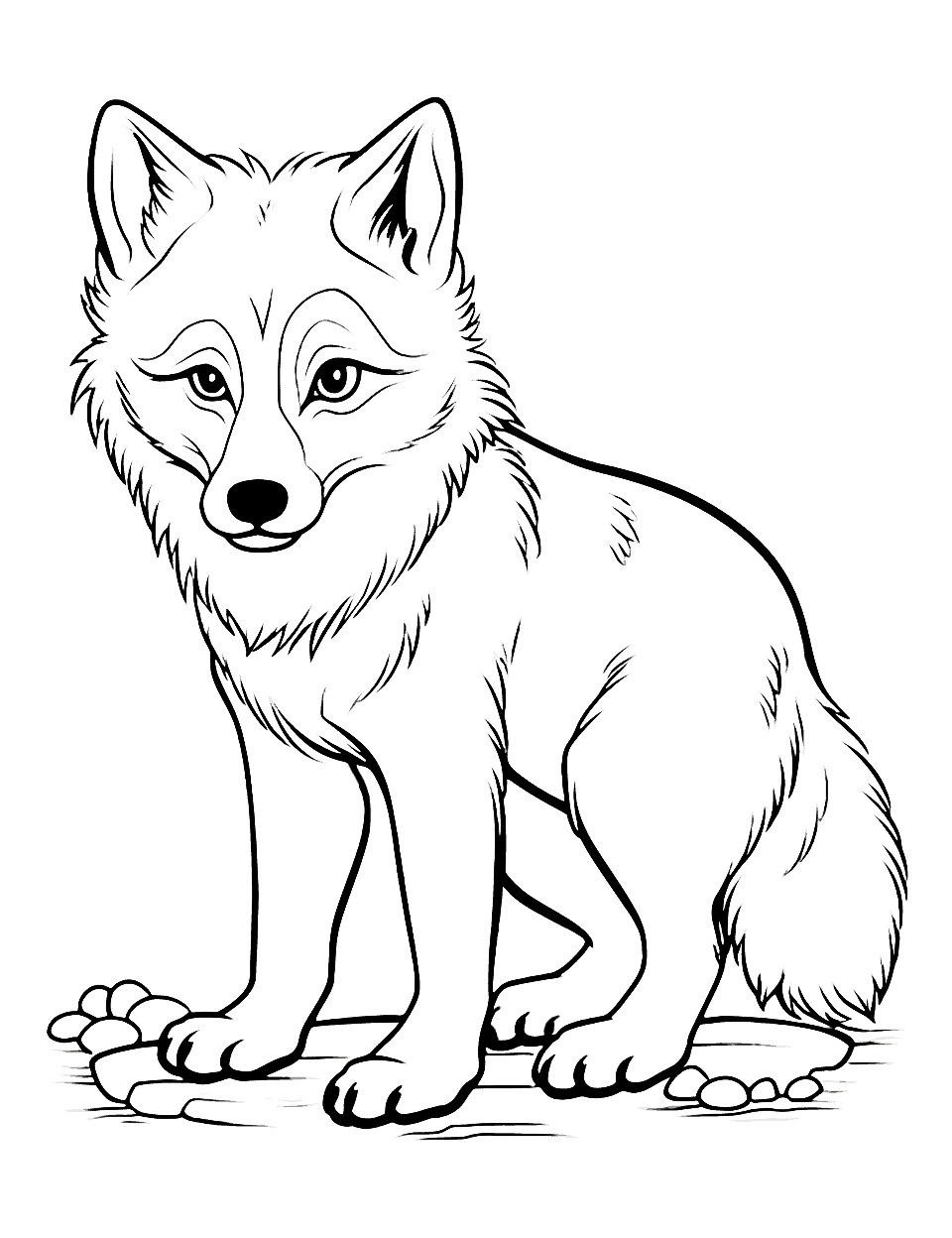
A young wolf sits back on its haunches with a thick brushy tail sweeping around behind it, and small pebbles dot the ground. The oversized ruff is a good spot to practice short, feathery pencil strokes. Warm browns suit a pup this age better than steel gray.
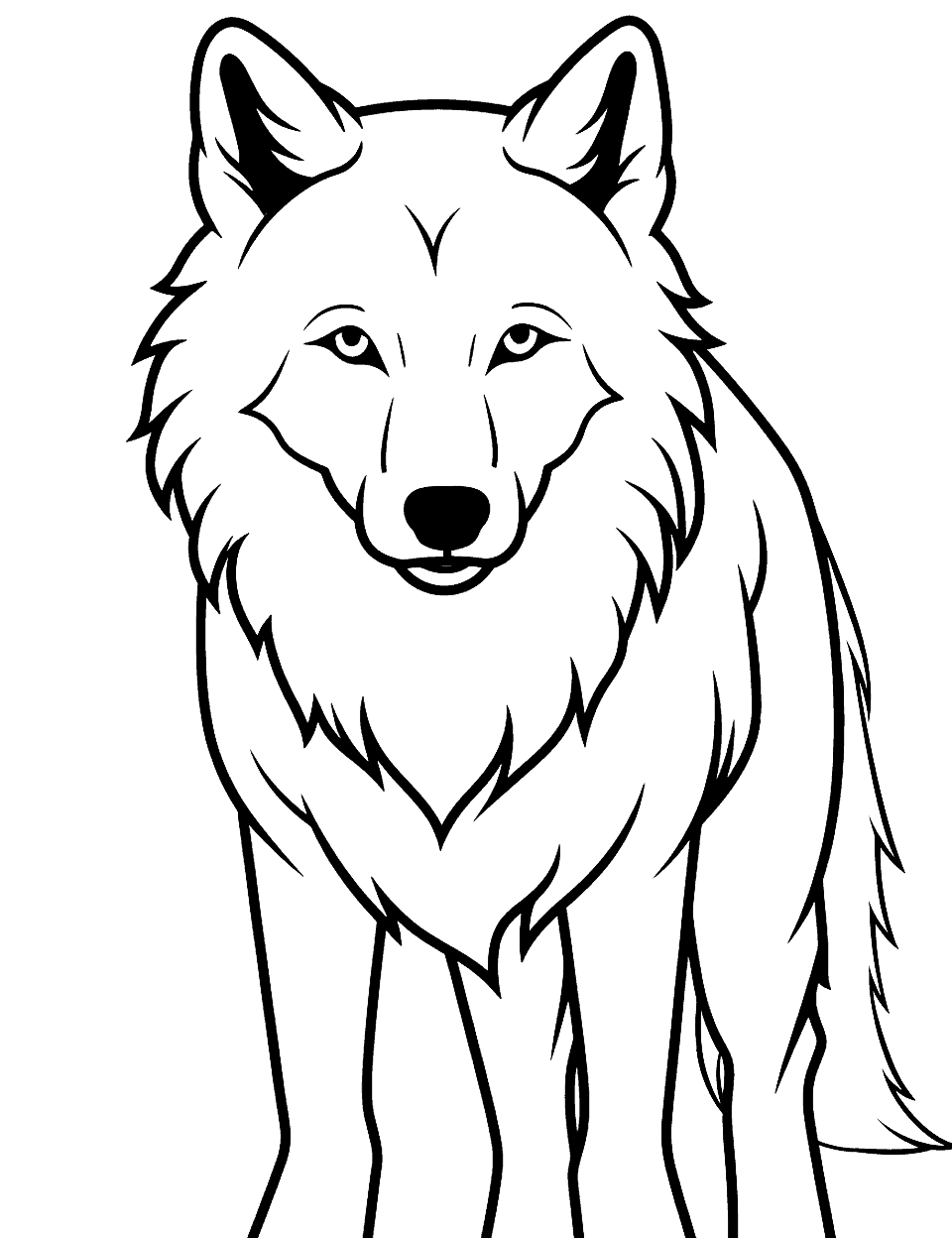
Thick outlines and a straight-on view make this one of the simplest sheets in the set. The wolf faces you head-on with a wide ruff and only a handful of interior lines. Crayons work fine, and the black nose and ear tips give a satisfying finish in seconds. Good for a preschooler who wants to be done in five minutes.
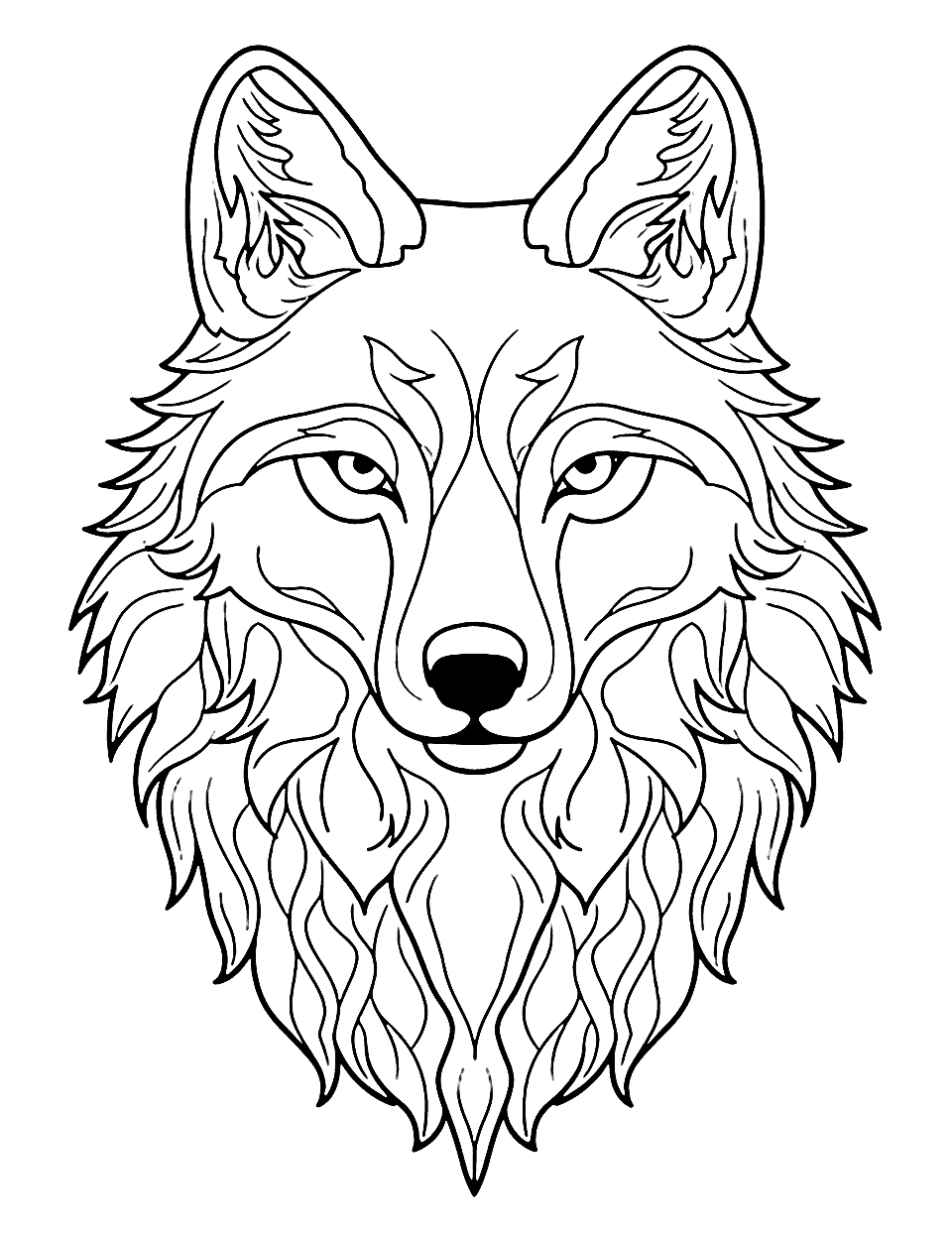
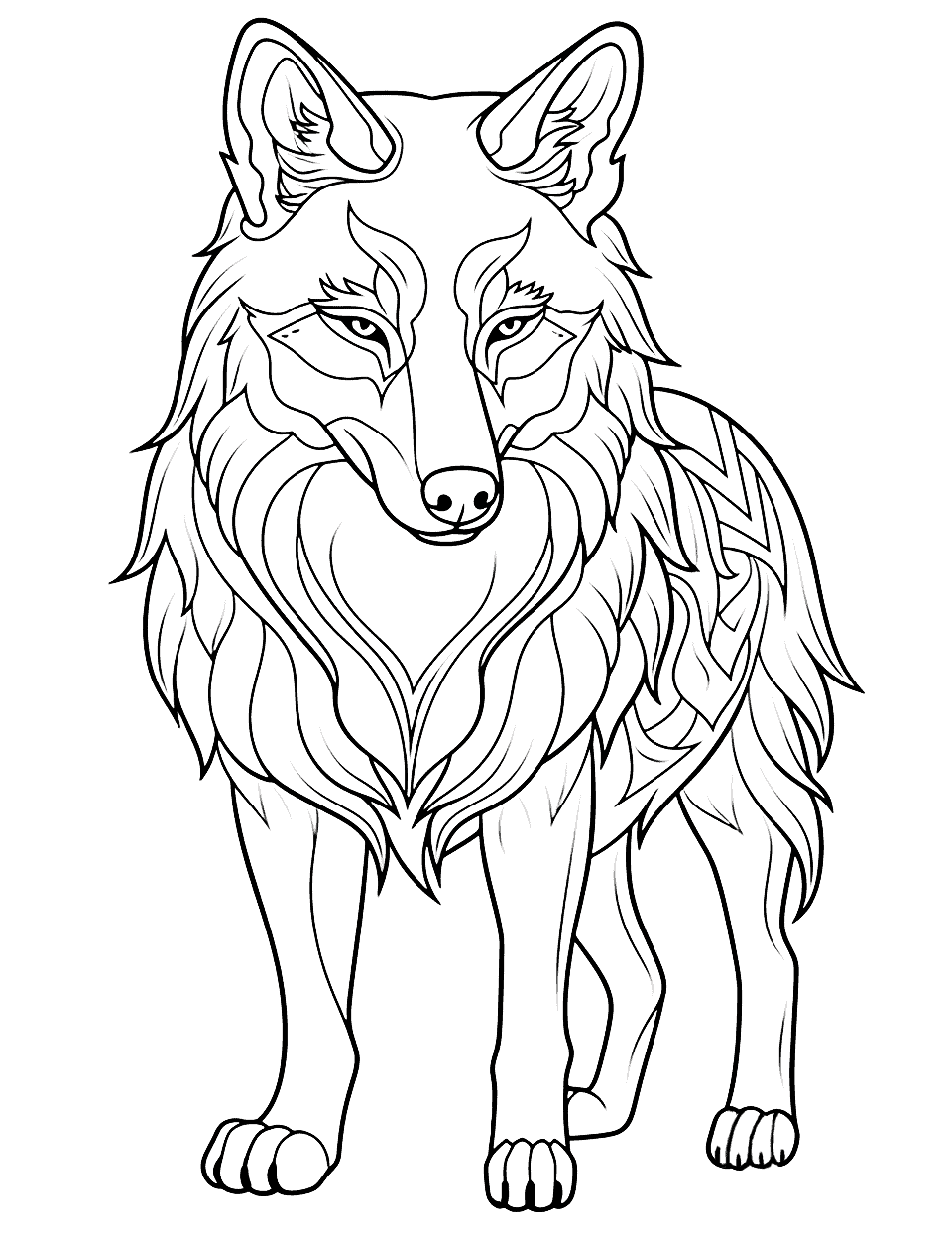
This wolf face is built from symmetrical, leaf-shaped fur sections that mirror each other down the middle. The pattern rewards a repeating scheme: pick three shades and alternate them working outward from the nose. It is a slow, calming page rather than a quick one. If you like this kind of symmetry, our mandala patterns run on the same idea.
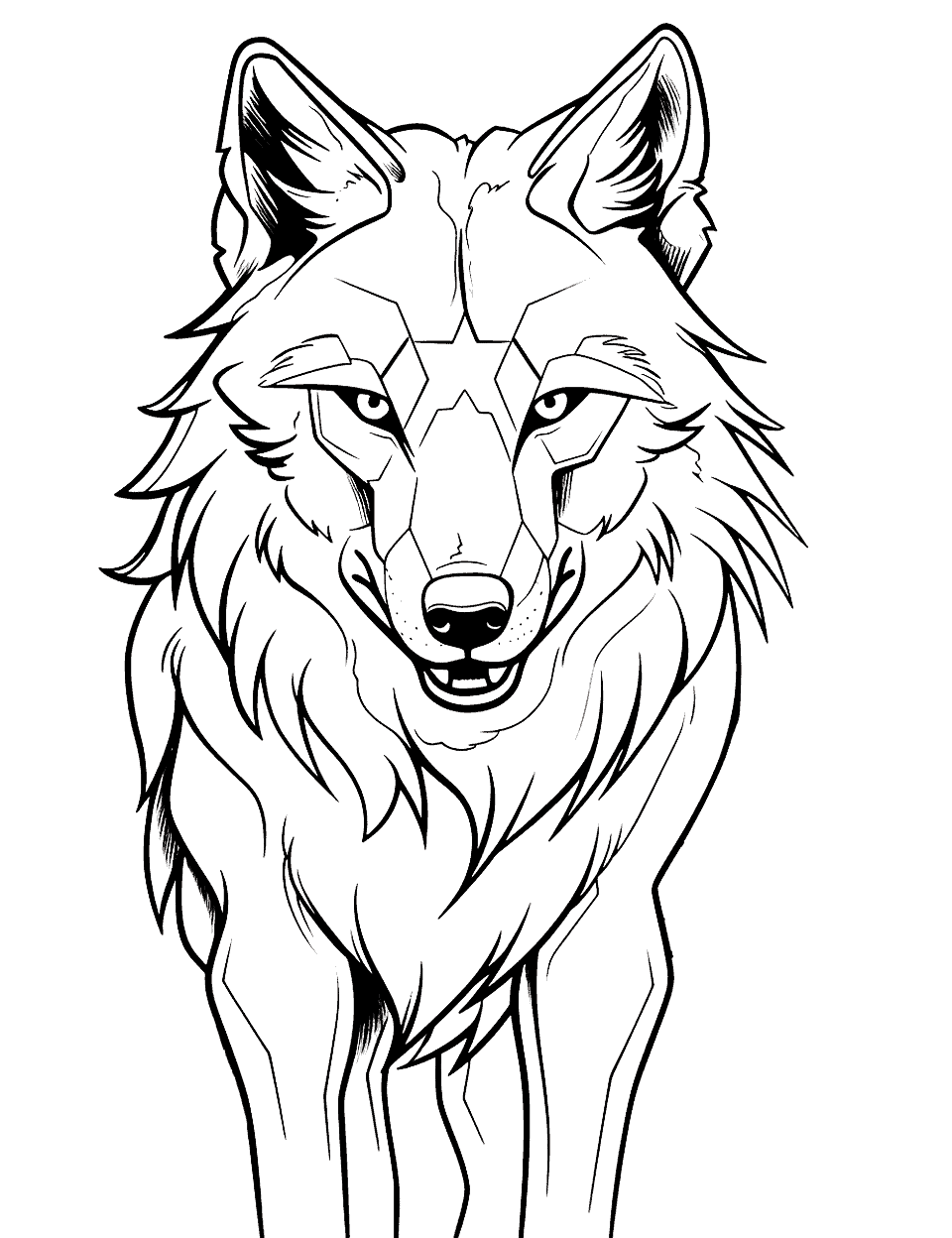
Sharp facets cut across this wolf’s brow and muzzle, and the mouth is open just enough to show teeth. Those angular panels ask for flat blocks of color, so try a comic-book palette instead of realistic gray. Older kids who like graphic art tend to grab this one first.
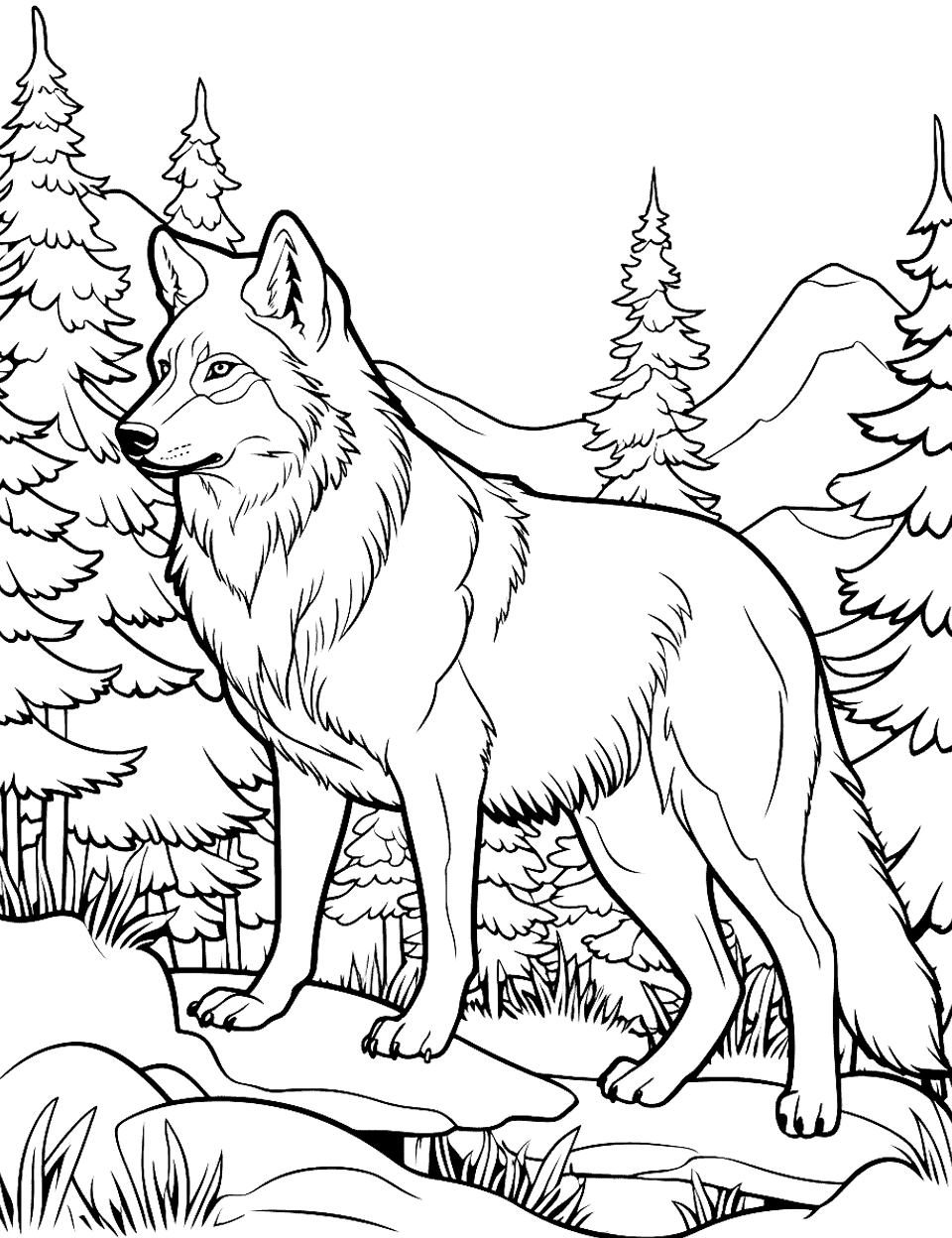
A wolf stands on a rocky outcrop with pine trees on both sides and mountain ridges behind. There is a lot in the frame: needles, grass tufts, and stone all at once. Work from the background forward so your greens do not creep into the fur. Fine-tip pens or sharp pencils handle the tree detail better than markers.
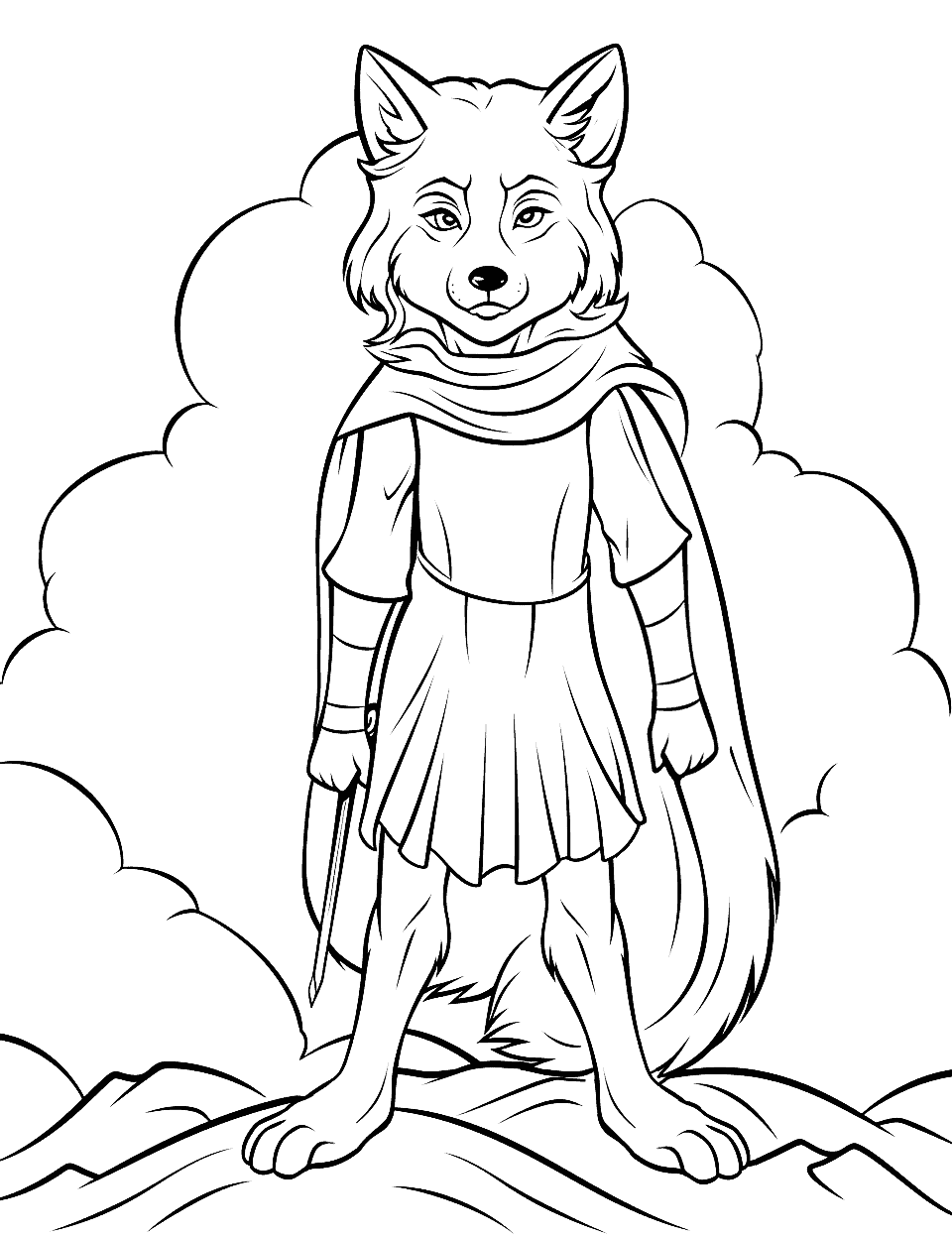
An upright wolf character stands on a ridge in a short tunic and a long cloak, with rolling clouds banked behind it. The clothing gives you big open shapes while the fur stays in fine lines. Pick two strong colors for the outfit and let the coat stay neutral.
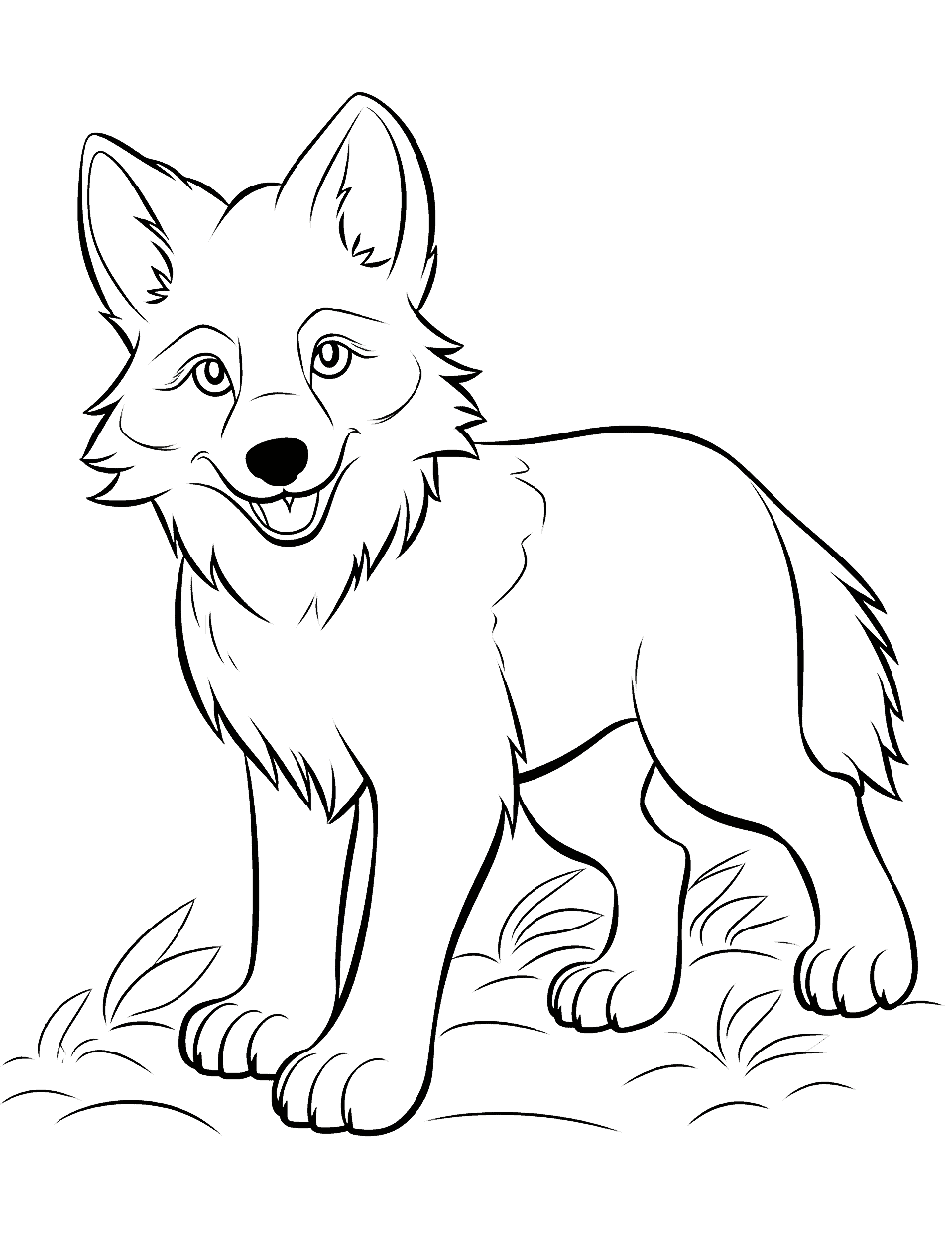
This pup stands on a grassy patch with its mouth open in a happy pant and its tail lifted. A few tufts of grass sit near its paws, leaving room to add your own meadow. Light browns on the body and a soft pink tongue keep it looking young.
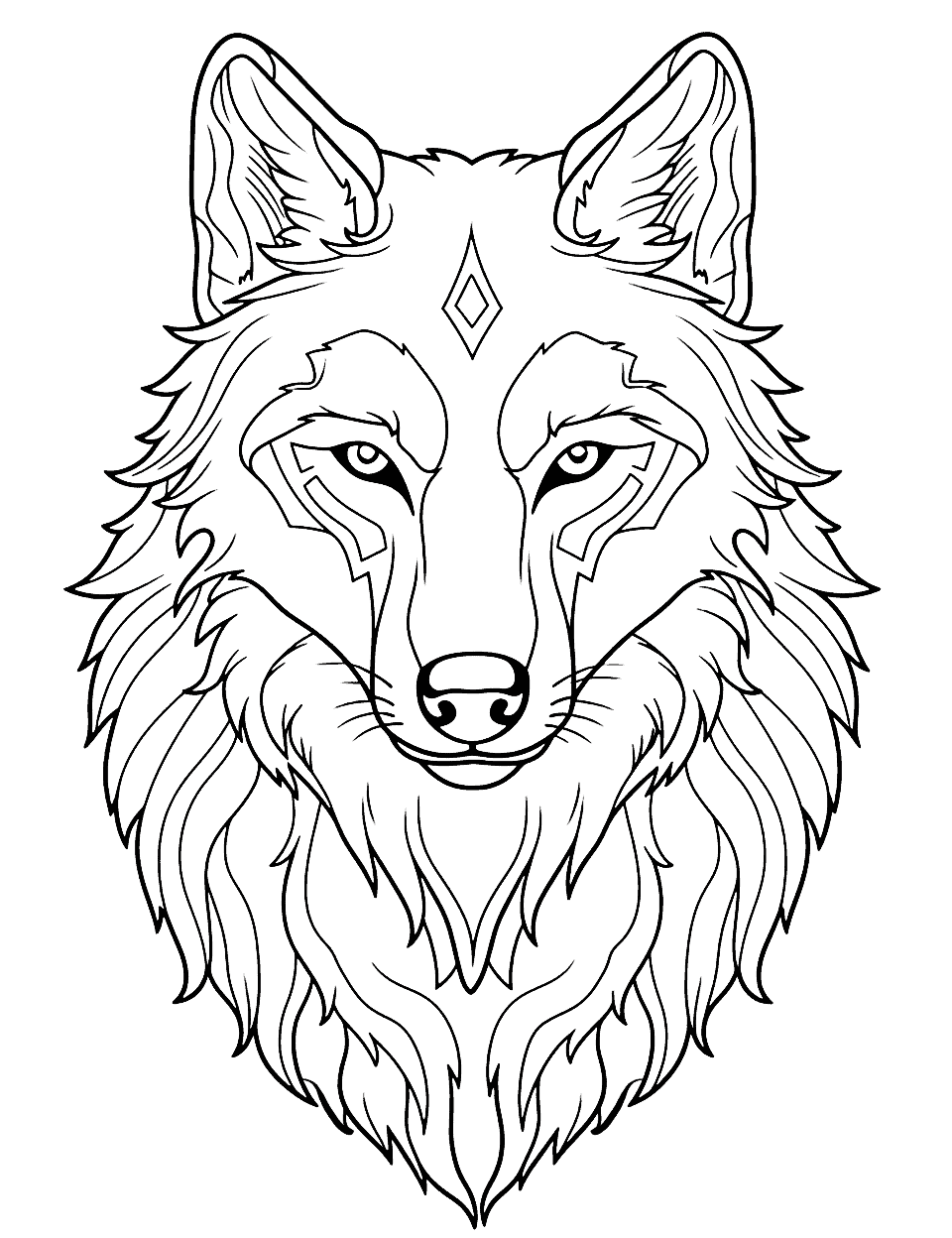
A front-facing head fills the whole page, with a small diamond marking set between the eyes. Decorative fur strands sweep out from the cheeks, which makes this a good page for blending two grays into each other. Print it on cardstock if you want to turn it into a mask afterward.
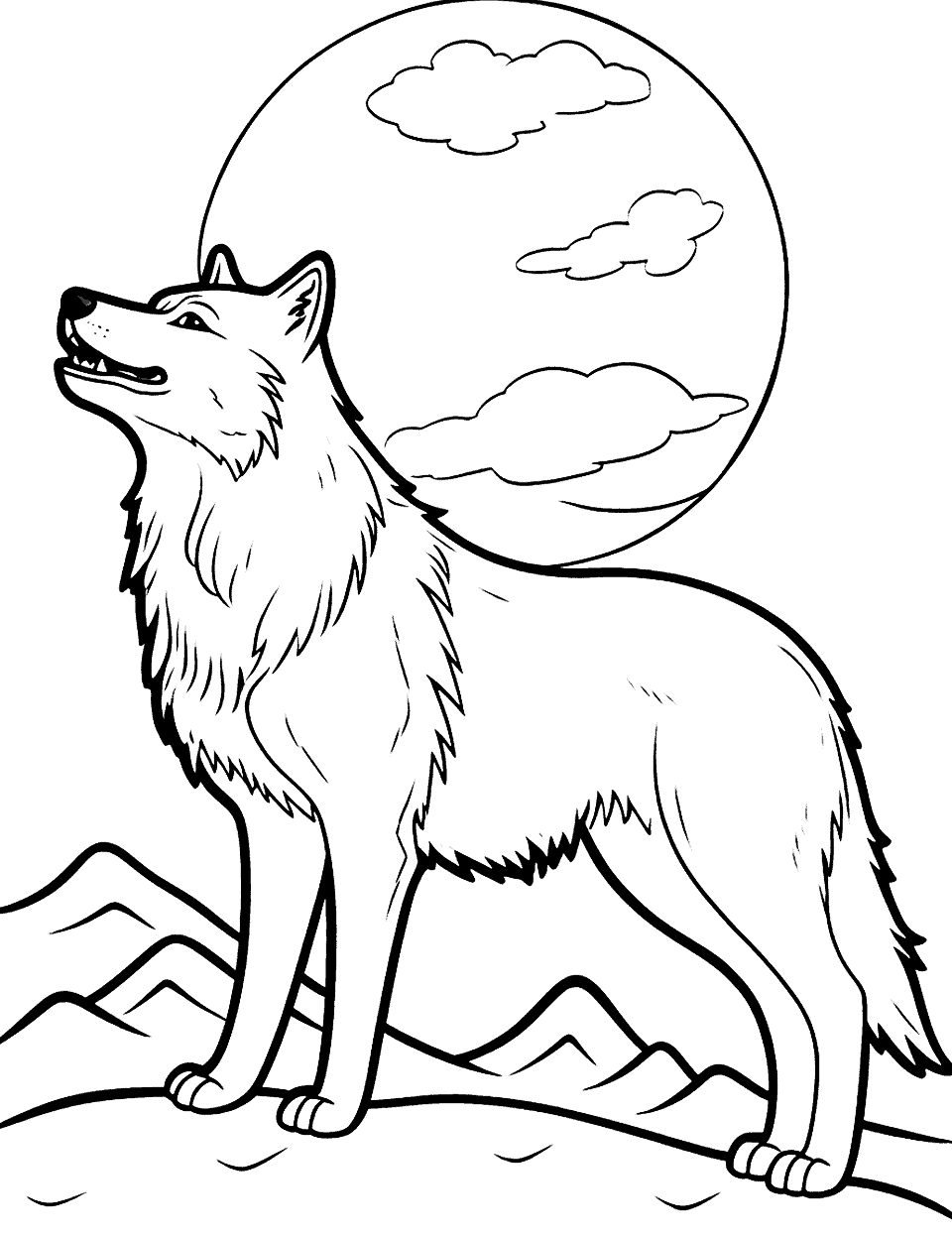
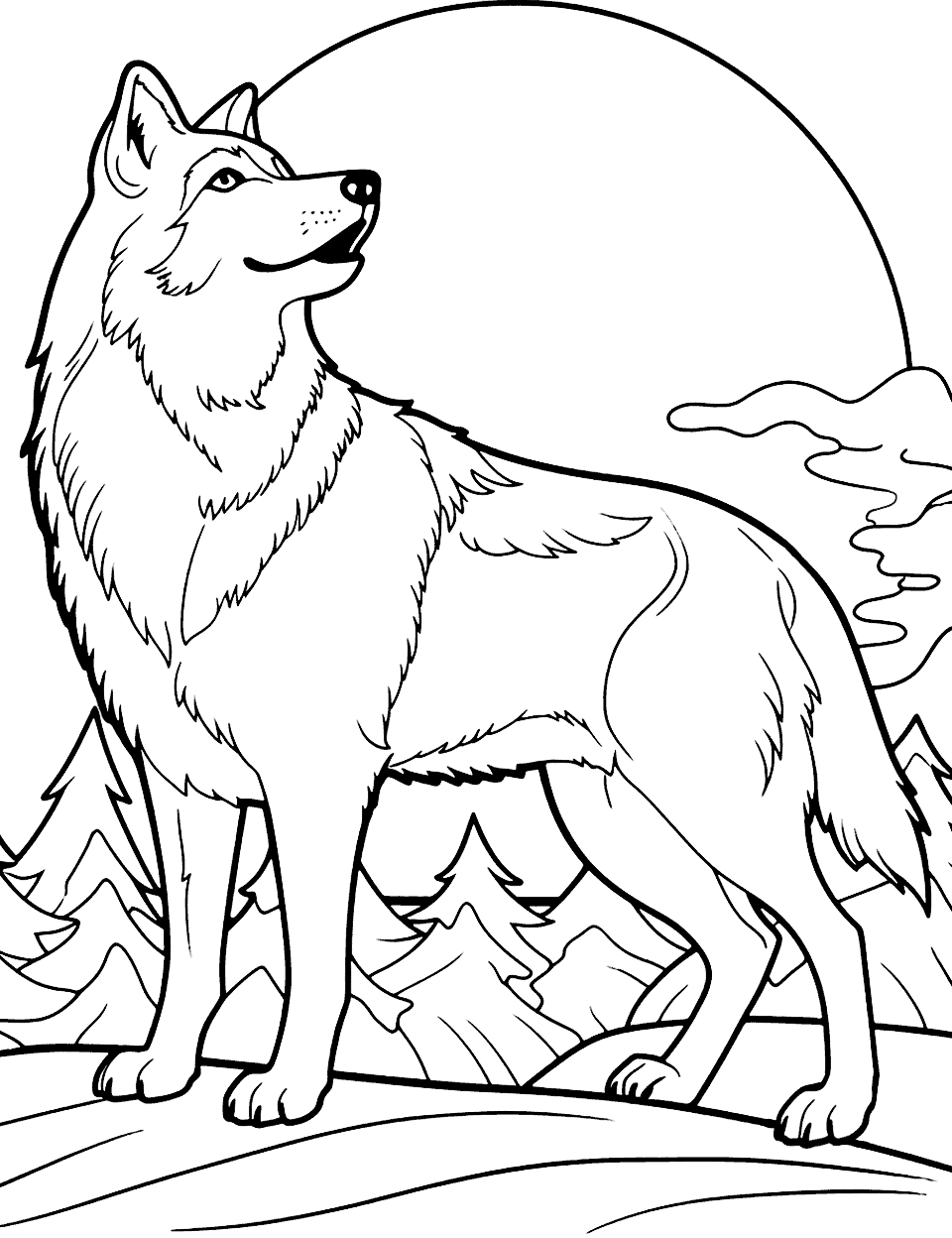
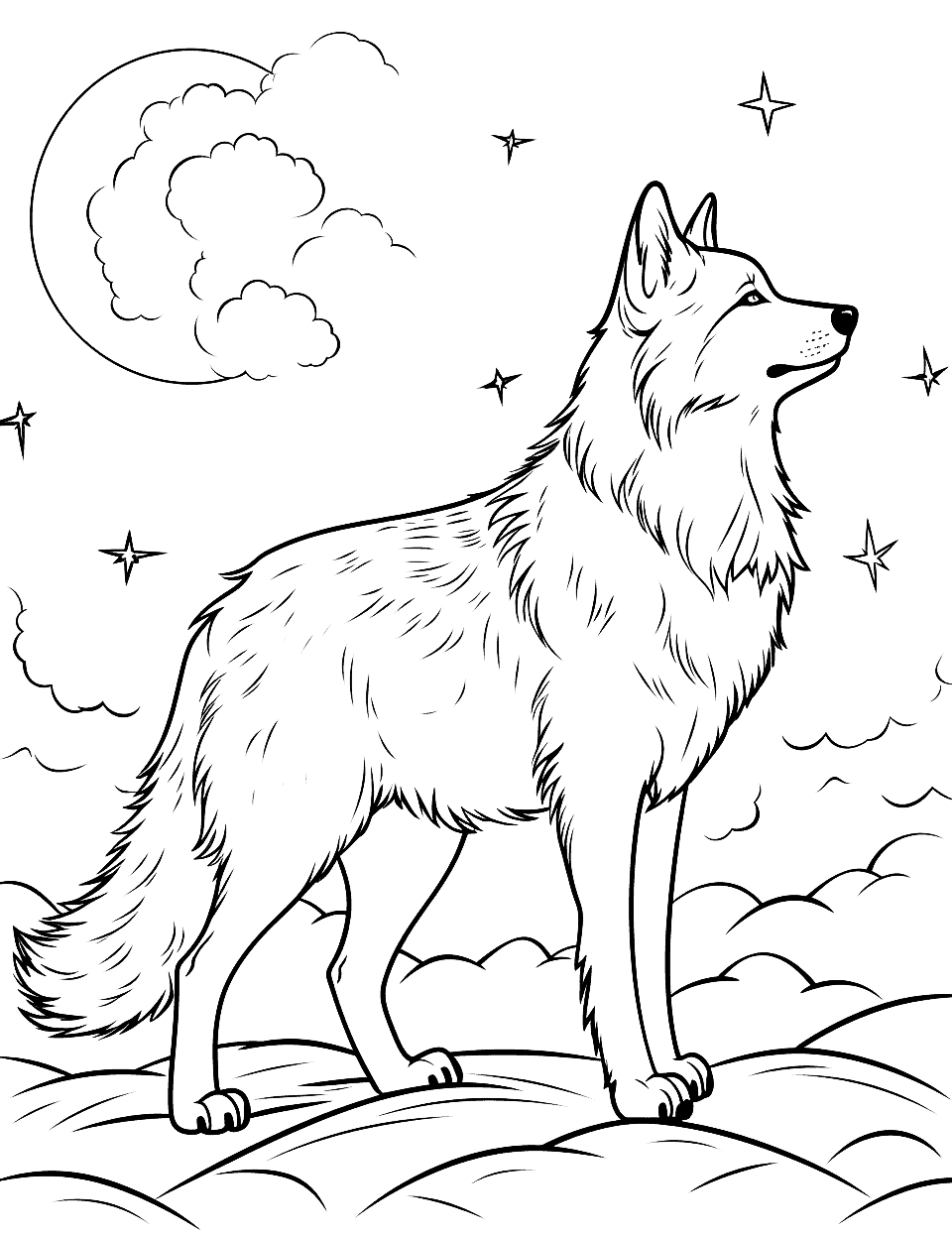
A wolf on a rocky rise tips its head back mid-howl while a huge moon climbs behind three drifting clouds. This is the classic wolf scene, and that giant circle is an easy background win. Pale yellow moon, deep blue sky, and dark hills behind is a combination that never misses.
Long flowing lines shape this wolf’s coat, and curling swirls run along the ground beneath its paws. The style suits muted, old-poster colors: sage, mustard, dusty rose. Keep the swirls in a different tone from the fur so the border stays visible.
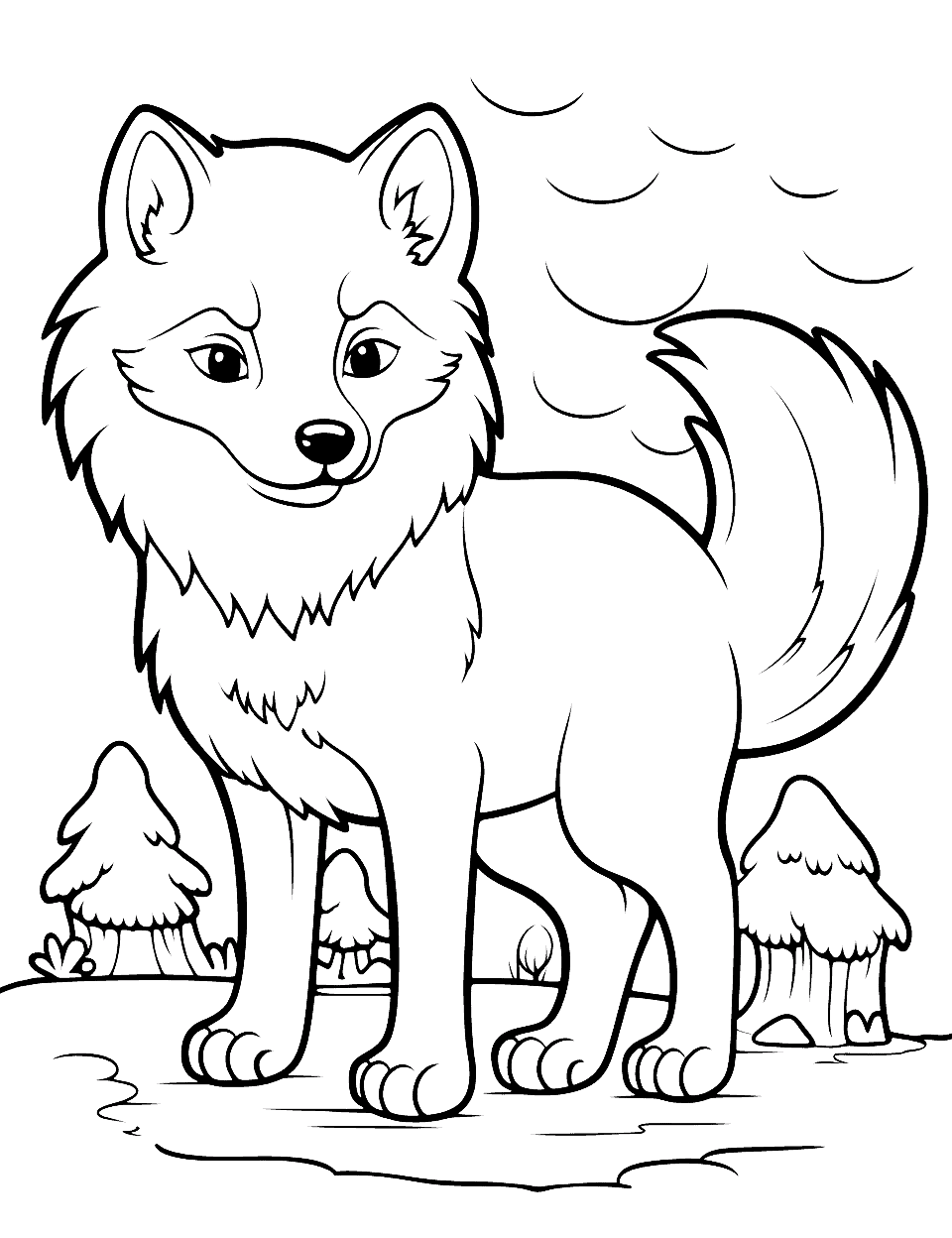
A big-headed cartoon wolf stands with an oversized fluffy tail, small trees on either side and rounded clouds overhead. Everything is drawn in simple curves, so it is an easy win for a kid who gets frustrated by detail. Bright colors suit it far better than realistic ones.
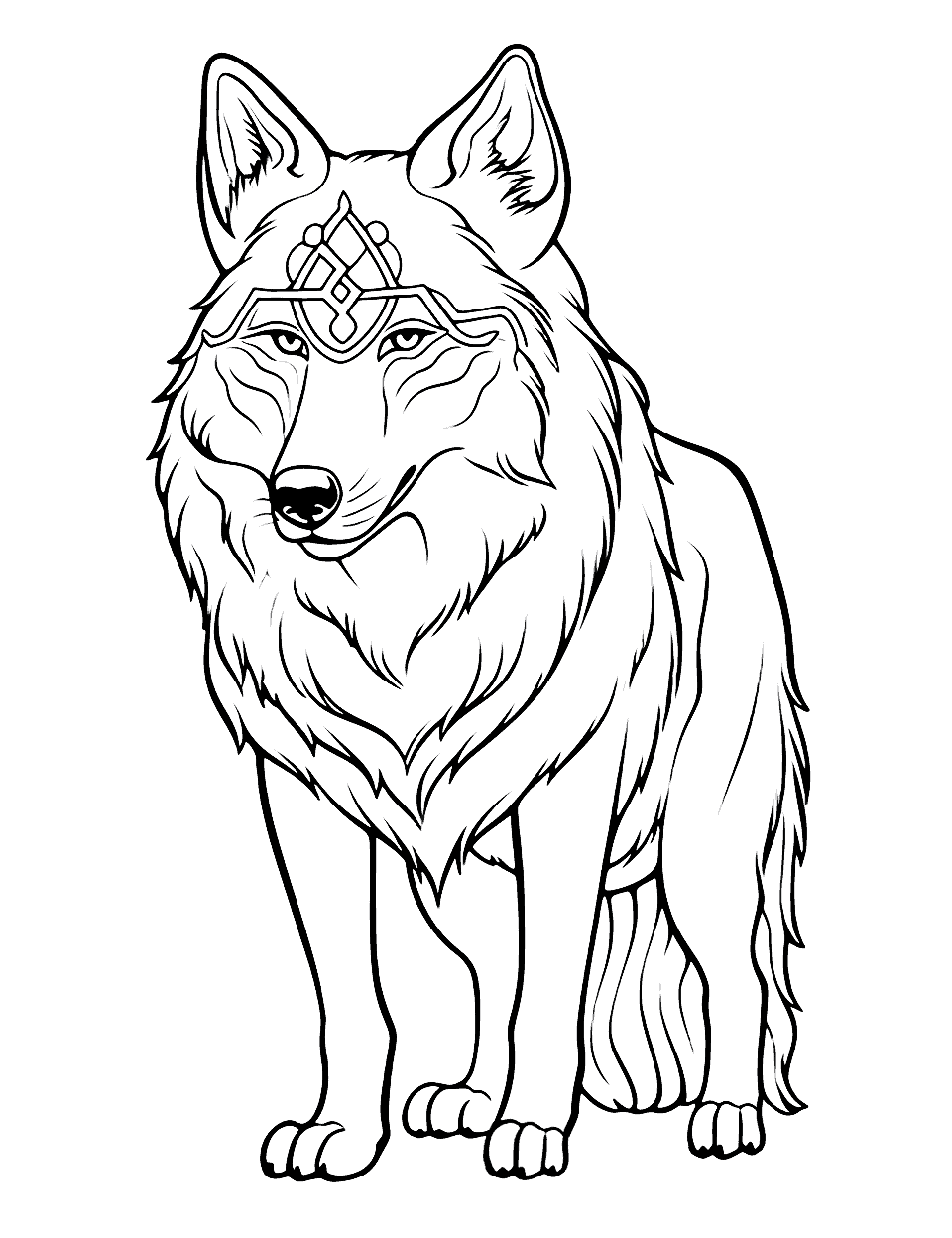
A wolf stands square to you wearing a knotwork band across its brow. That band is the only ornament on an otherwise plain drawing, so gold or copper there carries the entire page. Leave the fur soft gray to keep the contrast strong.
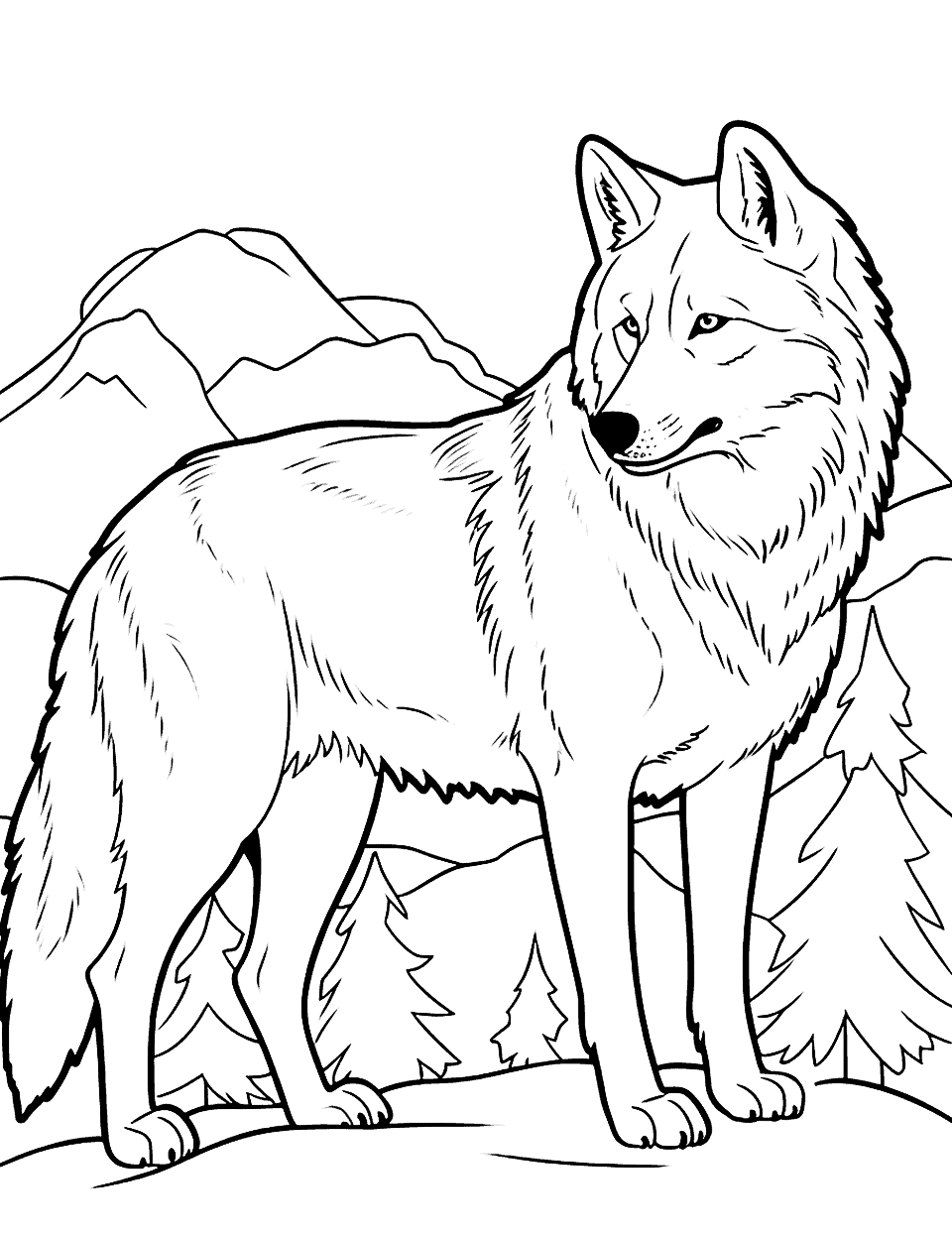
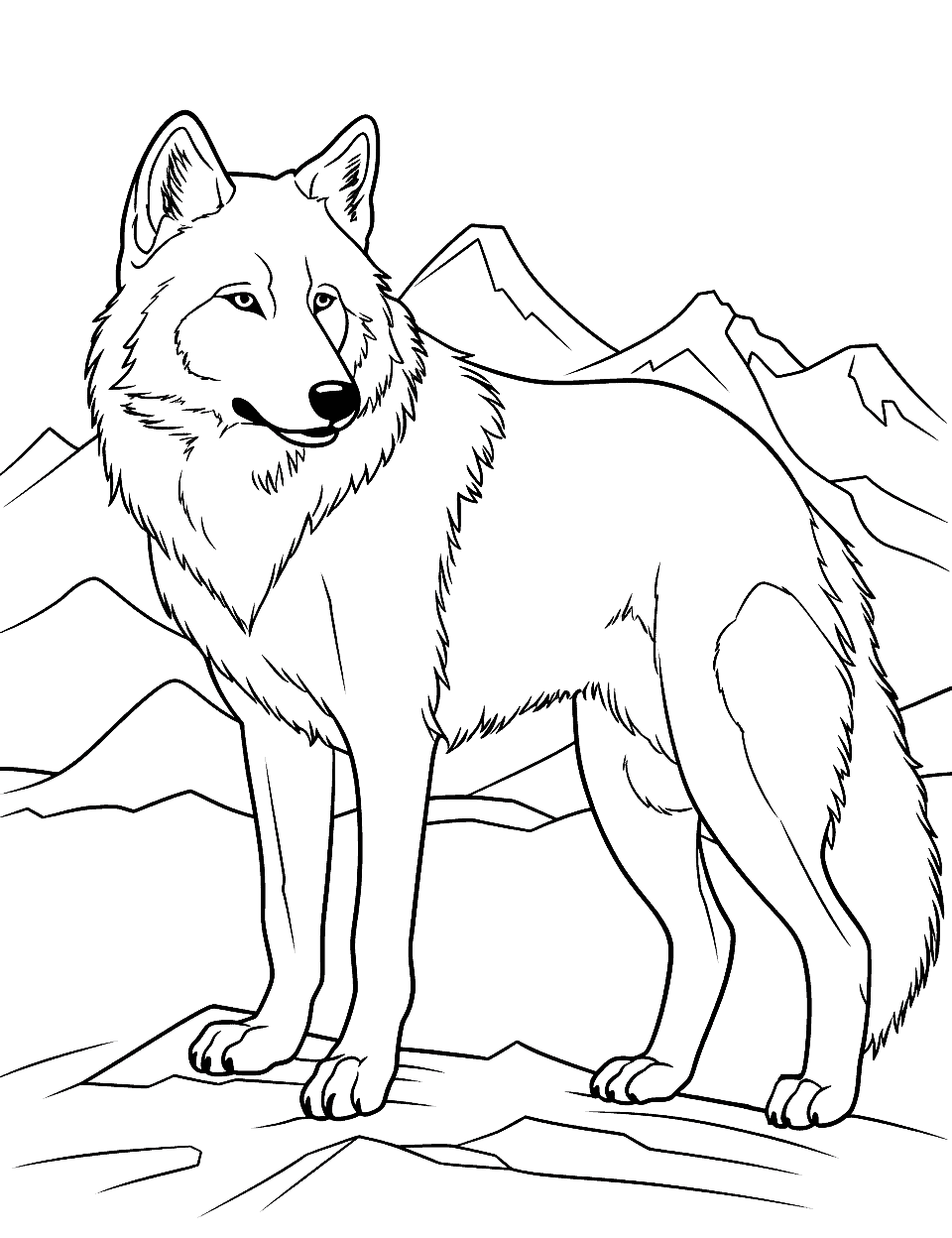
This wolf stands in profile with snowy peaks and a stand of pines behind it. The background is drawn in light outline, which leaves room for a pale blue wash instead of heavy color. Leave the snow white and shade only its edges and the whole scene reads as cold. A good page for practicing light pressure with pencils.
Zigzag bands run along this wolf’s shoulder and flank while the chest fur flows in long soft curves. The mix lets you split the page between two color schemes, one for the angles and one for the curves. Our mix of geometric sheets go further in that direction if the style clicks.
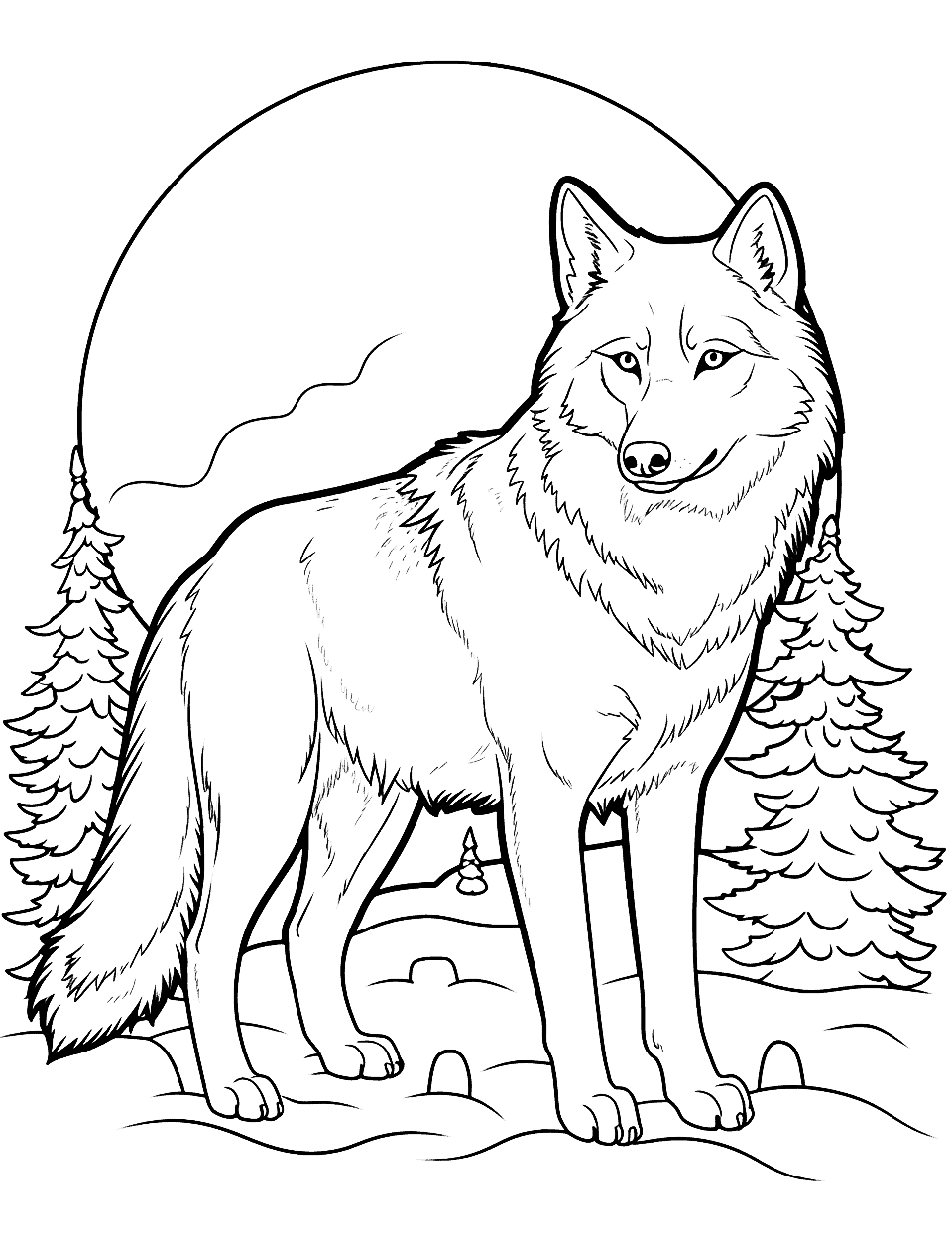
A wolf stands alert in the snow with pines on either side and a large moon filling the sky behind. Low drifts and small mounds give the ground some shape. Keep the wolf pale and the sky deep so its outline stays crisp. More frosty scenes are waiting on our winter wonderland pages.
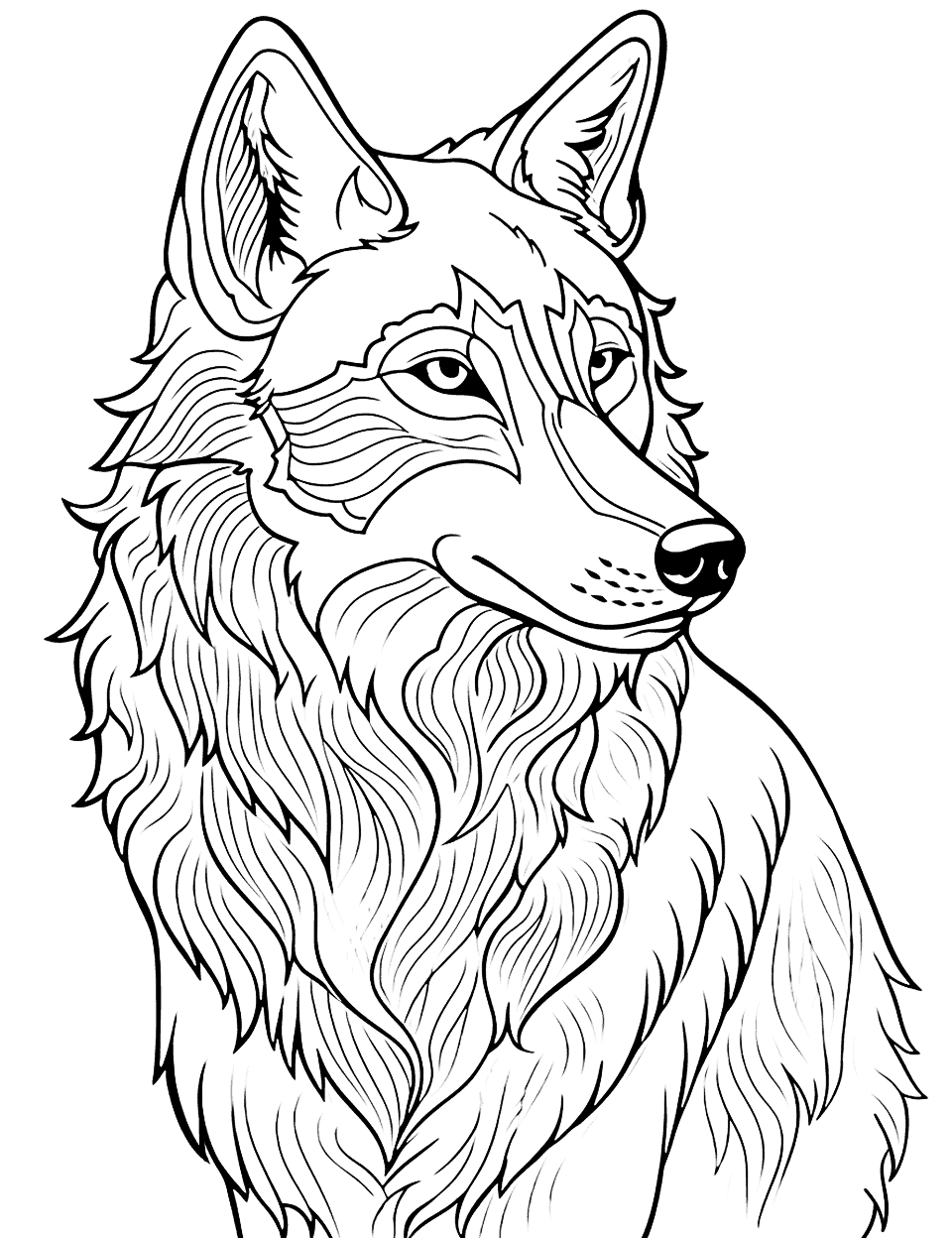
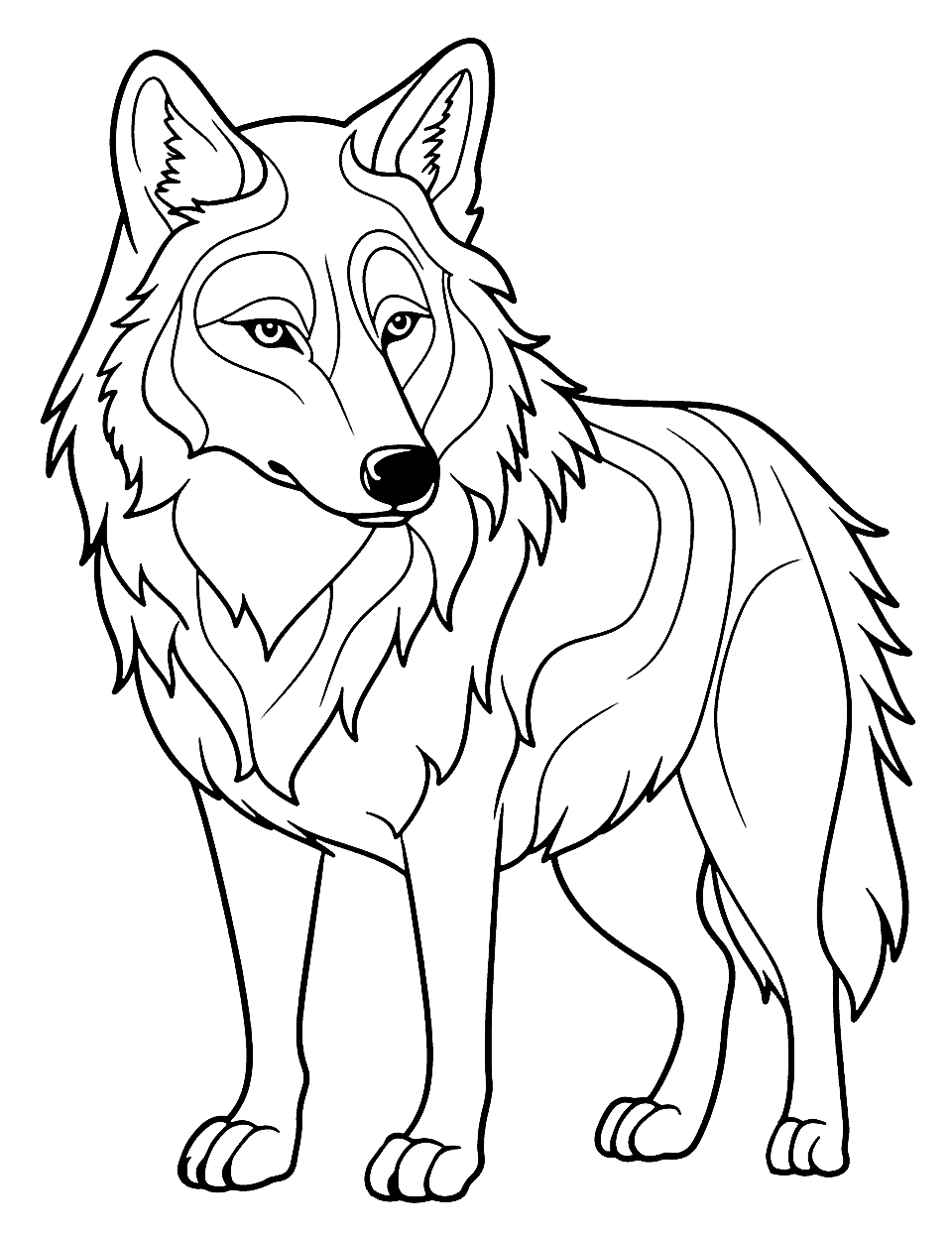
This is the most detailed head study here: a three-quarter view with long, layered fur flowing down the neck and chest. There are dozens of small sections to fill, which makes it a proper grown-up coloring page. Blend two or three grays along the direction of the fur strokes to build depth. Set aside real time for this one.
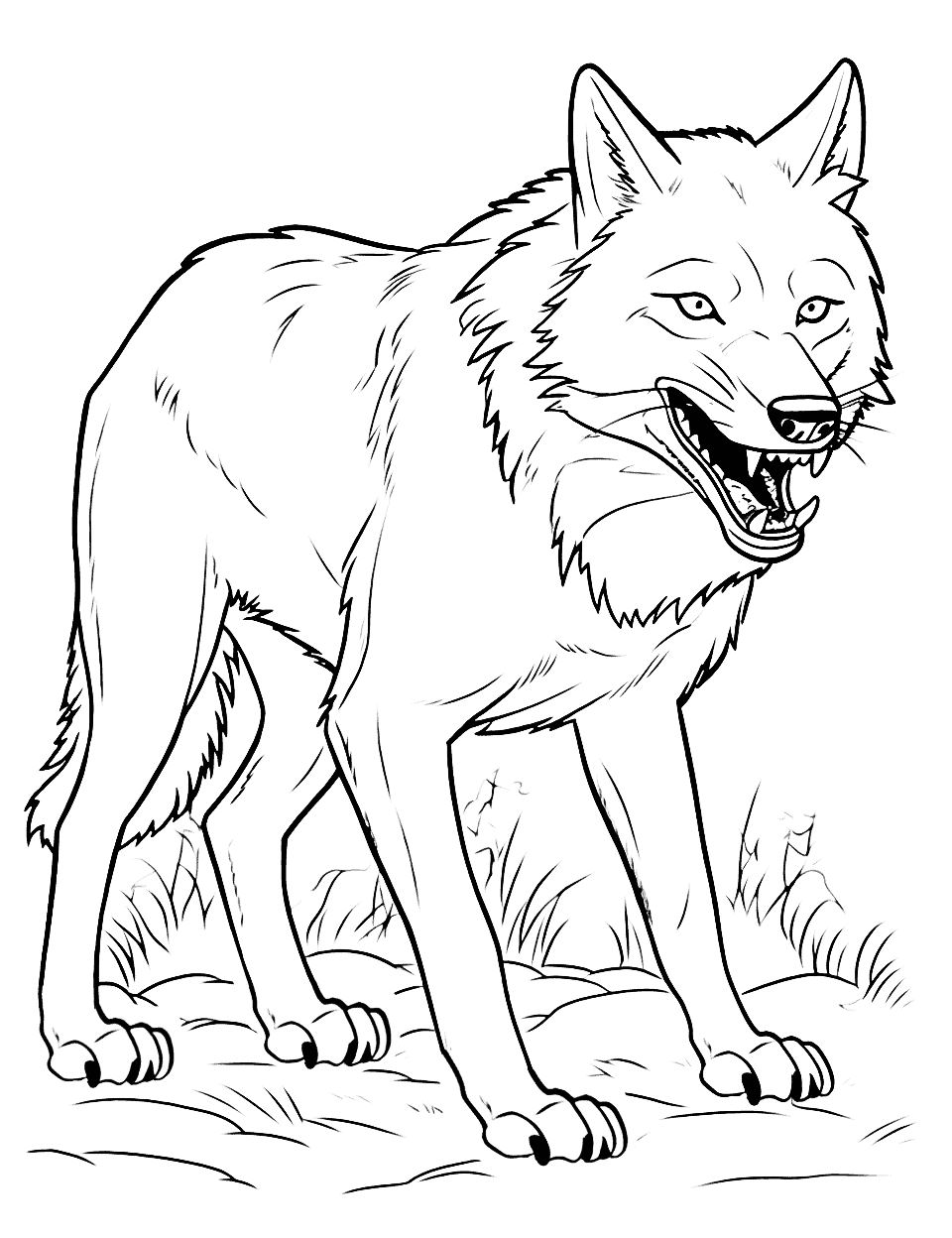
Head low and teeth bared, this wolf holds a tense stance over patchy grass. The open mouth is the focal point, so a dark pink tongue and clean white teeth do most of the work. Nothing else competes for attention, which makes it faster to finish than it looks.
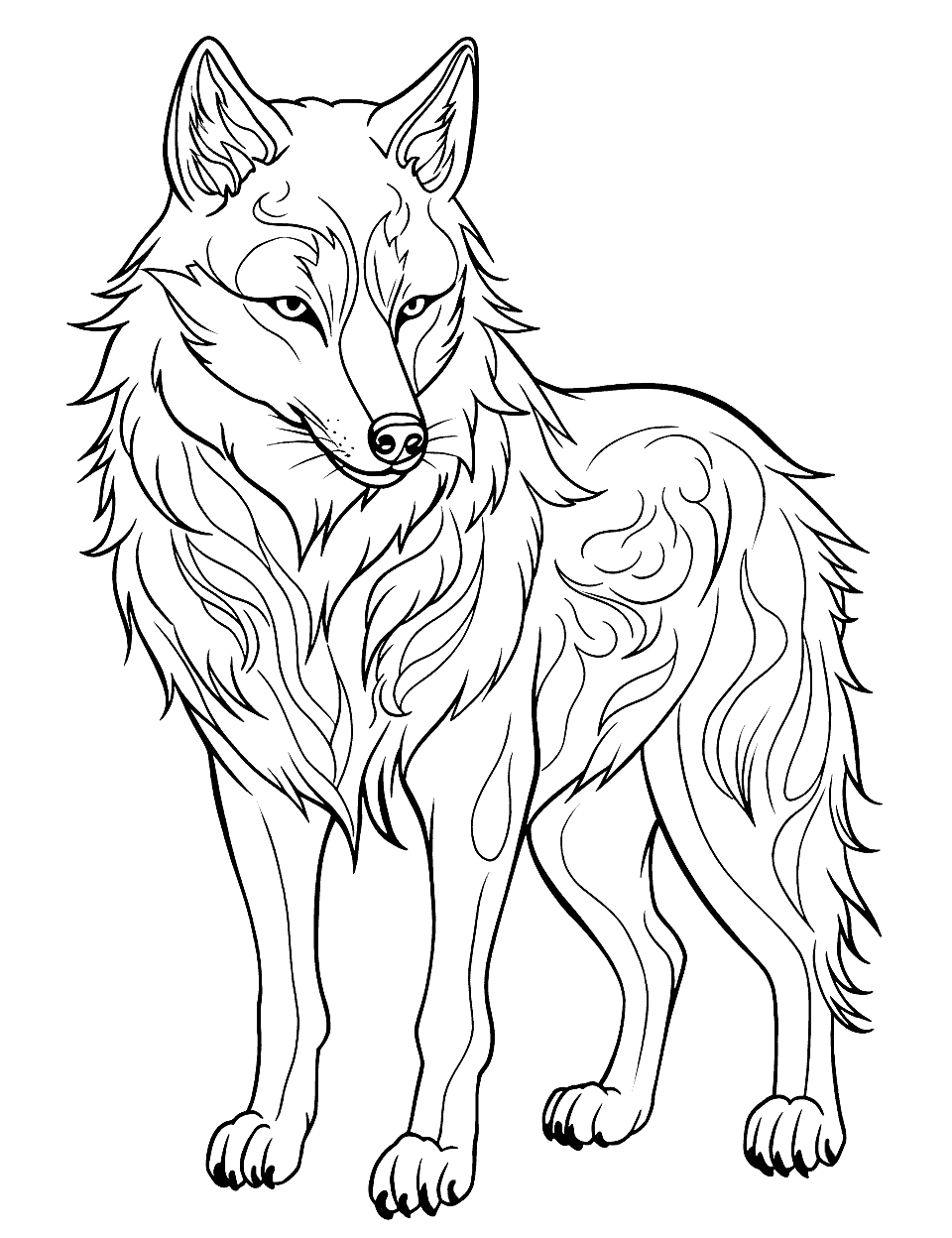
The fur on this standing wolf is drawn as curling flame shapes that run from the ruff down along the flank. Reds, oranges, and a hot yellow at the tips turn the coat into fire. You can also flip it and go icy blue, since the shapes work either way. It is a great page for blending warm colors into each other.
Rows of leaf-shaped fur panels cover this wolf’s chest and shoulders in a neat repeating pattern. Each panel is its own small space, which suits fine pencils or gel pens. Try a gradient down the chest instead of one flat tone.
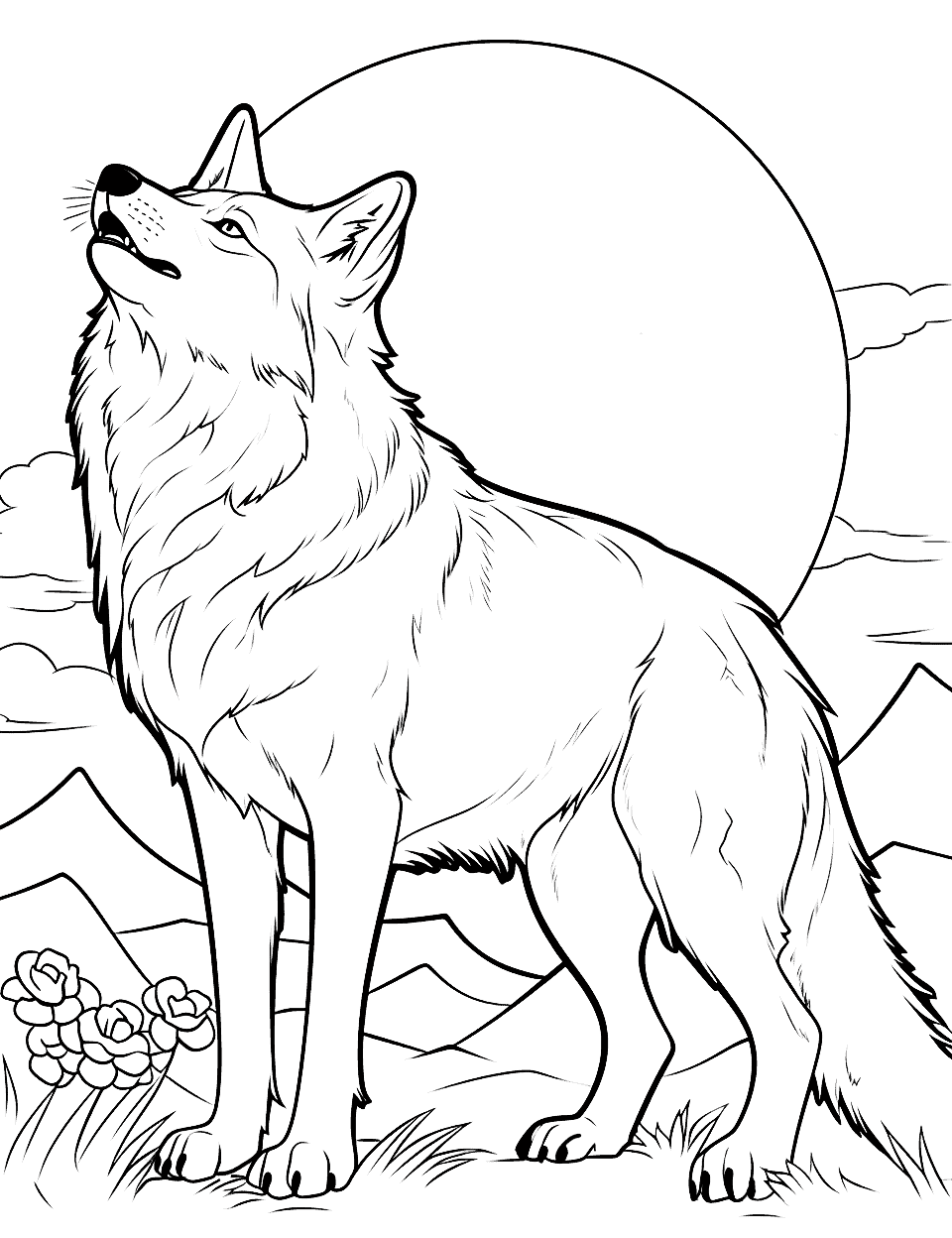
A wolf lifts its muzzle toward a large moon while a cluster of roses blooms at the bottom left of the frame. Mountains sit low behind in light outline. The roses are the only place to go bright, so save your strongest red for them.
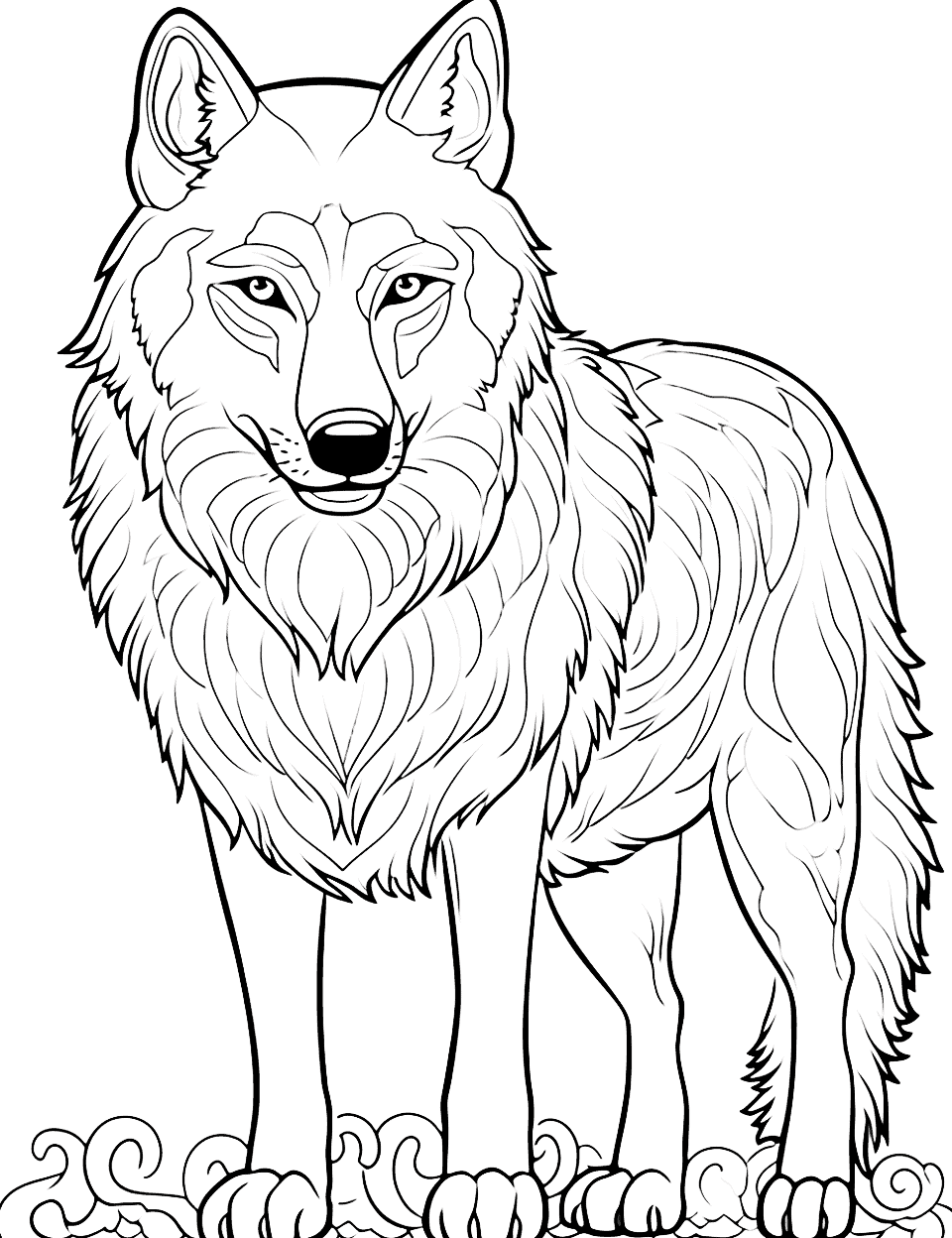
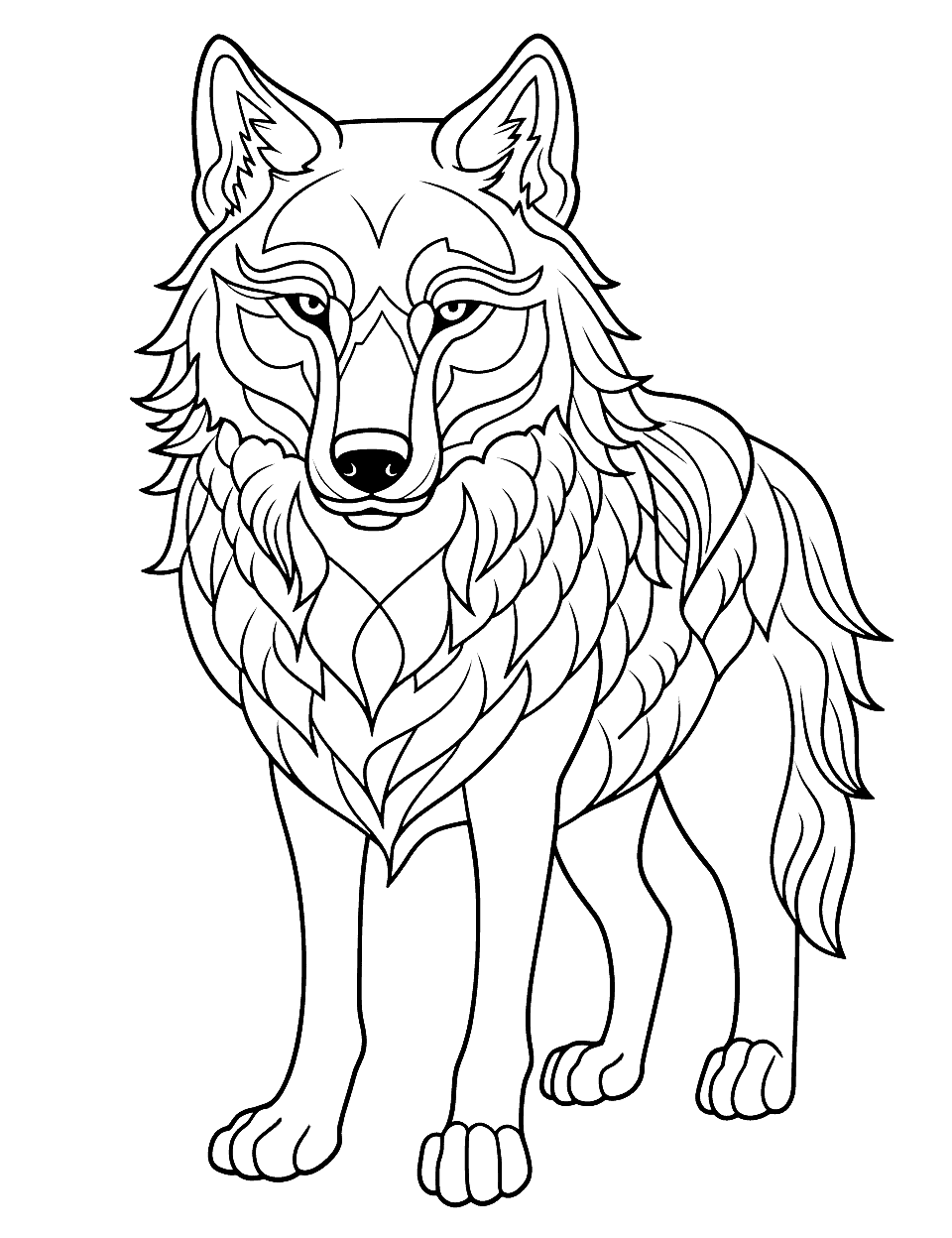
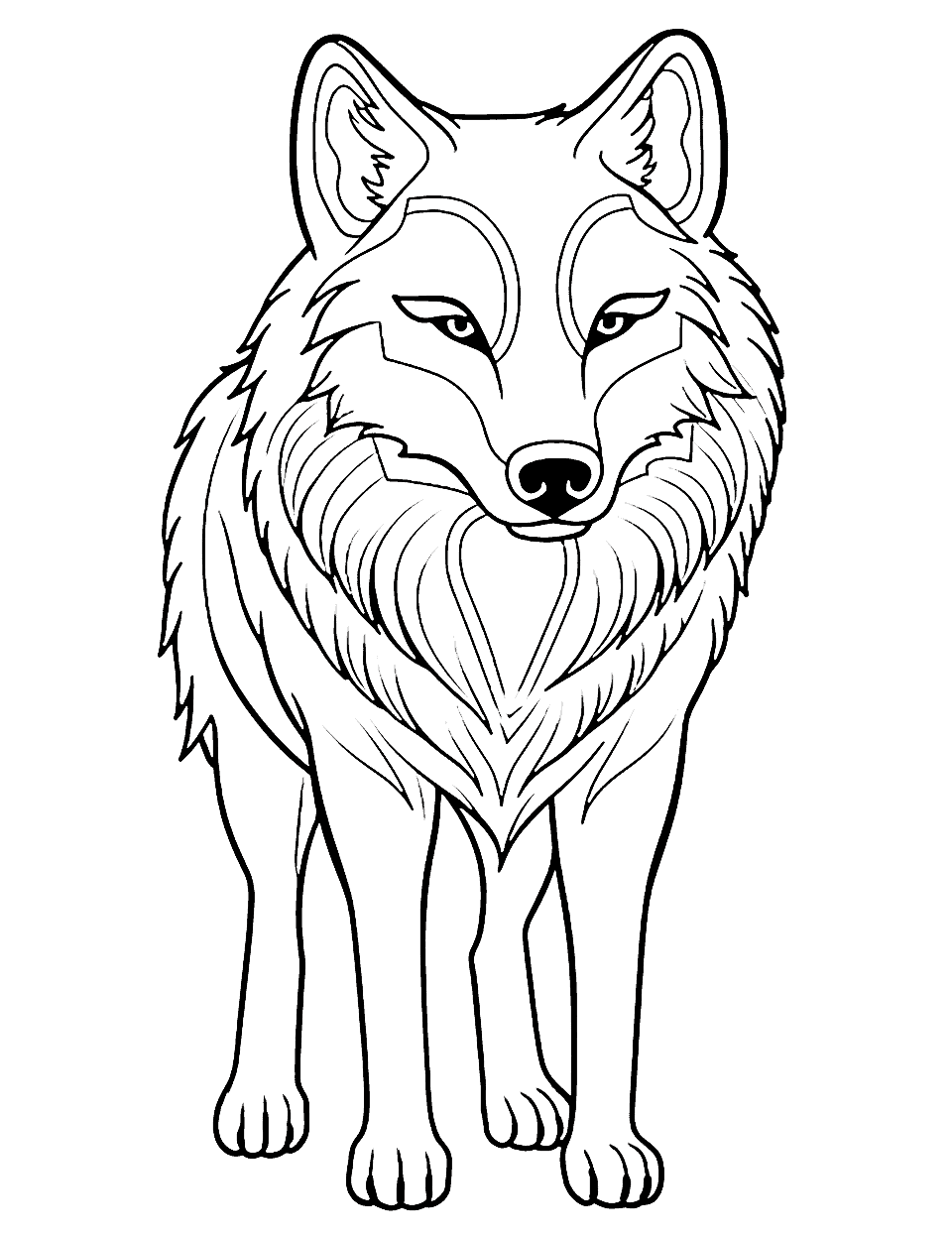
A front-facing wolf with a broad ruff sweeping down across its chest in a rough heart shape. The lines are clean and widely spaced, so this works for younger kids even though the pose is realistic. Follow the ruff lines outward with your strokes and the fur will look layered rather than flat.
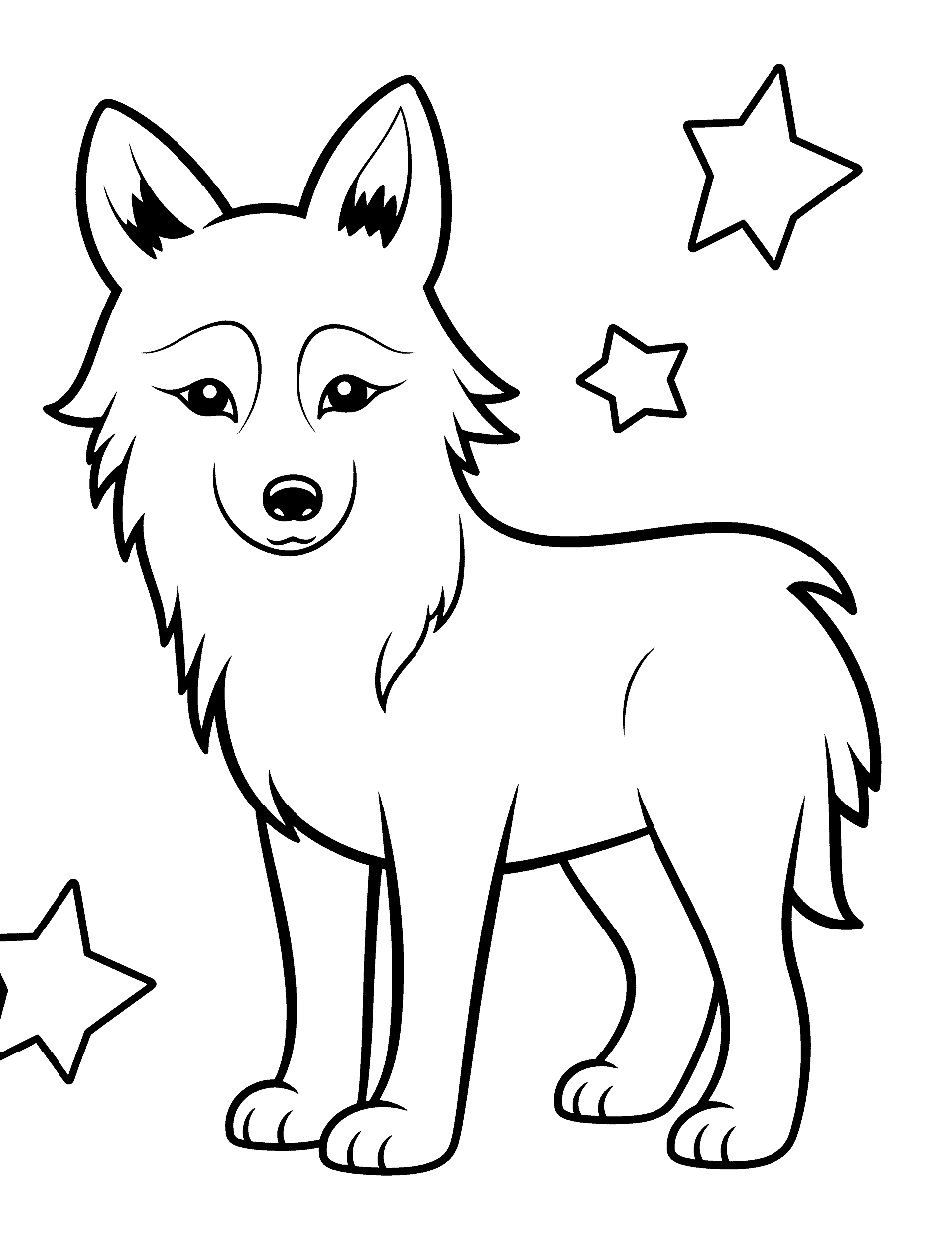
A round-faced cartoon wolf stands with three stars floating around it, one large and two small. Big eyes, a simple body, and almost no interior detail make this a fast, cheerful page. Pastel fur with bright yellow stars is hard to beat.
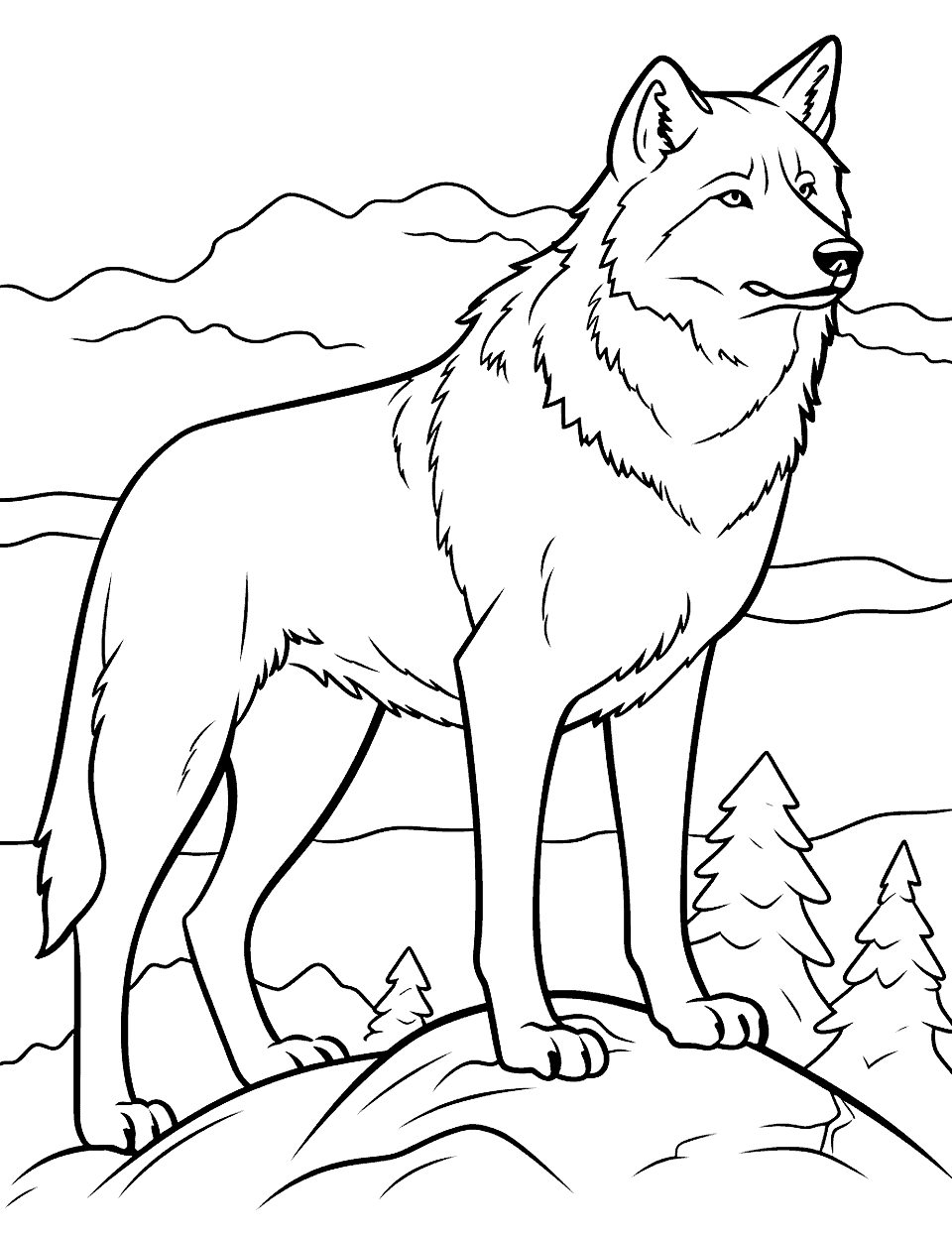
This wolf stands on top of a smooth boulder with pine trees below and ridges rolling into the distance. The background is drawn in simple curves, so a graded blue sky is easy to pull off here. Keep the far ridges pale and the near rock darker to build depth.
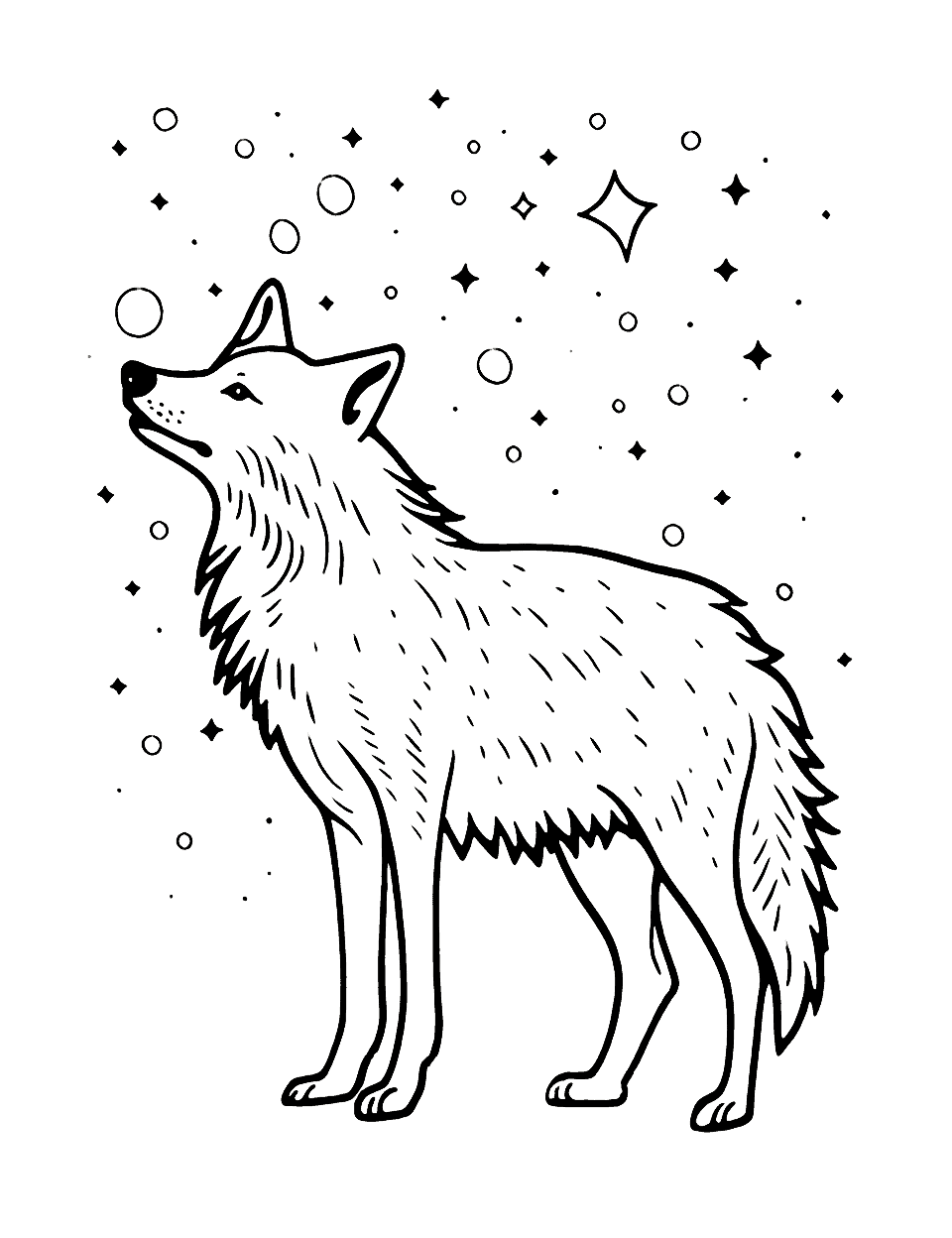
A slim wolf stands with its head raised against a sky packed with dots, circles, and four-pointed stars. The star field is the fun part: leave the paper white for the stars and fill in the space around them. A deep blue or purple sky turns it into a night poster.
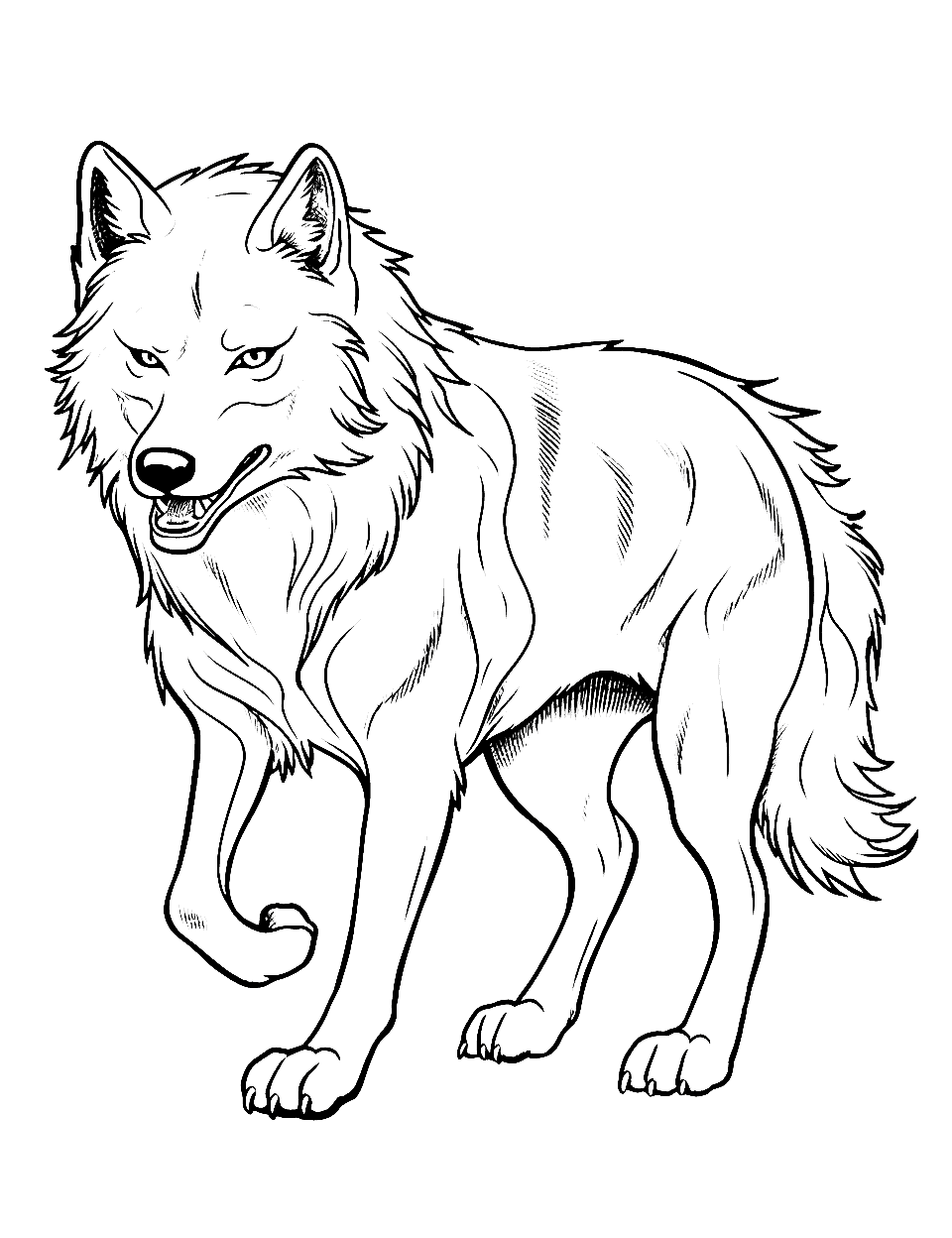
Caught mid-step with one front paw curled up, this wolf moves toward you with its mouth slightly open. Fine hatching marks the shoulder and hindquarters, ready for a second darker layer of gray. There is no background at all, so the whole page rests on your shading.
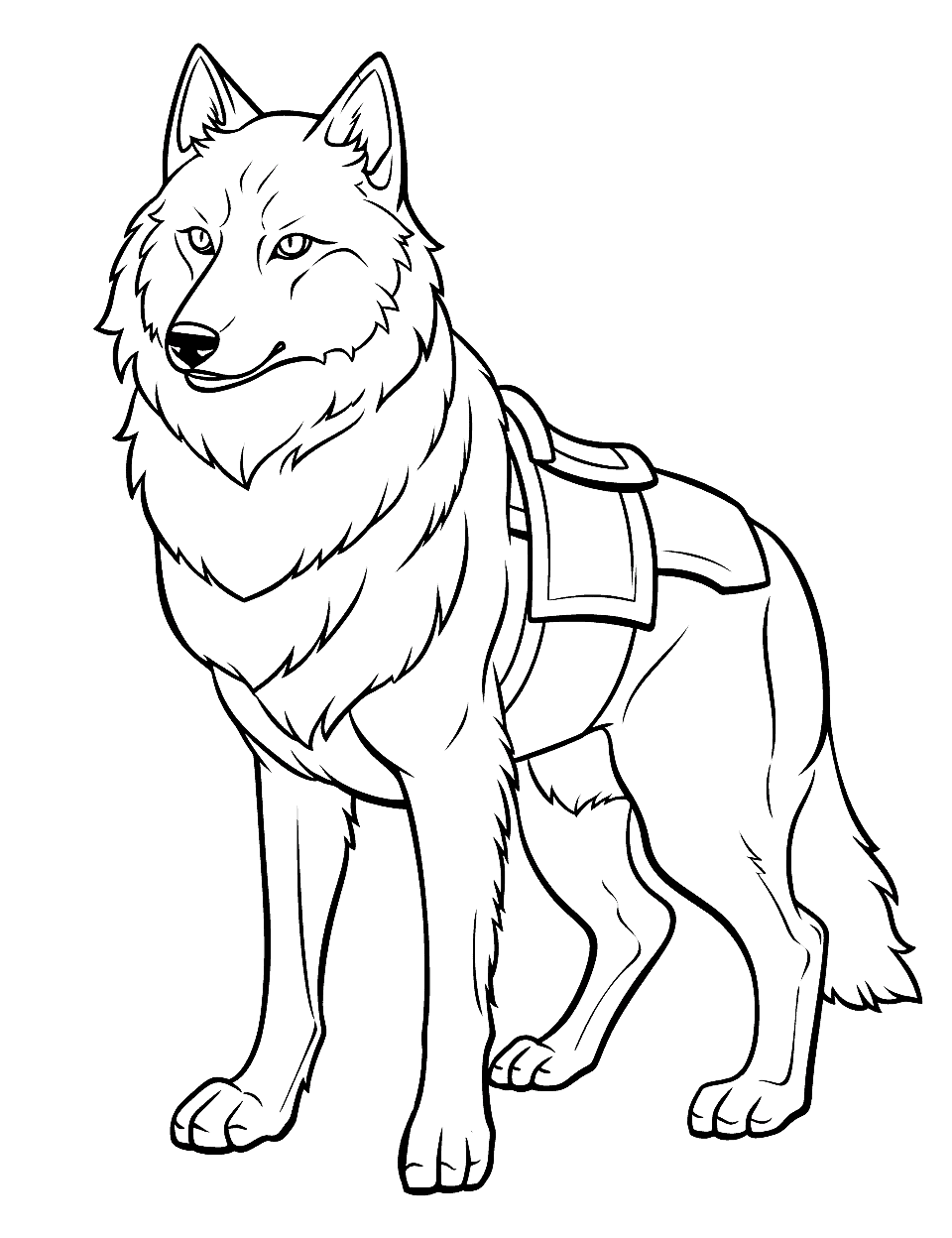
Plated armor is strapped across this wolf’s back and hind leg, buckled over a thick coat. Metallic grays with a silver edge sit well against a warm brown body. The straps and buckles are small, so keep a sharp pencil handy for those.
A pale wolf stands on cracked ice with jagged peaks rising behind it. Almost everything here is meant to stay white, which makes the page an exercise in shadow rather than color. Use light blue and gray only in the creases and under the body. Younger kids can color the sky instead and leave the wolf blank.
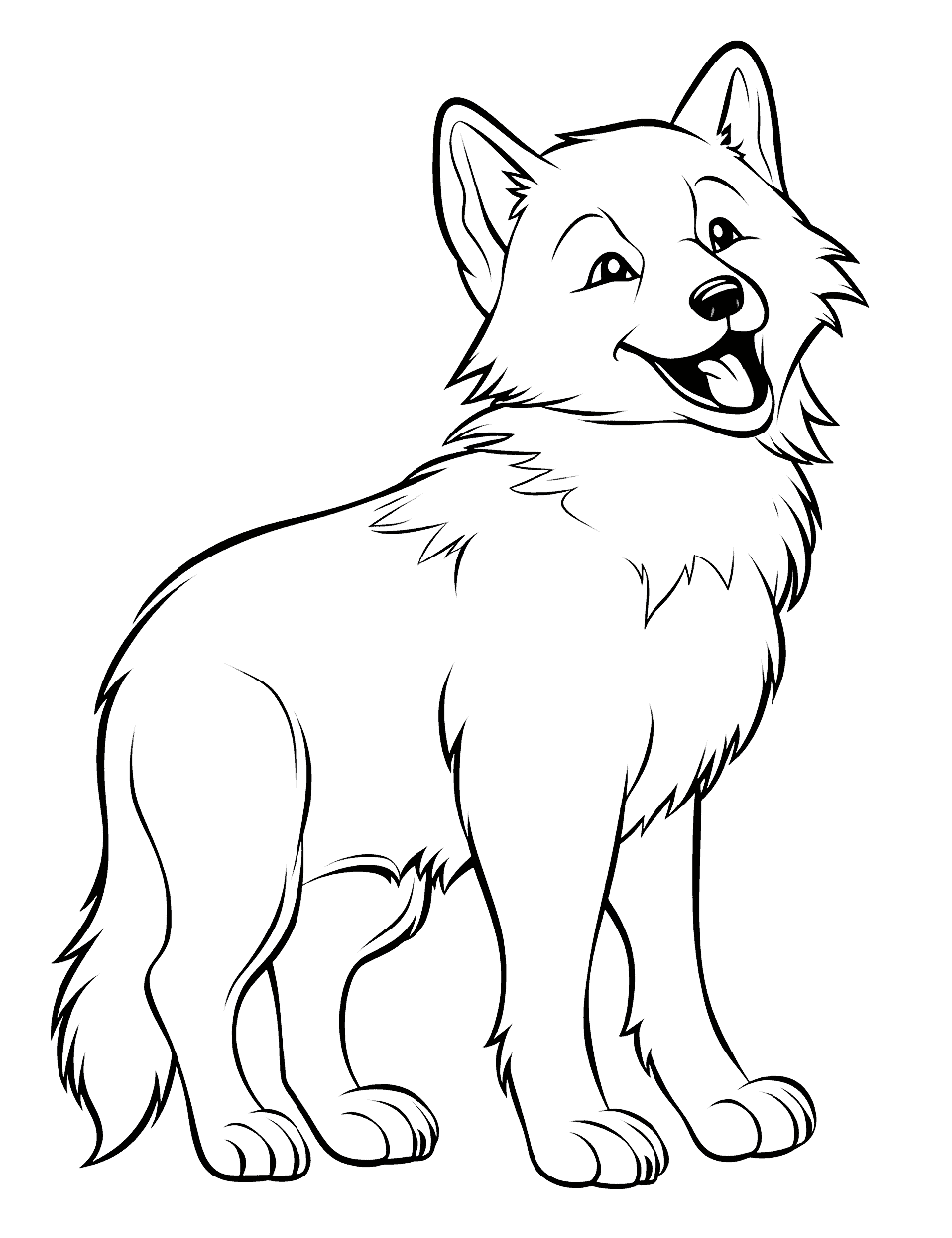
A fluffy pup tips its head back with its mouth wide open, giving its first howl a go. There is no background, so it prints fast and clean. Cream and light brown suit a pup, with a small pink tongue for contrast.
A wolf stands on a slope with its muzzle lifted while a huge moon climbs behind curling ribbons of cloud. Pines and low hills fill the ground under the moon. Try a pale gold moon against a deep sky, then keep the wolf light so it stays readable.
Simple outlines, no background, and big open areas make this the most craft-friendly sheet here. Print it small, color it, cut it out, and it becomes a sticker, a card front, or a stick puppet. Three crayons and a younger kid can finish it.
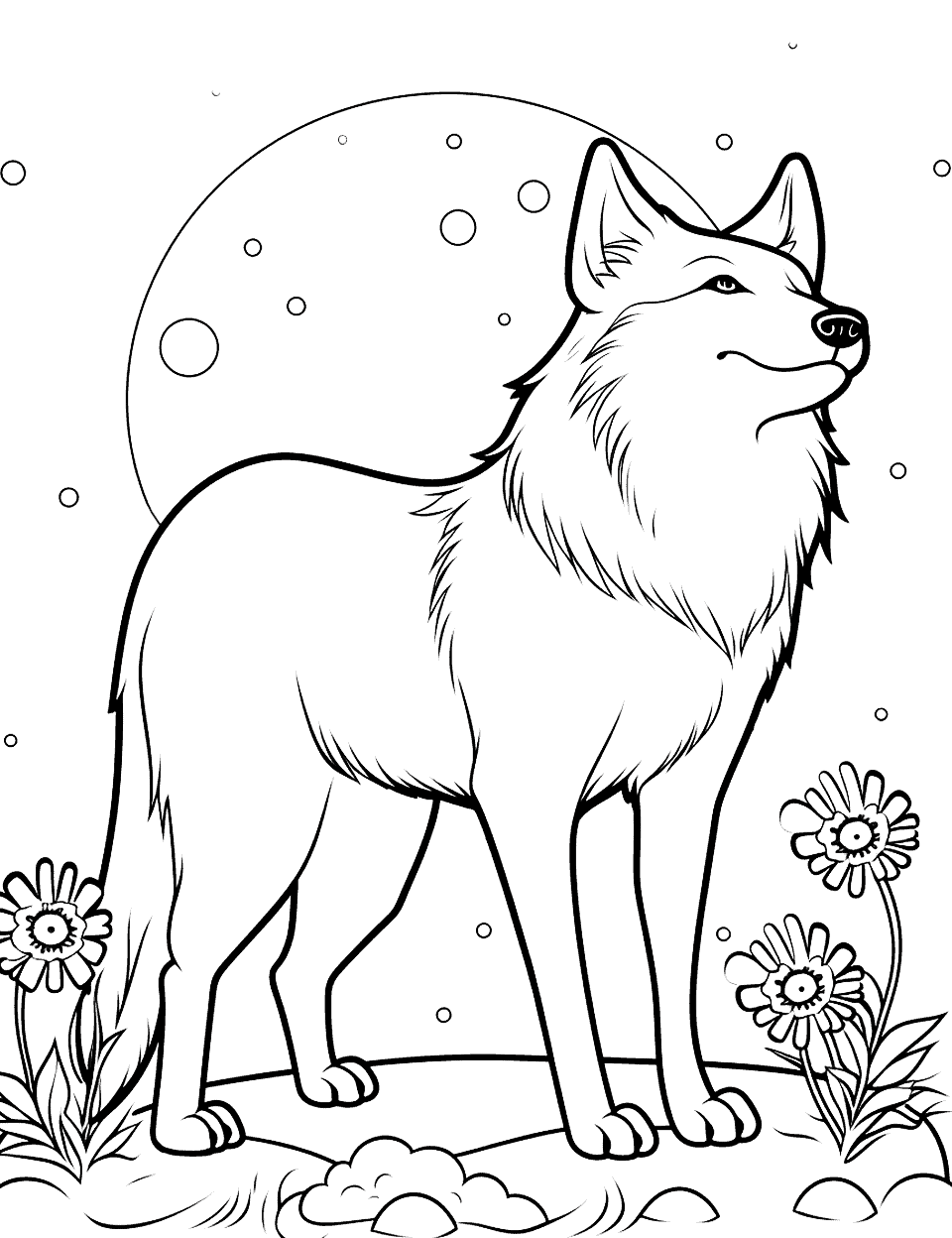
A wolf stands with its head lifted, a cratered moon behind it and daisy-shaped flowers on both sides. Small floating dots fill the sky and are easy to leave white as stars. The flowers give you a reason to break out of the gray palette entirely.
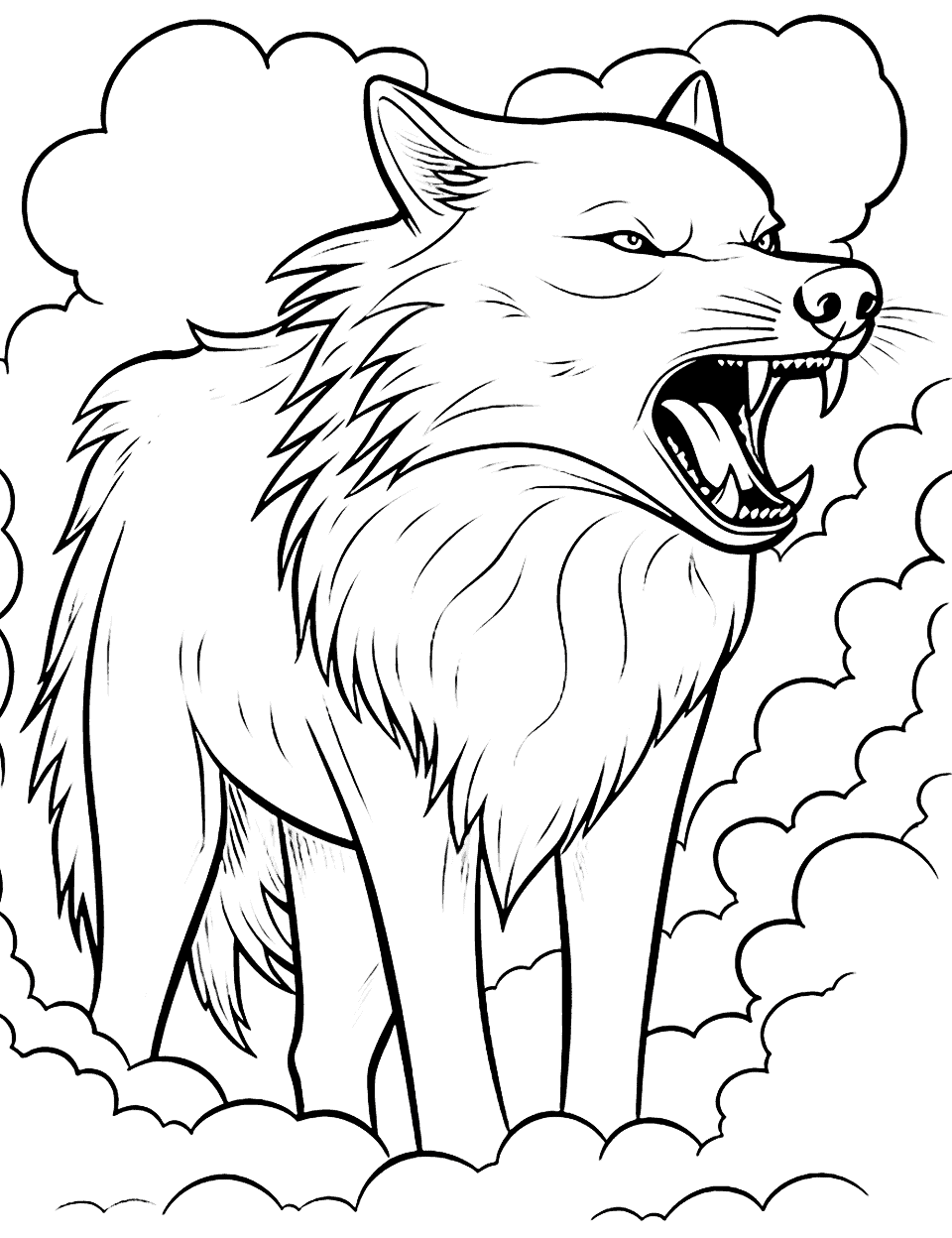
This close-up shows a wolf with its mouth wide open and fangs out, its legs disappearing into billowing clouds. The cloud shapes are large and rounded, so they fill quickly with light gray or stormy blue. Keep the inside of the mouth dark so the teeth stay white.
Leaf shapes ripple along this wolf’s back and flank while the ruff falls in long soft strands. The pattern is a natural excuse for greens and golds instead of gray. Color the leaves first, then blend the surrounding fur into them at the edges.
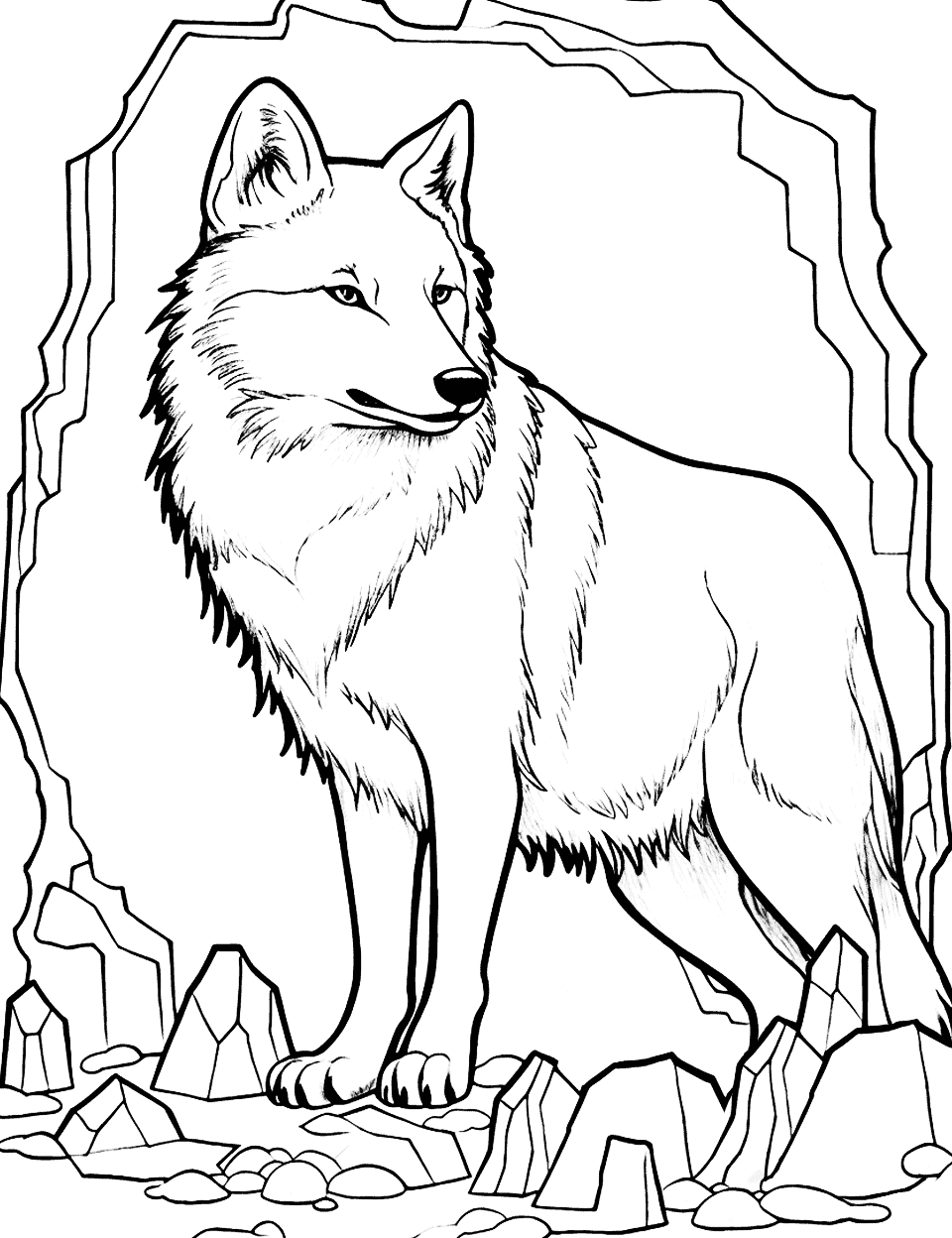
A wolf stands at the mouth of a cave with faceted crystals sprouting from the ground around its paws. The rock opening frames the whole scene, so you get a built-in border. Crystals look best in two tones of the same color, light at the tip and darker at the base.
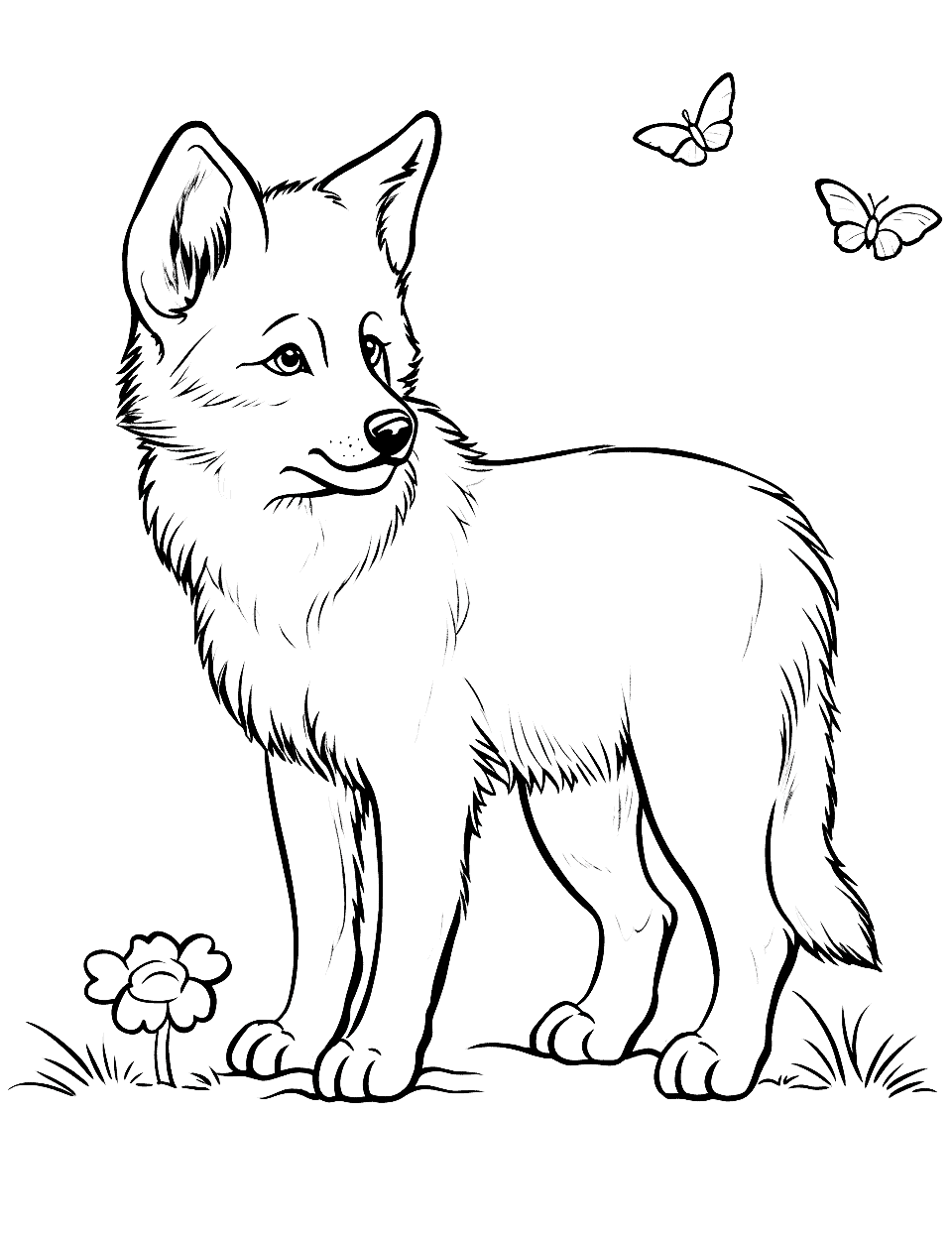
A pup stands on a grassy patch with its ears up, watching two butterflies float above its head. A single flower sits to the left and the rest of the page is open. Give the butterflies the loudest colors on the sheet and keep the pup soft. It pairs nicely with our butterfly pages.
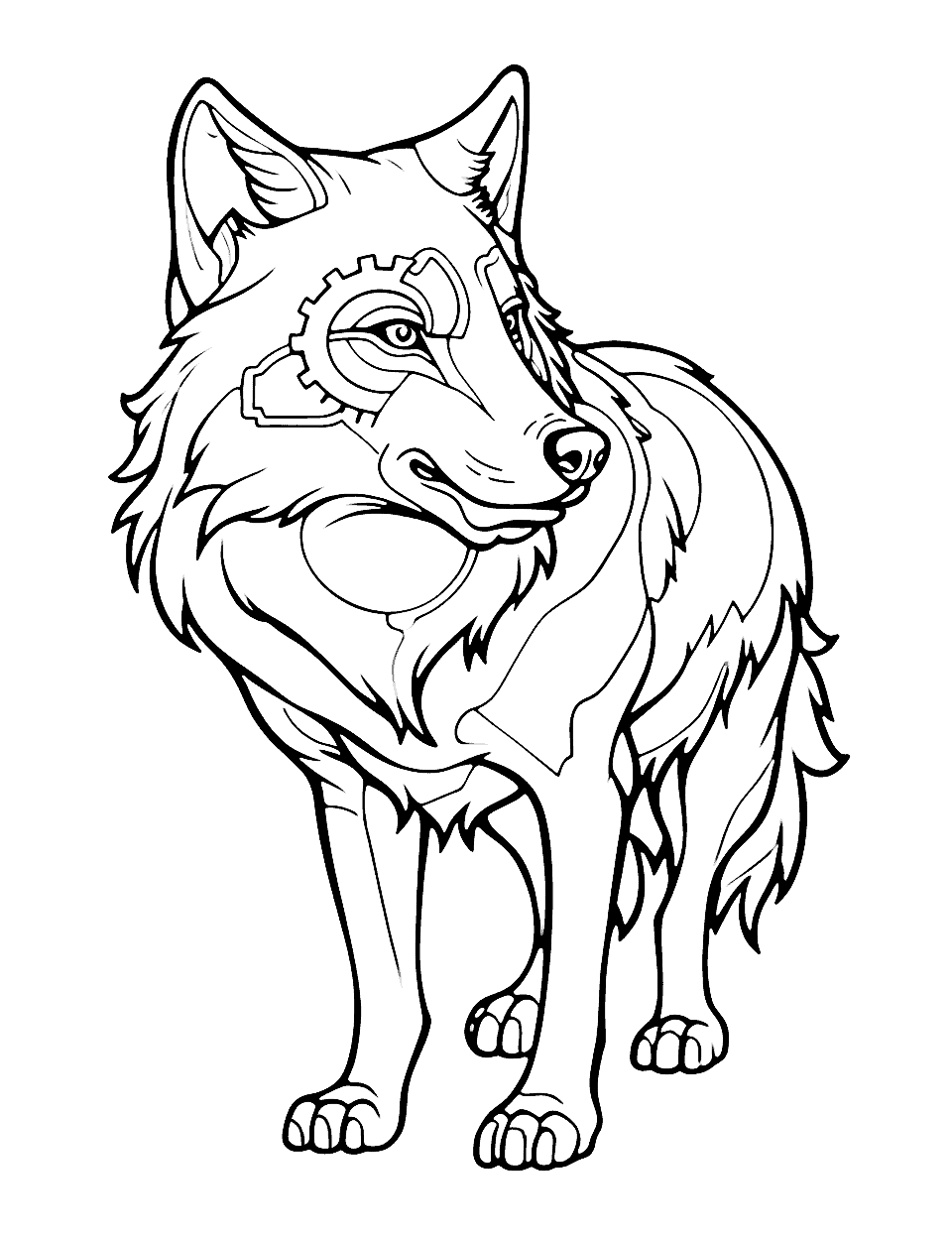
A gear-shaped monocle sits over one eye, with plated sections worked into the shoulder and chest. Brass, copper, and bronze pencils suit the hardware. Leave the fur muted so the metal parts stand out.
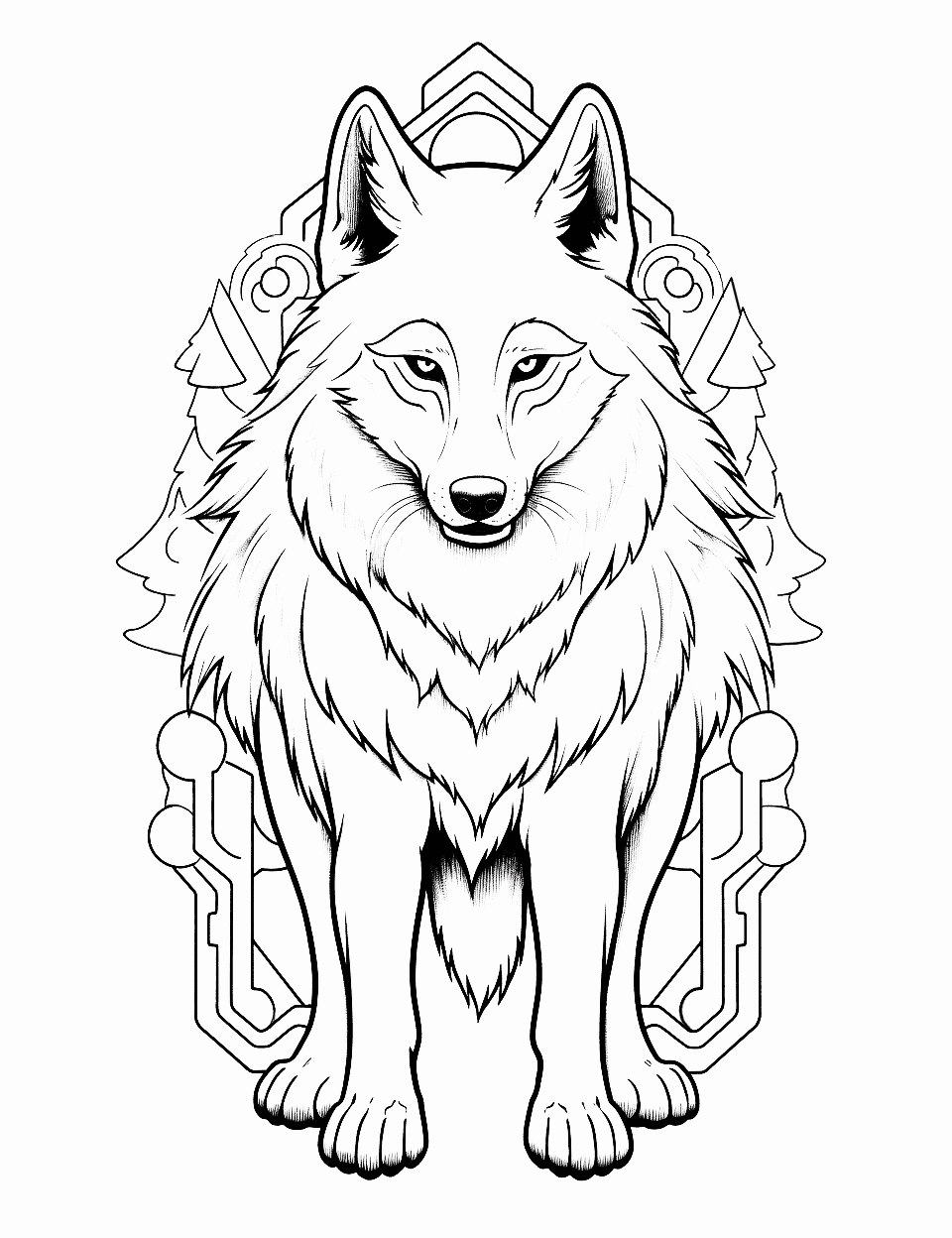
This wolf sits square to you inside a symmetrical frame of circles, hexagons, and straight lines, with stylized pine shapes rising behind its shoulders. The frame and the animal are two separate coloring jobs and look best in contrasting palettes. Cool blues in the frame with a warm gray wolf in front works well.
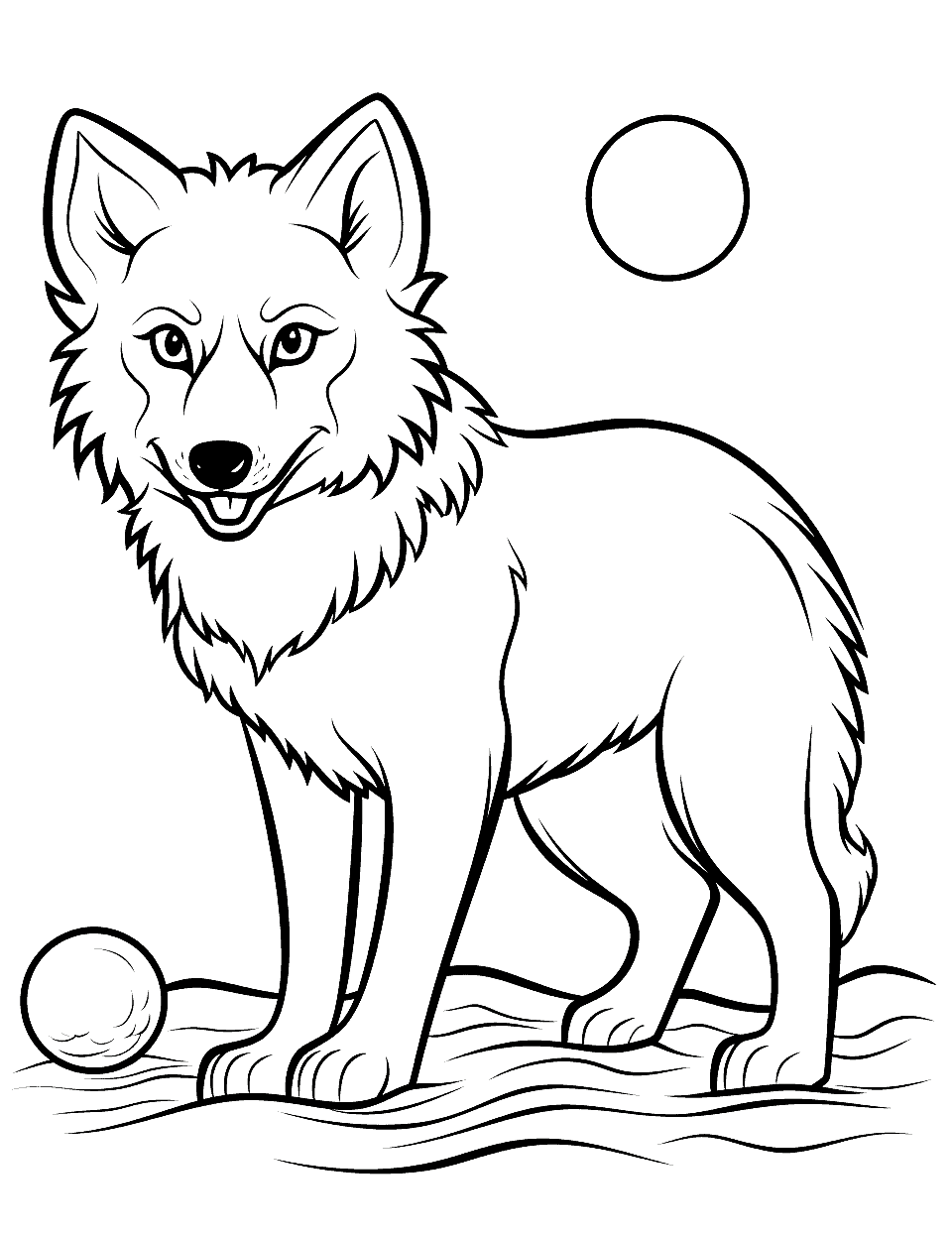
A wolf stands on wavy ground with a round ball resting near its front paws and a sun overhead. The wavy lines can be sand or shallow water, whichever your kid decides. Sandy tan, sky blue, and a striped ball make this an easy sunny day page.
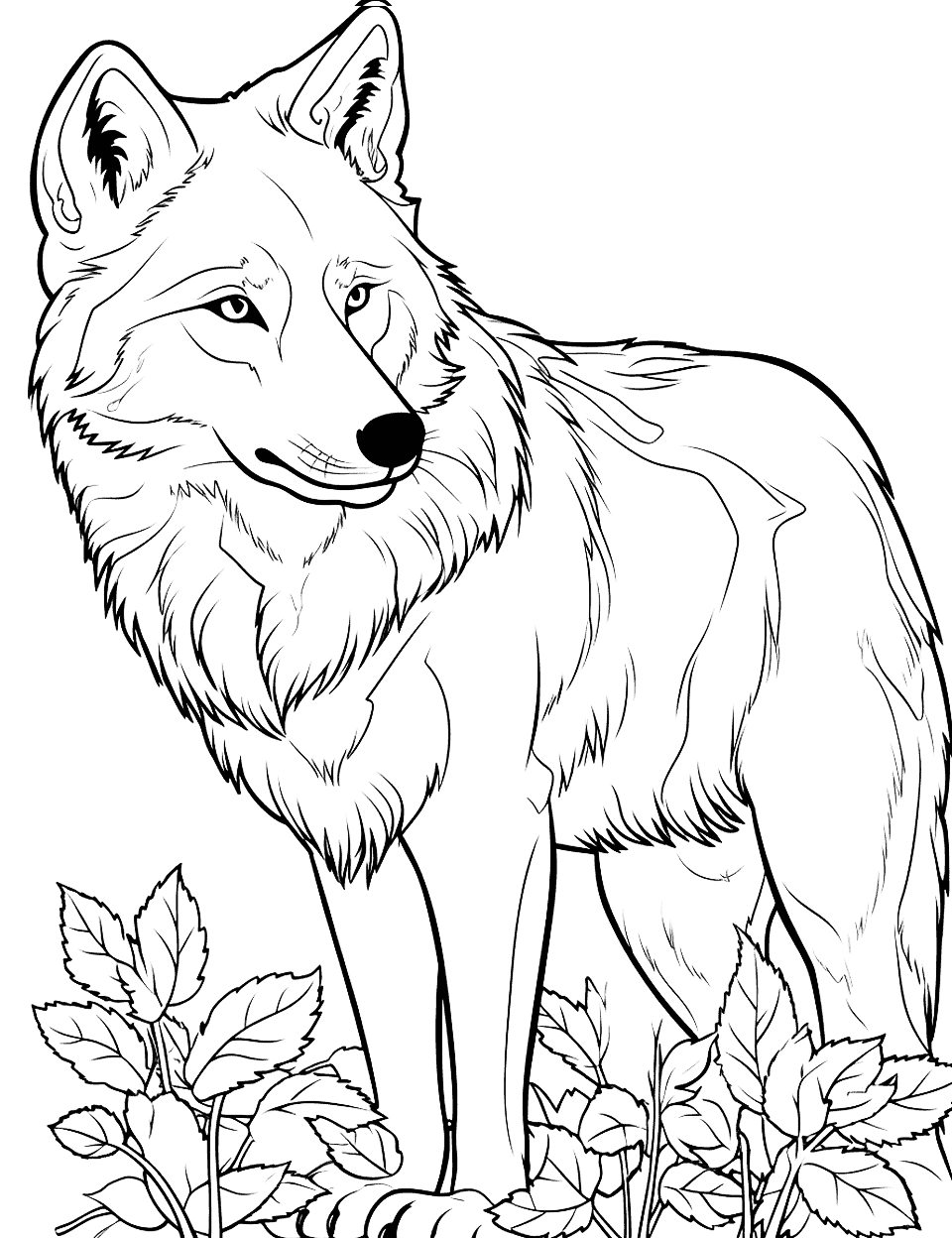
Leafy branches crowd the bottom of the frame while a wolf stands above them, looking off to the side. The leaves have clear veins, so they hold up to detailed pencil work. Reds, oranges, and browns turn the foreground into fall foliage without touching the wolf at all.
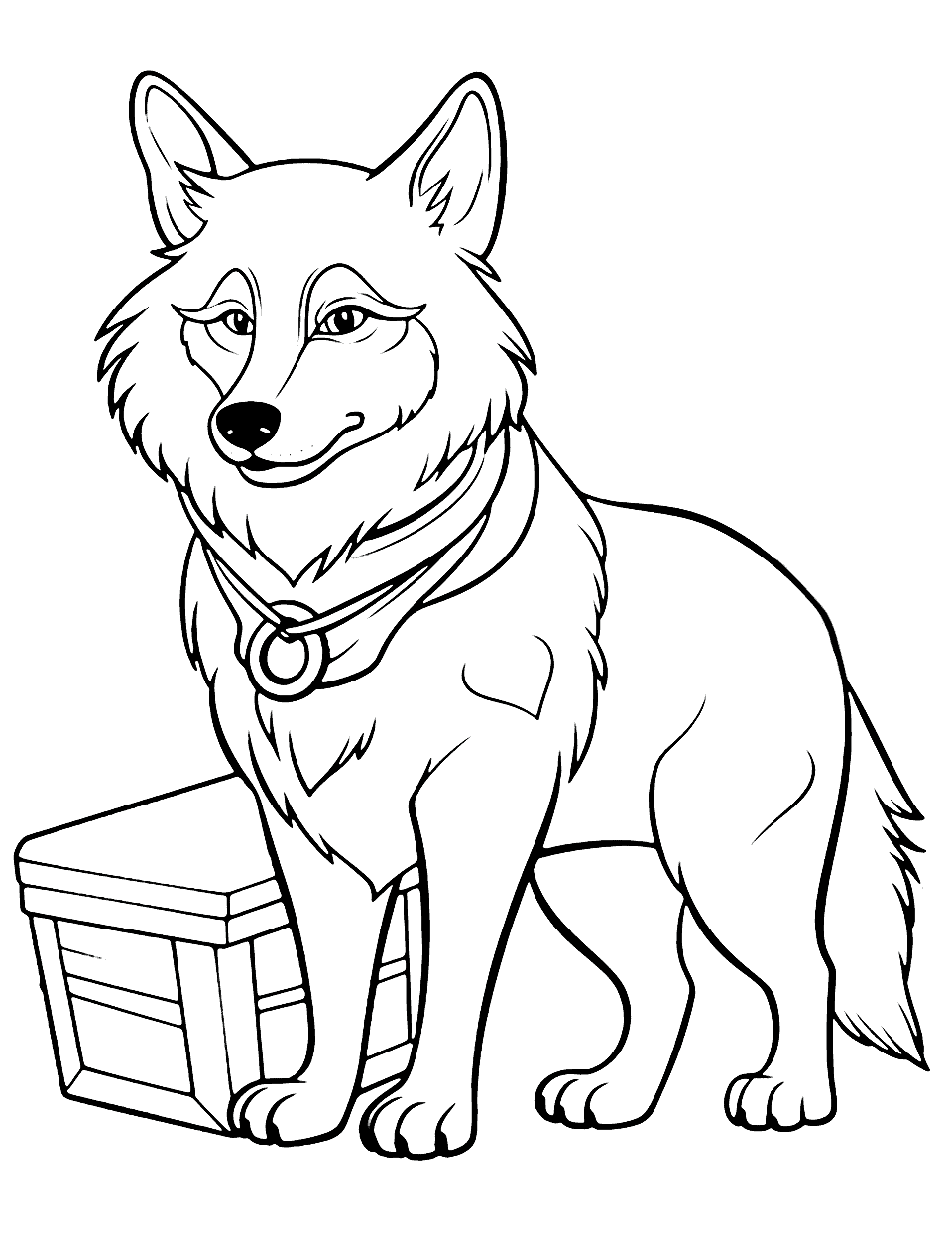
A wolf stands beside a wooden chest, wearing a collar with a ring hanging at the front. The chest planks and the collar ring are the two spots that reward a wood tone and a metallic. Everything else is open fur, so it colors up quickly.
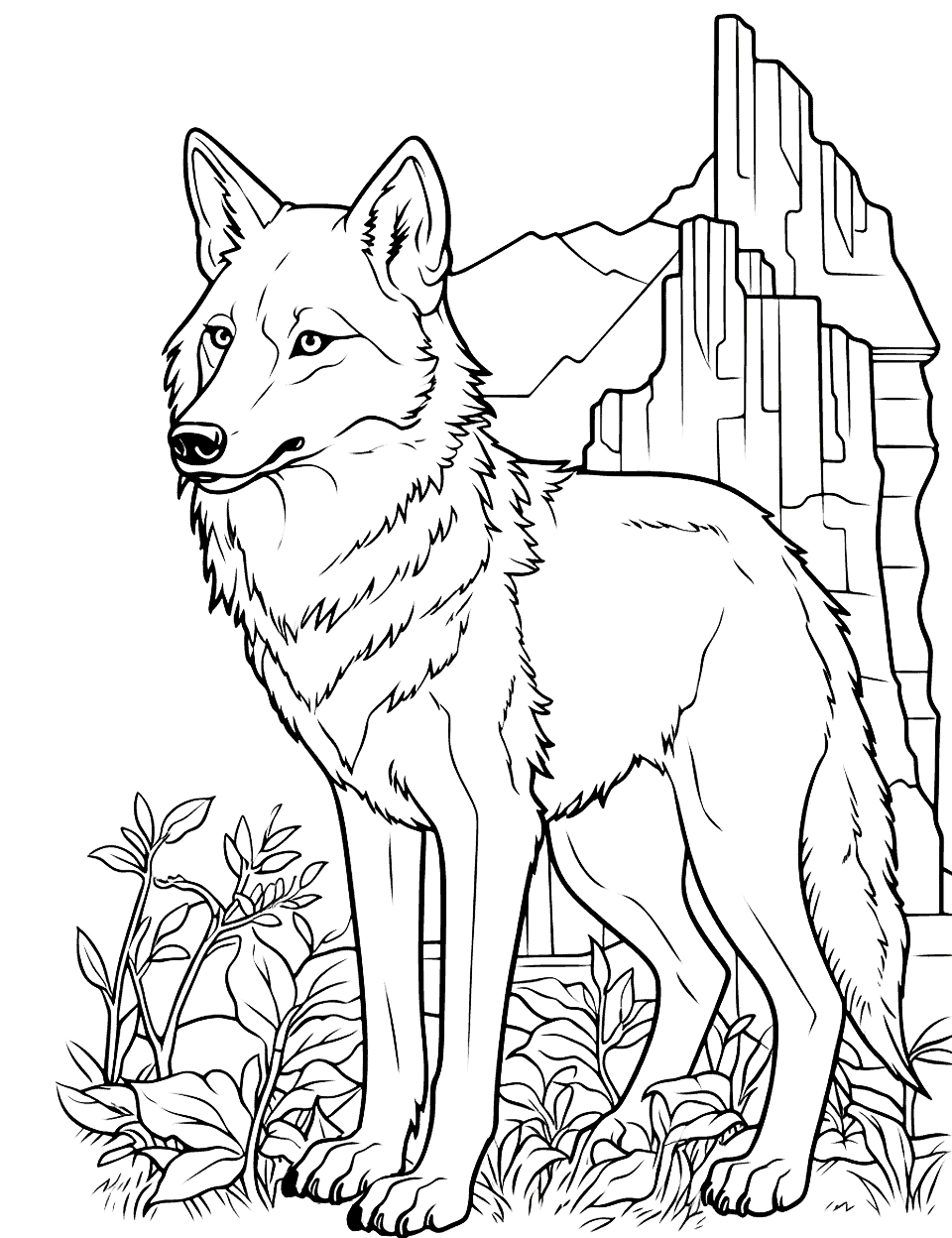
Stone ruins rise behind this wolf while leafy plants fill the front of the frame. Three layers, plants, animal, and architecture, give you something to plan before you start. Weathered gray stone against green undergrowth reads best.
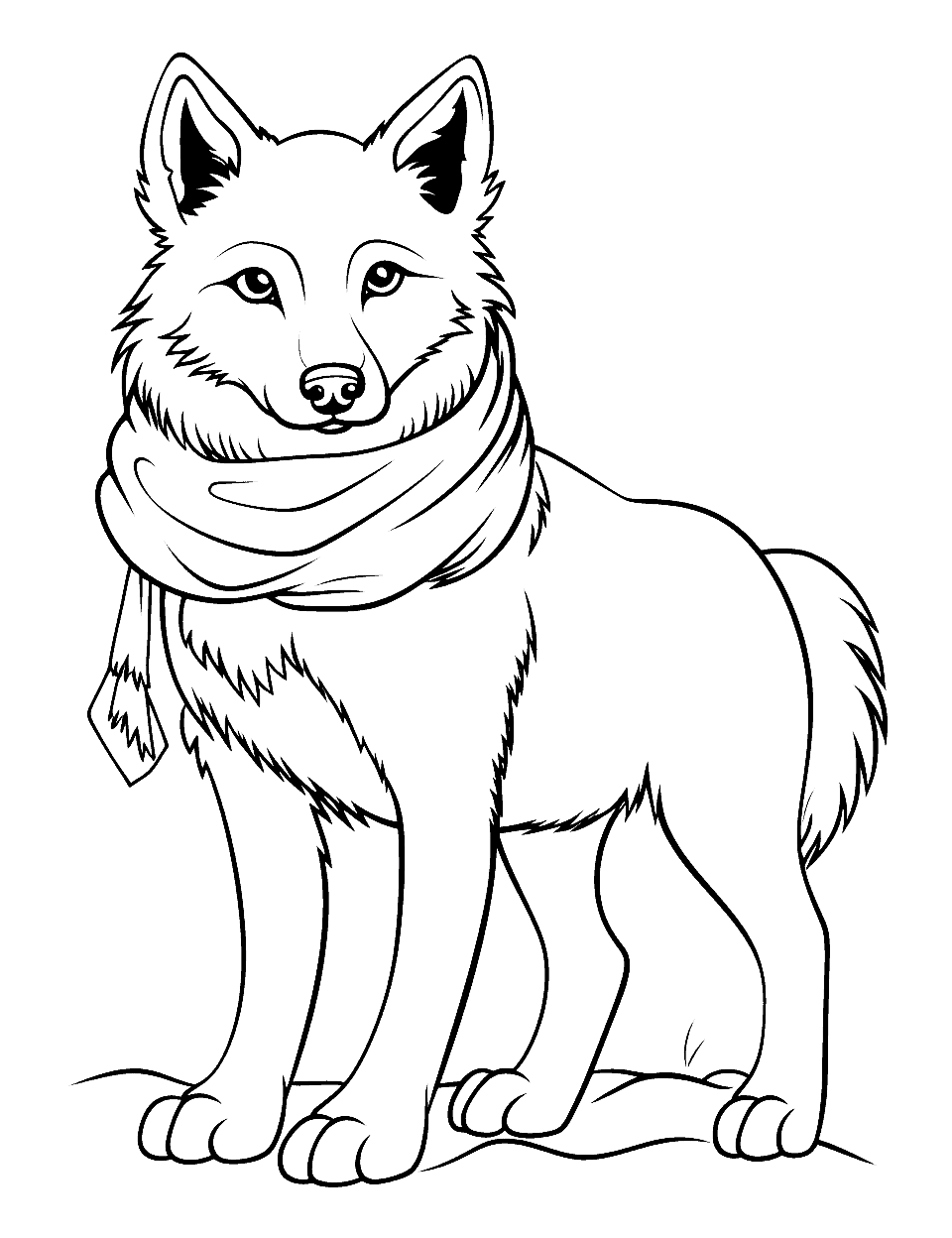
A wolf stands wrapped in a thick scarf that loops around its neck with one end hanging loose. The scarf is the biggest solid shape on the page, so stripes or plaid there make the whole sheet. Pair it with our other winter scarf sheets for a cold-weather set.
A wolf stands on a hilltop with its muzzle raised, a crescent moon tucked behind clouds at the top left, and four-pointed stars scattered across the sky. Sky takes up more than half the page. A deep navy background with the stars left uncolored is the fastest route to something striking.
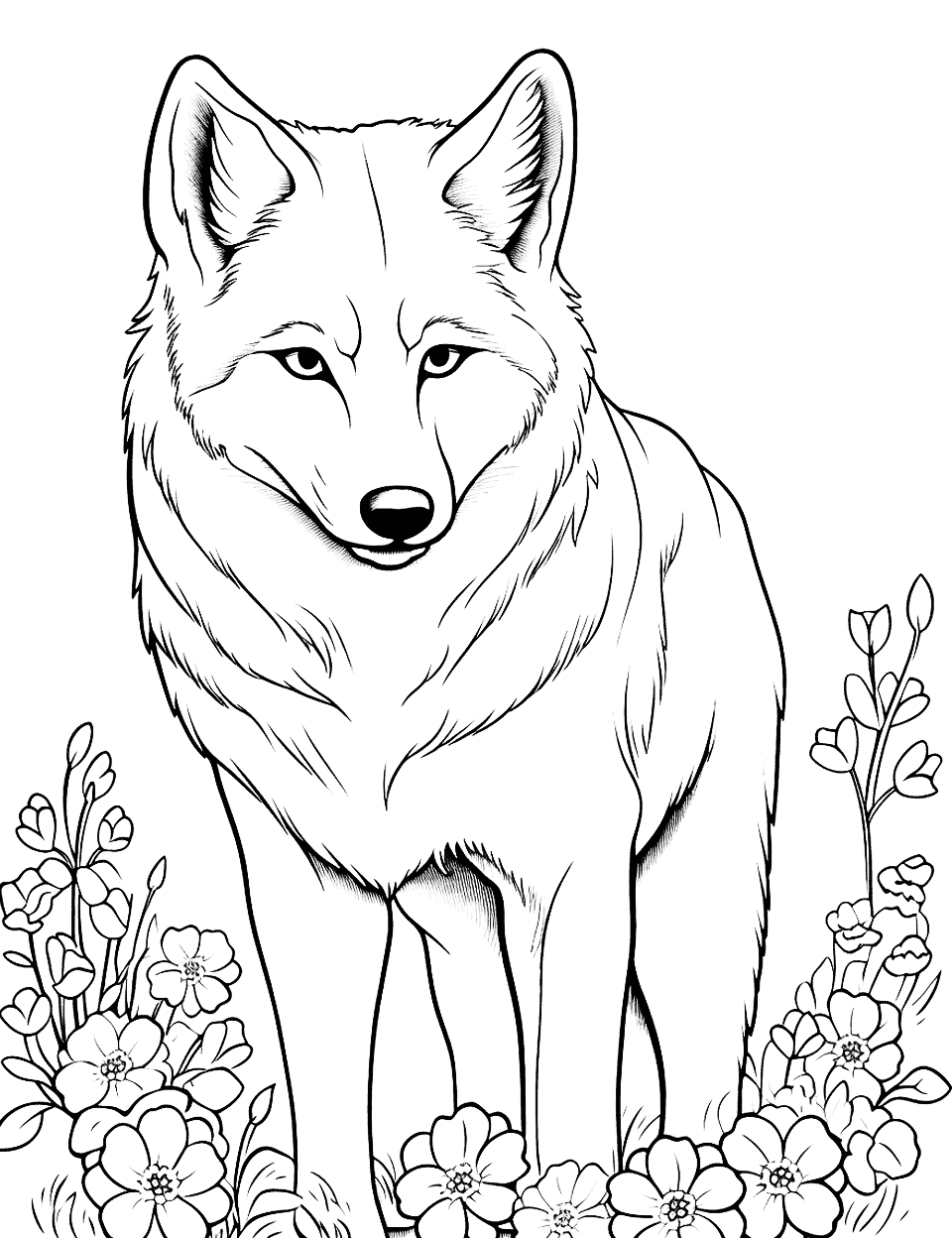
Rows of open-petaled blooming flowers fill the bottom of the frame while a calm wolf stands behind them. The petals are large and easy to fill, and the face is drawn softly rather than fiercely. This one suits a spring wall display.
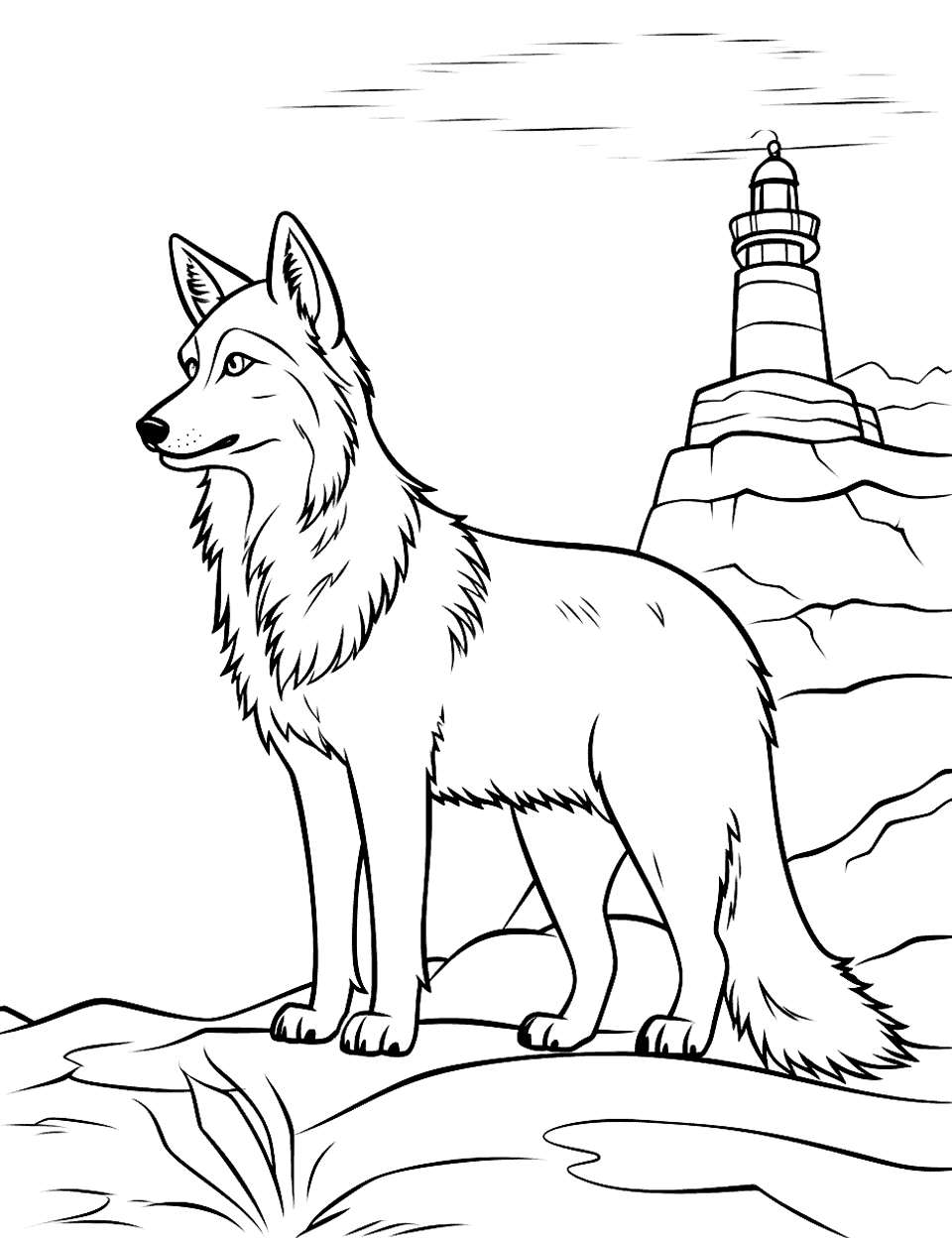
A wolf stands on a rocky shelf while a striped lighthouse rises from the cliff behind it. Thin streaks of cloud cross the sky above. Red and white bands on the tower give the page an instant focal point.
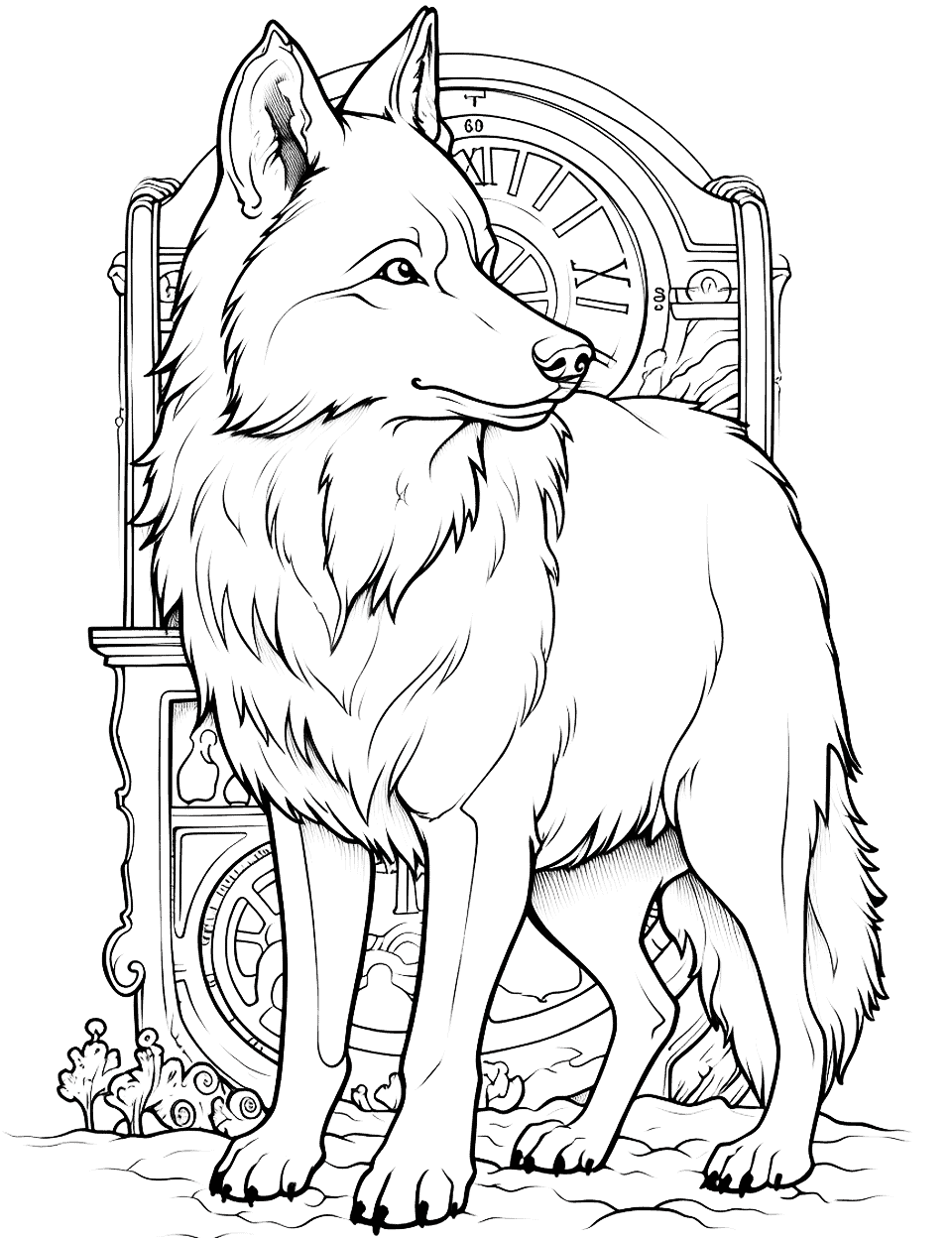
A large clock face with roman numerals and exposed gears fills the background behind this standing wolf. The frame and cogs are packed with small shapes, which makes it one of the slower pages here. Brass and copper on the machinery with a plain gray wolf keeps it readable.
By using our free coloring pages, you acknowledge and agree to our full disclaimer. All materials are for personal, non-commercial use only and all rights belong to their respective license holders.
Which Wolf Coloring Page Should You Print First?
Start with Wolf Clipart, Easy Wolf Sketch, or Kawaii Wolf, matching the sheet to your child’s patience rather than their age. All three use thick outlines, few interior lines, and large areas a crayon covers in one pass.
For a kid who wants a scene but gives up on tiny detail, print Playful Wolf Pup, Wolf in a Winter Scarf, or Mountain Wolf. Each has a recognizable setting and only a handful of small shapes.
The long projects are Patterned Wolf Face, Detailed Wolf Portrait, and Wolf and the Time Machine. All three carry dozens of separate sections, so hand them to an older kid or keep one for yourself with a set of pencils and a quiet evening.
What Colors Are Real Wolves?
Real wolves are rarely plain gray. In Yellowstone, gray-coated and black-coated wolves turn up at roughly a 50:50 ratio and white coats are rare (1). Gray wolves generally range from reddish through to solid black (2). So rust, cream, charcoal, and near-white are all accurate picks, not just silver gray.
Scale matters for the realistic sheets too. An adult male in Yellowstone averages about 110 pounds and a female about 90 pounds (3). On pages like Realistic Gray Wolf, the legs are drawn long and heavy to match that build. Wolves cover a lot of ground too: they may travel as far as 30 miles in a day (4).
One shading rule covers most of these pages. Keep the back, shoulders, and tail tip darkest, let the muzzle, throat, chest, and lower legs stay several shades lighter, and blend a little brown through the ruff so the coat never looks like one flat color.
Activities to Do With Wolf Coloring Pages
The fun does not have to stop when the coloring does. A finished sheet can become a mask, a diorama, a puppet, or the cover of a story your kid wrote. Here are six ideas that need almost nothing beyond what is already in the craft drawer.
Create a Wearable Wolf Mask
Print Majestic Wolf Head on cardstock, since the face fills the whole page at close to child scale. Have your child color it, then cut around the outline and open two eye holes. Punch a hole at each side, thread elastic or string through, and it is ready to wear.
Design a 3D Habitat Diorama
Color Detailed Wolf in the Forest or Mountain Wolf, glue the page onto stiff cardboard, and cut the wolf out. Stand it inside a shoebox lined with moss, twigs, and small stones. Wolves in the wild live in family packs of about four to eight through the winter, so cut out a second and third wolf and the diorama becomes a pack.
Glow-in-the-Dark Moon Art
Use glow paint or glow markers on the moon, the stars, and the wolf’s eyes on Wolf Howling or Wolf and Constellations. Color the rest normally. Turn the lights out and only the night sky stays lit, which is worth the extra drying time.
Write a Wilderness Adventure Story
Let your child pick a scene sheet, such as Wolf and the Lost City or Wolf and the Treasure Chest, and write what happens next. Staple the finished page to the front of the story as a cover. Reluctant writers usually manage more sentences when the picture came first.
Wolf Pack Puppet Show
Print Playful Wolf Pup and Chibi Wolf Adventures at half size, color them, cut them out, and tape a popsicle stick to the back of each. Add Wolf Clipart for a third character. A sofa back or an upturned box makes a fine stage.
Eco-Friendly Greeting Cards
Print Kawaii Wolf or Wolf in a Winter Scarf at 50 percent scale, color it, cut it out, and glue it to folded construction paper. Add a hand-written message inside. They make good birthday cards, and the winter scarf version doubles as a holiday card.
FAQs
What Are the Best Colors for Realistic Wolves?
Gray, black, brown, and cream, layered rather than used on their own. Real coats mix all four, so blend two or three pencils in the same area instead of filling it flat. Keep the back and shoulders darkest and the belly, throat, and lower legs pale. A touch of warm brown through the ruff is what stops a gray wolf from looking like a husky.
Can I Use Markers on These Coloring Pages?
Yes, though you should print on cardstock first. Standard printer paper is thin enough that alcohol markers bleed straight through and pill the surface where colors overlap. Cardstock takes the ink cleanly and holds up to a second layer. If you only have printer paper, slide a scrap sheet underneath to protect the table and the page behind it.
Are These Pages Suitable for Toddlers?
Several of them are. Start with Wolf Clipart, Easy Wolf Sketch, or Kawaii Wolf, which have thick outlines, wide open areas, and no fine detail to stay inside. Chunky crayons or triangular pencils suit small hands better than markers. Save the patterned and portrait sheets for older siblings.
Do Wolves Really Howl at the Moon?
No, and the timing is a coincidence. Howling has many uses, including communication within the pack, advertising territory, and coordinating group activity (5). A howl carries around 6.6 miles through forest and around 9.6 miles across open country, according to the National Park Service. Howling covers communication within the pack, advertising territory, and coordinating group activity, none of which has anything to do with the moon itself.
How Do I Print These Coloring Pages?
Click the sheet you want to open the full-resolution file, then send it to your printer. Choose portrait orientation and set the scaling to “Fit to Page” so nothing is cropped at the edges. Grayscale printing saves ink and makes no difference to a line drawing. For a mask or a puppet, switch the paper tray to cardstock before you hit print.
What Do Wolves Symbolize in Art?
Loyalty, family, and protection, most often. Because wolves hunt and raise pups as a group, they show up across folklore and heraldry as a symbol of the bond that holds a family together, and as a guardian or guide. That is part of why they suit gifts and cards: a colored wolf reads as “us,” not just as a wild animal.