Sprint into coloring fun with free cheetah-themed printables.
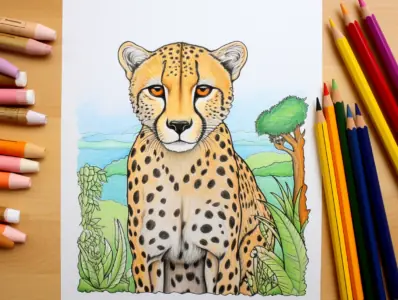
Ready for a sprint on the wild side? These cheetah coloring pages capture the speed and grace of the world’s fastest land animal. We have everything from simple outlines for toddlers to realistic portraits for adults. Grab your crayons. Let’s bring these big cats to life.
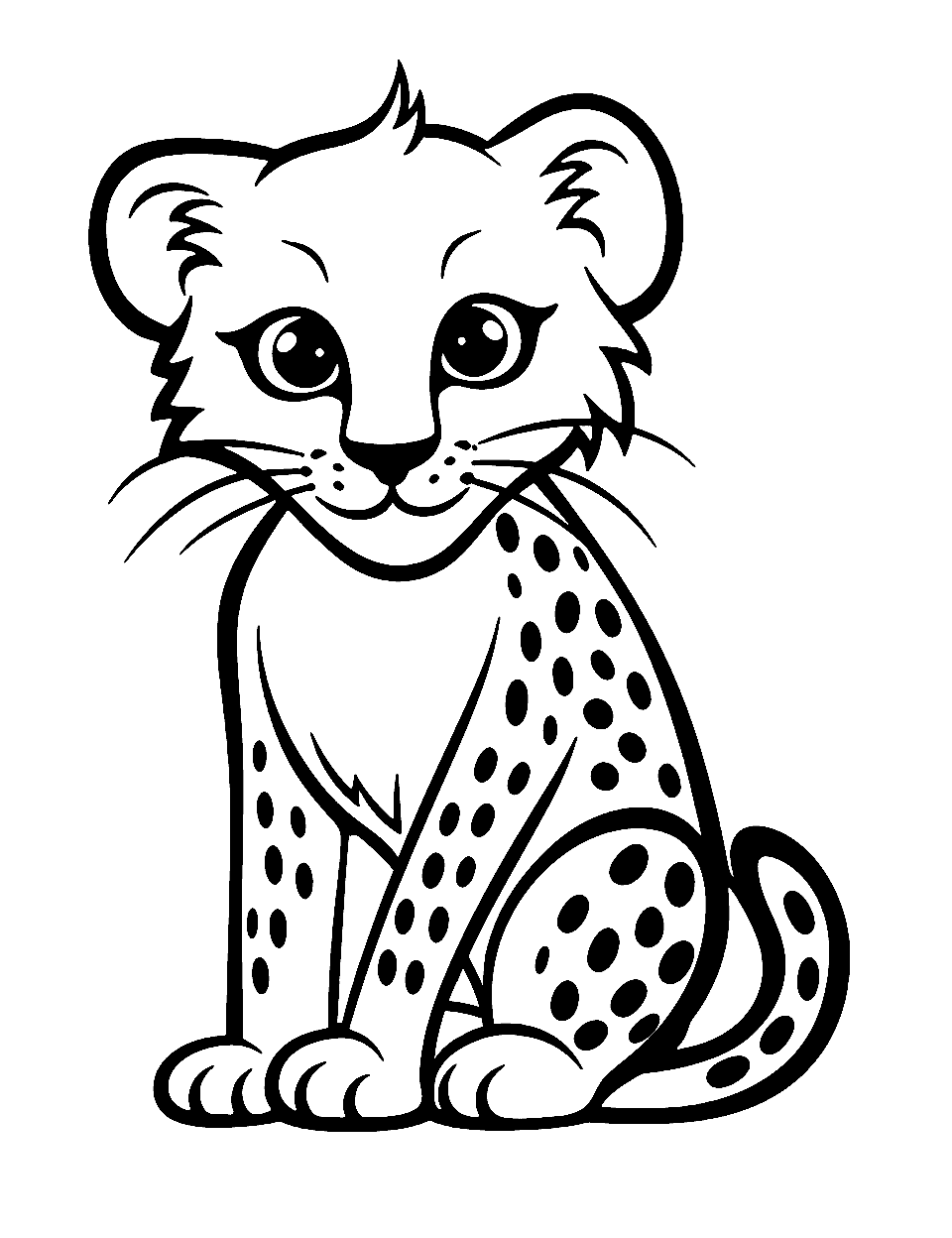
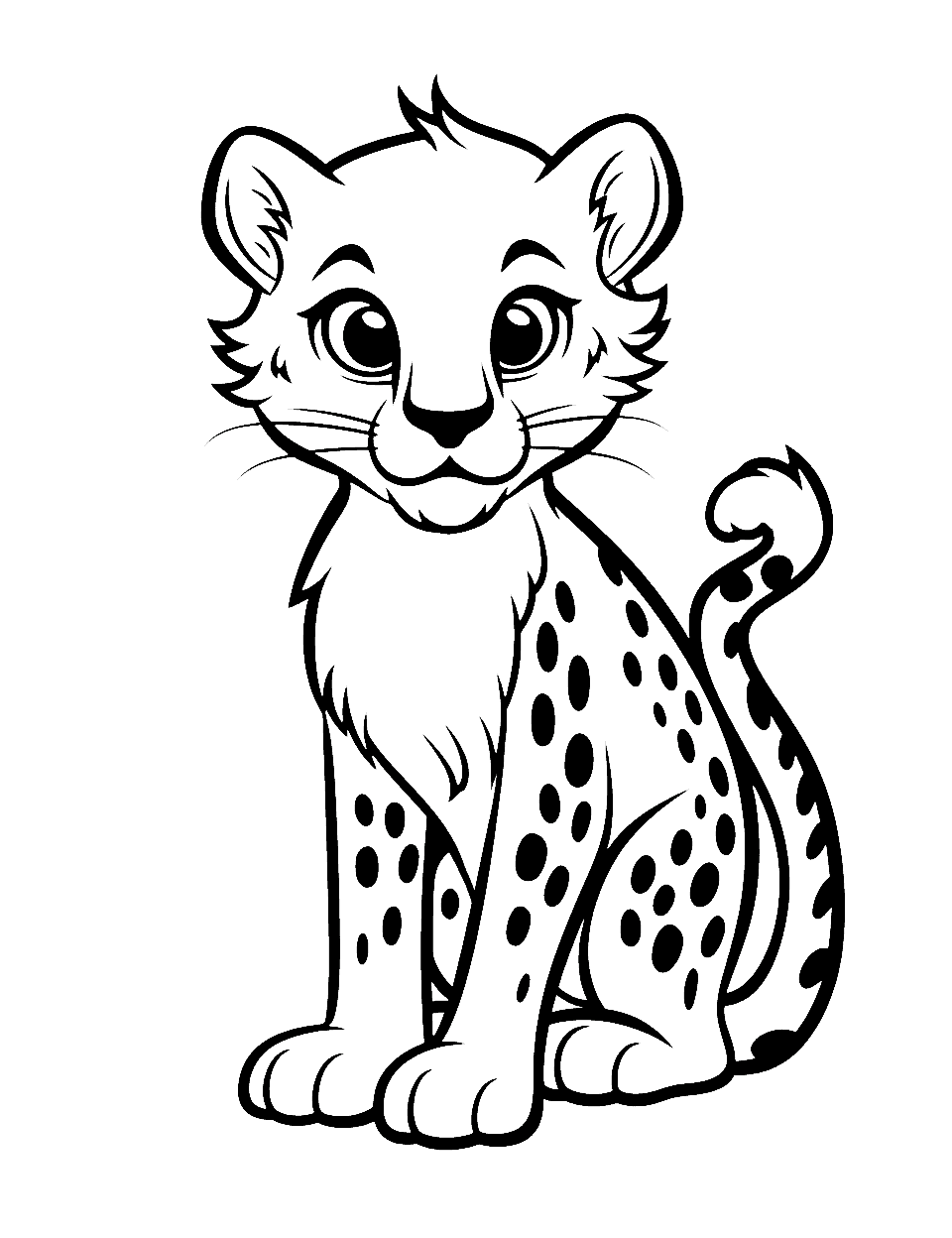
Cute Cheetah Sitting
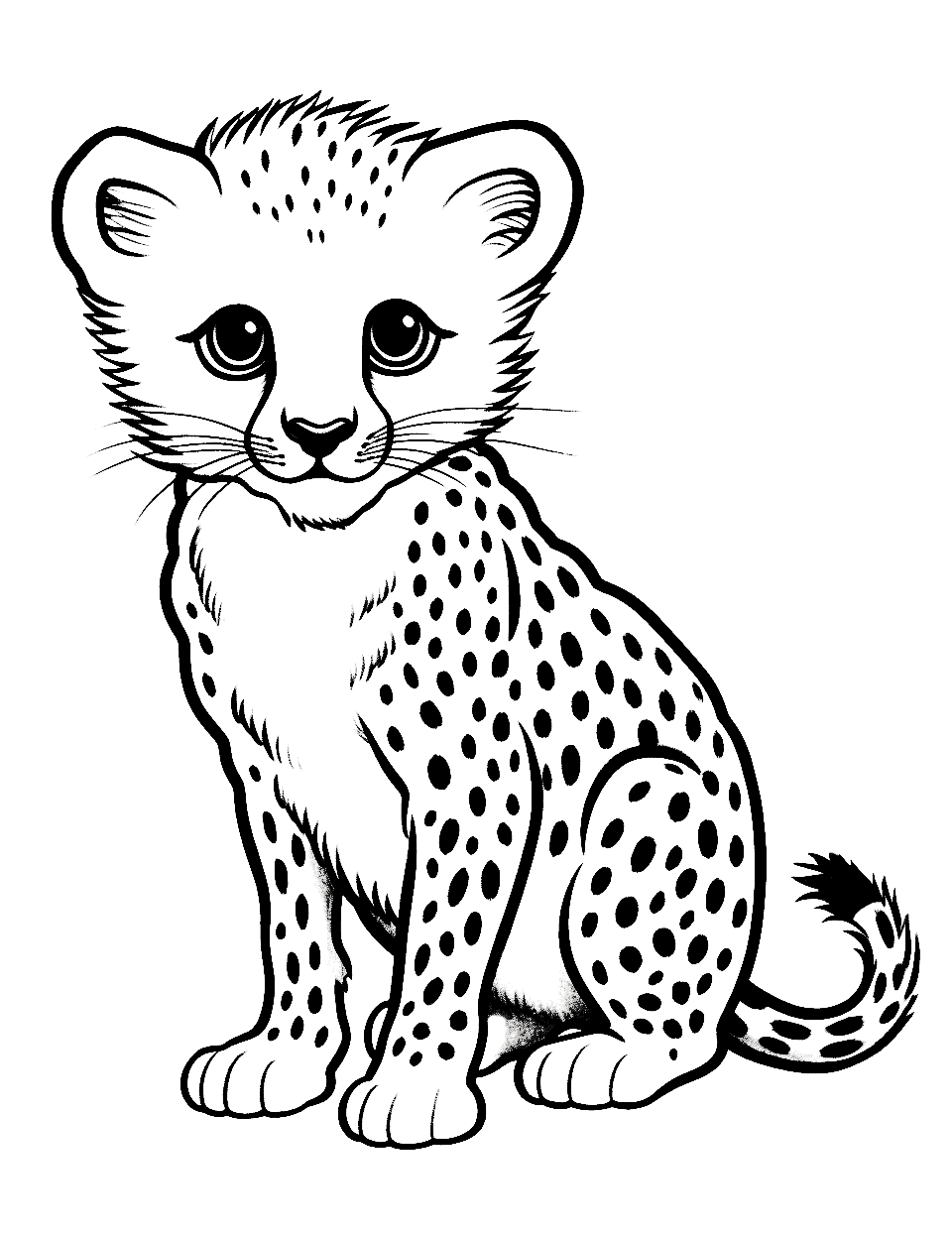
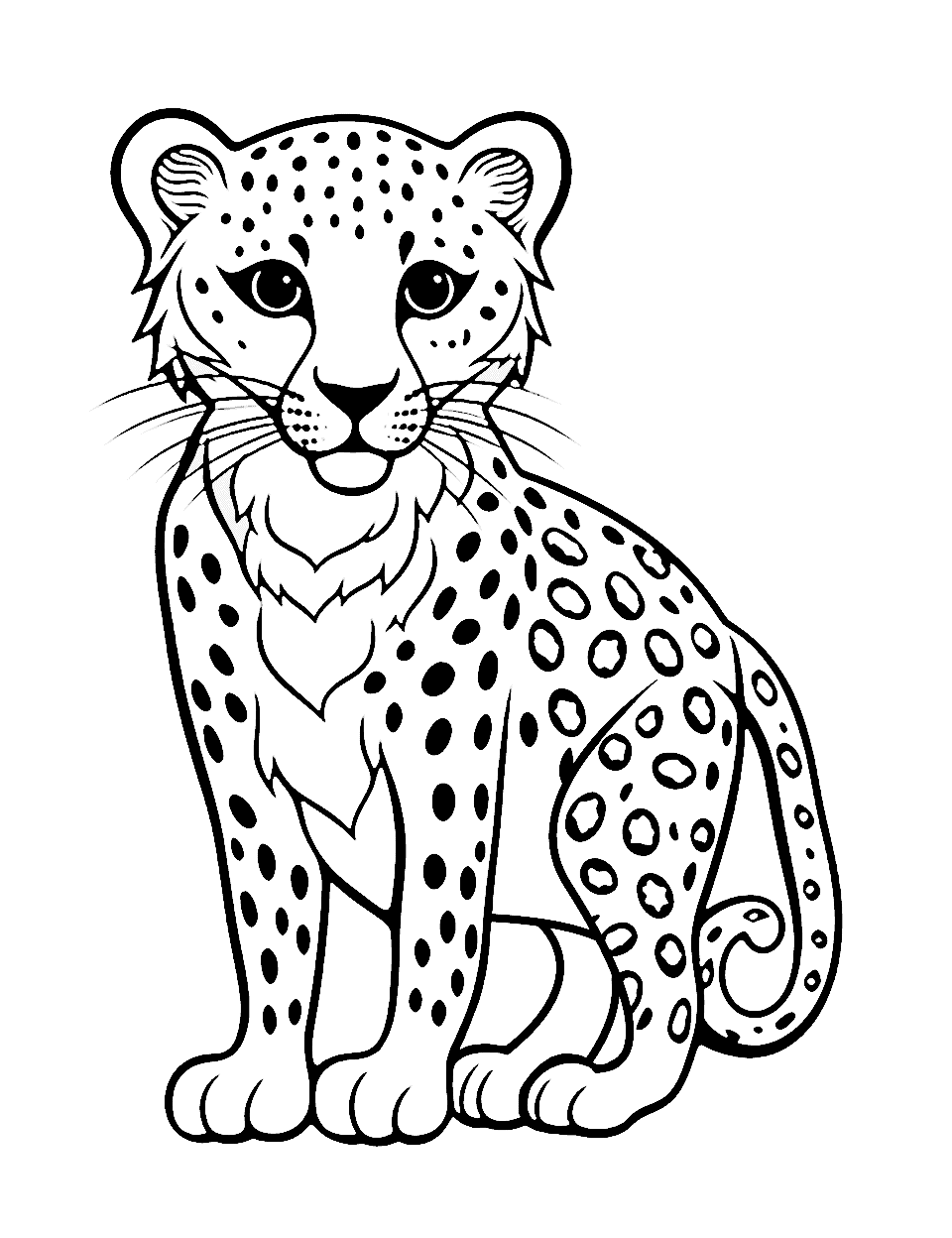
This adorable cheetah sits calmly. It has a gentle smile on its face. The large eyes make this page perfect for younger artists who want a friendly animal to color.
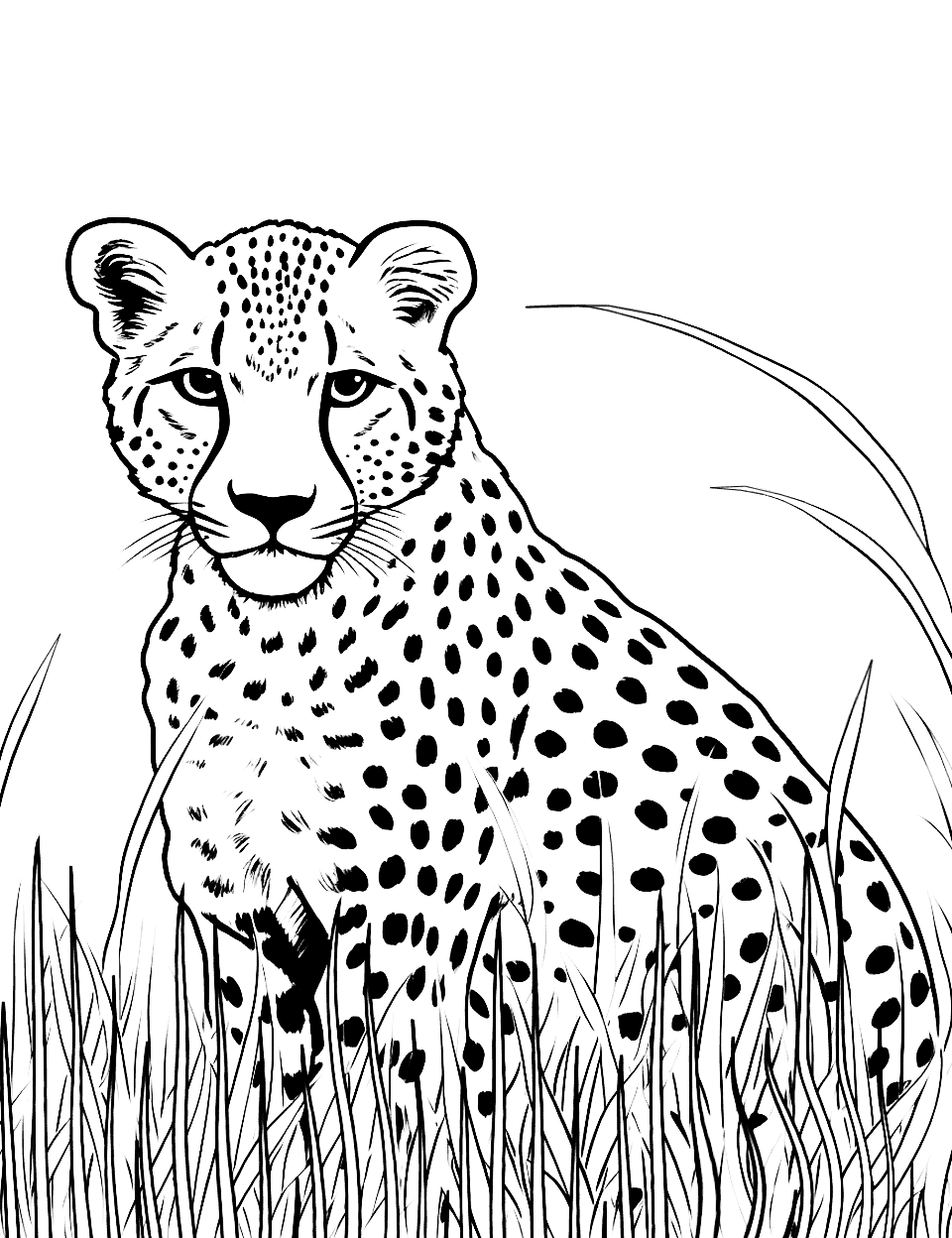
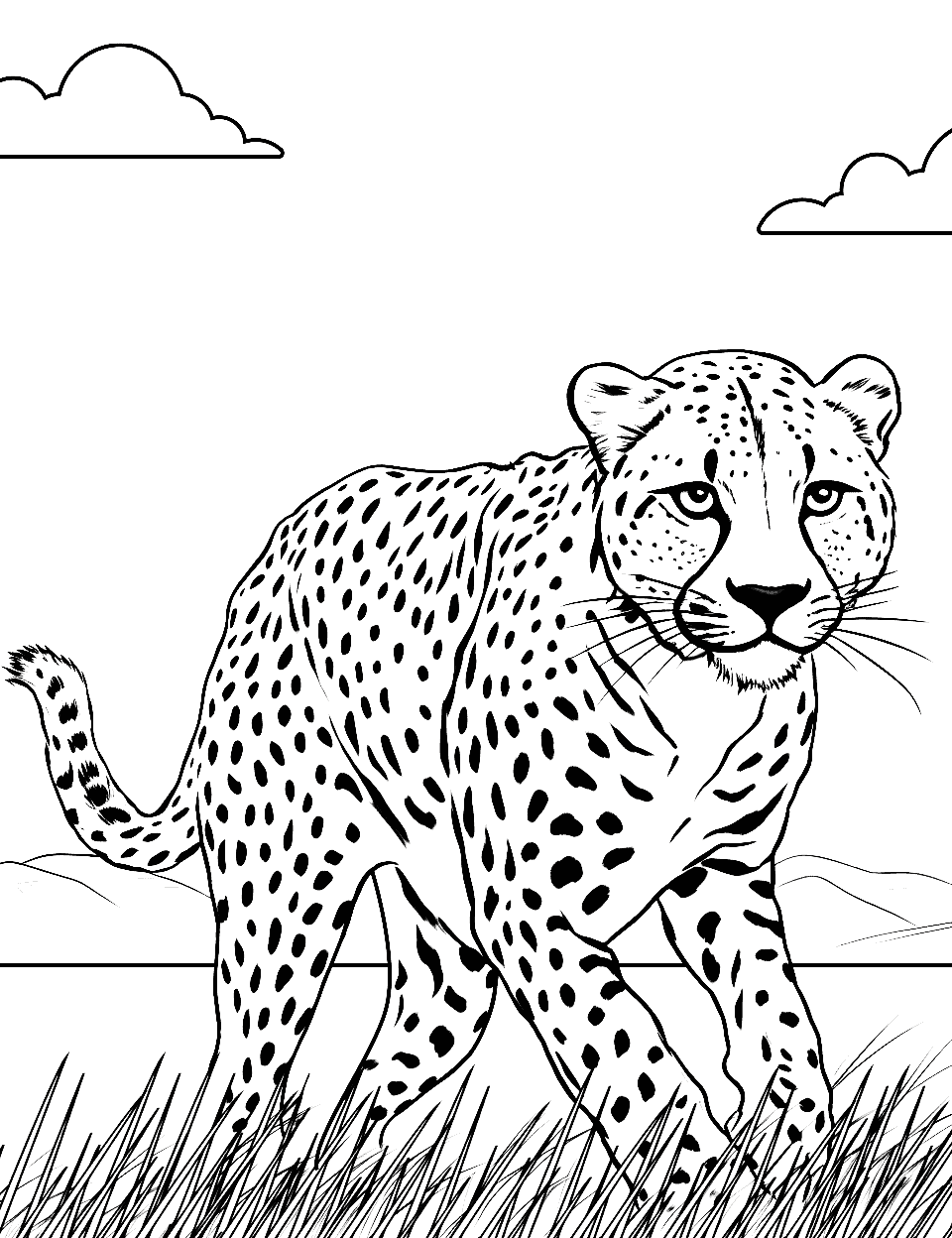
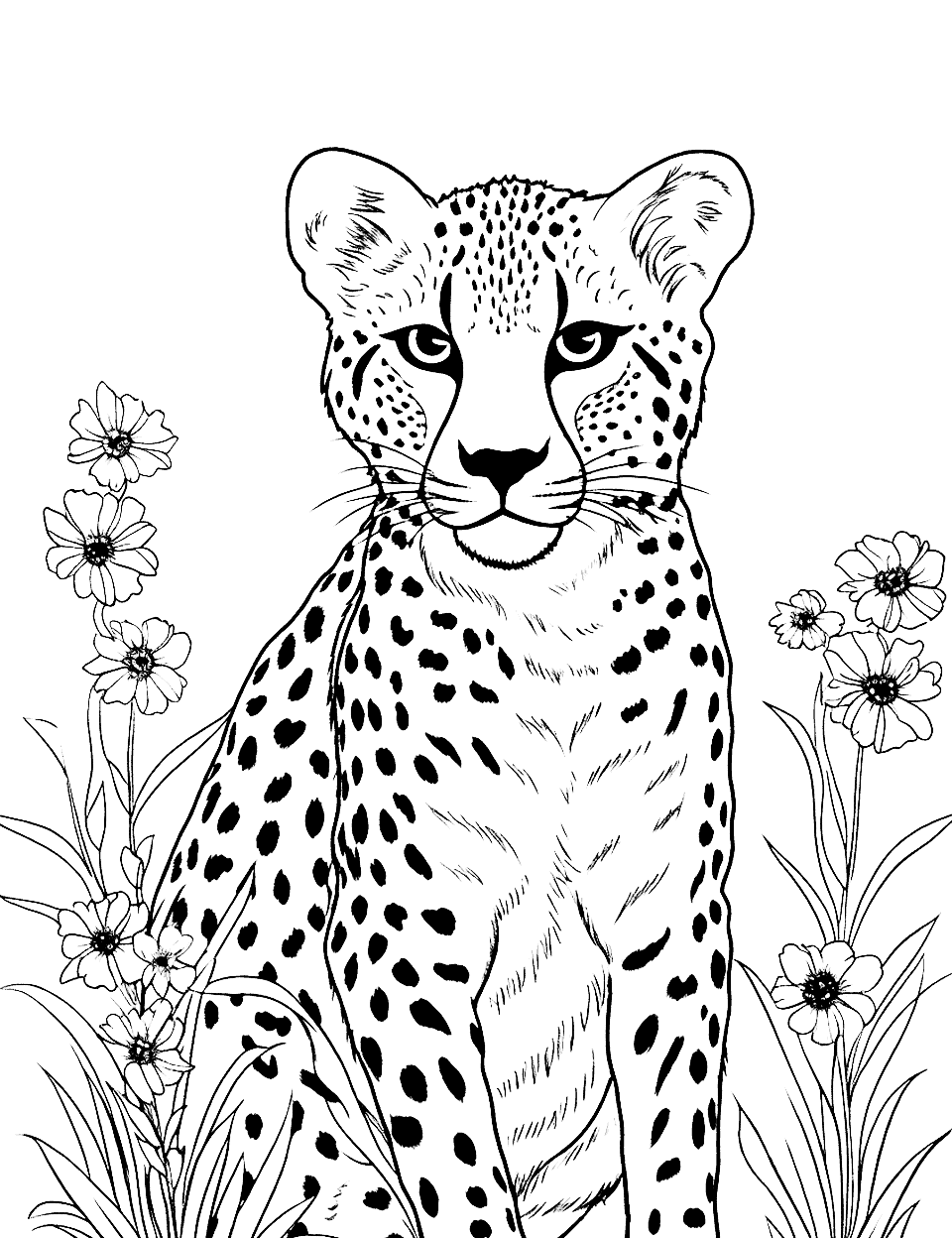
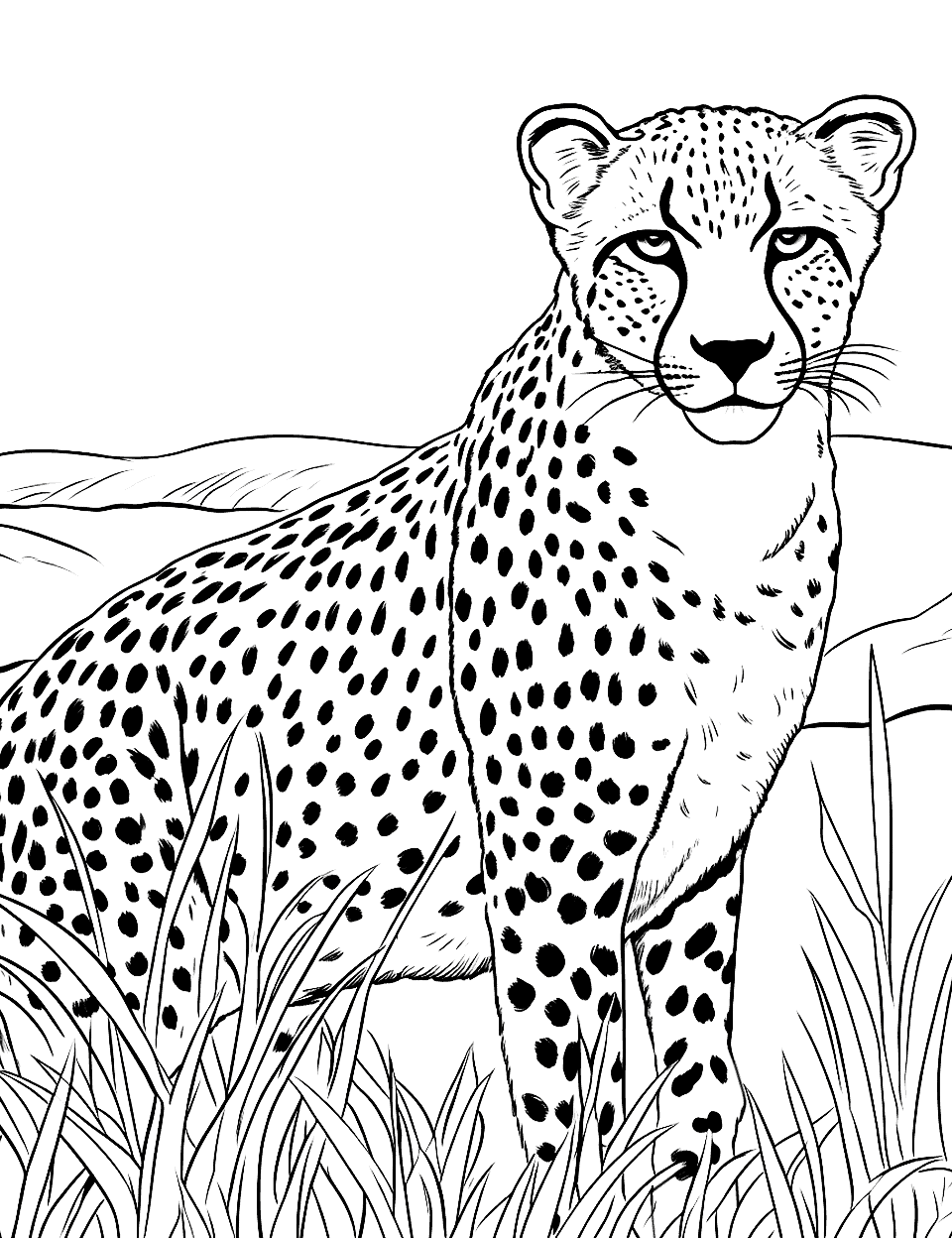
This lifelike cheetah hides in the tall savannah grass. It is waiting for the perfect moment to pounce. Use different shades of yellow and green to create depth in the grass.
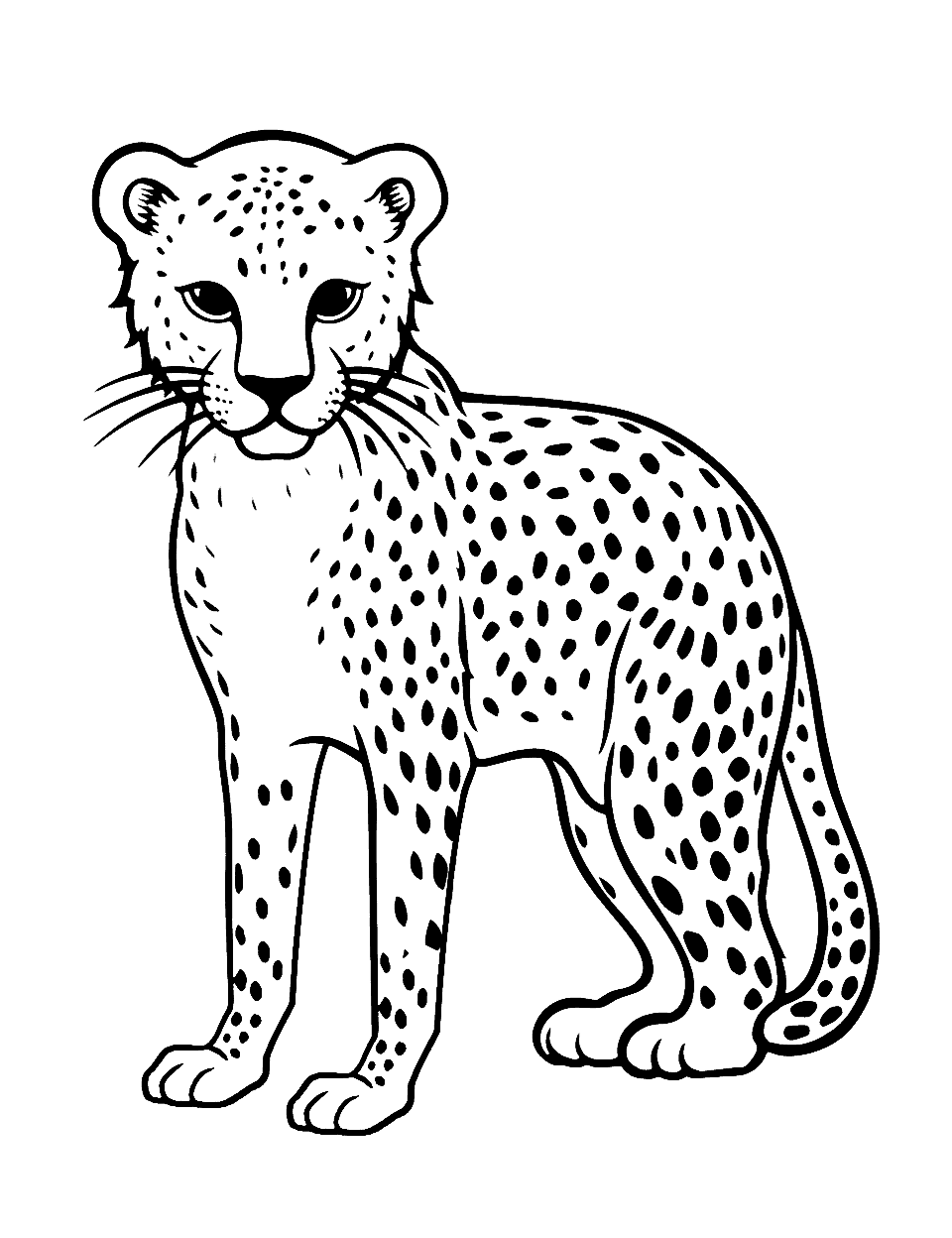
A curious cheetah cub explores its surroundings. It sniffs the air and looks around with wide eyes. You can draw some bugs or plants in the background to complete the scene.
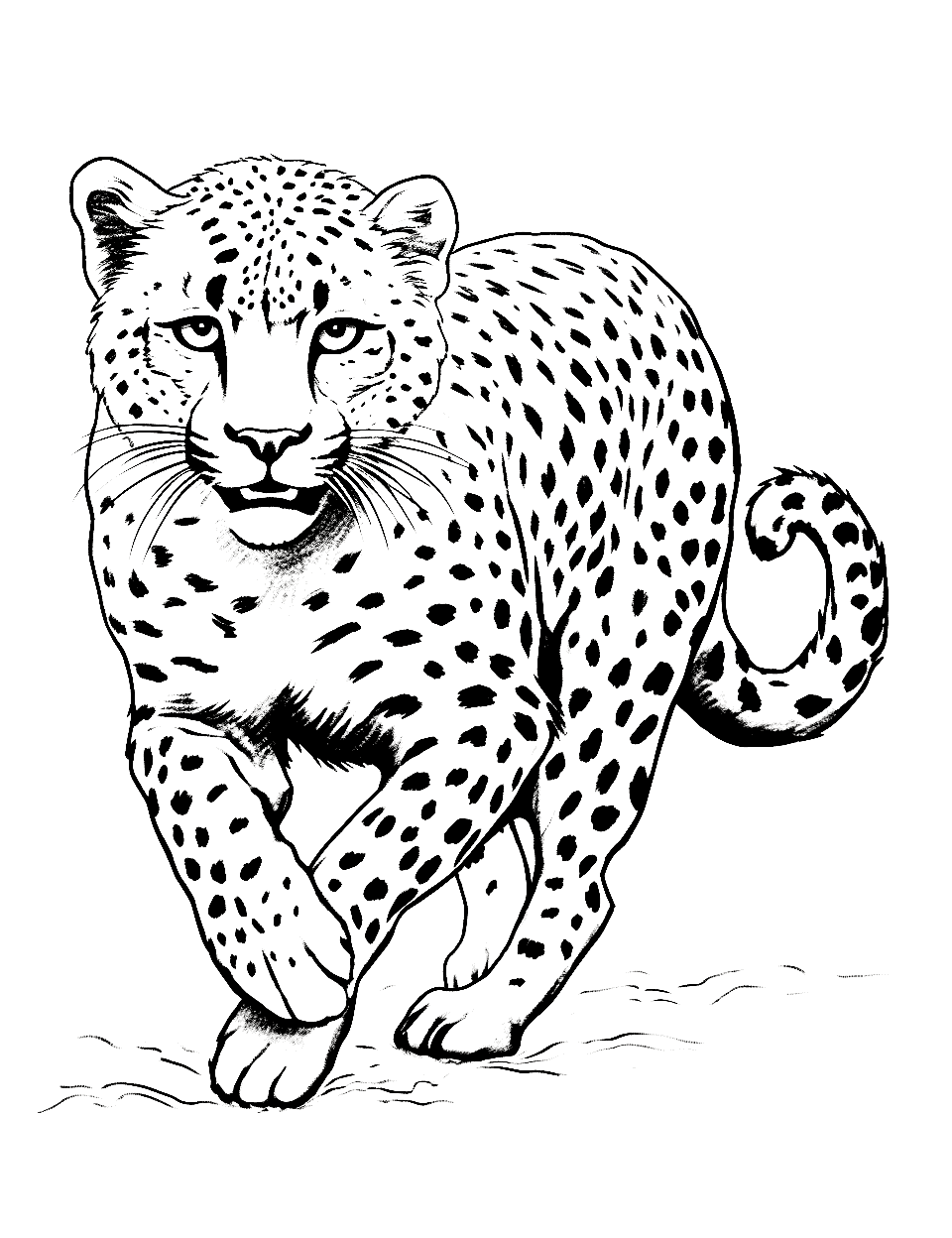
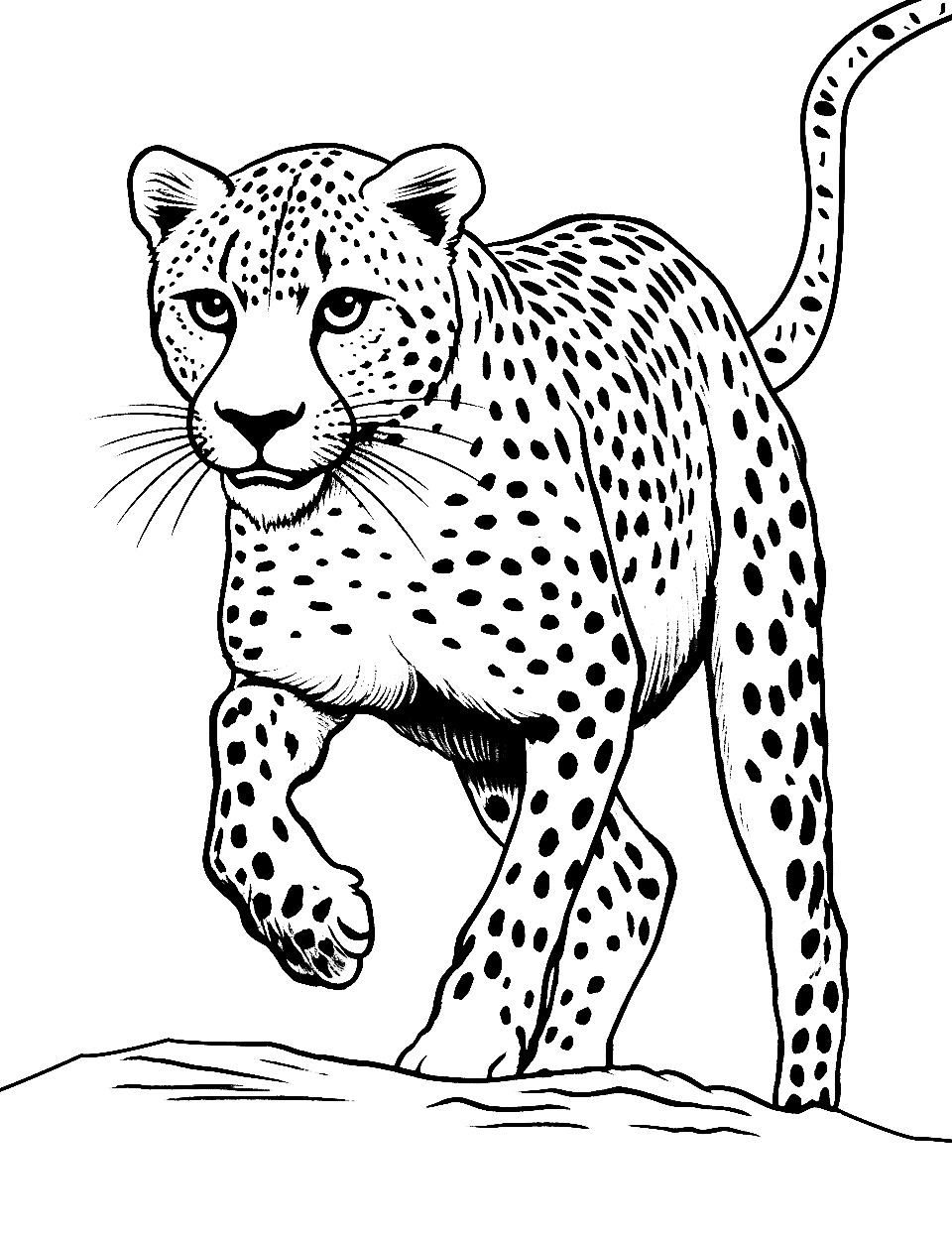
This dynamic scene shows a cheetah sprinting at full speed. Its tail helps it balance during sharp turns. Add motion lines behind the cheetah to emphasize how fast it is going.
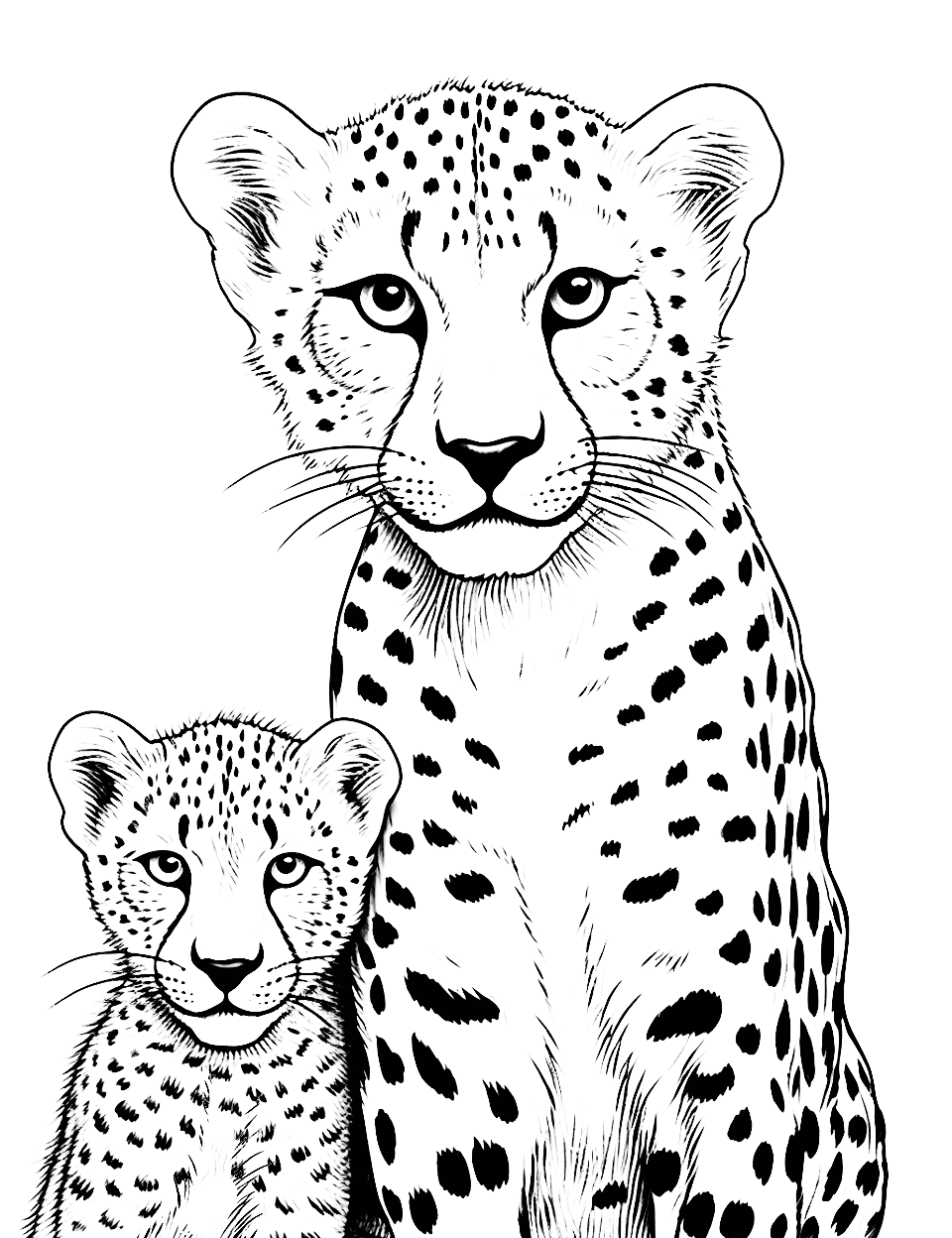
This heartwarming scene features a cub snuggling with its mother. It highlights the strong bond between them. Use warm colors to make the moment feel extra cozy.
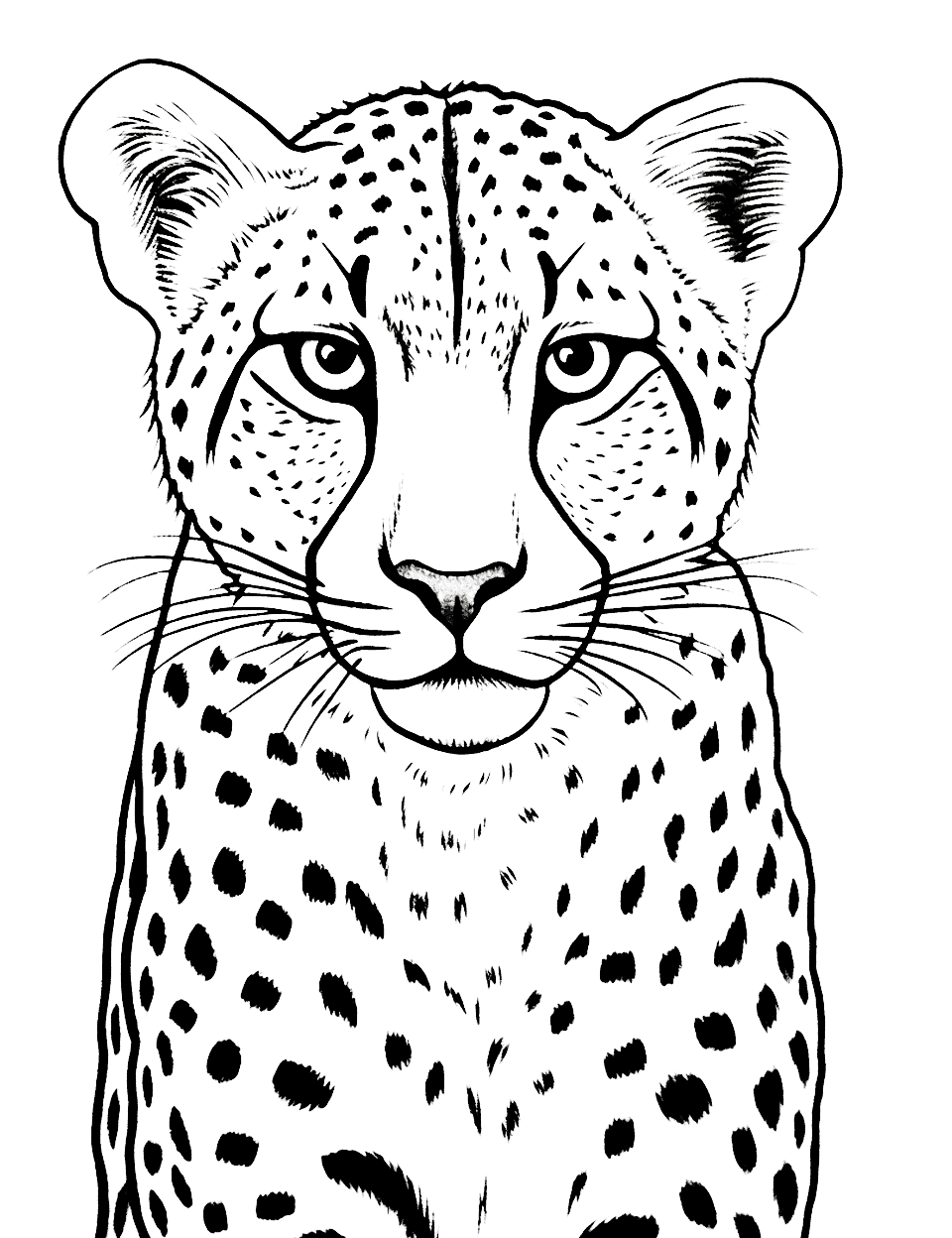
This close-up portrait shows the details of a cheetah’s face. You can see the distinct “tear marks” running from the eyes to the mouth. It is complex enough for older kids and adults.
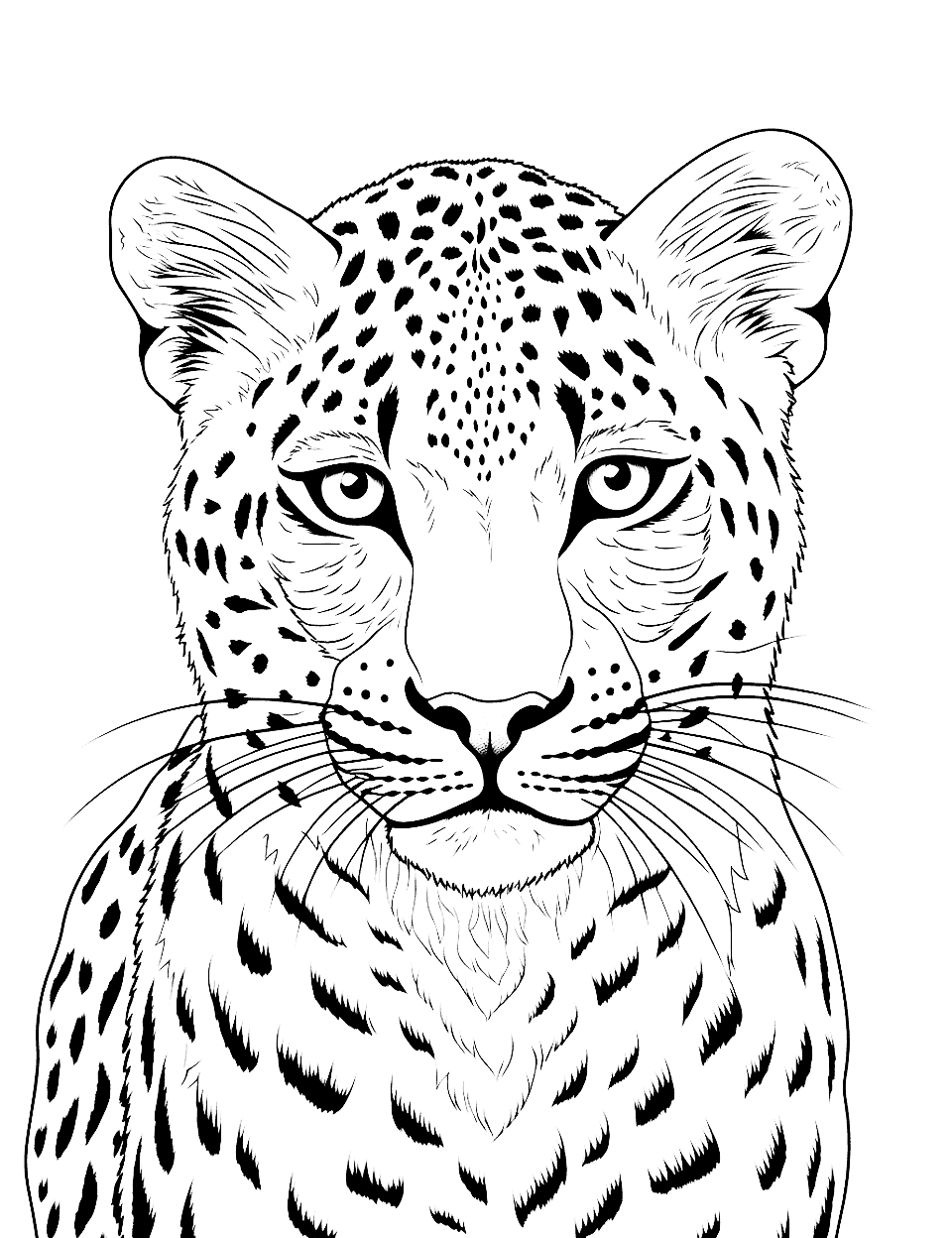
Focus on the intense gaze of this cheetah. The sketch style highlights the eyes and ears. Try using charcoal or shading pencils to give it a realistic texture.
Here is a cheetah drawn in a fun cartoon style. It looks like a character from a movie. This page allows for creative color choices, so don’t be afraid to use bright colors.
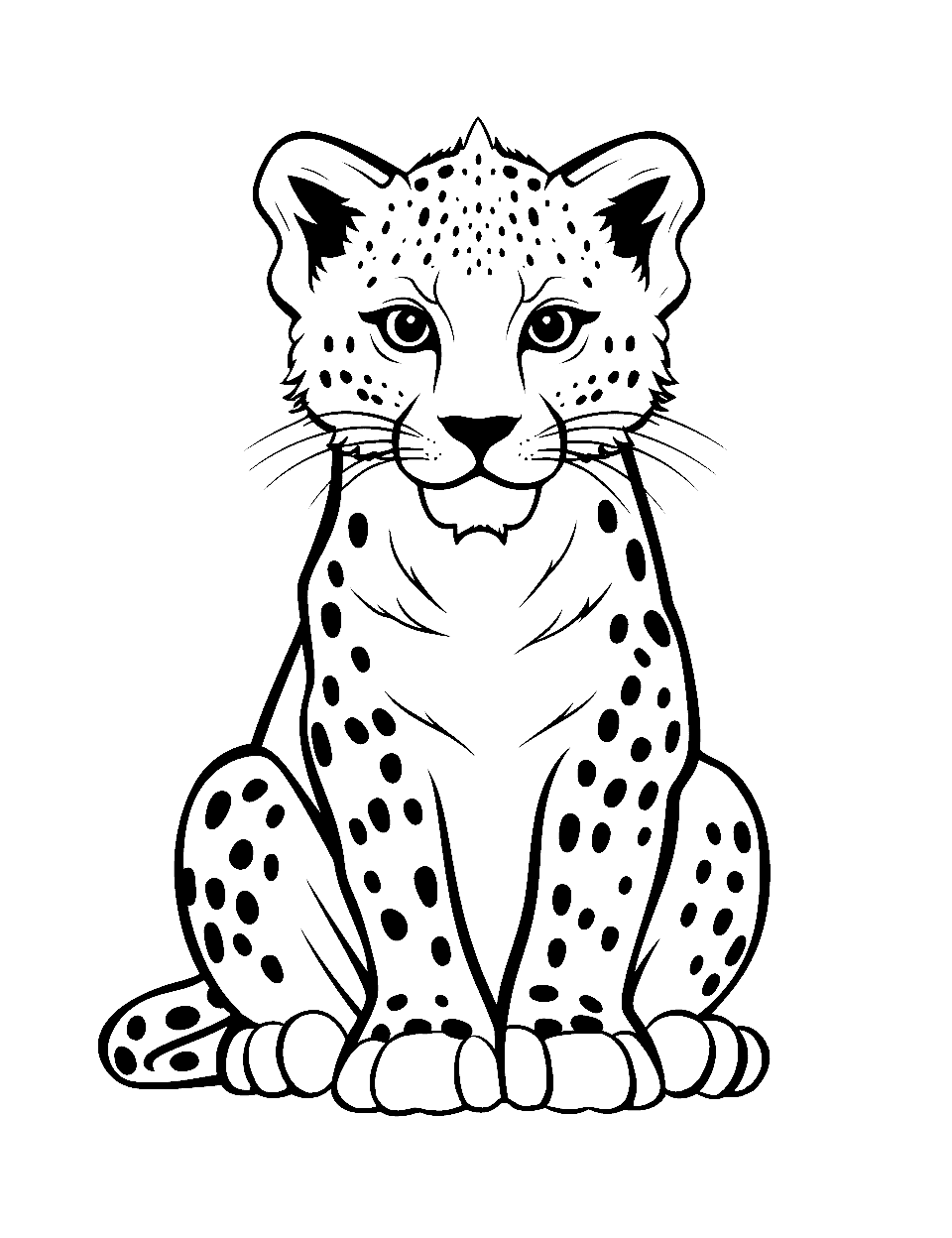
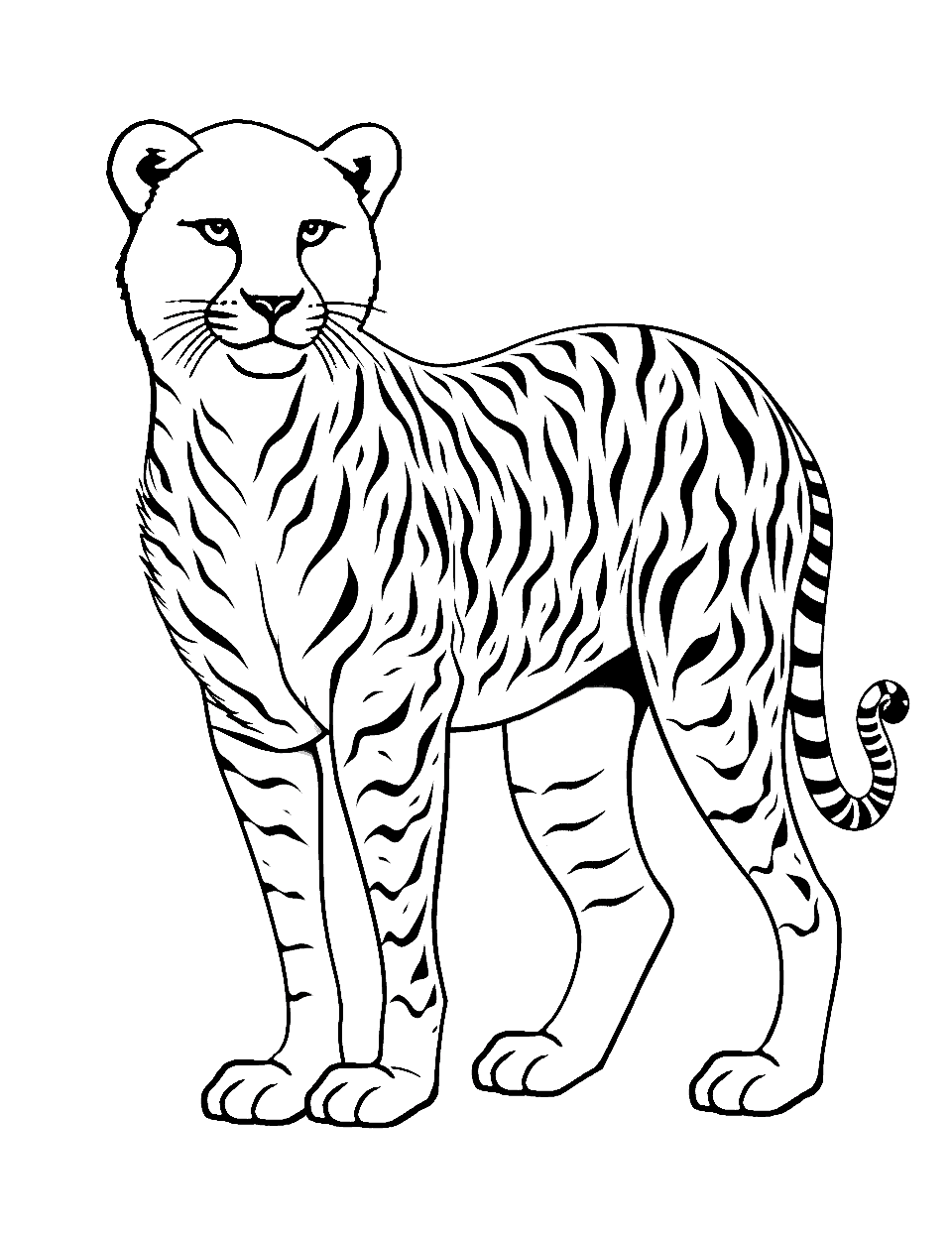
A majestic cheetah sits like a king. It has a proud and regal expression. King cheetahs have a rare mutation that connects their spots into stripes on their back.
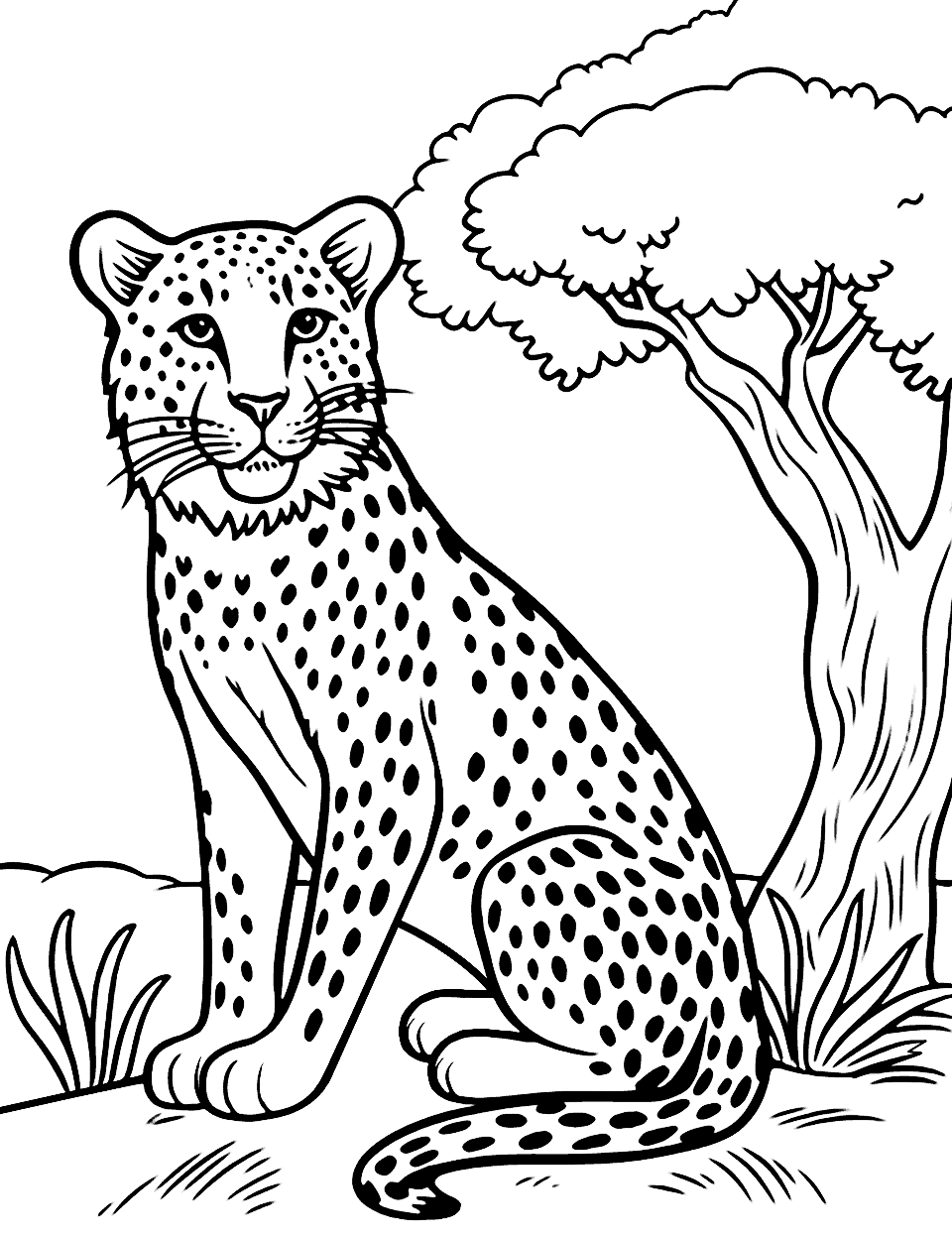
A serene cheetah rests under a shady tree to escape the heat. The savannah sun can be intense. Color the sky a bright blue to contrast with the yellow grass.
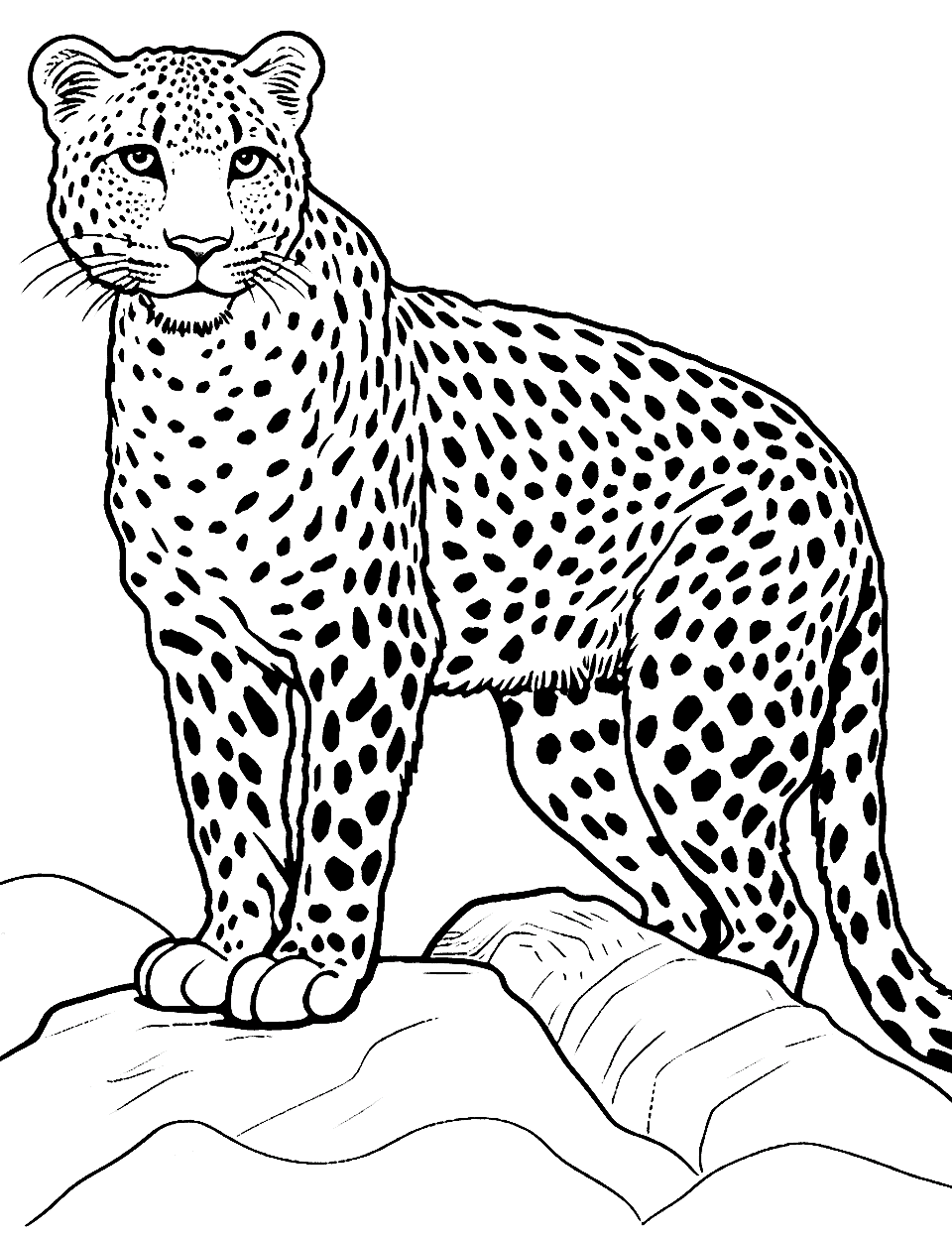
This rare Asiatic cheetah stands in its natural habitat. These cats are critically endangered. Coloring this page is a great way to learn about conservation.
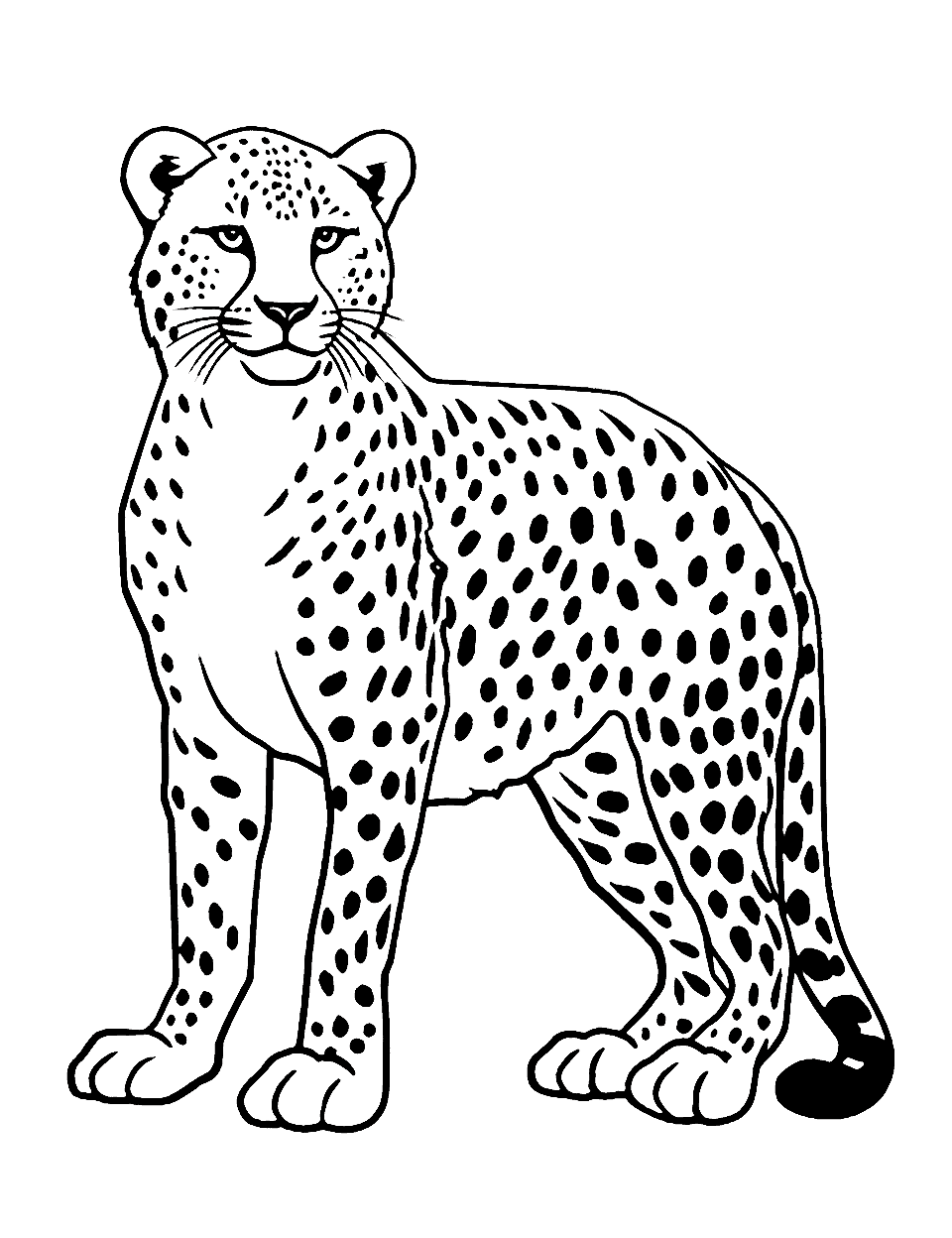
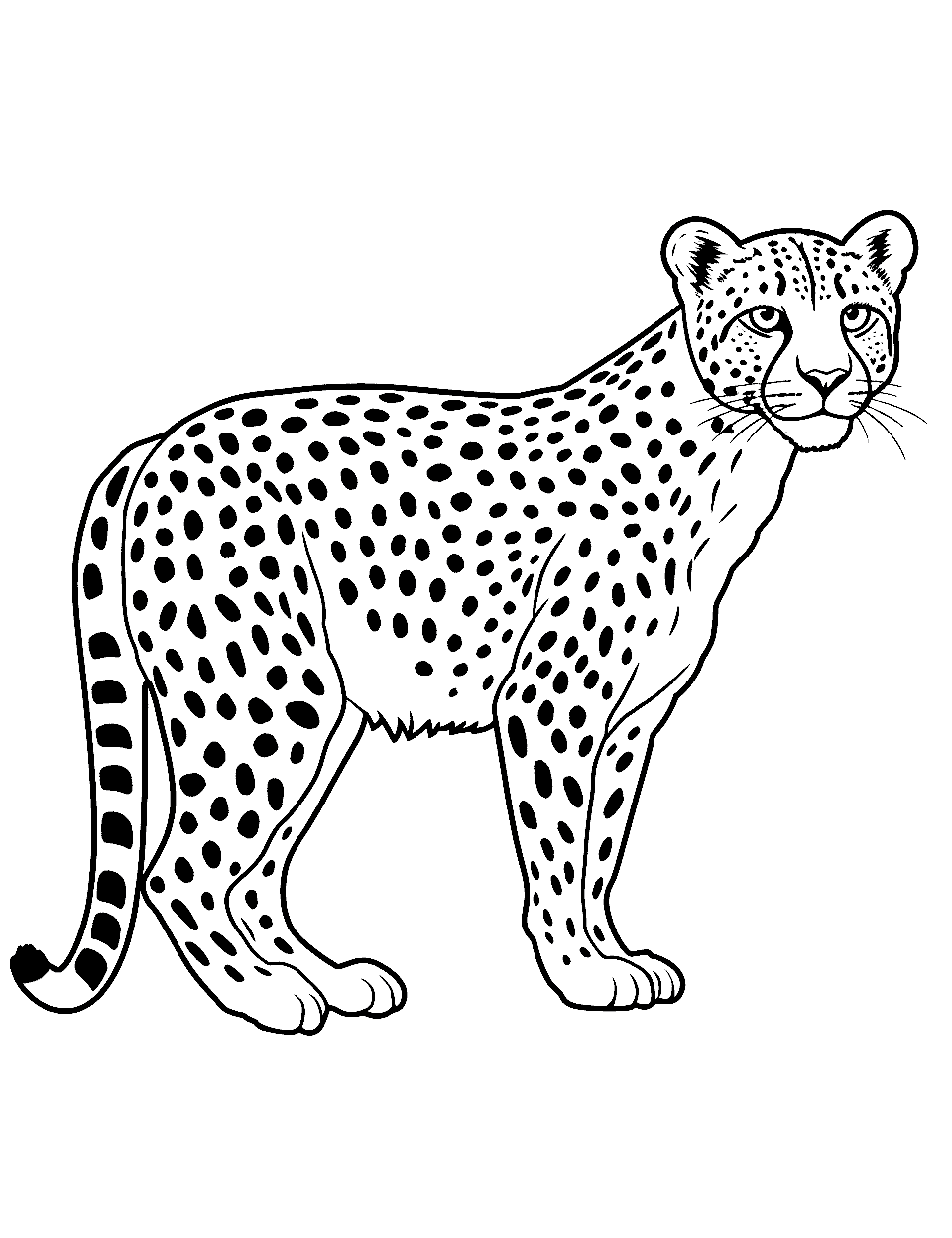
See the side profile of the cheetah, scientifically known as Acinonyx jubatus. You can clearly see its aerodynamic build. This shape helps it reach incredible speeds.
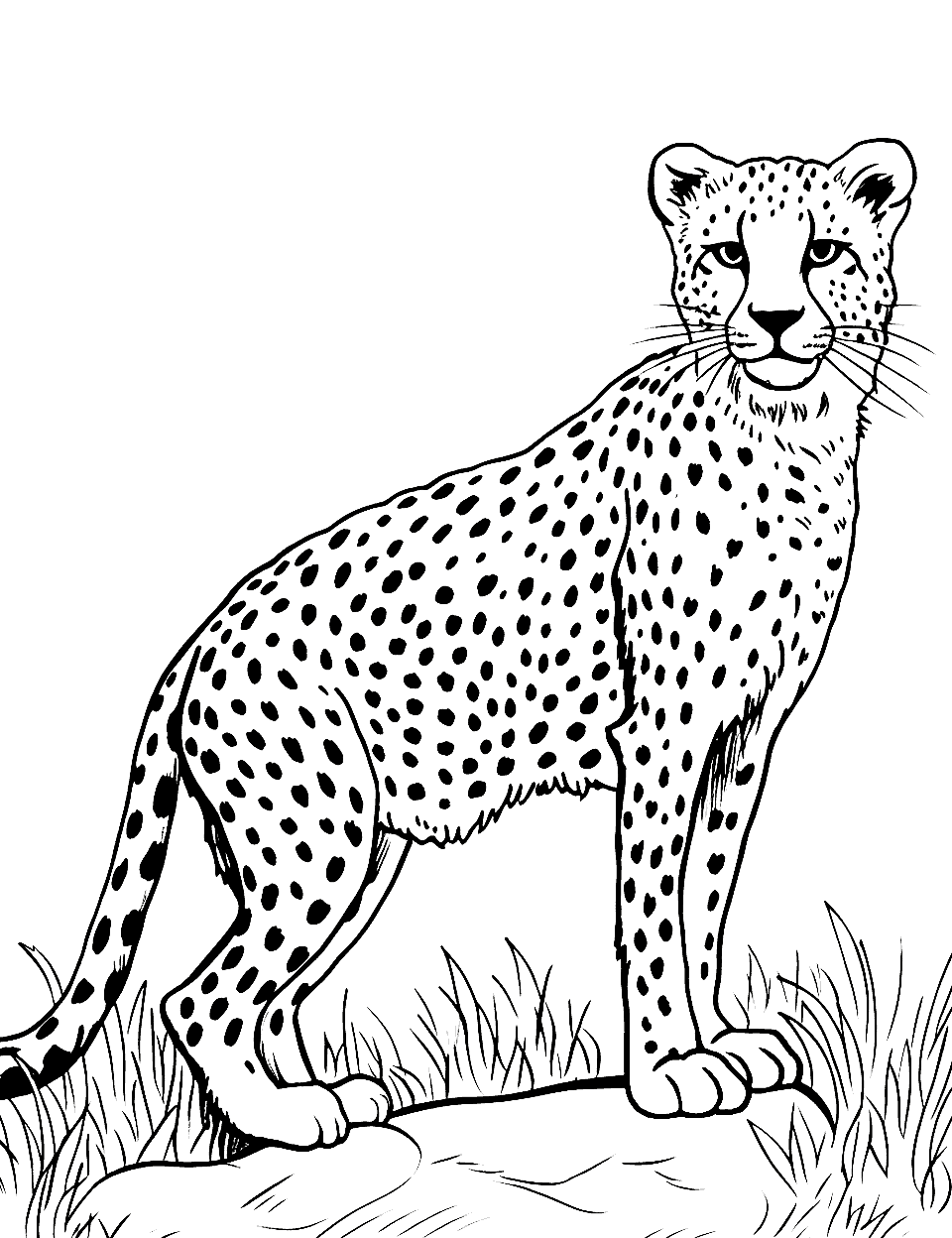
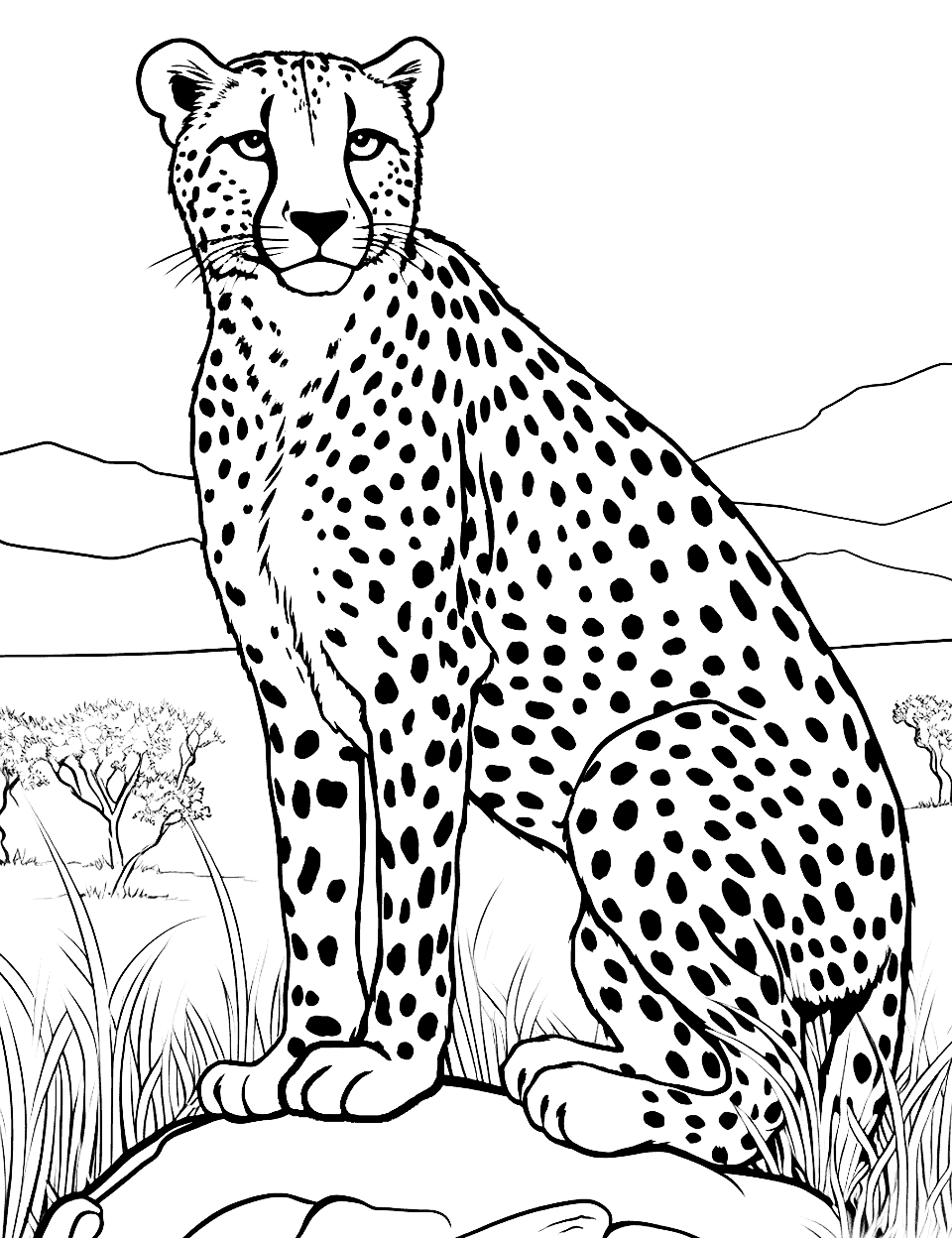
A beautiful South African cheetah scans the horizon. It is looking for prey or potential danger. The landscape behind it offers plenty of space for background details.
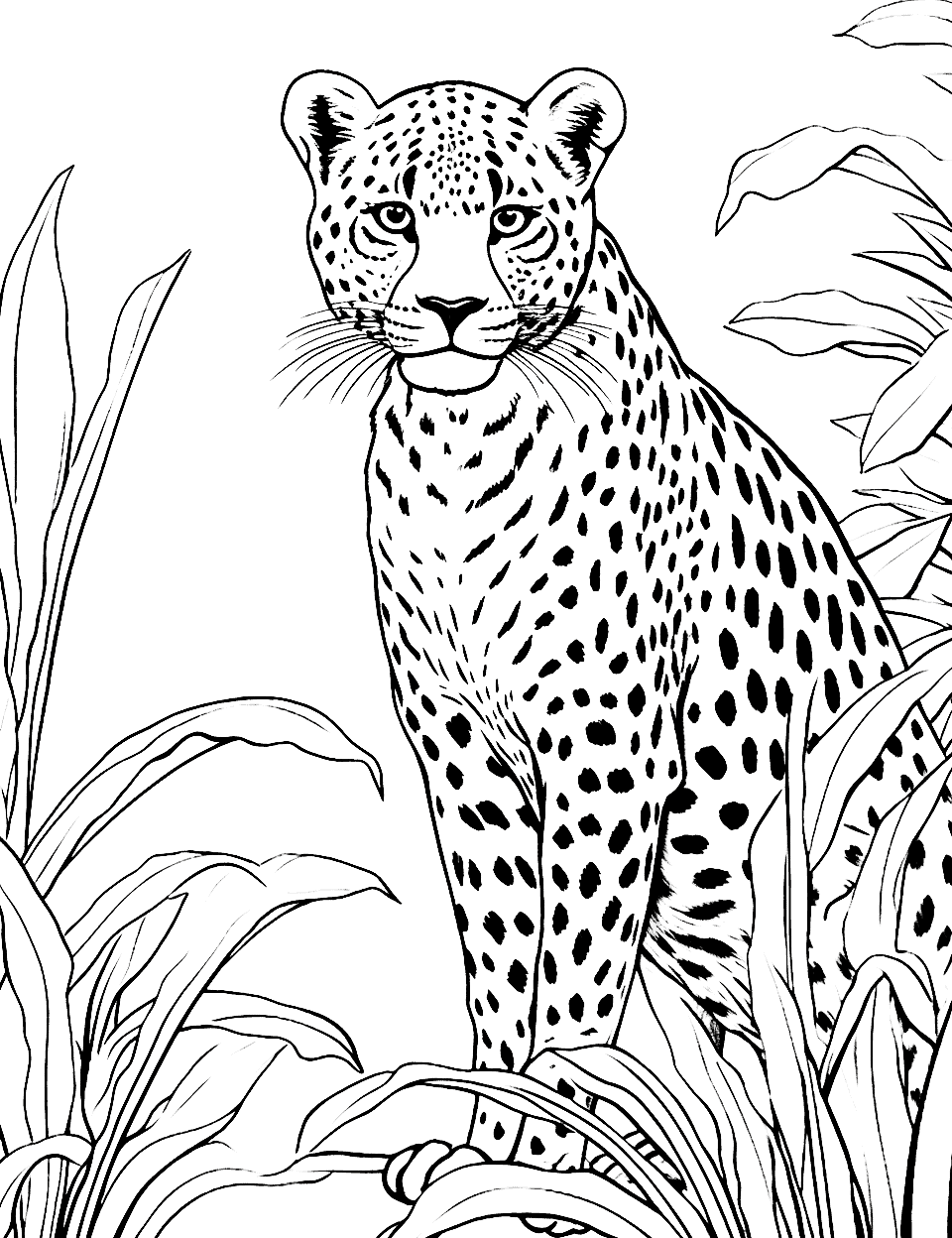
This cheetah stealthily moves through a dense jungle. While they usually prefer open plains, they sometimes travel through thicker brush. Use lush greens for the leaves.
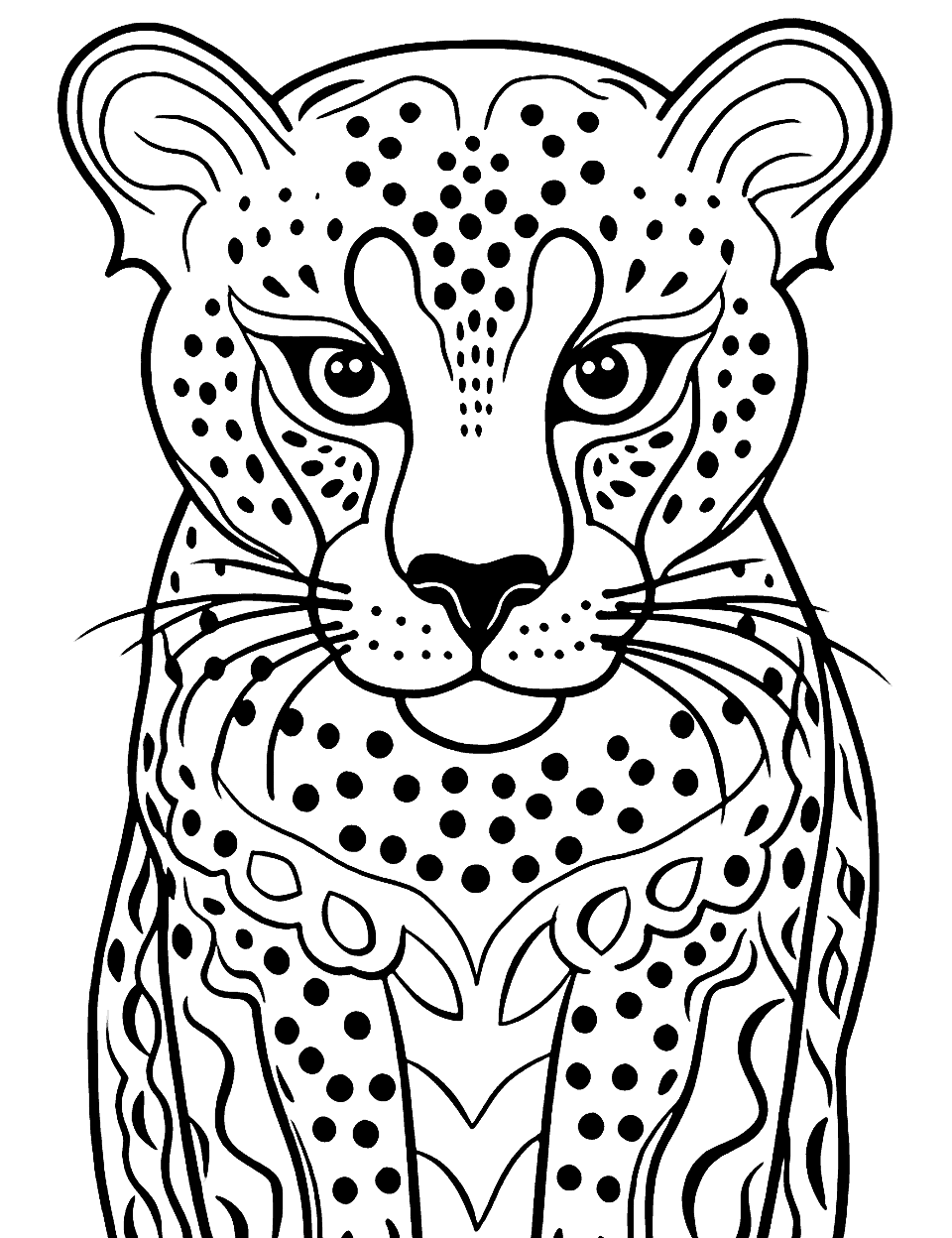
This cheetah features uniquely patterned spots. It allows for a more artistic approach. You can color each spot a different shade for a rainbow effect.
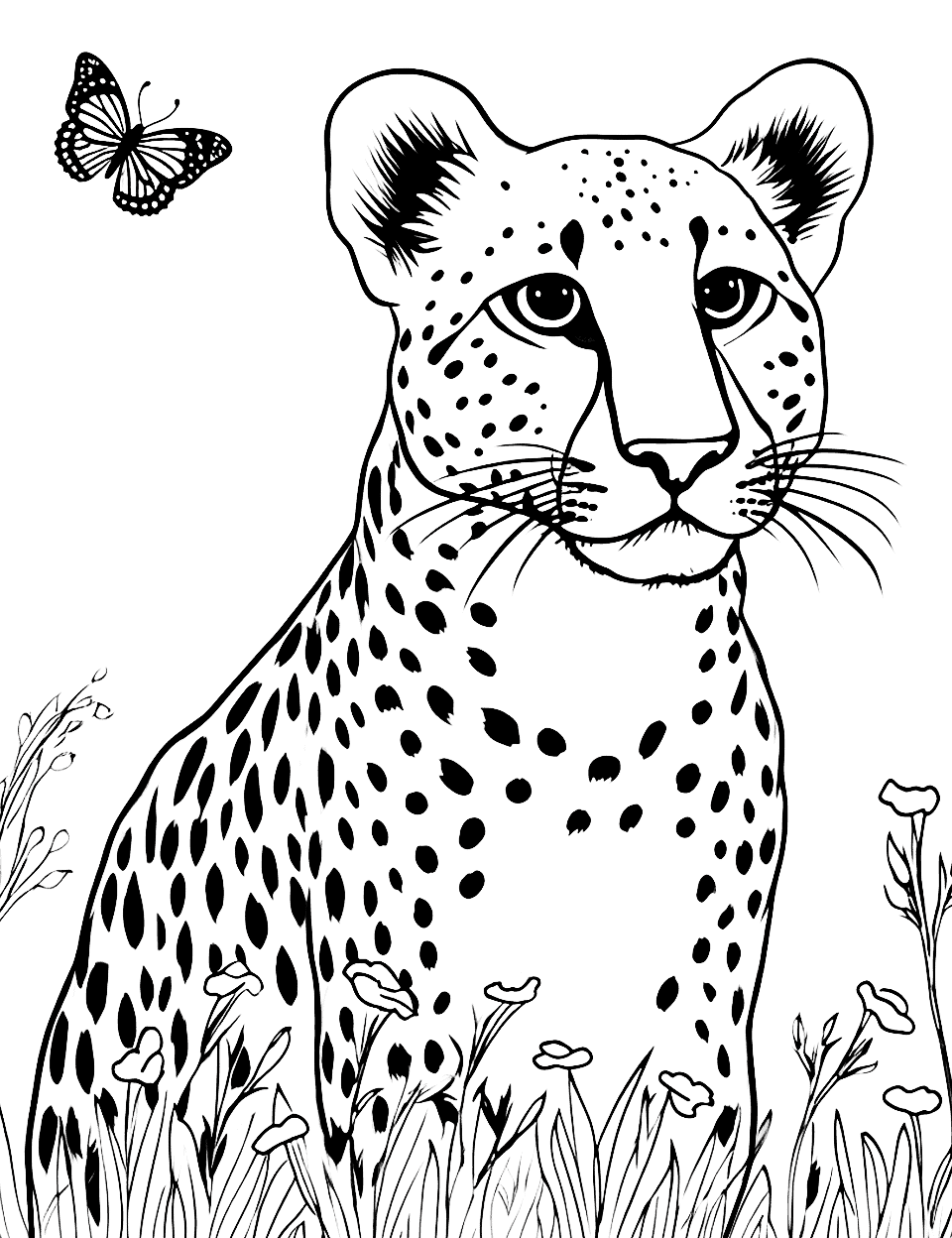
A whimsical scene shows a cheetah watching a butterfly fly past. It shows the gentler side of this fierce predator. The contrast between the big cat and the small insect is fun to color.
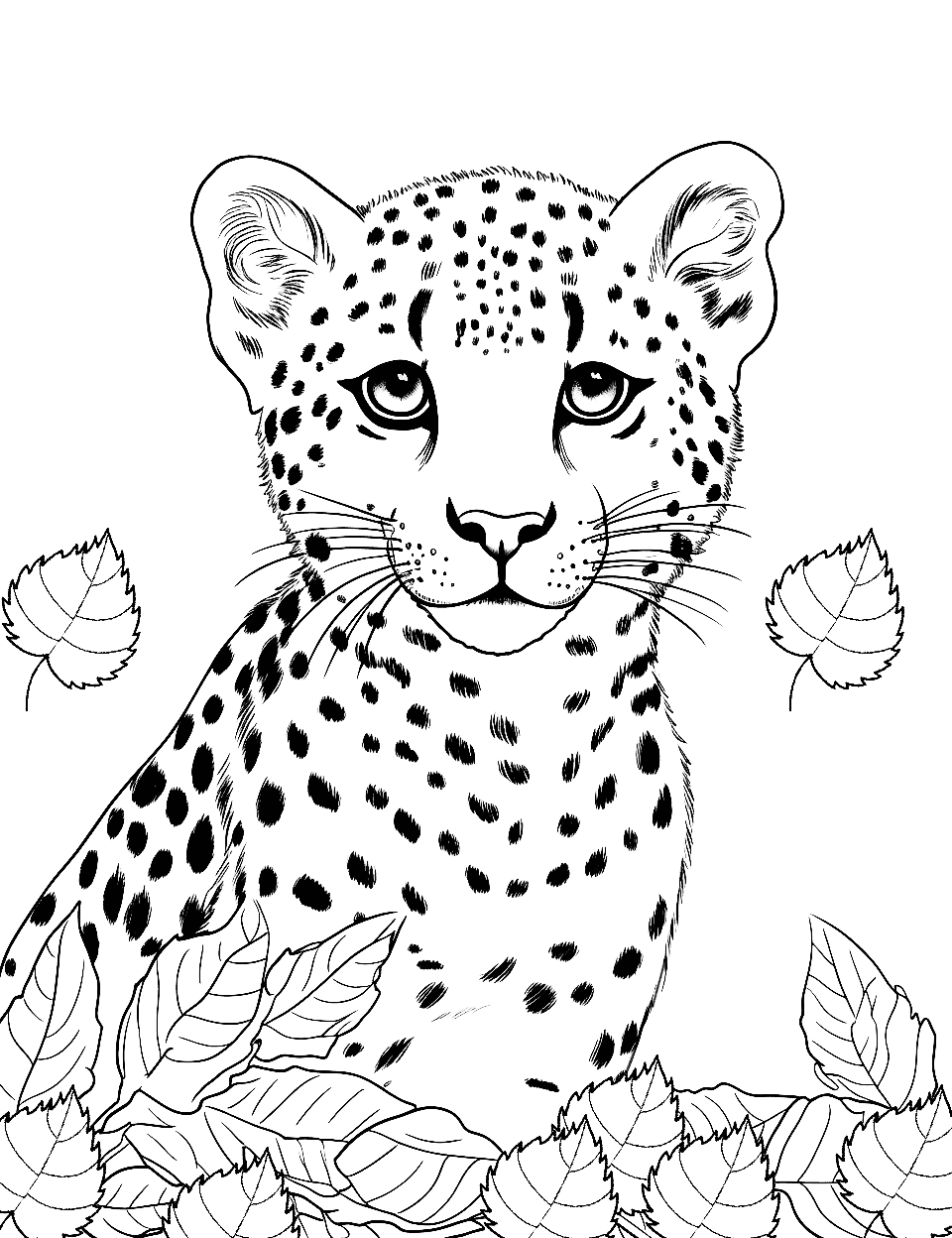
This cheetah is surrounded by falling autumn leaves. The orange and red tones of the season match the cheetah’s coat perfectly. It creates a warm, seasonal vibe.
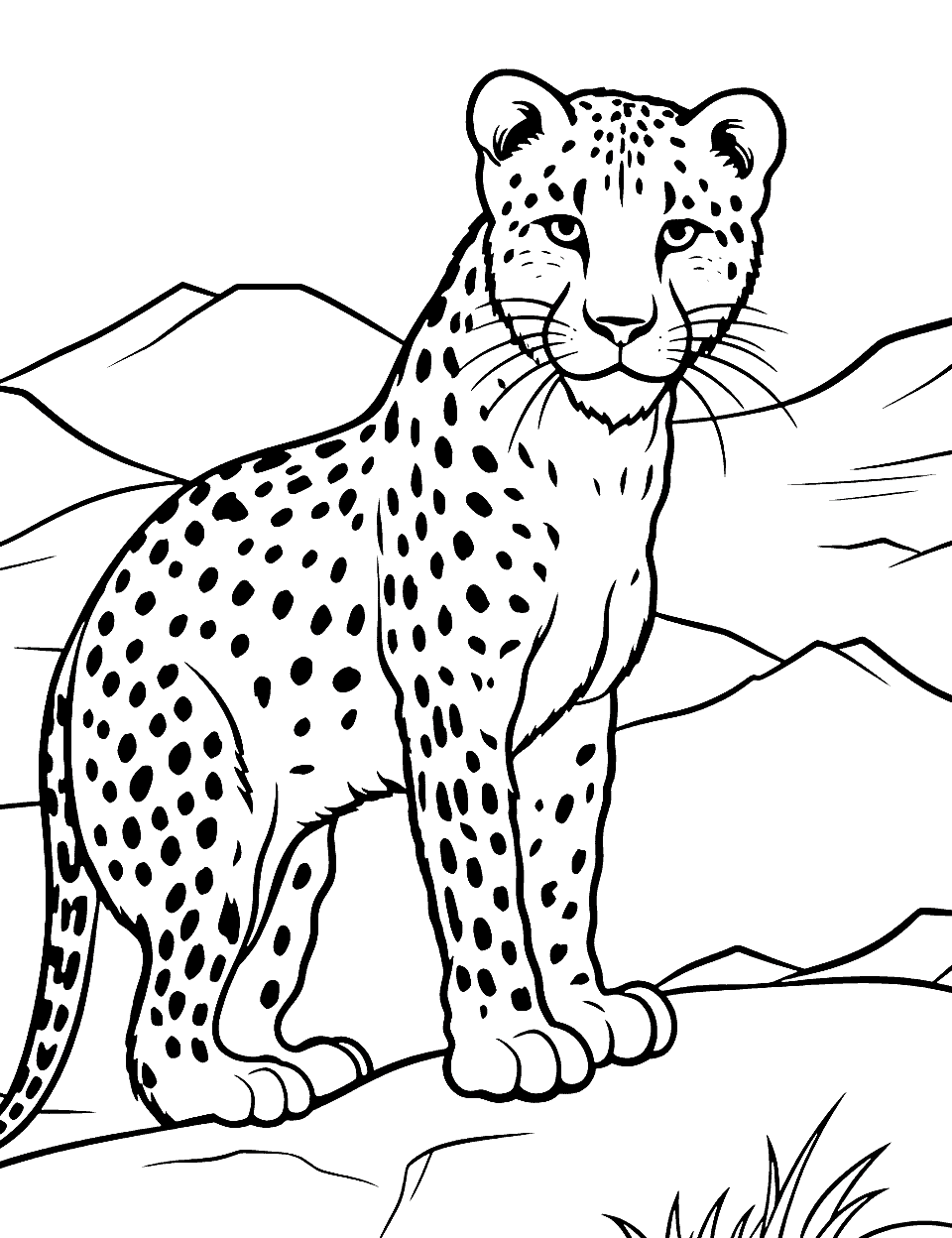
This cheetah navigates a rugged, mountainous terrain. It shows their adaptability to different environments. The mountains in the background add depth to the picture.
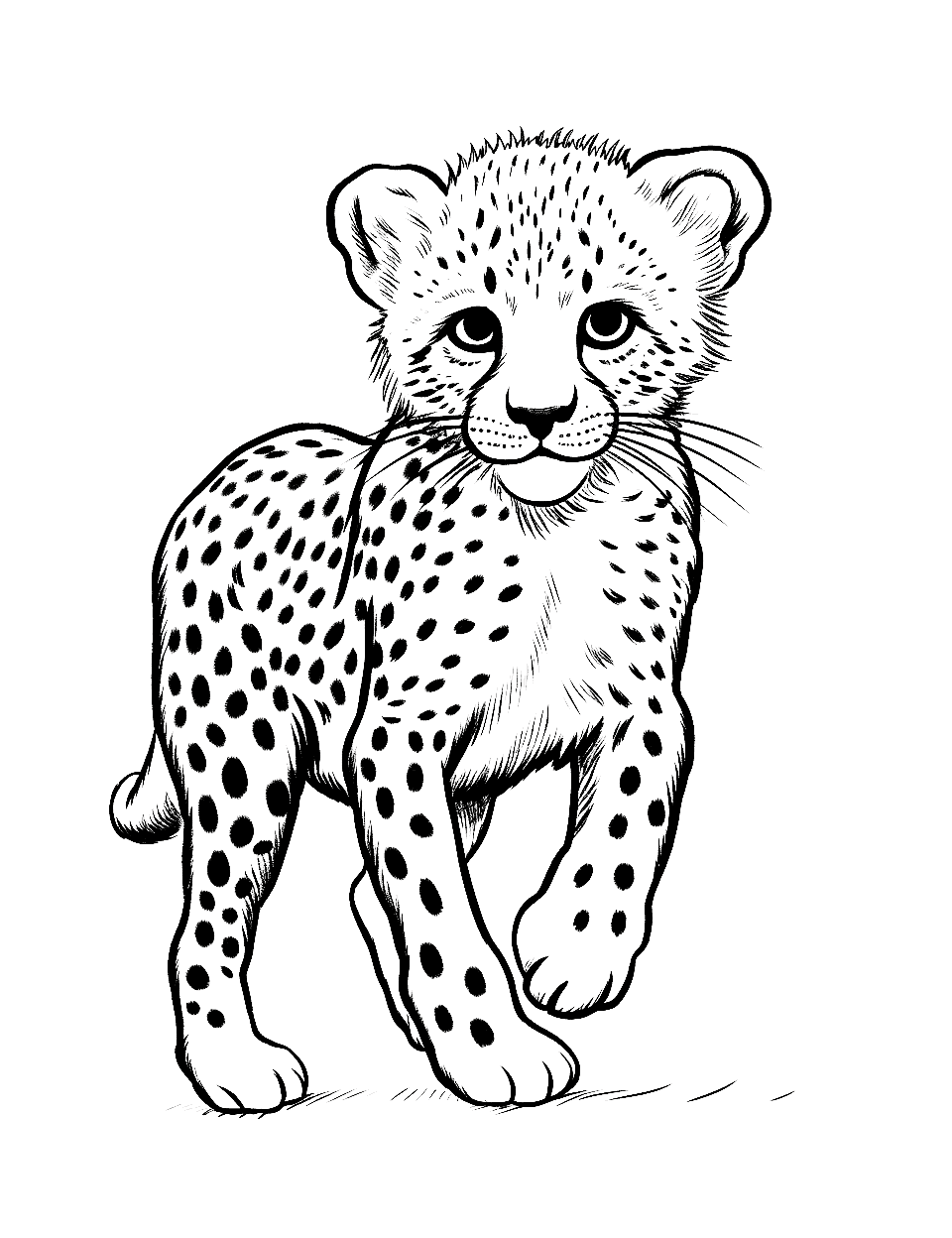
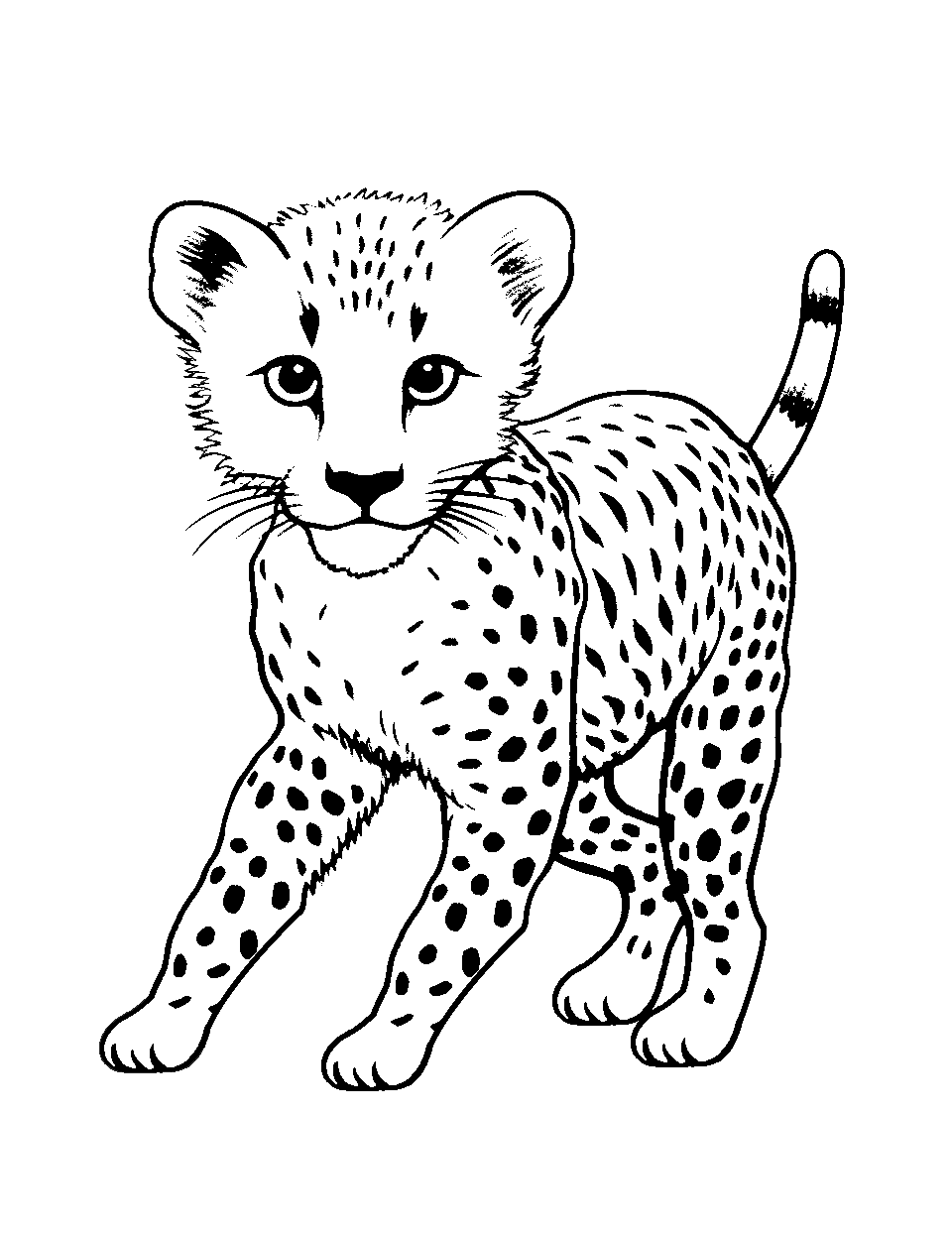
A playful cheetah cub looks ready for trouble. Cubs have a mantle of long hair on their backs for camouflage. Don’t forget to color that fluffy strip!.
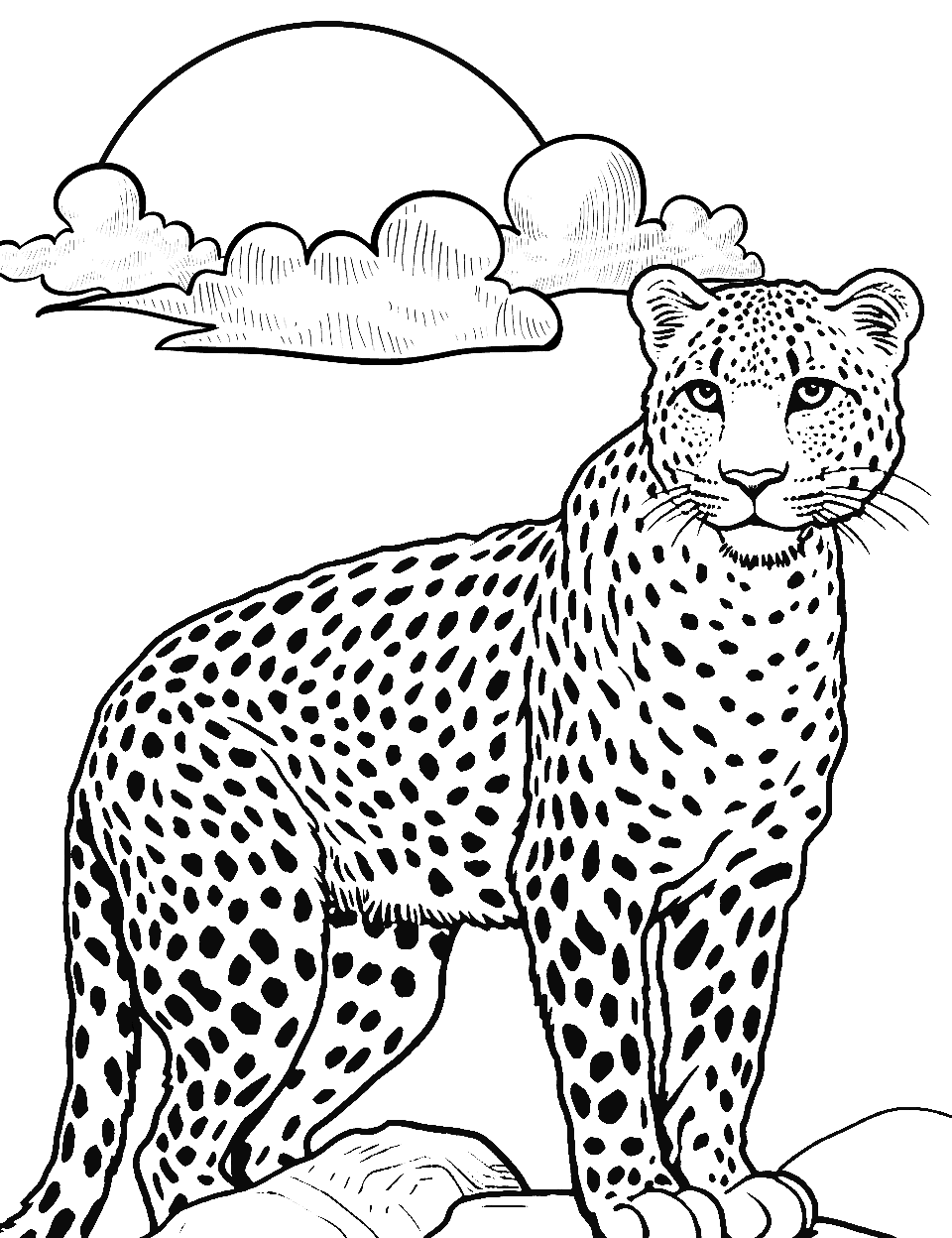
A serene cheetah stands on a hill with the sunrise behind it. The sun rays create a beautiful backdrop. Use warm oranges, pinks, and purples for the sky.
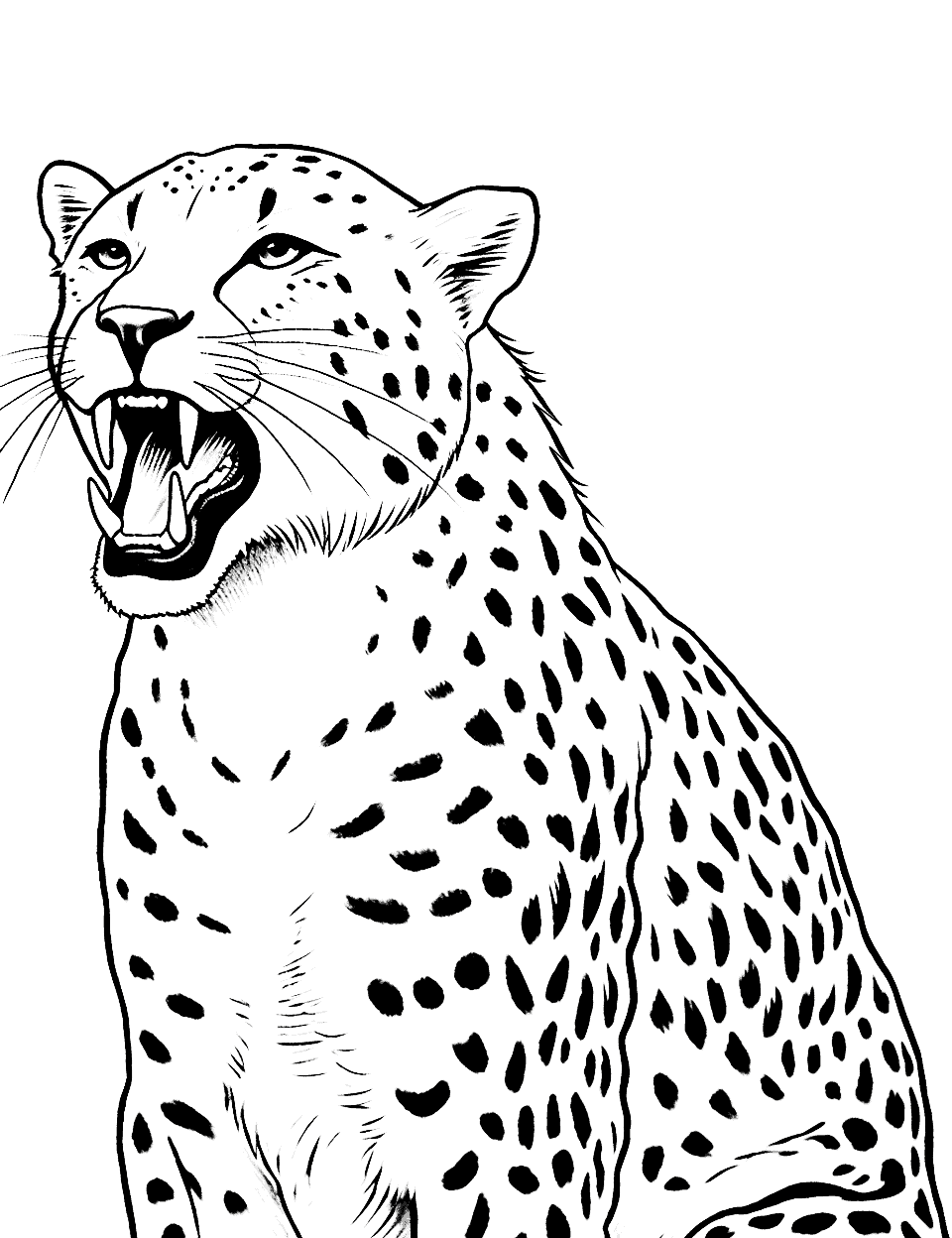
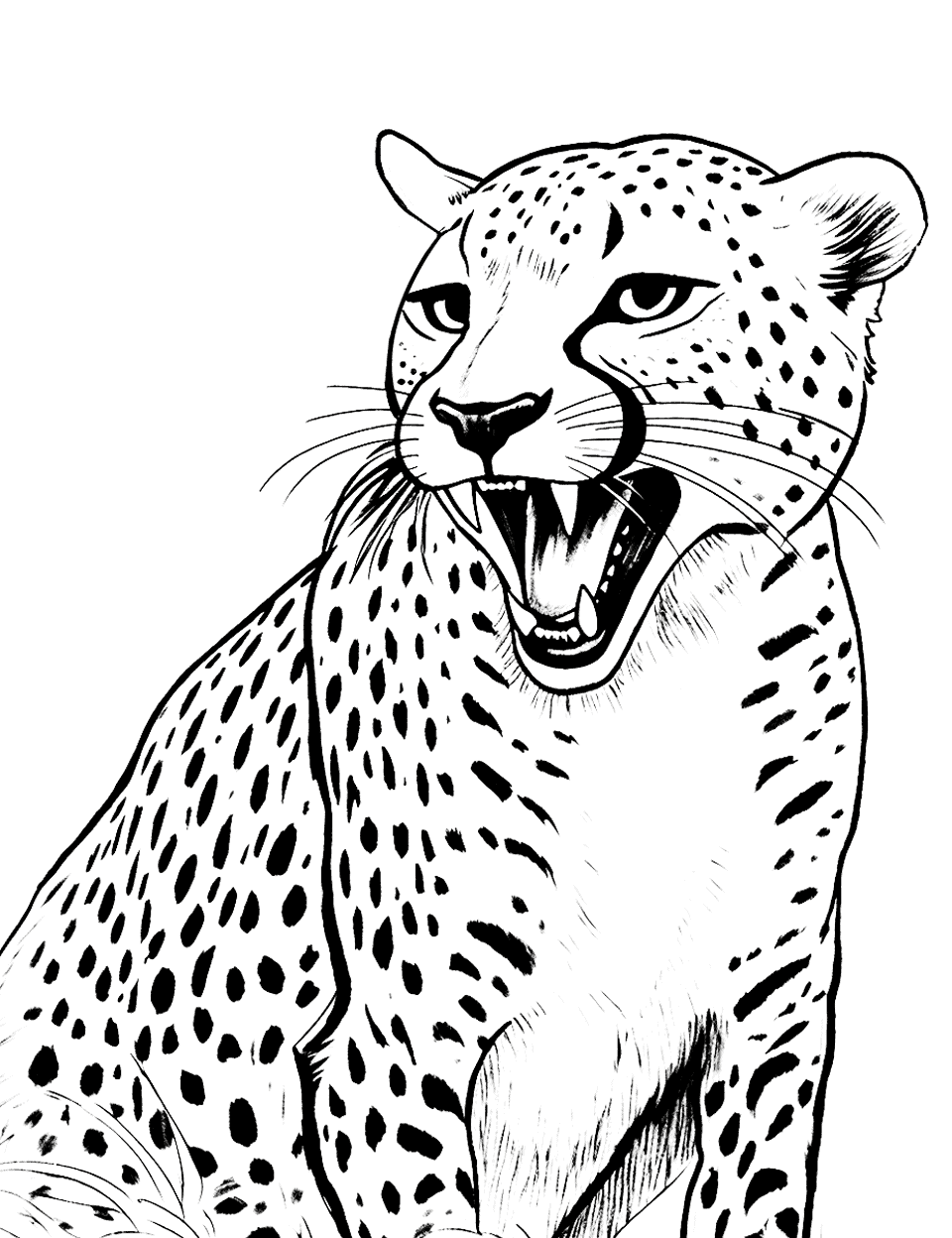
This cheetah opens its mouth wide. While cheetahs chirp rather than roar, this dramatic pose shows off its sharp teeth. It looks like it is warning a rival.
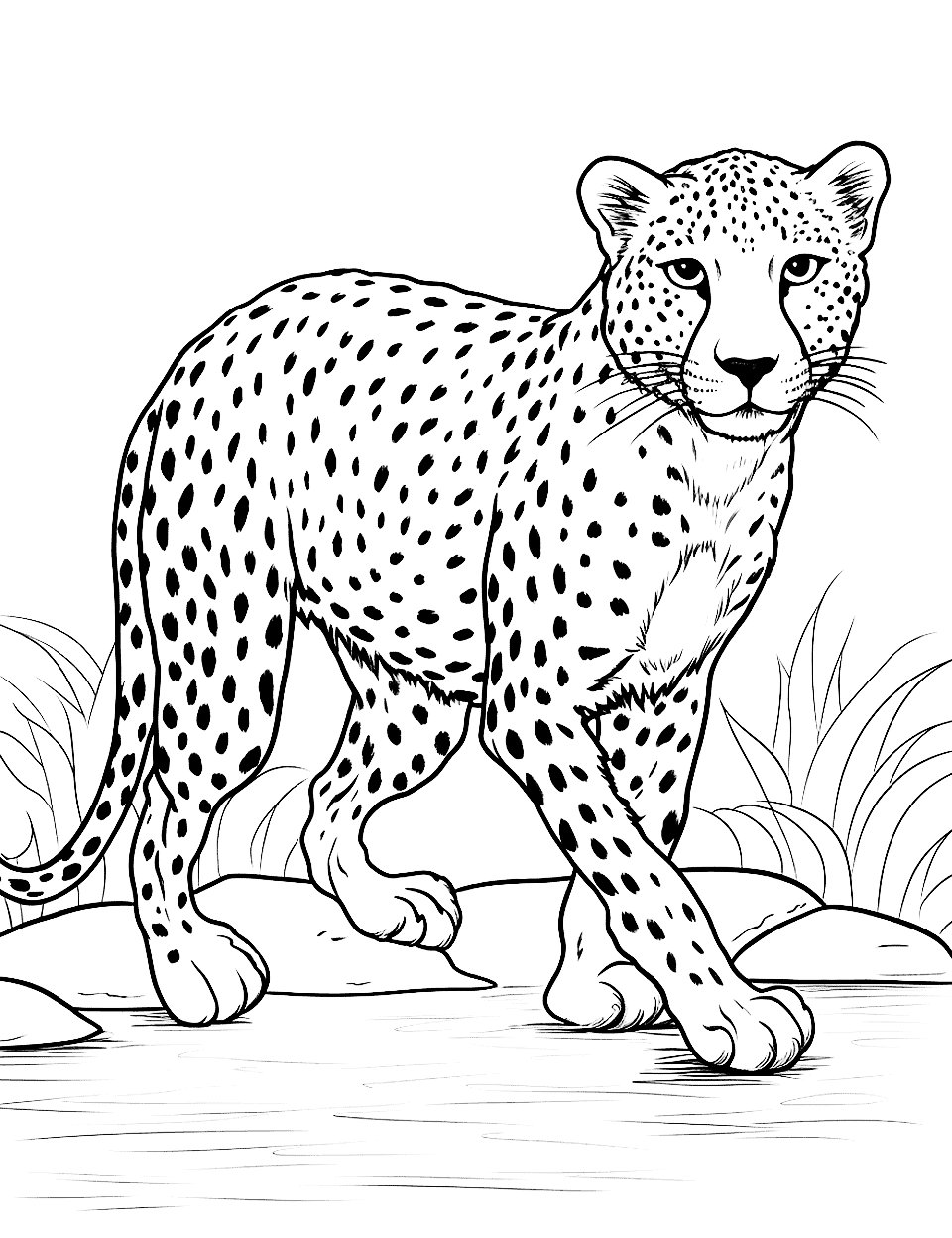
A cheetah carefully crosses a shallow stream. Cats usually hate water, but sometimes they must cross to find food. Draw ripples in the water around its paws.
This cheetah is decorated with tribal-inspired body markings. It is an artistic interpretation of the animal spirit. Use bold, contrasting colors for the designs.
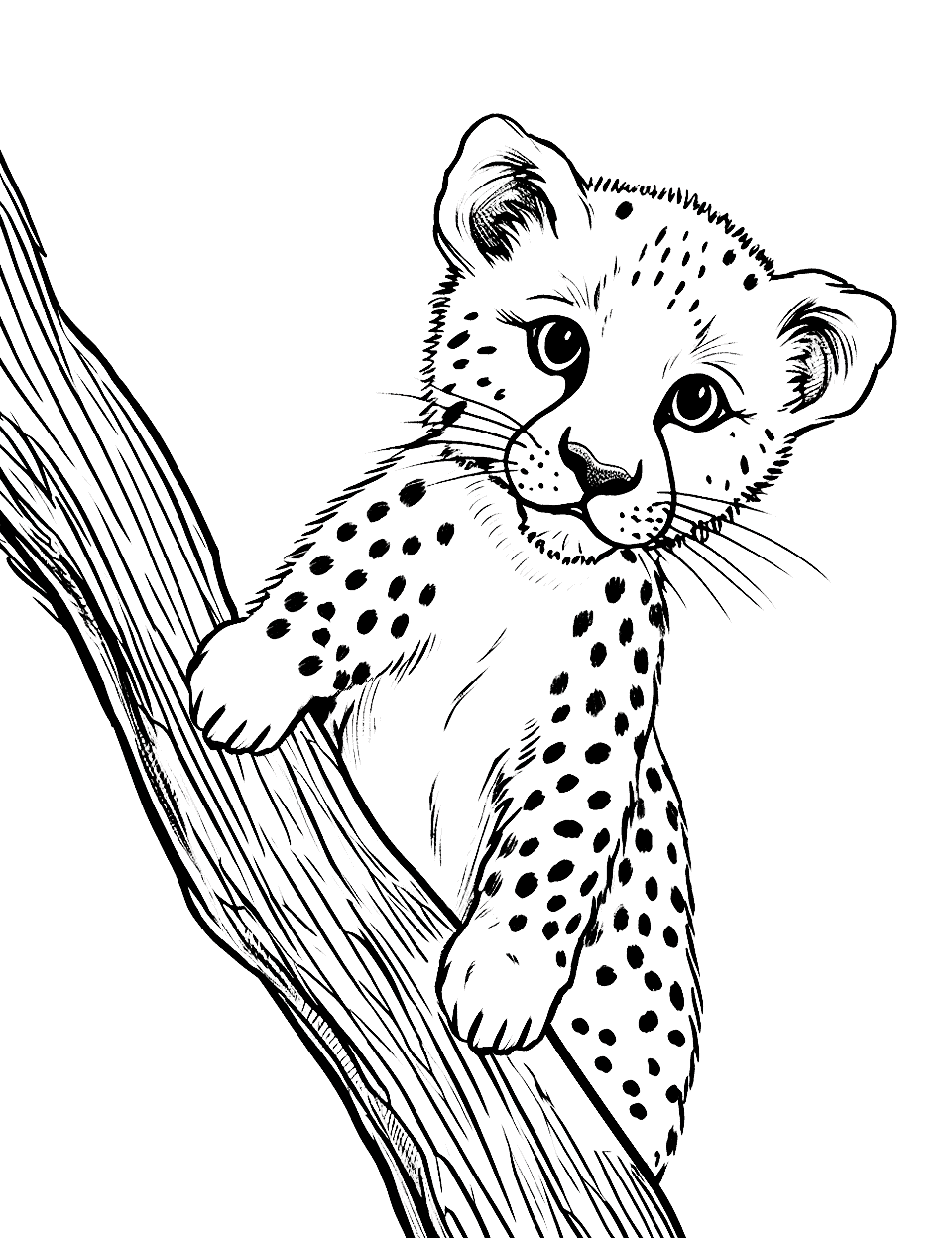
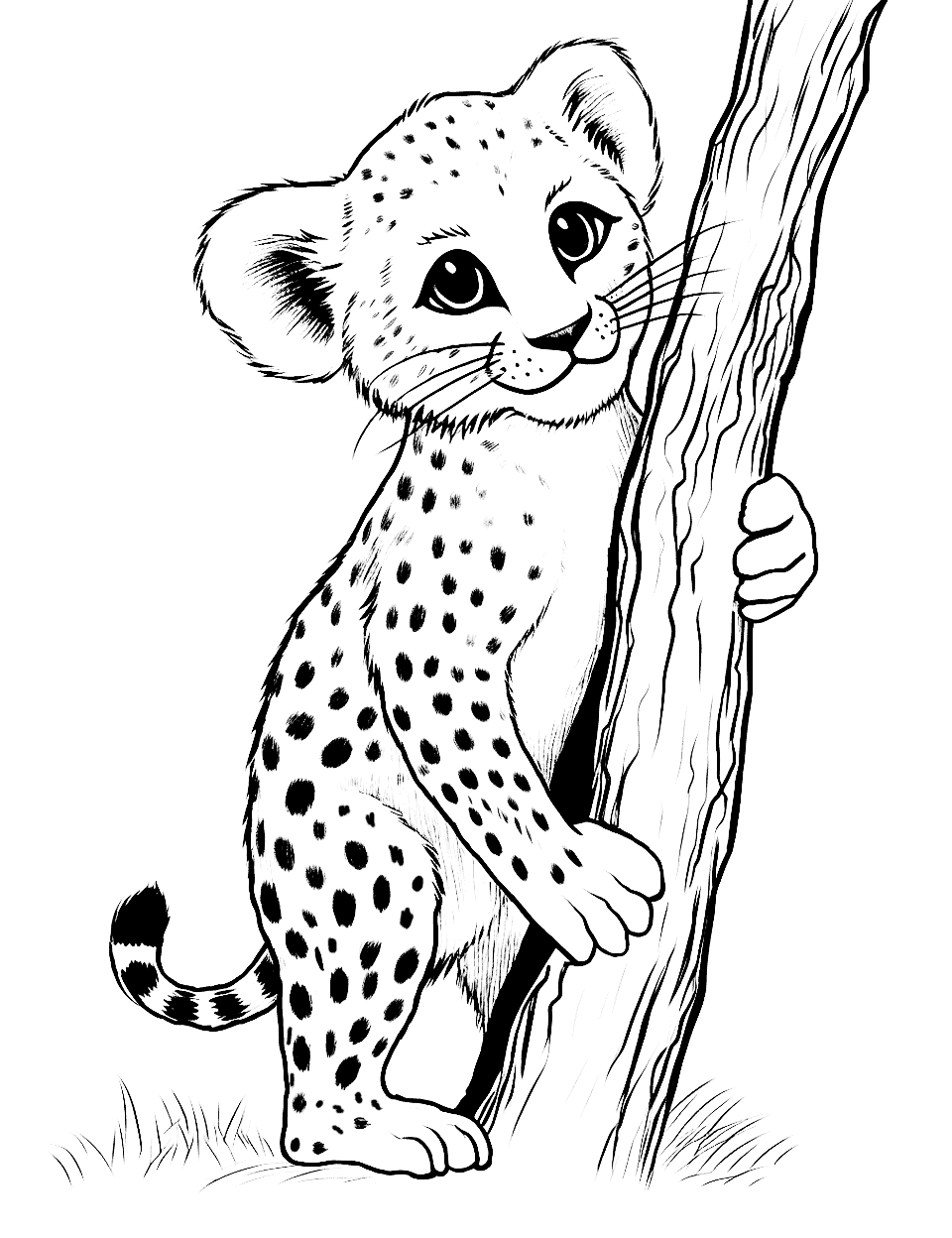
This humorous scene shows a cub clumsily trying to climb a tree. Unlike leopards, adult cheetahs are not great climbers. This little one is still learning the ropes.
By using our free coloring pages, you acknowledge and agree to our full disclaimer. All materials are for personal, non-commercial use only and all rights belong to their respective license holders.
Activities to Do With Cheetah Coloring Pages
Don’t let the fun stop once the coloring is done. You can use these pages for education, crafts, and interactive play. Here are a few creative ideas to keep the kids entertained.
Create a Fast-Cat Mask
Turn a coloring page into a wearable mask. Have your child color a face-portrait page, then glue it onto sturdy cardstock. Cut out the eyes and attach a string or popsicle stick to the bottom. Now your child can race around the house pretending to be the fastest land animal.
Cheetah Fact Trading Cards
Resize the images before printing to make them smaller (about 3×4 inches). After coloring, glue them onto index cards. On the back, help your child write a cool cheetah fact, such as their top speed or where they live. They can trade these cards with friends or siblings.
Savannah Diorama
Use a shoebox to create a 3D habitat. Color and cut out the cheetahs, leaving a small tab at the bottom to fold back so they can stand up. Paint the inside of the box to look like the African plains and glue the cheetahs inside. You can add real twigs or dried grass for extra texture.
Spot the Difference Game
Print two copies of the same complex coloring page. Color them almost exactly the same, but change 3 to 5 small details on one page (e.g., a blue flower instead of red, or a missing spot). Challenge a family member to find the differences between the two masterpieces.
Texture Art Challenge
Instead of just using crayons, try using different materials to fill in the spots. You can use black glitter, small buttons, or pieces of black felt. This adds a tactile sensory element to the activity and makes the cheetah’s coat pop off the page.
FAQs
How fast can a cheetah run?
Cheetahs are the fastest land animals. They can reach speeds of up to 70 miles per hour (112 kilometers per hour) in short bursts. They can accelerate from 0 to 60 mph in just three seconds, which is faster than many sports cars.
Do cheetahs roar like lions?
No, cheetahs cannot roar. Instead, they make a variety of other sounds including purring, hissing, and a bird-like chirping sound. They use these high-pitched chirps to locate each other in the tall grass.
What is the difference between a cheetah and a leopard?
The easiest way to tell them apart is by their spots and faces. Cheetahs have solid, round black spots and distinct black “tear marks” running from their eyes to their mouth. Leopards have rosette-shaped spots (clusters that look like roses) and lack the tear marks.
Where do cheetahs live in the wild?
Most wild cheetahs live in Africa, specifically in savannahs and dry forests where they have room to run. There is also a small, critically endangered population of Asiatic cheetahs that lives in Iran.
Why do cheetah cubs have fluffy hair on their backs?
Cheetah cubs are born with a mantle of long, silvery-grey hair running down their backs. This helps camouflage them in the tall grass and mimics the appearance of a honey badger, a fierce animal that most predators avoid.
What do cheetahs eat?
Cheetahs are carnivores, which means they eat meat. Their diet mainly consists of small-to-medium-sized prey such as gazelles, impalas, and hares. They hunt during the day to avoid competition with lions and hyenas.