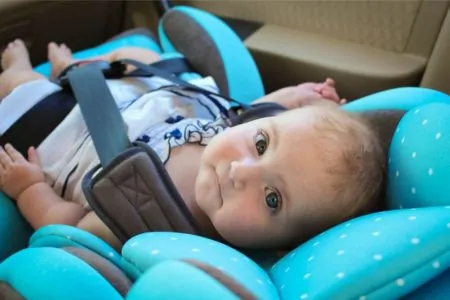
Fitting a bulky car seat into a compact vehicle often feels like a high-stakes game of Tetris. You need something secure and comfortable, but you also need to ensure the driver has enough legroom to operate the pedals safely.
While manufacturers are getting better at slim designs, many “compact” seats still hog the back row or push too far into the front seats. It is a frustrating balance to strike.
We dug into the specs, dimensions, and real-world functionality of dozens of models to curate this list of the best car seats for small cars. We chose these based on their narrow footprints, front-to-back compactness, ease of installation in tight spaces, and overall safety ratings.
Read on to learn how to measure your back seat correctly and see our top picks for 2026.
- Approved for air travel
- Substantial steel alloy frame
- Uses EPS energy-absorbing foam
- LATCH system is easy to use
- Offers multiple recline positions
- Built-in harness strap holders
- 4-point recline
- Easy-to-adjust harness and headrest
- Rigorous safety testing
How To Choose a Car Seat for a Small Car
Before you click “buy,” take a moment to assess your specific vehicle and lifestyle needs. Here is what to look for.
- Usage Frequency: Is this for the primary family hauler or a secondary commuter car? If you move the seat daily between vehicles, look for lightweight models with premium latch connectors.
- Must-Have Features: Measure your available width. Do you need to fit three across? If so, every inch matters. If you have a tall passenger up front, you need a seat with a compact front-to-back profile.
- Budget Expectations: Specialized “slim” seats often carry a higher price tag due to the engineering required to maintain safety with less bulk. Decide your budget cap early.
- Maintenance: Tight spaces mean spills are concentrated. Ensure the cover is machine washable and easy to remove without uninstalling the entire seat (learn how to clean seats here).
- Installation Ease: In a small car, you don’t have much room to maneuver your body to tighten straps. Look for seats with built-in belt lock-offs or one-click LATCH systems to save your back.
- Safety Certifications: Never compromise on safety for size. Ensure the seat meets federal safety standards and check for side-impact protection features (more on safety here).
If you are struggling to get a tight fit, visit a certified Child Passenger Safety Technician (CPST). Many local fire stations or hospitals offer checks. You can find a location through the NHTSA (1).
Why Small Cars and Car Seats Don’t Mix
Small sedans and coupes present a unique set of challenges for parents.
First, standard car seats often have wide, flared bases designed for stability on broad SUV bench seats. In a compact car, these bases can overhang or block seatbelt buckles for adjacent passengers. Second, plush padding creates bulk. While comfy, those extra inches of width can make it impossible for an adult to sit next to the car seat.
The biggest issue, however, is usually front-to-back space. Rear-facing seats require a specific recline angle to keep a baby’s airway open. In a car with limited legroom, this often forces the front passenger to slide their seat dangerously close to the dashboard.
Two-door cars add another layer of difficulty. Unless you are extremely flexible, leaning into the back seat to buckle a harness is a workout.
Before buying, test the fit. Install the seat in the recline mode you need, then adjust the front seat to a comfortable driving position. If the knees of the driver touch the dashboard, the car seat is too big.
Best Car Seat Types for Compact Vehicles
While you can find slim infant carriers and booster seats, the convertible car seat is generally the MVP for small cars.
Convertible seats are versatile workhorses. Because they stay in the car (unlike infant carriers that click in and out), they are often designed with a lower profile. They handle the rear-facing stage and flip to forward-facing when the child is old enough.
This versatility saves you space and money. We focused our list on convertible seats because they offer the best longevity. They can accommodate a newborn and last through the preschool years.
Always check the weight limits for both modes. State laws vary regarding how long a child must remain rear-facing, so ensure the seat allows you to comply with local regulations comfortably (2).

Product Reviews
We evaluated these seats based on width, front-to-back depth, and ease of use in tight quarters.
Diono Radian 3RXT Convertible Car Seat
Best for Newborns
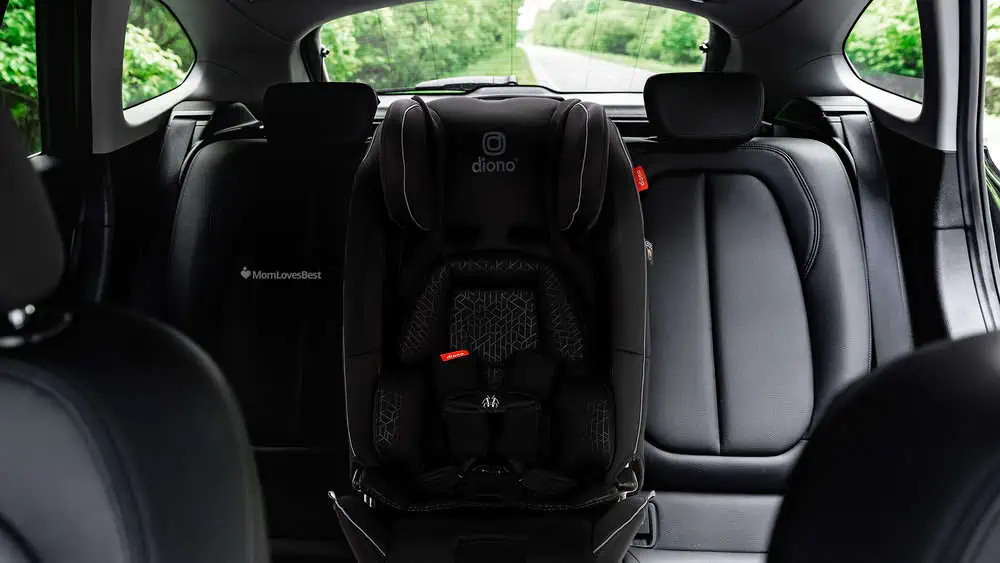
The Diono Radian 3RXT is practically legendary in the world of small cars. It is famous for its “three-across” capability, meaning you can fit three of these side-by-side in most average back seats.
It accommodates children from 5 pounds up to 50 pounds in the rear-facing mode, which is excellent for extended rear-facing safety. Once flipped forward, it holds children up to 65 pounds in the harness and eventually converts to a high-back booster for kids up to 120 pounds.
The seat features a unique folding mechanism that makes it flat for travel or storage. It is FAA-approved for aircraft use, though its weight requires some muscle to move around.
What We Like
Slim Profile for Multiple Seats
If you need to fit multiple children in the back of a sedan, this is your best bet. At approximately 17 inches wide, it is significantly narrower than standard convertible seats. This leaves usable space for a third passenger or another car seat.
FAA Approved and Folds Flat
For families who fly, the folding feature is a game-changer. You can wear it like a backpack (straps sold separately) or stow it easily. It fits well in narrow airplane seats, so your child stays safe during the flight without encroaching on the neighbor’s space.
Solid Steel Core
Diono uses a full steel alloy frame. This gives the seat an incredibly solid, sturdy feel compared to plastic-heavy competitors. It is built like a tank to provide superior structural integrity during a crash.
Memory Foam Comfort
Despite being slim, it doesn’t skimp on comfort. The seat is lined with energy-absorbing EPS foam and memory foam cushioning. It includes a newborn insert to ensure even the smallest passengers have a snug, safe fit.
What We Don't Like
Large Front-to-Back Footprint
Here is the catch: while it is narrow side-to-side, it is tall. When installed rear-facing, especially with the angle adjuster (sold separately but highly recommended), it can take up significant room front-to-back. Tall drivers in very small cars might find their legroom compromised.
Heavy and Low Profile
The steel frame makes this seat heavy, around 28 pounds. It sits low to the vehicle seat, which makes it easy for toddlers to climb in, but it might be harder for parents to see out the window compared to high-base seats.
Product Specs
| Weight | 28 pounds |
| Dimensions | 16.14 inches by 16.93 inches by 28.35 inches |
| Child Minimum Weight | 5 pounds |
| Child Maximum Weight | 120 pounds |
| Additional Features | SuperLATCH system, expandable leg rests, multiple shoulder and buckle positions, non-slip rubber base |
Our Ratings
Maxi-Cosi Pria All-in-1 Convertible Car Seat
Most Comfortable
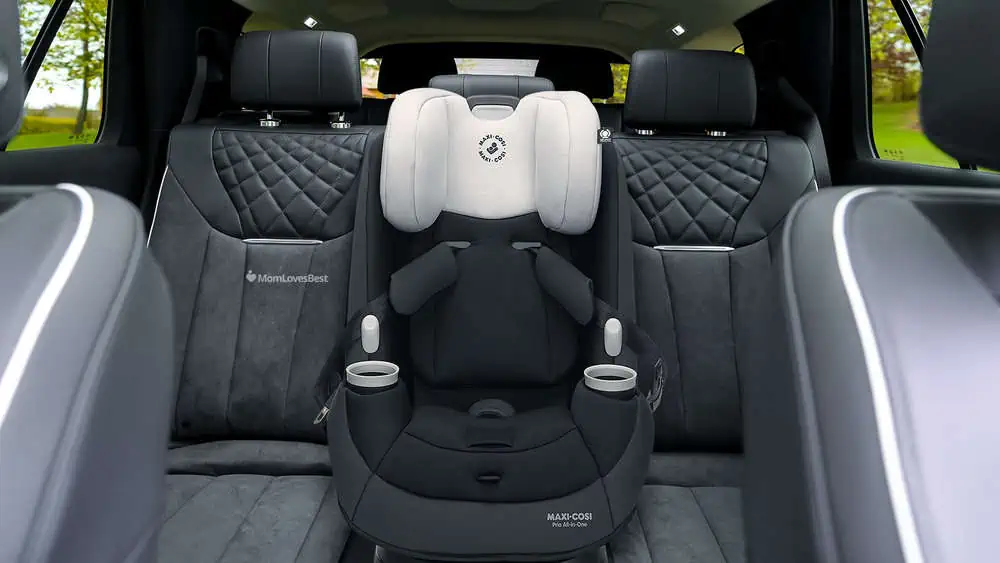
If you want a touch of luxury for your compact car, the Maxi-Cosi Pria All-in-1 is a strong contender. It is designed to fit children from 4 pounds up to 100 pounds (in booster mode), offering a decade of use in one package.
It utilizes G-Cell side impact protection technology integrated directly into the frame. The main draw here is the premium fabric and cushioning, which Maxi-Cosi is known for. The cover is washer and dryer safe, which is a massive relief for busy parents.
While it is slightly wider than the Diono, it offers a more traditional “bucket” seat feel that many children find comforting.
What We Like
Easy LATCH Installation
In tight back seats, struggling with clips is a nightmare. The Pria uses a simple one-click LATCH system that makes installation quick and painless. This is helpful if you frequently switch the seat between cars.
Compact Recline Options
The Pria offers three recline positions. This flexibility helps you find the right angle to fit the seat into a smaller vehicle without pushing the front passenger seat into the dashboard.
Premium Fabrics and Padding
The “Pria” line is famous for being plush. The soft fabrics and substantial padding are excellent for long road trips. The fabric is self-wicking, helping to keep your child dry and cool even in hot weather.
ClipQuik Chest Clip
Maxi-Cosi uses a magnetic chest clip on some models (check specific trim) or a very smooth standard clip. The harness system includes handy holders that keep the straps out of the way while you are loading your child, preventing the “digging for buckles” dance.
What We Don't Like
Wider at the Shoulders
While the base fits well in most cars, the top of the seat flares out. This might make it difficult to place next to another car seat or to fit three across. It is better suited for a two-child family or a single-child setup in a small car.
Product Specs
| Weight | 22.4 pounds |
| Dimensions | 25.3 inches by 23.6 inches by 20.3 inches |
| Minimum Child Weight | 4 pounds |
| Maximum Child Weight | 100 pounds |
| Additional Features | Integrated cup holder, one-handed adjustment, machine washable |
Our Ratings
Cosco Mighty Fit 65 DX Convertible Car Seat
Best Budget Buy
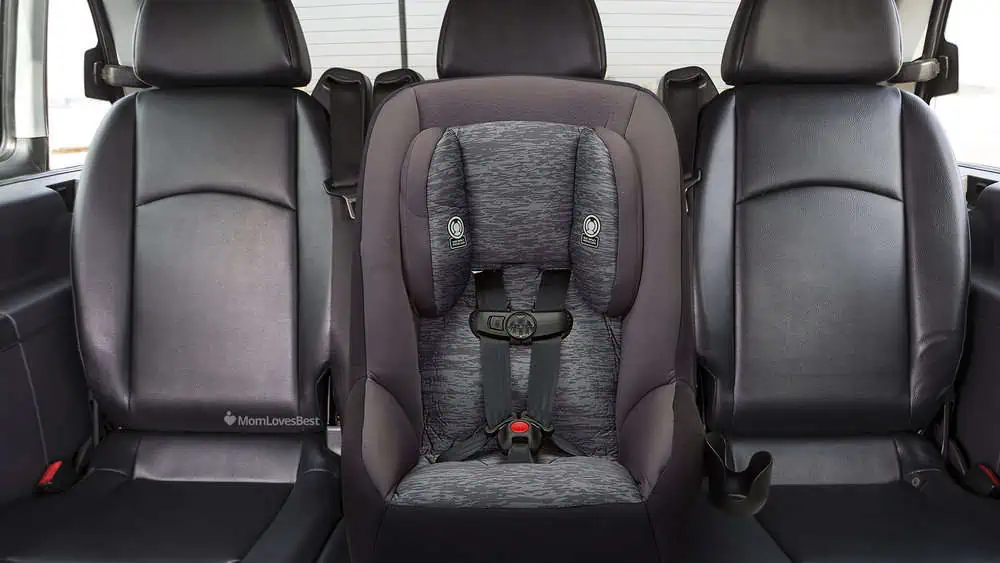
The Cosco Mighty Fit 65 DX proves you do not need to spend a fortune to get a safe, compact seat. This is a no-frills option that excels in tight spaces and tight budgets.
It holds children from 5 to 40 pounds rear-facing and up to 65 pounds forward-facing. The standout feature is its ultra-compact footprint. It allows you to fit three across in many mid-size sedans and leaves plenty of legroom for front passengers.
Weighing practically nothing, it is the ideal seat for travel, grandparents’ cars, or rideshares where you need to install and remove the seat quickly.
What We Like
Excellent Front-to-Back Space
This seat takes up very little room when installed. If you drive a subcompact car where every inch of legroom counts, the Mighty Fit 65 DX is one of the most forgiving options on the market.
Extremely Lightweight
At roughly 14 pounds, you can carry this with one hand. This makes it perfect for maneuvering through airports or swapping between the nanny’s car and your own without breaking a sweat.
Machine Washable and Dryer Safe
Budget-friendly does not mean hard to clean. The cover snaps off easily and can go right into the washing machine and dryer. This is a feature often missing even in high-end seats.
Generous Weight Limit for the Size
Despite its small stature, it supports children up to 65 pounds forward-facing. This means you won’t have to upgrade to a bigger seat prematurely, giving you great value for money.
What We Don't Like
Minimal Padding and Features
To keep the size and price down, Cosco minimized the padding. It is not as plush as the Maxi-Cosi or Graco options, which might lead to complaints on very long road trips. The install can also be a bit basic, requiring some muscle to get the belt tight.
Product Specs
| Weight | 14 pounds |
| Dimensions | 17 inches by 22 inches by 23.5 inches |
| Child Weight Minimum | 5 pounds |
| Child Weight Maximum | 65 pounds |
| Additional Features | LATCH system, side-impact protection, adjustable headrest, machine washable |
Our Ratings
Graco SlimFit 3-in-1 Car Seat
Best for All Stages

The Graco SlimFit is designed specifically to solve the space problem without sacrificing features. It is a “3-in-1” seat, meaning it goes from rear-facing harness (5-40 lbs) to forward-facing harness (22-65 lbs) to high-back booster (40-100 lbs).
Its claim to fame is the rotating cup holders. On most seats, cup holders add crucial inches to the width. On the SlimFit, you can rotate them away to shave off 10% of the seat’s width, making it easier to close the door or sit next to another passenger.
With a steel-reinforced frame and Graco’s rigorous crash testing, it balances safety, comfort, and space efficiency brilliantly.
What We Like
Rotating Cup Holders Save Space
This simple design choice makes a huge difference. You can have the cup holders out when the child is alone in the back, or swivel them in when you need to fit an adult or another car seat next to it.
No-Rethread Harness
Adjusting the straps as your child grows is effortless. The Simply Safe Adjust Harness System allows you to move the headrest and harness height together in one motion. No need to uninstall the seat or mess with threading straps through slots.
Four-Position Recline
The seat offers four recline positions, which helps you achieve the correct installation angle in cars with sloped bucket seats. The easy-to-read level indicator eliminates the guesswork during installation.
InRight LATCH System
Graco’s LATCH connectors click in with an audible sound, so you know it is secure. Removing them is just as easy, push a button and they release. This is much friendlier to use than the old-school hook-style connectors.
What We Don't Like
Difficult Install With Shoulder Belt
While the LATCH install is easy, using the vehicle’s seat belt for installation (necessary for higher weights) can be tricky in rear-facing mode. The belt path is a bit awkward to access. If your car has accessible LATCH anchors, this is a non-issue.
Product Specs
| Weight | 19.5 pounds |
| Dimensions | 19 inches by 20 inches by 21 inches |
| Child Weight Minimum | 5 pounds |
| Child Weight Maximum | 100 pounds |
| Additional Features | 4-position recline, LATCH system, rotating cup holders, easy-adjust harness and headrest |
Our Ratings
| Product | Award | Weight | Dimensions | Min. Weight | Max. Weight | Features |
|---|---|---|---|---|---|---|
| Diono Radian 3RXT | Best for Newborns | 28 lbs | 16.14″ x 16.93″ x 28.35″ | 5 lbs | 120 lbs | SuperLATCH, leg rests, buckle position |
| Maxi-Cosi Pria All-in-1 | Most Comfortable | 22.4 lbs | 25.3″ x 23.6″ x 20.3″ | 4 lbs | 100 lbs | Cup holder, one-hand adjustment |
| Cosco Mighty Fit 65 | Best Budget Buy | 14 lbs | 17″ x 22″ x 23.5″ | 5 lbs | 65 lbs | LATCH system, side-impact protection |
| Graco SlimFit | Best for All Stages | 19.5 lbs | 19″ x 20″ x 21″ | 5 lbs | 100 lbs | 4-position recline, LATCH, easy-adjust harness |
FAQs

What is the narrowest car seat available?
The Diono Radian series and the Clek Fllo/Foonf are widely considered the narrowest convertible car seats, typically measuring around 17 inches wide. This slim profile is what allows them to fit three-across in many mid-sized vehicles.
Where is the safest place to put a car seat in a small car?
The safest spot is generally the rear center seat, as it is furthest from any point of impact during a crash. However, if you cannot get a tight installation in the center due to a hump in the floor or narrow seat width, using the outboard (side) seats with a secure installation is safer than a loose center install.
Can car seats touch the front seats?
Generally, car seat manufacturers and vehicle manuals advise against the car seat bracing against or touching the front seat forcefully. Some brands allow light touching, but you should check both your car manual (airbag section) and car seat manual to be sure. It can interfere with advanced airbag sensors.