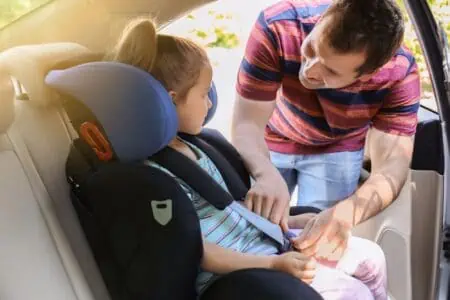
Shopping for a booster seat feels overwhelming. You want the safest option for your growing child, but you also need something comfortable that actually fits in your car. We learned the hard way that not every seat works for every kid (or every vehicle).
We made it our mission to cut through the noise. We compared the top options on the market to find seats that are durable, easy to install, and safe. Here are our reviews of the best booster seats available to help you find the perfect match for your family.
Stop guessing and start driving with confidence. Choose one of these top-rated models.
- Multiple seat height options
- Use backless or high-backed
- Narrow and lightweight
- ClickTight installation system
- Extended five-point harness use
- Comfortable for long trips
- Lightweight and compact
- Easy to care for
- Comfortable, contoured seat
- LATCH compatible
- High-back and backless mode
- Extended expiration date
- Great for travel
- Uses foam for increased structure
- Simple to use
How to Choose a Booster Seat
Keep these factors in mind before you buy.

Length of Use
Is your child petite or young for their age? You might need a seat with better longevity. If you have a smaller child, opt for a sturdy high-back option that offers extra support for a few more years.

Daily Use
Are you buying this for the daily school run or for Grandma’s car? For everyday use, prioritize substantial padding and comfort. For occasional use, a lightweight or portable option works best.

Car Size
Your vehicle’s size dictates your options. If you need to fit three seats across a back row, you must check the width dimensions carefully before purchasing.

Important Features
Decide which extras matter to you. Do you need dual cup holders for road trip snacks, adjustable headrests for napping, or LATCH connectors for stability? Knowing this ahead of time streamlines your shopping.

Budgetary Constraints
Every booster seat on the market meets the same federal safety standards. You do not have to spend a fortune to get a safe seat. Set your budget early, but know that higher prices usually pay for convenience features and plush fabrics rather than basic safety.
Types of Booster Seats
While all boosters raise your child up to fit the seat belt, they come in different styles. Finding the right type depends on your child’s size and your lifestyle.
High-Back Booster Seats
A high-back booster looks similar to a traditional car seat. It features a full backrest, head and neck support, and often includes side-impact protection wings. These are the best choice for children who are just transitioning out of a harness.
The design includes belt guides near the headrest. You slide the vehicle’s seat belt through these guides, ensuring the belt crosses your child’s chest and shoulder correctly rather than cutting into their neck.
Pros
- More comfortable for sleeping on long trips.
- Provides crucial side-impact protection.
- Positions the shoulder belt accurately.
Cons
- Bulky to move between cars.
- Harder to store when not in use.
Backless Booster Seats
A backless booster is simply a specialized cushion that sits on your vehicle seat. It raises your child up so the lap belt sits on their hips and the shoulder belt hits their chest. They are popular for older kids who want to feel more “grown-up.”
These seats are incredibly portable and easy to transfer between vehicles. However, they lack head support and side-impact protection. Your car must have high seat backs or headrests to use these safely.
Pros
- Compact and easy to travel with.
- Usually very affordable.
Cons
- No head support for napping.
- Requires vehicle headrests for safety.
Combination (Harness-to-Booster) Seats
If you want a seat that evolves with your child, look for a combination seat. These start as a forward-facing 5-point harness seat and convert into a belt-positioning booster later.
They are an excellent investment if your child has outgrown their rear-facing seat but isn’t quite ready for a seat belt alone. They allow you to keep your child in a harness longer, which is generally safer.
Pros
- Long lifespan saves money over time.
- Allows for extended harnessing.
- Very sturdy and comfortable.
Cons
- Heavy and difficult to move.
- Usually more expensive upfront.
Travel/Portable Booster Seats
Travel boosters are designed for families on the go. Whether inflatable or foldable, these seats fit easily into luggage or a backpack. They are perfect for taxis, Uber rides, or airplanes (once you land).
While they meet safety standards, they often lack the plush comfort of daily seats. Think of them as a temporary solution for vacations rather than a permanent fixture in your minivan.
Pros
- Essential for vacations and carpooling.
- Can fit in a backpack or purse.
Cons
- Minimal padding for long drives.
- Setup takes a few extra minutes.
When Should You Use a Booster Seat?
State laws vary, but physics does not. You should move your child to a booster seat only after they outgrow the height or weight limits of their forward-facing harness seat. For most kids, this happens between ages 5 and 7.
Do not rush this transition. A 5-point harness offers significantly more protection than a seat belt. Keep your child in their current stage, whether rear-facing or harnessed, until they max out the limits of that seat (1).
Your car’s seats are designed for adults; children need a car seat or booster seat to keep them positioned safely and comfortably.

Editor's Note:
Katelyn Holt RN, BSN, BCProduct Reviews
We analyzed the market to find booster seats that balance safety, ease of use, and budget. These are our top picks for every type of family.
Graco Tranzitions 3 In 1 Harness Booster Seat
Best for Wide Weight Range
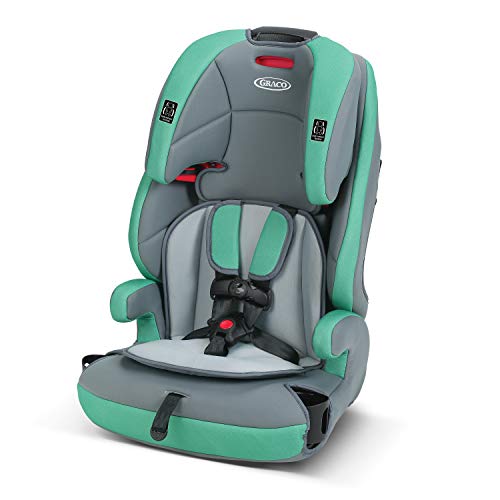
The Graco Tranzitions is a workhorse that covers every stage from toddler to big kid. It bridges the gap between a convertible car seat and a backless booster, potentially saving you from buying multiple seats.
This is a 3-in-1 powerhouse. It starts as a harness booster (22-65 lbs), converts to a high-back booster (30-100 lbs), and finishes as a backless booster (40-100 lbs). You can essentially use this seat from age two until your child is ready for the vehicle seat alone.
Beyond longevity, it solves common parental headaches. The Simply Safe Adjust Harness System lets you change the harness and headrest height in one motion without rethreading straps. It’s lightweight enough for travel but sturdy enough for daily abuse.
What We Like
Slim Profile
This seat is surprisingly narrow. If you need to fit three passengers across the back seat or have a compact car, the Tranzitions is a top contender.
No-Rethread Harness
Adjusting straps as your kid grows is usually a pain. Graco simplifies this with a one-hand adjustable headrest that moves the harness with it. You get a proper fit instantly without taking the seat apart.
Machine Washable
Kids are messy. Snacks and spills happen. The seat pad, body support, and harness covers remove easily for machine washing, keeping the car fresh.
What We Don't Like
Tricky Installation
Some parents find getting a tight install with the vehicle seat belt challenging compared to the LATCH system. It requires some muscle and patience to get it secure.
Short Buckle Strap
The crotch buckle is positioned quite close to the backrest. As children get bigger, some parents find it sits underneath them, making it uncomfortable or hard to buckle.
Product Specs
| Product Weight | 14.97 pounds |
| Dimensions | 18.9 inches by 10.47 inches by 33.5 inches |
| Minimum Child Weight | 22 pounds |
| Maximum Child Weight | 100 pounds |
| Additional Features | 3-in-1 design, adjustable headrest, one-handed harness system, dual cup holders |
Our Ratings
Evenflo Big Kid GoTime LX High-Back Booster Seat
Best Booster Seat for Big Kids

If you need a budget-friendly option for older kids, the Evenflo Big Kid GoTime LX delivers value and versatility. It works as both a high-back and a backless booster, giving you options as your child matures.
It features seven height positions to ensure the seat belt fits properly as your child grows. The belt path guides are intuitive, making it easy for independent “big kids” to buckle themselves in safely.
This seat is incredibly light, making it a favorite for carpools or grandparents who can’t lift heavy equipment. It comes in fun colors and includes dual cup holders for drinks and treasures. It supports kids from 40 up to 120 pounds.
What We Like
Simple Height Adjustment
You can adjust the backrest height with one hand to keep the belt guide at the perfect level for your child’s shoulder. This ensures the safety belt retracts properly and stays off their neck.
2-in-1 Functionality
The back is removable. You can start with the high-back mode for extra support and transition to the backless mode when your child gets taller or when you need to save space in the car.
Narrow Footprint
The seat is narrow and fits well in smaller vehicles or alongside other car seats. It’s a practical solution for families juggling multiple kids in the back seat.
What We Don't Like
Minimal Padding
The padding is thin compared to premium models. For quick trips around town, it is fine, but your child might complain about a sore bum on long road trips.
Flimsy Connection
The backrest connects to the base with a simple hinge. When you pick the seat up to move it, the back often flops over or detaches completely, which can be annoying during transfers.
Product Specs
| Product Weight | 7.1 pounds |
| Dimensions | 15.2 inches by 19.49 inches by 28.19 inches |
| Minimum Child Weight | 40 pounds |
| Maximum Child Weight | 120 pounds |
| Additional Features | Integrated cup holder, backless booster option |
Our Ratings
Britax Grow with You ClickTight Plus Booster Seat
Most Comfortable

The Britax Grow with You ClickTight is built like a tank. It prioritizes safety and ease of installation above all else. This combination harness-2-booster allows you to keep your child in a 5-point harness up to 65 pounds, then converts to a belt-positioning booster up to 120 pounds.
The standout feature is the ClickTight installation system. You simply lift the seat panel, thread the seat belt, and click the seat shut. It guarantees a secure installation every time without wrestling with the seat.
It features SafeCell Impact Protection (a steel frame and energy-absorbing base) and two layers of side-impact protection. If safety is your number one anxiety, this seat eases your mind.
What We Like
Foolproof Installation
The ClickTight system is a game-changer. It removes the struggle of tightening LATCH straps or wondering if the seat belt is tight enough. If you can buckle a seat belt, you can install this seat perfectly.
Extended Harness Use
Most kids aren’t ready for a booster at 40 pounds. This seat lets you harness them up to 65 pounds, keeping them in the safest possible position for longer.
Supreme Comfort
This is a premium seat with thick foam padding, soft fabrics, and armrests. It is designed for sleeping and long-haul drives, ensuring fewer complaints from the back seat.
What We Don't Like
Heavy and Bulky
This seat weighs over 25 pounds. It is not something you want to move between cars daily. Pick a spot for it and leave it there.
Expensive
You are paying for the steel frame and the easy installation technology. It is an investment, but one that lasts for years.
Product Specs
| Product Weight | 25 pounds |
| Dimensions | 21 inches by 19 inches by 25 inches |
| Minimum Child Weight | 25 pounds |
| Maximum Child Weight | 120 pounds |
| Additional Features | Adjustable harness and headrest, steel frame, side-impact protection, integrated cup holder |
Our Ratings
Chicco GoFit Backless Booster Seat
Best Booster Seat for Daily Use
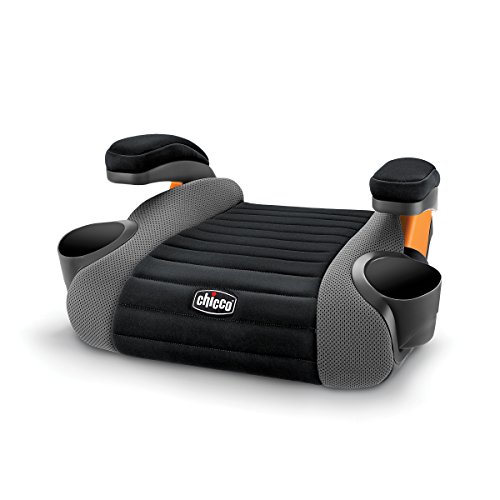
The Chicco GoFit is the perfect grab-and-go solution for older kids. It is a backless booster designed for children 4+ years old (40-110 lbs) who just need a height boost to make the seat belt fit safely.
It stands out because of its comfort. The seat is contoured with “ErgoBoost” double-foam padding, meaning it doesn’t feel like sitting on hard plastic.
Practical features include pop-out cup holders (that are dishwasher safe) and a built-in carry handle. It’s simple, effective, and easy to clean.
What We Like
Portable Design
Weighing just 5 pounds, this seat is effortless to move. The built-in handle allows you to transfer it between vehicles or carry it into school without breaking a sweat.
Easy Maintenance
The armrest covers and seat pad pop off easily and are machine washable. Plus, the flexible cup holders fold in to save space or remove entirely for cleaning.
Excellent Belt Fit
Even without a back, it does a great job positioning the lap belt low on the hips and the shoulder belt correctly across the chest, thanks to the included shoulder belt clip.
What We Don't Like
No LATCH System
This model sits on the vehicle seat without anchors. You must remember to buckle it in when your child isn’t using it, or it becomes a projectile during a sudden stop.
Wide Base
While comfortable, the base is slightly wider than some competitors. It might be tight if you are trying to puzzle three seats across a compact car.
Product Specs
| Product Weight | 5 pounds |
| Dimensions | 15 inches by 17 inches by 5 inches |
| Minimum Child Weight | 40 pounds |
| Maximum Child Weight | 110 pounds |
| Additional Features | Foldable cup holders, carrying handle, machine washable |
Our Ratings
Hiccapop Inflatable Booster Seat
Most Portable
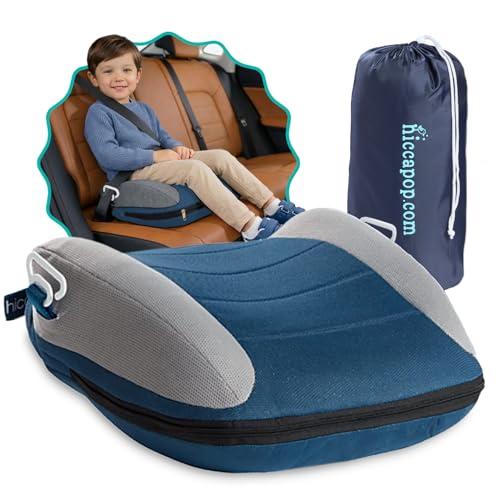
The Hiccapop UberBoost is an inflatable booster seat that redefines portability. It is the ultimate solution for travel, ride-shares, and carpooling.
It inflates in a few breaths and deflates into a tiny roll that fits inside a diaper bag or glove compartment. Despite being filled with air, it is safe, durable, and meets all federal safety standards.
The silicone non-slip base keeps it stable on leather seats, and the wide seating area fits larger kids comfortably. It is great for fitting three across in tight rentals or taxis.
What We Like
Unmatched Portability
It packs down smaller than a water bottle. You can throw it in a carry-on or backpack, ensuring you always have a safe seat for your child wherever you land.
Stable on Seats
The gripe most parents have with lightweight boosters is that they slide around. Hiccapop solved this with a grippy silicone base that holds tight to upholstery and leather without leaving marks.
Lifetime Guarantee
Hiccapop offers excellent customer service and a lifetime guarantee, which is rare in the baby gear world.
What We Don't Like
Takes Time to Prep
Unlike a rigid seat you just toss in, this requires inflation and deflation. It only takes a minute, but when you are rushing to catch an Uber in the rain, that minute matters.
Potential for Leaks
It is still an inflatable product. While durable, sharp objects or heavy abuse can cause punctures. It comes with a patch kit, but it’s a risk inherent to the design.
Product Specs
| Product Weight | 1 pound |
| Dimensions | 14.5 inches by 14.5 inches by 4.5 inches |
| Minimum Child Weight | 40 pounds |
| Maximum Child Weight | 100 pounds |
| Additional Features | Inflatable, spare patch included, durable zip-up cover |
Our Ratings
Clek Oobr High-Back Booster Seat
Best LATCH System Booster Seat
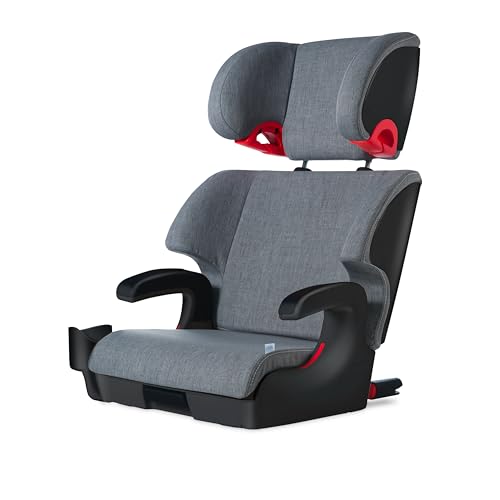
The Clek Oobr is the luxury sports car of booster seats. It features a magnesium and steel frame, offering structural integrity that plastic seats can’t match.
It uses a rigid LATCH system that locks the booster firmly into your vehicle’s anchors. This provides stability during a crash and keeps the empty seat from flying around when you drive alone.
The Oobr reclines for sleeping (when used with LATCH) and the headrest connects with deep side wings for maximum protection. It’s expensive, but the quality and safety engineering are evident.
What We Like
Rigid LATCH System
The rigid connectors slide directly into your car’s anchors with an audible click. It is incredibly secure and stabilizes the seat perfectly for your child.
Recline Feature
Booster seats are notoriously upright and uncomfortable for sleeping. The Oobr offers a recline function (up to 12 degrees) to help keep your child’s head back and comfortable during naps.
Cool Fabrics
Clek uses “Crypton” fabrics that are stain, moisture, and bacteria-resistant. They look sleek and clean up easily, preventing the seat from looking grimy after a few months.
What We Don't Like
Heavy and Wide
This seat is heavy and the rigid LATCH makes it tricky to move between cars quickly. It also has a wide footprint at the top, making it difficult to fit three across in many vehicles.
Cup Holder is Extra
For the premium price tag, it is frustrating that the drink holder (called a “drink-thingy”) is often sold separately or is flimsy compared to integrated ones.
Product Specs
| Product Weight | 22.75 pounds |
| Dimensions | 28 inches by 13 inches by 17 inches |
| Minimum Child Weight | 40 pounds |
| Maximum Child Weight | 100 pounds |
| Additional Features | LATCH system, reclining seat, high-back or backless mode, additional accessories available separately |
Our Ratings
BubbleBum Inflatable Backless Booster Seat
Best Booster Seat for Traveling
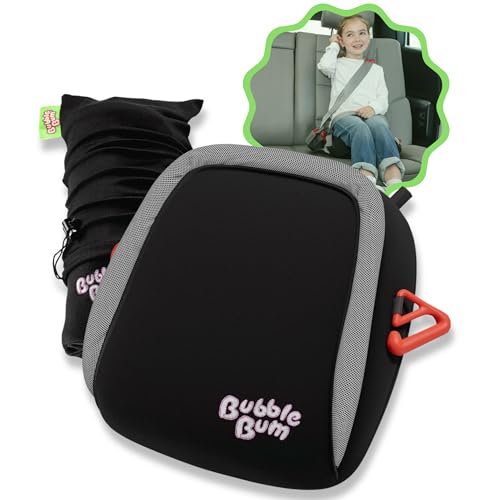
The BubbleBum was the original inflatable booster and remains a top choice for travel. It is slightly different from competitors because it contains memory foam inside the air chamber, providing structure even if air pressure drops.
It is extremely narrow, perhaps the narrowest on the market, making it the secret weapon for parents trying to fit three kids across a tiny backseat.
It rolls up into a small drawstring bag and includes belt positioning clips to ensure a safe fit. It’s perfect for carpools, playdates, and vacations.
What We Like
Narrow Design
At just 13 inches wide, this fits where other boosters fail. If you need to squeeze a booster between two massive car seats, the BubbleBum is often the only thing that works.
Memory Foam Interior
The internal foam adds comfort and stability. It prevents that “bouncy castle” feeling and ensures the seat maintains its shape better than air-only models.
Shoulder Belt Clip
It comes with a positioning clip that pulls the shoulder belt down to the correct height for your child. This is crucial for backless boosters to ensure the belt doesn’t rub against the neck.
What We Don't Like
No Support
It is strictly a cushion. There is no thigh support or armrests, so kids might feel less “held in” around corners compared to rigid seats.
Manual Inflation
You have to blow it up by mouth. It’s quick, but the valve can be a bit fiddly to close before air escapes if you aren’t fast.
Product Specs
| Product Weight | 1.2 pounds |
| Dimensions | 13 inches by 12 inches by 4 inches |
| Minimum Child Weight | 40 pounds |
| Maximum Child Weight | 100 pounds |
| Additional Features | Carrying bag, belt-positioning clip |
Our Ratings
| Product | Award | Seat Weight | Dimensions | Min. Weight | Max. Weight |
|---|---|---|---|---|---|
| Graco Tranzitions | Best for Wide Weight Range | 14.97 lbs | 18.9″ x 10.47″ x 33.5″ | 22 lbs | 100 lbs |
| Evenflo GoTime LX | Best for Big Kids | 7.1 lbs | 15.2″ x 19.49″ x 28.19″ | 40 lbs | 120 lbs |
| Britax Grow with You ClickTight Plus | Most Comfortable | 25 lbs | 21″ x 19″ x 25″ | 25 lbs | 120 lbs |
| Chicco GoFit | Best for Daily Use | 5 lbs | 15″ x 17″ x 5″ | 40 lbs | 110 lbs |
| Hiccapop Inflatable | Most Portable | 1 lbs | 14.5″ x 14.5″ x 4.5″ | 40 lbs | 100 lbs |
| Clek Oobr High-Back | Best LATCH System Seat | 22.75 lbs | 28″ x 13″ x 17″ | 40 lbs | 100 lbs |
| BubbleBum Inflatable | Best for Traveling | 1.2 lbs | 13″ x 12″ x 4″ | 40 lbs | 100 lbs |
Booster Car Seat FAQs

How Long Should My Child Use a Booster Seat?
Your child should use a booster until they can pass the “5-Step Test,” usually between ages 8 and 12. They must be tall enough (typically 4’9″) for their knees to bend at the seat edge while their back touches the seatback, with the belt fitting properly.

Does My Booster Seat Need the LATCH System?
No, LATCH is not required for booster seats because the seat belt restrains the child. However, LATCH anchors keep the booster seat from becoming a projectile when your child isn’t in the car.

Can I Use My Booster Seat on an Airplane?
No. Booster seats require a lap and shoulder belt to work, and airplanes only have lap belts. You can check your booster as luggage, but your child must sit in the plane seat or use an approved harness.

What is the Best Booster Seat On the Market?
The “best” seat is the one that fits your child, fits your vehicle, and is used correctly every time. Top-rated brands like Britax, Graco, and Clek are consistently safe choices, but the right model depends on your specific needs.

Is a High-Back Booster Safer Than a Backless One?
Generally, yes. High-back boosters provide side-impact protection and better belt positioning, especially for younger or sleeping children. Backless boosters are safe but require the vehicle to have adequate head support.

Do Booster Seats Expire?
Yes, booster seats expire, usually after 6 to 10 years. Materials degrade over time due to heat and UV exposure. Always check the expiration date stamped on the plastic shell of your seat.

Can I Put a Booster Seat in the Front Seat?
No. Children under 13 should always ride in the back seat. Airbags are designed for adults and can cause serious injury or death to children, even when they are in a booster seat.

What Is the 5-Step Test?
The 5-Step Test determines if a child can ditch the booster: 1) Back against seat? 2) Knees bend at seat edge? 3) Lap belt on upper thighs? 4) Shoulder belt mid-shoulder? 5) Can they stay this way the whole trip? If “No” to any, they still need a booster.