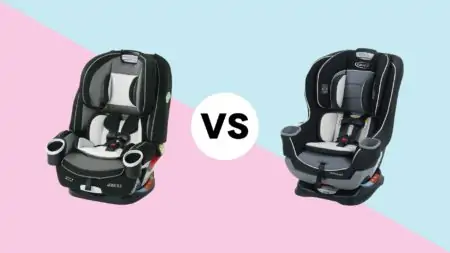
Squeezing three car seats into a back seat often feels like a high-stakes game of Tetris. If you drive a compact vehicle or need to fit multiple kids in a row, standard bulky car seats simply won’t cut it. You need a streamlined solution that saves space without sacrificing safety or comfort.
To save you the headache of returning ill-fitting seats, we’ve researched and analyzed the best narrow car seats available. We evaluated these models based on width, installation flexibility, safety features, and passenger comfort to help you reclaim your back seat.
With our guide and reviews of 12 top-rated options, you can find the perfect slim car seat to fit your vehicle and your lifestyle.
- Easy to clean
- Extra infant padding
- Comfortable for small children
- Slim footprint
- Robust safety features
- Comfortable memory foam
- Four options for harness protection
- Seriously safe
- Designed for growing children
- Easy to install
- Comfortable for long rides
- Steel frame & impact-absorbing base
- SuperCinch latch system
- Includes cup holders
- Head & shoulder side-impact protection
- Extra safety features
- One-hand harness release
- Compatible with strollers
- Lightweight & great for traveling
- Offers built-in ventilation
- High safety standards
- Easy to install
- Slim footprint without sacrificing accessories
- Side impact protection
How to Choose a Narrow Car Seat
When space is at a premium, every inch counts. Here are the specific factors you should evaluate to ensure the seat fits your car and your child perfectly.

Length of Use
Consider how long you need the seat to last. If you want a “one and done” purchase, look for a convertible or all-in-one seat with high height and weight limits. If you need a solution specifically for the infant stage or a carpool booster, a dedicated stage-specific seat might be slimmer and lighter.

Features You Need
Think about your daily routine. If you travel by air, look for a lightweight seat with FAA approval. For long road trips, prioritize extra padding and cup holders. Just remember that some accessories, like non-removable cup holders, can add unwanted width to the seat.

Ease of Installation
A narrow seat is only safe if it is installed correctly. Look for seats with built-in lock-offs or premium LATCH connectors, especially if you move seats between cars often. For three-across situations, a seat belt installation is often preferred as it allows you to position the seat further toward the door than LATCH anchors do.

Easy to Clean
Kids are messy, and tight spaces can mean more spills. Look for machine-washable covers that are easy to remove without uninstalling the entire seat. Stain-resistant fabrics are a huge bonus for daily use.

Your Budget
Narrow engineering sometimes costs more, but affordable options exist. Set a realistic budget before you shop, keeping in mind that you might need to buy three seats at once if you are outfitting a full back seat.
When to Use a Narrow Car Seat
You don’t have to drive a tiny car to benefit from a slim car seat. These seats are problem solvers for various scenarios.
If you have a growing family, a narrow seat is often the only way to fit three children across the middle row safely. This setup is crucial for parents of multiples or families with three young children close in age.
Even with only one or two children, a narrow seat frees up valuable real estate. It creates space for an adult to sit comfortably in the back or provides extra room for groceries, sports gear, or the family dog.
When measuring for a narrow seat, check the width at the base and the shoulders. Some seats taper, while others are uniform in width. Ensure the seat fits your vehicle’s bench flatly and doesn’t overhang significantly. Always test the installation with the driver’s seat in a comfortable position to ensure you have enough front-to-back clearance.
Types of Car Seats to Consider
The right narrow seat depends on your child’s age, weight, and development stage. Here is a breakdown of the common types you will encounter.
Infant Car Seats
Infant car seats are the go-to for newborns. They feature a carrier that clicks into a base that stays in the car, making transitions seamless. These are always used rear-facing.
The handle and sunshade make these seats portable, allowing you to carry a sleeping baby without waking them. They are also compatible with strollers, turning your car seat into a travel system.
While convenient, they have a short lifespan. Most kids outgrow them by height or weight within the first year or so, requiring an upgrade to a convertible seat.
Pros
- Portable: Easy to click in and out of the car or stroller.
- Newborn ready: Designed specifically to support small infants.
- Base convenience: Extra bases make swapping between cars simple.
Cons
- Short lifespan: Only lasts about 12 to 18 months.
- Carry weight: Can get heavy as the baby grows.
Convertible Car Seats
Convertible car seats are the workhorses of car safety. They start rear-facing for infants and toddlers, then switch to forward-facing for preschoolers.
These seats allow you to keep your child rear-facing longer, which is the safest way to travel. They typically accommodate children from birth up to 65 pounds, depending on the model.
Because they stay installed in the car, they are heavier and harder to move than infant seats. However, their longevity makes them a cost-effective choice.
Pros
- Longevity: Usable from birth through the preschool years.
- Safety: Allows for extended rear-facing.
- Features: Often include adjustable headrests and recline options.
Cons
- Stationary: Not designed to be carried like an infant seat.
- Size: Can be heavy and bulky to move between vehicles.
3-in-1 Car Seats
Also known as “all-in-one” seats, these cover every stage: rear-facing harness, forward-facing harness, and belt-positioning booster.
A 3-in-1 seat can potentially be the only car seat you ever buy. They offer excellent value but can be bulky. If you need a narrow option, check dimensions carefully, as many all-in-one seats are wide to accommodate the booster mode.
Pros
- Versatile: One purchase covers roughly 10 years of use.
- Adjustable: grows with your child through every stage.
- Comfort: Usually well-padded for long-term use.
Cons
- Complex: Installation and mode changes can be tricky.
- Bulky: Often wider than dedicated stage seats.
Booster Car Seats
Once your child outgrows their five-point harness, a booster car seat positions the vehicle’s seat belt correctly over their strong shoulder and hip bones (1).
Boosters come in high-back and backless varieties. High-back boosters offer better side-impact protection and sleep support, while backless versions are ultra-portable and great for carpools. Narrow boosters are essential for tight three-across situations, as they often need to fit between two other car seats where buckling can be difficult.
Pros
- Lightweight: Easy to move between cars.
- Age appropriate: Gives older kids a “big kid” feel.
- Affordable: Generally the least expensive type of seat.
Cons
- Less support: Not suitable for sleeping toddlers.
- Buckling: Can be hard to buckle in tight spaces.
Product Reviews
We examined the top slim-profile seats on the market to bring you 12 outstanding options that save space without cutting corners on safety.
Best Narrow Infant Car Seats
Safety 1st onBoard LT Infant Car Seat
Most Comfortable for Newborns
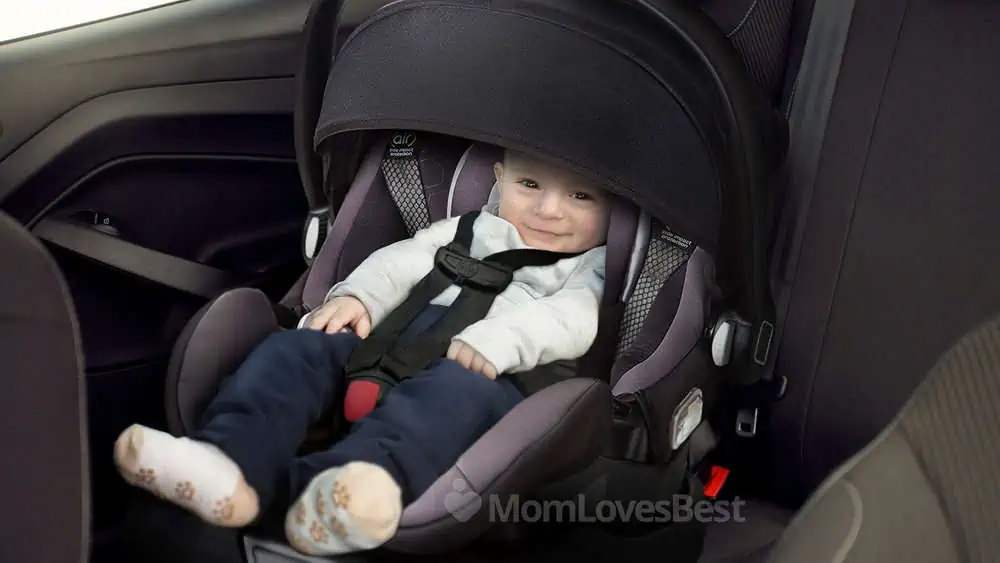
The Safety 1st onBoard LT proves that you don’t need a massive seat to keep your baby safe. Weighing in at an incredibly light 7.9 pounds for the carrier, it is one of the easiest seats to carry through busy parking lots or airports. It accommodates infants from 4 to 35 pounds and includes side-impact protection.
Despite its narrow footprint, the seat features a deep structure to cocoon your baby, providing excellent head and body support. It comes with a stay-in-car base that offers adjustable recline for a perfect fit in your vehicle.
What We Like
Easy to Clean
Babies are prone to blowouts and spit-up, so a washable seat is non-negotiable. The seat pad on the onBoard LT removes easily and is machine washable and dryer safe, saving you time and effort on laundry day.
Comfortable for Small Children
This seat shines for newborns and smaller babies. Included infant inserts offer a snug, supportive fit for the tiniest passengers. The deep shell design also helps shield your baby, creating a cozy environment that encourages napping while you drive.
What We Don't Like
Takes Up Length
While the seat is narrow side-to-side, the deep shell means it takes up a fair amount of space front-to-back. If you have a very compact car, you may need to move the front passenger seat forward to accommodate the recline.
Product Specs
| Product Weight | 15 pounds |
| Dimensions | 15.5 inches by 18 inches by 30.5 inches |
| Minimum Child Weight | 4 pounds |
| Maximum Child Weight | 35 pounds |
| Additional Features | Reinforced carrying handle, Air Protect side-impact protection, adjustable harness, and canopy |
Maxi-Cosi Mico Luxe Infant Car Seat
Great for Using With a Stroller
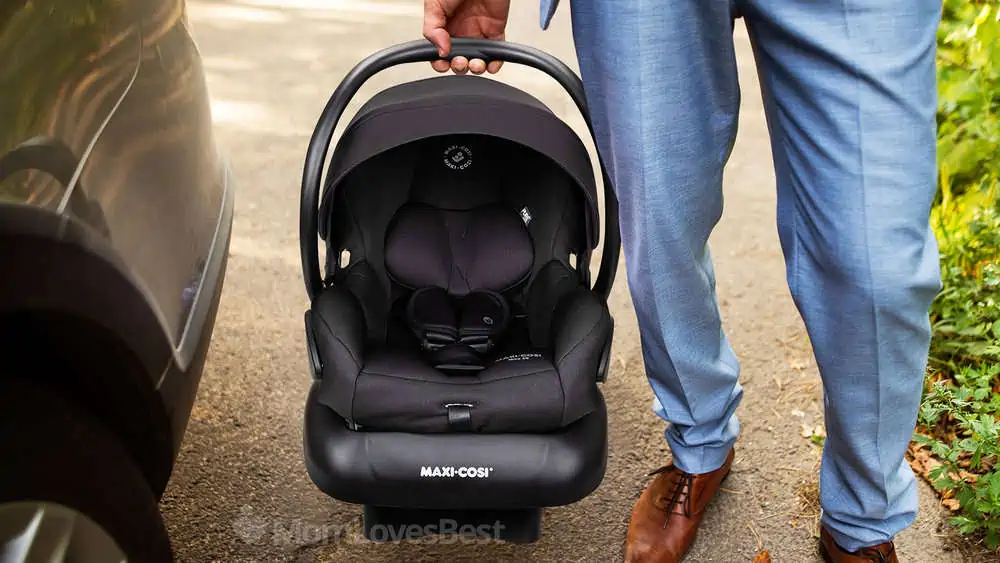
The Maxi-Cosi Mico Luxe combines premium style with a slender design. If you plan to use your car seat as part of a travel system, this is a top contender. It pairs seamlessly with Maxi-Cosi strollers and many other premium brands (often with adapters), making it a versatile choice for city living.
Designed for babies from 4 to 30 pounds and up to 32 inches tall, the Mico Luxe focuses on carrying comfort with a contoured handle. It features pure, moisture-wicking fabrics that keep your baby dry and comfortable without the use of added fire-retardant chemicals.
What We Like
Convenient for City Life
This seat is ideal for families who use rideshares or taxis. You can install the carrier safely using just the vehicle seat belt, meaning you don’t always need to lug the base around. The contoured handle makes it comfortable to carry when you are walking between the car and your destination.
Premium Fabrics
The self-wicking fabric is a standout feature, designed to keep your baby cool during hot summer drives. The cover is easily removable and can be tossed in the washer and dryer, ensuring the seat always looks and smells fresh.
Adjustable Base
The included base features a one-click LATCH system for quick installation in your primary vehicle. It provides excellent adjustability to ensure the proper recline angle, which is critical for a newborn’s airway safety.
What We Don't Like
Stroller Compatibility Verification
While compatible with many luxury stroller brands, you often need to buy specific adapters separately. Always check with the stroller manufacturer to confirm compatibility before purchasing to avoid disappointment.
Product Specs
| Product Weight | 19.7 pounds |
| Dimensions | 12.2 inches by 19.7 inches by 10.2 inches |
| Minimum Child Weight | 4 pounds |
| Maximum Child Weight | 30 pounds |
| Additional Features | Contoured carrying handle, base or no-base installation, LATCH system, stroller compatible |
Britax B-Safe Gen2 Infant Car Seat
Best for Small Babies
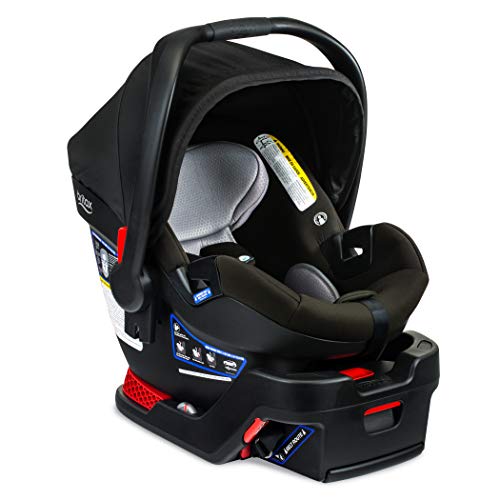
Britax is synonymous with safety, and the B-Safe Gen2 delivers robust protection in a compact package. It features a high-strength steel reinforced base and SafeCell crumple zone technology designed to absorb crash energy.
This seat accommodates babies from 4 to 35 pounds and up to 32 inches tall. Its narrow build allows for easier side-by-side installation, yet the internal seating area is spacious enough to keep your baby comfortable. The install is straightforward thanks to the center-pull straps and quick LATCH connectors.
What We Like
Advanced Safety Tech
The inclusion of a steel frame and SafeCell technology provides peace of mind. These features are designed to divert energy away from your child during a collision. Despite the heavy-duty construction, the seat remains manageable for daily use.
Simple Installation
The Safe Center LATCH system simplifies the tightening process. You simply attach the lower anchors and pull a single center strap to secure the base. Easy-to-read level indicators help you confirm the proper angle instantly.
One-Handed Buckle Release
Fumbling with a buckle is the last thing you want when it’s raining or your baby is crying. The harness release button is designed for smooth, one-handed operation, letting you get your child out quickly.
What We Don't Like
Snug Fit
While the external dimensions are great for small cars, the internal dimensions are on the cozier side. Larger or broader babies might feel squeezed in the shoulder area sooner than they would in wider seats, potentially requiring an earlier switch to a convertible seat.
Product Specs
| Product Weight | 10.9 pounds |
| Dimensions | 26.6 inches by 17.9 inches by 25.9 inches |
| Minimum Child Weight | 4 pounds |
| Maximum Child Weight | 35 pounds |
| Additional Features | Safe Center LATCH installation, Quick-Adjust harness, side-impact protection |
Best Narrow Convertible Car Seats
Diono Radian 3R Convertible Car Seat
Best for Three Across
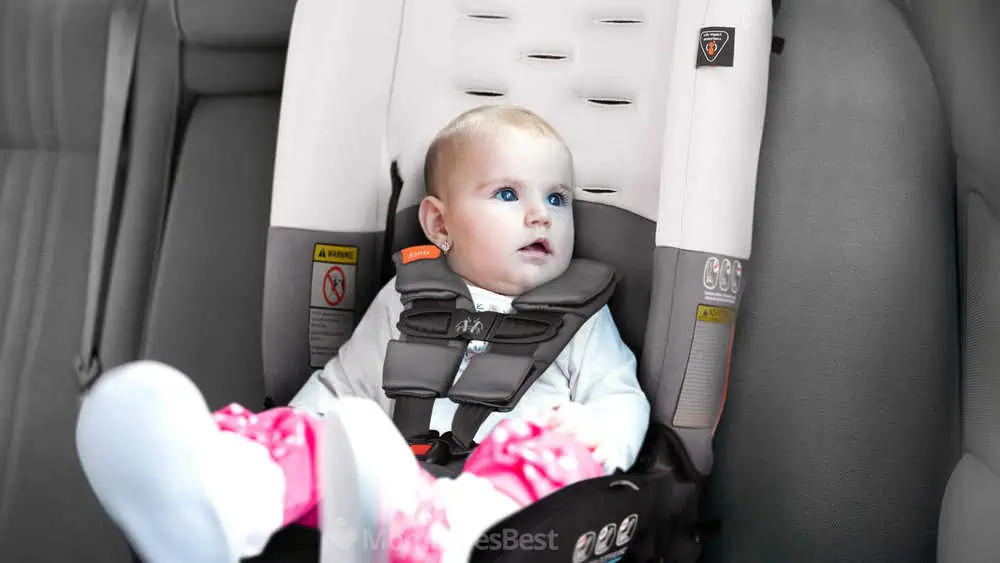
The Diono Radian 3R is legendary in the car seat world for its ability to fit three across in most mid-sized vehicles. At just 17 inches wide, it’s one of the slimmest options available. It features a full steel core, making it incredibly sturdy and safe.
This convertible seat supports rear-facing from 5 to 40 pounds and forward-facing harness use up to 65 pounds. It can also fold flat, making it a unique option for air travel or storage. If you need maximum space efficiency, this is the gold standard.
What We Like
True 3-Across Capability
The uniform 17-inch width from top to bottom is the key to its success. Unlike seats that flare out at the cup holders or shoulders, the Radian 3R stays slim, allowing you to puzzle it next to other seats easily.
Extended Rear-Facing
We love that this seat supports rear-facing up to 40 pounds. Rear-facing provides the best protection for the head, neck, and spine, so being able to keep your toddler in this position longer is a major safety advantage.
Travel Friendly
This is one of the few seats that folds flat. You can purchase a carry strap separately to sling it over your shoulder like a backpack, which is a lifesaver when navigating airports with kids.
What We Don't Like
Heavy and Low Profile
Because of the steel frame, this seat is heavy, over 25 pounds. Also, it sits low on the vehicle seat, which makes it easy for kids to climb in but might make it harder for them to see out the window compared to higher-profile seats.
Product Specs
| Product Weight | 25.9 pounds |
| Dimensions | 16 inches by 17 inches by 28.5 inches |
| Minimum Child Weight | 5 pounds |
| Maximum Child Weight | 100 pounds |
| Additional Features | Machine washable cover, LATCH system, steel alloy frame |
Britax Marathon ClickTight Convertible Car Seat
Best Custom Fit
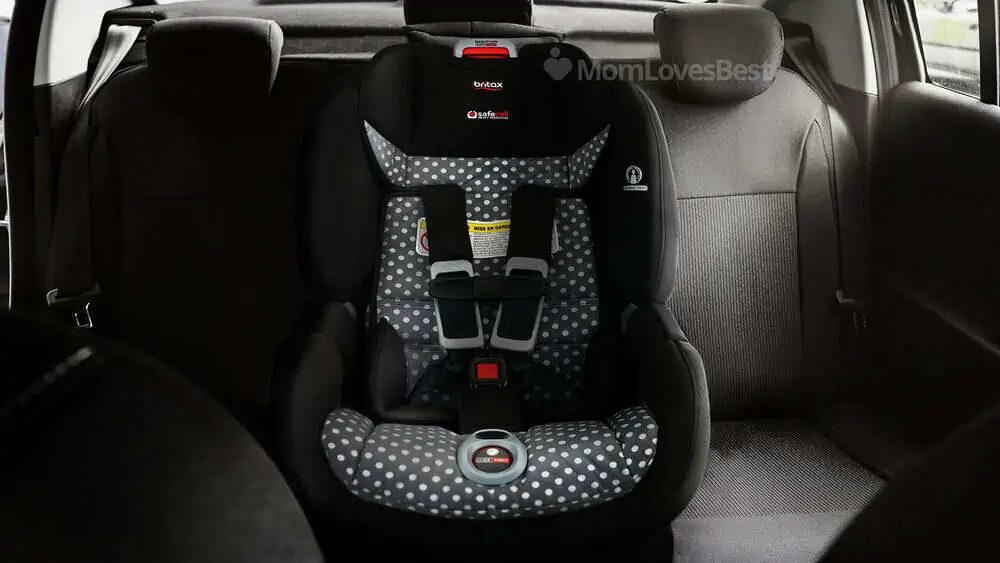
The Britax Marathon ClickTight solves the biggest problem parents face: installation. The ClickTight system allows you to install the seat using the vehicle seat belt as easily as buckling your own belt. The seat swings open, you thread the belt, and click it shut for a rock-solid install.
While not as ultra-slim as the Diono, it is narrower than many competitors and offers superior side-impact protection. It accommodates rear-facing children from 5 to 40 pounds and forward-facing riders up to 65 pounds.
What We Like
Foolproof Installation
The ClickTight technology is a game-changer. It eliminates the struggle of yanking on straps to get the seat tight. A secure installation is vital for safety, and this seat makes it achievable for parents and grandparents alike.
No-Rethread Harness
As your child grows, you don’t need to take the seat apart to move the straps up. The 14-position harness adjusts with the push of a button, ensuring the straps are always at the correct height for safety.
Comfort and Safety
The deep foam-lined shell and high-strength steel frame provide excellent impact absorption. The plush padding and multiple recline positions keep kids comfortable, preventing the “head slump” often seen in sleeping toddlers.
What We Don't Like
Weight and Bulk
This is a substantial seat. It’s heavy to move and sits high on the vehicle seat. While narrower than some, its shape might still make 3-across difficult in very small cars compared to the flatter profile of a Diono.
Product Specs
| Product Weight | 28.5 pounds |
| Dimensions | 23 inches by 18.5 inches by 23.5 inches |
| Minimum Child Weight | 5 pounds |
| Maximum Child Weight | 65 pounds |
| Additional Features | Adjustable headrest, seven recline positions, adjustable harness and buckle, ClickTight install, LATCH compatible |
Evenflo Sonus Convertible Car Seat
Perfect for Hot-Weather Travel
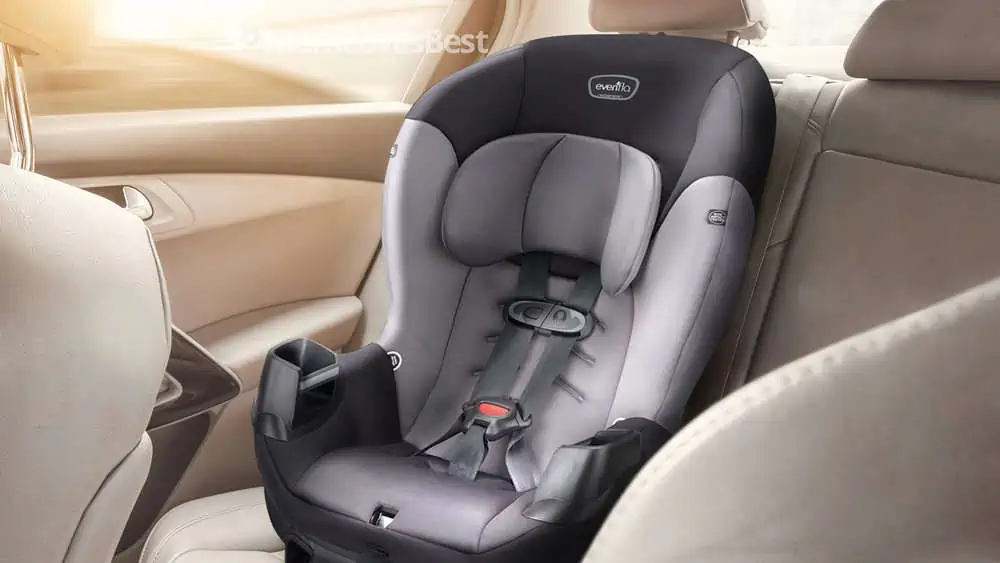
If you need a budget-friendly option that doesn’t hog the back seat, the Evenflo Sonus is a fantastic choice. At 19 inches wide, it fits well in compact cars and is FAA approved for air travel.
A standout feature is the airflow ventilation system, which helps regulate your child’s temperature during hot summer days. It supports rear-facing from 5 to 40 pounds and forward-facing from 22 to 50 pounds, offering a solid lifespan for the price.
What We Like
Lightweight Design
Weighing only about 13 pounds, this seat is easy to transfer between vehicles or carry through an airport. It’s an ideal choice for a secondary car or for grandparents who don’t want to wrestle with a heavy seat.
Airflow Ventilation
The built-in ventilation channels provide air circulation to keep your child cool. This helps prevent that sweaty back that often makes kids fussy on long road trips.
Value for Money
The Sonus offers impressive specs, 40-pound rear-facing limit and rollover testing, at a very accessible price point. It proves you don’t have to spend a fortune to get a safe, narrow seat.
What We Don't Like
Large Front-to-Back Footprint
While narrow, the seat requires a significant recline angle when in rear-facing mode. In small coupes or sedans, this might force the front passenger to move their seat uncomfortably far forward.
Product Specs
| Product Weight | 13 pounds |
| Dimensions | 20 inches by 19.25 inches by 28 inches |
| Minimum Child Weight | 5 pounds |
| Maximum Child Weight | 50 pounds |
| Additional Features | Ventilation system, two removable cup holders, buckle pockets, machine washable, FAA-approved |
Best Narrow 3-in-1 Car Seats
Diono Radian 3RXT SafePlus 3-in-1 Car Seat
Easiest to Fasten
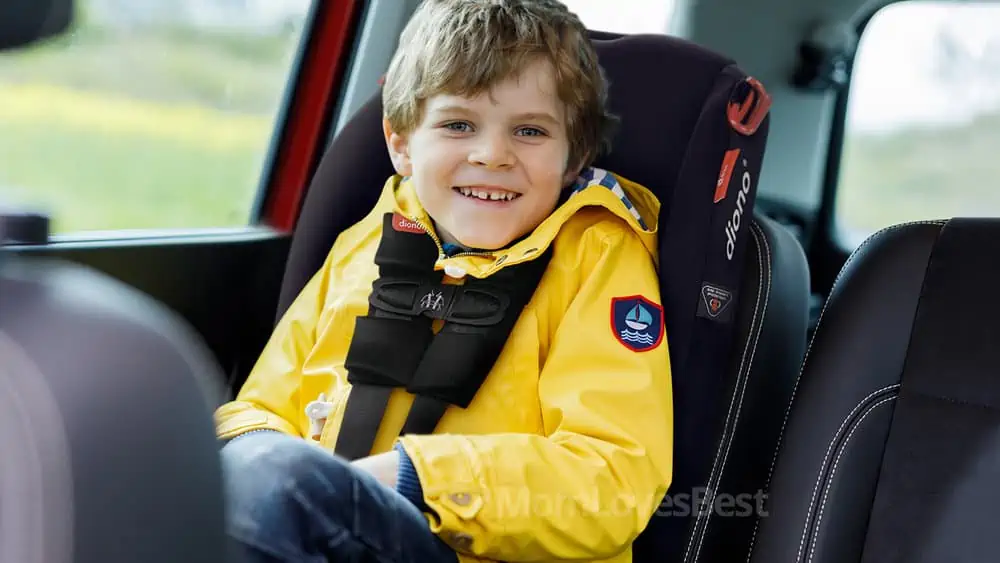
The Diono Radian 3RXT takes the slim profile of the 3R and adds extra layers of side-impact protection and an adjustable headrest. It’s an all-in-one powerhouse that fits children from birth up to 120 pounds.
It starts as a rear-facing seat up to 50 pounds, converts to a forward-facing harness up to 65 pounds, and finally becomes a high-back booster. Despite the added features, it retains the 17-inch width, making it perfect for fitting three across.
What We Like
Extended Rear-Facing Capability
With a 50-pound rear-facing limit, this seat allows your child to stay in the safest position well into the preschool years. This is one of the highest limits on the market.
Slim Yet Feature-Rich
You get the benefits of a narrow seat without sacrificing features like a 12-position adjustable headrest and an anti-rebound bar for stability. The memory foam cushioning ensures a comfortable ride even on long trips.
SuperLATCH System
The SuperLATCH connectors make installation secure and audible. A distinct click lets you know the connectors are locked in place. The low sides also make it easy for older kids to climb in and out independently.
What We Don't Like
Booster Mode Limitation
While it converts to a booster, the 50-pound minimum weight for booster mode is higher than some other seats. Also, it is not FAA approved for use as a booster seat (only in harness mode).
Product Specs
| Product Weight | 26 pounds |
| Dimensions | 16 inches by 17 inches by 28.5 inches |
| Minimum Child Weight | 5 pounds |
| Maximum Child Weight | 120 pounds |
| Additional Features | Integrated cup holder, side-impact protection, SuperLATCH system, high-back booster |
Evenflo Revolve360 Slim Car Seat
Easiest to Use
The Evenflo Revolve360 Slim brings the convenience of a rotating seat to the narrow market. At just 16.7 inches wide, it actually beats the Diono in slimness while offering a seat that spins 360 degrees. This allows you to turn the seat toward the door to buckle your child, saving your back from strain.
It functions as a rear-facing seat (up to 50 lbs), forward-facing harness (up to 65 lbs), and high-back booster (up to 120 lbs). The unique installation method securely holds the base while the seat rotates freely.
What We Like
Effortless Loading
The rotation feature is a genuine lifestyle upgrade. Turning the seat to face the door makes buckling a squirming toddler incredibly easy. It also simplifies the switch from rear-facing to forward-facing since you don’t have to uninstall the base.
Ultra-Slim Footprint
Evenflo managed to engineer a rotating mechanism into a footprint under 17 inches. This makes it a top contender for 3-across configurations, provided you have the space to rotate the seat without hitting the adjacent passengers.
Easy Maintenance
The “Quick Clean” cover is easy to remove and wash. Because the seat separates from the base/shell easily, you can clean up crumbs and spills without a major headache.
What We Don't Like
Install Requirements
The Revolve360 requires the use of the tether in both rear-facing and forward-facing modes. You must ensure your vehicle has a tether anchor accessible for the seating position you choose. It is also quite heavy, so it’s best left in one car.
Product Specs
| Product Weight | 33.8 pounds |
| Dimensions | 21 inches by 16.75 inches by 24.3 inches |
| Minimum Child Weight | 4 pounds |
| Maximum Child Weight | 65 pounds |
| Additional Features | 360-degree rotation, LATCH installation, two cup holders, quick-clean seat cover |
Cosco Finale DX 2-in-1 Combination Booster Car Seat
Best Budget 2-in-1 Buy
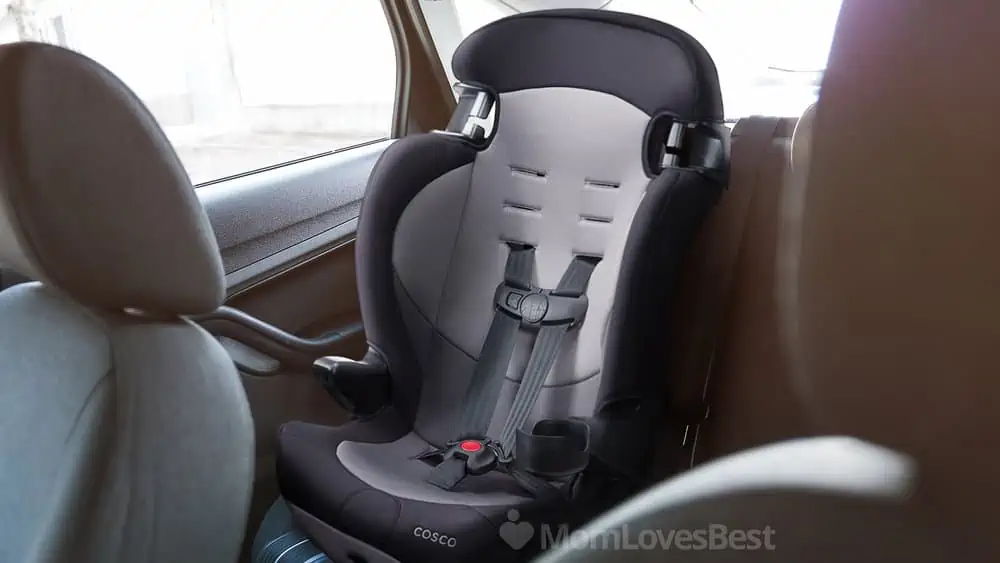
The Cosco Finale DX is the ultimate budget-solver for narrow spaces. It is a forward-facing only seat that starts with a 5-point harness (30-65 lbs) and converts to a belt-positioning booster (40-100 lbs).
This seat is famous for its ability to fit three across in almost any car, thanks to its uniform, boxy shape. It’s incredibly lightweight, making it a favorite for carpools, travel, and grandparents.
What We Like
Unbeatable Width
The Finale DX is designed to be as narrow as possible. It lacks the wide flared wings found on other seats, which allows it to sit flush against other car seats. If you are struggling to close the car door, this seat often solves the problem.
Extremely Portable
Weighing under 12 pounds, you can move this seat with one hand. It is perfect for families who switch cars often or need a lightweight seat to gate-check at the airport.
Dishwasher Safe Cup Holder
The included cup holder is detachable. This is a smart feature, you can remove it to save space in a tight 3-across squeeze or toss it in the dishwasher when it gets sticky.
What We Don't Like
Minimal Frills
To keep the weight and price down, the padding is thin. It’s perfectly fine for errands and school runs, but your child might complain about a hard bottom on cross-country road trips.
Product Specs
| Product Weight | 11.5 pounds |
| Dimensions | 18.25 inches by 19 inches by 29.75 inches |
| Minimum Child Weight | 40 pounds |
| Maximum Child Weight | 100 pounds |
| Additional Features | Detachable cup holder, adjustable harness |
Best Narrow Booster Car Seats
Evenflo Chase Harnessed Booster Seat
Best for Younger Booster Users
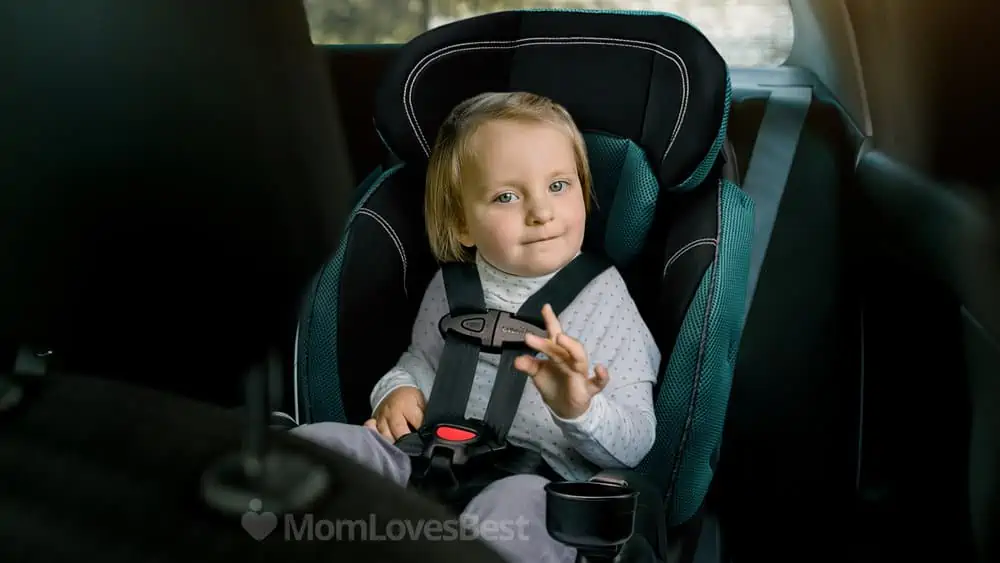
The Evenflo Chase is a combination seat that offers a forward-facing harness for kids 22-40 pounds and converts to a belt-positioning booster for kids 40-110 pounds. While the harness weight limit is lower than some, it is an excellent lightweight option for petite toddlers.
It features integrated cup holders that don’t add excessive width, keeping the seat streamlined. It installs easily with LATCH or the vehicle belt and includes a machine-washable pad.
What We Like
Budget Friendly Safety
This seat passes rigorous side-impact testing and structural integrity tests at levels double the federal standard. It provides a safe, harnessed option for families on a tight budget.
Auto-Adjust Belt Path
Transitioning to booster mode is simple. The belt path guides help position the seat belt correctly over your child’s shoulder, which is crucial for safety and helps teach older kids how to buckle themselves.
Lightweight
Like the Cosco, this seat is very light. It is easy to transfer between cars, making it a solid choice for babysitters or secondary vehicles.
What We Don't Like
Low Harness Limit
The 40-pound harness limit is quite low by modern standards. Many children reach 40 pounds around age 4 or 5, so you might be forced to switch to booster mode earlier than you would with a seat that has a 65-pound limit.
Product Specs
| Product Weight | 11 pounds |
| Dimensions | 18 inches by 18.5 inches by 29.5 inches |
| Minimum Child Weight | 22 pounds |
| Maximum Child Weight | 110 pounds |
| Additional Features | Integrated cup holders, harness and seat belt fastening, LATCH system, adjustable harness, and headrest |
Chicco KidFit 2-in-1 Booster Seat
Best Narrow Latch Compatible Booster Seat
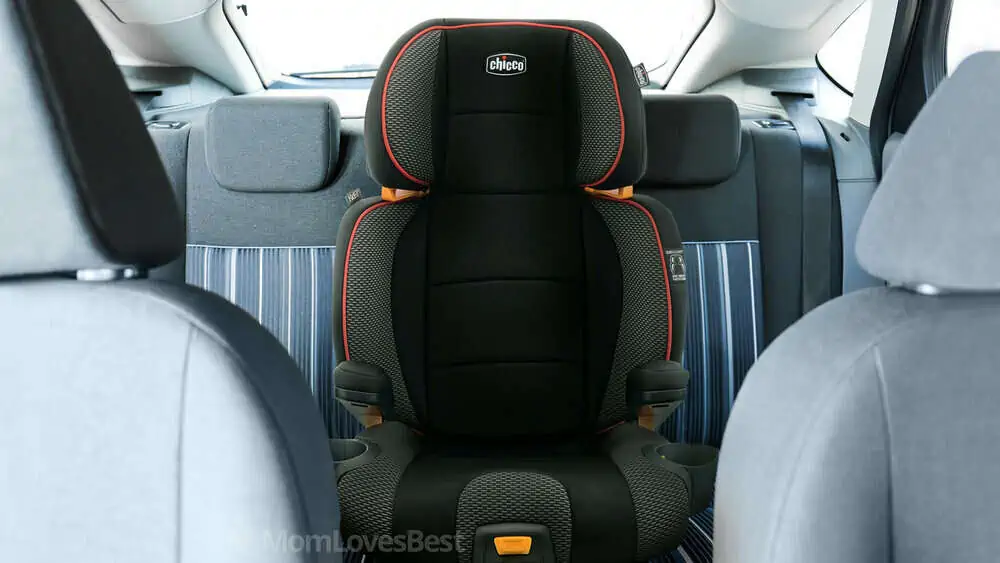
The Chicco KidFit brings stability to the booster game. Designed for kids 40-100 pounds, it features premium LATCH connectors that secure the seat to the vehicle. This prevents the booster from becoming a dangerous projectile when your child isn’t in it.
It converts from a high-back booster to a backless booster, extending its usability. The “CupFolders” are a brilliant design touch, they fold inward to save space when not in use, which is helpful in crowded back seats.
What We Like
SuperCinch LATCH
The SuperCinch tightener allows you to secure the seat to the car’s anchors with one pull. This keeps the seat steady while your child climbs in and out, preventing it from tipping over or sliding sideways.
DuoZone Protection
The head and shoulder support adjusts into 10 different positions. This ensures that the side-impact protection is always in the right spot as your child shoots up in height.
Collapsible Cup Holders
Standard cup holders often clash with the car door or the adjacent passenger. Chicco’s soft-sided holders fold away easily, giving you those precious extra inches of hip room when you need them.
What We Don't Like
No Harness Option
Remember, this is strictly a booster seat. It uses the vehicle seat belt to restrain the child. If your child is not yet mature enough to sit still without a harness, this is not the right choice for you.
Product Specs
| Product Weight | 10.2 pounds |
| Dimensions | 16.5 inches by 18.75 inches by 32.75 inches |
| Minimum Child Weight | 40 pounds |
| Maximum Child Weight | 110 pounds |
| Additional Features | Recline, fold-away cup holders, backless and high-back modes, SuperCinch LATCH, side-impact protection |
Evenflo Maestro Sport Booster Seat
Best Narrow Harness Booster Seat
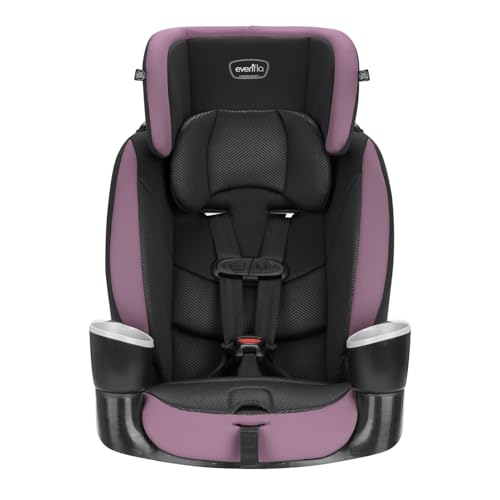
The Evenflo Maestro Sport is a step up from the Chase, offering a higher harness weight limit of 50 pounds. This allows you to keep wiggly preschoolers harnessed for longer. Once they are ready, it converts to a belt-positioning booster for kids up to 110 pounds.
It features a sporty design with dual cup holders and a forward-facing only installation. Its narrow footprint makes it a popular choice for fitting beside wider convertible seats.
What We Like
Higher Harness Capacity
The 50-pound limit is a sweet spot for many families. It covers the gap for children who are too heavy for a 40-pound seat but not quite ready for the responsibility of a seat belt booster.
Easy Adjust Harness
The upfront harness adjustment makes it simple to tighten the straps snug against your child’s chest every trip. Proper fit is essential for safety, and this mechanism is smooth and accessible.
Simple to Clean
The seat pad is machine washable, and the plastic components wipe down easily. It is designed to withstand the wear and tear of daily use without looking grimy.
What We Don't Like
No Recline
This seat installs upright and does not offer recline options. If your child tends to fall asleep in the car, their head may slump forward more than it would in a convertible seat.
Product Specs
| Product Weight | 9.6 pounds |
| Dimensions | 17 inches by 19 inches by 27.5 inches |
| Minimum Child Weight | 22 pounds |
| Maximum Child Weight | 110 pounds |
| Additional Features | Cup holders, side-impact protection, LATCH system, harness, and seat belt fastening |
| Product | Award | Seat Weight | Dimensions | Min. Weight | Max. Weight |
|---|---|---|---|---|---|
| Safety 1st onBoard | Most Comfortable for Newborns | 15 lbs | 15.5″ x 18″ x 30.5″ | 4 lbs | 35 lbs |
| Maxi-Cosi Mico | Great With a Stroller | 19.7 lbs | 12.2″ x 19.7″ x 10.2″ | 4 lbs | 30 lbs |
| Britax B-Safe | Best for Small Babies | 10.9 lbs | 26.6″ x 17.9″ x 25.9″ | 4 lbs | 35 lbs |
| Diono Radian 3R | Best for Three Across | 25.9 lbs | 16″ x 17″ x 28.5 | 5 lbs | 120 lbs |
| Britax Marathon | Best Custom Fit | 28.5 lbs | 23″ x 18.5″ x 23.5″ | 5 lbs | 65 lbs |
| Evenflo Sonus | Best for Hot-Weather Travel | 13 lbs | 20 ” x 19.25″ x 28″ | 5 lbs | 50 lbs |
| Diono Radian 3R | Easiest to Fasten | 26 lbs | 16″ x 17″ x 28.5″ | 5 lbs | 120 lbs |
| Evenflo Revolve360 Slim | Easiest to Use | 33.8 lbs | 21″ x 16.75″ x 24.3″ | 4 lbs | 65 lbs |
| Cosco Finale DX | Best Budget 2-in-1 Buy | 11.5 lbs | 18.25″ x 19″ x 29.75″ | 40 lbs | 100 lbs |
| Evenflo Chase | Best for Younger Users | 11 lbs | 18″ x 18.5″ x 29.5″ | 22 lbs | 110 lbs |
| Chicco KidFit | Best Narrow LATCH Seat | 10.2 lbs | 16.5″ x 18.75″ x 32.75″ | 40 lbs | 110 lbs |
| Evenflo Maestro Sport | Best Narrow Harness Seat | 9.6 lbs | 17″ x 19″ x 27.5″ | 22 lbs | 110 lbs |
FAQs

Are Narrow Car Seats Safe?
Yes, narrow car seats are just as safe as wider models. Every car seat sold in the U.S. must meet the same federal safety standards (FMVSS 213). Their slim width is achieved through engineering, such as using steel frames or removing bulk from the outside shell, not by compromising safety features.

How Do You Fit 3 Car Seats Across the Back Seat?
Fitting three across usually requires a combination of narrow seats (ideally under 17 inches wide) and using the seat belt installation method rather than LATCH. Using seat belts often allows you to pull the outboard seats closer to the doors, freeing up space in the middle. You may also need to mix seat directions (rear-facing/forward-facing) to puzzle the widest parts of the seats together.

How Much Wiggle Room Should a Car Seat Have?
A properly installed car seat should move less than one inch side-to-side or front-to-back at the belt path. If it moves more than this, you need to tighten the installation. Grab the seat at the belt path (not the top) to test the movement with your non-dominant hand.

Why are Car Seats Safest In the Middle?
The center rear seat is statistically the safest spot because it is the furthest point from any impact during a side collision. However, if you cannot get a tight installation in the middle (due to a hump in the floor or narrow belt spacing), it is safer to install the seat on either side where you can secure it properly.

What is the Difference Between a 3-In-1 and All-In-One Car Seat?
These terms are often used interchangeably, but generally, a 3-in-1 seat covers three modes (Rear-Facing, Forward-Facing, High-Back Booster). An All-in-One usually adds a fourth mode: the Backless Booster. Both are designed to grow with your child from birth to the booster years.

What is Considered a Narrow Car Seat Width?
A car seat is generally considered “narrow” if it is 17.5 inches wide or less. The narrowest models on the market, such as the Diono Radian or Clek Foonf, typically measure roughly 17 inches at their widest point, making them the industry standard for three-across configurations.
Does Using LATCH Save Space?
Not necessarily. While LATCH is convenient, the anchors are located in fixed positions in your vehicle seat. Installing with the vehicle seat belt often allows you to shift the car seat a few inches closer to the door or further to the side, which is often crucial when trying to fit three seats in a row.