Kids outgrow gear fast. Eventually, you are left with a bulky plastic seat taking up valuable space in your garage or closet. You cannot just toss it in the curb bin, and you certainly don’t want to pass on a safety hazard.
Deciding what to do depends heavily on the seat’s condition and expiration date. Whether you want to recycle, donate, or trade it in for a discount, there are specific protocols to follow to ensure safety. We have updated information on trade-in events and disposal methods to help you reclaim your space responsibly.
Key Takeaways
- Check the date: Always verify the expiration date and crash history before attempting to reuse or donate a seat.
- Trade it in: Events like Target’s Car Seat Trade-In allow you to swap old seats for coupons on new baby gear.
- Donate with caution: Only donate unexpired, crash-free seats to organizations that explicitly accept them, such as certified training centers.
- Disposal protocols: Never put a whole car seat in a standard recycle bin; strip the fabric, cut the straps, and dismantle the metal first.
Is It Expired?
Before you hand a seat down or sell it, you must confirm it is safe. If a car seat is expired, do not use it. Over time, the plastic shell degrades and becomes brittle due to temperature fluctuations and UV exposure. An expired seat may shatter in a crash rather than flex, failing to protect the child.
To find the expiration date, flip the seat over. You will usually find a sticker on the bottom or back of the shell. In some cases, the date is stamped directly into the plastic. If you cannot find it on the seat, check the registration card or the owner’s manual.
Can You Reuse a Car Seat?
We generally advise against buying used car seats because you cannot verify their history. However, reusing a seat within your own family or from a trusted close friend is often fine, provided it meets strict criteria.
Run through this checklist before reusing a seat:
- It is not expired: The seat must be within its useful life. If it expires within six months, it is usually better to recycle it now than risk forgetting later.
- It has never been in a crash: This is non-negotiable. Even a minor fender bender can cause microscopic stress fractures in the plastic. While the NHTSA says some seats can survive minor crashes (1), many manufacturers mandate replacement after any impact. Always check your manual.
- It is clean: Hygiene matters. If you plan to reuse the seat, strip it down and clean it according to the manual. Never use harsh chemicals or bleach on the harness straps, as this weakens the webbing.
- It has all its parts: Check for a complete harness, chest clip, and working buckles. If the manual is missing, download a new one from the manufacturer’s website.
If you choose to use a secondhand seat, inspect it thoroughly. Remove the cover to look for white stress marks on the plastic shell. Finally, register the seat with the manufacturer immediately so you are notified of any future recalls. You can also verify current recalls here.
How to Get Rid of a Used Car Seat
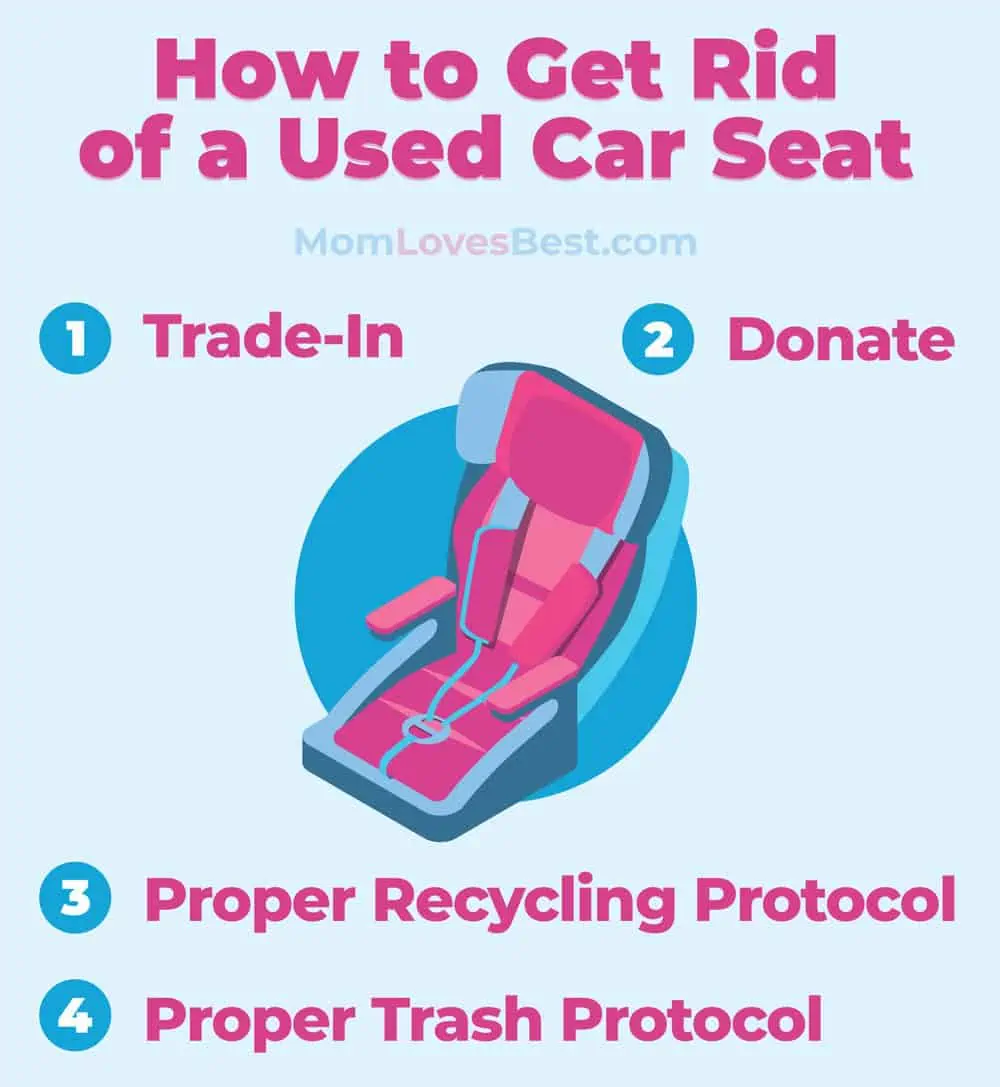
If your seat is expired, damaged, or involved in a crash, it has reached the end of the road. You have a few options to dispose of it responsibly without cluttering a landfill.
1. Trade-In Events
This is the most popular and financially rewarding option. Big-box retailers occasionally host events where they take back old seats in exchange for discounts.
Target is the leader in this space. They typically hold a car seat trade-in event twice a year (often April and September). You bring in your old seat (expired or damaged is fine), and they give you a 20% coupon for a new car seat, stroller, or other baby gear.
Since the program launched in 2016, Target has recycled millions of pounds of car seat material. The plastic is processed into pallets, buckets, and construction supplies (2). We highly recommend holding onto your seat until the next event if you have the storage space.
2. Manufacturer Mail-Back Programs
If you cannot wait for a retail event, check your seat’s brand. Some manufacturers offer their own recycling programs.
- Clek: They offer a product recycling program where you can purchase a shipping label to send the seat back to them. They ensure it is disassembled and recycled responsibly.
- Century: This brand has integrated recycling into their sustainability mission, often providing options to return seats. check their specific website for current details.
3. Donate It
Donating is tricky. Most thrift stores and charities (like Goodwill or Salvation Army) generally refuse used car seats due to liability and safety risks. They cannot verify if a seat was in a crash. However, there are niche options if your seat is unexpired and in perfect condition.
- Women’s shelters: Local domestic violence shelters sometimes accept seats for families fleeing unsafe situations. Always call ahead to ask.
- CPST Training: Child Passenger Safety Technicians (CPSTs) are the experts who teach car seat safety. They often need old seats for demonstration purposes during training classes. Contact a local technician to see if they need a “demo dummy” seat (3).
4. Proper Recycling Protocol
You usually cannot put a car seat in your curbside bin. The mix of hard plastic, metal, foam, and fabric makes them impossible for standard facilities to sort. However, you can recycle it manually if you put in the work.
- Find a facility: Call your local waste management center. Ask if they accept “rigid bulky plastics” if the metal and fabric are removed. You can also search for a center that accepts car seats here.
- Strip the seat: Remove all fabric covers, padding, and foam. These usually go in the trash, though some textiles can be recycled separately.
- Cut the straps: This is a safety step. Use scissors to cut the harness straps completely off. This prevents anyone from dumpster diving and trying to reuse the unsafe seat.
- Remove metal: Use a screwdriver to remove metal buckles, bolts, and frames. Recycle the metal scrap separately. You should be left with just the bare plastic shell.
5. Proper Trash Protocol
If recycling isn’t an option in your area, the trash is your final resort. Do not just set the seat on the curb, as someone might pick it up and use it unknowingly.
Follow these steps to “condemn” the seat before disposal:
- Dismantle it: Remove the padding and foam so it looks unusable.
- Sever the straps: Cut the harness straps, LATCH belts, and top tether.
- Mark it: Use a permanent marker to write “EXPIRED,” “CRASHED,” or “UNSAFE” in large letters on the plastic shell.
- Bag it: If possible, place the pieces in dark trash bags so the seat is not visible to passersby.
FAQs

How Often Does Target Do the Car Seat Trade-In?
Target’s car seat trade-in event typically happens twice a year, usually in April and September. It is a great time to recycle old seats and get a discount on a new one.

What Can You Do With Expired Car Seats at Walmart?
Walmart has hosted trade-in events in the past, but they are less consistent than Target. Check with your local store or their corporate website for current announcements. If no event is active, you will need to recycle or dispose of the seat yourself.

Do Backless Booster Seats Expire?
Yes, backless booster seats do expire. The plastic materials degrade over time just like harnessed seats. Check the bottom of the booster or the manual for the specific expiration date, which is usually 6 to 10 years after manufacture.

Why Should You Not Use Expired Car Seats?
Expired car seats may not meet current safety standards and likely have weakened materials. The plastic can become brittle and fail to protect your child during a crash.

How Many Years Until a Car Seat is Expired?
Car seats typically expire six to ten years from the date of manufacture. This varies by brand and model, so always check your car seat’s manual or the label stamped on the shell.

Can I Put a Car Seat in the Recycling Bin?
No, you generally cannot place a whole car seat in a curbside recycling bin. The combination of metal, fabric, and plastic requires specialized sorting. You must dismantle the seat and separate the materials before taking the plastic shell to a facility that accepts rigid plastics.
Do Car Seat Bases Expire?
Yes, car seat bases expire just like the infant carriers do. They are made of the same plastic materials that degrade over time and stress. Always check the expiration sticker on the base separately.