Does your newborn turn into a tiny, wailing alarm clock the second you put them down? Are you practically hallucinating from exhaustion, desperate for just one hour of baby-free sleep?
You are not alone. Sleep deprivation is the universal hazing ritual of parenthood, and newborns are notorious for refusing to sleep solo.
If your baby demands to be held, rocked, or bounced all night long, functioning the next day feels impossible. While patience is key during the “fourth trimester,” you also need to rest.
In this guide, we will break down why your baby fights the bassinet and share actionable, gentle ways to teach your newborn to sleep alone.
Key Takeaways
- Safety first: The safest place for a baby is in their own sleep space (bassinet or crib) within your room, known as room-sharing.
- The root cause: Newborns often refuse to sleep alone due to the “Moro reflex,” a need for warmth, or simply missing your heartbeat.
- Start simple: Introducing a consistent bedtime routine and using swaddles can help mimic the womb and signal sleep time.
- Be realistic: Newborn sleep is chaotic; focus on small victories and consistency rather than perfection.
Safe Sleeping For Newborns
We know it is tempting to bring the baby into your bed when you are exhausted, but safe sleep is non-negotiable. Bed-sharing significantly increases the risk of Sudden Infant Death Syndrome (SIDS) and accidental suffocation (1).
The American Academy of Pediatrics (AAP) recommends room-sharing without bed-sharing. This means encouraging your baby to sleep alone in a dedicated space, such as a bassinet or a co-sleeper, placed right next to your bed.
This setup keeps your baby within arm’s reach for feeding and comforting but ensures they have a flat, firm surface free of pillows and blankets. It is the best of both worlds: your baby stays safe, and you get better quality rest.
When Do Newborns Sleep Through the Night?
Let’s manage expectations: “Sleeping through the night” for a newborn usually means a 5 to 6-hour stretch, not a solid 12 hours.
Several factors influence this milestone, including whether your baby is bottle-fed or breastfed, their weight, and their unique temperament. Remember, newborn tummies are tiny. They biologically need to wake up frequently to eat.
Every baby is different. Some unicorns sleep long stretches early on, while others take their sweet time. If you have multiple kids, you already know that what worked for baby number one might fail miserably with baby number two.
Generally, by six months, most babies are physically capable of sleeping for longer durations. However, establishing a solid bedtime routine now can help lay the groundwork for those silent nights (2).
Why Won’t My Newborn Sleep Alone?
Your newborn isn’t trying to be difficult; they are just operating on instinct. For nine months, they were held tight in a warm, dark, noisy womb. Suddenly, they are in a bright, quiet world, and a flat mattress feels foreign and cold.
Hunger and fatigue are the usual suspects, but your little one is complex. Here are the most common reasons your baby turns into a “velcro baby” at night:
- The Fourth Trimester: Your baby doesn’t realize they are a separate person from you yet. They crave your scent, warmth, and heartbeat because that is all they have ever known.
- The Moro Reflex: This is the “startle reflex.” If a newborn isn’t swaddled, their arms can jerk outward during sleep, startling them awake the second you lay them down.
- Internal Clock Confusion: A baby’s circadian rhythm (day vs. night) doesn’t mature until about 12 weeks. They might be partying at 3 a.m. and sleeping all day because their body doesn’t know the difference yet (3).
- Hunger or Growth Spurts: Newborns eat… a lot. If they are going through a growth spurt or struggling with a latch, they may seem constantly hungry and unable to settle.
- Discomfort: Issues like acid reflux, gas, or a wet diaper can make lying flat uncomfortable.
Understanding *why* they cry when put down helps you keep your cool. It is not manipulation; it is a request for comfort.
Helping Your Baby Sleep Alone
Once you identify the cause, you can troubleshoot. If it is hunger, you feed. If it is day/night confusion, you keep days bright and nights dark.
But what if they just want *you*? We have been there. It is heartbreaking (and back-breaking) to rock a baby for an hour, only to have them wake up the moment their head hits the mattress.
If basic troubleshooting isn’t working, it is time to look at gentle techniques to encourage independence.
[related-spot url=”https://momlovesbest.com/cry-it-out-method”]What About Sleep Training?
“Sleep training” is a buzzword that often scares parents. It doesn’t necessarily mean leaving your baby to cry alone. It simply refers to teaching your baby healthy sleep associations.
However, formal sleep training (like Cry It Out or Ferber) is generally not recommended until a baby is at least 4 months old. At that age, they can physically go longer without eating and have the capacity to self-soothe (4).
For a newborn, the goal isn’t strict training; it is gentle practice.
When To Introduce a Bedtime Routine
You can start a bedtime routine from day one.
While a newborn won’t strictly follow a schedule, a predictable sequence of events helps cue their brain that sleep is coming. Routines reduce anxiety for both parents and babies (5).
Keep it flexible. Be prepared for the routine to be interrupted by poop explosions or cluster feeding. The goal is to create a rhythm, not a rigid military schedule.
How To Get Your Newborn to Sleep Alone
Implementing these steps early won’t yield perfect results overnight, but it builds the foundation for independent sleep. It is also a great way to test what soothes your specific baby.
Here is a step-by-step approach to reclaiming your bed.
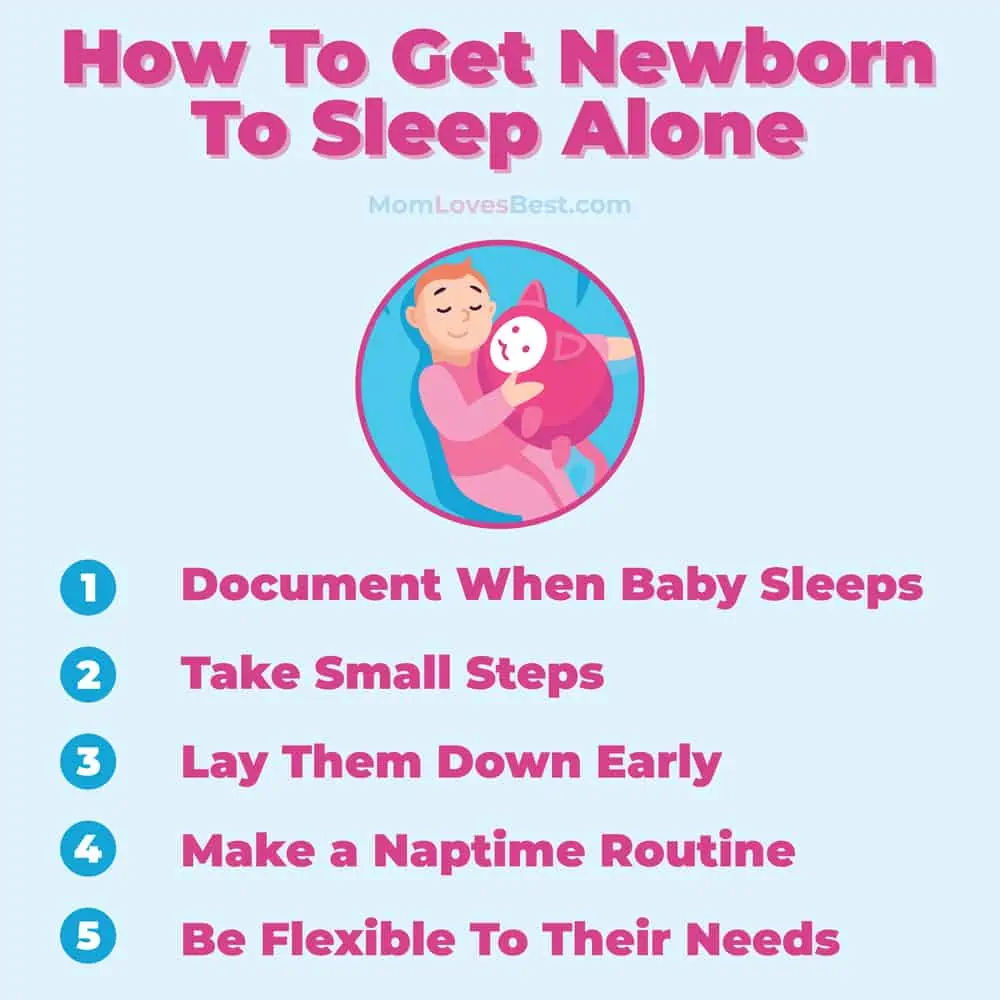
1. Master the Swaddle
The startle reflex is the enemy of sleep. A tight (but hip-healthy) swaddle mimics the womb’s tightness and prevents their arms from flailing. Many babies who “hate” the bassinet suddenly sleep well once they are securely swaddled.
2. Use White Noise
The womb is louder than a vacuum cleaner. Silence can actually be frightening for a newborn. A white noise machine plays a constant, rumbly sound that masks household noises and comforts the baby.
3. Practice “Drowsy But Awake”
This is the golden rule, but it takes practice. Try to lay your baby in their sleeper when they are calm and heavy-lidded, but not fully asleep. If they fall asleep in your arms 100% of the time, they will panic when they wake up alone.
4. Warm the Crib
Going from warm arms to a cold sheet is a shock. Try placing a heating pad or hot water bottle in the bassinet for a few minutes to warm the sheets *before* you put the baby down. Crucial safety note: Remove the heating device and check the temperature with your hand before placing the baby inside.
5. The “Feet First” Transfer
When you transfer your sleeping baby, don’t lower their head first; this triggers the sensation of falling (Moro reflex). instead, gently lower their feet until their bum touches the mattress, then slowly lower their head. Keep your hand on their chest for a moment to settle them before sneaking away.
6. Be Adaptable
Your newborn changes daily. What works on Tuesday might fail on Friday. Be willing to adjust the routine as they grow, and give yourself grace. If you need to rock them to sleep tonight just to survive, do it. You can try again tomorrow.
FAQs

Why Does My Baby Keep Rolling Over in His Sleep and Waking Up?
This is a developmental milestone that usually happens around 4 months. Once your baby shows signs of rolling, you must stop swaddling immediately for safety. Use a sleep sack to keep them warm without restricting their arms.

What Do Pediatricians Say About Co-Sleeping?
Most pediatricians and the AAP advise against bed-sharing (sleeping in the same bed) due to SIDS risks. However, they strongly support room-sharing, where the baby sleeps in a separate crib or bassinet within the parents’ room for at least the first six months.

Do Newborns Sleep Better In the Dark?
Yes. Darkness promotes the production of melatonin, the sleep hormone. Keeping the room pitch black at night (and dim during night feeds) helps teach your baby’s internal clock that night is for sleeping.

Why Does My Newborn Grunt and Squirm While Sleeping?
Newborns are surprisingly noisy sleepers! Their digestive systems are developing, so grunting, squirming, and whimpering are often signs of them working out gas or stool, known as “infant dyschezia.” This is normal active sleep and doesn’t always mean they are awake or upset.
Is It Okay to Let a Newborn Cry It Out?
No. Sleep experts do not recommend the “Cry It Out” method for newborns (under 4 months). Newborns cry to communicate a need (hunger, comfort, diaper change) and cannot self-soothe yet. Respond to their cries to build trust and security.
In Conclusion
Teaching a newborn to sleep alone is a marathon, not a sprint. There will be nights where everything clicks, and nights where you are pacing the floor at 3 a.m. wondering if you will ever sleep again.Take a deep breath. This phase is temporary. By practicing safe sleep habits, using tools like swaddles and white noise, and staying consistent with your routine, your baby will eventually learn to snooze solo. Until then, grab that coffee and hang in there, mama.