Is it hard to let go of the stroller? Do you worry people are judging you when your big kid is riding instead of walking?
Strollers are lifesavers for parents. However, there comes a point when your child needs to stand on their own two feet. The guidelines are cloudy, so let’s answer the big question: how old is too old for a stroller?
Key Takeaways
- General Guideline: Most experts generally agree that kids over 4 to 5 years old should transition out of strollers.
- Health Priority: Active play supports motor skills and cognitive development; too much sitting acts like sedentary screen time.
- Exceptions Apply: Theme parks, long travel days, and medical conditions are valid reasons to keep rolling.
- Parental Instinct: Use these tips as a guide, but trust your gut on what keeps your family happy and safe.
How Old is Too Old for a Stroller?
Parents have debated this question for years. While no official law exists, the general opinion suggests healthy kids should be stroller-free between 4 and 5 years old.
The transition often starts around age 3. At this stage, your child can usually walk confidently and follow directions.
This phase requires patience. Your child might not want to give up their VIP seat immediately.
Try a gradual process. Mix short walks with stroller time to help your youngster adjust without sacrificing your sanity.
Reasons to Retire the Stroller
If you are still wheeling your preschooler around, here are a few reasons to consider parking the ride for good.
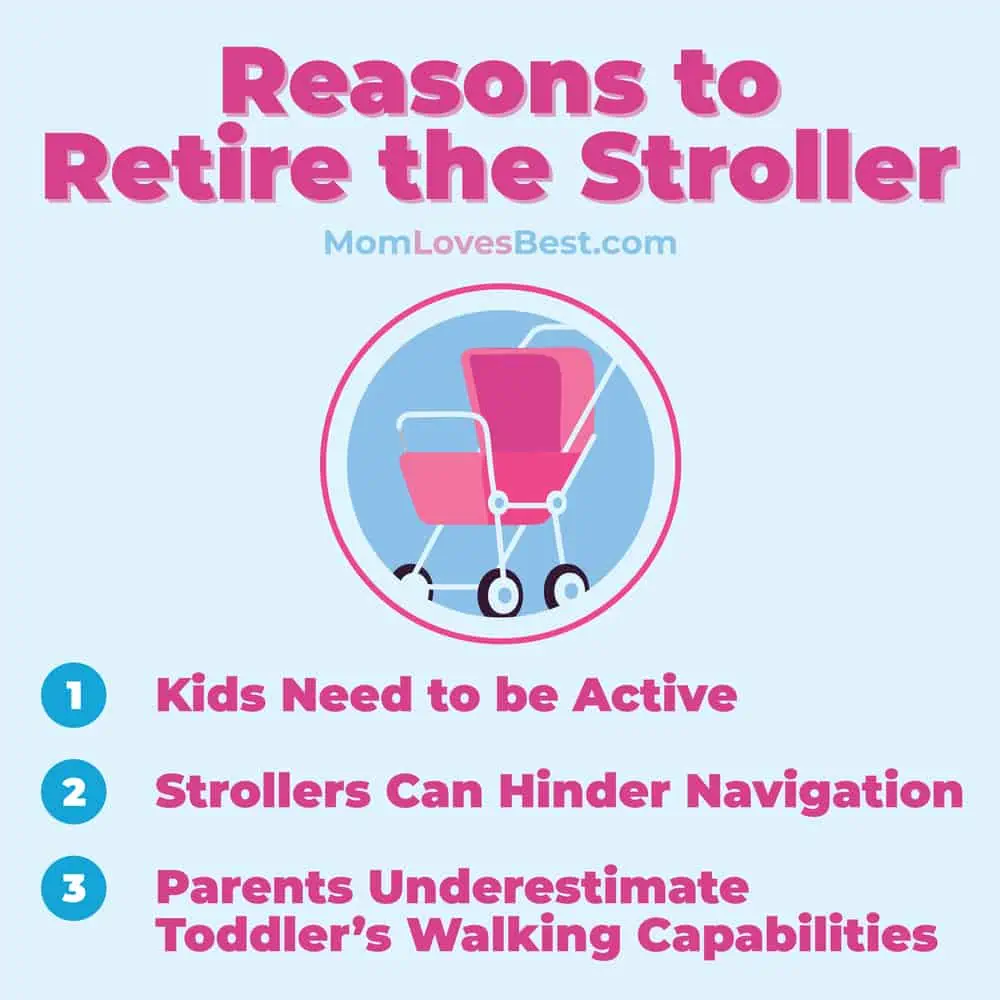
1. Kids Need to be Active
Guidelines exist for a reason. Reports indicate that sedentary habits during formative years can lead to obesity later in life (1).
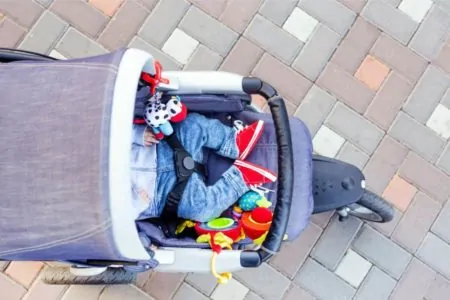
Experts view time in a stroller similarly to time spent watching TV. It should be limited. They advise keeping children strapped in for a maximum of 60 minutes at a time to avoid extended inactivity (2).
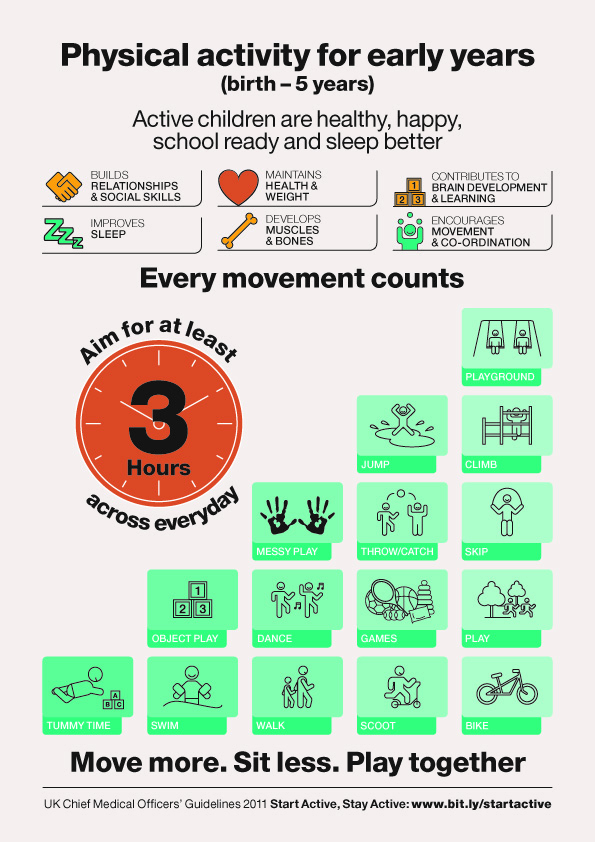
Children under 5 need at least 3 hours of activity daily. This doesn’t mean hitting the gym. It includes dancing, swimming, park walks, or backyard playtime (3).
High activity levels help a child:
- Develop motor skills: They learn to move more fluently.
- Boost brain power: Movement aids memory, thinking, and problem-solving (4).
- Maintain weight: It helps prevent early childhood obesity (5).
- Build strength: Running and climbing develop muscles and bones.
- Socialize: Walking allows for better interaction with the world and other kids.
Once you know the benefits of movement, it becomes easier to leave the lightweight stroller at home.
2. Strollers Can Be a Hassle
Navigating a stroller has its downfalls. Narrow store aisles and crowded malls test your skills and your patience.
Plus, how often do you end up pushing an empty stroller while carrying your child? You are left steering with one hand and balancing a toddler on your hip.
Stairs are another enemy. If you don’t have an elevator, you are stuck. When big kids are on foot, you just hold their hand. You don’t have to collapse a bulky piece of gear every five minutes.
3. You Underestimate Their Stamina
If your child looks confident and doesn’t ask for a ride, why force it?
Although they have shorter legs, many kids can cover greater distances than parents realize. They move at a slower pace, but they are capable. Trust their energy.
Reasons to Keep Using a Stroller
Sometimes, ditching the wheels isn’t the right move. Here is why you might keep it in rotation.
1. Convenience and Speed
Convenience is a major factor for parents (6). Busy lifestyles limit our time. A stroller gets you from point A to point B faster than a wandering toddler.
We have all heard the cries of “I’m tired” or “Carry me.” When a youngster refuses to take another step, the stroller saves the day. It also acts as a cargo mule for diaper bags, snacks, and shopping bags.
The wheels also offer a break during long outings.
2. Long Trips and Theme Parks
A stroller is worth its weight in gold during a trip to the zoo or Disney World.
Walking all day adds up to tired legs. A stroller provides a shaded spot for your child to rest, preventing meltdowns and overheating. This is a perfect use case for older toddlers (ages 4 or 5) who walk fine at home but can’t handle a 10-mile park day.
3. Safety in Crowds
Sometimes, eyes in the back of your head aren’t enough.
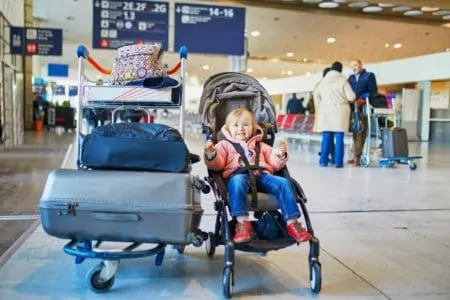
Losing sight of your child is a nightmare. Youngsters are curious and love to wander. When you strap them in, you know exactly where they are. This is vital near busy roads, crowded festivals, or airports.
4. Developmental Differences
Not all kids develop at the same pace. A 4-year-old might be the size of a 6-year-old, or vice versa.
Physical ability varies too. Some children struggle with distance or have low muscle tone. For children with medical conditions or disabilities, a stroller might be their only option. The British Medical Journal highlights the specific mobility needs of children with disabilities.
FAQs

What Age Should You Buy a Stroller?
Most parents buy a stroller before or soon after birth. However, if you are asking when to stop, most kids transition out between three and four years old. This depends on walking stamina and your daily routine.

Are There Strollers For Older Children?
Yes. Some strollers are designed specifically for older children or those with special needs. These models feature higher weight limits, taller seat backs, and reinforced frames to support bigger kids safely.

What Can You Use When Kids are Too Big For a Stroller?
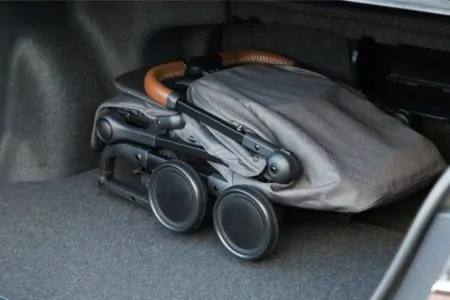
When kids outgrow the stroller but still tire easily, try wagons, scooters, or balance bikes. For travel, lightweight collapsible strollers or ride-on suitcases are great alternatives.

Do Strollers Expire?
Strollers do not have an official expiration date like car seats. However, plastics and fabrics degrade over time. Inspect older strollers regularly for wear, tear, and updated safety standards before using them.

What is the Weight Limit For a Stroller?
Limits vary by model. Lightweight or umbrella strollers usually hold up to 35 to 50 pounds. Joggers and heavy-duty strollers can often accommodate 50 to 75 pounds. Always check your manual.

How Do I Wean My Child Off the Stroller?
Start small. Park the stroller for short trips to the park or mailbox. Make walking fun by playing games like “I Spy” or racing to the next tree. Praise their independence and only bring the stroller as a backup for very long days.
The Final Verdict
Strollers are appropriate for big kids in specific situations. They are convenient tools for getting from point A to B, especially when time, distance, and safety are factors.
However, keeping your child in one for too long eats into their precious activity time. Movement is essential for their health and development.
Stroller overuse is a real issue, but no one knows your child better than you do. Don’t feel pressured to ditch the wheels before you are ready, but don’t be afraid to let them walk when the time is right.