During that first year of parenthood, you navigate a maze of sniffles, rashes, and weird noises. You also get the front-row seat to the adorable moments, like those first gummy smiles.
Then there are hiccups. Reactions usually fall into two camps: some parents think it’s cute, while others immediately worry something is wrong.
While baby hiccups are rarely an emergency, they can be annoying for your little one (and loud for you). If you want to help them stop, you have a few options. Here is exactly how to get rid of baby hiccups and why they happen in the first place.
Key Takeaways
- The Root Cause: Hiccups happen when the diaphragm spasms, usually due to overfeeding, swallowing air, or sudden temperature shifts.
- Effective Treatments: You can help stop hiccups by burping your baby mid-feed, offering a pacifier to relax the diaphragm, or simply waiting it out.
- Safety Check: They are common and rarely harmful, but you should consult a pediatrician if hiccups interfere with sleep or seem to cause pain.
- Prevention Tips: Keep your baby upright for 20 minutes after eating and try to keep mealtimes calm to prevent them from gulping air.
What Causes Baby Hiccups?
Ideally, we need to understand the mechanics before we fix the problem. Hiccups in babies are biologically similar to hiccups in adults. They happen when the diaphragm, the thin muscle between the chest and abdomen, starts to spasm (1).
When that muscle spasms, the vocal cords snap shut instantly. That sudden closure forces air out, creating the signature “hic” sound.
Doctors aren’t 100% sure why the brain sends the signal to spasm, but we do know the common triggers (2).
For infants, feeding is the primary culprit. If a baby eats too fast, overfeeds, or gulps down air, the stomach expands. This distended stomach presses against the diaphragm, irritating it and setting off the spasms (3).
However, if your baby hasn’t eaten recently, consider these three other causes.
Other Common Triggers
1. Temperature Changes
A sudden shift in internal temperature can shock the system. This often happens if you feed your baby cold milk followed by warm purees, or vice versa. It is generally harmless.
2. Gastroesophageal Reflux (GER)
If the hiccups seem painful or cause your baby distress, gastroesophageal reflux (GER) might be to blame.
GER happens when partially digested food and stomach acid travel back up the esophagus. This acid irritates the diaphragm, triggering spasms. While this sounds scary, it typically resolves itself by the time the baby turns one. As long as your baby is gaining weight and seems happy, it is usually just a laundry issue rather than a medical one (4).
However, if the reflux causes pain, it is classified as GERD (Gastroesophageal Reflux Disease).
3. Releasing Trapped Gas
Interestingly, a 2012 study suggests hiccups might be a biological mechanism to remove excess air from the stomach. The theory is that the hiccup acts like a burp, helping the diaphragm force air out (5).
When to Call the Doctor
If hiccups are accompanied by these severe symptoms, contact your pediatrician immediately:
- Forceful Vomiting: Consistently spitting up with high pressure (projectile vomiting).
- Discolored Fluid: Spitting up fluid that looks yellow or green.
- Food Refusal: Consistently refusing the bottle or breast.
- Poor Growth: Failure to gain weight or maintain growth curves.
- Blood: Spitting up blood or material that looks like coffee grounds.
- Bloody Stool: Noticing blood in their diaper.
- Respiratory Issues: Chronic coughing or difficulty breathing.
- Pain: Being unusually irritable after feeding.
How to Get Rid of Baby Hiccups
1. Take a Burp Break
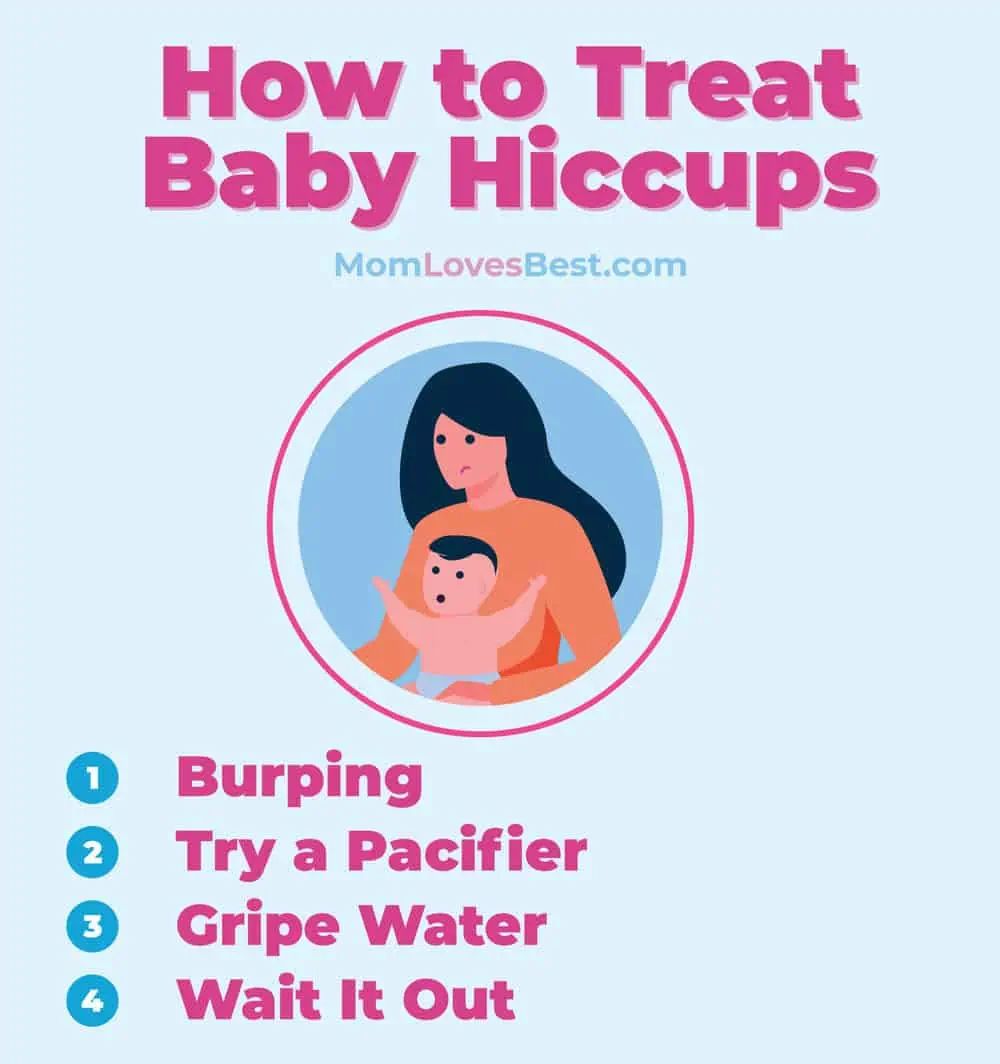
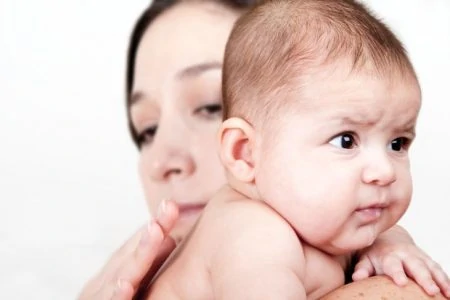
If hiccups start during a feed, stop and burp your baby. Since air bubbles distend the stomach and push on the diaphragm, releasing that gas can stop the spasm immediately (6).
Don’t wait until the end of the meal (7).
- Breastfed babies: Burp your baby every time you switch breasts.
- Bottle-fed babies: Burp every 2 to 3 ounces. If you have a vigorous eater, burp them more frequently to slow them down.
Burping also keeps the baby upright, which helps prevent reflux symptoms (8).
2. Use a Pacifier
If hiccups start spontaneously between meals, try a pacifier. The sucking motion helps relax the diaphragm and regulate breathing.
No pacifier handy? You can offer your clean pinky finger. Turn your hand palm-side up and let your baby suck on the pad of your finger (keep the nail away from the roof of their mouth) (9).
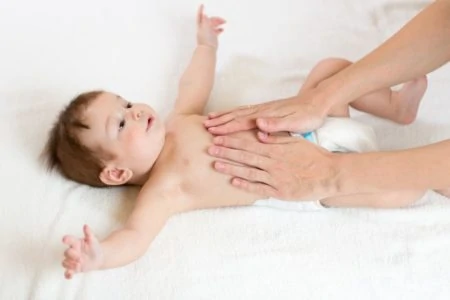
3. Massage the Back
Gently rubbing or patting your baby’s back can help release tension. Place your baby in a seated position or lay them on their tummy across your lap. The gentle pressure and rhythmic motion can help relax the spasms.
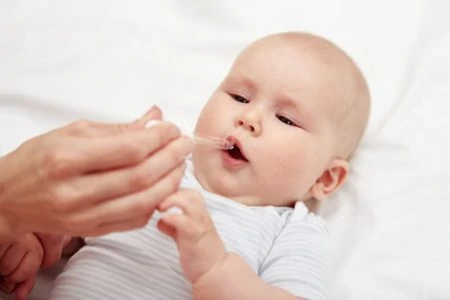
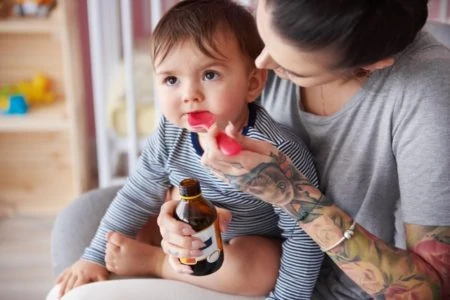
4. Try Gripe Water
Gripe water is an herbal supplement containing ingredients like ginger, chamomile, and fennel. While scientific evidence is limited, many parents swear by it for colic and hiccups. The herbs are thought to relax the stomach muscles.
Clinically, I have found that there are a variety of versions of “gripe water.” Some of my parents even mention a type that is “from their country,” recommended by another family member. While it is important to be mindful of the ingredients, in general, I do not find that gripe water is effective or helpful. Therefore, I do not recommend gripe water for my patients (10).

Editor's Note:
Dr. Leah Alexander, MD, FAAPSafety First
5. The “Wait and See” Method
Here is the truth: hiccups usually bother parents more than babies. If your baby is smiling, cooing, or even sleeping through the hiccups, you don’t need to intervene. They will resolve on their own eventually.
If your baby seems annoyed, distract them. Singing, rocking, or a change of scenery works wonders.
What Not to Do (Safety Warnings)
You will hear plenty of “old wives’ tales” about curing hiccups. Avoid these methods with infants:
1. Do Not Startle Your Baby
Scaring someone might work for adults, but it is cruel and ineffective for babies. A baby’s neurological system is still developing, and sudden loud noises can cause genuine trauma or excessive crying.
2. Do Not Pull the Tongue
Some myths suggest pulling the tongue while pressing on the forehead stops spasms. Do not do this. It is invasive, painful, and potentially dangerous for a delicate newborn.
3. Do Not Give Water (Under 6 Months)
Sipping water is a classic adult cure. However, babies under 6 months should generally drink only breast milk or formula. Excess water can upset their electrolyte balance (12).
4. Do Not Hold Their Breath
Never cover a baby’s mouth or nose to “hold their breath.” This is extremely dangerous.
5. Don’t Switch Formula Just for Hiccups
Many parents assume formula is the enemy. While switching might help with allergies, it rarely fixes hiccups. Constant switching can actually upset a baby’s tummy more (13).
Are Hiccups Bad for a Baby?
Generally, no. Hiccups are a normal part of development. In fact, your baby likely started hiccupping in the womb as early as the first trimester (14).
Hiccups are a reflex, not an illness. Many babies will happily sleep right through a bout of hiccups. Unless the hiccups are interfering with eating or sleeping, they are nothing to worry about.
How to Prevent Hiccups
You cannot stop them 100% of the time, but you can lower the frequency with these habits:
- Keep calm during feeds: Try to feed your baby before they get “hangry” (hungry and angry). If they are crying while eating, they gulp more air.
- Stay upright: Gravity is your friend. Keep your baby upright for 20 to 30 minutes after a meal to let the milk settle.
- Delay tummy time: Tummy time puts pressure on a full stomach. Wait 30 minutes after eating before putting them on the floor.
- Pace the play: Vigorous bouncing or active play right after eating can slosh the stomach contents around and trigger spasms. Keep it chill after meals.
FAQs

Do Hiccups Mean My Baby is Tired?
Not necessarily. Hiccups are usually a reflex caused by feeding or temperature changes rather than a tired cue. However, overstimulation can sometimes trigger them.

Do Hiccups Mean My Baby is Full?
They can be a sign of a full stomach, but not always. Hiccups often occur when a baby overfeeds or eats too quickly, but you should look for other cues like turning the head away to determine fullness.

How Do I Get My Newborn to Sleep With Hiccups?
You can try gentle back pats, white noise, or a pacifier to soothe them. Most babies are not bothered by hiccups and can fall asleep comfortably while still hiccuping.

Is it Safe For a Baby to Lie On Their Back With Hiccups?
Yes, it is perfectly safe. The “Back to Sleep” position is the safest way to prevent SIDS, regardless of whether the baby has hiccups or reflux.

Can You Give a Baby Sugar For Hiccups?
No. While some cultures use sugar water, doctors do not recommend giving sugar to newborns. It is unnecessary and can be unhealthy.

How Long Should Baby Hiccups Last?
A typical bout lasts anywhere from a few minutes to an hour. If hiccups persist for several hours or seem to cause your baby pain, consult your pediatrician.

Does Gripe Water Get Rid of Hiccups Immediately?
It varies by child. Some parents see results within minutes as the herbs relax the stomach muscles, while for others, it may have little effect.
The Takeaway
Hiccups are a rite of passage for babies (and their parents). From the womb to the crib, diaphragm spasms are just a part of a growing digestive system.
While they are usually caused by overfeeding, gulping air, or temperature shifts, they are rarely harmful. Your best line of defense is a good burping session, a pacifier, or simply waiting it out.
If you are ever worried, especially if the hiccups interfere with sleep or feeding, give your pediatrician a call. Otherwise, grab your phone and record the cuteness. One day, you will miss those little squeaks.