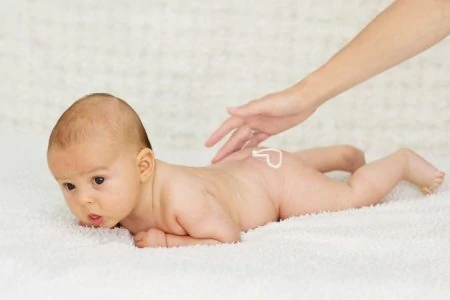
When your baby is in pain, you want relief immediately. A high-quality diaper cream can start soothing the agony of a raw, red bottom the moment it touches the skin.
As moms, we’ve dealt with enough diaper changes to know that not every cream works for every rash. We consulted doctors, chatted with fellow parents, and spent hours researching ingredients to find the safest, most effective options.
We wrote this guide to answer your burning questions and share our top recommendations for the best diaper rash creams to heal your baby’s skin.
- Free of allergens
- All-natural formulation
- Antibacterial & antifungal properties
- Multiple uses
- Provides excellent moisture barrier
- Promotes skin healing
- 100% natural
- Paraben-free
- Offers barrier protection & skin conditioners
- Contains zinc oxide
- Has anti-inflammatory calendula
- No synthetic preservatives
Why You Need Diaper Rash Cream
A diaper rash is simply a skin irritation in your child’s diaper area, but it can cause major distress.
Sometimes it appears as a small, red patch that doesn’t seem to bother your baby. Other times, it can be severe, spreading to the thighs or tummy and causing genuine pain. in extreme cases, the skin can even bleed or become infected.
Diaper rash cream helps heal your child’s bottom from an existing rash and prevents new ones from flaring up.
The best creams act as a protective barrier between your baby’s sensitive skin and potential irritants like urine or poop. They also include soothing ingredients to calm inflammation and speed up recovery.
The Causes of Diaper Rash
While sensitive skin is a factor, there are several specific culprits behind diaper rash:
- Moisture: Diapers are warm, humid environments. Even the best diapers can’t keep a bottom 100 percent dry, and trapped moisture eventually breaks down the skin (1).
- Stool: When urine mixes with stool, it creates ammonia. This chemical is harsh and burns the skin. If you are a cloth diaper user, you must keep cloth diapers free of ammonia buildup.
- Diarrhea: Loose stools are more acidic than regular bowel movements. The combination of acid, moisture, and frequent wiping creates a perfect storm for severe rashes.
- Foods: New foods change the chemical composition of your baby’s stool. Acidic foods (like tomatoes or strawberries) can lead to irritating poop. Note that this doesn’t always mean an allergy, just a sensitivity to the acid.
- Chemicals: Disposable diapers contain dyes, gels, and perfumes. If your child gets frequent rashes, consider switching to a dye-free diaper for sensitive skin or trying cloth diapers.
- Detergents: If you use cloth diapers, your baby might react to your laundry detergent. Try an extra rinse cycle or switch to a free-and-clear brand.
- Antibiotics: Medicine kills bad bacteria, but it also wipes out the “good” bacteria that keeps yeast in check. This often leads to yeast infections or diarrhea, both of which cause rashes.
- Yeast: Yeast (technically a fungus) thrives in warm, moist places. Unlike a standard rash, a yeast infection usually requires an antifungal treatment and won’t go away with standard cream alone (2).
Pro Tip
Types of Diaper Rash Products
Different rashes require different treatments, so here is a breakdown of what is available:

Creams
Creams are water-based formulations. They spread easily, absorb quickly, and are generally best for soothing mild irritation rather than treating severe, open sores.

Pastes
Pastes are thick, heavy, and often contain a high percentage of zinc oxide. They are excellent for protecting the skin and treating moderate to severe rashes. Note that they can stain clothing and are difficult to wash out of cloth diapers without a liner.

Ointments
Ointments are oil-based (often petroleum). Because they are greasy, they sit on top of the skin to create a waterproof seal. This is ideal for preventing rashes or protecting the skin during bouts of diarrhea.

Powders
Powders absorb moisture, but most pediatricians now recommend against them. The fine particles can become airborne and damage your baby’s lungs if inhaled. If you must use powder, place it in your hand away from the baby first, and never use talc-based products.
How to Choose a Diaper Rash Cream
Before buying a tube, consider these factors to find the right match for your baby:

Type of Rash
If the bottom is just red, a traditional zinc-oxide cream or petroleum ointment works well. If the rash has defined borders, red dots (satellite lesions), and won’t go away, it might be yeast. In that case, you need an antifungal product.
Cream, Paste, or Ointment
Use ointments for prevention (daily use). Use creams for mild irritation. Use thick pastes (usually 40% zinc oxide) for severe rashes that need a heavy-duty barrier to heal.

Cloth or Disposable Diapers
If you use disposable diapers, you can use any cream you like. If you use cloth, petroleum and zinc oxide can clog the fabric fibers, causing leaks. Look for “cloth safe” creams or use a disposable liner.

Ingredients
Some babies have ultra-sensitive skin that reacts to the cream itself. Check labels for potential allergens like lanolin (sheep’s wool oil), beeswax, mineral oil, or essential oils if your baby has a history of skin reactions.
Product Reviews
We’ve tested the textures, checked the ingredients, and analyzed the effectiveness of the top brands to bring you this list.
Desitin Maximum Strength Baby Diaper Rash Cream
Best Maximum-Strength Diaper Rash Cream

Desitin is the heavy hitter of diaper creams. When a rash looks angry and painful, this is the tube parents reach for. It is hypoallergenic and free from parabens, phthalates, and dyes, making it safe for inflamed skin.
The secret is the concentration of zinc oxide. At 40 percent, it provides the thickest possible barrier to block moisture and allow the skin to heal underneath.
Because it is so thick, it stays on all night. If your little one wakes up crying from diaper pain, applying a thick layer of Desitin before bed can provide relief for up to 12 hours.
Pros
- Contains the maximum level of zinc oxide allowed.
- Provides 12-hour relief for overnight use.
- Both treats active rashes and prevents future ones.
- Hypoallergenic formula.
Cons
- Thick paste is difficult to wipe off your hands.
- Strong, distinct smell.
Our Ratings
Earth Mama Organic Diaper Balm
Best Diaper Rash Cream for Cloth Diapers
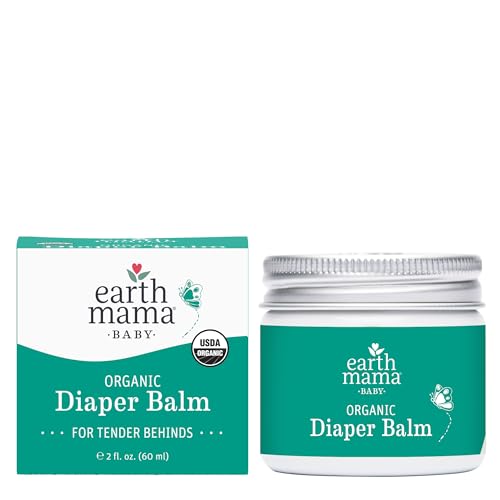
If you use cloth diapers, you know the struggle of finding a cream that won’t cause repelling issues. Earth Mama avoids both zinc oxide and petroleum, making it totally safe for cloth fibers.
Instead of heavy blockers, it uses organic herbs and oils to create a breathable barrier. It contains antibacterial and antifungal herbs like tea tree and lavender, which may help keep minor yeast issues at bay.
It is clinically tested, dermatologist approved, and free of common irritants like lanolin, mineral oil, and beeswax.
Pros
- Cloth diaper safe (no zinc or petroleum).
- Certified organic ingredients.
- Contains naturally antibacterial herbs.
- Allows the skin to breathe while healing.
Cons
- Price point is higher per ounce.
- Herbal scent might be strong for some preferences.
Our Ratings
Aquaphor Baby Healing Ointment for Diaper Rash
Best Diaper Rash Cream for Diarrhea
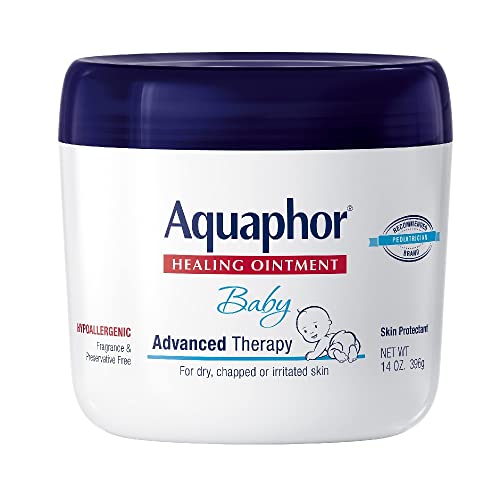
This clear, greasy ointment is a multitasking miracle. It applies smoothly and wipes off easily without scrubbing, which is essential when your baby’s skin is raw from frequent diarrhea changes.
Aquaphor uses a petrolatum base to seal out moisture, combined with panthenol and glycerin to nourish the skin. It acts like a shield against acidic poop.
It isn’t just for bottoms, either. You can use it on drool rash, dry cheeks, minor scrapes, and eczema patches. It is a staple in many nurseries for good reason.
Pros
- Multi-purpose ointment for various skin issues.
- Creates an excellent waterproof seal.
- Goes on clear and wipes off easily.
Cons
- Contains petrolatum (a petroleum byproduct).
- Can feel very greasy on your hands.
Our Ratings
Boudreaux's Butt Paste Diaper Rash Ointment
Best Diaper Cream for Toddlers
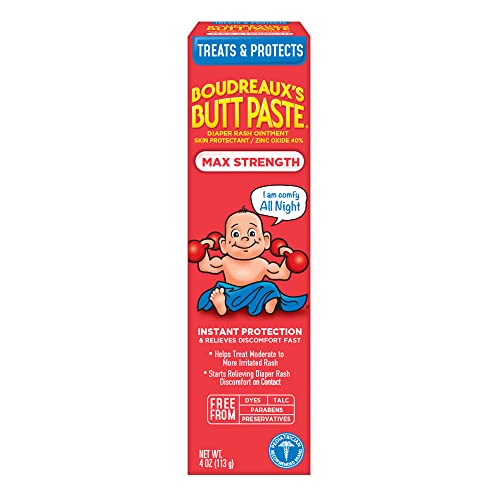
Developed by a pharmacist and father, Boudreaux’s Butt Paste keeps things simple. It uses minimal ingredients to get the job done without exposing your toddler to unnecessary additives.
The main ingredient is zinc oxide, which creates a thick, visible layer on the skin. It blocks out wetness and gives the skin a chance to recover. The formula includes Peruvian Balsam to help soothe irritation.
It has a pleasant, non-medicinal scent and works fast, many parents see improvement after just one or two diaper changes.
Pros
- Simple ingredient list.
- Thick formula provides great coverage.
- Starts healing visible rashes quickly.
Cons
- Not compatible with cloth diapers (unless using a liner).
- Contains petrolatum.
Our Ratings
Burt’s Bees Baby Diaper Rash Ointment
Best Diaper Cream for Infants

Burt’s Bees is famous for natural skincare, and this ointment lives up to the reputation. It is 100 percent natural and free from phthalates, parabens, and petrolatum.
It uses 40 percent zinc oxide, giving it the same maximum strength protection as the leading medical brands, but with a more natural base. It includes sweet almond oil and shea butter to condition the skin while it protects.
Pediatrician-tested and gentle, it has a light, clean scent that doesn’t smell like a hospital.
Pros
- 100 percent natural origin.
- Paraben-free and petrolatum-free.
- Combines max-strength zinc with skin conditioners.
Cons
- Contains lanolin and beeswax (potential allergens).
- Consistency is thinner than some pastes.
Our Ratings
Babo Botanicals Natural Diaper Rash Cream
Best Natural Diaper Rash Cream
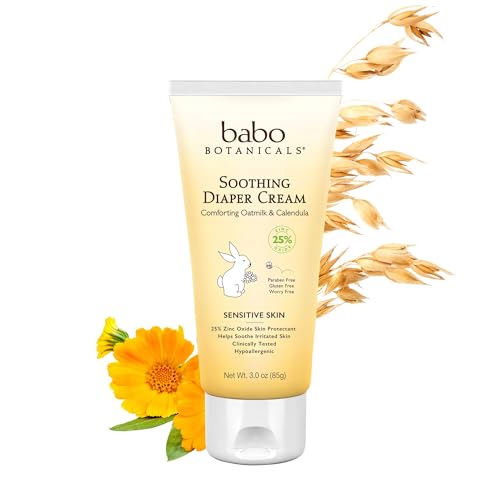
If you prefer organic farming practices, Babo Botanicals is a great pick. Developed on a certified organic farm, this cream focuses on safe, plant-based ingredients.
It uses high-content zinc oxide (25%) to form a moisture barrier, alongside colloidal oatmeal to relieve eczema and irritation. The formula is dense and creamy, staying put on the skin.
Because it is made in small batches, the quality control is excellent. It smells like mild herbs and cocoa butter, making diaper changes a little more pleasant.
Pros
- Formulated with organic ingredients.
- Contains colloidal oatmeal for soothing relief.
- Supports fair trade practices.
Cons
- Higher price point than drugstore brands.
- Contains nut oils (check for allergies).
Our Ratings
The Honest Company Diaper Rash Cream
Best Organic Diaper Rash Cream

The Honest Company delivers a rapid-relief cream derived from plants. It relies on zinc oxide for protection and organic ingredients like shea butter and jojoba esters to heal the skin.
It is NSF certified, meaning it meets rigorous organic safety standards. You won’t find synthetic fragrances, dyes, silicones, or petrolatum here.
The texture is easy to spread but thick enough to act as a barrier. It’s a great middle-ground for parents who want maximum strength protection without the synthetic chemicals.
Pros
- NSF certified organic ingredients.
- Plant-based formula.
- Hypoallergenic and fragrance-free.
Cons
- Natural oils can separate (requires stirring).
- Coconut oil content may irritate some specific skin types.
Our Ratings
Weleda Diaper Cream with Calendula
Best Diaper Rash Cream for Open Sores

Developed with midwives, Weleda’s diaper cream is a cult favorite in Europe and the US. It is certified natural by NaTrue and focuses on the healing power of Calendula (Marigold) extract.
It uses a lower concentration of zinc oxide (12%), which makes it rub in easier while still offering protection. The beeswax creates a breathable layer, while sweet almond oil keeps the skin soft.
It is particularly good for red, angry skin that needs anti-inflammatory properties rather than just a heavy block.
Pros
- Uses anti-inflammatory Calendula extract.
- Breathable protection with beeswax.
- No synthetic preservatives or fragrances.
Cons
- Strong herbal scent.
- Contains lanolin and sesame oil (check for allergies).
Our Ratings
Baza Moisture Barrier Antifungal Cream
Best Antifungal Diaper Rash Cream

Standard diaper creams will not kill a yeast infection. Baza is technically a medical product used in nursing care, but many parents swear by it for stubborn fungal rashes.
It contains miconazole nitrate (an antifungal) mixed with a moisture barrier. This kills the yeast while protecting the skin from further moisture damage.
Important: Because this is an antifungal medication, you must consult your pediatrician before using it on your baby.
Pros
- Contains active antifungal ingredients.
- Provides a moisture barrier.
- Can clear up stubborn yeast rashes quickly.
Cons
- Contains synthetic ingredients and fragrance.
- Requires doctor approval for infant use.
Our Ratings
A&D Diaper Rash Ointment
Best Diaper Cream for Eczema

A&D is a classic for a reason. It is an ointment (mostly petrolatum and lanolin) enriched with Vitamins A and D.
Unlike white pastes, this gold-colored ointment is translucent and glides on effortlessly. It effectively prevents rashes by sealing the skin, and it helps heal minor chafing or dryness.
Because it wipes off easily, you don’t have to scrub sore skin during changes. It’s an excellent choice for daily prevention.
Pros
- Excellent for preventing diaper rash.
- Easy to apply and wipe off.
- Contains vitamins to nourish skin.
Cons
- Distinctive smell.
- Contains lanolin (a potential allergen).
Our Ratings
FAQs

Is Diaper Rash Fungal or Bacterial?
It can be either. A standard rash is usually contact dermatitis (irritation). However, a yeast rash (fungal) looks beefy red with satellite dots. If open sores appear or it oozes, it may be a bacterial infection. See a doctor if the rash looks infected.

Can Diaper Cream Make Rash Worse?
Yes, in rare cases. If you trap bacteria or yeast under a thick layer of petroleum jelly or paste without cleaning the area thoroughly first, the warm environment can help the infection grow. Always apply cream to clean, dry skin.

Is Diaper Rash Cream Ok for Adults?
Absolutely. Adult skin is tougher than baby skin, so any product safe for an infant is perfectly safe for an adult dealing with chafing, incontinence rashes, or irritation.

Is It Ok to Use Diaper Cream Every Change?
Yes, especially if you are using an ointment for prevention. Creating a barrier at every change protects the skin from urine and stool. If using a medicated zinc paste, you might only need it when redness appears.

What Diaper Cream Do Dermatologists Recommend?
Most dermatologists recommend products with high zinc oxide content, like Desitin, for treating active rashes. For prevention and sensitive skin, they often suggest simple petroleum-based ointments like Aquaphor because they have fewer potential allergens.

What Is the Best Cream for a Diaper Rash?
For severe rashes, we recommend Desitin Maximum Strength due to its 40% zinc oxide content. For daily prevention or minor redness, A&D Ointment or Aquaphor are excellent choices to keep the skin protected.

How Much Diaper Cream Should I Apply?
Don’t be shy with it. You want to frost the baby’s bottom like a cupcake. The goal is to create a thick barrier so that the next time they pee or poop, the mess touches the cream, not the skin.
The Bottom Line
Our top pick for the best diaper cream is Desitin Maximum Strength Baby Diaper Rash Cream. It hits the sweet spot of being hypoallergenic while offering maximum strength protection to heal angry rashes overnight.
Finding the right cream usually takes a little trial and error, but once you find the one that clears up your baby’s bum, stock up. You’ll want a tube at the changing table, one in the diaper bag, and maybe one at grandma’s house, too.