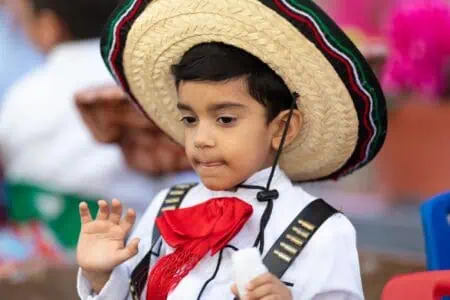
Take a trip across the globe to Asia’s vast and multicultural continent. And while you’re at it, bring your notes because we’ve compiled a list of unique and exotic Asian girl names.
From the steppes of Mongolia to the mountains of Bhutan and beyond, there’s a wide variety of options to choose from. Whether she’s as precious as a plum blossom or as beloved as the Buddha, there’s something here for your favorite girl.
Ready to satisfy your wanderlust? Forge ahead and let us be your guide to all things Oriental.
105 Beautiful Asian Names for Girls
Sit and sip under the cherry blossoms with our exciting list of Asian girl names.
Ae-jung
Ae-jung or Aejeong, is most prevalent in Korea but is also found in Thailand, Sweden, and the U.S. Despite its range, it’s not used often. Yet, Ae-jung is such a darling pick for your little one. Your daughter is your most beloved, and Ae-jung is the perfect way to shower her with affection.
- Origin: Korean
- Meaning: Love, affection
- Pronunciation: AY-yuung
- Variations: Aejeong, Ae-jeong
- Namesakes: Ae-jung Lee, a South Korean actress known for her role in Autumn in My Heart.
- Popularity: In 2014, about four people were called Ae-jung worldwide, making it quite rare.
Ai
A list of Asian names for girls is never complete without the simply sweet Ai. Despite being of Japanese and Chinese origin, Ai is widely used throughout Asia. In Chinese, Ai also means “mugwort.” Let love take root in your household with this lovely moniker.
- Origin: Japanese, Chinese
- Meaning: Love, affection, indigo
- Pronunciation: EYE
- Namesakes: Ai Iino, a Japanese women’s professional shogi player. Ai Kato, a Japanese idol and actress.
- Popularity: Ai is most commonly found in Indonesia.
Altantsetseg
Altantsetseg may look like a tongue twister, but it’s a stunning pick. Meaning “golden flower,” this epithet sounds fit for royalty. Mongolian names have many foreign origins in their history, probably due to their conquering spirit over the centuries. Altantsetseg is traditionally Mongolian — no additives included. And it’s 100% feminine too.
- Origin: Mongolian
- Meaning: Golden flower
- Pronunciation: al-dahn-TSEH-tseg
- Namesakes: Byambajavyn Altantsetseg, family name Byambajavyn, a Mongolian sports shooter.
- Popularity: Altantsetseg is most common in Mongolia, where it ranked 3rd in 2022.
Anzu
Calling your daughter “Apricot” might seem strange in the west, but in Asia, Anzu is not the only contender. Don’t be fooled by its adorable vibe, though. In Mesopotamian myths, Anzu is a divine storm bird that is half-lion and half-eagle. In Hinamatsuri, Anzu Hayashi is a telekinetic assassin. So it’s not all peaches and plums with this one!
- Origin: Japanese
- Meaning: Apricot
- Pronunciation: AN-zoo, an-ZHOO
- Namesakes: Anzu Lawson, a Japanese-American songstress, actress, playwright, and comedian. Anzu Haruno, a Japanese voice actress.
- Popularity: In 2014, Anzu ranked in the top 5,000 in Bangladesh.
Asako
Bestow Asako on your daughter if she’s born at sunrise. They say, “the early bird catches the worm,” and it appears that many famous namesakes have honed and mastered their talents. Besides doing well on Japanese charts, approximately 779 people in the U.S. carry the name. With other kanji combinations, Asako can also mean “hemp child” — and we mean the fabric!
- Origin: Japanese
- Meaning: Morning child
- Pronunciation: AH-sa-koh
- Namesakes: Asako Yuzuki, an award-winning Japanese author. Asako Hirabayashi, a Japanese-American composer and harpsichordist.
- Popularity: Asako is most common in Japan, ranking 203rd in 2014.
Atchara
Atchara is for perfect little angels — and foodies. In the Philippines, atchara or achara is a pickle made from grated, unripened papaya. This crispy, refreshing side dish might be unrelated to the Thai “Atchara,” but the similarity certainly adds flavor.
- Origin: Thai
- Meaning: Angel
- Pronunciation: A-char, A-chara
- Popularity: Atchara ranked 206th in Thailand in 2022.
Benio
If your favorite color is red or your baby is the center of your universe, try out Benio. This uncommon moniker sounds a tad tomboyish, but that only makes it cuter. A notable fictional namesake is Benio “Benibara” Amakusa, a supporting character from the Japanese anime Ouran Highschool Host Club.
- Origin: Japanese
- Meaning: Crimson, deep red, center
- Pronunciation: BEH-nee-oh
- Popularity: Benio does not rank in the top 1,000 on Japanese charts and is rare worldwide.
Bong-cha
Bong-cha is super rare. A daughter called Bong-cha could also be a superhero in the making, as some translations render Bong-cha as the “ultimate girl.” We just hope it doesn’t give her a superiority complex.
- Origin: Korean
- Meaning: Superior daughter
- Pronunciation: BONG-chya
- Variations: Bongcha
- Popularity: Globally, about 33 people bear the name Bong-cha or Bongcha.
Bora
Bora is an indigenous Korean name made up of one two-syllable word. In Albania, Bora is also a girl’s name, though here it means “snow,” while in Turkish, it’s a masculine name meaning “strong wind” or “hurricane.” Somehow, soft snow and whipping winds perfectly contrast against a sturdy name like Bora.
- Origin: Korean, Turkish, Albanian
- Meaning: Purple, strong wind, hurricane, snow
- Pronunciation: BOH-RA, POH-RA
- Variations: Bo-ra
- Namesakes: Bora Yoon, better known as Bora, a South Korean singer, rapper, and actress. Bora Shin, a South Korean comedian, singer, and actress.
- Popularity: Bora or Bo-ra, is most prevalent in Canada and Korea but doesn’t crack their top 1,000 names.
Boribun
We admit Boribun sounds odd, but that can be a good thing. Being so unusual makes for a conversation starter at dinner. If a rare pick is on your wishlist, Boribun just might do the trick.
- Origin: Thai
- Meaning: Complete
- Pronunciation: baw-ree-BOON
- Popularity: Boribun is most popular in Thailand, although it doesn’t rank in the top 1,000.
Buppha
Buppha has strong royal ties. Princess Norodom Buppha Devi, with “buppha” meaning “flower,” and “devi” meaning “goddess,” carried this title gracefully during her time. She was the director of the Royal Ballet of Cambodia, and the first professional apsara dancer, performing as a prima ballerina for most of her life. Set the stage for the arrival of your little flower goddess with Buppha.
- Origin: Thai, Cambodian
- Meaning: Flower
- Pronunciation: BOH-pa
- Variations: Bopha
- Namesakes: Norodom Buppha Devi, a Cambodian princess, minister, dancer, and senator.
- Popularity: In 2022, Buppha ranked 197th in Thailand.
Caihong
Choose the colorful Caihong for its cheerful quality. Caihong may be fun to say, but it isn’t for the faint of heart. Chinese pronunciation can be a mystery to most, so take careful steps to familiarize yourself before deciding.
- Origin: Chinese
- Meaning: Rainbow
- Pronunciation: tsa-OH-ng, tsa-HOH-ng
- Popularity: In 2014, Caihong ranked 414th in China.
Chae-won
Chase-won is blazing a trail in Korea. This is a straightforward option for those who aren’t looking to be too fancy but still need to feel in the loop.
- Origin: Korean
- Meaning: Collect, gather, pluck
- Pronunciation: CHAY-wun
- Variations: Che-won
- Namesakes: Chae-won Moon, a South Korean actress. Chae-won So, a South Korean compound archer who won bronze and gold in the 2017 Summer Universiade.
- Popularity: In 2013, Chae-won was the 7th most popular girl’s name in Korea.
Chaisee
We know what you’re thinking, but Chaisee is not the same as a chassis. Although, if Dad is a car enthusiast, Chaisee might be a fun way to incorporate that passion. Your Chaisee may be one of only a handful of people worldwide with such an unusual name.
- Origin: Thai
- Meaning: Innocent
- Pronunciation: CHA-see
- Popularity: Chaisee is most prevalent in Thailand; in 2014, about four people carried this name.
Chivy
Celebrate new life with the vivacious Chivy. We chose this one special for parents looking for something truly exotic. Chivy is rare, even in its place of origin. Your daughter can have loads of fun with this playful and unique Asian girl name.
- Origin: Cambodian
- Meaning: Life
- Pronunciation: SHIH-vee
- Namesakes: Chivy Sok, a Cambodian-American activist and deputy director of the University of Iowa Center for Human Rights.
- Popularity: Chivy pops up in the U.S. and Cambodia, but it doesn’t crack the top 1,000 names in either country.
Chiyako
Chiyako is a pretty-sounding Japanese pick steeped in the mysteries of a thousand nights. Other kanji combinations render Chiyako as a “thousand arrow child” or “child of knowledge.” Though it mostly occurs within Japan’s borders, the roughly 49 people named Chiyako in the U.S. may consist of some Asian diaspora and those with an appreciation for Japanese culture.
- Origin: Japanese
- Meaning: Thousand-night child
- Pronunciation: CHEE-ya-koh
- Namesakes: Chiyako Shimada, a Japanese politician for the Democratic Party of Japan. Chiyako Sato, a Japanese singer. Chiyako Shibahara, a Japanese voice actress.
- Popularity: Chiyako mostly occurs in Japan but doesn’t rank in the top 1,000.
Choden
No need to be picky about Choden, one of a few exclusively feminine Bhutanese options. Steeped in the Buddhist tradition, Choden has an air of spiritual serenity. Interestingly, in Bhutan there is no practice of surnames except for royal lineages, although this was not always the case. Queen Consort Puntsho Choden is an example of a royal without a family name.
- Origin: Bhutanese, Tibetan
- Meaning: Possessing Dharma, devout
- Pronunciation: CHOH-den
- Variations: Choeden
- Namesakes: Ashi (Lady) Phuntsho Choden, a Bhutanese Queen Consort of the second king of Bhutan, Jigme Wangchuck.
- Popularity: Choden ranked 47th in Bhutan in 2014.
Daiyu
Meaning “black jade,” Daiyu is as dark and mysterious as they come. In literature, Daiyu Lin was a main character in Cao Xueqin’s 18th-century novel Dream of the Red Chamber. The Star Wars franchise called one of their shadier planets Daiyu. If you think your baby is a little enigmatic, Daiyu will definitely do.
- Origin: Chinese
- Meaning: Black jade
- Pronunciation: DEYE-yoo
- Variations: Dàiyù, Dai yu
- Popularity: Daiyu ranked 7,172nd in Taiwan in 2014, as it’s very uncommon worldwide.
Dara
Dara is quite the doozy, offering multiple origins and meanings from almost every country worldwide. To give a few examples, in Swahili, Dara is rendered “beautiful one,” and in Kazakh, it means “special” or “one of a kind.” Dara also has Persian, Hebrew, and Irish roots, where it’s either masculine or unisex.
- Origin: Thai, Indonesian
- Meaning: Star, young woman, virgin
- Pronunciation: DAH-RAH, DAR-AH
- Namesakes: Dara Kristen Hayes is an Australian DJ and record producer known by her stage name Tigerlily. Princess Dara Rasami of Chang Mai and Siam (Thailand).
- Popularity: Dara has ranked in the U.S. top 1,000 since the ‘50s, and in 1993, it placed 953rd on the charts.
Da-rae
Dae-rae is an indigenous Korean name that has become more popular in the 20th-century. If you’re stumped for choice, nature in all its glory will inspire you. Get out of the city and find your roots with the “berry beautiful” Dae-rae.
- Origin: Korean
- Meaning: Gooseberry
- Pronunciation: DAH-lay
- Variations: Da-lae, Darae
- Namesakes: Da-rae Kim, a South Korean field hockey player. Da-rae Jeong, a former South Korean swimmer, specializing in breaststroke.
- Popularity: Da-rae or Darae, is most common in Korea and Iran but rare worldwide.
Emi
Emi is three letters bursting with cuteness, and you can get even tinier with an epithet like “Em.” Like the famous namesake, Emi Watanabe, you could bless your baby girl with beauty and grace.
- Origin: Japanese
- Meaning: Blessed beauty, beautiful picture
- Pronunciation: EH-mee
- Namesakes: Emi Kathleen Watanabe, a former competitive figure skater of Japanese and Filipino descent.
- Popularity: Emi is quite popular globally, ranked in the top 300 in Japan and Indonesia in 2014.
Eri
Eri is ideal for your clever girl. Like other names written with kanji, Eri has many meanings depending on the combinations. Some especially tasteful ones include “blessing,” “reason,” “excel,” and “pear.” Who knew such a tiny name could have so much meaning behind it?
- Origin: Japanese
- Meaning: Clever love, hometown picture
- Pronunciation: EH-ree
- Namesakes: Eri Yamanoi, a former Japanese freestyle swimmer. Eri Fukatsu, a Japanese actress who has won several awards.
- Popularity: In 2014, Eri ranked 955th in Japan.
Eun-mi
Do your daughter a kindness and call her Eun-mi. South Korea is the prime contender when it comes to using Eun-mi, but that isn’t surprising. From actresses to authors and other namesakes with various backgrounds, your girl will learn how to be a merciful and kind little tyrant!
- Origin: Korean
- Meaning: Beautiful kindness, beautiful mercy
- Pronunciation: UUN-mee
- Variations: Eun-mee, Un-mee
- Namesakes: Eun-mi Lee, a South Korean singer known for the song “I Have a Lover.” Eunmi Choi, a South Korean novelist. Eun-mi Ko, a South Korean actress.
- Popularity: Eun-mi is the most popular in South Korea but falls short of the top 1,000 names.
Fa ying
Despite being Thai in origin, Fa ying finds its greatest audience in China, and we can see why. Fa ying is as opulent and regal as the palaces and temples of its homeland. Chandrmondol Sobhon Bhagiawati, the Princess Wisutkrasat of Siam, was affectionately known as Princess Fa-ying. An ethereal beauty, Fa ying is possibly one of the best Asian girl names.
- Origin: Thai
- Meaning: Celestial princess
- Pronunciation: FAA-YEEN
- Variations: Fa-ying, Faying, Fa yin
- Popularity: Fa ying or Faying is most prevalent in China but doesn’t make the top 1,000 names.
Fei
The Chinese and English definitions for Fei are coincidentally in sync. We can just imagine your graceful little fairy now. Fei is such a sweet-sounding name that it’s hard to believe it’s meant for both boys and girls. Apart from the given name, Fei also occasionally appears as a last name in China.
- Origin: Chinese, English
- Meaning: To dance on air, to fly, fairy
- Pronunciation: FAY
- Namesakes: Fei Meng, a Chinese artistic gymnast who has won silvers and bronze in two World Artistic Gymnastics Championships.
- Popularity: Fei placed 34th in Hong Kong and 842nd in Malaysia in 2022.
Fumi
Fumi is already trending in Japan, but it’s also becoming popular in Nigeria. With literature in the details, Fumi has many readings, giving you a plethora of reasons to pick this name. Some examples are “wealth,” “sentence,” and “two, three.” Let your lovely lotus bloom anywhere she goes with the fashionable Fumi.
- Origin: Japanese
- Meaning: Beautiful lotus, literature, history
- Pronunciation: FOO-MEE
- Namesakes: Fumi Kaneko, a Japanese ballet dancer with the Royal Ballet in London. Fumi Nikaido, a Japanese actress and model.
- Popularity: In 2014, Fumi ranked 131st in Japan.
Futaba
Futaba is definitely an unusual option, even for those familiar with Japanese culture. We think it’s ideal for an impressionable seedling making her way in the world. The fictional character, Futaba Yoshioka, from Ao Haru Ride, is your typical teenage girl still figuring out her life and love. Futaba makes sense for a young lady on a journey of personal growth.
- Origin: Japanese
- Meaning: Sprout, bud
- Pronunciation: foo-TA-BA, foo-TA-BAH
- Namesakes: Futaba Ito, a Japanese professional rock climber and boulderer. Futaba Kioka, a former Japanese footballer for the Japan women’s national team.
- Popularity: Futaba is most popular in Japan but is still rare as it doesn’t make the top 3,000 names.
Gyuri
There is an unparalleled awesomeness to Gyuri. It’s a wonder why more parents aren’t naming their daughters “star jewel.” Among the various hanja combinations for Gyuri, there is “gyu” which means “auspicious jewel,” “writing,” or “stride,” paired with “ri” which means “govern,” “village,” or “intelligent.” Take your pick and make your own very special meaning.
- Origin: Korean
- Meaning: Star jewel
- Pronunciation: GYOO-ree, GYOO-lee
- Variations: Gyu-ri, Kyu-ri
- Namesakes: Gyu-ri Park, known simply as Gyuri, a South Korean singer, actress and radio host.
- Popularity: Between 2008 and 2022, 7,456 girls were named Gyuri in Korea.
Hae-won
Take a trip to the shores of Korea with Hae-won. Most people don’t think of South Korea as a tropical getaway, but surrounded by water on three sides, it boasts first-class beaches. Think you can guess where the concept for Hae-won came from?
- Origin: Korean
- Meaning: Beautiful ocean, graceful
- Pronunciation: HAY-wun
- Variations: Haewon
- Namesakes: Hae-won Yi, or Hae-won Lee, a Korean princess and descendant of the Joseon dynasty. Haewon Song, a South Korean award-winning pianist and teacher.
- Popularity: In 2014, Hae-won ranked 646th in South Korea.
Hana
Hana is a multicultural option with many Asian and non-Asian roots. In Hawaii, Hana translates to “craft,” and in Maori, it means “to shine” or “glow.” In Korea, it means “the number one.” It’s also a variant of the Hebrew, Hannah, making it easy for English-speakers. We could continue, but you get the point. Hana is hot on the charts.
- Origin: Japanese, Persian
- Meaning: Flower
- Pronunciation: HA-NA, HA-nuh
- Variations: Ha-na
- Namesakes: Hana Usui, a Japanese artist. Hana Kimura, a Japanese female professional wrestler. Hana Kobayashi, a Venezuelan singer of Japanese descent.
- Popularity: Hana ranked 252nd in Japan in 2014 and placed 807th in the U.S. in 2021.
Hayma
Surprisingly, Hayma does not rank on the Burmese charts. It’s more popular in Oman and the Philippines and is a hit in Central and South America. This husky-sounding option is perfect for outdoorsy types. It’s too bad then, that Hayma doesn’t have a lot of leeway for nicknames.
- Origin: Burmese
- Meaning: Forest
- Pronunciation: HAY-muh
- Namesakes: Hayma Malini, the Singaporean wife of Indian actor and singer, Yugendran.
- Popularity: Hayma is popular in the Philippines and Oman, ranking 970th in 2022.
Hinako
Hinako has a balmy quality and feminine air. Your tiny baby lights up your world with her soft coos and chirps, so why not give her an equally sunny epithet? Try out the nickname Hina to add to its sweetness.
- Origin: Japanese
- Meaning: Sun child, baby chick
- Pronunciation: HEE-na-koh, HEE-nuh-ko
- Namesakes: Hinako Sugiura, a Japanese manga artist, and Japanese historical researcher. Hinako Ashihara, a Japanese manga artist of many shojo series.
- Popularity: Hinako is mostly found in Japan, ranking 2,426th in 2014.
Huanzhu
With its dreamlike atmosphere, Huanzhu makes for a dazzling choice among Asian female males. It’s the nickname of the fictional character Xiaoyanzi, from the Chinese TV series My Fair Princess. Huanzhu is rare worldwide, but that shouldn’t stop you from bringing your fantasy to life.
- Origin: Chinese
- Meaning: Dreamy bamboo, returned pearl
- Pronunciation: HWAN-joo
- Variations: Huan Zhu
- Popularity: Huanzhu only appears in China, Taiwan, Thailand, and Mexico, but it doesn’t make the top 1,000 anywhere.
Ichigo
Ichigo is the word for “strawberry” in Japanese, and this is the meaning attributed when used as a girl’s name. Some fictional female characters include Ichigo Momomiya from the anime series Tokyo Mew Mew and Ichigo Amano from Yumeiro Patissiere. Although it’s used for boys and girls, Ichigo has an undeniable cuteness that’s hard to shake.
- Origin: Japanese
- Meaning: Strawberry, protector of one (thing)
- Pronunciation: EE-chee-goh
- Namesakes: Ichigo Takano, a Japanese manga artist known for her series, Orange. Ichigo Rinahamu, a Japanese singer and idol.
- Popularity: Ichigo is most prevalent in Japan but is still very rare.
Ichika
Ichika is like springtime with its refreshing composition. Another kanji combination you can get is “beautiful strawberry.” Breathe new life into your baby name shortlist with this floral pick.
- Origin: Japanese
- Meaning: One thousand flowers, strawberry blossom
- Pronunciation: EE-chee-kah
- Namesakes: Ichika Nito, a Japanese musician and record producer.
- Popularity: In 2014, Ichika ranked just below the top 4,000 in Japan.
Iniya
Iniya is one South Asian pick that can seamlessly blend into western circles. Some English-speakers confuse the pronunciation of Iniya with a similar Arabic name, Inaya, which is said “ee-NEYE-uh.” But Iniya is a Nepali name with Sanskrit roots rather than Urdu. It’s somewhat popular in India and has the potential to take off in the U.S. as well.
- Origin: Nepali
- Meaning: Sweet
- Pronunciation: ihn-EE-yuh, IHN-ee-yuh
- Namesakes: Iniya Kumaran, the daughter of Indian actress, Devayani.
- Popularity: Iniya is the most popular in India but doesn’t rank within the top 1,000 names.
Intan
With Intan, your baby girl could shine bright like a diamond. Intan may see little use outside of southeast Asia, but most quality things are rare. Don’t worry that it’s not trendy in the west right now. After all, a diamond is forever.
- Origin: Indonesian
- Meaning: Diamond
- Pronunciation: IHN-TAN
- Namesakes: Intan Erlita Novianti, an Indonesian TV presenter. Intan Venlö Aletrino, an Indonesian-Dutch model and TV personality. Intan Azura binte Mokhtar, a Singaporean former politician.
- Popularity: In 2014, Intan ranked 73rd in Malaysia and 244th in Indonesia.
Iseul
Iseul isn’t as difficult to say as you might think. It may be unusual, but it’s by no means unpopular. Simply meaning “dew,” Iseul gives the impression of a brisk dawn. Perfect for ushering in a new beginning with the arrival of your little bundle.
- Origin: Korean
- Meaning: Dew
- Pronunciation: EE-suul, EE-ssl
- Variations: Yi-seul, I-seul, E-seul
- Namesakes: Iseul Kim, a South Korean basketball player.
- Popularity: Between 2008 and 2022, 426 baby girls were named Iseul, which falls short of the top 1,000.
Janya
Janya is sometimes confused with the Hebrew, Janiya or Janiyah, which means “the Lord is gracious.” This Hindi pick from the Indian subcontinent is less pious and more melodious and invigorating. If your lively girl comes out kicking and screaming, you might want to consider Janya.
- Origin: Indian
- Meaning: Full of life, born
- Pronunciation: JAN-yuh, jan-YA, jun-YUH
- Popularity: In 2014, Janya fell just short of the top 1,000 in Thailand.
Ji-ae
Do you hope for a scholarly daughter? Ji-ae may be just right for knowledge-seekers. The pronunciation of its first syllable is something like a cross between the “ch” and “j” sounds. That could prove slightly tricky for those unfamiliar with Korean, but it’s no reason to deter you from trying Ji-ae.
- Origin: Korean
- Meaning: Lover of wisdom
- Pronunciation: chj-EE-AY
- Variations: Jiae, Ji Ae
- Namesakes: Ji-ae Lee, a South Korean TV personality and former announcer. Ji Ae Yoo, a South Korean singer, and actress.
- Popularity: In 2022, Ji-ae ranked 1078th in Korea.
Juri
Despite being feminine in Japan, Juri is masculine in Estonia and Germany, where it’s spelled Jüri and pronounced “YOO-ree.” Here it’s a diminutive of Jürgen, a cognate of George, and means “farmer.” In Japan, the kanji combinations for Juri include “ju,” meaning “trees,” “ball,” or “longevity,” and “ri,” meaning “village,” “gemstone,” and “plum.”
- Origin: Japanese, Estonian
- Meaning: Pear tree, jasmine plant
- Pronunciation: JOO-ree
- Namesakes: Juri Ide, a Japanese triathlete who competed in two Summer Olympics. Juri Osada, a Japanese figure skater, and coach.
- Popularity: Juri doesn’t rank in the top 1,000 in Japan.
Kaede
Kaede is most prevalent in Japan but also appears in South Africa, Israel, and much of South Asia. Perhaps your baby was born during the crisp autumn months, or you think she’s as sweet as syrup. Why not steer away from the old-fashioned “Maple” and get a little experimental with Kaede? Its wide usage in anime is steadily increasing its popularity.
- Origin: Japanese
- Meaning: Maple tree
- Pronunciation: ka-AY-day, ka-EH-deh
- Namesakes: Kaede Dobashi, a Japanese dancer, model, and actress. Kaede Hondo, a Japanese voice actress.
- Popularity: Kaede doesn’t crack the top 1,000 names in Japan.
Kanchana
Gold, gold, and more gold. We know your little girl is your greatest treasure, so we included Kanchana. It dazzled Sri Lanka and Thailand in 2014, and now it’s ready to do the same in the U.S. It seems that women called Kanchana tend to gravitate to the spotlight where they can truly shine.
- Origin: Thai, Indian
- Meaning: Gold
- Pronunciation: KAN-chuu-na
- Namesakes: Kanchana Mendis, a Sri Lankan actress. Puranam Vasundhara devi, stage name Kanchana, is an Indian actress.
- Popularity: Kanchana placed 22nd in Thailand and 73th in Sri Lanka in 2014.
Kiba
Although Kiba is a unisex name in Japan, in Bhutan, Kiba is a girls-only club. Its popularity there hasn’t produced any notable namesakes, except for the famous Kiba Inuzuka in the Japanese anime Naruto. Kiba could make a good fit for a rough-and-tumble tomboy.
- Origin: Bhutanese, Japanese
- Meaning: Protected, fang
- Pronunciation: KEE-ba, KEE-buh
- Popularity: Kiba ranked 274th in Bhutan in 2014.
Kikyo
In every respect, Kikyo is perhaps the prettiest name on our list. A kikyo or Japanese bellflower is a bright purple blossom symbolizing unchanging love, obedience, and honesty. In the Japanese anime and manga Inuyasha, it belonged to a resurrected shrine priestess, who likely popularized the name. After being separated by death for centuries, her love for her sweetheart endured.
- Origin: Japanese
- Meaning: Japanese bellflower, apricot season or spring
- Pronunciation: KEE-kyoh
- Variations: Kikyō, Kikyou
- Popularity: In 2014, Kikyo was borne by about 602 people worldwide.
Kirana
We know you’ve always wanted to call your daughter a “ beautiful sunbeam.” Kirana takes that bright nickname and wraps it in a neat bundle. It’s easy to say, and even sounds like the tinkling of chimes on a summer day.
- Origin: Indonesian
- Meaning: Beautiful sunbeam, beautiful ray of light
- Pronunciation: KEE-ra-nah
- Namesakes: Kirana Larasati, an Indonesian actress.
- Popularity: Kirana is popular in South Asia but doesn’t make the top 1,000 on any charts.
Kyung-ah
Kyung-ah is somewhat old-school but is still a pretty, feminine name. Endow your daughter with grace or mark a reminder of her birthplace with Kung-ah. We can’t get into all the other meanings, but take note that there are 54 hanja for “kyung” and 29 for “ah.” Good luck!
- Origin: Korean
- Meaning: Graceful celebration, capital city child
- Pronunciation: KYUUN-a, KYUUN-ga
- Variations: Kyong-ah, Gyeong-ah
- Namesakes: Kyung-ah Choi, a South Korean manhwa artist known for her series Snow Drop. Kyung Ah Park, a South Korean female artistic gymnast.
- Popularity: Kyung-ah is the most prevalent in South Korea and the U.S. but is rare in both places.
Lanfen
The flowery Lanfen is extremely rare. It doesn’t even make the top 4,000 names in China, where it originates. Perfume your list of picks with this truly exotic choice.
- Origin: Chinese
- Meaning: Fragrant orchid
- Pronunciation: LUN-fen, LAN-fen
- Variations: Lan Fen, Lan-fen
- Namesakes: Wu Lanfen, a Chinese calligraphy artist.
- Popularity: Lanfen appears mostly in China, including Thailand and Taiwan.
Laohu
Laohu is not generally used as a first name, so it’s quite rare. It’s the word for tiger in China, making it the equivalent of naming your child Dove or Wolf. We have a feeling nature lovers will adore Laohu.
- Origin: Chinese
- Meaning: Tiger
- Pronunciation: LAOW-hoo
- Variations: Lăohŭ, Lao hu
- Popularity: In 2014, 32 people were called Laohu worldwide.
Lhamo
Westerners mistakenly label Lhamo a surname. In Bhutanese and Tibetan culture, this is a second name used only for women. Women carrying this name do not have a last name at all! Consider using Lhamo as a hyphenated or middle name to get the effect of adding “goddess” to another beautiful moniker.
- Origin: Bhutanese
- Meaning: Goddess
- Pronunciation: LA-moo
- Variations: Lha-mo
- Namesakes: Rinchen Lhamo, a Tibetan writer. Sonam Lhamo, a Bhutanese actress. Yungchen Lhamo, a Tibetan songstress living in the U.S.
- Popularity: In 2014, Lhamo ranked 55th in Bhutan.
Li-mei
A timeless classic, Li-mei comes across as gentle and sweet. In the Mortal Kombat video game series, Li Mei has beauty and brawn. Possibly due to her character, Li-mei has seen little use in the U.S.
- Origin: Chinese
- Meaning: Beautiful, beautiful Chinese plum
- Pronunciation: LEE-MAY
- Variations: Li Mei, Limei
- Namesakes: Satomi Toyohara, known by her stage name Li-Mei Chiang, a Taiwanese-Japanese actress and voice actress.
- Popularity: Li-mei, or Limei, ranked 40th in Taiwan and 249th in China in 2014.
Ling
Ling is used as a first and last name in China. As a girl’s name, Ling also crops up in Malaysia, Indonesia, Taiwan, and Singapore, among other places. It might seem generic, but it sounds just as bell-like as its meaning, so we couldn’t leave it out. In keeping with Chinese nicknaming conventions, you can use the epithet “Ling-Ling.”
- Origin: Chinese
- Meaning: Sound of jade, spirit chime, spirit bell
- Pronunciation: LIHN, LEEN
- Variations: Lin
- Popularity: In 2014, Ling ranked in China’s top 20 and 31st in Hong Kong.
Mari
Mari is widely used and comes from several backgrounds. In kanji, it has many meanings, one of them being “ten-thousand jasmine flowers.” That could explain some of its popularity. In 2021, it ranked 6th among girls’ names in Armenia. But Mari also ranks highly in Japan, reaching 788th on the charts in 2014.
- Origin: Japanese, Scandinavian, Estonian
- Meaning: Truth, jasmine, of the sea
- Pronunciation: MA-REE, muh-REE
- Namesakes: Mari Yaguchi, a Japanese singer, actress, and TV personality. Mari Boine, a Norwegian singer who combines folk yodeling with rock.
- Popularity: Mari has been in the U.S. top 1,000 names since 1939, but in 1995 it ranked 1,000th before dropping out.
Mega
Mega also appears in Uganda and Ethiopia but is still rare. The only notable person bearing a similar name is Diah Permata Megawati Setiawati Sukarnoputri. Referred to as Mega or Megawati, she is an Indonesian politician and the country’s first female president. Megawati means “cloud goddess,” so if the clouds alone aren’t good enough for you, consider this version.
- Origin: Indonesian
- Meaning: The clouds
- Pronunciation: MEH-ga, MEH-guh
- Namesakes: Megawati “Mega” Sukarnoputri, a former Indonesian president.
- Popularity: Mega ranked 330th in Indonesia in 2014.
Megumi
Megumi is quite prevalent in its homeland. Its popularity rose during the ’70s and ’80s, ranking in the top ten between 1973 and 1988. Nicknames for Megumi could include Meg or Megu. If you’re choosing Megumi for its uniqueness in the west, try not to rely too heavily on a western-sounding nickname like Meg.
- Origin: Japanese
- Meaning: Grace, blessing, love
- Pronunciation: meh-GOO-mee, MEH-GOO-mee
- Namesakes: Megumi Fujii, a retired Japanese mixed martial artist. Megumi Nakajima, a Japanese voice actress and singer.
- Popularity: In Japan, Megumi ranked 374th in 2022.
Meilin
Meilin is just so cute. All those references to lush woodland and shiny fruit might give your daughter an appreciation for nature. Meilin also has a fantasy quality with its other rendering – “beautiful female unicorn.” Yes, it really does mean that! There are other meanings too, enough to appreciate its beauty.
- Origin: Chinese
- Meaning: Plum jade, beautiful forest
- Pronunciation: MAY-lihn
- Variations: Mei-lin, Mei Lin, Meirin
- Namesakes: Alyssa Meilin Gray, an American singer-songwriter of Chinese descent. Mei Lin Ong, a Malaysian former backstroke and medley swimmer.
- Popularity: In 2022, Meilin placed in the top ten names in Taiwan and the top 300 in China.
Mima
Mima is hands-down the most adorable name for a little girl. In Bulgaria, Mima is still doing well, ranking 510th in 2014. Use nicknames like MiMi or Mimi to bring even more youthfulness to this vintage pick.
- Origin: Burmese, Japanese, Hebrew
- Meaning: Young woman, beautiful horse, dove
- Pronunciation: mee-MA
- Namesakes: Mima Ito, a Japanese table tennis player who placed 3rd at a Summer Olympics event, at age 15. Mima Shimoda, a Japanese female professional wrestler.
- Popularity: In 1893, Mima was the 901st most popular girl name in the U.S.
Mingxia
Around the globe, Mingxia is used exclusively for girls. It can be found in China as well as parts of southeast Asia. Mingxia is a gloriously celestial option. Your baby may not have a literal halo, but she definitely has a bright spot in your life. Don’t let the pronunciation intimidate you. Your little angel deserves nothing less than Mingxia.
- Origin: Chinese
- Meaning: Bright halo, shining halo
- Pronunciation: MIHN-shee-ya, MEEN-shee-ya
- Namesakes: Minxia Yang, a Chinese female race walker. Mingxia Fu, a retired Chinese diver and the youngest diving champion ever.
- Popularity: Mingxia ranked in the top 800 in China in 2014.
Nami
Go with the flow and let the waves carry you straight to the easy-breezy Nami. In the anime One Piece, Nami is a member of the main pirate crew, described as cunning and sexy. She and other main female protagonists are celebrated and criticized for being somewhat over-sexualized. Still, Nami comes across as laid-back.
- Origin: Japanese
- Meaning: Ocean waves, red apple, beautiful
- Pronunciation: NA-mee
- Variations: Na-mi
- Namesakes: Nami Tamaki, a Japanese pop singer. Nami Teshima, born Nami Kimoto, a retired Japanese female judo wrestler.
- Popularity: In 2014, Nami cracked the top 500 in Japan.
Nana
Nana might be a dinosaur in the U.S., but it isn’t universally outdated. It occasionally shows up in other cultures, from Greek, to Indian and Indonesian, where it can vary between masculine, feminine, or both. It’s also the title of a Japanese anime and manga starring a pair of protagonists who share the name.
- Origin: Japanese
- Meaning: Seven, calm summer
- Namesakes: Nana Komatsu, a Japanese actress and model. Nana Mizuki, a Japanese voice actress, narrator, and singer.
- Popularity: In 1896, Nana ranked in the U.S. top 1,000 for the first and last time.
Naomi
Naomi is used worldwide, almost without exception. Because it naturally occurs in the histories of two unrelated societies, this epithet is like an intersection where cultures meet. A perfect representation of this cross-cultural connection is the mixed-race, Naomi Osaka. She shares this Japanese and Hebrew moniker with another Blasian beauty, Naomi Campbell.
- Origin: Japanese, Hebrew
- Meaning: Straight, beautiful, pleasantness
- Pronunciation: NA-oh-mee, nay-OH-mee, NEYE-OH-mee, NO-mee
- Variations: Noemi, Nohemí, Noomi
- Namesakes: Naomi Osaka, a Japanese professional tennis player. Naomi Watanabe, a Japanese comedian, and fashion designer. Naomi Campbell, a British model, actress, and singer.
- Popularity: Naomi was hot on the charts at 54th in the U.S. in 2021 and 66th in Kenya in 2014.
Nari
Nari is a four-letter name representing a four-letter flower. We know that Lily is already a pretty name, but it’s also been used to death. Nari is a great option for parents who like Lily but want to switch it up. Naomi Nari Nam is an Asian American former figure skater who helped bring Nari into the spotlight.
- Origin: Korean
- Meaning: Lily
- Pronunciation: NA-ree
- Variations: Na-ri
- Namesakes: Naomi Nari Nam, an American former competitive figure skater. Na-ri Kim, a South Korean tennis player.
- Popularity: Nari placed 126th in Cambodia while its hanja variation, Na-ri, ranked 1299th in South Korea.
Natsuko
Expecting your baby between June and August? We don’t mean to be sarcastic when we say Natsuko could be your sweet summer child. There are many breezy options to pick from, but this one’s a classic. As a plus, Natsuko is easy to pronounce, although the middle syllable might sometimes sound very faint.
- Origin: Japanese
- Meaning: Summer child
- Pronunciation: NA-tsoo-koh, NA-ts-koh
- Namesakes: Natsuko Sone, a Japanese competitive eater. Natsuko Yokosawa, a Japanese actress and comedian. Natsuko Aso, a Japanese actress, and singer.
- Popularity: Natsuko was 495th in Japan in 2014.
Nhung
Nhung has a rubbery sound effect, resembling a baby’s softness only in meaning. By that measure, it gives off a youthful impression. A mainstay among girl names in Vietnam, Nhung isn’t going out of style anytime soon.
- Origin: Vietnamese
- Meaning: Velvet, young antlers (of a deer)
- Pronunciation: n-YUNG-g
- Namesakes: Thị Hồng Nhung Khương, a Vietnamese chess player and title-holder. Phi Nhung Pham, a Vietnamese-American singer, actress, and humanitarian.
- Popularity: In 2014, Nhung came in at 69th place in Vietnam.
Nin
This Nin isn’t a reference to the rock band Nine Inch Tails. A multicultural girl’s name, Nin is only three letters long and has both alluring and practical etymologies. In China, it’s used as a last name meaning “year, grain” and “harvest.” Nin means “sapphire” in Thai.
- Origin: Thai, Hebrew, Chinese
- Meaning: Sapphire, grace, harvest
- Popularity: Nin took the 760th spot in Vietnam in 2014.
Odval
Unique and exotic Odval might sweep you off your feet, as it sounds like a character in a fantasy setting. Many Mongolian names are rarely seen outside Mongolia, but in Brazil and Costa Rica, Odval is a boy’s name. However, its etymology here is unknown.
- Origin: Mongolian
- Meaning: Chrysanthemum
- Pronunciation: OH-dvul, od-VAHL
- Popularity: Although Odval is a Mongolian name, it doesn’t appear on the charts.
Orraya
Orraya is so rare that there are only 158 instances of its use in Thailand. The only other countries where Orraya is recorded are Norway and Sweden, which brings the total number up to 161 worldwide. This moniker has the potential to fit in with western sensibilities, but first, someone has to give it a chance.
- Origin: Thai
- Meaning: Intelligent lady
- Pronunciation: OH-reye-ah
- Popularity: Orraya does not make the top 1,000 names in Thailand.
Pam
In English, Pam is a shortened version of Pamela. We think Pam is just a case of cultural adoption in the Philippines. But however it got there, it means “all honey.” For a newborn daughter, how much sweeter can you get?
- Origin: Filipino, Greek
- Meaning: All honey, sweetness
- Variations: Pamela
- Namesakes: Pam Warren, a British professional speaker and author. Pam Hallandal, an Australian artist.
- Popularity: In the U.S., Pam peaked at 125th in 1959 but fell to 994th in 1973, not ranking since.
Parima
Parima is a practical choice for parents having their first girl. Though it seems much more popular in Thailand than in India, the difference may be due to population size and density. Parima is also a mountain range in South America, spanning the border area of Brazil and Venezuela. An awesome topographical cherry on top for down-to-earth parents.
- Origin: Thai, Indian
- Meaning: First born
- Pronunciation: pa-REE-MAH
- Popularity: Parima is most prevalent in India and Thailand but doesn’t make the top 1,000.
Phuong
Phuong has a musical inflection that draws attention. This may be why so many with the moniker go on to become singers. Just like the immortal firebird, a baby Phuong can burn just as brightly. And being so popular in its place of origin only adds wood to the fuel of this powerful contender for a top pick.
- Origin: Vietnamese
- Meaning: Phoenix, direction
- Pronunciation: fw-ONG
- Namesakes: Bùi Thị Phương Thanh, a contemporary Vietnamese singer. Nguyễn Ngọc Phương Vy, a Vietnamese singer who won the first season of Vietnam Idol in 2007.
- Popularity: Phuong ranked 9th place in Vietnam in 2014.
Ping
Ping looks like the sound a bell or chime makes when struck. It’s also a very popular name in China. If you’re searching for a pretty name that feels grounded and calm, Ping is your best bet.
- Origin: Chinese
- Meaning: Peaceful, stable, duckweed
- Pronunciation: P-ee-ong
- Namesakes: Ping Lang, a Chinese former volleyball player and current head coach of the women’s national team. Ping Wang, a Chinese-American professor, writer, and artist.
- Popularity: In 2014, Ping placed in the top 20 names in China.
Priya
Priya is easy on the ears. It does well in Guyana and Trinidad and Tobago because of their large East-Indian populations. If you aren’t looking to get too wild with Asian baby names, Priya is fairly common almost everywhere. A lovely nickname for this option would be Pri.
- Origin: Indian
- Meaning: Dear, beloved
- Pronunciation: PREE-ya, PREE-yah
- Variations: Pria
- Namesakes: Priya Anand, an Indian actress and model. Priya Krishna, an Indian-American food journalist, Youtuber, and author. Priya Basil, a British author and activist.
- Popularity: In Fiji, Priya blew up in 2014 at 55th place.
Qing
Qing is not pronounced as “king” or “qw-ing.” Instead, pretend the “q” is “ch.” Simple, right? A fictional bearer is Yu Qing Luo of the Chinese TV drama, Qing Lou. But Qing can be a surname as well. Either way, it has an opulent flair. When paired with the Chinese word for “dragon,” it becomes “Qinglong,” the Azure Dragon.
- Origin: Chinese
- Meaning: Azure, blue-green
- Pronunciation: CHEEN, CHEENG, CHIHNG
- Variations: Ching, Ch’ing
- Popularity: In 2014, Qing made the top 20 names in China and the top 100 in Hong Kong.
Qiu
Though short, Qiu is a seasonal pick, also used as a surname. The Chinese national hero, Qiu Jin, is likely the most well-known namesake. The literal meaning of her name is “autumn gem.” Even if your daughter isn’t a fall baby, Qiu could be a break from stereotypical options like Autumn.
- Origin: Chinese
- Meaning: Autumn, hill
- Pronunciation: CHYOH
- Variations: Chiu, Hiu
- Namesakes: Qiu Jin, a Chinese revolutionary, feminist, and author.
- Popularity: In Singapore, Qiu ranked 637th in 2014.
Quyen
Exotic and lively, Quyen is fashionable in Vietnam. It does decently on U.S. and Canadian charts but it is still uncommon. As a surname, Quyen means “powerful,” and as a first name, it means “a kind of bird.” Let your little one soar to greater heights with Quyen.
- Origin: Vietnamese
- Meaning: A kind of bird, powerful
- Pronunciation: gu-YEN
- Variations: Quyên, Quyễn, Quyền
- Namesakes: Quyen T. Nguyen, an American surgeon and professor.
- Popularity: Quyen ranked 93rd in Vietnam in 2014.
Roro
Roro already sounds like a nickname. In Indonesian folklore, Nyai Roro Kidul is a supernatural deity with many names. Depicted as a mermaid, she controls the waves of the Indian Ocean. Roro also appears in some African territories, like Morocco and Ethiopia.
- Origin: Indonesian
- Meaning: Nobility
- Pronunciation: ROH-ROH
- Namesakes: Dyah Roro Esti Widya Putri, an Indonesian politician with the People’s Representative Council.
- Popularity: Roro placed 615th in Egypt in 2014.
Ruoxi
Relaxing and mysterious, Ruoxi is associated with the night tides. Only borne by 483 women worldwide, it becomes that much more desirable. Despite its contrasting spelling and pronunciation, Ruoxi also appears in English-speaking territories, including the U.S., Australia, and England.
- Origin: Chinese
- Meaning: Resembles the night tide
- Pronunciation: ZHOO-ah-shee, ZHOE-shee
- Variations: Ruòxī
- Namesakes: Ruoxi Chen, a Taiwanese author.
- Popularity: Ruoxi is the most popular in Taiwan, Thailand, and China.
Ruri
Illustrious Ruri gets our vote. It’s a Japanese girl’s name with various kanji readings and combinations like “genuine” and “current/flow, logic.” In Thailand, Indonesia, and India, Ruri is also a girl’s name, but it can be used as a boys name in a handful of other countries.
- Origin: Japanese
- Meaning: Lapis lazuli, village
- Pronunciation: ROO-ree
- Namesakes: Ruri Mizutani, a Japanese model and vocalist for the rock group Bon-Bon Blanco.
- Popularity: Ruri is mostly found in Japan and Indonesia, where it ranked within the top 4,000 names in 2014.
Ryoko
Ryoko is the most refreshing of all, and it literally says so. Popular in Japan and Japanese anime, Ryoko should not be overlooked. Many famous namesakes are either tough, intelligent, beautiful or all of the above. Ryoko Hakubi of the Tenchi Muyo metaseries is a gorgeous space pirate, and Ryōko Sakaki is an attractive culinary student from Food Wars.
- Origin: Japanese
- Meaning: Refreshing child, helpful child
- Pronunciation: ree-OH-koh
- Namesakes: Captain Ryoko Azuma, the first woman to become a warship unit chief in the Japan Maritime Self-Defense Force. Ryoko Chiba, a Japanese women’s professional shogi player.
- Popularity: Ryoko was 49th on the Japanese charts in 2014.
Sadako
Most are familiar with Sadako because of the Japanese horror franchise, The Ring. Others may know of the unfortunate fate of Sadako Sasaki through Sadako and the Thousand Paper Cranes. Despite these darker origins, Sadako is a respectable option for a promising baby girl. It’s still fairly popular in Japan but hasn’t made a significant mark anywhere else.
- Origin: Japanese
- Meaning: Auspicious child, chaste child, child of integrity
- Pronunciation: SA-A-DA-A-koh
- Namesakes: Empress Teimei of Japan, born Sadako Kujō. Sadako Sasaki, a Japanese victim of the Hiroshima and Nagasaki bombings. Sadako Pointer, a Blasian American singer.
- Popularity: Sadako made it to the 74th spot in Japan in 2014.
Sakura
Sakura seems like your stereotypical Japanese name. It spiked in popularity from the year 2000 and continues to rise steadily, ranking the 6th most popular in Japan in 2020 according to kanji alone. Most people have heard of at least one Sakura, whether real or not. A famous fictional namesake is Sakura Haruno from the Japanese anime Naruto.
- Origin: Japanese
- Meaning: Cherry blossom
- Pronunciation: SA-koo-ra
- Namesakes: Sakura Oda, a Japanese pop singer and dancer. Sakura Tsukagoshi, a professional Japanese cyclist. Sakura Tsukuba, a Japanese manga artist.
- Popularity: Sakura ranked in the top 3,000 in Japan and the top 600 in Myanmar (Burma) in 2014.
Sarasa
In Hindi, Sarasa means “swan” or “crane,” and in Japanese, it refers to light, patterned cotton known as chintz. These etymologies evoke a delicate air. The soft “s” sounds in Sarasa add to this effect.
- Origin: Indian, Japanese
- Meaning: Swan, chintz
- Pronunciation: sa-RA-sa
- Variations: Sharasa
- Namesakes: Sarasa Ifu, a Japanese songstress.
- Popularity: Sarasa is most popular in India and Malaysia but doesn’t make their top 1,000 names.
Shanhu
Shanhu is a Chinese nature name that doesn’t get much love. Shanhu captures the sentiment of a baby girl as precious as corals — and just as beautiful.
- Origin: Chinese
- Meaning: Coral
- Pronunciation: shun-HOO
- Variations: Shān hú
- Popularity: In 2014, Shanhu ranked 8,895th in China.
Shiyun
Some say you shouldn’t leave naming your baby up to fate. Shiyun will prove those naysayers wrong. With a sound as sharp as a knife, Shiyun is perfect for a child of destiny. So if you see big things ahead for your baby, join the scores of parents in Hong Kong who are on the same page.
- Origin: Chinese, Korean
- Meaning: Fate
- Pronunciation: sh-YOON
- Variations: Shi-yun, Shī-yún, Shi-yeon, Si-yun, Si-yeon, Shi-yon
- Namesakes: Shi-yeon Sung, a South Korean classical music conductor.
- Popularity: Shiyun is in the top 1,000 names in Hong Kong and Singapore but falls just short in Taiwan and China.
Soon-ja
Soon-ja is decent and upright and apparently antiquated. Girl names with the hanja for “soon” seemed to fall into obscurity in South Korea after the late ’40s. Parents with a penchant for the vintage will find Soon-ja a flawless fit.
- Origin: Korean
- Meaning: Obedient child
- Pronunciation: suun-JA
- Variations: Sun-ja
- Namesakes: Soon-ja Lee, the former first lady of Korea and widow of President Chun Doo-hwan.
- Popularity: In 1940, Soon-ja ranked 7th in Korea’s top ten but has since declined in usage.
Tham
Tham is common in Vietnam, and it just makes sense. It’s easy to write and say and offers an elegant meaning. In Bhutan and Cambodia, Tham is also widely popular, but used for both boys and girls. Because of the way it’s said, you can use nicknames like Tam and Tammy.
- Origin: Vietnamese
- Meaning: Of discreet grace
- Pronunciation: TAM
- Namesakes: Tham Simpson, a Canadian paralympic athlete from Vietnam.
- Popularity: In Vietnam, Tham came 186th on the charts in 2014.
Tomoe
Tomoe has several strong meanings. In Japan, a tomoe is a comma-shaped symbol used in religious emblems or heraldic badges. Famous Tomoe’s seem to have remarkable strength or great intelligence in harmony with the moniker’s meanings and symbolic uses.
- Origin: Japanese
- Meaning: Friend and blessing, spiral, intelligence
- Pronunciation: toh-moh-EH, toh-moh-AY
- Namesakes: Tomoe Gozen, a Japanese female warrior of the Heian period. Tomoe Abe, a Japanese ultramarathon and marathon runner. Tomoe Yamashiro, a Japanese novelist and activist.
- Popularity: Tomoe placed in the top 300 in Japan in 2014, but is also popular in Brazil and Thailand.
Tsukushi
Tsukushi is modern, but it’s not very popular. Only about 42 people bear this moniker, and the majority are from Japan. A fictional namesake from Boys Over Flowers, is Tsukushi Makino. Bullies called her undesirable because Tsukushi means “horsetail plant,” a type of perennial weed. But weeds are tough, and they always spring up stronger.
- Origin: Japanese
- Meaning: Horsetail plant
- Pronunciation: tsu-KOO-shee
- Namesakes: Tsukushi, a Japanese professional wrestler and actress.
- Popularity: Tsukushi is rare worldwide and ranks far outside the top 1,000 names in Japan.
Tuyen
Tuyen is most prevalent in Vietnam, but we expect it can go so much further. Despite being unisex, it’s used more often for girls. Already a bright and airy pick, some have posited Tuyen means “snow.”
- Origin: Vietnamese
- Meaning: Angel, ray
- Pronunciation: too-WEN
- Namesakes: Tuyen Do, a London-raised Vietnamese actress, and director known for Different for Girls.
- Popularity: Tuyen ranked 84th in Vietnam in 2014.
Ume
Ume is specifically named for the Prunus mume or Japanese plum. The flowers of this tree are usually called plum blossoms. Japan may consider Ume old-schooled, but if your baby is due in February or March, take note. It’s plum blossom season!
- Origin: Japanese
- Meaning: Plum, apricot
- Pronunciation: oo-MEH, oo-MAY
- Namesakes: Ume Aoki, a Japanese manga artist.
- Popularity: Ume ranked near the top 1,000 in Japan and Pakistan in 2014.
Urassaya
Urassaya might look long and complicated, but it’s straightforward. You have a beautiful daughter? Call her Urassaya. Urassaya Sperbund’s pet name is Yaya, but you can also use the nickname Saya.
- Origin: Thai
- Meaning: Daughter, beauty
- Pronunciation: YOO-ra-seye-ah
- Namesakes: Urassaya Sperbund, a Thai-Norwegian actress and model.
- Popularity: Urassaya appears only in Thailand and does not rank in the top 1,000, making it very rare.
Vanya
Vanya is plain pretty and has a revenant flair. A notable fictional namesake is Vanya Hargreeves from the comic book and show Umbrella Academy. Consistent with her melodic moniker, Vanya is known in the series as The White Violin. Although Vanya is a girl’s name worldwide, Russia uses it for boys in contrarian fashion.
- Origin: Indian, Hebrew, Greek
- Meaning: Deity of forests, gracious gift of God
- Variations: Vanja
- Namesakes: Vanya Mishra, a former actress and pageant titleholder from India. Vanya Shtereva, a Bulgarian singer and author.
- Popularity: In Bulgaria, Vanya placed 81st in 2014.
Vui
Break out the smiles with Vui. This short but happy-go-lucky choice from Vietnam is popping over in Southeast Asia and Samoa. Its usage for boys or girls is a bit of a mixed bag, but in Canada, the U.S., and Vietnam, Vui is used more for girls than boys.
- Origin: Vietnamese
- Meaning: Cheerful, merry
- Pronunciation: VOOY
- Popularity: In 2014, Vui was 302nd on the Vietnamese charts.
Wakako
Wakako is fairly common in Japan but could appear odd in the west. You don’t have to worry that this light and playful pick is too unusual for people to stomach. There are already 212 instances of Wakako in the United States. Worldwide, Wakako is used exclusively for girls, so it gets bonus points for femininity.
- Origin: Japanese
- Meaning: Child of peace, young child, child of harmonious song
- Pronunciation: WA-ka-koh
- Namesakes: Wakako Kishimoto, a Japanese designer and co-founder of a British fashion company. Wakako Yamauchi, a Japanese-American writer.
- Popularity: Wakako ranked in the top 1,000 in Japan in 2014.
Wan
Wan is highly popular in Malaysia, Hong Kong, Singapore, and Brunei, where it ranks within the top 100 names for each. Wan is also used as a surname, and in 2008, it placed 88th among the most common last names in China.
- Origin: Chinese
- Meaning: Gentle, gracious, ten thousand
- Variations: Ban, Man
- Namesakes: Imperial Consort Wan of the Chenghua Emperor, during the Ming dynasty.
- Popularity: Wan ranked in the top 1,000 names in China in 2014.
Wila
Hailing from Thailand, Wila means “feline.” With an epithet that calls to mind a nimble cat, Wila could grow to be light on her feet. Watch your wispy Wila spring from activity to activity with wild abandon.
- Origin: Thai
- Meaning: Feline
- Pronunciation: WIH-lah, WEE-lah
- Popularity: Wila took the 843rd spot in Ecuador in 2014.
Xiaoyan
Xiaoyan will have you hearing the birds chirping at daybreak. An “X” girl’s name across the board, it also means “small bamboo,” “cliff” or “rocks,” and “to know.” It’s no coincidence that China adores this flexible little number. The legacy of opera-singer, Xiaoyan Zhou, could also have left a significant impact on the name.
- Origin: Chinese
- Meaning: Dawn swallow, small swallow
- Pronunciation: SHEE-ow-yan
- Variations: Hsiao-yen, Xiao-yan
- Namesakes: Xiaoyan Cheng, a retired Chinese shot putter. Xiaoyan Zhou, a Chinese classical soprano, dubbed “China’s First Lady of Opera.”
- Popularity: Xiaoyan ranked 28th in China in 2014.
Xue Fang
Winter wonderland meets luxury perfume with Xue Fang. “Fragrant snow” sounds so enchanting, like frost on an open field dotted with pines. It’s so rare that only 45 people were called Xue Fang internationally.
- Origin: Chinese
- Meaning: Fragrant snow
- Pronunciation: ZHWAY-FANG, ZHWAY-FAN
- Variations: Xuefang, Xue-fang
- Popularity: Xue Fang or Xuefang ranked 836th in China in 2014.
Yihwa
Okay, we admit that Yihwa sounds like a cowboy’s excited cry, but don’t cross it off your list yet. Yihwa is associated with the gorgeous pink or white blooms of the plum and pear trees. That imagery alone is enough to give Yihwa, or one of its many variants, a chance. If you’re still not sold, consider it for a middle name.
- Origin: Korean, Thai
- Meaning: Pear blossom, plum blossom, soul, heart
- Pronunciation: YEE-hwa
- Variations: Yiwha, Yiwah, Yihua, Yi-Hwa
- Namesakes: Eva Yi-Hwa Chen, a Taiwanese businesswoman and CEO, named in the 2012 Forbes’ “Asia’s 50 Power Businesswomen.”
- Popularity: Yihwa is most prevalent in the U.S. and Thailand but doesn’t make the top 1,000 in either country.
Yoko
Yoko is not to be confused with the masculine name Yōkō or Youkou, which is written and pronounced differently. Yoko has many gorgeous meanings, such as “talented child” and “willow child.”
- Origin: Japanese
- Meaning: Ocean child, leaf child, crystal child
- Pronunciation: YOH-koh
- Variations: Yōko, Youko
- Namesakes: Yoko Ono, a Japanese multimedia artist, singer, and activist.
- Popularity: Yoko is extremely popular at 7th in Japan in 2014.
Yue
Most people will agree that Yue’s lunar etymology gives it an ethereal quality. In Nickelodeon’s Avatar: The Last Airbender, the princess of the Northern water tribe was called Yue due to her relation to the moon and silver-haired beauty. Yue is also a surname in China and depending on the dialect and characters used, it can mean “blessed” or “pearl.”
- Origin: Chinese
- Meaning: Moon
- Pronunciation: YOO-ay
- Variations: Yueh
- Popularity: Yue ranked 26th in China in 2014 and also highly in other countries.
Yumei
Yumei is all the rage in the East, making it very on trend. Plums are already glossy and sweet, so imagine one with the intense sheen of a jade gemstone. Put that on a birth certificate.
- Origin: Chinese
- Meaning: Jade plum
- Pronunciation: OO-mehy, OO-may
- Variations: Yu-mei
- Namesakes: Yu-mei Chen, a Taiwanese politician. Yumei Chen, a Chinese actress and singer. Yumei Liu, a Chinese former handball player.
- Popularity: Yumei ranked 23rd in Thailand and 157th in China in 2014.
Zhen
Zhen is steeped in tradition but still holds its own in the rankings. Empress Zhen, gives this pick the royal treatment and adds to its likability. Zhen is ideal for the precious pocket-sized empress in your life.
- Origin: Chinese
- Meaning: Precious, genuine, chaste
- Pronunciation: JEN, CHEN
- Variations: Yan, Yen
- Namesakes: Empress Zhen, one of Emperor Shizong’s two wives during China’s Liao dynasty.
- Popularity: Zhen ranked 33rd in China in 2014.
Zi
Call your baby Zi and she will be writing her own name in no time. Other meanings for Zi include “multiply,” “grow,” and “rose.” That’s a lot of well-wishes in one tiny, two-letter package. We think your baby deserves all that and more.
- Origin: Chinese
- Meaning: Graceful, beautiful
- Pronunciation: TSEE
- Popularity: In 2014, Zi ranked 761st in Malaysia.
Zolzaya
Zolzaya requires a bit of practice to say, but it’s worth it. This is one of the few Mongolian choices for girls starting with “Z.” Wish your daughter good fortune with the striking Zolzaya. While you’re at it, try out nicknames like Zoly, Zaya, or Zo.
- Origin: Mongolian
- Meaning: Fate, luck, destiny
- Pronunciation: ts-OHL-ts-EYE-a
- Variations: Zolzayaa
- Namesakes: Zolzaya Badral, a Chevening scholarship awardee. Zolzaya Batkhuyag, an attorney, activist, and artist.
- Popularity: In 2014, Zolzaya placed 1,069th in Mongolia.