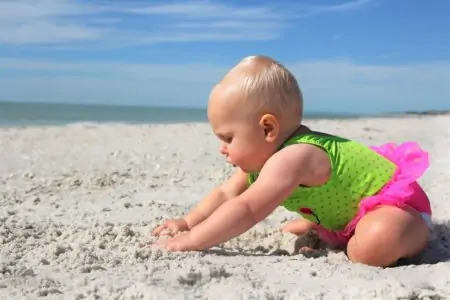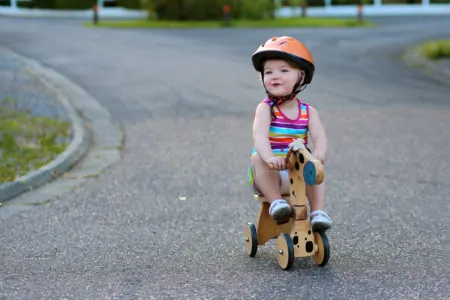
I’ve broken down the critical differences between safety devices and swim aids to help you shop smarter. Here are my top recommendations for keeping your little dipper safe this summer.
- Coast guard-approved
- Wide range of designs
- Comfortable to wear
- Flex-form foam pads
- Comfortable padded shoulders
- Lightweight
- Neoprene padded crotch strap
- Front zipper for quick removal
- Provides good buoyancy
- Beach or pool wear
- Soft fabric to prevent chafing
- Wide range of designs
- European safety standard conformity
- Large coverage
- Built into swimsuit
- Affordable
- Comfortable design leaves arms free
- Cute designs
- Soft edging material
- UPF 50 neoprene
- Bright kid-friendly designs
- US Coast Guard approved
- Child-friendly designs
- Anti-microbial fabric
- Two air chambers
- Encourages a natural swimming position
- Adds to stability in the water
Floaties Vs. Swim Vests
When shopping for water safety gear, you will typically find baby floaties (armbands), swim vests, and life jackets.
The main difference is attachment. A swim vest buckles or straps onto your child’s torso. They cannot easily remove it themselves.
Floaties are inflatable rings that slide onto a child’s arms. They rely on the child’s muscle tone to stay on. Water makes skin slippery, and floaties can easily slide off when a child jumps or raises their arms.
Swim vests are significantly safer than arm floaties because they stay secure on the body and provide core buoyancy.
Life Jackets Vs. Swim Vests
Terminology matters here. A “swim vest” is often a swim aid designed to help a child learn to balance in the water. It provides buoyancy to help them practice paddling.
Toddler life jackets (Personal Flotation Devices or PFDs) are designed to save lives. They are engineered to keep the wearer afloat, often flipping them face-up if they become unconscious.
Key distinctions include:
- Certification: A true life jacket must be U.S. Coast Guard (USCG) approved. Most simple swim vests are not.
- Buoyancy: Life jackets have higher buoyancy ratings than swim vests.
- Purpose: Swim vests are for learning; life jackets are for survival and boating (1).
Factors to Keep in Mind
Don’t just pick the cutest character. Consider these features before buying.
Safety Features
Safety is non-negotiable. Look for these specific elements.
- Crotch Strap: This is essential. It prevents the vest from floating up over your child’s head when they jump in.
- Buckle Location: Rear buckles prevent toddlers from taking the vest off themselves.
- Weight Rating: Check the weight capacity. A vest that is too big is dangerous; one that is too small won’t float them.
- Supervision: No vest replaces an adult. Always stay within arm’s reach.

Comfort and Fit
If it itches, they won’t wear it. Look for neoprene or woven polyester, which are softer than nylon. Ensure the armholes are wide enough to prevent chafing against the skin.
Avoid buying a size up to “get more use out of it.” A loose vest rides up, pushes against the chin, and forces the head back into the water.
Weight vs. Age
Ignore the age range on the package. Always buy based on your child’s weight.
Swim vests rely on displacement to work. If your child exceeds the weight limit, the vest cannot keep their head above water. If they are under the weight limit, the vest will be too bulky and may slip off.
Material Quality
Neoprene is the gold standard. It provides warmth, dries quickly, and is soft against the skin. Nylon is cheaper but can be scratchy.
Check the foam thickness. It should feel dense, not flimsy. Inspect seams around the buckles; these are high-stress points that often tear on cheap vests.

UPF Protection
Water reflects and intensifies UV rays. A vest with built-in UPF 50+ protection adds a shield to your child’s back and chest, areas that are often exposed to the harshest sun. This protects against immediate burns and long-term skin damage (2).

Coast Guard Approval (USCG)
If you plan to go boating, visit a water park, or swim in open water (lakes/oceans), you likely need a USCG-approved device.
Look for “Type II” or “Type III” on the label. Type II is for calmer inland waters and turns some children face up. Type III is for comfortable, continuous wear but requires the child to tilt their head back to avoid water intake (3).
Product Reviews
We analyzed the top-rated vests on the market, comparing safety certifications, buoyancy, and comfort. Here are the best options to help your little one splash with confidence.
Body Glove Paddle Pals Learn to Swim
Best U.S. Coast Guard-Approved Swim Vest

The Body Glove Paddle Pals creates a safe environment for beginners. It features a U.S. Coast Guard Type III rating, meaning it meets strict safety standards for buoyancy and construction.
The design combines a shoulder harness with arm bands, preventing the vest from sliding down. The adjustable buckle is located on the back, so your curious toddler cannot unclip it mid-swim. It is made from durable polyester and soft foam to reduce chafing during long pool days.
Pros
- Certified: USCG-approved for boating and public pools.
- Secure: Rear buckle prevents accidental removal.
- Supportive: Shoulder harness keeps the vest from sliding off.
- Variety: Huge selection of 3D characters and colors.
Cons
- Bulky: Harder to pack in a suitcase than flat vests.
Product Specs
| Weight Range | 30 to 50 pounds |
| Closure | Shoulder harness |
| Material | Nylon |
| USCG Approved | Yes – Type III children’s PFD |
| Design options | 14 |
Our Ratings
SwimSchool Swim Trainer Vest
Best Swim Vest for 3-Year-Olds
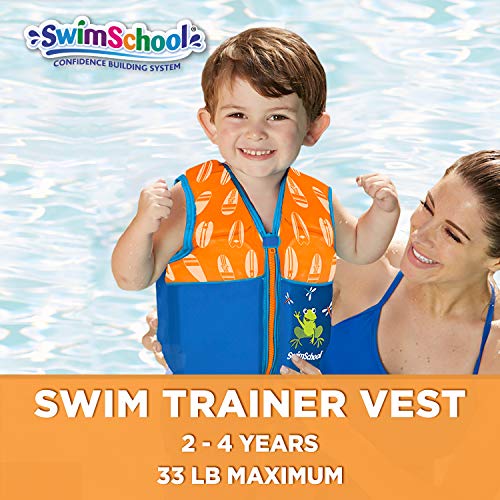
The SwimSchool Swim Trainer is designed to help kids transition from vertical floating to horizontal swimming. The foam pads are strategically placed to encourage a prone (swimming) position rather than just bobbing upright.
It features a heavy-duty zipper and an adjustable safety strap between the legs. This crotch strap is vital for keeping the vest securely in place when your child jumps into the water. The fabric is soft, quick-drying, and offers UPF 50 sun protection.
Pros
- Sun Safe: UPF 50 fabric blocks harmful rays.
- Comfort: Padded shoulders prevent rubbing.
- Positioning: Helps kids learn actual swimming posture.
Cons
- Learning Curve: Some kids dislike being tilted forward initially.
Product Specs
| Weight Range | 20 to 30, and 33 to 50 pounds |
| Closure | Front zipper and safety strap |
| Material | Neoprene |
| USCG Approved | No |
| Design options | 2 |
Our Ratings
Poolmaster Learn-to-Swim Dino Swim Vest
Best Swim Vest for 4-Year-Olds
This Poolmaster vest focuses on comfort and warmth. It uses a neoprene outer shell with an EPE foam core, making it soft and lightweight.
It is a great choice for building water confidence in controlled environments. The front zipper makes it easy to put on, though it lacks a rear safety buckle. It includes a padded crotch strap to keep the vest from riding up around the ears. The dinosaur design is a hit with kids who might otherwise fight wearing safety gear.
Pros
- Soft: Neoprene crotch strap prevents irritation.
- Easy Access: Large front zipper for quick changes.
- Warmth: Provides slight thermal insulation.
Cons
- Fit: Chest size is not adjustable.
- Styles: Limited pattern options compared to competitors.
Product Specs
| Weight Range | 24 to 40, or 40 to 66 pounds |
| Closure | Front zipper and safety strap |
| Material | Neoprene |
| USCG Approved | No |
| Design options | 1 |
Our Ratings
Stearns Original Puddle Jumper
Best Budget Toddler Swim Vest

The Stearns Puddle Jumper is arguably the most recognizable toddler swim aid. It is a USCG-approved Type III flotation device, making it legal for use on boats and required at many public pools.
It combines the stability of a chest band with the buoyancy of arm floats. The single buckle snaps in the back, ensuring your child cannot remove it alone. It fits children 30 to 50 pounds securely, thanks to the adjustable rear strap.
Pros
- Versatile: Approved for pools, beaches, and boats.
- Durable: Woven polyester resists fading and tearing.
- Proven: Tested design that parents trust globally.
Cons
- Fit: Can ride up slightly on children with shorter torsos.
Product Specs
| Weight Range | 30 to 50 pounds |
| Closure | Rear clip |
| Material | Nylon |
| USCG Approved | Yes – Type III Children’s PFD |
| Design options | 14 |
Our Ratings
Splash About Happy Nappy Swimsuit
Best Swimsuit Swimming Vest
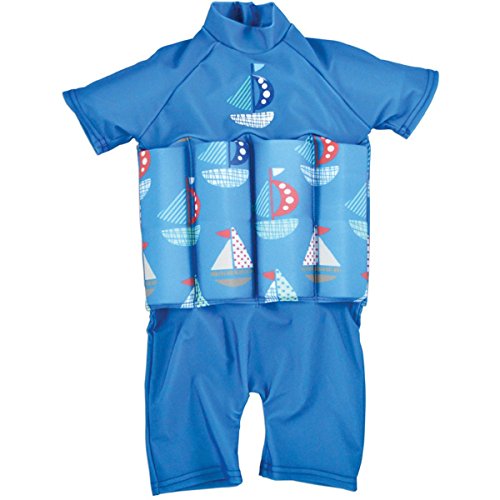
The Splash About suit integrates floats directly into a swimsuit. This prevents the “bulk” issue of traditional vests and stops the device from slipping off.
The unique feature here is the adjustable buoyancy system. It contains 16 removable floats. As your child gains skill and strength, you can remove floats one by one to reduce assistance. It keeps the arms completely free, allowing for proper stroke development without interference.
Pros
- Protection: Offers UPF 50+ and covers shoulders/thighs.
- Secure: Impossible for a child to remove while swimming.
- Customizable: Adjustable buoyancy grows with your child’s skills.
Cons
- Convenience: Difficult to remove quickly for bathroom breaks.
Product Specs
| Weight Range | 24 to 33 pounds |
| Closure | Snap buttons at rear |
| Material | Polyester |
| USCG Approved | No |
| Design options | 7 |
Our Ratings
Megartico Swim Vest with Swimwear Girls
Best Toddler Swim Vest and Swimwear Combo

For parents who want a coordinated look, the Megartico set offers a swim vest with matching swimwear. It is available in styles for both boys and girls.
The vest utilizes compact foam to reduce bulkiness, making it easier for toddlers to move around. It includes an adjustable crotch strap and a rear zipper closure. This setup ensures the vest stays on during active play on water slides or in the pool.
Pros
- Value: Getting a matching set saves money.
- Mobility: Arm-free design allows for full range of motion.
- Aesthetics: Fun, vibrant prints that kids love.
Cons
- Sizing: Runs small; check measurements carefully.
Product Specs
| Weight Range | 22 to 66 pounds |
| Closure | Adjustable safety belt |
| Material | Neoprene |
| USCG Approved | No |
| Design options | 2 |
Our Ratings
Splash About Learn to Swim Vests
Best Toddler Swim Vest for Girls
This “Go Splash” vest is perfect for travel. It is designed to be slim and packable, taking up minimal room in your beach bag.
Splash About offers this in three distinct sizes, starting with a size for 1- to 2-year-olds (22 to 35 pounds). This makes it a solid choice for smaller toddlers who drown in generic “one size fits all” vests. It is made from high-quality neoprene that dries fast and resists sand abrasion.
Pros
- Quality: Soft binding prevents rubbing on the neck.
- Travel: Flatter profile is easy to pack.
- Protection: UPF 50+ neoprene construction.
Cons
- Growth: Non-adjustable fit means they outgrow it faster.
Product Specs
| Weight Range | 22 to 35, 36 to 55, and 56 to 70 pounds |
| Closure | Front zipper |
| Material | Neoprene |
| USCG Approved | No |
| Design options | 4 |
Our Ratings
Speedo Swim Floatation Life Vest
Best Boys' Swimwear Bodysuits
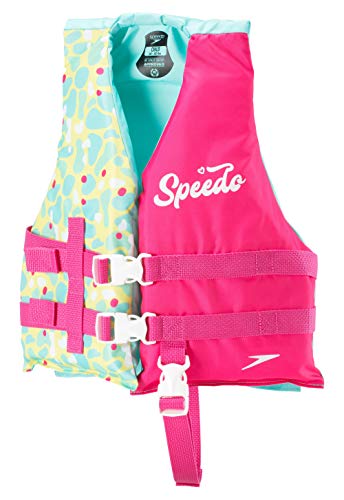
Speedo is a giant in the swimming world, and their Classic Life Vest lives up to the reputation. This is a USCG-approved flotation device, suitable for general boating and safety.
Unlike many rigid life jackets, this one is designed with a softer outer shell for toddler comfort. It features three adjustable buckles across the chest and leg straps to ensure a locked-in fit. It keeps the child’s head well above water, even if they aren’t paddling.
Pros
- Approved: Meets USCG requirements for safety.
- Secure: Multiple buckles create a custom fit.
- High Visibility: Bright colors help you spot your child easily.
Cons
- Restriction: Bulkier than swim aids; better for safety than learning to swim strokes.
Product Specs
| Weight Range | 30 to 50 pounds |
| Closure | Buckle |
| Material | Polyester |
| USCG Approved | Yes |
| Design options | 2 |
Our Ratings
SwimSchool Original Deluxe TOT Swim Trainer
Best Swim Vest for 2-Year-Olds

The TOT Swim Trainer takes a different approach. Instead of foam blocks, it uses a soft fabric vest attached to an inflatable inner tube.
This design provides 360-degree stability. The inflation allows you to adjust the buoyancy level slightly. Because it uses air rather than foam, it can be deflated and folded down to the size of a t-shirt, making it the ultimate travel companion for vacations.
Pros
- Stability: Circular float prevents tipping.
- Posture: Promotes a forward-leaning swimming position.
- Travel: Deflates for ultra-compact storage.
Cons
- Fit: Crotch strap is fixed and not adjustable.
Product Specs
| Weight Range | 33-pound maximum |
| Closure | Crotch strap |
| Material | Neoprene |
| USCG Approved | No |
| Design options | 3 |
Our Ratings
Gogokids Float Suit Swimsuit
Best Toddler Swim Vest for Buoyancy

The Gogokids suit surrounds the torso with buoyancy. It places float foam in a ring around the neck, chest, and back.
This design is excellent for keeping a child’s head up. As your toddler becomes a confident swimmer, you can remove the foam inserts to convert it into a standard swimsuit. The rear zipper ensures they stay suited up until you decide swim time is over.
Pros
- Versatile: Functions as a float suit and regular swimsuit.
- Buoyancy: High neck ring helps keep the face dry.
- Comfort: Smooth fabric prevents chafing.
Cons
- Longevity: Sizing is specific, so they grow out of it quickly.
Product Specs
| Weight Range | 26 to 30, 30 to 37, 37 to 48, 48 to 57, and 57 to 68 pounds |
| Closure | Rear zipper |
| Material | 80 percent polyamide, 20 percent elastane |
| USCG Approved | No |
| Design options | 10 |
Our Ratings
FAQs

What Is The Difference Between A Type II And Type III Life Jacket?
Type II life jackets are designed to turn an unconscious person face up in the water. They are safer but less comfortable. Type III vests are comfortable for all-day wear and provide good buoyancy, but the child must tilt their head back to keep their face out of the water.
How Tight Should A Toddler Swim Vest Be?
It should be snug. If you lift the vest by the shoulders, it should not slide up past the child’s ears or chin. If it rides up, it is too big or too loose, which is dangerous in the water.
Can I Use A Swim Vest At A Water Park?
It depends on the park rules. Most water parks only allow U.S. Coast Guard-approved life jackets (Type II or III). Simple foam swim trainers or non-certified vests are often banned in wave pools and lazy rivers. Check the vest label for the USCG stamp.
| Product | Best | Weight Range | Closure | Material | USCG Approved |
| Body Glove Paddle Pals Learn to Swim | U.S. Coast Guard-Approved | 30 to 50 lbs | Shoulder harness | Nylon | Yes |
| SwimSchool Swim Trainer Vest | 3-Year-Olds | 20 to 30, & 33 to 50 lbs | Front zipper & safety strap | Neoprene | No |
| Poolmaster Learn-to-Swim Dino | 4-Year-Olds | 24 to 40, or 40 to 66 lbs | Front zipper & safety strap | Neoprene | No |
| Stearns Original Puddle Jumper | Budget Picks | 30 to 50 lbs | Rear clip | Nylon | Yes |
| Splash About Happy Nappy Swimsuit | Swimsuit | 24 to 33 lbs | Snap buttons at rear | Polyester | No |
| Megartico Swim Vest | Vest & Swimwear | 22 to 66 lbs | Adjustable safety belt | Neoprene | No |
| Splash About Learn to Swim Vests | Girls | 22 to 35, 36 to 55, & 56 to 70 lbs | Front zipper | Neoprene | No |
| Speedo Swim Floatation Life Vest | Unisex | 30 to 50 lbs | Buckle | Polyester | Yes |
| SwimSchool TOT Swim Trainer | 2-Year-Olds | 33-lbs | Crotch strap | Neoprene | No |
| Gogokids Float Suit Swimsuit | Buoyancy | 26 to 30, 30 to 37, 37 to 48, 48 to 57, & 57 to 68 lbs | Rear zipper | 80% polyamide, 20% elastane | No |
Swimming Safety Tips
You have the gear, but safety relies on action. Drowning is silent and quick; it doesn’t look like the splashing you see in movies. Follow these rules to keep your child safe.
- Touch Supervision: For toddlers and weak swimmers, an adult should always be within arm’s reach in the water.
- Designate a Watcher: If multiple adults are present, designate one “Water Watcher” who is not on their phone or drinking alcohol. Rotate shifts every 15 minutes.
- Feet First: Teach your child to enter pools feet first to prevent head injuries.
- No False Security: Do not let a swim vest make you complacent. It is a tool, not a babysitter.
- Consistency: Make the vest non-negotiable. If they are near the water, the vest goes on.
Keeping Your Water Baby Safe
Until your child is a strong swimmer, a high-quality swim vest is their best friend in the pool. Whether you choose a USCG-approved Puddle Jumper for the lake or a neoprene vest for swim training, the right fit is key.
Remember, the best safety device is your attention. Strap them in, stay close, and have a great summer.