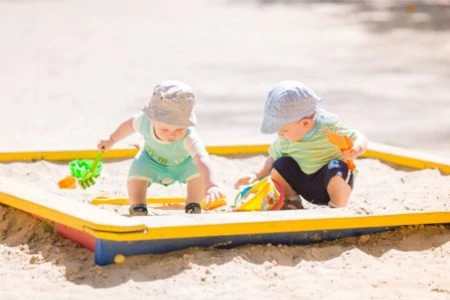
A sandbox is more than just a box of dirt; it’s a sensory wonderland that brings the beach to your backyard.
However, today’s options go way beyond four wooden planks. You can find intricate tables, fun animal shapes, and themes ranging from pirate ships to construction sites. With so many choices, finding the right fit for your space and your child’s age can feel overwhelming.
In this article, we’ve rounded up the best sandboxes on the market for 2026. We’ll also break down how to choose the right size, how to keep the sand sanitary, and why this messy play is actually great for your kid’s development.
Get your shovels ready. It’s time to dig in.
- Great aesthetic appeal
- Drain plug for easy cleaning
- Double-sided sand and water play
- Plenty of accessories
- Includes non-stick coolsand
- Less messy than ordinary sandboxes
- Offers storage space for outdoor toys
- Holds a lot of sand
- Lid to protect contents
- Large area for sand play
- Durable and long-lasting
- Two molded seats
- Durable and safe materials
- Can hold up to 300 pounds of sand
- Compact design
- Elastic straps hold lid in place
- Elevated sandbox
- Lid doubles up as play table
- Boosts thinking and motor skills
- Pockets for storing the accessories
- Easy to assemble
- Shady canopy
- Made of weather-resistant wood
- Spacious area for several children
- Durable construction
- Holds 1,000 lbs of sand
- Requires no special assembly tools
How To Choose a Sandbox
Finding the perfect spot for your kids to dig depends on your yard, your budget, and how much mess you can tolerate. Here is what to keep in mind.
Space and Location
You don’t need a massive estate to have a sandbox. If you have a sprawling lawn, your options are wide open. You can go for large, permanent wooden structures or sprawling plastic sets.
For smaller yards, shared spaces, or apartment balconies, you have to get creative. Compact, contained designs fit nicely on decks or in corners. Sandbox tables are excellent for tight spaces. They often come with legs, allowing kids to play standing up. This is a huge bonus for parents who want to keep the sand on the hands and off the pants.
If you have zero outdoor space, don’t worry. Indoor sandbox kits using Kinetic Sand allow for sensory play on the kitchen table without ruining your carpets.
Cover and Protection
If the sandbox is going outside, a cover is non-negotiable.
First, you need shade. If your yard gets direct sunlight, look for a sandbox with a built-in canopy. This protects your child from UV rays and keeps the sand from becoming scorching hot.
Second, you need a lid. Neighborhood cats love to mistake open sandboxes for luxury litter boxes. A tight-fitting cover keeps animals out, prevents rain from turning the sand into a swamp, and stops debris from blowing in.
Cleanup and Drainage
Let’s be honest: sand gets everywhere. However, the design of the box can help manage the chaos.
Plastic boxes are generally easier to wipe down than wood. If you choose a table-style sandbox, ensure it has a drain plug. This allows you to rinse it out or drain rainwater easily. If you opt for a bottomless wooden frame, you will need landscape fabric underneath to allow water to drain into the ground while keeping weeds out.
Accessories and Themes
Does your child love pirates? Are they obsessed with construction trucks?
Themed sandboxes can kickstart imaginative play. Some come shaped like crabs or turtles, while others look like ships. Many sets include buckets, shovels, and rakes. While these extras are fun, remember that the quality of the box itself matters more than the cheap plastic toys thrown in.
Multipurpose Design
If you want to maximize your investment, look for a sandbox that pulls double duty.
Many options feature split designs for sand and water play. Just be warned: kids will inevitably mix them, so you might end up with a mud table. Some sandboxes can act as a wading pool if you dump the sand out. Others have hard lids that double as car tracks or picnic tables when the sand isn’t in use.
Types of Sand To Use
Not all sand is created equal. Here is a quick breakdown of what you might pour into that new box.

Play Sand
This is the standard stuff. It starts as natural sand from crushed rocks. To make it safe for kids, manufacturers wash it thoroughly to remove minerals that stain clothes. They also blast it with water to smooth out sharp edges. It is affordable, safe, and available at most hardware stores.

Kinetic Sand
Kinetic sand is coated with silicone oil, giving it a unique, silky texture. It sticks to itself, not your hands. It holds shapes perfectly, doesn’t dry out, and is much less messy than regular sand. It is ideal for indoor play or small table bins (1).

Jurassic Sand
If you want premium sand, this is it. Sourced from deserts and beaches rather than crushed rock, it has a distinct texture and color. It is marketed as dust-free, eco-friendly, and safe for kids with asthma or allergies (2).

CoolSand
Similar to kinetic sand, CoolSand is moldable and feels like wet beach sand without the water. It’s non-toxic, comes in fun colors, and offers a satisfying “magnetic” stretch. It’s great for sensory bins but too expensive to fill a large outdoor pit.
Product Reviews
We’ve sifted through the options to find the most durable, fun, and safe sandboxes available. Here are our top picks.
Step2 Dino Dig Sand & Water Table
Dino Twist

If your child loves dinosaurs, this elevated table is a winner. It combines sand and water play in one unit, keeping the mess off the ground and at a comfortable height for toddlers.
The table features a two-sided design. One side holds up to 20 pounds of sand, while the other holds about 4 gallons of water. A palm tree in the center acts as a shade structure and a water tower, adding to the prehistoric vibe.
We love the lid on this model. It isn’t just a cover; it’s a molded volcano mountain. Kids can pour water over it to watch it cascade down the rocks. When playtime is over, you can use the lid to cover the sand side to keep it clean, though note that it doesn’t cover the water side simultaneously.
It comes with four dinosaur figures, a shovel, and scoops. Assembly is straightforward, and the drain plug makes cleanup easy when the water gets too murky.
Pros
- Fun prehistoric theme inspires imagination.
- Drain plug makes emptying water easy.
- Elevated design keeps kids cleaner.
- Includes dinosaur figures and tools.
Cons
- The lid only covers half the table at a time.
Our Ratings
CoolSand 3D Dino Sandbox
A 3D Treat for Dinosaur Lovers
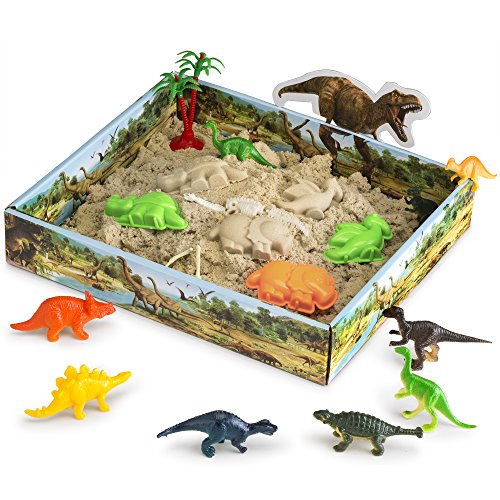
When it’s raining outside or you don’t have a backyard, this indoor kit saves the day. It brings the sandbox experience to your kitchen table without the cleanup nightmare.
This set includes 1 pound of Kinetic CoolSand, which sticks to itself rather than your floors. It comes with 10 molds, 12 3D dinosaur figures, and a “fossil” to excavate. The packaging box folds out to create the play area, complete with Jurassic artwork.
The sensory experience here is excellent. The sand holds its shape perfectly for building, but flows through fingers like a liquid. It never dries out, so you can use it for years. It is a fantastic option for fine motor development and quiet time.
Pros
- Mess-free indoor play.
- Sand never dries out.
- Includes plenty of molds and figures.
- Great for sensory regulation.
Cons
- Small pieces are a choking hazard for kids under 3.
- Not a “full body” sandbox experience.
- Cardboard box tray isn’t very durable.
Our Ratings
Step2 Play and Store Sandbox
Great for Play and Landscaping

This sandbox is designed to look a bit more like patio furniture and less like a toy. With its sandstone texture and rectangular shape, it blends well with modern backyard decor.
It holds up to 200 pounds of sand, providing plenty of depth for serious digging. The four corners feature molded seats, allowing up to four children to sit comfortably while they play.
The standout feature is the lid. It fully covers the box to keep weather and pets out. The domed shape of the lid also provides extra storage space, so you can pile the buckets and shovels inside before closing it up. It comes fully assembled, so you just need to unbox it and add sand.
Pros
- Aesthetically pleasing design.
- Lid allows for toy storage inside.
- Molded seats for four kids.
- No assembly required.
Cons
- Lid can be difficult to latch securely against wind.
Our Ratings
Little Tikes Turtle Sandbox
Classic Cute Design

This is the icon of American backyards. The Little Tikes Turtle has been around for decades because it works. It is durable, cute, and practically indestructible.
The turtle shape is instantly inviting for toddlers. It holds about 150 pounds of sand, which is a sweet spot for one or two young children. The front flippers serve as small seats, so kids don’t have to sit directly in the sand if they don’t want to.
The shell acts as a removable lid. It fits snugly to keep out rain and neighborhood cats. Because the bottom is solid plastic, you can place this on a deck or patio without sand leaking out. It’s a low-maintenance, classic choice that holds up well over time.
Pros
- Iconic, friendly design kids love.
- Solid bottom allows for deck use.
- Very durable construction.
- Lid keeps sand dry and clean.
Cons
- The lid rests on top but doesn’t snap lock.
Our Ratings
Step2 Crabbie Sandbox
A Great Option for Toddlers
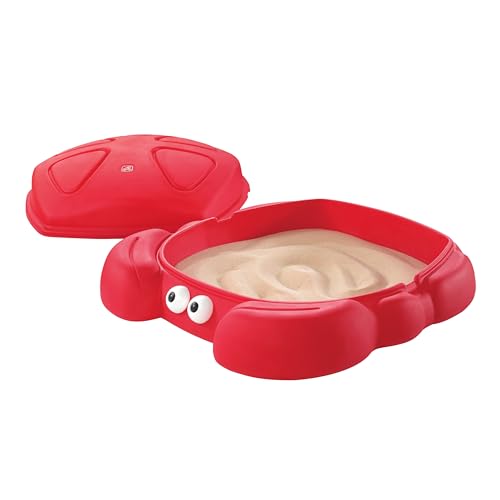
If you prefer sea creatures to reptiles, the Step2 Crabbie is a fantastic alternative to the turtle. It offers a similar footprint but with a vibrant red color and fun claw seats.
This sandbox holds up to 300 pounds of sand, which is surprisingly spacious for its size. The two claw seats can support children up to 35 pounds, making it perfect for toddlers. Like the turtle, it features a shell-style lid to protect the sand when playtime ends.
It comes fully assembled, which is always a win for busy parents. It’s compact enough for small patios but large enough for two toddlers to build castles together without fighting for space.
Pros
- Vibrant, engaging character design.
- Holds a large amount of sand (300 lbs).
- Two integrated seats.
- Fully assembled out of the box.
Cons
- Does not come with any sand toys.
Our Ratings
Step2 Naturally Playful Sand Table
Raise it Up

This table is the solution for parents who hate sand in their carpets. By elevating the play area on legs, it keeps children standing, meaning less sand in shoes and pockets.
The table stands 16 inches high, a perfect ergonomic height for toddlers. It holds 40 pounds of sand, which is enough for digging but easy to manage. The set includes two rakes, two shovels, and a bucket.
A major bonus is the lid. It attaches securely with elastic tie-downs, a feature many other sandboxes lack. Even better, the lid has molded roadways on top, instantly converting the sandbox into a racetrack table for toy cars.
Pros
- Keeps children cleaner than ground-level boxes.
- Lid doubles as a car track.
- Secure elastic tie-downs for the cover.
- Includes accessory kit.
Cons
- Not sealed, so heavy rain can still seep in.
Our Ratings
Kinetic Sand Construction Site Folding Sandbox
A Fine Combo

This portable kit is a dream for kids who love to build and demolish. It combines the mess-free wonder of Kinetic Sand with a functional construction site theme.
The case opens up to reveal a play area complete with a working crane and a dump truck. You get two pounds of Kinetic Sand, which can be molded into bricks and smashed down again. Because the sand sticks to itself, you can easily pack it all back into the case when you are done.
It is compact and foldable, making it a great travel toy for trips to grandma’s house. While it’s small, the interactive crane adds a layer of mechanical play that keeps kids engaged longer than simple digging.
Pros
- Completely portable design.
- Functional crane and dump truck.
- Easy cleanup and storage.
- Hypoallergenic sand included.
Cons
- No carrying handle on the case.
- Two pounds of sand fills it, but kids always want more.
Our Ratings
Little Tikes Big Digger Sandbox
Little Humans at Work

This sandbox turns your backyard into an active construction zone. The main attraction is the working excavator arm built right into the box, allowing kids to scoop and dump sand just like a real operator.
It holds 100 pounds of sand and provides a decent area for play. The lid doubles as a ramp for the included dump truck and construction figures, extending the play area beyond the sand itself.
We like that it encourages strategic thinking and coordination as kids learn to manipulate the excavator levers. It’s more interactive than a standard tub and includes convenient pockets for storing the smaller accessories.
Pros
- Working excavator arm is highly engaging.
- Lid doubles as a truck ramp.
- Encourages fine motor skills.
- Includes construction vehicles and tools.
Cons
- The lid doesn’t seal tightly against water.
- Play area is somewhat smaller due to the excavator base.
Our Ratings
KidKraft Pirate Sandboat
Best Sandbox for Big Imaginations

Ahoy, matey! This massive wooden sandbox is a showstopper. Shaped like a pirate ship, it invites kids to set sail on high-seas adventures right in the backyard.
It is large, measuring over 6 feet long, and can hold a whopping 700 pounds of sand. The design features a steering wheel, a pirate flag, and colorful artwork. There is a built-in bench at the stern for captains to sit, and a hidden storage compartment in the bow for treasure (or shovels).
A major perk is the canopy, which provides much-needed shade during long play sessions. While it takes some time to assemble, the result is a sturdy, wooden play structure that allows multiple children to play at once. It comes with a mesh cover to keep the sand clean.
Pros
- Fantastic pirate theme encourages role-play.
- Canopy provides sun protection.
- Hidden storage for toys.
- Large enough for social play.
Cons
- Wood requires maintenance to prevent weathering.
- Mesh cover is flimsy compared to hard lids.
Our Ratings
Creative Cedar Designs Wooden Sandbox
Perfect for Play Dates
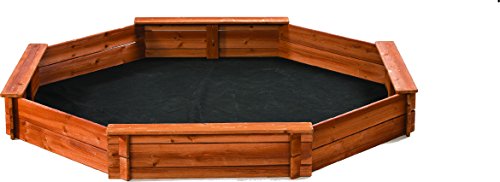
If you want a traditional, permanent sandbox that looks good in a landscaped yard, this octagon kit is the way to go. It offers a huge play area where 3 or 4 kids can dig simultaneously without bumping elbows.
The wide wooden ledges serve as bench seating all the way around the perimeter. It holds between 500 and 1,000 pounds of sand depending on how deep you fill it. The wood is treated cedar, which naturally resists rot and insects.
It comes as a kit with all the panels and hardware. It includes a weed-suppressant ground liner and a polyethylene cover to keep critters out. Note that because it has no solid bottom, it must be placed on grass or dirt, not a patio.
Pros
- Massive capacity for deep digging.
- Wide bench seating around the perimeter.
- Attractive cedar wood construction.
- Includes ground liner and top cover.
Cons
- Cannot be moved once filled.
- Sand must be purchased separately.
Tips for Keeping Sandboxes Clean
You don’t need to ban the sandbox to keep germs away. A little maintenance goes a long way. Here is how to keep the play area sanitary (3):
- Cover it up: This is the golden rule. Bugs, cats, and raccoons love sand. Always secure the lid when the kids aren’t playing.
- No pets allowed: Keep your dog or cat out of the box. Animal waste carries parasites that are dangerous to children.
- Keep it dry: Wet sand is a breeding ground for bacteria. If the sand gets soaked, rake it and let the sun bake it dry before covering it again.
- Rake it regularly: Give the sand a quick rake once a week to bring buried debris, leaves, or lost snacks to the surface for removal.
- Replace the sand: Even with good care, sand gets gross over time. Plan to replace it every year or two.
Explain these rules to your kids, too. If they understand why the “lid goes on,” they are more likely to help you out.
Benefits of Sand Play for Kids
It looks like just digging, but there is some serious brain work happening in that box.
First, it is the ultimate open-ended toy. There are no batteries or instructions. Your child decides if the sand is a cake, a castle, or a construction site. This boosts creativity and problem-solving skills.
Second, it is a math lesson. Scooping sand into cups teaches volume, weight, and measurement naturally.
Finally, it builds the body. Digging, pouring, and sifting improve fine motor skills and hand-eye coordination. If you have multiple kids in the box, they are also learning high-level negotiation skills, like who gets the blue shovel and where the castle wall should go.
Sandboxes FAQs

Why Do Kids Love Sandboxes?
Kids love sandboxes because they offer pure sensory freedom. The texture of sand is stimulating, and the open-ended nature of the play allows them to exercise total control over their environment, building and destroying as they please.

What Is the Best Size Sandbox?
For a standard backyard, a 4×4 foot sandbox is a great starting point. It provides enough room for two children to play without taking over the entire lawn. If you have more than two kids, look for something closer to 6×6 feet.

Where Should I Put My Sandbox In My Yard?
Choose a flat, level spot within sight of the house for easy supervision. Ideally, place it in a partially shaded area to prevent overheating, but avoid placing it directly under fruit trees or pines that drop sticky sap and needles.

What Should You Put Under a Sandbox?
Always place a weed barrier or landscape fabric under a bottomless sandbox. This allows water to drain out into the soil while stopping weeds and roots from growing up into your child’s play area.

How Much Sand Do I Need For a 10×10 Sandbox?
A 10×10 foot sandbox is massive. To fill it 4 inches deep, you will need roughly one cubic yard (about 27 cubic feet) of sand. That is approximately 2,700 pounds of sand, so you will likely need a bulk delivery rather than bags.

How Often Should You Change Sand In a Sandbox?
You should replace the sand every one to two years. However, if you notice a foul odor, animal waste, or if the sand has been contaminated by flooding, you should replace it immediately to ensure safety.

Is Plastic or Wood Better for a Sandbox?
Plastic is better for portability, ease of cleaning, and smaller spaces; it doesn’t rot or give splinters. Wood is better for large, permanent structures and aesthetics, but it requires annual sealing and maintenance to prevent rot and weathering.
What Age Is Safe for Sandboxes?
Sandboxes are generally recommended for children ages 12 months and older. However, close supervision is required for toddlers under 3 years old to ensure they do not eat the sand, which can be a choking hazard or cause intestinal blockage.