Stuck inside due to bad weather or a sick day? We have your back. Whether you need ideas for a birthday party or just want to keep the peace on a rainy day, this list has you covered. From toddlers to teens, we found the best ways to burn energy and bust boredom indoors.
We put together a massive list of our favorite indoor games. You will find the materials needed, simple instructions, and fun variations to keep things fresh.
Get your game face on and let’s play.
Key Takeaways
- Toddlers: Keep it simple with classics like Balloon Blow, Musical Statues, and Pass The Parcel.
- Preschoolers: Burn energy with active games like Sleeping Lions, Potato Penguins, and Bowling.
- School-Age: Engage their minds with Zingo, Go Fish, and The Floor Is Lava.
- Older Kids: Try competitive challenges like Pictionary, Murder in the Dark, and The Chocolate Game.
Indoor Games For Kids 2 Years and Older

Balloon Blow
Materials: A biodegradable balloon and a straw for each person.
Instructions:
- Mark a starting line and a finish line.
- Line everyone up at the start with an inflated balloon and a straw.
- Players must blow their balloon all the way to the finish line using only the straw.
- The first balloon to cross the line wins.
Variations:
- Shorten the distance for younger toddlers.
- Create an obstacle course for older kids to navigate while blowing their balloon.
- Add a rule that if a player touches their balloon, they must restart.
Musical Statues
Materials: A music player you can pause easily.
Instructions:
- Turn on the music and tell everyone to dance or wiggle.
- Stop the music at random intervals.
- When the music stops, everyone must freeze instantly.
- If you see someone move, they are out.
- The last person dancing is the winner.
Variations:
- Instead of being “out,” the mover must perform a silly forfeit, like quacking like a duck.

Pass The Parcel
Materials: Wrapping paper or newspaper, plus small prizes.
Instructions:
- Wrap a main prize in a layer of paper.
- Add multiple layers of wrapping paper over it, placing a small treat or sticker between each layer.
- Have the kids sit in a circle and pass the parcel while music plays.
- Stop the music randomly. The child holding the parcel unwraps one layer.
- Repeat until the final prize is revealed.
Variations:
- Place slips of paper with funny dares or actions between layers instead of prizes.

Box Targets
Materials: Cardboard boxes, markers, scissors, and balls.
Instructions:
- Cut large holes in the boxes and write a point value above each one.
- Place the boxes at various distances or heights.
- Kids take turns throwing balls at the boxes to score points.
- The player with the highest score wins.
Variations:
- Use rolled-up socks or balloons if you don’t have soft balls.

Stack Em’
Materials: Paper cups.
Instructions:
- Give each child a stack of paper cups.
- Set a timer or shout “Go.”
- Players race to build the tallest tower possible before time runs out.
- The tallest standing tower wins.
Variations:
- Skip the timer. The first person to use all their cups in a stable tower wins.

Keepie Uppie
Materials: One balloon per person.
Instructions:
- Hand every player an inflated balloon.
- Players must tap the balloon to keep it in the air.
- You cannot hold the balloon; you must keep it moving.
- If a balloon touches the floor, that player is out.
Variations:
- Make it harder by allowing only one hand, or only knees and elbows.
- Designate “lava zones” like the couch or walls that the balloon cannot touch.
Indoor Games For Kids 3 Years and Older

Sleeping Lions
Materials: None.
Instructions:
- All players lie down on the floor and pretend to be sleeping lions. They must stay perfectly still.
- One person (the hunter) walks around telling jokes or making funny faces.
- The hunter cannot touch the lions.
- If a lion moves, giggles, or opens their eyes, they are out.
- The last lion sleeping wins.
Variations:
- Players who get out can join the hunter to help wake the others.

Blind Man’s Buff
This is a classic variation of tag that works great in a spacious living room.
Materials: A buff or soft scarf for a blindfold.
Instructions:
- Choose one player to be “it” and blindfold them.
- Spin them around gently three times.
- The other players move around the room quietly.
- The blindfolded player tries to tag someone.
- If they tag a player, that person becomes “it.”
Variations:
- Elimination style: When a person is tagged, they are out. The last person remaining wins.

Bowling
Materials: Empty plastic bottles, water, a ball, or a toy bowling set.
Instructions:
- Fill the bottles with about an inch of water for stability.
- Set the bottles up in a triangle formation at one end of a hallway.
- Players take turns rolling the ball to knock them down.
Variations:
- Add more water to make the pins heavier and harder to knock over.
- Write numbers on the bottles for points to practice math skills.

Guess Who Twinkles
Materials: None.
Instructions:
- One player is “it” and sits blindfolded in the middle of the room.
- The other players hold hands and walk in a circle around “it” while singing “Twinkle Twinkle Little Star.”
- When they sing the last word, the circle stops moving.
- The blindfolded player must point behind them and guess who is standing there.
- If they guess correctly, that player takes the spot in the middle.
Variations:
- Use any song your kids know well.
Potato Penguins
Materials: A potato (or fake potato) for each player.
Instructions:
- Mark a start and finish line.
- Players line up and place a potato between their knees.
- They must waddle like a penguin to the finish line without dropping the potato.
- If the potato drops, they must return to the start.
- The first penguin across the line wins.
Variations:
- Use a stuffed animal or small balloon for a softer option.
- Create obstacles they have to waddle around.

Sardines
Materials: None.
Instructions:
- This is “Hide and Seek” in reverse. One person hides while everyone else counts.
- The seekers split up to find the hider.
- When a seeker finds the hider, they don’t say anything. They squeeze into the hiding spot with them.
- The game ends when the last person finds the group packed together like sardines.
- The first person who found the hider becomes the hider for the next round.

Hunt Against The Timer
Materials: A timer and a basket.
Instructions:
- Pick a specific color (e.g., blue) and set a timer for two minutes.
- Everyone races to find items of that color and brings them back to the start.
- You must be back before the timer beeps or you are out.
- The person who collected the most items wins.
Variations:
- Search for items starting with a specific letter instead of a color.
- Allow players to “steal” items from each other’s piles if they are brave enough.

Grandma’s Footsteps
Materials: None.
Instructions:
- One player is “Grandma” and stands facing the wall.
- The other kids start at the opposite end of the room and sneak forward.
- Grandma can turn around at any moment. When she does, everyone must freeze.
- If Grandma sees anyone move, that player is out.
- The first person to touch Grandma’s shoulder wins the round.
Egg Jousting
Materials: Hard-boiled eggs (cooled).
Instructions:
- Give each player a hard-boiled egg.
- Two players face off and gently tap the narrow ends of their eggs together.
- If your egg cracks, you flip it and use the wide end.
- The player whose egg stays uncracked moves on to the next opponent.
- The last uncracked egg wins.
- Make egg salad sandwiches with the “losers.”
Indoor Games For Kids 4 Years and Older

Zingo
Materials: Zingo Game.
Instructions:
- Give each player a Zingo card.
- One player slides the Zinger to reveal two tiles.
- If a tile matches an image on your card, be the first to call it out.
- The first caller gets the tile.
- The first player to fill their entire card shouts “Zingo” and wins.
Variations:
- Try Zingo Number Bingo for math practice.

What’s The Time, Mr. Wolf?
Materials: None.
Instructions:
- “Mr. Wolf” stands at one end of the room facing the wall.
- The other players stand at the opposite end and shout, “What’s the time, Mr. Wolf?”
- Mr. Wolf turns and says a time (e.g., “Three o’clock”). The players take that many steps forward.
- Repeat this until the players get close.
- At any point, Mr. Wolf can yell “Dinner time!” and chase the players back to the start.
- If a player is tagged, they become the new Mr. Wolf.

Go Fish
Materials: A standard deck of cards or a Go Fish Deck.
Instructions:
- Deal five to seven cards to each player. Place the rest face down as the “pond.”
- Check your hand for pairs and place them face up on the table.
- Player A asks Player B for a specific card (e.g., “Do you have any Kings?”).
- If Player B has it, they hand it over. Player A puts down the pair and goes again.
- If Player B doesn’t have it, they say “Go Fish,” and Player A draws from the pond.
- The first player to get rid of all their cards wins.
Variations:
- Play until the pond is empty and count who has the most pairs.

The Floor Is Lava
Materials: Cushions, blankets, and furniture.
Instructions:
- Shout “The floor is lava!”
- Players have 5 seconds to get their feet off the floor.
- They must move around the room by jumping from furniture to cushions without touching the carpet.
- If you touch the floor, you are “burned” and out of the game.
Variations:
- Create a specific route they must complete to “escape the volcano.”
Indoor Games For Kids 5 Years and Older
Skippyroo Kangaroo
Materials: None.
Instructions:
- Players sit in a circle. One child sits in the middle, crouched down with eyes closed (Skippyroo).
- The group chants: “Skippyroo, kangaroo, dozing in the midday sun, here comes a hunter, run, run, run.”
- An adult points to one child to touch Skippyroo’s shoulder.
- Skippyroo asks, “Guess who caught you?” and tries to identify the friend by voice or touch.
- If correct, they swap places.

Dots And Boxes
Materials: Pen and paper.
Instructions:
- Draw a grid of dots on a piece of paper.
- Players take turns drawing one horizontal or vertical line to connect two dots.
- If a player completes a square (a box), they write their initial inside and get another turn.
- Once all boxes are formed, count the initials. The player with the most boxes wins.

Frozen Words
Materials: Foam bath letters, water, and freezer bags.
Instructions:
- Freeze individual foam letters inside ice cubes or blocks of ice in bags.
- Give each player a bag and a spoon.
- Players must chip away or melt the ice to release the letters.
- The first person to spell a valid four-letter word with their freed letters wins.
Variations:
- Assign a specific word everyone must try to spell.
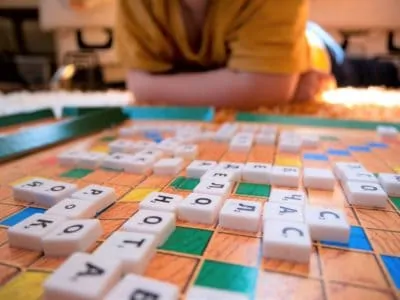
Classic Board Games For Little Kids
Some games never get old because they are simply fun. Here are the best picks for kids under 7.
- Junior Monopoly: A faster, kid-friendly version of the real estate classic.
- Chutes And Ladders: Great for learning numbers and patience.
- Candyland: No reading required, just color matching.
- Connect 4: A simple strategy game.
- Eye Found It: A massive hidden picture board game.

Who’s The Baby?
Materials: Old baby photos of family or friends.
Instructions:
- Lay the baby photos face down on a table.
- Players pick a photo and guess who it is.
- Correct guesses earn the photo; incorrect guesses go back on the table.
- The player with the most photos at the end wins.
Variations:
- Print out baby photos of celebrities for older kids to guess.

Balls In Cups
Materials: Paper cups, ping-pong balls, and tape.
Instructions:
- Tape cups to the edge of a table or on the floor at various distances.
- Kids take turns bouncing or throwing a ping-pong ball into the cups.
- Assign point values to harder cups.
- The player with the most points after 5 rounds wins.
Variations:
- Set up a race where players must land a ball in every cup to finish.

Straw Rockets
Materials: Straws, paper, tape, and markers.
Instructions:
- Cut small rectangles of paper and roll them loosely around a straw. Tape them shut (but not to the straw).
- Fold one end of the paper tube over and tape it to seal the “nose” of the rocket.
- Draw and tape small triangle fins to the bottom.
- Slide the rocket onto the straw and blow hard to launch it.
Variations:
- See whose rocket flies the furthest.
- Set up bowl targets and see who can land their rocket inside.

Crush The Cups
Materials: Paper cups and straws.
Instructions:
- Mark a start line and a goal on a table.
- Place an empty cup on its side at the start.
- Players must blow through their straw to push the cup into the goal.
- The first player to score three goals gets to stomp on and crush their cup as a victory celebration.

Story Story
Materials: None.
Instructions:
- Sit in a circle. Player One starts a story with a sentence beginning with “A”.
- Player Two continues the story with a sentence starting with “B”.
- Keep going through the alphabet.
- If a player pauses too long or messes up the letter, they are out.

Magnet Fishing
Materials: Magnetic wands, paper clips, and small prizes.
Instructions:
- Attach paper clips or magnets to small wrapped prizes.
- Designate a rug or circle as the “pond.”
- Scatter the prizes in the pond.
- Give kids magnetic wands to “fish” for their treats.
Variation:
- Tie a magnet to a string and stick for a more realistic fishing rod challenge.

Going To Grandmas
Materials: None.
Instructions:
- The first player says, “I’m going to Grandma’s house and I’m taking an Apple.”
- The second player repeats the sentence and adds a B word: “… an Apple and a Ball.”
- Continue adding items alphabetically.
- If someone forgets an item in the chain, they are out.

A Bug’s Life
Materials: Dice, paper, and pens.
Instructions:
- Assign body parts to numbers: 1=Body, 2=Head, 3=Leg, 4=Eye, 5=Antenna, 6=Tail.
- Players take turns rolling the die to draw their bug.
- You must roll a Body (1) before you can attach anything else, and a Head (2) before eyes/antennae.
- The first person to complete a bug with a body, head, tail, 6 legs, 2 eyes, and 2 antennae wins.

Flour Mountain
Materials: Flour, a bowl, and a small candy.
Instructions:
- Pack a bowl tight with flour and flip it onto a plate to make a mountain.
- Balance a piece of candy on the very top.
- Players take turns slicing away a chunk of flour with a butter knife.
- The person who causes the mountain to collapse and the candy to fall has to retrieve the candy using only their mouth (no hands!).

A-Mazing Race
Materials: Maze books or printouts, pens, and dress-up clothes.
Instructions:
- Place a pile of hats, scarves, and gloves at one end of the room.
- Give each player a maze at the other end.
- Shout “Go!” Players solve the maze as fast as possible.
- Once solved, they run to the pile, put on one item, run back, and solve the next maze.
- The first player to finish 5 mazes and wear 5 items wins.

Charades
Materials: Paper scraps and a bowl.
Instructions:
- Write simple words or phrases (movies, animals, actions) on paper and put them in a bowl.
- One player picks a slip and acts it out without speaking.
- The first person to guess correctly becomes the next actor.
Variations:
- Split into teams and use a timer. The team with the most correct guesses wins.

Sock Wars
Materials: Rolled-up socks (lots of them).
Instructions:
- Divide the room in half with tape or a row of pillows.
- Split players into two teams, one on each side.
- Dump an equal amount of sock balls on each side.
- Set a timer for 2 minutes. Players throw socks to the other side as fast as they can.
- When time is up, the team with the fewest socks on their side wins.
Variations:
- Use crumpled paper balls for an “indoor snowball fight.”

Movement Chains
Materials: None.
Instructions:
- Player One does a move (e.g., claps hands).
- Player Two claps hands, then adds a move (e.g., stomps foot).
- Player Three claps, stomps, and adds a spin.
- Keep going until someone breaks the chain.
Variations:
- Make a rule that you cannot use your hands, only legs and head.

Reverse It, With Bells On
Materials: Blindfolds and wrist bells.
Instructions:
- Blindfold every player except one.
- Give the sighted player bells to hold or wear.
- The blindfolded players try to catch the person with the bells by listening to their movement.
- If someone catches them, they take the bells and the blindfold comes off.

The Chocolate Game
Materials: A large chocolate bar, knife, fork, winter gloves, hat, scarf, and a die.
Instructions:
- Place the chocolate, knife, and fork on a plate in the center.
- Players sit in a circle and take turns rolling the die.
- If you roll a six, run to the center, put on the hat, scarf, and gloves, and try to eat the chocolate using only the knife and fork.
- Meanwhile, the others keep rolling. As soon as someone else rolls a six, you must stop immediately, take off the gear, and hand it to them.
Variations:
- Use oven mitts instead of gloves to make it even harder.
Indoor Games For Kids 6 Years and Older

Heads Or Tails
Materials: A coin.
Instructions:
- One person flips a coin.
- Before the reveal, players guess the outcome by putting their hands on their “heads” or their “tails” (bottoms).
- If it’s heads, everyone touching their tails sits down. If tails, everyone touching their heads sits.
- Continue until one winner remains.

Pictionary
Materials: Paper and pencils.
Instructions:
- Write random objects (like “Pizza” or “Spaceship”) on slips of paper.
- A player picks a slip and draws the item while others guess.
- The artist cannot talk or write letters.
- The first person to guess correctly wins the round.
Variations:
- For a high-tech twist, try Pictionary Air.

Who Am I?
Materials: Sticky notes and a pen.
Instructions:
- Write the name of a character or famous person on a sticky note.
- Stick it to a player’s forehead without them seeing what is written.
- The player asks yes/no questions (“Am I real?”, “Am I a cartoon?”) to figure out who they are.
- Keep asking until they guess the name.
Variations:
- Use the board game Guess Who? for a structured version.

In Plain Sight
Materials: A specific object (like a toy car or a key).
Instructions:
- Show everyone the object. Then send everyone out of the room except the hider.
- The hider places the object somewhere visible (not inside a drawer or under a cushion), but camouflaged.
- Players return and look for it. When they spot it, they don’t say anything, they just sit down casually.
- The last person standing reveals where it is.

Memory
Materials: A tray, random household items, a towel, paper, and pens.
Instructions:
- Place 10-15 random items on a tray (spoon, toy, eraser, etc.).
- Let players study the tray for 60 seconds.
- Cover the tray with a towel.
- Players have 2 minutes to write down as many items as they can remember.
- The person with the most correct items wins.
Variations:
- Remove one item while players close their eyes and have them guess what is missing.
Indoor Games For Kids 7 Years and Older

Straight Face
Materials: Paper and pens.
Instructions:
- Everyone writes a ridiculous or embarrassing sentence on a slip of paper and puts it in a bowl.
- One player picks a slip and must read it out loud to the group while keeping a perfectly straight face.
- If they smile or laugh, they are out.
- The goal is to be the last one remaining who hasn’t laughed.
Variations:
- The reader keeps a mouthful of water. If they laugh, they get soaked!

Foldovers
Materials: Paper and pens.
Instructions:
- Give everyone a piece of paper.
- Player A draws a head at the top, folds the paper back so only the neck lines show, and passes it to the left.
- Player B draws the torso/arms, folds it so only the waist shows, and passes it.
- Player C draws the legs and passes it.
- Player D draws the feet.
- Unfold the papers to reveal the weird creatures you created.

Drawing Partners
Materials: Pens, paper, and random objects in a bag.
Instructions:
- Pair kids up. One child sits with their back to the other.
- The first child pulls an object from a bag (don’t show anyone!).
- They must describe the object using only shapes and directions (e.g., “Draw a circle in the middle,” not “Draw a clock”).
- The partner draws what they hear.
- Compare the drawing to the real object to see who got closest.

Waist Catch
Materials: A bucket, belt/rope, and soft candy.
Instructions:
- Tie a bucket around one player’s waist.
- Their partner stands a few feet away and tosses candy or balls.
- The player with the bucket must catch the items by moving their hips, no hands allowed!
Variations:
- Use ping pong balls for a bouncy challenge.

Initials
Materials: Pen, paper, and a timer.
Instructions:
- Pick a letter (e.g., “M”).
- Set a timer for 1 minute.
- Players write down as many items as they can think of that start with that letter.
- Compare lists. If two people wrote the same word, cross it out.
- Points are awarded only for unique answers.

The Price Is Right
Materials: Household items (cereal, soap, toys), index cards, and pens.
Instructions:
- Grab 5-10 items from your pantry or toy box.
- Write the actual price of each item on a card and place it face down next to the item.
- Players take turns guessing the price.
- Flip the card to reveal the answer. The closest guess wins a point.
Variations:
- Play “Higher or Lower” where you guess if the next item is more or less expensive than the previous one.

Two Truths And A Lie
Indoor Games For Kids 8 Years and Older

Taste Testers
Note: Check for food allergies before playing.
Materials: A blindfold and various foods (sour, sweet, salty).
Instructions:
- Blindfold a player.
- Offer them a small bite of food (lemon, marshmallow, pickle, etc.).
- They must guess what it is solely by taste and texture.
- Score points for every correct guess.
Variations:
- Have them hold their nose while tasting to see if they can still identify the flavor.

Murder In The Dark
Materials: A dark room.
Instructions:
- One player is the Detective (waits outside). One player is secretly assigned as the Murderer. Everyone else is a civilian.
- Turn off the lights. Players walk around carefully.
- The Murderer taps people on the shoulder to “eliminate” them. The victim counts to 3, screams, and lies down.
- When a scream happens, the Detective rushes in and turns on the lights.
- The Detective interviews everyone (Murderer can lie; civilians must tell the truth) to deduce who the culprit is.


Name That Tune
Materials: Paper and pens.
Instructions:
- One player hums the melody of a popular song without using words.
- The first person to shout out the correct song title wins a point.
- The winner becomes the next hummer.
FAQs
What are the best indoor games for large groups?
Games like “Murder in the Dark,” “Charades,” “Musical Statues,” and “Sock Wars” work best for large groups because they don’t require turns. Everyone plays at the same time, which prevents kids from getting bored while waiting.
How do I entertain kids indoors without screens?
Focus on active play or creation. Building forts, “The Floor is Lava,” or “Hunt Against the Timer” gets them moving. For quieter times, use “Story Story” or “Drawing Partners” to engage their imagination without needing an iPad.
What are some quiet indoor games?
If you need to lower the volume, try “Sleeping Lions,” “Memory,” “Pictionary,” or “The Quiet Game.” These focus on observation and stealth rather than running and shouting.
Enjoy Yourselves
Indoor games turn a gloomy day into a memory your kids will cherish. You don’t need fancy equipment, just a little imagination and a willingness to be silly.
Set up your own living room Olympics or host a kitchen table tournament. The only rule that matters is to have fun. Your kids will love the attention, and you’ll love how tired they are by bedtime.