So, you finally agreed to buy your kid a drum set. We understand the hesitation. You are probably envisioning endless headaches, noise complaints from neighbors, or a dusty toy abandoned after a week.
But it doesn’t have to be a nightmare.
We spent hours hunting for sets that kids love and parents can tolerate. The market is full of great options, from electronic kits with headphone jacks (a lifesaver) to toddler-friendly learning toys. We narrowed the list down to the very best options for aspiring drummers of every age.
Check out our top picks for babies, toddlers, and big kids.
- Supports 2 languages
- Equipped with colorful lights
- Teaches colors, numbers, and gross motor skills
- Unique sounds
- Different ways to play
- Sticks attach to drum for storage
- 3 electronic drums plus 1 cymbal
- Features phonics and words
- Power-saving mode
- Many features and sounds to play
- Velocity-sensitive pads
- Loud speakers with headphone option
Why Drums?
Drums are a popular choice for a reason. Beyond the fun factor, they offer significant developmental benefits just like other musical instruments.
Here are a few reasons to hand your child the sticks:
- Confidence booster: Learning to play dynamically helps children build courage. Mastering a beat leaves them feeling accomplished and self-assured.
- Brain power: Drumming requires serious coordination. This challenges the brain by engaging both the creative and linear sides simultaneously.
- Physical exercise: Drumming is active play. It elevates the heart rate and builds muscle through repetitive movement (1).
How to Choose Drums for Kids
Drums are a favorite music toy, but the options can be overwhelming. Depending on your child’s age and skill level, you need to know what to look for.

Drums for Babies
You can introduce drums as soon as your baby starts engaging with toys. A drum is actually a great way to make tummy time more bearable. It encourages them to lift their heads and use those little arms.
Look for these features when buying for infants:
- Sensory lights: Bright, flashing colors keep them engaged.
- Music options: Pre-recorded melodies help them understand rhythm.
- Interactivity: Buttons or surfaces that react to touch are essential.
- Accessories: Mirrors or rattles add extra value.

Drums for Toddlers
Toddlers are creative and energetic. They need an instrument that can handle a little rough housing while stimulating their minds.
Here is what your toddler will enjoy:
- Sound effects: Wacky sounds and varied tones keep it fun.
- Education: Modes that teach phonics, numbers, or counting are a huge plus.

Drums for Bigger Kids
Older children need more than just lights and noise. They need an instrument that feels real. Here is what we look for when shopping for older kids.
Drum Kit vs. Individual Drums
Should you buy a full set or a single piece? Here is the breakdown:
Individual drums:
- Great for beginners: You can buy one piece to gauge interest before spending big money.
- Portable: Easy to move from room to room or take to a friend’s house.
- Budget-friendly: A single floor tom is much cheaper than a 5-piece kit.
Drum kit:
- Defined roles: Each drum serves a purpose, teaching the player about kit composition.
- Skill advancement: A full kit offers more room to grow and learn complex beats.
- Customization: You can add cymbals or pedals as your child improves.
Consider the goal. Is this a casual hobby or a serious passion? A full kit takes up space and makes noise, but a single drum might bore a true enthusiast.
Acoustic vs. Electronic
An acoustic kit might earn you side-eye from the neighbors, but there are good reasons to buy one.
- Natural feel: Your child learns the true physical response of the instrument.
- Authentic sound: Acoustic drums are made of wood and skin. They produce a unique tone you cannot perfectly replicate.

Electronic kits use rubber pads and synthesizers. They are a favorite among parents for one specific reason.
- Volume control: You can plug in headphones for silent practice.
- Space savers: They usually have a smaller footprint and fold up easier.
- Versatility: Players can switch between rock, jazz, and electronic sounds instantly.
- Recording: Many kits plug into computers for easy recording and mixing.

Consider Your Space
Drums eat up floor space. Even a basic starter kit needs a dedicated area. Decide if the drums will live in the garage, the basement, or a bedroom before you buy.
We also highly recommend placing a rug or piece of carpet underneath the kit. This prevents the drums from sliding across the floor during an intense solo. It also helps absorb some of the vibration and sound.

Product Reviews
For kids ready to graduate from toys, these kits offer a more authentic experience.
Alesis CompactKit 4
Best Portable Set
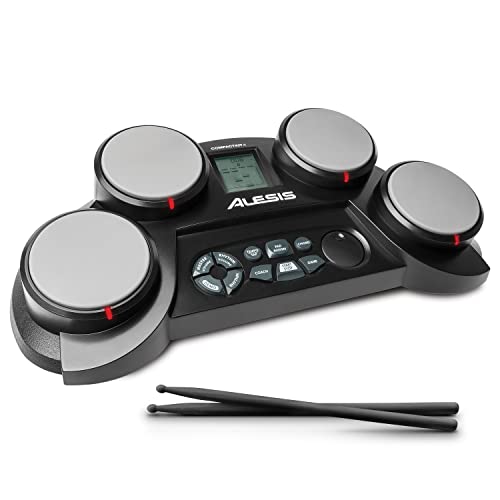
Electronic kits are a parent’s best friend. Why? Because you can plug in headphones and enjoy the silence while your child rocks out.
This tabletop set features four velocity-sensitive pads. That means they respond to how hard your child hits them, mimicking the feel of real drums. It includes built-in games and a coaching mode to help teach rhythm and timing. The speakers are plenty loud for performances, but the headphone jack makes practice time peaceful.
Pros
- Versatile: Multiple voices and sounds.
- Compact: Fits on a desk or table.
- Quiet option: Headphone jack for silent play.
- Realistic: Velocity-sensitive pads teach dynamic playing.
Cons
- Compatibility: Picky about which headphones work well with it.
Our Ratings
Remo Floor Tom Drum
Best Single Drum

You don’t always need a massive kit. Sometimes, one high-quality drum is enough to spark a passion for percussion.
This floor tom uses a specialized “Acousticon” shell made from recycled wood fibers and resin. This gives it a deep, authentic tone that plastic toys can’t match. The colorful rainforest design appeals to kids, and the “Skyndeep” drumhead is durable enough to withstand energetic pounding. Your child can play with hands or the included mallets.
Pros
- Sound: Authentic tone and resonance.
- Versatile: Play with sticks or hands.
- Expandable: Remo offers matching drums to build a set later.
- Age range: Fun for toddlers and big kids alike.
Cons
- Pitch: The tone is slightly higher than a standard adult floor tom.
Our Ratings
Mendini 3-Drum Set
Best for Beginners
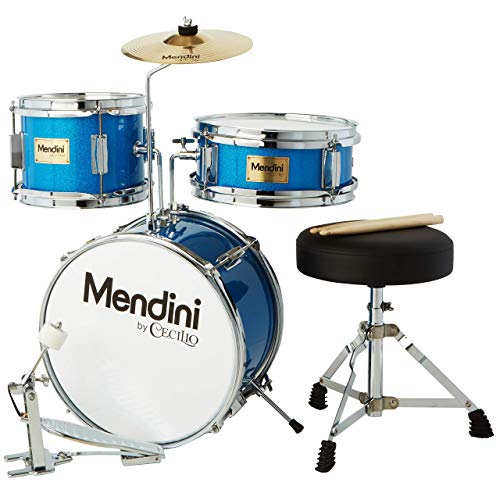
This is the real deal. It isn’t a toy; it is a scaled-down drum kit. It comes with a snare, a tom, a bass drum, and a cymbal.
The shells are made of hardwood, providing durability and a classic look. The kit includes a bass drum pedal, which is crucial for learning limb independence. It also comes with a padded throne (stool) and wooden sticks. It requires some assembly, but the instructions are straightforward.
Pros
- Realistic: Looks and feels like a pro kit.
- Material: Durable hardwood shells.
- Complete: Includes throne, pedal, and sticks.
- Style: Available in several glittery colors.
Cons
- Maintenance: Mounts may loosen and need tightening over time.
- Sound: Better than plastic, but not professional studio quality.
Our Ratings
Drums for Kids FAQs

What Age Can Kids Start Drums?
Kids can start as early as age three using junior sets or simple hand drums. Formal lessons typically start around age 5 or 6, when children have better focus and motor skills, but rhythm exploration can happen at any age.
Are Drums Good for ADHD?
Yes, drumming is often excellent for kids with ADHD. The physical exertion helps burn off excess energy, while the requirement to focus on rhythm and limb independence can help improve concentration levels over time.

Does Drumming Help With Autism?
Drumming can be very therapeutic for children with autism. It provides a non-verbal method of communication and emotional expression, and the repetitive, rhythmic nature of the instrument can be soothing and regulating for the sensory system.

Can Learning to Drum Help With Behavioral Problems?
Learning drums can help with behavioral issues by providing a structured outlet for emotions and aggression. The discipline required to learn an instrument boosts self-esteem, while the physical release reduces stress.

Do Kids Need Ear Protection When Playing Drums?
Yes, absolutely. Acoustic drums can produce sound levels exceeding 100 decibels, which can damage hearing over time. Always provide your child with noise-reduction earmuffs or musician’s earplugs when they are playing an acoustic kit.