Cloth diapering is great for the planet and your wallet, but storing dirty diapers until wash day? That is the tricky part. You need a system that contains the smell without ruining your diapers.
If you plan to wait a few days between laundry loads, you cannot just throw soiled cloth diapers in a standard trash can. You need a dedicated storage solution that handles moisture and prevents odors from taking over the nursery.
We compared the top brands to find the best cloth diaper pails and liners for every method, whether you prefer dry pailing or soaking. Here is how to keep the nursery fresh and your wash routine simple.
- Self-sealing system
- For cloth or disposable diapers
- Awarded 2020 Best Overall Diaper Pail
- Reusable refill cartridges
- Can change bags within 20 seconds
- Used for cloth or disposable diapers
- Weighs only 2 pounds
- Sturdy design
- Includes a deodorizer cover
- Pre-assembled and ready to use
- Built-in carbon filter
- Hands-free use
- Hypoallergenic
- Multiple uses
- Helps purify and filter air
What Is a Cloth Diaper Pail?
A traditional diaper pail acts like a specialized trash can for disposables, usually sealing them away to be thrown out later. A cloth diaper pail serves a different purpose because you are not disposing of your diapers permanently.
Instead, it acts as a temporary holding cell for soiled cloth diapers until laundry day.
You need a discreet, hygienic place to store these items. Using a standard laundry basket or plastic bag often results in lingering smells, leaks, and even mold growth on the fabric.
Types of Diaper Pail Methods
Before buying a pail, you need to decide on your storage strategy. Most parents choose between two main methods.
1. Dry Pail Method
This is the most popular modern method for cloth diapering. You line a pail with a waterproof, reusable cloth bag and store the diapers dry until wash day.
It is less messy and reduces the risk of drowning hazards. However, you must knock solid poop into the toilet before placing the diaper in the pail to prevent major staining and smell issues.
2. Wet Pail Method
This method involves filling a pail about halfway with water and pre-soaking the diapers. The water helps minimize stains and keeps stains from setting.
Safety Warning
You also have to change the water daily, or you will end up with a bucket of “sewage” water that is incredibly heavy to carry to the washing machine.
3. The Hybrid Method
Some parents rinse their inserts and store them in a wet pail while keeping covers and shells in a dry bag. This protects the waterproof laminate on the covers, which can degrade if soaked for too long.
What to Look For
Soiled diapers are the least fun part of parenting, so you need a system that minimizes the “ick factor” as much as possible.
- Pick your method: Decide if you are doing dry or wet pailing. Most standard commercial pails are designed for dry pailing only. If you want to wet soak, you usually need a simple plastic bucket with a locking lid rather than a complex pail mechanism.
- Consider airflow: Surprisingly, cloth diapers often smell less if they have more airflow. An airtight seal can trap ammonia, causing it to build up and burn your nose when you open the lid. Some specific cloth pails are vented for this reason.
- Check the opening size: Cloth diapers are much bulkier than disposables. Pails with narrow “squish” mechanisms (like some Diaper Genies) can be frustrating because you have to shove your hand through a tight hole to force the diaper down.
- Laundry frequency: If you wash every day, a small pail is fine. If you wash every 3 days, you need a large capacity bin (7 gallons or more).
- Liner compatibility: Ensure your pail works with reusable cloth liners. Some pails require proprietary plastic rings or bags that add extra cost and waste.
Product Reviews
We tested the top containers and accessories to see which ones contain the stink and which ones let odors loose.
Munchkin Step Diaper Pail
Best Odor Control Dry Pail
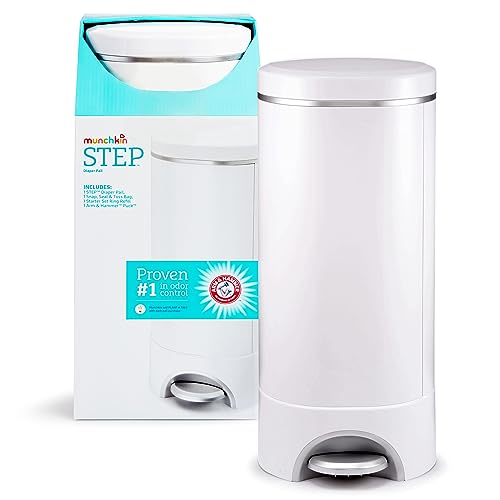
The Munchkin Step is a sleek addition to the nursery that looks nothing like a garbage can. It relies on a scented Arm & Hammer baking soda puck to neutralize smells, making it a top scorer for odor control.
It uses a self-sealing system that twists the bag shut every time the lid closes, trapping nasty odors inside. The foot pedal allows for hands-free operation, so you can toss a diaper while keeping a hand on your wiggly baby.
While designed for disposables with ring refills, many cloth diaper parents hack this by draping a cloth liner over the rim. However, the opening is slightly narrower than non-mechanical pails.
Pros
- Munchkin plants a tree for every pail sold.
- Self-sealing system effectively traps odors.
- Hands-free foot pedal operation.
- Child-proof locking system on the lid.
Cons
- Designed for proprietary bags, so using cloth liners requires adjustments.
- Heavier unit at 12 pounds.
- Narrow opening requires pushing bulky cloth diapers through.
Our Ratings
Dekor Plus Hands Free Diaper Pail
Best Safe Option

The Dekor Plus is widely considered the favorite “commercial” pail among cloth diapering parents. Unlike other systems with complex twisting mechanisms, the Dekor has a wide trap door that easily swallows bulky cloth diapers.
It is completely hands-free using a foot pedal, and the “Plus” size is large enough to hold a good amount of laundry. The best part is that Dekor makes a specific cloth diaper liner that fits this pail perfectly, so you do not have to rig a generic bag to make it work.
Safety is a priority here. It features a lock on the lid and a lock on the access door, keeping curious toddlers away from the mess.
Pros
- Wide opening fits bulky cloth diapers easily.
- Converts to a regular trash can after diapering years.
- Official cloth liner accessories available.
- ABS plastic does not absorb odors and resists scratching.
Cons
- Trap door seals smell well but not as tightly as twisted bags.
- Not suitable for wet pailing (water leakage risk).
- Lid hinges can occasionally squeak or jam over time.
Our Ratings
Safety 1st Easy Saver Diaper Pail
Best Versatile Pail

This is a straightforward, no-nonsense option that works for both wet and dry methods. Because it is essentially a sealed bucket, it does not require special rings or refill cassettes.
It is lightweight and easy to move, and the lid pops open with a simple touch. While it lacks a foot pedal, the simplicity means there are fewer mechanical parts to break.
Inside, there is a designated spot for a deodorizer disc to help manage smells. If you plan to wet pail, this is one of the few commercial options that can hold water without leaking, though you must be vigilant about child safety.
Pros
- Works with any standard trash bag or cloth liner.
- Can accommodate wet soaking (with caution).
- Very affordable compared to complex systems.
- Includes a deodorizer compartment.
Cons
- No hands-free foot pedal.
- Smaller capacity means more frequent laundry trips.
- Lacks a child lock, which is a concern for wet pailing.
Our Ratings
Busch Systems Odorless Gallon Diaper Pail
Best Odor Containing Pail
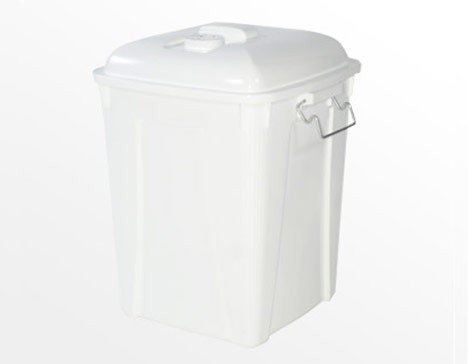
If you visit cloth diaper forums, this pail often comes up as a “gold standard.” It is specifically designed with cloth in mind. The opening is wide and flat, so you never have to squeeze a poopy diaper through a small hole.
The standout feature is the carbon filter system in the lid. It allows air to circulate, which is crucial for cloth diapers to prevent ammonia buildup, yet the carbon scrubs the smell before it exits the pail.
It is made from recycled plastic and is fully recyclable, making it an eco-friendly choice. The clamping handles on the side lock the lid down tight, ensuring curious kids cannot get inside.
Pros
- Designed specifically for cloth diaper airflow.
- Carbon filters actively scrub odors.
- Wide opening prevents messes on the rim.
- Large 7-gallon capacity holds about 2 days of diapers.
Cons
- Price point is higher than basic plastic bins.
- Design is utilitarian and looks like a compost bin.
Our Ratings
Playtex Diaper Genie
Best Small Diaper Pail
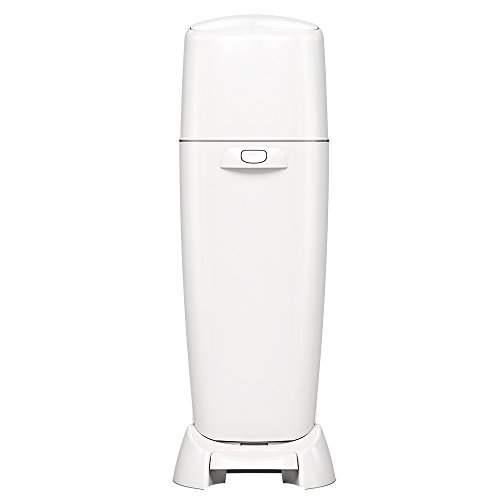
The Diaper Genie is the most famous name in the game, usually associated with disposables. However, you can adapt it for cloth if you use a wet bag liner instead of the plastic sausage refills.
It excels at odor control thanks to antimicrobial agents and double airtight clamps. If you are in a small apartment or have a very tight nursery space, its tall, narrow profile is a huge benefit.
Be aware that the “squish” mechanism designed to push diapers down can be messy with cloth diapers that have solids on them. You may have to clean the inner clamps more frequently than you would with a wide-mouth pail.
Pros
- Built-in carbon filter and antimicrobial protection.
- Very slim footprint fits in tight corners.
- Hands-free foot pedal.
- Widely available in most stores.
Cons
- Narrow throat can be difficult for bulky cloth diapers.
- Does not allow for airflow, which can lead to ammonia buildup.
- Low capacity requires frequent emptying.
Our Ratings
You will likely need a few accessories to make your system work. A good washable liner is essential for transporting dirty diapers to the washer without touching them.
Alvababy Reusable Diaper Pail Liner
Best Washable Liner

Alvababy is a staple brand in the cloth community for affordability and quality. These liners are waterproof, ensuring that damp diapers do not leak through to your actual pail.
They feature a strong elastic band that hugs the rim of your pail, so the bag does not slip down when you throw a heavy diaper in. It holds about 20 to 25 diapers, which is perfect for an every-other-day wash routine.
When it is time to wash, you just grab the bag, turn it inside out into the washing machine, and throw the bag in with the load. It could not be easier.
Pros
- Fits standard pails and garbage cans (up to 13 gallons).
- Fully machine washable and durable.
- Waterproof TPU material prevents leaks.
- Come in fun prints to match nursery decor.
Cons
- Elastic can degrade if washed on sanitize/high heat constantly.
- Colors may vary slightly from photos.
Biloban Diaper Pail Liner
Best Affordable Liners
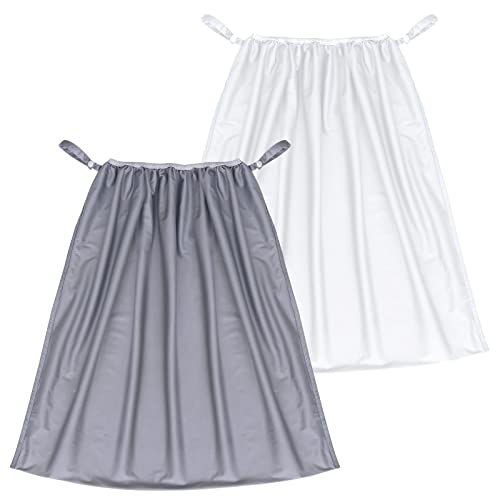
This Biloban set gives you two liners for a great price. Having a rotation is key; while one bag is in the wash, you immediately have a fresh one ready for the pail.
The stitching is reinforced to prevent wicking and leaks, which is a common failure point in cheaper bags. They fit pails up to 13 gallons, making them compatible with the Dekor Plus, Ubbi, and standard kitchen trash cans.
The elastic is snug, and once your diapering days are over, these make excellent laundry bags for travel or swimming gear bags for the beach.
Pros
- Sold as a 2-pack for better value.
- Fits most standard diaper pails.
- Reinforced stitching to prevent leaks.
- Multi-purpose use after potty training.
Cons
- Tight elastic can make air drying take longer.
- Handle stitching is not as heavy-duty as the body seams.
Teamoy Reusable Pail Liner
Best Standalone Liner
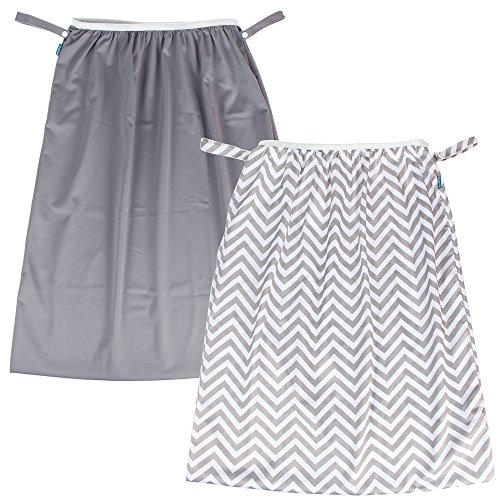
If you do not want to buy a hard plastic pail, you can use a hanging wet bag system. Teamoy liners are designed with snap handles that allow you to hang the bag from a door knob, changing table, or towel hook.
This is a great space-saving solution for small nurseries. The bag acts as the pail itself. When it is full, you unclip it and toss it in the wash.
These are made with high-quality PUL (polyurethane laminate) and high-quality zippers to keep smells locked in. They come in a 2-pack, ensuring you always have a backup.
Pros
- Can hang anywhere; no floor space needed.
- Snaps allow for versatile placement.
- Zipper closure contains odors better than an open bucket.
- Thick, durable waterproof fabric.
Cons
- Smaller capacity than a large trash can.
- Zipper can be tricky to operate one-handed.
Even the best pail needs a little help sometimes. Deodorizers are your second line of defense against the inevitable.
Purifyou All Natural Diaper Pail Deodorizer
Eco Friendly Odor Control

Smells happen. To keep your nursery fresh without using harsh chemical sprays, Purifyou offers these carbon filters. They absorb moisture and odors naturally.
You can tape these under the lid of your diaper pail or simply drop one at the bottom of the liner (if you are dry pailing). The porous granules trap the stink molecules rather than just masking them with fake flower scents.
Pros
- Hypoallergenic and non-toxic.
- Can be recharged in the sunlight.
- Filters air rather than masking odors.
- Safe for use around pets and babies.
Cons
- Needs to be recharged every 2 weeks for best results.
- Fully expires after a few months.
Ninja Mama Bamboo Carbon Charcoal Diaper Pail Filter
Powerful Carbon Deoderizer

These bamboo charcoal sachets are discreet and effective. They work passively to absorb humidity and odor, which helps prevent mold growth inside your pail.
The pack comes with 12 filters, which is enough to last you an entire year. Like other carbon options, placing them in direct sunlight for a few hours can rejuvenate their absorbing power, extending their lifespan.
They fit perfectly into the deodorizer slots of many standard pails, or you can simply tape them to the inside of the lid.
Pros
- One purchase covers a full year.
- Biodegradable and eco-friendly.
- Fits most standard filter compartments.
Cons
- For very strong ammonia smells, you may need to use two at once.
Do Diaper Pails Need Liners?
Technically, you could throw dirty diapers directly into a plastic bin, but you probably should not. Liners offer three major benefits:
- Hygiene and health: A waterproof liner keeps the “mess” off the actual plastic of the pail. Plastic is porous and can absorb smells over time. A liner protects the pail, extending its life and keeping bacteria colonies in check.
- Easier laundry routine: Carrying a heavy plastic trash can to your washing machine is awkward. With a liner, you just grab the bag, carry it to the laundry room, and dump the diapers (and the bag) into the washer. Your hands never touch the dirty diapers.
- Waterproofing: Even if you squeeze out your pre-folds, cloth diapers are damp. A good liner (PUL or TPU) prevents that moisture from pooling at the bottom of your bin and leaking onto your nursery floor.
How Many of Each Do You Need?
You do not need to hoard supplies, but having a rotation makes life easier.
1. Pails
One pail is usually enough if you change the baby in the nursery. If you have a two-story house, some parents prefer a pail upstairs and a simple wet bag downstairs to avoid climbing stairs with a dirty diaper in hand.
Pro Tip
2. Liners
Two liners are the magic number. You need one in the pail and one in the wash. If you only have one, you are stuck without a storage place while the laundry is running. Having a backup prevents panic when the baby has an accident mid-laundry cycle.
3. Deodorizers
Most carbon filters last about 2 to 3 months. Keeping a pack of 4 to 6 on hand will get you through the year without having to reorder constantly.
FAQs

Do You Rinse Cloth Diapers Before Putting In The Pail?
Yes, especially if there is solid waste. Rinse off the poop into the toilet first. For urine-only diapers (especially newborn), you can usually put them straight into a dry pail without rinsing, but rinsing helps reduce ammonia buildup.

How Often Do You Empty Your Diaper Pail?
You should wash cloth diapers every 2 to 3 days. Leaving them longer allows ammonia to set into the fabric, which degrades the elastic and causes rashes. Plus, a full pail left for a week will smell terrible.

Which Is Better: Diaper Pail Or Diaper Genie?
For cloth, a standard diaper pail (like Dekor or a simple trash can) is usually better. Diaper Genies have narrow openings designed for small disposable balls. Cloth diapers are bulky and can get stuck or messy in the Genie’s mechanism.

What Happens If I Leave Cloth Diapers In The Diaper Pail For A Long Time?
Mold and ammonia burn. If damp fabric sits in a dark, warm place for too long, mold spores can grow, which are very difficult to kill. Ammonia from urine will also become concentrated, potentially burning your baby’s skin later.

What Bacteria Can You Get From A Diaper Pail?
Diaper pails can harbor E. coli, Salmonella, and other fecal bacteria. This is why using a liner is so important; it acts as a barrier. Wash your hands thoroughly after handling the pail or the dirty diapers.

Which Diaper Pail Is Best For Smell?
Steel pails (like Ubbi) or pails with carbon filters (like Busch Systems) are best. Steel does not absorb odors like plastic does. However, the best defense against smell is washing frequently and rinsing solids well.

How Do I Clean My Diaper Pail?
Wipe it down with a disinfectant spray or wipe every time you change the bag. Once a month, take it outside and scrub it with hot soapy water or a diluted bleach solution, then let it dry in the sun (UV rays kill bacteria).
The Bottom Line
Our top pick for the best cloth diaper pail is the Munchkin Step Diaper Pail. It strikes a great balance between aesthetics and function. The pedal-operated lid keeps your hands clean, and the sealing mechanism locks away odors tightly.
If you prefer a pail that easily accepts cloth liner bags without modification, the Dekor Plus is a fantastic runner-up with a wider opening.
Whichever pail you choose, remember that airflow and frequent washing are your best friends. A good routine combined with the right gear will keep your nursery smelling fresh.