If you have a baby, you are probably intimately familiar with changing diapers. But have you ever stopped to wonder if you are actually disposing of them the right way?
Since they harbor human waste, disposable diapers carry legitimate health risks if mishandled. There are also etiquette rules to consider, especially when you need to toss a dirty diaper away from home.
We researched the best practices for waste management to keep your home fresh and your family safe. Here is everything you need to know about diaper disposal.
Key Takeaways
- Flush solids first: Dump fecal matter into the toilet before wrapping the diaper to reduce landfill contamination.
- Wrap it tight: Roll the diaper into a tight ball and secure it with its own tabs to contain leaks.
- Seal the smell: Use a sealed container, diaper pail, or knotted plastic bag to trap odors and bacteria.
- Wash your hands: Always scrub with soap and water immediately after handling dirty diapers.
Why Proper Disposal Matters
While cloth diapers have made a massive comeback, disposable diapers still reign supreme for convenience. However, simply tossing a plastic-wrapped, feces-filled bundle into the trash poses environmental and health hazards.
Take Note
The safest place for fecal matter is in a sewage or septic system where it can be treated properly. When we throw full diapers in the trash, that untreated waste heads to landfills, creating potential biohazards for sanitation workers and the environment.
How To Dispose of Diapers in 5 Steps
Follow these five simple steps to handle dirty diapers like a pro.
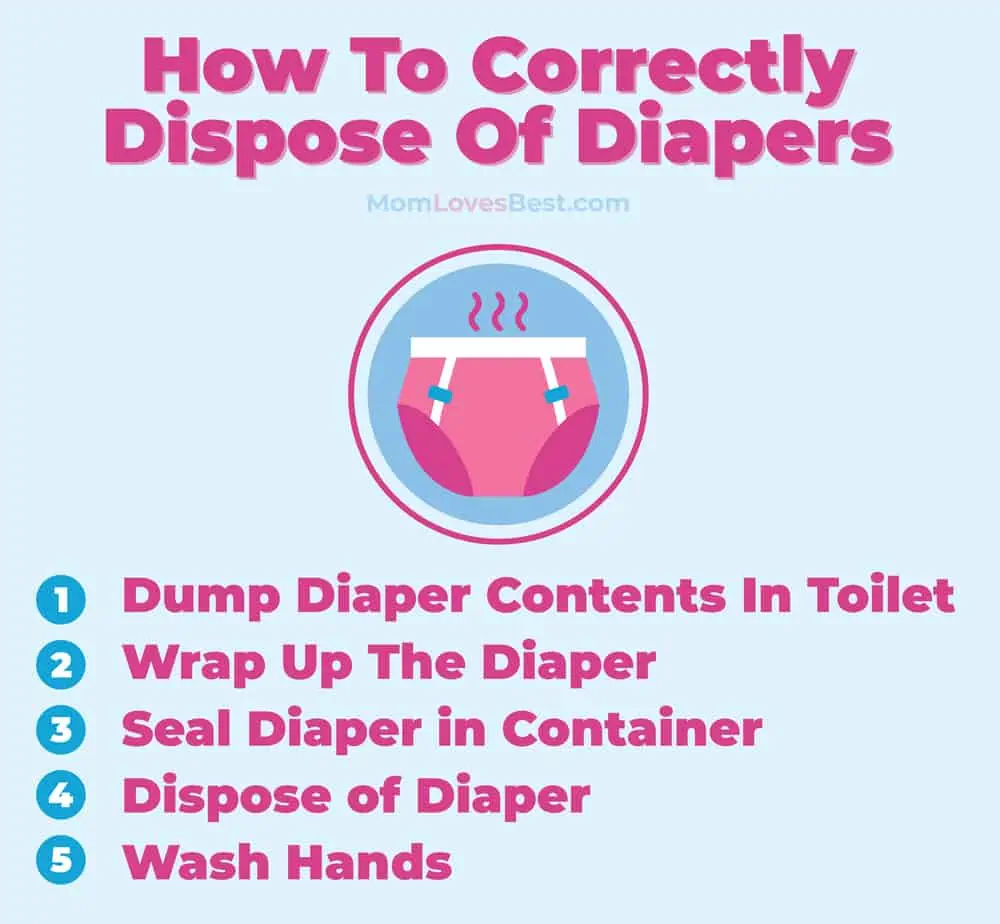
1. Dump Contents Into the Toilet
Most parents skip this, but it is the most critical step. Fecal matter does not belong in the trash. Regardless of your disposal method, try to remove as much solid waste as possible.
Take the dirty diaper to the bathroom, shake the solids into the toilet, and flush.
2. Wrap the Diaper Tightly
Once the diaper is relatively empty, wrap it into a tight ball. Roll the front of the diaper up toward the back, keeping the mess inside. Secure the roll by wrapping the tabs from the back around to the front. This “burrito fold” helps prevent leaks and minimizes the space it takes up in the bin.
3. Seal It in a Container
Placing the diaper in a sealed container traps odors and prevents bacteria from spreading. Here are the best tools for the job:
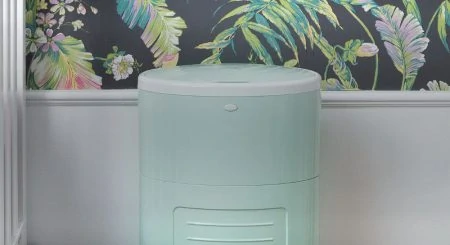
- Diaper Pail: A diaper pail (like a Diaper Genie) is a specialized trash can designed to lock in smells. It usually sits next to the changing table and uses a refillable bag system. This is the easiest way to manage waste without running to the outside bin every few hours.
- Resealable Bags: Ziploc-style bags are great for trapping smells. A quart-sized bag works for newborns, while gallon-sized bags fit larger sizes. This adds up in cost but is excellent for travel.
- Plastic Grocery Bags: If you have a stash of plastic grocery bags, put them to work. Place the dirty diaper inside, twist the neck of the bag, turn it inside out, and tie a knot. If you prefer an eco-friendlier route, these biodegradable diaper bags contain odor neutralizers.
- Dog Waste Bags: These are a parent hack you need to know. Clip a roll of dog poop bags to your diaper bag. They are cheap, compact, and perfect for discreet disposal when you are at the park or a friend’s house.
- Airsickness Bags: If you are changing a baby on a plane, use the airsickness bag from the seat pocket. Place the diaper inside, roll the top down, and dispose of it in the airplane lavatory trash can. Never hand a dirty diaper to a flight attendant (2).
4. Dispose of the Diaper
Once the diaper is sealed, you need to decide where to toss it. If you are home, your diaper pail or outdoor trash can is fine. If you are out, be respectful of others.
Where to dispose of diapers:
- Your home garbage can.
- An outdoor public trash can.
- A public restroom bin.
- Airplane lavatory trash.
Where NOT to dispose of diapers:
- A friend’s kitchen or bathroom bin (ask for their outdoor bin).
- A doctor’s office exam room.
- Nature trails or parks without bins.
- Recycling bins.
5. Wash Your Hands
Diaper changes involve germs, even if you do not see them. Always wash your hands thoroughly with soap and warm water immediately after disposal. If you are on the go and cannot reach a sink, use a hand sanitizer with at least 60% alcohol.
Crucial Warning: Never Flush Wipes
While we are talking about disposal, we must mention baby wipes. Unless the package explicitly states “flushable” (and even then, plumbers advise against it), never flush baby wipes. They do not disintegrate like toilet paper and can cause massive, expensive clogs in your home plumbing and municipal sewer systems.
Health Risks of Improper Disposal
When you throw fecal matter into the trash, it threatens the health of sanitation workers and the general public. If landfills are not properly lined, bacteria from human waste can leach into the groundwater.
Over 100 viruses can survive in human excrement for months. Common pathogens found in diapers include (3):
- Gastrointestinal viruses.
- Hepatitis A.
- E. coli.
- Salmonella.
- Norovirus.
- Polio.
Can You Burn Used Diapers?
Burning disposable diapers is generally a bad idea. They contain plastics, super-absorbent polymers, and chemicals that release dangerous dioxins when burned. If you burn them in an indoor fireplace or woodstove, you risk filling your home with toxic fumes.
Even outdoors, disposable diapers do not burn easily. You are often left with a messy, unburned residue that still requires burial or disposal.
FAQs

What Is the Easiest Way to Dispose of Diapers?
The easiest and safest method is to dump any solids into the toilet first. Then, roll the diaper into a tight ball using the tabs, seal it in a small sack or diaper pail, and wash your hands.

How Long Do Diapers Stay in Landfills?
Disposable diapers can take up to 450 years to decompose. Because they are made of durable plastics and synthetic super-absorbent polymers, they sit in landfills for centuries before breaking down.

Do Unopened Diapers Expire?
Diapers do not strictly expire, but they can degrade. While the materials will not “go bad” like food, discoloration or loss of elasticity can happen over many years. Generally, you can use old diapers without worry as long as they were stored in a dry place.

What Is the Most Eco-Friendly Way to Diaper?
Cloth diapering is the gold standard for eco-friendliness. By reusing cloth diapers, you prevent thousands of pounds of plastic waste from entering landfills. If you must use disposables, look for brands that use high percentages of plant-based materials, though these still require landfill disposal.

Can Diapers Be Recycled?
No, you cannot recycle dirty diapers. Because they contain human waste and mixed materials (plastic, paper, polymers), they are considered a biohazard in recycling facilities. Always put them in the trash.

Is There a 100% Biodegradable Diaper?
Currently, no disposable diaper is 100% biodegradable. While many “green” brands use biodegradable components like bamboo or wood pulp, they still rely on some plastic tabs, elastics, and absorbent polymers that do not break down naturally.

How Do I Reduce the Smell in My Diaper Pail?
To keep odors down, sprinkle baking soda at the bottom of the pail or use a carbon filter. You should also disinfect the pail with a vinegar solution every time you change the bag, and try to empty it every 2 to 3 days regardless of how full it is.
Can I Flush Biodegradable Diapers?
No, never flush a diaper, even if it is labeled biodegradable. They are too large and absorbent for plumbing systems and will cause severe blockages. The only things that should go down the toilet are human waste and toilet paper.
Dispose With Ease
Whether you are at home or traveling, good hygiene and respect for others are the keys to diaper disposal. By dumping solids, wrapping tight, and sealing the waste, you keep the germs and smells at bay.