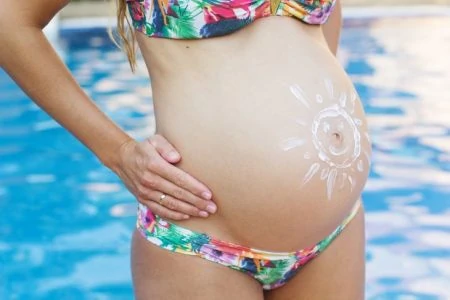
Pregnancy changes everything, including how your skin reacts to the sun. You want to protect yourself from UV rays and the dreaded “mask of pregnancy,” but looking at ingredient labels can feel like taking a chemistry exam.
Many standard sunscreens contain chemicals that absorb into the bloodstream, raising valid concerns about what reaches your growing baby. So, how do you find a formula that is effective yet gentle?
We consulted with medical professionals and dug into the latest research to separate the science from the fear-mongering. In this guide, we break down safe ingredients and share our top recommendations for the best pregnancy-safe sunscreens to keep you and your bump protected.
- No harmful chemicals
- High rating by the EWG
- Offers immediate protection
- Water-resistant
- Non-comedogenic
- Dematologist recommended
- Clinically tested for irritation
- Dermatologist tested
- Water-resistant
Why Sun Protection Matters During Pregnancy
Your skin is naturally more sensitive when you are expecting, thanks to surging hormones. One of the most common issues pregnant women face is melasma, often called the “mask of pregnancy” (1). This condition causes dark, blotchy patches on the face that are triggered and worsened by sun exposure.
You do not need to get a sunburn to damage your skin. Even short periods of exposure can darken pigmentation and increase cancer risks. The best sunscreens create a shield for your sensitive skin, preventing UV damage before it starts. However, not all bottles are safe for baby, so reading the label is non-negotiable.
What to Look for in a Pregnancy-Safe Sunscreen
When shopping for sun protection, keep these criteria in mind:
Mineral Active Ingredients
Look for “physical” or “mineral” sunscreens. These use zinc oxide or titanium dioxide to sit on top of the skin and reflect rays like a mirror. Unlike chemical filters, these minerals are not absorbed into the bloodstream, making them the gold standard for pregnancy safety.
Broad-Spectrum Protection
Always verify the bottle says “Broad-Spectrum.” This means the lotion protects you from both UVA (aging) rays and UVB (burning) rays. Without this designation, you might be preventing a burn while still allowing deep skin damage to occur.
Oxybenzone-Free Formulas
Avoid the chemical filter oxybenzone. It is a known endocrine disruptor that can mimic hormones and is easily absorbed by the body. Some studies suggest it may have adverse effects on fetal development, so the EWG recommends avoiding it completely (2).
SPF 30 or Higher
Dermatologists generally recommend a minimum of SPF 30. This blocks about 97% of UVB rays. Going higher provides marginally better protection, but no sunscreen blocks 100% of rays. Remember that a high SPF number does not mean you can skip reapplication.
Product Reviews
We analyzed ingredient lists, texture, and safety ratings to find the most effective sun protection for expectant mothers.
ThinkBaby Safe Sunscreen
Best Mineral/Physical Sunscreen for Pregnancy

If a sunscreen is gentle enough for a newborn baby, it is a fantastic choice for a pregnant mom. ThinkBaby is a staple in the clean beauty world because it uses non-nano zinc oxide. This means the particles are too large to seep into your pores, staying safely on the surface of your skin.
The Environmental Working Group (EWG) consistently gives this sunscreen a top-tier safety rating. It is free from biologically harmful chemicals like avobenzone, oxybenzone, and parabens.
Beyond safety, it actually works. It offers broad-spectrum SPF 50 coverage and has the highest water resistance allowed by the FDA (80 minutes). It has a light, citrusy scent that most users find pleasant, even with a sensitive nose.
Like all mineral sunscreens, it can take a little effort to rub in completely. However, it absorbs better than many other zinc-based competitors.
Pros
- High safety rating: Consistently rated #1 by the EWG for clean ingredients.
- Instant protection: Physical barriers work immediately upon application.
- Reef safe: The formula is biodegradable and safe for ocean life.
Cons
- Texture: It can feel thick and may leave a slight white cast if not rubbed in well.
- Separation: Natural ingredients may separate in the tube, so shake it before use.
Our Ratings
Sun Bum Continuous Spray Sunscreen
Best Spray Sunscreen for Pregnancy

Sometimes you just need convenience, and rubbing a thick lotion over a growing belly isn’t always easy. Sun Bum offers a solid compromise with this continuous spray. While it is a chemical sunscreen, it is formulated without oxybenzone and octinoxate, making it a safer bet than standard drugstore sprays.
It provides SPF 50 broad-spectrum protection and is enriched with Vitamin E. This is a nice bonus for pregnancy, as Vitamin E helps keep skin hydrated and elastic, potentially helping with stretch marks.
The formula is vegan, cruelty-free, and hypoallergenic. It goes on clear and dries quickly, so you won’t feel sticky or greasy at the beach.
Pros
- Convenience: The continuous spray works at any angle.
- Clear application: It rubs in easily without leaving a white residue.
- Skin conditioning: Contains Vitamin E to moisturize stretching skin.
Cons
- Usage rate: Spray bottles tend to run out much faster than lotions.
- Chemical filters: It is not a mineral barrier sunscreen.
- Scent: The tropical smell is strong, which might trigger nausea for some.
Our Ratings
Neutrogena Sheer Zinc Facial Sunscreen
Best Pregnancy Sunscreen for Sensitive Skin

Neutrogena is a dermatologist favorite, and their Sheer Zinc line is specifically designed for sensitive skin. This is a 100% mineral sunscreen that uses naturally sourced zinc oxide to block UV rays.
It features “Dry-Touch” technology, which aims to dry to a matte finish rather than leaving you shiny and greasy. This is helpful if pregnancy hormones are making your skin more oily or prone to breakouts.
Because it is hypoallergenic and free of fragrance, dyes, and parabens, it is very unlikely to cause irritation. It has also been awarded the National Eczema Association Seal of Acceptance.
Pros
- High SPF: Offers robust SPF 50 protection.
- Gentle formula: Recognized by the National Eczema Association.
- Availability: Easy to find in most drugstores and supermarkets.
Cons
- Thickness: Despite the “Sheer” name, the zinc formula is quite thick.
- White cast: It can leave a noticeable white layer on darker skin tones.
Our Ratings
CeraVe SPF 50 Sunscreen
Best Facial Sunscreen for Pregnancy

CeraVe is famous for repairing the skin barrier, and their sunscreen is no exception. This 100% mineral lotion contains three essential ceramides plus niacinamide (vitamin B3), which helps calm redness and retain moisture.
It is oil-free and non-comedogenic, meaning it won’t clog your pores or cause pregnancy acne. It offers SPF 50 protection and is water-resistant for up to 40 minutes, making it suitable for sweaty summer days or swimming.
Because it is free from fragrance and parabens, it is safe for the most sensitive skin types. It layers reasonably well under makeup once it dries down.
Pros
- Skincare benefits: Contains ceramides and niacinamide to improve skin health.
- Acne safe: Oil-free formula won’t cause breakouts.
- Good value: High-quality ingredients at an accessible price point.
Cons
- Quantity: The tube is small, so you will want a separate bottle for your body.
- Application: Can feel heavy initially before it sets.
Our Ratings
Earth Mama Mineral Sunscreen Lotion
Best Natural Sunscreen for Pregnancy
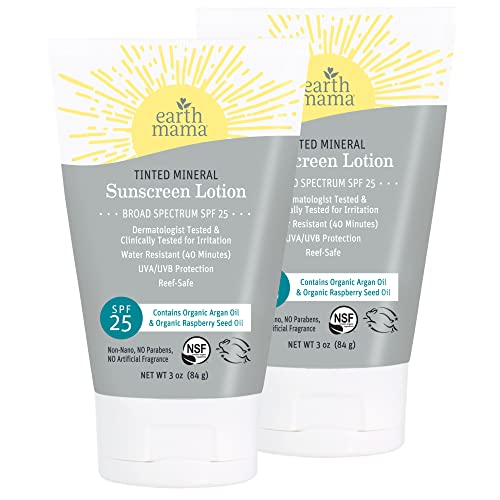
Earth Mama creates products specifically for the unique needs of pregnancy and postpartum, so you can trust their ingredient list. This mineral sunscreen uses non-nano zinc oxide and is packed with organic red raspberry seed oil and organic argan oil.
It is NSF/ANSI 305 Certified, which is a rigorous standard for organic personal care products. You won’t find any oxybenzone, octinoxate, artificial fragrances, or parabens here.
With an SPF of 40, it offers substantial protection. While it is water-resistant for 40 minutes, it is best suited for daily wear or light outdoor activities rather than intense water sports.
Pros
- Clean ingredients: Certified organic ingredients and reef-safe.
- Brand trust: Formulated specifically for pregnant and breastfeeding moms.
- Hypoallergenic: Clinically tested to reduce irritation risks.
Cons
- Lower endurance: Only water-resistant for 40 minutes (vs 80 for others).
- SPF 40: Slightly lower protection than SPF 50 competitors, though still adequate.
Our Ratings
Other Ways to Protect Your Skin While Pregnant
Sunscreen is your first line of defense, but it shouldn’t be your only one. Because pregnancy makes you more prone to heat exhaustion and burning, try these additional strategies:
- Cover up: Wear long sleeves, rash guards, or cover-ups with UPF protection built into the fabric.
- Accessorize: A wide-brimmed hat protects your scalp, face, and neck, while sunglasses protect your eyes.
- Seek shade: Avoid direct sunlight between 10 a.m. and 2 p.m. when UV rays are strongest.
- Watch the clock: Reapply sunscreen every two hours, or every 60 minutes if you are swimming or sweating heavily.
- Check your meds: Some medications can increase sun sensitivity, so ask your doctor if you need to be extra careful.
Sunscreens for Pregnancy FAQs

Can I Go to the Beach While Pregnant?
Yes, beach days are safe, but hydration is key. Pregnant women overheat faster than usual, so drink plenty of water and take frequent breaks in the shade. Always apply a pregnancy-safe sunscreen generously and reapply after swimming.

What Ingredients in Sunscreen Are Safe for Pregnancy?
The safest active ingredients are minerals: zinc oxide and titanium dioxide. These are not absorbed into the body. Look for “non-nano” on the label, which indicates the particles are large enough to stay on the skin’s surface without penetrating it.

What Sunscreen Is Reef and Pregnancy-safe?
A sunscreen is considered reef-safe and pregnancy-safe if it uses non-nano zinc oxide or titanium dioxide and excludes oxybenzone and octinoxate. These chemicals are linked to coral bleaching and potential hormonal disruption in humans.

Which EltaMD Sunscreen Is Best for Pregnancy?
EltaMD UV Physical Broad-Spectrum SPF 41 is a top choice for pregnancy. It is lightly tinted, oil-free, and relies entirely on mineral blockers (zinc and titanium), making it gentle on hormonal skin.

What Is the Healthiest and Safest Sunscreen?
The healthiest sunscreens are mineral-based lotions free from parabens, phthalates, and synthetic fragrances. Products certified by the EWG or NSF usually meet strict safety standards for ingredient toxicity.

Why Do I Get Dark Patches on My Face When Pregnant?
This is called melasma or chloasma, often dubbed the “mask of pregnancy.” Hormonal changes stimulate excess melanin production, and sun exposure darkens these patches significantly. Daily use of broad-spectrum mineral sunscreen is the best way to prevent it.
The Bottom Line
Protecting your skin during pregnancy is about more than just avoiding a burn; it’s about minimizing chemical exposure for your baby and managing hormonal skin changes. Our top pick, Thinkbaby Safe Sunscreen, checks all the boxes. It offers high-level mineral protection, water resistance, and a safety record that gives you peace of mind.